Beijing
Great Wall day trips: Mutianyu, Badaling, Jinshanling, Simatai
With one day for the wall, the section you pick decides the ticket you book, the bus or train you take and how early you leave Beijing. Mutianyu is the easy first choice, Badaling the one you can reach by train or city bus, and Jinshanling and Simatai repay a longer drive with quieter walls.
In this guide
Find the location ↗ — opens in a new tabThe short answer
A Mutianyu day from Beijing costs about CNY 340 a person (CNY 680 for two): bus CNY 80 return, admission CNY 45, shuttle and cable car about CNY 155, lunch about CNY 60. Mutianyu is the best first section, a restored wall on wooded ridges about 70 km out. Book its named ticket up to 30 days ahead and a seat on a bookable tourist bus, and sleep one night in central Beijing near the bus stop. Badaling suits a train or city bus; Jinshanling and Simatai are quieter and further out.
- Suggested time
- 2 days / 1 night
- Where to stay
- Central Beijing, near your bus stop: Dongzhimen, Qianmen or Wangfujing
- Season and timing
- Autumn is the best season: Mutianyu’s oaks turn red in October and the air is clearer than in winter.
Four sections, four separate day trips
The Great Wall near Beijing is not one place but several sections, each with its own ticket office, gate and way of getting there. Two are restored and busy: Mutianyu, about 70 km from the city centre, and Badaling, in Yanqing District about 60 km to the north-west. Two are quieter and further out: Jinshanling, across the provincial border in Hebei and about 130 km from Beijing, and Simatai, in Beijing’s Miyun District beside Gubei Water Town, about 120 km from the city by road.
For a first visit we would choose Mutianyu: it has an official bus from central Beijing, a cable car and a long run of watchtowers on wooded ridges. Jinshanling and Simatai each make their own day.
- Mutianyu. A restored wall on forested ridges, with an official bus from Beijing, a cable car and a toboggan run.
- Badaling. The best-known stretch and the easiest to reach, by Bus 877 or high-speed train.
- Jinshanling. A long, partly restored wall in Hebei with dense watchtowers, and the longest drive of the four.
- Simatai. A short, steep and narrow wall that Gubei Water Town sells as its own day ticket.
Mutianyu: the best first day on the wall
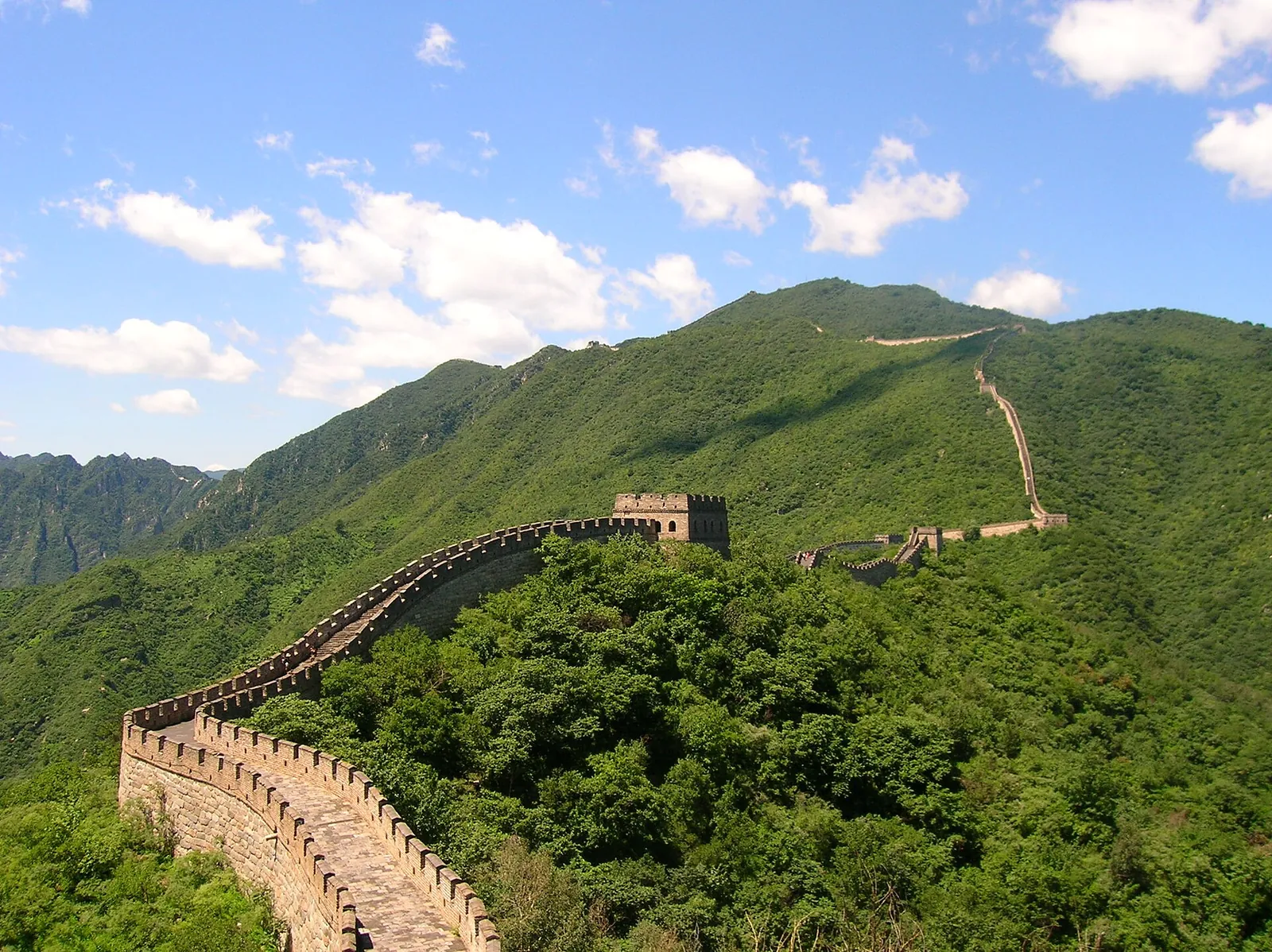
Mutianyu has a watchtower about every hundred metres: from tower 1 to tower 23 its official site counts 28 towers, platforms and barracks, with double-sided battlements and the three-towered Zhengguan Terrace, built in 1404, as its best-known features. Forest covers more than 96% of the area, so the wall is green in summer and red and gold in October.
Two routes cover most visits. The short one rides the cable car up to the tower 14 viewing platform, walks on to tower 15 and rides back down. The longer one climbs the northern wall path from the North Gate to tower 10, continues along the wall to tower 14 and takes the cable car down from there. Only the stretch from tower 1 to tower 20 is open at present, so the last towers on the ridge are off limits. Part of the wall between towers 16 and 17 has been under repair since 26 May 2026, with the inner side of tower 16 kept open; while the work lasts, make tower 16 your turning point and walk back to tower 14 for the cable car.
Tickets are sold by name. Book on the scenic area’s own website (mutianyugreatwall.com) or its official WeChat account up to 30 days ahead, one ticket per passport per day, and enter by showing the original passport you booked with; foreign-passport bookings need no ticket exchange. Adult admission is CNY 45. For foreign visitors, the scenic area lists a discounted ticket for children over 6 and up to 18 years old who are taller than 1.2 metres; the city’s ticket page prices discounted admission at CNY 25. Concessions apply to entry, not the cable car or shuttle. A booked ticket can be refunded or changed until 24:00 on your visit day if you have not been through the gate.
From 16 March to 15 November the wall opens 07:30 to 18:00 on weekdays (ticket sales end at 17:00 and the gate check at 17:30) and 07:30 to 18:30 at weekends (sales end at 17:30, the gate check at 18:00). From 16 November to 15 March it opens 08:00 to 17:30, with sales ending an hour before closing and the gate check half an hour before. Severe weather closes the scenic area for a day or part of one, as it did on several days in July and August 2026; the British government says floods and storms are common from May to November.
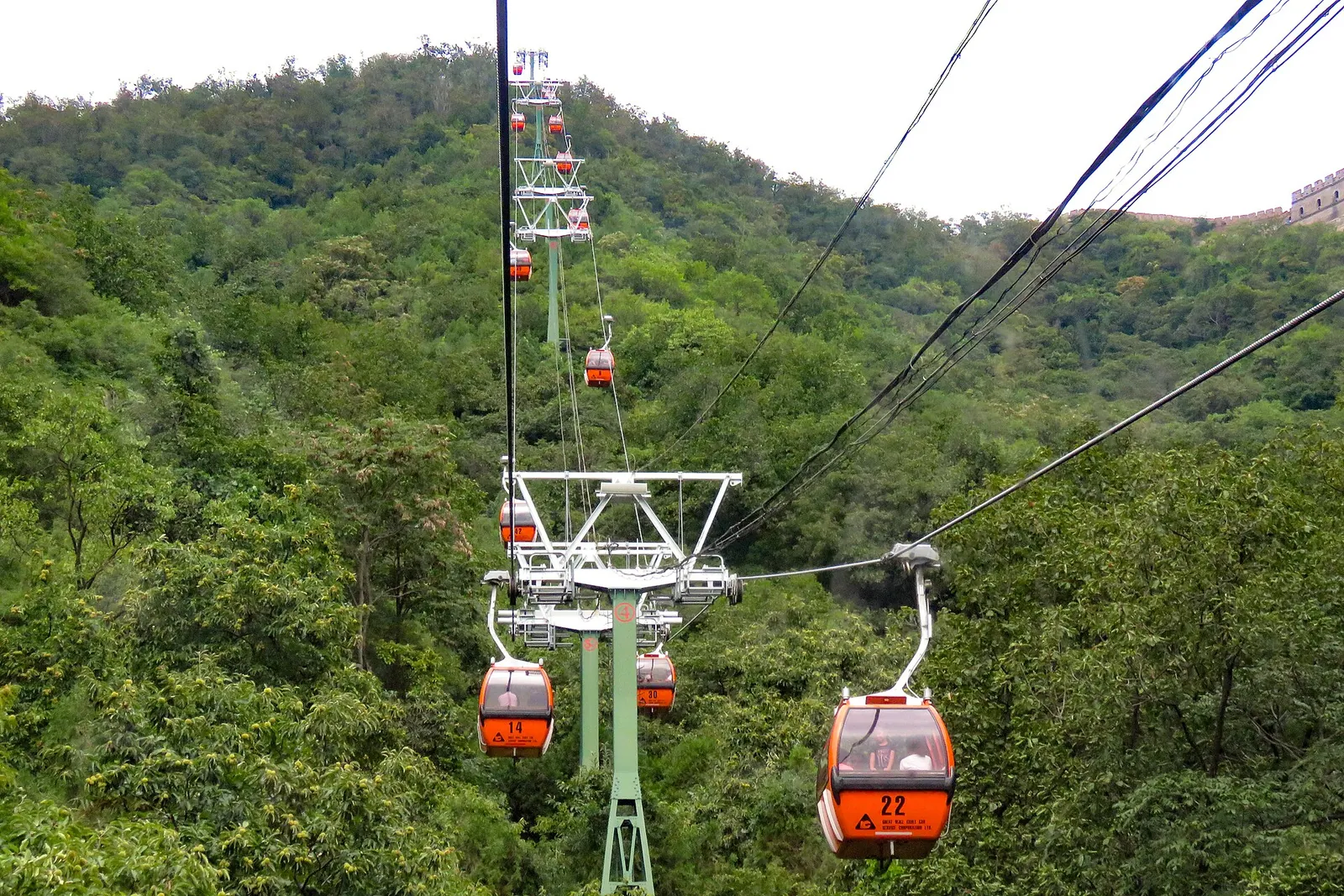
The cable car (723 m, 58 cabins), the 1,580 m toboggan run and the shuttle bus are each sold separately from admission: a cable-car return costs about CNY 140 a person and the shuttle about CNY 15 a person. The toboggan is not counted in the day costs in this guide, and the cable-car and toboggan companies do not accept each other’s tickets. Cable-car ticket holders enter only by the North Ticket Gate; the toboggan has its own gate.
- Official tourist bus. It leaves the Qianmen transport hub at times through the morning between 07:00 and 11:00, Dongzhimen metro station (Exit H) once, at 09:10, and Shaoyaoju metro station (Exit E) once, at 09:30, and returns from car park P4 between 13:00 and 16:00. It costs CNY 80 a person return, and Beijing Transport Cards are not accepted. Tickets are sold on the bus from 30 minutes before departure until it is full; seats from Qianmen can also be reserved on the scenic area’s website.
- Tourist lines you book ahead. The scenic area’s transport page also lists private lines with fixed morning departures, sold on each operator’s own website or WeChat mini-programme and on Ctrip and Meituan. Mu Bus leaves Dongzhimen metro station (Exit B1) at 08:00 and 10:00. Zan Bus leaves the car park of The Regent Beijing on Jinbao Street, Wangfujing (Dengshikou station on line 5, Exit C), at 08:00, 09:00 and 10:00. Beidou leaves Chaoyangmen (Exit A) and Shaoyaoju (Exit E) at 08:00, 08:30, 09:00 and 09:30. Each operator sets its own fare, so compare the price and what it includes when you book.
- The ride. Take a departure at about 08:00 to have the morning on the wall before the first official return at 13:00, and plan a late lunch.
- Public buses. Take Express Bus 916 from Dongzhimen to Huairou Beidajie stop, then Bus H23, H3 or H71 to the Mutianyu scenic area stop. With a change of bus each way, plan it as a full day.
- By car. Leave the Beijing-Chengde Expressway at Exit 13 (Beitai Road) and follow the signs. A hired car or the Viator tour below saves the bus timetable; see our Beijing guide for the rest of the city.
What to eat and where to look
Steamed rainbow trout
Huairou, the district around Mutianyu, raises rainbow trout in clear, cold running water. Yisonglou steams it to keep the flesh tender and boneless, and also serves it oil-poached.
- Where to look
- Yisonglou Restaurant, inside the Mutianyu scenic area.
- Fit it into your day
- Lunch after the morning on the wall, before the bus back from 13:00.
Braised pork with chestnuts
Huairou is known for its chestnuts, which go into a soft, sticky braise with pork, one of Yisonglou’s signature dishes.
- Where to look
- Yisonglou Restaurant, inside the Mutianyu scenic area.
- Fit it into your day
- Order it with the trout and share both.
Mutton hotpot with sesame flatbread
Thin slices of mutton cooked in a hotpot and eaten with crisp sesame flatbread: Beijing’s classic cold-weather meal, served here at the foot of the wall.
- Where to look
- Beigala Shuanrou, at the foot of the Mutianyu wall.
- Fit it into your day
- A warming lunch before the afternoon bus on a cool autumn day.
Stove-roasted Peking duck
Bianyifang, founded in 1416, roasts its duck in a closed stove rather than over an open flame, a technique on China’s national list of intangible cultural heritage.
- Where to look
- Bianyifang, Xianyukou Food Street, east side of Qianmen Street, Dongcheng District.
- Fit it into your day
- Dinner the evening before the wall day, a short walk from a Qianmen base.
Badaling: the section you reach by train or city bus
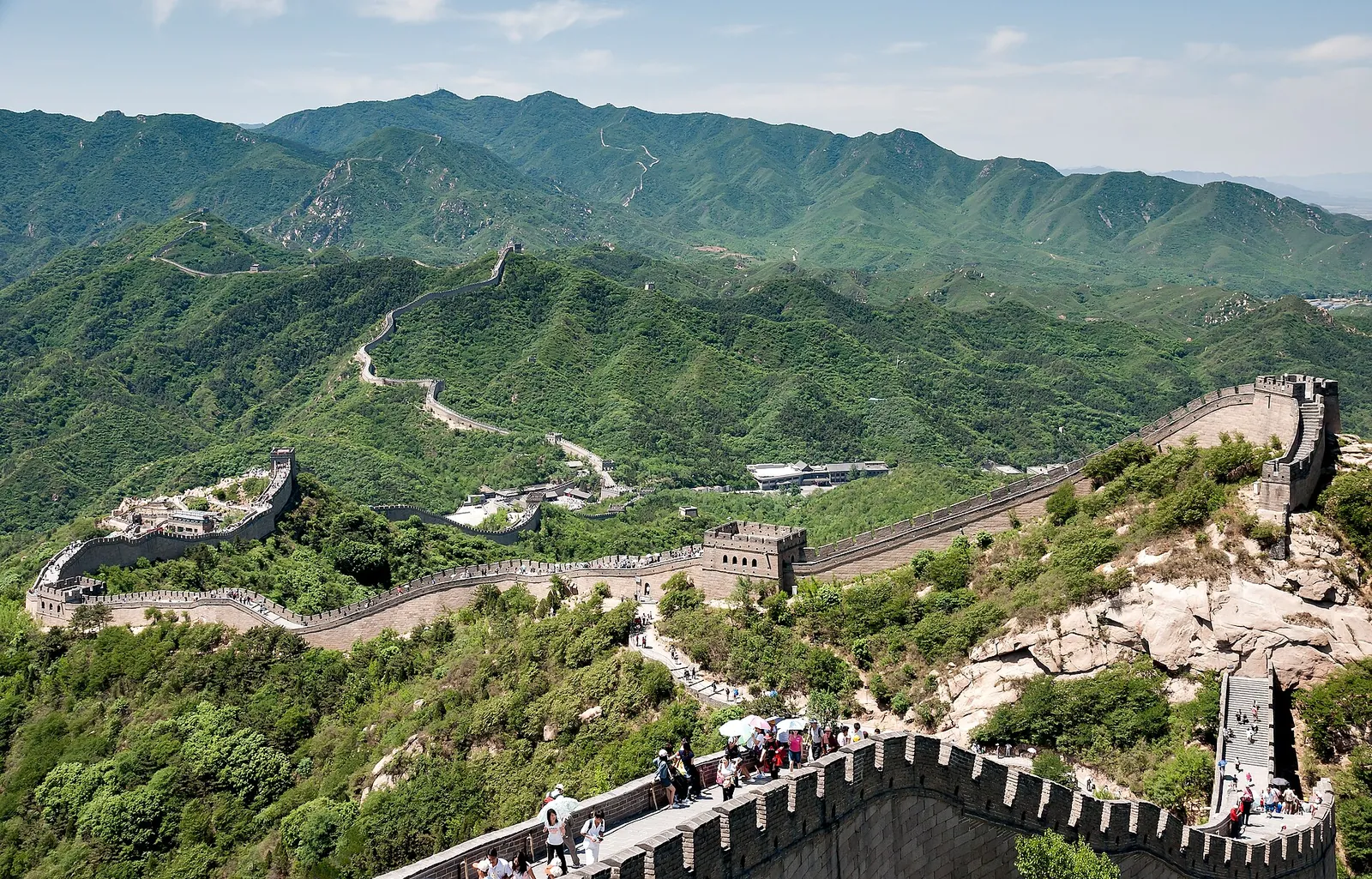
Badaling is the Great Wall most visitors picture first: a steep, restored wall climbing ridge after ridge, listed as a UNESCO World Heritage Site in 1987 and built to guard the Ming capital and the imperial tombs. From the pass the wall runs two ways. The north wall has 12 watchtowers and is the harder climb; the south wall has seven and draws fewer people. Badaling is crowded all year round, so start early and take the south side if the north is busy.
Badaling opens 06:30 to 16:30 from 1 April to 31 October and 07:30 to 16:00 from 1 November to 31 March; adult tickets cost CNY 40 and CNY 35 in those two seasons. The city’s ticket page, read on 26 October 2026, allows on-site purchase without a reservation; its older booking notice gives a seven-day advance window. For a busy day, use the official Changcheng Neiwai platform or Badaling’s WeChat account with your passport, and take that passport to the gate. The published entry exemptions cover under-18s and visitors aged 60 and over with valid proof of age; these do not establish cableway concessions.
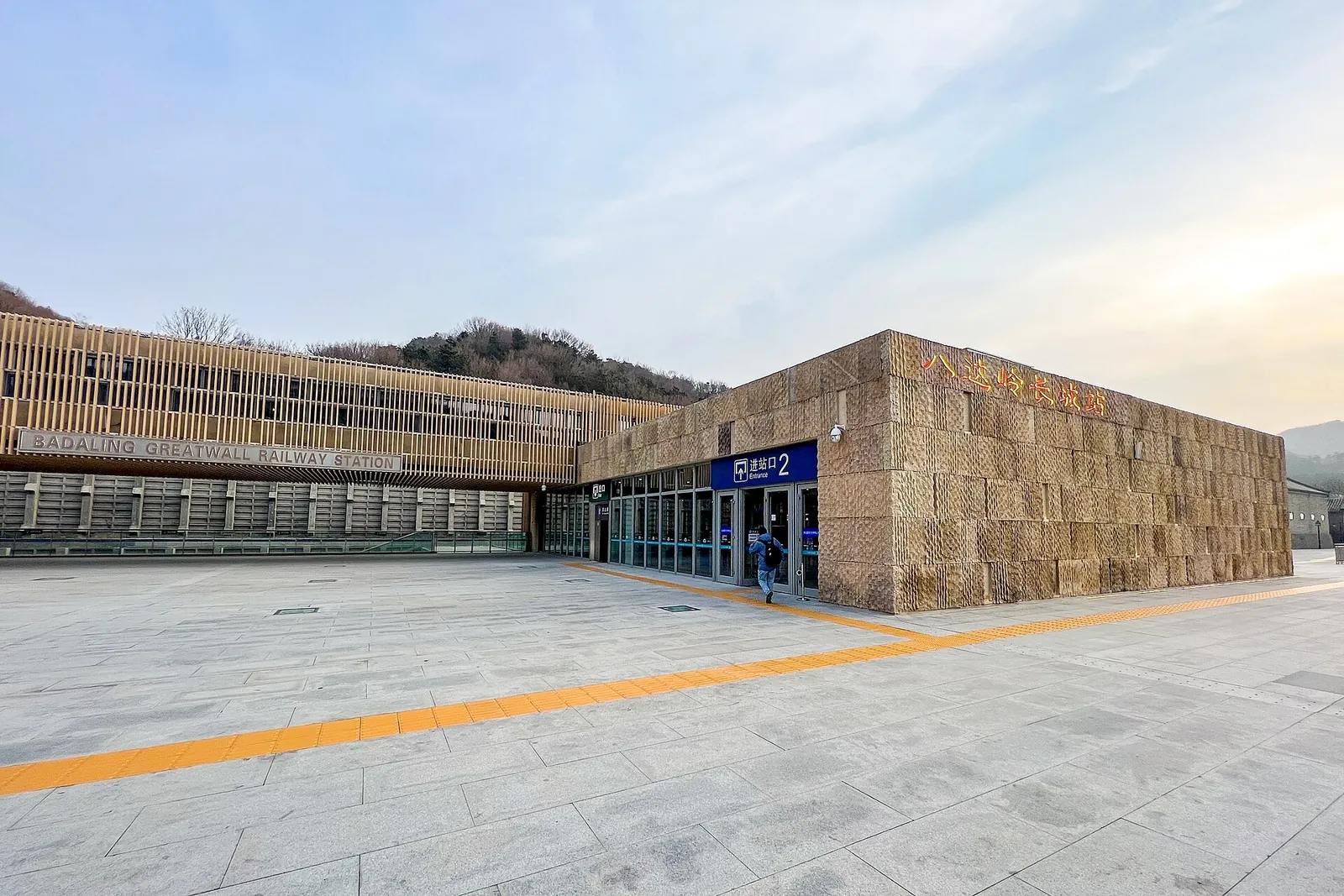
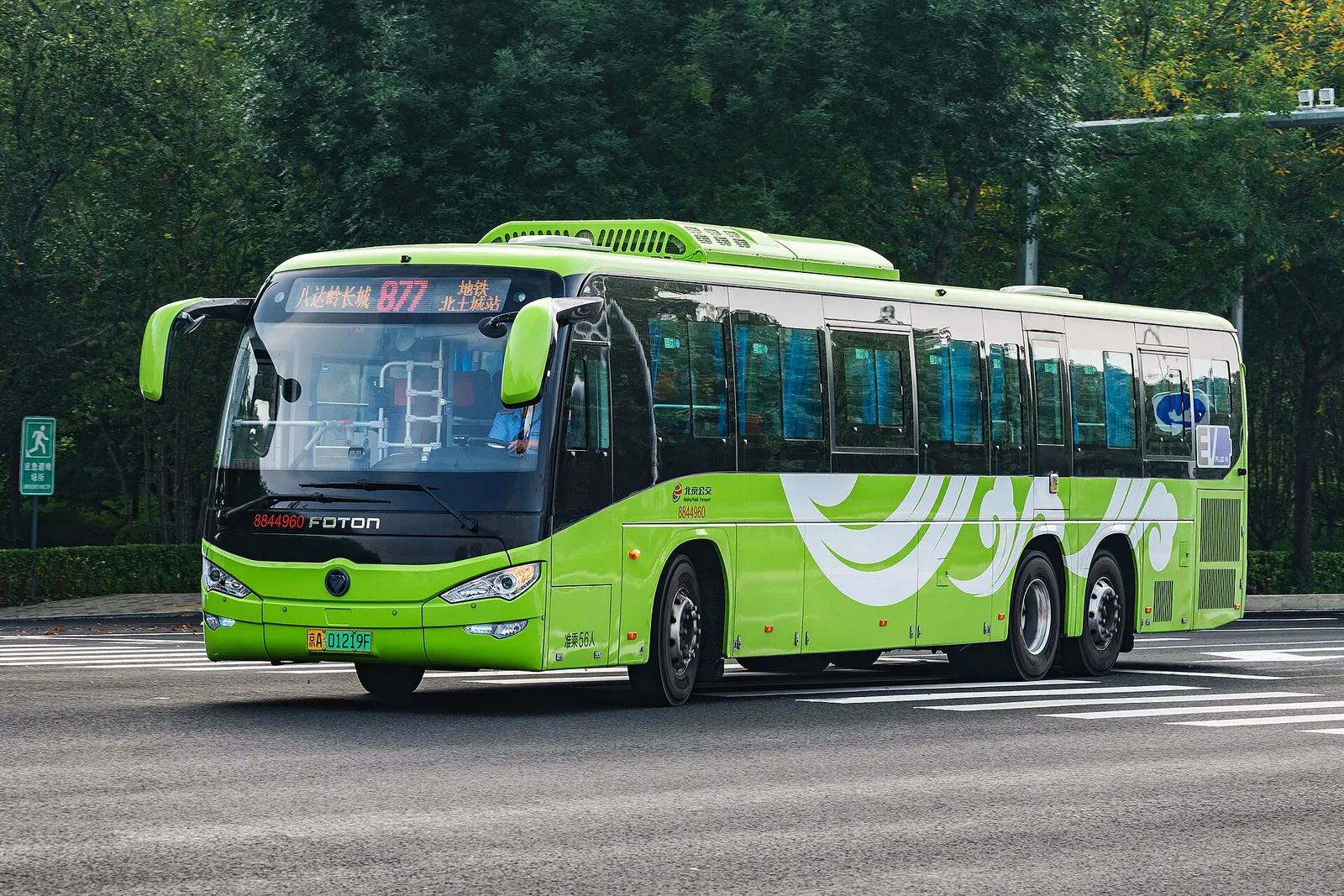
Bus 877 runs non-stop from Beitucheng metro station (lines 8 and 10) to Badaling for about CNY 12 each way in cash, based on Beijing’s distance-based bus fares; board in the car park on the north-east corner of the junction, near Exits B and C, and leave Beitucheng by 08:00 to be on the wall before the crowds. From 1 April to 15 November it leaves Beitucheng between 06:00 and 12:30 and returns from Badaling between 10:30 and 17:00; from 16 November to 31 March it runs 06:30 to 12:30 out and 11:00 to 16:30 back, with extra return buses on busy days. Direct tourist coaches also leave the Dongzhimen transport hub and Lianhuachi bus station, booked through the Beijing Tourism Distribution Centre’s website or mini-programme. By rail, trains run from Qinghe to Badaling Great Wall station in about 20 minutes. The 29 October 2026 timetable used for this guide had 13 trains each way; the four second-class fares sampled were CNY 16, 21, 23 and 25. Use about CNY 45 return as a budget estimate from those samples, and check your date’s trains and fare before choosing the rail option. Book on the 12306 app with your passport (see our transport guide).
A Badaling day by Bus 877 costs about CNY 125 a person (CNY 250 for two): about CNY 24 for the bus there and back, CNY 40 for admission and about CNY 60 for lunch. By train it costs about CNY 145 a person (CNY 290 for two), with about CNY 45 for second-class seats there and back.
Jinshanling and Simatai: quieter walls, longer days
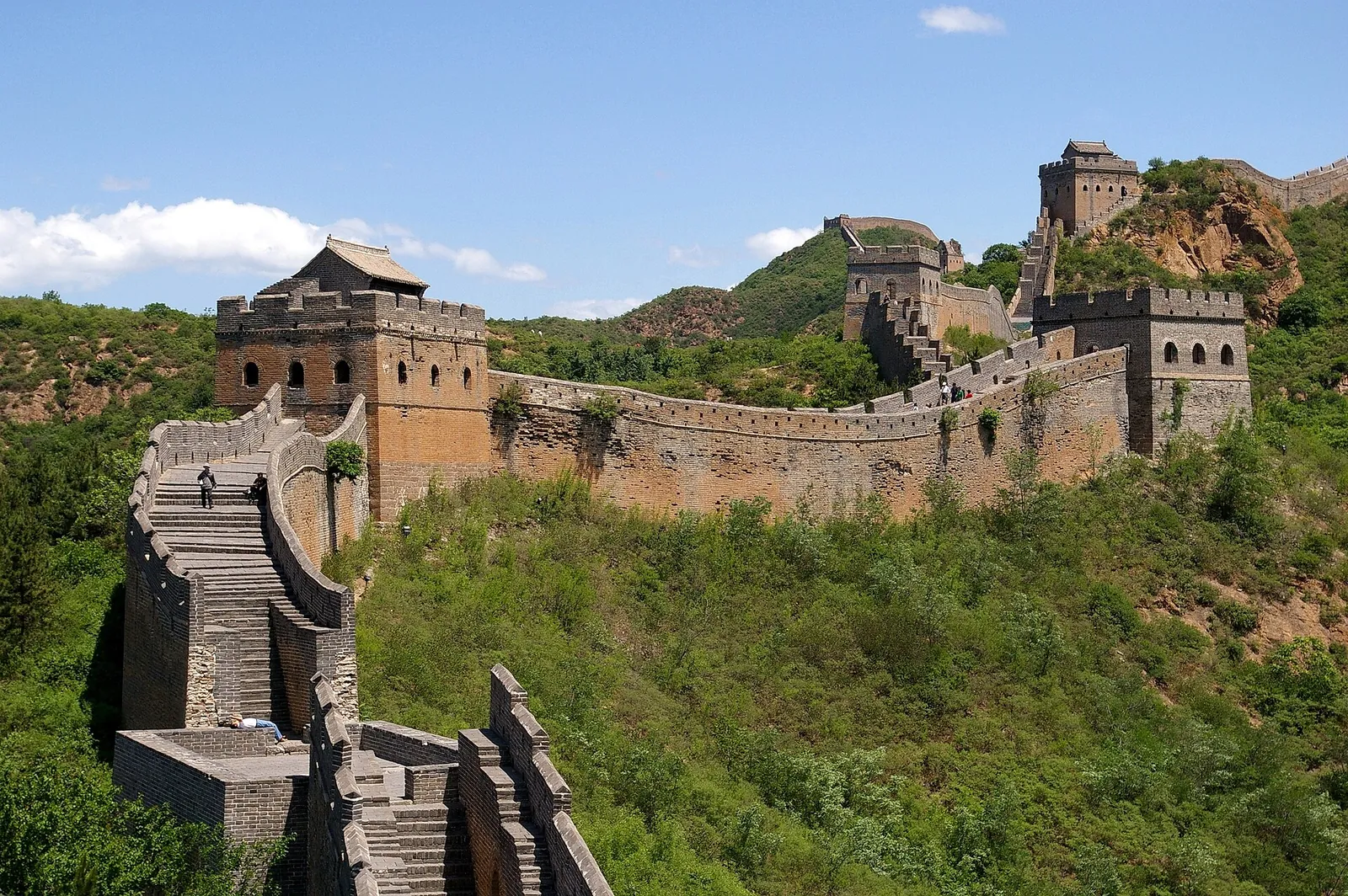
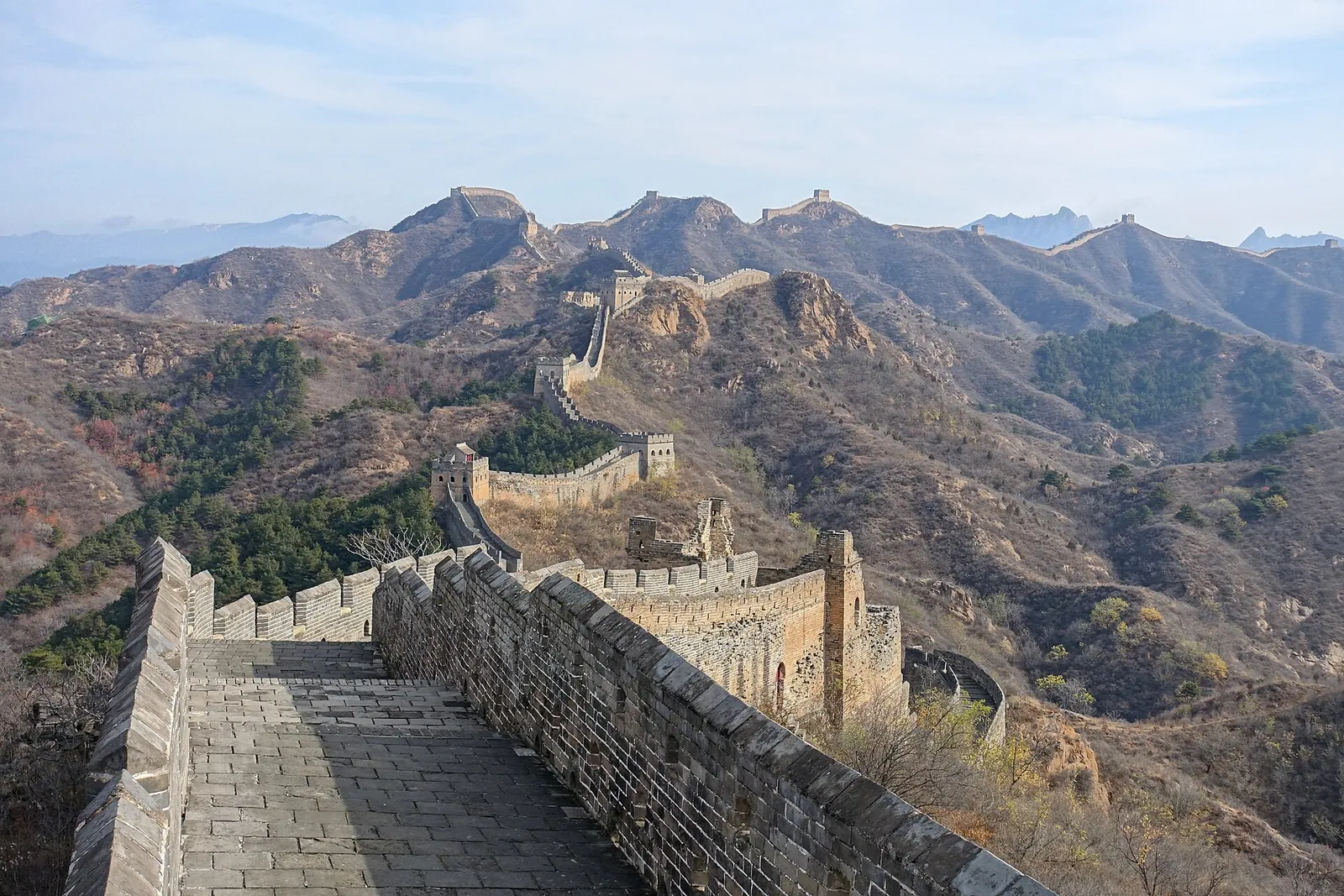
Jinshanling lies in Luanping County in Hebei, next to Beijing’s Miyun District and about 130 km from the capital. Its 10.5 km of wall run from Longyukou in the west to Wangjing Tower in the east, with five passes, 67 watchtowers and three beacon towers, built under General Qi Jiguang between 1567 and 1582. Barrier walls across the walkway, bricks stamped with the year and the army unit that made them, and horse-blocking stones set it apart, and 24 of its towers keep their original form. The light is best early and late in the day.
For comparison, Beijing tourism’s 2022 listing gives adult admission of CNY 65 from 16 March to 15 November and CNY 55 in winter, and CNY 40 for the one-way cable car, 1,000 m long, climbing 150 m in 17 minutes. The published opening hours conflict between older listings, so check the scenic area’s current hours and ticket instructions before arranging the drive. Go by private car or a private tour from Beijing: with the long drive, leave by 07:00 and expect to be back in Beijing in the early evening. A Jinshanling day costs about CNY 715 a person (CNY 1,430 for two): CNY 65 for admission, CNY 40 for the cable car, about CNY 60 for lunch and half of a car with driver, about CNY 1,100 a vehicle for a day’s hire, estimated by scaling the Mutianyu car cost to Jinshanling’s 130 km distance.
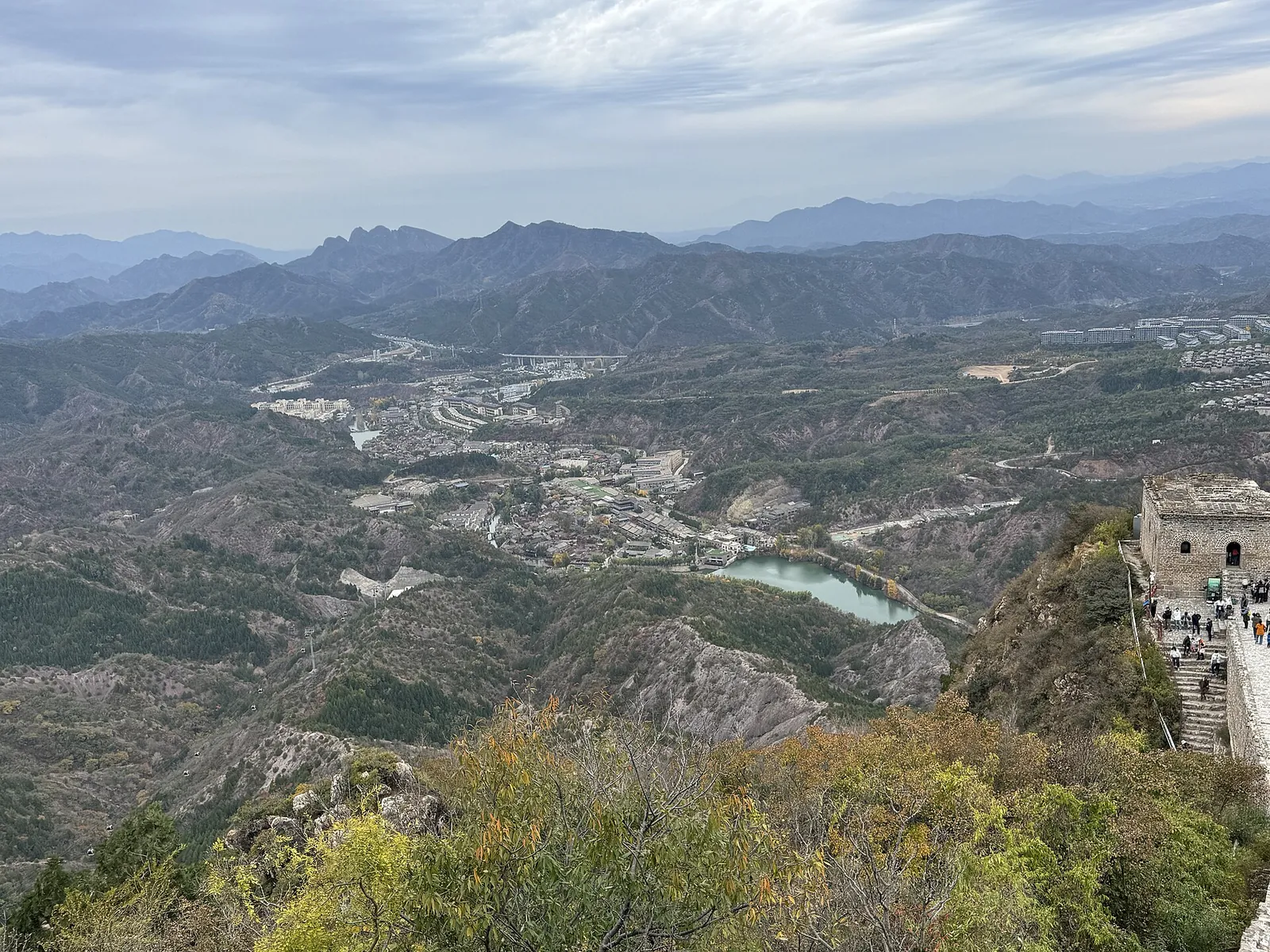
Simatai is the narrow one: 5.4 km of wall with 35 towers, split by a reservoir into west and east parts. It is built on knife-edge ridges, its towers stand on average only 140 m apart, and Yuanyang Lake, fed by a cold and a warm spring, lies below. Gubei Water Town, which runs Simatai, sells two day routes: ride the cable car up, walk to tower 5 and back along the wall to tower 2, then return to the cable car; or climb the path to tower 2, follow the wall to tower 5 and ride the cable car down. Simatai sells only its own routes between towers 2 and 5, so make Jinshanling and Simatai two separate days.
The Simatai wall ticket costs CNY 40. A joint ticket with the water town has a list price of CNY 180 and costs CNY 170 for individual visitors. Book the day ticket on Gubei Water Town’s website (wtown.com), with or without the one-way cable car; it is valid on the day you choose and checked outside the visitor centre beside the shuttle-bus stop. The wall is open 09:00 to 17:00, entry checks stop at 15:00 and the wall is cleared at 16:30. The one-way cable car runs up from 09:00 to 16:10 and down from 09:00 to 17:00.
By road Simatai is about 120 km and two hours from central Beijing (Exit 24 of the Beijing-Chengde Expressway). A direct bus leaves the Wangjing West transport hub (mezzanine, door 5) at 09:00 and 13:00 and returns from the water town’s car park 2 at 12:00 and 17:00; it takes about two hours, costs CNY 48 a person each way, and is paid with a Beijing Transport Card, a Beijing bus app or exact cash. A CYTS coach for CNY 48 leaves the CYTS building by the south-west exit of Dongzhimen metro station; book it on the CYTS mini-programme. By train, the Huairou-Miyun line runs from Beijing North or Qinghe to Gubeikou, where shuttles leave for the water town at 09:40 and 17:10 and for the station at 08:40 and 15:50. A Simatai day by the Wangjing West bus costs about CNY 200 a person (CNY 390 for two): CNY 96 for the bus there and back, CNY 40 for the wall and about CNY 60 for lunch. For a cable-car day, budget about CNY 90 more a person, using the higher of Beijing tourism’s two conflicting older one-way figures; that makes about CNY 290 a person (CNY 580 for two), pending the price for your date.
One night near the buses
Base yourself near the stop of the bus you book. Dongzhimen suits the official Mutianyu bus, Mu Bus, Express Bus 916 and the CYTS coach to Simatai. Qianmen is where the official bus starts from 07:00 and sits close to the old city. Wangfujing has the Zan Bus from Dengshikou and the city’s main shopping street.
To sleep at the wall itself, choose the Mutianyu Great Wall Hotel: it stands inside the scenic area, next to the Ming wall, with 59 rooms, so you wake up beside the wall instead of catching the morning bus.
Staying on the open wall
Only walk officially open sections. French advice warns that the unrestored stretches of the wall are closed and that heavy fines are applied to anyone who enters them. Carry your original passport at all times, because police make random checks and do not accept printed copies. The French government advises against photographing military or official sites, or any place where photography is banned; some are not signposted. French advice says that in Beijing, unregistered drones may not be used, carried or stored, and every flight of a registered drone needs prior permission.
Air pollution in big cities is often high to very high, especially in winter, so check the live reading before you commit to a wall day. Check your own government’s current travel advice before you book.
What a Great Wall trip costs
The wall day itself, at Mutianyu by the official bus, costs about CNY 340 a person and CNY 680 for two: CNY 80 for the bus, CNY 45 for admission, about CNY 15 for the shuttle, about CNY 140 for the cable-car return and about CNY 60 for lunch. If the wall is one day of a longer Beijing stay, add only this figure to that trip’s budget. The section-by-section day totals cover the named wall transport, admission, lifts where stated and lunch; add the metro ride to your departure stop. The table below is for a separate two-day, one-night trip.
| Level | Per person, about CNY | For two, about CNY |
|---|---|---|
| Budget | 1,100 | 2,200 |
| Mid-range | 1,440 | 2,870 |
| Comfort | 2,700 | 5,390 |
These figures are for two adults sharing one double room for one night in Beijing and a Mutianyu day on one ordinary autumn weekday outside the national holidays; prices were checked on 25 October 2026. They cover the room, three meals and drinks on both days, the airport rail link from Beijing Capital (PEK) and back (booked cars at comfort level), the bus, admission, the shuttle and the cable car, two SIMs and a 10% buffer. Admission, the wall bus and the rail link are published fares; the rest are estimates from hotel-chain rate cards, typical prices and Beijing’s metered taxi tariff. The budget assumes a passport on China’s visa-free list; see our entry guide for the 240-hour transit rule and visas.
- Rooms, about CNY 850 for two at mid-range. One night at about CNY 850 (budget CNY 600, comfort CNY 1,300), with no breakfast counted.
- Food, about CNY 720 for two. About CNY 180 a person a day over two days: CNY 30 for breakfast, 60 for lunch, 70 for dinner and 20 for water and snacks (budget CNY 400 for two, comfort CNY 1,400).
- Getting around, about CNY 340 for two at mid-range. The Capital Airport Express between Capital (PEK) and Dongzhimen at CNY 25 a person each way, CNY 100 for the two of you; the Mutianyu bus at CNY 160 for two; and about CNY 80 of local rides for two. Budget travellers take the same express and bus with about CNY 40 of local rides, CNY 300 for two in all. At comfort level, getting around costs about CNY 1,500 for two: two booked cars between Capital (PEK) and the city at about CNY 300 a car, a private car and driver for the wall day at about CNY 600 for the two of you, and about CNY 300 of taxis in the city.
- Sights, about CNY 400 for two. Each person pays CNY 45 for admission, about CNY 15 for the shuttle and about CNY 140 for the cable-car return on the short route above. Walking up and down instead saves CNY 280 for two.
- SIM and extras, about CNY 300 for two. About CNY 150 a person for a roughly 15-day data SIM, estimated from China Telecom’s regional CNY 125 visitor plan; the airport product and your dates may cost more.
- Buffer, about CNY 260 for two. Ten per cent of the subtotal of CNY 2,610.
- London flight, about GBP 650 to 850 a person. A London return to Beijing costs about GBP 650 to 850 a person (GBP 1,300 to 1,700 for two) (an estimate). With it, the two-day trip in the table comes to about GBP 770 to 970 a person at budget, GBP 810 to 1,010 at mid-range and GBP 950 to 1,150 at comfort, converted at the State Administration of Foreign Exchange central parity rate of 23 October 2026 (GBP 1 = CNY 8.9749).
Practical questions
Which Great Wall section should I visit first?
Mutianyu, which the official bus reaches from central Beijing. Choose Badaling to travel by Bus 877 or high-speed train.
Do I need to book Great Wall tickets in advance?
Yes. Mutianyu tickets are in your name, sold up to 30 days ahead and limited to one per passport per day. Badaling sells named tickets online up to 7 days ahead, with a daily cap. At both, book with your passport and show it at the gate.
What does a day at each section cost?
About CNY 340 a person at Mutianyu by the official bus with the cable car, about CNY 125 at Badaling by Bus 877 (CNY 145 by train), about CNY 200 at Simatai by bus (CNY 290 with the one-way cable car) and about CNY 715 at Jinshanling with half of a car and driver.
Is the Great Wall open all year?
Yes, every day, with shorter hours in winter; the Mutianyu and Badaling sections above give the times.
Is the Mutianyu cable car worth it?
It saves the steep first climb and brings you to tower 14, where the best-known view and the red leaves are. Buy it on top of admission; cable-car ticket holders enter by the North Ticket Gate.
How many nights do I need near the Great Wall?
One night in central Beijing is enough for a single wall day. Add a night if your flight leaves early, because the official Mutianyu bus returns only between 13:00 and 16:00.
Keep planning your trip
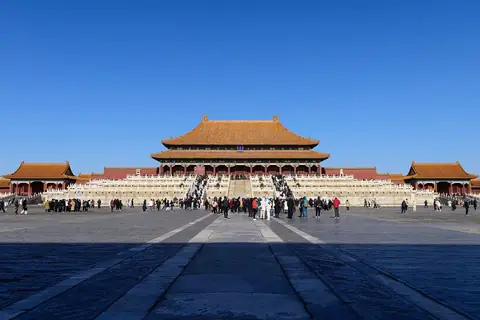
Beijing
Three nights in Beijing: which imperial sights to book first, how passport tickets and Monday closures shape the days, where to stay, airport links and what it all costs.
Read the guide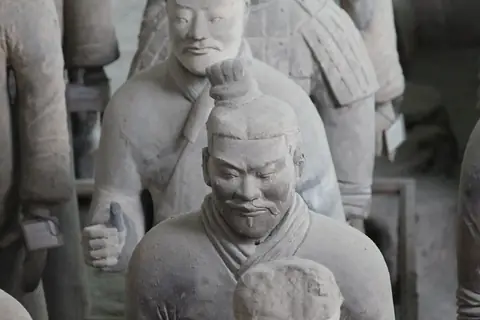
First trip to China
How long a first China trip should be, then a week in Beijing, Xi’an and Shanghai: what to book first, the trains, entry, paying and the cost per day.
Read the guide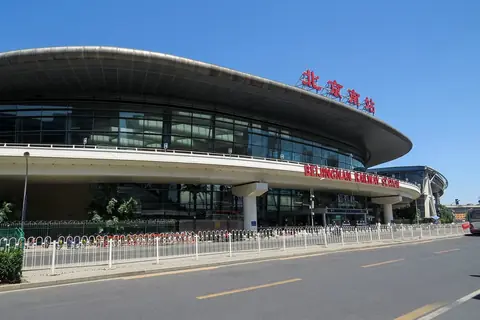
Getting around China
Book China's high-speed trains on 12306 with a foreign passport, decide when to fly, and get from the airports and stations into town.
Read the guide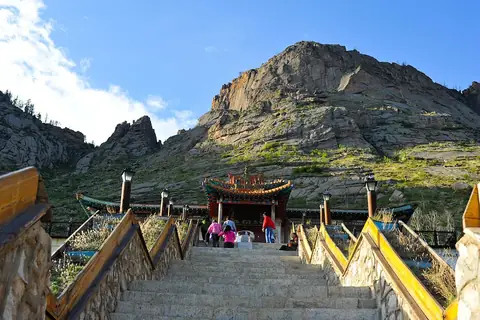
Terelj and the Chinggis Khaan Statue
Whether to see the giant Chinggis Khaan statue, Turtle Rock and Aryabal temple in a day from Ulaanbaatar or with a ger night in Terelj, with tours, camps and costs.
Read the guide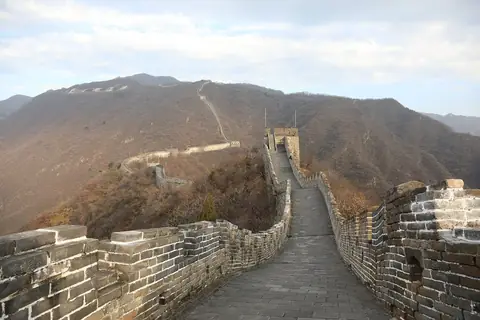
China in seven days
Seven days in China: two nights each in Beijing, Xi’an and Shanghai, the Great Wall, the Terracotta Army and two trains, with a budget for two.
Read the guide
China in ten days
A ten-day China itinerary with nine nights in Beijing, Xi’an, Chengdu and Shanghai, a Hangzhou day trip, timed-ticket booking, rail and flight legs and an all-in budget.
Read the guideSources and checks before you travel
(35)
- Beijing government: Badaling Great Wall ticket listing ↗ — opens in a new tab
- Beijing tourism: Badaling real-name online booking (Chinese) ↗ — opens in a new tab
- Beijing government: services for foreign visitors at Badaling ↗ — opens in a new tab
- Beijing tourism: Great Wall sections beyond Badaling (Chinese) ↗ — opens in a new tab
- Beijing government: Mutianyu Great Wall ticket listing ↗ — opens in a new tab
- Beijing government: Mutianyu Great Wall, how to get there ↗ — opens in a new tab
- Mutianyu Great Wall: visitor notice and ticket rules (Chinese) ↗ — opens in a new tab
- Mutianyu Great Wall: home page (English) ↗ — opens in a new tab
- Mutianyu Great Wall: recommended transportation routes ↗ — opens in a new tab
- Mutianyu Great Wall: about us ↗ — opens in a new tab
- Mutianyu Great Wall: repair notice (Chinese) ↗ — opens in a new tab
- Mutianyu Great Wall: Yisonglou Restaurant ↗ — opens in a new tab
- Mutianyu Great Wall: Mutianyu Great Wall Hotel ↗ — opens in a new tab
- Beijing government: Huairou restaurants near Mutianyu ↗ — opens in a new tab
- Beijing Tourism: where to eat Peking duck ↗ — opens in a new tab
- Beijing News: Beijing Public Transport Group changes Bus 877 (Chinese) ↗ — opens in a new tab
- Beijing government: summer transport report (Chinese) ↗ — opens in a new tab
- China Railway 12306: Qinghe to Badaling Great Wall timetable and fares ↗ — opens in a new tab
- Beijing tourism: Jinshanling Great Wall (Chinese) ↗ — opens in a new tab
- China Daily government site: Jinshanling Great Wall Scenic Area ↗ — opens in a new tab
- Beijing tourism: Jinshanling reopening and online tickets (Chinese) ↗ — opens in a new tab
- Beijing tourism: Simatai Great Wall (Chinese) ↗ — opens in a new tab
- Gubei Water Town: Simatai Great Wall day ticket (Chinese) ↗ — opens in a new tab
- Gubei Water Town: Simatai Great Wall and one-way cable car (Chinese) ↗ — opens in a new tab
- Gubei Water Town: Simatai Great Wall (Chinese) ↗ — opens in a new tab
- Gubei Water Town: frequently asked questions (Chinese) ↗ — opens in a new tab
- Gubei Water Town: transport guide (Chinese) ↗ — opens in a new tab
- Beijing Capital International Airport: Capital Airport Express ↗ — opens in a new tab
- Chinese Embassy in Timor-Leste: visa-free FAQ ↗ — opens in a new tab
- French diplomacy: safety in China ↗ — opens in a new tab
- French diplomacy: practical information for China ↗ — opens in a new tab
- UK government: China safety and security ↗ — opens in a new tab
- German Foreign Office: China safety ↗ — opens in a new tab
- State Administration of Foreign Exchange: central parity ↗ — opens in a new tab
- China Telecom Shaanxi: 15-day foreign-visitor plan ↗ — opens in a new tab
Reference sources for the version dated 3 November 2026. Confirm opening times, access, transport and conditions for your travel dates.
Photo credits
(8)
The Mutianyu section of the Great Wall on its forested ridge.
Photograph: Velatrix — opens in a new tab · CC0 — opens in a new tab
Changes: Resized and converted to WebP; displayed with responsive crops. · Original photograph and licence details ↗ — opens in a new tab
The restored Badaling section, the most visited stretch of wall near Beijing.
Photograph: CEphoto, Uwe Aranas — opens in a new tab · CC BY-SA 3.0 — opens in a new tab
Changes: Resized and converted to WebP; displayed with responsive crops. · Original photograph and licence details ↗ — opens in a new tab
Restored watchtowers and stairs at Jinshanling.
Photograph: Jakub Hałun — opens in a new tab · CC BY-SA 3.0 — opens in a new tab
Changes: Resized and converted to WebP; displayed with responsive crops. · Original photograph and licence details ↗ — opens in a new tab
The Jinshanling wall looking east towards Simatai.
Photograph: Luka Peternel — opens in a new tab · CC BY-SA 4.0 — opens in a new tab
Changes: Resized and converted to WebP; displayed with responsive crops. · Original photograph and licence details ↗ — opens in a new tab
Gubei Water Town and its reservoir from the open Simatai wall.
Photograph: Codas — opens in a new tab · CC BY-SA 4.0 — opens in a new tab
Changes: Resized and converted to WebP; displayed with responsive crops. · Original photograph and licence details ↗ — opens in a new tab
The Mutianyu cable car above the wooded slope.
Photograph: N509FZ — opens in a new tab · CC BY-SA 4.0 — opens in a new tab
Changes: Resized and converted to WebP; displayed with responsive crops. · Original photograph and licence details ↗ — opens in a new tab
Badaling Great Wall railway station, reached by train from Qinghe in Beijing.
Photograph: N509FZ — opens in a new tab · CC BY-SA 4.0 — opens in a new tab
Changes: Resized and converted to WebP; displayed with responsive crops. · Original photograph and licence details ↗ — opens in a new tab
Route 877 buses run from Beitucheng metro to Badaling.
Photograph: TurnOnTheNight — opens in a new tab · CC BY-SA 4.0 — opens in a new tab
Changes: Resized and converted to WebP; displayed with responsive crops. · Original photograph and licence details ↗ — opens in a new tab