Sichuan
Chengdu in three days: pandas, Sichuan food and a Leshan day trip
Can you see the pandas, eat well and reach the Leshan Giant Buddha in three days in Chengdu? Yes, if you book in the right order. Chengdu is the easy-going city of western China: tea houses, old lanes, a cuisine with its own word for numbing heat, and a research base where giant pandas are bred. The Panda Base can sell out and Leshan is a full day out and back, so those two fix the plan; Wenshu Monastery, the old lanes and the tea houses fit around them.
In this guide
Find the location ↗ — opens in a new tabThe short answer
Book two nights in central Chengdu and give your second morning to the Panda Base, in the 07:30 opening slot (08:00 from November to February). It sells timed real-name tickets at CNY 55 against your passport, up to 14 days ahead. Spend the first afternoon at Wenshu Monastery and Kuanzhai Alley, and the third day at the Leshan Giant Buddha: most high-speed trains in the dated timetable below take 46 to 65 minutes, with second class CNY 54 each way on most services. Set aside about CNY 80 for Buddha admission, an estimate. Two adults at mid-range prices spend about CNY 4,190 on the ground, CNY 2,100 each, before flights.
- Suggested time
- 3 days / 2 nights
- Where to stay
- Central Chengdu, around Tianfu Square and Chunxi Road
- Season and timing
- The Panda Base keeps shorter hours from November to February than from March to October, at the same ticket price. The British government says floods and storms are common from May to November, and transport can be disrupted.
Where to stay: Tianfu Square or Chunxi Road
Stay in the middle of the city for both nights; both excursions start from there. Tianfu Square, the central square, is where Metro Lines 1 and 2 cross. Line 2 runs to People’s Park station, about 400 metres from Kuanzhai Alley, and east to Chengdu East for the Leshan trains; Line 1 runs south to Chengdu South, where the metro from Tianfu airport ends. Wenshu Monastery lies just north of the centre, and the Panda Base is about 10 km away on the north-east side.
Chunxi Road, in Jinjiang District a short way east on Line 2, is the shopping and eating district: about 20 hectares with more than 700 shops, malls, hotels, cinemas and restaurants, Fuqi Feipian’s main restaurant on Zongfu Road and the hotpot restaurants of the centre. Its metro station is an interchange of Lines 2 and 3, and Line 3 is the line for the Panda Base.
Budget about CNY 650 a night for a mid-range double without breakfast, an estimate from international hotel chains’ late-November rate cards. Hotels register foreign guests with the police for you. Chinese policy says hotels should not turn foreign guests away for lacking a licence, but not every property can register foreigners; confirm with the hotel before you book.
The Panda Base: tickets, hours and the first slot
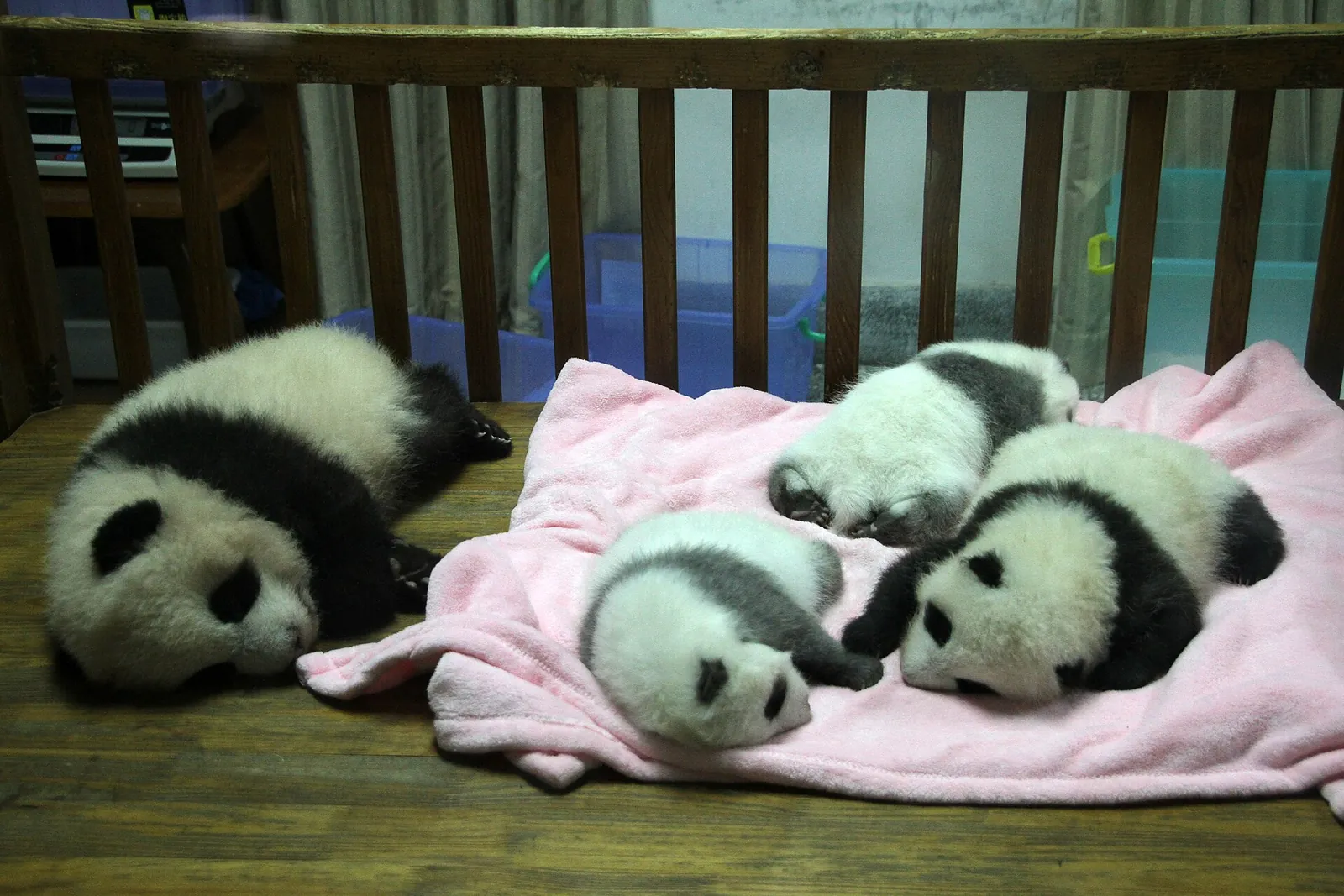
The Chengdu Research Base of Giant Panda Breeding, at 1375 Panda Avenue about 10 km from Tianfu Square, is a breeding and research centre with a core area of about 238 hectares, landscaped to recreate the pandas’ wild habitat. It breeds red pandas as well as giant pandas, which are fed on several kinds of bamboo, and its work on breeding and cub rearing is what you see in the nursery houses, where cubs may be on view; the animals and nursery access vary with the Base’s care programme. Paths and the sightseeing bus link its four zones, Panda Creek Valley, the Panda Forest, the Panda Reception Hall and the Panda Villa area, with the Bamboo Tower and the Giant Panda Theme Museum, opened in 2021. Keep to the visitor paths and do not feed or disturb the animals. Book the first morning slot: it is cooler and gives you the longest visit. To get there, take Metro Line 3 to Panda Avenue station (exit A) and bus 408 to the South Gate, or Line 3 to Junqu General Hospital (exit B) and bus 409 to the West Gate, about 10 minutes. A taxi from Chunxi Road costs about CNY 40 a vehicle and takes 25 to 35 minutes.
The adult ticket is CNY 55 for visitors over 18 and under 60. The CNY 27 student category covers children over 6 through age 18 and eligible undergraduate students or below, excluding adult education; older students must show valid student ID. Visitors aged 60 and over, and children aged 6 or under or shorter than 1.3 metres, enter free without reserving. Everyone else must reserve online in their own name, up to 14 days ahead, and the Base stops selling when its daily quota of 85,000 is gone. Reserve through its official WeChat account or mini-programme, or through the platforms it names: Meituan, Trip.com, Douyin, Tongcheng Travel and the “Chengdu Scenic Shuttle Bus” WeChat account. A passport is accepted; you scan the original at the gate, and entry is refused if it does not match the ticket. The Base warns against paid “fast-track” services.
From March to October the morning slot is 07:30 to 12:00 and the afternoon slot 12:00 to 17:00, and the park starts clearing visitors at 18:00. From November to February the slots are 08:00 to 12:00 and 12:00 to 16:30, with clearing from 17:30. The optional sightseeing bus inside the Base costs CNY 30 a person on top of the entry price and runs between the South and West Gates past the nursery houses and the Bamboo Tower; one ticket lets you board at any stop that day. Unused entry tickets can be refunded through the seller within 30 days starting at 17:00 on the booked visit date; the bus has a separate refund deadline of 17:30 that day. The ticket does not cover Panda Valley at Dujiangyan, a separate site.
Wenshu Monastery, Kuanzhai Alley and a tea house
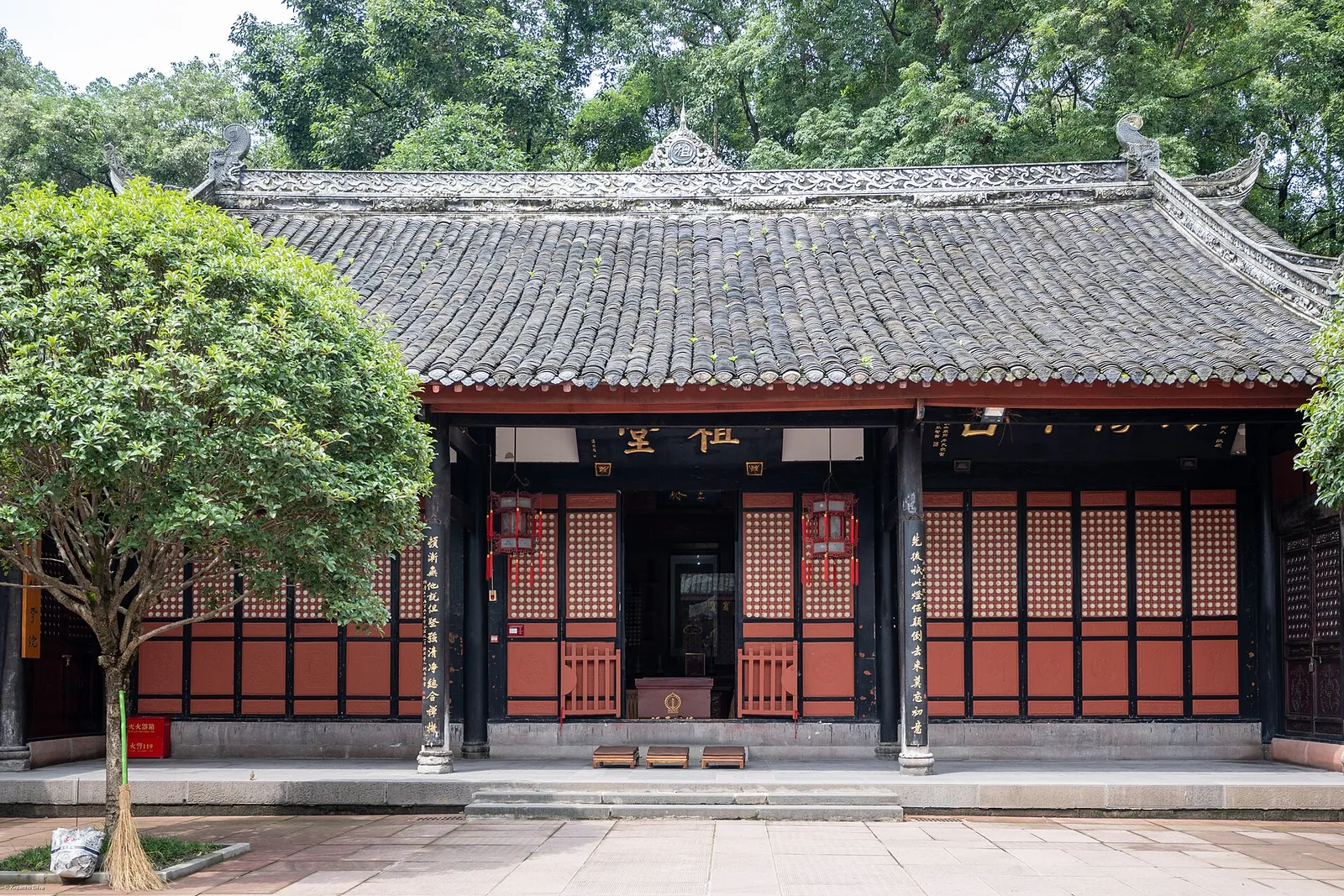
Wenshu Monastery is Chengdu’s principal Buddhist monastery and a working one, with about 80 resident monks, at 66 Wenshuyuan Street just north of the centre. It was founded in the Sui dynasty, between 605 and 617, and took its present name when it was rebuilt in 1697. Six main halls stand one behind another on its central axis, with finely carved lattice windows, across grounds of about 6 hectares; its treasures include a skull relic of the monk Xuanzang. Entry is free all year. The monastery’s Xiangyuan garden serves vegetarian food and Chan tea, which makes a calm first lunch.
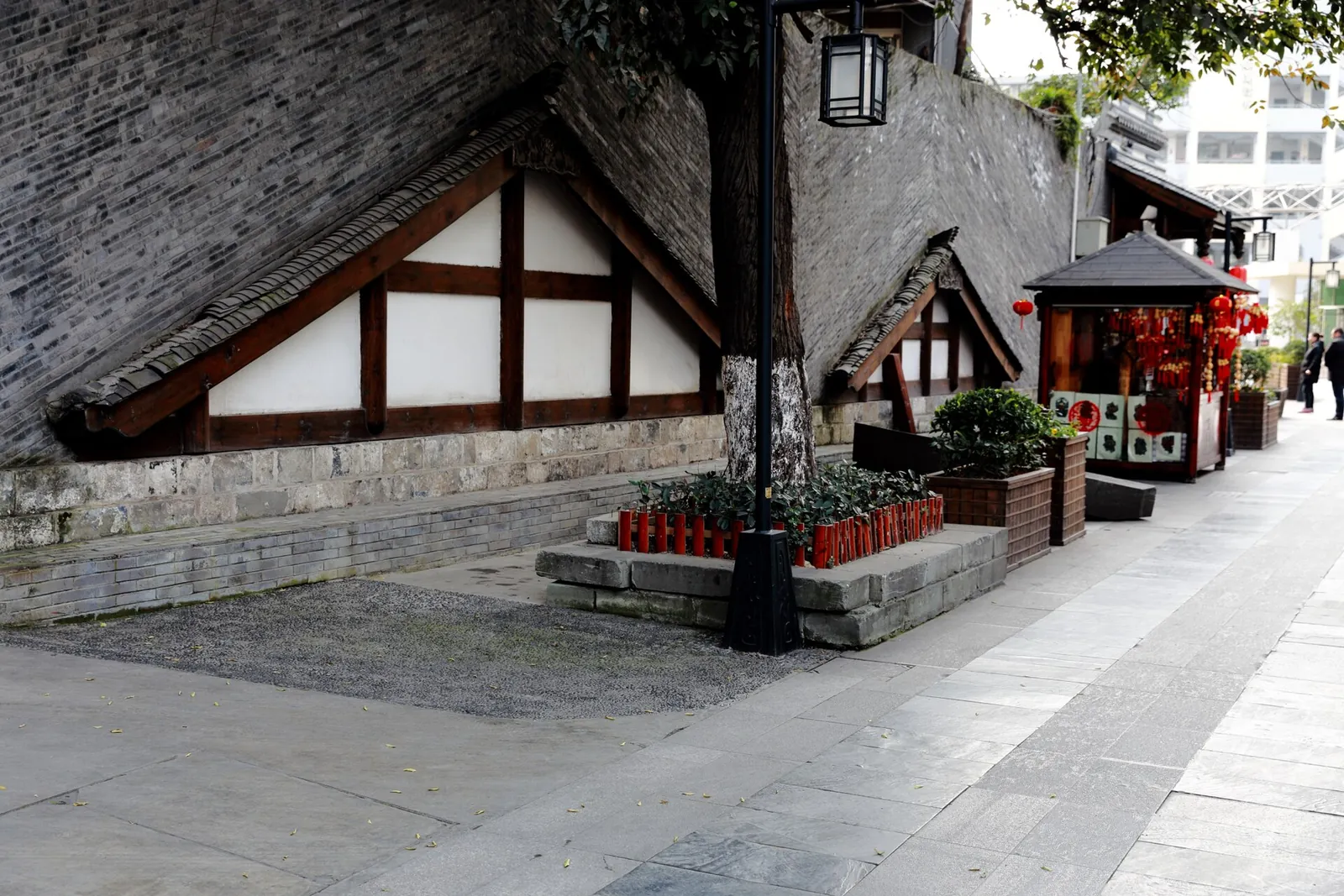
Kuanzhai Alley is three parallel lanes laid out in the Qing dynasty. Kuan Xiangzi, the Wide Alley, has the most complete run of old courtyard houses, with tea houses and Sichuan restaurants; Zhai Xiangzi, the Narrow Alley, mixes late-Qing and early-Republican buildings with early Western-style houses; and Jing Xiangzi has a long brick wall and the snack stalls. The lanes are free and open all day, and Metro Line 4 stops at Kuanzhaixiangzi station. Courtyards and shows inside sell their own tickets. Come in the late afternoon and stay for dinner.
For the tea houses Chengdu is known for, go to People’s Park, beside People’s Park station on Metro Line 2, about 400 metres from the lanes. Its Heming tea house, first built in 1923, is one of the oldest in the city: tables packed under the trees, seats beside the lake, tea in a covered bowl and, for those who want it, the old Chengdu habit of having your ears cleaned at the table.
In the evening, the Shufeng Yayun theatre inside the Culture Park on Qintai Road stages Sichuan opera, including face-changing, in which performers swap painted masks in a flash. The show starts at 20:00 every night and the doors open 30 minutes earlier; every ticket includes a bowl of tea. Choose your seat class on the theatre’s booking page before buying.
The Wuhou Shrine and Du Fu Thatched Cottage
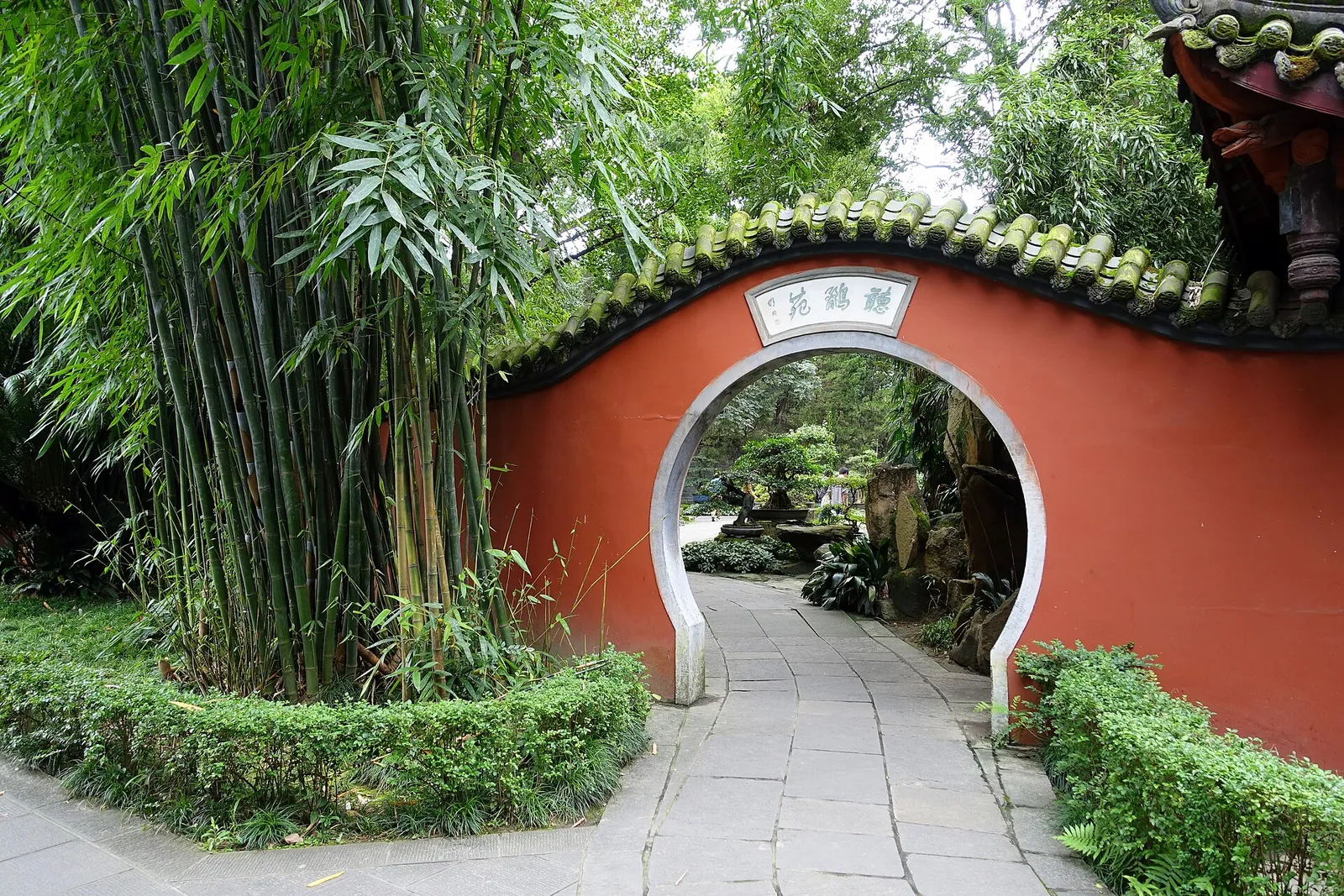
The Wuhou Shrine honours Liu Bei, who founded the Shu Han kingdom with Chengdu as its capital in 221, during the Three Kingdoms period, and his chancellor Zhuge Liang. It is the only temple in China where a ruler and his minister are worshipped together. The present halls date from a rebuilding in 1671 and 1672, Liu Bei’s tomb, the Hui Mausoleum, lies in the grounds, and the complex of about 15 hectares also takes in Jinli, a lane of snack and craft shops. Adult tickets cost CNY 50, and the museum opens from 09:00 to 18:00, with last entry at 17:00. Buy on the museum’s own website or WeChat account, or at the gate: it has never authorised online resellers.
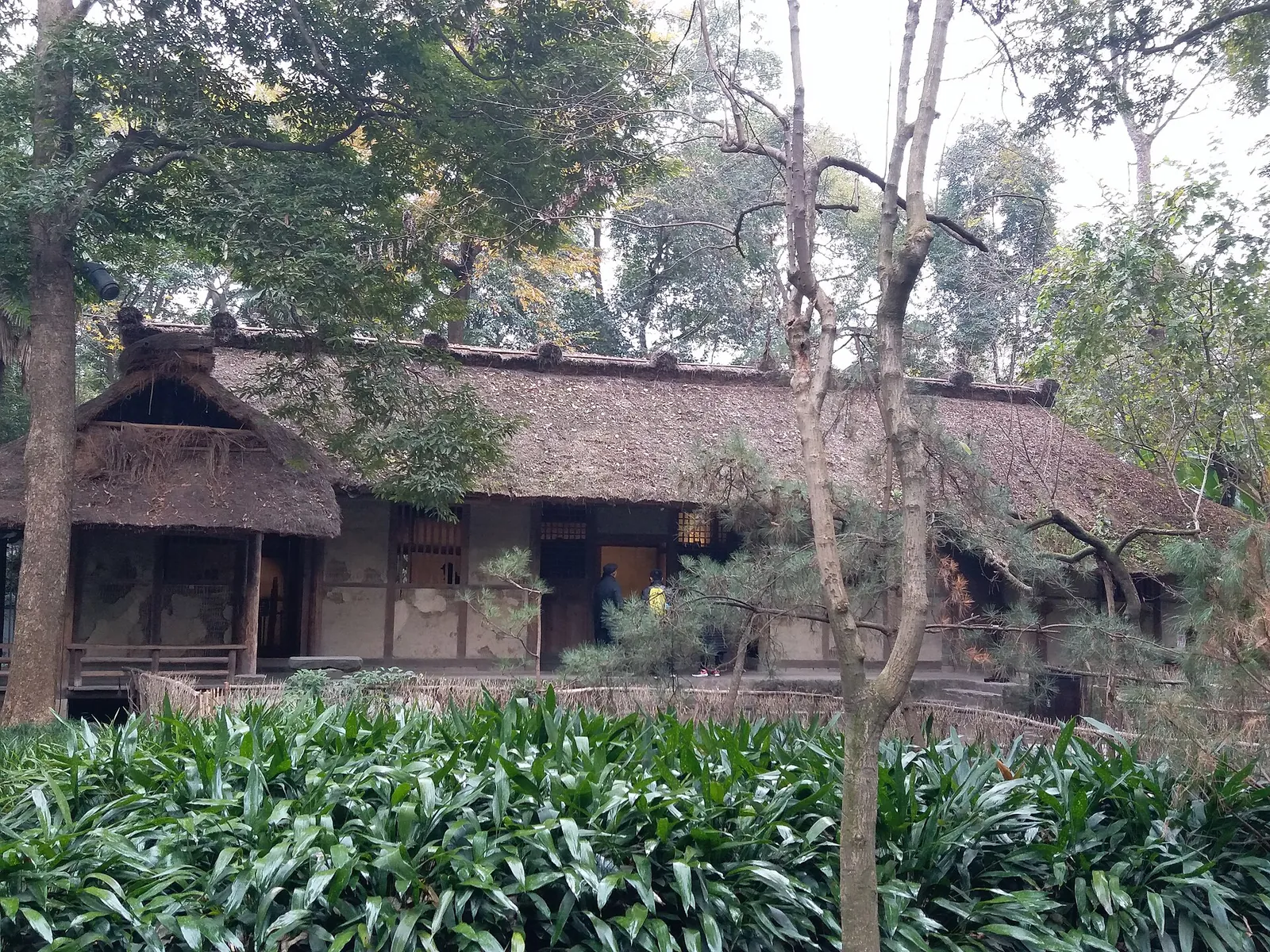
The Du Fu Thatched Cottage stands where the Tang poet Du Fu built a thatched home beside the Huanhua stream in 760 and lived for nearly four years, writing more than 240 poems that survive. The cottage you see is a later reconstruction; the grounds of about 53 hectares hold timber halls, a Tang-dynasty archaeological site, and plum, orchid and bonsai gardens. Adult tickets cost CNY 50, and it opens from 09:00 to 18:00, with ticket sales ending at 17:00. You can reserve up to 14 days ahead on its WeChat service account; without a Chinese identity card, you collect a paper ticket at the window. Metro Line 13 stops at Dufu Caotang station, whose exit C2 leads to the north gate, and the museum runs a tourist bus to the Wuhou Shrine.
The Leshan Giant Buddha as a day trip
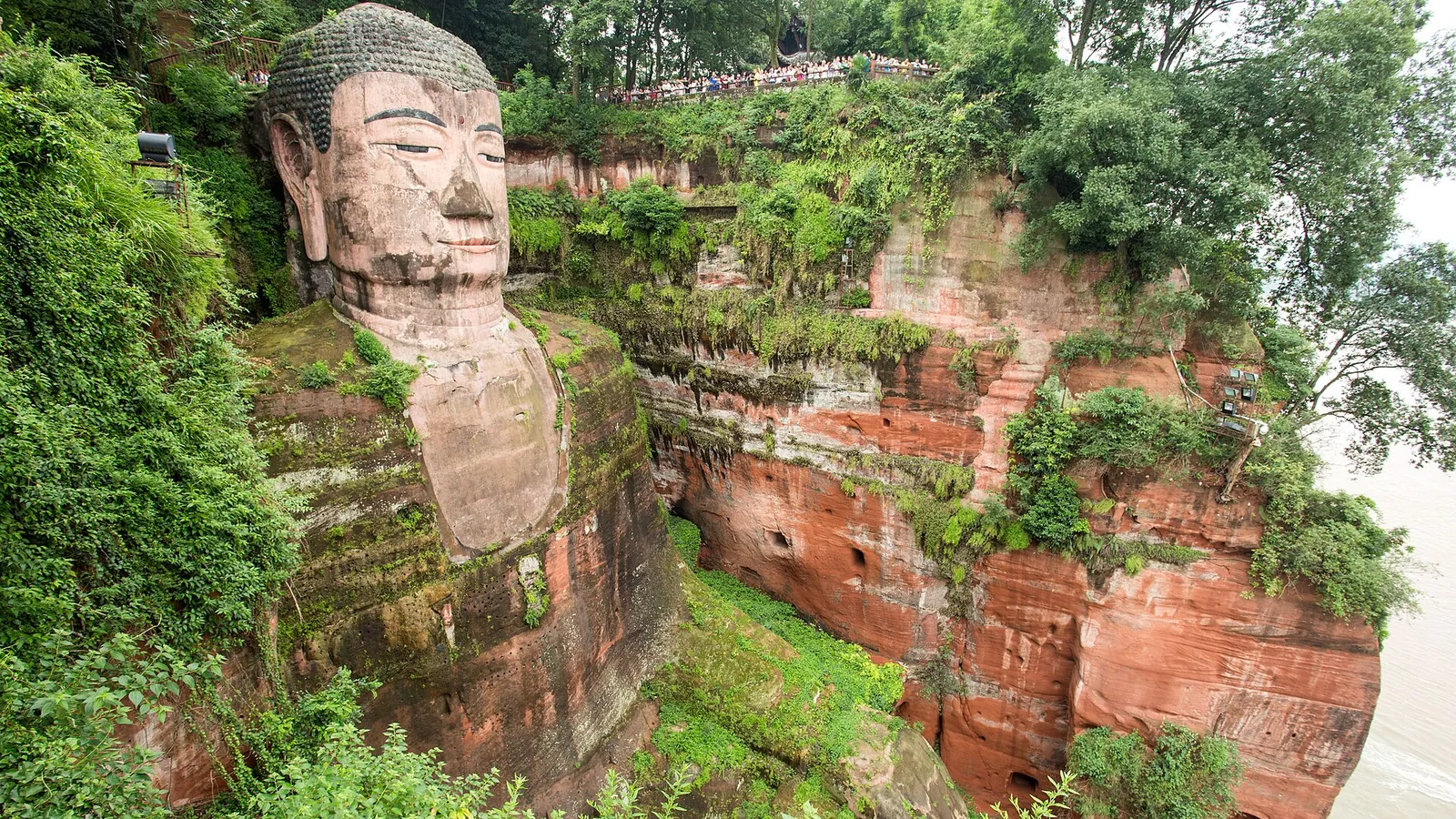
The Leshan Giant Buddha is a seated Maitreya Buddha 71 metres tall, carved into the red sandstone of Lingyun Mountain where three rivers meet: the Min, the Dadu and the Qingyi. It was carved over about 90 years, more than 1,300 years ago, and since 1996 it has been part of the Mount Emei and Leshan Giant Buddha World Heritage Site. The scenic area around it also holds the Lingyun and Wuyou temples and the Mahao cliff tombs.
On an ordinary November weekday, the 12306 timetable (checked on 25 October 2026) lists 51 direct trains from Chengdu East to Leshan between 06:15 and 21:49, most taking 46 to 65 minutes, and second class costs CNY 54 a person on most of them; the last train from Leshan to Chengdu East leaves at 22:12. On the same day 10 direct trains also leave from Chengdu South, on Metro Line 1, between 06:51 and 21:34, taking 41 to 70 minutes, with second class at CNY 51 on most. Book on the 12306 app or website with your passport; our transport guide explains how. Metro Line 2 runs from Tianfu Square and Chunxi Road to Chengdu East, and a taxi or ride-hailing car is the easier choice for an early train. Allow about an hour at the station for security, the passport check and queues. Leshan station is about 12 km by road from the Buddha: a taxi takes about half an hour and costs about CNY 40 a vehicle each way. From a hotel near Tianfu Square to the gate of the scenic area, that comes to about two and a half hours each way.
Budget about CNY 80 a person for admission, an estimate based on comparable sites such as Dujiangyan (CNY 80). Check the scenic area’s current ticket calendar for opening hours and passport booking before choosing your train. At Leshan station, ask the taxi for the Leshan Giant Buddha scenic area (乐山大佛景区, Leshan Dafo Jingqu), at 2435 Lingyun Road. Walk it in order. From the entrance, the path climbs Lingyun Mountain under banyan trees to Lingyun Temple, beside which you look across at the Buddha’s head, with the 1,051 coiled knots of its hair, and down on the meeting of the rivers. If the Nine-Bend Plank Path is open, it leads down the cliff beside the statue to its feet; follow the day’s signed route and closures. Otherwise keep to the upper viewpoints. Arrange the return pickup at the exit in use. Allow four to five hours on site.
Dujiangyan, Mount Qingcheng or Sanxingdui instead
For a shorter day out, or a fourth day, go west to Dujiangyan. Its irrigation works, built around 256 to 251 BC under Li Bing, governor of Shu, divide the Min River with the Fish Mouth levee, the Flying Sand spillway and the Bottle-Neck intake and still water the Chengdu plain; they were listed as a World Heritage Site in 2000. The scenic area costs CNY 80 for adults and opens from 08:00 to 18:00 between March and December, with ticket sales ending at 17:30, and from 08:00 to 17:00 in January and February; allow about three hours. Book with your passport on the scenic area’s WeChat accounts or at the ticket window, and enter through the staffed lane. On Mount Qingcheng, the wooded mountain nearby, the front mountain opens from 08:00 to 17:30 in summer and from 08:30 to 17:00 in other seasons.
For the irrigation works, take the train to Lidui Park station, from which you can walk to the scenic area; Dujiangyan station, the town’s main stop, needs a bus onward, and Qingchengshan station serves Mount Qingcheng. Nearly all trains to the three leave from Xipu station in the western suburbs. On the same November weekday, 12306 lists 19 direct trains from Xipu to Lidui Park between 06:24 and 21:14, taking 23 to 33 minutes, and 19 back, the last at 21:56; 36 trains run from Xipu to Qingchengshan, taking 23 to 40 minutes. Second class costs CNY 10 a person. From Chengdu East, a single afternoon train, at 13:37, runs to Dujiangyan and Qingchengshan.
North of the city, the Sanxingdui Museum at Guanghan shows the finds from the capital of the ancient Shu kingdom, a Bronze Age culture 3,000 years old or more, among them a bronze tree 3.95 metres tall with nine birds in its branches; on the same November weekday 16 direct trains run from Chengdu East to Guanghan North, taking 18 to 27 minutes, with second class at CNY 18 to 21. From Guanghan North, bus 13 reaches the museum in about 38 minutes. The museum’s own site lists the adult ticket at CNY 72 and gallery hours of 08:30 to 18:00, with last entry at 17:00, later in January, February, July and August and on holidays. It sells only through its website and WeChat account: reserve in your own name and take your original passport to the ticket centre to collect the ticket.
Three days in order
Book the Panda Base first, because its quota is the one that can run out, then fit the rest around it. If you have only two days, drop Leshan rather than the panda morning. Onward, the usual next stop by train is Xi’an, or you can fly east to Shanghai.
- Day 1: Wenshu Monastery and the old city. Arrive, have a vegetarian lunch at Wenshu Monastery, walk Kuanzhai Alley in the late afternoon, take tea in People’s Park, 400 metres away, at dusk, have mapo tofu for dinner and, if you like, finish with Sichuan opera at 20:00 (optional, priced separately).
- Day 2: the Panda Base. Be at the gate for the 07:30 opening slot (08:00 from November to February) and finish by lunch, eat long chao shou near Chunxi Road, then spend the afternoon at the Wuhou Shrine or the Du Fu Thatched Cottage, pick up braised meats at Panshunshi’s takeaway window and have Sichuan hotpot near Chunxi Road for dinner.
- Day 3: Leshan. Leave your bags at the hotel and take a taxi to Chengdu East at about 06:30 for the 07:49, which reaches Leshan at 08:35 on the November timetable. After four to five hours at the Buddha, a mid-afternoon train such as the 15:46 from Leshan has you back at Chengdu East at 16:38, in time to collect your bags. Book an onward train from Chengdu East after about 19:00, or add a third night if you fly out of Tianfu. Dujiangyan or the Sanxingdui Museum can take this day instead.
What to eat and where to look
Mapo tofu
Soft tofu in a glossy red sauce with minced beef, fermented beans and chilli, finished with Sichuan pepper that numbs the lips as much as the chilli burns. Chen Mapo, founded in 1862 beside the Wanfu Bridge on Chengdu’s north side, is a national time-honoured brand, recognised in 2006, and its recipe uses beef, so it is not a vegetarian dish.
- Where to look
- Chen Mapo Tofu, which runs three restaurants of its own in the city.
- Fit it into your day
- Dinner on the first evening, after Kuanzhai Alley and tea in People’s Park; order it with plain rice to balance the heat.
Fuqi feipian, beef and offal in chilli sauce
Beef, ox heart, tongue, tripe and head skin, braised, sliced thin and dressed with red chilli oil and ground Sichuan pepper. The name means “husband-and-wife lung slices”: a married couple, Guo Chaohua and Zhang Tianzheng, created the dish in Chengdu in the early 1930s.
- Where to look
- The snack stalls of Jing Xiangzi in Kuanzhai Alley, or Fuqi Feipian’s main restaurant on Zongfu Road, beside Chunxi Road.
- Fit it into your day
- A snack from the Jing Xiangzi stalls as you walk Kuanzhai Alley on the first evening.
Long chao shou, Chengdu wontons
Chengdu’s name for wontons: minced pork in thin wrappers, served in a bowl of broth, with red chilli oil if you want the heat.
- Where to look
- Long Chao Shou, a time-honoured snack restaurant founded in 1941 with three restaurants of its own in the city, and the other snack restaurants on and around Chunxi Road.
- Fit it into your day
- Lunch after the Panda Base, on the way to the Wuhou Shrine.
Sichuan hotpot
Chengdu’s signature meal: a pot of broth kept boiling at the table, the spicy side made with beef tallow and red with chilli and numbing Sichuan pepper, in which you cook thin slices of meat, leafy vegetables, mushrooms, tofu and wontons. Many restaurants serve a split yuanyang pot with a clear broth on one side, and the usual dip is sesame oil with crushed garlic.
- Where to look
- The hotpot restaurants around Chunxi Road and Tianfu Square, a short walk from both hotel bases.
- Fit it into your day
- Dinner on the second evening, after the Wuhou Shrine or the Du Fu Thatched Cottage.
Lu wei, Chengdu braised meats
Chicken, duck and goose wings and feet, and their livers and giblets, braised in a seasoned stock and eaten as a snack or alongside a meal; a favourite tucks braised pork into a guokui flatbread.
- Where to look
- Panshunshi, a braised-meat restaurant founded in 1925, on Huaxing Zhengjie in Jinjiang District beside the Jinjiang Theatre; it has a takeaway window as well as dining rooms serving Sichuan dishes.
- Fit it into your day
- A snack from Panshunshi’s takeaway window on the second afternoon, on the way back to the centre before the hotpot.
Getting to Chengdu and around
Chengdu has two airports. From Chengdu Tianfu International (TFU), the farther from the centre, Metro Line 18 runs to Chengdu South railway station; check the airport’s metro timetable for your arrival time. At Chengdu South, change to Line 1 for Tianfu Square. A taxi or ride-hailing car from Tianfu into the city costs about CNY 200 a vehicle and takes about an hour, going by the Panda Base’s published fare from the airport. Metro Line 19 also links Tianfu with Shuangliu’s Terminal 2. From Chengdu Shuangliu International (CTU), the nearer airport, Metro Line 10 runs from both terminals into the city as far as Wuhou Ci station, by the Wuhou Shrine, from about 06:00 until the last trains at 23:12 from Terminal 2 and 23:15 from Terminal 1.
Chengdu East is the main station for Leshan and for trains to Xi’an and Guilin; Chengdu South, a different station, has some Leshan trains too. For 5 November 2026, the dated 12306 results in our transport guide list Xi’an North to Chengdu East at 3 h 5 min to 4 h 21 min, second class CNY 260 to 316. Since 1 July 2026, some Chengdu trains use the new Xi’an East station, so check the Xi’an station on your ticket. DiDi works in English with a foreign number and card, and Amap navigation works in English; our payments and apps guide explains how to set up both before you leave.
Safety and local rules
Carry your original passport at all times; a printed copy is not accepted. Avoid demonstrations, large gatherings and any political or activist activity; the French government warns of prison, expulsion and a ban on returning. The British government warns of a risk of arbitrary detention, and British and German advice both warn that exit bans can affect visitors, and the British government says they can last months or years. The French government advises against photographing military or official sites, or any place where photography is banned; some sites are not signposted, and places of worship can have their own rules. German advice is to refrain from using VPN services; plan on limited access to some overseas apps and keep offline maps and notes. Much of China is seismically active; this matters most for Sichuan itineraries. Check your own government’s current travel advice before you book.
What three days in Chengdu cost
| Level | Per person, about CNY | For two, about CNY |
|---|---|---|
| Mid-range | 2,100 | 4,190 |
The budget assumes two adults sharing one private double for two nights in an ordinary autumn week outside the national holidays, with prices checked on 25 October 2026. It covers rooms, three meals and drinks a day, the Panda Base, one visit to the Wuhou Shrine or Du Fu Thatched Cottage, and Leshan, local rides from arrival at Tianfu airport to leaving by train from Chengdu East, two SIMs and a 10% buffer. These figures are for Chengdu on its own; our China trip cost guide prices a ten-day route that includes it.
Chengdu is usually one stop on a longer trip. Our China trip cost guide prices a complete route with its international and domestic flights; for this standalone visit, add your own return flight to Chengdu to the ground total.
- Rooms, about CNY 1,300 for two. Two nights in the mid-range double described under where to stay.
- Food, about CNY 1,080 for two. Using the Shanghai restaurant prices in our China trip cost guide as comparisons, about CNY 180 a person a day: CNY 30 for breakfast, 60 for lunch, 70 for dinner and 20 for water and snacks, a typical mid-range day.
- Getting around, about CNY 700 for two. Rail to Leshan and back at CNY 54 a person each way (about CNY 220 for two), and about CNY 480 in all for taxi and ride-hailing from the airport and to the stations, the Panda Base and the Buddha, including the Tianfu airport ride at about CNY 200 a vehicle and the Leshan station rides at about CNY 40 a vehicle each way, estimates based on the Panda Base’s published reference fares; fares are per vehicle, so the two of you share each ride.
- Sights, about CNY 430 for two. Each person pays about CNY 215: the Panda Base CNY 55, its sightseeing bus CNY 30, the Wuhou Shrine or Du Fu Thatched Cottage CNY 50 and the Leshan Giant Buddha about CNY 80.
- SIM and extras, about CNY 300 for two. About CNY 150 a person for a roughly 15-day data SIM, estimated against China Telecom’s regional CNY 125 visitor tariff; local availability and your travel dates affect the offer.
- Buffer, about CNY 380. Ten per cent of the subtotal.
Practical questions
How many nights should I spend in Chengdu?
Two nights give three days: the old city and Wenshu Monastery, the Panda Base, and a day trip to the Leshan Giant Buddha. Add a night for a slower pace or a second excursion such as Dujiangyan or the Sanxingdui Museum; two days work if you drop Leshan.
Do I need to book the Panda Base in advance?
Yes, unless you are 60 or over or a young child. Reserve a timed, real-name ticket up to 14 days ahead through the Base’s official WeChat account or mini-programme or one of its named platforms, and take your original passport to the gate. The adult ticket is CNY 55.
Can I visit the Leshan Giant Buddha and the pandas in one day?
Private tours do combine them in one long day; we give each its own day. The Panda Base fills a morning, and Leshan a full day, about two and a half hours each way from the centre.
How do I get to Leshan from Chengdu?
Take a high-speed train from Chengdu East to Leshan station, booked on the 12306 app or website with your passport. In the dated 5 November 2026 timetable, most trains take 46 to 65 minutes, with second class CNY 54 a person each way on most services. From Leshan station it is about 12 km by road to the scenic area, about half an hour by taxi.
Can I go to Dujiangyan instead of Leshan?
Yes, and it is the shorter day. Trains from Xipu station reach Lidui Park, a walk from the irrigation works, in about half an hour for CNY 10, and the works, more than 2,200 years old, take about three hours to see. Leshan has the Giant Buddha; Dujiangyan has the irrigation works, with Mount Qingcheng nearby.
Do I need a visa for Chengdu?
Ordinary-passport holders from the United Kingdom, Germany, France, Italy, Spain, the Netherlands and the other nationalities listed in our entry guide can stay up to 30 days without a visa, counted from the day after you enter. The waiver is published until 31 December 2026. No extension into 2027 has been announced, so a 2027 trip needs a published extension or a visa. US and Czech passports are not on this visa-free list. US and Czech citizens need a visa unless they qualify for the 240-hour transit rule, whose conditions the entry guide sets out.
Is Chengdu safe for visitors?
Most visits pass without trouble. The points that change your plans, from carrying your original passport and avoiding demonstrations and political activity to the VPN advice and the earthquake risk, are in the section on safety and local rules.
Keep planning your trip
Xi’an
Two nights in Xi’an: booking the Terracotta Army and the Shaanxi History Museum with a passport, the City Wall, where to stay and what it costs.
Read the guide
Getting around China
Book China's high-speed trains on 12306 with a foreign passport, decide when to fly, and get from the airports and stations into town.
Read the guide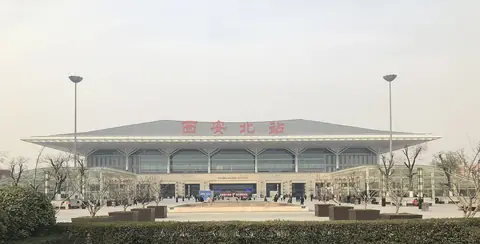
China trip cost
What 10 days in Beijing, Xi’an, Chengdu and Shanghai cost for two sharing a room: about CNY 7,360, 10,140 or 15,950 a person, with every meal, train and ticket.
Read the guide
Chongqing and the Yangtze
Two nights in Chongqing, three on a Yangtze cruise to Yichang, a night train to Shanghai: the 2027 fares, life on board, booking and the week's cost.
Read the guide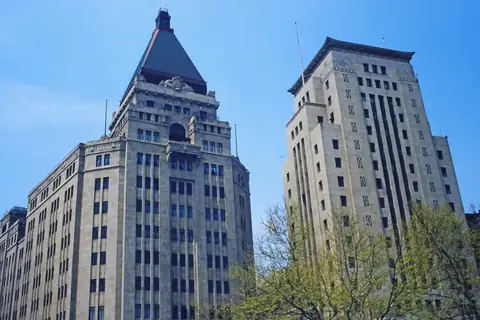
China in ten days
A ten-day China itinerary with nine nights in Beijing, Xi’an, Chengdu and Shanghai, a Hangzhou day trip, timed-ticket booking, rail and flight legs and an all-in budget.
Read the guide
China in fourteen days
Fourteen days in China: Beijing, Xi’an, Chengdu, three nights in Yangshuo and Shanghai with a Hangzhou day trip, three trains and one flight, with a budget for two.
Read the guideSources and checks before you travel
(48)
- Chengdu Research Base of Giant Panda Breeding: tickets ↗ — opens in a new tab
- Chengdu Research Base of Giant Panda Breeding: introduction ↗ — opens in a new tab
- Chengdu Research Base of Giant Panda Breeding: feeding ↗ — opens in a new tab
- Chengdu Research Base of Giant Panda Breeding: sightseeing bus ↗ — opens in a new tab
- Chengdu Research Base of Giant Panda Breeding: transportation ↗ — opens in a new tab
- Ministry of Commerce: Chen Mapo time-honoured brand ↗ — opens in a new tab
- Ministry of Commerce: Long Chao Shou time-honoured brand ↗ — opens in a new tab
- Ministry of Commerce: Fuqi Feipian time-honoured brand ↗ — opens in a new tab
- Ministry of Commerce: Panshunshi time-honoured brand ↗ — opens in a new tab
- China Daily government-affairs portal: Sichuan hotpot ↗ — opens in a new tab
- China Daily government-affairs portal: Hotpot ↗ — opens in a new tab
- China Railway 12306: Frequently asked questions ↗ — opens in a new tab
- Chinese Embassy in Timor-Leste: visa-free FAQ ↗ — opens in a new tab
- Ministry of Foreign Affairs of China: visa-free FAQ ↗ — opens in a new tab
- UK government: China safety and security ↗ — opens in a new tab
- German Federal Foreign Office: China safety ↗ — opens in a new tab
- French diplomacy: practical information for China ↗ — opens in a new tab
- State Administration of Foreign Exchange: central parity ↗ — opens in a new tab
- China Railway 12306: timetable and fares for an ordinary November weekday ↗ — opens in a new tab
- Chengdu Shuangliu International Airport: metro ↗ — opens in a new tab
- The Paper: Tianfu airport transport guide (March 2023) ↗ — opens in a new tab
- Tianfu Morning News: Chengdu Metro Line 2 interchanges (September 2012) ↗ — opens in a new tab
- Xinhua: World Heritage in China, the Leshan Giant Buddha (June 2024) ↗ — opens in a new tab
- China Daily government-affairs portal: Giant Buddha, Leshan ↗ — opens in a new tab
- Wenshu Monastery: introduction ↗ — opens in a new tab
- Wenshu Monastery: contact ↗ — opens in a new tab
- Wenshu Monastery: Xiangyuan ↗ — opens in a new tab
- China Daily government-affairs portal: Kuanzhai Alley ↗ — opens in a new tab
- China Daily: Teahouse offers a taste of Chengdu culture (October 2023) ↗ — opens in a new tab
- China Daily: Brewing up a sense of intimate community (August 2023) ↗ — opens in a new tab
- China Daily government-affairs portal: Chunxi Road, Chengdu ↗ — opens in a new tab
- Shufeng Yayun: performance time ↗ — opens in a new tab
- Shufeng Yayun: ticket packages ↗ — opens in a new tab
- Chengdu Wuhou Shrine Museum: tickets ↗ — opens in a new tab
- Chengdu Wuhou Shrine Museum: home page ↗ — opens in a new tab
- Chengdu Wuhou Shrine Museum: introduction ↗ — opens in a new tab
- Chengdu Du Fu Thatched Cottage Museum: ticket rules ↗ — opens in a new tab
- Chengdu Du Fu Thatched Cottage Museum: reservations ↗ — opens in a new tab
- Chengdu Du Fu Thatched Cottage Museum: introduction ↗ — opens in a new tab
- Chengdu Du Fu Thatched Cottage Museum: getting here ↗ — opens in a new tab
- Dujiangyan tourism portal: tickets ↗ — opens in a new tab
- Dujiangyan tourism portal: overview ↗ — opens in a new tab
- Dujiangyan tourism portal: by train ↗ — opens in a new tab
- China Daily government-affairs portal: Sanxingdui Museum ↗ — opens in a new tab
- Sanxingdui Museum: visiting information ↗ — opens in a new tab
- Shanghai government: scallion-oil noodles (April 2026) ↗ — opens in a new tab
- Shanghai government: Xiaolongbao (March 2026) ↗ — opens in a new tab
- China Telecom: foreign-visitor card tariff ↗ — opens in a new tab
Reference sources for the version dated 26 October 2026. Confirm opening times, access, transport and conditions for your travel dates.
Photo credits
(6)
Panda cubs asleep in the nursery crib at the Chengdu Research Base of Giant Panda Breeding.
Photograph: Gerd Eichmann — opens in a new tab · CC BY-SA 4.0 — opens in a new tab
Changes: Resized and converted to WebP; displayed with responsive crops. · Original photograph and licence details ↗ — opens in a new tab
A hall at Wenshu Monastery, Chengdu's best-known Buddhist temple.
Photograph: xiquinhosilva — opens in a new tab · CC BY 4.0 — opens in a new tab
Changes: Resized and converted to WebP; displayed with responsive crops. · Original photograph and licence details ↗ — opens in a new tab
Timber-framed gables set into a brick wall in Kuanzhai Alley, the Qing-dynasty lanes in central Chengdu
Photograph: landagent — opens in a new tab · CC BY-SA 3.0 — opens in a new tab
Changes: Resized and converted to WebP; displayed with responsive crops. · Original photograph and licence details ↗ — opens in a new tab
The Leshan Giant Buddha, carved into the cliff above the river.
Photograph: 王计 — opens in a new tab · CC BY 2.5 — opens in a new tab
Changes: Resized and converted to WebP; displayed with responsive crops. · Original photograph and licence details ↗ — opens in a new tab
The moon gate in the red wall of the garden at Wuhou Shrine.
Photograph: Daderot — opens in a new tab · CC0 — opens in a new tab
Changes: Resized and converted to WebP; displayed with responsive crops. · Original photograph and licence details ↗ — opens in a new tab
Reconstructed thatched buildings in the grounds of the Du Fu Thatched Cottage.
Photograph: Pauloleong2002 — opens in a new tab · CC BY-SA 4.0 — opens in a new tab
Changes: Resized and converted to WebP; displayed with responsive crops. · Original photograph and licence details ↗ — opens in a new tab