Ho Chi Minh City and the Southeast · Ho Chi Minh City
Cu Chi Tunnels guide: Ben Dinh or Ben Duoc, by road or river, tickets
The Cu Chi Tunnels are not one site but two, run by the same management board in the farmland north-west of Ho Chi Minh City. Ben Dinh was the base of the Cu Chi district Party committee; Ben Duoc was the base of the Saigon – Cho Lon – Gia Dinh Military Region, and it adds a large memorial temple and a recreated wartime village. Underneath both runs what the board describes as a network of about 250 km of hand-dug tunnels, with meeting rooms, field hospitals, kitchens and wells, that sheltered guerrillas and villagers through the wars against the French and the Americans. Choosing the right site, the right way of getting there and the right time of day makes the difference between a rushed photo stop and a visit that explains how people lived and fought underground.
- Suggested time
- Half a day for one site; a full day with Ben Duoc's memorial or a Tay Ninh add-on
- Where to stay
- Central Ho Chi Minh City (District 1 area near Bach Dang wharf); Tay Ninh for an overnight pairing
- Season and timing
- Vietnam Tourism describes Ho Chi Minh City as warm all year, with heatwaves in April and May, a rainy season from May to November and slightly cooler weather in December and January. The tunnels are in forest and clay soil: in the wet season expect mud and showers, and in any season go early to avoid the midday heat.
The short answer
Give the tunnels a half-day for one site, or a full day if you want Ben Duoc's memorial temple and recreated village as well. Sleep in central Ho Chi Minh City and go out in the morning by private car, organised tour or the river boat from Bach Dang wharf; the board's site is open every day from 07:00 to 17:00. Pick Ben Dinh for the classic tunnel crawl in a compact site, Ben Duoc for the fuller story. If you want to add Tay Ninh's Cao Dai Holy See and Ba Den Mountain, make it a long day or, better, spend a night in Tay Ninh rather than trying to fit everything in before dark.
Ben Dinh or Ben Duoc: choose the site first
The management board, the Cu Chi Tunnels Historical Relic Area, says the tunnels are preserved at two locations. Ben Dinh, in Nhuan Duc commune on Provincial Road 15, was the base of the Cu Chi district Party committee, which the board says chose it for its forest of more than 100 hectares, high and firm ground and its position beside the Saigon River, which gave a line of retreat. Ben Duoc, at Phu Hiep hamlet (now listed by the board as An Nhon Tay commune), was the base of the Party committee and command of the Saigon – Cho Lon – Gia Dinh Military Region. Ben Duoc was recognised as a national historic site in 1979, Ben Dinh in 2004, and the complex became a special national relic in 2015.
At both sites the visit follows a similar pattern, according to the board: a documentary film in a hall, an introduction to how the tunnels were built, then a guided walk through underground shelters, meeting rooms, weapons workshops and trenches. Ben Dinh adds a tunnel branch leading towards the former Dong Du base of the US 25th Infantry Division and the wreck of an M41 tank that the board says hit a guerrilla mine in 1970. Ben Duoc goes further in scale: an outdoor display of American bombs and artillery before the ticket gate, the commanders' bunkers, a surgery bunker, A-frame shelters, a Hoang Cam smokeless kitchen and, beyond the forest, the memorial temple and a recreated liberated zone reached by electric cart.
Distances quoted by official sources vary. One Vietnam Tourism page puts Ben Dinh about 35 km and Ben Duoc about 70 km from the city, while the board and another Vietnam Tourism page give about 70 km for the complex as a whole. Either way, the practical choice is this: Ben Dinh if you want the tunnels themselves in a tighter half-day, Ben Duoc if you want to understand the wider war in the Saigon region and have the whole day.
What you actually see underground
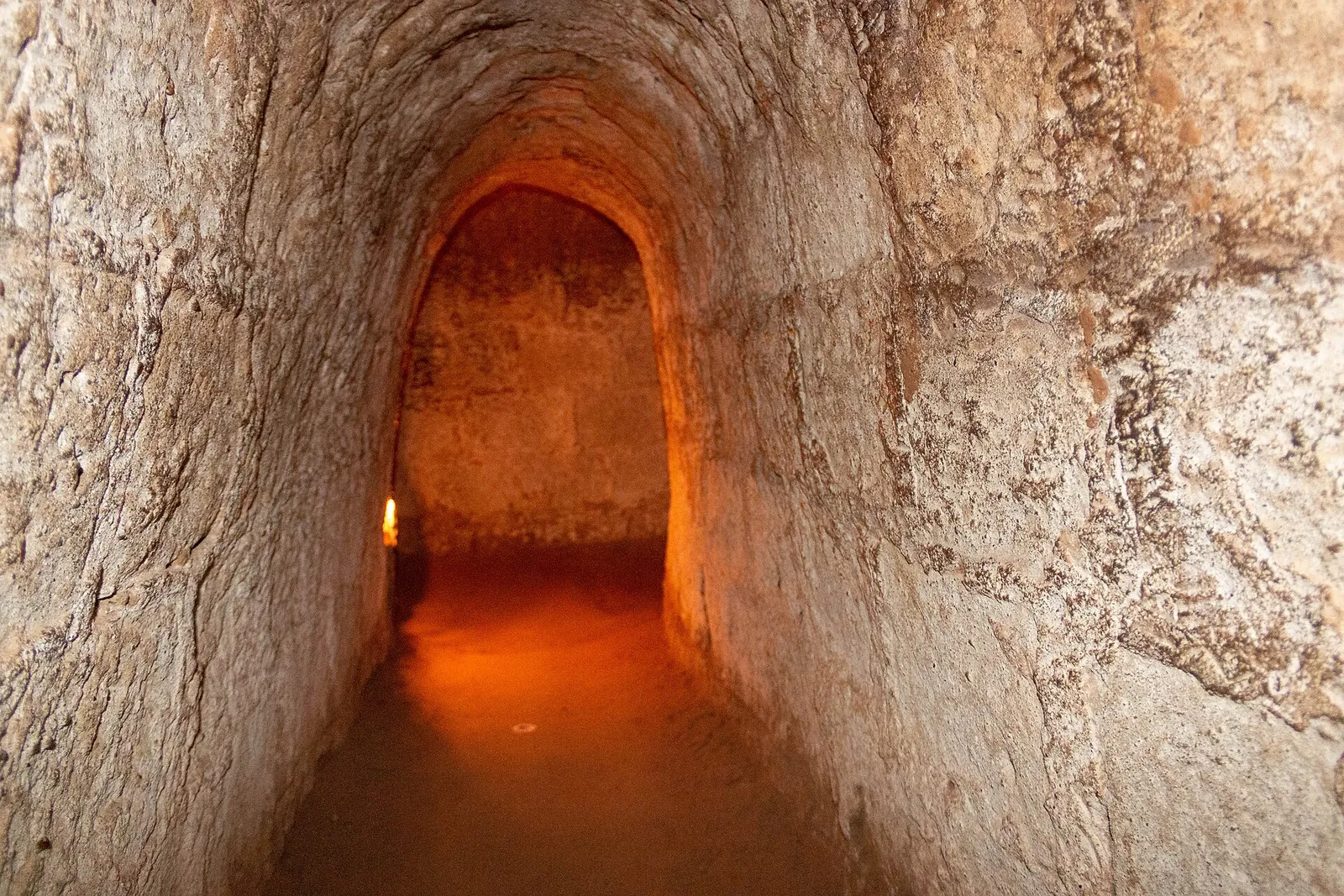
The tunnels began as short, separate hiding places dug by individual villages in the late 1940s to hide fighters, documents and weapons, according to Vietnam Tourism's account. They were linked into one network as the war against the Americans intensified; by 1965, it says, some 200 km of tunnels and 500 km of combat trenches had been dug, on up to three levels at roughly 3 m, 6 m and 8–12 m deep. The lateritic clay held its shape under bombardment, and exits opened onto the Saigon River.
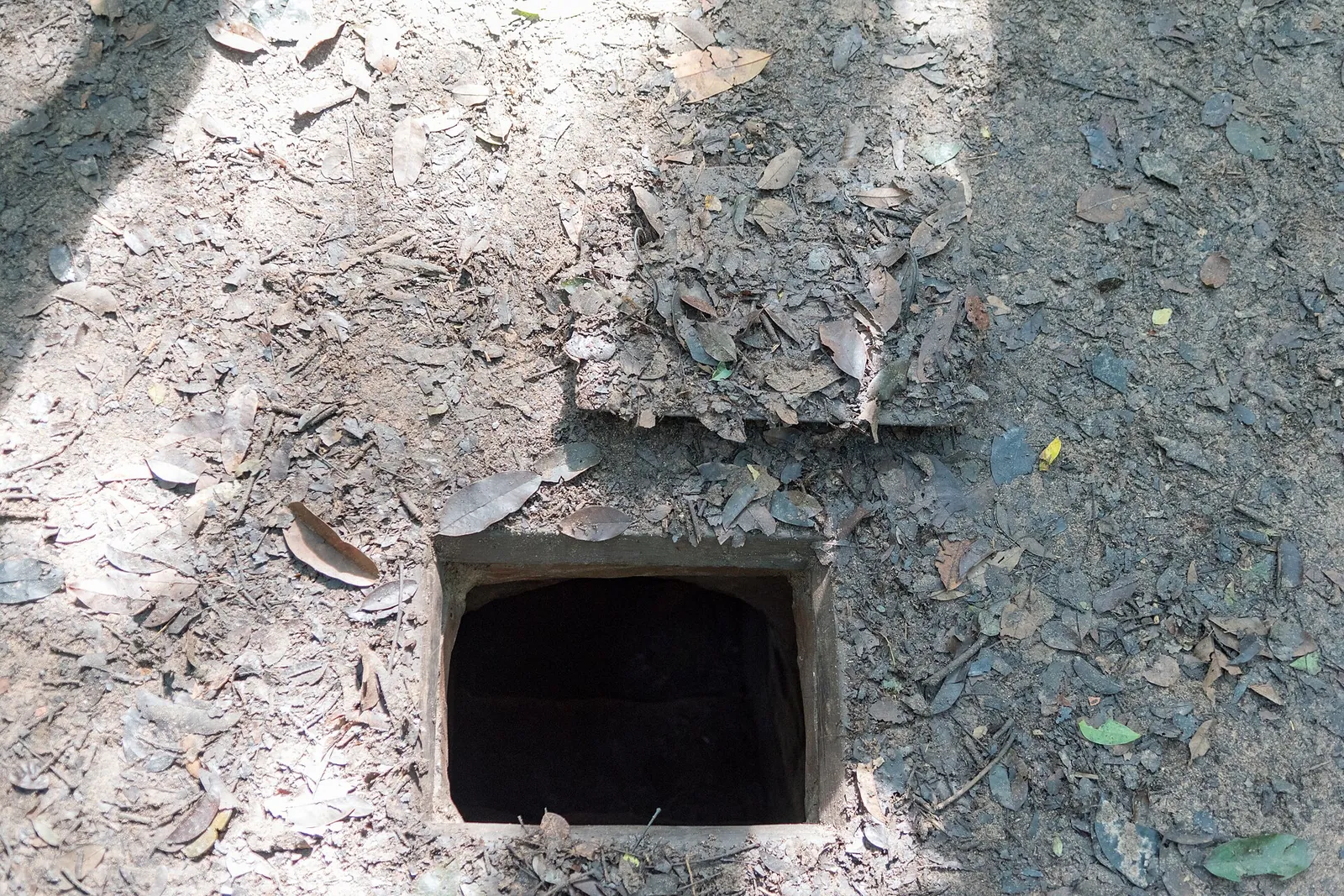
Inside, the board lists sleeping and working shelters for commanders, meeting rooms, field surgeries and wards for the wounded, food and weapons stores, wells, hidden trapdoors, air vents, firing posts and the Hoang Cam kitchens, whose design dispersed cooking smoke so that it could not be seen from the air. Vietnam Tourism notes that passages are generally just wide and high enough for one person walking bent over, and some are so narrow that you turn sideways.
That is the honest test for whether to go in. Getting dirty is part of the visit, as Vietnam Tourism puts it, so wear clothes you do not mind ruining and shoes with grip. If you are claustrophobic, have knee or back problems or are travelling with small children, you can still see the trapdoors, trenches and shelters from above and walk the forest paths; decide on the spot rather than committing in advance.
Make time for the local food
What to eat and where to look
Boiled cassava (khoai mi luoc)
Plain boiled cassava root, the traditional food of Cu Chi during the war years, according to Vietnam Tourism. The management board describes visitors eating it at the Hoang Cam kitchen on the Ben Duoc tunnel route.
- Where to look
- The Hoang Cam kitchen on the tunnel route at Ben Duoc.
- Fit it into your day
- A mid-visit snack that tells part of the story; it does not replace lunch.
Plain and starchy; it is a taste of history rather than a meal.
Bo to (young beef), Cu Chi's speciality
Young beef (bo to), served as a set of dishes in bo to 7 mon, seven courses of beef. The management board lists it among the country dishes of the Southeast served at its riverside restaurants at Ben Duoc and Ben Dinh.
- Where to look
- The Ben Duoc and Ben Dinh restaurants on the Saigon River.
- Fit it into your day
- A shared lunch after the tunnels; seven courses suit a group better than a couple.
Some beef dishes may be served rare; ask for it well cooked if you prefer.
Canh chua la giang (sour soup with la giang leaves)
A southern sour soup made tart with la giang leaves, listed on the site restaurants' menu alongside ca kho to, fish braised in a clay pot.
- Where to look
- The board's riverside restaurants at Ben Duoc and Ben Dinh.
- Fit it into your day
- Order it with ca kho to and rice for a classic southern lunch for two or three.
Contains fish sauce; the fish usually has bones.
Banh xeo
A crisp rice-flour pancake, usually filled with pork, shrimp and bean sprouts and eaten wrapped in greens with a dipping sauce. The site restaurants include it among their country dishes.
- Where to look
- The Ben Duoc and Ben Dinh restaurants, and pancake stalls back in Ho Chi Minh City.
- Fit it into your day
- A good shared starter at lunch, or a light dinner back in the city.
Contains shrimp and fish sauce; ask for a vegetarian version if needed.
Trang Bang dew-dried rice paper and noodles (Tay Ninh)
Vietnam Tourism highlights Trang Bang's dew-dried rice paper (banh trang phoi suong), made by hand through soaking, grinding, spreading, baking and drying in the dew, and Trang Bang's speciality rice noodles. Trang Bang is in Tay Ninh province.
- Where to look
- Trang Bang in Tay Ninh province, where craft-village visits and specialist restaurants are found.
- Fit it into your day
- A lunch stop if you continue from the tunnels to Tay Ninh.
Ask what is in the dish if you avoid pork or fish sauce; Vietnam Tourism also notes Tay Ninh's vegetarian culinary tradition.
Getting there: road, bus or the Saigon River
Most visitors go by car or on a tour from central Ho Chi Minh City. The board's directions for drivers follow Truong Chinh Road to the An Suong junction, through Hoc Mon and on along Provincial Road 15. A private car gives you control over the start time, which matters more here than anywhere else in the city, because the forest is hottest and busiest from late morning.
The river is the more memorable option. The board's directions page mentions both chartered speedboats from Bach Dang wharf in District 1, noting that the cost is higher, and the Greenlines boat. When Greenlines DP launched its Bach Dang – Binh Duong – Cu Chi service in 2020, Vietnam Tourism reported a journey of about two hours to Ben Dinh and Ben Duoc. When we checked on 2026-10-03, the operator's homepage still listed a Ho Chi Minh City – Binh Duong – Cu Chi route, but we could not find a current timetable or fare there: confirm departure times, the landing site and the return boat directly with the operator before planning around it.
Public buses are possible but slow. The board's directions page, posted in 2014, describes city bus 13 from Ben Thanh to Cu Chi bus station and then route 79 towards Dau Tieng for Ben Duoc, with a longer chain of changes for Ben Dinh. Routes change over the years, so treat this only as a starting point and check current Ho Chi Minh City bus information before relying on it.
Tickets, hours and the night programme
When we checked on 2026-10-03, the board's homepage listed the site as open every day from 07:00 to 17:00. A notice dated 19 January 2026 set the price for foreign visitors from 1 February 2026 at 35,000 VND per person for the historic-site fee plus 100,000 VND per person for the service and guide ticket. The board's notices concern foreign visitors; check at the counter which tickets you need for the site you choose.
The guide ticket is the point of the visit. The board describes guides leading visitors from the gate through the forest to the film hall and on through the tunnels, and at Ben Duoc the women who give the introduction in the film hall wear the black ba ba shirt, rubber-tyre sandals and checked scarf of the wartime guerrillas. Expect gunfire in the background: both sites have a national-defence sports shooting range, and Ben Duoc also offers paintball. If loud shots will upset you or your children, ask where the range is and plan your route around it.
For something different, the board runs an evening programme, Trang Chien Khu (Moon over the War Zone), in the tunnels area. When we checked, its October 2026 notice listed a performance on Saturday 24 October 2026 from 18:00 to 20:30, at 399,000 VND per person, booked by hotline, Ticketbox or at the ticket counter at Phu Hiep hamlet. The same notice says the site has homestay rooms, a guesthouse, tents and restaurants for visitors who want to stay the night after the show.
Ben Duoc's memorial temple and recreated village
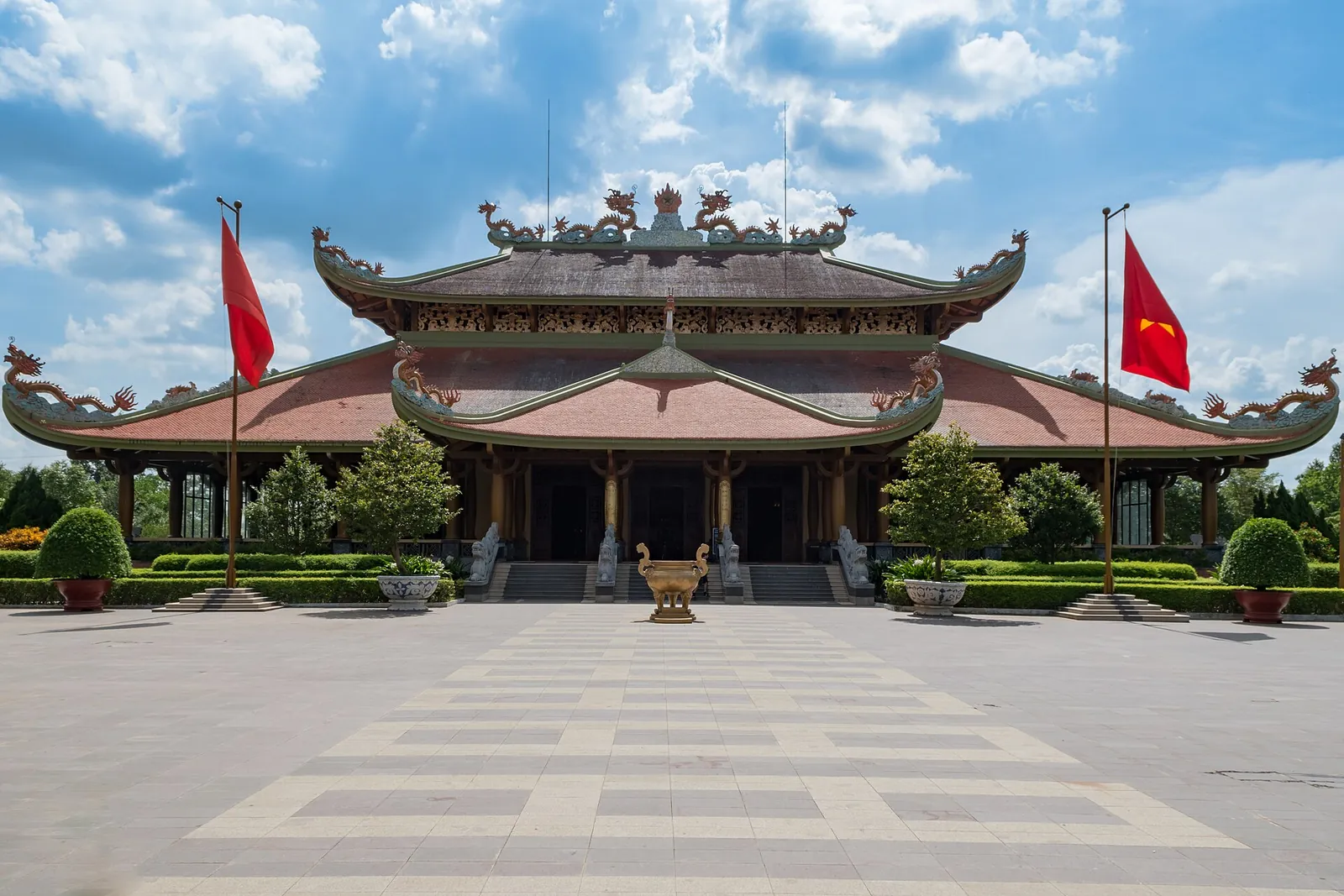
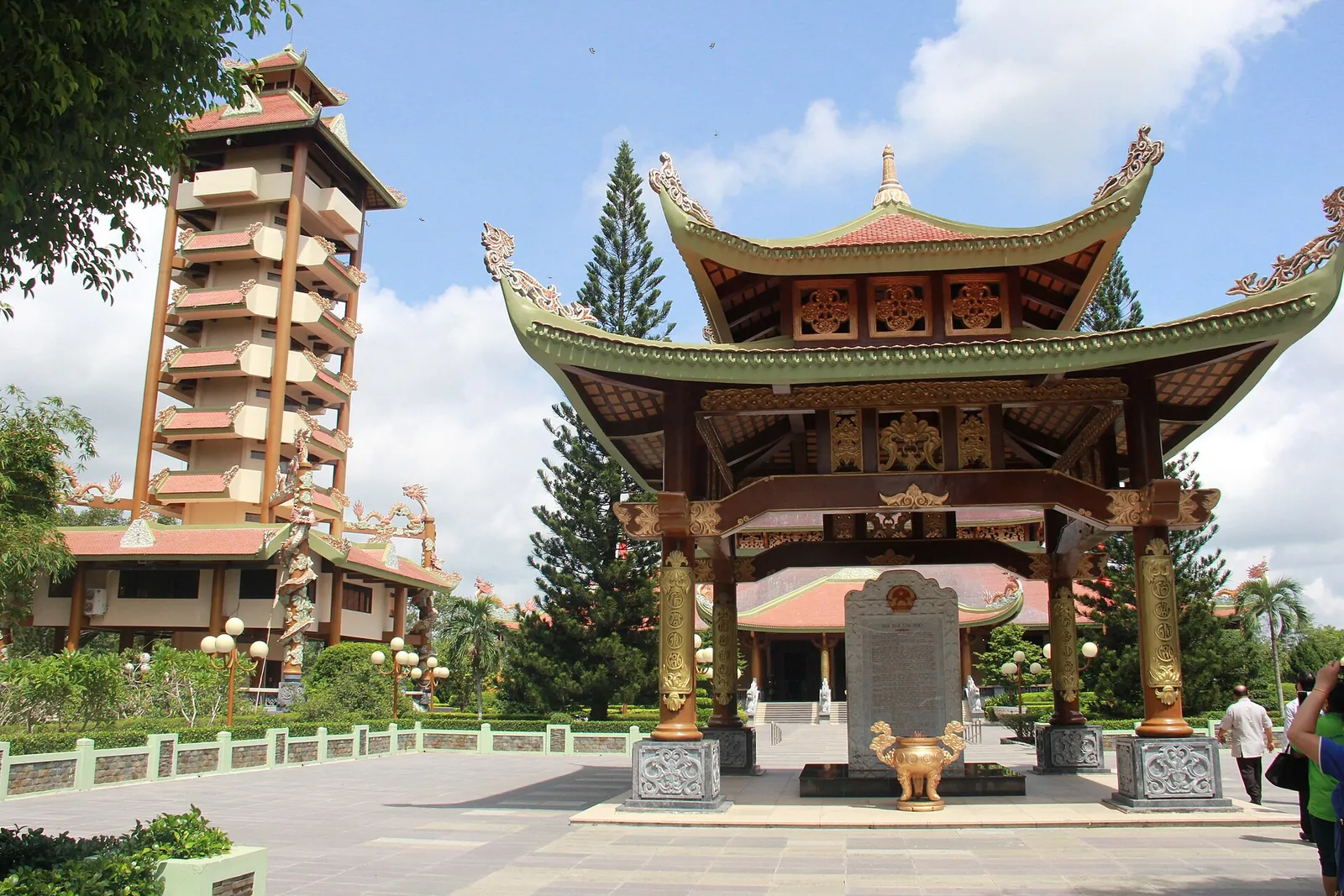
Through the forest from the Ben Duoc tunnels stands the Ben Duoc Martyrs' Memorial Temple, built on 7 hectares, begun on 19 May 1993 and opened in its first phase on 19 December 1995, according to the board. It commemorates the people and soldiers who died in the Saigon – Cho Lon – Gia Dinh area in the wars against the French and the Americans. The names of 45,666 martyrs are engraved in gold on granite in the main hall, and the complex includes a nine-storey, 39-metre tower, a stone stele and what the board calls the largest ceramic mosaic in Vietnam. This is a place of remembrance where families still come to look for names: dress modestly and keep your voice down.
An electric cart continues to a diorama of Operation Cedar Falls, the 1967 American offensive into the Iron Triangle, and to the Recreated Liberated Zone of Cu Chi, which the board divides into three spaces: village life in 1961–1964, the destruction of 1965–1968 and the scorched "white zone" of 1969–1972. There is also a lake shaped like the East Sea and three scale models opened in 2009: Hanoi's One Pillar Pagoda at nine-tenths size, Hue's Noon Gate and Nha Rong Wharf in Ho Chi Minh City.
Vietnam Tourism's account of the site mentions rice transplanting and fish catching for visitors, and boiled cassava, the staple of the war years, at the Hoang Cam kitchen. If time is short, prioritise the tunnels and the temple; the recreated zone is best if you have the full day.
Pairing the tunnels with Tay Ninh
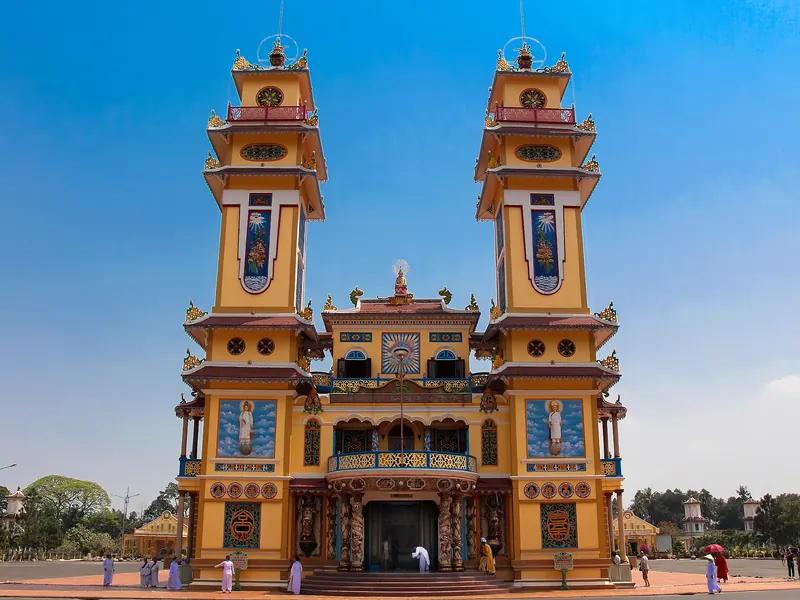
Since the 2025 provincial merger, Tay Ninh province also includes the former Long An, and its two best-known sights make a natural extension of a Cu Chi trip. Vietnam Tourism describes the Cao Dai Holy See as a building that combines Eastern and Western architecture and draws hundreds of thousands of followers on major holidays, and Ba Den Mountain, at 986 m, as the most sacred place in Tay Ninh and the highest peak in southern Vietnam, with old temples and caves. A 2021 Vietnam Tourism article puts it 11 km from the centre of the former Tay Ninh city and describes cable cars up the mountain.
Doing the tunnels, the Holy See and the mountain in one day from Ho Chi Minh City means a very long day on the road. A better plan is the tunnels in the morning, onward to Tay Ninh in the afternoon and a night there, with Ba Den Mountain the next morning. Avoid the first lunar month if you dislike crowds: the Ba Den spring festival starts on the fourth day of the first lunar month and lasts a month, according to Vietnam Tourism, and Vietnam Tourism reported 1.5 million cable-car passengers in the 15 days of Tet in 2023.
A workable day
This is an editorial suggestion, not a timetable. Check the opening hours and any boat times on the day.
- Morning: leave central Ho Chi Minh City early by car, or take the boat from Bach Dang wharf, so that you are at the gate soon after the 07:00 opening.
- Late morning: the film, the guided tunnel walk and, at Ben Duoc, the bomb display; try the boiled cassava at the Hoang Cam kitchen.
- Lunch: one of the board's restaurants on the Saigon River at Ben Dinh or Ben Duoc.
- Afternoon: at Ben Duoc, the memorial temple and the recreated liberated zone by electric cart; or return to the city for a rest.
- Optional: continue to Tay Ninh for the night, with Ba Den Mountain and the Cao Dai Holy See the next day.
Practical questions
Should I visit Ben Dinh or Ben Duoc?
Ben Dinh, the former district Party committee base on Provincial Road 15, suits a compact half-day centred on the tunnels. Ben Duoc, the former Saigon – Cho Lon – Gia Dinh Military Region base, adds the memorial temple, a bomb display and the recreated liberated zone, and is worth a full day.
How much is the Cu Chi Tunnels ticket for foreigners?
When we checked on 2026-10-03, the management board's notice of 19 January 2026 listed, from 1 February 2026, a 35,000 VND historic-site fee plus a 100,000 VND service and guide ticket per foreign visitor. Prices can change; check the board's notices before you go.
What time do the Cu Chi Tunnels open?
The board's homepage listed every day from 07:00 to 17:00 when we checked on 2026-10-03. Arrive early: the forest is cooler in the morning.
Can I go to the Cu Chi Tunnels by boat?
Yes. The board's directions mention speedboats from Bach Dang wharf and the Greenlines boat; Greenlines DP's service to Ben Dinh and Ben Duoc took about two hours when it launched in 2020. Confirm the current schedule and fare with the operator.
Do I have to crawl through the tunnels?
No. Passages are generally only big enough for one person walking bent over, and some are narrower. You can see the entrances, shelters and trenches from above and skip the crawl if you are claustrophobic or have mobility problems.
Can I combine the Cu Chi Tunnels with Tay Ninh in one day?
It is possible but makes a very long day. A night in Tay Ninh after the tunnels gives you time for Ba Den Mountain and the Cao Dai Holy See without rushing.
Sources and checks before you travel
Reference sources for the version dated 3 October 2026. Confirm opening times, access, transport and conditions for your travel dates.
- Cu Chi Tunnels Historical Relic Area (management board): homepage ↗ — opens in a new tab
- Cu Chi Tunnels management board: notice on service and guide ticket prices (19 January 2026) ↗ — opens in a new tab
- Cu Chi Tunnels management board: Trang Chien Khu programme, October 2026 ↗ — opens in a new tab
- Cu Chi Tunnels management board: Ben Dinh tunnels ↗ — opens in a new tab
- Cu Chi Tunnels management board: Ben Duoc tunnels ↗ — opens in a new tab
- Cu Chi Tunnels management board: Ben Duoc Martyrs' Memorial Temple ↗ — opens in a new tab
- Cu Chi Tunnels management board: Recreated Liberated Zone of Cu Chi ↗ — opens in a new tab
- Cu Chi Tunnels management board: introduction to the site ↗ — opens in a new tab
- Cu Chi Tunnels management board: directions from Ho Chi Minh City (posted 2014) ↗ — opens in a new tab
- Cu Chi Tunnels management board: restaurants at Ben Duoc and Ben Dinh ↗ — opens in a new tab
- Vietnam Tourism: 7 must-see attractions in Ho Chi Minh City ↗ — opens in a new tab
- Vietnam Tourism: 10 tourist spots not to be missed in Ho Chi Minh City ↗ — opens in a new tab
- Vietnam Tourism: Ho Chi Minh City ↗ — opens in a new tab
- Vietnam Tourism: Vietnam's new provincial system ↗ — opens in a new tab
- Vietnam National Authority of Tourism: Cu Chi Tunnels seek world heritage recognition (2021) ↗ — opens in a new tab
- Vietnam National Authority of Tourism: Historic Cu Chi Tunnels site seeks UNESCO recognition (2021) ↗ — opens in a new tab
- Vietnam National Authority of Tourism: first waterway tourist route in Ho Chi Minh City (2020, Vietnamese) ↗ — opens in a new tab
- GreenlinesDP (operator) ↗ — opens in a new tab
- Vietnam National Authority of Tourism: Tay Ninh, an attractive tourist destination (2024) ↗ — opens in a new tab
- Vietnam National Authority of Tourism: Tay Ninh Tourism, the intersection of two lands (2025) ↗ — opens in a new tab
- Vietnam National Authority of Tourism: Ba Den Mountain (2021, Vietnamese) ↗ — opens in a new tab
- Vietnam National Authority of Tourism: spiritual tourism in Tay Ninh (2023, Vietnamese) ↗ — opens in a new tab
Does this experience fit your route?
A guided tour removes the logistics of the drive or the boat. Before you book, check whether it goes to Ben Dinh or Ben Duoc, how early it leaves and what the ticket includes.
Browse relevant experiences on Viator ↗ — opens in a new tabAffiliate link · Book with ViatorPhoto credits
The main hall of the Ben Duoc Martyrs' Memorial Temple, part of the Ben Duoc site at the Cu Chi Tunnels
Photograph: dronepicr — opens in a new tab · CC BY 2.0 — opens in a new tab
Changes: Resized and converted to WebP; displayed with responsive crops. · Original photograph and licence details ↗ — opens in a new tab
A lit section of tunnel at Cu Chi, cut through the area's firm clay soil
Photograph: MinhVN123 — opens in a new tab · CC BY-SA 4.0 — opens in a new tab
Changes: Resized and converted to WebP; displayed with responsive crops. · Original photograph and licence details ↗ — opens in a new tab
A hidden tunnel entrance in the forest floor at the Cu Chi Tunnels
Photograph: dronepicr — opens in a new tab · CC BY 2.0 — opens in a new tab
Changes: Resized and converted to WebP; displayed with responsive crops. · Original photograph and licence details ↗ — opens in a new tab
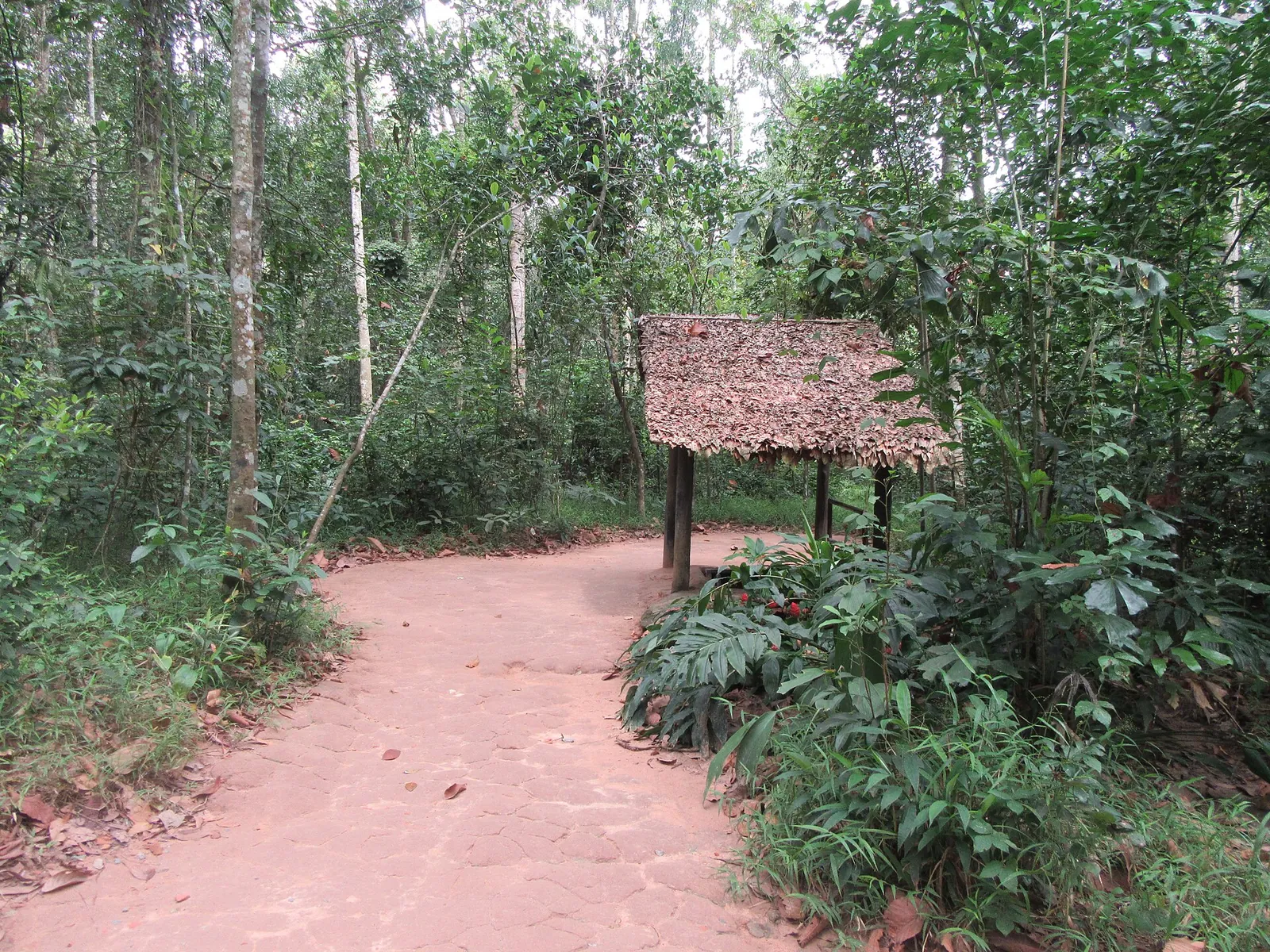
A forest path at the Cu Chi Tunnels site, where the guided walk links the tunnel entrances
Photograph: Alan & Flora Botting — opens in a new tab · CC BY-SA 2.0 — opens in a new tab
Changes: Resized and converted to WebP; displayed with responsive crops. · Original photograph and licence details ↗ — opens in a new tab
The stele house and the nine-storey tower at the Ben Duoc Martyrs' Memorial Temple
Photograph: Phương Huy ( thảo luận ) — opens in a new tab · Public domain — opens in a new tab
Changes: Resized and converted to WebP; displayed with responsive crops. · Original photograph and licence details ↗ — opens in a new tab
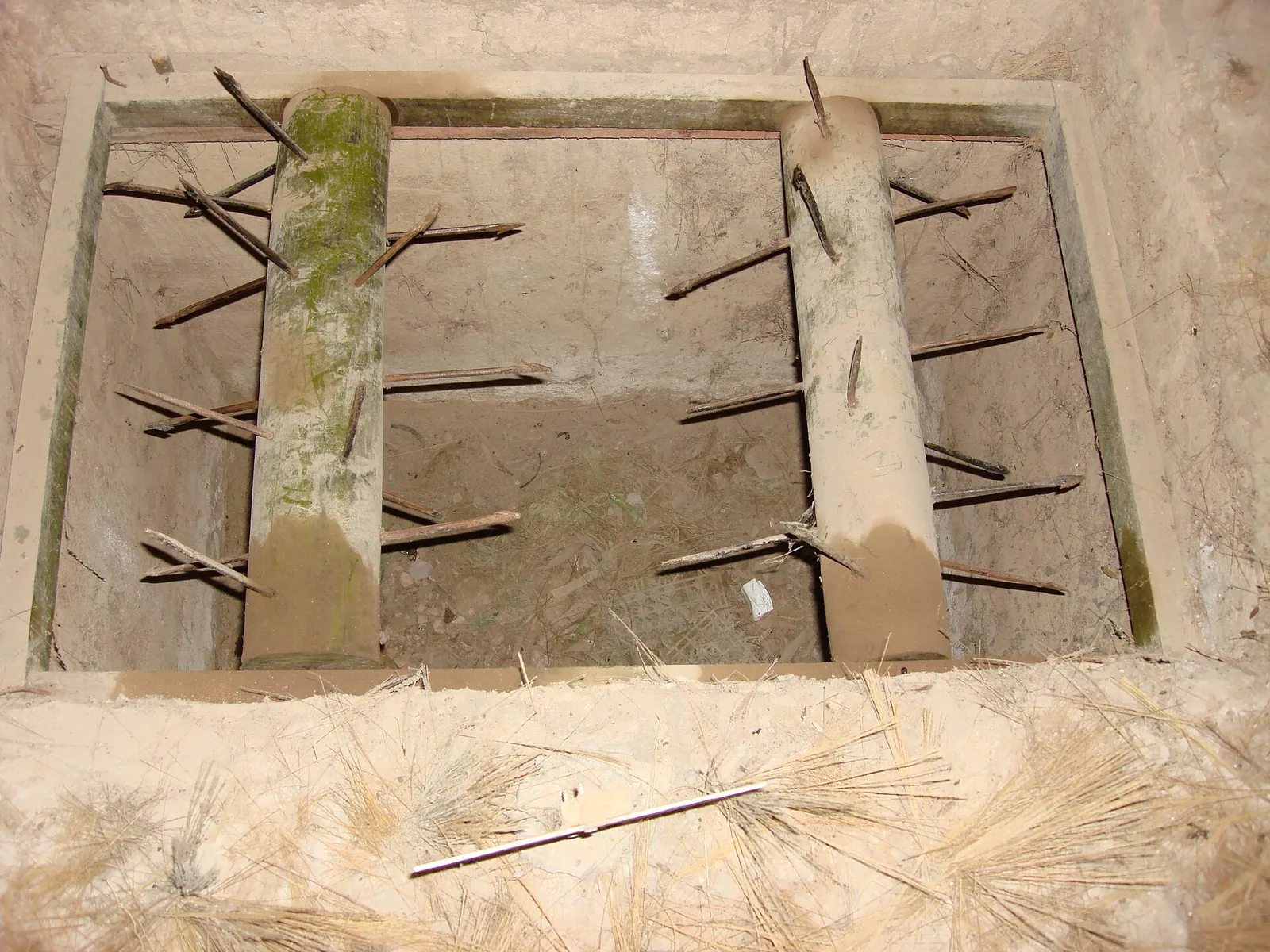
A reconstructed spike trap of the kind displayed along the tunnel route at Cu Chi
Photograph: Jorge Láscar from Australia — opens in a new tab · CC BY 2.0 — opens in a new tab
Changes: Resized and converted to WebP; displayed with responsive crops. · Original photograph and licence details ↗ — opens in a new tab