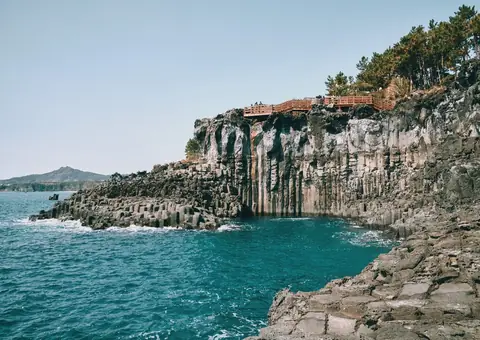
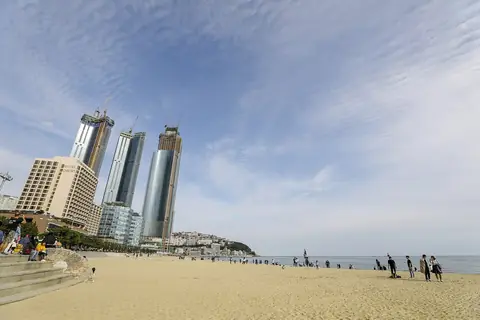
Itineraries · Seoul, Gangwon State, Gyeongsangbuk-do, Busan and Jeju
South Korea in 14 days: Seoul, east coast, Gyeongju, Busan and Jeju
Two weeks is long enough to leave the Seoul and Busan line behind. This route takes a bus to Sokcho and the Seoraksan mountains, follows the east coast to Gangneung, crosses to Gyeongju on the Donghae Line, runs down to Busan and flies to Jeju, the volcanic island that most visitors reach by air. A flight back to Gimpo and a last night in Seoul keep the departure day simple. Thirteen nights in six bases keep the long journeys to days 3, 6, 10 and 13. This plan sets out the legs, one hotel for each stop, the days, and the known costs of the fortnight for two people.
- Suggested time
- 14 days / 13 nights
- Where to stay
- Seoul (Myeongdong) for 3 nights, two at the start and one at the end; Sokcho (Daepohang) for 2; Gangneung (Gyeongpo) for 1; Gyeongju (tomb park) for 2; Busan (Dongnae) for 2; Jeju City for 3
- Season and timing
- The Korea Meteorological Administration's long-term averages put the start of the summer rains, the jangma, between 19 and 25 June, depending on the region, and their end between 20 and 26 July. The UK Foreign Office gives the typhoon season as normally running from June to November, and says to follow the Korea Meteorological Administration or call 131 in Korea for a forecast in English. Seoraksan's upper trails close for forest-fire prevention in spring and again from mid-November to mid-December. Hallasan's summit trails use a winter schedule from October to March, with earlier cut-off times. For 2026 VisitKorea forecast the first cherry blossom in Seoul on 3 April and the first autumn colour on Seoraksan in early October, and the dates move with the weather each year. In the Seollal and Chuseok holidays, intercity train and bus tickets sell out fast, so book the room and the tickets together; the holiday dates change each year.
The short answer
Book 13 nights: three in Seoul (two at the start and one after the flight back from Jeju), two in Sokcho, one in Gangneung, two in Gyeongju, two in Busan and three on Jeju, landing at Incheon on day 1 and flying home from Incheon on day 14. Book the flights first, then the KTX-Eum seats from Gangneung to Gyeongju, because that train runs only three times a day in each direction. If you want the Hallasan summit, check the booking start date on the park's reservation system and reserve as soon as it opens. Two key prices, checked on 17 October 2026: the AREX Express Train from Incheon Airport to Seoul Station costs KRW 13,000 for an adult. A Jeju Global Taxi costs KRW 220,000 for 8 hours for up to four passengers. The known costs below price the airport trains, the taxi day and the entrance fees and are not a trip total; the rooms in all six places, the rail, bus and flight fares and meals are not in them.
Thirteen nights, six bases and the order that avoids the closing days
The route runs from the capital up the east coast and then down the south, and it ends back in the capital: two nights in Seoul, two in Sokcho, one in Gangneung, two in Gyeongju, two in Busan and three on Jeju, then a last night in Seoul, with the flight home on day 14. Seoul and Jeju get three nights each, but the Seoul nights are split between the start and the end, so the capital gets one full day, the palace day, and the route trades Seoul days for the east coast; the evening of day 13 is the time for Gwangjang Market or Namsan. Two nights is the shortest stay that gives you a full day after a transfer day, so the one-night stop is Gangneung, on the way between Sokcho and Gyeongju. The east coast comes before Gyeongju because the Donghae Line train lists both Gangneung and Gyeongju among its stops, which saves the loop back through Seoul. The longest travel days are day 3 (Seoul to Sokcho), day 6 (Gangneung to Gyeongju), day 10 (Busan to Jeju) and day 13 (Jeju to Seoul).
The closing days set the order. Gyeongbokgung closes on Tuesdays and Changdeokgung on Mondays, so day 2, the palace day, should fall between Wednesday and Sunday, which means landing between Tuesday and Saturday. Seongsan Ilchulbong closes on the first Monday of every month, or the next day if that Monday is a public holiday. Manjanggul closes on the first Wednesday of every month. Check both against day 12. If day 6 is a Wednesday, Chodang Halmeoni Sundubu is closed, so have breakfast near the hotel instead. Seongpanak and Gwaneumsa are closed on Seollal and Chuseok. Their dates change each year, and the Korean government announces them.
Book in this order. First the flights: your arrival at Incheon, the Gimhae to Jeju flight on day 10 and the Jeju to Gimpo flight on day 13. Next the KTX-Eum seats from Gangneung to Gyeongju and the other train seats, which foreign passengers can book 2 months before departure. Then, if you want the Hallasan summit, its reservation. After that the Huwon (Secret Garden) tour at Changdeokgung, whose online booking opens six days before the visit. Then the Blueline Park time slot in Busan and the six hotels.
Check your K-ETA status before you book. Passport holders from 22 countries and regions, among them the United Kingdom, the United States, Canada, Australia, Germany, France, Italy and Spain, need no K-ETA for arrivals in Korea up to 31 December 2026 (Korean time); for an arrival on or after 1 January 2027, check k-eta.go.kr before you book. Travellers who are required to submit an arrival card can complete the free e-Arrival card online before arrival or use a paper arrival card; check the official exemption list. The entry guide has the full country list.
The legs, from the airport train to the flight home
A Tmoney card (also written T-money) is a reloadable prepaid card without an account; you buy and load it at convenience stores across the country (GS25, CU, 7-Eleven and others) and at the information centres in Seoul subway stations on Lines 1 to 8. The card costs KRW 3,000 to KRW 5,000 depending on the design, and it pays for the subway, city buses and taxis. Google Maps cannot give navigation in Korea, so install Naver Map (in English, Chinese and Japanese) or Kakao Map (in English) for routes and live bus times. To call a taxi, k.ride is Kakao Mobility's English-language version of Kakao T for visitors, and it accepts an overseas credit card. On Jeju an ordinary bus such as the 281 costs KRW 1,150 with a transport card, and this plan uses the buses and a Global Taxi rather than a rental car. VisitKorea says short-term visitors may rent with an international driver's licence, if they are over 21 and show a passport, and pay by credit card in the driver's name.
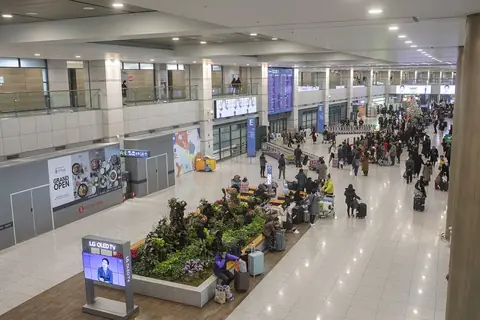
- Day 1, Incheon Airport to Seoul Station (AREX). AREX has two services between Incheon Airport and Seoul Station. The non-stop Express Train takes about 43 minutes from Terminal 1 and about 51 minutes from Terminal 2; the all-stop train takes about 59 minutes from Terminal 1 and about 66 minutes from Terminal 2 (some all-stop trains take 2 to 6 minutes longer). The Express Train costs KRW 13,000 for an adult and KRW 9,500 for a child aged 6 to 12; AREX also prints a standard fare of KRW 18,500 (Terminal 1) and KRW 19,100 (Terminal 2). You buy a ticket before boarding at the Express Train customer centres (Seoul Station basement 2, and the transport centres on basement 1 of each terminal).
- Day 1, Seoul Station to the hotel. Myeongdong Station is on Line 4, and Seoul Station, where the airport train ends, is also served by Line 4. The hotel's own page gives a walk of 5 minutes from Exit 8 of Myeongdong Station.
- Day 3, Seoul to Sokcho by express or intercity bus. Express and intercity buses are the usual way from Seoul to Sokcho. VisitKorea says both Seoul Express Bus Terminal (Express Bus Terminal Station, Lines 3, 7 and 9) and Dong Seoul Terminal (Gangbyeon Station, Line 2) serve Sokcho, and that express and intercity buses often use different terminals, so check the terminal on your ticket. Check the bus operator's timetable and fare for your date before choosing between Seoul Express Bus Terminal and Dong Seoul Terminal. Express tickets are sold at kobus.co.kr and intercity tickets at txbus.t-money.co.kr. The booking sites show the adult fare for your date. Sokcho has two long-distance terminals. VisitKorea says the Intercity Bus Terminal is a 5-minute walk from the Tourist & Fishery Market and the Express Bus Terminal a 15-minute walk. The hotel stands at Daepohang, at the southern end of town, so take a taxi from the terminal to the hotel.
- Day 5, Sokcho to Gangneung by intercity bus. VisitKorea says a bus terminal near Sokcho Port runs buses to Seoul, Gangneung and other cities. The bus sites show the departures, the journey time and the fare for your date, so leave Sokcho before midday and keep the afternoon for Ojukheon.
- Day 6, Gangneung to Gyeongju by KTX-Eum (Korail). The KTX-Eum is a semi-high-speed train: on the Donghae Line it links Busan's Bujeon Station and Gangneung in about 3 hours 50 minutes with three services in each direction. VisitKorea's table of minutes between stops gives, from Gangneung, 14 minutes to Jeongdongjin, then 19 to Mukho, 6 to Donghae, 15 to Samcheok, 26 to Uljin, 33 to Yeongdeok, 20 to Pohang and 22 to Gyeongju, which adds up to 155 minutes. Korail's timetable and the KORAIL+ app list the three departures from Gangneung and the exact time and fare of each train, and fares changed on 1 September 2026. With three trains a day in each direction, the timetable decides how you spend the morning. Check in KORAIL+ that your train stops at Gyeongju. If no seat is left, the alternative is the KTX from Gangneung to Seoul, for which Korail gives 1 hour 49 minutes on its fastest train. From Seoul Station the KTX to Gyeongju Station takes 2 hours 10 minutes, according to Gyeongju city. Tickets go on sale 2 months before departure for foreign passengers (this changed from 1 month on 1 October 2026), and you can choose your seat when you book online.
- Day 6, Gyeongju Station to the hotel. The Gyeongbu Line KTX stops at Gyeongju Station, at 80 Gyeongjuyeok-ro in Geoncheon-eup, outside the old town. Before booking, confirm the arrival station and onward connection shown for your chosen train in KORAIL+. The station has a tourist information centre, open from 09:00 to 20:00 (+82-54-771-1336), with staff who speak English, Chinese and Japanese. From the station, take a taxi to Nadeul Hanok in the old town. Seokguram's own page says the number 700 bus runs from the station to Bulguksa four times a day, and the Gyeongju National Museum's directions give bus 700 as a 25-minute ride from the station to the Donggung and Wolji stop, then a 3-minute walk to the museum. The museum also lists buses 50, 51, 60, 61 and 70 from the station to the express and intercity bus terminal, where buses 10 and 11 leave for Bulguksa.
- Day 8, Gyeongju to Busan by KTX or express bus. For the KTX, take a taxi from the guest house to Gyeongju Station, because bus 700 runs only four times a day; for the express bus, go to the express and intercity bus terminal. From Gyeongju, Gyeongju city gives 30 minutes by KTX to Busan and about 50 minutes by bus from Gyeongju Express Bus Terminal to Busan Central Bus Terminal. Busan Station is on Busan Metro Line 1, and so is Oncheonjang, the stop for the hotel.
- Day 10, Busan to Jeju by air. VisitKorea lists Korean Air, Air Busan, Eastar Jet, Jeju Air and Jin Air on Gimhae to Jeju (the VisitKorea domestic flights page, updated 19 June 2026). Each airline's site shows the flight time and the fare for your date. Carry your passport on a domestic flight: Asiana's rules list the passport as a valid ID for foreign passengers and ask for the original, not a copy. From Oncheonjang take Line 1 to Seomyeon and change to Line 2. By rail, the airport is connected to the Busan-Gimhae Light Rail Transit at Airport Station, and you change at Sasang Station, about 6 minutes away, to Busan Metro Line 2. VisitKorea gives about 30 minutes to Seomyeon, 50 minutes to Gwangalli and 70 minutes to Haeundae.
- Day 10, Jeju Airport to the hotel. The taxi stand is across the crosswalk outside Gate 5. VisitKorea gives 20 minutes by bus or 15 minutes by taxi from the airport to Dongmun Market in the old town. The hotel's own page puts the airport 3 km away.
- Day 13, Jeju to Seoul by air. Fly from Jeju to Gimpo Airport, which takes about 1 hour 10 minutes. Gimpo Airport to Seoul Station by all-stop train takes about 23 minutes. The fare is KRW 1,750 with a transport card. From Seoul Station take Line 4 to the hotel, as on day 1. Incheon Airport has had direct flights to Jeju again since 12 May 2026, from Terminal 1, with a flight time of about 1 hour 15 minutes; the airline's site shows the current days. This plan does not rely on that flight, which is why it keeps a night in Seoul. Storms can interrupt flights, so the night in Seoul also protects the flight home.
- Day 14, Seoul Station to Incheon Airport by AREX. Take the Express Train described under day 1, in the other direction. AREX's timetable lists the first Express Train from Seoul Station at 06:00 on weekdays and holidays. On the way out, the City Airport Terminal on basement 2 of the Seoul Station airport railroad checks you in and drops your bag for same-day international flights from Incheon, from 05:20 to 19:00, with departure immigration from 05:30 to 19:00. Confirm your terminal on your e-ticket, and leave Seoul Station with a wide margin before your airline's check-in closes.
Where to sleep: one hotel for each stop
Each hotel is chosen for what the next morning needs: the Myeongdong streets and the subway in Seoul, the fishing port and the road to the park in Sokcho, the coffee street in Gangneung, the tombs and the night pond on foot in Gyeongju, a hot-spring hotel on the metro in Busan and the airport and the bus terminal in Jeju City. The rates printed on the hotels' own pages were checked on 18 October 2026.
Seoul, nights 1, 2 and 13: Sotetsu Fresa Inn Seoul Myeong-dong, 48 Myeongdong-gil, Jung-gu. The hotel's own page gives 5 minutes' walk from Exit 8 of Myeongdong Station on Subway Line 4 and 5 minutes' walk from Exit 5 of Euljiro 1ga Station on Subway Line 2, and lists 152 rooms, with check-in from 15:00 for non-members and check-out at 12:00. Confirm the room rate for your dates with the hotel before you book.
Sokcho, nights 3 and 4: Benikea Hotel Mountain & Ocean Daepohang, 3691 Donghae-daero. VisitKorea lists 81 rooms with views of the East Sea, check-in at 15:00, and says Seoraksan is not far from the hotel. Daepohang is the harbour at the southernmost point of Sokcho, and VisitKorea says it is known for quality fish. Confirm the room rate for your dates with the hotel before you book.
Gangneung, night 5: Hotel Herren-Haus, 16 Changhae-ro 14beon-gil. The city's accommodation list shows Hotel Herren-Haus at 16 Changhae-ro 14beon-gil in the Gyeongpo area, on the same lane as the coffee street. Confirm the room rate for your dates with the hotel before you book.
Gyeongju, nights 6 and 7: Nadeul Hanok. Nadeul Hanok stands at 4-1 Jjoksaem-gil, a city-designated traditional hanok guest house in the old town, and its own page gives walks of 1 minute to Cheomseongdae, 5 minutes to Daereungwon and Cheonmachong and 7 minutes to Donggung and Wolji. Confirm the room type, occupancy, rate for each night and payment terms directly with Nadeul Hanok before booking; this stay is not included in the known costs below. Check-in is after 15:00 and check-out by 11:00.
Busan, nights 8 and 9: Hotel Nongshim, 23 Geumganggongwon-ro 20beon-gil, Dongnae-gu. Hotel Nongshim gives Oncheonjang Station on Line 1, Exit 1 or 3, as its stop, a walk of 5 to 7 minutes. Confirm the total for your two-night stay, occupancy and taxes with Hotel Nongshim before booking; this stay is not included in the known costs below. Its own room page lists check-in at 15:00 and check-out at 11:00, and half-price entry to the hotel's hot spring for two guests. Dongnae is the pick for the hot spring and for Line 1, which runs to Busan Station for the KTX and, with a change at Seomyeon, to Line 2 for Haeundae and Gwangalli. Check Busan Transportation Corporation's current fare for your stations and any available passes before buying a ticket.
Jeju, nights 10 to 12: Jeju Pacific Hotel, 20 Seosa-ro, Jeju City. The hotel has 177 rooms. Confirm the total for three nights in a standard twin room with Jeju Pacific Hotel before booking; accommodation is not included in the known costs below. Its own price table lists breakfast at KRW 20,000 a person, tax included.
Seoul: the palaces, Bukchon and the last evening
The first evening is for landing and the streets around the hotel, the next day is the palace day, and the last night brings you back for an evening at Gwangjang Market, the museum or on Namsan. For the markets, Namsan and the rest of the capital, see our Seoul guide.
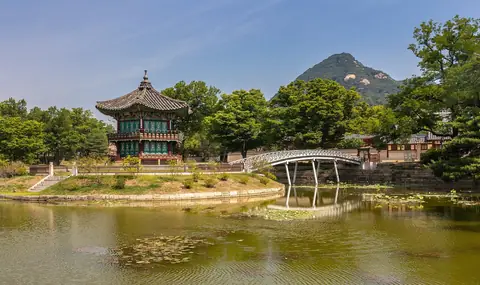
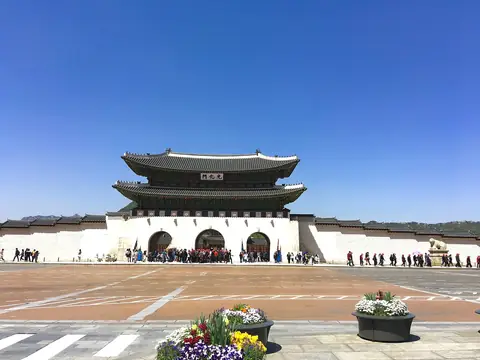
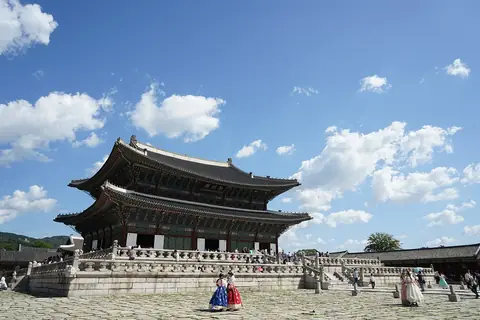
Gyeongbokgung, built in 1395, was the first and largest of the royal palaces built during the Joseon Dynasty. Inside Gwanghwamun, its main gate, the first building is Geunjeongjeon Hall, where coronations and other state events were held, and beyond it stand the original Gyeonghoeru Pavilion and, at the back, the Hyangwonjeong Pavilion and its pond. The National Palace Museum of Korea and the National Folk Museum of Korea stand inside its grounds. VisitKorea lists a royal guard-changing ceremony at 10:00 and 14:00 and a ceremony of guarding Gwanghwamun Gate at 11:00 and 13:00, both free, with a guard drill at 09:35 and 13:35; the schedule is subject to change, and the events may be cancelled in rain. Changdeokgung, a UNESCO World Heritage Site since December 1997, was rebuilt in 1610 after the Imjin War and served as the royal palace for about 270 years. Its Huwon, the rear garden, takes up sixty per cent of the grounds around a large pond, Buyongji, with the Buyongjeong and Juhamnu pavilions, and is visited on a separate tour.
Bukchon Hanok Village lies between Gyeongbokgung and Changdeokgung, and unlike Namsangol Hanok Village it was not created for tourists: Seoulites live here, and at Gahoe-dong hundreds of hanok sit shoulder to shoulder. Tourist visits to the red zone around Bukchon-ro 11-gil are banned from 17:00 to 10:00, with a fine of KRW 100,000 enforced since 1 March 2025, so walk the lanes between 10:00 and 17:00, keep your voice down and do not photograph the inside of houses.
The Korea Heritage Service lists these prices, checked on 17 October 2026. Adult admission for foreign visitors aged 19 to 64: Gyeongbokgung KRW 3,000; Changdeokgung KRW 3,000 (halls and grounds); Changgyeonggung KRW 1,000; Deoksugung KRW 1,000; Jongmyo KRW 1,000. Admission is free for foreign visitors aged 18 and under and 65 and over (bring your passport), and for anyone, Korean or foreign, wearing hanbok. The Integrated Palace Ticket costs KRW 6,000 and is valid for one visit to each of Gyeongbokgung, Changdeokgung, Changgyeonggung, Deoksugung and Jongmyo within six months of purchase; the five admissions would cost KRW 9,000 bought separately. When a closing day falls on a public holiday or substitute holiday the site opens, and the next non-holiday day becomes the closing day instead. Gyeongbokgung is open 09:00 to 18:00 (last entry 17:00) from March to May and September to October, 09:00 to 17:00 (16:00) from November to February and 09:00 to 18:30 (17:30) from June to August. Changdeokgung is open 09:00 to 18:00 (17:00) from February to May and September to October, 09:00 to 18:30 (17:30) from June to August and 09:00 to 17:30 (16:30) from November to January. The palaces say hours may be shortened for operational reasons. The Huwon costs KRW 5,000 for ages 19 to 64 and for ages 65 and over and KRW 2,500 for ages 7 to 18, on top of a Changdeokgung hall ticket; English tours leave at 10:30, 11:30 and 14:30 from December to February and at 10:30, 11:30, 14:30 and 15:30 from March to November. Online booking through the Heritage Service's reservation site opens at 10:00 six days before the visit and runs until the day before.
Public demonstrations in South Korea are common, and under Korean law foreign nationals may not take part in political activities, so keep away from rallies and large public gatherings, for example around Gwanghwamun, the palace's south gate. Our health guide has more.
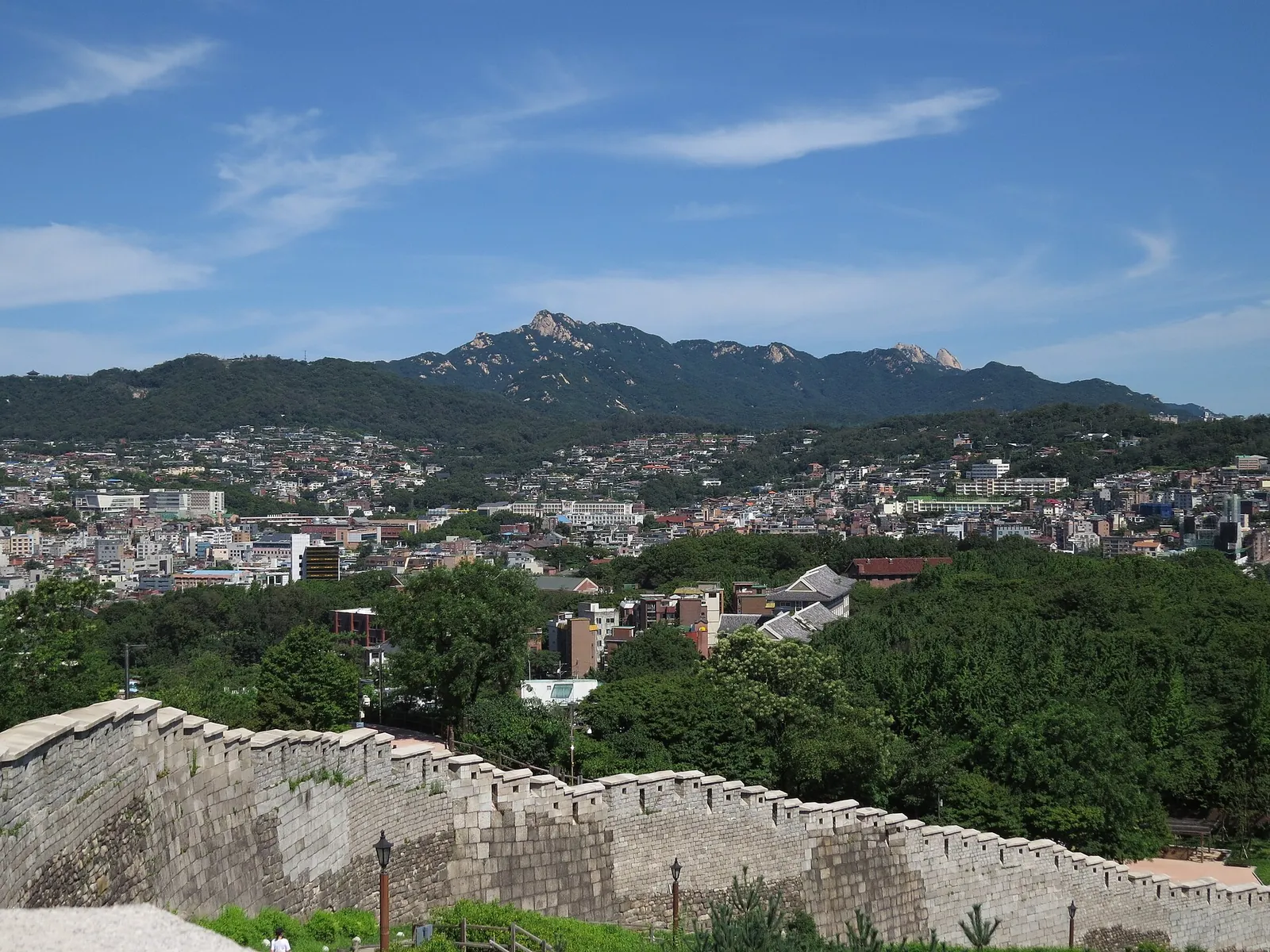
The National Museum of Korea, at 137 Seobinggo-ro in Yongsan-gu, is open Monday, Tuesday, Thursday, Friday and Sunday from 09:30 to 17:30 and on Wednesday and Saturday from 09:30 to 21:00; admission closes 30 minutes before closing time. Admission is free, but special exhibitions are charged. Inwangsan is the easy hill walk. It stands 338.2 m high, is made entirely of granite and has a single peak. The Seoul City Wall (Hanyangdoseong) runs along it. The climb up and down typically takes around three hours. Gwangjang Market, at 88 Changgyeonggung-ro in Jongno-gu, has a food alley that Visit Seoul lists as open daily from 09:00 to 23:00, which suits an evening after the flight. Namsan rises behind Myeongdong, and our Seoul guide covers the walk up and its tickets.
- Day 1. Land at Incheon, ride AREX to Seoul Station and take Line 4 to Myeongdong. Check in, then walk the Myeongdong streets and eat kalguksu at Myeongdong Kyoja, 183 m from Exit 8 of Myeongdong Station.
- Day 2 (Wednesday to Sunday). Start at Gyeongbokgung when it opens at 09:00. Buy one Integrated Palace Ticket each at the ticket office. Walk to Bukchon between 10:00 and 17:00 and on to Insa-dong, and have lunch near Gyeongbokgung Station. Changdeokgung comes in the afternoon, with the 14:30 Huwon tour if you booked it.
Sokcho, Seoraksan and Gangneung
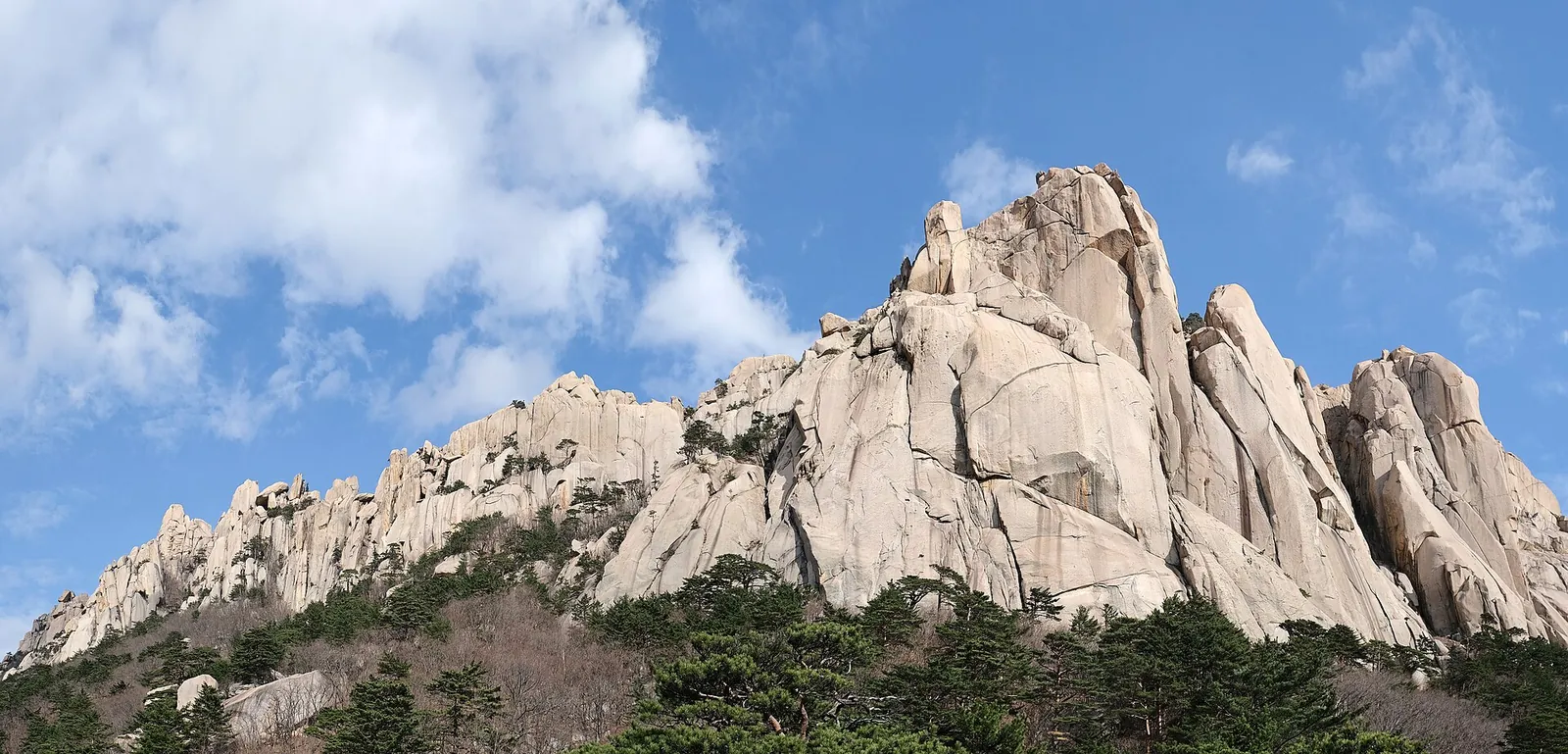
Sokcho is a fishing port on the East Sea with a granite range for a back garden. Seoraksan rises behind the town in ridges, waterfalls and the rock towers of Ulsanbawi. Sokcho Tourist & Fishery Market is the town's biggest draw, and VisitKorea's market feature says more than 19 million people visited in 2022. The best-known snack is dakgangjeong, glazed fried chicken bites. VisitKorea lists the opening hours as varying by shop.
Abai Village sits across the channel at the mouth of Cheongchoho Lake. Refugees from Hamgyeong-do in North Korea settled it during the Korean War, and "abai" is a Hamgyeong dialect word for a friendly old man. The way across is the gaetbae, a barge without an engine that passengers pull along a steel wire with a hook; it crosses the channel in about 5 minutes, and VisitKorea's 2023 market feature gave the fare as a KRW 500 coin and the hours as 05:00 to 23:00 in summer and 05:30 to 22:30 in winter. By the lighthouse, Yeonggeumjeong is a rocky shore whose name compares the sound of the waves to a geomungo, a six-string zither.
Seoraksan is a granite range on the East Sea coast. South Korea's national parks do not charge an entry fee; you pay only for facilities such as parking, camping and cable cars, and some temples inside parks charge their own admission. City bus 7 or 7-1 runs from the Intercity Bus Terminal to the park. Sokcho's bus information system lists the adult city fare as KRW 1,530 by transport card and KRW 1,700 in cash; T-money and other prepaid cards work, and a card gives one free transfer within 90 minutes, though not onto the same route number. The walks and the cable car start at Sogongwon Park, 1055 Seoraksan-ro, near the end of the city bus line.
For this plan the walk to choose is Ulsanbawi by Sinheungsa, Heundeulbawi and the Gyejoam hermitage. VisitKorea's hiking guide gives 7.6 km and 4 hours for the loop back to Sogongwon. The Sogongwon trails, including Ulsanbawi, Biryong Falls, Biseondae and Gwongeumseong, are closed from sunset until two hours before sunrise.
The Seorak Cable Car climbs from Sogongwon to Gwongeumseong, and the ride takes 5 minutes each way. There is no path down, so the operator sells return tickets only and you come back by cable car. Tickets are sold at the station on the day, with no advance booking, because wind and weather change the service. An adult (middle-school age and over) pays KRW 16,000 return, a child from 37 months to primary-school age pays KRW 12,000, and a child under 36 months rides free; fares include VAT (checked on 17 October 2026). The operator limits its discounted fares, for veterans, disability-card holders, people aged 65 and over and Sokcho residents, to domestic visitors, so foreign visitors pay the standard fare. Operating hours change with the season and the weather. Cabins leave every 10 to 15 minutes when it is quiet and every 5 minutes when it is busy, and if you take the last car you have only a short time at the top. The station is a 5-minute walk from the park entrance.
The Korea National Park Service (KNPS) runs an entry-time system: each trail has an opening time and a cut-off after which nobody may start. KNPS closes Seoraksan's trails when the Korea Meteorological Administration issues a weather advisory or warning or the weather is comparably bad. Heavy rain, flash floods and landslides are possible from June to September, so follow the signs and closures, and cover your skin against ticks and mites on wooded paths. Seoraksan's upper trails also close for forest-fire prevention. In spring 2026 the Seoraksan office announced a closure from 4 March to 15 May. VisitKorea's hiking guide gives the usual closure of the upper trails from Biseondae to Daecheongbong as mid-November to mid-December, while the paths from the Sogongwon entrance to Biseondae stay open. The park announces the dates each year, so check its notices before you book a summit day.
Tours sold in Sokcho are not all alike, so check where a day tour goes before you pay. France Diplomatie advises against the demilitarised zone (DMZ) on the border with North Korea except for a compelling reason, and the UK Foreign Office asks visitors in the DMZ area to exercise caution and follow the local authorities, so AsiaVela does not cover DMZ tours or the Joint Security Area. Other governments may draw a wider line, and the situation can change with little notice, so check your own government's travel advice before you book.
Gyeongpo is the old heart of Gangneung's seaside, and one stretch of pine, sand and still water holds most of it. Gyeongpodae Pavilion stands on a small hill north of the lake, 1 km from the beach. It was built in 1326 and moved to its present site in 1508, and it is one of the eight scenic sites of Gwandong, the old name for the north-east coast. It is free and open 24 hours.
Ojukheon is the birthplace of Yi I (Yulgok), the Joseon scholar and statesman, and the house where he was born, the Mongryongsil, is one of the oldest surviving Korean homes. Allow about an hour. The city's own page gives hours of 09:00 to 18:00 with the last admission at 17:00, and the site is open every day; on 1 January, Seollal and Chuseok only the house is open and the indoor halls are closed. An adult pays KRW 3,000, a teenager or soldier KRW 2,000 and a child KRW 1,000. Visitors aged 65 and over, children aged 6 and under and Gangneung residents enter free, and on the last Wednesday of each month tickets are half price.
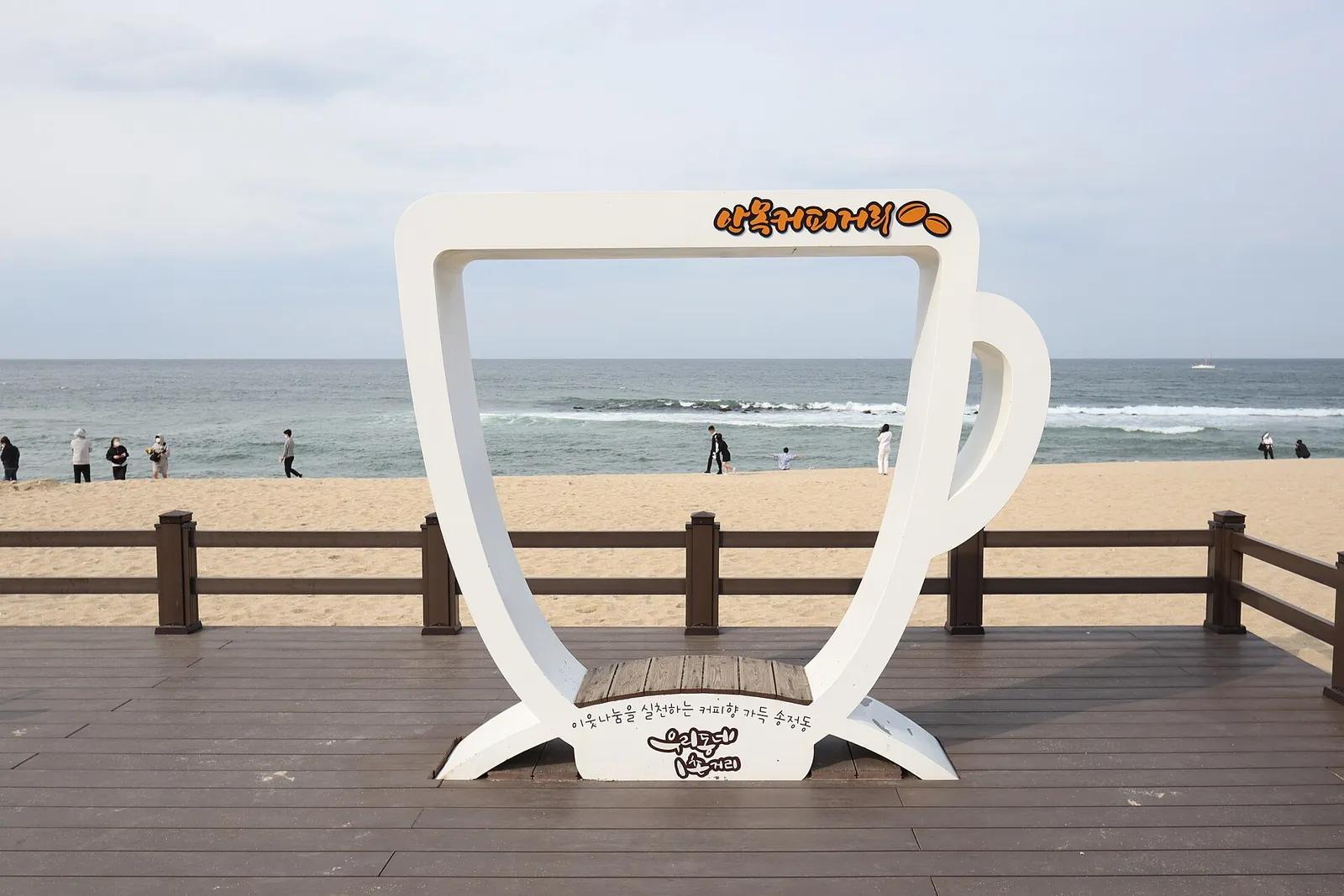
Anmok Beach is a 500 m strip of sand where about 23 fishing boats unload at the little Anmokhang port, and the main street along the beach is Gangneung's coffee street. It began with coffee vending machines lined up on the sand, and VisitKorea notes that almost all the cafés now roast their own beans. Chodang Dubu Village lies just south of Gyeongpo Beach. Chodang tofu is made from ground soybeans and salt water from the East Sea, which gives it a soft, light texture, and the village takes its name from Heo Yeop, the father of Heo Gyun and Heo Nanseolheon, whose family lived here.
Our Sokcho and Seoraksan guide adds the shelters, the other trails and the autumn colour. The Gangneung guide, listed under the related guides below, adds Seongyojang, Jeongdongjin and Jumunjin.
- Day 3. Take the bus from Seoul, timed in the leg above. Eat dakgangjeong at the market for lunch, then walk to Yeonggeumjeong and the lighthouse. Take a taxi to the hotel, and have supper at the Daepohang harbour.
- Day 4. Go to Sogongwon by taxi or by city bus 7 or 7-1. Buy the cable car ticket as soon as you arrive. If your boarding time is soon, ride up to Gwongeumseong first; if it is not, start the Ulsanbawi loop inside the gate times and ride in the afternoon.
- Day 5. Take a taxi to the market and cross by the gaetbae to Abai Village, and have sundae for lunch at Dancheon Sikdang. Take the bus to Gangneung and check in at Hotel Herren-Haus. Visit Ojukheon before its last admission at 17:00. Walk to Gyeongpodae at dusk and finish with coffee on the coffee street.
- Day 6, morning. Chodang Halmeoni Sundubu opens at 08:00 and is closed on Wednesdays. Have soft tofu there for breakfast, walk beside the lake, then take the KTX-Eum to Gyeongju at the time on your ticket.
Gyeongju and Busan
Bulguksa, on the slopes of Tohamsan east of town, is Silla's showpiece temple. The grounds hold seven national treasures, among them the Dabotap and the three-storey stone pagoda, the Yeonhwagyo and Chilbogyo bridges and a gilt-bronze seated Vairocana. The temple is open every day of the year, from 09:00. Last entry is 18:00 from March to September, 17:30 in February and October, and 17:00 from November to January, the same on weekdays, weekends and holidays. Admission has been free since 4 May 2023. Parking costs KRW 2,000 for a car and KRW 4,000 for a bus. Pets are not allowed.
Seokguram, higher up the mountain, is a granite grotto begun in 751 and finished in 774, according to its own page. A seated Sakyamuni Buddha about 3.4 metres high fills the round main chamber. Seokguram follows the temple's hours and is free. Its own page gives the route: take bus 10, 11 or 700 to Bulguksa, then change to bus 12 up the mountain; the bus back to Bulguksa leaves Seokguram on the hour. Buses 10 and 11 run between the bus terminals in town and Bulguksa, where they turn, and a standard city bus costs KRW 1,300 for an adult, or KRW 1,250 with a transport card, whatever the distance (checked on 17 October 2026). Seokguram's page adds that visitors may be kept out of the grounds when heavy-rain, typhoon or heavy-snow advisories or warnings are in force. Seokguram does not open before 09:00, so the grotto itself is not a sunrise stop.
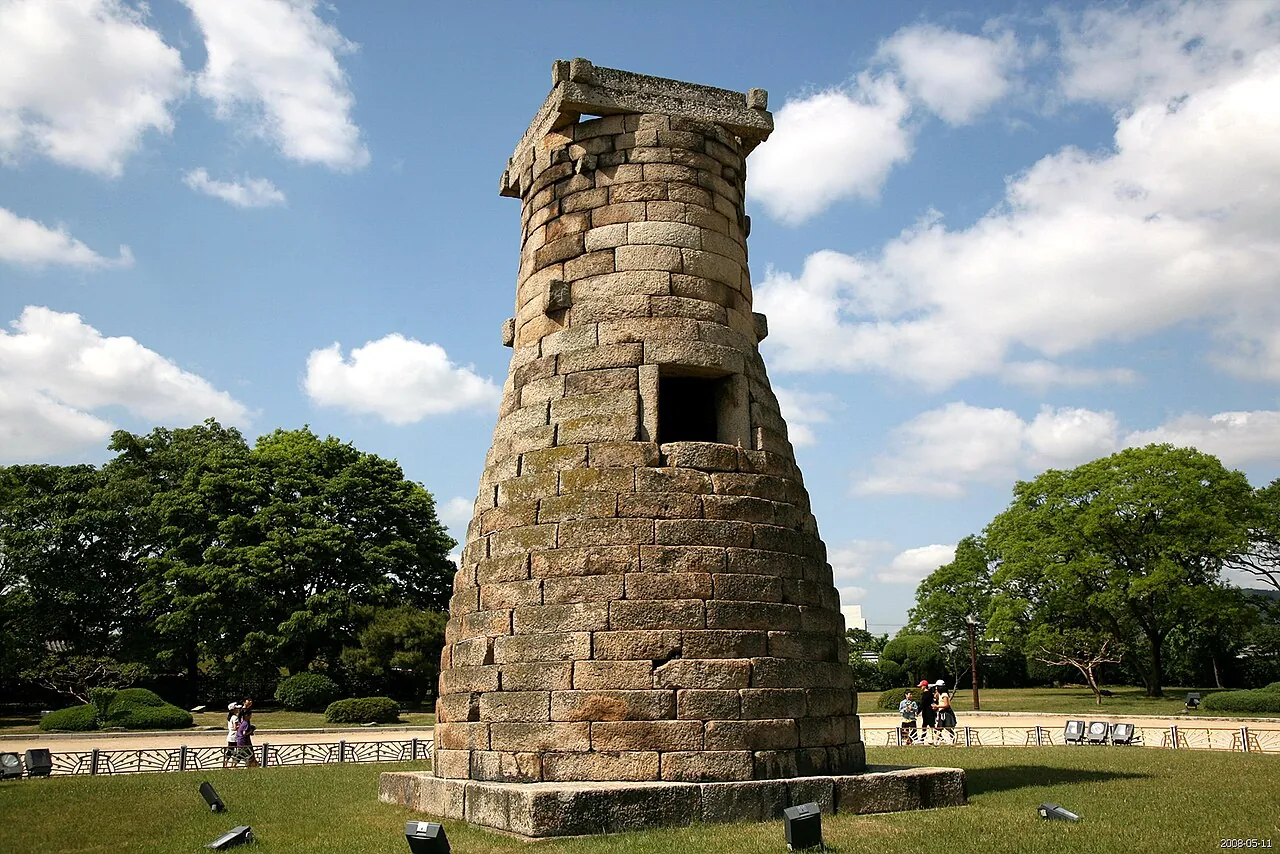
Daereungwon is the tomb park in the middle of town: 23 Silla royal tombs on 126,500 square metres, grass-covered mounds. Daereungwon is open from 09:00 to 22:00, with the last tickets sold at 21:30. Walking the park is free. Cheomseongdae, close to Daereungwon, is a bottle-shaped stone tower about 9 metres high, built of 27 tiers of fan-shaped stones with a window facing south-east halfway up. It is free and open every day from 09:00 to 22:00 (to 21:00 in winter). Hwangnidan-gil, which the city calls the youngest street in Gyeongju, is a grid of cafés, shops and small restaurants beside Daereungwon. Donggung and Wolji is Gyeongju's night sight. The Samguk Sagi records the pond Wolji as dug in 674 and the Donggung palace as built in 679, and the Imhaejeon hall beside the water was used for banquets, meetings and receptions. The site is open every day from 09:00 to 22:00, with the last tickets at 21:30, and an adult pays KRW 3,000, a teenager KRW 2,000 and a child KRW 1,000 (checked 17 October 2026). The city warns that many visitors come for the night view, so arriving close to closing time may mean not getting in. A one-day combined ticket for Daereungwon and for Donggung and Wolji costs KRW 6,000 for an adult. The Gyeongju National Museum has permanent halls for Silla history, Silla art and the finds from Wolji, and admission is free except for special exhibitions. It is open from 10:00 to 18:00, an hour later on Saturdays, Sundays and public holidays.
Jagalchi Market stands on the seaside road in Jung-gu and is one of the largest seafood markets in Korea, selling live and dried fish. Choose live fish and seafood on the first floor, then take it upstairs to be served sliced raw or grilled. VisitKorea lists the market as open from 05:00 to 22:00 and closed on the first and third Tuesdays of each month.
Gamcheon Culture Village, in Saha-gu, was built by refugees of the Korean War, who raised their houses in staircase fashion on the foothills of a coastal mountain. The alleys are decorated with murals and sculptures created by residents, and VisitKorea names the Little Prince and Desert Fox sculpture among the most popular photo spots. VisitKorea's guidance limits visits to the residential areas to the hours from 09:00 to 18:00, asks visitors not to talk loudly, look inside houses or take photos without permission, and requires groups of 10 or more to buy a group map from the village information centre or its website.
Haeundae Beach is the most famous beach in Busan: white sand about 1.5 kilometres long and 30 to 50 metres wide, in front of a shallow bay. Haeundae Station on Line 2 is a walk of about 5 minutes away (Exit 3 or 5).
The Beach Train of Haeundae Blueline Park is a sightseeing train and a means of transport in one, running along the former Donghae Nambu Line from Mipo through Cheongsapo to Songjeong. The operator's Beach Train fare per person is KRW 10,000 for a single ride from Mipo or Songjeong and KRW 8,000 from Cheongsapo and the other intermediate stops, KRW 14,000 for two rides and KRW 16,000 for a pass for all stops. Your reservation time is your first boarding time. Waiting for boarding closes 10 minutes before departure, and a passenger who arrives more than 30 minutes after the reserved time may be refused boarding without a refund. Cancellations are refunded in full at least 3 days before the boarding date, at 80 per cent 2 days before, at 70 per cent 1 day before and at 50 per cent on the day.
Gwangalli Beach, west of Haeundae, is 1.4 kilometres long and 25 to 110 metres wide, and known for its fine sand. Cafés and restaurants line the shore, and many visitors come in the evening for the lights of Gwangandaegyo Bridge, which makes the horizon look doubled. France Diplomatie says the number of sexual-violence cases reported from the nightlife districts of Busan is rising, so in the bar streets around Haeundae, Gwangalli and Seomyeon do not leave drinks unattended, go out accompanied, and use licensed taxis or public transport. Our health guide has more.
Our Gyeongju guide adds Namsan, Yangdong village and the Samneung cycle ride, and our Busan guide adds Haedong Yonggungsa, Taejongdae and the Songdo cable car for a longer stay.
- Day 6, afternoon. Take the KTX-Eum to Gyeongju and a taxi from the station to Nadeul Hanok. Cheomseongdae is 1 minute on foot from the guest house, so walk to it and to Daereungwon, then on to Hwangnidan-gil for dinner.
- Day 7. Go to Bulguksa by bus 10 or 11 (the Seokguram page says they run from the bus terminal or the town centre; ask the guest house for the nearest stop) and take bus 12 up to Seokguram, which opens at 09:00; the bus back to Bulguksa leaves on the hour. Take bus 10 or 11 back into town and have beef rice soup at Goyu Hanwoo Gukbap for lunch. Visit the National Museum, a 3-minute walk from the Donggung and Wolji stop, before it closes. Be at Donggung and Wolji, 7 minutes on foot from the guest house, well before the last tickets at 21:30.
- Day 8. Leave the hotel by taxi for the KTX to Busan Station; the express bus from the town terminal is the alternative. Have milmyeon for lunch at Halmae Gaya Milmyeon near BIFF Square, then visit Gamcheon Culture Village before the residential hours end at 18:00. Take Line 1 to Oncheonjang in the evening and check in; the hotel lists check-in at 15:00.
- Day 9. Start at Jagalchi Market in the morning. Take the metro to Haeundae, changing between Line 1 and Line 2 at Seomyeon, and walk the beach before the Blueline Park Beach Train from Mipo or Songjeong at your reserved time. Finish at Gwangalli for the lights of Gwangandaegyo Bridge.
Jeju, the Hallasan day and the flight back
Dongmun Market is the island's largest and oldest permanent market. The Korea Tourism Organization dates it to the months after liberation in August 1945 and says it moved to its present site after a fire in March 1954. The market sells vegetables, fruit, seafood and clothing, and the fish market next door is known for sliced raw cutlassfish. It opens from 07:00 to 21:00, varying by shop, all year round. Every evening, VisitKorea says, the area around Gate 8 turns into a night market with street food such as black pork kimchi rolls and abalone gimbap.
Hallasan is the dormant volcano in the middle of Jeju, and at 1,950 metres it is the highest mountain in South Korea. Seven official trails climb Hallasan, but only two reach the summit. This plan climbs Seongpanak. The park gives 4 hours 30 minutes to 5 hours up and 9 hours there and back. Our Hallasan guide covers Gwaneumsa, the gate times and the booking rules in full.
Entry to Hallasan is free; parking is charged separately. Only the upper sections need a reservation: Jindallaebat shelter to the summit on Seongpanak, and Samgakbong shelter to the summit on Gwaneumsa. You book on the park's own reservation system at visithalla.jeju.go.kr, which also works in English, Japanese and Chinese. Staff check each booking against photo ID at the gate, so carry your passport. A Seongpanak summit booking is for one of two entry windows, 05:00 to 08:00 or 08:01 to 11:30, and the early window is the one to book. Cancel before your entry window ends, which means before 08:00 or before 11:30, through the login you booked with. A no-show without a cancellation bars you from booking for 3 months the first time and for 1 year the second time.
All trails open at 05:00. The park uses two seasons: winter, October to March, and summer, April to September. The last entry at the Seongpanak trailhead and the Jindallaebat shelter is 11:30 in winter and 12:30 in summer. The park closes trails fully or partly when the Korea Meteorological Administration issues heavy-rain, typhoon or heavy-snow advisories and warnings.
Seongpanak is the easiest by bus. The first 281 leaves Jeju Bus Terminal at 06:00, an hour after the trail opens, so a taxi is the way to an earlier start. The park recommends Yeongsil and Eorimok to anyone who has not hiked recently or has a health condition, because the air thins towards the summit and health emergencies there are frequent. Yeongsil and Eorimok climb to the Witseoreum shelter with no reservation when those trails are open: Yeongsil is 3.7 km and 1 hour 30 minutes from the rest area, and Eorimok is 4.7 km and 2 hours from the trailhead.
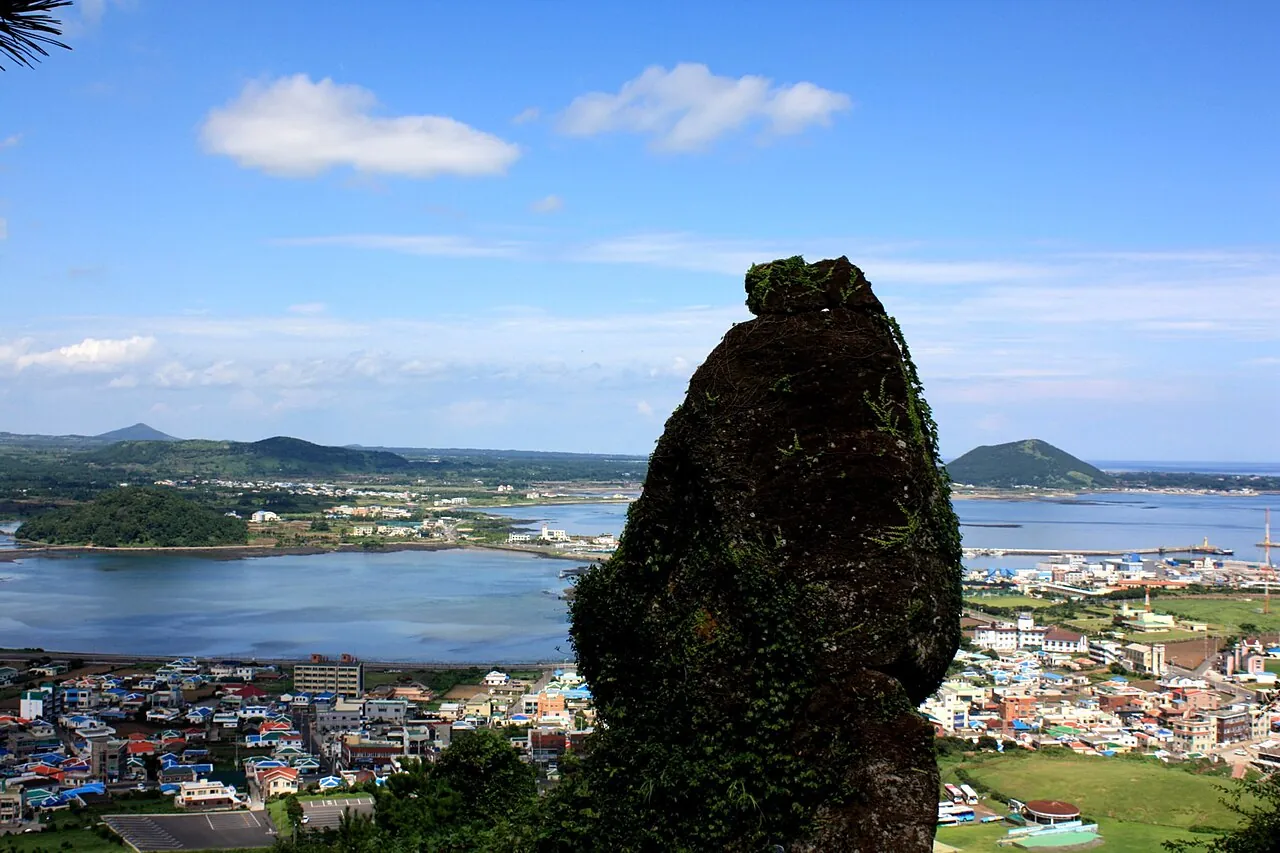
Seongsan Ilchulbong is a tuff cone, formed when magma erupted in shallow sea and the ash settled in layers; waves have cut its seaward side into cliffs, and sand and gravel have joined what was once an island to Jeju. Check the Jeju World Natural Heritage Centre's current opening and last-entry times for Seongsan Ilchulbong before planning the visit; no outside food is allowed. An adult ticket is KRW 5,000 and a teenager's or child's KRW 2,500. The peak closes on the first Monday of every month, or the next day if that Monday is a public holiday. At the foot of the peak, on Umutgae shore, the haenyeo, Jeju's women free-divers, show how they work: the Korea Tourism Organization describes an introduction, a dive, the collecting of seafood and a tasting, free with the Seongsan Ilchulbong ticket, with a schedule that changes with the season and the weather. Manjanggul is a lava tube about 7.4 km long, up to about 18 m wide and 23 m high, which Visit Jeju calls the largest lava tube on Jeju; the roof has collapsed in three places to make entrances. It is open from 09:00 to 18:00, with ticket sales and admission ending at 17:00, and is closed on the first Wednesday of every month. Check the current admission and parking charges for Manjanggul before visiting; these charges are not included in the known costs below.
Udo is the island off the east coast, reached by ferry from Seongsan Port or Jongdal Port in about 10 to 15 minutes. Olle Route 1-1 on Udo is 11.3 km and can be completed in around four to five hours, Visit Jeju says. Confirm the ferry fare, operator and last return sailing at your departure port before planning a day on Udo. The Jeju Global Taxi is the taxi-tour service sanctioned by the provincial government, with foreign-language drivers, booking lines in English (+82-1899-4314-1), Chinese (+82-1899-4314-2) and Japanese (+82-1899-4314-3) and a reservation system open around the clock. Its page lists KRW 220,000 for 8 hours for a general taxi with up to 4 passengers, plus KRW 30,000 for each extra hour, with fuel, insurance, parking and the driver's lunch included; guests staying more than 30 km from downtown Jeju City pay KRW 30,000 more. A typical tour runs from 9 a.m. to 5 p.m. or from 10 a.m. to 6 p.m. and reaches up to five attractions on an east, west or south route. Prices were checked on 17 October 2026. The Jeju guide, listed under the related guides below, covers the west coast, Seogwipo and the bus routes for the days this plan leaves out.
- Day 10. Fly from Gimhae to Jeju, check in at Jeju Pacific Hotel and spend the afternoon at Dongmun Market. Have black pork at Heukdonga for dinner.
- Day 11. Climb Hallasan from Seongpanak if you hold a summit booking. Without a summit booking, walk Yeongsil or Eorimok only if those trails are open, and check the current bus 240 timetable for both your outward trip and your return stop first; if the park closes for bad weather, choose a non-hiking day.
- Day 12. Take a Global Taxi along the east coast, with Manjanggul in the morning and Seongsan Ilchulbong in the afternoon, and the haenyeo show at the foot of the peak if it is running. To swap Manjanggul for Udo, cross by ferry in the morning, once you have confirmed a return sailing.
- Day 13. If your flight leaves after midday, Dongmun Market, open from 07:00, makes a short morning. VisitKorea gives 15 minutes by taxi from the airport to the market. Then fly to Gimpo and ride AREX to Seoul Station, as set out under the legs. Check in at Sotetsu Fresa Inn and spend the evening at the Gwangjang Market food alley, at the National Museum of Korea, which stays open until 21:00 on Wednesdays and Saturdays, or on Namsan.
- Day 14. If your flight leaves in the evening, Inwangsan makes a morning walk before the train. Then ride the AREX Express from Seoul Station to Incheon Airport and fly home.
Make time for the local food
What to eat and where to look
Abai sundae (blood sausage with sweet rice)
Pork intestine stuffed with blood and sweet rice and steamed, a Hamgyeong-do dish brought south by Korean War refugees.
- Where to look
- Dancheon Sikdang, 17 Abaimaeul-gil in Abai Village, run by the third generation of its family, which also serves ojingeo sundae, stuffed squid (08:30 to 19:00, with a break from 15:30 to 16:00).
- Fit it into your day
- Lunch on day five, after the gaetbae crossing.
Chodang soft tofu (sundubu)
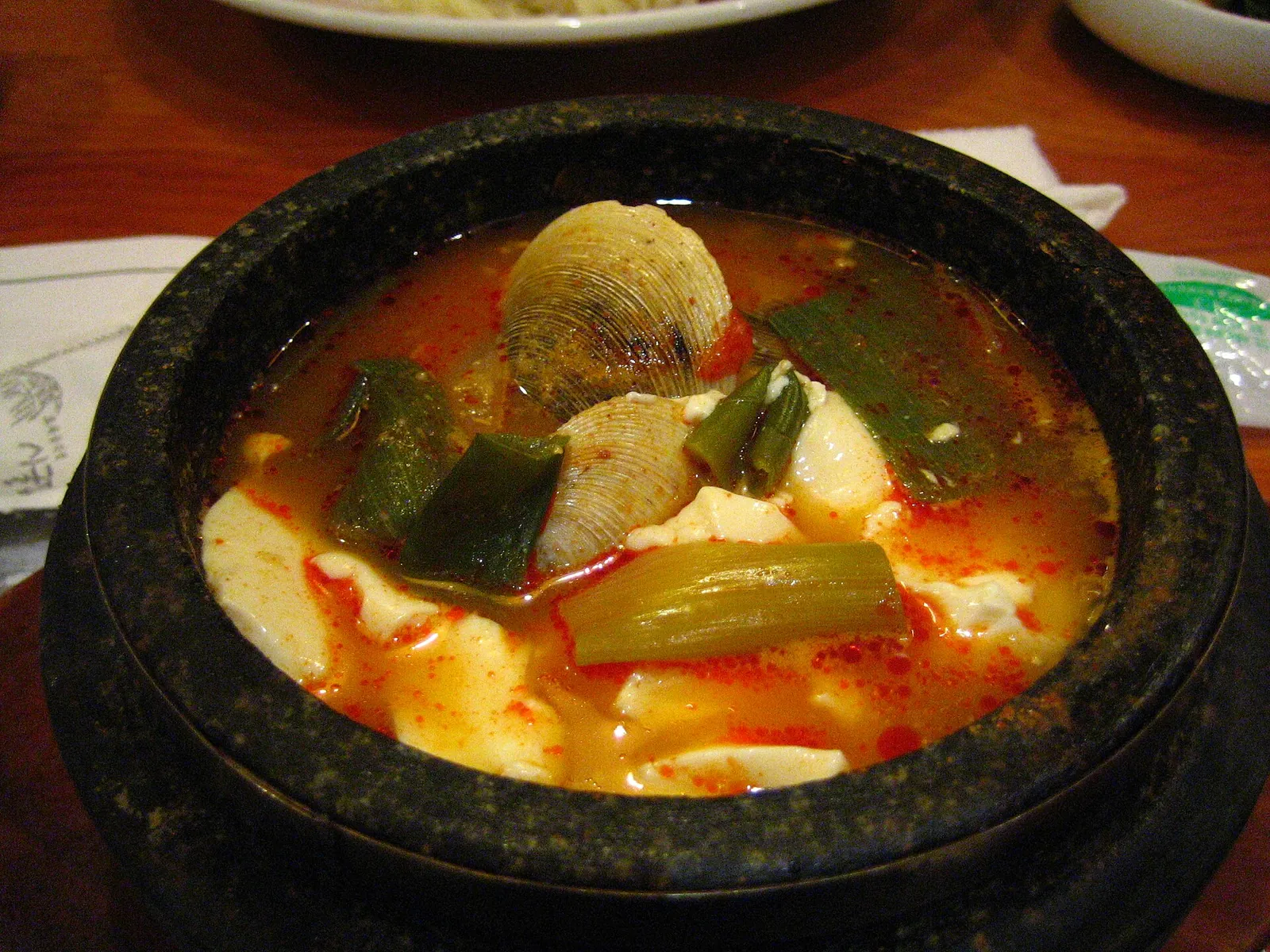
Soft tofu set made from beans ground fresh each morning, eaten with its own flavour and no added seasoning; the spicy soft tofu stew with East Coast venus clams is the other favourite.
- Where to look
- Chodang Halmeoni Sundubu, 77 Chodangsundubu-gil (Mondays and Thursday to Sunday 08:00 to 19:00, last order 18:30, closed 15:30 to 17:00; Tuesdays 08:00 to 15:00; closed Wednesdays).
- Fit it into your day
- Breakfast on day six, before the train.
Hanu beef rice soup (hanwoo gukbap)
A bowl of beef rice soup in a broth simmered for hours from Korean beef; the restaurant also serves a beef-tartare rice bowl.
- Where to look
- Goyu Hanwoo Gukbap, 1058-13 Poseok-ro, down a lane near Hwangnam market (07:30 to 22:00, last order 21:00; it can close early when the ingredients run out).
- Fit it into your day
- Lunch on day seven, in town after Seokguram.
Milmyeon
Chewy wheat-and-starch noodles in an ice-cold clear broth, a Busan dish that grew from flour provided as US aid during the Korean War.
- Where to look
- Halmae Gaya Milmyeon, 56-14 Gwangbok-ro, Jung-gu (10:30 to 21:30, open all year), near BIFF Square.
- Fit it into your day
- Lunch on day eight, after the train from Gyeongju.
Black pork (heukdwaeji)
Jeju's black pork, cut in thick slices and grilled over charcoal, then dipped in boiling meljeot, the fermented anchovy sauce that cuts the fat.
- Where to look
- Heukdonga, 11 Halladaehak-ro, Jeju City, in front of Cheju Halla University (11:20 to 23:00, open all year).
- Fit it into your day
- Dinner on day ten, after the flight.
The meljeot dipping sauce is fermented anchovy, and the Abai sundae contains pork blood and milmyeon is a wheat noodle dish, so tell the staff about any allergy before you order.
The known costs of the fortnight for two
This list follows the 14-day plan for two adults sharing a room, with every price checked on 17 October 2026. It adds up the costs that have an official price and is not a trip total. It prices the airport trains, the Global Taxi day on Jeju and the entrance fees the plan uses. The rooms (thirteen nights in Seoul, Sokcho, Gangneung, Gyeongju, Busan and Jeju) are not in it; confirm those rates and totals with the hotels.
The KTX-Eum from Gangneung to Gyeongju on day 6 and the KTX from Gyeongju to Busan on day 8 are not in it either: check the fare and departure time for each in KORAIL+ before booking, and compare them with the 2-day Korail Pass, which cost KRW 131,000 for an adult when Korail published its prices on 29 December 2025, before the fare change of 1 September 2026. The bus and flight fares are not in it; the bus and airline sites list them.
- Gyeongju, 2 nights: Confirm the room type, occupancy, rate for each night and payment terms directly with Nadeul Hanok before booking; this stay is not included in the known costs: not priced.
- Busan, 2 nights: Confirm the total for your two-night stay, occupancy and taxes with Hotel Nongshim before booking; this stay is not included in the known costs: not priced.
- Jeju, 3 nights: Confirm the total for three nights in a standard twin room with Jeju Pacific Hotel before booking; accommodation is not included in the known costs: not priced.
- Airport trains: the AREX Express Train between Incheon Airport and Seoul Station on day 1 and day 14, KRW 13,000 a person each way, and the all-stop train from Gimpo Airport to Seoul Station on day 13 at KRW 1,750 a person with a transport card: KRW 55,500.
- Seoul palaces: two Integrated Palace Tickets at KRW 6,000 each: KRW 12,000.
- Changdeokgung Huwon: two tickets at KRW 5,000 each: KRW 10,000.
- National Museum of Korea: no admission is charged for the permanent displays: KRW 0.
- Seorak Cable Car: two return tickets at KRW 16,000 each; park entry is free: KRW 32,000.
- Gangneung: two adult tickets to Ojukheon at KRW 3,000 each: KRW 6,000.
- Gyeongju sights: two combined tickets for Daereungwon and Donggung and Wolji at KRW 6,000 each; Bulguksa and Seokguram are free: KRW 12,000.
- Busan: one Blueline Park Beach Train ride each at KRW 10,000: KRW 20,000.
- Jeju, Global Taxi: 8 hours at KRW 220,000 for up to four passengers: KRW 220,000.
- Manjanggul: Check the current admission and parking charges for Manjanggul before visiting; these charges are not included in the known costs: not priced.
- Seongsan Ilchulbong: two adult tickets at KRW 5,000 each; the haenyeo show is free with the ticket and Hallasan has no entry fee: KRW 10,000.
- Known costs of the priced items: KRW 377,500 for two.
- Not included: the rooms in Seoul, Sokcho, Gangneung, Gyeongju, Busan and Jeju (13 nights), whose rates and totals must be confirmed with the hotels, and the Manjanggul admission and parking; the KTX-Eum and KTX fares and any Korail Pass; the bus fares, the flights from Busan to Jeju and from Jeju to Gimpo, and the taxis in Sokcho; meals and drinks; breakfast and the hot spring at Hotel Nongshim; the Tmoney card, local buses, the metro and taxis; the Namsan cable car and tower; and parking.
Practical questions
How should I split 13 nights between Seoul, the east coast, Gyeongju, Busan and Jeju?
Three nights in Seoul (two at the start and one at the end), two in Sokcho, one in Gangneung, two in Gyeongju, two in Busan and three on Jeju. That gives each stop of two nights or more one full day after a travel day and puts the long journeys on days 3, 6, 10 and 13. With ten days, the 10-day route drops the east coast and Jeju for Jeonju and Yeosu; Andong, Jeonju and Yeosu have their own guides, listed under the related guides.
Which day of the week should I land?
Gyeongbokgung closes on Tuesdays and Changdeokgung on Mondays, so day 2, the palace day, should fall between Wednesday and Sunday, which means landing between Tuesday and Saturday.
How do I get from Gangneung to Gyeongju?
Take the KTX-Eum on the Donghae Line, run by Korail. The train runs three times a day in each direction, and VisitKorea gives about 3 hours 50 minutes from Busan's Bujeon Station to Gangneung; its table of minutes between stops adds up to 155 minutes from Gangneung to Gyeongju. Korail's timetable and the KORAIL+ app list the departures and the exact time and fare of each train, and fares changed on 1 September 2026.
How do I get from Busan to Jeju, and from Jeju home?
Fly from Gimhae Airport: VisitKorea lists Korean Air, Air Busan, Eastar Jet, Jeju Air and Jin Air on Gimhae to Jeju, and each airline's site shows the flight time and the fare for your date. To leave Jeju, fly to Gimpo Airport, which takes about 1 hour 10 minutes. From there the all-stop airport train to Seoul Station takes about 23 minutes. Sleep your last night in Seoul, and the AREX Express reaches Incheon Airport in about 43 to 51 minutes the next day.
Can I fly home from Jeju instead of returning to Seoul?
Jeju International Airport also has its own international routes: VisitKorea's table for July 2026 lists daily flights to Taipei (Eastar Jet, Jin Air, Tigerair Taiwan and Trinity Airways), Hong Kong (Jin Air and HK Express) and Osaka Kansai (Trinity Airways), Korean Air to Tokyo Narita on Mondays, Wednesdays, Fridays and Sundays, and Scoot to Singapore on Wednesdays and Fridays. If your ticket leaves from Jeju, you can drop the last night in Seoul.
Can I climb Hallasan on this route?
Yes, on day 11, if you hold a summit reservation for Seongpanak or Gwaneumsa. A Seongpanak summit booking is for the 05:00 to 08:00 window or the 08:01 to 11:30 window; cancel before your window ends, through the login you booked with. Without a summit booking, walk Yeongsil or Eorimok to the Witseoreum shelter only if those trails are open; if the park closes for bad weather, choose a non-hiking day.
What does the fortnight cost for two, and what is left out?
The known costs come to KRW 377,500 for two adults sharing a room, checked on 17 October 2026; they are not a trip total. They cover the airport trains, a Global Taxi day on Jeju and the entrance fees. The rooms in all six places, the Manjanggul admission, the KTX-Eum and KTX fares, the bus and flight fares and meals are not included.
Sources and checks before you travel
Reference sources for the version dated 18 October 2026. Confirm opening times, access, transport and conditions for your travel dates.
- AREX: Express Train ↗ — opens in a new tab
- VisitKorea: Airports and airport transport ↗ — opens in a new tab
- VisitKorea: Express and intercity buses ↗ — opens in a new tab
- Korail: booking window for foreign passengers ↗ — opens in a new tab
- Korail: KTX and SRT merger ↗ — opens in a new tab
- VisitKorea: East Coast Train Trip by KTX-Eum ↗ — opens in a new tab
- Korail: KTX 18th anniversary press release (31 March 2022) ↗ — opens in a new tab
- Gyeongju City: directions ↗ — opens in a new tab
- Seokguram: how to get there (Korean) ↗ — opens in a new tab
- Seokguram: hours and fees (Korean) ↗ — opens in a new tab
- Bulguksa: hours and fees (Korean) ↗ — opens in a new tab
- Hotel Nongshim: location ↗ — opens in a new tab
- Hotel Nongshim: Deluxe Twin ↗ — opens in a new tab
- VisitKorea: Stay safe and have fun in Busan ↗ — opens in a new tab
- VisitKorea: Feel the sea, enjoy the city: Busan ↗ — opens in a new tab
- VisitKorea: Domestic flights ↗ — opens in a new tab
- VisitKorea: Jeju travel guide ↗ — opens in a new tab
- VisitKorea: Jeju International Airport ↗ — opens in a new tab
- Jeju Pacific Hotel: room rates ↗ — opens in a new tab
- Jeju Pacific Hotel: location ↗ — opens in a new tab
- Sotetsu Fresa Inn Seoul Myeong-dong: official site ↗ — opens in a new tab
- VisitKorea: Benikea Hotel Mountain & Ocean Daepohang ↗ — opens in a new tab
- Visit Gangneung: accommodation ↗ — opens in a new tab
- Korea Heritage Service: palace hours and closing days (Korean) ↗ — opens in a new tab
- Korea Heritage Service: palace admission fees (Korean) ↗ — opens in a new tab
- Visit Seoul: Myeongdong Kyoja ↗ — opens in a new tab
- National Museum of Korea: hours and fees ↗ — opens in a new tab
- Visit Seoul: Inwangsan ↗ — opens in a new tab
- UK Foreign Office: South Korea safety and security ↗ — opens in a new tab
- France Diplomatie: security in South Korea (French) ↗ — opens in a new tab
- Seorak Cable Car (operator): guide (Korean) ↗ — opens in a new tab
- Korea National Park Service: entry-time rules (Korean) ↗ — opens in a new tab
- Korea National Park Service: national park entry fee (Korean) ↗ — opens in a new tab
- VisitKorea: Seoraksan hiking guide ↗ — opens in a new tab
- VisitKorea: Sokcho Tourist & Fishery Market feature ↗ — opens in a new tab
- VisitKorea: Dancheon Sikdang, Sokcho ↗ — opens in a new tab
- VisitKorea: Gyeongpodae Pavilion ↗ — opens in a new tab
- VisitKorea: Ojukheon House ↗ — opens in a new tab
- Gangneung City: Ojukheon visitor information ↗ — opens in a new tab
- VisitKorea: Anmokhaebyeon Beach ↗ — opens in a new tab
- VisitKorea: Chodang Halmeoni Sundubu ↗ — opens in a new tab
- Gyeongju Tourism: Daereungwon ↗ — opens in a new tab
- Gyeongju Tourism: Donggung and Wolji ↗ — opens in a new tab
- Gyeongju Tourism: admission fees ↗ — opens in a new tab
- Gyeongju Tourism: Goyu Hanwoo Gukbap ↗ — opens in a new tab
- VisitKorea: Jagalchi Market ↗ — opens in a new tab
- VisitKorea: Gamcheon Culture Village etiquette ↗ — opens in a new tab
- Haeundae Blueline Park: fares ↗ — opens in a new tab
- Haeundae Blueline Park: information ↗ — opens in a new tab
- VisitKorea: Gwangalli Beach ↗ — opens in a new tab
- VisitKorea: Halmae Gaya Milmyeon ↗ — opens in a new tab
- Visit Jeju: Hallasan National Park ↗ — opens in a new tab
- Hallasan reservation system: reservation guide ↗ — opens in a new tab
- Hallasan reservation system: Seongpanak trail ↗ — opens in a new tab
- Hallasan reservation system: ID check ↗ — opens in a new tab
- Hallasan National Park Office: FAQ ↗ — opens in a new tab
- Visit Jeju: Seongsan Ilchulbong ↗ — opens in a new tab
- VisitKorea: Seongsan Ilchulbong ↗ — opens in a new tab
- Visit Jeju: Manjanggul Lava Tube ↗ — opens in a new tab
- Jeju Global Taxi ↗ — opens in a new tab
- VisitKorea: Heukdonga ↗ — opens in a new tab
- Korail press release, 29 December 2025: Korail Pass prices ↗ — opens in a new tab
- VisitKorea: 2026 Fall Foliage Forecast ↗ — opens in a new tab
- VisitKorea: Seollal holiday ↗ — opens in a new tab
- K-ETA notice: temporary exemption extended to 31 December 2026 ↗ — opens in a new tab
- e-Arrival card: who must file ↗ — opens in a new tab
- VisitKorea: Tmoney card ↗ — opens in a new tab
- Jeju Special Self-Governing Province: bus information, questions and answers ↗ — opens in a new tab
- VisitKorea: Driving in Korea ↗ — opens in a new tab
- Gyeongju City: tour guide ↗ — opens in a new tab
- Gyeongju National Museum: directions ↗ — opens in a new tab
- Airport Railroad: all-stop fares (Korean) ↗ — opens in a new tab
- VisitKorea: Direct flights between Incheon and Jeju resume ↗ — opens in a new tab
- AREX: Express Train timetable (Korean) ↗ — opens in a new tab
- Incheon Airport: City Airport Terminal at Seoul Station ↗ — opens in a new tab
- VisitKorea: Palace Royal Guard Changing Ceremony ↗ — opens in a new tab
- Visit Seoul: Gyeongbokgung Palace ↗ — opens in a new tab
- Visit Seoul: Changdeokgung Palace ↗ — opens in a new tab
- Seoul Metropolitan Government: Bukchon visiting restrictions ↗ — opens in a new tab
- Sokcho Bus Information System: fares and operators (Korean) ↗ — opens in a new tab
- Seoraksan office notice: spring 2026 closure periods (Korean) ↗ — opens in a new tab
- Seokguram: welcome (Korean) ↗ — opens in a new tab
- Seokguram: structure and relics (Korean) ↗ — opens in a new tab
- Gyeongju Tourism: travel by city bus ↗ — opens in a new tab
- Gyeongju Tourism: Cheomseongdae ↗ — opens in a new tab
- VisitKorea: Gangneung Gyeongpo Beach ↗ — opens in a new tab
- Gyeongju Tourism: Hwangnidan-gil ↗ — opens in a new tab
- Korea Tourism Organization (VisitKorea): Dongmun Traditional Market ↗ — opens in a new tab
- Hallasan National Park: Seongpanak trail ↗ — opens in a new tab
- Hallasan reservation system: notice of 24 October 2025 on entry windows ↗ — opens in a new tab
- VisitKorea: Seongsanpo Haenyeo Gongyeonjang ↗ — opens in a new tab
- Visit Jeju: Udo Island (Maritime Park) ↗ — opens in a new tab
- Visit Seoul: Gwangjang Market ↗ — opens in a new tab
- Gyeongju National Museum: visitor information ↗ — opens in a new tab
- Gyeongju National Museum: exhibitions ↗ — opens in a new tab
- Gyeongju Tourism: Gyeongju Station ↗ — opens in a new tab
- Visit Jeju: Udo Island ↗ — opens in a new tab
- Korea Meteorological Administration: summer rains ↗ — opens in a new tab
- VisitKorea: Haeundae Beach ↗ — opens in a new tab
- VisitKorea: Haeundae Station access ↗ — opens in a new tab
- VisitKorea: Changdeokgung Palace Complex ↗ — opens in a new tab
- Nadeul Hanok: room rates (Korean) ↗ — opens in a new tab
- Nadeul Hanok: nearby sights (Korean) ↗ — opens in a new tab
- Nadeul Hanok: about (Korean) ↗ — opens in a new tab
- Hotel Nongshim: reservation ↗ — opens in a new tab
- Jeju Pacific Hotel: hotel regulations ↗ — opens in a new tab
Does this experience fit your route?
Book the flights first, then the KTX-Eum seats from Gangneung to Gyeongju and the Hallasan reservation, and the Huwon tour six days before you go; the six hotels fit the days around them.
Check dates and details on Viator ↗ — opens in a new tabAffiliate link · Book with ViatorPhoto credits
The granite ridge of Ulsanbawi in Seoraksan National Park
Photograph: kallerna — opens in a new tab · CC BY-SA 4.0 — opens in a new tab
Changes: Resized and converted to WebP; displayed with responsive crops. · Original photograph and licence details ↗ — opens in a new tab
The Seoul City Wall on Inwangsan, with the city and mountains beyond
Photograph: Rtflakfizer — opens in a new tab · CC BY-SA 4.0 — opens in a new tab
Changes: Resized and converted to WebP; displayed with responsive crops. · Original photograph and licence details ↗ — opens in a new tab
Cheomseongdae, the stone observatory tower of Gyeongju
Photograph: by Junho Jung at Flickr from South Korea — opens in a new tab · CC BY-SA 3.0 — opens in a new tab
Changes: Resized and converted to WebP; displayed with responsive crops. · Original photograph and licence details ↗ — opens in a new tab
A cup-shaped photo frame on the boardwalk at Anmok Beach in Gangneung
Photograph: Mobius6 — opens in a new tab · CC BY-SA 4.0 — opens in a new tab
Changes: Resized and converted to WebP; displayed with responsive crops. · Original photograph and licence details ↗ — opens in a new tab
A rock on Seongsan Ilchulbong, with the village and coast below
Photograph: J. Patrick Fischer — opens in a new tab · CC BY-SA 3.0 — opens in a new tab
Changes: Resized and converted to WebP; displayed with responsive crops. · Original photograph and licence details ↗ — opens in a new tab
Sundubu-jjigae, a soft tofu stew served in a stone pot
Photograph: by ayustety (flickr) — opens in a new tab · CC BY-SA 2.0 — opens in a new tab
Changes: Resized and converted to WebP; displayed with responsive crops. · Original photograph and licence details ↗ — opens in a new tab