Seoul and the Capital Area · Seoul
Jongno and Bukchon, Seoul: palaces, hanok lanes and where to stay
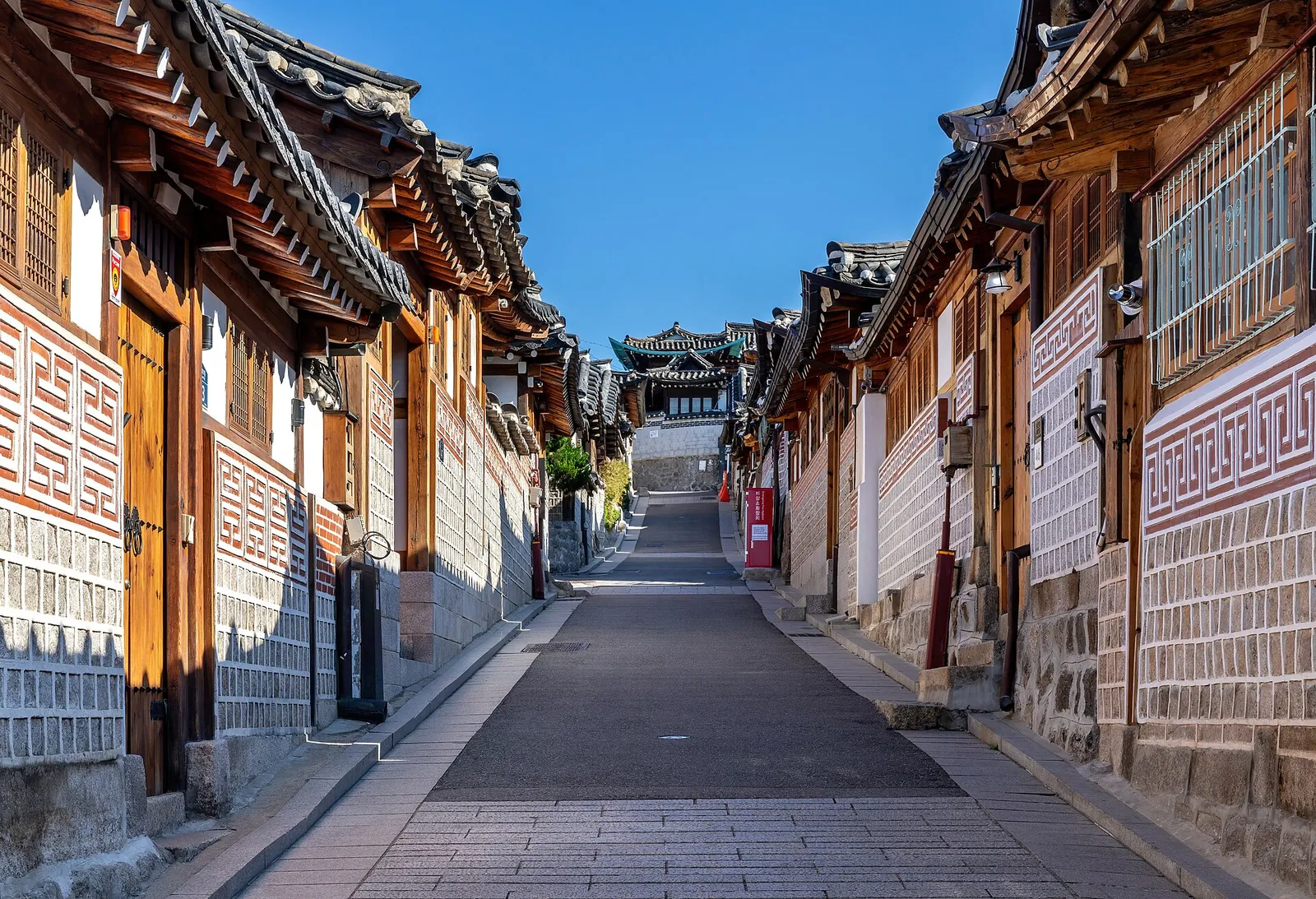
Jongno is the part of Seoul where the Joseon capital is still legible on the map: Gyeongbokgung at the foot of the mountains, Changdeokgung and Jongmyo to the east, and the hanok lanes of Bukchon climbing the slope between them. Insa-dong, Ikseon-dong and Gwangjang Market fill the streets to the south. The district is small enough to cross on foot, but its main sights keep different closing days, entry rules and visiting hours, and that is what decides a good plan here.
- Suggested time
- 2 days (3 with a slower pace or a Bukhansan hike)
- Where to stay
- Bukchon hanok guesthouses or hotels around Anguk, Insa-dong and Jongno 3-ga stations; Gwanghwamun for larger hotels
- Season and timing
- Palace hours follow the season: when we checked, Gyeongbokgung stayed open until 18:30 from June to August and closed at 17:00 from November to February. VisitKorea calls autumn foliage the best time for Changdeokgung's Secret Garden. Outdoor ceremonies may be cancelled in rain.
The short answer
Give Jongno two full days. On one, take Gyeongbokgung at opening time and Bukchon's lanes before lunch; on the other, Changdeokgung with a booked Secret Garden tour, then Jongmyo or Ikseon-dong, and end at Gwangjang Market. Sleep in Jongno itself — a hanok guesthouse in Bukchon, or a hotel near Anguk, Insa-dong or Jongno 3-ga station — so that you can be at a palace gate at 9:00 without crossing the city. Gyeongbokgung closes on Tuesdays and Changdeokgung on Mondays, so put each on a day when the other is shut.
Why sleep in Jongno rather than commute in
The case for staying here is time at the gates. Gyeongbokgung, Changdeokgung and Jongmyo open in the morning and are calmest in the first hour; Bukchon's busiest lane is only open to visitors from 10:00 to 17:00. From a room in Jongno you walk to all of them, take a break at midday and come back out for dinner in Ikseon-dong or Gwangjang Market. From Myeongdong or Gangnam the same day starts with a subway ride and a transfer.
Bukchon itself is the most atmospheric base: many of its hanok now work as guesthouses, according to VisitKorea. Remember that this is a residential neighbourhood with quiet rules and, VisitKorea notes, no visitor parking, so check how far the house is from Anguk station and whether you will be carrying luggage uphill. Insa-dong and Anguk put you between the palaces and the restaurants on flatter ground; Jongno 3-ga has three subway lines (1, 3 and 5) and Ikseon-dong on the doorstep; Gwanghwamun, by the main gate of Gyeongbokgung, is where the larger hotels are.
If you want a traditional room but not a whole stay in one, combine a night or two in a Bukchon hanok with a hotel elsewhere in Seoul. Our guide to hanok stays across South Korea covers what to expect from the rooms.
Gyeongbokgung at opening time
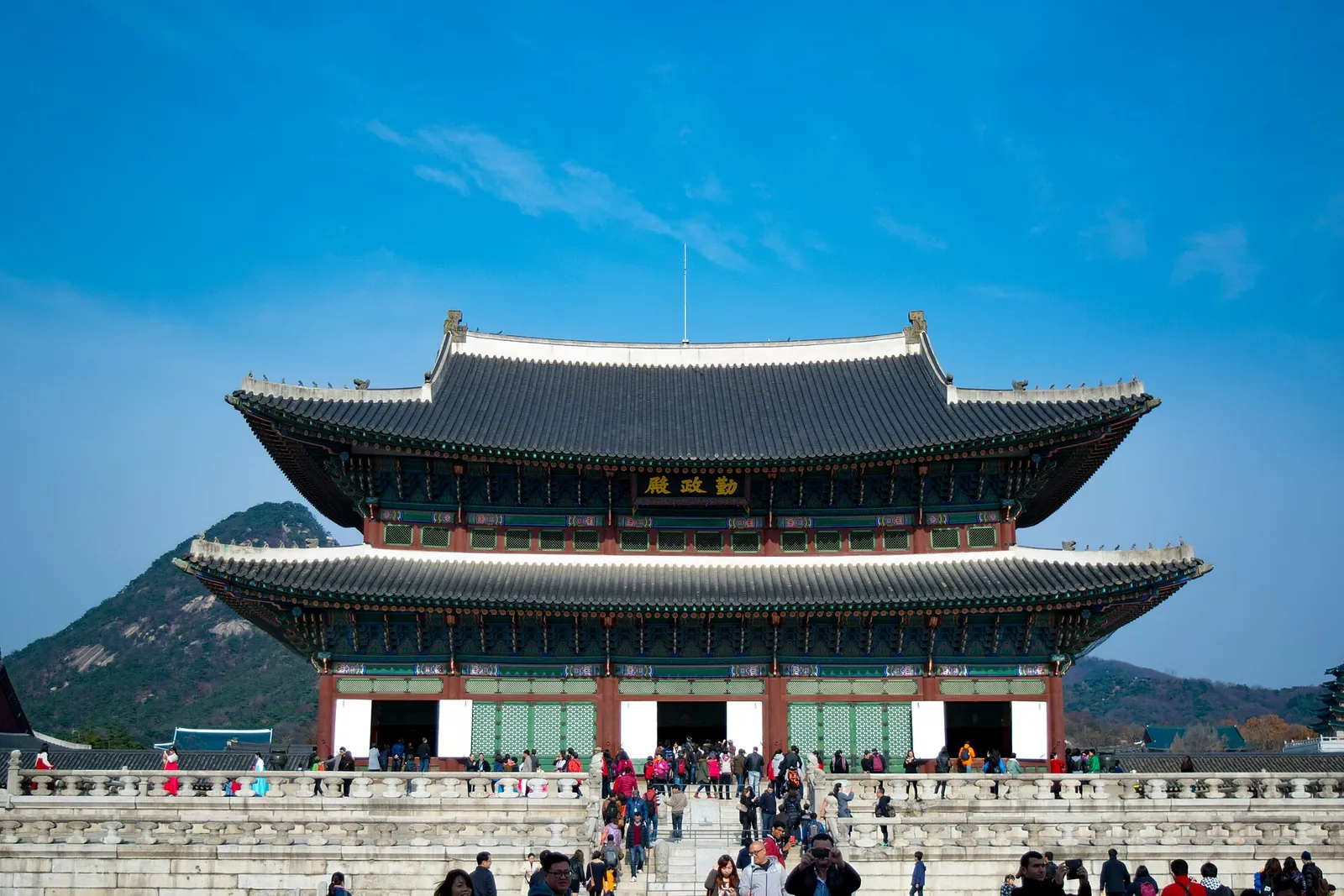
Gyeongbokgung was built in 1395 as the main palace of the Joseon dynasty and is the largest of Seoul's five palaces. When we checked on 2026-10-03, VisitKorea listed opening hours of 09:00–18:00 from March to May and in September and October (last admission 17:00), 09:00–18:30 from June to August and 09:00–17:00 from November to February, with closure on Tuesdays. The adult fee was listed as 3,000 won, and Visit Seoul confirmed that visitors in a complete hanbok enter free.
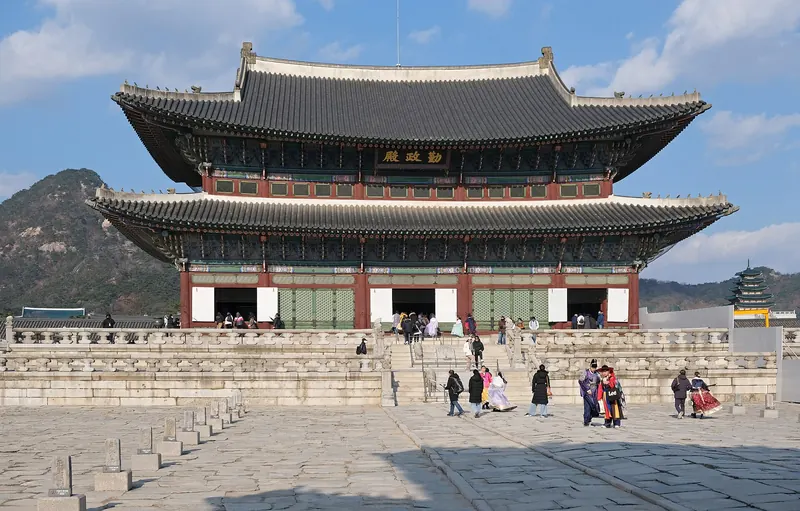
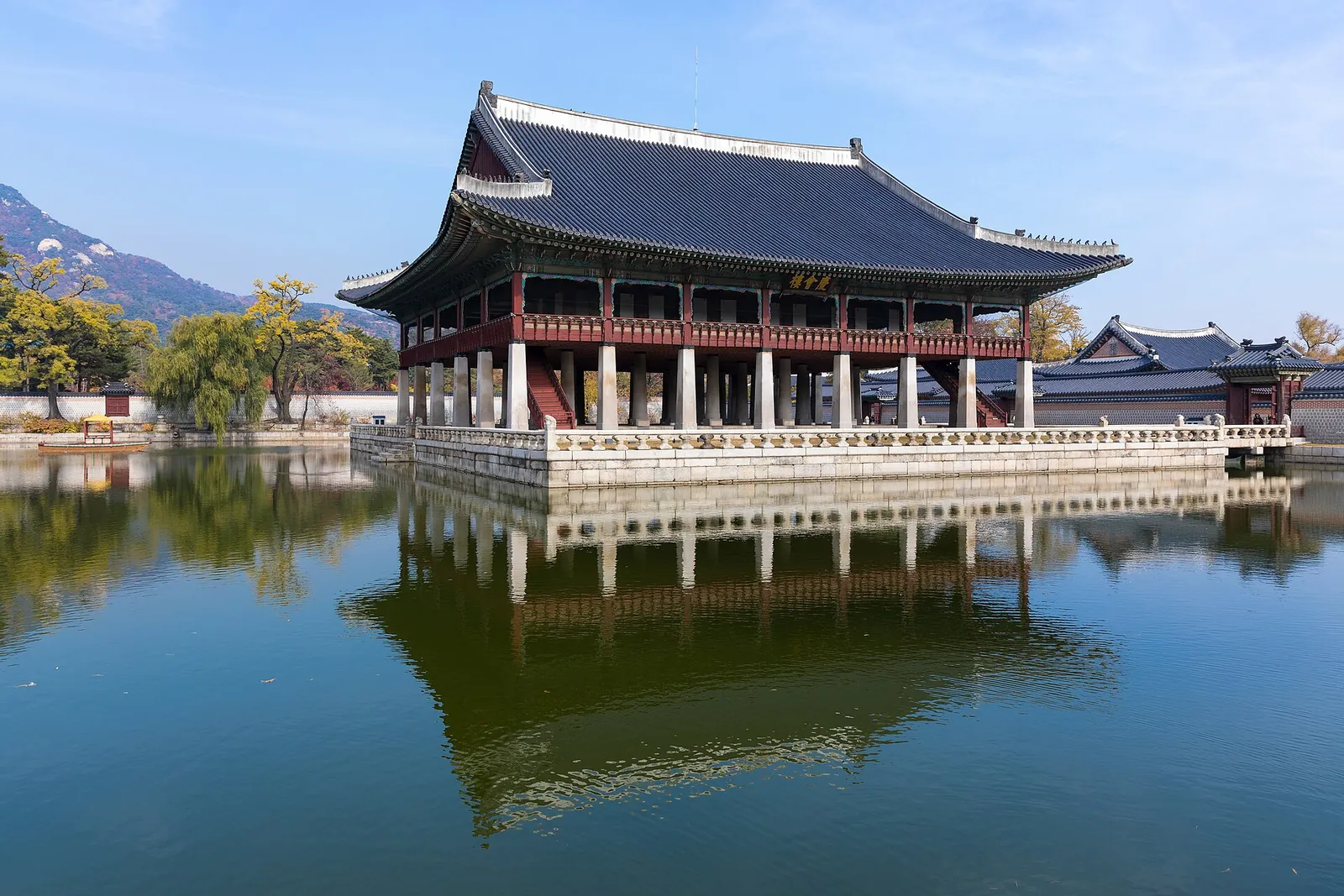
Arrive for the opening and go straight to the back of the palace — Gyeonghoeru, the banquet pavilion on its pond, and Hyangwonjeong Pavilion — and leave Geunjeongjeon, the throne hall near the main gate, for your way out. Visit Seoul notes that the palace now has entrances on every side: Gwanghwamun to the south, Sinmumun to the north, Yeongchumun to the west towards Seochon, and the east entrance by the National Folk Museum of Korea. The National Palace Museum of Korea sits by the palace and suits a hot or wet afternoon.
The guard-changing ceremony is worth timing your arrival or departure around. VisitKorea listed the Royal Guard Changing Ceremony at 10:00 and 14:00 at Gwanghwamun and Heungnyemun gates, free of charge, cancelled in rain and subject to change. Visit Seoul listed free English guided tours of the palace at 11:00, 13:30 and 15:30 every day except Tuesday, with no reservation needed for groups of fewer than ten. For the subway, Visit Seoul gives Gyeongbokgung station (Line 3, exit 5) and Gwanghwamun station (Line 5, exit 2).
Make time for the local food
What to eat and where to look
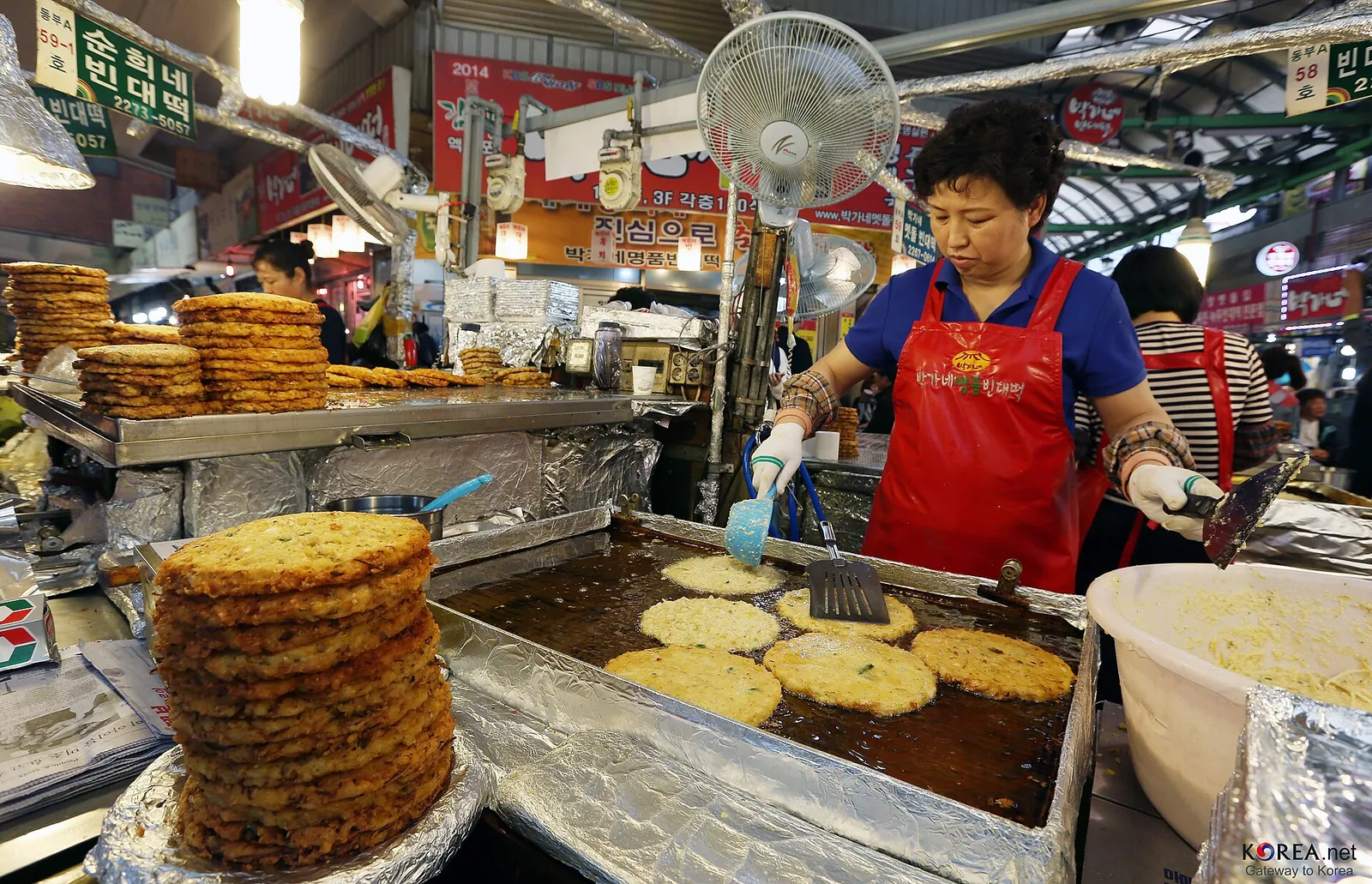
Bindaetteok (mung bean pancake)
Ground mung beans fried into thick, crisp-edged pancakes, often with pork, kimchi or bean sprouts mixed in. Visit Seoul lists it first among Gwangjang Market's favourite foods, and the stalls grind and fry it in full view.
- Where to look
- The griddle stalls in Gwangjang Market's food alley, by Jongno 5-ga station.
- Fit it into your day
- Share one pancake as the start of a market dinner, with makgeolli if you like, then move on to a second stall.
Fried in plenty of oil and often made with pork; ask what is mixed in if you avoid meat.
Mayak gimbap
Finger-sized rolls of rice and vegetables in seaweed, usually served with a mustard dipping sauce. Visit Seoul calls Gwangjang Market the home of the original version; the name, which means 'drug gimbap', is a joke about how addictive they are.
- Where to look
- Gwangjang Market's food stalls.
- Fit it into your day
- A cheap snack while you walk the market, or alongside bindaetteok.
Rolls are often brushed with sesame oil and may contain fish cake or egg.
Yukhoe (Korean beef tartare)
Raw beef cut into strips and seasoned with sesame oil and pear, often topped with an egg yolk. It is one of the dishes Visit Seoul names among Gwangjang Market's favourites.
- Where to look
- Specialist yukhoe restaurants in and around Gwangjang Market.
- Fit it into your day
- Order it as a shared plate at a market dinner rather than a meal on its own.
Raw beef and raw egg; skip it if you are pregnant or avoid raw food.
Kalguksu (knife-cut noodle soup)
Hand-cut wheat noodles in a light broth. Visit Seoul highlights an Ikseon-dong shop known for kalguksu in anchovy broth at low prices — a plain counterweight to the area's dessert cafés.
- Where to look
- Noodle shops in Ikseon-dong and the older streets around Jongno 3-ga.
- Fit it into your day
- A warming, quick lunch between Jongmyo and Insa-dong.
Anchovy broth is not vegetarian; noodles contain wheat.
Traditional tea in Insa-dong
Not a dish but the area's classic pause: VisitKorea describes Insa-dong's teahouses hidden in the alleys off the main street, as the natural complement to the galleries.
- Where to look
- The side alleys of Insa-dong and the lanes towards Anguk.
- Fit it into your day
- An afternoon break after a palace morning, before dinner in Ikseon-dong.
Some herbal teas are sweetened or very strong; ask what is in a blend if you have allergies or are pregnant.
Changdeokgung, the Secret Garden and Jongmyo
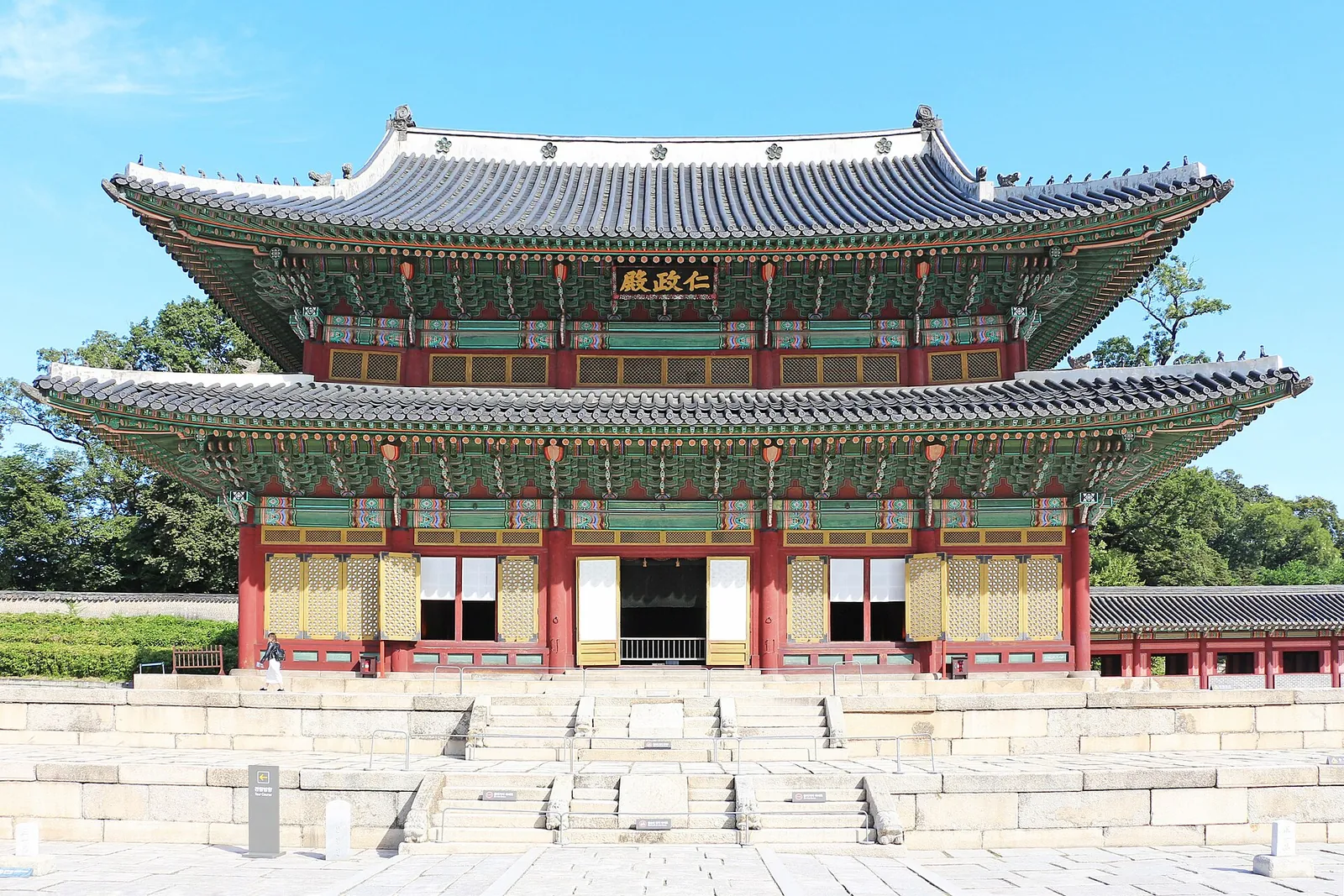
Changdeokgung, built in 1405 and a UNESCO World Heritage Site since 1997, is the best preserved of the five Joseon palaces according to VisitKorea; the official palace history describes it as built in harmony with its surroundings and the most Korean in style. The official palace history notes that it served as the main royal residence for some 270 years after it was rebuilt in 1610. When we checked on 2026-10-03, VisitKorea listed 09:00–18:00 from February to May and in September and October, 09:00–18:30 from June to August and 09:00–17:30 from November to January, with last admission an hour before closing and closure on Mondays.
The Secret Garden (Huwon) behind the palace is a separate visit by guided tour, with ponds and pavilions such as Buyongjeong and Juhamnu. VisitKorea listed 3,000 won for the palace grounds and 5,000 won for adults for the Secret Garden, and Visit Seoul says Secret Garden tours are reserved through the palaces' integrated online reservation service. Book before your trip, choose a morning slot, and plan the rest of the palace around it. The nearest station is Anguk (Line 3, exit 3).
Jongmyo Shrine, the royal ancestral shrine, is a short walk south. It is visited differently from the palaces: when we checked, Visit Seoul listed timed guided tours on Mondays and Wednesdays to Fridays, with English tours at 10:00, 12:00, 14:00 and 16:00, and free-roaming admission on Saturdays, Sundays, public holidays and the last Wednesday of each month. Monday is therefore a good day for Jongmyo and Gyeongbokgung, while Changdeokgung is shut; Tuesday is the day for Changdeokgung, when Gyeongbokgung and Jongmyo are closed.
Bukchon: a neighbourhood with visiting hours
Bukchon lies between Gyeongbokgung and Changdeokgung and, as Visit Seoul stresses, was not built for tourists: it is a residential village of hundreds of hanok. Since November 2024 part of it has been a Special Management Area, or Red Zone. When we checked on 2026-10-03, Visit Seoul listed tourist hours of 10:00 to 17:00, with visitors not allowed into the restricted area between 17:00 and 10:00; VisitKorea gave the same hours for the road along Bukchon-ro 11-gil, the lane in most photographs.
The house rules are short: keep your voice down, especially around Gahoe-dong 31; keep groups to ten people or fewer; and do not photograph or film into houses, even when a door is open. Visit Seoul calls this silent tourism, and residents are the reason the visiting hours exist.
In practice, walk Bukchon late in the morning after a palace, from 10:00 when the lanes open, and come down towards Anguk or Samcheong-dong for lunch.
Evenings: Insa-dong, Ikseon-dong and Gwangjang Market
Insa-dong is one main street with alleys of galleries, teahouses and craft shops on both sides. VisitKorea says the main street is closed to traffic on Saturdays from 14:00 to 22:00 and on Sundays from 10:00 to 22:00, when stalls and performances take over. Visit Seoul gives Anguk (Line 3) and Jongno 3-ga (Lines 1, 3 and 5) as the nearest stations.
Ikseon-dong is a much smaller hanok quarter of narrow lanes, now almost entirely cafés, restaurants and shops; Visit Seoul notes that it is especially atmospheric at night and lies by exit 4 of Jongno 3-ga station. Gwangjang Market, one stop east at Jongno 5-ga (Line 1, exit 8), opened in the early 20th century and is best known for its food alley. When we checked on 2026-10-03, Visit Seoul listed the market at 09:00–18:00, closed on Sundays, and the food alley at 09:00–23:00 daily.
Gwangjang is crowded and divides opinion; go for one or two dishes at a stall where the food is cooked in front of you, check the price before you sit, and keep bags closed in the crush.
A two-day plan that works with the closing days
This is an editorial suggestion, not a timetable. Check each site's closing day and reservation status for your dates.
- Day 1 (any day except Tuesday): Gyeongbokgung at 9:00, back courts first; guard changing at 10:00 by the main gate; Bukchon's lanes from late morning; lunch near Anguk; an afternoon in the National Palace Museum or Insa-dong; dinner in Ikseon-dong.
- Day 2 (any day except Monday): Changdeokgung with a booked morning Secret Garden tour; Jongmyo on a guided tour or, at the weekend, at your own pace; late afternoon at Gwangjang Market for dinner.
- Day 3 (optional): a morning hike in Bukhansan National Park north of the city, or a slower repeat of Bukchon and Insa-dong before moving on to another part of Seoul.
Practical questions
Is Jongno a good area to stay in Seoul?
Yes, if the palaces and old neighbourhoods are your priority. You can walk to Gyeongbokgung, Changdeokgung, Jongmyo, Bukchon and Insa-dong, and Jongno 3-ga station has three subway lines for the rest of the city. Nightlife and big shopping are better elsewhere.
Which days are the palaces closed?
When we checked on 2026-10-03, VisitKorea listed Gyeongbokgung as closed on Tuesdays and Changdeokgung on Mondays. If the closing day falls on a public holiday, each opens that day and closes on the next working day instead.
Do I need to book Changdeokgung's Secret Garden?
Visits to the Secret Garden are by guided tour with a separate ticket, and Visit Seoul says tours are reserved through the palaces' integrated online reservation service. Book before you travel and build the day around your slot.
Can I visit Bukchon Hanok Village in the evening?
Not the restricted area. When we checked, Visit Seoul listed tourist hours of 10:00 to 17:00 in Bukchon's Special Management Area, with no visitor entry between 17:00 and 10:00. For evening hanok lanes, go to Ikseon-dong instead.
Is entry to Gyeongbokgung free if I wear a hanbok?
Yes. Visit Seoul confirmed free entry to Gyeongbokgung for visitors in a complete hanbok, subject to the palace's hanbok guidelines.
When is the changing of the guard at Gyeongbokgung?
VisitKorea listed the Royal Guard Changing Ceremony at 10:00 and 14:00 around Gwanghwamun and Heungnyemun gates. It is free, can be cancelled in rain and the schedule may change, so check on the day.
Sources and checks before you travel
Reference sources for the version dated 3 October 2026. Confirm opening times, access, transport and conditions for your travel dates.
- VisitKorea: Gyeongbokgung Palace ↗ — opens in a new tab
- Visit Seoul: Gyeongbokgung Palace ↗ — opens in a new tab
- VisitKorea: Palace Royal Guard Changing Ceremony ↗ — opens in a new tab
- Korea Heritage Service Foundation: Changing of the Royal Palace Guard Ceremony ↗ — opens in a new tab
- VisitKorea: Changdeokgung Palace Complex ↗ — opens in a new tab
- Royal Palaces and Tombs Center: Changdeokgung Palace and its history ↗ — opens in a new tab
- Visit Seoul: Changdeokgung Palace ↗ — opens in a new tab
- Visit Seoul: Jongmyo Shrine ↗ — opens in a new tab
- Visit Seoul: Bukchon Hanok Village ↗ — opens in a new tab
- VisitKorea: Bukchon Hanok Village ↗ — opens in a new tab
- VisitKorea: Insa-dong ↗ — opens in a new tab
- Visit Seoul: Insa-dong ↗ — opens in a new tab
- Visit Seoul: Ikseon-dong Hanok Village ↗ — opens in a new tab
- Visit Seoul: Gwangjang Market ↗ — opens in a new tab
- VisitKorea: airport transportation ↗ — opens in a new tab
Does this experience fit your route?
A guided walk is most useful for the palaces, where the stories behind the halls are easy to miss. Check closing days, what tickets are included and the meeting point before you book.
Check dates and details on Viator ↗ — opens in a new tabAffiliate link · Book with ViatorPhoto credits
Bukchon-ro 11-gil, the best-known hanok lane in Bukchon and the one covered by the area's visiting hours
Photograph: Basile Morin — opens in a new tab · CC BY-SA 4.0 — opens in a new tab
Changes: Resized and converted to WebP; displayed with responsive crops. · Original photograph and licence details ↗ — opens in a new tab
Geunjeongjeon, the throne hall of Gyeongbokgung Palace
Photograph: Brady Bellini — opens in a new tab · CC0 — opens in a new tab
Changes: Resized and converted to WebP; displayed with responsive crops. · Original photograph and licence details ↗ — opens in a new tab
Injeongjeon, the throne hall of Changdeokgung Palace
Photograph: Bernard Gagnon — opens in a new tab · CC0 — opens in a new tab
Changes: Resized and converted to WebP; displayed with responsive crops. · Original photograph and licence details ↗ — opens in a new tab
Gyeonghoeru, the royal banquet pavilion on its pond inside Gyeongbokgung
Photograph: Frank Schulenburg — opens in a new tab · CC BY-SA 4.0 — opens in a new tab
Changes: Resized and converted to WebP; displayed with responsive crops. · Original photograph and licence details ↗ — opens in a new tab
Bindaetteok, mung bean pancakes, frying at a Gwangjang Market stall
Photograph: Republic of Korea from Seoul, Republic of Korea — opens in a new tab · CC BY-SA 2.0 — opens in a new tab
Changes: Resized and converted to WebP; displayed with responsive crops. · Original photograph and licence details ↗ — opens in a new tab