Seoul and the Capital Area · Incheon
Incheon travel guide: Chinatown, Wolmido, Songdo and a night near ICN
Almost everyone who flies into Korea lands in Incheon and leaves for Seoul within the hour. The city itself is worth a pause. Its old harbour opened to foreign trade in 1883, and the streets behind it still show the Qing and Japanese concessions that grew up there: Chinatown, the bank buildings of the open-port area and Korea's first Western-style park. A short monorail ride away, Wolmido is the seafront where locals come for raw fish and sunsets, while across the water Songdo is a new city of towers built around a seawater park. Treat these as three separate halves of a day rather than one long list.
- Suggested time
- 1 night (1–2 days)
- Where to stay
- Incheon Station and Chinatown for the old port; Songdo for modern hotels and the airport drive; Yeongjong only for very early flights
- Season and timing
- Spring and autumn are the most comfortable seasons for walking the hilly open-port streets; summer is hot and humid and winter cold and dry. Jayu Park's cherry blossoms come in April, and the Wolmi Sea Train runs later at weekends from April to October.
The short answer
One night is enough for most travellers, and it works best at the start or end of a trip because the airport is so close. Spend the afternoon on foot in Chinatown and the open-port streets, ride the Wolmi Sea Train to Wolmido for the evening, and keep Songdo Central Park for the next morning, or the reverse. Sleep near Incheon Station and Chinatown if the old port is your reason to stop, in Songdo if you want a modern hotel and the quickest drive to the airport over Incheon Bridge, and on Yeongjong Island only if your flight leaves very early. Avoid making Monday your main sightseeing day: several museums and the sea train close then.
Where to sleep: old port, Songdo or the airport island
Incheon is large, and its three useful bases are far apart. The old city around Incheon Station is where the history is: Chinatown is a short walk from the station, the open-port streets and Jayu Park are a short uphill walk, and the Wolmi Sea Train leaves from the station area for Wolmido. VisitKorea describes the Harbor Park Hotel there as within 40 minutes of the airport, with views over Chinatown and the port. Choose this area if you want to walk out of the door into the evening.
Songdo International City, on reclaimed land to the south, is the opposite: wide streets, office towers and business hotels around Songdo Central Park. VisitKorea's hotel listings put Songdo about 15 to 20 minutes from the airport by car over Incheon Bridge, which at 21.39 km is the longest bridge in Korea. It is the comfortable choice for an early drive to the airport, but it is a taxi or a long subway ride from Chinatown.
Yeongjong Island is the airport island itself. It has airport hotels, Eurwangni Beach and the Inspire resort, but little reason to stay unless your flight leaves at dawn. Whichever base you choose, check the exact route to your terminal before booking: Terminals 1 and 2 are a separate stop on the airport railway.
Chinatown and the open-port streets: one walk, two concessions
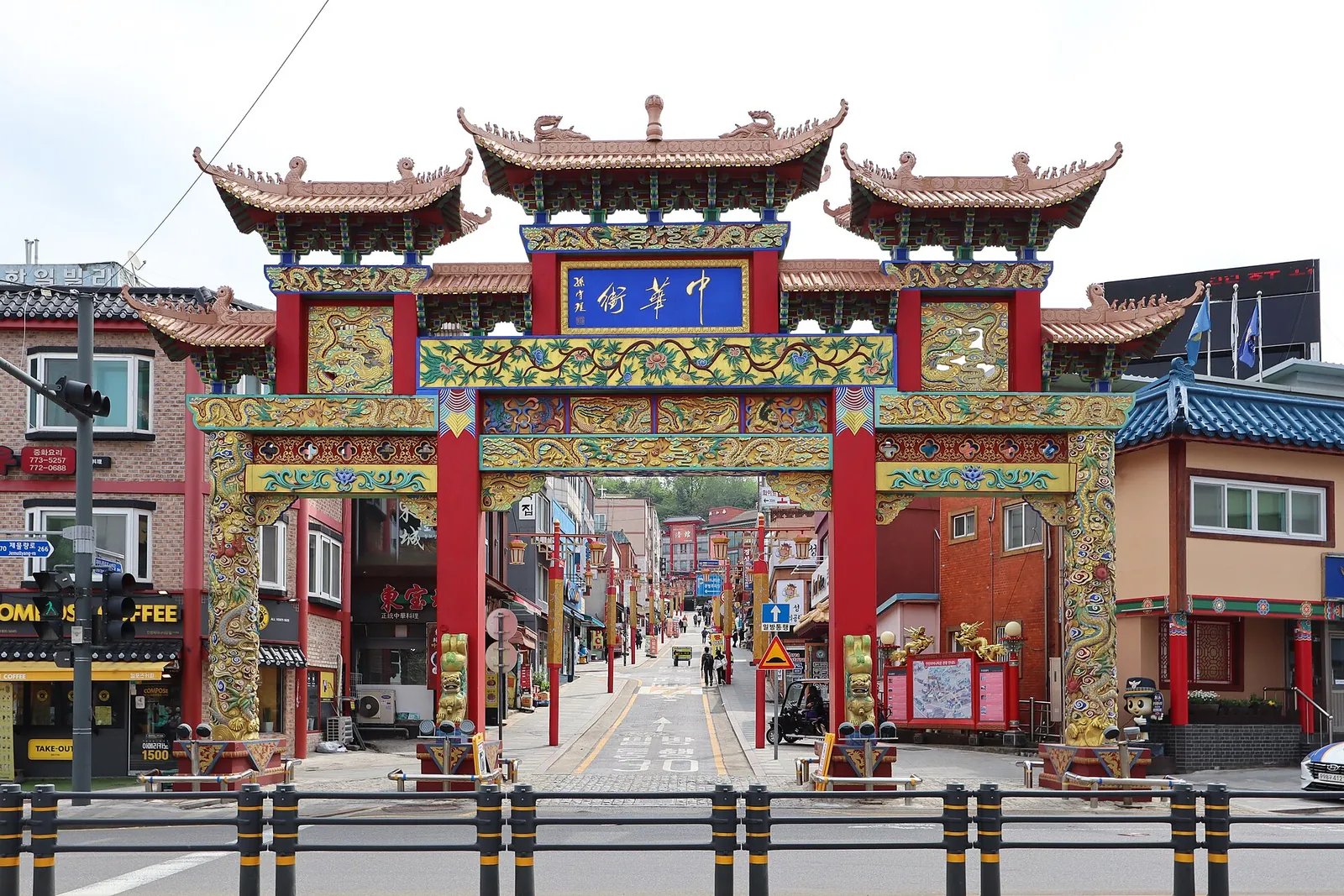
Incheon's Chinatown grew up after the port opened in 1883 and the Qing dynasty was granted a concession here the following year. According to VisitKorea, most of its residents today are second- or third-generation descendants of those settlers, and most of the Chinese businesses are now restaurants. Come hungry, but come for the streets as much as the food.
The Cheongil Jogyeji Stairway, on the slope below Jayu Park, marks the old boundary: the Qing concession on one side and the Japanese concession on the other, each with its own style of building. Downhill on the Japanese side, the open-port streets (Gaehangjang) keep the former Japanese consulate, the old branches of Japan's 1st, 18th and 58th banks and the Jemulpo Club. The former Japanese 1st Bank now houses the Incheon Open Port Museum; nearby, the Daebul Hotel Exhibition Hall stands on the site of what VisitKorea calls Korea's first Western-style hotel, opened in 1889. Further along, wooden Japanese-style shop-houses on Incheon Japanese Street have become cafés and small exhibition halls.
Jayu Park, at the top of the hill, was laid out a few years after the port opened and is described by VisitKorea as Korea's first Western-style park. It has the Korea–US Centennial Monument, a statue of General MacArthur recalling the Incheon landing of the Korean War, and views over the city and harbour. Songwol-dong Fairy Tale Village, a residential area repainted with fairy-tale murals and sculptures, is a short walk on the other side of Chinatown.
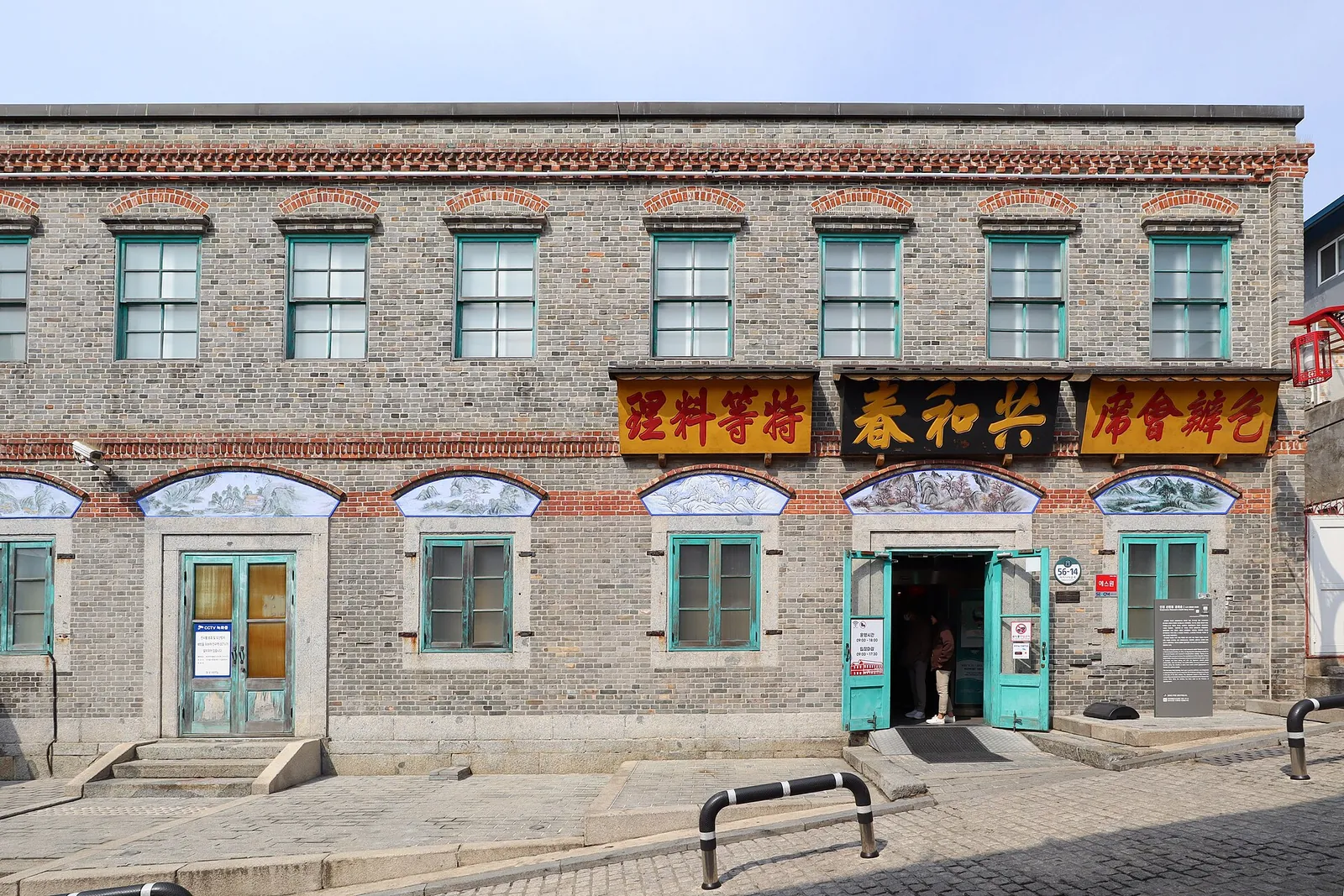
When we checked on 3 October 2026, VisitKorea listed the Jjajangmyeon Museum, in the old Gonghwachun restaurant building, at 09:00–18:00, closed on Mondays, with adult admission of 1,000 won; the Incheon Open Port Museum at 09:00–18:00 (last entry 17:30), closed on Mondays, at 500 won for adults; and the Korean-Chinese Cultural Center at 09:00–18:00 at 1,000 won. Check the operators before you go, especially around Seollal and Chuseok.
- Guided walk: a guided Gaehang Nuri-gil walking course is offered; VisitKorea lists a one-hour route from Incheon Station through Chinatown, Jayu Park and the Jemulpo Club, with a guide by reservation and no tours on Mondays.
- Pace: the area is compact but steep in places. Two to three hours covers the streets, one museum and a meal; add more if you want all the museums.
Make time for the local food
What to eat and where to look
Jjajangmyeon (black-bean-sauce noodles)
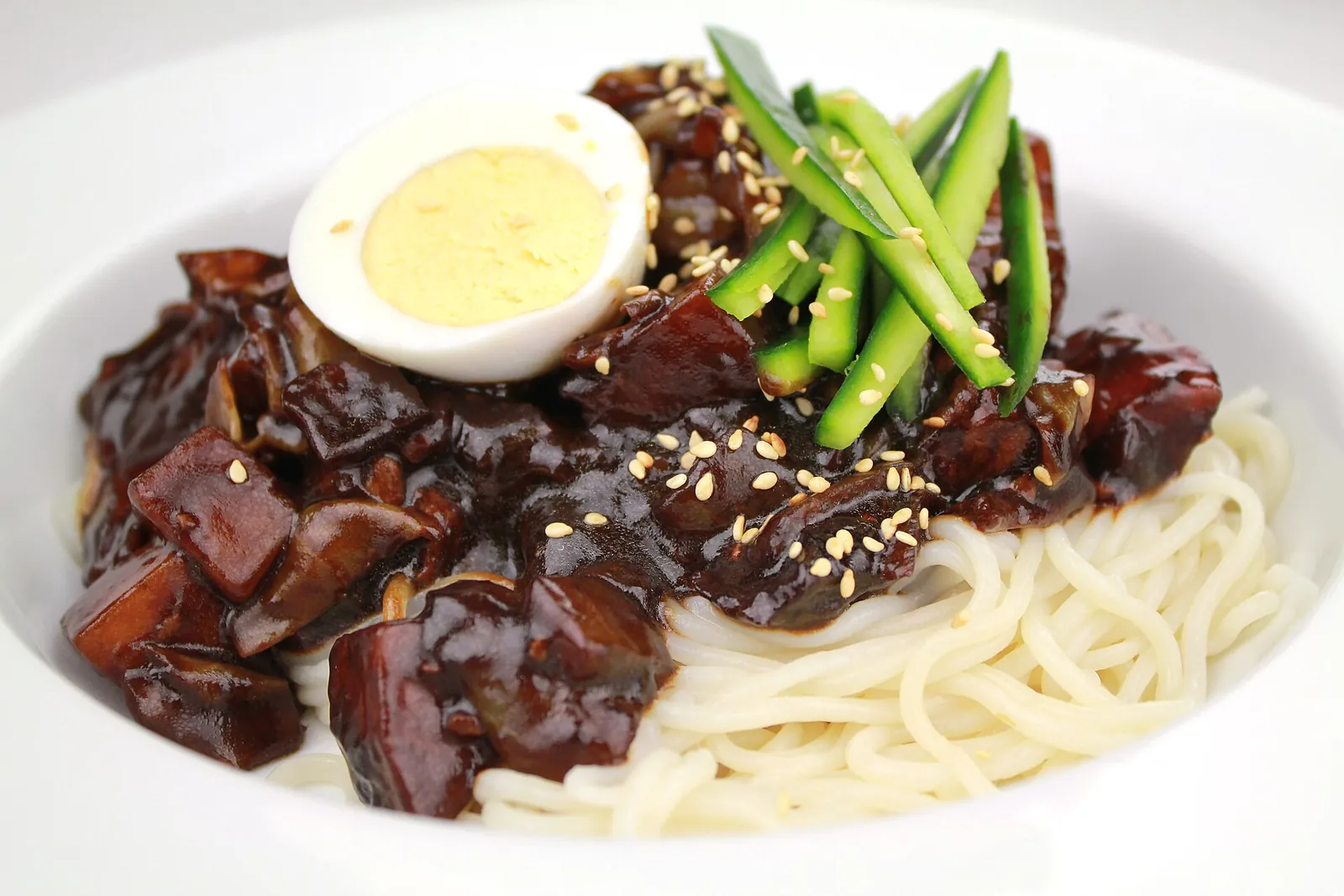
Wheat noodles under a thick, glossy black-bean sauce with pork and onion, the Korean-Chinese dish that Incheon's Chinatown claims as its own. Gonghwachun serves its signature version with the sauce and noodles separately.
- Where to look
- Restaurants along Chinatown-ro, including Gonghwachun, near the Jjajangmyeon Museum.
- Fit it into your day
- Lunch or an early dinner in Chinatown, after the museum that tells its story.
Contains wheat and usually pork; the sauce is rich and slightly sweet.
Jjamppong (spicy seafood noodle soup)
A red, chilli-hot broth with noodles and seafood; samseon jjamppong adds a 'three delicacies' mix. VisitKorea singles out Daechang Banjeom, open since the 1980s, for its samseon jjamppong.
- Where to look
- Korean-Chinese restaurants in Chinatown, including Daechang Banjeom and Gonghwachun, which serves an oyster version.
- Fit it into your day
- Share one of each with tangsuyuk (sweet-and-sour pork) for a full Chinatown meal.
Spicy and contains shellfish.
Dakgangjeong at Sinpo International Market
Crisp fried chicken tossed in a sticky, sweet and spicy glaze, which VisitKorea names as the market's most famous item. The market, registered in 1970 but dating back to the late 19th century, also sells mandu and jjolmyeon (chewy cold noodles).
- Where to look
- Sinpo International Market in Sinpo-dong, on the edge of the open-port area.
- Fit it into your day
- A takeaway snack for the evening or the train.
When we checked, VisitKorea listed the market as closed on the first Monday of the month, varying by store.
Samchi gui (grilled Spanish mackerel)
Thick fillets of samchi grilled until the skin crisps, served with rice and side dishes. A whole street of restaurants by Dongincheon Station specialises in it; it was designated a grilled-samchi street in 2002.
- Where to look
- Dongincheon Samchi Street, in the alley in front of Dongincheon Station.
- Fit it into your day
- A simple dinner in the old city; each restaurant grills and sauces it differently, and VisitKorea notes the side dishes and appetisers are affordably priced.
Watch for bones in the fillet.
Seafood on Wolmido
Wolmi Culture Street is lined with raw-fish (hoe) restaurants and seafood grills facing the water, and the Sorae fish market in Namdong-gu is known for salt-grilled prawns and blue crab.
- Where to look
- Wolmi Culture Street for a sunset dinner; Sorae fish market and its Pocha Street as a separate outing.
- Fit it into your day
- Dinner on the seafront after the sea train.
Live seafood is often priced by weight; confirm the price and any cooking charge before ordering.
Wolmido: sea train, seafront and sunset
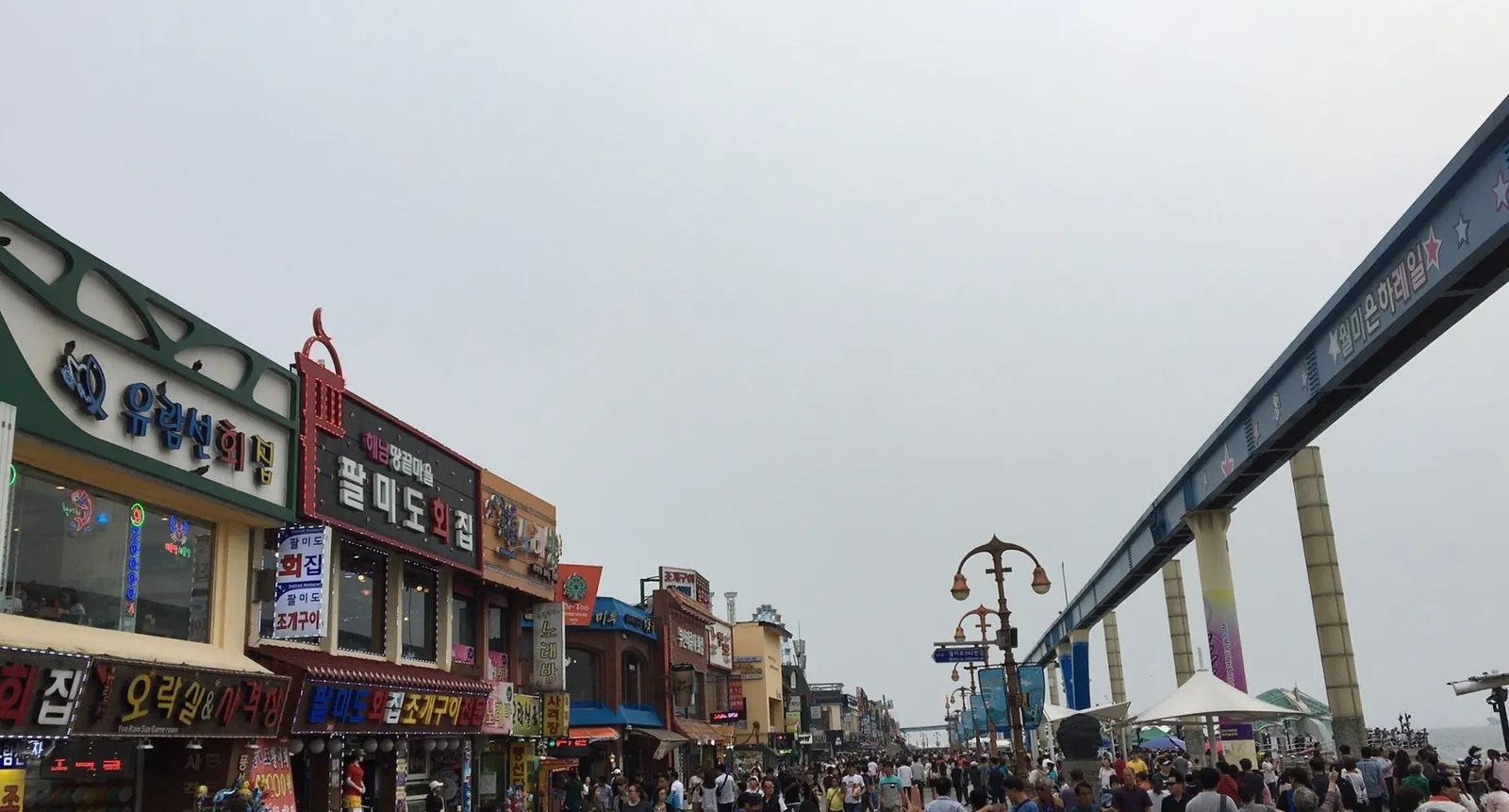
Wolmido was an island about a kilometre off the coast; it is now joined to the mainland. It became a resort in the late 1920s and 1930s, and today Wolmi Culture Street, a pedestrian seafront lined with seafood restaurants, cafés and a small amusement park, is where Incheon goes on weekend evenings. The Moonlight Music Fountain on the same street is small but popular after dark.
The easiest way there from Chinatown is the Wolmi Sea Train, which departs from Incheon Station. VisitKorea describes it as Korea's longest urban tourist monorail, at 6.1 km and 7 to 18 metres above the ground, taking 42 minutes for a full loop of Wolmido with views over the inner port, the West Sea and Incheon Bridge. When we checked on 3 October 2026, VisitKorea listed it at 10:00–18:00 on weekdays and 10:00–21:00 at weekends from April to October, 10:00–18:00 from November to March, closed on Mondays, with an adult fare of 8,000 won. A ride timed for sunset gives you the best of the views.
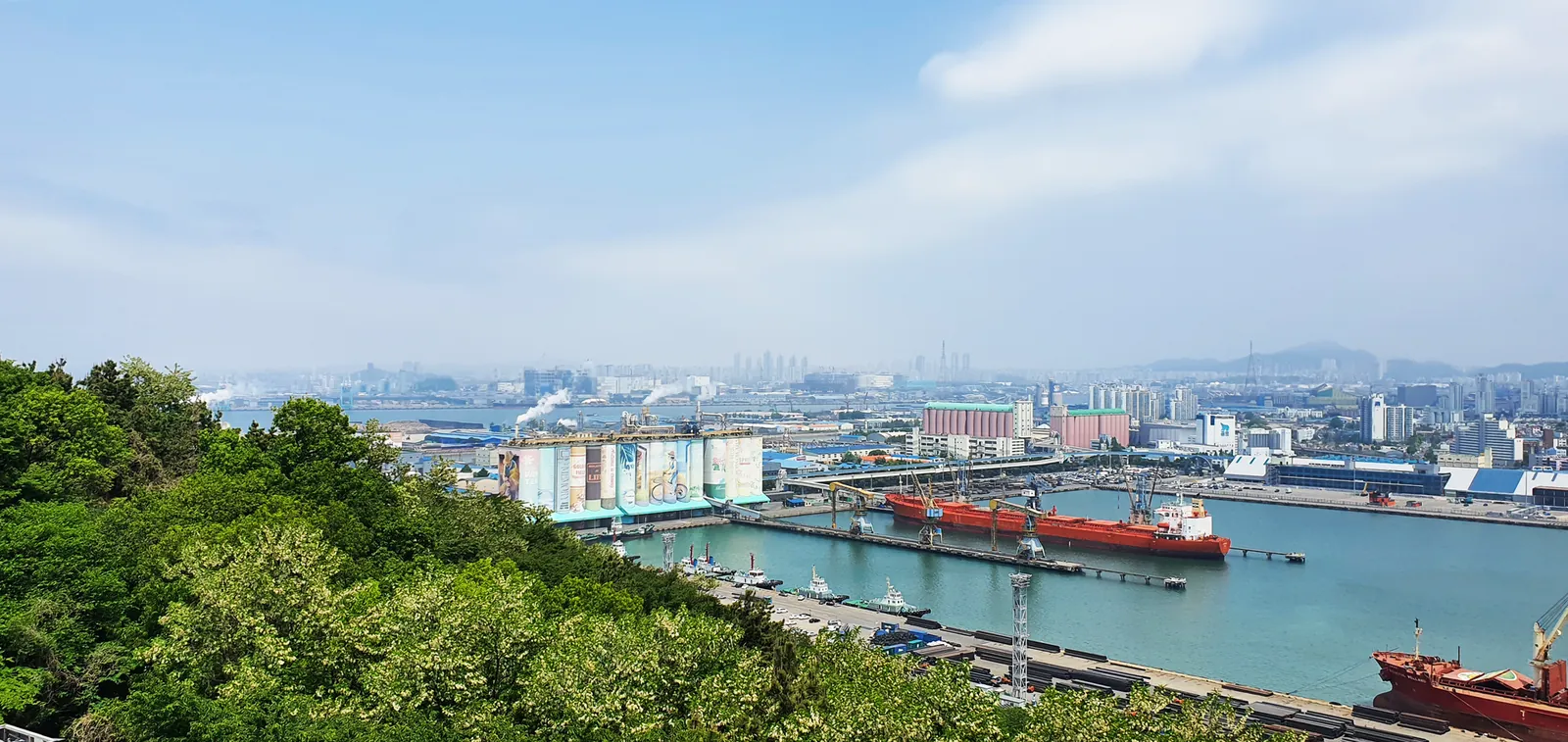
Two stops are worth getting off for. Wolmi Observatory, at the top of Wolmisan in Wolmi Park, looks over the port, Incheon Bridge and the islands; VisitKorea listed it as open 07:00–21:30 and free. The Incheon National Maritime Museum, opened in December 2024, covers the history of the sea and the port; VisitKorea listed it at 10:00–18:00 (last entry 17:30), closed on Mondays, with free admission. Sangsang Platform, a former granary by the old port that VisitKorea calls once Asia's largest, is now a free cultural space with changing programmes.
Songdo: a park morning in the new city
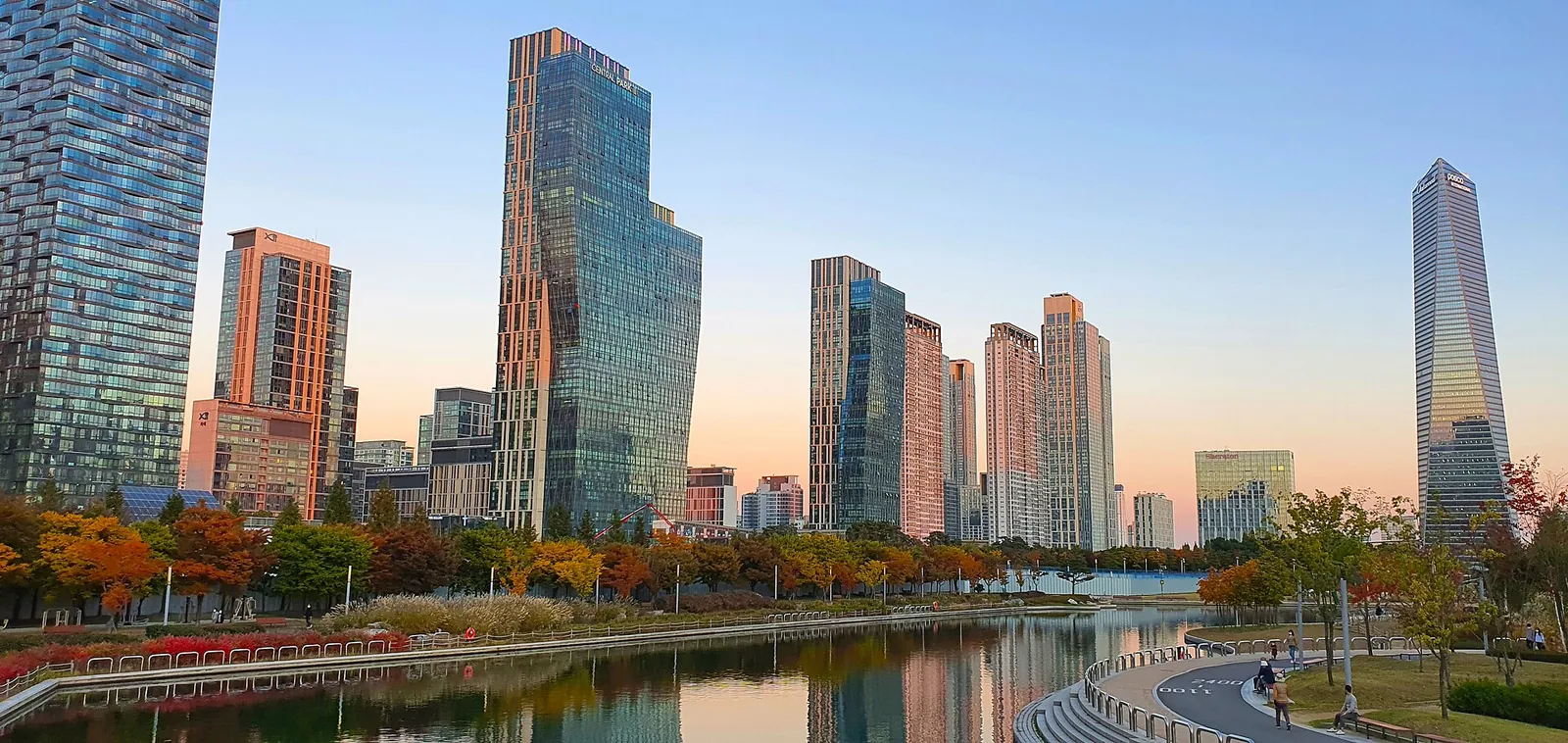
Songdo Central Park is Korea's first seawater park: a long saltwater channel between the towers of Songdo International City, with walking paths, a water taxi and canoes. VisitKorea lists the park as open 24 hours and free, with boats from the East Boat House at 10:00–21:00, depending on season and weather. It is at its best in the early morning, before the business district fills, or in the evening when the towers light up.
At the edge of the park, Songdo Hanok Village is not an old village but a group of hanok built in 2013; VisitKorea notes that it is now used for restaurants, cafés and a hanok hotel. That makes it a pleasant place for a meal rather than a heritage site. If you are staying in Songdo, a morning here and a short taxi ride over Incheon Bridge to the airport is the most relaxed way to end a trip.
Getting around and getting to the airport
The Airport Railroad (AREX) is the backbone. The airport's own route map gives the All-Stop Train from Terminal 2 about 31 minutes to Geomam (change for Incheon Line 2), 37 minutes to Gyeyang (change for Incheon Line 1) and 66 minutes to Seoul Station; Terminal 1 is six minutes closer. For Songdo, change at Gyeyang to Incheon Line 1 towards Songdo and get off at Central Park station.
Incheon Station, for Chinatown and the sea train, is on Seoul Subway Line 1 and the Suin–Bundang Line, so it is easy to reach from central Seoul without going near the airport. From the airport, many travellers with luggage simply take a taxi; Incheon's city site also lists seated airport buses, and the bus information site bus.incheon.go.kr shows current routes and timetables. Allow extra time on the way out: the airport advises leaving one to two hours for immigration on arrival, and you will want a margin on departure too.
- Transport card: a T-money-type card works on the subway and city buses and gives transfer discounts; buy and top it up at convenience stores.
- Between bases: Chinatown and Songdo are on different lines; by taxi it is a straightforward cross-city ride, but check the time before planning both on one evening.
A workable one-night plan
This is an editorial suggestion, not a timetable. Check opening days and remember that Monday closes several of the places below.
- Arrival afternoon: check in, then walk Chinatown, the concession stairway and the open-port streets, with one museum.
- Late afternoon: ride the Wolmi Sea Train to Wolmido, climb to Wolmi Observatory or walk the seafront for sunset.
- Evening: seafood on Wolmi Culture Street, or back to Chinatown for jjajangmyeon and jjamppong.
- Next morning: Songdo Central Park before the crowds, or Sinpo International Market for snacks, then on to the airport or Seoul.
- With more time: Ganghwa Island for fortresses and dolmens, or the Sorae fish market for blue crab and prawns.
Practical questions
Is Incheon worth visiting, or is it just the airport?
It is worth a night if you are interested in Korea's modern history or Korean-Chinese food. The open-port streets and Chinatown, Wolmido's seafront and Songdo Central Park are all within reach of the airport, which makes Incheon an easy first or last stop.
Should I stay in Songdo or near Chinatown?
Stay near Incheon Station and Chinatown if you want to walk the old port and eat there in the evening. Choose Songdo if you prefer a modern hotel and a short drive to the airport over Incheon Bridge. The two areas are on different subway lines, so pick the one that matches your plans.
How do I get from Incheon Airport to Chinatown?
Chinatown is a short walk from Incheon Station, which is on Seoul Subway Line 1 and the Suin–Bundang Line. With luggage, a taxi is the simplest option. Seated airport buses also run to downtown Incheon; check current routes on bus.incheon.go.kr.
Is Incheon a good layover stop?
For a long layover, the open-port area or Songdo can fit into a day. Allow for immigration and security, check your terminal and keep a generous margin; for a short layover, it is safer to stay in or near the airport.
What is closed on Mondays?
When we checked on 3 October 2026, VisitKorea listed Monday closures for the Jjajangmyeon Museum, the Incheon Open Port Museum, the Incheon National Maritime Museum, the Wolmi Sea Train and the guided open-port walk. The streets, Jayu Park and Songdo Central Park stay open.
Where did jjajangmyeon come from?
Incheon's Chinatown claims it. Gonghwachun, which opened in 1905, is described by VisitKorea as the birthplace of jjajangmyeon; its original building is now the Jjajangmyeon Museum, and the restaurant operates in a newer building nearby.
Sources and checks before you travel
Reference sources for the version dated 3 October 2026. Confirm opening times, access, transport and conditions for your travel dates.
- VisitKorea: Incheon Chinatown ↗ — opens in a new tab
- VisitKorea: Gaehangjang (Open Port Area) Street ↗ — opens in a new tab
- VisitKorea: Cheongil Jogyeji Stairway ↗ — opens in a new tab
- VisitKorea: Incheon Jayu Park ↗ — opens in a new tab
- VisitKorea: Jjajangmyeon Museum ↗ — opens in a new tab
- VisitKorea: Incheon Open Port Museum ↗ — opens in a new tab
- VisitKorea: Korean-Chinese Cultural Center ↗ — opens in a new tab
- VisitKorea: Daebul Hotel Exhibition Hall ↗ — opens in a new tab
- VisitKorea: Incheon Japanese Street ↗ — opens in a new tab
- VisitKorea: Songwol-dong Fairy Tale Village ↗ — opens in a new tab
- VisitKorea: The Story Course of the Open Trade Port (Gaehang Nuri-gil) ↗ — opens in a new tab
- VisitKorea: Wolmido Island ↗ — opens in a new tab
- VisitKorea: Wolmi Special Tourist Zone ↗ — opens in a new tab
- VisitKorea: Wolmi Culture Street and Moonlight Music Fountain ↗ — opens in a new tab
- VisitKorea: Wolmi Sea Train ↗ — opens in a new tab
- VisitKorea: Wolmi Sea Train (cruise visitors' guide) ↗ — opens in a new tab
- VisitKorea: Wolmi Park Wolmi Observatory ↗ — opens in a new tab
- VisitKorea: Incheon National Maritime Museum ↗ — opens in a new tab
- VisitKorea: Sangsang Platform ↗ — opens in a new tab
- VisitKorea: Songdo Central Park ↗ — opens in a new tab
- VisitKorea: Songdo Hanok Village ↗ — opens in a new tab
- VisitKorea: Incheon Bridge ↗ — opens in a new tab
- VisitKorea: Sheraton Incheon Hotel and Harbor Park Hotel listings ↗ — opens in a new tab
- VisitKorea: Sinpo International Market ↗ — opens in a new tab
- VisitKorea: Dongincheon Samchi Street ↗ — opens in a new tab
- VisitKorea: Gonghwachun and Daechang Banjeom ↗ — opens in a new tab
- VisitKorea: Savor Incheon ↗ — opens in a new tab
- VisitKorea: Soraepogu Pocha Street ↗ — opens in a new tab
- VisitKorea: climate and seasons ↗ — opens in a new tab
- Incheon International Airport: airport railroad guide ↗ — opens in a new tab
- Incheon International Airport: bus guide ↗ — opens in a new tab
- Incheon Metropolitan City: public transport ↗ — opens in a new tab
- Incheon Metropolitan City: administrative districts ↗ — opens in a new tab
- Wikipedia: Central Park station (Incheon) ↗ — opens in a new tab
- Wikipedia: Incheon station ↗ — opens in a new tab
Does this experience fit your route?
Incheon is easy to explore on your own by subway, sea train and taxi. If you would rather have a guide, check that the tour actually visits Incheon's open-port area and not only Seoul.
Browse relevant experiences on Viator ↗ — opens in a new tabAffiliate link · Book with ViatorPhoto credits
The paifang gate at the entrance to Incheon Chinatown
Photograph: Mobius6 — opens in a new tab · CC BY-SA 4.0 — opens in a new tab
Changes: Resized and converted to WebP; displayed with responsive crops. · Original photograph and licence details ↗ — opens in a new tab
Wolmi Culture Street on Wolmido, with the sea train track above the promenade
Photograph: Goodwillgames — opens in a new tab · CC BY-SA 4.0 — opens in a new tab
Changes: Resized and converted to WebP; displayed with responsive crops. · Original photograph and licence details ↗ — opens in a new tab
Songdo Central Park and the towers of Songdo International City
Photograph: José Carioca — opens in a new tab · CC BY-SA 4.0 — opens in a new tab
Changes: Resized and converted to WebP; displayed with responsive crops. · Original photograph and licence details ↗ — opens in a new tab
The Jjajangmyeon Museum, in the former Gonghwachun building in Chinatown
Photograph: Mobius6 — opens in a new tab · CC BY-SA 4.0 — opens in a new tab
Changes: Resized and converted to WebP; displayed with responsive crops. · Original photograph and licence details ↗ — opens in a new tab
Incheon's port seen from Wolmisan, near Wolmi Observatory
Photograph: Raccoon Dog — opens in a new tab · CC BY 4.0 — opens in a new tab
Changes: Resized and converted to WebP; displayed with responsive crops. · Original photograph and licence details ↗ — opens in a new tab
Jjajangmyeon, the black-bean noodle dish Incheon's Chinatown claims as its own
Photograph: KFoodaddict — opens in a new tab · CC BY 2.0 — opens in a new tab
Changes: Resized and converted to WebP; displayed with responsive crops. · Original photograph and licence details ↗ — opens in a new tab