Itineraries · Seoul and Gyeonggi
South Korea in 5 days: four nights in Seoul and a Suwon day trip
Seoul is a royal capital that kept its palaces among glass towers: hanok lanes a few stops from a student district that never quite sleeps, a hill with a tower on it, and a river where Seoulites picnic. Five days and four nights suit it if you accept one outing beyond the city. This plan keeps one room in Myeongdong for all four nights, gives the middle days one job each, the palaces, Hongdae with the Han River, and the fortress at Suwon, and uses the first evening and the last morning for Namsan and the market beside Seoul Station.
- Suggested time
- 5 days / 4 nights
- Where to stay
- Myeongdong, Seoul, for all 4 nights, with Suwon as a day trip (or Incheon instead)
- Season and timing
- VisitKorea's forecast for 2026 had the first cherry blossom in Seoul on 3 April. Its autumn forecast for 2026 had peak colour across the country from mid-October to early November. Both change each year with the weather. Seoul's January highs average 2.1°C and its lows minus 5.5°C, so dress warmly for Namsan and the Han River on winter evenings. The Huwon tours sell out fastest in April, May, October and November. The UK Foreign Office gives the summer rains as usually June and July and the typhoon season as normally running from June to November, so check the forecast for the Suwon and Namsan days. Seollal and Chuseok change date each year; the Korean government announces them. Palace hours change with the season, and Suwon's palace opens at night on Fridays to Sundays and public holidays in season (1 May to 1 November in 2026); the Suwon Cultural Foundation announces each year's dates.
The short answer
Book four nights in Myeongdong and leave on day 5: day 1 is Myeongdong and Namsan, day 2 the palaces and Bukchon, day 3 Hongdae and the Han River, day 4 Suwon by Line 1, and day 5 Namdaemun Market and the airport train. Book first the Changdeokgung Huwon (Secret Garden) tour, because online booking opens at 10:00 six days before the visit. Then book the Suwon trolley, whose 36 seats a run are sold online up to the end of the following month, with any left over sold at the Yeonmudae ticket office on the day. Two prices, checked on 17 October 2026: the AREX Express Train from Incheon Airport to Seoul Station costs KRW 13,000 for an adult. The Integrated Palace Ticket costs KRW 6,000. The known costs in the last section come to KRW 164,100 for two adults for trains, tickets and Seoul rides; the four hotel nights, meals and the Suwon fares are not in that sum.
Four nights in one Myeongdong room, and what closes when
Keep one room for all four nights and leave on day 5. Myeongdong Station is on Line 4. Seoul Station, where the airport train ends, is on Line 4 too, and Line 1 also stops there. Euljiro 1-ga Station on Line 2 is a short walk from the hotel for the ride to Hongdae. Each of the three middle days has one job: the palaces on the second day, Hongdae and the Han River on the third, and Suwon's fortress on the fourth. The arrival day belongs to Myeongdong and Namsan, which are on foot from the room, and the last morning to Namdaemun Market and the airport train.
Before you fly, check your K-ETA status. Passport holders from 22 countries and regions, among them the United Kingdom, the United States, Canada, Australia, Germany, France and Japan, need no K-ETA for arrivals in Korea up to 31 December 2026 (Korean time). Other visa-free travellers may need K-ETA approval before boarding, at KRW 10,000 per person; check all nationality, age and other exemptions on the official site. Travellers who are required to submit an arrival card can complete the free e-Arrival card online before arrival or use a paper arrival card; check the official exemption list. Our entry guide has the full rules.
The room is at Sotetsu Fresa Inn Seoul Myeong-dong, 48 Myeongdong-gil in Jung-gu, a hotel of 152 rooms that its own page places a five-minute walk from Exit 8 of Myeongdong Station on Line 4 and from Exit 5 of Euljiro 1-ga Station on Line 2. Check-in is from 15:00 (from 14:00 for members of the hotel's club) and check-out is at 12:00, both at self-service terminals, and the hotel takes card or QR-code payment only, not cash. Myeongdong is one of the busiest districts in the city, so ask for a higher floor or a room on a side street. Confirm the room rate with the hotel for your dates before you book; the costs below do not include it.
The UK Foreign Office says the level of tension on the Korean Peninsula can change with little notice; this plan stays in Seoul, Suwon and Incheon and includes no tour to the border zone. Other governments may draw a different line, so check your own government's travel advice before you book.
The days are set by closing times. Gyeongbokgung is shut on Tuesdays and Changdeokgung on Mondays, so the palace day needs a Wednesday to a Sunday. On Mondays Deoksugung and Sungnyemun are also shut. The Suwon trolley does not run on Mondays. Namdaemun Market closes on Sundays. Hongdae, Yeonnam-dong and the river parks are open every day, so they take a Monday or Tuesday if one falls inside the trip. The plan below works as written if you land on a Tuesday or a Saturday; for any other landing day, change it as follows. For blossom, autumn colour and the rains, see our best-time guide.
- Monday: swap days 2 and 3, so that Hongdae falls on the Tuesday and the palaces on the Wednesday.
- Wednesday: day 5 falls on a Sunday, so skip the market.
- Thursday: day 5 falls on a Monday, so leave out Sungnyemun.
- Friday: swap days 3 and 4, so that Suwon falls on a Sunday and Hongdae on a Monday.
- Sunday: take Hongdae on day 2, Suwon on day 3 and the palaces on day 4, and book the Huwon for that Wednesday.
Day one: from the airport to Myeongdong, then Namsan at dusk
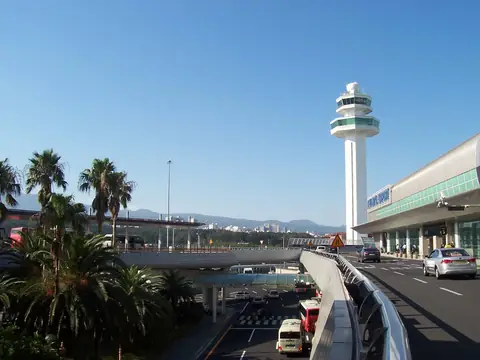
Plan for 1 to 2 hours between landing and leaving the airport when you book onward public transport. AREX has two services between Incheon Airport and Seoul Station. The non-stop Express Train takes about 43 minutes from Terminal 1 and about 51 minutes from Terminal 2; the all-stop train takes about 59 minutes from Terminal 1 and about 66 minutes from Terminal 2 (some all-stop trains take 2 to 6 minutes longer). When we checked on 17 October 2026, the Express Train cost KRW 13,000 for an adult and KRW 9,500 for a child aged 6 to 12; you buy a ticket before boarding at the Express Train customer centres (Seoul Station basement 2, and the transport centres on basement 1 of each terminal). The all-stop train costs KRW 4,750 from Seoul Station to Terminal 1 and KRW 5,350 to Terminal 2 with a prepaid or postpaid transport card.
Airport limousine buses are the alternative for heavy bags: you must buy the ticket in advance at the ticket booths, because cash and transport cards are not accepted on board. Check the route to Myeongdong, the fare and the running time with Incheon Airport before you travel. If you arrive at Gimpo Airport instead, the AREX all-stop train takes about 23 minutes to Seoul Station.
At Seoul Station change to Line 4 for Myeongdong Station, and leave by Exit 8 for the hotel. The Seoul Metropolitan Government lists the adult base fare at KRW 1,550 with a transport card and KRW 1,650 for a single ride, in force since 28 June 2025. For ride times and the best change in the city, use Naver Map or Kakao Map, because the navigation of Google Maps cannot be used in Korea. For taxis, k.ride is Kakao Mobility's English-language version of Kakao T and accepts overseas credit cards. For data, the roaming centres at Incheon, Gimpo, Gimhae and Jeju airports sell prepaid USIM cards, and you can buy an eSIM online and set it up with a QR code. A Tmoney card is a reloadable prepaid card without an account; you buy and load it at convenience stores across the country (GS25, CU, 7-Eleven and others) and at the information centres in Seoul subway stations on Lines 1 to 8. Bring some Korean won in cash for the top-up. A Tmoney card costs KRW 3,000 to KRW 5,000 depending on the design. Most public transport from the airport to central Seoul stops running around 23:30; night buses (route numbers beginning with N) serve Seoul and Gyeonggi, and you must buy a ticket in advance.
Myeongdong is Seoul's shopping district, with street stalls beside retail outlets and Korean cosmetics stores. VisitSeoul says the food stalls on both sides of the main street sell skewers, deep-fried tornado potatoes, japchae, kimchi-wrapped pork belly and takoyaki, with tanghulu, crepes and ice cream for dessert. A short walk away stands Myeongdong Cathedral, the first Roman Catholic parish church in Korea and its first Gothic building, built of brick between 1892 and 1898; VisitSeoul lists it as open Tuesday to Saturday from 09:00 to 19:00 and on Sunday from 07:00 to 21:00, and closed on Mondays.
Deoksugung is the palace where traditional halls and modern, Western-style architecture stand side by side. It is open from 09:00 to 21:00 with last entry at 20:00 and costs KRW 1,000 for a foreign adult, so it suits an arrival evening.
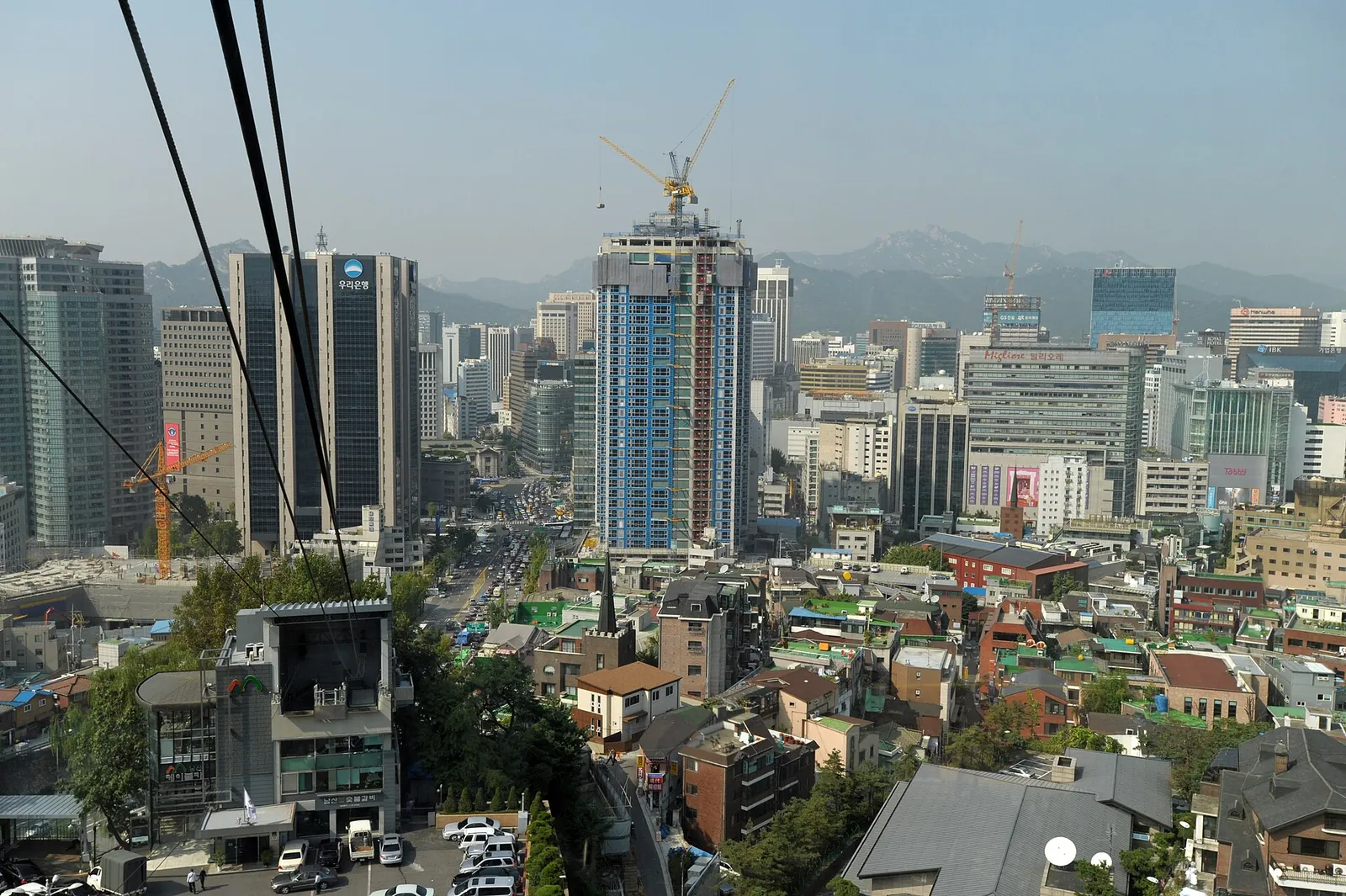
Namsan is the hill behind Myeongdong, and the tower at its top is the reason to go. The quickest way up is the Namsan Cable Car. The tower operator's directions say to walk straight on from Myeongdong Station exit 5 to the Hoehyeon intersection, turn left and walk uphill to the Namsan Oreumi escalator, which carries you to the cable car station; allow about 15 minutes. The cable car covers roughly 600 m in about three minutes. It runs from 10:00 to 23:00 every day of the year, the last ticket is sold 30 minutes before closing, and it may stop in bad weather. VisitSeoul lists the round trip at KRW 15,000 for adults. If you would rather walk, the tower operator lists routes up to the Palgakjeong pavilion of about 30 minutes from the Namsan Library or by the steps beside the National Theater, and about 40 minutes by the Samsoon steps.
The tower's observatory gives the view over the whole city. When we checked on 17 October 2026, the operator listed admission at KRW 29,000 for adults aged 13 and over. The cable car operator's site lists the love-lock fence and the Palgakjeong pavilion among the sights at the summit. Choose a clear evening, because a hazy day flattens the skyline.
- Afternoon: check in from 15:00 and walk the Myeongdong lanes and the cathedral.
- Early evening, if you land early: Deoksugung before its 20:00 last entry.
- Dusk: dinner at Myeongdong Kyoja, then the cable car and the summit. The restaurant is open daily from 10:30 to 21:00 and is 183 m from Exit 8 of Myeongdong Station.
Day two: Changdeokgung, Bukchon, Gyeongbokgung and the Jongno lanes
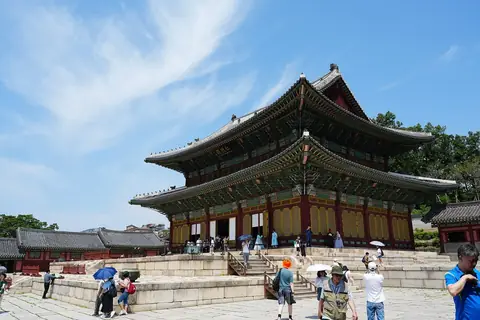
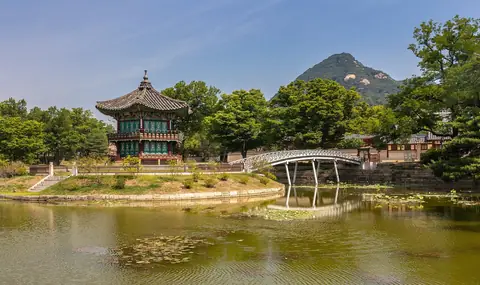
This is the palace day, and it runs east to west so that every gate is reached when it is open. Anguk Station is on Line 3, so change lines on the way from Myeongdong, and leave by Exit 3 for Changdeokgung. Changdeokgung was built by King Taejong in 1405 as the second palace after Gyeongbokgung and served as the royal residence for about 270 years after its reconstruction in 1610. The general visit covers the throne hall, Injeongjeon, and the residential halls such as Nakseonjae. Behind them lies the Huwon, the rear garden, which Visit Seoul says takes up 60 per cent of the grounds, with a large pond, Buyongji, and its pavilions. The garden is entered only on a timed guided visit of about 70 minutes, and you must also hold the Changdeokgung hall ticket. English tours leave at 10:30, 11:30, 14:30 and 15:30 from March to November and at 10:30, 11:30 and 14:30 from December to February, and each language is limited to 100 people per tour, 50 booked online and 50 sold at the garden's ticket office from 09:00 on the day. Online booking through the Korea Heritage Service's reservation site opens at 10:00 six days before the visit and runs until the day before; the tours in April, May, October and November sell out fastest, so book as soon as the window opens.
Changdeokgung is open from 09:00 to 18:00 (last entry 17:00) from February to May and from September to October, from 09:00 to 18:30 (last entry 17:30) from June to August, and from 09:00 to 17:30 (last entry 16:30) from November to January, and it is closed on Mondays. See the halls from 09:00, then join the 10:30 garden tour.
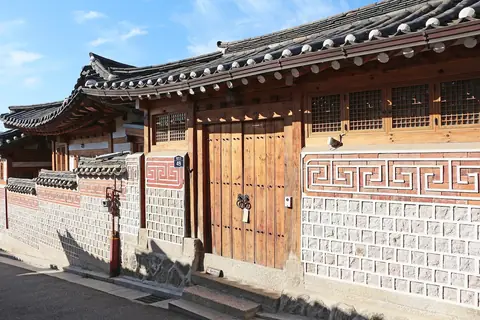
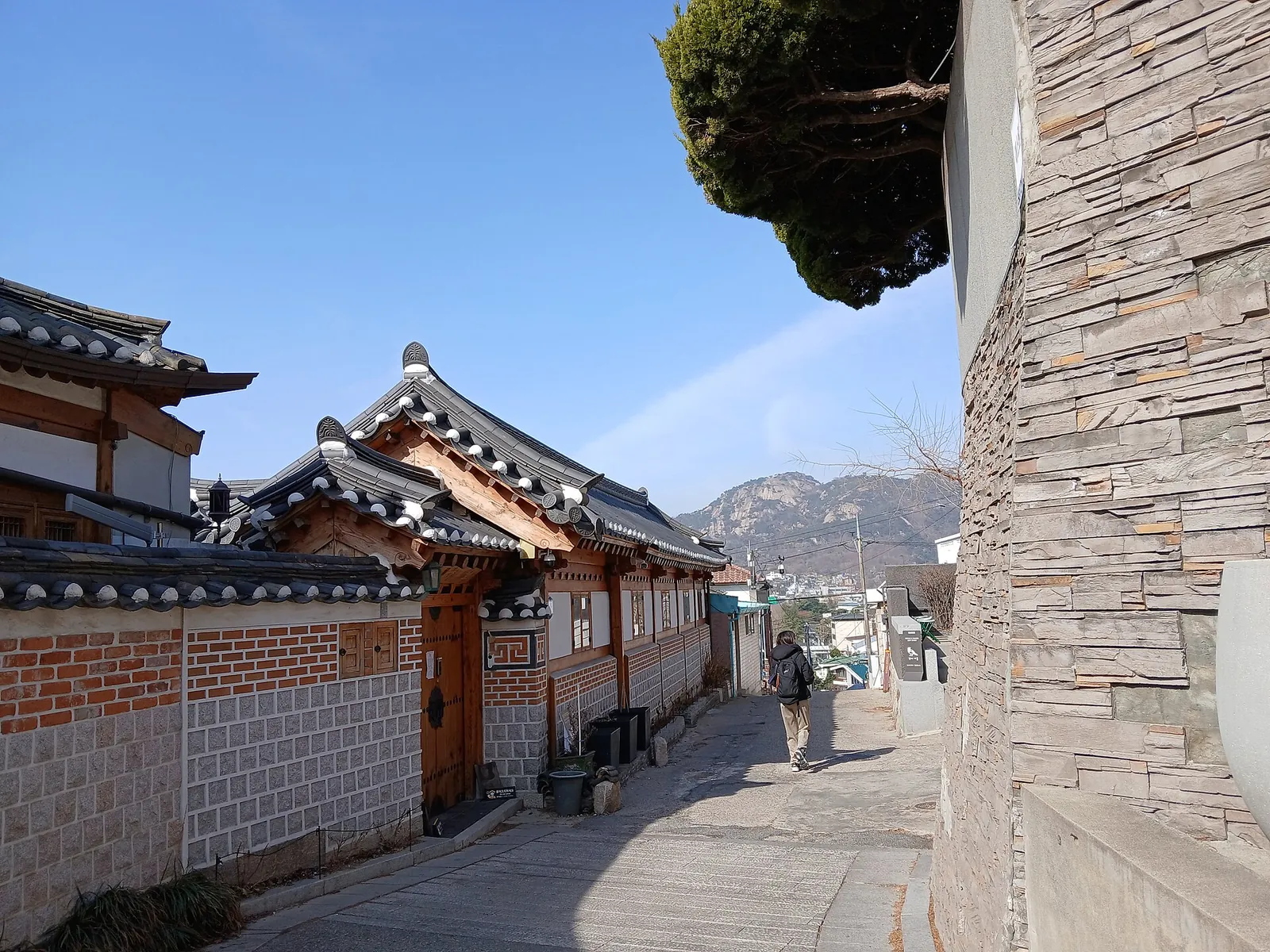
Walk on to Bukchon, which fills the slope between Gyeongbokgung and Changdeokgung with hanok, the traditional tile-roofed houses. It is a residential area. The Seoul Metropolitan Government has made Bukchon-ro 11-gil, an area of about 34,000 square metres, a red zone in which tourists may not visit between 17:00 and 10:00, with a fine of KRW 100,000 since 1 March 2025, so be on the lanes between 10:00 and 17:00. Have lunch at Tosokchon, which has served samgyetang in a hanok since 1983 and is 203 m from Exit 2 of Gyeongbokgung Station on Line 3, so that you are beside the palace for the 14:00 ceremony.
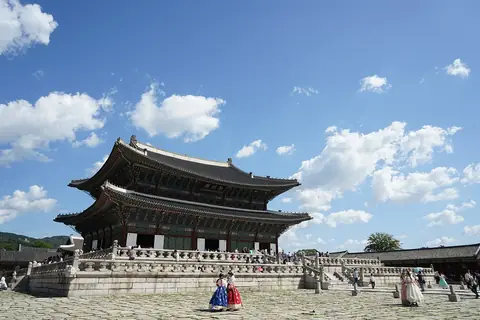
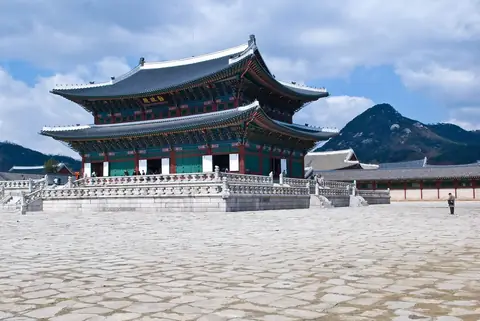
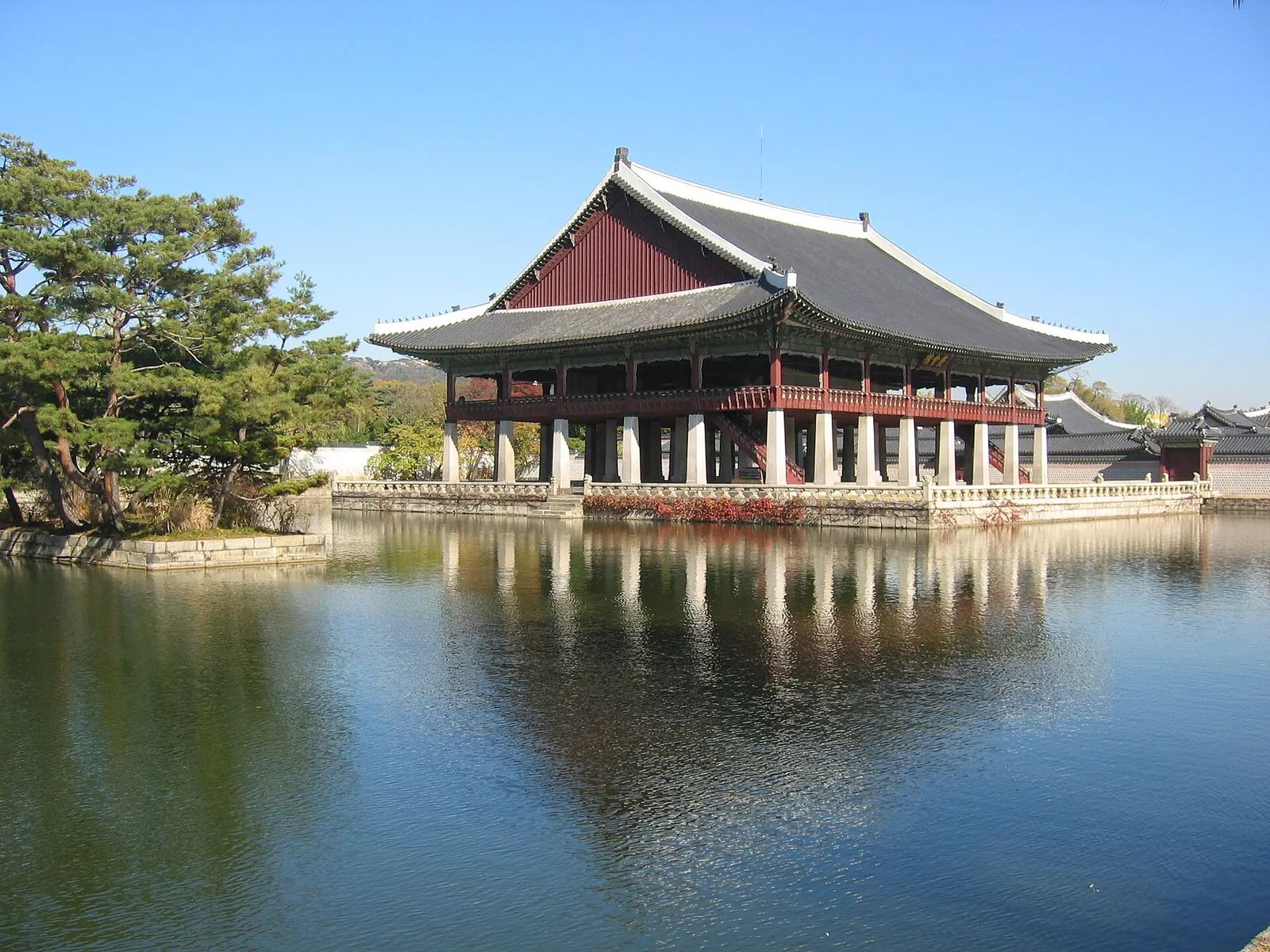
Gyeongbokgung comes in the afternoon, timed for the royal guard changing ceremony, which VisitKorea lists at the gate at 10:00 and 14:00 free of charge; the schedule can change and rain can cancel it. King Taejo's palace of 1395 is the largest of the five Joseon palaces. You enter through Gwanghwamun and Heungnyemun, cross the stream at Yeongjegyo and reach Geunjeongjeon, the throne hall where, as VisitKorea notes, many Joseon kings were crowned. Beyond it stand the Gyeonghoeru pavilion and, at the back, the Hyangwonjeong pavilion and its pond. English tours leave from the information office inside Heungnyemun at 11:00, 13:30 and 15:30 every day except Tuesday; individuals join without booking. Gyeongbokgung is open from 09:00 to 18:00 (last entry 17:00) from March to May and from September to October, from 09:00 to 18:30 (last entry 17:30) from June to August, and from 09:00 to 17:00 (last entry 16:00) from November to February, and the palace may shorten its hours for operational reasons. Leave by the west gate, Yeongchumun, for the lanes of Seochon and Tongin Market.
Demonstrations are common in central Seoul, including around Gwanghwamun, the palace's main gate; foreign nationals may not take part in political activities, and the UK Foreign Office advises visitors to avoid large public gatherings.
Tickets: the Korea Heritage Service lists adult admission for foreign visitors aged 19 to 64 at KRW 3,000 for Gyeongbokgung and Changdeokgung and KRW 1,000 for Deoksugung. The Integrated Palace Ticket costs KRW 6,000 and is valid for one visit to each of the four main palaces and Jongmyo within six months of purchase, so it covers Changdeokgung, Gyeongbokgung and Deoksugung on this trip and saves KRW 1,000 against three single tickets; without Deoksugung it saves nothing. The pass also covers Jongmyo, the royal shrine in Jongno, which costs KRW 1,000 and is shut on Tuesdays; there is no room for it on day 2, but with it the pass saves KRW 2,000. It is sold at the ticket offices of the four palaces and Jongmyo, so buy it at Deoksugung on day 1 or at Changdeokgung on day 2. It does not cover the Huwon, which costs KRW 5,000 for ages 19 to 64 and for ages 65 and over. Admission is free for foreign visitors aged 18 and under and 65 and over (bring your passport), and for anyone wearing hanbok, but not for the Huwon. Our Jongno and Bukchon guide has the full palace order, Jongmyo and the hanbok rules.
- Morning: Changdeokgung halls from 09:00, then the Huwon tour of about 70 minutes at 10:30 (11:30 if 10:30 is full).
- Midday: Bukchon before the 17:00 restriction, then lunch at Tosokchon.
- Afternoon: Gyeongbokgung for the 14:00 guard changing ceremony. Then walk the palace on your own or join the 15:30 English tour, with a snack at Tongin Market in Seochon.
- Evening: Insa-dong, a street of galleries and tea houses; the Ikseon-dong lane of small hanok turned into cafes; a walk along the Cheonggyecheon stream; and dinner at Gwangjang Market, where the food alley is open daily from 09:00 to 23:00, 62 m from Exit 8 of Jongno 5-ga Station.
Day three: Hongdae, Yeonnam-dong and the Han River at Mangwon
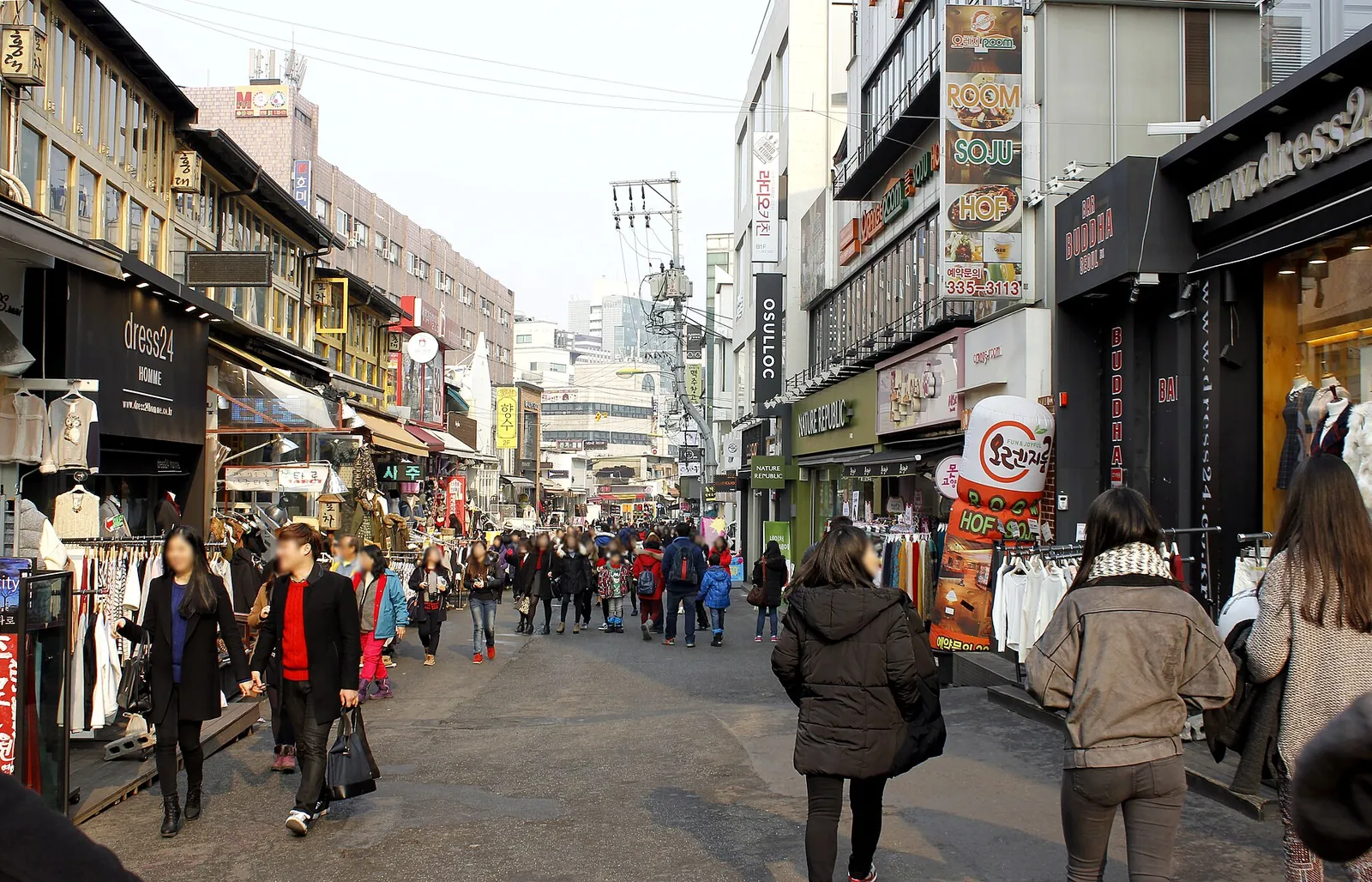
Hongdae is the student district around Hongik University in Mapo-gu. Hongik University Station is on Line 2, the airport railway and the Gyeongui-Jungang Line. Euljiro 1-ga Station, near the hotel, is also on Line 2. Mapo-gu has developed a tourism street of about 2 km near the station, the Red Road, and its section R1, the Red Culture Market, stands 220 m from Exit 9 of Hongik University Station with flea markets, caricature drawing and busking. Busking is an evening event rather than a fixed show, so walk the pedestrian streets and stop where a crowd forms.
Yeonnam-dong is calmer. The Gyeongui Line Forest Park, reached from Exit 3 of Hongik University Station, is a 6.3 km park that stretches from Gajwa Station in Yeonnam-dong to the Wonhyo 1-dong Community Service Center. Its longest section, Yeontral Park in Yeonnam-dong, is a popular gathering spot where young people lay out mats and enjoy beer.
Mangwon Market has been trading for more than 40 years and is known for cheap street food. Q's Dakgangjeong, which sells dak gangjeong (deep-fried and braised chicken), is among the stalls to seek out. Most stalls have no seating, so you eat standing or carry the food to the river. The market is open daily from 10:00 to 21:00, with hours varying by shop, 351 m from Exit 2 of Mangwon Station on Line 6. Most shops take cards, though some may need cash. The walk from Exit 2 of Mangwon Station to Mangwon Hangang Park on the river takes about 22 minutes, and the sunset is the best reason to come, with the Yeouido skyline glowing on the far side.
France Diplomatie reports sexual violence in nightlife districts such as Hongdae and the German Federal Foreign Office reports knock-out drops there, so do not leave drinks unattended, go out accompanied and use licensed taxis or public transport. The subway runs from about 05:30 to midnight, and the closing time varies by station.
- Morning: Line 2 to Hongik University Station, Yeonnam-dong and the Forest Park from Exit 3.
- Midday: Mangwon Station is on Line 6, so change lines on the way, and have lunch at the market.
- Late afternoon: Mangwon Hangang Park for the sunset, picnic food from the market in hand.
- Evening: back to Hongik University Station for dinner and the Red Road.
Day four: Suwon, the king's fortress town on Line 1
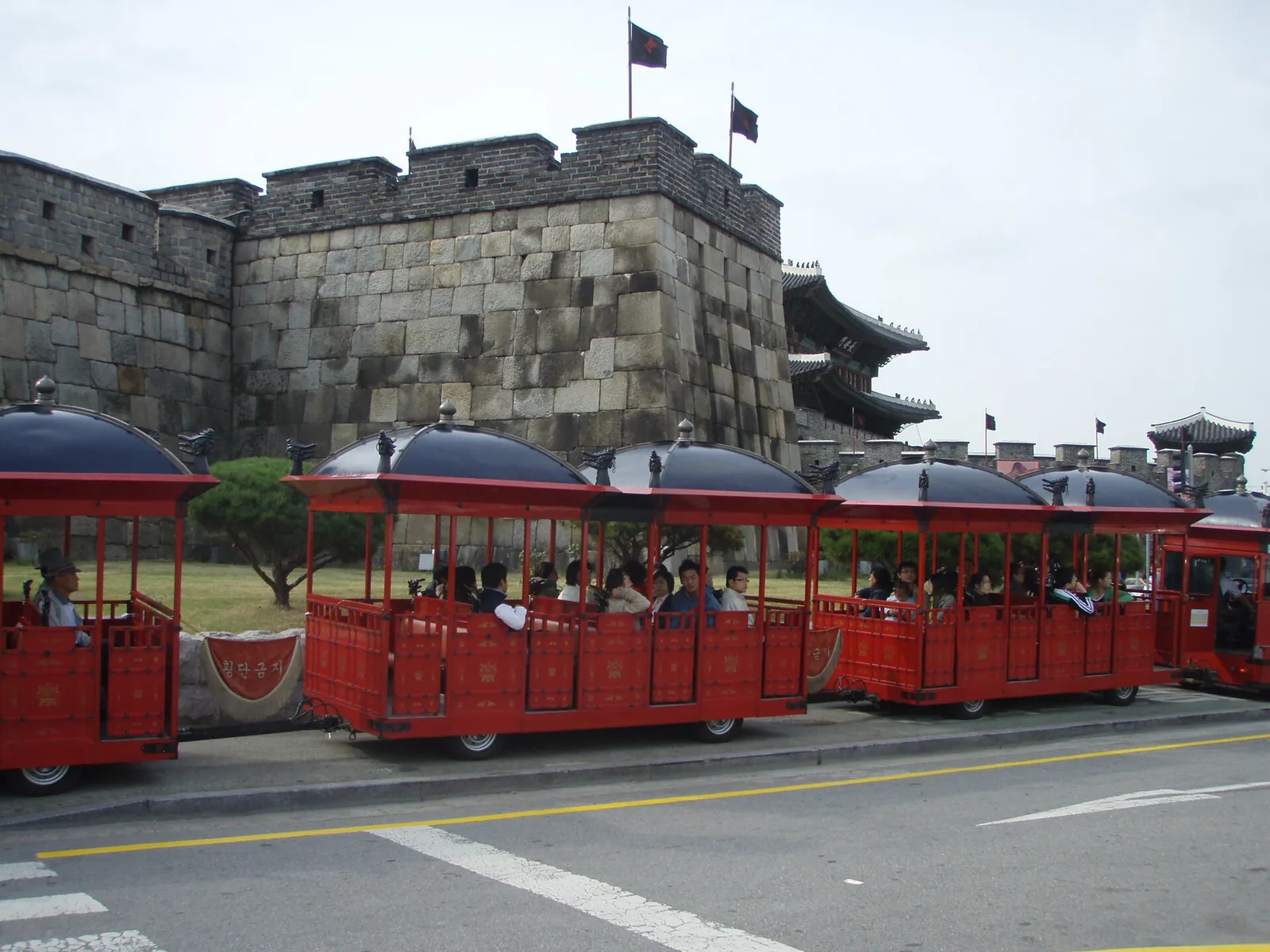
King Jeongjo built Hwaseong Fortress between January 1794 and September 1796, motivated, the Suwon Cultural Foundation says, by political and economic purposes as well as by his filial piety towards his father. The wall circles the old centre for 5,744 metres, running across flat ground in the east and climbing Paldalsan in the west, and UNESCO inscribed it in December 1997. The wall is free of charge. Our Suwon guide covers the gates, the museum and the markets in full.
Hwaseong Haenggung is the largest of the palaces where a king stayed when he travelled. King Jeongjo stayed here on each of his 13 visits to his father's tomb between 1790 and 1800. Later wars destroyed most of it and only Naknamheon survives from the original buildings, so what you walk through is a reconstruction; next door, Hwaryeongjeon was built in 1801 to hold King Jeongjo's portrait. When we checked on 17 October 2026, the Suwon Cultural Foundation listed the palace as open 09:00 to 18:00 every day of the year, with the last admission one hour before closing, at KRW 2,000 for an adult. Entry is free for visitors aged 65 and over with identification, for children aged 6 and under and for anyone wearing hanbok. The foundation's night opening for 2026 runs from 1 May to 1 November on Fridays, Saturdays, Sundays and public holidays, from 18:00 to 21:30 with last admission at 21:00, at the same adult price; outside the season the palace closes at 18:00, and the foundation announces each year's season.
The Hwaseong Fortress Tourist Trolley is modelled on a Joseon royal palanquin and a car used by the last emperor, Sunjong. It leaves from the Yeonmudae ticket office for a loop of about 30 minutes past Hwahongmun, Janganmun, Hwaseomun and Maehyanggyo Bridge, with a commentary in Korean. The foundation lists departures every 20 minutes from 09:40 to 11:40 and from 13:00 to 17:00, Tuesday to Sunday. The trolley does not run in rain or snow. An adult fare is KRW 6,000. Each run carries about 36 passengers; seats can be booked online up to the end of the following month, and the seats left over are sold at the Yeonmudae ticket office on the day. An online booking must be exchanged for a paper ticket at that office before departure.
From Myeongdong, ride Line 4 to Seoul Station, where the Suwon Cultural Foundation's directions say to take Subway Line 1 in the direction of Cheonan, Byeongjeom or Seo Dongtan to Suwon Station. Visit Seoul, the city's official tourism site, recommends the Mugunghwa-ho train from Seoul Station to Suwon Station and calls it a 30-minute ride. Line 1 is charged by distance: the Seoul city page lists KRW 100 more for each 5 km beyond the first 10 km, so the fare is above the KRW 1,550 base fare. You pay with a Tmoney card. Check the Line 1 fare, the ride time and the last train back to Seoul at the station before you travel, and again before you stay for the 21:30 close of the night opening. The Line 1 and city bus fares are not in the costs below. Suwon Station has a tourist information centre near Exit 4, open 09:00 to 18:00, with English, Chinese and Japanese interpretation. From the stop near Exit 4, city bus 11, 13 or 13-4 runs to the Hwaseong Haenggung stop.
- Morning: Line 1 to Suwon Station, bus 11, 13 or 13-4 to the Hwaseong Haenggung stop, and the palace and Hwaryeongjeon when they open at 09:00.
- Midday: walk Haenggung Street from the palace towards Paldalmun and on to Janganmun and Hwahongmun. On a weekday, have galbitang at Yeonpo Galbi, which serves it only at weekday lunchtime and is closed from 15:00 to 17:00; at the weekend, lunch on Haenggung Street and keep the galbi for dinner.
- Afternoon: the trolley from Yeonmudae, booked ahead.
- Evening: galbi for dinner after 17:00, then the palace's night opening if the day is a Friday, Saturday, Sunday or public holiday in the season.
Day five: Namdaemun Market and the airport train
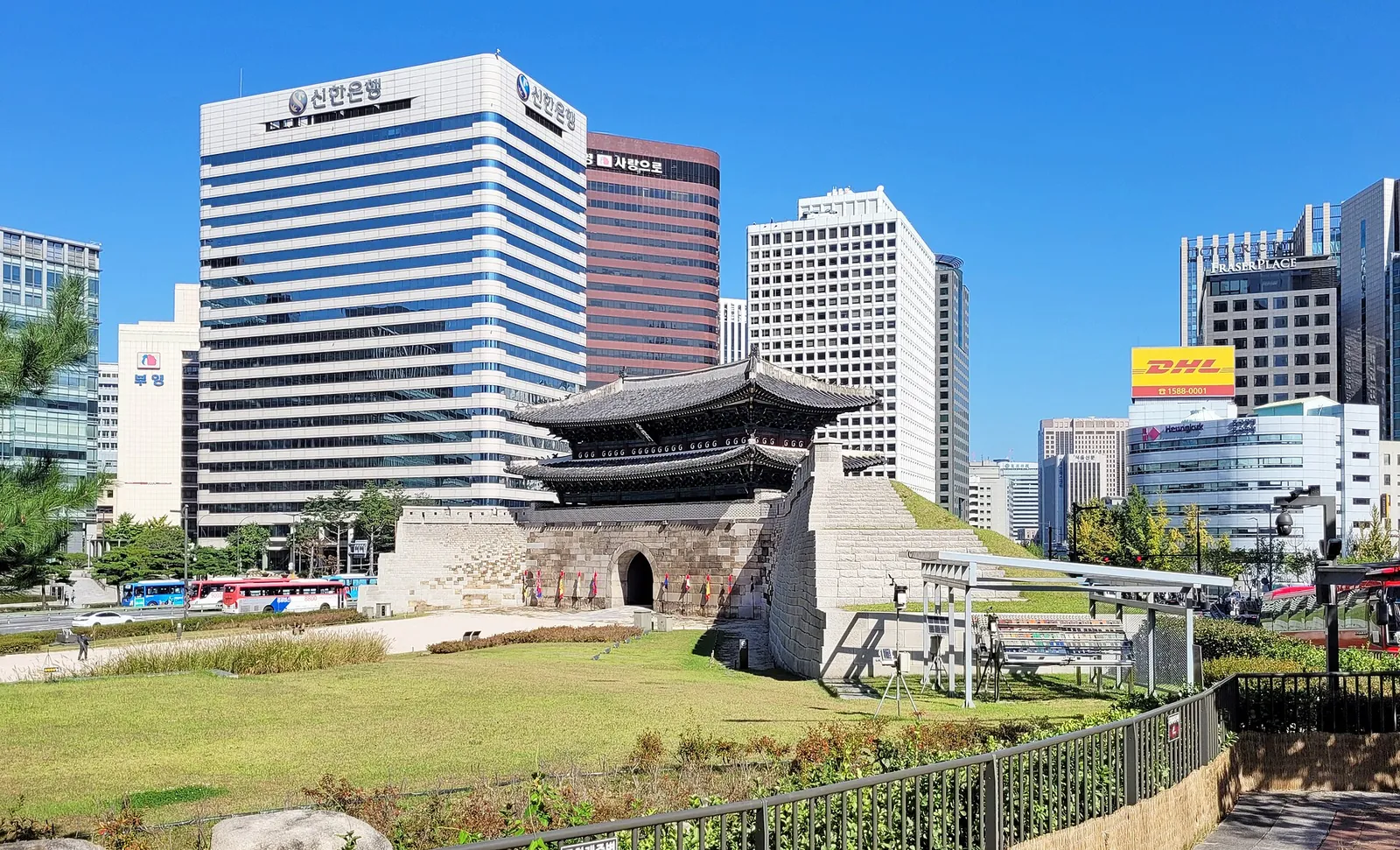
Use the last morning on the streets beside Seoul Station. VisitSeoul calls Namdaemun the largest traditional market in Korea, with more than 10,000 stores along the streets around the old southern gate, and says it sells nearly everything from clothing to food. Its Galchi-jorim Alley, formed around 1988, serves braised hairtail, mackerel and pollack, and its entrance is 179 m from Exit 5 of Hoehyeon Station. Hoehyeon Station on Line 4 is the nearest station, and its exit 7 is 17 m from the market's address in VisitSeoul's listing. VisitKorea also describes a lounge for foreign visitors at Gate 2 with tourist information and luggage storage. Sungnyemun, the southern gate of the old city wall, is open from 09:00 to 18:00.
Express Train customers can check in before the journey. Incheon Airport's City Airport Terminal on basement 2 of the Seoul Station airport railroad checks you in and drops your bag for same-day international flights from Incheon, from 05:20 to 19:00, with departure immigration from 05:30 to 19:00. It is open only to Express Train customers, the airlines accepted vary, and check-in closes three hours before a Terminal 1 flight and three hours 20 minutes before a Terminal 2 flight. AREX's weekday and holiday timetables list Express Trains from Seoul Station from 06:00 to 23:00. You board them on level B7. If your airline is not accepted, take the bags with you, or send them to the airport the same day with Seoul Metro's T-Luggage service. It has a manned counter at Myeongdong Station inside exits 1, 9 and 10 on basement 1. Count back from your flight: for a Terminal 1 flight at 17:00, for example, check in at the City Airport Terminal by 14:00. Without the terminal, the Express Train takes about 43 minutes to Terminal 1 and about 51 to Terminal 2, and your airline sets its own check-in cut-off.
- Morning: Line 4 from Myeongdong to Hoehyeon, Namdaemun Market and Sungnyemun.
- Midday: return to the hotel for the bags, ride Line 4 to Seoul Station, buy the Express Train ticket at the customer centre on Seoul Station basement 2 and use the City Airport Terminal if your airline is accepted.
- Departure: Express Train to Terminal 1 or Terminal 2.
Make time for the local food
What to eat and where to look
Kalguksu (knife-cut noodle soup)
Noodles made fresh from flour dough, soft and chewy, in a savoury chicken broth, as VisitSeoul describes them at Myeongdong Kyoja.
- Where to look
- Myeongdong Kyoja, 29 Myeongdong 10-gil, Jung-gu (open daily 10:30-21:00), 183 m from Myeongdong Station Exit 8 on Line 4.
- Fit it into your day
- Dinner on the arrival evening, before the cable car.
Samgyetang (chicken soup)
Young chicken stuffed with sweet rice, garlic, jujube and ginseng and simmered in water, according to VisitKorea. Tosokchon has operated since 1983 in a hanok with a traditional atmosphere, and it offers English, Japanese and Chinese menus.
- Where to look
- Tosokchon Samgyetang, 5 Jahamun-ro 5-gil, Jongno-gu (10:00-22:00 daily), 203 m from Gyeongbokgung Station Exit 2 on Line 3.
- Fit it into your day
- Lunch on the palace day, before the guard changing ceremony at Gyeongbokgung.
Bindaetteok (mung bean pancake)
A thick, crisp pancake of ground mung beans fried on a griddle, listed first among the favourite foods of Gwangjang Market by Visit Seoul, with mixed pancakes, mayak gimbap, sundae sausage and yukhoe.
- Where to look
- The food alley of Gwangjang Market, 88 Changgyeonggung-ro, Jongno-gu, open daily 09:00-23:00, 62 m from Jongno 5-ga Station Exit 8.
- Fit it into your day
- Dinner on the palace day, after Insa-dong and Ikseon-dong.
Market dishes are fried and often contain egg, soy, wheat or meat; ask what is in a dish if you avoid any of them.
Dakgalbi (stir-fried chicken)
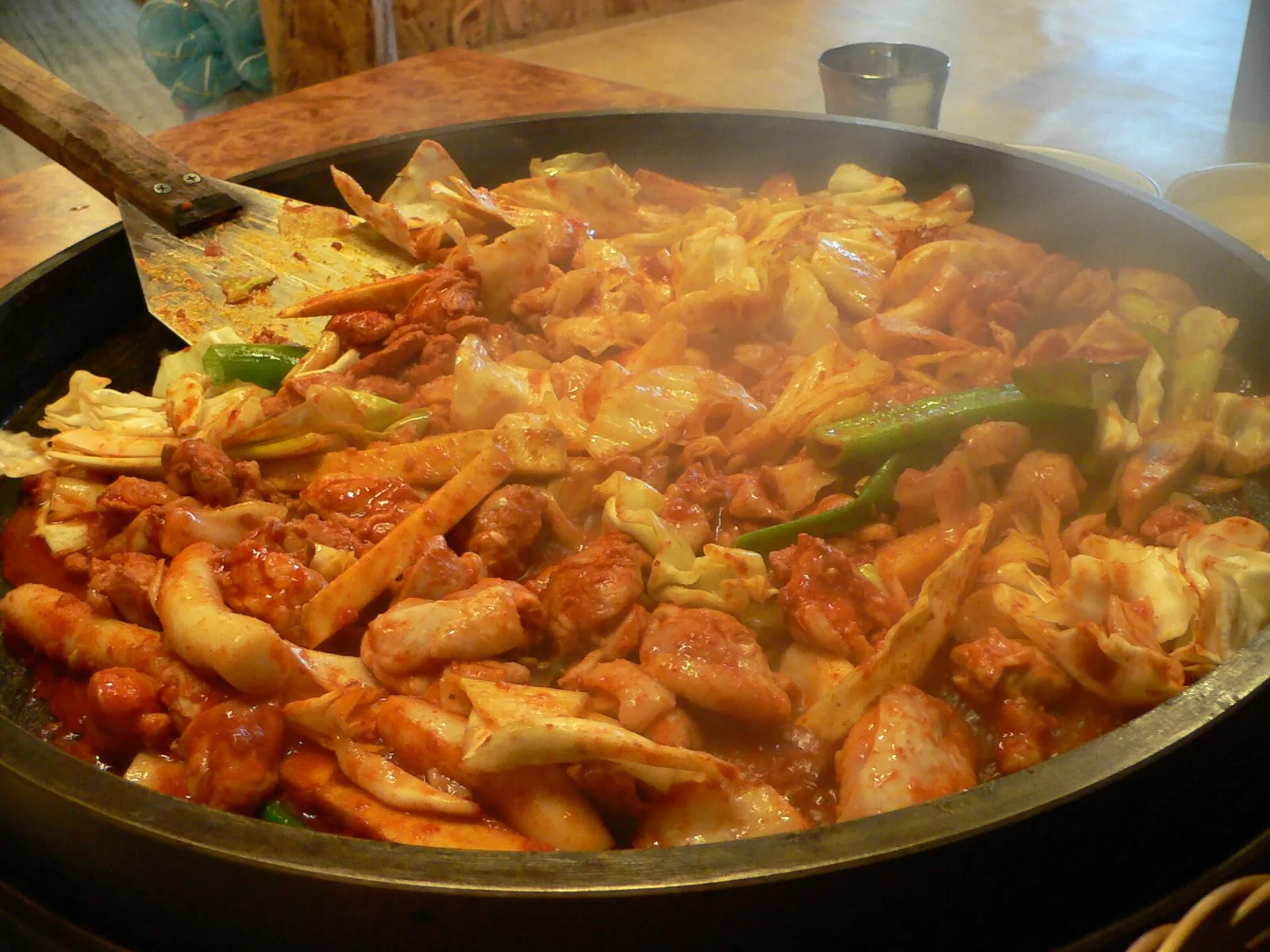
Boneless chicken stir-fried with cabbage and other vegetables in a hot sauce on a large griddle, finished with fried rice from what is left. Visit Seoul lists Shin Migyeong Hongdae Dakgalbi as a 30-year-old restaurant on a cast-iron griddle, known for cheese dakgalbi and cheese fried rice, with English service.
- Where to look
- Shin Migyeong Hongdae Dakgalbi, 31-10 Wausan-ro 21-gil, Mapo-gu; Visit Seoul lists it 893 m from Exit 9 of Hongik University Station, with last order at 21:50.
- Fit it into your day
- Dinner on the Hongdae day, after the river.
Suwon wanggalbi (jumbo grilled short rib)
Jumbo-cut grilled short rib, the dish Suwon is best known for. VisitKorea says Yeonpo Galbi, in a remodelled public bath and inn that kept its bathhouse chimney, is known for offering Suwon wanggalbi at relatively affordable prices.
- Where to look
- Yeonpo Galbi, 56-1 Jeongjo-ro 906beon-gil, Buksu-dong, in a converted bathhouse with its chimney kept (11:30-21:30, closed 15:00-17:00 and on Seollal and Chuseok).
- Fit it into your day
- Dinner on the Suwon day, after the trolley, once the restaurant reopens at 17:00.
Swaps: Incheon instead of Suwon, and a late flight
Incheon instead of Suwon suits a reader who wants a port town, noodles and a monorail ride more than a fortress. From Seoul Station, Seoul Subway Line 1 reaches Incheon Station, and Exit 1 is the one to use for Chinatown, which VisitKorea calls the birthplace of the Korean-style jjajangmyeon. Check the ride time and the fare from Seoul Station to Incheon Station at the station before you travel; they are not in the costs below. The Wolmi Sea Train is a monorail loop around Wolmido; a weekday adult ticket costs KRW 11,000 and a weekend ticket KRW 14,000, with Friday to Sunday and public holidays counted as the weekend, and it is closed on Mondays, so pick a Tuesday, Wednesday or Thursday. Our Incheon guide has the open-port streets and the layover tours.
For a late-evening flight, you can use the City Airport Terminal earlier that day if your airline is eligible and you meet its check-in deadline; after the terminal closes at 19:00, take your bags to the airport on the Express Train from Seoul Station.
What the trains, tickets and rides cost for two
This model covers two adults for four nights, with prices checked on 17 October 2026 on the operators' and tourism sites. It adds up the known costs only, which are transport and tickets; the four hotel nights, meals and the Suwon Line 1 and bus fares are not priced, so this is not the cost of the whole trip.
- Airport train: the Express Train from the airport to Seoul Station and back, 4 adult tickets at KRW 13,000: KRW 52,000. The all-stop train costs KRW 4,750 a ticket to Terminal 1, or KRW 5,350 to Terminal 2, with a transport card.
- Transport cards: two Tmoney cards at up to KRW 5,000 each, the top of the KRW 3,000 to KRW 5,000 range: KRW 10,000.
- Seoul subway: 11 rides each at KRW 1,550 for two people (one on day 1, three on day 2, four on day 3 and three on day 5; the Suwon trip is a separate through journey): KRW 34,100.
- Palaces: two Integrated Palace Tickets at KRW 6,000, and two Huwon tickets at KRW 5,000: KRW 22,000.
- Namsan: two cable car round trips at KRW 15,000: KRW 30,000. The observatory at KRW 29,000 an adult is extra.
- Suwon: two palace tickets at KRW 2,000 each, KRW 4,000. Two trolley fares at KRW 6,000 each, KRW 12,000: KRW 16,000 in all.
- Known costs of the lines above: KRW 164,100 for two.
- Not included: the four nights at Sotetsu Fresa Inn (confirm the rate with the hotel for your dates), meals, the Line 1 fares and city buses to Suwon, the observatory, taxis and shopping.
Practical questions
Are five days enough for Seoul, and how many nights suit it?
Book four nights in one Myeongdong room and leave on day 5. That gives you the palaces, Namsan, Hongdae with the Han River and one day trip. Choose Suwon for a fortress and a rebuilt palace, or Incheon for a port town and the Wolmi Sea Train; there is time for one of them, not both. The plan keeps to the north bank of the Han and leaves out Gangnam and the Lotte World Tower by choice. If you expected Busan, Korail gives 2 hours 17 minutes for its fastest KTX from Seoul to Busan, an express that stops only at Daejeon and Dongdaegu; trains with more stops take longer, and Korail's timetable shows the time of each train. Our 7-day guide adds Gyeongju and Busan.
How do I get from Incheon Airport to Myeongdong?
Take AREX from level B1 of either terminal to Seoul Station, then Line 4 to Myeongdong Station. The Express Train costs KRW 13,000 for an adult and takes about 43 minutes from Terminal 1 or about 51 from Terminal 2; the all-stop train takes about 59 or 66 minutes and costs KRW 4,750 to Terminal 1 and KRW 5,350 to Terminal 2 with a transport card (checked on 17 October 2026).
When do the palaces shut, and which pass is worth it?
Gyeongbokgung closes on Tuesdays, and Changdeokgung, Changgyeonggung and Deoksugung on Mondays, so the palace day needs a Wednesday to a Sunday. The KRW 6,000 Integrated Palace Ticket covers one visit to each of the four main palaces and Jongmyo within six months, but not the Changdeokgung Huwon, which has its own KRW 5,000 timed ticket booked from 10:00 six days ahead.
Is Suwon or Incheon the better day trip?
Suwon suits walls, gates and a rebuilt palace, and its palace opens at night on Fridays, Saturdays, Sundays and public holidays in the season (1 May to 1 November in 2026). Incheon suits Chinatown, noodles and the Wolmi Sea Train, and it is best on a Tuesday to Thursday because the Wolmi Sea Train closes on Mondays.
Which transport card should I use?
A Tmoney card works on buses, the subway, taxis and at convenience stores across the country and costs KRW 3,000 to KRW 5,000 depending on the design. Our transport guide explains the other cards.
What is not in the budget?
The known costs of KRW 164,100 for two cover the airport train, transport cards, Seoul subway rides, palace tickets, the Namsan cable car and the Suwon palace and trolley. They leave out the four hotel nights, whose rate you confirm with the hotel, meals, the Line 1 and city bus fares to Suwon, the tower observatory and shopping.
Sources and checks before you travel
Reference sources for the version dated 18 October 2026. Confirm opening times, access, transport and conditions for your travel dates.
- Sotetsu Hotels: Fresa Inn Seoul Myeong-dong ↗ — opens in a new tab
- AREX: Express Train ↗ — opens in a new tab
- AREX: all-stop train ↗ — opens in a new tab
- AREX: all-stop train fares ↗ — opens in a new tab
- Incheon Airport: buses ↗ — opens in a new tab
- Incheon Airport: City Airport Terminal ↗ — opens in a new tab
- VisitKorea: airport transport ↗ — opens in a new tab
- VisitKorea: transportation cards ↗ — opens in a new tab
- Seoul Metropolitan Government: subway fares ↗ — opens in a new tab
- Visit Seoul: subway ↗ — opens in a new tab
- Korea Heritage Service: palace admission fees ↗ — opens in a new tab
- Korea Heritage Service: opening hours and closing days ↗ — opens in a new tab
- Korea Heritage Service: Gyeongbokgung guided tours ↗ — opens in a new tab
- VisitKorea: Gyeongbokgung Palace ↗ — opens in a new tab
- Visit Seoul: Changdeokgung Palace ↗ — opens in a new tab
- Seoul Metropolitan Government: Bukchon visiting restrictions ↗ — opens in a new tab
- Visit Seoul: Tosokchon Samgyetang ↗ — opens in a new tab
- Visit Seoul: Gwangjang Market ↗ — opens in a new tab
- VisitSeoul: Myeongdong Kyoja ↗ — opens in a new tab
- VisitSeoul: Deoksugung Palace ↗ — opens in a new tab
- YTN Seoul Tower: cable car directions ↗ — opens in a new tab
- Namsan Cable Car: operator site ↗ — opens in a new tab
- VisitSeoul: Namsan Park ↗ — opens in a new tab
- N Seoul Tower: admission ↗ — opens in a new tab
- VisitKorea: Namdaemun Market ↗ — opens in a new tab
- VisitSeoul: Namdaemun Market ↗ — opens in a new tab
- Visit Seoul: Hongdae R1 Red Culture Market ↗ — opens in a new tab
- Visit Seoul: Gyeongui Line Forest Park ↗ — opens in a new tab
- Visit Seoul: Mangwon Market ↗ — opens in a new tab
- VisitKorea: Mangwon-dong ↗ — opens in a new tab
- Visit Seoul: Hongdae Dakgalbi ↗ — opens in a new tab
- UK Foreign Office: safety and security in South Korea ↗ — opens in a new tab
- France Diplomatie: security in South Korea ↗ — opens in a new tab
- German Federal Foreign Office: South Korea safety ↗ — opens in a new tab
- Suwon Cultural Foundation: Hwaseong Fortress introduction ↗ — opens in a new tab
- Suwon Cultural Foundation: Hwaseong Haenggung introduction ↗ — opens in a new tab
- Suwon Cultural Foundation: directions ↗ — opens in a new tab
- Suwon Cultural Foundation: visitor information, hours and prices (Korean) ↗ — opens in a new tab
- Suwon Cultural Foundation: Hwaseong Fortress Tourist Trolley (Korean) ↗ — opens in a new tab
- VisitKorea: Yeonpo Galbi ↗ — opens in a new tab
- Visit Seoul: Seoul to Suwon by Mugunghwa-ho train ↗ — opens in a new tab
- Wolmi Sea Train: hours, fares and cancellation (Korean) ↗ — opens in a new tab
- VisitKorea: Incheon Chinatown and jjajangmyeon ↗ — opens in a new tab
- VisitKorea: trains and Seoul Station ↗ — opens in a new tab
- AREX: Express Train timetable (Korean) ↗ — opens in a new tab
- Korea Heritage Service: Changdeokgung guided tours ↗ — opens in a new tab
- VisitKorea: Palace Royal Guard Changing Ceremony ↗ — opens in a new tab
- Incheon Airport: T-Luggage ↗ — opens in a new tab
- Korail: press release of 2 September 2024 on the KTX-Cheongryong ↗ — opens in a new tab
- VisitKorea: Driving in Korea ↗ — opens in a new tab
- VisitKorea: visa and travel requirements ↗ — opens in a new tab
- K-ETA: application fee and payment methods ↗ — opens in a new tab
- e-Arrival card (Ministry of Justice): guide ↗ — opens in a new tab
- VisitKorea: public holidays ↗ — opens in a new tab
- VisitSeoul: Myeongdong editors pick ↗ — opens in a new tab
- VisitSeoul: Myeongdong Cathedral ↗ — opens in a new tab
- VisitSeoul: Namdaemun Galchi-jorim Alley ↗ — opens in a new tab
- YTN Seoul Tower: walking routes ↗ — opens in a new tab
- VisitKorea: taxis ↗ — opens in a new tab
- VisitKorea: electricity and communications ↗ — opens in a new tab
- VisitKorea: ginseng chicken soup ↗ — opens in a new tab
- K-ETA: frequently asked questions ↗ — opens in a new tab
- VisitKorea: climate ↗ — opens in a new tab
- VisitKorea: cherry blossom forecast 2026 ↗ — opens in a new tab
- VisitKorea: autumn foliage forecast 2026 ↗ — opens in a new tab
- e-Arrival card (Ministry of Justice): who is excluded ↗ — opens in a new tab
Does this experience fit your route?
Book four nights in Myeongdong, then the Huwon tour six days before your palace day and the Suwon trolley, and buy the Express Train tickets at the airport or Seoul Station.
Check dates and details on Viator ↗ — opens in a new tabAffiliate link · Book with ViatorPhoto credits
Sungnyemun, the old southern gate of Seoul's city wall, seen across a lawn in daylight
Photograph: Bernard Gagnon — opens in a new tab · CC0 — opens in a new tab
Changes: Resized and converted to WebP; displayed with responsive crops. · Original photograph and licence details ↗ — opens in a new tab
The Myeongdong area of central Seoul seen from the Namsan cable car
Photograph: oimo — opens in a new tab · CC BY-SA 3.0 — opens in a new tab
Changes: Resized and converted to WebP; displayed with responsive crops. · Original photograph and licence details ↗ — opens in a new tab
Tourist train cars running beside a bastion of Hwaseong Fortress in Suwon
Photograph: oreum — opens in a new tab · CC BY-SA 3.0 — opens in a new tab
Changes: Resized and converted to WebP; displayed with responsive crops. · Original photograph and licence details ↗ — opens in a new tab
Hongdae Street, a pedestrian shopping street near Hongik University
Photograph: Minseong Kim — opens in a new tab · CC BY-SA 4.0 — opens in a new tab
Changes: Resized and converted to WebP; displayed with responsive crops. · Original photograph and licence details ↗ — opens in a new tab
Hanok houses in Bukchon Hanok Village, photographed in March 2025
Photograph: Epicgenius — opens in a new tab · CC BY-SA 4.0 — opens in a new tab
Changes: Resized and converted to WebP; displayed with responsive crops. · Original photograph and licence details ↗ — opens in a new tab
Gyeonghoeru, the raised banquet pavilion at Gyeongbokgung, reflected in its pond
Photograph: eimoberg (a flickr user) — opens in a new tab · CC BY 2.0 — opens in a new tab
Changes: Resized and converted to WebP; displayed with responsive crops. · Original photograph and licence details ↗ — opens in a new tab
Dakgalbi, stir-fried spicy chicken cooked on a griddle
Photograph: Nagyman , a flickr user — opens in a new tab · CC BY-SA 2.0 — opens in a new tab
Changes: Resized and converted to WebP; displayed with responsive crops. · Original photograph and licence details ↗ — opens in a new tab