Plan your trip · South Korea
Hiking in South Korea: entry hours, shelters, closures and best trails
Hiking is one of the most ordinary things to do in South Korea, and the national parks are run on rules that a visitor from Europe or North America may not expect. Every trailhead has a time after which you may not start, upper ridges close for weeks in spring and autumn to prevent forest fires, overnight shelters must be booked in advance, and Hallasan's summit trails on Jeju need a timed reservation. None of it is difficult once you know it, but it decides which hike fits your trip far more than fitness does.
- Suggested time
- Half a day for Bukhansan from Seoul; 2–3 nights for Seoraksan or Hallasan; 3–4 days for a ridge trek with a shelter night
- Where to stay
- Seoul for Bukhansan; Sokcho or Seorak-dong for Seoraksan; Jeju City for Hallasan; Gurye for Jirisan
- Season and timing
- Spring (March to May) and autumn (September to November) are the recommended walking seasons; upper trails can close for forest-fire prevention in spring and from mid-November to mid-December; the rainy season runs from the end of June to the end of July, and typhoons can arrive from June to October.
The short answer
On a city break, give Bukhansan one morning from Seoul: no booking, subway and bus to the trailhead, and gear rental at the Seoul Hiking Tourism Center by Bukhansan Ui station (closed on Mondays). For a weekend, sleep two nights in Sokcho or at Seorak-dong and do Ulsanbawi in Seoraksan, or two nights in Jeju City and book a Hallasan summit slot, which opens at 09:00 on the first business day of the month before. Ridge treks with a night in a shelter, on Jirisan or Seoraksan, need a booking and three or four days in all. Whatever you choose, start early: each trailhead has a cut-off after which you cannot set off, often around midday for the big summits. Go in spring or autumn, check the KNPS closure page the night before, and avoid the forest-fire closure weeks if you want the high ridges.
How Korea's national park trails work
Most of Korea's big mountains sit inside national parks run by the Korea National Park Service (KNPS). When we checked on 2026-10-03, its website listed 24 national parks, from Bukhansan on the edge of Seoul to Seoraksan, Jirisan, Sobaeksan, Deogyusan and the marine parks of the south coast. Hallasan on Jeju is the exception in practice: it has its own office and booking system run by the Jeju provincial government.
The rule that shapes every plan is the designated entry-hours system (입산시간지정제). KNPS sets, for each trailhead and direction, a time when you may start and a cut-off after which you may not enter, so that hikers are off the mountain before dark. KNPS says it has applied the system in every national park except Taean Coastal since 16 May 2015. The cut-off depends on how far the trailhead is from the summit, so the long climbs close earliest.
When we checked on 2026-10-03, the KNPS entry-hours page listed, for example: on Bukhansan, 04:00 to 17:00 from March to November and 04:00 to 16:00 from December to February at the main trailheads, including the Baegun Visitor Center below Baegundae. On Seoraksan, the climb from Osaek (Namseorak Visitor Center) to Daecheongbong opened at 03:00 and closed at 12:00 from April to October, and ran 04:00 to 11:00 from November to March. On Jirisan, the Jungsan-ri Visitor Center, the usual start for Cheonwangbong, listed 03:00 to 14:00 in the warm months and 04:00 to 13:00 in winter. Look up your exact trailhead before you book transport, because the cut-off often decides the bus you need.
Hallasan works on the same principle. When we checked on 2026-10-03, its reservation guide gave entry times of 06:00 in January, February, November and December, 05:30 in March, April, September and October and 05:00 from May to August, with checkpoints on the way up that close in the late morning. It treats the mountain as a day hike only, so that everyone is down before sunset.
Closures: forest fires, weather and trail works
A trail that is open in the guidebook can be closed on the day. KNPS publishes a live closure page (통제정보) for every park office, marking full or partial closures with the time they took effect. When we checked on 2026-10-03, several offices, including Bukhansan, Jirisan, Deogyusan and Chiaksan, showed partial closures. It is in Korean, but the park names and the word 부분통제 (partial closure) are easy to spot with a browser translation. Check it the evening before and again in the morning.
Forest-fire prevention periods are the closures most likely to break a plan. In the dry seasons, parks close their upper trails and leave only the low valley paths open. VisitKorea's hiking column gives Seoraksan's periods as 2 March to 15 May and 15 November to 15 December, with the upper section from Biseondae to Daecheongbong closed and the walk from Sogongwon to Biseondae left open. The column was last updated in September 2024, so confirm the current dates on KNPS. VisitKorea's Jirisan page also warns that some areas close in the dry season to prevent forest fires.
Weather closes trails at short notice. Hallasan's guide says trails are partly or fully closed when the Korea Meteorological Administration issues heavy-rain, typhoon or heavy-snow advisories or warnings. KNPS's English shelter page says shelter bookings are cancelled when a special weather report is issued near the mountain. VisitKorea's climate guide puts the rainy season from the end of June to the end of July and says several typhoons can arrive between June and October. In summer, keep a spare day, and do not fix a summit hike for the day before your flight home.
Works also close sections for days or weeks, usually on the busiest summit paths. The closure page and each park's notices list them. If one route is closed, the park will often have a lower valley or ridge walk open. A changed route is better than a cancelled day.
Make time for the local food
What to eat and where to look
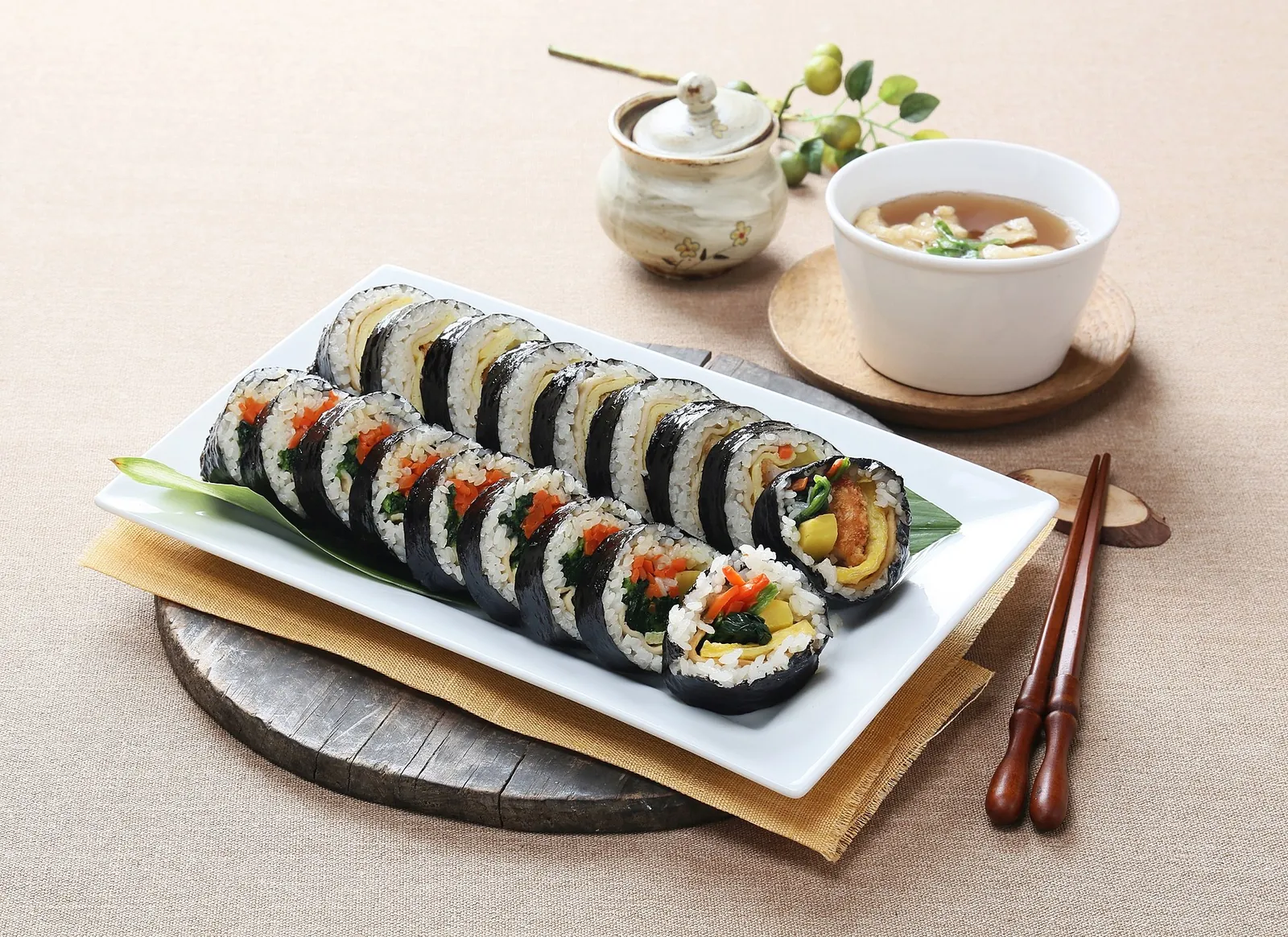
Gimbap
Rice and fillings rolled in seaweed and sliced, easy to pack and eat cold. VisitKorea calls a roll of gimbap at the summit an unmissable pleasure for Korean hikers.
- Where to look
- Gimbap shops and convenience stores near trailheads and bus terminals. On Jeju, VisitKorea names Oneunjeong Gimbap in Seogwipo as a hikers' favourite and says to order the day before and arrange a pickup time.
- Fit it into your day
- Buy it the evening before an early start, since few shops are open at 05:00, and eat it at the top. It is one of the foods Hallasan allows on the trail.
Fillings often include ham, fish cake, egg or tuna with mayonnaise; check before buying if you avoid meat, fish or egg.
Sundubu (soft tofu) and tofu buchim
Freshly made, very soft tofu served as a meal or in a stew, often with pan-fried tofu on the side. Visit Seoul recommends warm tofu after a hike as gentle on the stomach, and pairs the pan-fried tofu with makgeolli.
- Where to look
- In Ui-dong at the foot of Bukhansan, Visit Seoul names Woorikong Sundubu, next to the Seoul Hiking Tourism Center.
- Fit it into your day
- A late lunch after a morning on Bukhansan, before the subway back into the city.
Stews are often made with seafood or meat stock and can be spicy; ask for a milder version if you need one.
Deulkkae kalguksu (perilla-seed noodle soup)
Knife-cut wheat noodles in a thick, nutty broth made with ground perilla seeds, a filling bowl after a day on the hill.
- Where to look
- Noodle restaurants in the foothill neighbourhoods. Near Bukhansan, Visit Seoul names Ellim Deulkkae Sujebi Kalguksu on Samgaksan-ro and warns of queues even on weekdays.
- Fit it into your day
- Lunch or an early dinner after the hike. Visit Seoul lists the Ellim restaurant as closed on Sundays, so check before a weekend hike.
Contains wheat and perilla seeds; the broth may be made with anchovy or meat stock.
Temple food
Buddhist temple cooking without meat or fish, built on vegetables, wild greens, tofu and grains. Many of Korea's mountain trails pass temples, and some offer meals or templestays.
- Where to look
- On the edge of Bukhansan, Visit Seoul describes Jingwansa temple as renowned for its temple food and communal meal ceremony. Book through the temple's website.
- Fit it into your day
- Pair it with a lower trail or a rest day, not with a summit day that needs an early start.
Temple meals are usually booked programmes with set times, not walk-in restaurants; check what is included before you go.
Shelters and reserved trails
Korea's mountain shelters (대피소) are not huts you can walk into. KNPS describes them as places of refuge in an emergency, and the bookable ones are in four parks: Jirisan, Seoraksan, Deogyusan and Sobaeksan. Its English guide says you cannot book at the door or by phone, that you and your companions must show an ID card or passport to register, and that you pay at the shelter. It also forbids cooking with fire outside the shelter's kitchen and getting drunk. Arrive within check-in hours: when we checked on 2026-10-03, KNPS's Seoraksan entry-hours page gave 15:00 to 18:00 from November to March and 15:00 to 19:00 from April to October.
Booking rules are changing, so read the official pages carefully. KNPS's English reservation pages still describe a monthly opening on the 1st for the following month and a waiting list of up to 10% of capacity. The Korean policy table, which says the new rules are being phased in from 1 April 2024, listed shelters under a lottery with applications from the 1st of even-numbered months and a maximum stay of one night. Use the Korean page or ask the KNPS reservation helpline (1670-9201) before you build a ridge trek around a shelter.
A shelter booking can also extend your trailhead cut-off. When we checked on 2026-10-03, KNPS gave Seoraksan hikers booked into Huiungak an extra hour from Biseondae, and those booked into Yangpok two extra hours. On Jirisan, Rotary shelter bookings added two hours at Jungsan-ri, and Jangteomok bookings one hour.
Some trails need a booking even for a day hike. On Hallasan, the summit sections above Jindallaebat (Seongpanak trail) and Samgakbong (Gwaneumsa trail) are reserved. When we checked on 2026-10-03, bookings opened at 09:00 on the first business day of the month before your hike, for up to four people, once a week per person. A QR code and ID are checked on the trail, and a no-show without cancelling bars you from booking for three months, or a year for a second offence. Eorimok, Yeongsil, Donnaeko, Seokguram and Eoseungsaengak need no booking. The same guide also lists Seollal and Chuseok as rest days with no hiking. Near Seoul, the Uiryeong-gil between Bukhansan and Dobongsan must be booked at least a day ahead, and IDs are checked at the trailhead. Visit Seoul gives it as 6.42 km and about two hours, rated easy. On Seoraksan, KNPS listed booking-only trails at Gombaeryeong and, in October and November, Heullimgol.
Which hike for a city break, a weekend or a longer trip
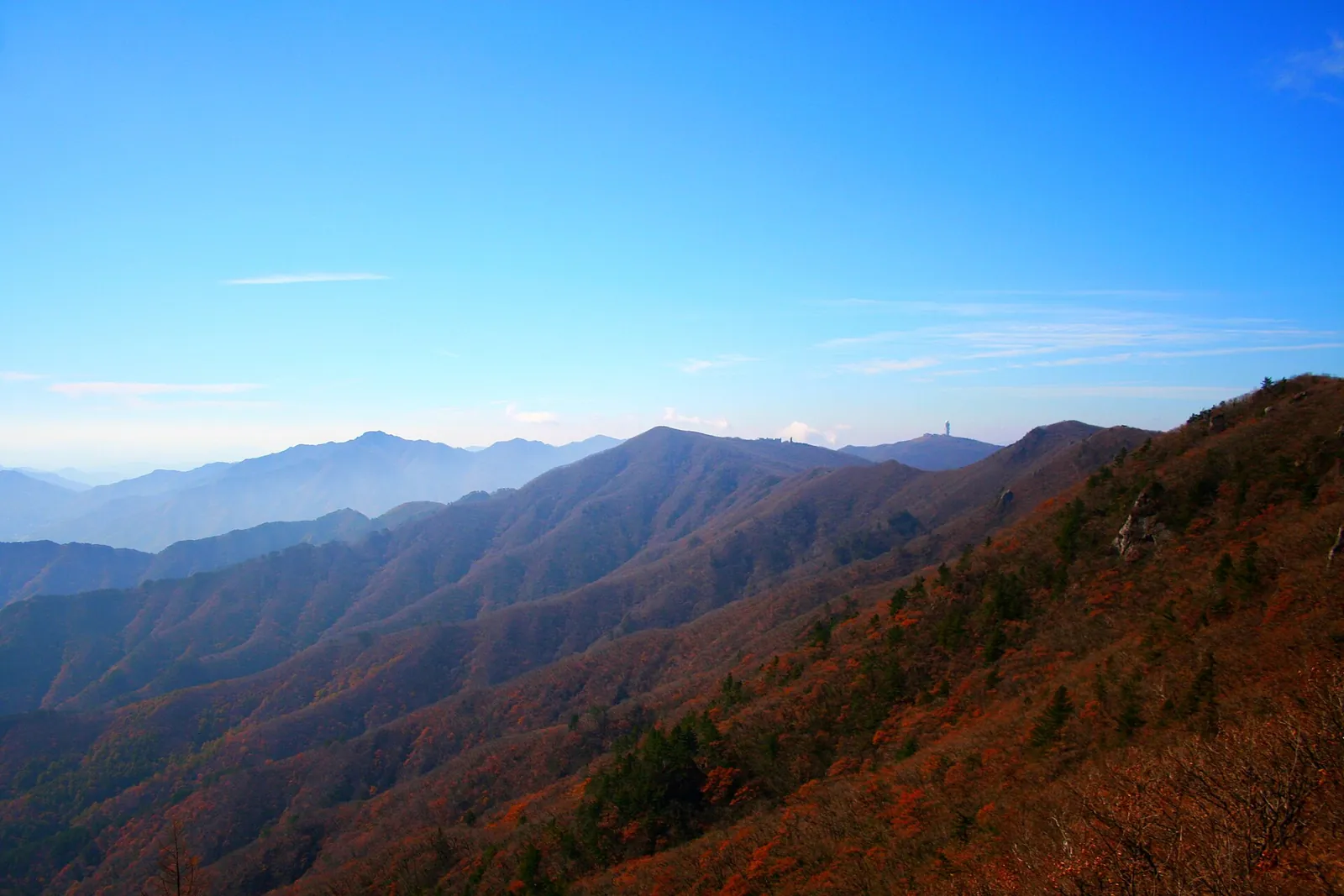
A morning from Seoul: Bukhansan or Dobongsan. Bukhansan is the only national park in Seoul, and its trailheads are reached by subway and bus. VisitKorea's route to Baegundae from the west starts at the Bukhansanseong Information Center, reached by bus 704 from the Seoul Station bus transfer centre, and it calls the climb quite steep. For Dobongsan, it suggests Line 1 to Dobongsan station and a 20-minute walk to the trailhead. On the east side, the Seoul Hiking Tourism Center – Bukhansan Branch is about five minutes' walk from Bukhansan Ui station on the Ui–Sinseol Line. When we checked on 2026-10-03, Visit Seoul listed it as open 09:00 to 18:00 and closed on Mondays, at Seollal and at Chuseok. It offers help in English, Chinese and Japanese, luggage storage and rental of boots, clothing, poles and crampons, which can be reserved in advance. It is one of three such centres in Seoul. If rocky summits are not for you, walk a section of the 71.8 km Bukhansan Dulle-gil, which KNPS describes as a low-level path around the foot of the mountain.
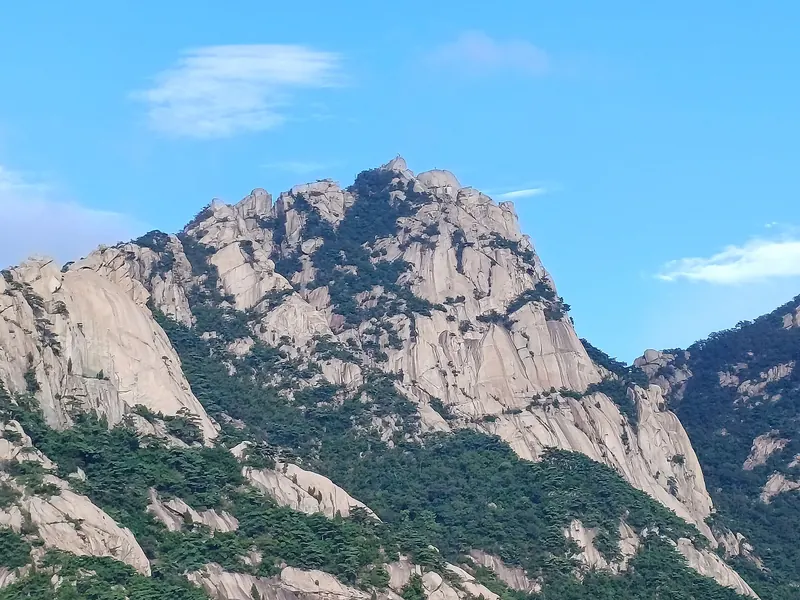
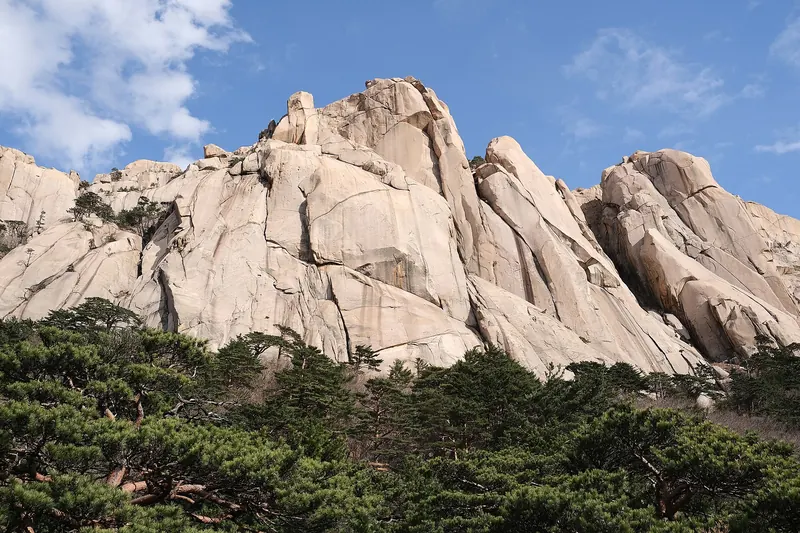
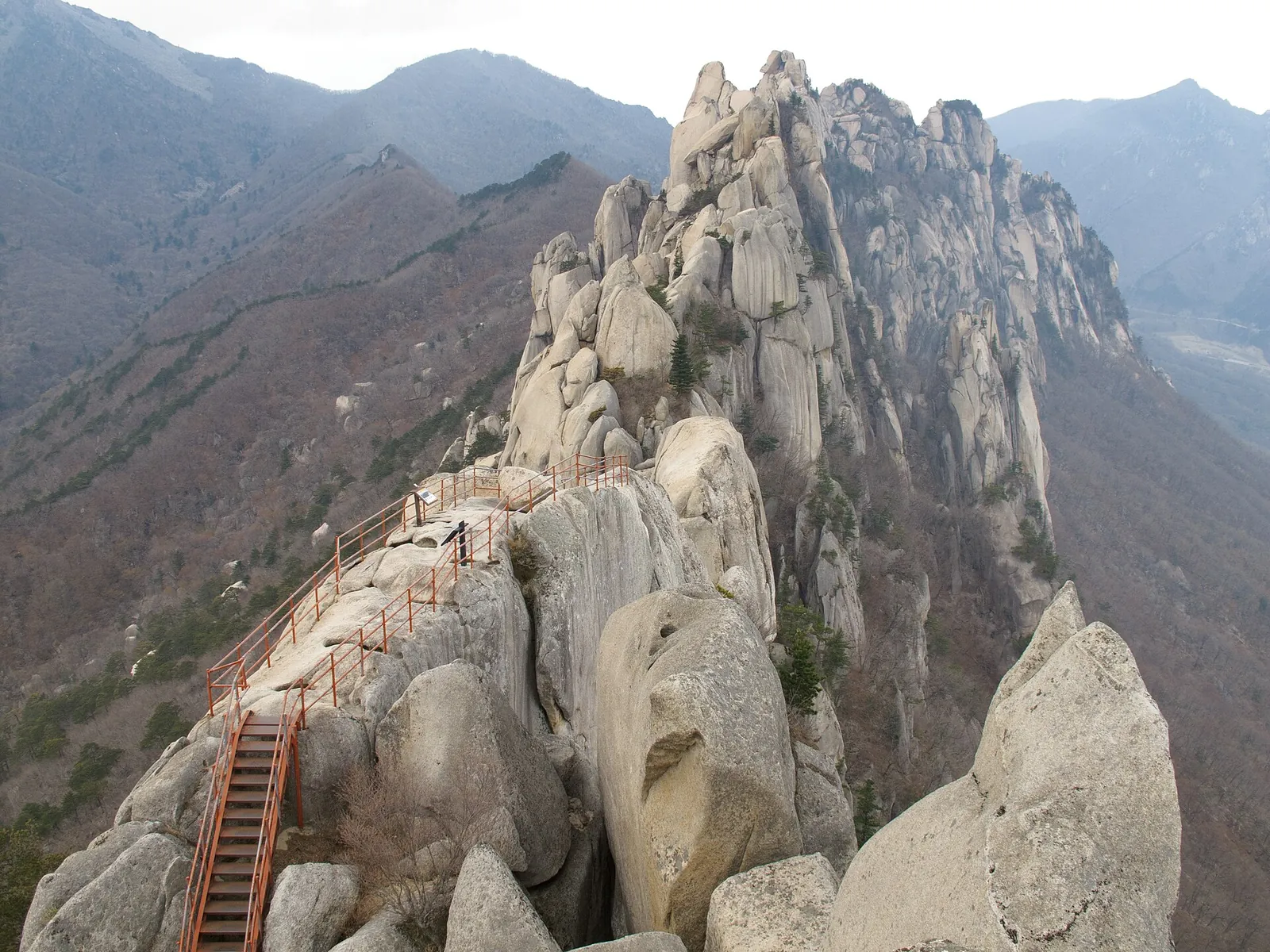
A weekend on the east coast: Seoraksan. Take bus 7 or 7-1 from Sokcho Intercity Bus Terminal to Sogongwon Park. VisitKorea describes the forest path to Sinheungsa temple and Heundeulbawi as gentle, and the final climb to Ulsanbawi as steep. It also recommends the valley path to Biseondae as the easier option, and the cable car to Gwongeumseong for seniors and children. The summit, Daecheongbong, is a separate and much longer day. Our Seoraksan guide has the course details.
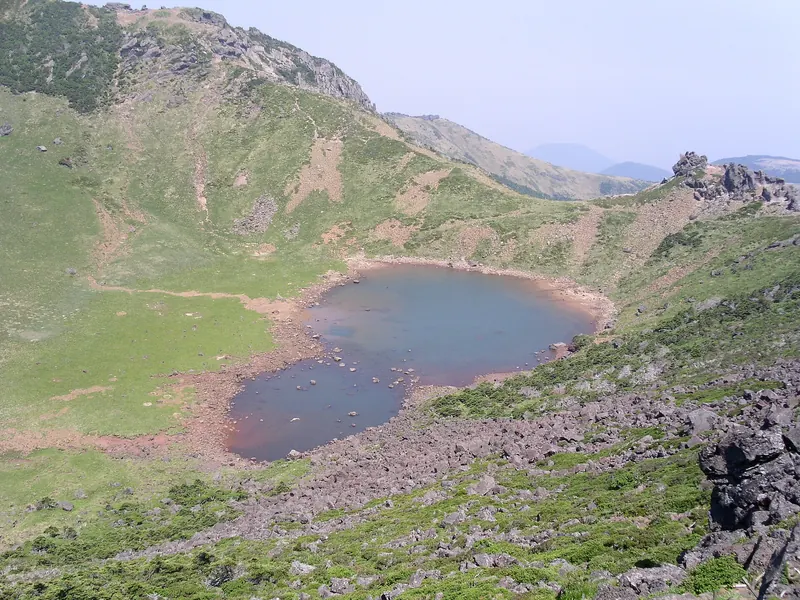
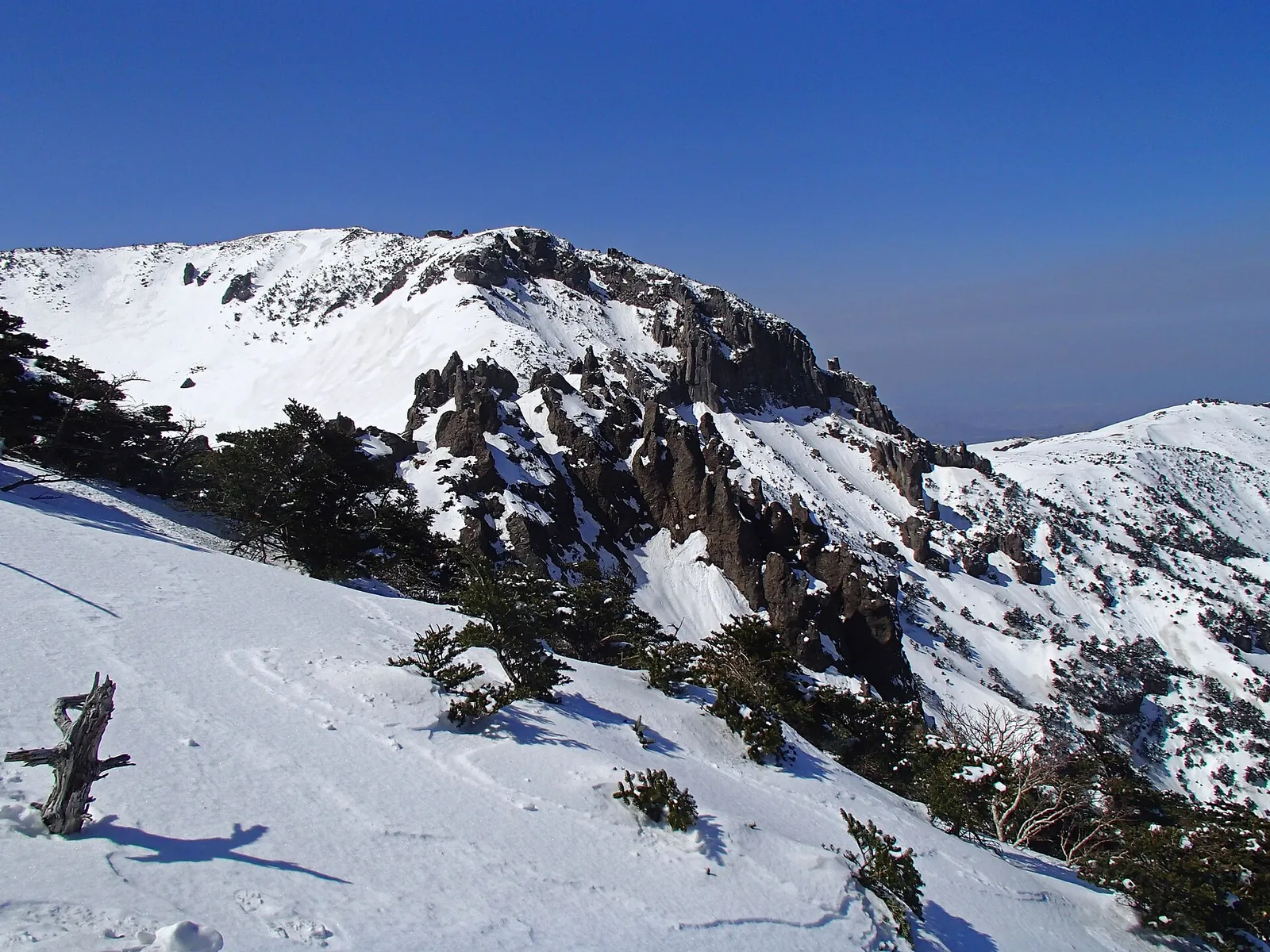
A weekend on Jeju: Hallasan. Book a summit slot if you want the crater, and stay in Jeju City for the early buses. VisitKorea gives bus 181 from Gate 2 at Jeju International Airport, or bus 281 from Jeju Bus Terminal, to the Seongpanak stop. If you do not get a slot, walk up Yeongsil to Witse-oreum and down to Eorimok, which needs no booking. VisitKorea warns that the last 2.5 km to the Yeongsil trailhead is a road with no bus and no parking for private cars, so a taxi is the easy way up.
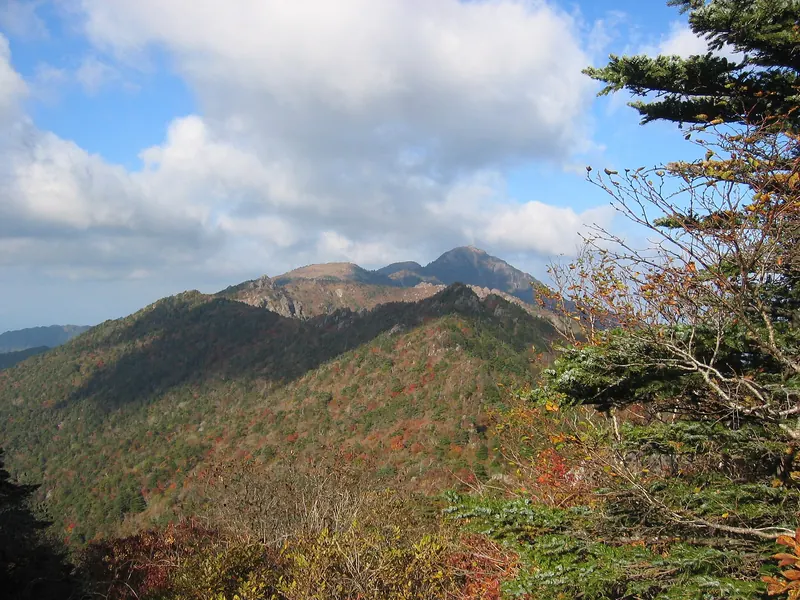
Three or four days: Jirisan and the long ridges. Jirisan was Korea's first national park, and VisitKorea ranks its summit, Cheonwangbong (1,915 m), as the highest after Hallasan. It is the classic multi-day ridge trek, with shelters strung along the main ridge. Sobaeksan and Deogyusan also have shelters, and their entry-hours tables on the KNPS site set winter cut-offs of 11:00 to 13:00 at some trailheads. These are trips for experienced hikers with shelter bookings, not something to add to a Seoul itinerary on a whim. Our Jirisan guide covers the Nogodan and Cheonwangbong approaches.
Seasons and timing
VisitKorea's climate guide recommends spring (March to May) and autumn (September to November) for travelling on foot, when temperatures are moderate. It also warns that chilly weather often lasts until mid-March and that winter averages are only 0 to 1°C, with frequent sub-zero days. Spring and late autumn overlap with the forest-fire closure weeks, so the high ridges are most reliably open in April after mid-May, and from September to mid-November. Check the dates for your park.
Autumn foliage is the busiest time on the trails. VisitKorea's 2026 forecast put the first colour on Seoraksan on 3 October and its peak around 25 October. It forecast first colour on Bukhansan on 23 October (peak 4 November), on Jirisan on 28 October (peak 5 November) and on Hallasan on 31 October (peak 13 November), with Naejangsan peaking around 11 November. It notes that actual dates depend on the weather. Hike on weekdays in that window if you can.
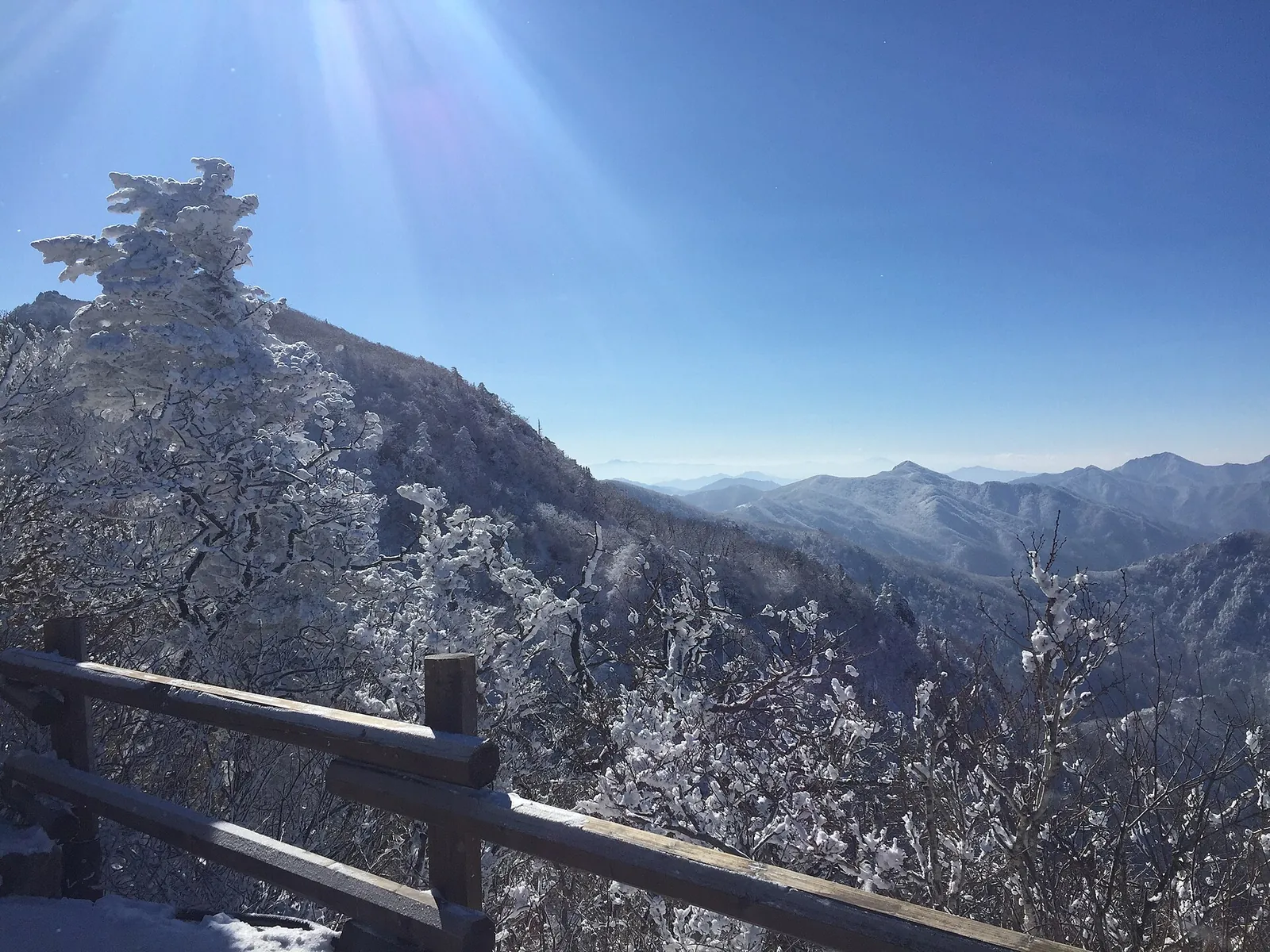
Winter hiking is possible but serious. Hallasan's guide asks winter hikers to carry warm clothing, crampons, gloves and hot water, and the Seoul Hiking Tourism Center rents crampons. In summer, the end of July and August can be extremely hot and humid, according to VisitKorea: start at the opening time and plan to be down by early afternoon.
Safety and trail etiquette
The official advice is practical. Hallasan's guide asks hikers to stay on marked trails and to carry emergency food (it suggests sweets, chocolate and salt) and spare clothes, because the weather changes quickly. In an emergency, call the park office or the 119 rescue service and give the number on the nearest trail position marker. Note the marker numbers as you pass them. Hallasan has no shops on the trails, so bring all your food and water.
Rules on what you carry are stricter than many visitors expect. On Hallasan, alcohol, smoking, fire and single-use lunch boxes are banned, though gimbap and hamburgers are allowed, and camping and cooking are allowed only at the Gwaneumsa campsite. In KNPS shelters, cooking is limited to the kitchen. Take your rubbish down with you everywhere.
For help in English while you are in Korea, VisitKorea runs the 1330 travel helpline and text chat. Our Korea safety guide covers emergency numbers, weather alerts and what to do if your plans are disrupted.
Practical questions
Do I need a permit to hike in Korea's national parks?
For most day hikes, no. You just need to start before the trailhead's cut-off time. Bookings are needed for overnight shelters, Hallasan's summit sections from Seongpanak and Gwaneumsa, and a few protected trails such as the Uiryeong-gil near Seoul and Gombaeryeong in Seoraksan.
What is the entry-hours system?
Since May 2015, KNPS has set a start time and a cut-off for each trailhead in every national park except Taean Coastal, so that hikers are down before dark. After the cut-off you are not allowed to start up. On long summit climbs it can be as early as 11:00 or 12:00, so check your trailhead on the KNPS site before you plan transport.
When are Korean mountain trails closed for forest fires?
Upper trails close in the dry seasons of spring and late autumn, while low valley paths usually stay open. VisitKorea gave Seoraksan's periods as 2 March to 15 May and 15 November to 15 December in a column last updated in 2024. Confirm the current dates for your park on the KNPS closure page.
How do I book Hallasan?
On the official Hallasan reservation site. When we checked on 2026-10-03, bookings opened at 09:00 on the first business day of the month before your hike, for up to four people. You get a QR code and must carry ID. Cancel before your entry slot ends if you cannot go: a no-show bars you from booking for three months.
What is the best easy hike near Seoul?
The low Bukhansan Dulle-gil paths around the foot of Bukhansan, or the Uiryeong-gil, which Visit Seoul rates as easy at 6.42 km and about two hours but which must be booked a day ahead. The Seoul Hiking Tourism Center by Bukhansan Ui station can suggest a route to match your fitness.
Can I hike in Korea in winter?
Yes, but treat it as winter mountaineering. Trailhead cut-offs are earlier, the cold is serious and icy paths need crampons. Hallasan asks winter hikers to carry warm clothing, crampons, gloves and hot water.
Sources and checks before you travel
Reference sources for the version dated 3 October 2026. Confirm opening times, access, transport and conditions for your travel dates.
- Korea National Park Service: designated entry hours (Korean) ↗ — opens in a new tab
- Korea National Park Service: trail closure information (Korean) ↗ — opens in a new tab
- KNPS reservation service (English): shelter guide ↗ — opens in a new tab
- KNPS reservation service (Korean): reservation and refund policy ↗ — opens in a new tab
- Hallasan reservation system: reservation guide (Korean) ↗ — opens in a new tab
- Hallasan reservation system: adjustment of the reservation section (English) ↗ — opens in a new tab
- VisitKorea: Best hiking trails in Korea's national parks ↗ — opens in a new tab
- VisitKorea: Jirisan National Park (Nogodan Peak Section) ↗ — opens in a new tab
- VisitKorea: Jirisan National Park (Sancheong) ↗ — opens in a new tab
- VisitKorea: 2026 Fall Foliage Forecast ↗ — opens in a new tab
- VisitKorea: Climate ↗ — opens in a new tab
- Visit Seoul: Seoul Hiking Tourism Center – Bukhansan Branch ↗ — opens in a new tab
- Visit Seoul: Bukhansan Dulle-gil, Uiryeong-gil ↗ — opens in a new tab
- Korea National Park Service: Bukhansan Dulle-gil (Korean) ↗ — opens in a new tab
- Visit Seoul: Crisscrossing between Nature and the City ↗ — opens in a new tab
- VisitKorea: Airport Transportation Guide ↗ — opens in a new tab
Does this experience fit your route?
Want a guide or transport to the trailhead? Compare national-park day trips from Seoul, and check each operator's weather and closure policy before you book.
Check dates and details on Viator ↗ — opens in a new tabAffiliate link · Book with ViatorPhoto credits
The last climb to Ulsanbawi in Seoraksan runs up steel stairs between granite pinnacles.
Photograph: Tom Page — opens in a new tab · CC BY-SA 2.0 — opens in a new tab
Changes: Resized and converted to WebP; displayed with responsive crops. · Original photograph and licence details ↗ — opens in a new tab
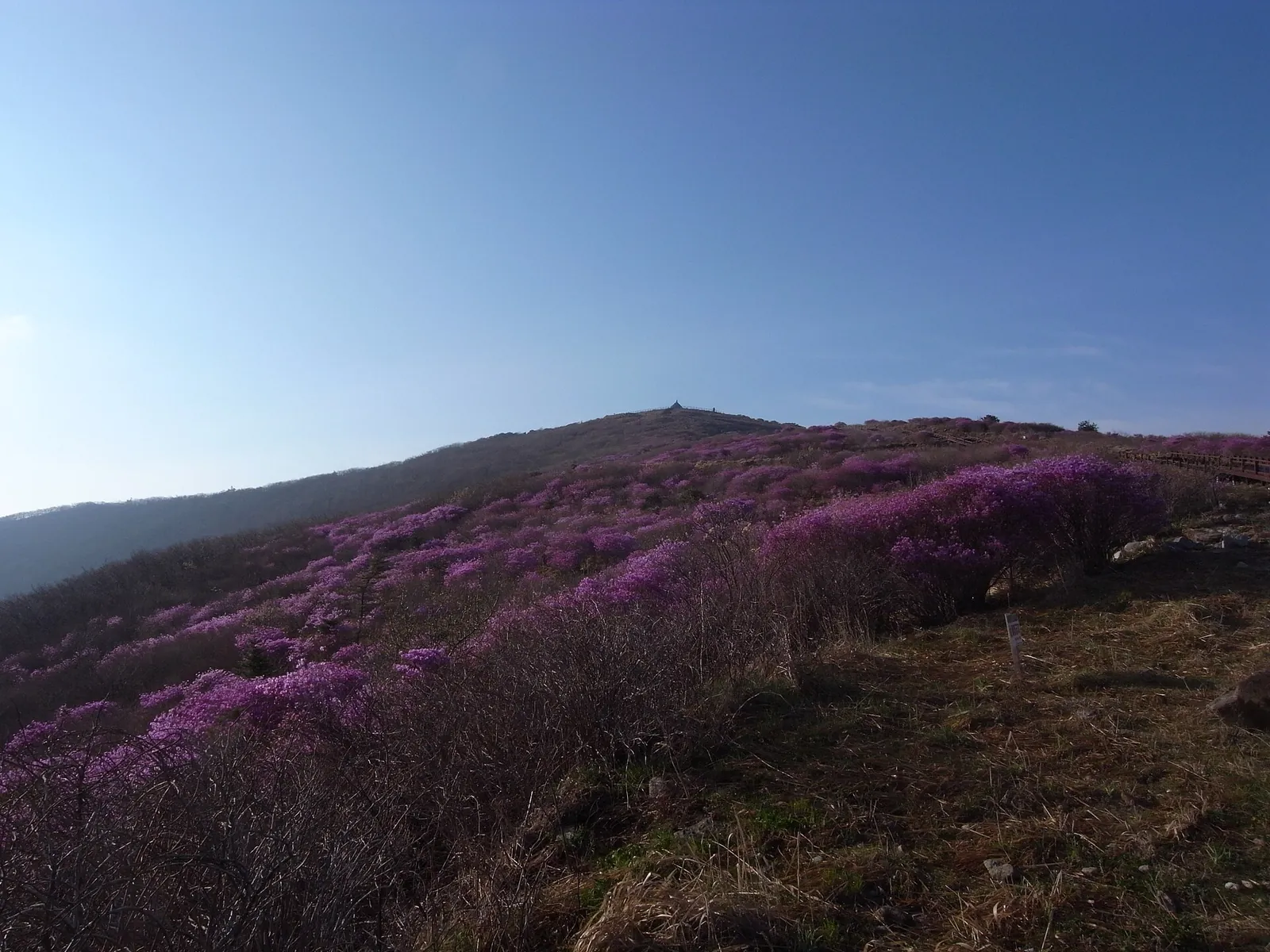
The open high ground around Nogodan on Jirisan, in flower.
Photograph: Eggmoon — opens in a new tab · CC BY-SA 3.0 — opens in a new tab
Changes: Resized and converted to WebP; displayed with responsive crops. · Original photograph and licence details ↗ — opens in a new tab
Sobaeksan's Yeonhwabong ridges from Birobong in autumn.
Photograph: Seonghyeon5836 — opens in a new tab · CC BY-SA 4.0 — opens in a new tab
Changes: Resized and converted to WebP; displayed with responsive crops. · Original photograph and licence details ↗ — opens in a new tab
Rime ice on Deogyusan: winter hiking in Korea needs crampons and warm layers.
Photograph: Jung-Ho Um — opens in a new tab · CC BY-SA 3.0 — opens in a new tab
Changes: Resized and converted to WebP; displayed with responsive crops. · Original photograph and licence details ↗ — opens in a new tab
Snow on Hallasan's upper slopes, seen from a hiking trail.
Photograph: Lcarrion88 — opens in a new tab · CC BY-SA 4.0 — opens in a new tab
Changes: Resized and converted to WebP; displayed with responsive crops. · Original photograph and licence details ↗ — opens in a new tab
Gimbap, the classic Korean hiking lunch.
Photograph: changupn — opens in a new tab · CC0 — opens in a new tab
Changes: Resized and converted to WebP; displayed with responsive crops. · Original photograph and licence details ↗ — opens in a new tab