Plan your trip · South Korea
Cherry blossom in South Korea: where to go each week, Jeju to Seoul
Korea's cherry blossoms do not open on one day. They start on Jeju and the south coast in the last week of March and reach Seoul and Incheon one to two weeks later, and each tree is at its best for only a few days. That travelling front is the key to planning: a trip that starts in the south and moves north with the blossom can see full bloom more than once, while a trip that stays in one city has to bet on one week. The official forecast arrives only about a month before the season, so the plan has to be flexible by design.
- Suggested time
- 10–14 days to follow the bloom from south to north; 5–7 days for one region
- Where to stay
- Busan (for Jinhae), Gyeongju, Seoul; optionally Jeju City or Hwagae in Hadong
- Season and timing
- Late March to mid-April. In VisitKorea's 2026 forecast, first blossoms came around 25 March on Jeju and in Busan, 28 March in Gyeongju and Jeonju, 1 April in Gangneung, 3 April in Seoul and 7 April in Incheon, with full bloom about a week later.
The short answer
For the best chance of full bloom, plan about 10 to 14 days between the last week of March and the middle of April and travel north with the flowers: Jeju or Busan and Jinhae first, then Hadong and Gyeongju, then Gangneung or Seoul. Sleep in Busan for Jinhae, in Gyeongju itself, and in Seoul at the end, and keep the first southern nights flexible until the official forecast appears in late February. If you only have a week, pick one half: the south in the last days of March, or Gyeongju and Seoul in the first ten days of April. Book refundable rooms and move nights forward or back once the forecast is out.
How the blossom front moves north
Every February the Korea Tourism Organization's VisitKorea site publishes a cherry blossom forecast supplied by the private forecaster Weather i. The 2026 forecast, posted on 26 February 2026, put the first blossoms at 25 March on Jeju and in Busan, 28 March in Jeonju and Gyeongju, 1 April in Gangneung, 3 April in Seoul and 7 April in Incheon. VisitKorea adds that the flowers peak roughly a week after they first open: after 1 April on Jeju and around 10 April in Seoul.
The front moves only a few days each year, but it does move. The 2025 forecast, posted on 24 February 2025, had Jeju at 22 March, Busan at 23 March and Seoul and Gangneung both at 1 April, with full bloom in Seoul around 8 April. Both years were forecast earlier than average, by two to seven days in 2026 and three to eight days in 2025. Use those dates as a pattern, not a promise: both forecasts warn that actual blooming and peak dates may differ with the weather.
The practical consequence is that a fixed date suits only one region. If your flights are booked before the forecast appears, put the region you care about most in the middle of the trip and leave a buffer of two or three nights that can move north or south. VisitKorea's Jeju festival page also notes that the peak of the king cherry lasts only two to three days, although blossoms can be seen across the island for weeks, from late March to the second week of April depending on the area.
Last week of March: Jeju, Busan and Jinhae
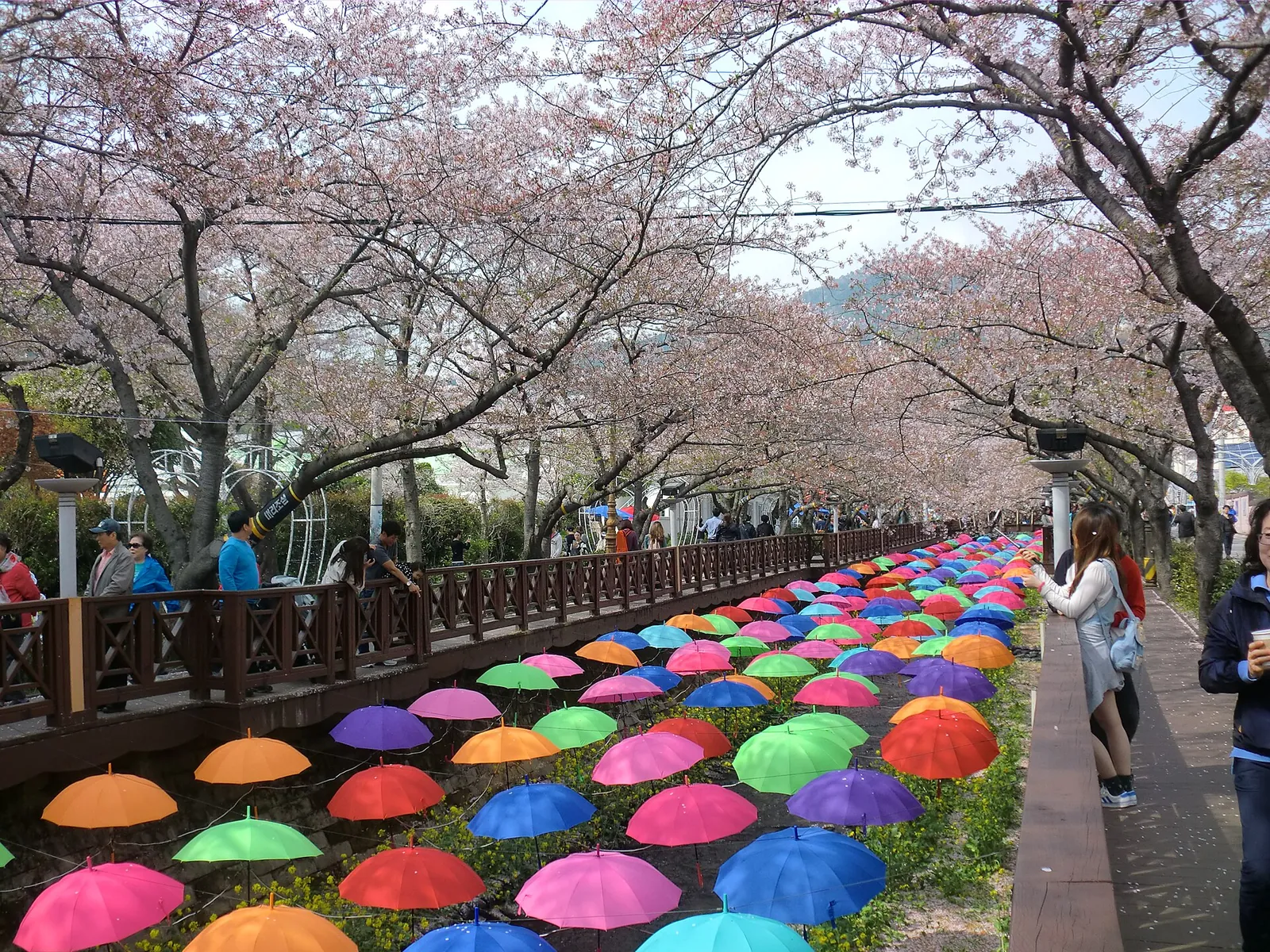
Jinhae, a district of Changwon on the South Gyeongsang coast, is the reason many people time a Korean trip to the day. VisitKorea describes the Jinhae Gunhangje Festival as one of the country's most iconic spring festivals, with about 360,000 king cherry trees across the old naval port and more than two million visitors a year. The festival began in 1952 as a memorial ceremony for Admiral Yi Sun-sin and is centred on Jungwon Rotary and Bugwon Rotary; during the festival, visitors can enter the Korea Naval Academy and the Naval Base Command, which are normally closed. When we checked on 2026-10-03, VisitKorea listed the 2026 festival as 27 March to 5 April; the 2027 dates had not been published.
Inside Jinhae, the two classic walks are Yeojwacheon Stream, whose cherry-lined banks and 'Romance Bridge' became famous through a 2002 TV drama, and Gyeonghwa Station, a disused station where trains no longer stop and cherry trees line the railway. VisitKorea lists both as open 24 hours and free. Jehwangsan Park in the centre has the nine-storey Jinhae Tower at the top of a 365-step staircase, with views over the town. Go early in the morning or on a weekday: with more than two million visitors over a festival of about ten days, expect the biggest crowds at weekends. South Gyeongsang province ran package tours from Seoul and Busan for the 2026 festival, which is one way to avoid organising the transfer yourself.
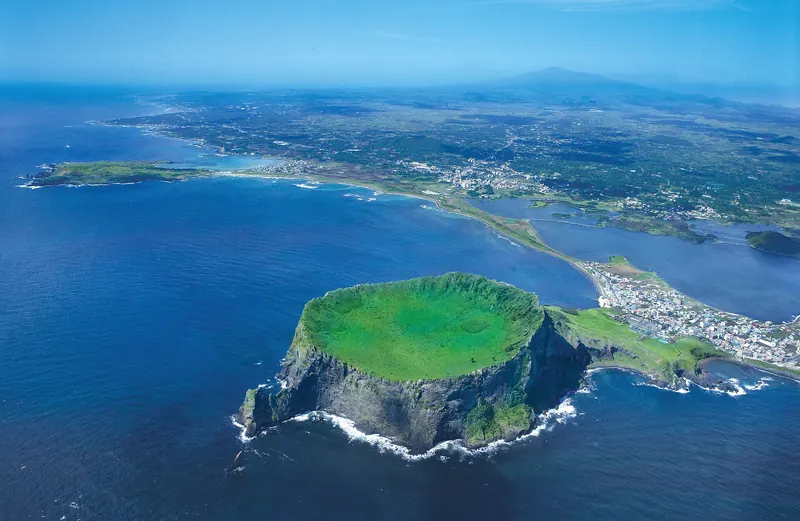
On Jeju, VisitKorea's festival page says the island's native king cherries are the earliest to bloom in Korea. The Jeju Cherry Blossom Festival uses Jeonnong-ro in Jeju City and Jangjeon-ri in Aewol; the last dates VisitKorea listed were for 2024, so check the city's announcements. In the south-east of the island, Noksan-ro near Gasi-ri combines cherry trees with a 10-kilometre roadside of canola flowers in April. In Busan, VisitKorea describes Dalmaji Road between Haeundae and Songjeong beaches as an 8-kilometre coastal road lined with cherry and pine trees; it is the easiest blossom outing if you are staying by the sea.
Make time for the local food
What to eat and where to look
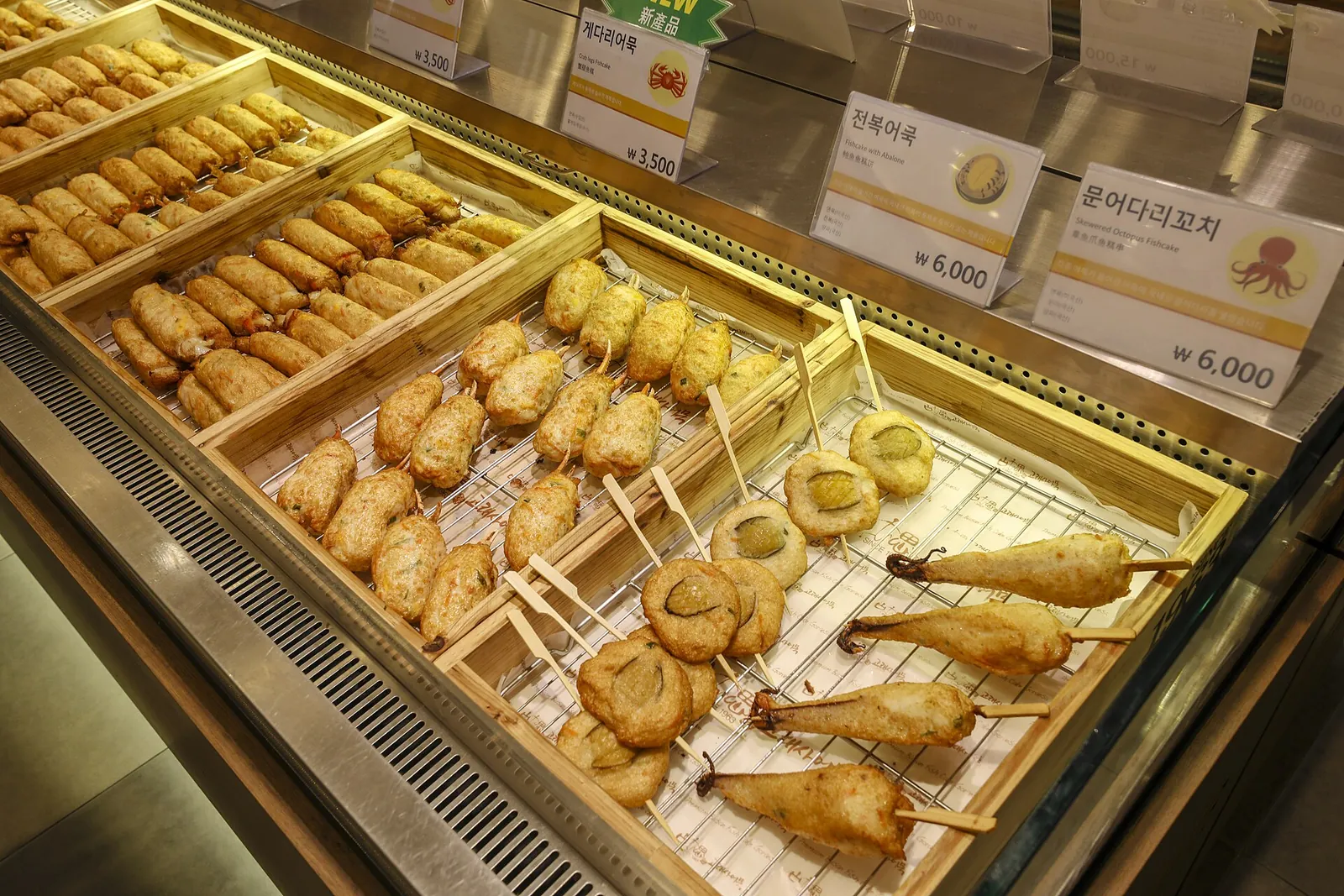
Eomuk (Busan fishcake)
Fishcake made from ground fish. VisitKorea notes that Busan is known for its fishcake-making tradition, with a high fish content and many shapes and fillings, from squid and crab to cheese and sweet potato.
- Where to look
- Busan's fishcake shops and market stalls; VisitKorea names Goraesa and Samjin as the best-known makers.
- Fit it into your day
- A warm snack on a chilly early-spring evening in Busan, or a packed lunch for the day trip to Jinhae.
Contains fish and often wheat; some fillings contain shellfish or dairy.
Jaecheopguk (marsh clam soup)
A clear, light soup of tiny freshwater marsh clams with chives, the speciality of the Seomjin River towns. VisitKorea describes the clam broth as more refreshing than other shellfish soups.
- Where to look
- Clam restaurants in Hadong-eup and around Hwagae, many serving set meals with jaecheopguk, clam pancakes and spicy raw clam salad.
- Fit it into your day
- Lunch on the blossom road day in Hadong, or breakfast before you walk up to Ssanggyesa.
Shellfish; the raw clam salad (jaecheophoe) is not cooked.
Ssambap (leaf wraps and rice)
Rice wrapped in fresh leaves with many side dishes, including fish, meat and a stew made with homemade soybean paste. Gyeongju has a whole street of ssambap restaurants by the Daereungwon tombs.
- Where to look
- Gyeongju Ssambap Street around the Daereungwon Ancient Tomb Complex, next to the cherry festival's stone-walled road.
- Fit it into your day
- A long lunch between the tombs and an afternoon at Bomun Lake.
Side dishes vary and many contain fish sauce, pork or seafood; ask if you avoid them.
Dombegogi (Jeju black pork)
Freshly steamed Jeju black pork, set on a wooden cutting board and sliced at the table. VisitKorea lists it among the island's signature dishes.
- Where to look
- Pork restaurants in Jeju City and around Dongmun Market, whose night market also sells black pork snacks.
- Fit it into your day
- Dinner after a day on Jeonnong-ro or along the Noksan-ro blossom road.
Pork; usually eaten with a salty fermented dipping sauce.
Around 1 April: Hadong, Gurye and Gyeongju
The Seomjin River valley, on the border of South Gyeongsang and South Jeolla, has two of the best blossom roads in the country. On the Hadong side, the road from Hwagae Market up to Ssanggyesa Temple is the Simni (10-ri) Cherry Blossom Road; VisitKorea says the stretch of trees runs for about 6 kilometres, and local lore says a couple who walk it hand in hand will stay together for a hundred years. Across the river, the Gurye Seomjingang Cherry Blossom Trail follows national roads 17 and 19 for more than 3 kilometres, with trees planted in 1992, and is listed among the '100 Most Beautiful Roads in Korea'. Neither place is in the official forecast table, so watch the Busan and Jeonju dates and local news, and go on a weekday if you can.
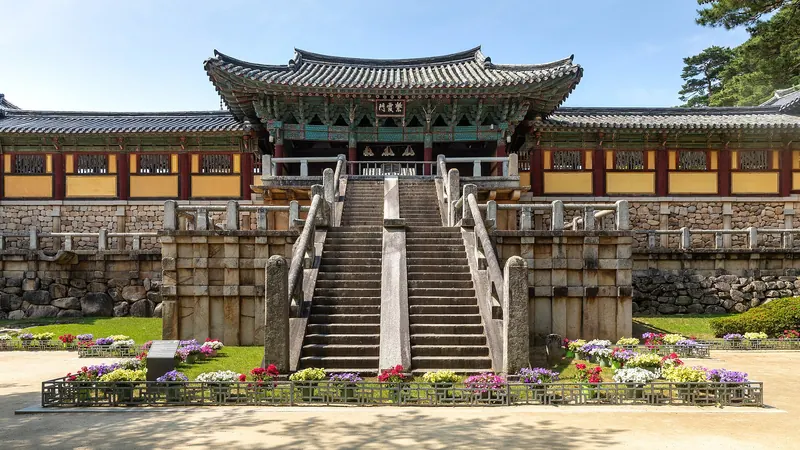
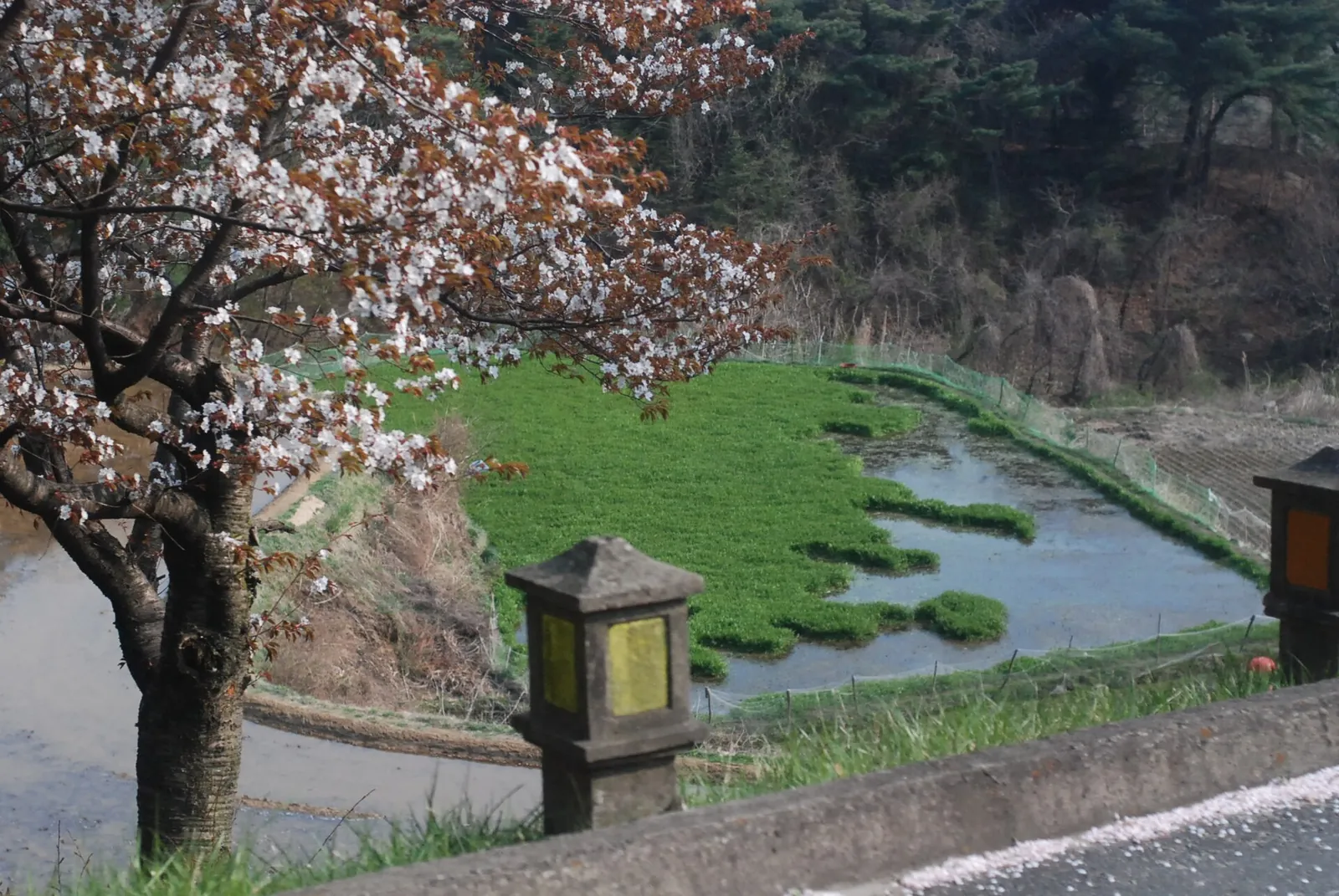
Gyeongju is the most rewarding blossom city in Korea for many visitors, because the trees grow among the Silla tombs, temples and lakes rather than in one park. VisitKorea's Bomunho Lake page says that, unlike towns where cherry trees are found only in certain areas, Gyeongju is packed with them, and singles out the reflections on Bomunho Lake and the trees around Bulguksa. The Bomun Tourist Complex, about 10 kilometres east of downtown, draws crowds in April, when the blossoms are in full bloom. The Gyeongju Cherry Blossom Festival is held from late March to early April along the stone-walled road of Daereungwon in the city centre, according to VisitKorea.
With a first-bloom forecast of 28 March in 2026 and the peak about a week later, Gyeongju's best days would have fallen around the first week of April, which makes it the natural midpoint of a south-to-north trip. Two nights is enough: one day for Daereungwon and the town centre on foot or by bike, one for Bomun Lake and Bulguksa.
First to second week of April: Gangneung and Seoul
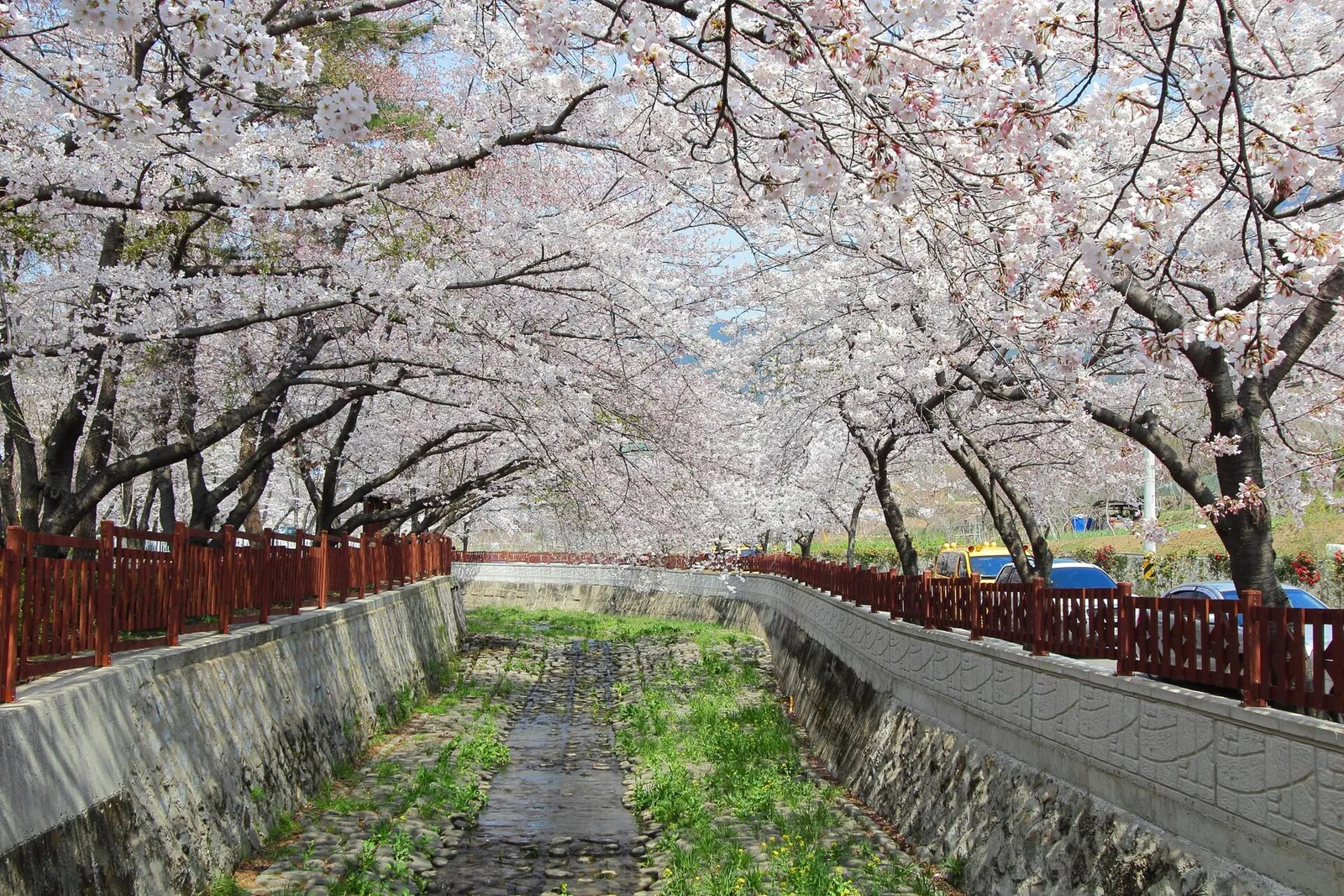
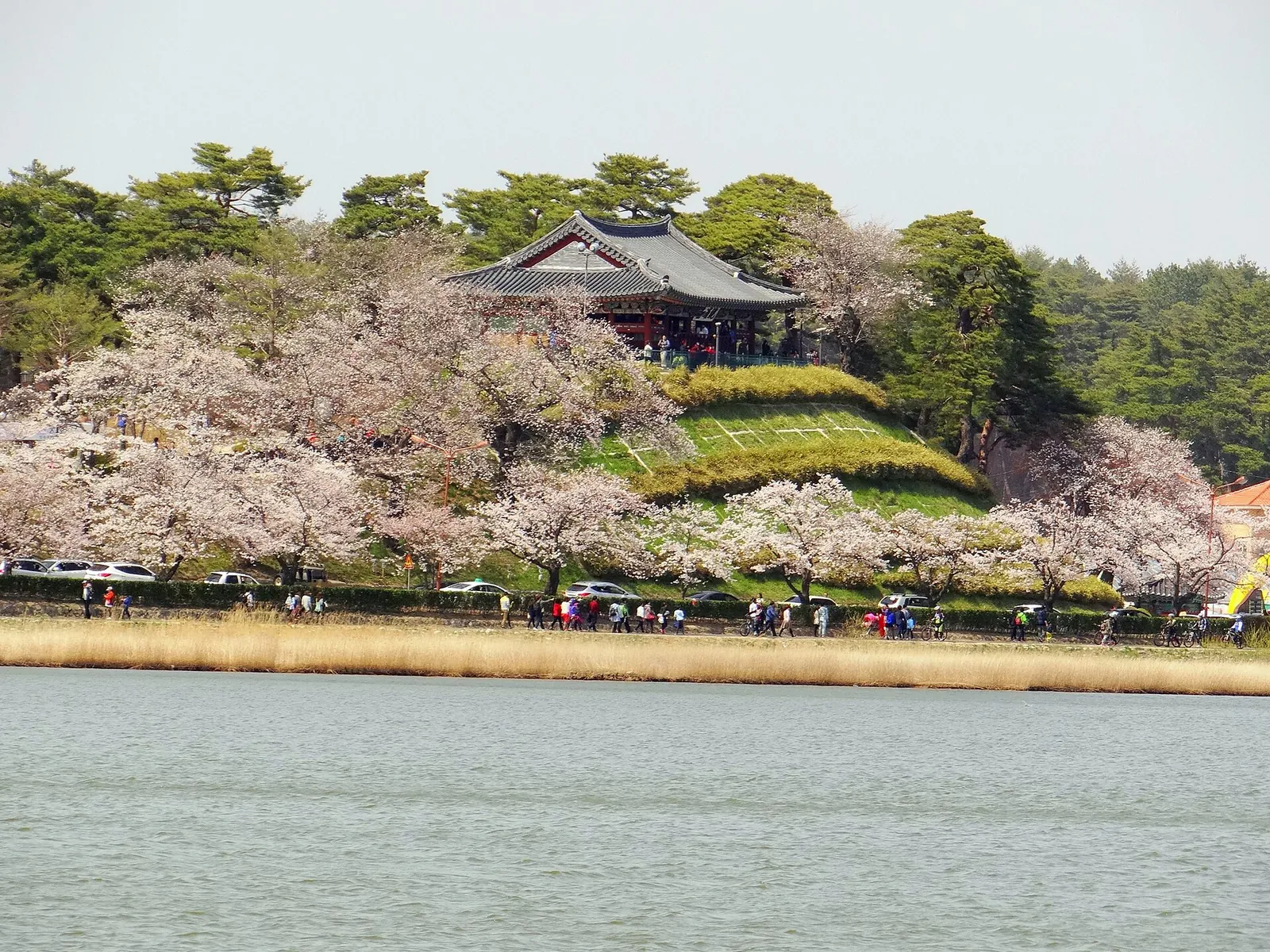
On the east coast, Gyeongpoho Lake in Gangneung is a 4-kilometre lagoon lined with king and weeping cherry trees, beside Gyeongpo Beach; VisitKorea includes the scene among the Eight Scenic Views of Gangwon, and an annual cherry blossom festival is held there in early April. With a forecast first bloom of 1 April in 2026, Gangneung fits the same week as Gyeongju or the start of the Seoul bloom. VisitKorea gives about two hours by KTX from Seoul Station to Gangneung Station, so it also works as a two-day trip from Seoul.
In Seoul, the two big events are on Yeouido and at Seokchon Lake. The Yeouido Spring Flower Festival is held on Yeouiseo-ro, the road known as Yunjung-ro, which VisitKorea says is famous for its 1,886 Korean cherry trees; when we checked on 2026-10-03, it listed the 2026 festival as 3 to 7 April. The Seokchon Lake Cherry Blossom Festival in Songpa-gu runs around the two lakes of Songpa Naru Park, with performances, a photo zone and food trucks; VisitKorea describes it as taking place between late March and mid-April, and the latest dates it listed were 2 to 6 April 2025. VisitKorea's page for Yeouido Hangang Park also lists the Yeouido cherry blossom festival among the park's spring events.
Seoul's spring is longer than its cherry week. VisitKorea's spring column points to forsythia on Eungbongsan, forecast to peak in mid to late March, and to the double red plum blossoms by Nakseonjae Hall in Changdeokgung Palace, best in mid to late March. At the other end, the royal azaleas of Royal Azalea Hill in Gunpo, near Surisan Station on Line 4, usually bloom between April and June; the column recommended 19 to 27 April in 2025. If you miss the cherry peak, these are the obvious alternatives.
Putting the weeks together
This is an editorial plan based on the 2025 and 2026 forecasts, not a forecast for 2027. Shift every step by the difference between the new forecast and these dates once VisitKorea publishes it, usually in the second half of February.
- 10 to 14 days, following the bloom: fly into Busan or Jeju in the last week of March; Jinhae as a day trip from Busan (or two nights on Jeju first); two nights in Hadong or a day out along the Seomjin River; two nights in Gyeongju in the first days of April; finish with three or four nights in Seoul, adding Gangneung if the dates line up.
- One week, south only: Busan and Jinhae for the festival weekdays, then Hadong and Gyeongju. Best from the last days of March to the first days of April.
- One week, north only: Gyeongju (by KTX from Seoul, about two hours according to VisitKorea), Gangneung and Seoul, in the first ten days of April.
- Arriving later in April: Seoul's forecast full bloom was around 8 April in 2025 and 10 April in 2026, so by the middle of the month the trees may be past their best; look instead at the royal azaleas in Gunpo or later-blooming areas further north. Chuncheon, for example, was forecast for 4 April in 2025.
- Arriving in mid-March: you are early for cherries but in time for plum blossoms. VisitKorea's spring column lists Gwangyang Maehwa Village in South Jeolla, where the plum festival ran from 7 to 16 March in 2025.
Booking, crowds and what to check before you travel
Blossom weekends are domestic holiday weekends. The Jinhae festival alone draws more than two million visitors, the Hadong and Gurye blossom roads are popular drives, and the Seoul festivals are free and open to everyone. Plan the most popular places for weekday mornings, use trains rather than cars where you can, and build the trip so that a crowded or rainy day can be swapped with a quieter one.
Book rooms with free cancellation as soon as you know your travel window, then confirm the nights once the forecast appears. Check the festival dates on each organiser's own channel (the Gunhangje festival at jgfestival.or.kr, the Yeouido festival at ydpcf.or.kr), because festival dates are set each year and can change or be cancelled. For questions in English, VisitKorea points travellers to the 1330 Korea Travel Helpline (+82-2-1330).
Practical questions
When is cherry blossom season in South Korea?
From the last week of March to about the middle of April. In VisitKorea's 2026 forecast, first blossoms came on 25 March on Jeju and in Busan and on 3 April in Seoul, with full bloom about a week later, around 10 April in Seoul. The dates move by a few days each year.
When is the 2027 cherry blossom forecast published?
The 2027 forecast had not been published when we checked on 2026-10-03. VisitKorea posted the 2025 forecast on 24 February 2025 and the 2026 forecast on 26 February 2026, so expect it in late February.
When is the Jinhae cherry blossom festival?
In 2026 the Jinhae Gunhangje Festival ran from 27 March to 5 April, according to VisitKorea. Dates for 2027 had not been announced when we checked; watch the official festival site, jgfestival.or.kr.
Where can I see cherry blossoms in Seoul?
The best-known spots are Yunjung-ro on Yeouido, where the Yeouido Spring Flower Festival is held along a road with 1,886 cherry trees, and Seokchon Lake in Songpa-gu, which has its own festival. Both are free.
How long do cherry blossoms last in Korea?
Not long in any one place. VisitKorea says blossoms peak about a week after they first open, and its Jeju festival page notes that the king cherry's peak lasts only two to three days. Following the front from south to north is the way to see more than one peak.
What if I arrive after the cherry blossoms?
Look for azaleas. VisitKorea's spring column describes royal azaleas as the last spring flowers, blooming from April to June, with Royal Azalea Hill in Gunpo, near Surisan Station on Seoul Subway Line 4, as the best-known spot.
Sources and checks before you travel
Reference sources for the version dated 3 October 2026. Confirm opening times, access, transport and conditions for your travel dates.
- VisitKorea: 2026 Cherry Blossom Forecast ↗ — opens in a new tab
- VisitKorea: 2025 Cherry Blossom Forecast ↗ — opens in a new tab
- VisitKorea: Spring blossom destinations ↗ — opens in a new tab
- VisitKorea: Jinhae Gunhangje Festival ↗ — opens in a new tab
- VisitKorea: Yeojwacheon Stream ↗ — opens in a new tab
- VisitKorea: Gyeonghwa Station Cherry Blossom Street ↗ — opens in a new tab
- VisitKorea: Jehwangsan Park ↗ — opens in a new tab
- VisitKorea: Gyeongsangnam-do launches 'Breeze into Spring' campaign ↗ — opens in a new tab
- VisitKorea: Jeju Cherry Blossom Festival ↗ — opens in a new tab
- VisitKorea: Dalmaji Road ↗ — opens in a new tab
- VisitKorea: Simni (10-ri) Cherry Blossom Road and Ssanggyesa Temple ↗ — opens in a new tab
- VisitKorea: Gurye Seomjingang Cherry Blossom Trail ↗ — opens in a new tab
- VisitKorea: Bomunho Lake ↗ — opens in a new tab
- VisitKorea: Gyeongju Cherry Blossom Festival ↗ — opens in a new tab
- VisitKorea: Yeongdeungpo Yeouido Spring Flower Festival ↗ — opens in a new tab
- VisitKorea: Seokchon Lake Cherry Blossom Festival ↗ — opens in a new tab
- VisitKorea: Yeouido Hangang Park ↗ — opens in a new tab
- VisitKorea: Chodang Halmeoni Sundubu (Gangneung) ↗ — opens in a new tab
- VisitKorea: Filming spots in Gyeongju (getting there) ↗ — opens in a new tab
- VisitSeoul: Airport to Seoul ↗ — opens in a new tab
- VisitKorea: Jeju International Airport guide ↗ — opens in a new tab
- VisitKorea: Busan fishcake; Jeju local food; Gyeongju Ssambap Street; marsh clam soup ↗ — opens in a new tab
Photo credits
Cherry trees over a stream walk in Jinhae during the 2015 Gunhangje Festival
Photograph: hyolee2 — opens in a new tab · CC BY-SA 3.0 — opens in a new tab
Changes: Resized and converted to WebP; displayed with responsive crops. · Original photograph and licence details ↗ — opens in a new tab
Yeojwacheon Stream, Jinhae's best-known cherry blossom walk
Photograph: Sam Ng -LP — opens in a new tab · CC BY-SA 2.0 — opens in a new tab
Changes: Resized and converted to WebP; displayed with responsive crops. · Original photograph and licence details ↗ — opens in a new tab
Cherry blossom at Gyeongpo Lake in Gangneung
Photograph: Scroozle — opens in a new tab · CC BY-SA 3.0 — opens in a new tab
Changes: Resized and converted to WebP; displayed with responsive crops. · Original photograph and licence details ↗ — opens in a new tab
A cherry tree in bloom near Bulguksa Temple, Gyeongju
Photograph: myllissa from Seoul, S. Korea — opens in a new tab · CC BY 2.0 — opens in a new tab
Changes: Resized and converted to WebP; displayed with responsive crops. · Original photograph and licence details ↗ — opens in a new tab
Busan fishcakes (eomuk) at a Goraesa shop in Haeundae
Photograph: bryan... — opens in a new tab · CC BY-SA 2.0 — opens in a new tab
Changes: Resized and converted to WebP; displayed with responsive crops. · Original photograph and licence details ↗ — opens in a new tab