Plan your trip
What to eat in Nepal: dal bhat, Newar food and trail meals
Many Nepalis eat rice twice a day, at lunch and at dinner, the Nepal Tourism Board says, and much of the rest of the table is built around that plate of dal bhat. The board also says the country has no single cooking style: the food changes with region, religion and climate, and has absorbed Indian and Tibetan cooking along the way. On a first trip you meet three kitchens: the Newar food of the Kathmandu Valley, the Thakali food of the Annapurna trail, and the Tibetan-rooted momo and thukpa found on most menus in the towns. This guide sets out what each kitchen cooks and where to eat it, how ordering works, what a meal costs, what the lodges serve on a trek, and how to drink and eat safely.
In this guide
Find the location ↗ — opens in a new tabThe short answer
Try dal bhat, Newar food in Kathmandu, Patan and Bhaktapur, and Thakali food in Pokhara and on the Annapurna trails; momo is on most town menus. Most restaurants are walk-in; on a trek you eat dinner and breakfast at the lodge where you sleep, and lunch usually at a tea house on the way. Free second helpings of rice, dal and vegetables are the custom with dal bhat, though some restaurants charge for them. Two prices checked on 27 October 2026: a khaja (snack) set is NPR 435 at Kathmandu Kitchen in Thamel, and vegetable momo NPR 349 at Rosemary Kitchen. Food costs about NPR 1,600 a person a day at simple restaurants. Drink only sealed, boiled or treated water.
- Key point
- Three kitchens on one route: Newar food in the Kathmandu Valley, the Thakali set in Pokhara and on the Annapurna trails, and momo and thukpa wherever you are
- Where it applies
- Wherever the route already sleeps: Thamel or Patan for the valley's Newar food and Boudha's Tibetan kitchens, Lakeside in Pokhara for the Thakali set, and the lodges on a trek
- Timing
- Any month works. Thukpa is a winter favourite in Kathmandu; festival food follows the calendar, with sel roti at Tihar, yomari at Yomari Punhi and the great samay baji spreads of Indra Jatra.
Rice twice a day: dal bhat and the second helping
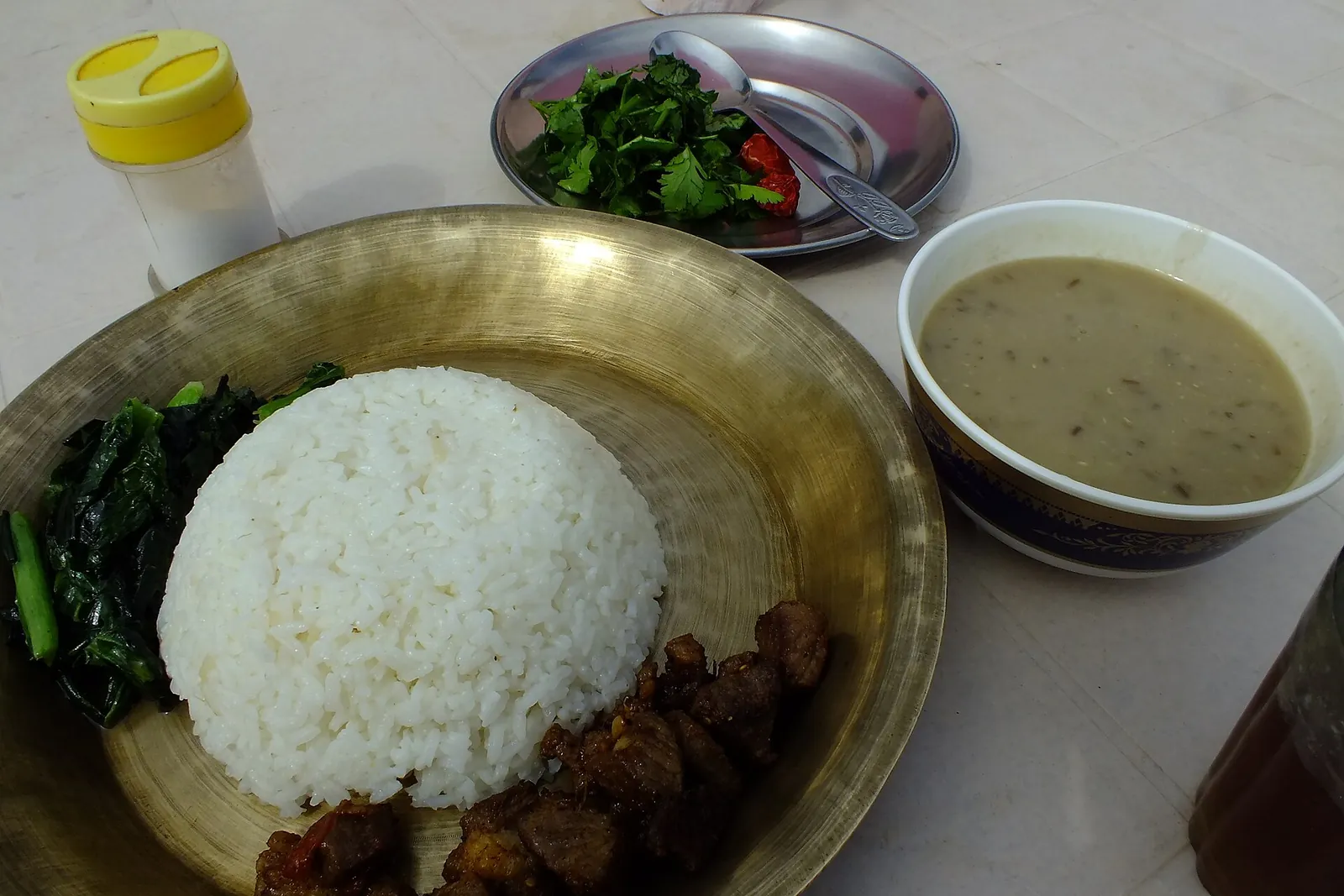
Dal bhat is Nepal's staple meal. The Nepal Tourism Board describes it as dal, rice, vegetables and achar, a pickle or dip, with yoghurt or buttermilk, often followed by a chicken or mutton curry. The lentils change with the season, black, red, yellow or green, and each part of the plate carries its own spice or herb. The board says many Nepalis eat rice twice a day, at lunch and at dinner, so dal bhat is a lunch or a dinner rather than a snack.
The plate comes with a custom: free second helpings of rice or dhido, dal, potatoes, greens, pickle and gundruk, though not of the meat curry (Nepali Times, 2011). Some Kathmandu restaurants charge for the extra helpings.
Beyond the plate, the board sorts Nepali food into five families: Madhesi cooking (Maithili, Bhojpuri and Awadhi among them), Janajati cooking of the middle hills, the urban Newar cuisine of the Kathmandu Valley, Thakali cuisine from the Himalayan lowland, and Himalayan cooking close to that of Tibet. The sections below take the kitchens in the order a usual route meets them. Our first-trip guide sets out that route and its nights.
- Dal bhat: rice, lentils, vegetables and pickle, eaten by many Nepalis at lunch and dinner, the tourism board says.
- Newar (Kathmandu Valley): beaten rice, chhoila, lentil patties, rice-flour crepes and dumplings, and the curd of Bhaktapur.
- Thakali (Mustang and the Annapurna trail): the Thakali set, buckwheat dhido, timmur pepper and gundruk.
- Tibetan-rooted (most towns, Boudha above all): momo and thukpa.
- Terai (Chitwan): taas, the Tharu set, ghongi and dhikri.
The Newar kitchen of the Kathmandu Valley
The Newars are the native people of the Kathmandu Valley, and the tourism board says their rituals, food and festivals are unique to them. Their food leans on beaten rice, chiura, which a Newar priest told the Kathmandu Post in 2019 is very sacred to Newars.
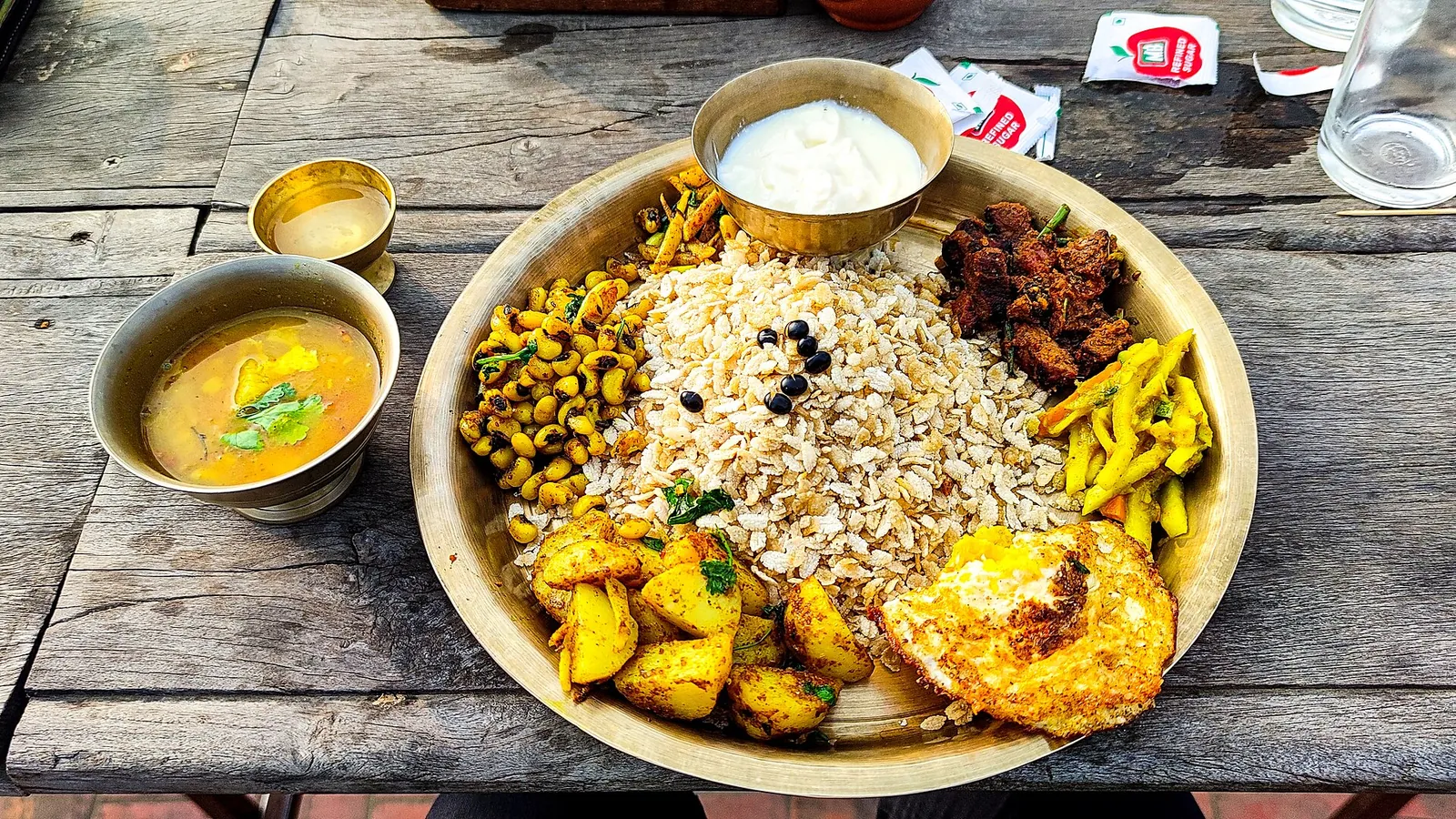
The dish that holds it together is samay baji. At its simplest it is beaten rice with slices of ginger, roasted black soybeans, spiced sautéed vegetables such as spinach, and a lentil patty, wo; according to the scholars the Kathmandu Post quoted in 2019, it began as a vegetarian Buddhist offering and buffalo meat is the Newar Hindu addition. On restaurant menus that meat appears as chhoila, spiced buffalo, and the grandest samay baji spreads of the year are laid out during Indra Jatra.
Three more dishes fill the menu at any Newar eatery. Wo, called bara in the hills, is a patty of spiced lentils. Chatamari, nicknamed Newari pizza, is a rice-flour crepe topped with minced meat, egg, onion and spice. Yomari, a steamed rice-flour dumpling filled with chaku, a jaggery sweet, was once a food for the Yomari Punhi festival and is now on many Newar menus in and out of Kathmandu. Kirtipur, a Newar hill town 8 km southwest of the capital, has Newari eateries of its own, according to the tourism board.
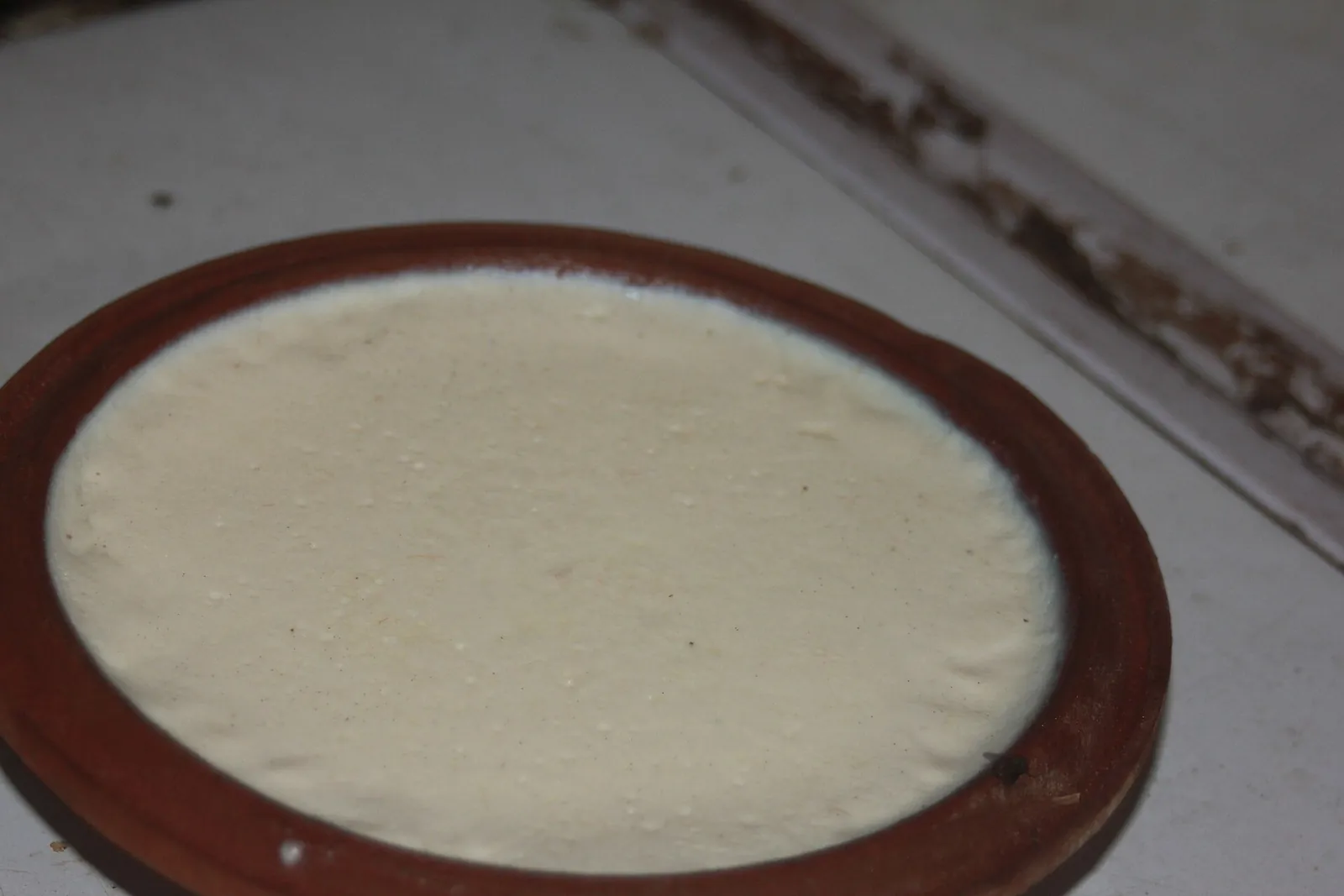
Bhaktapur adds the valley's sweetest stop. Juju dhau, the King of Yoghurt, is buffalo-milk curd set in a clay pot and still sold in small pots there; our Bhaktapur guide fits it into the half-day walk between the squares.
Thakali food: the set meal of the Annapurna trail
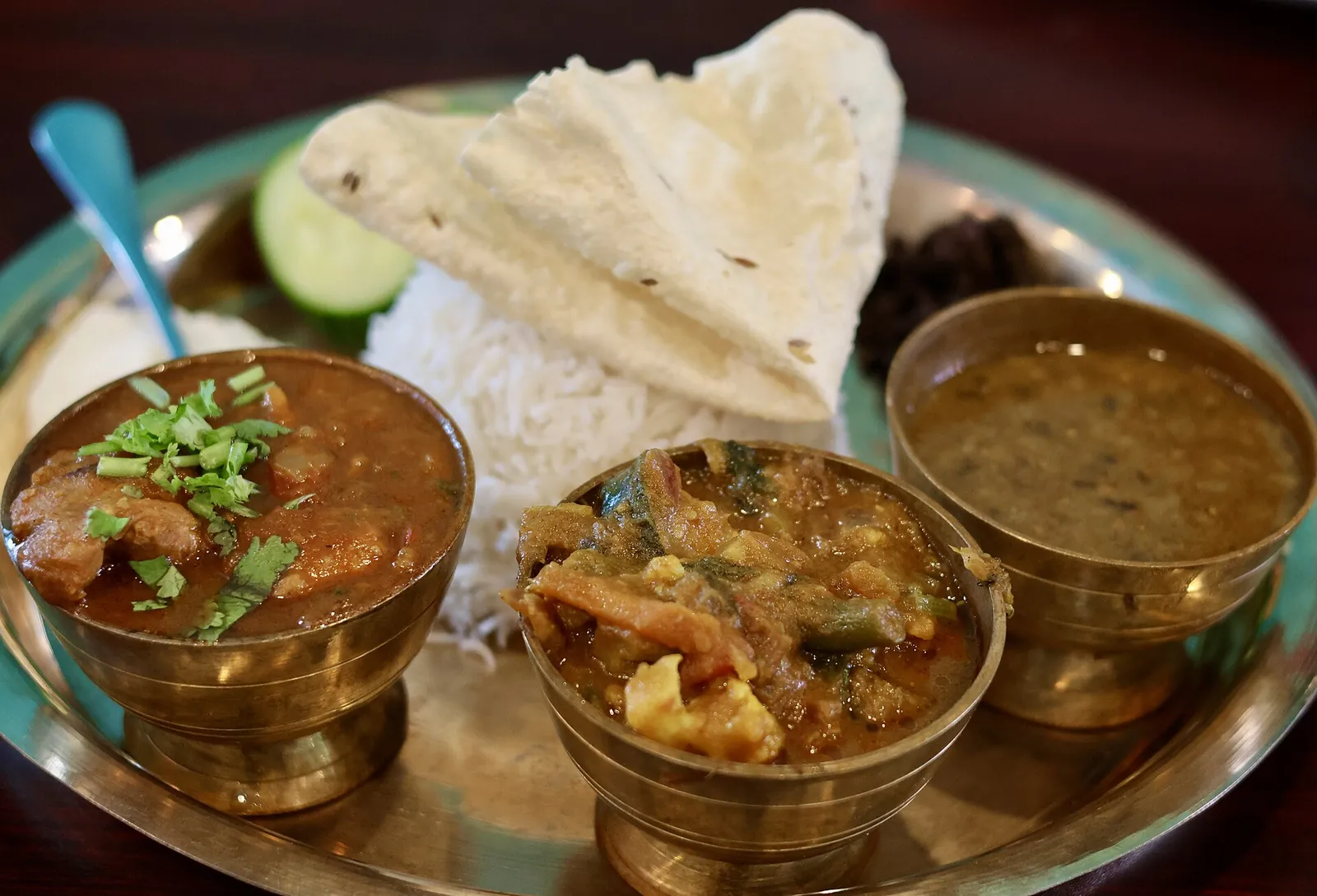
The Thakalis come from the Thak Khola region of Mustang, and the Nepal Tourism Board says Thakalis run tea houses along the trekking routes of the Annapurna region. So the Thakali set, or Thakali khana, their version of dal bhat, is a fixture of the lodges on those trails, and the board counts Thakali cooking, with Newar, among the cuisines served in a large number of eateries across the Kathmandu Valley.
A Thakali set is dal bhat with more around it, such as gundruk, pickled radish and chilli beside a mutton curry, and dhido basted with ghee can take the place of rice. Dhido is a stiff porridge of buckwheat, millet, barley or wheat flour stirred into hot water, which the board calls one of the most popular meals of the Himalayan communities. Two flavours mark the cooking. Timmur is the wild pepper also known as Sichuan pepper, and timmure alu, potatoes cooked with it, is served in most Thakali restaurants. Jimbu is a dried Himalayan herb used as a seasoning or garnish.
Jimbu Thakali takes its name from that herb; its founder's family comes from Thak Khola. Its menu runs from the Thakali dal-bhat set to sides such as gundruk and sukuti, dried meat; the Patan branch is at 777 Jhamsikhel Road, and the restaurant gives its price range as NPR 500–1,000. Pair it with a morning in Patan and its Durbar Square.
Gundruk ko jhol, a sour soup of fermented and dried greens, is the other dish to look for on a Thakali table; the board calls gundruk one of Nepal's national dishes.
Momo, thukpa and the Tibetan side of the table
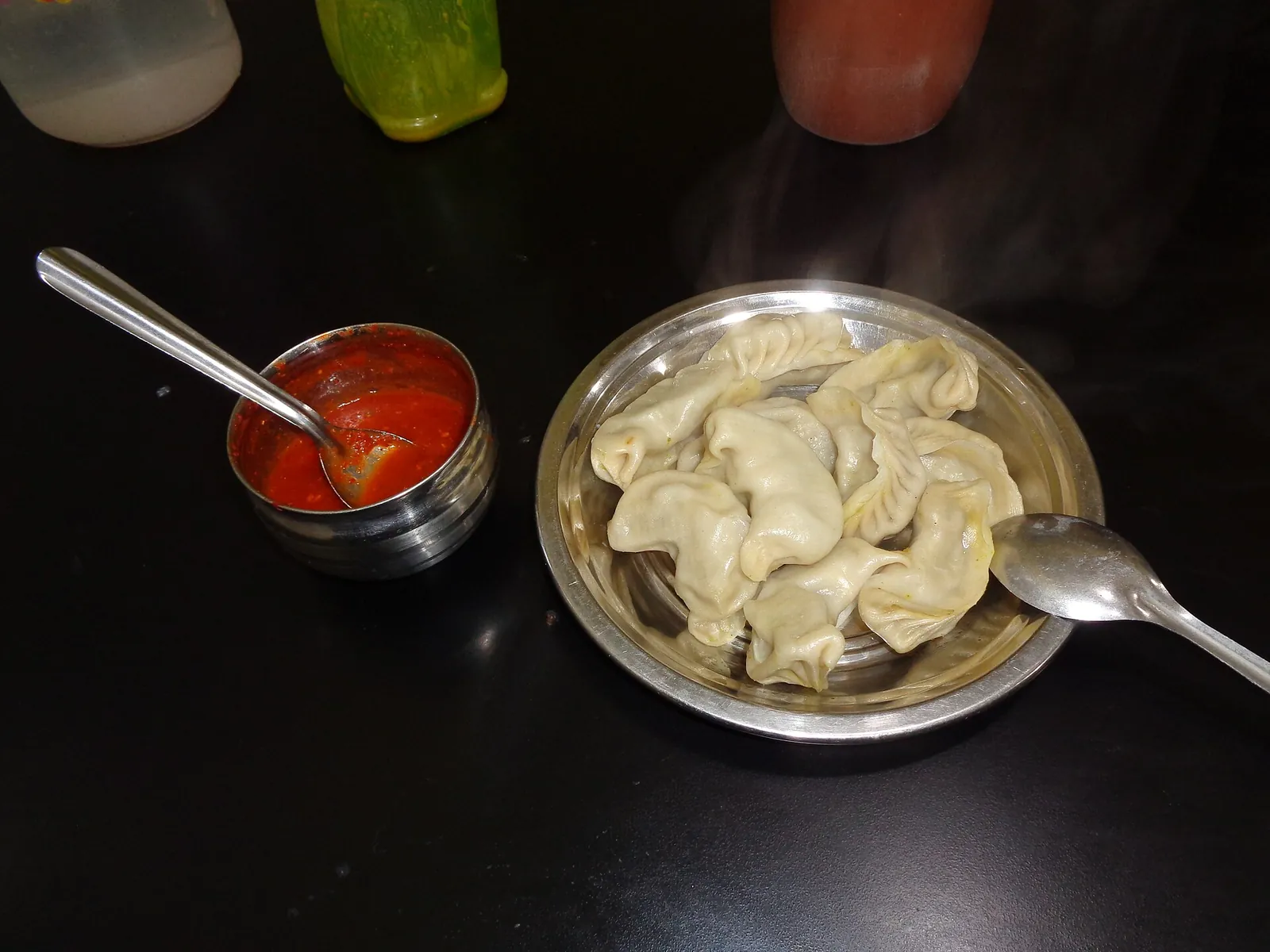
According to the tourism board, momo came from Tibet with Newar traders, and it is now probably Nepal's most popular fast food. The dumplings are filled with minced chicken, mutton, buff (buffalo), paneer, cheese or vegetables, and are usually steamed; they also come fried, dropped into a spiced soup as jhol momo, or tossed as a chaat. At Rosemary Kitchen in Chhetrapati, beside Thamel, vegetable momo is NPR 349 on the menu.
Thukpa is the noodle soup of the same tradition, called gyathuk in Tibetan, with chicken, buffalo, egg or vegetables, usually in a broth of boiled meat bones. It is a winter favourite in Kathmandu (Onlinekhabar, 2022), and a warming lunch on a cold day on the trail.
Boudha, around the great stupa, is where the Tibetan side of the table is at home: the district has a sizeable Tibetan population, and momo and thukpa were for decades the mainstays of almost every restaurant there (Kathmandu Post, 2019). Eat in the lanes around the stupa on a Kathmandu day.
Eating on a trek: the lodge dining room
On the Poon Hill, Annapurna Base Camp and Everest Base Camp routes you eat dinner and breakfast at the lodge where you sleep, and lunch usually at a tea house on the way. The Nepal Tourism Board describes an abundance of tea houses on the way to Namche Bazaar and a few at Gorak Shep, the last settlement below Everest Base Camp; on the Annapurna routes, it says, Thakalis run tea houses. You order from the menu and pay there, unless your trek package already includes meals.
Dal bhat is the trekker's staple, a filling plate before the next climb. The rest of the lodge menu follows the Thakali and Himalayan kitchens, with dhido, gundruk soup, timmure alu, momo and thukpa. No published price list covers lodge meals; carry enough rupees in small notes from Pokhara or Kathmandu for meals, hot drinks and water.
Our guides to Poon Hill and Everest Base Camp give the lodge villages and what each stage asks of you.
Water, ice and what to eat safely
Do not drink tap water or brush your teeth with it, and avoid ice. TravelHealthPro, the UK's travel-health service, gives that advice for countries with poor sanitation, and adds that drinks from sealed factory bottles and cans, and tea or coffee made with boiled water and served steaming hot, are usually safe. Water can be made safe by bringing it to a rolling boil; on a trek, a filter followed by a chemical treatment, or a UV purifier on clear water, lets you refill from the lodge tap instead of buying bottles. TravelHealthPro notes that chlorine dioxide deals with parasites better than ordinary chlorine tablets.
For food, its rule of thumb fits Nepal well: recently cooked food served piping hot, fruit you peel yourself and pasteurised dairy are the good choices; buffets left out in the warm, unpasteurised milk, cheese and yoghurt, and street food not cooked in front of you are the ones to skip. Dal bhat served hot and momo straight from the steamer pass that test better than most things on the menu. Juju dhau and lassi are dairy, so they fall under that advice when the milk is unpasteurised.
Breakfast, sweets, drinks and festival food
Breakfast. Hotel and tourist-district menus offer a Nepali breakfast alongside the toast and eggs: at the Dream Garden restaurant of the Kathmandu Guest House in Thamel, it is fruit, puri or paratha, a vegetable curry, lassi and tea or coffee for NPR 1,000.
Sweets. Sel roti is a sweet, crunchy ring of rice-flour bread eaten at Tihar, when it is also offered to the goddess Laxmi. Yomari belongs to Yomari Punhi, and juju dhau to Bhaktapur. Festivals bring their own food: the tourism board describes Dashain as two weeks of grand feasts and family visits, and Indra Jatra brings out the mounds of samay baji in Kathmandu's old quarters. Our festivals guide gives the expected dates.
Drinks. Three traditional drinks stand out. Aila, also called raksi, is a homemade liquor of fermented rice or grain that, the board says, many Newar restaurants serve. Tongba, sometimes called hot beer and found mostly in the eastern hills, is fermented millet served in its own cup-like vessel with a straw. Chhyang, a milky-white rice wine, is probably the most widely drunk of the three, and the tourism board says Sherpas drink it in the mountains.
What a meal costs
Prices below were checked on the restaurants' own menus on 27 October 2026. Vegetable momo is NPR 349 on Rosemary Kitchen's menu and NPR 650 at the Kathmandu Guest House's garden restaurant, whose menu includes all taxes.
| Where you eat | A plate or set | Published examples |
|---|---|---|
| Local set meal | NPR 435 | Kathmandu Kitchen, Thamel Marg: khaja set NPR 435 |
| Tourist-district restaurant | NPR 349–849 | Rosemary Kitchen, Kathmandu: vegetable momo NPR 349, Nepali thali with mutton NPR 849 |
| Thakali set restaurant | NPR 500–1,000 | Jimbu Thakali, 777 Jhamsikhel Road, Patan: its own price range |
| Hotel garden restaurant | NPR 490–1,500 | Kathmandu Guest House, Thamel: aloo timmur NPR 490, chhoila NPR 950, Nepali thali NPR 1,400 vegetarian or NPR 1,500 with chicken curry and fried fish, taxes included |
For a day, not a dish: about NPR 1,600 a person at simple Thamel and Lakeside restaurants, about NPR 3,000 with sit-down meals, and about NPR 8,000 at the best restaurants and hotels, the trip-cost guide's level for its seven-day route. These are the food lines of our Nepal trip-cost guide, which prices the rooms, flights and tickets of a whole week.
One note that changes a bill: in January 2023 Nepal's Supreme Court ruled that restaurants and hotels may no longer add a service charge, and a Kathmandu District Court ruling of August 2022 had already said that VAT and other extras cannot be added on top of the menu price (Kathmandu Post, 27 January 2023). The price on the menu is what you should pay, and a tip is voluntary.
Meal by meal on the first-trip route
This plan follows the ten-day route of our first-trip guide: five nights in the Kathmandu Valley, two in Pokhara and two beside Chitwan National Park.
- Kathmandu, Thamel days: a khaja set at Kathmandu Kitchen on Thamel Marg, vegetable momo or the Nepali thali at Rosemary Kitchen in Chhetrapati, and an evening of chhoila in the Kathmandu Guest House garden.
- Boudha: momo and thukpa at lunch in the lanes around the stupa, before or after Pashupatinath.
- Patan: the morning in Durbar Square, then a Thakali set at Jimbu Thakali on Jhamsikhel Road.
- Bhaktapur and Nagarkot: wo or chatamari at a Newar eatery between the squares, and juju dhau before the drive up to the ridge; the Bhaktapur guide has the walk.
- Pokhara: dal bhat or a Thakali set on the Lakeside strip; if you add a trek, it is the last restaurant meal before the trail and the first one after it.
- Chitwan: taas, spicy fried goat with beaten rice, which the tourism board calls a must-try there, or a Tharu-style set in the evening with ghongi, water snail in gravy, or dhikri, steamed rice dough with chutney; our Chitwan guide covers Sauraha and the Tharu villages.
What to eat and where to look
Dal bhat (Nepali thali)
Rice, the day's dal, seasonal vegetables, pickle and yoghurt, often with a chicken or mutton curry.
- Where to look
- Rosemary Kitchen, Chhetrapati, Kathmandu, open 07:00–22:00: its Nepali thali with mutton is NPR 849.
- Fit it into your day
- Lunch on a Kathmandu sightseeing day, the way Nepalis eat it.
Momo
Steamed dumplings of buffalo, chicken, paneer or vegetables: the Tibetan-rooted snack that is probably Nepal's most popular fast food.
- Where to look
- Rosemary Kitchen, Chhetrapati, Kathmandu, the same restaurant as the thali: vegetable momo NPR 349.
- Fit it into your day
- A light lunch between Durbar Square and Thamel.
The wrappers are wheat dough.
Thakali khana set
The Thakali version of dal bhat, with curries, gundruk and pickles, and dhido, a stiff buckwheat or millet porridge, sometimes in place of rice.
- Where to look
- Jimbu Thakali, 777 Jhamsikhel Road, Patan, open 10:00–22:00 (last orders 21:30 on weekdays), with a price range of NPR 500–1,000.
- Fit it into your day
- Lunch after a morning in Patan Durbar Square.
Chhoila
Spiced meat, traditionally buffalo, which is the meat on a Newar samay baji plate.
- Where to look
- The Dream Garden restaurant of the Kathmandu Guest House, Saatghumti, Thamel: chicken or buff chhoila NPR 950, taxes included; last orders 21:30, closing 22:00.
- Fit it into your day
- An evening plate in the garden, with a drink.
It is served spicy.
Gundruk
Fermented and dried leafy greens, sour in taste, served as a soup or a side; the tourism board calls gundruk one of Nepal's national dishes.
- Where to look
- Jimbu Thakali, 777 Jhamsikhel Road, Patan, where it is one of the sides on the Thakali menu.
- Fit it into your day
- A side with the Thakali set at the same lunch.
Vegetarian, halal and allergies
Vegetarian. Many menus offer vegetable dal bhat and momo, and Thakali kitchens a vegetable set; paneer and cheese are among the momo fillings the tourism board lists. A vegetable dal or soup can still be cooked with meat stock; this is the one question worth asking.
Meat words. Buff on a menu means buffalo meat, used in Newar dishes such as chhoila and in momo; chicken and mutton are the other meats on most menus.
Halal and kosher. The Nepal Tourism Board lists halal and kosher food among the cuisines available in Kathmandu, and halal among those in Pokhara.
Allergies. Momo wrappers and thukpa noodles are wheat, and chatamari is topped with egg. Tama aloo, a sour stew of potatoes, fermented bamboo shoot and black-eyed peas, is one dish the board describes as gluten free.
Practical questions
Is dal bhat really refilled for free?
Usually, yes: free second helpings of rice, dal and vegetables, though not of the meat curry, are the custom, and they make dal bhat the trekker's meal. Some restaurants in Kathmandu charge for them.
Can I drink the tap water in Nepal?
No. Drink sealed bottled water, or water you have boiled, filtered and treated; avoid ice and do not brush your teeth with tap water. Tea and coffee made with boiled water and served steaming hot are usually safe.
What do trekking lodges serve?
Dal bhat above all, plus the Thakali and Himalayan dishes of the region: dhido, gundruk soup, timmure alu, momo and thukpa. You eat dinner and breakfast at the lodge where you sleep and lunch usually at a tea house on the way, paying as you go unless your package includes meals.
How much does food cost per day in Nepal?
About NPR 1,600 a person at simple restaurants in Thamel and Lakeside, NPR 3,000 with sit-down meals and NPR 8,000 at the best restaurants and hotels, as our trip-cost guide sets them for its seven-day route. A khaja set is NPR 435 at Kathmandu Kitchen in Thamel, checked on 27 October 2026.
Is it easy to eat vegetarian in Nepal?
Many menus offer vegetable dal bhat and momo, and Thakali kitchens a vegetable set; paneer and cheese are among the momo fillings. Buff on a menu means buffalo meat.
Where can I try juju dhau?
In Bhaktapur, where it comes from: it is still sold in small clay pots in the old town, and our Bhaktapur guide places it on the walk between the squares.
Keep planning your trip
First trip to Nepal
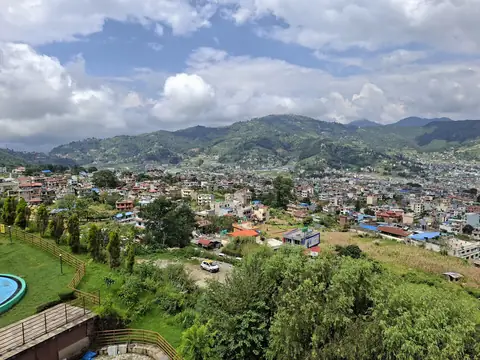
Choose the length, route and season of a first Nepal trip: what a week, ten days or two weeks hold, what to book first, and the altitude, water, air and road advice.
Read the guide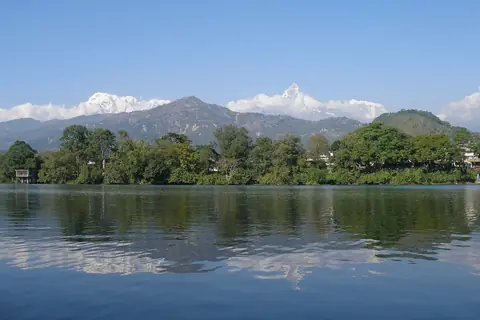
Nepal trip cost 2027
A week in Kathmandu and Pokhara in November 2027, all in: about NPR 86,700 per person on a budget, 127,300 mid-range or 214,200 in comfort.
Read the guide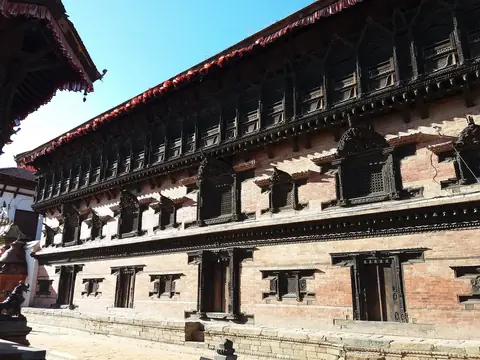
Bhaktapur
Half a day or a night in Bhaktapur: the Durbar Square ticket, Nyatapola, Pottery Square, Changu Narayan, juju dhau and the way from Kathmandu.
Read the guide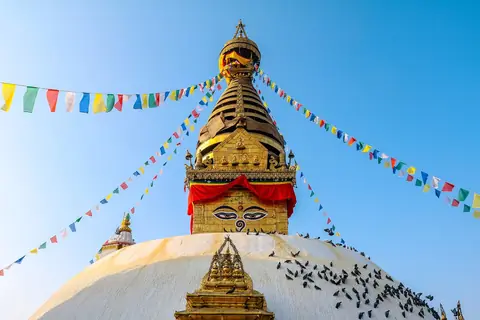
Kathmandu
Kathmandu's four sacred sites in three days: what each costs, where to stay, getting in from the airport and the cautions that change a plan.
Read the guide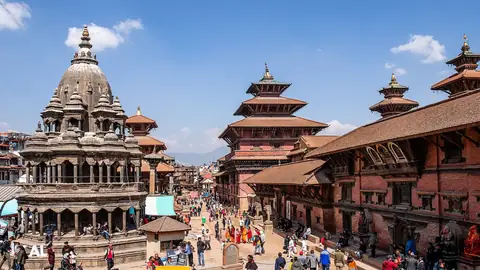
Patan
Half a day in Patan (Lalitpur): Durbar Square and Patan Museum on one ticket, the Golden Temple, Mahabouddha, the metalwork and the ride from Kathmandu.
Read the guide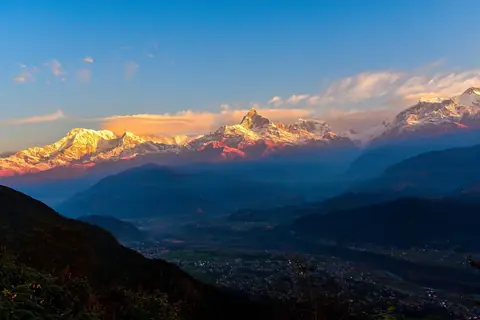
Pokhara
How many nights Pokhara needs, where to sleep, Phewa Lake, Sarangkot by daylight, the International Mountain Museum, flight or bus from Kathmandu and the Annapurna treks.
Read the guideSources and checks before you travel
(19)
- Nepal Tourism Board: food and culinary ↗ — opens in a new tab
- Nepal Tourism Board: dining in Kathmandu ↗ — opens in a new tab
- Nepal Tourism Board: Chitwan local cuisine ↗ — opens in a new tab
- Nepal Tourism Board: Pokhara ↗ — opens in a new tab
- Nepal Tourism Board: Everest Base Camp ↗ — opens in a new tab
- Nepal Tourism Board: people ↗ — opens in a new tab
- Nepal Tourism Board: Kirtipur ↗ — opens in a new tab
- Nepal Tourism Board: Dashain ↗ — opens in a new tab
- Nepali Times: review of a Thakali kitchen (30 December 2011) ↗ — opens in a new tab
- The Kathmandu Post: No more service charge anywhere, top court says (27 January 2023) ↗ — opens in a new tab
- Kathmandu Post: samay baji at Indra Jatra (13 September 2019) ↗ — opens in a new tab
- Kathmandu Post: eateries in Boudha (23 August 2019) ↗ — opens in a new tab
- Onlinekhabar: thukpa in Kathmandu (9 November 2022) ↗ — opens in a new tab
- Rosemary Kitchen and Coffee Shop ↗ — opens in a new tab
- Jimbu Thakali ↗ — opens in a new tab
- Kathmandu Guest House: Dream Garden restaurant menu ↗ — opens in a new tab
- Kathmandu Guest House ↗ — opens in a new tab
- Kathmandu Kitchen: menu ↗ — opens in a new tab
- TravelHealthPro (NaTHNaC): food and water hygiene ↗ — opens in a new tab
Reference sources for the version dated 27 October 2026. Confirm opening times, access, transport and conditions for your travel dates.
Photo credits
(6)
Dal bhat in Nagarkot: rice, greens and fried meat on a brass plate, with the dal in a bowl beside it
Photograph: 松岡明芳 — opens in a new tab · CC BY-SA 4.0 — opens in a new tab
Changes: Resized and converted to WebP; displayed with responsive crops. · Original photograph and licence details ↗ — opens in a new tab
Momo in Kathmandu, steamed and served with a dipping sauce
Photograph: Виктор Пинчук — opens in a new tab · CC BY 4.0 — opens in a new tab
Changes: Resized and converted to WebP; displayed with responsive crops. · Original photograph and licence details ↗ — opens in a new tab
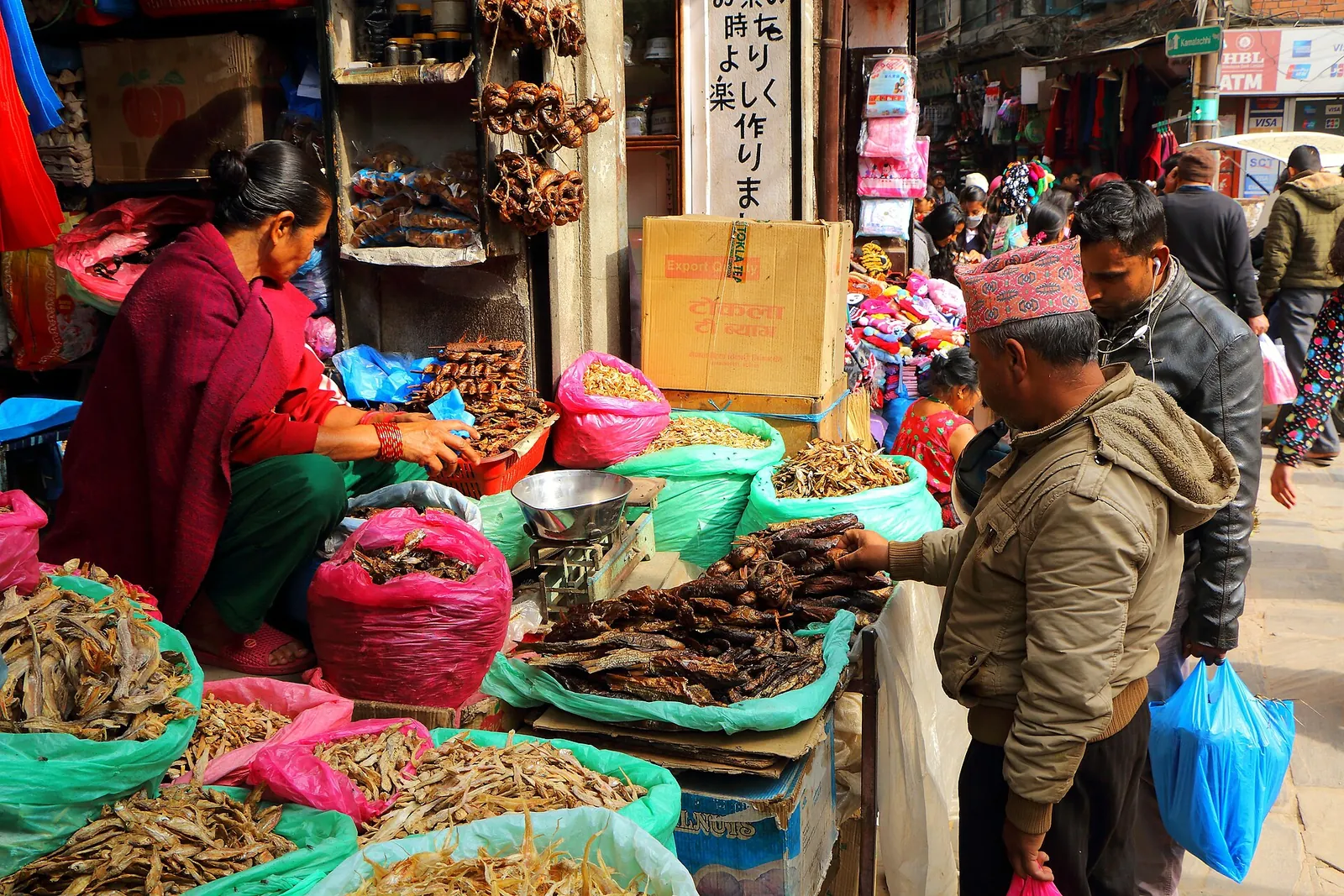
Spices and dried goods at a stall in Asan Tole, Kathmandu's old market crossroads
Photograph: Juan Antonio Segal from Madrid, Spain — opens in a new tab · CC BY 2.0 — opens in a new tab
Changes: Resized and converted to WebP; displayed with responsive crops. · Original photograph and licence details ↗ — opens in a new tab
A Thakali khana set: rice, black lentils, chicken curry, vegetables, pickles and papad
Photograph: Trilok Neupane — opens in a new tab · CC BY-SA 4.0 — opens in a new tab
Changes: Resized and converted to WebP; displayed with responsive crops. · Original photograph and licence details ↗ — opens in a new tab
A Newari plate built on beaten rice, with chatamari, potatoes, beans and curd
Photograph: Sherin — opens in a new tab · CC BY-SA 4.0 — opens in a new tab
Changes: Resized and converted to WebP; displayed with responsive crops. · Original photograph and licence details ↗ — opens in a new tab
Juju dhau, Bhaktapur's sweet buffalo-milk curd, set in a clay bowl
Photograph: Zeetendra — opens in a new tab · CC BY-SA 4.0 — opens in a new tab
Changes: Resized and converted to WebP; displayed with responsive crops. · Original photograph and licence details ↗ — opens in a new tab