Kathmandu Valley · Bagmati
Patan travel guide: Durbar Square, the museum and the metalwork
Patan, also called Lalitpur, is the Kathmandu Valley's city of artisans, about 5 km southeast of Kathmandu. The Nepal Tourism Board describes narrow streets, brick houses and temples and monasteries side by side, and says the sound that runs through the city is the tinkering of craftsmen bent over the statuettes they are shaping. The question for a visitor is how much of that to see in a day that may also hold Kathmandu or Bhaktapur. A half day is enough for the palace square, the museum inside its old royal courtyard and one or two monasteries, and it rarely needs a night.
- Suggested time
- Half a day from Kathmandu; a night in Patan is optional
- Where to stay
- Kathmandu for a day trip, or the streets around Patan Durbar Square for early and late hours on foot
- Season and timing
- The Nepal Tourism Board says Nepal can be visited all year. The monsoon runs from June to September. Nepal's Department of Environment names the Kathmandu Valley among the country's most polluted regions, with air pollution generally highest in winter and before the monsoon and lowest during the rains.
The short answer
Give Patan a morning or an afternoon from a Kathmandu base and sleep in Patan only if you would rather walk the old streets at both ends of the day. Patan Durbar Square including Patan Museum costs NPR 1,000 for foreign visitors other than SAARC, BIMSTEC and Chinese nationals, who pay NPR 500, checked on 18 October 2026. Buy the ticket at the entry point. See the square first, spend the longest time in the museum's metal galleries, then walk to the Golden Temple and on to Mahabouddha. Patan is about 5 km southeast of Kathmandu; take a daytime taxi or Pathao car, or use Sajha's Ratnapark services to Pulchowk or Lagankhel.
Patan Durbar Square: the Malla palace and its temples
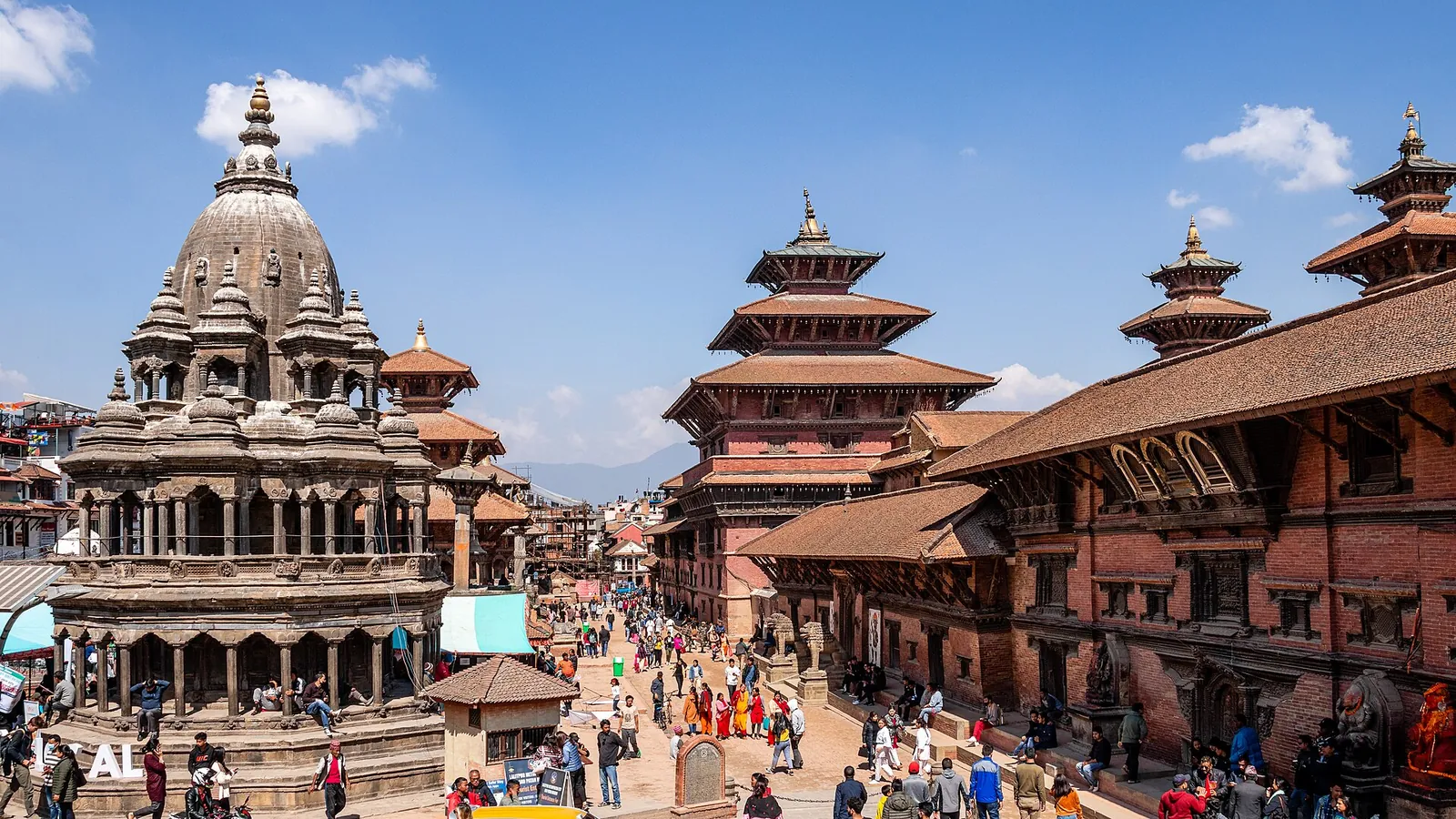
Patan Durbar Square was once the palace of the kings of Patan, and it is one of the seven UNESCO World Heritage monument zones of the Kathmandu Valley that Kathmandu Metropolitan City lists. The Nepal Tourism Board describes it as a mix of palace buildings, courtyards and pagoda temples, Newari architecture at its height under the Malla kings.
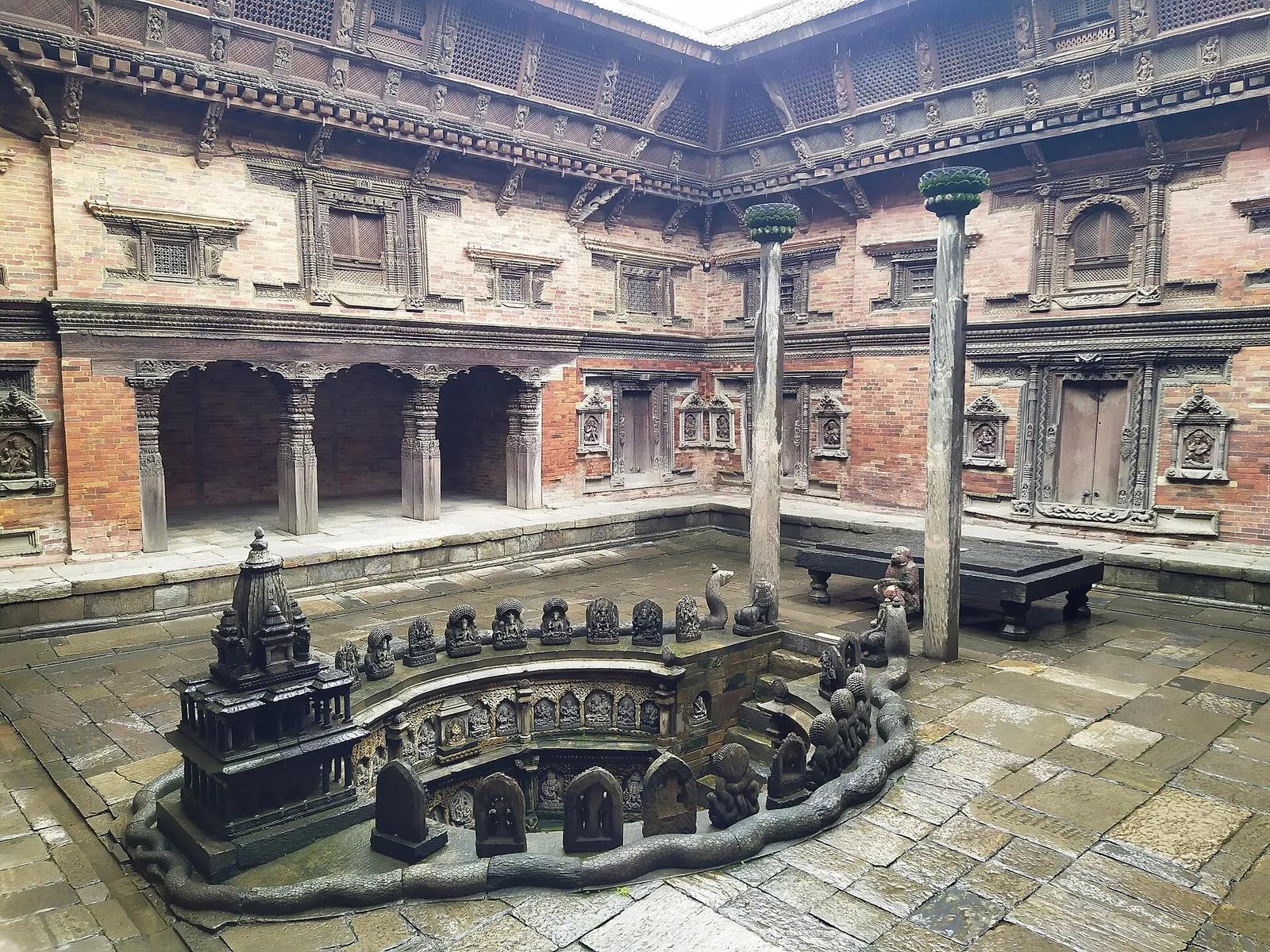
Start with the Krishna Temple, built in 1637 entirely of stone and crowned with 21 spires. The palace complex holds the Manga Hiti, a sunken stone water spout, and Sundari Chowk, whose Tusha Hiti is a step-well commissioned in 1647 by King Siddhinarasimha Malla, with a gilt bronze spout and tantric deities set into the niches of its walls. The museum says Sundari Chowk began as a two-storeyed courtyard in 1628, gained its extra floor and triple-bayed windows in the 1730s, and has a plainer brick east front because the east wing collapsed in 1934. The city also lists the Bhimsen Temple among its heritage temples.
Patan Museum's own fee page gives the ticket categories above, with the SAARC, BIMSTEC and Chinese rate effective from 17 September 2025. For a second royal square on another day, see our Kathmandu guide.
Patan Museum: the royal courtyard and the metal galleries
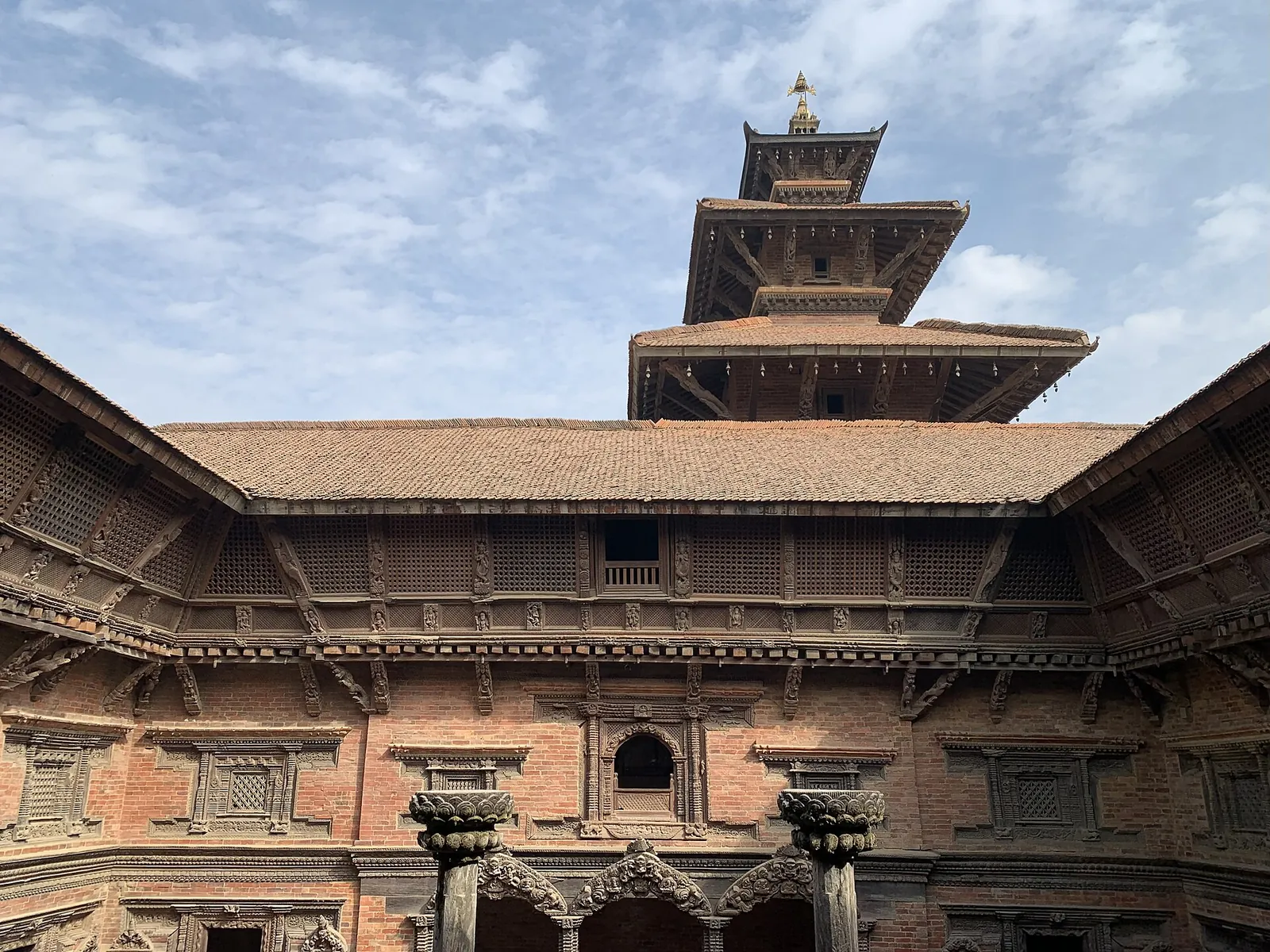
Patan Museum fills Keshav Narayan Chowk, a palace courtyard that dates from 1734 and takes its name from the temple of Keshavnarayan, a form of Vishnu, at its centre. A joint Nepal and Austria project began repairing it in 1982 under a UNESCO campaign, and the museum describes more than a decade of restoration that ended with Nepal's first self-sustaining museum.
The galleries run as a sequence. Gallery A explains how to recognise Hindu and Buddhist deities by how they sit, what they hold and what they wear, which makes everything after it easier to read. Gallery C holds the gilded throne of the former kings of Patan, which the museum says is still venerated for a day each year at the Krishna Temple opposite. Gallery E shows rare 11th and 12th century bronzes from India and a large model of the Boudhanath stupa that you can walk around.
Gallery G is the one to read before you walk the workshop streets. It shows repoussé, the hammering of sheet metal into relief, in stages from a pencil drawing to a finished gilded face of Bhairava, and models that explain lost-wax casting. The museum says these skills have been practised for centuries in the nearby family workshops of Patan, the traditional centre of the metallurgical arts.
The museum's fee page says the ticket also covers Mulchowk, Sundari Chowk, the Bhandarkhal tank and the Architectural Galleries. Mulchowk, built by Srinivasa Malla in 1666, is the heart of the palace and the hub of its rituals; its Golden Doorway to the Taleju shrine is gilt copper repoussé, a door, an ornate torana above it and life-size figures of the river goddesses Ganga and Yamuna. Bhandarkhal, built in 1647 as the palace water tank, has a meditation pavilion, two stone lions and a carved spout.
Opening hours and the weekly closing day need checking with Patan Museum before you fix the timing of your visit.
The Golden Temple, Mahabouddha and Kumbheshwar
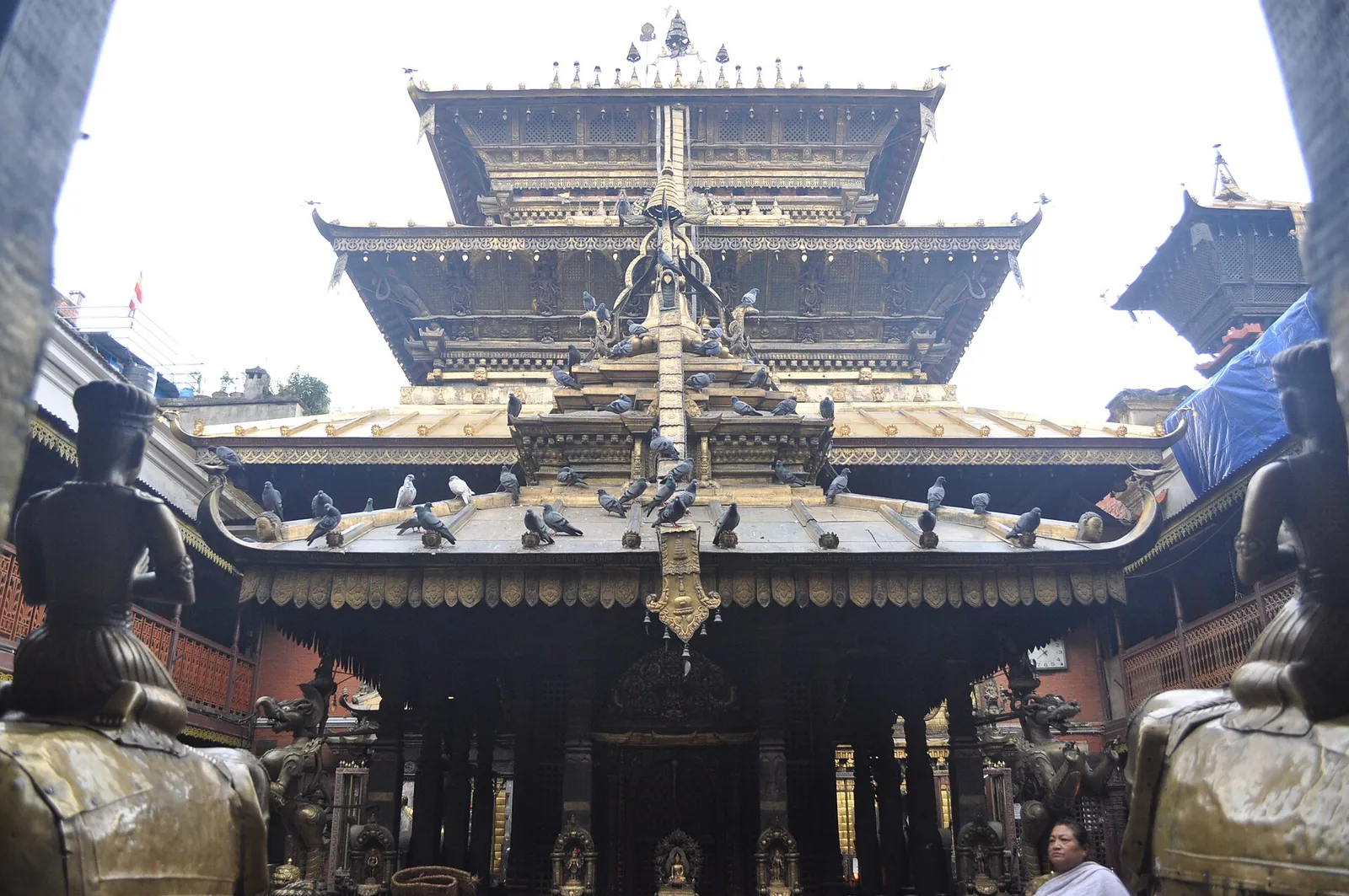
The Golden Temple, Hiranya Varna Mahabihar, is a 12th century three-storeyed shrine around a courtyard called Kwa Bahal, with an image of the Buddha inside. The tourism board says the monastery is known for its fine wood carving and repoussé work, and puts it a five-minute walk west and north from the northern end of Durbar Square.
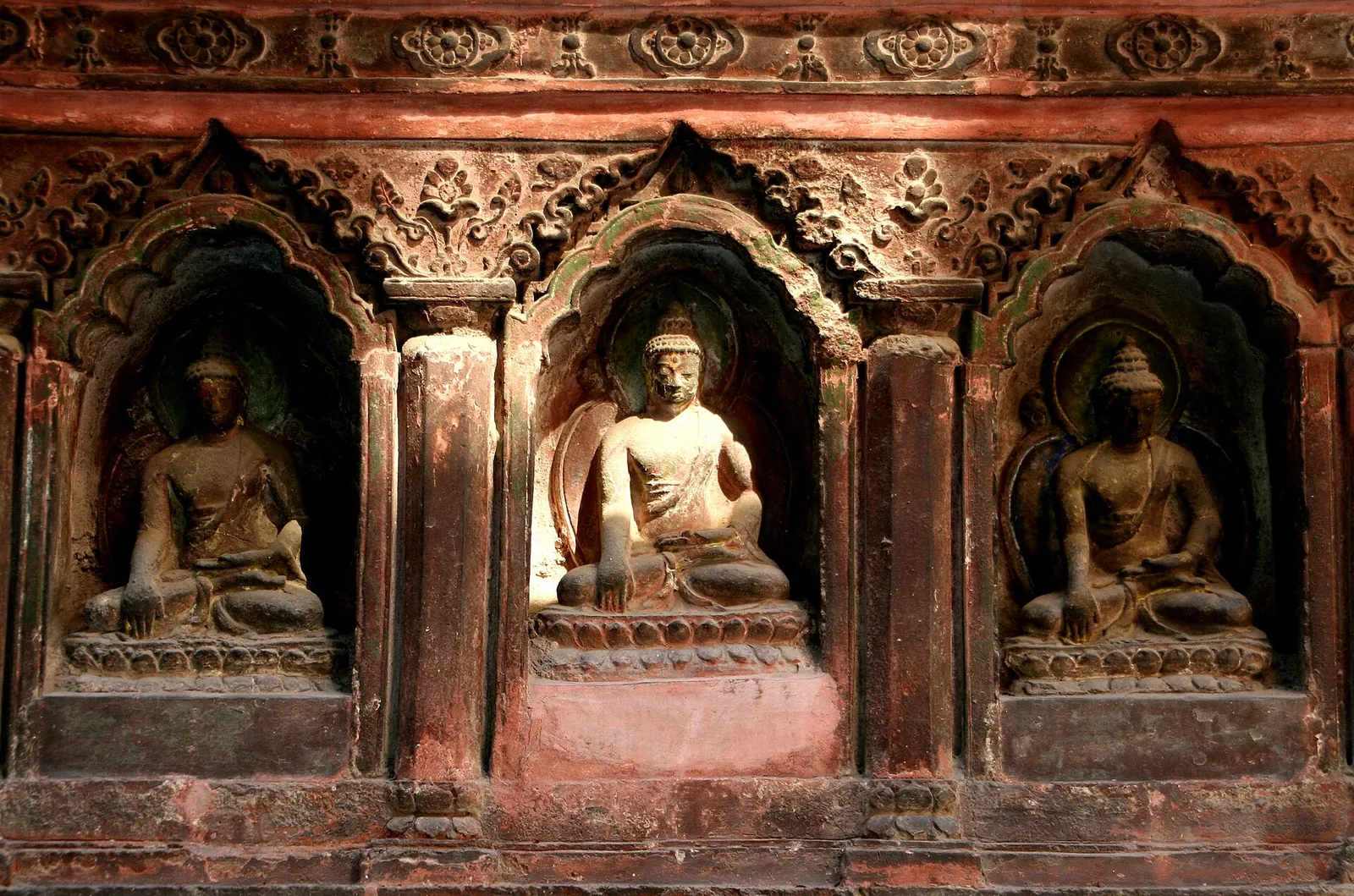
Mahabouddha lies east of the square: a Buddhist monument of terracotta, engraved with thousands of images of the Buddha. A few steps past it, Rudra Varna Mahavihar, also called Uku Bahal, has a stone-paved courtyard enclosed by a two-storeyed building with gilded roofs, where, the board says, kings were crowned in ancient times.
Kumbheshwar is a Shiva temple built in 1392 and, the board says, the only five-storey pagoda in Patan, with a spring in its courtyard said to rise in the glacial lake of Gosainkunda. Devotees gather there for a ritual bath on Janai Poornima. Farther out, the Jagat Narayan Temple at Sankhamul stands on the bank of the Bagmati, a tall red-brick Shikhara temple to Vishnu with a metal Garuda on a stone pillar.
The board lists four stupas at the corners of Patan, said to have been built by Emperor Ashoka, at Pulchowk, Lagankhel, Ibahi and Teta. Fees and opening hours for the Golden Temple, Mahabouddha and Kumbheshwar need checking at the sites.
Lalitpur Metropolitan City also lists the Rato Machhindranath temple among its heritage temples. Ask about celebrations before choosing a festival visit.
With a full day, consider a daytime excursion to Bungamati: Sajha Yatayat's Route 8 runs between Jamal and Bungamati by way of Jawalakhel and Lagankhel, and returns the same way.
Metalwork: from the museum to the craft shops
Repoussé and lost-wax casting are Patan's distinctive metalworking traditions. The tourism board describes the sound of craftsmen shaping statuettes in the city, and Patan Museum says the skills shown in Gallery G have been practised for centuries in nearby family workshops.
In Gallery G, follow the repoussé display from a pencil drawing to the finished gilded face of Bhairava, then look at the models explaining lost-wax casting. Read these first and you will have more to look for in a finished statue or metal relief.
For something to take home, the tourism board names the Patan Industrial Estate at Lagankhel, near Sat Dobato. It is known for wood carving, metal craft, handwoven woollen carpets and thangka paintings, with a shopping arcade where handicrafts are on show. The board also describes a Tibetan camp on the outskirts of Patan, with handwoven carpets, prayer wheels, belt buckles, wooden bowls and jewellery, and a stupa and shrines of its own.
Make time for the local food
What to eat and where to look
Bara (wo)
A Newari pancake or patty of spiced lentils, made for festivals and rituals and sold as a snack.
- Where to look
- Look on the menu at a Newari eatery during your walk around the square.
- Fit it into your day
- A snack between the museum and the Golden Temple.
Ask about the ingredients if you have an allergy or avoid meat.
Chatamari
A rice-flour crepe topped with marinated minced meat, eggs, onions and spices, nicknamed Newari pizza for its look.
- Where to look
- Try a Newari eatery around the square.
- Fit it into your day
- A light lunch after the museum.
Yomari
A steamed rice-flour dumpling filled with chaku, a Newari festive sweet associated with Yomari Punhi.
- Where to look
- Look for it on the menu at restaurants serving Newari food.
- Fit it into your day
- Dessert after lunch.
Momo
Dumplings filled with minced chicken, mutton, buffalo, paneer, cheese or vegetables, usually steamed but also fried or served in soup.
- Where to look
- Look for momo on an eatery's menu during your walk around the square.
- Fit it into your day
- A snack after Mahabouddha.
Dal bhat
Rice with lentil soup, vegetables and achar, served with yogurt or buttermilk and often a chicken or mutton curry.
- Where to look
- Try a Newari or Thakali eatery, the two cuisines the tourism board recommends across the valley.
- Fit it into your day
- A full lunch after the museum.
From Kathmandu, and whether to stay a night
Patan lies about 5 km southeast of Kathmandu. The Nepal Tourism Board says a Kathmandu taxi is recognised by the taxi sign on top and a black licence plate, that private taxis charge more and that no tip is expected, and Pathao says its car service is available in the Kathmandu Valley. The fare and journey time need checking when you arrange the ride. Sajha Yatayat's Godawari and Lamatar buses link Ratnapark with Pulchowk, Jawalakhel and Lagankhel. The transport guide covers taxis, buses and the airport.
A night in Patan suits you if you want the square, the museum courtyards and the old streets on foot at the start and end of the day. Sleep by the square for that; Jawalakhel, on the Sajha bus line, is another Patan base. Otherwise stay in Thamel or elsewhere in Kathmandu and make Patan a day trip, with Bhaktapur on another day. The where-to-stay guide compares the options.
Make road journeys in daylight and check that the road is open before setting off. The UK government advises against night road travel, and Germany warns that floods can damage roads around the Kathmandu Valley and that closures and local night-driving bans can be imposed at short notice. Other governments may draw a wider line, so check your own government's advice before travelling.
Practical questions
How long do I need in Patan?
Give the square, the museum, the Golden Temple and Mahabouddha half a day. Add the Patan Industrial Estate if you want to shop for metalwork or carpets. A night is optional.
Where do I buy the Patan ticket?
Buy it at the entry point; the answer above gives the nationality categories, and the museum section explains the courtyards and galleries it covers.
Is Patan worth a visit if I have seen Kathmandu Durbar Square?
Yes, for different reasons. Patan has a museum that explains the deities, the buildings and the metalwork you see outside, and a working craft tradition in the streets around the square.
How do I get from Kathmandu to Patan?
Patan is about 5 km southeast of Kathmandu. Take a taxi, recognised by its roof sign and black licence plate, a Pathao car, or a Sajha bus from Ratnapark to Pulchowk or Lagankhel.
Where can I buy handicrafts in Patan?
The Nepal Tourism Board names the Patan Industrial Estate at Lagankhel, with an arcade of wood, metal, carpet and thangka work. Read the metalworking displays in Patan Museum before shopping.
Can I add Bungamati to a Patan day?
Keep it for a full day rather than the half-day museum plan. Sajha Yatayat's Route 8 links Jamal and Bungamati through Jawalakhel and Lagankhel; make the excursion in daylight.
Sources and checks before you travel
Reference sources for the version dated 18 October 2026. Confirm opening times, access, transport and conditions for your travel dates.
- Nepal Tourism Board: Patan ↗ — opens in a new tab
- Nepal Tourism Board: heritage site entry fees ↗ — opens in a new tab
- Patan Museum: entrance fees ↗ — opens in a new tab
- Patan Museum: introduction ↗ — opens in a new tab
- Patan Museum: Keshav Narayan Chowk ↗ — opens in a new tab
- Patan Museum: Gallery A ↗ — opens in a new tab
- Patan Museum: Gallery C ↗ — opens in a new tab
- Patan Museum: Gallery E ↗ — opens in a new tab
- Patan Museum: Gallery G ↗ — opens in a new tab
- Patan Museum: Mulchowk ↗ — opens in a new tab
- Patan Museum: Golden Doorways ↗ — opens in a new tab
- Patan Museum: Sundari Chowk ↗ — opens in a new tab
- Patan Museum: Tushahiti step-well ↗ — opens in a new tab
- Patan Museum: Bhandarkhal tank ↗ — opens in a new tab
- Kathmandu Metropolitan City: heritage sites ↗ — opens in a new tab
- Nepal Tourism Board: local transportation ↗ — opens in a new tab
- Pathao Car ↗ — opens in a new tab
- Sajha Yatayat: short routes ↗ — opens in a new tab
- Department of Environment: Status of Air Quality in Nepal, annual report 2025 (Nepali) ↗ — opens in a new tab
- Nepal Tourism Board: climate ↗ — opens in a new tab
- Nepal Tourism Board: Kathmandu ↗ — opens in a new tab
- Lalitpur Metropolitan City: historic and world heritage sites (Nepali) ↗ — opens in a new tab
- Nepal Tourism Board: food and culinary ↗ — opens in a new tab
- UK government: Nepal safety and security ↗ — opens in a new tab
- German Federal Foreign Office: Nepal travel and security advice ↗ — opens in a new tab
Photo credits
Patan Durbar Square: the stone Krishna Temple on the left and pagoda temples facing the old palace.
Photograph: Bijay Chaurasia — opens in a new tab · CC BY-SA 4.0 — opens in a new tab
Changes: Resized and converted to WebP; displayed with responsive crops. · Original photograph and licence details ↗ — opens in a new tab
Keshav Narayan Chowk, the palace courtyard that houses Patan Museum, with the tiered roof of Bidya Mandir.
Photograph: Chainwit. — opens in a new tab · CC BY-SA 4.0 — opens in a new tab
Changes: Resized and converted to WebP; displayed with responsive crops. · Original photograph and licence details ↗ — opens in a new tab
The Golden Temple (Hiranya Varna Mahavihar), a gilded three-storeyed shrine in a Patan courtyard.
Photograph: Megh shakya — opens in a new tab · CC BY-SA 4.0 — opens in a new tab
Changes: Resized and converted to WebP; displayed with responsive crops. · Original photograph and licence details ↗ — opens in a new tab
Tusha Hiti, the 17th-century step-well in Sundari Chowk, with a miniature stone shrine at its head.
Photograph: Radosław Botev — opens in a new tab · CC BY 3.0 pl — opens in a new tab
Changes: Resized and converted to WebP; displayed with responsive crops. · Original photograph and licence details ↗ — opens in a new tab
Buddha figures in niches on the terracotta Mahabouddha temple, east of Patan Durbar Square.
Photograph: Jon Gudorf Photography — opens in a new tab · CC BY-SA 2.0 — opens in a new tab
Changes: Resized and converted to WebP; displayed with responsive crops. · Original photograph and licence details ↗ — opens in a new tab