Plan your trip
Cash or card in Nepal? Rupees, ATMs, QR codes and trek money
Money in Nepal splits along a clear line. In Kathmandu, a card settles the hotel, the trekking agency and the larger shops and restaurants, and ATMs are easy to find; beyond the city, on the trail and in the mountain villages, the rupee notes in your pocket are often the only way to pay. This guide sets out what a foreign card covers and where you need cash, what an ATM charges, where to change money and how to change it back, which visitors can pay by QR code, how permits and heritage tickets are paid, how much cash a trek needs, and what you may carry across the border.
In this guide
Find the location ↗ — opens in a new tabThe short answer
Pay hotels, agencies, airlines and larger shops by Visa or Mastercard, and most other things in Nepalese rupees (NPR), at about NPR 150 to the US dollar, 168 to the euro and 201 to the pound (Nepal Rastra Bank, 8 November 2026). Draw rupees before you leave Kathmandu: Everest Bank and Laxmi Sunrise Bank each list an ATM access fee of NPR 750 for a foreign card, so withdraw in a few larger sums, charged in rupees. On a trek, rupees pay for drinks, laundry, phone and tips, plus spare days for weather delays. Buy the Annapurna permit (NPR 3,000) before you walk: check-posts charge double. Carry at most NPR 5,000 in rupees across the border, and declare foreign cash above USD 5,000.
- Key point
- Set up before you fly: a Visa or Mastercard, a back-up card, and enough rupees drawn in Kathmandu before any trek
- Where it applies
- Cards in Kathmandu's hotels, agencies and larger shops; rupees in cash almost everywhere else
- Timing
- All year; banks close on most national holidays, the longest being Dashain in late September or October
The rupee: notes, coins and what it is worth
Nepal's currency is the Nepalese rupee (NPR), divided into 100 paisa. The Nepal Tourism Board lists notes of Rs 1000, 500, 100, 50, 20, 10, 5, 2 and 1 and coins of Rs 5, 2 and 1.
For a sense of scale, Nepal Rastra Bank, the central bank, bought US dollars at NPR 149.96, euros at NPR 167.54 and pounds at NPR 200.74 on 8 November 2026, so a dollar is worth about NPR 150, a euro about 168 and a pound about 201. Rates move every day, and the English-language dailies The Rising Nepal, The Kathmandu Post and The Himalayan Times publish them. Our Nepal trip-cost guide turns rupee prices into a full budget.
Day-to-day prices are low. At one Thamel restaurant, The Kathmandu Kitchen, a khaja set is listed at NPR 435 (NPR 400 on offer on 8 November 2026); foreign visitors pay NPR 1,000 for Kathmandu Durbar Square; and Ncell's seven-day tourist SIM costs NPR 595. Keep a fold of Rs 100 and smaller notes apart from the larger ones, ready for taxis, stalls and temple gates.
Prices and times checked 8 November 2026
Card or cash: where a foreign card works
Credit cards such as American Express, Mastercard and Visa are accepted at major hotels, shops and restaurants, and hotels, travel agencies and airlines take payment in foreign exchange, so the big items, the room, the trek package and the domestic flight, can go on your card. Domestic airlines can charge foreigners in US dollars: Buddha Air, for one, charges its foreigner (USD) fare to everyone except Nepali and Indian citizens.
Away from the major hotels, shops and restaurants, plan to pay in rupees. Carry some euros or US dollars in cash as well as your cards, especially for travel to less populated regions: the further you go from Kathmandu, the more you will rely on cash.
Be vigilant when paying by card outside large hotels and travel agencies, because of the risk of fraud leading to unauthorised withdrawals. In the city, prefer cashless payment and carry only the cash you need for the day; keep the rest, with a second card, in a hotel safe if possible.
ATMs, bank fees and bank hours
ATMs are widely used in Kathmandu, and in the Kathmandu Valley most machines accept Visa and Mastercard. Outside the main tourist sites ATMs are not reliable, so draw what you need for a trek or a stay in the countryside before you leave Kathmandu.
Nepali banks publish their own charges for foreign cards. Everest Bank and Laxmi Sunrise Bank, for example, both list an access fee of NPR 750 for a foreign Visa or Mastercard at their ATMs, on top of whatever your own bank charges, so a few larger withdrawals cost less than many small ones.
If the ATM or a card terminal offers to bill you in your home currency, decline and choose rupees. Visa says the home-currency price includes an exchange rate and additional fees; the ATM or shop should let you choose and must not choose for you, and declining does not stop the payment or withdrawal.
Outside the Kathmandu Valley, banks open from 10 a.m. to 3 p.m. Sunday to Thursday and until 12 p.m. on Fridays, though many private banks keep longer hours at some branches. Banks close on most national holidays; the longest is Dashain, in late September or October, so draw cash before it starts.
Prices and times checked 8 November 2026
Changing money, and changing it back
Major banks, hotels and the exchange counters at Tribhuvan International Airport change foreign currency, and money can be changed without difficulty in all larger towns. Bring clean notes: foreign coins are not exchanged in Nepal, and torn, soiled, holed, written-on, burnt or wet notes are exchanged only under the issuing central bank's clean-note policy, and Nepal Rastra Bank is not obliged to exchange them in Nepal.
Indian rupees are a special case: only Indian rupee notes of INR 100 or smaller may be brought in, taken out and exchanged, and larger notes are usually refused. Our Nepal entry guide explains the separate rule for Nepali and Indian citizens.
Change only what you need for a few days at a time, and keep every encashment receipt, because the tourism board warns that the bank may change back only 10 percent of the total amount. Up to NPR 5,000 may leave Nepal with you; change the rest at the airport bank or exchange counter before you fly, with your receipts and your customs declaration, which the counter may ask for.
QR codes: who can pay by scanning
Nepal's shop QR codes run on networks such as NEPALPAY QR, which Nepal Clearing House operates to the NepalQR standard published by Nepal Rastra Bank, and Fonepay.
Some visitors can pay them from home. Since 8 November 2024, users of Alipay+ partner apps from ten countries and regions, the Chinese mainland, Hong Kong, Macao, Singapore, Malaysia, the Philippines, Mongolia, Thailand, South Korea and Italy, can scan NEPALPAY QR codes with their own payment app. Nepal Clearing House names Alipay, AlipayHK, MPay, Touch 'n Go eWallet, MyPB, TrueMoney, GCash, OCBC, Changi Pay, Toss Pay, Naver Pay, Hipay, BigPay, Tinaba and Bluecode (Germany and Austria) among the wallets, and puts the network at over 1.2 million merchants. The shop must have international payments switched on, so the code works at many counters, not all.
Indian visitors can pay with UPI apps such as PhonePe, Google Pay, Paytm and BHIM at merchants whose QR code comes from Fonepay; the payment is made in Indian rupees and converted to Nepali rupees for the shop. It works only with a Fonepay merchant QR code, not with a personal bank QR code of an individual.
If your home app is not on these lists, a QR code is not a way to pay: use your card where it is taken and rupees where it is not. Cryptocurrencies are not recognised in Nepal, and using a crypto wallet there is strictly forbidden.
Permits, park fees and heritage tickets
The Annapurna Conservation Area permit costs NPR 3,000 for foreigners and NPR 1,000 for SAARC nationals, tax included; children under 10 need none. Pay online by Visa or Mastercard, with an additional 2.9% payment gateway charge, and the permit arrives by email, or pay at the permit counter with no additional charge. Buy it before you walk: a permit issued at a check-post on the trail costs double. Our trekking permits guide explains which permits each route needs.
Sagarmatha National Park, on the way to Everest, charges foreigners NPR 3,000 per person per entry and SAARC nationals NPR 1,500, with children under 10 free; you pay at the Tourist Service Center in Bhrikutimandap, Kathmandu, or at the entry point. The TIMS card (NPR 2,000, or NPR 1,000 for SAARC nationals) is paid online, and only trekking agencies buy it, so your agency arranges it. On the Everest trail, the Khumbu Pasang Lhamu rural municipality also issues its own Trek Card in Lukla; our trekking permits guide gives its fee.
The Kathmandu Valley's heritage sites are paid at the gate. Foreign visitors pay NPR 1,000 for Kathmandu Durbar Square with the Tribhuvan Museum, NPR 1,000 for Patan Durbar Square with the Patan Museum, US$ 18 or NPR 1,800 for Bhaktapur Durbar Square, NPR 200 at Swayambhu, NPR 400 at Boudha and NPR 1,000 per day per entry at Pashupatinath. Further afield, Lumbini costs NPR 700, and Chitwan National Park NPR 2,000 per day per entry plus 13% VAT. SAARC nationals pay less at most of these sites, and children under 10 enter most of them free.
Prices and times checked 8 November 2026
Cash for treks, taxis and tips
On a trek, cash does the work that cards do in the city. The package can go on your card; the rupees pay for what it leaves out. As one example, Nepal Alternative Treks' own four-day Ghorepani Poon Hill package listed USD 280 per person for a group of one to four on 8 November 2026, about NPR 42,000 or USD 70 a day, with twin-share lodge rooms, all meals on the trek, a government-authorised English-speaking guide, one porter for every two trekkers, transport from and back to Pokhara, the ACAP permit and all necessary trekking permits. It leaves out tea, coffee, bottled water and other drinks, laundry, phone bills and other personal expenses, and tips for guides and porters, which it calls highly recommended; its packing list puts Nepali rupees in cash under documents and money.
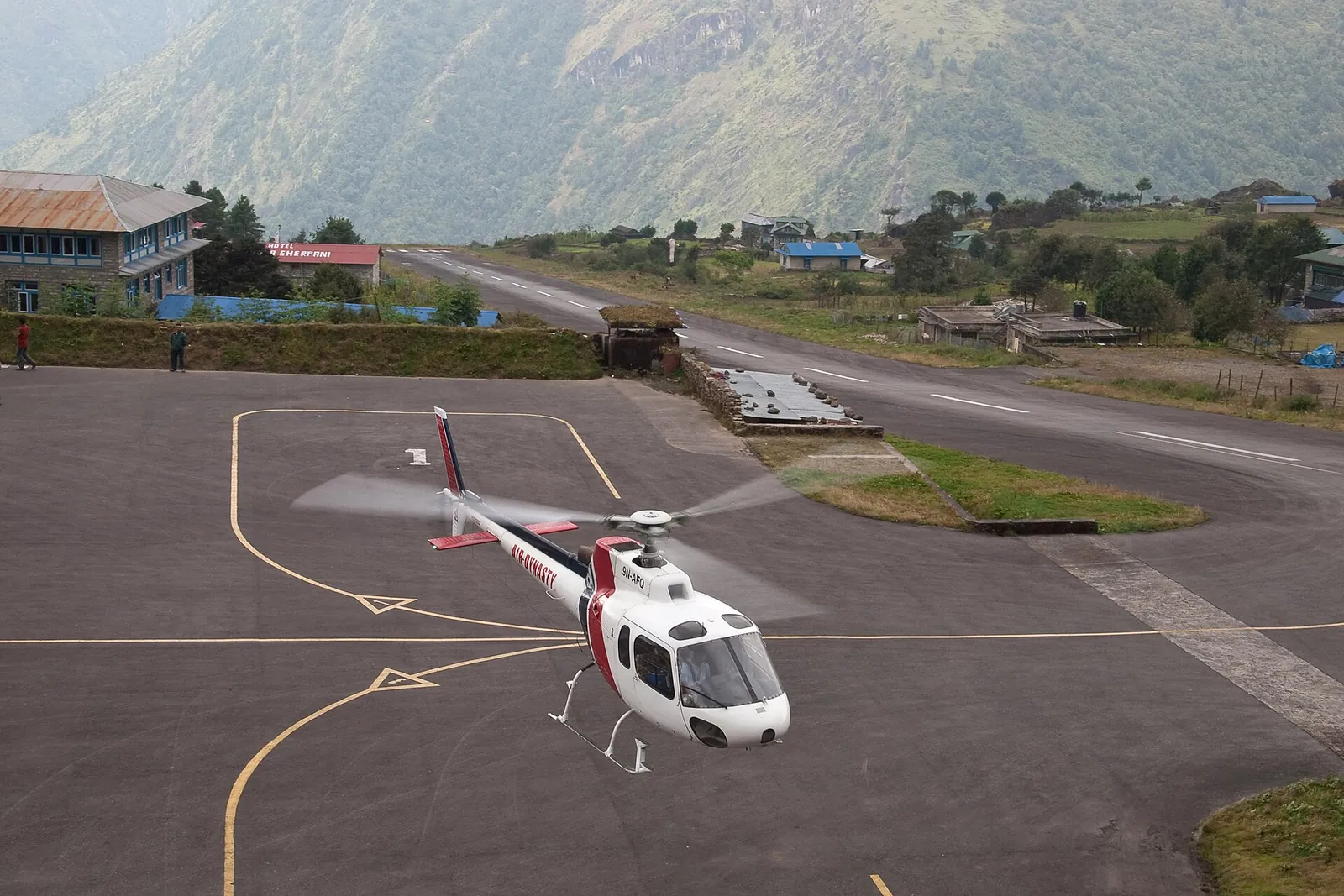
Carry more than the extras alone. Mountain flights can be delayed by poor weather and cancellations are common, so carry enough money to cover delays, particularly in remote areas. At Lukla, bad weather sometimes stops flights for several days, and in October and November several thousand people may wait in a village poorly equipped for them, with hard living conditions and soaring prices. Lodge, meal and other prices on the trails appear on no official price list, so take rupees for every day of the trek plus spare days, spread across two or three pockets.
Rescue costs money too: insurance that covers mountain search, evacuation and medical repatriation is strongly recommended, and you also need the means to pay for a possible hospital stay or evacuation. Our Nepal health and safety guide covers what the policy must pay for.
In Kathmandu, taxis carry a taxi sign on the roof and a black licence plate; private taxis charge more but may be more comfortable, and major hotels can arrange a taxi at night. At the airport, a prepaid taxi service is available; no fare to Thamel is published, so agree it at the counter before you pay. Our Nepal transport guide covers getting around the country.
Taxi drivers expect no tip. Our Nepal trip-cost guide gives the tourism board's line that drivers and guides expect a tip, and that a restaurant tip is unnecessary when a service charge is already added. Trek tips come on top of the package above, and no official page sets an amount, so keep them in rupees with the rest of your trek cash. Use homestays, locally owned lodges and local guides and porters where you can, because the money spent there goes straight to local livelihoods.
Prices and times checked 8 November 2026
Theft, scams and who to call
Nepal has a low rate of serious crime, but pickpockets and bag-snatchers work at airports, on buses and in Thamel, Sanepa and Kupondol in Kathmandu, and such thefts are more frequent in the festival season from September to November. Assaults and robberies are more likely in the evening in poorly lit areas: avoid walking alone there, and do not carry large sums of cash.
Two scams aim at your money. In Thamel, a common one is an offer to export jewellery or gold for a commission; because this is illegal, tourists who accept are then blackmailed. On treks, there are isolated reports of guides who take inexperienced trekkers too high too fast and then call an expensive helicopter rescue for a cut. Be wary of trekking deals that look very cheap, and avoid agencies touting at Kathmandu's international airport and self-proclaimed guides in tourist areas.
If you are robbed, call the police on 100 or the English-speaking tourist police on 1144 (in Kathmandu also 01 5347041). Our Nepal health and safety guide covers the rest of staying safe.
Cash at the border: declarations, rupees and gold
The visa on arrival can be paid by card, but carry cash as a back-up, with US dollars the preferred currency: Nepal's immigration asks travellers to bring US dollars or euros in cash because the online payment system creates long queues. Our Nepal entry guide has the visa fees.
Nepal Rastra Bank lets you carry up to USD 5,000 in foreign cash, or the equivalent in another convertible currency, without a declaration; above that, declare it to customs on arrival (the UK Foreign Office gives the same USD 5,000 for banknotes, or USD 10,000 in notes and travellers' cheques combined). France advises declaring anything above the equivalent of USD 2,000, the cautious choice if you carry more than that, and failing to declare can bring fines and prison. Customs gives you a certified declaration: keep it for the airport exchange counter. Taking out more than USD 5,000 that you did not declare can bring heavy fines and prison.
You may carry at most NPR 5,000 per person in Nepali rupee cash into or out of Nepal. Bringing gold and silver into Nepal is strictly regulated too: you may carry gold ornaments up to 50 grams and silver ornaments up to 100 grams, and bringing in undeclared gold or silver can mean a fine equal to its value, confiscation and, depending on the value, prison of one month to five years.
Practical questions
Can I pay by card everywhere in Nepal?
No. American Express, Mastercard and Visa are accepted at major hotels, shops and restaurants, and hotels, travel agencies and airlines take payment in foreign exchange; elsewhere, plan to pay in rupees. In remote areas, ATMs may not be available and cards may not be accepted.
How much does it cost to withdraw cash from an ATM in Nepal?
Each bank sets its own fee. Everest Bank and Laxmi Sunrise Bank both list an access fee of NPR 750 for a foreign card at their ATMs, and your own bank may add its own fee and exchange margin. Choose to be charged in rupees, not in your home currency.
Where can I exchange money in Nepal?
At major banks, hotels and the exchange counters at Tribhuvan International Airport, and without difficulty in all larger towns. Keep the receipts, because you may need them to change left-over rupees before you leave.
Can tourists pay with QR codes in Nepal?
Only with a linked app. Users of Alipay+ partner wallets from the Chinese mainland, Hong Kong, Macao, Singapore, Malaysia, the Philippines, Mongolia, Thailand, South Korea and Italy, and Bluecode users from Germany and Austria, can scan NEPALPAY QR codes at shops with international payments switched on, and Indian visitors can pay Fonepay merchant QR codes with UPI apps. Other visitors pay by card or cash.
How much cash should I take on a trek in Nepal?
Rupees for whatever your package leaves out, for every trek day plus spare days, because no official page lists trail prices, mountain flights can be delayed by weather and cancellations are common. One agency's four-day Poon Hill package (USD 280 per person, 8 November 2026) left out drinks, laundry, phone bills and tips. In remote areas ATMs may not be available and cards may not be accepted.
Do you tip in Nepal?
Not in taxis: no tip is expected. Our Nepal trip-cost guide gives the tourism board's line that drivers and guides expect a tip, and that a restaurant tip is unnecessary when a service charge is added. Tips for trek guides and porters come on top of the package.
How much cash can I bring into Nepal?
Up to USD 5,000 in foreign cash, or the equivalent, without a declaration, under Nepal Rastra Bank's rule; declare anything above it on arrival. France advises declaring above USD 2,000. Nepali rupee cash is limited to NPR 5,000 per person in or out, and only Indian rupee notes of INR 100 or smaller are allowed for most visitors.
Keep planning your trip
First trip to Nepal
Choose the length, route and season of a first Nepal trip: what a week, ten days or two weeks hold, what to book first, and the altitude, water, air and road advice.
Read the guide
Entering Nepal
Entering Nepal: who needs a visa, the 15-, 30- and 90-day visas, passport rules, the 150-day cap, the cash declaration and the steps through Kathmandu airport.
Read the guide
Nepal trip cost 2027
A week in Kathmandu and Pokhara in November 2027, all in: about NPR 86,700 per person on a budget, 127,300 mid-range or 214,200 in comfort.
Read the guide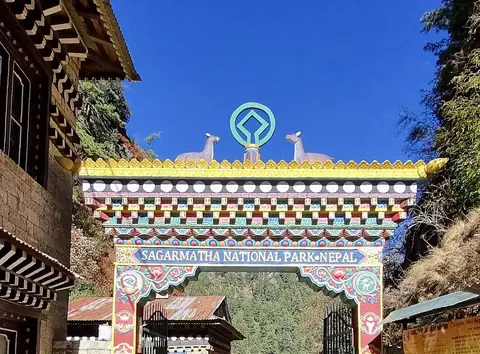
Trekking Permits in Nepal
Permits for Poon Hill, Annapurna Base Camp and Everest Base Camp, plus the Annapurna Circuit and restricted areas: licensed guide, TIMS, ACAP and park fees.
Read the guide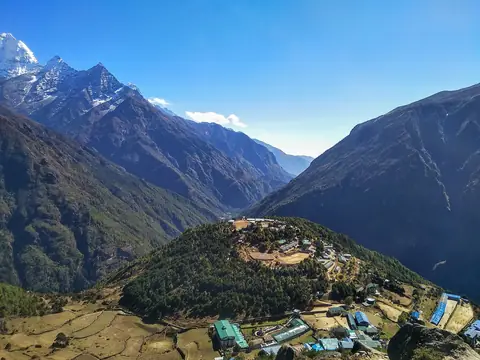
Health and safety in Nepal
Altitude rules, the licensed-guide and TIMS requirement, helicopter cover, malaria zones, hospitals and the emergency numbers to save for a trip to Nepal.
Read the guide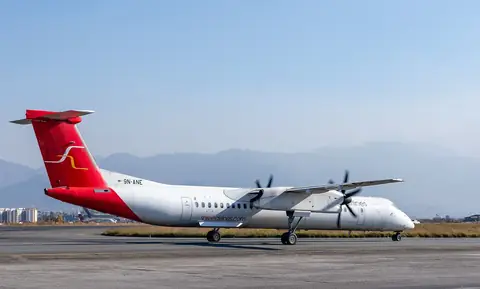
Transport in Nepal
Which Nepal legs to fly and which to ride: domestic airlines, Lukla via Ramechhap, tourist buses to Pokhara, Chitwan and Lumbini, and city taxis.
Read the guideSources and checks before you travel
(30)
- Nepal Rastra Bank: foreign exchange rates ↗ — opens in a new tab
- Nepal Rastra Bank: FAQ on foreign exchange (in Nepali) ↗ — opens in a new tab
- Nepal Tourism Board: foreign currency and credit cards ↗ — opens in a new tab
- Nepal Tourism Board: time and business hours ↗ — opens in a new tab
- The Kathmandu Kitchen, Thamel: menu (the restaurant's own page) ↗ — opens in a new tab
- Ncell: tourist SIM ↗ — opens in a new tab
- Nepal Tourism Board: heritage site entry fees ↗ — opens in a new tab
- Nepal Tourism Board: park entry fees ↗ — opens in a new tab
- Nepal Tourism Board: TIMS card ↗ — opens in a new tab
- National Trust for Nature Conservation: Annapurna Conservation Area e-permit ↗ — opens in a new tab
- Nepal Alternative Treks: Ghorepani Poon Hill Trek, 4 days (the agency's own package) ↗ — opens in a new tab
- Nepal Tourism Board: transportation in Kathmandu Valley and Nepal ↗ — opens in a new tab
- Nepal Tourism Board: FAQ ↗ — opens in a new tab
- Buddha Air: flight fare rules and regulations ↗ — opens in a new tab
- Nepal Tourism Board: responsible tourism ↗ — opens in a new tab
- Nepal Clearing House: NEPALPAY QR ↗ — opens in a new tab
- Nepal Clearing House: Alipay+ partner users can scan and pay with NEPALPAY QR (8 November 2024) ↗ — opens in a new tab
- Nepal Clearing House: programme with Ant International on cross-border QR payments ↗ — opens in a new tab
- Nepal Clearing House: Alipay+ mobile payments partner ↗ — opens in a new tab
- Fonepay: UPI in Nepal ↗ — opens in a new tab
- Everest Bank: ATM and debit card charges ↗ — opens in a new tab
- Laxmi Sunrise Bank: schedule of service charges ↗ — opens in a new tab
- Visa: what you should know about dynamic currency conversion ↗ — opens in a new tab
- UK Foreign Office: Nepal entry requirements ↗ — opens in a new tab
- UK Foreign Office: Nepal safety and security ↗ — opens in a new tab
- UK Foreign Office: Nepal, getting help ↗ — opens in a new tab
- German Foreign Office (Auswärtiges Amt): Nepal travel and safety advice (in German) ↗ — opens in a new tab
- France Diplomatie: Nepal travel advice, useful information (in French) ↗ — opens in a new tab
- France Diplomatie: Nepal travel advice, entry and stay (in French) ↗ — opens in a new tab
- France Diplomatie: Nepal travel advice, security (in French) ↗ — opens in a new tab
Reference sources for the version dated 8 November 2026. Confirm opening times, access, transport and conditions for your travel dates.
Photo credits
(5)
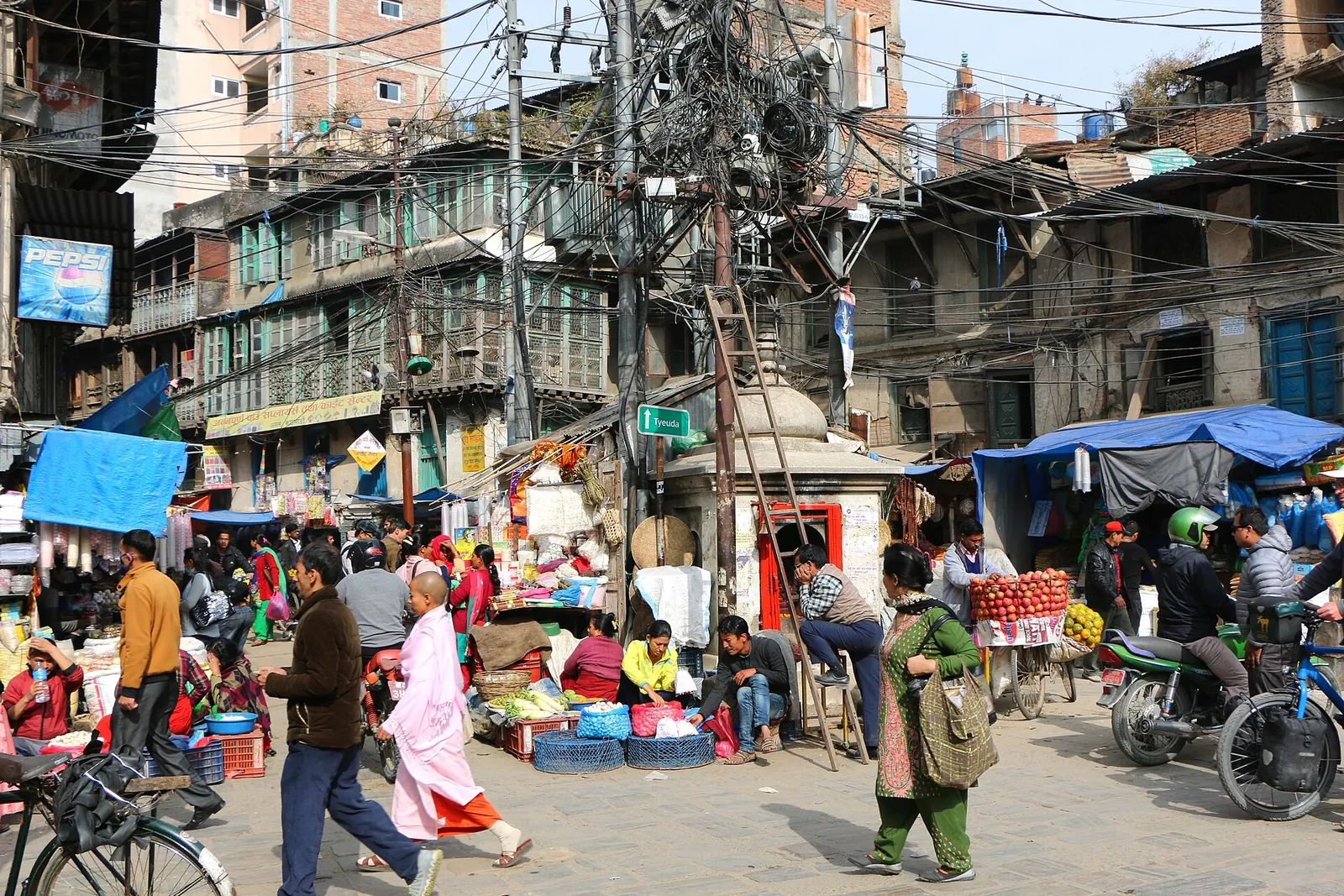
Asan Tole, one of old Kathmandu's busiest market squares
Photograph: Juan Antonio Segal from Madrid, Spain — opens in a new tab · CC BY 2.0 — opens in a new tab
Changes: Resized and converted to WebP; displayed with responsive crops. · Original photograph and licence details ↗ — opens in a new tab
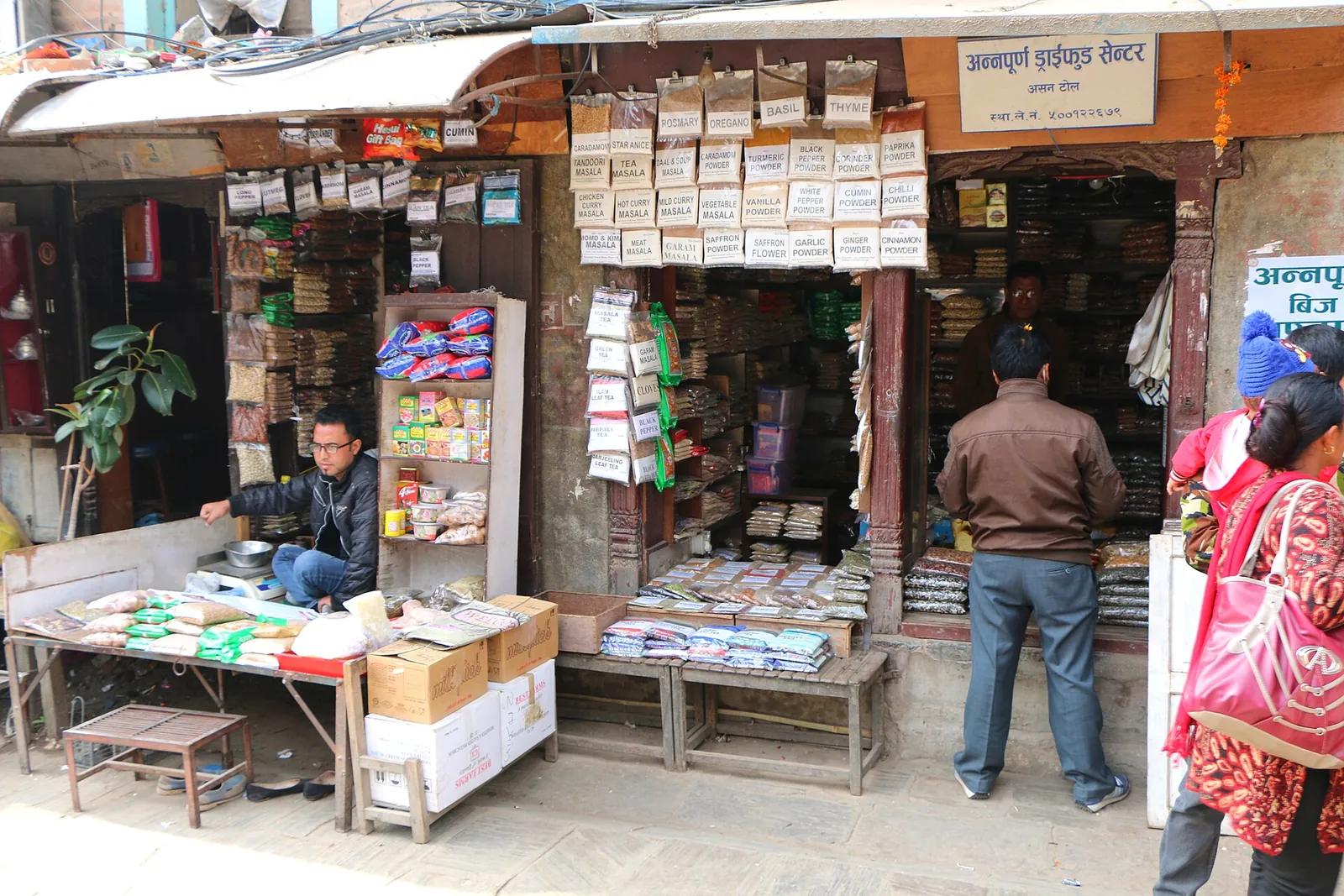
Small shops at Asan Tole, Kathmandu
Photograph: Juan Antonio Segal from Madrid, Spain — opens in a new tab · CC BY 2.0 — opens in a new tab
Changes: Resized and converted to WebP; displayed with responsive crops. · Original photograph and licence details ↗ — opens in a new tab
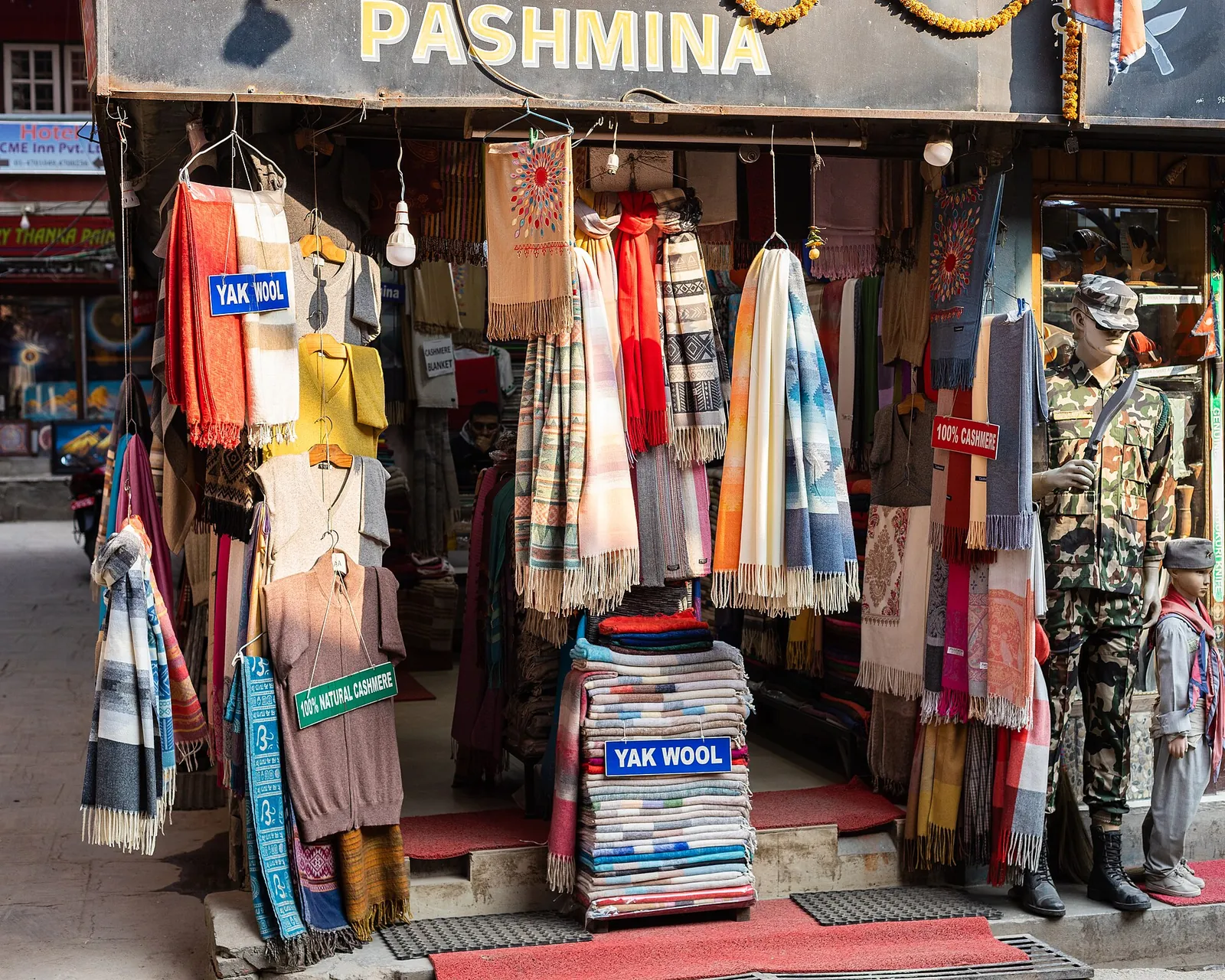
A pashmina shop in Thamel, Kathmandu's main visitor district
Photograph: Bijay Chaurasia — opens in a new tab · CC BY-SA 4.0 — opens in a new tab
Changes: Resized and converted to WebP; displayed with responsive crops. · Original photograph and licence details ↗ — opens in a new tab
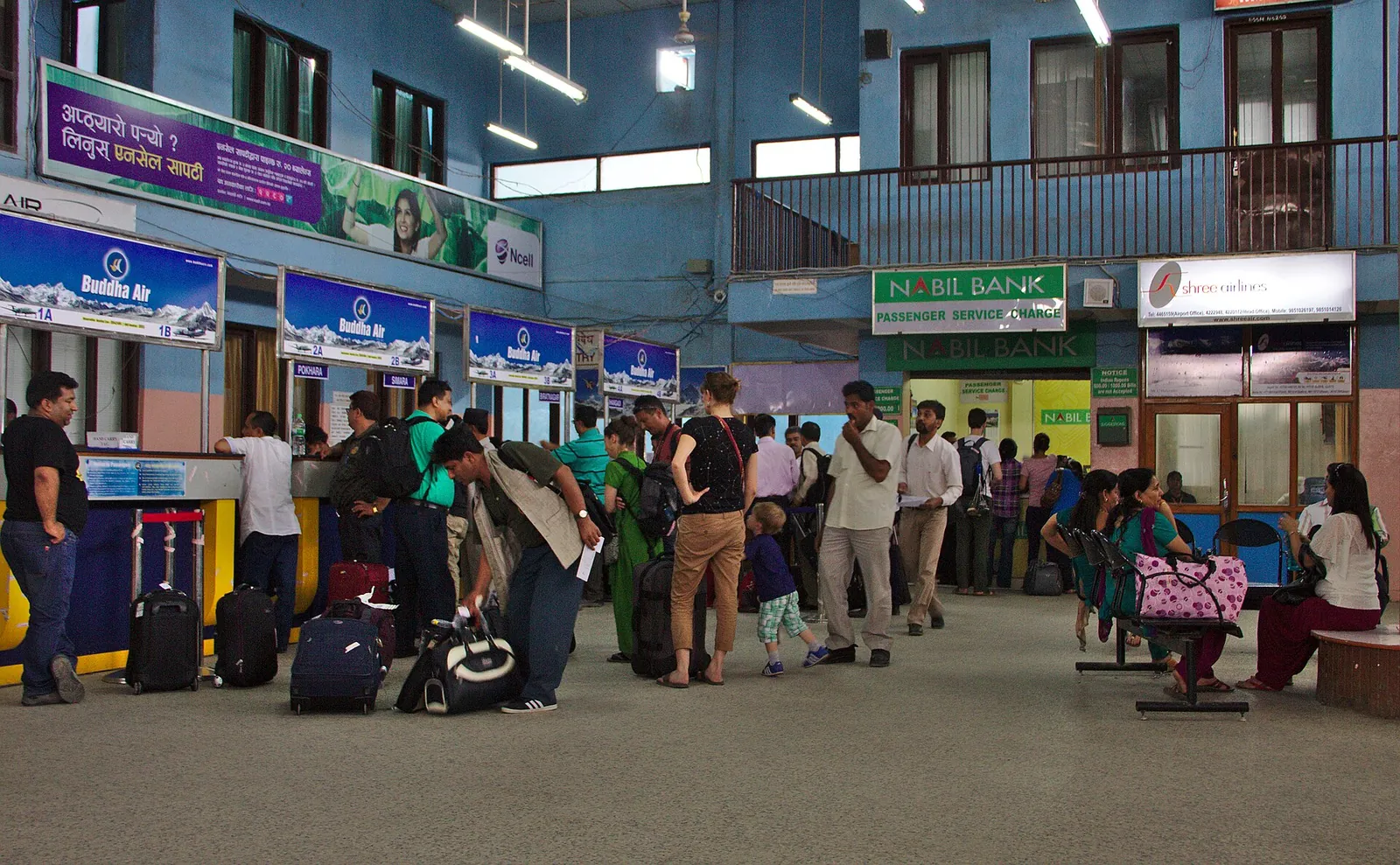
Airline counters in the domestic terminal of Tribhuvan Airport, Kathmandu, where mountain flights leave
Photograph: দেবর্ষি রায় from Brno, Czech Republic — opens in a new tab · CC BY-SA 2.0 — opens in a new tab
Changes: Resized and converted to WebP; displayed with responsive crops. · Original photograph and licence details ↗ — opens in a new tab
A helicopter lifting off at Lukla's Tenzing-Hillary Airport in the Everest region
Photograph: Vyacheslav Argenberg — opens in a new tab · CC BY 4.0 — opens in a new tab
Changes: Resized and converted to WebP; displayed with responsive crops. · Original photograph and licence details ↗ — opens in a new tab