Kathmandu Valley · Bagmati
Kathmandu travel guide: four sacred sites, fees and where to stay
Kathmandu is less one city than a set of sacred places joined by traffic: a royal square of carved temples, a hilltop stupa with monkeys on its steps, the largest stupa in the valley, a Hindu temple complex on the Bagmati river and the lanes of Thamel in between. This guide helps you decide where to sleep, how to order those places over three days, what the tickets add up to, how to get around and which cautions change a plan.
- Suggested time
- 3 nights in Kathmandu
- Where to stay
- Thamel, with Boudha as a half day from there, paired with Pashupatinath
- Season and timing
- Skies are clearest in October and November, after the monsoon. The valley averages 20 to 35 degrees C in summer and 2 to 12 degrees C in winter. Air pollution is generally highest in winter and the weeks before the monsoon.
The short answer
Book three nights in Kathmandu, based in Thamel for the old city and the restaurants, and see Boudha as a half day paired with Pashupatinath. Give the first day to Kathmandu Durbar Square and Thamel, the second to Swayambhunath, Boudhanath and Pashupatinath, and the third to Patan or Bhaktapur. For an adult who is neither a SAARC nor a BIMSTEC national, the four main sites total NPR 2,600 in entry fees: Durbar Square NPR 1,000, Swayambhunath NPR 200, Boudhanath NPR 400 and Pashupatinath NPR 1,000 per day per entry, checked on 18 October 2026. Tickets are bought at the entry points; reserve your room first, using our where-to-stay guide to choose a base. Arrange your arrival and site visits around daylight road journeys.
Where to base yourself: Thamel, with Boudha as a half day
Thamel is the capital's tourist hub, with restaurants and shops along its lanes. The Nepal Tourism Board names Thamel, Lazimpat, Durbarmarg, Jhamsikhel and Boudha as the districts where most of the city's restaurants are concentrated. Detailed maps are sold in Thamel, and bicycles can be hired there and at Jhochhen, the old Freak Street. Base yourself here for Durbar Square, the Garden of Dreams and the day trips to Patan and Bhaktapur.
Visit Boudha as a half day from Thamel, paired with Pashupatinath, as in the second day below.
Kathmandu Durbar Square: the Museum of Temples
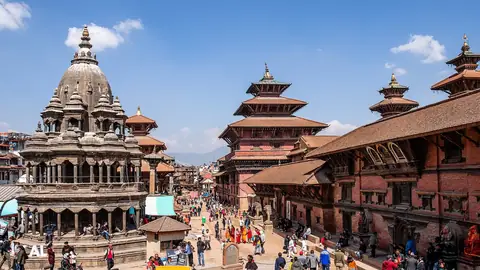
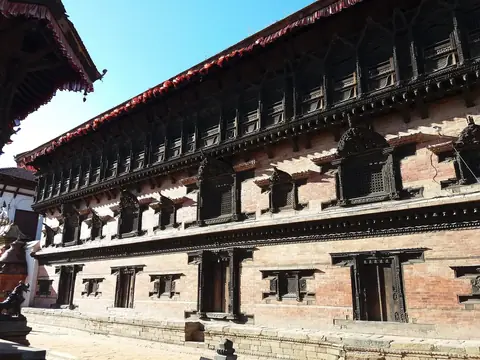
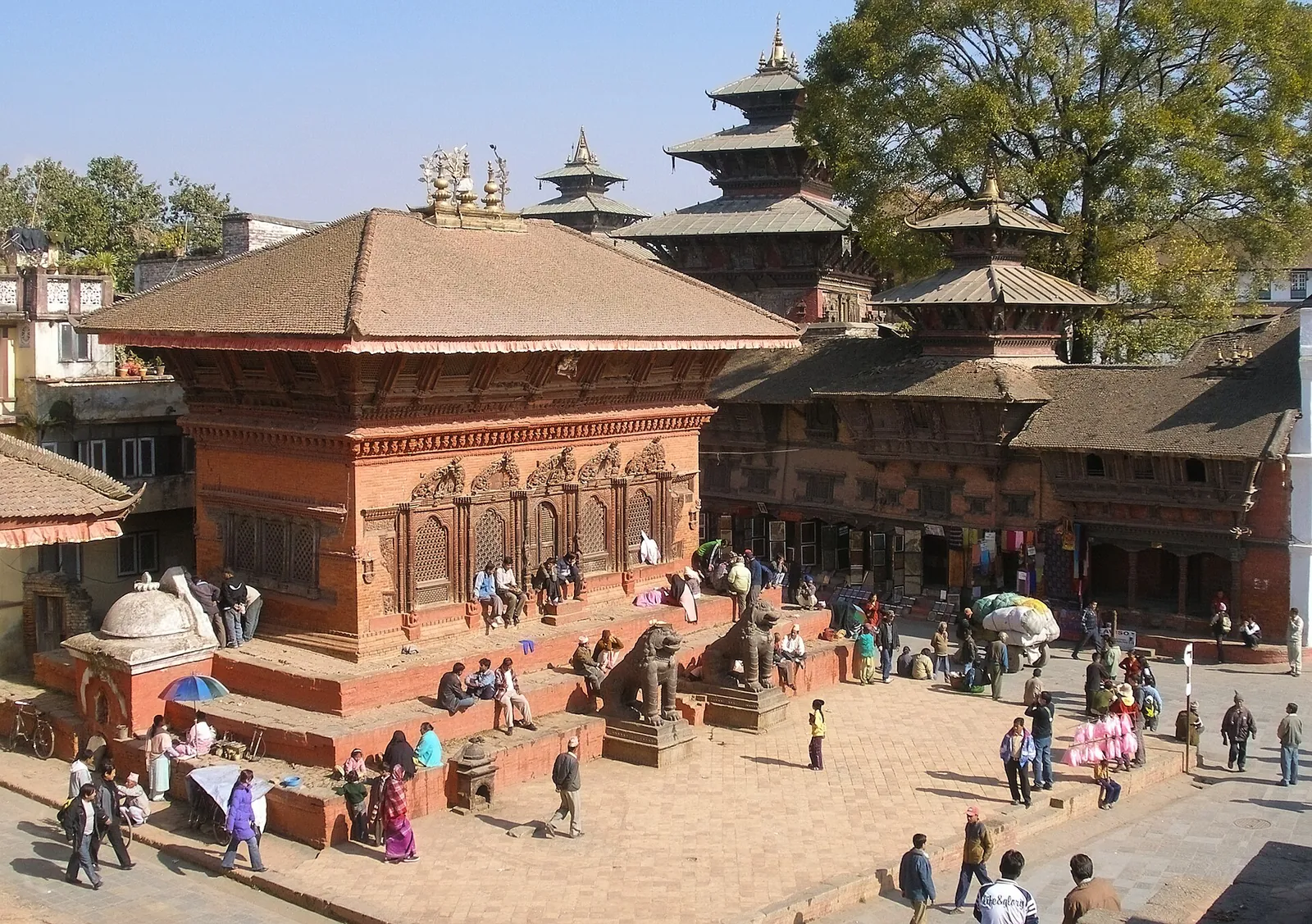
Kathmandu Durbar Square, also called Basantapur Durbar or Hanuman Dhoka, sits in the middle of the old city and is nicknamed the Museum of Temples for the more than 50 temples around it. Hanuman Dhoka was first built in the Licchavi period (4th to 8th centuries AD) and King Pratap Malla extended it greatly in the 17th century. The palace has two courtyards, an outer one with the Kasthamandap, the Kumari Ghar and the Shiva-Parvati Temple, and an inner one holding Hanuman Dhoka and the main palace.
The sights worth stopping for are specific. Taleju Temple is the tallest structure, built by King Mahendra Malla, and opens to the public one day a year during Dashain. The Kumari Ghar, also called the Kumari Temple, is the official residence of the Living Goddess Kumari of Kathmandu. Kal Bhairav is one of the largest 17th-century stone statues in the city, the 16th-century Jagannath Temple is known for the carved figures on its wooden struts, and in the Tribhuvan Museum you see King Tribhuvan's bedroom and study with his personal belongings. Swet Bhairav is shown to the public only once a year, at Indra Jatra in August or September.
The Nepal Tourism Board's heritage table, checked on 17 October 2026, listed the square, including the Tribhuvan Museum, at NPR 1,000 for foreign nationals, NPR 500 for SAARC visitors under the BIMSTEC rate and NPR 1,000 for Chinese nationals, with children under 10 free. Fees are paid at the entry point; carry rupee cash for the tickets. The city lists the square as open 24 hours.
Several buildings in the square collapsed in the earthquake of 25 April 2015, and most parts of the palace premises are open to tourists throughout the week.
Swayambhunath: the hilltop stupa and its steps
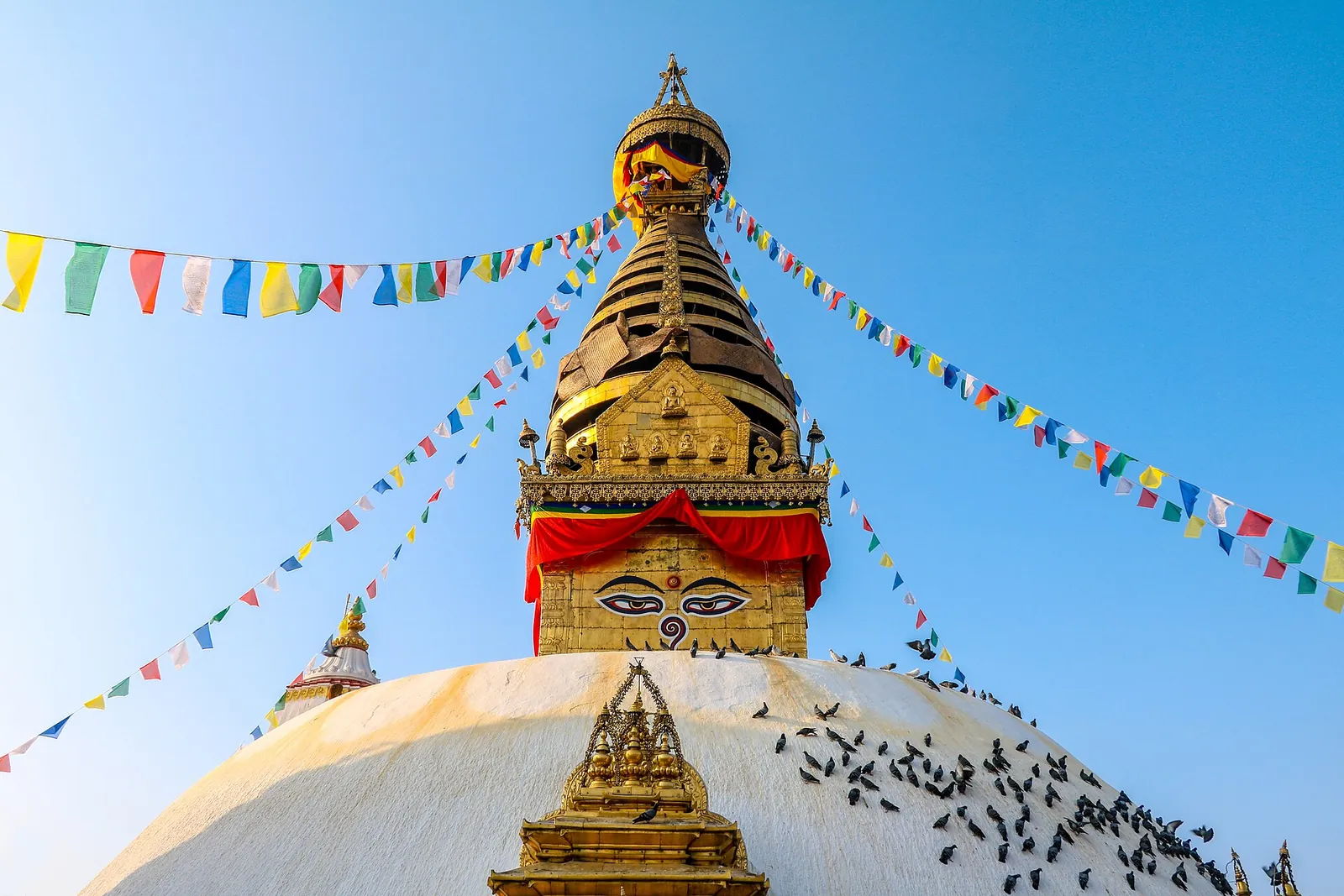
Swayambhunath stands on a hillock about 3 km west of central Kathmandu, with a panoramic view of the city, and is the oldest stupa in the valley. It dates to about 460 AD, and its complex of chaityas, shrines and monasteries sets Buddhist and Hindu deities side by side. Devotees circle the stupa at all hours, and the base of the hill is ringed with prayer wheels. Foreigners have long called it the Monkey Temple, and the monkeys come with the territory.
Look for the gold-plated vajra on the east side of the stupa, the sleeping Buddha, the Dewa Dharma Monastery with its bronze Buddha and Tibetan paintings and the temple of Harati, the goddess of children. The largest image of the Buddha in Nepal sits on the western boundary beside the Ring Road. The stone steps up are very steep, and a motor road reaches almost to the top, from where it is a short walk. Swayambhunath (Swayambhu Stupa) lists an entry fee of NPR 200 for foreign nationals and NPR 50 for SAARC nationals; children under 10 enter free. Chinese nationals are listed at NPR 200. These fees were checked on 18 October 2026. The city lists the stupa as open 24 hours. Crowds are largest on Buddha's birthday, which usually falls in May.
Boudhanath and Pashupatinath: a half day on the east side
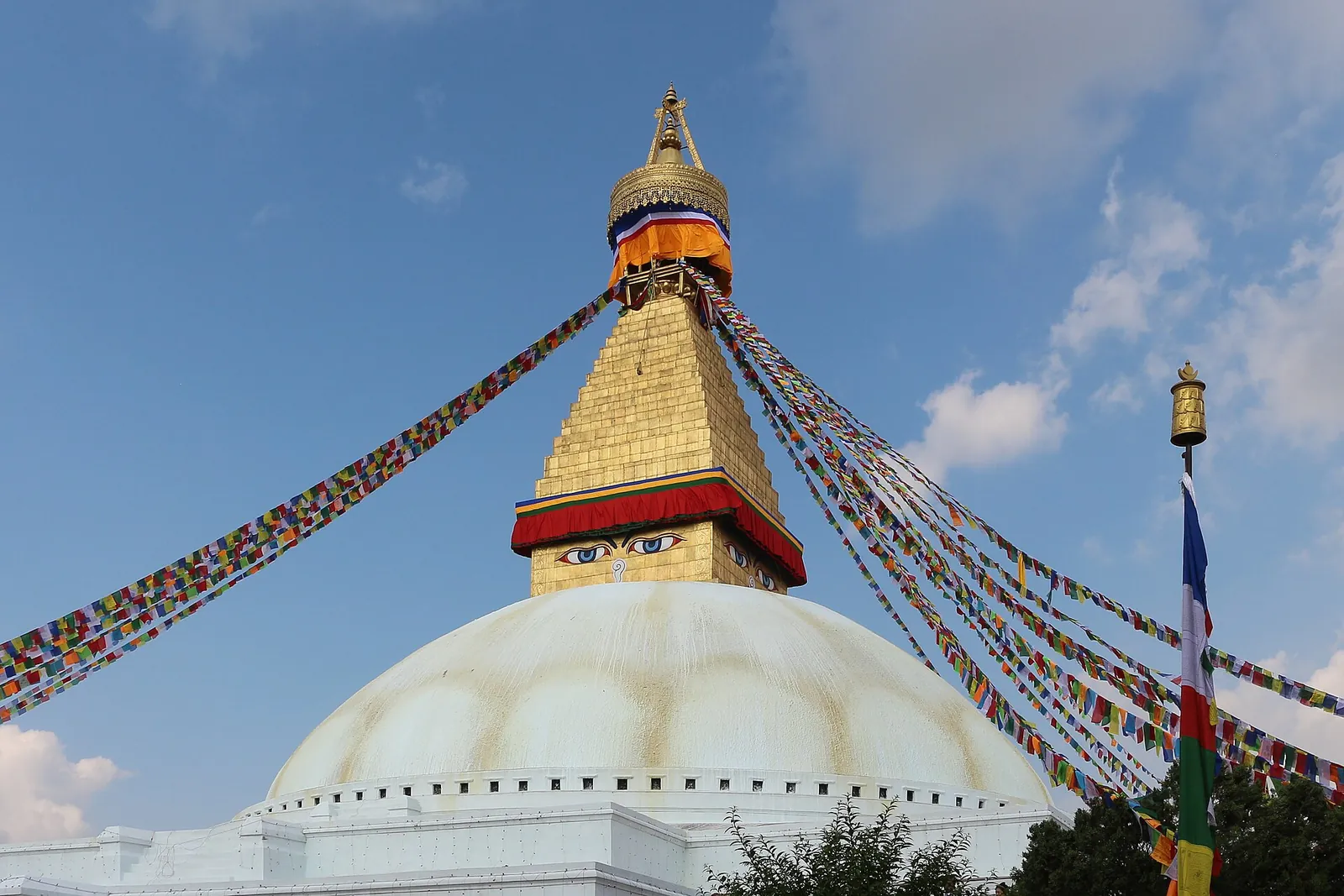
Boudhanath, which the city also calls Swasti, is the largest stupa in the valley, with a dome 36 m across, about 8 km east of downtown. It is visible as soon as you land at the airport and is the centre of Himalayan Buddhism. It stands on the ancient trade route from Tibet, which entered the valley at Sankhu, and Tibetan merchants have rested and prayed here for centuries; many Tibetan refugees settled around it from the 1950s, and the stupa is said to entomb the remains of Kassapa Buddha. Boudhanath (Boudha Stupa) lists an entry fee of NPR 400 for foreign nationals and NPR 100 for SAARC nationals; children under 10 enter free. Chinese nationals are listed at NPR 400. These fees were checked on 18 October 2026. The city lists the stupa as open 24 hours.
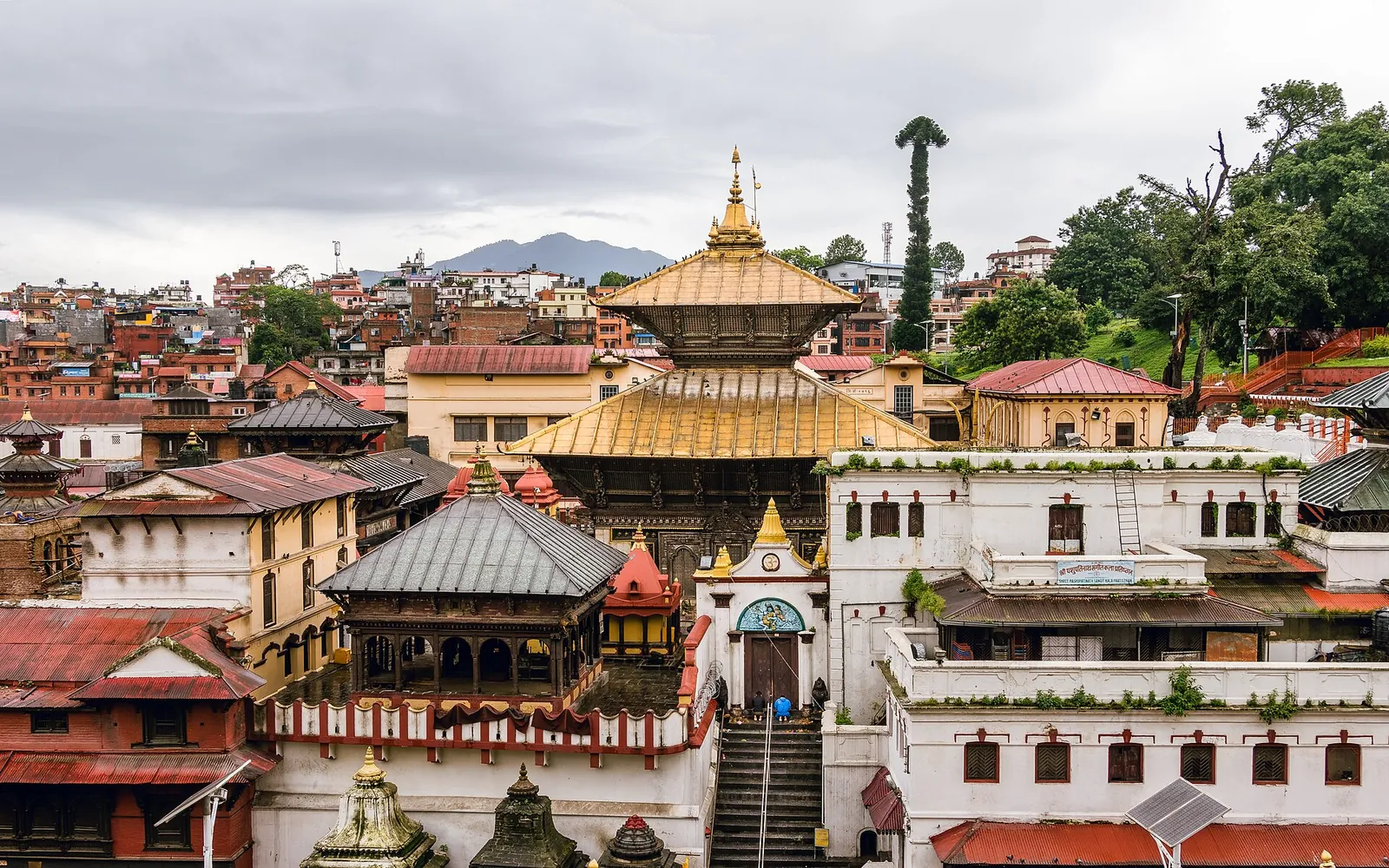
Pashupatinath is the most revered Hindu temple in Nepal, on the Bagmati river about 5 km east of the city centre, and the Pashupati Area Development Trust says the Pashupati Area around it spreads over 264 hectares. It is one of the seven monument zones of the Kathmandu Valley World Heritage Site, which UNESCO inscribed in 1979. The city calls it a living heritage where rituals from birth to death are performed, and along the river you look onto the cremation ghats that the Pashupati Area Development Trust runs, Arya Ghat and Bhasmeshwar Ghat among them. The trust lists the temple open daily from 4:00 to 21:00, with the main sanctum for Hindus only and the surrounding ghats open for observation; non-Hindus also watch from the terraces across the river to the east. Keep well back from families at a cremation.
The Bagmati Aarati, the river ritual that the tourism board calls one of the most engaging at the site, closes the day; the trust posts the day's evening aarti time on its home page. The trust puts the temple about 15 minutes by taxi from Thamel, and microbuses and the three-wheeled tempos stop at Gaushala, a short walk away. Leather items, including shoes and belts, must be left outside the complex, and the Slesh Mantak forest around the site is full of monkeys.
Pashupatinath lists NPR 1,000 per day per entry for foreign nationals and for Chinese nationals, and entry is free for Indian nationals. The trust says that after the 2015 earthquake the main temple's ancient construction withstood significant damage, while many subsidiary shrines had to be rebuilt in full. The biggest crowds come at Shivaratri, the night of Shiva, when sadhus and pilgrims from across Nepal and India throng the temple, and on Teej, a festival observed by Hindu women.
Thamel and the Garden of Dreams
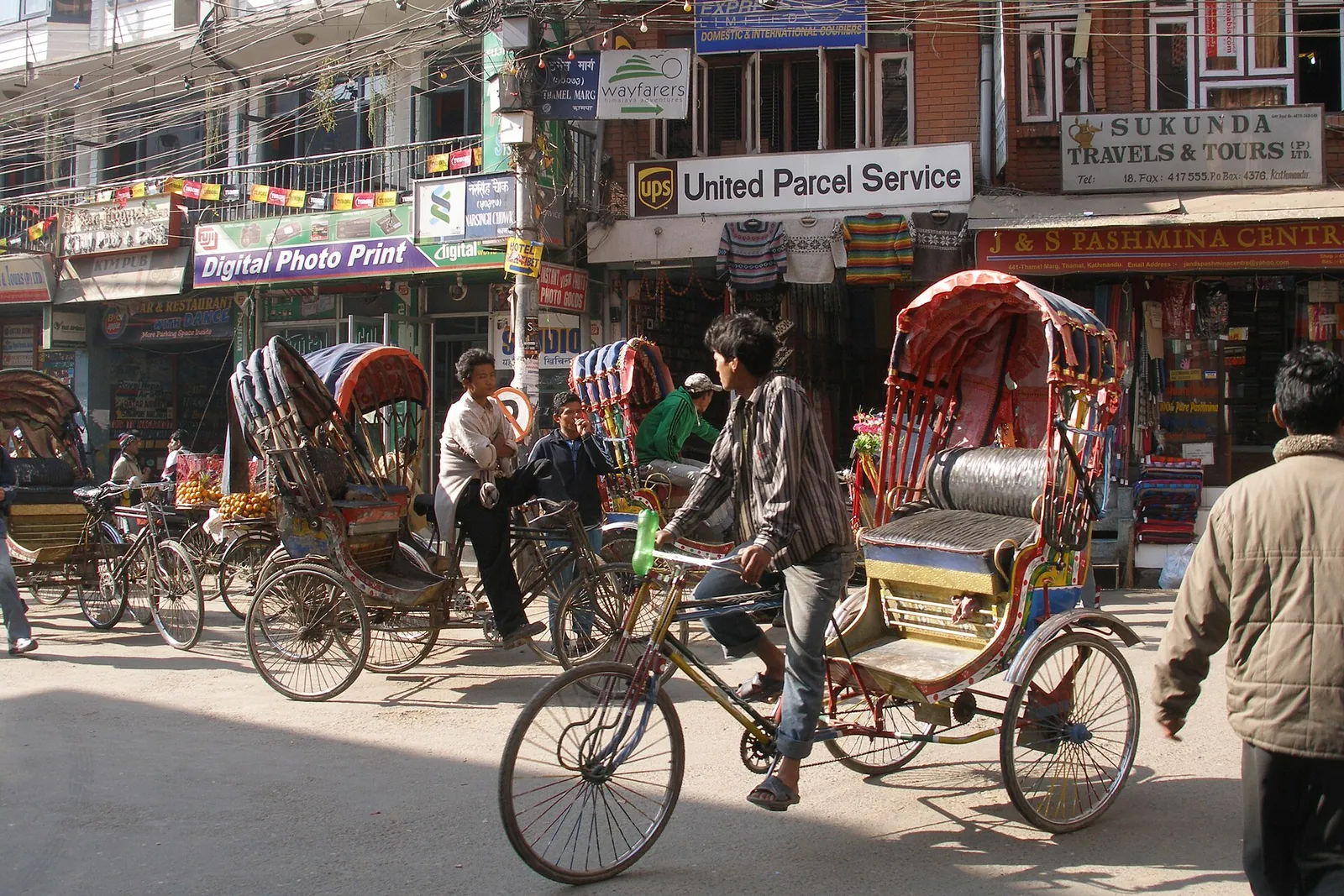
Thamel is a quarter of narrow lanes, shops, cafes and rickshaws, and it is where most visitors end the day. For souvenirs, the tourism board names showrooms at Durbar Marg, Asan and Thamel for pashmina shawls, carpets, Thangka paintings, spices and tea.
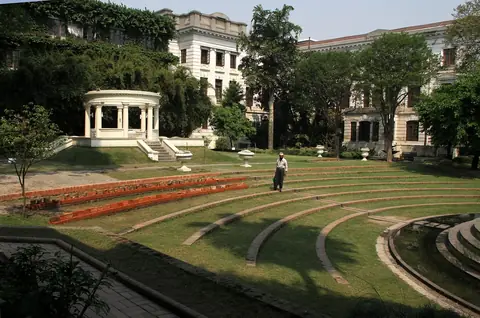
The Garden of Dreams, at the entrance to Thamel, is the calm option. Field Marshal Kaiser Shumsher Rana built it in 1920 after seeing the garden of King Edward VII on a visit to the United Kingdom, and it passed to the government in 1964 and was left neglected for decades. It reopened in 2007 after nearly seven years of reconstruction. Pavilions are named after the six seasons, and there are ponds, European-style verandas and aviaries for birds. The Kaiser Cafe operates inside.
Make time for the local food
What to eat and where to look
Dal bhat
The staple Nepali meal of lentil soup, rice, vegetables and achar, a sauce or dip, served with yogurt or buttermilk and often with a chicken or mutton curry. Nepalis eat rice twice a day, at lunch and dinner.
- Where to look
- Newari and Thakali eateries, which the tourism board says serve the most authentic Nepali taste in the valley.
- Fit it into your day
- Lunch after Pashupatinath or Boudhanath.
Order a vegetable set if you avoid meat, and drink sealed bottled water, since NaTHNaC advises against untreated tap water and ice.
Momo
Dumplings filled with minced chicken, mutton, buffalo, paneer, cheese or vegetables, usually steamed but also fried, served in a soup called jhol momo, or prepared as chaat. It is probably the most popular fast food in Nepal, brought from Tibet by Newari traders.
- Where to look
- Eateries in Thamel and around Boudha.
- Fit it into your day
- A snack after Swayambhunath or a light dinner in Thamel.
The filling is chosen by the cook, so ask which meat or cheese is inside.
Chatamari
A rice-flour crepe topped with marinated minced meat, egg and onions, nicknamed Newari pizza for its look and sold as a street snack.
- Where to look
- Newari eateries and street stalls in the old city around Durbar Square.
- Fit it into your day
- A snack between Durbar Square and Thamel.
The topping contains egg and meat; a vegetable version needs asking for.
Wo or bara
A Newari pancake or patty of spiced lentils, called wo by the Newars and bara in the hills, made at festivals and rituals and sold as a snack.
- Where to look
- Newari eateries in the old city.
- Fit it into your day
- Alongside chatamari for a Newari snack lunch near Durbar Square.
Ask about the ingredients if you have an allergy or avoid meat.
Yomari
A steamed rice-flour dumpling filled with chaku, a Newari festive sweet whose name translates as tasty bread; the Newars make it for Yomari Punhi and for children's even-numbered birthdays until they are 12.
- Where to look
- Restaurants that serve Newari food, which now sell yomari in and out of Kathmandu.
- Fit it into your day
- A sweet to end a Newari snack lunch near Durbar Square.
Getting around the valley
The Nepal Tourism Board says you can hail a taxi, recognised by the taxi sign on top and a black licence plate, that private taxis charge higher rates, and that no tip is expected. Its FAQ says the cities have metered taxis; ask for the meter or agree the fare before you set off. Pathao's car service runs in the Kathmandu Valley and is booked in its app. InDrive's Nepal page names Kathmandu, Pokhara and Bharatpur among the cities where you can book a ride, and lets the passenger offer a fare.
Leave room for traffic between the sites. The green Sajha buses, which the tourism board calls government-run and Sajha Yatayat describes as a cooperative, follow the main north-south and east-west roads of the valley and stop only at designated stops. Battery-run three-wheelers and tempos cover shorter hops, and rickshaws suit the old city. Our Nepal transport guide covers the flights and roads beyond the valley.
Outside the terminal, a prepaid taxi service is available, and taxi drivers, travel agents and hoteliers wait to offer rides. Ask the prepaid counter for the Thamel fare before you pay, or have your hotel send a car. The other choices are a taxi with the roof sign and black plate, or a Pathao or inDrive ride, which inDrive says you can book through its app on arrival. Carry an extra passport photo to buy a local SIM card in the arrival halls. On 15 September 2026 France's foreign ministry said works at the airport have partly closed it and may affect bookings on arrival or departure, so check your flight with the airline before you travel.
Airport–Thamel fares and road distance, and journey times between the main sights, need checking when you arrange the car.
Air, scams and demonstrations in the valley
The UK, French and German governments' travel advice pages add three cautions for the city. The Kathmandu Valley has some of the highest air pollution in the world, according to the French foreign ministry, with peaks of high to very high intensity in winter. The Department of Environment's 2025 annual report names the valley and the Terai as Nepal's most polluted regions and finds pollution generally highest in winter and before the monsoon, and lowest during the rains. The department's live readings are on pollution.gov.np. France advises older people, children, pregnant women and anyone with asthma or a heart condition to cut outdoor time at peaks and to wear an N95, KN95 or FFP2 mask.
In Thamel, the French foreign ministry reports frequent scams, the commonest being a stranger who offers to export jewellery or gold abroad for a commission: the practice is illegal, and those who agree are blackmailed with a threat of denunciation to the police. The UK government names Thamel, Sanepa and Kupondol for pickpockets and bag-snatchers, and Germany says petty crime rises in the festival season from September to November.
Germany and France both tell foreigners to keep away from demonstrations and large gatherings, and Germany adds that taking part can be an offence.
Two or three days, and day trips from the valley
Spend the first day on Durbar Square and an afternoon in the Garden of Dreams and Thamel, and the second on Swayambhunath, Boudhanath and Pashupatinath, moving between them by taxi in daylight. Give the third to Patan, about 5 km southeast, or Bhaktapur, 12 km east, each a half to a full day. Their guides give the ticket categories and the sights to prioritise. With only two days, keep the first two.
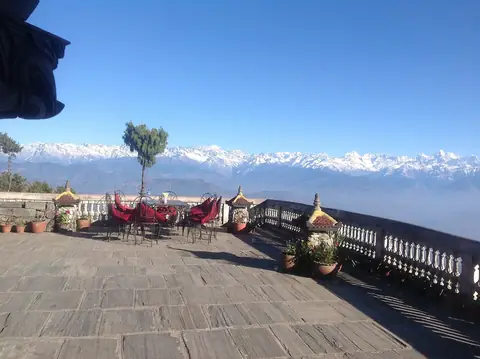
Nagarkot, 32 km from the capital, is a viewpoint to see at dawn or dusk and is worth a night; see our Nagarkot guide. For a whole-trip budget that includes these Kathmandu nights, see our seven-day itinerary.
Drive between valley sights and to Nagarkot in daylight, and check that the road is open before setting off. The UK government advises against night road travel; Germany warns that floods damage roads around the Kathmandu Valley and that closures and local night-driving bans can be imposed at short notice. If the Nagarkot road is closed, keep your night in Kathmandu and postpone the ridge. Other governments may draw a wider line, so check your own government's advice before travelling.
Practical questions
How many days does Kathmandu need?
Three days fit the plan in this guide: Durbar Square and Thamel on the first, Swayambhunath, Boudhanath and Pashupatinath on the second, and Patan or Bhaktapur on the third. With two days, keep the first two.
Should I stay in Thamel or Boudha?
Stay in Thamel. Boudha works as a half day from there, paired with Pashupatinath on the same afternoon and evening.
Where do I buy the heritage-site tickets?
Pay at each site's entry point; the site sections above give the nationality and child categories. Carry rupee cash for the tickets.
Can non-Hindus enter Pashupatinath?
Not the main sanctum, which is for Hindus only. The ghats are open to everyone, and non-Hindus can view the temple from the terraces across the Bagmati river to the east.
How do I get from the airport to Thamel?
Use the airport's prepaid taxi service or arrange a car through your hotel; Pathao and inDrive are app alternatives. Arrange an arrival that leaves time for a daylight transfer.
When is the air clearest in Kathmandu?
Choose October or November for the clearest skies; the air-quality section explains the different pollution pattern.
Is Nagarkot a day trip or a night away?
Stay a night if you want sunrise or sunset; make a day trip for a daytime view. The Nagarkot guide covers the options.
Sources and checks before you travel
Reference sources for the version dated 18 October 2026. Confirm opening times, access, transport and conditions for your travel dates.
- Nepal Tourism Board: heritage site entry fees ↗ — opens in a new tab
- Nepal Tourism Board: Kathmandu Durbar Square ↗ — opens in a new tab
- Nepal Tourism Board: Swayambhunath ↗ — opens in a new tab
- Nepal Tourism Board: Boudha ↗ — opens in a new tab
- Nepal Tourism Board: Pashupatinath Temple ↗ — opens in a new tab
- Kathmandu Metropolitan City: heritage sites ↗ — opens in a new tab
- Pashupati Area Development Trust: home page ↗ — opens in a new tab
- Pashupati Area Development Trust: about ↗ — opens in a new tab
- Government of Nepal tourism portal: Kathmandu Durbar Square ↗ — opens in a new tab
- Nepal Tourism Board: local transportation ↗ — opens in a new tab
- Pathao: car service ↗ — opens in a new tab
- inDrive: city rides in Nepal ↗ — opens in a new tab
- Sajha Yatayat: home page ↗ — opens in a new tab
- Nepal Tourism Board: FAQ ↗ — opens in a new tab
- Nepal Tourism Board: dining in Kathmandu ↗ — opens in a new tab
- Nepal Tourism Board: food and culinary ↗ — opens in a new tab
- Nepal Tourism Board: Nagarkot sunrise and sunset ↗ — opens in a new tab
- Nepal Tourism Board: Patan ↗ — opens in a new tab
- Nepal Tourism Board: Bhaktapur ↗ — opens in a new tab
- Nepal Tourism Board: climate ↗ — opens in a new tab
- Department of Environment: Status of Air Quality in Nepal, annual report 2025 ↗ — opens in a new tab
- Department of Environment: air quality monitoring portal ↗ — opens in a new tab
- France Diplomatie: Nepal health advice ↗ — opens in a new tab
- France Diplomatie: Nepal security advice ↗ — opens in a new tab
- France Diplomatie: Nepal entry and stay ↗ — opens in a new tab
- UK government: Nepal safety and security ↗ — opens in a new tab
- German Federal Foreign Office: Nepal travel and security advice ↗ — opens in a new tab
- NaTHNaC: food and water hygiene ↗ — opens in a new tab
- Department of Environment: air-quality annual report, 2025 (PDF) ↗ — opens in a new tab
Photo credits
Swayambhunath stupa on its hill west of central Kathmandu
Photograph: Nirmal Dulal — opens in a new tab · CC BY-SA 4.0 — opens in a new tab
Changes: Resized and converted to WebP; displayed with responsive crops. · Original photograph and licence details ↗ — opens in a new tab
The Shiva Parvati Temple beside the open square at Kathmandu Durbar Square
Photograph: Original: Vyacheslav Argenberg Derivative work: UnpetitproleX — opens in a new tab · CC BY 4.0 — opens in a new tab
Changes: Resized and converted to WebP; displayed with responsive crops. · Original photograph and licence details ↗ — opens in a new tab
Boudhanath stupa, the largest stupa in the Kathmandu Valley
Photograph: Bernard Gagnon — opens in a new tab · CC BY-SA 4.0 — opens in a new tab
Changes: Resized and converted to WebP; displayed with responsive crops. · Original photograph and licence details ↗ — opens in a new tab
The Pashupatinath temple area on the Bagmati river
Photograph: Bijay Chaurasia — opens in a new tab · CC BY-SA 4.0 — opens in a new tab
Changes: Resized and converted to WebP; displayed with responsive crops. · Original photograph and licence details ↗ — opens in a new tab
A Thamel street with rickshaws and shops
Photograph: Vyacheslav Argenberg — opens in a new tab · CC BY 4.0 — opens in a new tab
Changes: Resized and converted to WebP; displayed with responsive crops. · Original photograph and licence details ↗ — opens in a new tab