Plan your trip · Nepal
Best time to visit Nepal: autumn, spring, monsoon and winter by region
The Nepal Tourism Board says Nepal can be visited the whole year round, so the question is less whether to go than what each season takes away: mountain views in rain, warmth in winter, clean air in the valley's dry months. Spring brings rhododendrons; autumn brings the clearest skies, according to the board. Temperature, rain and the roads you can use differ between Kathmandu, Pokhara, the Terai lowlands and the high trails, so this guide goes season by season and then region by region.
- Suggested time
- Season choice for a trip of any length
- Where to stay
- No single base: Kathmandu Valley, Pokhara, the Terai and the high treks each have their own season
- Season and timing
- Choose autumn for clear mountain views or spring for rhododendrons; weigh winter cold and air pollution against the rains and road risks below.
The short answer
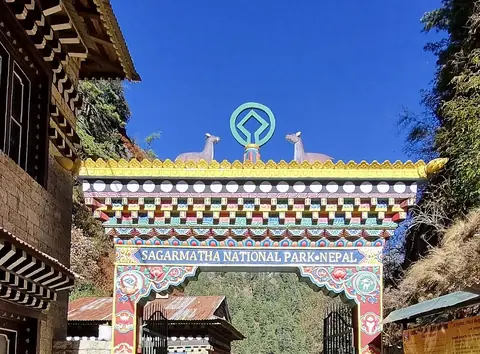
Go in the weeks after the monsoon or in spring. The Nepal Tourism Board gives these as the best times for most trekking areas, with the clearest skies in October and November and rhododendrons in bloom in spring. Its Sagarmatha National Park page names October to November and March to May as the best season. Winter offers bright valley days but cold nights, and Kathmandu's air pollution can be severe. For a trek, book a licensed trekking agency first, because it supplies the licensed guide and buys your TIMS card; for Everest, have it book the Lukla flight. Checked on 18 October 2026, TIMS costs NPR 2,000 for foreign trekkers other than SAARC nationals, who pay NPR 1,000. Sagarmatha National Park costs NPR 3,000 per person per entry for foreign visitors other than SAARC nationals, who pay NPR 1,500.
Autumn or spring: choose by what you want to see
Spring and autumn are the best times to visit, as for most trekking areas, by the Nepal Tourism Board's account, and the two differ in what you will see: the rhododendrons bloom in spring, and the clearest skies come after the monsoon, in October and November. For Nepal as a whole, read autumn as the weeks after the rains end and spring as the rhododendron weeks; for Everest the board's park page gives months, set out in the trek section below.
The two seasons look different on the ground. In the weeks after the monsoon the mountain horizon is at its sharpest, which is the reason to go if the peaks are the point. In spring the colour moves into the forests, but the air is hazier: the months before the monsoon bring burning of biomass and forest fires, and with them a second pollution peak, according to Nepal's Department of Environment. If flowers on the trail matter more than the view, go in spring, though the board's trekking page warns that spring can bring seasonal rain and snow storms. These are also the two seasons in which the Himalayan Rescue Association staffs its aid posts, among them Pheriche on the way to Everest, with volunteer doctors, and gives a daily talk on altitude sickness at 3 pm at those posts and at its Kathmandu office.
One caution applies to both seasons. Heavy rain, flooding and snowfall are a growing risk on high-mountain treks, mostly in the transition periods between the dry and rainy seasons, which Germany's Federal Foreign Office gives as September to October, February to March and May to June; it urges you to go through the weather forecasts with your guide or agency. The September-to-October window overlaps the clear autumn weeks, so plan every trek with weather days in it and let the guide's forecast decide on the day; the trek section below gives the spare days for the Lukla flight.
Our first-trip guide decides the route and the number of days; this guide only settles the calendar.
Month by month: what each one brings
If your travel month is already fixed, start here; the sections below give the figures and the reasons in full.
- January: Kathmandu Valley winter temperatures of 2°C to 12°C, with bright, clear days; the valley's fine-particle pollution is high from January to April.
- February: snow remains a season consideration in Sagarmatha National Park; Germany's February-to-March transition window for storms on high treks begins.
- March: the Everest spring season begins; see the flight-transfer arrangements in the trek section below before booking.
- April: Everest remains in its spring season; the valley's fine-particle pollution is still in its January-to-April high.
- May: the last month of the Everest spring season; Chitwan's May-to-July average maximum is 33.0°C, and Germany's May-to-June transition warning begins.
- June: the governments' road-hazard season begins; keep transfers changeable.
- July: the start of the Department of Environment's July-to-September period of lower fine-particle pollution.
- August: consider the rain-shadow areas described below rather than relying on clear mountain views.
- September: Germany's September-to-October transition window for high-trek storms and its September-to-November festival season begin.
- October: the clearest-sky season and Everest's autumn season begin; government road warnings still cover this month.
- November: clear skies and the last month of the Everest autumn season; Germany dates forest-fire smoke from November to May.
- December: bright sun and mountain views in the valley; Sagarmatha National Park's December-to-February season brings snow and a daytime temperature of 5°C.
The monsoon and the longer road-warning season
The monsoon runs from June to September. Eighty percent of Nepal's rain falls in those months, according to the Nepal Tourism Board. The Department of Hydrology and Meteorology publishes seasonal monsoon outlooks; use its forecasts when choosing travel dates.
Roads are the booking risk. The UK, German and French governments all give June to October as the hazardous season for travel, because flooding and landslides can leave roads impassable and cut off towns and villages for days. Travel in daylight, check the road is open, be ready to change or cancel plans at short notice and carry medication and enough supplies to cover delays.
Travel does not stop in the rains. The Nepal Tourism Board says there is no seasonal constraint on travelling in and through Nepal, that the rains do not pour 24 hours a day and that they bring flowers to life. Monsoon trekkers usually head for the rain-shadow areas behind the mountains, such as Manang and Mustang, which stay mostly dry; Mustang gets under 300 mm of rain a year.
For the weather on the day, the department's toll-free line 1155 gives forecasts (press 1) and flood early warning (press 2), and the Meteorological Forecasting Division publishes weather updates in English and flood forecasts during the monsoon, as the UK government notes.
Winter: clear days, cold nights and the frostbite warning
Winter is the season to consider if you want the valley, Pokhara and the lowlands without monsoon roads. December, January and February make up winter in the board's climate table, and even in December and January, when winter is at its severest, there are bright sun and brilliant views. For trekking, winter is good but colder, with shorter days.
Cold is the cost. Kathmandu Valley winter temperatures run from 2°C to 12°C, temperatures fall about 6°C for every 1,000 m of altitude, mountain winters can plummet to sub-zero, and winter rain is more pronounced in the western hills, by the board's figures. France warns of a risk of serious frostbite in winter, even at low altitude. The valley's air is the other cost of winter and has its own section below.
Kathmandu, Pokhara and Chitwan side by side
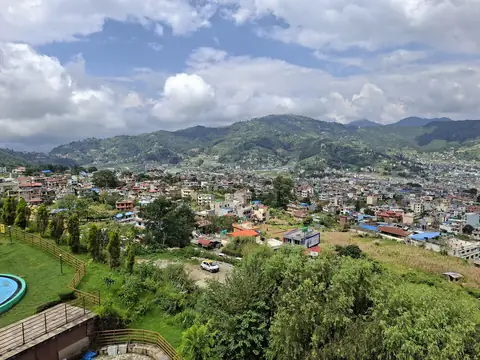
The Kathmandu Valley's climate is pleasant, in the board's words, and Pokhara is warmer, with warm, humid summers and mild, pleasant winters. Pokhara is also much wetter: 3,345 mm of rain a year against 1,600 mm for Nepal as a whole. The mountains above the lake are what most visitors come for, so aim for the clear weeks after the monsoon; our Pokhara guide covers the lake and Sarangkot.
Terai summers pass 40°C, and 45°C in some areas, while winters there range from 7°C to 23°C, according to the board. Chitwan is sub-tropical, with hot, humid summers and mild winters, so heat is the first season question there. Lumbini lies in the same southern lowlands, so the Terai figures are the ones to plan with there.
Chitwan has something to see in both halves of the year. In summer, migrants such as the paradise flycatcher, the Indian pitta and parakeets nest in the forest; in winter, waterfowl, Brahminy ducks, pintails, bar-headed geese and migrants from Siberia arrive on the park's rivers, as the board's birdwatching page lists them. The Chitwan guide covers the park itself.
For the peak-summer months (May, June and July) and winter (December, January and February), the board's climate table sets the three most popular tourist areas side by side. Each line gives the maximum and minimum temperature, then rain.
- Kathmandu: summer 28.1°C and 19.5°C with 312 mm; winter 19.3°C and 3.0°C with 15.4 mm.
- Pokhara: summer 29.7°C and 21.3°C with 829.7 mm; winter 20.3°C and 7.7°C with 26.3 mm.
- Chitwan: summer 33.0°C and 25.3°C with 404.0 mm; winter 24.1°C and 8.3°C with 13.8 mm.
Kathmandu Valley air: worst in winter and before the rains
France says the Kathmandu Valley has some of the highest air-pollution levels in the world, with regular peaks of strong to very strong intensity, especially in winter. It names older people, children, pregnant women and anyone with a chronic condition such as asthma, chronic bronchitis, emphysema or heart failure as the most sensitive, and advises them to check the air before leaving and to postpone the trip if need be. At a peak it advises cutting time outdoors, particularly early in the morning and in the evening and at night, and wearing an N95, KN95 or FFP2 filter mask, bought before departure if possible.
Pollution is generally highest in winter and the pre-monsoon period and lowest in the monsoon, when rain clears the air, according to the Department of Environment's 2025 annual report. Winter's peak comes from still air and a temperature inversion that traps pollutants near the ground, the pre-monsoon peak from burning of biomass and forest fires, and the monthly averages of fine particles (PM2.5 and PM10) are high from January to April and clearly lower from July to September. The Kathmandu Valley and the Terai are the most polluted regions. Germany dates the forest-fire pollution to the dry months from November to May and warns people with lung conditions.
Live readings are at pollution.gov.np, the Department of Environment's monitoring portal. If you are one of the sensitive groups above, the report points to July to September as the cleanest months and to January to April as the worst; the cleanest months fall in the monsoon road season described above, so weigh the two against each other.
Poon Hill, Annapurna Base Camp and Everest Base Camp by season
Height decides how much of the season advice above you can lean on: temperatures fall about 6°C for every 1,000 m. Storms, avalanches, landslides, rockfalls and flooding are hazards all year round, especially above 3,000 m, the UK government warns. Whatever the season, foreign trekkers on the listed routes need a licensed guide and an agency-issued TIMS card under the board's rules in force since 31 March 2023; our permits guide has the fees and the routes the rule covers.
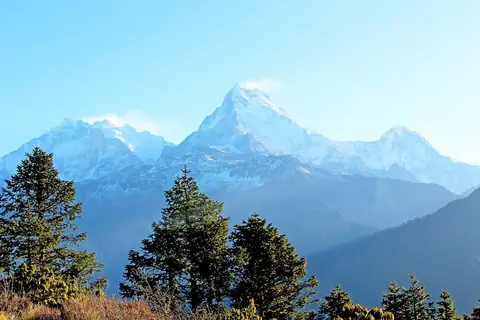
Poon Hill is the gentlest of the three, with its sunrise viewpoint at 3,210 m. Ghorepani holds among the world's largest rhododendron forests, according to NTNC, which makes spring the season to weigh against the clear autumn weeks; in winter the viewpoint is the lowest of the three, but the 6°C rule still makes the mornings cold. Our Poon Hill guide has the stages and the season in more detail.
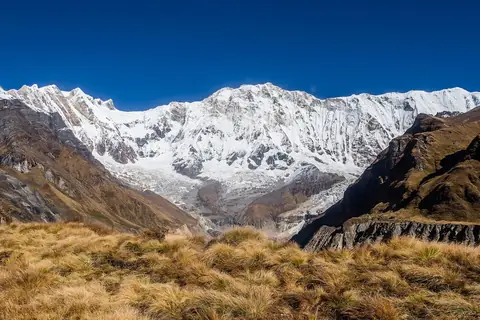
Annapurna Base Camp goes into the Annapurna Sanctuary at 4,130 m, so the post-monsoon clear weeks and the spring weeks are the two to compare, with the transition-period warning above in mind. Snow and avalanche conditions should be part of the agency's winter planning. Our Annapurna Base Camp guide has the route.
Everest Base Camp is about 5,300 m, according to the UK's travel-health body. The Nepal Tourism Board's page for Sagarmatha National Park names October to November and March to May as the best season. December to February bring snow and a daytime temperature of 5°C there, and June to September bring rain. In either trekking season, book a licensed trekking agency first and have it book the Lukla flight. Internal flights in high mountain areas can be delayed by poor weather and cancellations are common, the UK government warns. Summit Air says Ramechhap, served by Manthali Airport, can be reached only by road, a four hours' drive from Kathmandu, and that in its high seasons, March to April and October to December, all the flights to Lukla are rerouted there to avoid delays and backlogs. Check the departure airport on your ticket. If it is Manthali, transfer in daylight and sleep nearby before the flight; check the road is open, and postpone the flight if the transfer cannot run. Keep at least two spare days between the planned return flight and your international departure, and allow more if you can. Our Everest Base Camp guide covers the flight and the days.
Festival season: Dashain, Tihar and the holiday list
Festival dates change each year, so this guide gives none. The Ministry of Home Affairs publishes the government and public holiday list for each Nepali year on its holidays page (moha.gov.np), one list per year; check the list for the year you travel against your flight and permit dates before you fix them.
Dashain is the festival that moves the country. The Nepal Tourism Board calls it the longest Hindu festival in Nepal, traditionally celebrated for two weeks, a time of family reunions, and says that around this time the population of Kathmandu is greatly reduced as many head home to various parts of the country. If your trip falls in that fortnight, you travel with them, so book buses and domestic flights early. Tihar, the five-day festival of lights, is the one to see in town: houses all over the country are lit up with extra lights, and the board suggests Swayambhunath Stupa for a view of the lit-up city.
Germany's Federal Foreign Office names September to November as Nepal's festival season, so book flights and rooms for those months early. It also says petty crime such as pickpocketing and bag-snatching rises in those months, mostly in tourist areas. For an Everest trek, keep the agency-first booking order and flight-transfer arrangements described above.
Practical questions
What is the best time to visit Nepal?
Spring and autumn, by the Nepal Tourism Board's account: rhododendrons bloom in spring and the clearest skies come after the monsoon, in October and November. Nepal can also be visited the whole year round.
Can I travel in Nepal during the monsoon?
Yes, but the roads are the risk. Use the monsoon and road-warning windows above when planning transfers, check the road is open and keep your plans changeable.
Is winter a good time for Kathmandu and Pokhara?
The board says there are bright sun and brilliant views even in December and January, and it gives the Kathmandu Valley winter temperatures of 2°C to 12°C. The cost in Kathmandu is the air: France reports peaks of strong to very strong pollution in winter, and Nepal's Department of Environment finds pollution generally highest in winter and before the monsoon.
Which month is best for Everest Base Camp?
The Nepal Tourism Board's page for Sagarmatha National Park names October to November and March to May as the best season. Leave room after the Lukla flight back, as the Everest section above explains.
How hot does Chitwan get?
The board says summer temperatures in the Terai exceed 40°C, and 45°C in some areas, while its table gives Chitwan summer highs of 33.0°C and lows of 25.3°C. Winter in the Terai ranges from 7°C to 23°C.
When are Dashain and Tihar?
The dates change each year. The Ministry of Home Affairs publishes the public holiday list for each Nepali year at moha.gov.np; check the list for the year you travel. Dashain is traditionally celebrated over two weeks and Tihar lasts five days.
Sources and checks before you travel
Reference sources for the version dated 18 October 2026. Confirm opening times, access, transport and conditions for your travel dates.
- Nepal Tourism Board: climate ↗ — opens in a new tab
- Nepal Tourism Board: trekking in Nepal ↗ — opens in a new tab
- Nepal Tourism Board: top trekking destinations ↗ — opens in a new tab
- Nepal Tourism Board: Sagarmatha National Park ↗ — opens in a new tab
- Summit Air: Ramechhap ↗ — opens in a new tab
- Nepal Tourism Board: birdwatching in Chitwan ↗ — opens in a new tab
- NTNC: Annapurna Conservation Area Project ↗ — opens in a new tab
- Nepal Tourism Board: safety in the mountains ↗ — opens in a new tab
- Nepal Tourism Board: TIMS card ↗ — opens in a new tab
- Nepal Tourism Board: Pokhara ↗ — opens in a new tab
- Nepal Tourism Board: Chitwan ↗ — opens in a new tab
- Department of Hydrology and Meteorology: seasonal outlook ↗ — opens in a new tab
- Department of Hydrology and Meteorology: home page ↗ — opens in a new tab
- GOV.UK: Nepal safety and security ↗ — opens in a new tab
- Germany's Federal Foreign Office: Nepal travel and security advice (German) ↗ — opens in a new tab
- France Diplomatie: Nepal security advice (French) ↗ — opens in a new tab
- France Diplomatie: Nepal health advice (French) ↗ — opens in a new tab
- Department of Environment: status of air quality in Nepal, annual report 2025 (Nepali) ↗ — opens in a new tab
- Department of Environment: air quality monitoring portal ↗ — opens in a new tab
- UK Travel Health Pro (NaTHNaC): Nepal ↗ — opens in a new tab
- Ministry of Home Affairs: holidays ↗ — opens in a new tab
- Nepal Tourism Board: Dashain ↗ — opens in a new tab
- Nepal Tourism Board: Tihar ↗ — opens in a new tab
Photo credits
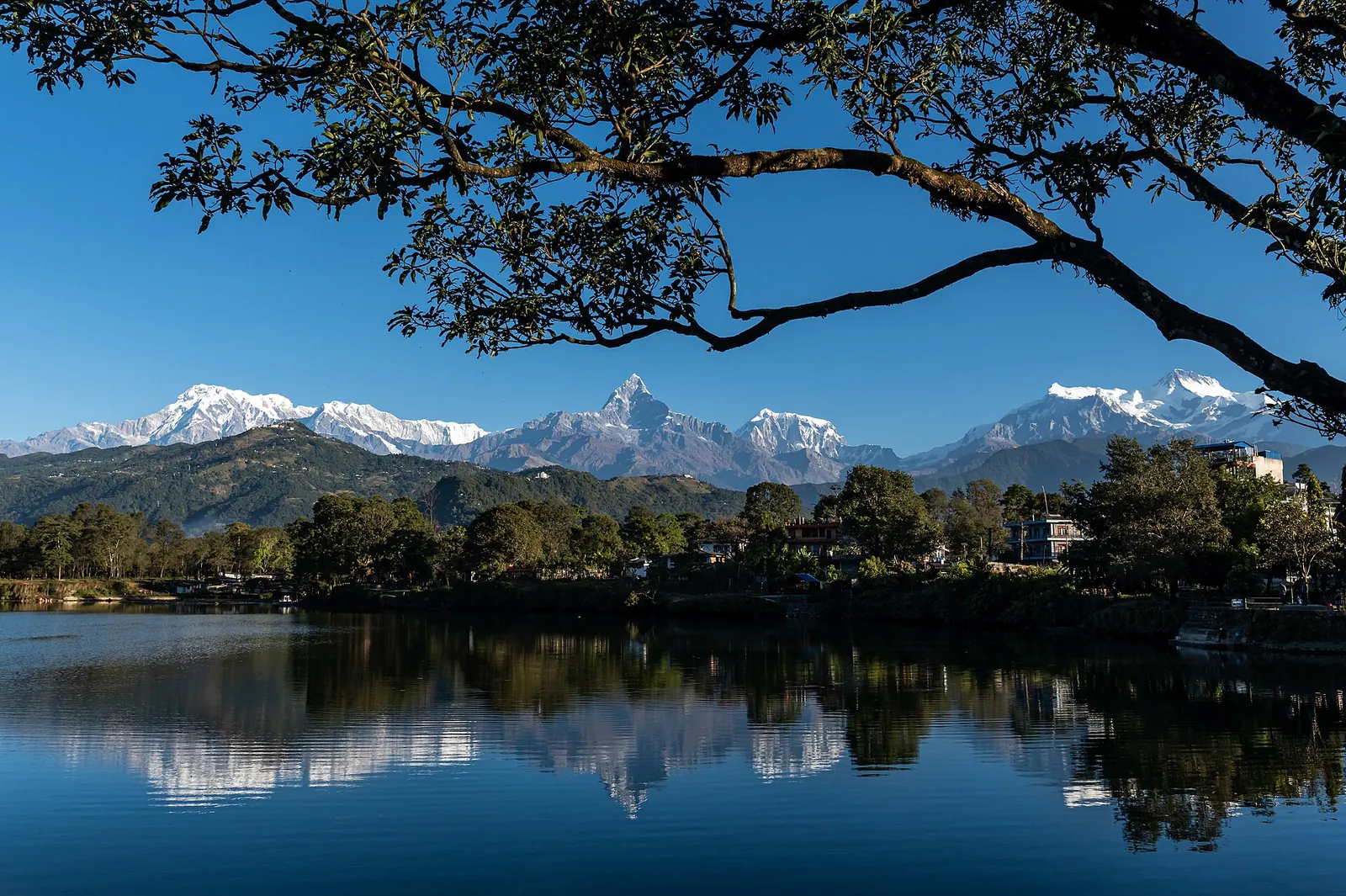
Machhapuchhre reflected in Phewa Lake.
Photograph: Ummidnp — opens in a new tab · CC BY-SA 4.0 — opens in a new tab
Changes: Resized and converted to WebP; displayed with responsive crops. · Original photograph and licence details ↗ — opens in a new tab
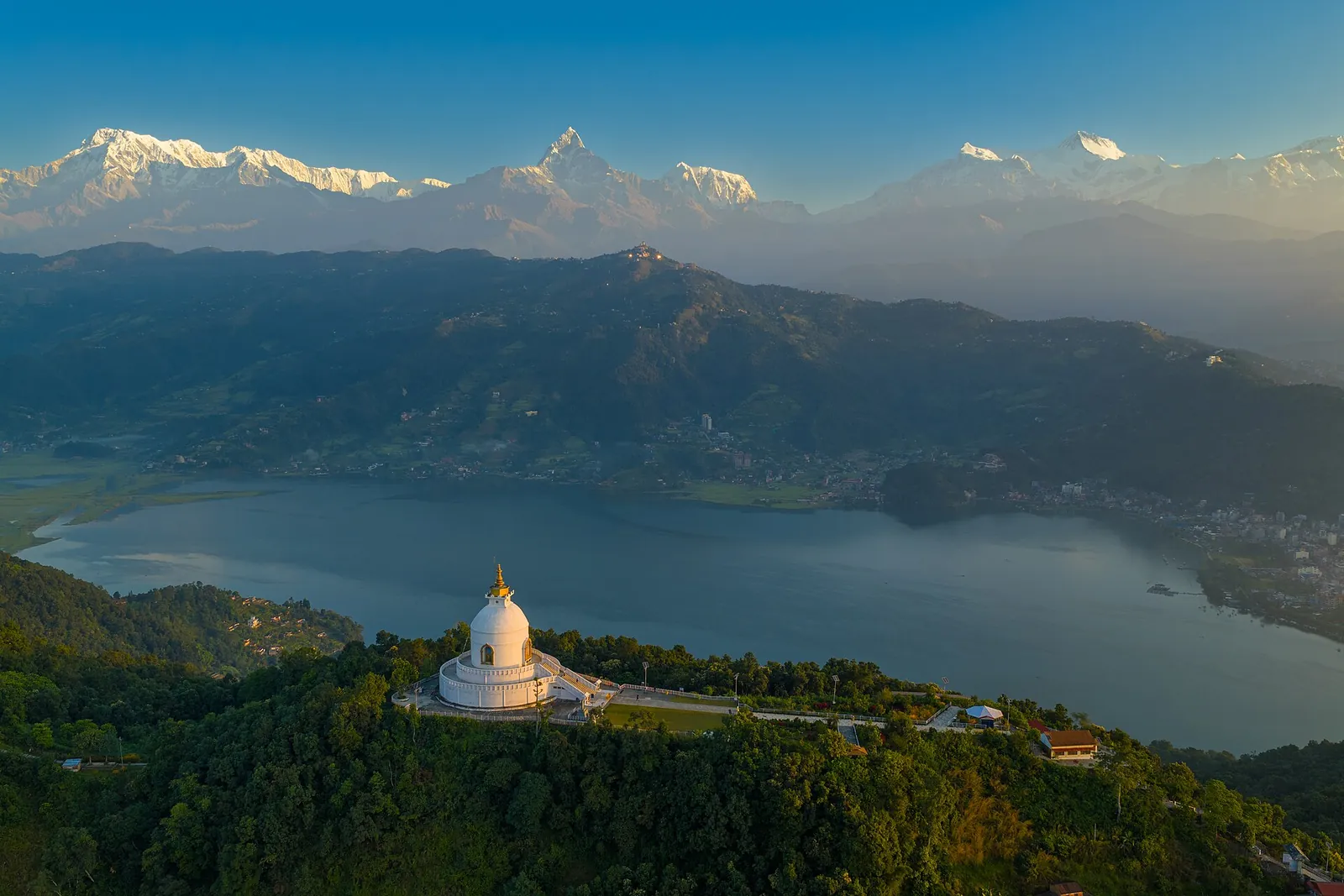
Phewa Lake, the World Peace Pagoda and the Annapurna range above Pokhara.
Photograph: Megaurab09 — opens in a new tab · CC BY-SA 4.0 — opens in a new tab
Changes: Resized and converted to WebP; displayed with responsive crops. · Original photograph and licence details ↗ — opens in a new tab
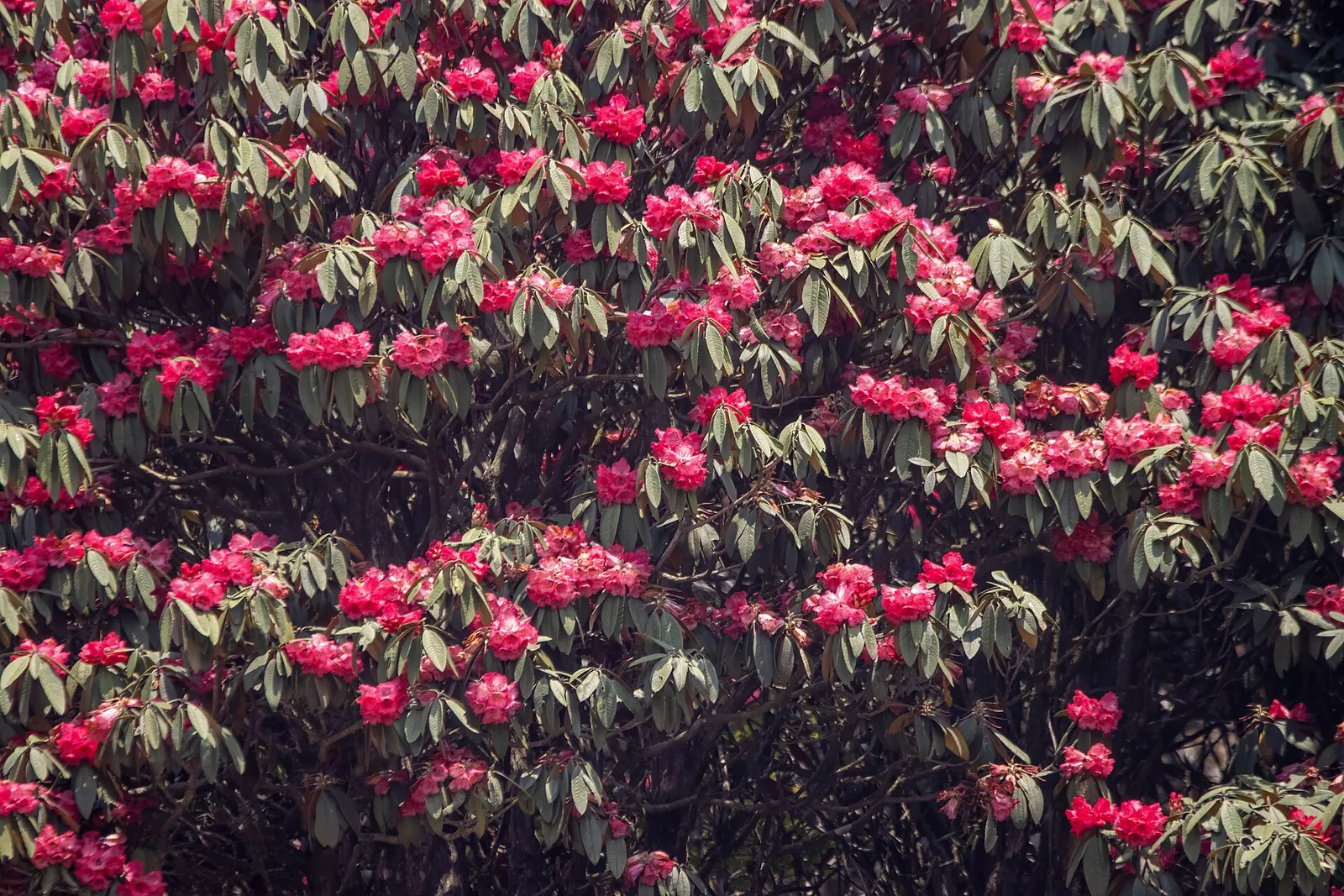
Rhododendrons in bloom at Tinjure, Tehrathum District
Photograph: Nirmal Dulal — opens in a new tab · CC BY-SA 4.0 — opens in a new tab
Changes: Resized and converted to WebP; displayed with responsive crops. · Original photograph and licence details ↗ — opens in a new tab
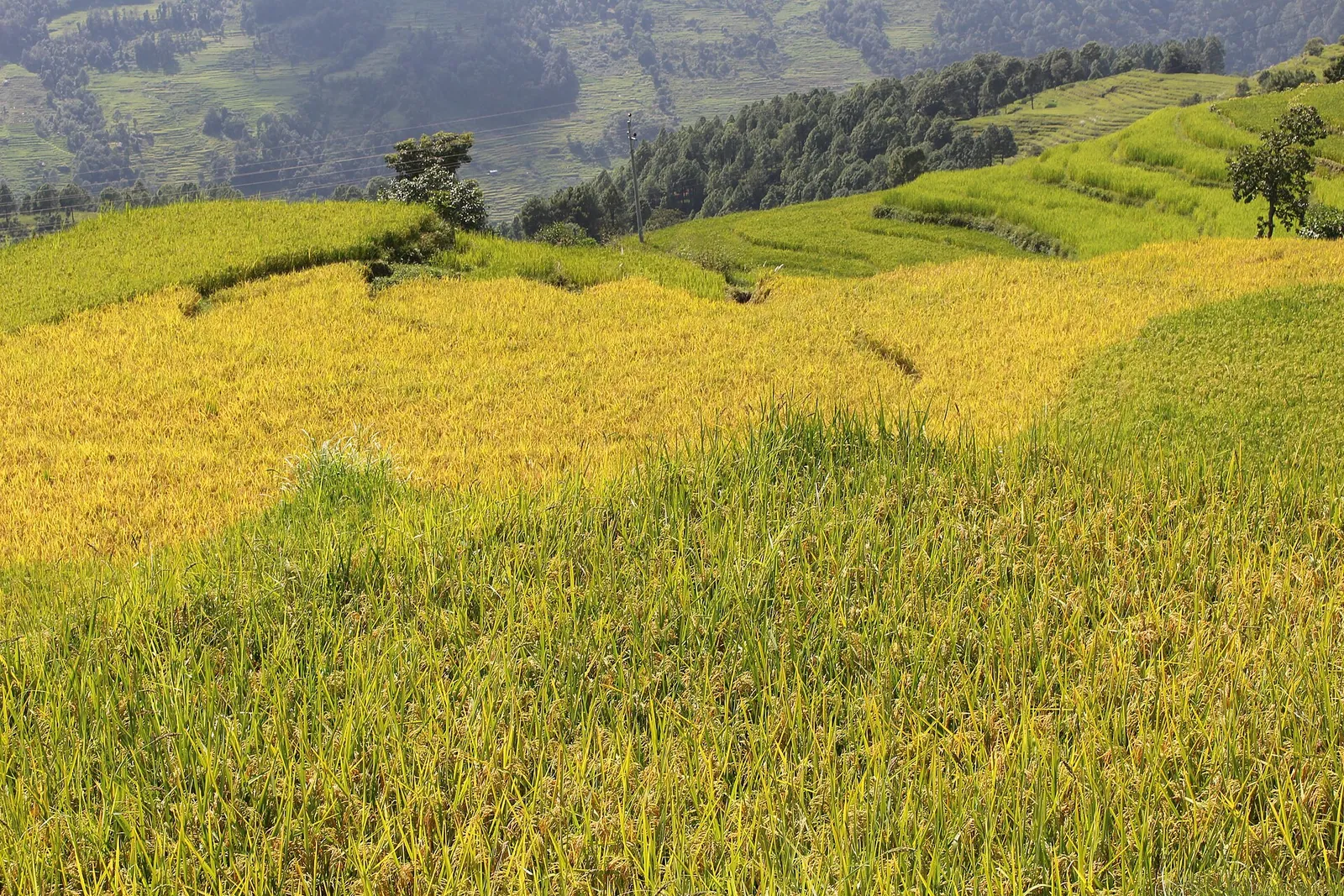
Rice terraces in Dolakha district
Photograph: Shantiram Subedi — opens in a new tab · CC BY-SA 4.0 — opens in a new tab
Changes: Resized and converted to WebP; displayed with responsive crops. · Original photograph and licence details ↗ — opens in a new tab
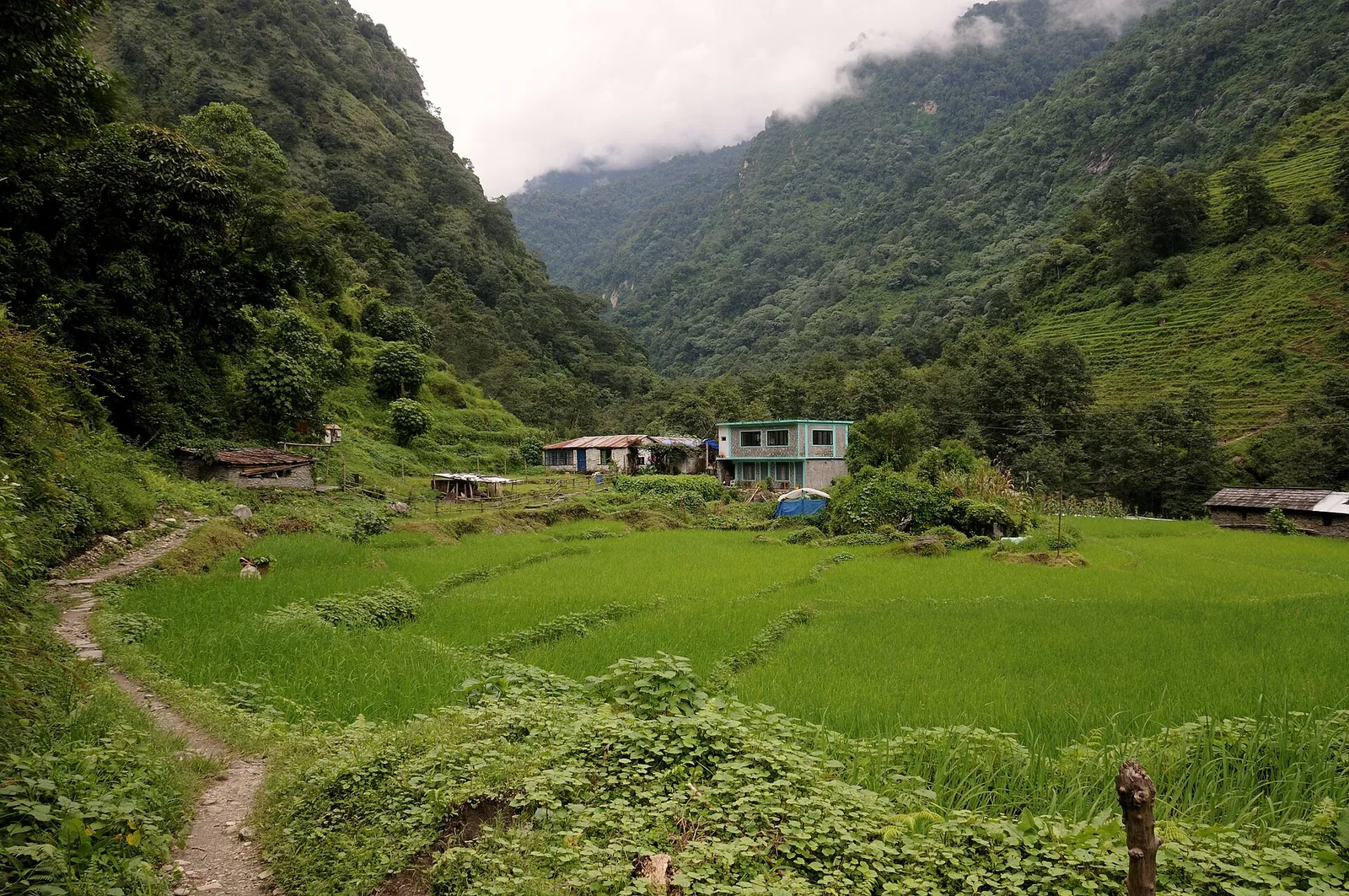
Terraced fields at Landruk
Photograph: Josep M. Gracia — opens in a new tab · CC BY-SA 4.0 — opens in a new tab
Changes: Resized and converted to WebP; displayed with responsive crops. · Original photograph and licence details ↗ — opens in a new tab