The Terai: Chitwan and Lumbini · Bagmati
Chitwan travel guide: Sauraha, park permits and jungle trips
Chitwan is the lowland end of a Nepal trip: flat, green and humid, with a river on every side, in place of the cold and stone of the valley and the mountains. Its national park, the first in the country, shelters one-horned rhinoceroses, tigers, Asian elephants, gharials and hundreds of bird species, and the town of Sauraha on its edge is built around visits to it. The decisions are practical ones: how many nights to give it, which permits you pay for, whether to fly or ride the bus from Kathmandu, and which months suit you.
- Suggested time
- 2 nights in Sauraha, a third for Beeshazari Lake and Meghauli
- Where to stay
- Sauraha on the Rapti River for the park and the lodges; Meghauli for the western entrance; Bharatpur for the airport and the city
- Season and timing
- Come in the mild winter months for comfort: the Nepal Tourism Board's table gives Chitwan highs of 24.1°C from December to February, when winter waterfowl are on the rivers. Its climate page describes the national rainy season below; road warnings extend into October.
The short answer
Book two nights in Sauraha, the lodge town on the Rapti River beside Chitwan National Park; the Nepal Tourism Board describes a typical jungle programme as two nights and three days. Reach it by tourist bus, 145 km by road from Kathmandu to Bharatpur, or by Buddha Air's 25-minute flight to Bharatpur, and book the lodge and that leg first. Checked on 17 October 2026, the park permit cost NPR 2,000 per person per day for foreign visitors other than SAARC citizens, or NPR 2,260 if the 13% VAT on the board's heritage-site table is charged, and a jeep drive added a permit of NPR 5,000 (NPR 3,000 for a car).
Where to sleep: Sauraha, Meghauli or Bharatpur
"Chitwan" is a district, a national park and, to most travellers, a handful of lodge towns around the park, so the first decision is which edge to sleep on. The Nepal Tourism Board says that resorts and lodges of varying standards sit outside the park and that reservations can be made at their Kathmandu offices.
Sauraha is the usual base. The Nepal Tourism Board calls it a thriving town where visitors stop before their jungle trips, with tourist-standard hotels, community homestays and luxury resorts, and coffee shops and restaurants overlooking the banks of the Rapti River at sunset. It adds that you may see one-horned rhinos or elephants near the river banks or even in town. The visitor centre gives information on wildlife and conservation, and a women's user group runs a souvenir shop of local handicrafts.
Meghauli is the western entrance to the park, on the banks of the Rapti and Narayani rivers in the buffer zone. The board describes it as a good place to meet Tharu culture, with Tharu homestays and local restaurants, a 25-km community forest and sunsets at Golghat, where the rivers meet; in good weather the Himalaya shows to the north from there. It is about half an hour's drive from Bharatpur. Choose it if you would rather enter the park from its western side.
Bharatpur is the district's administrative capital and its commercial centre. The board lists morning and evening walks along the Narayani River, boating, angling and restaurant hopping for local food among the things to do there. Flights from Kathmandu land here, so most visitors pass through on the way to a lodge.
Two nights is the length of the typical programme the board describes: a wildlife safari, a canoe ride, a visit to a Tharu village and nature walks. Add a third night if you also want Beeshazari Lake and the Elephant Breeding Centre without hurrying. For rooms and rates by area, see our guide to where to stay in Nepal.
The park: first in Nepal, a World Heritage site of river plain and forest
Chitwan National Park was declared in 1973 as Nepal's first protected area, and the park office says it joined the World Heritage list in November 1984. The office gives the park's present area as 952.63 km², spread over parts of Chitwan, Nawalpur, Makwanpur and Parsa districts and lying mainly on the plains of the Narayani, Rapti and Reu rivers. It joins Parsa National Park to the east and India's Valmiki Tiger Reserve to the south. The Nepal Tourism Board places the valley between the foothills of the Himalaya and the Mahabharat and Siwalik ranges.
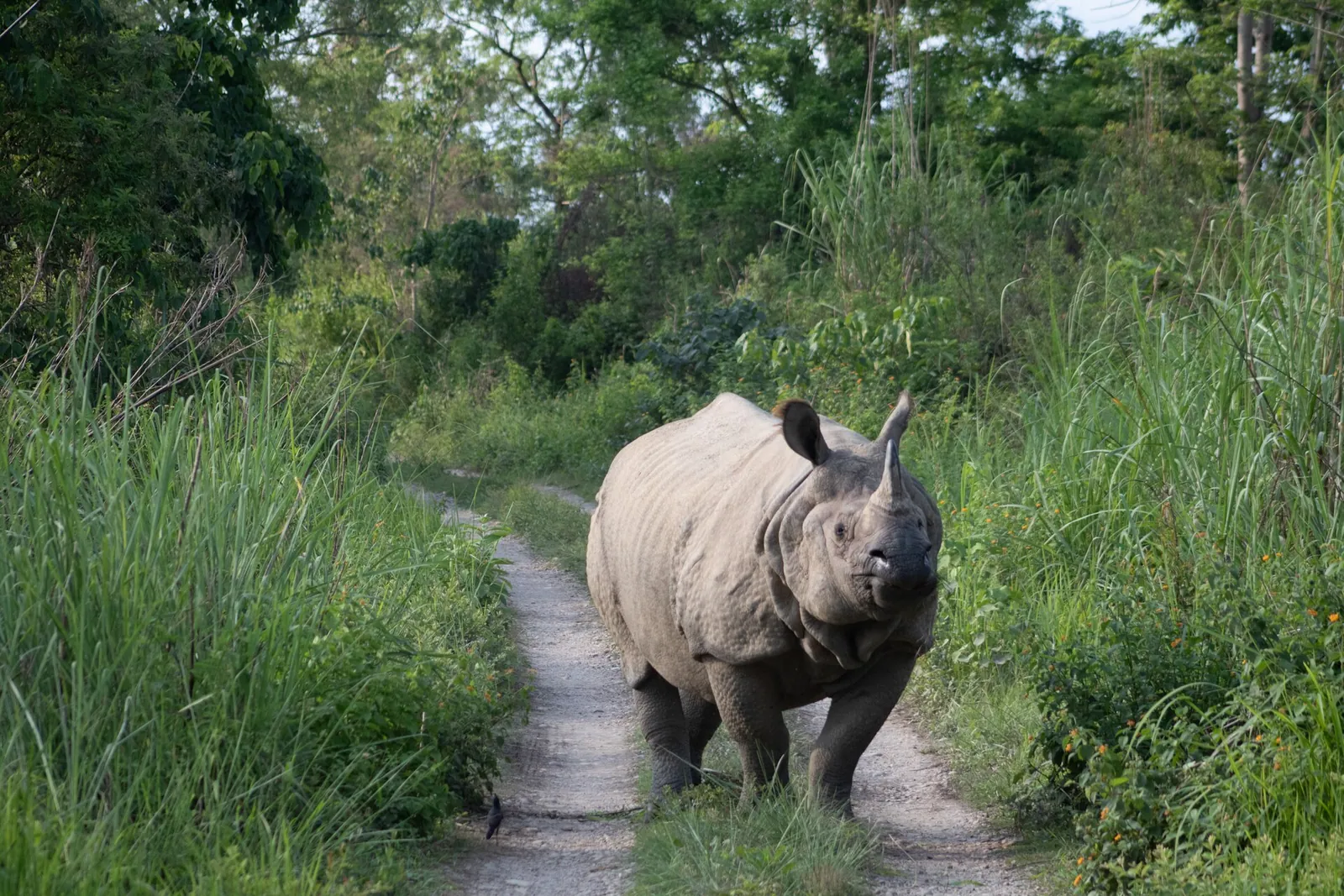
The park office counts 422 plant species, 75 mammal species, 643 bird species and 120 fish species. It names the Bengal tiger, the Asian elephant, the one-horned rhinoceros and the river dolphin among its protected mammals, and the gharial, the golden monitor lizard and the python among its reptiles. The Nepal Tourism Board adds leopard, sloth bear, wild boar, rhesus monkey and grey langur, and says the swampy areas and oxbow lakes shelter marsh mugger crocodiles, while one stretch of the Narayani River holds one of the few remaining populations of the fish-eating gharial. The Department of National Parks and Wildlife Conservation puts Nepal's tigers at about 355 adults in the 2022 national survey, found only in five Terai parks, Chitwan among them, and the forests around them; a new national survey began in December 2025.
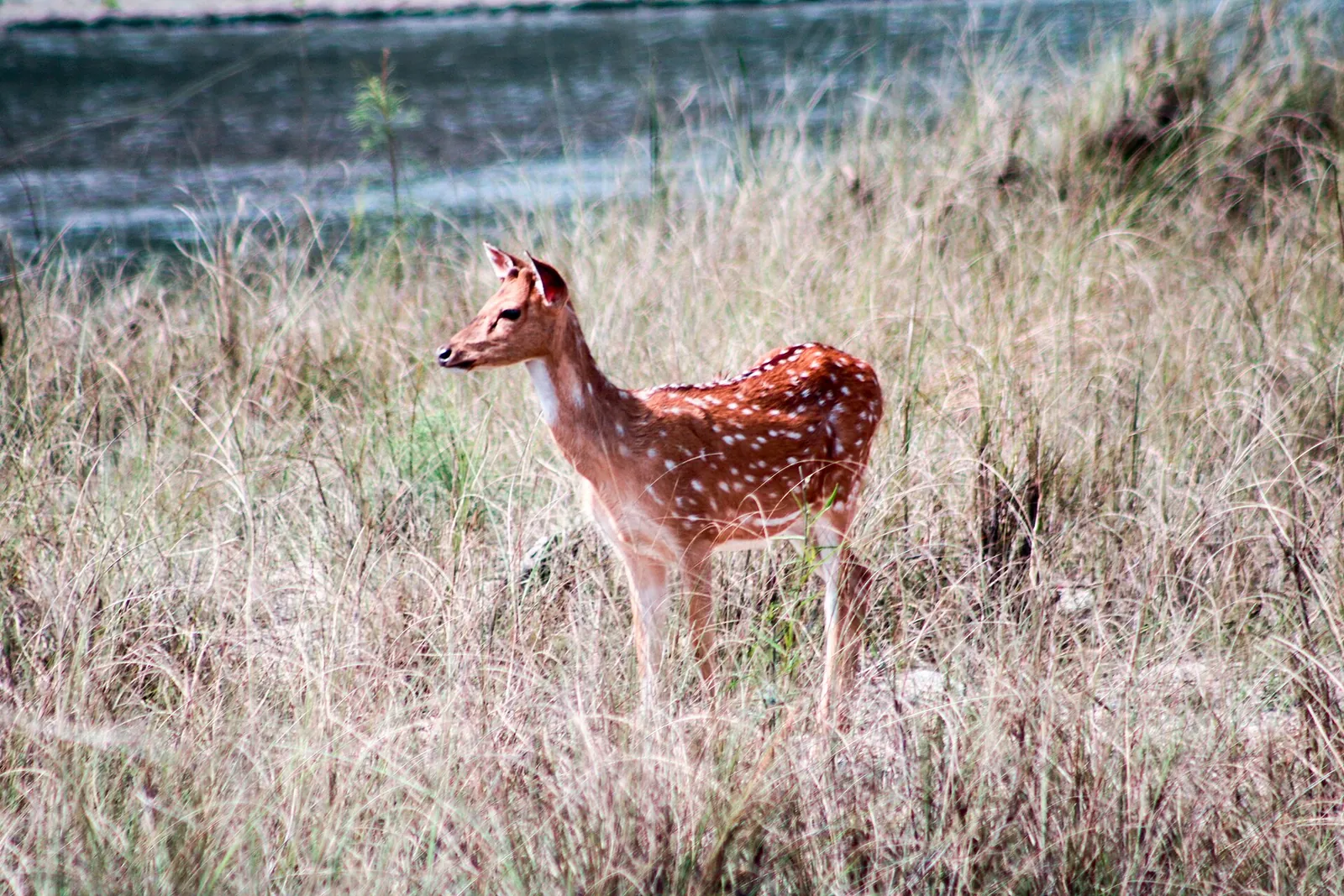
Expect a landscape of tall grass, river channels, oxbow lakes and sal forest more than a view. The board's own jungle page lists what a trip might turn up (a herd of deer, peacocks, langurs in the treetops, a pair of rhinos) and says each trip is unique, with some lucky guests seeing a tiger. Treat any single sighting as a bonus and the two days as the plan.
What you pay: the park permit, vehicle permits and two small entries
The park office's citizen charter, checked on 17 October 2026, lists a park entry permit of NPR 2,000 per person per day for foreign nationals other than SAARC citizens, and NPR 1,000 for SAARC citizens. It is issued at the designated entrance gate on a copy of your passport. The Nepal Tourism Board's park-fee table also gives NPR 2,000 and lets children under 10 in free. You pay NPR 2,000 a day, or NPR 2,260 if the 13% VAT on the board's heritage-site table is charged, so two days in the park cost NPR 4,000 per person in entry permits, or NPR 4,520 with VAT.
A jungle drive needs a second permit on top of every passenger's entry permit: NPR 3,000 for a car and NPR 5,000 for a jeep, according to the charter. For a boat or rafting trip on the park's rivers the charter lists NPR 4,000 for foreign nationals other than SAARC citizens, issued on a copy of the passport. It does not state whether that charge is per person or per boat; check the unit and which permits your canoe booking includes. Our 10-day itinerary puts Chitwan into a longer trip.
Two smaller entries appear in the board's heritage-site table for Chitwan: NPR 100 for the elephant breeding camp and NPR 25 for the Tharu Cultural Museum, both for foreign nationals.
Jeep, canoe, walk and birds: the jungle day
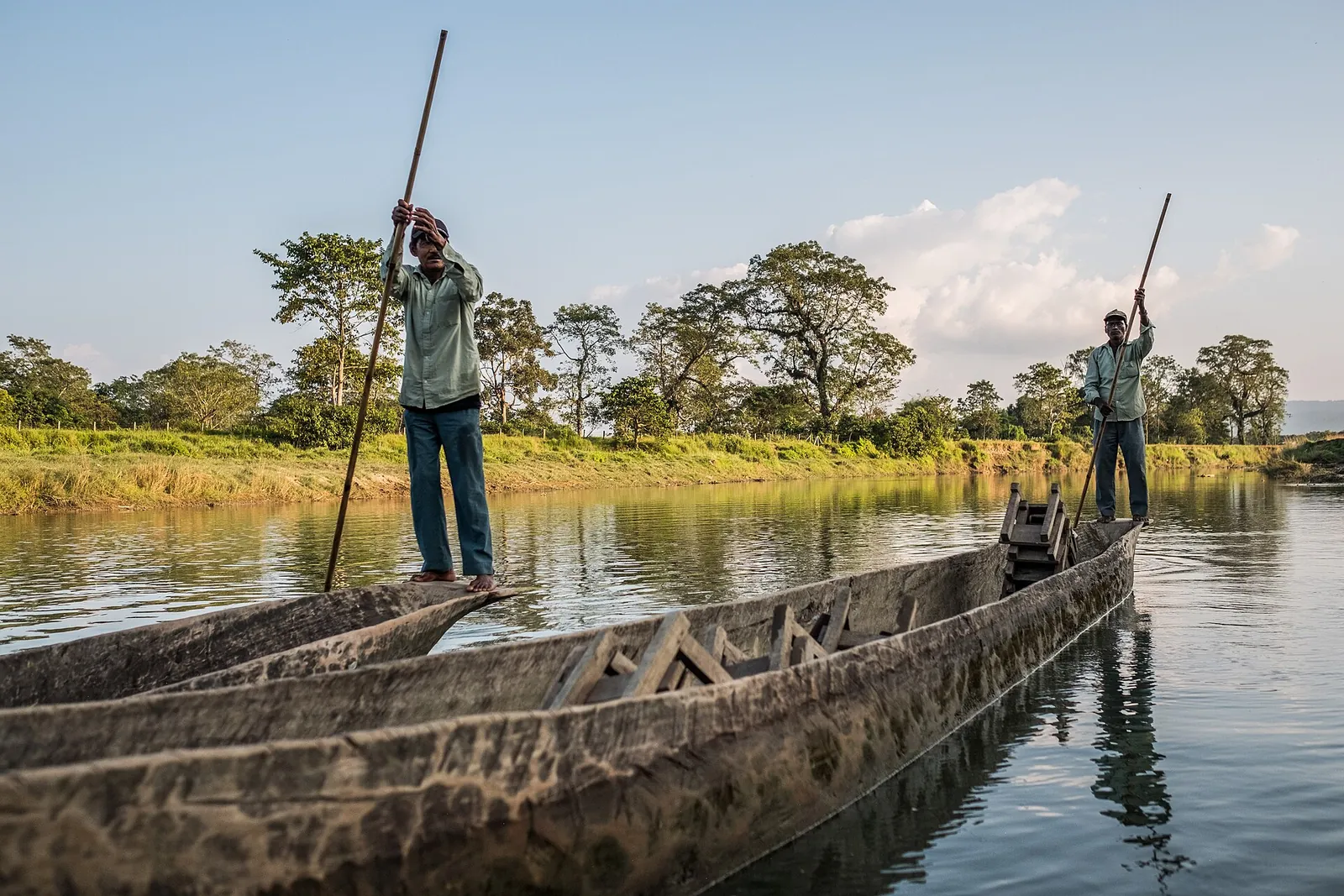
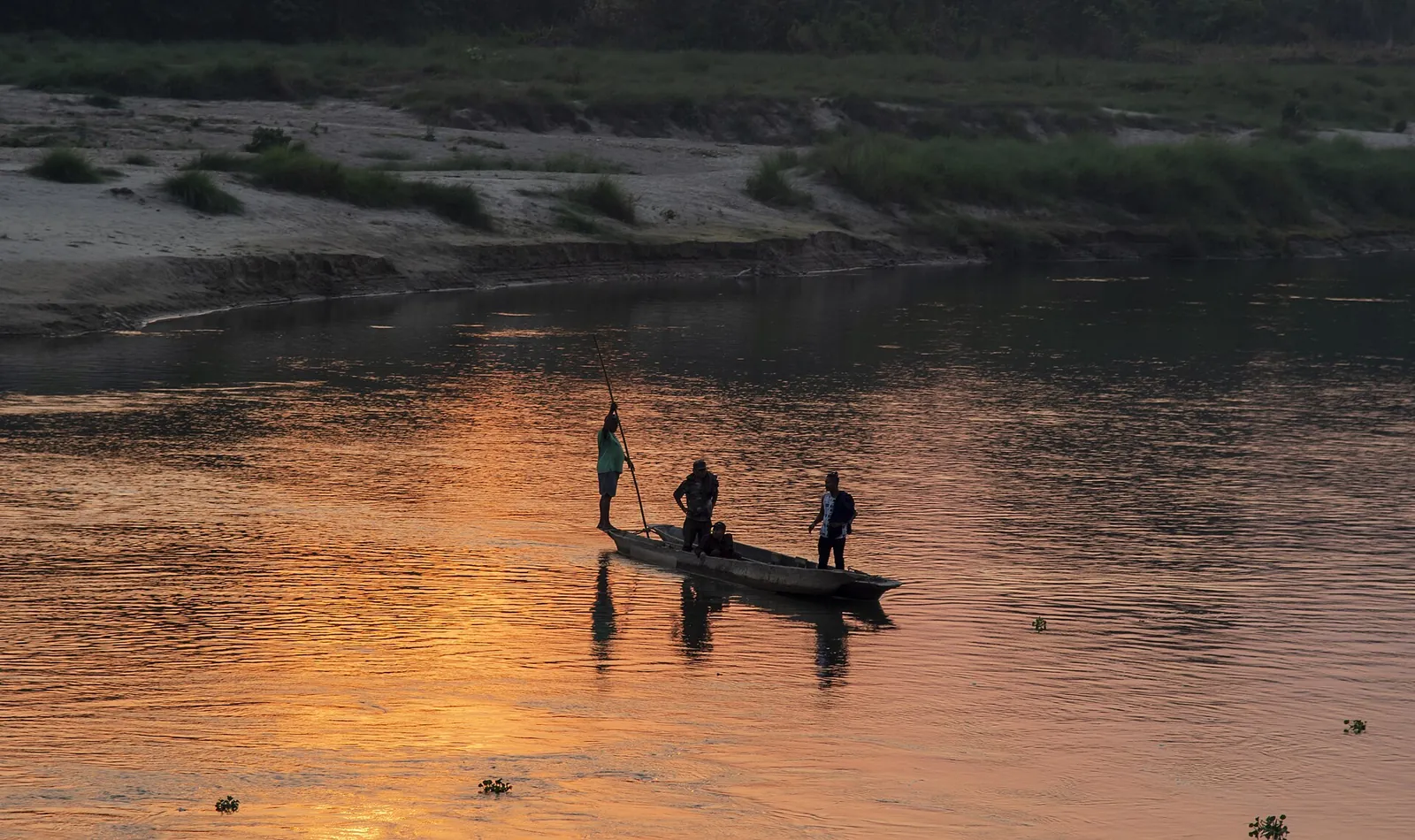
The Nepal Tourism Board lists four ways into the park. A jeep drive goes into the depths of the forest, and the vehicle permit above applies. A canoe trip on the river, in the long wooden dugouts the polers use, is where wildlife can be caught by surprise: crocodiles and water birds, with marsh muggers basking on sandy banks. A jungle walk goes with an experienced guide. A village tour (next section) fills the rest of the programme.
The park office issues identity cards to nature guides, at NPR 2,000 per guide a year, and the board describes jungle walks as accompanied by an experienced guide. Book walks, canoe trips and jeep drives with a carded nature guide through your lodge. Park opening hours and visitor guide ratios are not confirmed; arrange the timing and guide when you book.
The lodges sell the jeep drives, canoe rides and walks themselves, at their own prices; the starting prices of one Sauraha lodge are in our guide to where to stay in Nepal.
The tourism board's heritage-site table lists an elephant-ride fare of NPR 2,500 for foreign visitors (NPR 1,500 for SAARC citizens), but the park office's charter lists no elephant-ride permit, only permits for cars, jeeps and boats, so ask your lodge whether it offers a ride before you plan the park day around one.
One park day for two adults other than SAARC nationals: two entry permits cost NPR 4,000, or NPR 4,520 with the board's 13% VAT. Adding the NPR 5,000 jeep permit gives a permit subtotal of NPR 9,000, or NPR 9,520 with entry VAT. This excludes the boat permit and the lodge's activity prices. Check which permits the activity booking includes. The 10-day itinerary prices rooms and the longer trip.
On the Narayani the board lists the rare gharial, which feeds only on fish, and the Gangetic dolphin, one of the world's four freshwater dolphin species.
For birds, the park office lists 643 species. The board names summer migrants that nest in the forest, among them the paradise flycatcher, the Indian pitta and parakeets, and winter visitors on the rivers: waterfowl, Brahminy duck, pintails, bar-headed geese and migrants from Siberia. Woodpecker, hornbill, Bengal florican and red-headed trogon are on its list of birds to look for all year.
Tharu villages, an evening dance and the Elephant Breeding Centre
The Tharu are the largest ethnic group of the Terai, and the Nepal Tourism Board describes the Chitwan villages as clusters of houses in forest clearings, with wattle walls and thatched roofs covered in gourd creepers, floral and animal motifs on the walls, and women's jewellery of beads and coins. A village visit is part of the board's typical programme, with guests welcomed into traditional mud houses.
The evening entertainment is a campfire with the Tharu stick dance and folk songs; at Meghauli the board adds the tiger dance and the ghost dance. The Tharu Cultural Museum (NPR 25 for foreign nationals) gives the background.
The Elephant Breeding Centre at Khorsar, Sauraha, is where the board says you learn about domesticated elephants and see the baby elephants born there; it appears in the heritage table at NPR 100. The board also names a gharial crocodile farm, where the reptiles are bred and protected, among the places worth a visit, and calls the two breeding centres a good way to show children these animals and their life cycle.
Make time for the local food
What to eat and where to look
Taas
Spicy fried goat meat served with beaten rice, which the Nepal Tourism Board calls a must-try in Chitwan.
- Where to look
- Restaurants in Bharatpur, where the board suggests restaurant hopping for local food, and roadside eateries on the way in.
- Fit it into your day
- A lunch or an early dinner after a day in the park.
Eat food that is freshly cooked and still hot, and drink sealed bottled water or boiled drinks rather than tap water or ice.
Tharu-style or Terai-style set meal
The board lists the Nepali Terai-style set and the Tharu-style set as popular options for a full local plate.
- Where to look
- The Tharu homestays and local restaurants of Meghauli, which the board names, or a community homestay in Sauraha.
- Fit it into your day
- Dinner in a Tharu village or at a homestay after the campfire dance.
Ghongi
A Tharu dish of water snail stuffed and cooked in gravy, listed by the board among the Tharu delicacies.
- Where to look
- Tharu homestays and local restaurants, for example in Meghauli.
- Fit it into your day
- A tasting in the evening, for the adventurous.
Dhikri
Steamed rice dough shaped in different ways and eaten with chutney, another Tharu delicacy on the board's list.
- Where to look
- Tharu homestays and village eateries around Sauraha and Meghauli.
- Fit it into your day
- A light lunch or a side to a Tharu set.
Sidhra
Dried or fresh crab and fish, which the board lists among the Tharu delicacies alongside ghongi and dhikri.
- Where to look
- Tharu homestays and local restaurants in Meghauli.
- Fit it into your day
- A side dish with a Tharu set at dinner.
Beyond the lodges: Beeshazari Lake, Bharatpur and Devghat
Beeshazari Lake and its neighbouring lakes cover more than 3,200 hectares, one of the country's largest wetlands, and are listed as a Ramsar site; the park office dates that listing to August 2003. The board's Bharatpur page puts the lake only 20 minutes from the jungle, and its birdwatching page names it as a wetland that attracts birds of many kinds. It suits a third-night morning.
Devghat, about 5 km north-west of Narayanghat town, is a pilgrimage site at the confluence of the Kali Gandaki and Trishuli, where the rivers leave the Mahabharat range and become the Narayani. The board names the Chakreshwar Temple as its most prominent shrine and says a large religious fair is held each year on Makar Sankranti, the first day of the Nepali month of Magh, in January. Minibuses and tempos run from Narayanghat to Devghat at regular intervals.
For a second lowland park, the board names Bardiya National Park alongside Chitwan for wildlife, and puts the jungles of Nepal's south and south-west half an hour to an hour's flight away.
Getting to Chitwan from Kathmandu, Pokhara and Lumbini
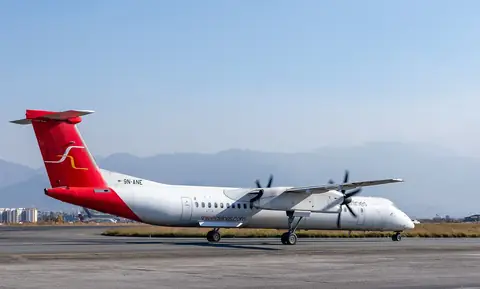
From Kathmandu. For Chitwan, Buddha Air flies Kathmandu to Bharatpur in 25 minutes, and the Nepal Tourism Board puts Bharatpur 145 km from Kathmandu by road, with the park headquarters at Kasara another 21 km on. Buddha Air flies the route 6 times a day; search its booking page for the fare on your date. Ask your lodge whether it meets the flight at Bharatpur.
By road. The Nepal Tourism Board says intercity tourist buses to Pokhara, Chitwan and Lumbini leave from Kantipath in Kathmandu. Tourist-bus operators and fares are not listed on that page; check both when booking. Buy the ticket a day ahead and have the boarding point written on it. Ask too where the bus stops for Sauraha. Treat the road as most of a day, and use an available flight if the road is shut: the UK government describes Nepal's road conditions as poor, especially in the monsoon or in mountain areas.
Check the road is open, take a tourist bus and do not travel at night. The UK government advises against overloaded buses and night travel and says tourist buses usually offer a higher standard of comfort and safety; Germany's Federal Foreign Office says to use only marked tourist buses and that short-notice road closures and local night driving bans can occur. The UK government, checked on 17 October 2026, listed areas of Gorkha, Nuwakot and Dhading among those affected by the floods of 26 August 2026 and warned that heavy rain could trigger more landslides. If the road is shut, an available flight to Bharatpur is the fallback. If neither flights nor daylight road travel is possible, stay put and change the plan. Check your own government's advice too, since it may draw a wider line. The Nepal Meteorological Department's toll-free line 1155 gives weather and flood information, and the Tourist Police answer on 1144.
From Pokhara and Lumbini. Buddha Air lists one daily flight from Pokhara to Bharatpur, taking 20 minutes. Keep a spare day and the road as a fallback if the flight is cancelled. For a road journey, leave early, ride a marked tourist bus and arrive before dark. Buddha Air marks Bharatpur to Bhairahawa as temporarily suspended, so plan the Lumbini leg by road; the tourism board puts Lumbini 22 km from Bhairahawa. Our Lumbini guide covers the other half of the Terai, and our transport guide covers the buses and flights between the regions.
When to go: heat, the monsoon and the birds
The Nepal Tourism Board calls Chitwan's climate sub-tropical, hot and humid in summer and mild in winter. It says summer temperatures in the Tarai exceed 40°C, above 45°C in some areas, and that winter temperatures there range from 7°C to 23°C. Its comparison table for the three summer months (May, June and July) gives Chitwan a maximum of 33.0°C and a minimum of 25.3°C, and for winter (December, January and February) 24.1°C and 8.3°C.
The Nepal Tourism Board describes Nepal's rainy season. The monsoon runs from June to September. The board says 80 percent of Nepal's rain falls then; the UK government gives June to October for the season in which flooding and landslides can cut roads for days. For comfort, choose the mild winter months, when winter waterfowl join the resident birds. The hot months bring the summer-nesting migrants, if you can take the heat. Grass-cutting dates and monsoon activity closures are not confirmed; ask your lodge which trips it runs in your travel month.
Mosquitoes, water and animals
Chitwan is low enough for malaria to be a consideration, unlike Kathmandu. NaTHNaC, the UK's travel-health body, says malaria risk is low below 1,500 m, particularly in the Terai, and recommends bite avoidance; Germany's Federal Foreign Office lists a low risk all year in the Terai districts near India, including Chitwan National Park, and says to protect yourself at dusk and at night. NaTHNaC puts the Japanese encephalitis season in the Terai at May to October at its peak, with risk all year, and lists dengue and chikungunya risk in Nepal.
NaTHNaC advises that travellers in countries with poor sanitation avoid untreated tap water and ice, and recommends drinks from unopened, sealed factory cans or bottles, or drinks made with boiled water and served steaming hot. It also says rabies is a risk in Nepal and travellers should avoid contact with all animals; Germany's Federal Foreign Office says stray dogs are a nationwide bite risk and that monkeys should never be fed.
Practical questions
How many nights do I need in Chitwan?
Two nights in Sauraha suit most trips. The Nepal Tourism Board describes a typical jungle programme as two nights and three days: a wildlife safari, a canoe ride, a Tharu village visit and nature walks. A third night adds Beeshazari Lake and the Elephant Breeding Centre without hurrying.
How much does Chitwan National Park cost for foreign visitors?
Checked on 17 October 2026, the park office's citizen charter listed NPR 2,000 per person per day for foreign nationals other than SAARC citizens (NPR 1,000 for SAARC citizens), plus NPR 3,000 for a car or NPR 5,000 for a jeep on a jungle drive and NPR 4,000 for a boat trip. Children under 10 enter free, according to the Nepal Tourism Board, and the permit is NPR 2,260 if the board's 13% VAT is charged.
Should I fly or take the bus from Kathmandu to Chitwan?
Buddha Air flies Kathmandu to Bharatpur 6 times a day in 25 minutes; the road is 145 km, so plan most of the day for the bus. Fly if the road is shut after rain; by road, check the road is open and use a tourist bus by day.
Is there malaria in Chitwan?
There is a low risk. NaTHNaC says malaria risk is low below 1,500 m, particularly in the Terai, and Germany's Federal Foreign Office lists a low year-round risk in the Terai districts near India, including Chitwan National Park. Both recommend avoiding mosquito bites, especially at dusk and at night.
Do I need a guide in Chitwan National Park?
The park office issues identity cards to nature guides, and the Nepal Tourism Board describes jungle walks as accompanied by an experienced guide. Book walks, canoe trips and jeep drives with a carded nature guide through your lodge.
When is the best time to visit Chitwan?
The mild winter months suit most visitors: the Nepal Tourism Board's table gives Chitwan highs of 24.1°C from December to February, with winter waterfowl on the rivers. Ask your lodge which activities it runs in your travel month.
Sources and checks before you travel
Reference sources for the version dated 18 October 2026. Confirm opening times, access, transport and conditions for your travel dates.
- Chitwan National Park office: citizen charter (Nepali) ↗ — opens in a new tab
- Chitwan National Park office: introduction (Nepali) ↗ — opens in a new tab
- Nepal Tourism Board: Chitwan ↗ — opens in a new tab
- Nepal Tourism Board: Sauraha ↗ — opens in a new tab
- Nepal Tourism Board: Meghauli ↗ — opens in a new tab
- Nepal Tourism Board: Bharatpur ↗ — opens in a new tab
- Nepal Tourism Board: experiencing wildlife ↗ — opens in a new tab
- Nepal Tourism Board: find tigers in Chitwan National Park ↗ — opens in a new tab
- Nepal Tourism Board: jungle discovery ↗ — opens in a new tab
- Nepal Tourism Board: birdwatching in Chitwan ↗ — opens in a new tab
- Nepal Tourism Board: Tharu culture ↗ — opens in a new tab
- Nepal Tourism Board: local cuisine ↗ — opens in a new tab
- Nepal Tourism Board: Beeshazar and associated lakes ↗ — opens in a new tab
- Nepal Tourism Board: Devghat ↗ — opens in a new tab
- Nepal Tourism Board: wildlife ↗ — opens in a new tab
- Nepal Tourism Board: park entry fees ↗ — opens in a new tab
- Nepal Tourism Board: heritage site entry fees ↗ — opens in a new tab
- Nepal Tourism Board: climate ↗ — opens in a new tab
- Buddha Air: flights from Kathmandu to Bharatpur ↗ — opens in a new tab
- Buddha Air: flights from Pokhara to Bharatpur ↗ — opens in a new tab
- Buddha Air: flights from Bharatpur to Bhairahawa ↗ — opens in a new tab
- Nepal Tourism Board: Lumbini ↗ — opens in a new tab
- Department of National Parks and Wildlife Conservation: National Tiger Survey 2025 press release (Nepali, PDF) ↗ — opens in a new tab
- GOV.UK: Nepal travel advice, safety and security ↗ — opens in a new tab
- GOV.UK: Nepal travel advice ↗ — opens in a new tab
- Germany's Federal Foreign Office: Nepal travel and security advice (German) ↗ — opens in a new tab
- NaTHNaC: Nepal ↗ — opens in a new tab
- NaTHNaC: food and water hygiene ↗ — opens in a new tab
- Nepal Meteorological Department ↗ — opens in a new tab
- Nepal Police: Tourist Police ↗ — opens in a new tab
- Nepal Tourism Board: FAQ ↗ — opens in a new tab
Photo credits
Dugout canoes on the Bhude Rapti River in the Bagmara buffer zone near Sauraha
Photograph: USAID Biodiversity & Forestry — opens in a new tab · Public domain — opens in a new tab
Changes: Resized and converted to WebP; displayed with responsive crops. · Original photograph and licence details ↗ — opens in a new tab
A greater one-horned rhinoceros on a track through tall grass in Chitwan National Park
Photograph: Nabin K. Sapkota — opens in a new tab · CC BY-SA 4.0 — opens in a new tab
Changes: Resized and converted to WebP; displayed with responsive crops. · Original photograph and licence details ↗ — opens in a new tab
A chital (spotted deer) in the grass of Chitwan National Park
Photograph: Nirmal Dulal — opens in a new tab · CC BY-SA 4.0 — opens in a new tab
Changes: Resized and converted to WebP; displayed with responsive crops. · Original photograph and licence details ↗ — opens in a new tab
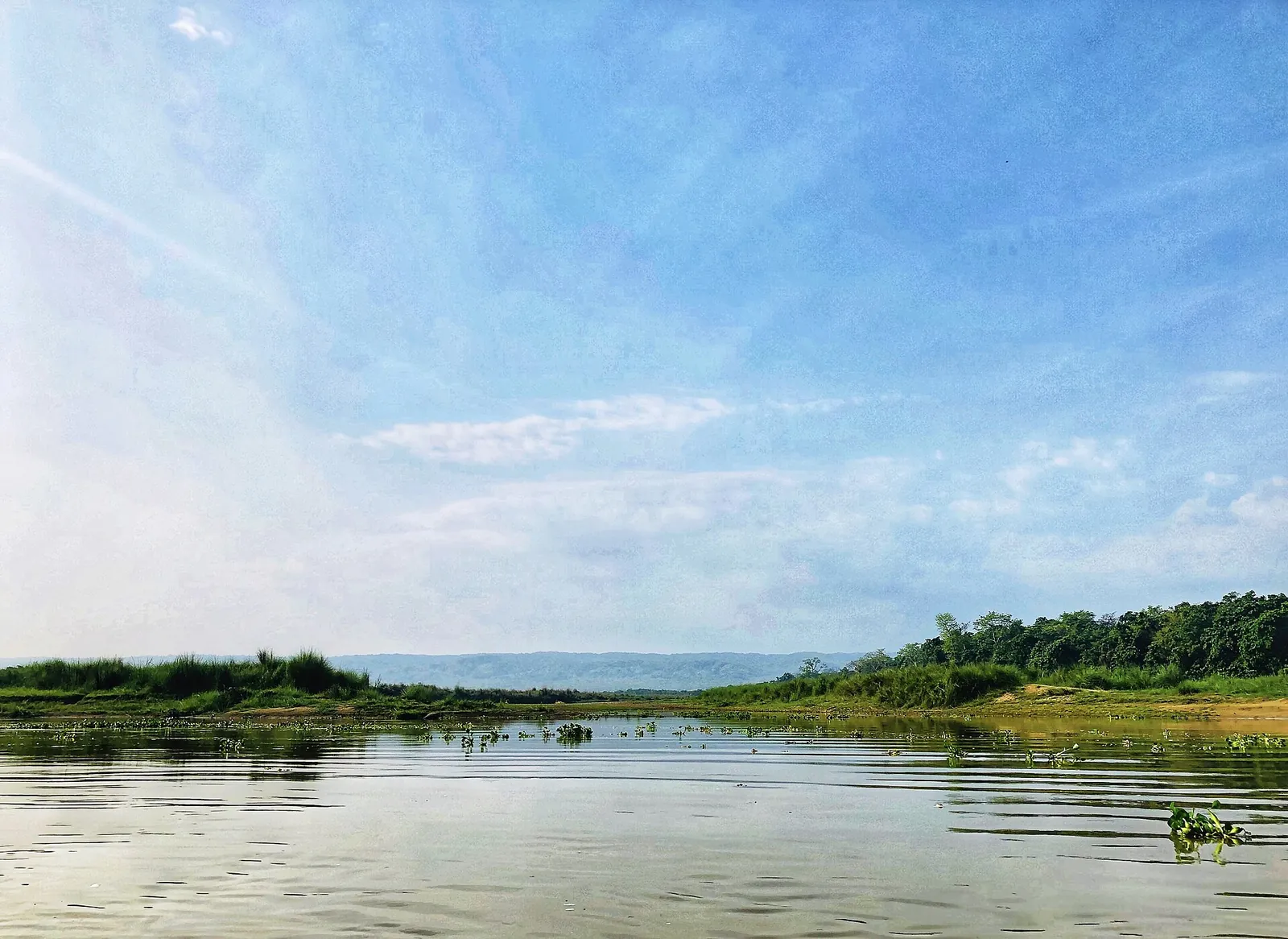
The Rapti River beside Chitwan National Park
Photograph: Silu0211 — opens in a new tab · CC BY-SA 4.0 — opens in a new tab
Changes: Resized and converted to WebP; displayed with responsive crops. · Original photograph and licence details ↗ — opens in a new tab
A boat crossing the Rapti River at dusk at Sauraha
Photograph: Supradai — opens in a new tab · CC BY 4.0 — opens in a new tab
Changes: Resized and converted to WebP; displayed with responsive crops. · Original photograph and licence details ↗ — opens in a new tab
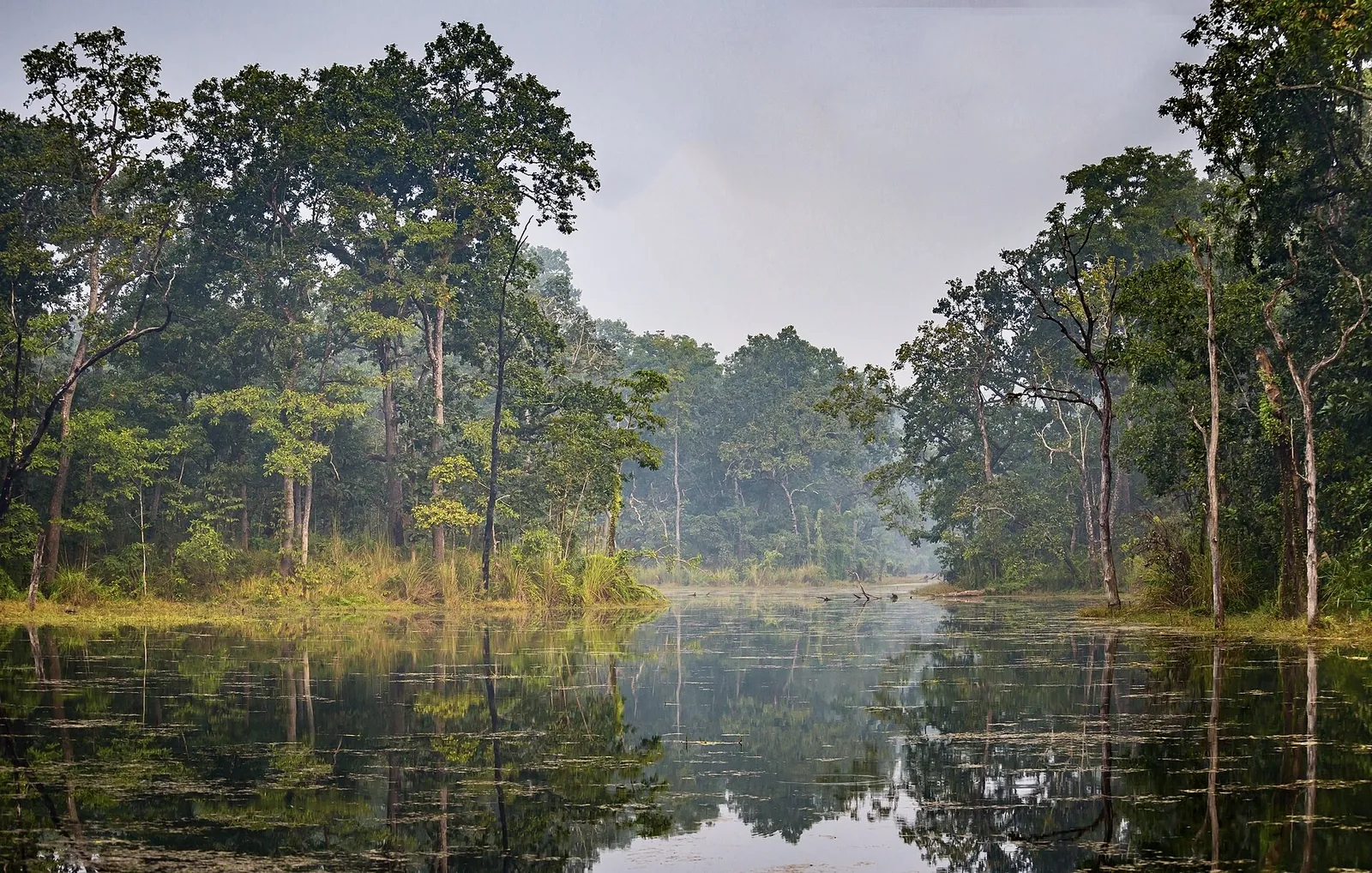
A swamp in the forest of Chitwan National Park
Photograph: Vadim Tolbatov — opens in a new tab · CC BY-SA 4.0 — opens in a new tab
Changes: Resized and converted to WebP; displayed with responsive crops. · Original photograph and licence details ↗ — opens in a new tab