Plan your trip · Nepal
First trip to Nepal: how many days, which regions and which season
The first decision for Nepal is how much to leave out. A week holds the Kathmandu Valley and one more region, and two weeks hold three or four regions or two regions and a short trek; the Everest Base Camp walk takes about two weeks by itself. This guide sets days against regions, picks the season by what you came to see, says what to book first and then gives, in one place, the health and safety advice that decides whether a plan is sensible: altitude, water, Kathmandu air, monsoon roads, earthquakes and insurance. Each region and each trek has its own guide for the detail.
- Suggested time
- A week for the Kathmandu Valley and one more region; ten days for the valley, Pokhara and Chitwan; two weeks to add Lumbini or a short trek
- Where to stay
- No single base: the Kathmandu Valley first, then Pokhara, Chitwan or Lumbini by air or by day tourist bus
- Season and timing
- Choose spring or the clear weeks after the rains for trekking; weigh winter cold and air pollution against the road-warning season described below.
The short answer
Plan ten days (nine nights) for a first visit: five nights in the Kathmandu Valley, two in Pokhara and two beside Chitwan National Park. A week drops Pokhara or Chitwan, and two weeks add Lumbini and a short trek such as Poon Hill. Go in spring or in the weeks after the monsoon, the times the Nepal Tourism Board names as best for most trekking areas. Settle your visa route and international flights, then book a registered trekking agency if you will trek; for Everest, have the agency book Lukla. France's advice requires a licensed guide and TIMS for trekking in Nepal. Checked on 18 October 2026, Kathmandu's four main sights cost NPR 2,600 per adult visitor other than SAARC and BIMSTEC nationals in entry fees, and the Chitwan National Park permit is NPR 2,000 per person per day for foreign visitors other than SAARC nationals, or NPR 2,260 including the tourism board's listed 13% VAT. Between regions, travel by road only in daylight.
Seven, ten or fourteen days: what each length holds
Start from the least each place deserves, then add: three nights for the Kathmandu Valley, two for Pokhara, two for Chitwan and one for Lumbini. Count treks separately: our Poon Hill plan uses four trail days, and the Annapurna Base Camp plan seven. The tourism board describes Everest Base Camp as a two-week trek that starts and finishes at Lukla, which makes it a trip of its own.
Seven days (six nights) hold the valley and one more block: Pokhara if you want lake and mountain views, Chitwan if you want the park. Ten days (nine nights) hold the valley, Pokhara and Chitwan; our ten-day itinerary gives five nights to the valley, one of them on the Nagarkot ridge, two to Pokhara and two to Sauraha beside the park. Fourteen days (thirteen nights) can add Lumbini and the Poon Hill walk as well, if Pokhara is used for the nights either side of the trek.
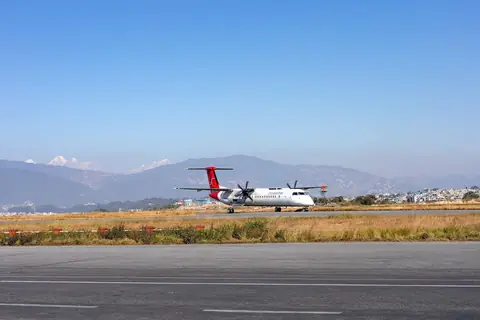
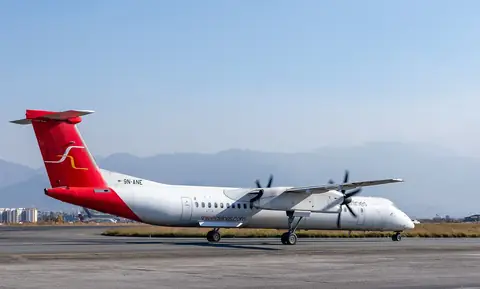
Count the legs between blocks too. Yeti Airlines gives Kathmandu to Pokhara as about 25 minutes. It gives Kathmandu to Bhairahawa, for Lumbini, as about 35 minutes. The Kathmandu–Pokhara road distance and driving time need checking with your operator; plan that transfer as a full travel day. For Chitwan, Buddha Air flies Kathmandu to Bharatpur in 25 minutes, and the Nepal Tourism Board puts Bharatpur 145 km from Kathmandu by road, with the park headquarters at Kasara another 21 km on. The airlines, airports and tourist buses are covered in our Nepal transport guide.
The four blocks: valley, Pokhara, the Terai and a trek
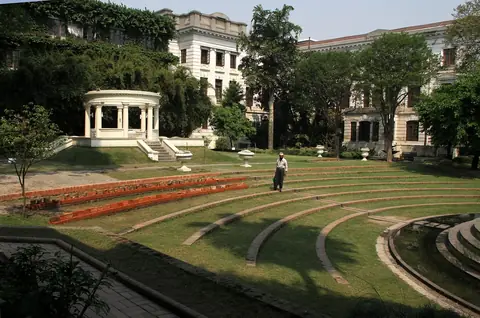
The Kathmandu Valley is the block almost nobody skips. Kathmandu Durbar Square, the old royal square in the city centre, holds palaces, courtyards and more than 50 temples, among them the Kumari Temple, the residence of the Living Goddess. Patan Durbar Square, 5 km southeast, is a mix of palace buildings, carved courtyards and pagoda temples from the height of Newar architecture under the Malla kings, and Bhaktapur, 12 km east, keeps its brick-paved streets, the Palace of 55 Carved Windows and the five-storey Nyatapola Temple. Add Swayambhunath, the oldest stupa in the valley, on a hillock about 3 km west of the centre with a view over the city; Boudhanath, the largest stupa in the valley, about 8 km east, which the tourism board calls the centre of Himalayan Buddhism; Pashupatinath, the most revered Hindu temple in Nepal, on the Bagmati river, viewed by non-Hindus from the terraces across the river; and the viewpoint ridge at Nagarkot. At Pashupatinath, leather items such as shoes and belts must be left outside the main temple complex, which only Hindus may enter. Give the valley three nights for the capital and its sights, and a fourth if you want Patan, Bhaktapur or a night on the ridge.
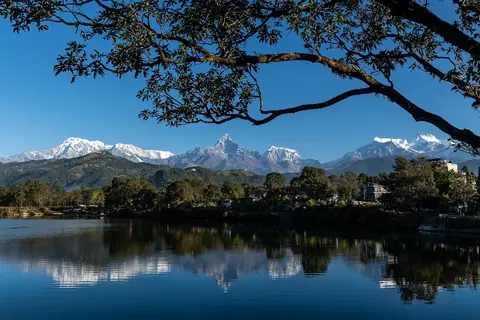
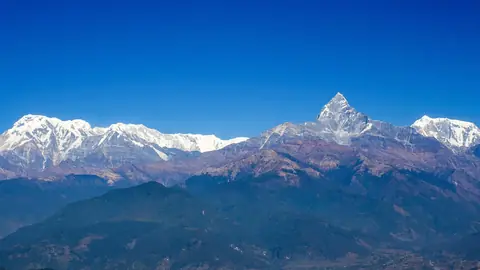
Pokhara is the lake town the Nepal Tourism Board calls the gateway to the Annapurna region, and the easiest place to see the high mountains without walking. Lakeside, on the eastern shore of Phewa Lake, is the strip of hotels, restaurants and shops, and boats cross to the Taal Barahi Temple on its small island. Visit Sarangkot in daylight for its panorama from Dhaulagiri in the west to Machhapuchhre, Annapurna II and Lamjung in the east; the World Peace Pagoda, on a hill above the southern shore of the lake, looks out to the Annapurnas. Two nights cover the lake and viewpoints, a third leaves a day for cloud, and the nights either side of a trek come on top.
The Terai is the lowland south, and it holds two different trips. Chitwan is the wildlife block: the park is home to the one-horned rhinoceros and the Royal Bengal tiger, and the tourism board's typical programme of two nights and three days takes in a wildlife safari, a canoe ride to watch the crocodiles and water birds, a visit to a Tharu village and nature walks. It is reached by tourist bus or by Buddha Air's 25-minute flight to Bharatpur. Lumbini is the pilgrimage block: in the Sacred Garden, the Maya Devi Temple holds the marker stone that shows where Siddhartha Gautama, the Buddha, was born, beside the Ashoka Pillar, and countries such as Japan, Myanmar, Sri Lanka and Thailand have built temples and monasteries around it. Fly to Bhairahawa, 22 km from Lumbini, and give it one night.
A trek is the fourth block and the one that changes the length of the trip most. Poon Hill (3,210 m) is the short, low option, Annapurna Base Camp (4,130 m) the middle one, and Everest Base Camp (about 5,300 m) the long one, which begins with a flight to Lukla. The altitude rules below apply to all three, and our guide to trekking permits in Nepal sets out the guide rule, the TIMS card and the park fees.
Choosing the season by what you came for
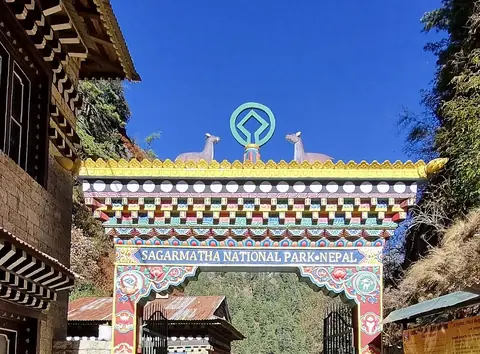
For walking, choose spring or the weeks after the monsoon. The Nepal Tourism Board names both as the best times for most trekking areas: spring is when the rhododendrons bloom, and the clearest skies come after the monsoon, in October and November. For Everest the board names October and November and March to May as the best season in Sagarmatha National Park.
The valley and Pokhara work in any season, with trade-offs. The board puts winter temperatures in the Kathmandu Valley at 2 to 12°C and says that even in December and January, when winter is at its severest, there are bright sun and brilliant views. The price of a winter visit is the valley air, covered further down.
Chitwan is the place to avoid in the hottest months, May to July: the board says Terai summer temperatures exceed 40°C, and above 45°C in some areas, and its table of averages gives Chitwan a summer (May to July) high of 33.0°C against a winter (December to February) high of 24.1°C and low of 8.3°C.
The UK, German and French governments give the hazardous road season as June to October, so a trip in that window needs changeable transfers. The monsoon itself is described in the road section below.
Germany's Federal Foreign Office names September to November as Nepal's festival season, so book flights and rooms for those months early. Festival dates move from year to year; the Ministry of Home Affairs publishes the public-holiday list each Nepali year, and our best-time guide goes region by region.
What to book first, in the order it runs out
Book the flights into Kathmandu and settle the visa route first. Indian citizens need no visa; the entry guide below gives their journey-specific travel-document advice. Other visitors need a passport and a tourist visa; the UK government advises British passport holders to check that their passport expires at least six months after entry. Tourist visas are multiple-entry for 15, 30 or 90 days, obtained from a Nepali embassy before travel or, for eligible nationalities, on arrival at Tribhuvan International Airport. You can apply online up to 15 days before arrival, or use the forms or terminals at the airport; some nationalities must obtain a visa before travelling. France advises declaring cash above the equivalent of USD 2,000 on arrival; Nepal Rastra Bank's own undeclared-cash limit is USD 5,000 or the equivalent in another convertible currency. Use the lower threshold when preparing your customs declaration. Carry no more than NPR 5,000 per person in Nepali rupee cash in or out. The Indian-rupee note rules differ for Nepali and Indian citizens; our guide to entering Nepal explains them, the visa nationality list, the 150-day cap, cards and ATMs, and the SIM card in the arrival hall.
If you will trek, book a registered trekking agency next. France's security advice says trekkers in Nepal must use a licensed guide and obtain TIMS through an authorised government-registered trekking agency. The Nepal Tourism Board's own rule names specific routes, including Everest Base Camp and Poon Hill-ABC. Checked on 18 October 2026, TIMS costs NPR 2,000 for foreign trekkers other than SAARC nationals, who pay NPR 1,000. Poon Hill and Annapurna Base Camp add the Annapurna Conservation Area permit at NPR 3,000 for foreign visitors other than SAARC nationals, who pay NPR 1,000 including tax. Online ACAP payment adds a 2.9% gateway charge; counter payment avoids it. Everest Base Camp adds the Sagarmatha National Park permit at NPR 3,000 per person per entry for foreign visitors other than SAARC nationals, who pay NPR 1,500. Choose the agency before you fly, not one whose staff approach you at Kathmandu airport or in the tourist districts.
For Everest, have the agency book the Lukla flight as soon as you have chosen it. Mountain flights are often delayed or cancelled by poor weather, so build spare days into both ends of the trek and leave as long a gap as you can before the international flight. Summit Air says Ramechhap, served by Manthali Airport, can be reached only by road, a four hours' drive from Kathmandu, and that in its high seasons, March to April and October to December, all the flights to Lukla are rerouted there to avoid delays and backlogs. Check the departure airport on your ticket. For Manthali, transfer in daylight and sleep nearby before the flight; check the road is open with your agency and postpone the flight if the transfer cannot run.
Chitwan lodges and the Kathmandu-Pokhara leg, by air or by day bus, come next, followed by the remaining rooms.
A room and sightseeing allowance for two
Checked on 18 October 2026, published room examples start at USD 30 a night for a standard double or twin for two in Lakeside, Pokhara, including taxes, and at USD 59 a night for a Heritage Room for two adults in Patan. Breakfast costs USD 5 per person extra in the Pokhara example and USD 8 in the Patan example; the Patan quote gives no tax terms. Our where-to-stay guide covers the rooms. For adult visitors other than SAARC and BIMSTEC nationals, Kathmandu Durbar Square costs NPR 1,000, Swayambhunath NPR 200, Boudhanath NPR 400 and Pashupatinath NPR 1,000 per day per entry: NPR 2,600 for all four per person. Patan Durbar Square including Patan Museum costs NPR 1,000 for visitors other than SAARC, BIMSTEC and Chinese nationals, who pay NPR 500 on the tourism board's table. Bhaktapur Durbar Square costs USD 18 or NPR 1,800 for visitors other than SAARC and Chinese nationals, who pay NPR 500. Chitwan National Park costs NPR 2,000 per person per day for foreign visitors other than SAARC nationals, or NPR 2,260 including the tourism board's listed 13% VAT.
For two adults sharing, these examples give a daily room allowance from USD 30 to USD 59, with the day's sightseeing added in rupees: Kathmandu's four main sights total NPR 5,200 for two adults other than SAARC and BIMSTEC nationals, while a day of Chitwan park entry is NPR 4,000 for two foreign adults other than SAARC nationals, or NPR 4,520 with VAT. This covers the room and entry tickets; meals, taxis, intercity transport, guides and safari activities need a separate allowance.
Altitude: when to see a doctor and how fast to climb
Kathmandu stands at 1,220 m, and altitude illness becomes a risk from 2,500 m, according to NaTHNaC, the UK's travel health service. See a doctor experienced in altitude medicine before any trip above 2,300 m; pregnancy and heart, lung, nerve or kidney illness can rule out high altitude.
Spend a few days below 3,000 m first. TravelHealthPro advises gaining no more than about 500 m of sleeping height a day above 3,000 m. Take a rest day at the same height every three or four days, and, where possible, avoid going from under 1,200 m to over 3,500 m in a single day. Ask the agency for a trek plan that keeps to that pace.
Headache, fatigue, loss of appetite, nausea and disturbed sleep are signs of acute mountain sickness. If you develop symptoms of altitude sickness, stop climbing, descend promptly with a companion to a lower altitude (below 4,000 m if you are higher) and consult a doctor. Severe headache, vomiting, walking as if drunk, confusion or breathlessness at rest need immediate descent and emergency medical help.
Water, vaccines and bites
Do not drink tap water or brush your teeth with it, and avoid ice; sealed factory bottles and cans and steaming-hot drinks made with boiled water are generally considered fine.
NaTHNaC recommends hepatitis A, tetanus and typhoid vaccines for most travellers to Nepal, besides routine vaccines; arrange a health appointment ideally four to six weeks before travel. A yellow fever certificate is required for travellers aged nine months or older arriving from a risk country or after more than 12 hours in transit through an airport in a risk country. Some travellers also need proof of polio vaccination; check the entry requirements for the countries you have visited.
Dengue is a risk, mainly in towns and cities. NaTHNaC describes low malaria risk below 1,500 m, particularly in the Terai, and no risk in Kathmandu city or on typical Himalayan treks. Germany's advice gives a wider low-risk area up to 2,500 m, including Chitwan, throughout the year; avoid mosquito bites everywhere and discuss your route with a travel-health professional. Japanese encephalitis occurs in the Terai and the Kathmandu Valley, with a peak from May to October. Rabies is a risk too: avoid contact with all animals, stray dogs included, and never feed the monkeys.
Kathmandu Valley air: how much outdoor time to plan
The Kathmandu Valley has some of the highest air-pollution levels in the world, with peaks especially in winter and smoke from forest fires in the dry months from November to May. Older people, children, pregnant women and anyone with asthma, chronic bronchitis, emphysema or heart failure are the most sensitive.
If that is you, talk to your doctor before the trip, carry enough of your regular medication and check the World Air Quality Index project for current readings; keep long walks out of the worst hours, early in the morning and in the evening, and wear an N95, KN95 or FFP2 mask during a peak.
Roads, buses and flights in the monsoon
Road accidents are a major cause of death and disability in Nepal. Use only marked tourist buses, and do not travel on overloaded buses or at night.
The monsoon runs from June to September. The Nepal Tourism Board says 80 percent of Nepal's rain falls in those months; the governments' road-hazard season runs from June to October, when flooding and landslides can make roads impassable for days and roads close at short notice. Check the road is open before every road leg. Keep the Pokhara and Chitwan road legs changeable, with a flight as a possible fallback; if neither can run, hold the plan. The toll-free line for extreme weather and flood information is 1155.
Every Nepali airline, the Pokhara, Bharatpur, Bhairahawa and Lukla carriers included, is on the EU and UK air-safety lists: the UK says none meets international safety standards, so all are banned from flying to or from the UK. Inside Nepal there is no unlisted Nepali airline to choose instead. Where a road alternative exists, weigh the flight against a daytime marked tourist bus; discuss mountain-flight contingencies with your trekking agency.
Earthquakes: what to expect and who can help
Nepal lies in a region of intense seismic activity: tremors are frequent and cannot be predicted, and the two earthquakes of 25 April and 12 May 2015 reached magnitudes 7.9 and 7.3.
A strong quake can cut telephone and internet lines and the air and land links, and emergency equipment is scarce and medical facilities poorly resourced, so help is slow to reach a remote place. The National Society of Earthquake Technology (NSET) gives ten tips on what to do during a shake.
Insurance: what the policy has to pay for
Healthcare is poor in most places outside the Kathmandu Valley and Pokhara, and there is no central public ambulance service. Buy a policy that covers your planned activity and maximum altitude, mountain rescue, helicopter evacuation and repatriation before you pay a trek deposit: all mountain rescue in Nepal is paid, and a helicopter flies only once payment is guaranteed. Rescue is not guaranteed, so agree emergency communications with the agency; France recommends that trekkers or their guides carry satellite phones.
Helicopters are for extreme emergencies, such as cerebral oedema or a life-threatening accident, and an insurer may claim the money back from a traveller who calls one out for simple tiredness or mild altitude sickness. Some guides have taken inexperienced trekkers too high too quickly and then called an expensive helicopter, so be wary of trekking deals that look very cheap.
What this guide leaves out: flood districts, protests and the Chinese border
This section follows the travel advice of the UK Foreign Office, the German Federal Foreign Office and the French foreign ministry as it stood on 17 October 2026. The notices change and your own government may draw a wider line, so read its advice again before you fly. France places the whole country in a zone of enhanced vigilance. The UK's flood notice of 26 August 2026 names Rasuwa district and the Nepal-China border area; Germany tells its citizens to avoid the disaster area in Rasuwa district. The UK government, checked on 17 October 2026, listed areas of Gorkha, Nuwakot and Dhading among those affected by the floods of 26 August 2026 and warned that heavy rain could trigger more landslides. France reports a sudden flood of the Budhi Gandaki river in the Gorkha region on 11 October 2026.
No route in these guides enters Rasuwa district or the Langtang valley, and none goes to the Budhi Gandaki valley in Gorkha. The three trek guides cover Poon Hill, Annapurna Base Camp and Everest Base Camp only. Foreign nationals cannot currently enter China from Nepal overland, so there is no road route to Tibet; a leg to China means flying out.
Political protests, demonstrations and strikes are fairly common, can start at short notice and may bring a curfew. Keep away from them: taking part in protests against the authorities is forbidden to foreigners, who may make themselves liable to prosecution.
Crime and scams in Kathmandu
Pickpockets and bag-snatchers work in airports, on buses and in Thamel, Sanepa and Kupondol in Kathmandu, and petty crime rises in the festival season. In Thamel, a stranger who offers to export jewellery or gold for a commission is running a scam that is illegal and ends in blackmail. Sexual assaults on women have been reported in tourist areas such as Thamel and Sanepa, so take care when alone after dark; attacks on solo trekkers have been reported too. The tourist police hotline is 1144, toll free.
Practical questions
How many days do I need for a first trip to Nepal?
Seven days (six nights) hold the Kathmandu Valley and either Pokhara or Chitwan. Ten days (nine nights) hold the valley, Pokhara and Chitwan, and fourteen days can add Lumbini and the Poon Hill walk. The Everest Base Camp walk alone is about two weeks, according to the Nepal Tourism Board.
When is the best time for a first visit?
The Nepal Tourism Board names spring and autumn as the best times for most trekking areas: rhododendrons bloom in spring, and the clearest skies come after the monsoon, in October and November. Use the separate road-warning season above when planning transfers.
Can I trek on a first trip to Nepal?
Yes, with a registered trekking agency and licensed guide. France's security advice requires a licensed guide and TIMS for trekking in Nepal; the permits section above gives the fees. Poon Hill is the lowest of the three treks described here, but the altitude precautions still apply.
What should I book before I land in Kathmandu?
Settle the flights and visa route, then book a registered trekking agency if you will trek, which books the Lukla flight for Everest. Use the entry guide for your nationality's visa and travel-document rules: Indian citizens need no visa, and British passport holders should check for six months' passport validity after entry. Book Chitwan lodging and onward transfers next.
What does a day in Nepal cost?
The dated examples above give a daily room allowance of USD 30 to USD 59 for two sharing, with entry tickets added for the day's plan. Kathmandu's four main sights total NPR 5,200 for two adults other than SAARC and BIMSTEC nationals. Meals, taxis, intercity transport, guides and safari activities come on top.
Can I drink the tap water in Nepal?
No. NaTHNaC advises against drinking tap water or brushing your teeth with it in countries with poor sanitation, and against ice. Sealed bottles and steaming-hot drinks made with boiled water are generally considered fine to drink.
Does altitude affect me in Kathmandu and Pokhara?
Not in the way it affects a trek. NaTHNaC says altitude illness is a risk from 2,500 m and gives Kathmandu's height as 1,220 m. See a doctor experienced in altitude medicine before any trip above 2,300 m.
Can I travel overland from Nepal to Tibet or China?
No. Foreign nationals cannot currently enter China from Nepal overland, so a trip on to China means flying out.
Sources and checks before you travel
Reference sources for the version dated 18 October 2026. Confirm opening times, access, transport and conditions for your travel dates.
- Nepal Tourism Board: Climate ↗ — opens in a new tab
- Nepal Tourism Board: top trekking destinations ↗ — opens in a new tab
- Nepal Tourism Board: Everest Base Camp ↗ — opens in a new tab
- Nepal Tourism Board: Sagarmatha National Park ↗ — opens in a new tab
- Nepal Tourism Board: heritage site entry fees ↗ — opens in a new tab
- Nepal Tourism Board: TIMS card ↗ — opens in a new tab
- NTNC: online permit system ↗ — opens in a new tab
- Nepal Tourism Board: Chitwan ↗ — opens in a new tab
- Buddha Air: Kathmandu to Bharatpur ↗ — opens in a new tab
- Nepal Tourism Board: wildlife ↗ — opens in a new tab
- Nepal Tourism Board: Pokhara ↗ — opens in a new tab
- Yeti Airlines: Pokhara ↗ — opens in a new tab
- Yeti Airlines: Bhairahawa ↗ — opens in a new tab
- Summit Air: Ramechhap ↗ — opens in a new tab
- Department of Hydrology and Meteorology ↗ — opens in a new tab
- Nepal Police: tourist police ↗ — opens in a new tab
- UK Foreign Office (GOV.UK): Nepal travel advice ↗ — opens in a new tab
- UK Foreign Office (GOV.UK): Nepal safety and security ↗ — opens in a new tab
- UK Foreign Office (GOV.UK): Nepal health ↗ — opens in a new tab
- TravelHealthPro (NaTHNaC): Nepal ↗ — opens in a new tab
- TravelHealthPro (NaTHNaC): food and water hygiene ↗ — opens in a new tab
- Germany's Federal Foreign Office: Nepal, Reise- und Sicherheitshinweise ↗ — opens in a new tab
- French foreign ministry (France Diplomatie): Nepal, conseils aux voyageurs, sécurité ↗ — opens in a new tab
- French foreign ministry (France Diplomatie): Nepal, conseils aux voyageurs, santé ↗ — opens in a new tab
- French foreign ministry (France Diplomatie): Nepal, dernières minutes ↗ — opens in a new tab
- Nepal Tourism Board: Kathmandu Durbar Square ↗ — opens in a new tab
- Nepal Tourism Board: Patan ↗ — opens in a new tab
- Nepal Tourism Board: Bhaktapur ↗ — opens in a new tab
- Nepal Tourism Board: Phewa and the cluster of 9 lakes ↗ — opens in a new tab
- Nepal Tourism Board: Sarangkot ↗ — opens in a new tab
- Nepal Tourism Board: World Peace Pagoda ↗ — opens in a new tab
- Nepal Tourism Board: Lumbini ↗ — opens in a new tab
- Lumbini Development Trust: Lumbini ↗ — opens in a new tab
- Ministry of Home Affairs: holidays ↗ — opens in a new tab
- UK government: Nepal entry requirements ↗ — opens in a new tab
- Nepal Tourism Board: visa information ↗ — opens in a new tab
- Nepal Rastra Bank: foreign exchange FAQ (in Nepali) ↗ — opens in a new tab
- Nepal Tourism Board: Swayambhunath ↗ — opens in a new tab
- Nepal Tourism Board: Boudha ↗ — opens in a new tab
- Nepal Tourism Board: Pashupatinath Temple ↗ — opens in a new tab
- Pokhara room example: published standard double/twin tariff ↗ — opens in a new tab
- Patan room example: published Heritage Room tariff ↗ — opens in a new tab
- France Diplomatie: Nepal entry and stay ↗ — opens in a new tab
- Nepal Tourism Board: safety in the mountains ↗ — opens in a new tab
- Nepal Rastra Bank: cash-currency notice (in Nepali) ↗ — opens in a new tab
Photo credits
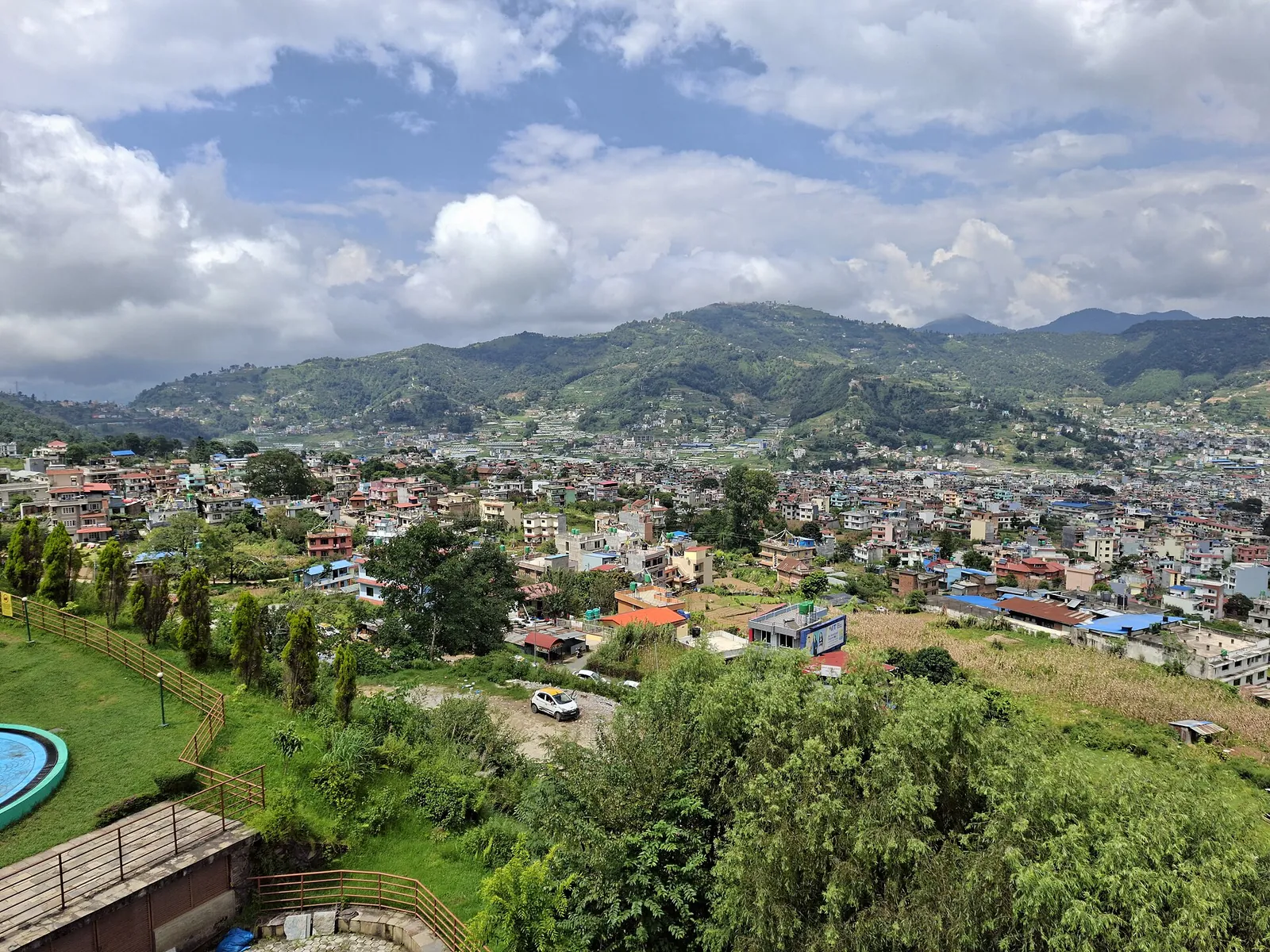
The Kathmandu Valley seen from the Chandragiri Cable Car viewpoint.
Photograph: Saddam Hussain Ansari — opens in a new tab · CC BY 4.0 — opens in a new tab
Changes: Resized and converted to WebP; displayed with responsive crops. · Original photograph and licence details ↗ — opens in a new tab
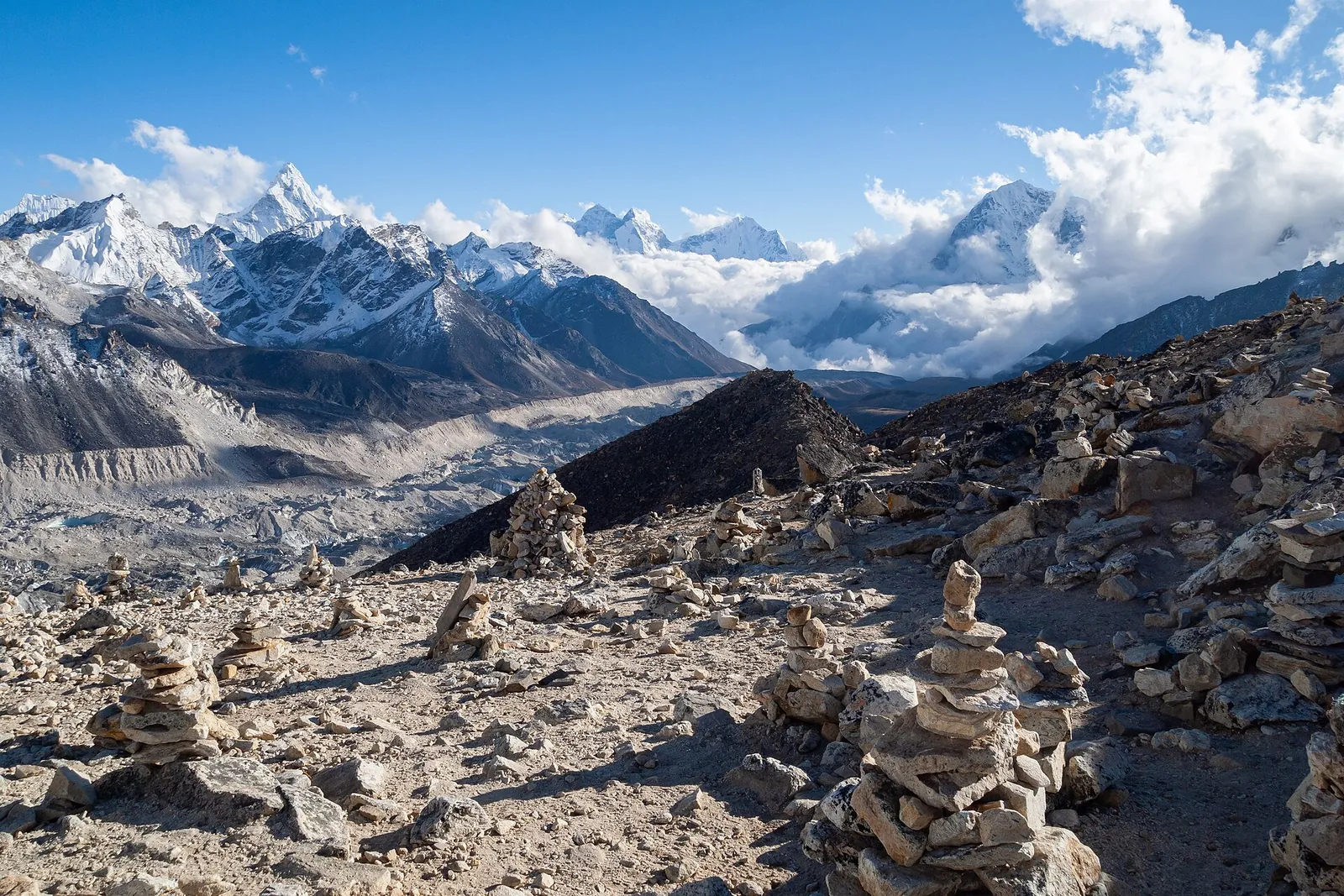
The Khumbu Glacier and the peaks around Ama Dablam in the Sagarmatha Everest Zone.
Photograph: Vyacheslav Argenberg — opens in a new tab · CC BY 4.0 — opens in a new tab
Changes: Resized and converted to WebP; displayed with responsive crops. · Original photograph and licence details ↗ — opens in a new tab
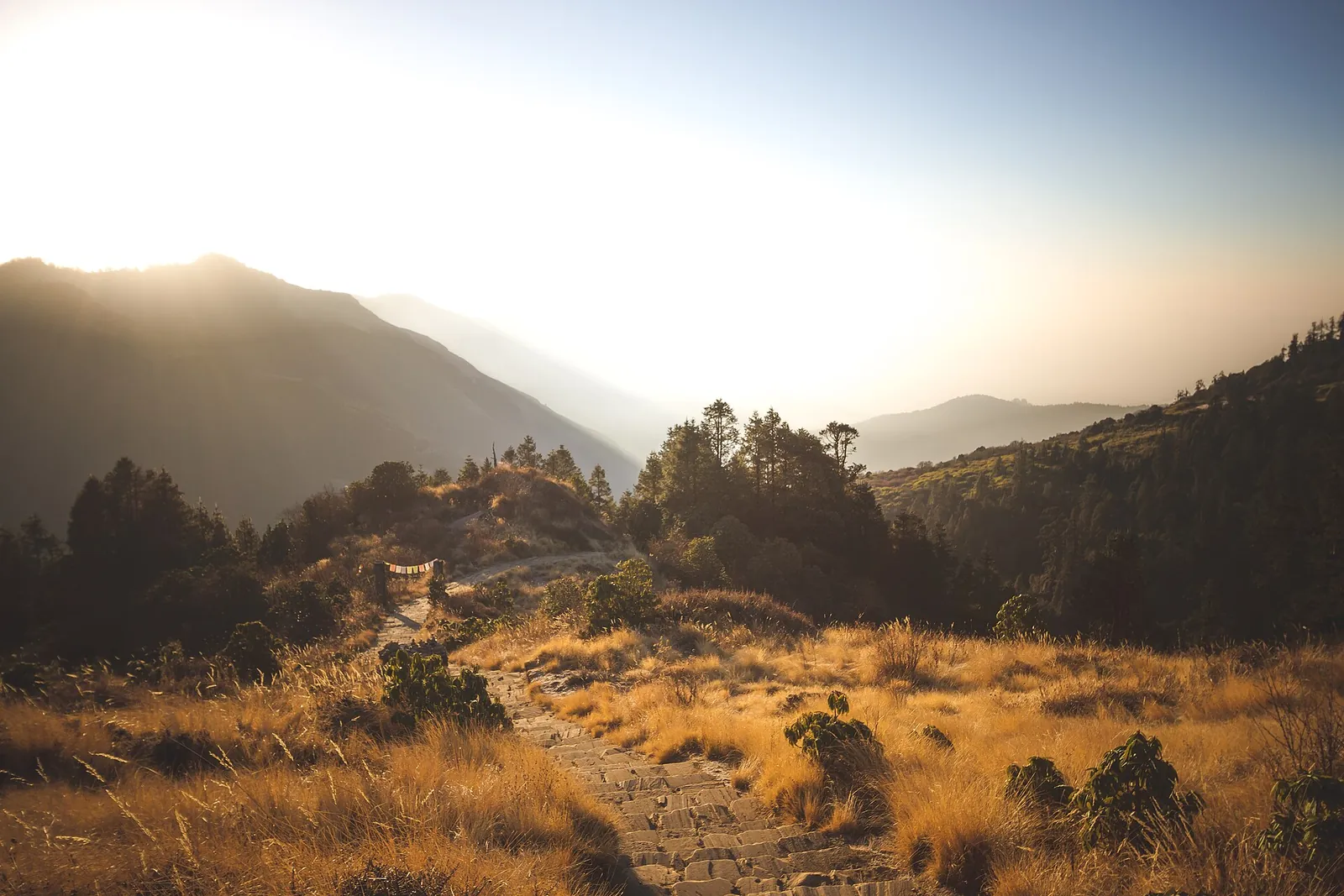
Early light on the path at Poon Hill, the short trek above Ghorepani.
Photograph: Ali Sabbagh — opens in a new tab · CC0 — opens in a new tab
Changes: Resized and converted to WebP; displayed with responsive crops. · Original photograph and licence details ↗ — opens in a new tab
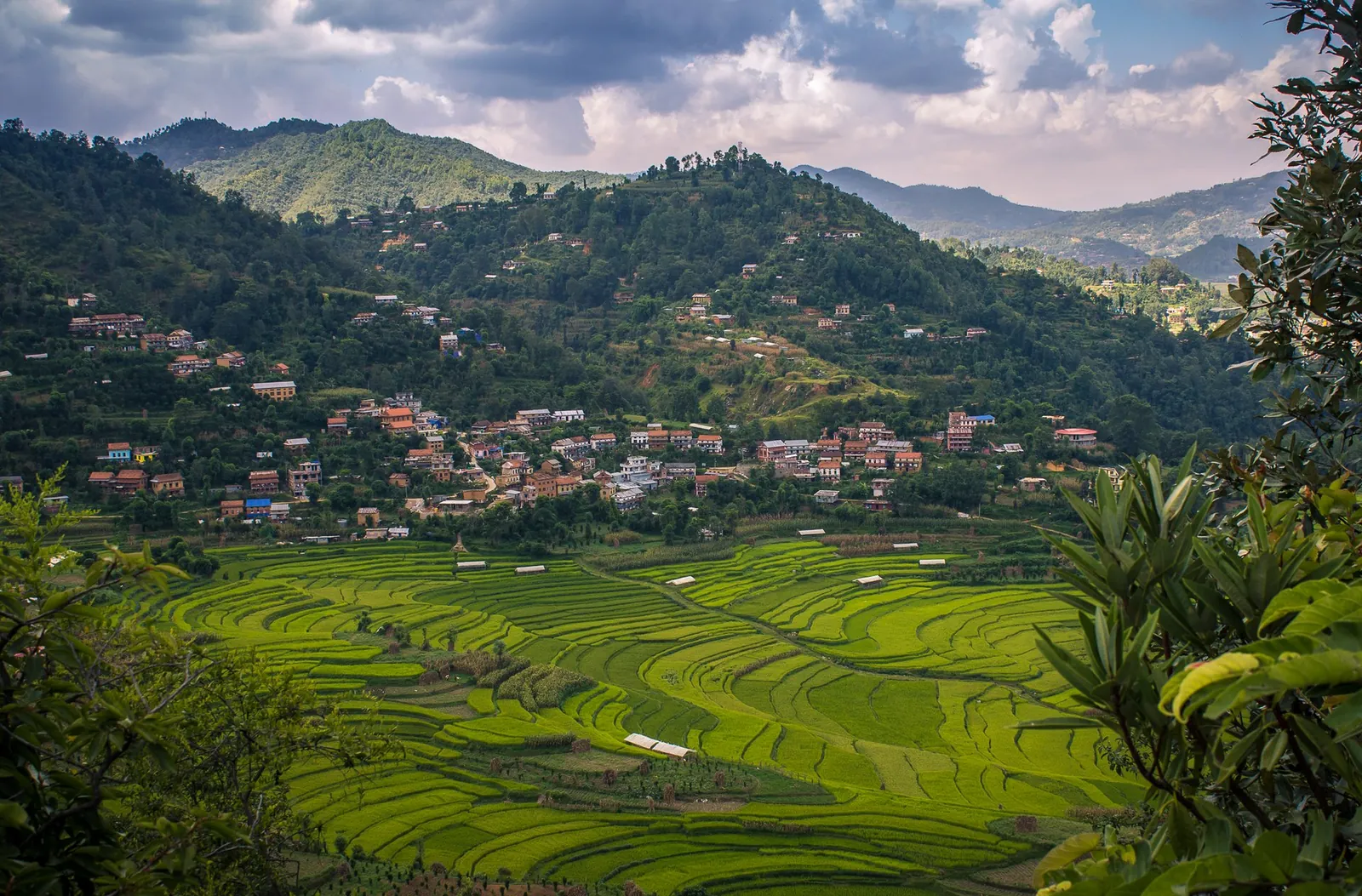
Terraced fields and houses at Balthali, a hill village in Kavrepalanchok District.
Photograph: Sunil kawan — opens in a new tab · CC BY-SA 4.0 — opens in a new tab
Changes: Resized and converted to WebP; displayed with responsive crops. · Original photograph and licence details ↗ — opens in a new tab