Kathmandu Valley · Bagmati
Bhaktapur travel guide: ticket, Nyatapola and a night or half a day
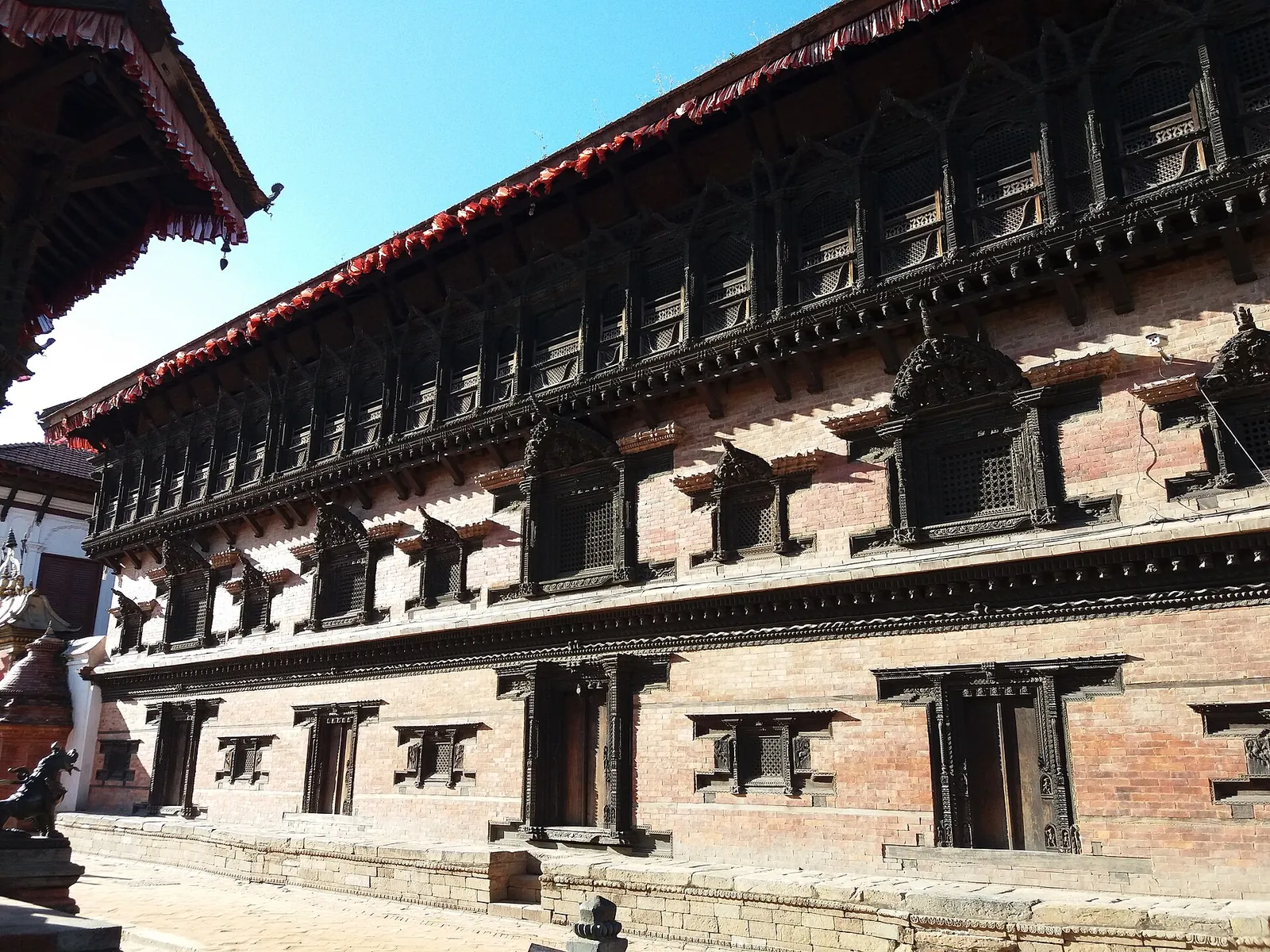
Bhaktapur is the Kathmandu Valley's town of brick lanes, carved timber windows and pottery, 12 km east of the capital, and the choice it puts to you is simple: see it in half a day from Kathmandu, or sleep inside it. The squares are the reason to come: a palace with 55 carved windows, a five-storey temple above guardian figures and a monastery with carved peacock windows.
- Suggested time
- Half a day from Kathmandu, or 1 night in the old town
- Where to stay
- The old town around Durbar Square and Taumadhi Square, or a Kathmandu base for a half-day trip
- Season and timing
- October and November are Bhaktapur's main tourist season, according to Bhaktapur Municipality. Air in the Kathmandu Valley is at its worst in winter and before the monsoon. Road disruption can continue into October.
The short answer
Give Bhaktapur half a day if you are based in Kathmandu, and add Changu Narayan if you want a full day. Sleep one night in the old town only if you want the squares at both ends of the day. Bhaktapur Durbar Square costs USD 18 or NPR 1,800 for foreign visitors other than SAARC and Chinese nationals, who pay NPR 500, checked on 18 October 2026. Changu Narayan costs NPR 300 for foreign visitors other than SAARC nationals, who pay NPR 100. Reserve a room if you stay; buy the heritage tickets at their entry points. Walk Durbar Square, Taumadhi Square and Nyatapola, Pottery Square and Dattatreya Square in that order, and finish with juju dhau, the sweet buffalo-milk yoghurt that originates in Bhaktapur.
Half a day from Kathmandu, or a night in the old town
Bhaktapur stands on a hill at 1,401 m on the Arniko Highway, 12 km east of Kathmandu, and covers 6.4 sq km. Its brick-paved roads and red brick houses keep a way of life that goes back to medieval times, and pottery and woodcarving are still the town's crafts. From a Kathmandu base the squares fill a relaxed half day; Changu Narayan on its ridge turns that into a full one.
A night in the old town makes sense if you would rather walk the squares early and late than make a round trip, or if you want to stay on to Nagarkot. The Nagarkot guide covers the hill village 32 km from Kathmandu and the walk down from it to Changu Narayan. Our where-to-stay guide compares rooms in the valley.
The Durbar Square ticket and the separate museums
The Durbar Square prices above come from the Nepal Tourism Board's heritage-fee table. Nepali citizens and children under 10 enter free, and in a group of 11 to 20 one tour leader enters free. Pay at the entry point.
The National Art Museum costs NPR 150 for foreign and Chinese nationals, with NPR 100 extra for a camera and NPR 200 for a video camera, and NPR 50 for SAARC nationals, with NPR 50 for a camera and NPR 150 for a video camera; its fee includes the wood carving museum and the brass and bronze museum in Dattatreya Square. The museum is closed on Tuesdays. Plan to see the squares on the day you buy the ticket.
Durbar Square: the Palace of 55 Windows and the Golden Gate
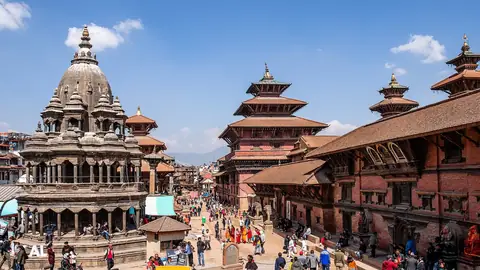
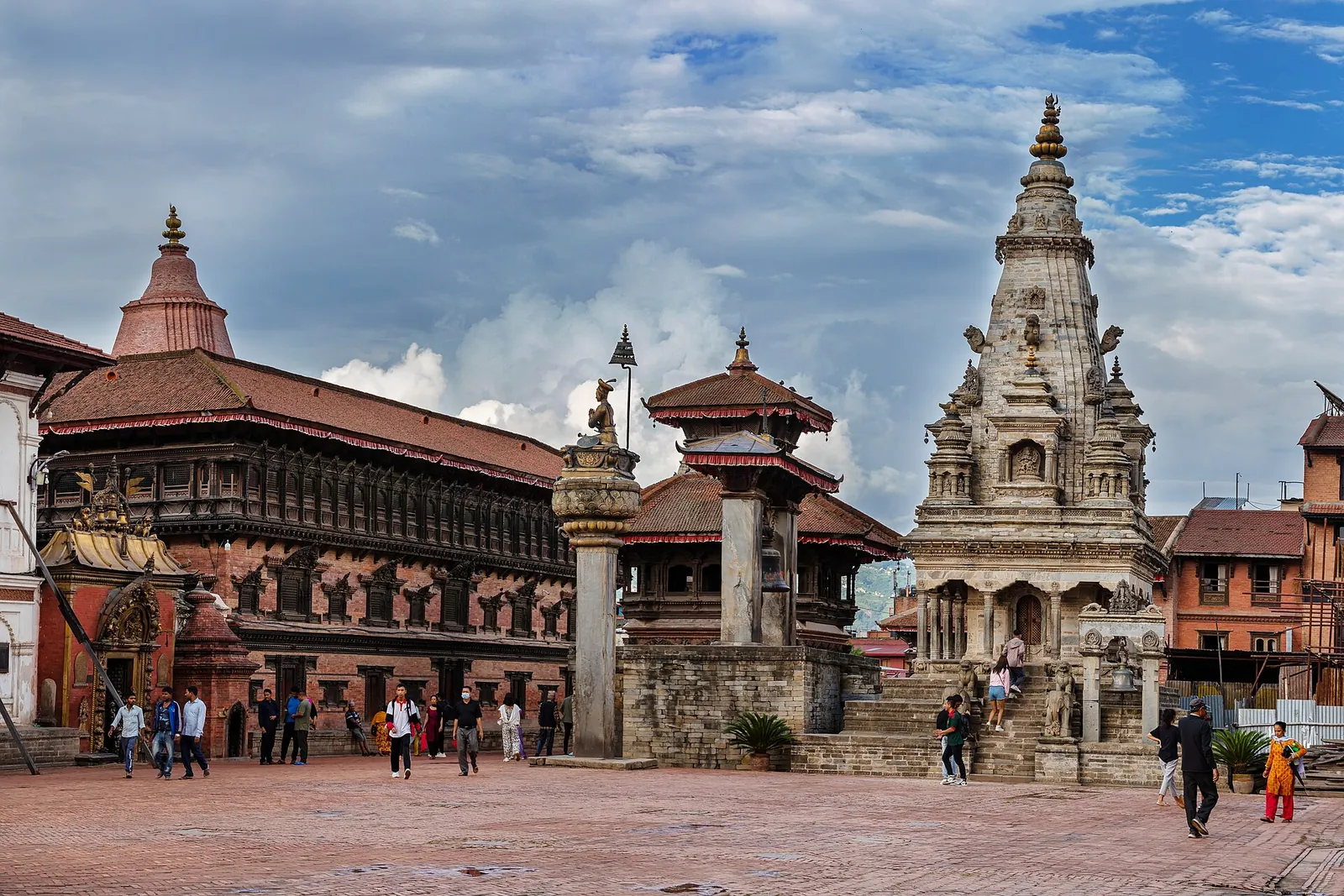
Durbar Square, a UNESCO World Heritage Site, is an open space facing south, with buildings around it dating from the 13th to the 18th century that reflect the glory days of the Malla dynasty; UNESCO inscribed the city on the World Heritage List in 1979. The 15th-century Palace of 55 Carved Windows (Pachpanna Jhyale Durbar) fills one side with a row of dark timber frames above red brick. At the palace entrance the Golden Gate is a masterpiece of repoussé art, hammered metal worked in relief.
In front of the palace stand the Lion Gate, a statue of King Bhupatindra Malla on a giant stone pillar and the Batsala Temple. Batsala Devi's stone temple is a Shikhara-style building with intricate carvings. On its terrace hangs a bronze bell known as the Bell of Barking Dogs, put up by King Ranjit Malla in 1737; its sound marked the start and the end of a daily curfew.
Taumadhi Square: Nyatapola and Bhairavnath
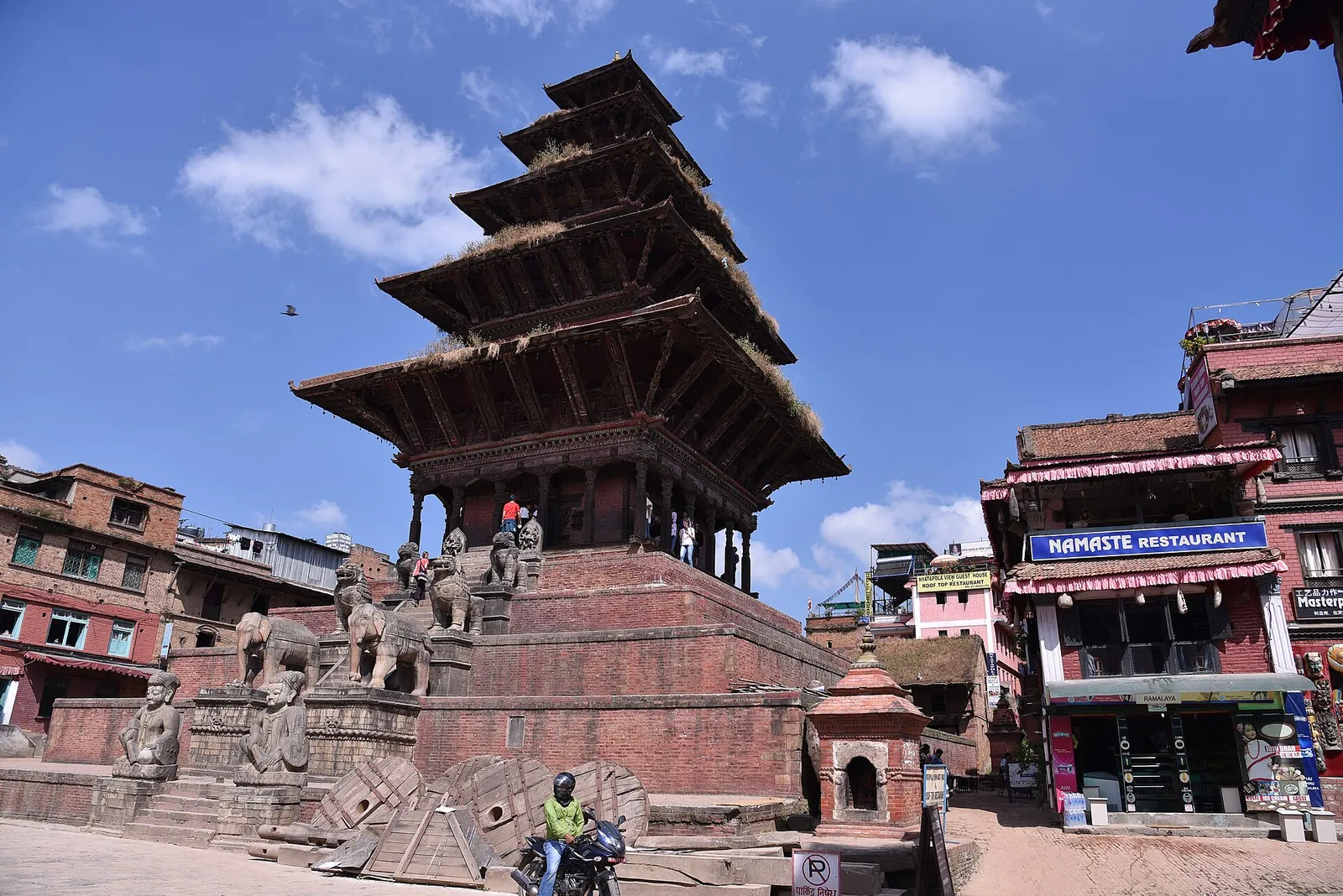
Make Nyatapola your next stop. Its name means five-storied, and it rises above the town as its landmark. It is dedicated to a Tantric goddess, and the steps up to it are flanked by stone figures of deities and mythical beasts, each said to be ten times more powerful than the one below.
Beside it stands the three-storey Bhairavnath temple, built in pagoda style. Its inner sanctum holds only the head of Bhairav; the legend is that a Tantric expert cut it off to keep the god in Bhaktapur.
Pottery Square, Dattatreya Square and Siddha Pokhari
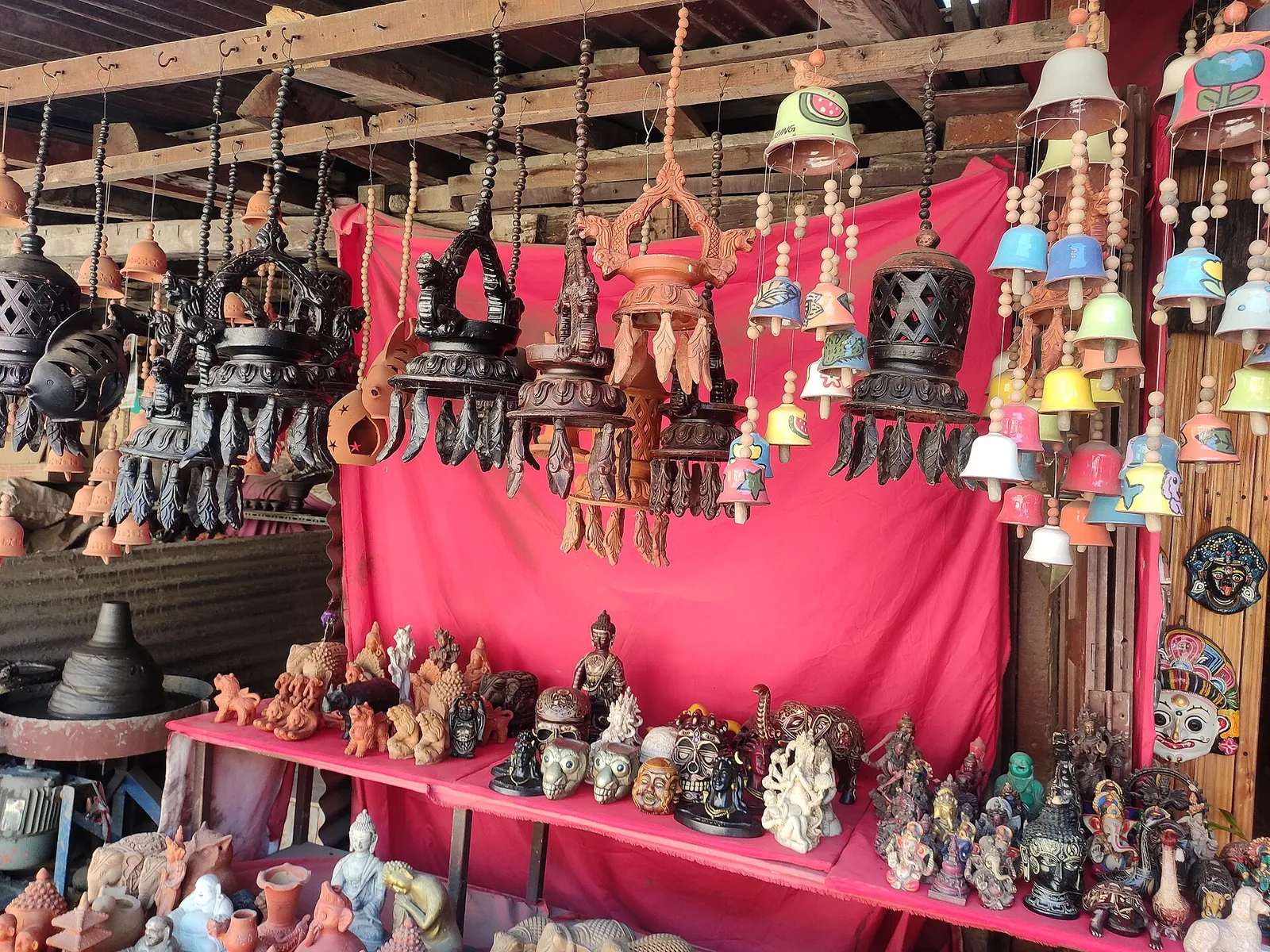
Leave a stop at Pottery Square in your walk. Pottery and woodcarving are Bhaktapur's characteristic crafts, displayed in its squares and carved windows.
Dattatreya Square is named for the Dattatreya Temple, the town's oldest temple, built in the 15th century in the reign of King Yaksha Malla. It is dedicated to a three-headed form of Brahma, Vishnu and Shiva and said to be built from the trunk of a single tree. Near it is a monastery with exquisitely carved peacock windows, and the National Art Museum fee covers the museums here. Siddha Pokhari, a large rectangular tank beside the bus stop, is full of fish and has stone images of Hindu and Buddhist deities on its walls; for a small city, Bhaktapur has the largest number of public water tanks.
Changu Narayan, Surya Binayak and Thimi beyond the old town
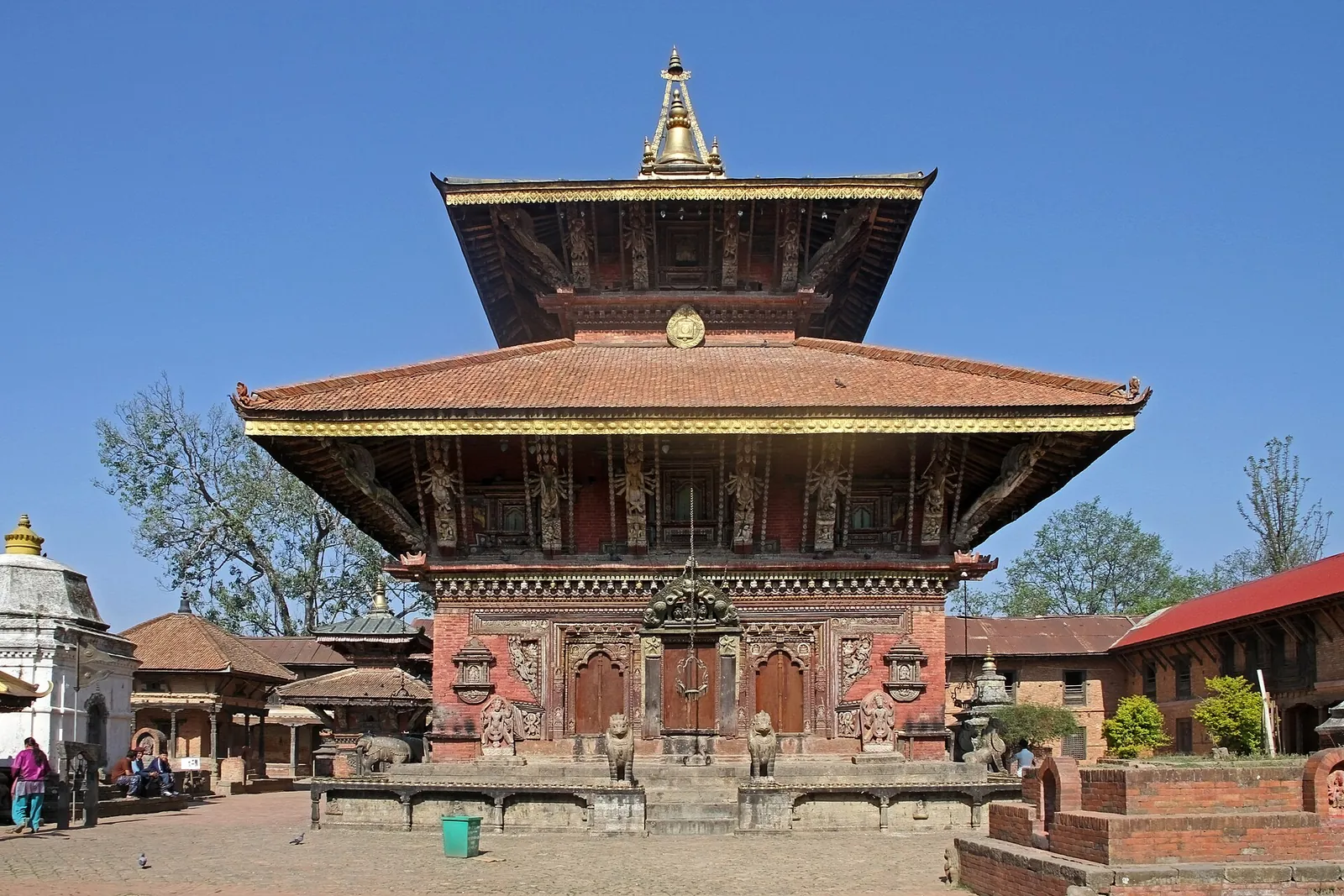
Changu Narayan is a Vishnu temple on a ridge overlooking Bhaktapur and one of the Kathmandu Valley's seven UNESCO World Heritage monument zones. It gives its name to Changunarayan Municipality, which has Bhaktapur and Suryabinayak municipalities on its southern side. It is one of the oldest specimens of pagoda architecture in the valley, dating from the Licchavi period and embellished with exquisite wood and stone carving. Nepal's written history begins with the temple's 5th-century Licchavi inscription, and the zone also preserves a traditional Newari settlement. Its separate entry fee is given above. The road distance and journey time from Bhaktapur to the temple need checking when you arrange a daytime taxi. For the hike down from Nagarkot, follow France's advice for hiking in Nepal: use a licensed guide and obtain a TIMS card through a government-registered trekking agency.
Surya Binayak is a Ganesh temple in thick forest south of Bhaktapur, a 20-minute walk from the bus stop, and crowded with devotees on Tuesdays and Saturdays. Thimi, a Newar town about 8 km east of Kathmandu on the way to Bhaktapur, supplies the capital with pottery; its Balkumari Temple is dedicated to the Mother Goddess and its Karunamaya to the Buddha of Compassion.
A half-day route through the squares
Use the order below for a half-day walk through the squares. Patan is the valley's other old royal square if you want to compare; see the Patan guide.
- Start at Durbar Square with the ticket: the Palace of 55 Windows, the Golden Gate and the Batsala Temple's bell.
- Continue to Taumadhi Square for Nyatapola and Bhairavnath, and stop for bara, a Newari lentil patty.
- Include Pottery Square before continuing to Dattatreya Square.
- Finish at Dattatreya Square and its carved peacock windows.
- Look for juju dhau on a menu or at a curd shop on the way back.
Make time for the local food
What to eat and where to look
Juju dhau (king curd)
Sweet, creamy buffalo-milk yoghurt fermented in a clay pot, known as the King of Yoghurt and originating in Bhaktapur.
- Where to look
- Look for the small clay pots at curd shops during your walk through the old town.
- Fit it into your day
- A cool stop at the end of the half-day route.
Bara (wo)
A Newari pancake or patty of spiced lentils, made for festivals and rituals and sold as a snack.
- Where to look
- Try a Newari eatery during your stop in Taumadhi Square.
- Fit it into your day
- A snack after climbing the Nyatapola steps.
Ask about the ingredients if you have an allergy or avoid meat.
Momo
Dumplings filled with minced chicken, mutton, buffalo, paneer, cheese or vegetables, usually steamed but also fried or served in soup.
- Where to look
- Try a Newari eatery during the walk between the squares.
- Fit it into your day
- A light lunch before continuing to Dattatreya Square.
Chatamari
A rice-flour crepe topped with marinated minced meat, eggs, onions and spices, a Newari street snack nicknamed Newari pizza for the way it looks.
- Where to look
- Look on the menu at a Newari eatery during the half-day walk.
- Fit it into your day
- A lighter lunch than samyabaji.
Yomari
A steamed rice-flour dumpling filled with chaku, a Newari festive sweet associated with Yomari Punhi.
- Where to look
- Newar restaurants in the old town; yomari is now on many restaurant menus in and out of Kathmandu.
- Fit it into your day
- Dessert after the route.
Getting to Bhaktapur from Kathmandu
Bhaktapur lies 12 km east of Kathmandu on the Arniko Highway, with Thimi on the way, so leave half a day for the squares after the ride. A taxi is the simplest way there: valley taxis carry a taxi sign on the roof and a black licence plate, private taxis charge higher rates, and no tip is expected. Pathao's car service runs in the Kathmandu Valley, so the app is the alternative to a street taxi. Agree the fare before setting off and leave room for traffic.
Sajha Yatayat's published city routes do not include Bhaktapur. Other buses serve the valley, and the Nepal Tourism Board puts Bhaktapur's bus stop beside Siddha Pokhari. No departure point, fare or journey time for a Kathmandu–Bhaktapur bus is given on these pages. See the transport guide for travel beyond the valley.
Travel in daylight and check the road is open before leaving Kathmandu or continuing to Nagarkot. The UK government advises against night road travel, and Germany warns of sudden closures and local night-driving bans; if the ridge road is closed, stay in Kathmandu or Bhaktapur and postpone Nagarkot. For bus journeys, follow Germany's advice to use marked tourist buses. Other governments may draw a wider line, so check your own government's advice before travelling.
When to go: festivals, valley air and the monsoon
Festival dates need checking for the year you travel: the Ministry of Home Affairs publishes the official government and public-holiday list for each Nepali year.
The Department of Environment finds air pollution in Nepal generally highest in winter and before the monsoon, lowest in the monsoon, and names the Kathmandu Valley among the most polluted regions. Travellers more vulnerable to air pollution are advised by the UK's NaTHNaC to check local air-quality data and change their plans accordingly. The Nepal Tourism Board says Nepal can be visited all year and describes bright sun and clear views in December and January. The monsoon runs from June to September. The best-time guide compares the seasons across the country.
Practical questions
Is Bhaktapur worth a night, or is it a half-day trip?
From a Kathmandu base it is a comfortable half day for Durbar Square, Taumadhi Square, Pottery Square and Dattatreya Square, and a full day with Changu Narayan. A night suits you if you want the squares early and late, or an onward stop in Nagarkot.
Where do I buy the Durbar Square ticket?
Pay at the entry point. The ticket section above gives the nationality and child categories; plan to see the squares that day.
Does the Durbar Square ticket include Changu Narayan?
The Nepal Tourism Board lists Changu Narayan separately; its price is given in the temple section above.
How do I get from Kathmandu to Bhaktapur?
Bhaktapur is 12 km east of Kathmandu on the Arniko Highway. Take a taxi, recognised by its roof sign and black licence plate, or a Pathao car. For a bus, arrange a marked tourist service following Germany's advice; Sajha's published routes do not include Bhaktapur.
Where can I try juju dhau?
Look for curd shops during your old-town walk. The Nepal Tourism Board identifies Bhaktapur as the home of juju dhau, which is still sold in small clay pots.
Sources and checks before you travel
Reference sources for the version dated 18 October 2026. Confirm opening times, access, transport and conditions for your travel dates.
- Nepal Tourism Board: Bhaktapur ↗ — opens in a new tab
- Nepal Tourism Board: Heritage site entry fees ↗ — opens in a new tab
- Nepal Tourism Board: Nagarkot sunrise and sunset ↗ — opens in a new tab
- Nepal Tourism Board: Local transportation in Kathmandu Valley and Nepal ↗ — opens in a new tab
- Nepal Tourism Board: FAQ ↗ — opens in a new tab
- Nepal Tourism Board: Climate ↗ — opens in a new tab
- Nepal Tourism Board: food and culinary ↗ — opens in a new tab
- Bhaktapur Municipality: home page and introduction (Nepali) ↗ — opens in a new tab
- Changunarayan Municipality: introduction (in Nepali) ↗ — opens in a new tab
- Kathmandu Metropolitan City: Heritages ↗ — opens in a new tab
- GOV.UK: Nepal safety and security ↗ — opens in a new tab
- Pathao: car service ↗ — opens in a new tab
- Sajha Yatayat: short routes ↗ — opens in a new tab
- Ministry of Home Affairs: holidays ↗ — opens in a new tab
- Department of Environment: Status of air quality in Nepal, annual report 2025 ↗ — opens in a new tab
- NaTHNaC: Nepal ↗ — opens in a new tab
- German Federal Foreign Office: Nepal travel and security advice ↗ — opens in a new tab
- France Diplomatie: Nepal security advice ↗ — opens in a new tab
- Department of Environment: air-quality annual report, 2025 (PDF) ↗ — opens in a new tab
Photo credits
The Palace of 55 Windows (Pachpanna Jhyale Durbar) on Bhaktapur Durbar Square
Photograph: Shadow Ayush — opens in a new tab · CC BY-SA 4.0 — opens in a new tab
Changes: Resized and converted to WebP; displayed with responsive crops. · Original photograph and licence details ↗ — opens in a new tab
Bhaktapur Durbar Square, with the palace front on the left and the stone Vatsala temple beside it
Photograph: Nrik kiran — opens in a new tab · CC BY-SA 4.0 — opens in a new tab
Changes: Resized and converted to WebP; displayed with responsive crops. · Original photograph and licence details ↗ — opens in a new tab
Nyatapola temple on Taumadhi Square
Photograph: shankar s. from Poona (pune), India, India — opens in a new tab · CC BY 2.0 — opens in a new tab
Changes: Resized and converted to WebP; displayed with responsive crops. · Original photograph and licence details ↗ — opens in a new tab
A handicraft stall in and around Pottery Square
Photograph: Goutam1962 — opens in a new tab · CC BY-SA 4.0 — opens in a new tab
Changes: Resized and converted to WebP; displayed with responsive crops. · Original photograph and licence details ↗ — opens in a new tab
The main temple at Changu Narayan
Photograph: Gerd Eichmann — opens in a new tab · CC BY-SA 4.0 — opens in a new tab
Changes: Resized and converted to WebP; displayed with responsive crops. · Original photograph and licence details ↗ — opens in a new tab