Plan your trip · Bagmati
Entering Nepal: visa on arrival, extensions and cash rules
Most visitors to Nepal face one early decision: apply for the visa before flying or at Tribhuvan International Airport when you land. This guide sets out who needs a visa and who cannot get one on arrival, the passport and papers to carry, how a stay can be extended, what to declare in cash and what happens between the plane and the taxi, so that the visa is settled before you book the first night.
- Suggested time
- Entry planning before the flight; the length of stay is up to you, to a cap of 150 days in a visa year
- Where to stay
- Tribhuvan International Airport (KTM), Kathmandu
- Season and timing
- A visa year runs from 1 January to 31 December, with a 150-day tourist-stay cap. For a visa on arrival, apply online up to 15 days before arrival.
The short answer
Get a tourist visa before you fly from a Nepali embassy, or on arrival at Tribhuvan International Airport (KTM); tourist visas are multiple-entry and come in 15, 30 or 90 days. For a visa on arrival, fill in the online form up to 15 days ahead and keep the submission receipt. Your passport must be valid for at least six months after entry. A tourist can stay at most 150 days in a visa year, 1 January to 31 December. France advises declaring cash above the equivalent of USD 2,000 on arrival; Nepal Rastra Bank's own undeclared-cash limit is USD 5,000 or the equivalent in another convertible currency. Nepali rupee cash is limited to NPR 5,000 per person in or out; these cash rules were checked on 18 October 2026.
Who needs a visa, and where to get one
Every visitor except Indian citizens needs a visa. Tourist visas are multiple-entry and come in three lengths, 15, 30 or 90 days, so pick the one that covers your whole stay before you reach the counter. You can get one from a Nepali embassy or diplomatic mission before you travel, or on arrival at Tribhuvan International Airport in Kathmandu.
Nationals of Afghanistan, Cameroon, Ethiopia, Ghana, Iraq, Liberia, Nigeria, Palestine, Somalia, Eswatini (listed as Swaziland) and Zimbabwe get no visa on arrival and must apply at a Nepali embassy or diplomatic mission before they travel. Nationals of Bangladesh, Bhutan, the Maldives, Pakistan and Sri Lanka get a free 30-day visa on their first visit in a visa year; staying longer means paying for an extension. Indian citizens need no visa. For air travel between India and Nepal, the Embassy of India in Kathmandu accepts only a valid Indian passport or an original photo voter ID issued by the Election Commission of India; a downloaded or printed online voter ID and a driving licence are not accepted. For a land crossing, check the accepted identity document before you travel.
For a visa on arrival, apply online up to 15 days before you land and save the submission receipt, then pay for and collect the visa at the airport. You can also fill in the application at the machines in the arrival hall and then queue, and a visa from an embassy in advance can shorten the time at immigration. Holders of substitute travel documents cannot use the arrival service and need an embassy visa.
By land, a visa on arrival is issued at the Bhairahawa and Birgunj border posts on the India border; as of 17 October 2026, the German Federal Foreign Office says foreigners can travel on to India by land only at these two crossings, Sonauli/Belahiya and Raxaul/Birgunj, and that either can close at short notice. The tourism board's list of visa-on-arrival points names Kathmandu airport and land border posts but neither Pokhara nor Gautam Buddha airport in Bhairahawa, so if your first flight into Nepal lands at either, ask the airline or a Nepali embassy before you travel whether you can get the visa there.
Passport rules and the papers to carry
Your passport must be valid for at least six months after the day you enter. Indian citizens should use the documents required for their journey as set out above; other visitors should carry a passport. A passport once reported lost or stolen is refused at entry, even if it was later found and cleared, so travel on a new one.
Carry a passport photo on a light background for the visa, and a spare: the tourism board asks for an extra one to buy a local SIM card in the arrival hall. At border control you may be asked for a travel insurance document with cover for healthcare costs including repatriation, and for proof of where you will spend the first night, such as a hotel booking; the guide to where to stay helps with that first night.
A yellow fever certificate is needed if you arrive from a country listed as a transmission risk, and a polio vaccination certificate if you arrive from certain countries with a polio transmission risk.
What the visa costs and how to pay
The fee depends on the length of stay you choose. Visa fees are set by the Department of Immigration; check today's fee for your length of stay on its website, immigration.gov.np, before you travel.
At the airport and the land borders, carry the fee in cash, in US dollars or euros. A card is accepted at the airport, but the immigration service asks travellers to bring cash because the online payment system creates long queues, and US dollars are preferred.
Extending the stay, and the cost of overstaying
A tourist can stay at most 150 days in a visa year, which runs from 1 January to 31 December. Extensions are given in periods of one month, for a fee, up to that total. The UK government says you can extend the visa online, and the tourism board names the Immigration Department in Kathmandu, at Kalikasthan, and in Pokhara as the places where tourist visas are extended; Pokhara is the one near the Annapurna region.
Overstaying is a serious crime in Nepal and can lead to significant fines or imprisonment. Arrange any extension before your visa expires.
Trekking permits are covered in the guide to trekking permits.
Cash, rupees and cards on the way in
France advises declaring cash above the equivalent of USD 2,000 on arrival; Nepal Rastra Bank's own undeclared-cash limit is USD 5,000 or the equivalent in another convertible currency. Use the lower threshold when preparing your customs declaration. Customs give you a certified declaration; keep it, because the airport bank may ask for it when you leave, and taking out more than USD 5,000 that you did not declare can bring heavy fines and prison.
You may carry at most NPR 5,000 per person in Nepali rupee cash into or out of the country. For visitors other than Nepali or Indian citizens, Nepal Rastra Bank's FAQ allows only Indian rupee notes of INR 100 and smaller. Its later notice allows Nepali and Indian citizens to carry and exchange current INR 200 and 500 notes up to INR 25,000 per person; both sources were checked on 18 October 2026. The notice also says Nepali citizens may not take Indian rupees to countries other than India or bring them into Nepal from countries other than India. Foreign currency may legally be changed only at banks, hotels and licensed money changers. Banks and exchange counters at Tribhuvan International Airport offer the service.
American Express, Mastercard and Visa cards are accepted at major hotels, shops and restaurants, and ATMs are widely used in Kathmandu. Outside the main tourist areas ATMs are not reliable, so carry euros or US dollars in cash for less populated regions.
From the plane to a taxi at Tribhuvan International Airport
If you applied online, take your submission receipt to collect and pay for the visa. You can also apply using the airport forms or terminals, then join the visa queue. The tourism board advises carrying an extra passport photo to buy a SIM card in the arrival hall.
All baggage is declared and cleared at the entry point. With no dutiable goods you take the Green Channel for quick clearance without a baggage check; with dutiable articles you go through the Red Channel for detailed clearance.
Outside the terminal, a prepaid taxi service is available, and taxi drivers, travel agents and hoteliers wait to offer rides. No fare or road distance to Thamel is published, so ask the fare at the counter before you pay, or have your hotel send a car. On 15 September 2026 France's foreign ministry said works at the airport have partly closed it and may affect bookings on arrival or departure, so check your flight with the airline before you travel.
The Kathmandu guide covers the city, and the guide to getting around Nepal covers the flights and buses onward.
Customs, souvenirs and the way out
Foreign visitors arriving on international flights may bring in free of duty their used personal belongings, including one laptop or tablet, one camera, one video camera, one mobile phone and one power bank. On top of that, a foreign traveller with a passport pays no duty on one bottle of spirits of up to 1 litre or up to 12 cans of beer, and on up to 200 cigarettes, 50 cigars or 250 grams of tobacco.
Gold ornaments up to 50 grams and silver ornaments up to 100 grams may be carried. Undeclared gold or silver can mean a fine equal to the value of the goods, between one month and five years in prison, confiscation and detention during the proceedings.
Exporting antiques needs special certification from the Department of Archaeology, and it is illegal to export objects over 100 years old that are valued for cultural and religious reasons, such as sacred images, paintings and manuscripts, so do not buy them.
Before you leave, change your leftover Nepali rupees at a bank or the airport exchange counter, which may ask for your customs declaration. Keep the receipts each time you change money into rupees: the tourism board says they may be needed to change leftover rupees back into hard currency before you leave. As of 17 October 2026, the German Federal Foreign Office says foreigners cannot enter China from Nepal by land, so plan to leave by air or overland through Bhairahawa or Birgunj, the two crossings at which Germany says foreigners can travel on to India.
Practical questions
Can I get a Nepal visa on arrival in Kathmandu?
Yes, unless you hold a passport of Afghanistan, Cameroon, Ethiopia, Ghana, Iraq, Liberia, Nigeria, Palestine, Somalia, Eswatini (listed as Swaziland) or Zimbabwe, which need a visa from a Nepali embassy before travel. You can fill in the online form up to 15 days ahead and collect the visa at Tribhuvan International Airport.
Which visa lengths can I choose?
Tourist visas are multiple-entry and come in 15, 30 or 90 days. Nationals of Bangladesh, Bhutan, the Maldives, Pakistan and Sri Lanka get a free 30-day visa on their first visit in a visa year.
How long can I stay in Nepal as a tourist?
At most 150 days in a visa year, which runs from 1 January to 31 December. Extensions come in one-month periods for a fee; the UK government says you can extend online, and the tourism board names the Immigration Department in Kathmandu or Pokhara.
How much cash can I bring into Nepal?
France advises declaring cash above the equivalent of USD 2,000 on arrival; Nepal Rastra Bank's own undeclared-cash limit is USD 5,000 or the equivalent in another convertible currency. Use the lower threshold and keep the certified declaration. Nepali rupee cash is limited to NPR 5,000 per person in or out.
Can I pay for the visa by card?
A card is accepted at the airport, but bring the fee in cash, in US dollars or euros, because the online payment system creates long queues.
Do Indian citizens need a visa for Nepal?
No. Indian citizens need no visa. For flights between India and Nepal, carry a valid Indian passport or an original photo voter ID issued by the Election Commission of India; a driving licence is not accepted for that air journey. For a land crossing, check the accepted identity document before travel.
Sources and checks before you travel
Reference sources for the version dated 18 October 2026. Confirm opening times, access, transport and conditions for your travel dates.
- Nepal Tourism Board: visa information ↗ — opens in a new tab
- Nepal Tourism Board: custom formalities ↗ — opens in a new tab
- Nepal Tourism Board: foreign currency and credit cards ↗ — opens in a new tab
- Nepal Tourism Board: FAQ ↗ — opens in a new tab
- Nepal Rastra Bank: foreign exchange FAQ (in Nepali) ↗ — opens in a new tab
- UK government: Nepal entry requirements ↗ — opens in a new tab
- German Federal Foreign Office: Nepal travel and safety advice ↗ — opens in a new tab
- France Diplomatie: Nepal entry and stay ↗ — opens in a new tab
- Nepal Tourism Board: local transportation ↗ — opens in a new tab
- Department of Customs: goods passengers may bring in and take out (Nepal Gazette notice, in Nepali) ↗ — opens in a new tab
- Nepal Rastra Bank: cash-currency notice (in Nepali) ↗ — opens in a new tab
- Embassy of India, Kathmandu: valid travel documents ↗ — opens in a new tab
Photo credits
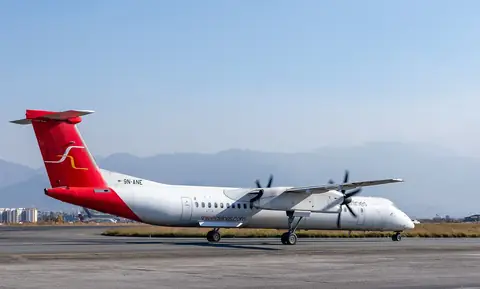
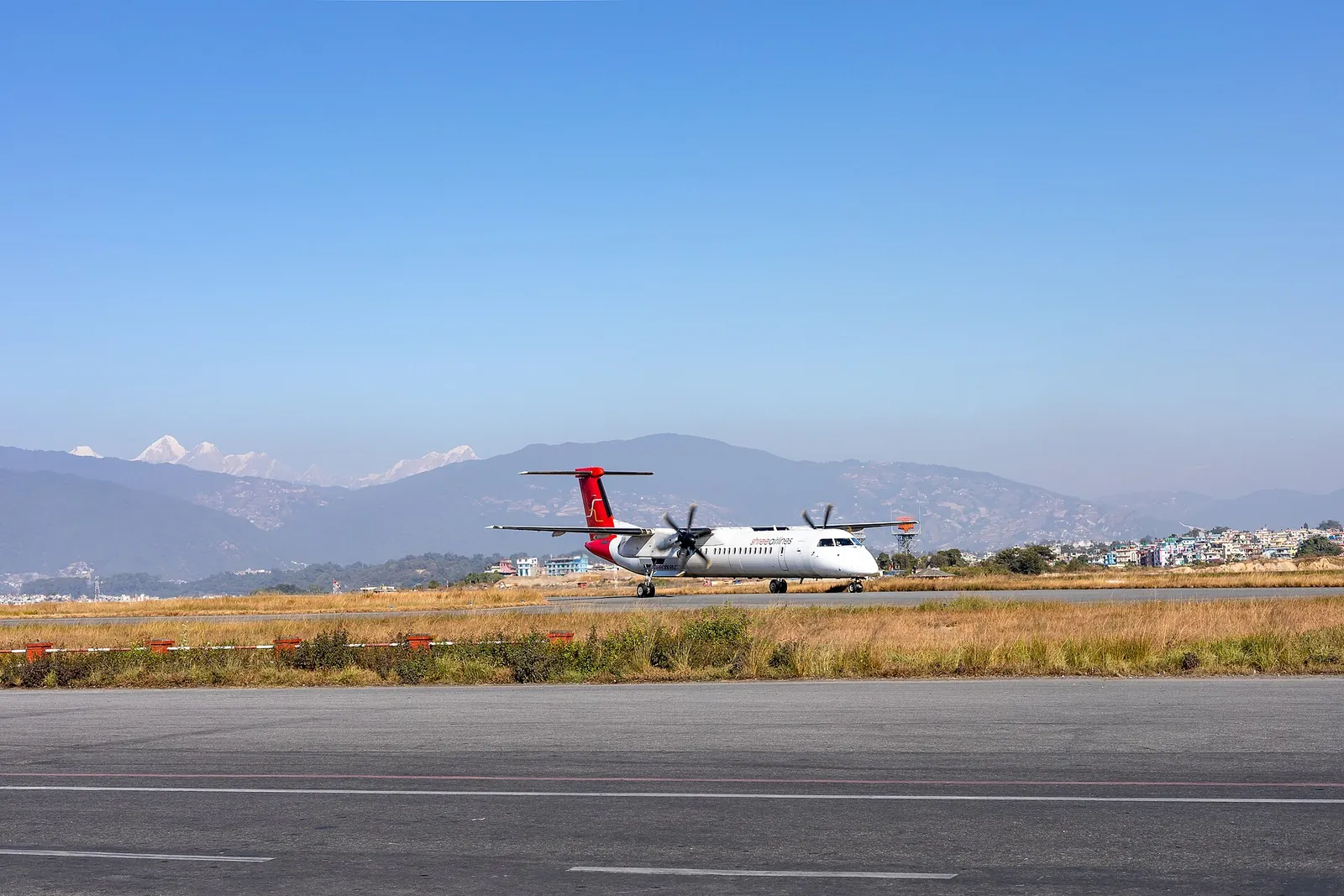
A Shree Airlines Dash 8 at Tribhuvan International Airport, with the hills of the Kathmandu Valley behind.
Photograph: Bijay Chaurasia Photography, Wikimedia Commons — opens in a new tab · CC BY-SA 4.0 — opens in a new tab
Changes: Resized and converted to WebP; displayed with responsive crops. · Original photograph and licence details ↗ — opens in a new tab
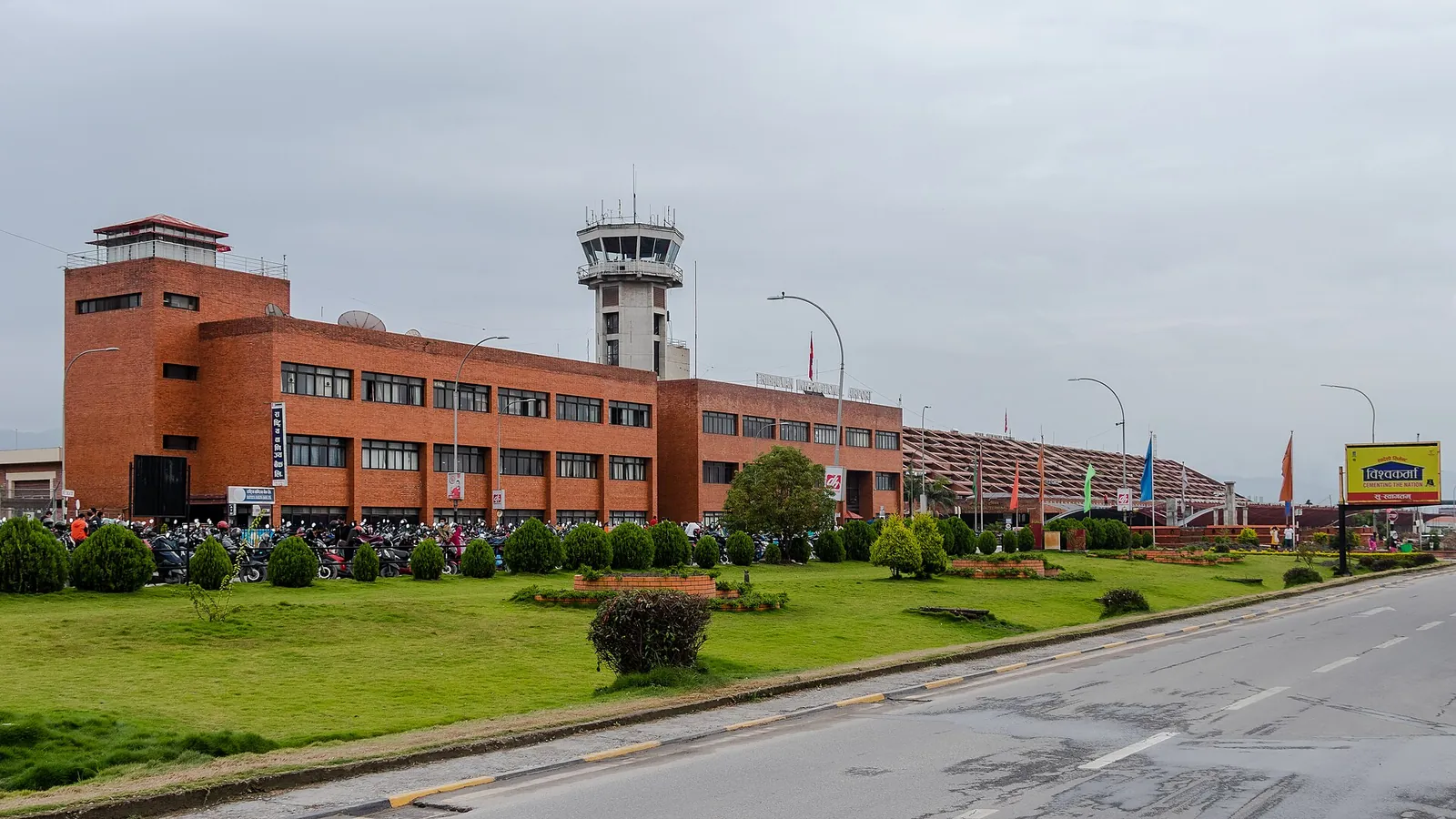
The terminal building and control tower of Tribhuvan International Airport.
Photograph: Bijay Chaurasia — opens in a new tab · CC BY-SA 4.0 — opens in a new tab
Changes: Resized and converted to WebP; displayed with responsive crops. · Original photograph and licence details ↗ — opens in a new tab
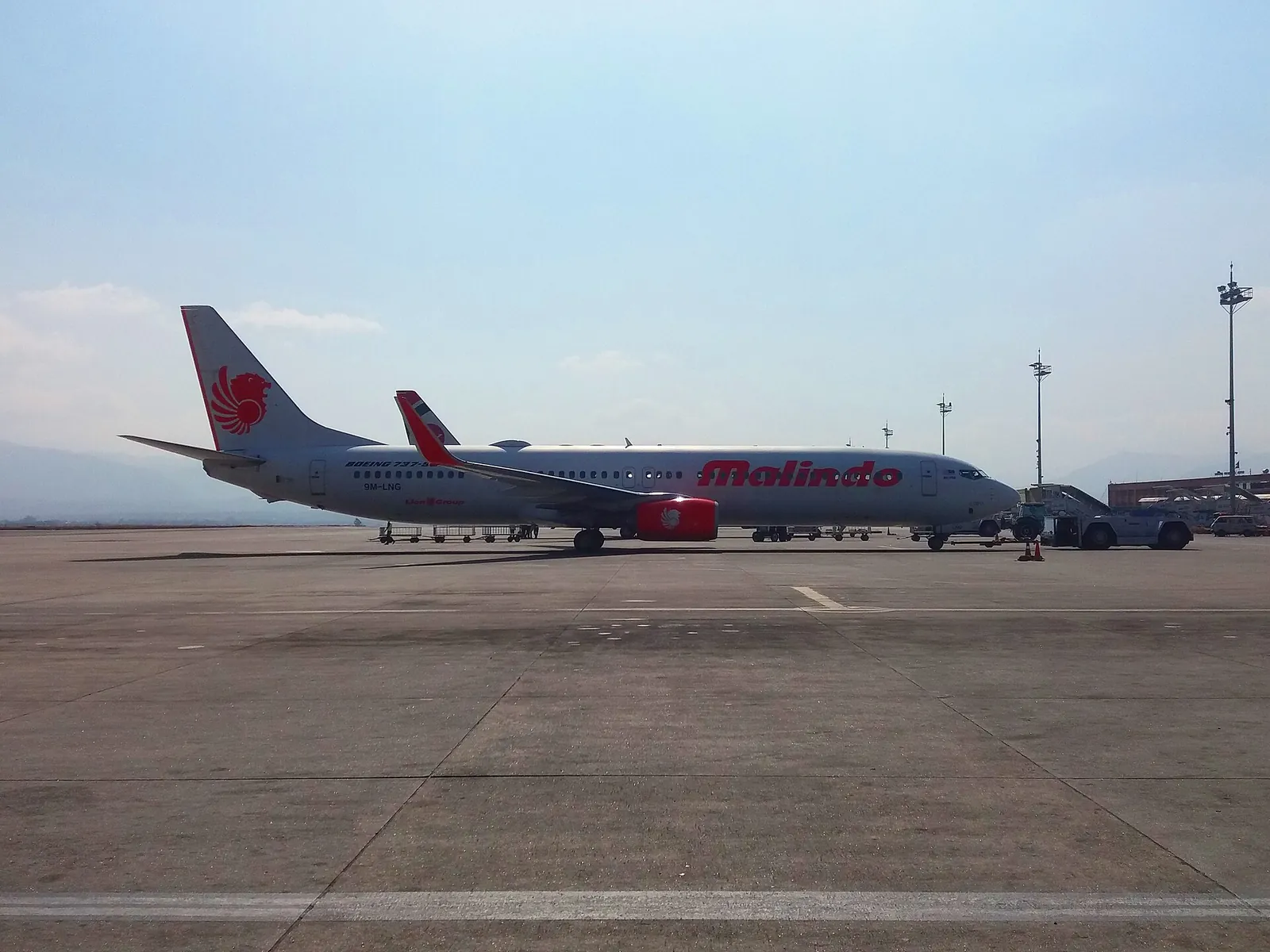
A Malindo Air jet on the apron at Tribhuvan International Airport.
Photograph: © Tulsi Bhagat / Wikimedia Commons — opens in a new tab · CC BY-SA 4.0 — opens in a new tab
Changes: Resized and converted to WebP; displayed with responsive crops. · Original photograph and licence details ↗ — opens in a new tab
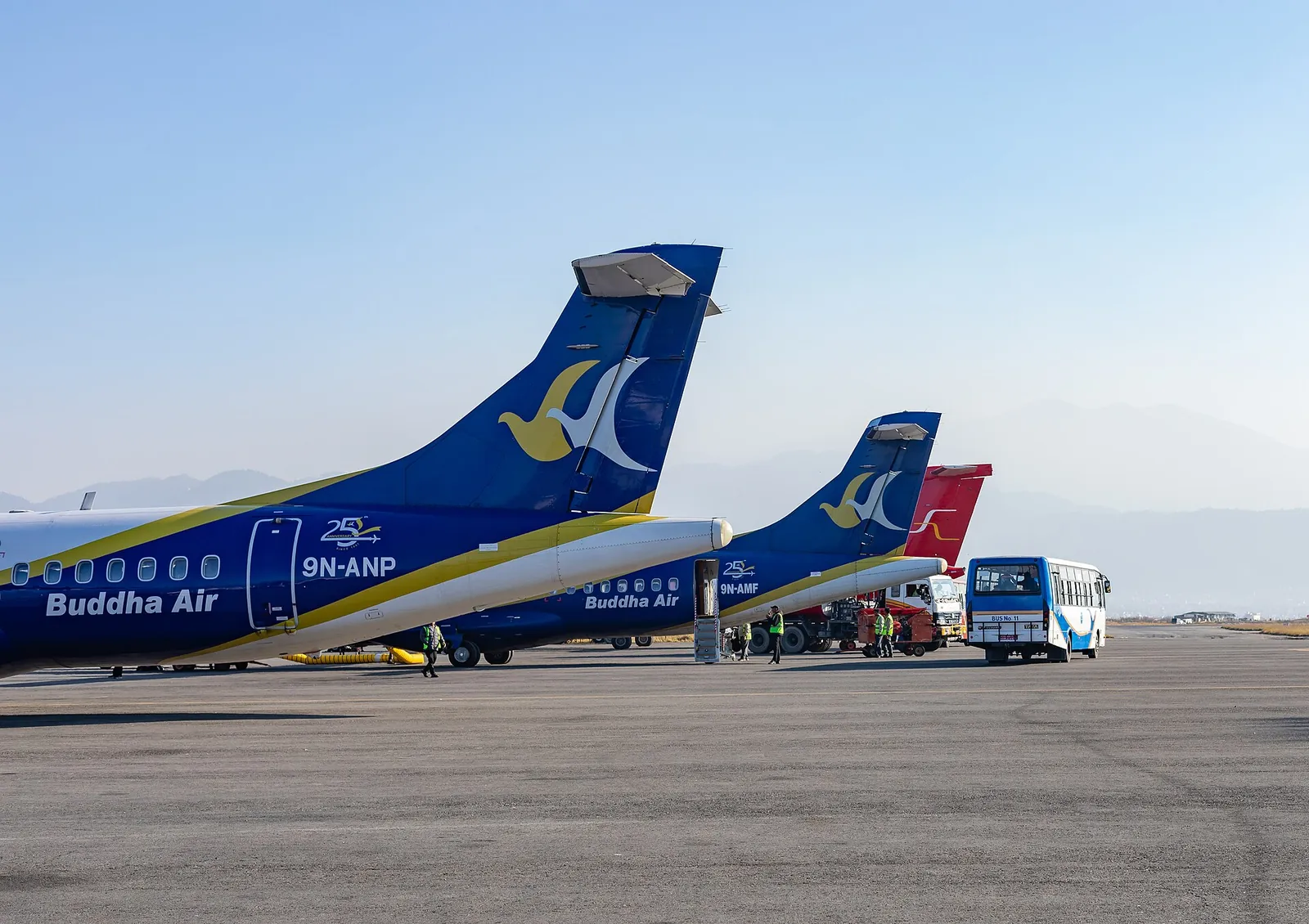
Buddha Air and Shree Airlines turboprops at Tribhuvan International Airport, the domestic fleet that links Kathmandu with the hill towns.
Photograph: Bijay Chaurasia Photography, Wikimedia Commons — opens in a new tab · CC BY-SA 4.0 — opens in a new tab
Changes: Resized and converted to WebP; displayed with responsive crops. · Original photograph and licence details ↗ — opens in a new tab