Central Japan and the Alps · Nagano
Hakuba ski guide: where to stay, the valley pass and getting there
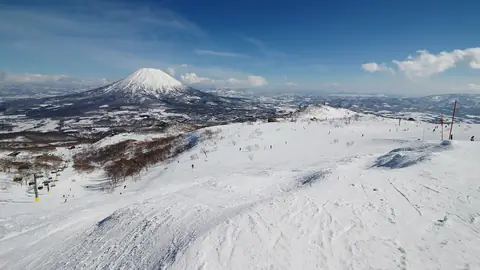
Hakuba is not one ski resort but a valley of ten, strung along the foot of the Northern Alps in Nagano Prefecture and reached from Tokyo in under three hours at best. That spread is both its strength and its catch: one lift pass covers every resort, but most of them are separate mountains joined by buses rather than runs. The decision that shapes a Hakuba week is therefore where you sleep, because it decides which lifts you can walk to and how much of each day you spend on shuttles. This guide covers the resorts and the valley pass for 2026–27, the main areas to stay, the routes from Tokyo and its airports, and what to do on a rest day.
- Suggested time
- 6–7 nights for a ski week
- Where to stay
- Happo for Happo-one and the shuttle hub; Wadano next door; Echoland for budget rooms and nightlife; Goryu or Tsugaike Kogen for families and beginners
- Season and timing
- Goryu plans to open on 21 November 2026 and Happo-one's 2026–27 ticket calendar runs from 1 December 2026 to 5 May 2027. JNTO names January and February as peak powder months, with the year-end holidays and Chinese New Year the busiest weeks.
The short answer
Give Hakuba six or seven nights for a ski week, sleeping in Happo at the foot of Happo-one, and arrive by Hokuriku shinkansen to Nagano and the Alpico express bus. Ski Happo-one for two days, then use the shuttles for Goryu, Hakuba47, Iwatake and the powder of Cortina. Buy the Hakuba Valley All-Mountain Day Pass (¥11,100 a day for adults in 2026–27) if you will move between resorts; Happo-one's own ticket is cheaper if you won't. Choose Echoland for cheaper rooms and nightlife, Goryu or Tsugaike for families and beginners, and keep one rest day for the onsen or the snow monkeys.
Where to sleep: Happo, Echoland, Hakuba Station, Goryu or Tsugaike
Hakuba Valley is the collective name for the Hakuba area: ten ski resorts spread across Omachi, Hakuba Village and Otari, and JNTO describes the valley as stretching nearly 30 km along the Hakuba range. JNTO also notes that Goryu and Hakuba47 are the only two resorts in Hakuba Village joined by their runs; the others are separate mountains linked by shuttle buses. So the first decision is not which resort to ski but where to sleep, because that decides which lifts you can walk to, how early you are on the snow and how much of the day goes on buses.
Happo, at the foot of Happo-one in the middle of the valley, is the obvious first choice. JNTO calls it a convenient base and describes the old Olympic Village area here as a short walk from the slopes, with direct buses to the other resorts, ski and snowboard lessons in English, childcare, and plenty of apartments and chalets alongside hotels; the Happo Bus Terminal, where the buses from Nagano and Tokyo arrive, is here too. Next door, Wadano sits on the free Line H shuttle that loops between the Happo Bus Terminal, the Happo gondola and the Sakka slope, and last winter it also had direct morning shuttles to Tsugaike, Iwatake and Goryu.
Echoland is the valley's nightlife street. JNTO describes its main street as packed with bars, shops, clubs and pubs, and its accommodation as generally cheaper than Happo's, which makes it popular with a younger crowd; the trade-off is a shuttle ride to every slope. Last winter, free shuttles ran from Echoland to Happo-one, Iwatake, Tsugaike and Goryu each morning, returning in the afternoon.
Hakuba Station is the transport hub rather than a ski base. The JR Oito line, the Nagano express bus and the Nagano Snow Shuttle from the Tokyo airports all stop here, and the shuttle operator notes cafés, convenience stores and supermarkets around the station, which helps if you are self-catering. Nagano's official tourism site puts the walk to Happo-one's Adam gondola at about 40 minutes, so plan on the five-minute bus to the Happo Bus Terminal or a hotel shuttle.
Families and beginners should look at the two ends of the valley's busy middle. Goryu, near JR Kamishiro Station in the south of Hakuba Village, has the gentle Toomi and Iimori slopes, daycare centres and Escal Plaza, a base building open 24 hours with restaurants and a hot-spring bath. Tsugaike Kogen, in Otari to the north, sits below Tsugaike Mountain Resort, whose base slope is 1,200 m wide and half of whose runs are rated beginner on the valley's official site. Wherever you book, ask whether the property runs its own ski shuttle: JNTO notes that many hotels do.
Ten resorts: which to ski, and when
Happo-one is the centrepiece. The valley's official site gives it a 1,071 m vertical drop, a longest run of 8,000 m and 220 ha of terrain, notes that it hosted the 1998 Nagano Winter Olympics, and says frankly that you need more than one day. Half its courses are rated intermediate and a fifth advanced. When we checked on 2026-10-10, Happo-one's ticket calendar ran from 1 December 2026 to 5 May 2027, with peak-season prices from 19 December to 22 March.
Hakuba47 and Goryu connect at the top and sell a joint ticket. Goryu's high Alps-daira area stays open until the end of Golden Week, and the resort has announced 21 November 2026 as its opening date, with the Toomi No. 1 lift area first; it is the first time Goryu has fixed an opening date in advance. Hakuba47 is known for its snow park, and JNTO adds that its north-facing slopes often keep runs open until May.
To the north, Iwatake is smaller than Happo-one but has a 360-degree view of the Hakuba range from the top of a non-stop gondola, which non-skiers may ride too. Tsugaike is the beginners' and families' mountain, with a gondola straight to the top and a powder zone, Tsuga-Pow DBD. Further north in Otari, Hakuba Norikura and Cortina are where to go after a big snowfall: the official site says Cortina records the valley's highest snowfall and is known for tree skiing, and its ski-in, ski-out Hotel Green Plaza Hakuba has 253 rooms and an onsen. In the south, in Omachi, Sanosaka, Kashimayari and Jigatake are smaller and family-focused; Kashimayari has a Pokémon Snow Adventure area with a 150 m tubing run.
For lessons in English, the valley's official site lists Evergreen International's group and private lessons at Happo-one, Iwatake, Tsugaike and Cortina, and Hakuba Snow Sports School at Goryu; Happo-one's own school teaches in English only in private lessons.
JNTO calls January and February the peak powder months and warns that the year-end holidays and Chinese New Year are particularly busy. Spring skiing is a genuine option: Happo-one's calendar runs to 5 May, and from 23 March its day ticket drops to spring rates.
Make time for the local food
What to eat and where to look
Shinshu soba
Buckwheat noodles are Nagano's signature dish: Nagano's official tourism site explains that buckwheat thrived where rice was hard to grow. Eat them cold with a dipping sauce (mori or zaru soba) or hot in broth (kake soba), which suits a snowy evening.
- Where to look
- Soba restaurants across the valley and in Nagano city.
- Fit it into your day
- A quick lunch at the base or a warming bowl after the last run.
Buckwheat is a serious allergen. The dipping sauce and broth are often made with fish stock, so ask if you avoid fish.
Oyaki and Otari's chanoko
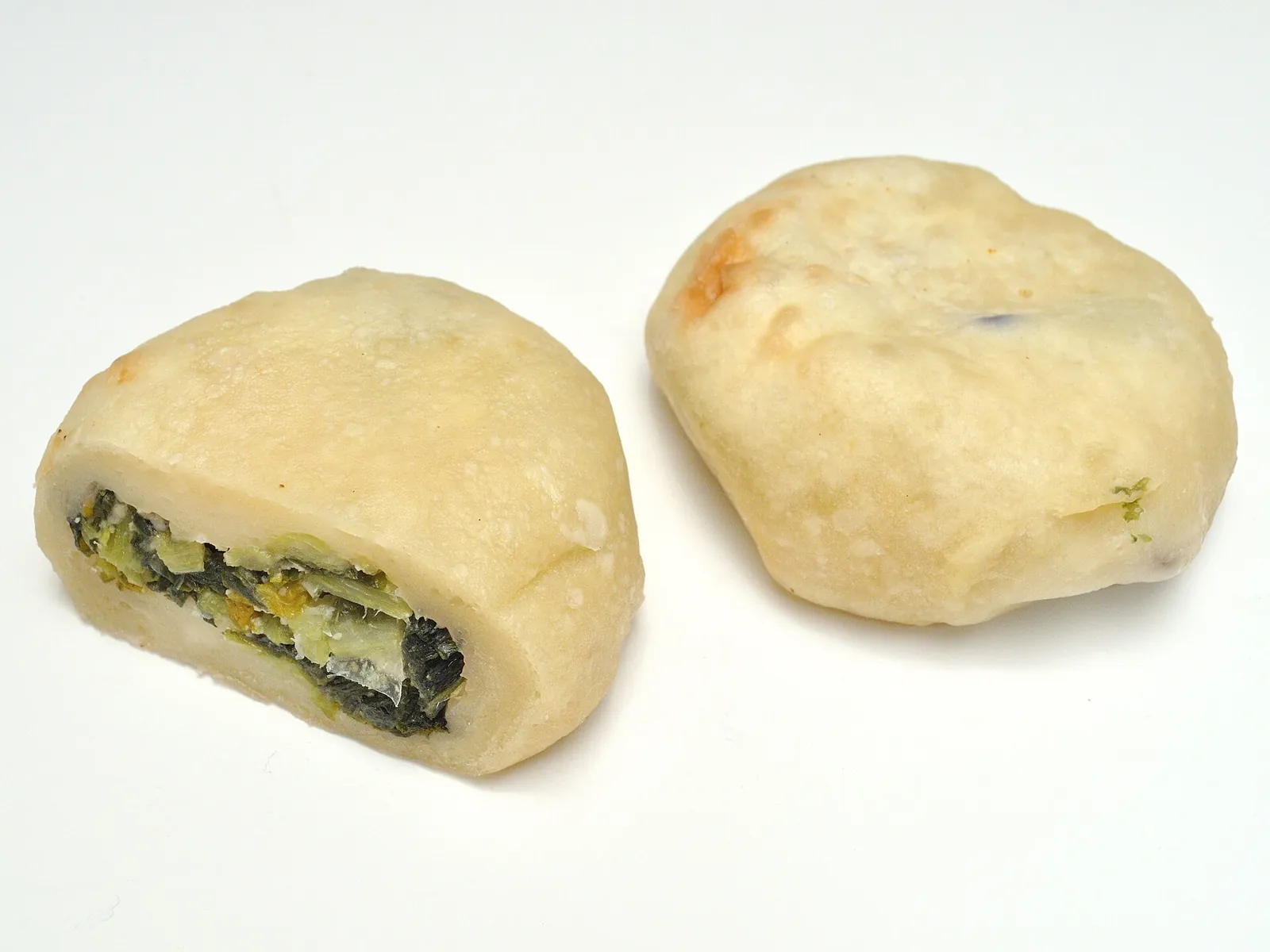
Nagano's traditional snack: a flour dumpling filled with vegetables such as nozawana pickles, miso-marinated aubergine or daikon, then steamed, char-grilled or fried. In Otari, at the valley's northern end, the local version, chanoko, works boiled potato into a dough of buckwheat and wheat flour for a softer, chewier skin.
- Where to look
- Food stalls and souvenir shops in the valley and in Nagano city; Go! NAGANO notes that some of Nagano's historic oyaki shops help you make your own.
- Fit it into your day
- A pocket snack for the bus or the chairlift queue.
Contains wheat, and chanoko also contains buckwheat. The classic fillings are vegetarian, but ask about the seasoning if you avoid fish stock.
Hakuba galette
A buckwheat crêpe made with Hakuba-grown buckwheat flour and topped with local produce such as Hakuba pork, Shinshu salmon and seasonal vegetables. HAKUBAVALLEY TOURISM explains that only cooks who pass the village's own Hakuba Crêpier course, with a written exam on soba and a cooking test, may serve it under the name.
- Where to look
- Cafés and restaurants in Hakuba Village that advertise the Hakuba galette.
- Fit it into your day
- A long lunch on a rest day.
Made with buckwheat flour; toppings may include pork, fish, egg or dairy.
Shinshu miso ramen
Nagano produces 40% of Japan's miso, Nagano's official tourism site notes, so locals like their ramen in a rich miso broth. It is the obvious après-ski bowl.
- Where to look
- Ramen shops around the valley; Go! NAGANO names Ramen Misoya near Nagano Station if you are passing through.
- Fit it into your day
- An early dinner after the lifts close.
Broths are usually pork- or chicken-based and the noodles contain wheat.
Local sake from Omachi
HAKUBAVALLEY TOURISM lists three breweries in the valley, all in Omachi, using local rice and Northern Alps spring water: Usui Shoten (Hakuba Nishiki, founded 1906), Ichinoya (founded in 1865, which still does every step by hand) and Hokuan Jozo (Hokuan Daikoku, since 1923).
- Where to look
- Izakaya and liquor shops in the valley; ask for Hakuba Nishiki, Ichinoya or Hokuan Daikoku by name.
- Fit it into your day
- With dinner at an izakaya, never before skiing.
Contains alcohol; save it for the evening rather than lunch on the slopes.
Rest days: onsen, the snow monkeys and Nagano
Plan at least one day off skis. Hakuba Happo Onsen, at the foot of Happo-one, is a highly alkaline spring with a pH over 11, which its operator describes as Japan's only natural hydrogen hot spring. When we checked on 2026-10-10, its site listed four public baths: Happo-no-yu and Mimizuku-no-yu, open daily 10:00–21:00 with last admission at 20:30; Sato-no-yu, open 16:00–20:00 from 1 December to 31 March; and Obinata-no-yu, open from Golden Week to the end of October. Goryu's Escal Plaza has its own hot-spring bath, and JNTO recommends the indoor and outdoor baths of Tenjin-no-yu at the Hakuba Highland Hotel, open to non-staying guests, for their view of the Hakuba Sanzan peaks.
The Jigokudani Snow Monkey Park (Jigokudani Yaen-koen) is the classic rest-day trip, but it lies on the far side of Nagano, so it takes the whole day. By public transport, ride the express bus back to Nagano Station, then take the Nagano Dentetsu limited express to Yudanaka (38 minutes), a bus to the Snow Monkey Park stop (15 minutes) and a 35-minute walk on an unpaved path; the park also lists an express bus from Nagano towards Shiga Kogen (41 minutes) to the same stop. From November to March it opens 09:00–16:00. The monkeys are wild: the park warns that on some days they do not appear at all, and that they bathe in the hot spring only to keep warm in winter.
Admission rises on 1 December 2026, from ¥800 to ¥1,000 for adults at the gate, or ¥880 bought online, and from December to April visitors with online tickets get priority entry. If you would rather not manage the connections, the valley's sightseeing site notes that day tours run from Hakuba to Jigokudani, Zenkoji and Matsumoto; the tours below include a shared trip with a winter shuttle from Hakuba and a private one with pickup in the valley.
Nagano city is easiest as a stop on your way in or out, since the shinkansen route to Hakuba changes from train to bus at Nagano Station. Zenkoji, a National Treasure with some 1,400 years of history, has one of the largest wooden main halls of any temple in eastern Japan, according to Nagano's official tourism site, and is said to hide the first Buddhist image brought to Japan. The valley's sightseeing site notes that the present hall was rebuilt in 1707.
The Hakuba Valley pass and the shuttle buses
The Hakuba Valley All-Mountain Day Pass covers all ten resorts, can be used at several on the same day and, on the days you ski, gives free rides on the Hakuba Valley Shuttle Bus. When we checked on 2026-10-10, the official site listed 2026–27 adult prices (13 and over) of ¥11,100 for one day, ¥53,400 for five days and ¥63,900 for six, with multi-day passes usable within a longer window: five days within ten, six within eleven. A five-day pass for a child aged 6 to 12 was ¥29,700. The pass is due on sale around November on the Hakuba Valley webshop, and nine resorts read it at the lift gates; at Jigatake you exchange it at the counter.
Whether it pays depends on how much you move. Happo-one's own peak-season day ticket for 2026–27 is ¥9,800 for adults aged 18 to 64, so if you will ski Happo-one on most days, its own tickets cost less. The valley pass earns its price once you add days at Goryu, Tsugaike or Cortina and want the inter-resort bus included. Holders of an Epic Pass, Epic Local Pass or Epic Australia Pass valid for 2026–27 get one free ticket for five consecutive days at the valley's resorts.
There are two kinds of daytime shuttle: free buses from the main lodging areas to each resort, and Line V, which links all ten resorts a few times a day for ¥800 (free with the valley pass, online payment only). The official site warns that buses fill up after heavy snow and that the last afternoon services are the most crowded. The 2026–27 timetables had not been published when we checked.
In the evening, last winter's ¥500 Hakuba Night Bus linked Kamishiro, Echoland, the Happo Bus Terminal, Wadano and Hakuba Station. Night skiing in Hakuba Village is at Goryu only, on a separate night ticket that the valley pass does not cover; last season it ran from late December to mid-March, 18:00–21:30.
Getting there from Tokyo and the airports
The quickest route from Tokyo is the Hokuriku shinkansen from Tokyo Station to Nagano, 79 minutes on the fastest trains according to the snow monkey park's access page, then Alpico's express bus to Hakuba. Nagano's official tourism site puts the bus at 70 minutes to the Happo Bus Terminal, and Hakuba Valley's official site gives the whole journey from Tokyo as 2 hours 50 minutes at best. The bus stop (No. 26) is within a 10-minute walk of the ticket gates.
Last winter, most Nagano–Hakuba buses were unreserved and ran direct to the Happo Bus Terminal for ¥3,500, with a few reservation-only buses to Goryu and Hakuba Station; suitcases and skis in covers go in the hold. Alpico expects to post the 2026–27 winter timetable around mid-November.
Alpico and Keio Bus also run highway buses from Busta Shinjuku to stops across the valley, including Hakuba Goryu and the Happo Bus Terminal, in about four hours by Hakuba Valley's reckoning. Seats open a month before travel, last winter's fares to the Hakuba area were ¥6,400–7,800, and the luggage rules differ: Keio allows one suitcase or one pair of skis per passenger, while Alpico recommends no more than two items. If you have more than two pieces each, Alpico suggests sending the rest ahead by courier.
Alpico's own Narita–Hakuba and Haneda–Hakuba buses did not run in the 2024–25 or 2025–26 winters, and its pages said nothing about 2026–27 when we checked. The Nagano Snow Shuttle, sold by the Hakuba-based travel agency JHN Travel, advertises daily winter departures from Narita and Haneda to its base at JR Hakuba Station, and also sells shinkansen-and-bus packages; its timetable and fares appear only in its booking system. If you are arriving from Kanazawa on a longer trip, Hakuba Valley gives 2 hours 42 minutes at best by Hokuriku shinkansen and the JR Oito line.
Hakuba or Niseko?
The two are built differently. Niseko United is four resorts on one mountain, Niseko Annupuri, which JNTO says connect near the summit and share one All Mountain Pass, so you can ski from one to the next; in Hakuba, Goryu and Hakuba47 are the only pair in Hakuba Village joined on snow, and the other resorts are a bus ride apart. Access differs too. Hakuba is a shinkansen and a bus from Tokyo, 2 hours 50 minutes at best, with no flight; Niseko is reached through New Chitose Airport near Sapporo, Hokkaido's main air link with the rest of Japan, and then around three hours by road, according to JNTO.
Choose Hakuba if you want to combine a ski week with Tokyo, Kanazawa or the Japan Alps by rail, and enjoy a different mountain most days. Choose Niseko if you would rather spend the week on one connected mountain and do not mind the extra flight. Our Niseko guide, linked below, covers the other side of the decision.
Summer in Hakuba: Happo Pond and Tsugaike Nature Park
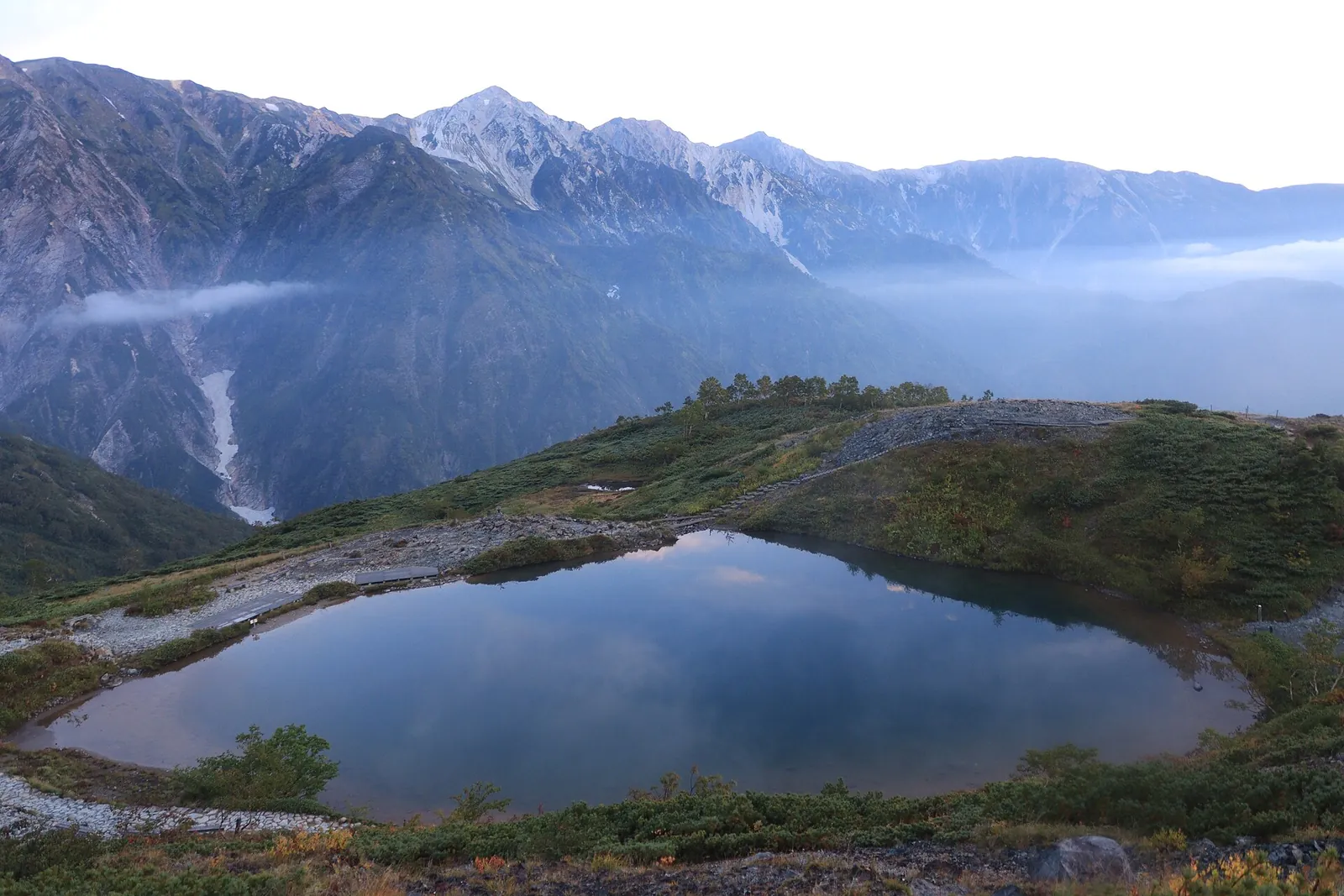
From late spring to autumn, Hakuba is a hiking base. The Happo Alpen Line, the Adam gondola and two chairlifts, lifts you to about 1,830 m, and Happo-one's trail page gives about 60 minutes for the walk up to Happo Pond (2,060 m) on the steeper, shorter route or about 90 minutes on the gentler boardwalk route. On clear days the pond mirrors the Hakuba Sanzan peaks, and the ridge holds as many as 347 species of alpine plants. In 2026 the line ran from 30 May (weekends only at first) to 3 November, with an adult return ticket at ¥3,500. Bring layers: the resort notes that the temperature drops about 0.6°C every 100 m.
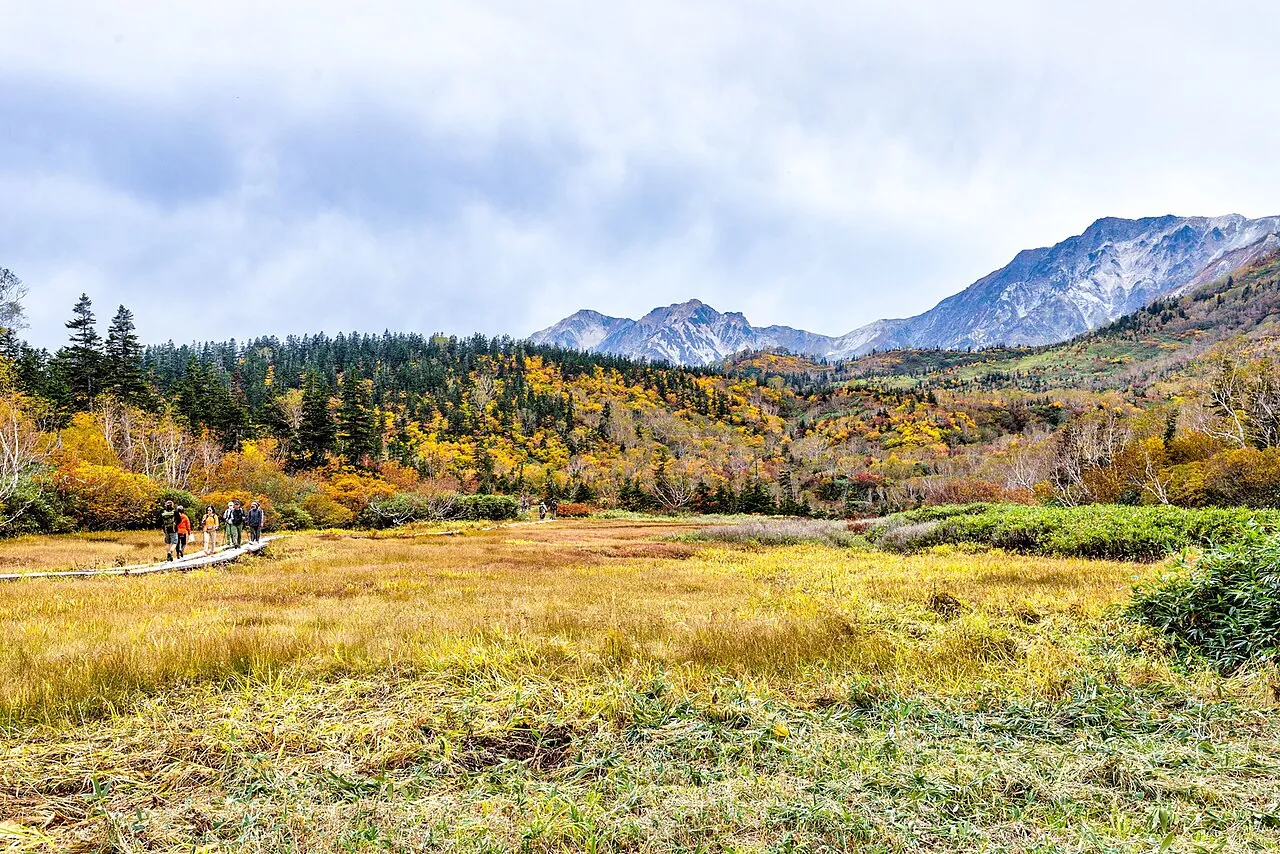
In Otari, Tsugaike Nature Park, inside Chubu-Sangaku National Park, is reached by the Eve gondola, which the resort calls Japan's second-longest (20 minutes), and a five-minute ropeway. Its four high moors bloom with skunk cabbage in spring while snow still lies on the Alps, and the resort calls autumn, when the leaves turn, the park's most beautiful season. When we checked, the 2026 green season ran from 6 June to 25 October.
A workable seven-night ski week
This is an editorial suggestion, not a timetable. Check lift status and the shuttle timetable each morning.
- Day 1 — Arrive: Hokuriku shinkansen from Tokyo Station to Nagano, Alpico express bus to the Happo Bus Terminal, check in and soak at Happo-no-yu.
- Days 2–3 — Happo-one: the long runs on the first clear morning; book lessons for the first day if you need them.
- Day 4 — Goryu and Hakuba47: take the shuttle, ski across the shared top, and stay on for night skiing on the Toomi slope if it is running.
- Day 5 — Rest day: the snow monkeys at Jigokudani on a tour or via Nagano, or the Iwatake gondola and an afternoon in the onsen.
- Day 6 — The north: Cortina or Norikura after fresh snow, or Tsugaike's wide slopes for beginners; check the Line V times for the ride back.
- Day 7 — Your favourite: a last day where the snow is best, then a final onsen.
- Day 8 — Leave: express bus to Nagano, a stop at Zenkoji, and the shinkansen to Tokyo or on to Kanazawa.
Practical questions
How many days do you need in Hakuba?
Plan a ski week of six or seven nights. That gives two days on Happo-one, days at Goryu, Hakuba47 and the northern resorts by shuttle, and a rest day for the onsen or the snow monkeys; the valley's five-day pass can be used on five days within ten days of first use.
Where is the best place to stay in Hakuba?
Happo, at the foot of Happo-one, is the most practical base, with the main bus terminal and free shuttles to other resorts. Echoland is cheaper and livelier at night but needs a shuttle to every slope, while Goryu and Tsugaike Kogen suit families and beginners.
Is the Hakuba Valley pass worth it?
It is if you will ski several resorts. When we checked on 2026-10-10, the 2026–27 adult pass cost ¥11,100 for one day, against ¥9,800 for Happo-one's own peak-season day ticket, and the valley pass includes the inter-resort shuttle bus.
How do I get from Tokyo to Hakuba?
Take the Hokuriku shinkansen to Nagano, then Alpico's express bus to Hakuba: 2 hours 50 minutes at best, according to Hakuba Valley's official site. Highway buses also run from Busta Shinjuku in about four hours, and the Nagano Snow Shuttle runs from Narita and Haneda in winter.
Is Hakuba or Niseko better for a ski week?
Hakuba suits travellers who want to reach the snow by rail from Tokyo and ski a different mountain most days. Niseko suits those happy to fly to New Chitose Airport for four connected resorts on one mountain.
Can you visit the snow monkeys from Hakuba?
Yes, as a full-day trip via Nagano: the express bus to Nagano Station, the train to Yudanaka, a bus and a 35-minute walk. Tours with pickup in Hakuba also run in winter, and from 1 December 2026 adult admission is ¥1,000, or ¥880 online.
Sources and checks before you travel
Reference sources for the version dated 10 October 2026. Confirm opening times, access, transport and conditions for your travel dates.
- Hakuba Valley (official): lift ticket information 2026–27 ↗ — opens in a new tab
- Hakuba Valley (official): shuttle bus ↗ — opens in a new tab
- Hakuba Valley (official): ski resort information ↗ — opens in a new tab
- Hakuba Valley (official): about Hakuba Valley and the Epic Pass ↗ — opens in a new tab
- Hakuba Valley (official): access ↗ — opens in a new tab
- Hakuba Happo-one: tickets and passes 2026–27 ↗ — opens in a new tab
- Hakuba Happo-one: Happo Pond and the Happo Alpen Line ↗ — opens in a new tab
- Able Hakuba Goryu: 2026–27 opening date and night skiing ↗ — opens in a new tab
- Alpico: Nagano–Hakuba express bus (winter) ↗ — opens in a new tab
- Alpico: Shinjuku–Hakuba highway bus (winter) and airport routes ↗ — opens in a new tab
- Nagano Snow Shuttle (JHN Travel) ↗ — opens in a new tab
- JNTO: Hakuba ski resorts ↗ — opens in a new tab
- JNTO: Hakuba Olympic Village and Echoland ↗ — opens in a new tab
- JNTO: Hakuba Valley (snow recommendations) ↗ — opens in a new tab
- Go! NAGANO (Nagano Prefecture): a summer day trip to Hakuba ↗ — opens in a new tab
- Go! NAGANO (Nagano Prefecture): Nagano City and 9 of Nagano's best local foods ↗ — opens in a new tab
- HAKUBAVALLEY TOURISM: gastronomy ↗ — opens in a new tab
- Hakuba Happo Onsen (official) ↗ — opens in a new tab
- Jigokudani Yaen-koen (official): guide, access and fee revision ↗ — opens in a new tab
- Hakuba Valley sightseeing (Tourism Commission of Hakuba Village and Otari Village Tourism Association) ↗ — opens in a new tab
- Tsugaike Mountain Resort: gondola and ropeway ↗ — opens in a new tab
- JNTO: Niseko United ↗ — opens in a new tab
Does this experience fit your route?
A rest day is the time for the snow monkeys, and a tour with pickup in Hakuba saves the bus, train and bus connections via Nagano. Check the pickup point, the return time and what is included before you book.
Check dates and details on Viator ↗ — opens in a new tabAffiliate link · Book with ViatorPhoto credits
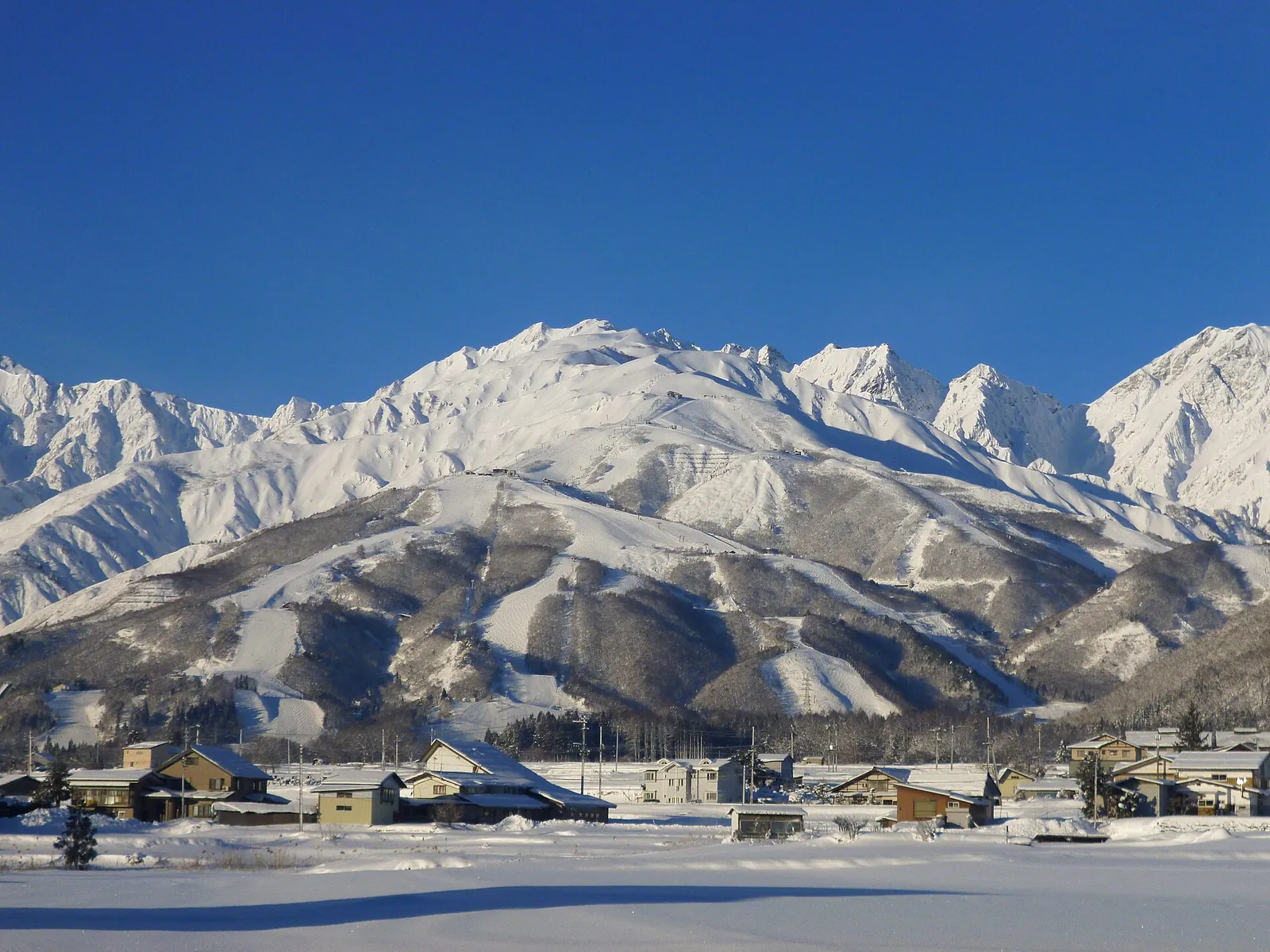
The Hakuba range above the valley floor; the ten resorts line its lower slopes.
Photograph: Ski Mania — opens in a new tab · Public domain — opens in a new tab
Changes: Resized and converted to WebP; displayed with responsive crops. · Original photograph and licence details ↗ — opens in a new tab
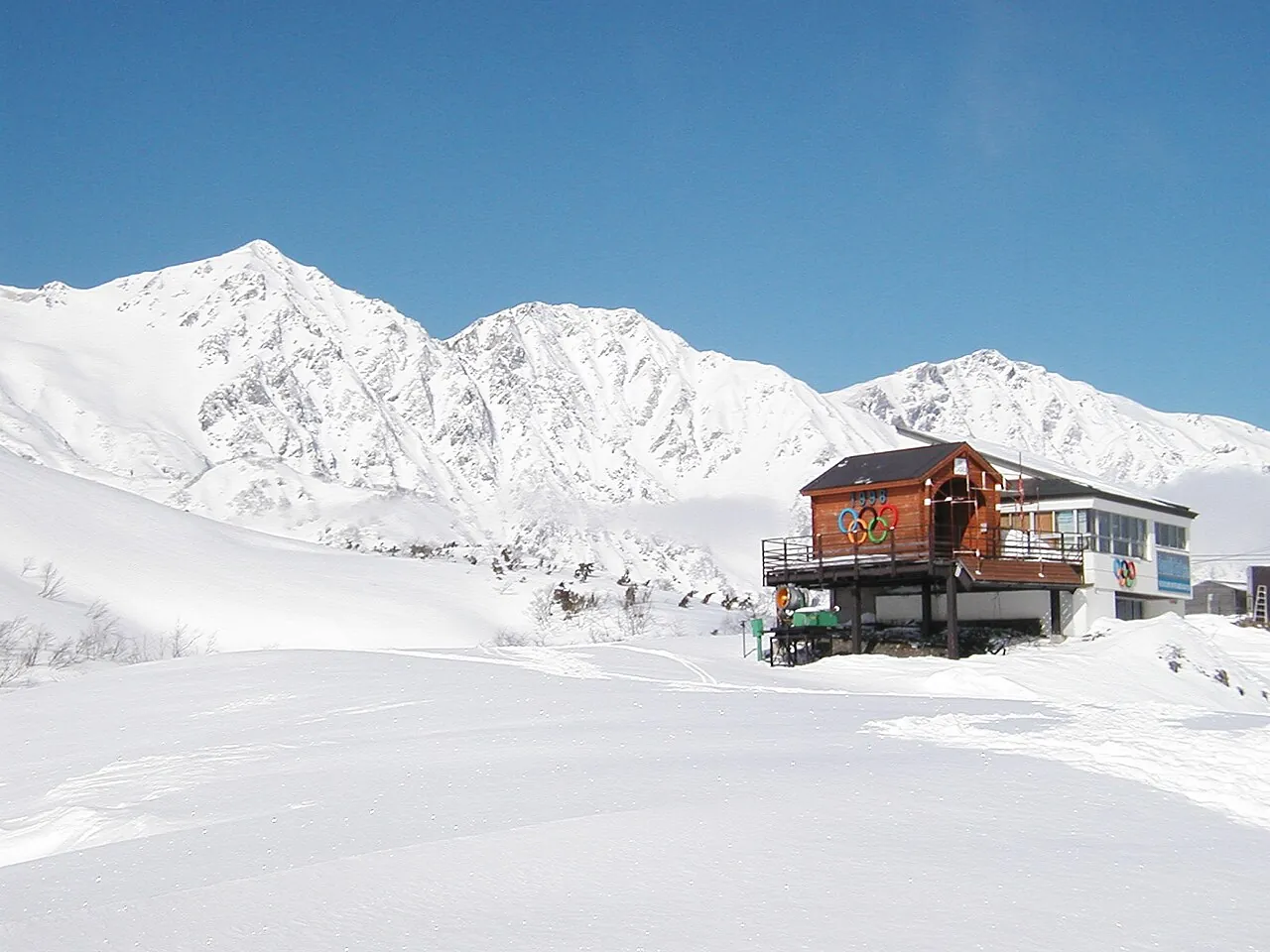
The women's downhill start house from the 1998 Nagano Olympics, high on Happo-one.
Photograph: alala_p — opens in a new tab · CC BY-SA 3.0 — opens in a new tab
Changes: Resized and converted to WebP; displayed with responsive crops. · Original photograph and licence details ↗ — opens in a new tab
Happo Pond at 2,060 m, the summer walk from the top of the Happo Alpen Line.
Photograph: Alpsdake — opens in a new tab · CC0 — opens in a new tab
Changes: Resized and converted to WebP; displayed with responsive crops. · Original photograph and licence details ↗ — opens in a new tab
Tsugaike Nature Park in early October, when the high moors turn gold.
Photograph: くろふね — opens in a new tab · CC BY 4.0 — opens in a new tab
Changes: Resized and converted to WebP; displayed with responsive crops. · Original photograph and licence details ↗ — opens in a new tab
Oyaki, Nagano's filled dumplings; nozawana greens and aubergine are classic fillings.
Photograph: Ocdp — opens in a new tab · CC0 — opens in a new tab
Changes: Resized and converted to WebP; displayed with responsive crops. · Original photograph and licence details ↗ — opens in a new tab