Plan your trip
Uzbekistan food: plov, samsa, lagman, shashlik and non
Uzbek meals are built from a handful of dishes that every cook has an opinion about. Plov comes first, because every city argues that its own is the best; samsa, lagman and shashlik fill the hours in between, and bread and tea frame every table. This guide gives each dish a named place to try it, with prices from the restaurants’ own menus where they publish them.
In this guide
Find the location ↗ — opens in a new tabThe short answer
Plan two nights, one in Tashkent and one in Samarkand, and book the Afrosiyob seats first: train 766 leaves Tashkent at 07:21 for Samarkand. Reserve a dinner table at Caravan next, by phone. Eat plov, samsa, lagman and shashlik in Tashkent and the bread in Samarkand. A 450 g plov at Beshqozon costs UZS 52,000 (about £3), and a day of meals about UZS 150,000 (about £9) on a budget, with prices checked on 25 October 2026.
- Key point
- Two nights: Tashkent, then Samarkand by Afrosiyob train
- Where it applies
- Tashkent for plov, samsa, lagman and shashlik; Samarkand’s Siab Bazaar for bread
- Timing
- Summer chillya, the hottest stretch, runs from after 20 June to early August, and the national tourism portal advises against walking around the city at hot noon: move lunch indoors or later and keep the bazaar walks for morning and evening.
Plov: one dish, a different pot in every city
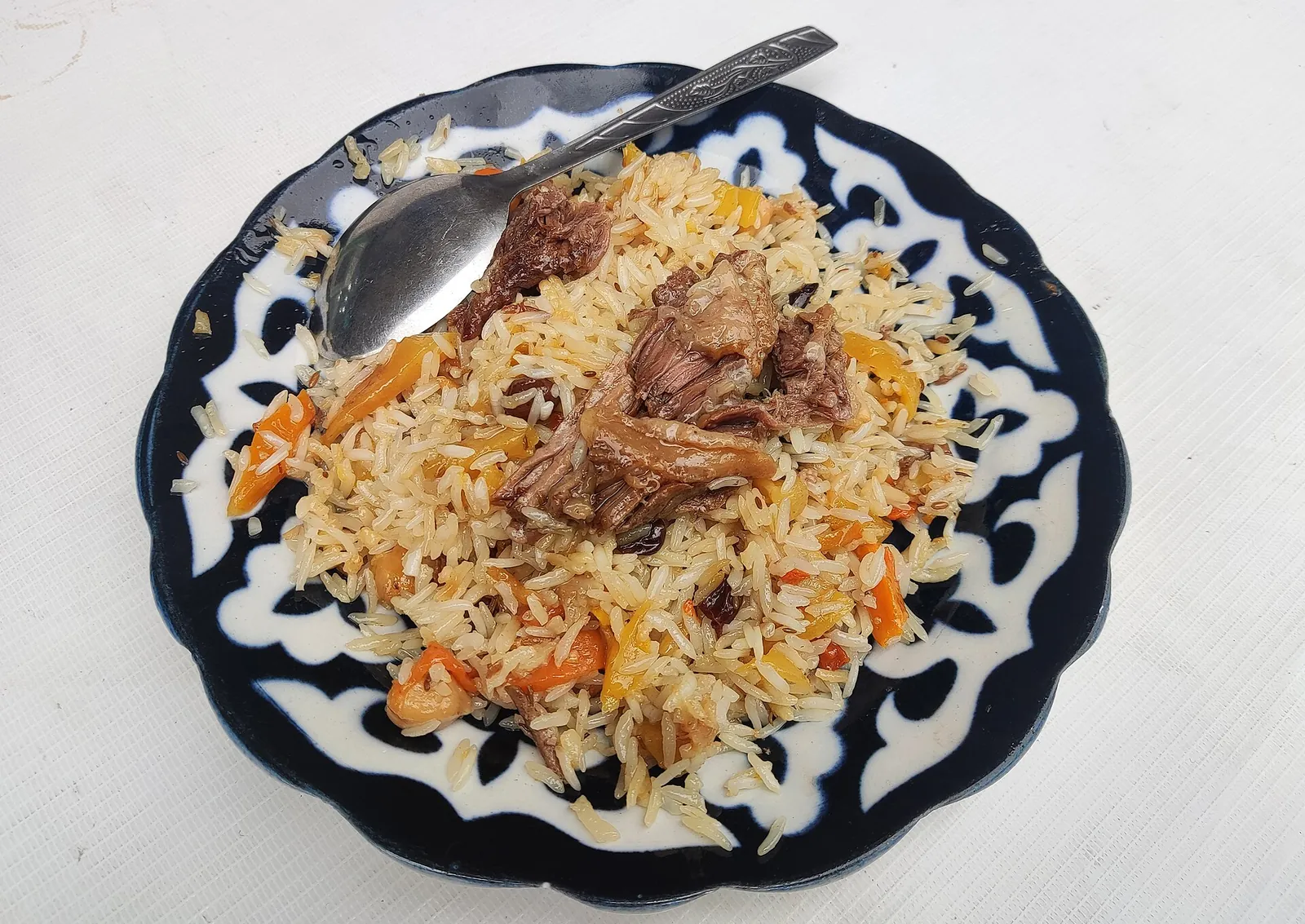
Plov is the dish a host puts in front of a guest: there is a saying in Uzbekistan that guests can leave only after palov has been offered. UNESCO added “Palov culture and tradition” to its Representative List of the Intangible Cultural Heritage of Humanity in 2016. The dish of rice, meat, spices and vegetables is served as hospitality, at weddings and at New Year, and men and women of any age cook it. People in every Uzbek city are convinced their own plov is the best in the country.
The differences are real. Tashkent has its festive bayram osh, Andijan adds grape-leaf rolls (kovatok palov) and Khiva cooks chalov. Bukhara’s plov is not mixed during cooking and is made only in a copper cauldron, unlike the Tashkent and Andijan versions; Samarkand’s is likewise not mixed, so each diner chooses how much carrot and meat to take. Beshqozon, a Tashkent chain, shows what goes into one pot. Its wedding plov (to’y oshi) is cooked with lamb, beef, carrots, chickpeas, raisins and black pepper, and its zig’ir osh, named for Samarkand, with beef, linseed oil, carrots, raisins and chickpeas.
The portion Beshqozon calls complete (komplekt) adds kazi, a sausage made from horse meat, a boiled quail egg and a dolma of meat and rice wrapped in vine leaves, which turns the plate into a small feast.
Samsa, lagman and shashlik: the meals between plov
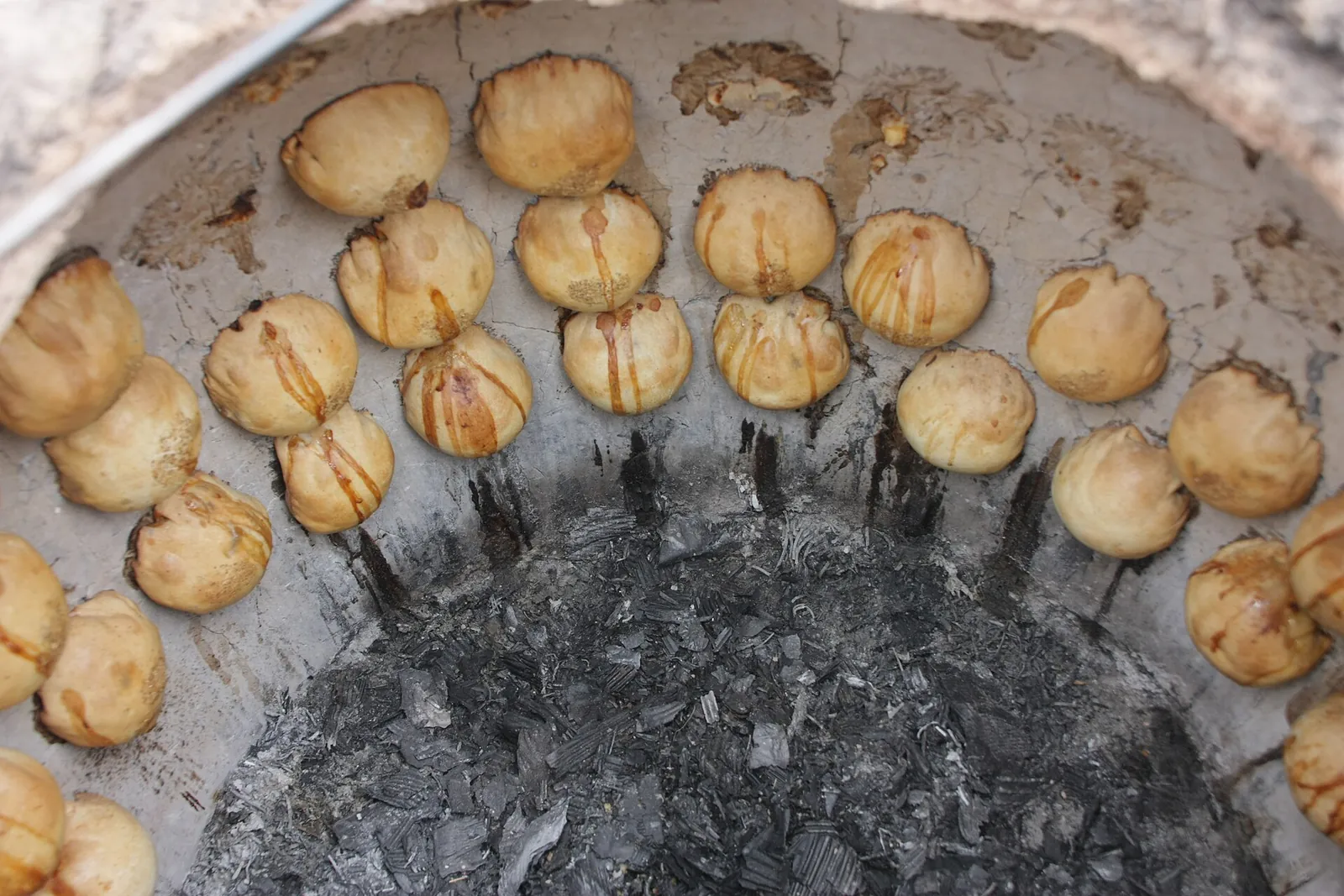
Samsa are baked in a clay tandoor oven and usually filled with chopped or minced meat; pumpkin, spinach, potato and chicken fillings also exist, and Chorsu Bazaar’s stalls and small eateries sell them meat-filled. Beshqozon sells a 70 g samsa for UZS 14,000 with beef, onion and fat, UZS 12,000 with chicken, onion and cheese, UZS 14,000 for the “vegetable” samsa, which is filled with peppers and beef, and UZS 10,000 with pumpkin. At 70 g it is a snack, so plan on two or three for a light lunch. Vegetarians can order the pumpkin samsa; plov and the other dishes here are cooked with meat, because Uzbeks eat lamb, beef and horse meat.
Lagman is Uzbekistan’s Central Asian spaghetti: hand-made noodles with meat, vegetables and spices. In the Uzbek kesma version thick boiled noodles come with a gravy of meat and vegetables that usually includes radish, cabbage, potatoes, peppers and tomatoes. Chuzma lagman, the Uyghur version, uses stretched noodles under vegetables and lamb or young veal, and kovurma lagman is fried. Caravan in Tashkent makes its lagman by hand, and small cafés beside Chorsu’s main market building serve lagman alongside pilaf, manti and samsa. For a sit-down lagman or shashlik dinner, allow about UZS 69,000 a person, the mid-range meal estimate below; Caravan publishes no prices.
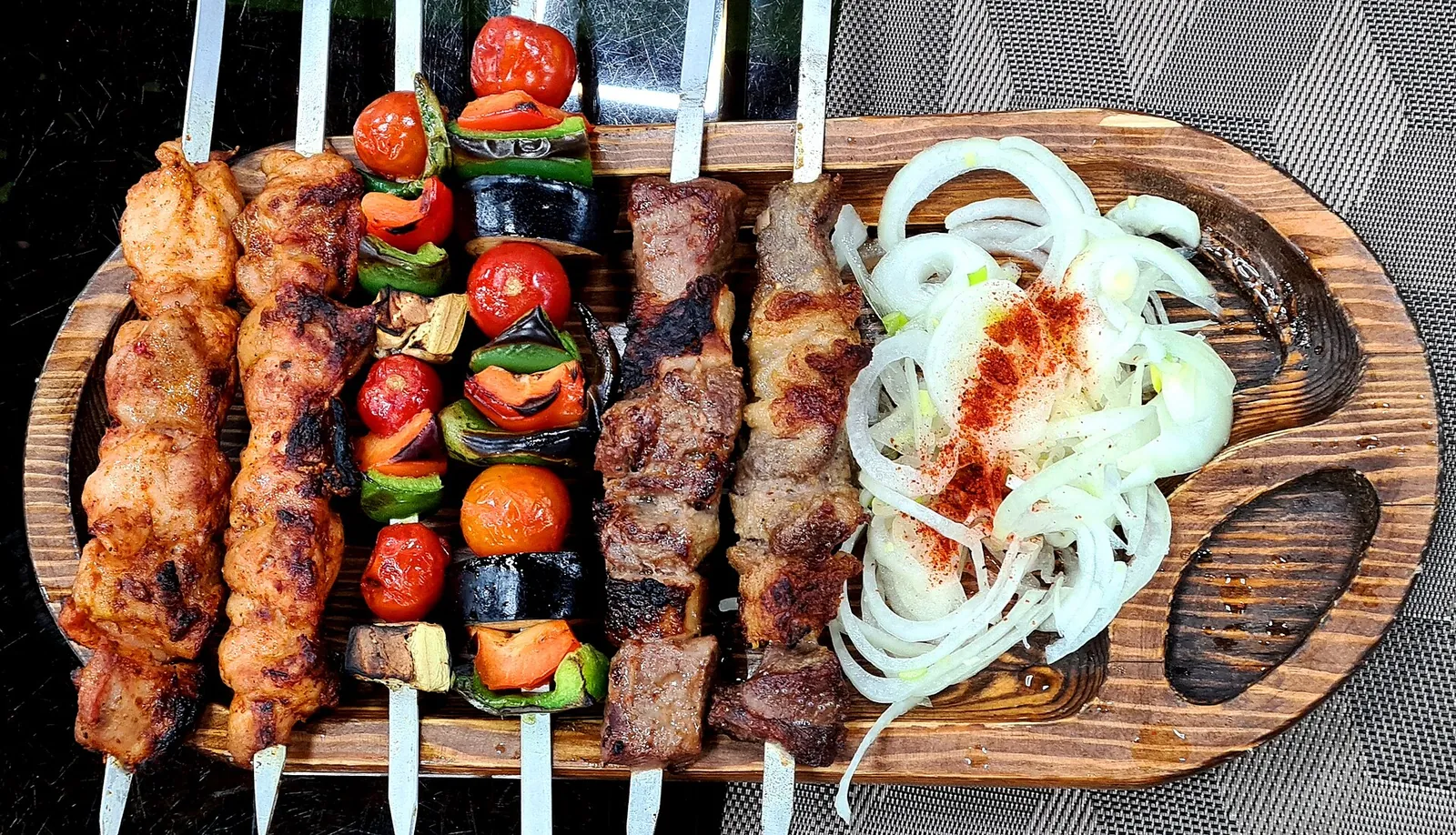
Shashlik is marinated meat on skewers cooked over an open fire. The classic is tender lamb threaded with small slices of lamb fat (dumba). The other cuts are beef liver (jigar), chicken, beshpanja on five skewers at once and charvi, meat covered with melted fat, while kiyma, skewers of minced lamb, is the local favourite. Chorsu’s stalls sell shish kebabs next to the pilaf, and Caravan, which also cooks plov and shurpa (soup), serves shashlik as a sit-down dinner.
Non and tea: the table around the main dish
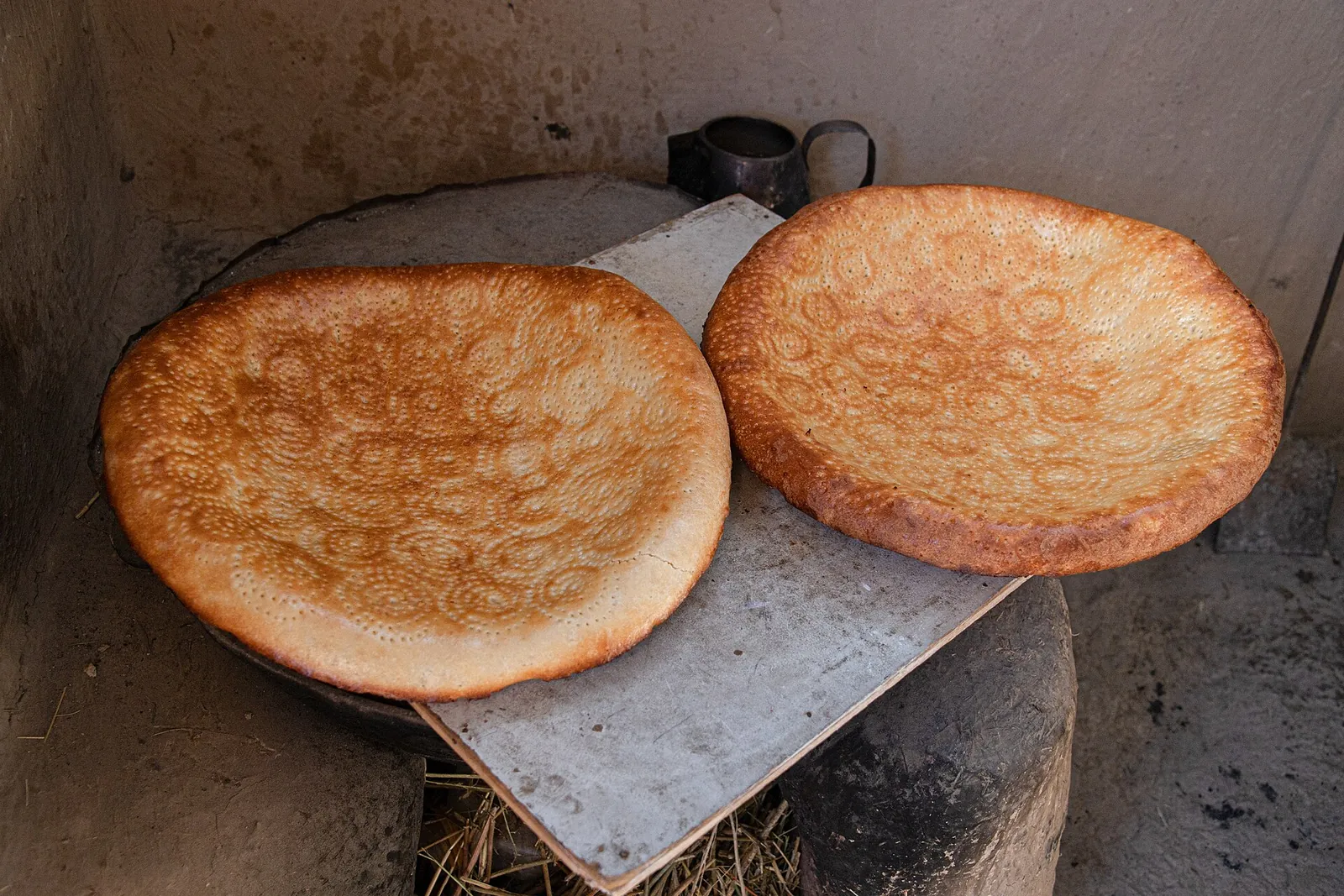
Uzbek bread comes in more kinds than the single word suggests: non, patyr, shirmoi-non and katlama. The freshly baked loaves of Chorsu Bazaar are famous.
Samarkand’s loaf has a legend. An emir of Bukhara loved it so much that he tried to have it made at home with Samarkand flour, then Samarkand water, then Samarkand clay for the oven, and finally a baker from Samarkand, and still could not match it. Siab Bazaar, beside the Bibi Khanum Mosque, is where to buy Samarkand bread, halva, dried fruit and nuts.
Tea comes with everything. Guests are greeted with tea and bread, and hot tea follows the meal. In the formal ceremony a bowl of tea is poured back into the pot three times and the fourth is served to the guest; traditions vary by region. Sumalak, halva and chak-chak are the traditional sweets, with ayran and katyk to drink.
Two nights, Tashkent then Samarkand
Two nights fit the Afrosiyob timetable, so book those seats first. The railway’s timetable lists train 766Ф leaving Tashkent at 07:21 and reaching Samarkand at 09:51, which leaves the rest of the day and an evening at Siab Bazaar, which the Registan directorate’s notice of 9 September 2026 lists as open until 24:00. The transport guide covers the trains.
On the Tashkent day, spend the morning at Chorsu Bazaar in the Old Town for samsa and a skewer, have the plov lunch at Beshqozon, which has four branches (Yunusabad, Nurafshon, Glinka and Sergeli), and keep the evening for Caravan. Reserve it first: its website gives the booking number +998 78 150 75 55 and daily opening hours of 11:00 to 02:00. The Tashkent guide covers the sights between meals.
In Samarkand, buy bread at Siab Bazaar and eat on Orzu Mahmudov Street, which the same notice describes as a service street for tourists with 20 places to eat, open round the clock. For a sit-down dinner, Platan at 2 Pushkin Street cooks European and Asian dishes in a 19th-century building protected as an architectural monument; its own site gives daily hours of 10:00 to 01:00 and takes table bookings. The plov stop on this route is the Tashkent lunch at Beshqozon, and Bukhara is the next city to compare. The Samarkand guide has the sights around them.
If the route continues, Khiva adds its green lagman (shivit osh) and Bukhara its copper-cauldron plov. In Bukhara, Old Bukhara at 3 Samarkand Street, within walking distance of Lyabi-Hauz, serves national and European dishes, with Bukhara samsa, kazan-kebab and manti among its best-known plates and a terrace over the old town. In Khiva, Zarafshon Cafe fills the former Tolib Maxsum madrasa inside Itchan Kala and serves plov, shivit oshi and manti, with tables set out on the square below the Islam Khoja minaret on warm evenings.
Carry cash for markets and smaller places. The UK Foreign, Commonwealth and Development Office (FCDO) says internationally issued cards are not widely accepted outside Tashkent and the main cities, and that very few ATMs outside the main cities accept international cards.
What to eat and where to look
Plov
Rice cooked in a cauldron with lamb, beef, carrots, chickpeas and raisins. A 450 g portion costs UZS 52,000, and the complete portion adds kazi, a quail egg and a dolma.
- Where to look
- Beshqozon, 1 Iftikhor Street, Yunusabad district, Tashkent (one of four branches).
- Fit it into your day
- Lunch on the Tashkent day; a 450 g portion is a full meal.
Samsa
Small tandoor-baked pastries, usually filled with meat; a 70 g samsa is a snack, not a meal.
- Where to look
- Food stalls and small eateries at Chorsu Bazaar, in Tashkent’s Old Town (Eski Shahar).
- Fit it into your day
- Breakfast at the bazaar on the Tashkent day, two or three per person.
Lagman
Hand-made noodles with a gravy of meat and vegetables; kovurma is the fried version and Khiva’s green shivit osh a regional one.
- Where to look
- Caravan, 22 Mahmud Tarabi Street, Yakkasaray district, Tashkent.
- Fit it into your day
- Dinner on the Tashkent day, at the table you reserve first; allow about UZS 69,000.
Shashlik
Marinated lamb with slices of lamb fat on skewers over an open fire; liver, chicken and minced kiyma kebabs are the other cuts.
- Where to look
- The food stalls at Chorsu Bazaar; Caravan serves it for a sit-down dinner.
- Fit it into your day
- A mid-morning skewer at the bazaar, before the plov lunch.
Non
Round flat bread, baked fresh; Samarkand’s has a legend of its own. A whole 320 g non costs UZS 8,000 at Beshqozon in Tashkent.
- Where to look
- Siab Bazaar, next to the Bibi Khanum Mosque, Samarkand.
- Fit it into your day
- On arrival in Samarkand and again in the evening, with tea.
What a day of meals costs
These figures are per person per day. The budget day uses Beshqozon’s online menu as checked on 25 October 2026; the mid-range and comfort days are estimates. Pound figures use the central-bank reference rate of 23 October 2026 as shown on Ipoteka Bank’s page, GBP 1 = UZS 15,916.89. A room rate that includes breakfast lowers each total; the Uzbekistan trip cost guide sets food inside a whole-trip budget.
- Budget, about UZS 150,000 (about £9): two meat samsa for breakfast (UZS 28,000), two 450 g plov portions (UZS 104,000) and tea and water (UZS 18,000).
- Mid-range, an estimate of about UZS 225,000 (about £14): three sit-down meals at about UZS 69,000 each, the price of Beshqozon’s complete plov portion, plus UZS 18,000 for drinks.
- Comfort, an estimate of about UZS 350,000 (about £22): three meals at about UZS 100,000 each in a table-service restaurant, plus UZS 50,000 for drinks.
Practical questions
Which dish should I try first in Uzbekistan?
Plov. It is the dish a host serves a guest, and UNESCO lists it as intangible heritage. A sit-down portion costs about £3 in Tashkent and is a full meal.
Where can I try several of the dishes in one stop?
Chorsu Bazaar in Tashkent’s Old Town. Its food stalls and small eateries serve shish kebabs, pilaf, samsa and manti, cafés beside the main market building serve lagman, and the bazaar is famous for its freshly baked bread.
How much does a day of meals cost in Uzbekistan?
About UZS 150,000 (about £9) per person on a budget and UZS 225,000 (about £14) mid-range, the second figure being an estimate. A plov portion is about £3 and a samsa under £1.
Which city makes the best plov?
Each city says its own does. Bukhara’s and Samarkand’s are not mixed during cooking, unlike Tashkent’s, and Samarkand’s lets each diner choose the carrot and meat. Eating it in two cities is the fair test.
Keep planning your trip
First trip to Uzbekistan
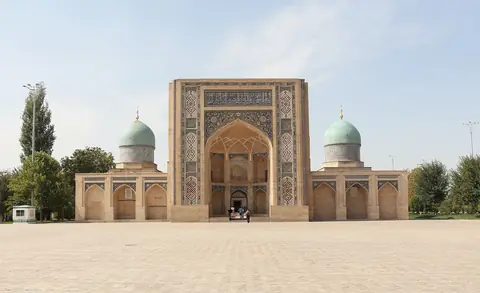
Choose seven days or ten for Tashkent, Samarkand, Bukhara and Khiva: nights, trains, season, registration, money, a SIM and an all-in budget.
Read the guide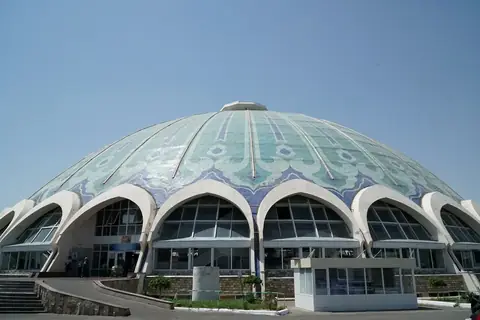
Tashkent
Plan two nights in Tashkent: Khast Imam, Chorsu Bazaar, the metro, the squares and museums, an opera evening, rooms, the airport, the train to Samarkand and costs.
Read the guide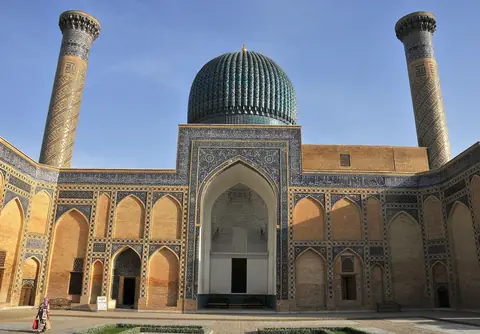
Samarkand
Plan two nights in Samarkand: the Registan, Gur-e-Amir, Bibi-Khanym, Shah-i-Zinda and Afrasiab, with tickets, hours, trains in and on to Bukhara, and costs.
Read the guide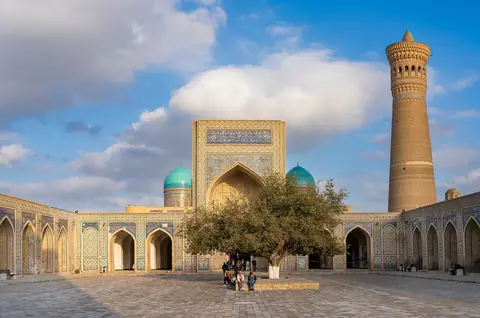
Bukhara
Plan two nights in Bukhara: Lyabi-Hauz, the trading domes, Poi-Kalon, the Ark and small museums, with 2025 ticket prices, rooms, trains and costs.
Read the guide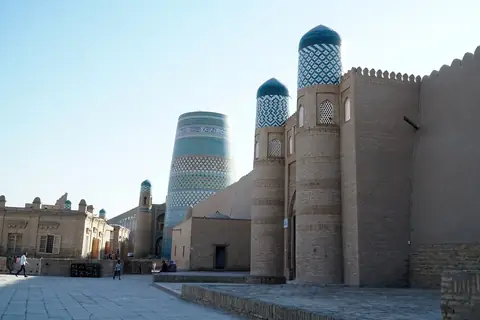
Khiva
Plan two nights inside Khiva’s walled Itchan Kala: where to sleep, the combined ticket, the main monuments, trains from Bukhara and Urgench, and what it costs.
Read the guide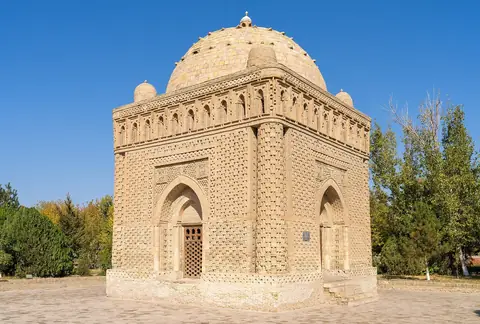
Uzbekistan trip cost
Ten days across Tashkent, Samarkand, Bukhara and Khiva, all in: about UZS 9.9 million per person on a budget, 12.7 million mid-range or 18.0 million in comfort.
Read the guideSources and checks before you travel
(24)
- Uzbekistan Travel: Gastro tourism ↗ — opens in a new tab
- Uzbekistan Travel: Samarkand ↗ — opens in a new tab
- Uzbekistan Travel: Bukhara ↗ — opens in a new tab
- Uzbekistan Travel: Khiva ↗ — opens in a new tab
- Uzbekistan Travel: Uzbek lagman ↗ — opens in a new tab
- Uzbekistan Travel: Uzbek shashlik ↗ — opens in a new tab
- Uzbekistan Travel: Travel tips ↗ — opens in a new tab
- Government of Uzbekistan: Uzbek cuisine ↗ — opens in a new tab
- UNESCO: Palov culture and tradition ↗ — opens in a new tab
- Beshqozon: menu ↗ — opens in a new tab
- Beshqozon: samsa ↗ — opens in a new tab
- Beshqozon: Samarkand zig’ir plov ↗ — opens in a new tab
- Beshqozon: salads and bread ↗ — opens in a new tab
- Beshqozon: branches ↗ — opens in a new tab
- Visit Tashkent: Chorsu Bazaar ↗ — opens in a new tab
- Tashkent city administration: Chorsu Market ↗ — opens in a new tab
- Uzrailpass: train timetable ↗ — opens in a new tab
- Caravan: restaurant ↗ — opens in a new tab
- Registan Ensemble Directorate: night tourism in Samarkand ↗ — opens in a new tab
- Ipoteka Bank: exchange rates ↗ — opens in a new tab
- FCDO: Uzbekistan safety and security ↗ — opens in a new tab
- Platan restaurant, Samarkand ↗ — opens in a new tab
- Advantour: Old Bukhara restaurant ↗ — opens in a new tab
- National Geographic: Khiva, Best of the World 2026 ↗ — opens in a new tab
Reference sources for the version dated 26 October 2026. Confirm opening times, access, transport and conditions for your travel dates.
Photo credits
(4)
Plov with meat, rice and carrots at Chorsu Bazaar, Tashkent.
Photograph: Bestalex — opens in a new tab · CC0 — opens in a new tab
Changes: Resized and converted to WebP; displayed with responsive crops. · Original photograph and licence details ↗ — opens in a new tab
Samsa baking against the wall of a tandir in Khiva.
Photograph: Davide Mauro — opens in a new tab · CC BY-SA 4.0 — opens in a new tab
Changes: Resized and converted to WebP; displayed with responsive crops. · Original photograph and licence details ↗ — opens in a new tab
Two loaves of non in an Uzbek kitchen.
Photograph: Sinchalak Musulmon — opens in a new tab · CC BY-SA 4.0 — opens in a new tab
Changes: Resized and converted to WebP; displayed with responsive crops. · Original photograph and licence details ↗ — opens in a new tab
Lamb and chicken shashlik with grilled vegetables, served in Tashkent.
Photograph: BeshevI — opens in a new tab · CC BY-SA 4.0 — opens in a new tab
Changes: Resized and converted to WebP; displayed with responsive crops. · Original photograph and licence details ↗ — opens in a new tab