Tashkent: the old city, metro and a first stop in Uzbekistan
Tashkent rewards a short, well-chosen stay. The old city has the blue domes and carved porches of Khast Imam and the crowded halls of Chorsu Bazaar; the wide modern centre has fountains, big squares, museums and a metro whose stations are worth riding for their own sake. Most travellers arrive here first and leave by train for Samarkand, which makes two nights the real question, and this guide spends them on the old city, the metro and the centre.
In this guide
Find the location ↗ — opens in a new tabThe short answer
Book two nights in central Tashkent, with Chorsu Bazaar and Khast Imam a metro or taxi ride away: the old city fills one day, the squares, metro and museums of the centre another. Book the Afrosiyob to Samarkand first, since domestic tickets go on sale 60 days ahead; train 766 leaves at 07:21 on day 3. The State Museum of History lists UZS 100,000 for foreign guests, and a metro ride is capped at UZS 3,000, less when you pay electronically. The all-in budget for two nights comes to about UZS 6,600,000 for two at mid-range, UZS 3,300,000 each; the London flight is the only extra.
- Suggested time
- 2 nights in Tashkent
- Where to stay
- Central Tashkent, with Chorsu Bazaar and Khast Imam a metro or taxi ride away
- Season and timing
- Uzbekistan Travel says most of the summer in Tashkent is hot, so sunscreen and a hat matter, and that winter is mostly mild and snowless but cool in the evening. The UK government warns that outdoor air quality is often poor between November and February, with Tashkent among the cities most affected, so spring and autumn suit the capital best. Our best-time guide has the month-by-month picture.
Where to sleep: the centre, with the old city a ride away
Tashkent is two places in one. The old city lies around Chorsu Bazaar and the Khast Imam complex, with domes, madrasa courtyards and market stalls. The broad modern centre, with wide avenues, fountains, squares and museums, spreads around Amir Temur Square and Independence Square. Sleep in the centre, where the squares, museums and metro are, and go to the old city by metro or taxi for an early start at the bazaar.
Choose the room by the kind of stay. MIRZO Boutique Hotel, at 4 Zarqaynar Street in the Shaykhantakhur district, is the mid-range pick for a first visit: a boutique hotel that describes its location as the very centre of the city, with a twin room advertised at USD 95, about UZS 1,100,000. Orzu Hotel, at Kichik Mirobod 14 in the Yakkasaray district, suits a budget stay: it lists a nonresident double at UZS 770,000 a day including 12% VAT and advertises free breakfast, and you will take the metro or a taxi to the sights. T-City Presidential Hotel, in the SQB Tower on Islom Karimov Street, is the comfort choice, with an Executive Twin from UZS 2,300,000. The prices are those on the hotels’ own sites on 25 October 2026.
Khast Imam, Muyi Muborak and Chorsu Bazaar: the old city
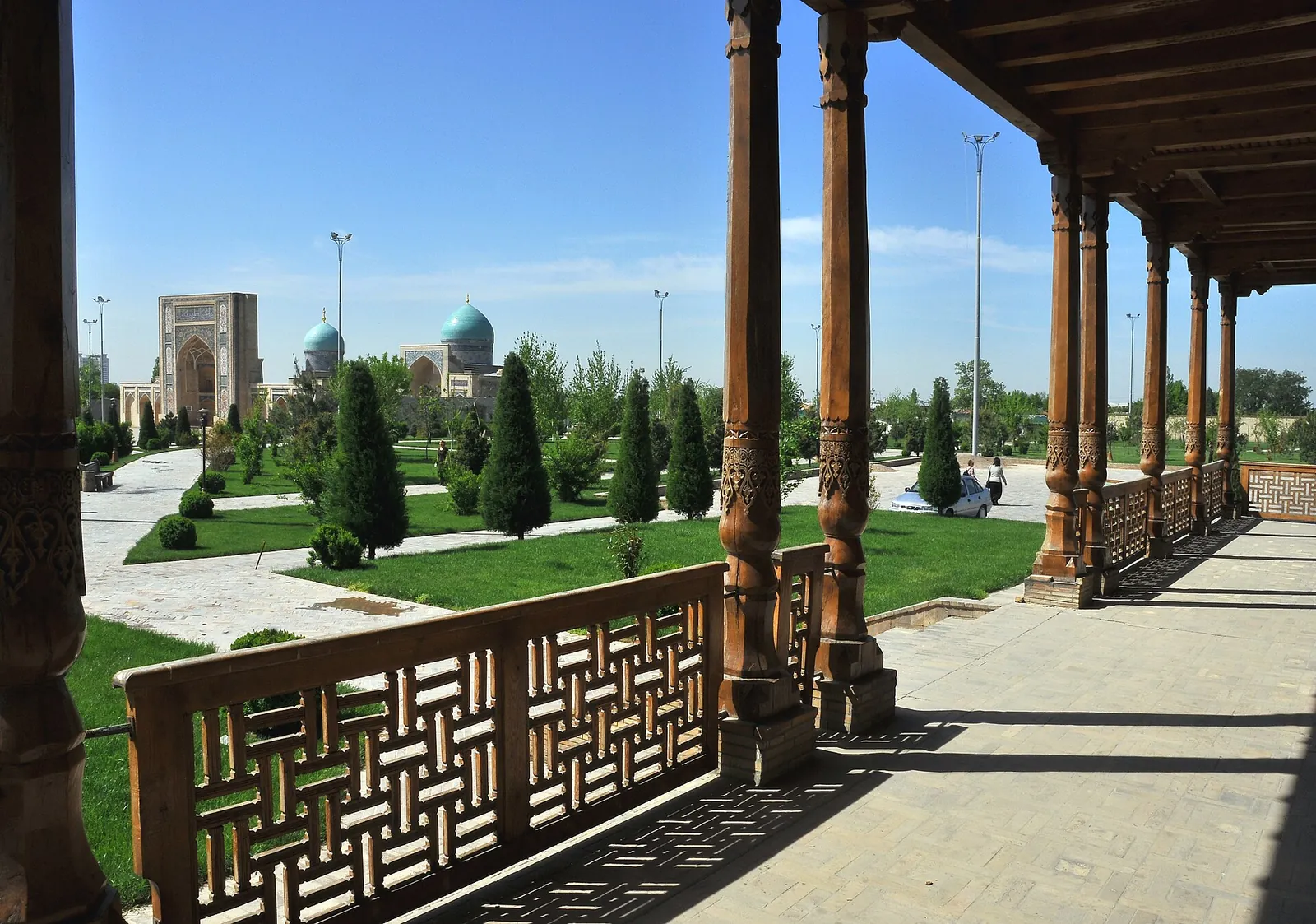
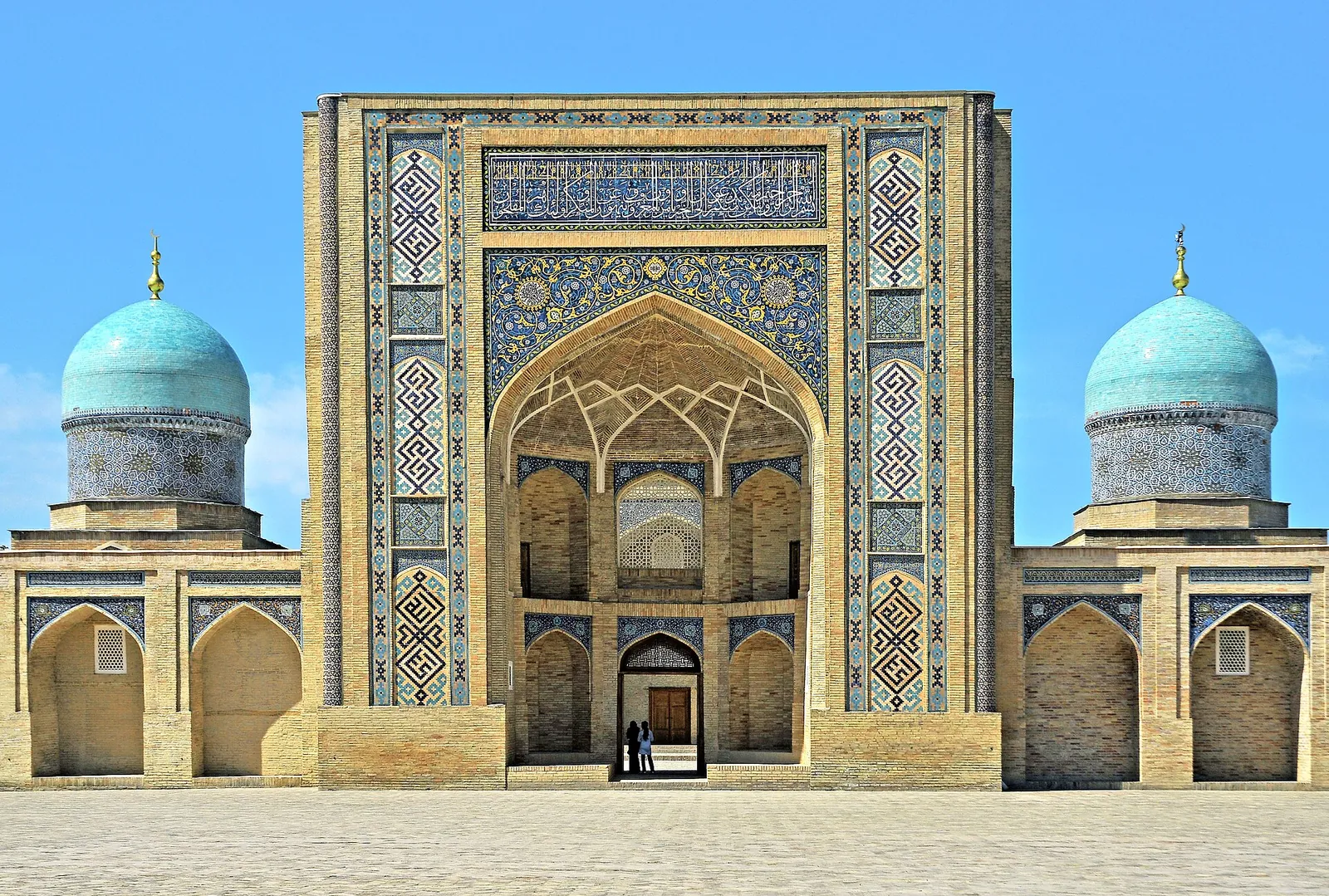
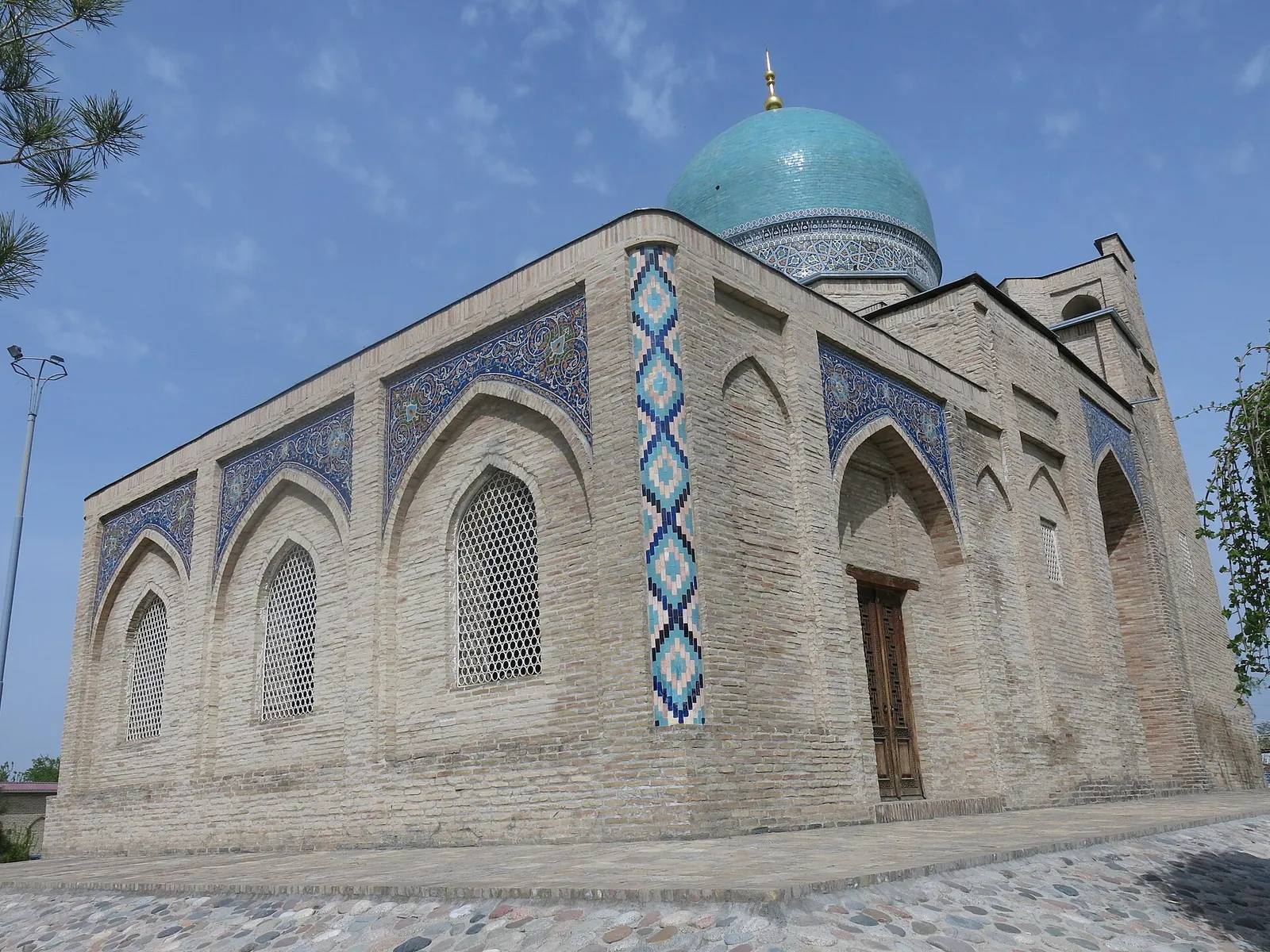
Start at Khast Imam (Khazrati Imam), the square at the heart of the old city that came through the strong earthquake of 1966. Uzbekistan Travel, the national tourism website, describes a complex built near the burial place of Abu Bakr Kaffal Shashi, a scholar and the first imam of Tashkent: the Tillya Sheikh mosque, his mausoleum, the Barak Khan madrasa and the Imam al-Bukhari Islamic Institute. The Barak Khan madrasa dates from the sixteenth century, and its tiled portal between two turquoise domes is easy to recognise. Storks nest on the complex from spring to autumn, and lanterns light it after dark.
The Muyi Muborak madrasa, also sixteenth-century, holds the library’s best-known manuscript: a Quran of the third caliph, Osman, which Uzbekistan Travel dates to 644–648 and describes as 353 parchment leaves brought to Uzbekistan in the time of Amir Temur. Uzbekistan Travel advises visiting mosques when there is no prayer, with legs and shoulders covered and, for women, a covered head.
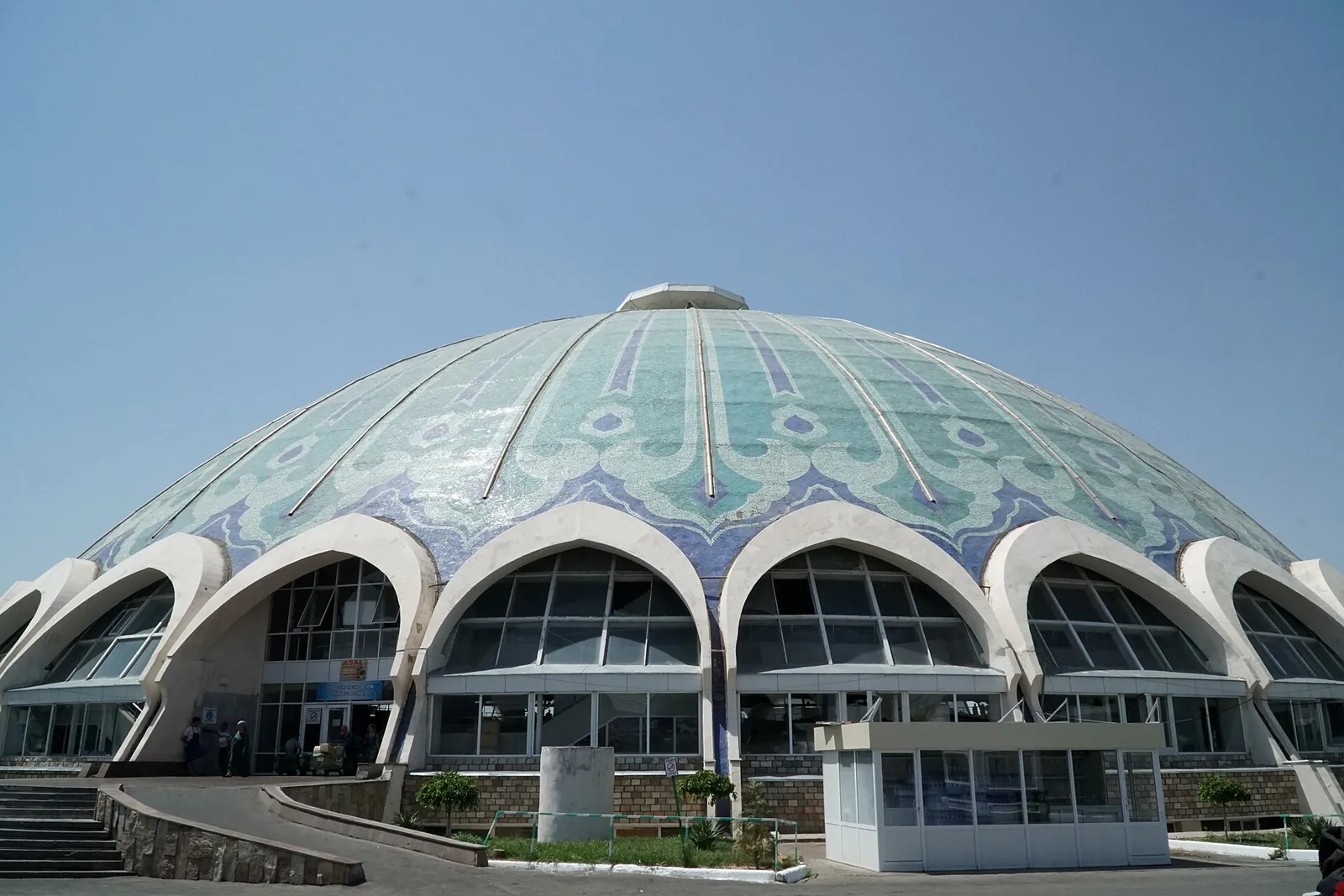
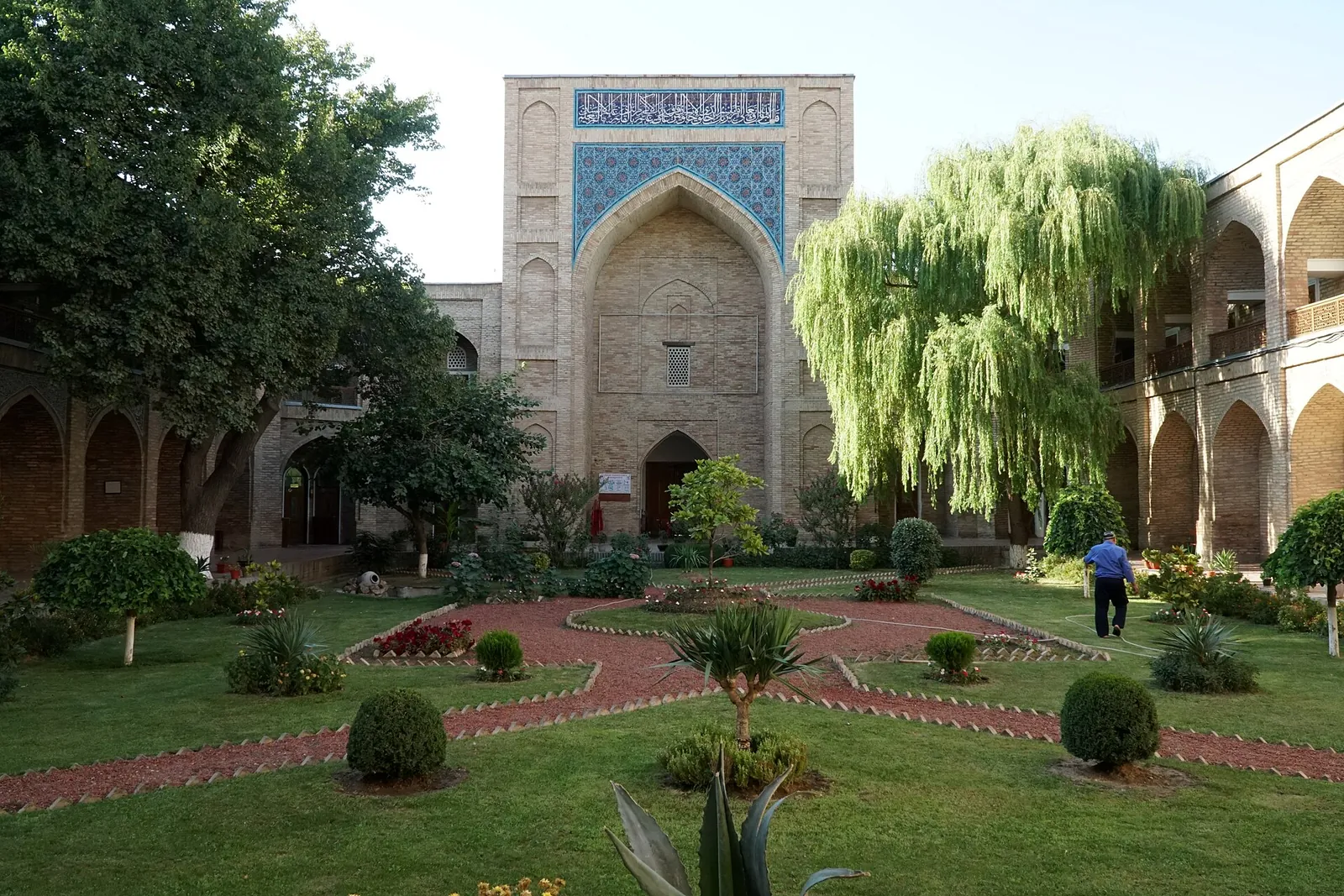
Chorsu Bazaar is the other half of the old city: a domed market hall of meat, vegetables, dried fruit and sweets, with stalls of painted ceramics, carved wood, ikat-pattern textiles and forged knives around it. Uzbekistan Travel names Chorsu and the old madrasas as the places where most souvenir workshops are. Go in the morning and keep the hot afternoon for the museums. In the Chorsu district, the Kukeldash Madrasa, dated to 1551–1575, rises over what was the edge of the old city wall; its courtyard is ringed by 38 student cells.
The metro as a sight and a way to cross town
The Tashkent metro is one of the city’s attractions as well as its fastest way across town. Construction began in 1973 and the first line, Chilanzar, opened four years later with nine stations. Uzbekistan Travel calls every station an architectural and artistic masterpiece, with traditional patterns, portraits and Uzbek mosaics, and names Alisher Navoi and Paxtakor as the interchange stations where a reading room and library have opened. Chorsu station serves the bazaar, and Mustaqillik Maydoni station serves Independence Square. Trains run daily from 06:00 to 00:00, so ride it on day 2 between the bazaar and the centre rather than taking a taxi.
The city caps a ride at UZS 3,000, the price in cash, which buys a single-use QR ticket from an info kiosk. Paying electronically is cheaper: ATTO, the company that runs the fare system, says a ride costs UZS 2,500 from 1 October 2026 with an ATTO transport card, a bank card or a mobile app. ATTO sells its cards at metro ticket offices and UzPost post offices; hold the card to the validator on the turnstile and wait for the green tick. An unlimited bus-and-metro day costs UZS 13,500, and entering the metro a second time starts a new fare. ATTO does not say whether foreign bank cards work at the turnstile, so a transport card or cash is the safe choice.
UK advice says photography restrictions have been relaxed, but to check before taking photos near airports, border checkpoints, military barracks, bridges, police stations and metro stations, Tashkent’s decorated metro included. The transport guide covers getting around the rest of the country.
Amir Temur Square, Independence Square and three museums
Amir Temur Square took its name on 31 August 1994, when a bronze equestrian statue of the ruler was unveiled at its centre; the motto “Strength is in justice” is carved on it in four languages. Next to it stands the State Museum of the Temurids’ History, opened on 18 October 1996, a three-storey domed building whose interior is marble, painting and gold leaf. Its highlight is an 8.5-metre chandelier of 106 thousand pendants; it has more than 3,000 exhibits, and a copy of the Osman Quran stands in the central hall.
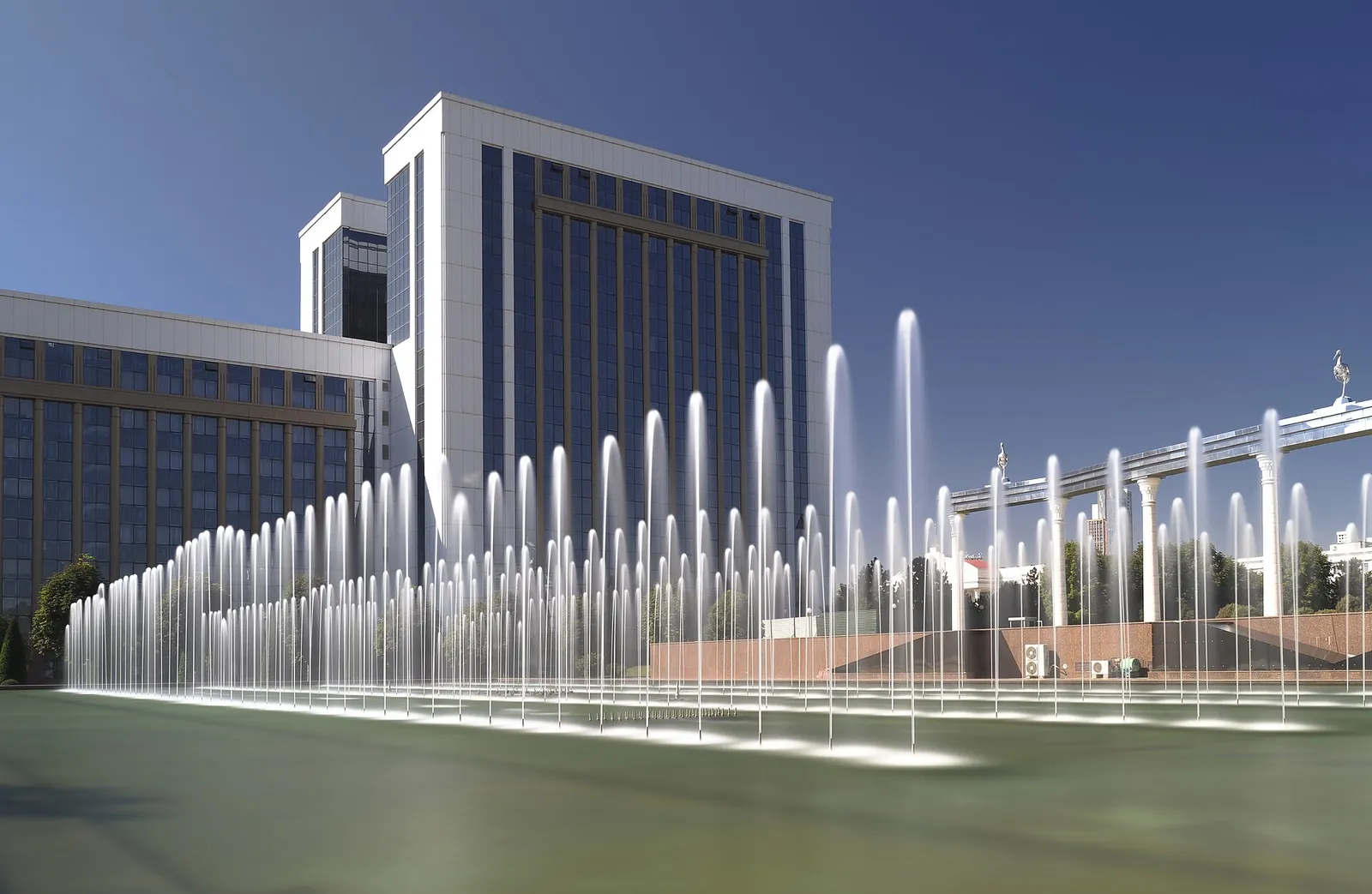
Independence Square is an open-air walk. Uzbekistan Travel calls its fountain one of the largest in the city, restored in 2005 with night lighting, so the evening, when the water is lit and the white colonnade and stork-topped arch stand out, is the time to come.
The State Museum of History is the one to give a morning. Founded in 1876, it holds more than 300,000 items, including more than 70,000 archaeological finds; the national tourism website singles out a first-century Buddha statue from Surkhandarya and a bronze Saka goat of the fourth or fifth century BC. The building, from 1970, is a pink-marble-screened cube. The museum’s own ticket page lists UZS 100,000 for foreign guests and UZS 50,000 for foreign students, plus UZS 200,000 for photographing exhibits with a phone or camera; its homepage gives working hours of Monday to Saturday, 10:00–17:00.
The State Museum of Applied Arts is the place to see craft in one visit. It began in 1927 as an exhibition of masters’ work and became a state museum in 1977; Uzbekistan Travel counts more than 7,000 works from the early nineteenth century to today, among them ceramics, jewellery, gold embroidery, national clothing, suzani hangings, carpets, skullcaps, miniatures and musical instruments. The museum’s own site mentions a shop and workshops.
The Applied Arts museum, the Temurids museum, the Muyi Muborak library and Chorsu Bazaar publish no ticket price or opening hours.
What to eat and where to look
Plov
Rice cooked with meat in a large pan and served in a heap: Uzbekistan’s signature dish, which entered UNESCO’s Intangible Heritage list in December 2016 as pilaf. Beshqozon’s online menu lists a 450 g portion at UZS 52,000, a complete portion at UZS 69,000 and a set at UZS 77,000.
- Where to look
- Beshqozon, Nurafshon branch, 3rd Aklan Street 1, Shaykhantakhur district, or the Yunusabad branch at 1 Iftikhor Street
- Fit it into your day
- Day 2 lunch, between the old city and the History Museum.
Norin
Tashkent’s cold dish of fine noodles with horse meat. Uzbekistan Travel lists naryn among the country’s dough dishes, and Visit Tashkent names norin among the dishes at the food stalls and small eateries of Chorsu Bazaar, alongside samsa and pilaf.
- Where to look
- The food stalls of Chorsu Bazaar, under and around the main dome.
- Fit it into your day
- Day 2 morning, on the Chorsu visit.
Lagman
A noodle dish with meat and vegetables. Caravan’s own page promises hand-pulled noodles stretched to a fine thread, with spices.
- Where to look
- Caravan, 22 Mahmud Tarabi Street, Yakkasaray district; its page lists daily hours of 11:00–02:00.
- Fit it into your day
- Day 1 dinner, after Amir Temur Square.
Shashlik
Meat grilled on skewers over charcoal, the usual evening order beside plov; Caravan lists it with plov among its dishes.
- Where to look
- Caravan, 22 Mahmud Tarabi Street, Yakkasaray district.
- Fit it into your day
- Day 2 dinner, to finish the day.
Non
Uzbekistan Travel lists non, patyr, shirmoi-non and katlama among the breads. At Chorsu, look for the stalls stacked with round loaves.
- Where to look
- The bread stalls of Chorsu Bazaar.
- Fit it into your day
- Day 2 morning, to take back to the hotel.
Evenings and extras: opera, the Minor Mosque, the TV tower and Chimgan
Keep one evening for the Alisher Navoi Theatre, the State Academic Bolshoi Opera and Ballet Theatre, the country’s leading stage for opera and ballet. It was founded in 1929 as the State Uzbek Musical Theatre, took the poet’s name in 1948 and reopened after a reconstruction completed in 2015; its repertoire runs from Uzbek operas and ballets such as “Humo” to Verdi and Prokofiev.
The Minor Mosque stands on the bank of the Ankhor river. It opened before Eid al-Fitr in 2014, holds more than 2,500 worshippers and is faced in white marble, which shines on a sunny day; inside, the hall carries Quranic inscriptions and a mark of gold pointing to Mecca. The mosque dress rules above apply.
The Tashkent TV Tower, 375 metres high and finished in January 1985, was the fourth-tallest tower in the world when it opened and stands on the city’s highest point. Visitors go up with the tower’s excursion service, which guides in Uzbek, Russian and English, to an observation deck at 100 metres, and the Koinot restaurant above it turns full circle in forty minutes.
A third day would go to the Chimgan mountains in the Tashkent region, where Greater Chimgan reaches 3,309 metres: paragliding and climbs in the warm months, and the Amirsoy, Beldersay and Chimgan ski resorts in winter. It is a full day out of the city, so it does not fit into two nights.
Two nights, two full days
Day 3 starts with the train to Samarkand, so the sights fit into days 1 and 2. The History Museum is closed on Sundays, so make day 2 a day from Monday to Saturday.
- Day 1: arrive, check in and go to the Applied Arts museum, then Amir Temur Square and the Temurids museum. See the Independence Square fountain after dark, or spend the evening at the Navoi Theatre, and have lagman at Caravan for dinner. If you land late, drop the Applied Arts museum. Sleep in Tashkent.
- Day 2: Chorsu Bazaar and the Kukeldash Madrasa early, with norin and bread from the stalls, then Khast Imam and the Muyi Muborak library. Have plov for lunch at Beshqozon, take the metro to the centre for the State Museum of History, open until 17:00, and finish with shashlik. Sleep in Tashkent.
- Day 3: Afrosiyob 766 at 07:21 to Samarkand, or the slower Sharq 710 at 08:40 from Tashkent Central for a later start.
Arriving at the airport, registering and the train to Samarkand
Islam Karimov Tashkent International Airport (TAS) is the country’s main gateway, about 6 km from the centre in a straight line. Order a car in the Yandex Taxi or MyTaxi app, which Uzbekistan Travel names for Tashkent, or ask your hotel to send one. Yandex’s published Start tariff for Tashkent, read on 2 November 2026, is a minimum of up to UZS 4,600, then up to UZS 1,050 a kilometre and UZS 500 a minute in town, with surcharges at busy times; plan on about UZS 50,000 a ride, an estimate.
For Samarkand, book the train first: domestic tickets have been on sale 60 days ahead since December 2019, on eticket.railway.uz, where a search for your stations and date lists each train with its times, free seats and fare. Afrosiyob 766 leaves Tashkent daily at 07:21 and reaches Samarkand at 09:51 (2 h 30), and 765 comes back from Samarkand at 17:35, arriving at 20:08 (2 h 33). For Afrosiyob 766, check the departure station on your e-ticket: Tashkent has more than one station, and the conventional trains and the Khiva train leave from Tashkent Central. For a later start, the conventional Sharq 710 leaves Tashkent Central at 08:40 and reaches Samarkand at 11:45 (3 h 05) on the timetable effective 9 September 2025. Afrosiyob economy to Samarkand is UZS 311,000 on the fares in force since 1 February 2026, when Uzbekistan Railways raised its fares by 15%, and the budget uses that fare. The transport guide covers classes and the other trains, and the Samarkand guide picks up from there.
Your hotel registers you: the UK government says hotel staff do this, within three days of arrival with weekends counted, and that you should keep the record because the authorities ask for your whereabouts on departure. The entry guide has the rest, and the Fergana Valley guide covers the silk and ceramics towns east of the capital.
What two nights in Tashkent cost, all in
About UZS 6,600,000 for two, UZS 3,300,000 each, at mid-range, for two nights. Rooms, every meal and drink, airport and local journeys, the Afrosiyob seats to Samarkand, the sights and a SIM are included, with a 10% buffer.
| Level | Per person | For two |
|---|---|---|
| Budget | UZS 2,400,000 | UZS 4,800,000 |
| Mid-range | UZS 3,300,000 | UZS 6,600,000 |
| Comfort | UZS 5,300,000 | UZS 10,500,000 |
This budget is for two adults who need no visa, sharing one room for two nights on ordinary spring or autumn dates, with prices read on 25 October 2026. Budget uses the Orzu double, mid-range the MIRZO twin and comfort the T-City Executive Twin. Orzu’s price includes VAT; for the other two the budget adds 12% VAT, the rate Orzu states. Every night also carries the tourist tax, which depends on the size of the hotel, from UZS 22,000 to 66,000 per guest per night: UZS 44,000 at Orzu, and the top rate at MIRZO and T-City, which publish no room count. Food covers every meal.
Food is UZS 150,000, 225,000 or 350,000 per person a day for three meals and tea or water, priced from the online menu of the plov restaurant Beshqozon: a 450 g plov at UZS 52,000, a complete portion at UZS 69,000 and a set at UZS 77,000. Getting around is two taxi rides, airport and station, at about UZS 50,000 each, one economy seat each on the Afrosiyob to Samarkand at UZS 311,000, and UZS 80,000, 200,000 or 400,000 for metro rides and short taxis. Sights are the History Museum, the Applied Arts museum, the Temurids museum and the Muyi Muborak library at UZS 100,000 each: the History Museum’s published foreign price, and about the same for the three that publish none. A private guide is not in the comfort total: no Tashkent guide or agency publishes a day rate (agencies such as OrexCA quote on request), so add the quote you get. SIMs are two Beeline Hello 1 plans at UZS 60,000 each, after the operator’s notice of 3 October 2025, with UZS 0 to activate a new eSIM.
At the central-bank reference rate of 23 October 2026 as shown on Ipoteka Bank’s page, USD 1 is UZS 11,903.15 and GBP 1 is UZS 15,916.89. Flights: a London return in economy typically runs about GBP 550–1,200 per person, about UZS 8,800,000–19,100,000, which brings mid-range to about UZS 12,000,000–22,400,000 per person. Fares and availability vary.
- Rooms: UZS 2,800,000 for two at mid-range.
- Food: UZS 1,400,000 for two.
- Getting around: UZS 900,000 for two.
- Sights and tours: UZS 800,000 for two.
- SIM and extras: UZS 100,000 for two.
- 10% buffer: UZS 600,000 for two.
Practical questions
How many nights should I stay in Tashkent?
Two nights give you two full days: the old city and the centre. One night is enough if you only want Chorsu Bazaar and Khast Imam before heading to Samarkand.
Where should I sleep, the old city or the centre?
Choose the centre: the squares, museums and metro are there, and Chorsu Bazaar and Khast Imam are a metro or taxi ride away. The rooms we priced are in the Shaykhantakhur and Yakkasaray districts and Tashkent City.
Can I see the Quran of Osman?
It is kept in the library of the Muyi Muborak madrasa in the old city, and Uzbekistan Travel dates it to 644–648. A copy stands in the central hall of the Temurids museum.
How do I get to Samarkand, and when should I book?
Book the Afrosiyob first, since tickets go on sale 60 days ahead: train 766 leaves at 07:21 and takes 2 h 30, and the slower Sharq 710 leaves Tashkent Central at 08:40. The arrival section has the fare and the station.
How do I get from the airport to the hotel?
Order a car in Yandex Taxi or MyTaxi or ask your hotel; the airport is about 6 km from the centre, and the budget uses about UZS 50,000 a ride.
What must I register?
Your hotel registers you within three days of arrival, weekends counted; keep the record for departure.
How much do two nights in Tashkent cost?
About UZS 6,600,000 for two at mid-range, UZS 3,300,000 each, with rooms, every meal, the airport and station rides, the Afrosiyob seats to Samarkand, the sights, two SIMs and a 10% buffer. Budget is about UZS 2,400,000 per person and comfort UZS 5,300,000, without flights.
Keep planning your trip
First trip to Uzbekistan
Choose seven days or ten for Tashkent, Samarkand, Bukhara and Khiva: nights, trains, season, registration, money, a SIM and an all-in budget.
Read the guide
Entering Uzbekistan
Which passports enter Uzbekistan without a visa for 30 days, how hotel registration works, what to declare at customs, and the border and photography advice to follow.
Read the guide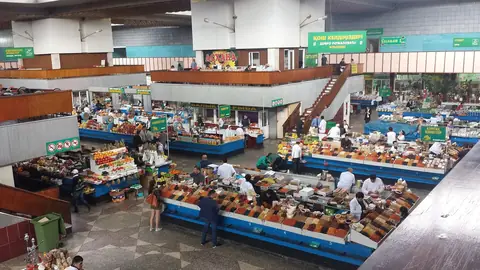
Almaty
Plan three nights in Almaty: Panfilov Park, the Green Bazaar, Kok-Tobe, Medeu and Shymbulak, the museum and the metro, with fares, hotels and the airport.
Read the guide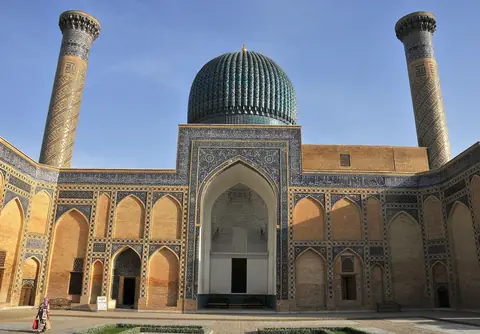
Samarkand
Plan two nights in Samarkand: the Registan, Gur-e-Amir, Bibi-Khanym, Shah-i-Zinda and Afrasiab, with tickets, hours, trains in and on to Bukhara, and costs.
Read the guide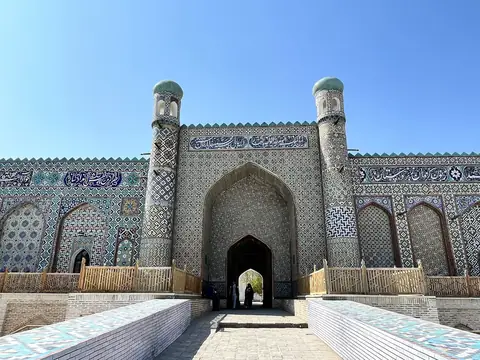
Fergana Valley
Plan three days in the Fergana Valley: Kokand’s palace, Rishtan pottery, Margilan silk, a Fergana base, the road from Tashkent and a priced trip for two.
Read the guide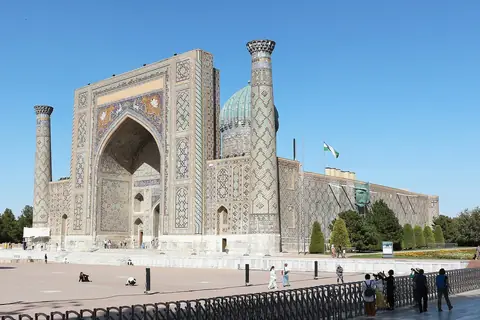
Uzbekistan in seven days
A seven-day Uzbekistan route with two nights each in Tashkent, Samarkand and Bukhara by train, real sights and an all-in cost for two.
Read the guideSources and checks before you travel
(51)
- Uzbekistan Travel: Khazrati Imam ↗ — opens in a new tab
- Uzbekistan Travel: Muyi Muborak madrasah ↗ — opens in a new tab
- Uzbekistan Travel: Barak Khan madrasah ↗ — opens in a new tab
- Uzbekistan Travel: Kukeldash madrasah ↗ — opens in a new tab
- Uzbekistan Travel: Tashkent ↗ — opens in a new tab
- Uzbekistan Travel: mosque etiquette and metro hours ↗ — opens in a new tab
- Uzbekistan Travel: Tashkent metro ↗ — opens in a new tab
- UzDaily: new public transport fares in Tashkent ↗ — opens in a new tab
- Uzbekistan Travel: Square of Amir Temur ↗ — opens in a new tab
- Uzbekistan Travel: State Museum of Timurids ↗ — opens in a new tab
- Uzbekistan Travel: top 5 fountains in Tashkent ↗ — opens in a new tab
- State Museum of History of Uzbekistan: tickets and about ↗ — opens in a new tab
- State Museum of History of Uzbekistan: home page ↗ — opens in a new tab
- Uzbekistan Travel: State Museum of History ↗ — opens in a new tab
- Uzbekistan Travel: State Museum of Applied Art ↗ — opens in a new tab
- State Museum of Applied Art: own site ↗ — opens in a new tab
- UK FCDO: Uzbekistan safety and security ↗ — opens in a new tab
- UK FCDO: Uzbekistan entry requirements ↗ — opens in a new tab
- UTY: train timetable ↗ — opens in a new tab
- Orzu Hotel: rooms ↗ — opens in a new tab
- Orzu Hotel: home page ↗ — opens in a new tab
- MIRZO Boutique Hotel: twin room ↗ — opens in a new tab
- MIRZO Boutique Hotel: home page ↗ — opens in a new tab
- T-City Presidential Hotel ↗ — opens in a new tab
- Beshqozon: menu ↗ — opens in a new tab
- Beshqozon: branches ↗ — opens in a new tab
- Caravan restaurant ↗ — opens in a new tab
- Visit Tashkent: Chorsu Bazaar ↗ — opens in a new tab
- Uzbekistan Travel: food tourism ↗ — opens in a new tab
- Ipoteka Bank: exchange rates ↗ — opens in a new tab
- UTY: advance sales notice ↗ — opens in a new tab
- Cabinet of Ministers Resolution 475, Annex 1 (lex.uz): tourist tax rates ↗ — opens in a new tab
- Beeline: Hello 1 price notice ↗ — opens in a new tab
- Beeline: eSIM ↗ — opens in a new tab
- ATTO: fares from 1 October 2026 ↗ — opens in a new tab
- ATTO: for passengers ↗ — opens in a new tab
- Tashkent transport directorate: fare rules ↗ — opens in a new tab
- Yandex Taxi: Start tariff, Tashkent ↗ — opens in a new tab
- UTY: September 2025 timetable notice ↗ — opens in a new tab
- UTY: ticket questions ↗ — opens in a new tab
- OpenStreetMap: Tashkent airport ↗ — opens in a new tab
- UK FCDO: Uzbekistan health ↗ — opens in a new tab
- Uzbekistan Travel: Minor Mosque ↗ — opens in a new tab
- Uzbekistan Travel: Tashkent TV tower ↗ — opens in a new tab
- Visit Tashkent: Alisher Navoi Theatre ↗ — opens in a new tab
- Uzbekistan Travel: Chimgan ↗ — opens in a new tab
- Anhor.uz: train fares raised by 15% (Russian) ↗ — opens in a new tab
- Kursiv: Afrosiyob ticket prices to rise 15% from February 2026 ↗ — opens in a new tab
- OrexCA: Uzbekistan private guide services ↗ — opens in a new tab
- UTY: fare notice of January 2026 ↗ — opens in a new tab
- Decree PF-115 of 23 June 2026 (lex.uz): base calculation amount ↗ — opens in a new tab
Reference sources for the version dated 2 November 2026. Confirm opening times, access, transport and conditions for your travel dates.
Photo credits
(6)
The domed trading hall of Chorsu Bazaar, Tashkent.
Photograph: Adam Harangozó — opens in a new tab · CC BY-SA 4.0 — opens in a new tab
Changes: Resized and converted to WebP; displayed with responsive crops. · Original photograph and licence details ↗ — opens in a new tab
Khast Imam, seen from a porch with carved wooden columns.
Photograph: LBM1948 — opens in a new tab · CC BY-SA 4.0 — opens in a new tab
Changes: Resized and converted to WebP; displayed with responsive crops. · Original photograph and licence details ↗ — opens in a new tab
The Barak Khan madrasa, Khast Imam complex.
Photograph: LBM1948 — opens in a new tab · CC BY-SA 4.0 — opens in a new tab
Changes: Resized and converted to WebP; displayed with responsive crops. · Original photograph and licence details ↗ — opens in a new tab
The courtyard of the Kukeldash Madrasa, near Chorsu.
Photograph: Adam Harangozó — opens in a new tab · CC BY-SA 4.0 — opens in a new tab
Changes: Resized and converted to WebP; displayed with responsive crops. · Original photograph and licence details ↗ — opens in a new tab
The fountain on Independence Square, Tashkent.
Photograph: Petar Milošević — opens in a new tab · CC BY-SA 4.0 — opens in a new tab
Changes: Resized and converted to WebP; displayed with responsive crops. · Original photograph and licence details ↗ — opens in a new tab
The Kaffal Shashi Mausoleum, Khast Imam complex.
Photograph: Enric — opens in a new tab · CC BY 4.0 — opens in a new tab
Changes: Resized and converted to WebP; displayed with responsive crops. · Original photograph and licence details ↗ — opens in a new tab