Plan your trip
Uzbekistan entry: visa-free stays, registration and customs
Three things decide whether entry is simple: a passport on the visa-free list, a hotel that registers you within three days, and a customs form filled in honestly. This guide takes them in the order you meet them, then covers money, health, the four airports most visitors arrive through, the land crossings from Tajikistan and Kyrgyzstan, and the border advice that affects where you go.
In this guide
Find the location ↗ — opens in a new tabThe short answer
UK, Irish, US, Canadian, Australian, New Zealand and most European passport holders can enter Uzbekistan without a visa for up to 30 days, counted from the day they cross the border. Book your first night in a hotel before you travel: it registers you, which must happen within three days of arrival. Passport rules depend on your nationality, and six months’ validity beyond your return, France’s rule, meets all of them; cash worth more than UZS 100 million (about USD 8,400) must be declared in writing on arrival. Other passports need a visa, and a single-entry e-visa from e-visa.gov.uz costs USD 20. For your phone, Beeline’s Hello 1 visitor plan was UZS 60,000 a month.
- Key point
- Entry planning before you book; choose the length of stay in the first-trip guide
- Where it applies
- Arrive in Tashkent, Samarkand, Bukhara or Urgench and register at your first hotel
- Timing
- The rules apply all year; check passport validity and the 30-day limit before you choose dates
Compare all 24 countries: Asia entry requirements at a glance →
Who can enter without a visa
The Ministry of Foreign Affairs lists these nationalities among those who can enter Uzbekistan without a visa for up to 30 days: Australia, Austria, Belgium, Brazil, Canada, Czechia, Denmark, Finland, France, Germany, Hungary, Ireland, Italy, the Netherlands, New Zealand, Norway, Poland, Portugal, Romania, Spain, Sweden, Switzerland, the United Kingdom and the United States. The list names many other European countries too. The ministry’s note says the regime applies whatever the purpose of the trip, but UK advice describes it for tourism or business and tells anyone travelling for another purpose to check with the Uzbek embassy.
The 30 days run from the moment you cross the border, not from your first night in a hotel, and you must leave when they end.
Passports not on the ministry’s visa-free list need a visa before travel. The ministry issues electronic visas through e-visa.gov.uz at USD 20 for a single entry, USD 35 for a double entry and USD 50 for multiple entries of up to 30 days. The Uzbek embassy in Washington says an e-visa is valid for 90 days from issue, allows a stay of 30 days from entry and is considered within three business days. Anyone who needs more than 30 days must apply for one of the ministry’s entry-visa categories.
Citizens of the countries on the ministry’s transit list may stay up to five days without a visa when they transit through an international airport of Uzbekistan with an Uzbekistan Airways ticket to a third country. Check your nationality on the ministry’s visa page at gov.uz before you rely on it.
Passport, entry stamp and the 30-day clock
Passport rules differ by nationality: the UK says a British passport must be valid for at least three months after arrival, Germany asks for three months at entry, and France advises at least six months beyond your planned return. Six months beyond your return meets all of them.
Make sure the officer stamps your passport on entry. Border guards check the stamp on exit, and an overstay of even a short period can bring a fine and possible deportation. UK advice says extending a stay is not always easy or possible; the ministry handles visa extensions through its Bureau of Diplomatic Missions Services.
Registering your stay
Register within three days of arrival, weekends counting: a hotel does it at check-in, and a private host does it for you.
Keep every registration slip: it can be required to book domestic flights and train tickets, is checked at stations and borders, and must be shown on departure.
In a private house, your host registers you with the local migration office (OVIR) or on the electronic Emehmon system, which registers a guest at the place of stay for up to 30 days. A traveller who entered on a tourist visa can be registered only through hotels. Camper-van and tent travellers register themselves on Emehmon within three days.
If you spend more than three days in another city, register again there. At departure the authorities can ask for a full record of where you stayed, and each missing or late day can bring a fine. Tourist tax is usually in the hotel bill, and private hosts pay it for their guest.
Customs: cash, medicines and banned items
Uzbekistan’s rules, as the Ministry of Justice’s legal-aid portal sets them out, make a written customs declaration compulsory for cash, in soums or foreign currency, worth more than the equivalent of UZS 100 million, about USD 8,400; smaller sums may be declared if you wish. Foreign advice pages give other figures (the UK USD 10,000, Germany USD 2,000), so if you carry a large sum, declaring it costs nothing and the stamped form is what lets you take foreign currency out again. Declare precious metals or gemstones over 65 grams too. You cannot leave with more foreign currency than you brought in.
Fill in the declaration in two copies and have the customs officer stamp both; keep one and show it when you leave. At Samarkand International Airport travellers with nothing to declare use the green channel and everyone else the red channel.
Declare medicines on the form and carry the original prescription, translated into Uzbek, Russian or English. Some medicines that are routine at home count as controlled in Uzbekistan, including codeine and opioids such as tramadol, and travellers have been held for laboratory tests after undeclared medicines. Lists of prohibited and restricted medicines are published in Uzbek and Russian.
Leave e-cigarettes at home: they have been banned since 1 April 2026, and possession can lead to criminal proceedings. Leave the drone too: import and use are largely prohibited, and the few exceptions need a licence before arrival. Exporting antiques or art needs Ministry of Culture authorisation, so get a certificate when you buy a carpet or other valuable item; antiques older than 75 years cannot be exported.
Money, cards and a local SIM
The currency is the Uzbek som (UZS). At the central-bank reference rate of 23 October 2026, one US dollar was UZS 11,903.15, one euro UZS 13,329.15 and one pound UZS 15,916.89; banks and exchange booths apply their own buying and selling rates. International cards are not widely accepted outside Tashkent and the main cities, and very few ATMs outside them take foreign cards, so withdraw cash in a main city before heading to the regions. ATMs in the larger cities, above all Samarkand and Bukhara, normally work but can run short of notes or limit withdrawals.
US dollars are the easiest foreign currency to change. Official booths do not accept damaged or marked notes or US dollars issued before 2013, and changing money anywhere other than a bank or licensed booth is illegal.
Beeline sells its Hello plans to foreigners, tourists and guests visiting Uzbekistan; Hello 1 was UZS 60,000 a month from 3 October 2025, and a new eSIM activates for UZS 0. On a trip shorter than 30 days your phone needs nothing more. For a longer stay, UZIMEI requires a phone bought abroad to be registered within 30 calendar days of connecting a local SIM, or local access is cut off (Mobiuz gives foreign citizens 60 days); registration costs UZS 88,000 within the first 30 days and UZS 110,000 after that.
Health and vaccinations
Hepatitis A vaccination is recommended, and for long stays or particular exposure so are hepatitis B, typhoid and rabies. Stray dogs make rabies a risk across the country, and the immunoglobulin treatment after a bite is not always available. Germany lists no compulsory vaccinations for direct arrival from Germany; travellers from elsewhere should check TravelHealthPro’s Uzbekistan guide, which the UK advice points to for medical entry requirements and recommended vaccinations.
Arriving by air: Tashkent, Samarkand, Bukhara and Urgench
Uzbekistan Airports, the state airport company, lists international airports at Tashkent, Samarkand, Bukhara and Urgench, among others. Fly into the city where you will sleep first, because that hotel registers you: Islam Karimov Tashkent International Airport for the capital, Samarkand or Bukhara for the Silk Road cities, and Urgench for Khiva. The transport guide covers the trains, domestic flights and fares between them.
From Tashkent airport, order a car in Yandex Taxi or MyTaxi, the apps the official tourism portal names for Tashkent and Samarkand; plan on about UZS 50,000 for the ride into town (an estimate: no fixed fare is published). At Samarkand airport, buses M1 and 256 run to the central railway station daily from 06:00 to 21:00, about every 15 minutes, for UZS 3,000 in cash, from the stop outside the arrivals exit. The Samarkand guide covers the city once you arrive.
Arriving overland from Tajikistan or Kyrgyzstan
At a land border the same rules apply as at an airport: the 30 days start when you cross, you fill in the customs declaration, and your first hotel registers you. UK advice says travellers carrying medicines are more likely to face problems at land borders, so declare them with the prescription.
France lists the main crossings from Tajikistan open to foreigners as Oybek / Fatehabad, Jartepa / Sarazm (east of Samarkand, on the road from Penjikent), Andarxon / Patar and Sariosiyo / Dusti. From Kyrgyzstan, the Fergana Valley Community Tourism Network names Dostyk, just outside Osh, about an hour from Andijan and two from Fergana, as the biggest crossing, and Kensey–Uchkurgan between Jalal-Abad and Namangan; our Fergana Valley guide covers the valley.
France says the main crossings are open 24 hours to cars and pedestrians, others close between 22:00 and 07:00, some are open to foreigners only on foot, and all can close without notice; Germany says the same of the international crossings. Check the State Customs Committee’s list of border posts (in Russian, at customs.uz) before you set off, approach a border only at an official crossing, and reach it in good time before your 30 days end. The crossing at Termez to Afghanistan is closed to foreigners.
Border areas, photography and your passport
France advises against travel in the Afghan border zone, including Termez city except for an imperative reason, and the UK says approaching the fence or photographing military infrastructure or personnel in the neutral zone beside the Amu Darya risks arrest. Germany advises against non-essential travel near any of the country’s borders except at official crossings, and France warns of possible mines along the Kyrgyz and Tajik borders and advises keeping to towns, main roads and marked paths in border zones. France lists Samarkand, Bukhara, Khiva, Nukus and Kokand as secured major tourist sites. Other governments may draw the line differently, so check your own government’s advice before you book.
UK advice says photography restrictions have been relaxed, but to check before taking photos near airports, border checkpoints, military barracks, bridges, police stations and metro stations, Tashkent’s decorated metro included. Avoid photographing government buildings such as the Palace of Forums in Tashkent, and Germany notes that bans on strategic sites such as bridges, tunnels and railway installations are not always signposted.
Carry your passport at all times: it is a legal requirement, police often check, and you can be fined or arrested without it.
Practical questions
Do I need a visa for Uzbekistan as a British, American or EU citizen?
No, not for a stay of up to 30 days. The Ministry of Foreign Affairs lists the United Kingdom, the United States and most European countries as visa-free, and the 30 days start when you cross the border.
Does an e-visa let me stay longer than 30 days?
No. The Uzbek embassy in Washington says an e-visa allows a stay of 30 days from entry, valid for 90 days from issue. A longer stay needs an entry visa obtained before you travel.
Do I have to register, and who does it?
Yes, within three days of arrival, weekends included. A hotel registers you at check-in; in a private house your host registers you with the migration office or on Emehmon.
How much cash can I bring without declaring it?
Uzbek rules require a written declaration for cash worth more than the equivalent of UZS 100 million, about USD 8,400. UK and German advice give other figures (USD 10,000 and USD 2,000), so declare any large sum and keep the stamped copy for your departure.
Can I enter Uzbekistan overland from Tajikistan or Kyrgyzstan?
Yes, at the official crossings: France lists Oybek, Jartepa (for Penjikent and Samarkand), Andarxon and Sariosiyo on the Tajik border, and Dostyk near Osh is the biggest crossing from Kyrgyzstan. The same 30 days, customs form and registration apply.
Can I bring a drone or an e-cigarette?
Leave both at home. E-cigarettes have been banned since 1 April 2026, and drones are largely prohibited, with a licence needed before arrival for the few exceptions.
Is there an arrival card to fill in?
The forms are the customs declaration, which comes in two copies, and your hotel registration.
Keep planning your trip
First trip to Uzbekistan
Choose seven days or ten for Tashkent, Samarkand, Bukhara and Khiva: nights, trains, season, registration, money, a SIM and an all-in budget.
Read the guide
Transport in Uzbekistan
Book Uzbekistan’s trains and flights: the Afrosiyob to Samarkand and Bukhara, the 2026 Khiva trains, domestic fares, airport links and the Tashkent metro.
Read the guide
Tashkent
Plan two nights in Tashkent: Khast Imam, Chorsu Bazaar, the metro, the squares and museums, an opera evening, rooms, the airport, the train to Samarkand and costs.
Read the guide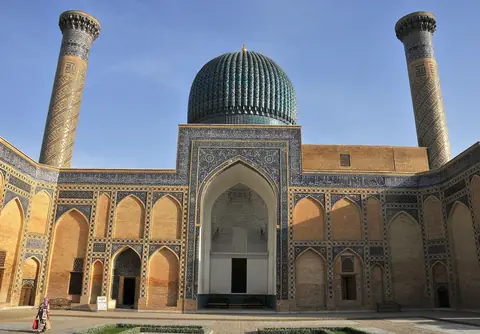
Samarkand
Plan two nights in Samarkand: the Registan, Gur-e-Amir, Bibi-Khanym, Shah-i-Zinda and Afrasiab, with tickets, hours, trains in and on to Bukhara, and costs.
Read the guide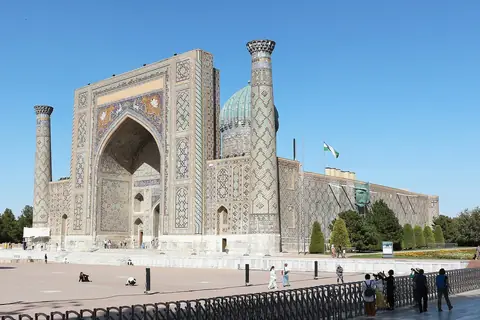
Uzbekistan in seven days
A seven-day Uzbekistan route with two nights each in Tashkent, Samarkand and Bukhara by train, real sights and an all-in cost for two.
Read the guideSources and checks before you travel
(23)
- Ministry of Foreign Affairs of Uzbekistan: visa regime ↗ — opens in a new tab
- Embassy of Uzbekistan in the United States: visa ↗ — opens in a new tab
- UK FCDO: Uzbekistan entry requirements ↗ — opens in a new tab
- UK FCDO: Uzbekistan safety and security ↗ — opens in a new tab
- UK FCDO: Uzbekistan regional risks ↗ — opens in a new tab
- German Federal Foreign Office: Uzbekistan ↗ — opens in a new tab
- France Diplomatie: Uzbekistan entry and stay ↗ — opens in a new tab
- France Diplomatie: Uzbekistan security ↗ — opens in a new tab
- Emehmon: electronic registration of tourists ↗ — opens in a new tab
- Samarkand International Airport: customs control ↗ — opens in a new tab
- Samarkand International Airport: how to get there ↗ — opens in a new tab
- Uzbekistan Airports: international airports ↗ — opens in a new tab
- Uzbekistan official tourism portal: travel tips ↗ — opens in a new tab
- Ipoteka Bank: central-bank reference rates ↗ — opens in a new tab
- Beeline Uzbekistan: Hello plans ↗ — opens in a new tab
- Beeline Uzbekistan: price notice of 3 October 2025 ↗ — opens in a new tab
- Beeline Uzbekistan: eSIM ↗ — opens in a new tab
- UZIMEI: about ↗ — opens in a new tab
- UZIMEI: tariffs ↗ — opens in a new tab
- Mobiuz: IMEI registration ↗ — opens in a new tab
- Fergana Valley Community Tourism Network: transportation ↗ — opens in a new tab
- Advice.uz (Madad, Ministry of Justice legal aid): import and export of cash currency (Russian) ↗ — opens in a new tab
- Anhor.uz: cash limit at the border raised (Russian) ↗ — opens in a new tab
Reference sources for the version dated 26 October 2026. Confirm opening times, access, transport and conditions for your travel dates.
Photo credits
(5)
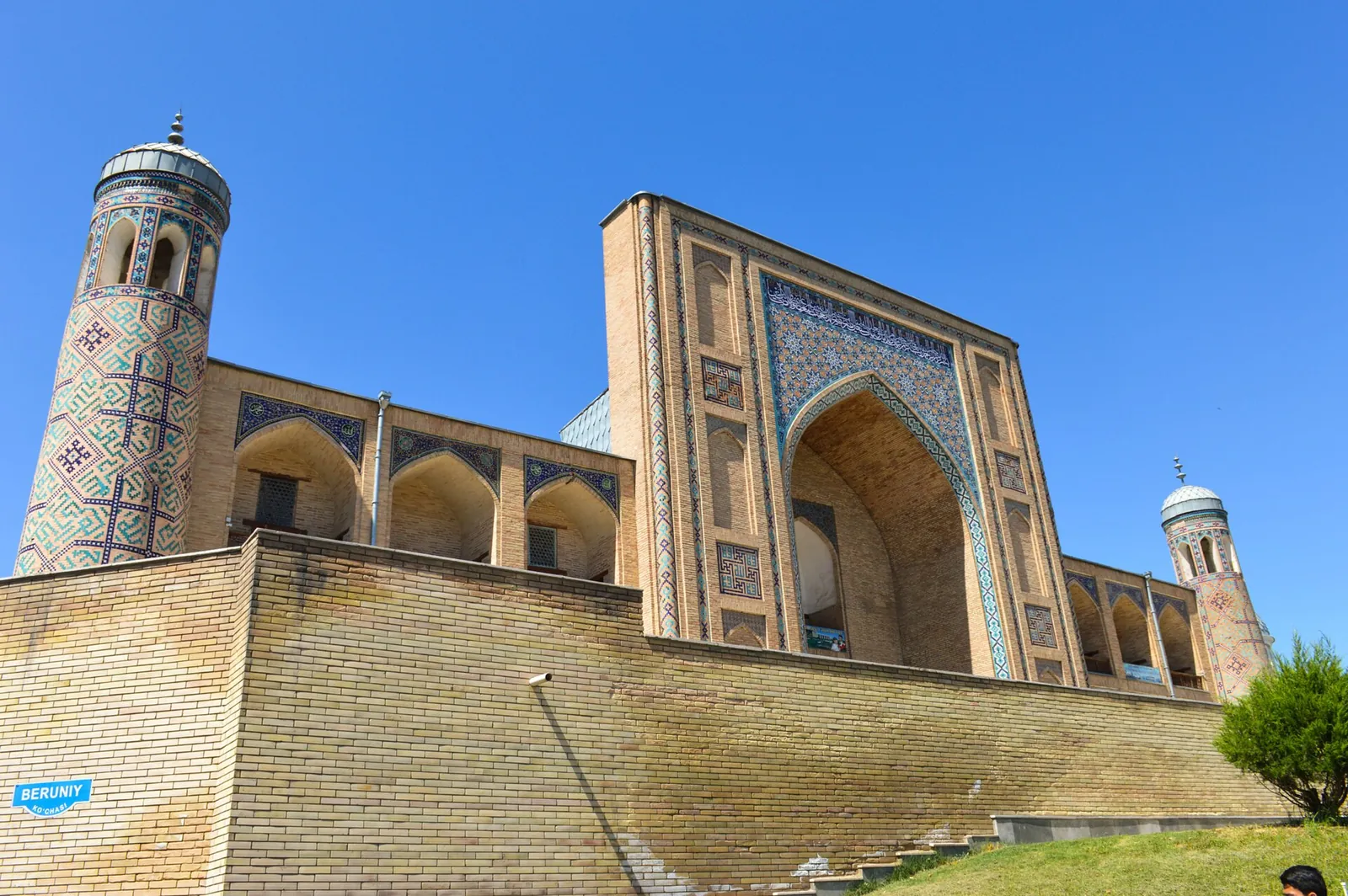
Kukeldash Madrasa in Tashkent, seen from below in daylight
Photograph: Francisco Anzola — opens in a new tab · CC BY 3.0 — opens in a new tab
Changes: Resized and converted to WebP; displayed with responsive crops. · Original photograph and licence details ↗ — opens in a new tab
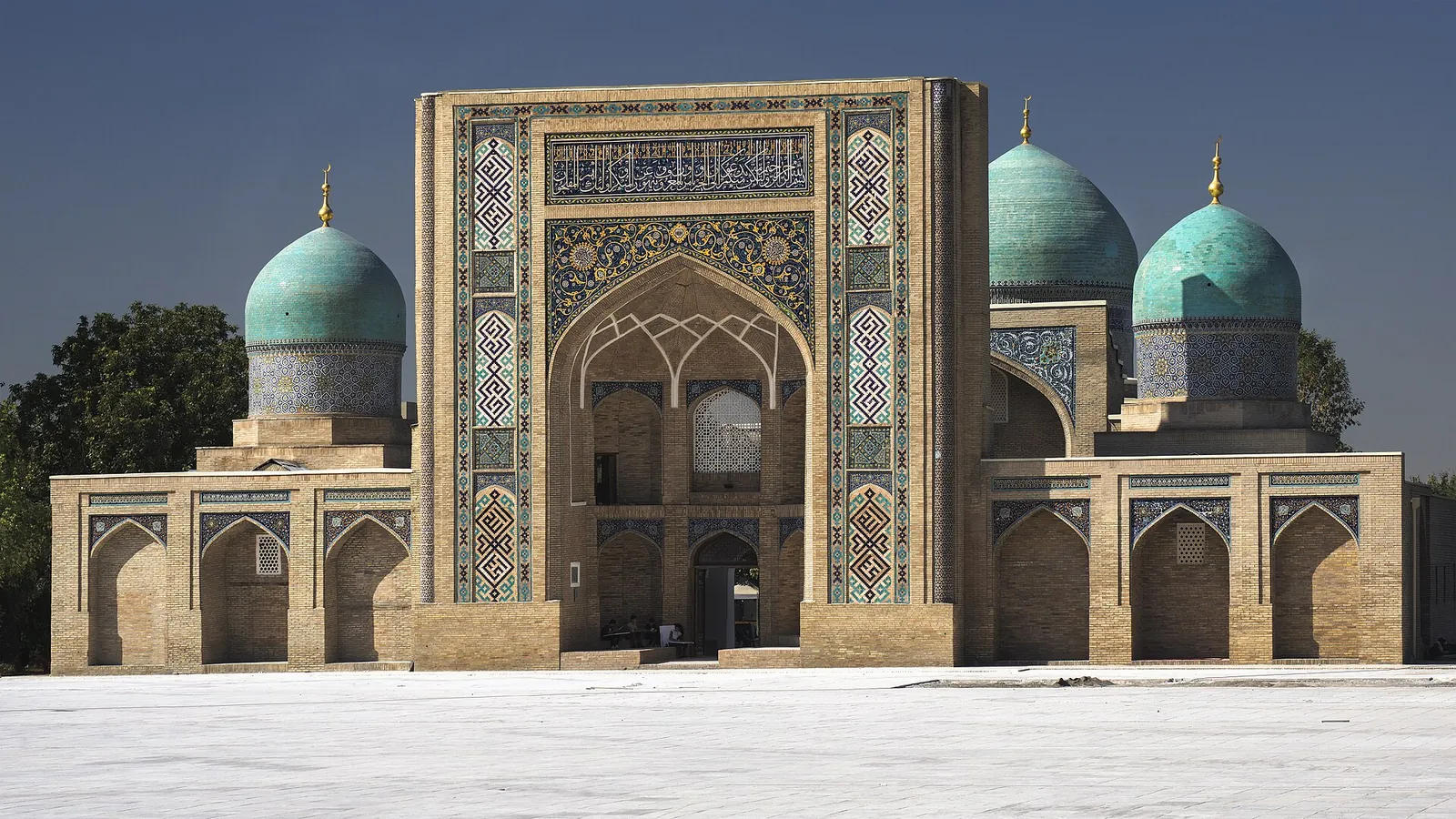
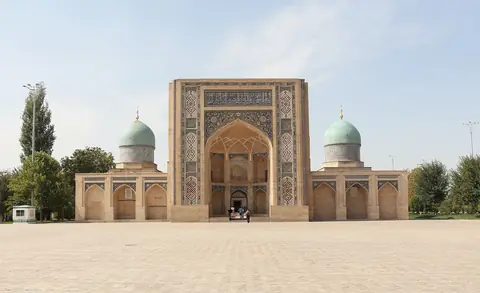
Barak-Khan Madrasa in Tashkent, built in the 16th century
Photograph: Petar Milošević — opens in a new tab · CC BY-SA 4.0 — opens in a new tab
Changes: Resized and converted to WebP; displayed with responsive crops. · Original photograph and licence details ↗ — opens in a new tab
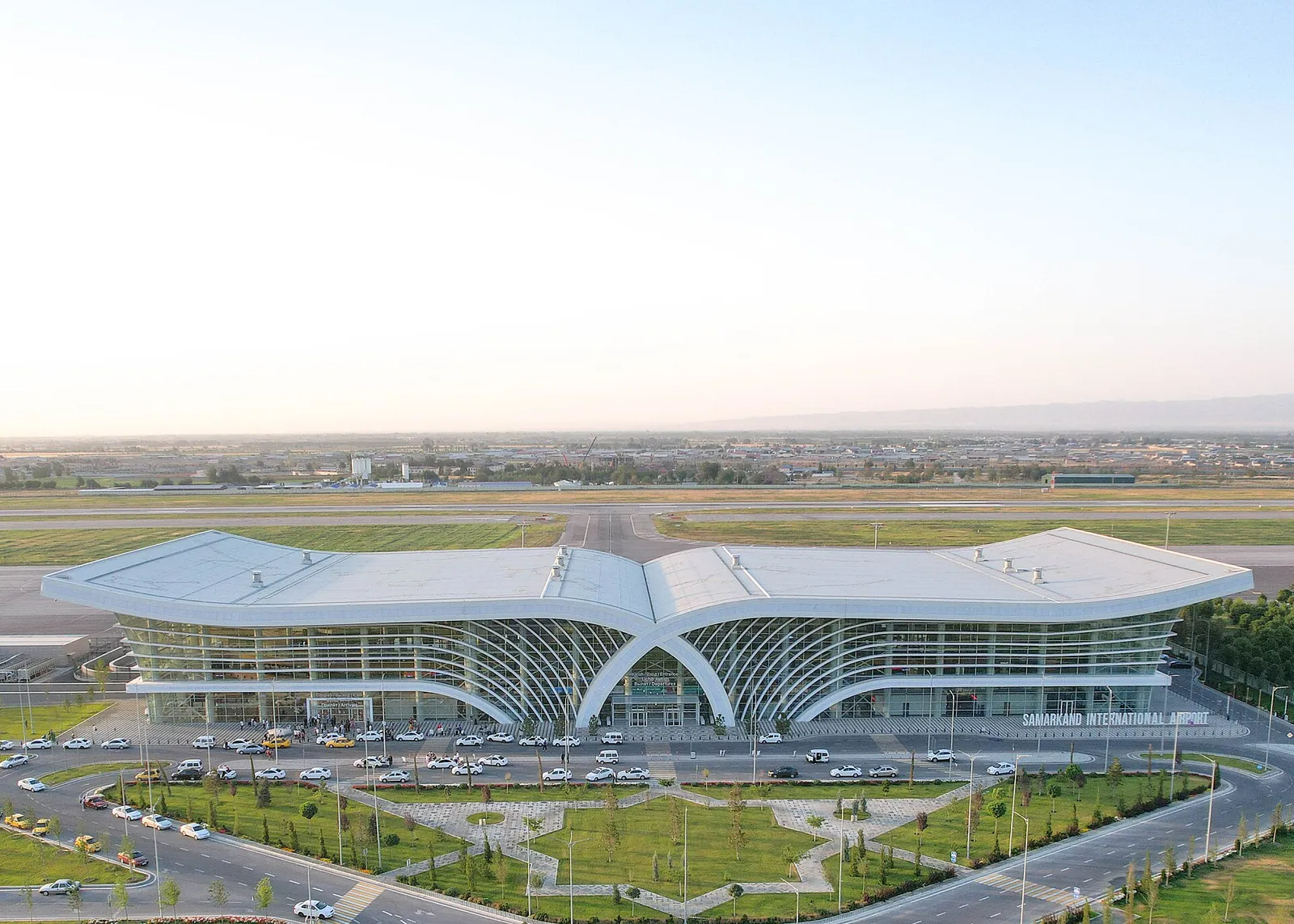
The new passenger terminal at Samarkand International Airport
Photograph: Air Marakanda — opens in a new tab · CC BY-SA 4.0 — opens in a new tab
Changes: Resized and converted to WebP; displayed with responsive crops. · Original photograph and licence details ↗ — opens in a new tab
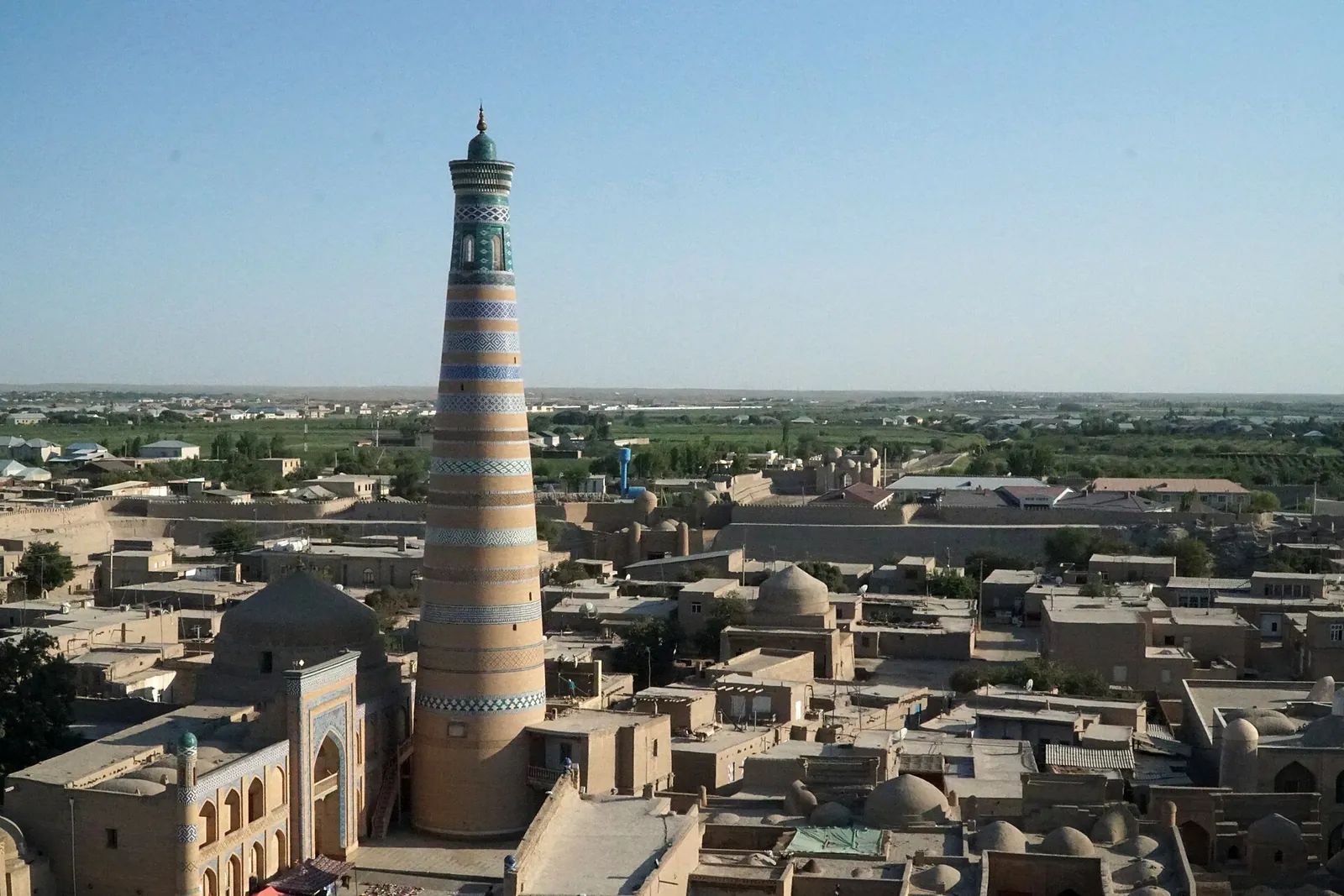
Itchan Kala in Khiva with the Islam Khodja Minaret, seen from above
Photograph: Adam Harangozó — opens in a new tab · CC BY-SA 4.0 — opens in a new tab
Changes: Resized and converted to WebP; displayed with responsive crops. · Original photograph and licence details ↗ — opens in a new tab
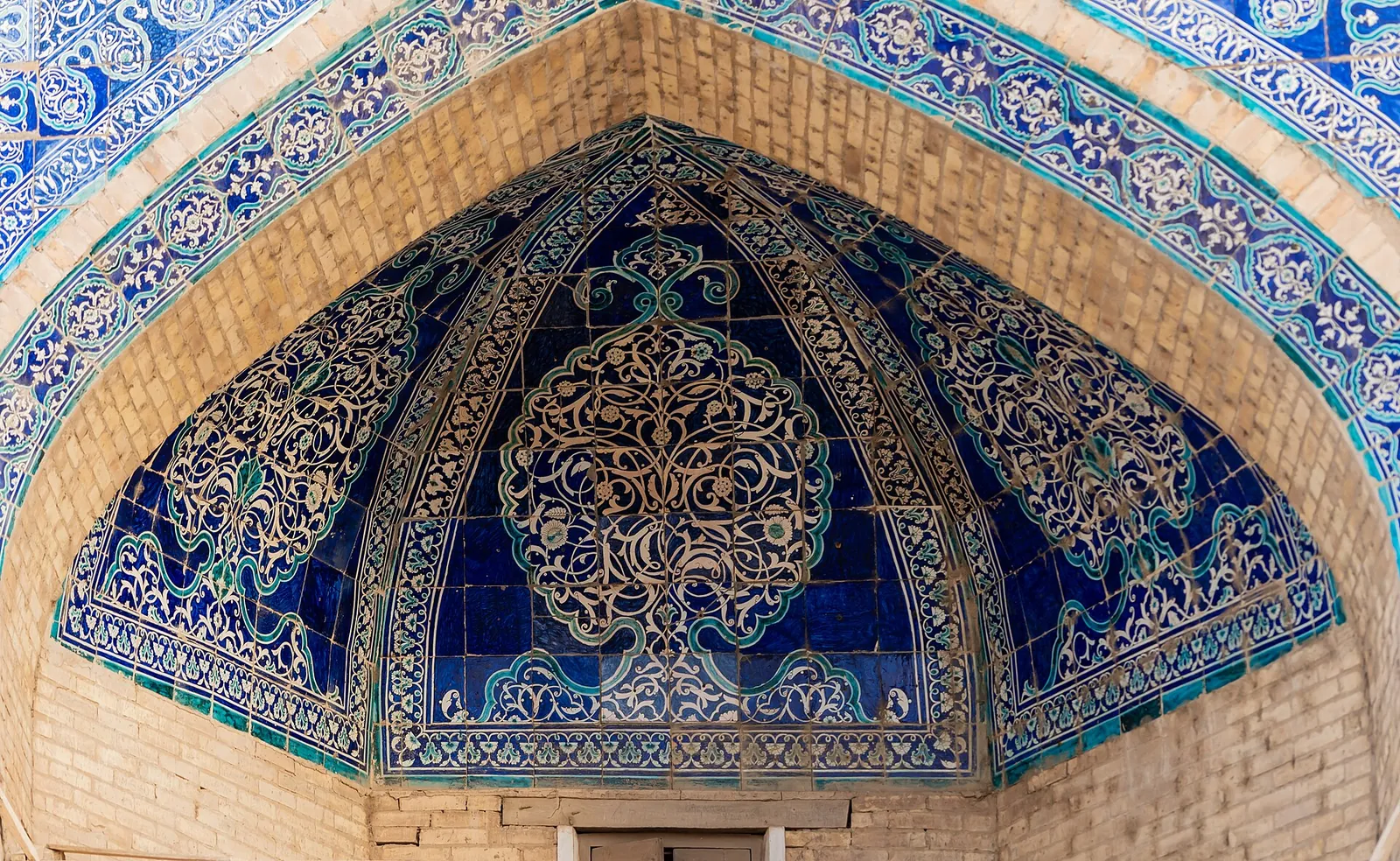
Tilework under the portal of the Islam Khodja Madrasa, Khiva
Photograph: Panpanchik — opens in a new tab · CC BY-SA 4.0 — opens in a new tab
Changes: Resized and converted to WebP; displayed with responsive crops. · Original photograph and licence details ↗ — opens in a new tab