Plan your trip
Cash or card in Uzbekistan? Soum, dollars, ATMs and tourist tax
Much of Uzbekistan still pays in cash, large sums included. The soum cannot be bought abroad and a foreign card is a back-up rather than the plan; yet since April 2026 petrol stations take only a card or a payment app. This guide sets out how much cash to carry and in what condition, where to change it legally, where cards and ATMs work, how hotels, taxis and bazaars take payment, what transport and museums cost, how the tourist tax reaches your bill, how the Tax Free refund works and what to declare at customs.
In this guide
Find the location ↗ — opens in a new tabThe short answer
Bring US dollars as your main cash, in clean, unmarked notes printed in 2013 or later, and budget about UZS 990,000 to 1.27 million (about USD 83 to 106) per person a day, rooms included, for two sharing a room. The soum (UZS) is not sold outside Uzbekistan, so change dollars at a bank or licensed exchange booth, starting at the airport when you land; the black market is illegal. Withdrawing soums at ATMs in Tashkent, Samarkand and Bukhara is usually possible, but very few ATMs outside the main cities take an international card, so carry cash for the regions. Two prices: a Tashkent metro ride costs UZS 3,000 in cash or UZS 2,500 with an ATTO transport card, and an economy Afrosiyob seat from Tashkent to Samarkand UZS 311,000. If an ATM or card terminal offers to charge you in your home currency, decline and pay in soums.
- Key point
- Set up before you fly: new US dollar notes, a card with low foreign fees and a second card as back-up
- Where it applies
- Applies everywhere in Uzbekistan
- Timing
- All year; bank branches close for lunch from 13:00 to 14:00
The soum: notes, coins and the rate
Uzbekistan's currency is the soum (also written so’m or som; code UZS), and you cannot buy it before you go: currency exchanges outside Uzbekistan do not sell it. The soum is the only legal currency in the country. The US dollar is a recognised foreign currency and is sometimes accepted by merchants, but plan to pay in soums.
The central bank's notes in circulation run from 1,000 to 200,000 soum, and several values come in two designs, an older series issued between 2001 and 2019 and a newer one from 2021 and 2022. Coins of 50 to 1,000 soum are in circulation too. Notes below 1,000 soum were withdrawn by July 2020, so a 500 soum note offered as change is no longer money.
For a sense of scale, the central bank's official rate of 7 November 2026 was UZS 11,987.16 to the US dollar, UZS 13,393.25 to the euro and UZS 16,060.40 to the pound, so the largest note, UZS 200,000, is worth a little under USD 17. Our Uzbekistan trip-cost guide turns rooms, meals and transport into a full budget.
Prices and times checked 8 November 2026
Which cash to bring, and in what condition
Bring US dollars as your main cash: they are the most easily exchanged foreign currency, and euros are the second choice. Travellers cheques are not normally accepted.
How much? Our Uzbekistan trip-cost guide puts ten days at about UZS 9.9 million per person on a budget and about 12.7 million mid-range, for two people sharing a room, with rooms, meals, trains, tickets and a buffer included: about UZS 990,000 to 1.27 million, or about USD 83 to 106 at the 7 November rate, per person a day. A room or train seat you pay by card comes off that sum. Carry the rest in cash.
The condition of the notes matters as much as the currency. Official exchange booths refuse damaged or marked notes and US dollars issued before 2013, and notes with dirt or tears are refused or changed only at a discount. Check the year printed on your dollars before you pack them, and leave torn, stamped or written-on notes at home.
Dollars also lose least at the counter. In early November 2026 one bank, Ipoteka Bank, bought US dollars in its branches at UZS 11,915, close to the official rate, but euros at UZS 12,800 and pounds at UZS 13,800, far below it. The bank's rates may change during the day and may differ between the branch, the ATM and the mobile app, so compare before you change a large sum.
Prices and times checked 8 November 2026
Changing money legally
Change money only at banks and licensed exchange booths. Changing money on the black market, at a bazaar for example, is illegal and carries harsh penalties, however good the rate looks. Hotels, banks and automated exchange points are authorised, and banks change foreign currency with no limit on the amount.
You can start at the airport: airports, banks, hotels and other tourist facilities have exchange offices and ATMs that take international cards, so you can change a first sum or withdraw soums when you land at Tashkent.
Bank branches open from 09:00 to 18:00 or from 08:00 to 17:00 and close for lunch from 13:00 to 14:00, so a visit to the bank fits best into the morning or the late afternoon. Change only what you need for the next few days and count the notes at the counter.
Cards: where they work, and what must be paid by card
A Visa or Mastercard is useful in Tashkent and the main cities, mainly in large hotels and restaurants, and card use with Visa, Mastercard and American Express is growing fast but is not yet general. Many transactions, large ones included, are still made in cash.
Some payments go the other way. Since 1 April 2026 petrol stations no longer accept cash, so pay for fuel by bank card or mobile banking app; the same applies to government services and to purchases over UZS 25 million.
Train tickets can be paid online: Uzbekistan Railways' e-ticket payment accepts bank cards of national and international payment systems, so you can pay for an Afrosiyob seat, one of the larger costs of a trip, by card.
Prices and times checked 8 November 2026
Hotels, taxis, bazaars and payment apps
Your room is usually the biggest single payment. Large hotels and large restaurants are where international cards are mainly accepted, while shops, cafés and local transport usually want cash in soums. Many hotels and transport agencies also accept US dollars or euros.
For taxis, Yandex Go shows the fare before you book, and you can pay it in cash directly to the driver, so keep small notes for the ride. For a taxi you stop in the street rather than order, agree the price before you get in.
Bargaining is customary in bazaars and private shops: ask the price, offer less and settle in soums. Bazaars are usually visited in the morning, and the earlier the better.
Local discounts and payment apps are built around Uzbek bank cards: Samarkand's airport buses are cheaper only with a card of an Uzbek bank, and the Click app links Uzcard, Humo and UnionPay cards, so plan on cash and your Visa or Mastercard.
Prices and times checked 8 November 2026
ATMs: withdraw in the cities
Withdraw soums in the larger cities: in Tashkent, Samarkand and Bukhara above all, withdrawing cash at local ATMs is usually possible, and airports and hotels have machines that take international cards. Machines may run out of cash or limit how much you can take out, so withdraw before you run low. Outside the main cities working ATMs are relatively few and very few of them accept international bank cards, so withdraw enough in a main city to pay in cash for every day you spend in the regions. Khiva is not among the three cities named, so if your route continues there, withdraw enough for those days in Bukhara.
The ATM's bank and your own bank may both charge: look up your bank's foreign-withdrawal fee before you fly and read the ATM screen before you confirm. If an ATM or a card terminal offers to charge you in your home currency, decline and choose soums: that conversion includes an exchange rate and additional fees, merchants and ATMs must not make the choice for you, and declining does not affect the payment or the withdrawal.
Pickpocketing and bag-snatching are common in crowded places such as bazaars and on public transport. Do not carry large sums, stay alert when you withdraw cash, and keep money and documents you do not need that day in the hotel safe.
Fares, train tickets and museum tickets
In Tashkent a single metro or bus journey costs UZS 3,000 in cash, with a single-use QR ticket from an info kiosk. Since 1 October 2026 it has cost UZS 2,500 when you pay electronically with an ATTO transport card, a bank card or the mobile app. In Samarkand, buses M1 and 256 link the airport with the central railway station about every 15 minutes from 06:00 to 21:00 for UZS 3,000 in cash or UZS 2,000 with a card of an Uzbek bank, so most visitors pay the cash fare.
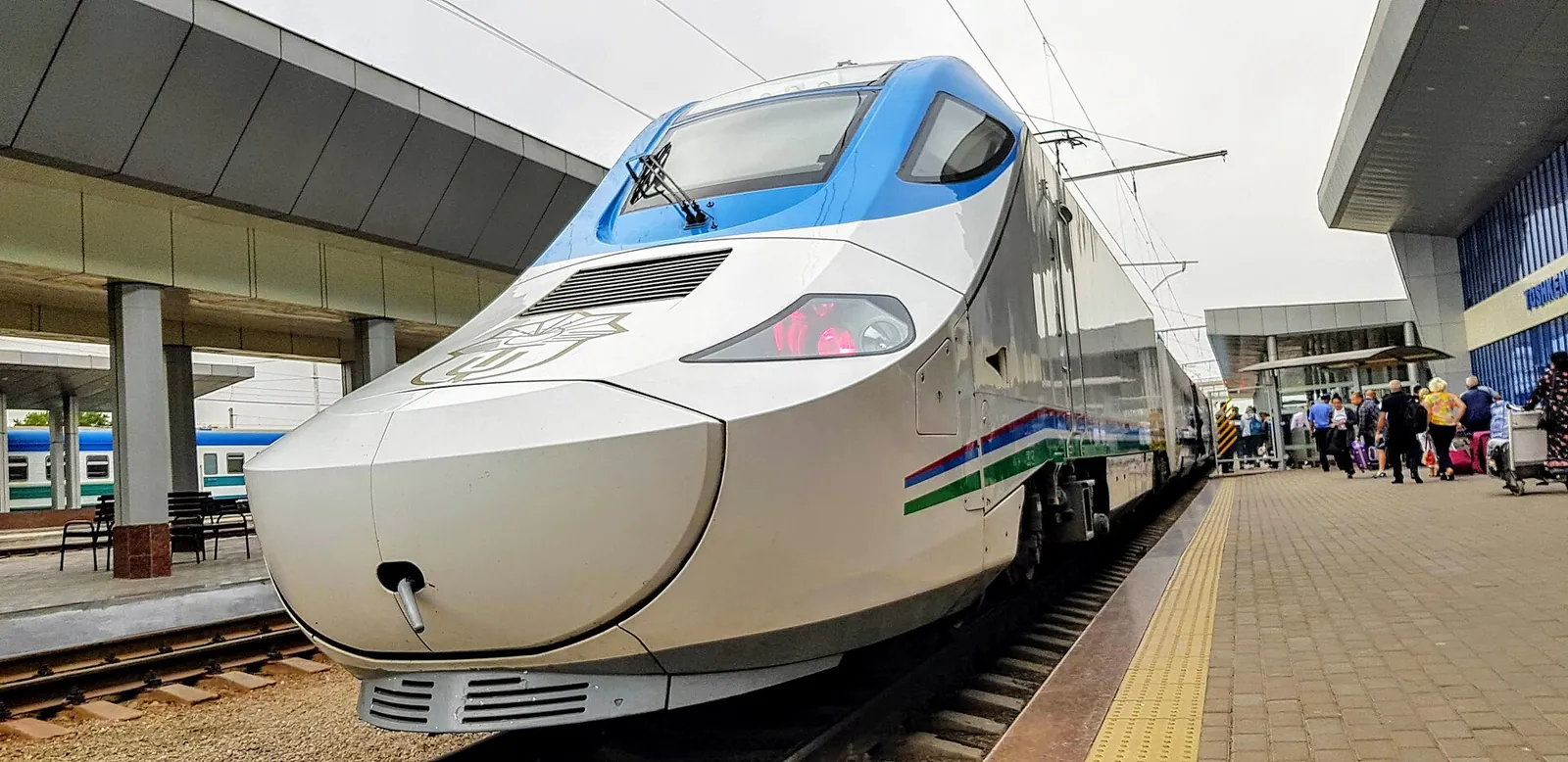
Afrosiyob high-speed fares since 1 February 2026 are UZS 311,000 in economy and UZS 455,000 in business from Tashkent to Samarkand, and UZS 509,000 and UZS 760,000 from Tashkent to Bukhara. Our transport guide covers timetables and booking.
Sights are paid in soums too. The State Museum of History of Uzbekistan in Tashkent charges foreign visitors UZS 100,000. In Bukhara, the state museum-reserve's prices from 1 January 2025 are UZS 60,000 each for the Ark and Mohi-Khosa for foreign tourists, UZS 20,000 for most of its other museums, and from UZS 700,000 for a city tour in a foreign language.
Prices and times checked 8 November 2026
The tourist tax on your hotel bill
Every guest except children under 16 pays a tourist tax for each day of the stay, and a part day counts as a full day. The rate depends on the size of the place: 15% of the base calculation amount per day in a hotel with more than 40 rooms, 10% with 11 to 40 rooms and 5% with up to 10 rooms, and 5% in individual accommodation with up to five rooms, such as houses, flats, apartments and hostels. Family guest houses and sanatoriums are listed separately in the regulation. With the base calculation amount at UZS 440,000 from 1 September 2026, that comes to UZS 66,000, 44,000 or 22,000 per guest per night.
The tax is usually included in the hotel bill, and private hosts pay it on the guest's behalf. Our where-to-stay guide includes the tax in its room prices.
If you camp or travel in a camper van, you register on the Emehmon system within 3 days and, for now, can pay the daily tax online only with an Uzbek debit card in local currency.
Prices and times checked 8 November 2026
Tax Free refunds and the customs form
Since 1 April 2026 foreign visitors can claim back VAT at all of Uzbekistan's international airports on purchases of at least UZS 300,000 including VAT; you receive 85% of the VAT, the other 15% going to the operator, in cash or to a bank card, and a card refund is credited within up to 3 business days after the goods leave the country. Food products are excluded. At Samarkand airport, for example, the counter is on floor 1 of the passenger terminal, opposite the information desk: register in the tax service's Soliq app and scan the QR code of each receipt, check in, then show the counter your boarding pass, an identity document and the goods, intact, in their packaging and with you.
Declare your cash in writing on arrival if you carry more than USD 2,000 through an airport, as German advice says (its limit is lower at land borders), and have both copies of the form stamped; undeclared currency risks confiscation. Uzbek law itself makes the declaration compulsory only above the equivalent of UZS 100 million in soums or foreign currency (about USD 8,340 at the central bank rate of 7 November 2026) and lets you declare smaller sums, so declaring from USD 2,000 is always allowed.
On the way out you cannot leave with more foreign currency than you brought. Uzbek rules let you take out up to UZS 100 million freely and more only within the sum you declared on entry, and German advice says that without the entry declaration you may not take foreign currency out at all, so keep the stamped copy until you leave. Money on your bank cards does not count as cash. Our Uzbekistan entry guide has the rest of the customs rules.
Prices and times checked 8 November 2026
Practical questions
Can I pay by card in Uzbekistan?
Large hotels and restaurants in Tashkent and the main cities are the likeliest to take a foreign card, but many transactions, large ones included, are still made in cash. Petrol stations take only a card or an app.
Can I buy Uzbek soums before I travel?
No. Currency exchanges outside Uzbekistan do not sell the soum, so bring US dollars or euros and change them, or withdraw soums, after you arrive.
Which currency should I bring to Uzbekistan?
US dollars are the most easily exchanged, and euros are the second choice. Travellers cheques are not normally accepted.
How much cash should I bring to Uzbekistan?
Budget about UZS 990,000 to 1.27 million (about USD 83 to 106) per person a day for two sharing a room, rooms, meals, trains and tickets included, on our trip-cost guide's budget and mid-range figures. Whatever you will not pay by card needs cash.
Can I bargain in Uzbekistan?
Yes: bargaining is customary in bazaars and private shops, where you settle in soums. App taxis such as Yandex Go show the fare before you book.
How much is the tourist tax in Uzbekistan?
From 1 September 2026, UZS 66,000 per guest per night in a hotel with more than 40 rooms, UZS 44,000 with 11 to 40 rooms and UZS 22,000 with up to 10 rooms or in a house, flat or hostel with up to five rooms. Children under 16 pay nothing, and the tax is usually included in the hotel bill.
How much cash can I bring into Uzbekistan?
Any amount, but declare it in writing on arrival if it is more than USD 2,000 and you fly in (German advice; the limit is lower at land borders), and keep the stamped copy until you leave.
Keep planning your trip
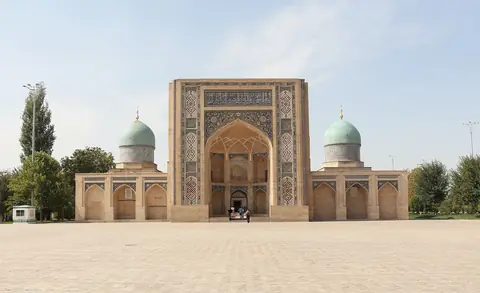
First trip to Uzbekistan
Choose seven days or ten for Tashkent, Samarkand, Bukhara and Khiva: nights, trains, season, registration, money, a SIM and an all-in budget.
Read the guide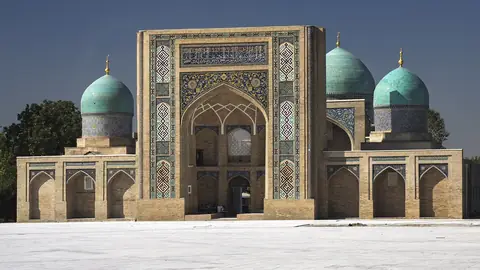
Entering Uzbekistan
Which passports enter Uzbekistan without a visa for 30 days, how hotel registration works, what to declare at customs, and the border and photography advice to follow.
Read the guide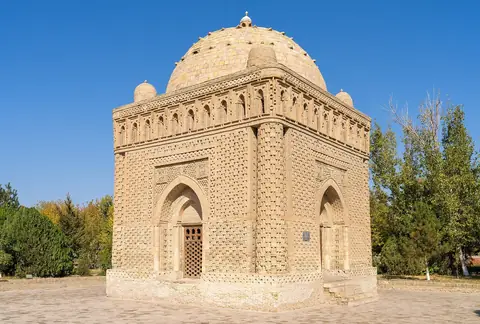
Uzbekistan trip cost
Ten days across Tashkent, Samarkand, Bukhara and Khiva, all in: about UZS 9.9 million per person on a budget, 12.7 million mid-range or 18.0 million in comfort.
Read the guide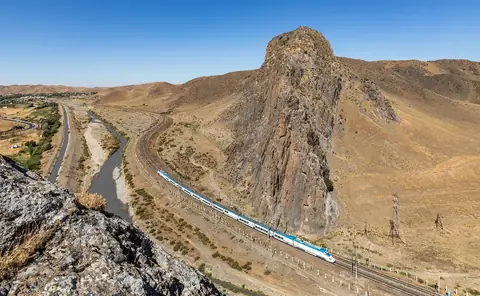
Transport in Uzbekistan
Book Uzbekistan’s trains and flights: the Afrosiyob to Samarkand and Bukhara, the 2026 Khiva trains, domestic fares, airport links and the Tashkent metro.
Read the guide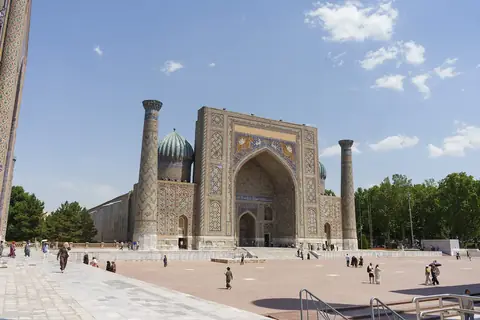
Where to stay in Uzbekistan
Which part of Tashkent, Samarkand, Bukhara and Khiva to sleep in, how many nights each, how to reach the hotel and what two hotels in each town charge.
Read the guide
Best time to visit Uzbekistan
Choose your Uzbekistan dates by season: spring and autumn for walking, the summer chillya, winter air, Ramadan, Navruz and the school holidays, month by month.
Read the guideSources and checks before you travel
(28)
- UK Foreign Office (GOV.UK): Uzbekistan safety and security ↗ — opens in a new tab
- UK Foreign Office (GOV.UK): Uzbekistan entry requirements ↗ — opens in a new tab
- Germany's Foreign Office (Auswärtiges Amt): Uzbekistan travel and safety advice (in German) ↗ — opens in a new tab
- France Diplomatie: Uzbekistan travel advice, useful information (in French) ↗ — opens in a new tab
- France Diplomatie: Uzbekistan travel advice, security (in French) ↗ — opens in a new tab
- France Diplomatie: Uzbekistan travel advice, entry and stay (in French) ↗ — opens in a new tab
- Central Bank of the Republic of Uzbekistan: banknotes ↗ — opens in a new tab
- Central Bank of the Republic of Uzbekistan: coins ↗ — opens in a new tab
- Central Bank of the Republic of Uzbekistan: official exchange rates ↗ — opens in a new tab
- Ipoteka Bank: exchange rates ↗ — opens in a new tab
- Ipoteka Bank: from 1 April 2026 certain payments only in cashless form ↗ — opens in a new tab
- Uzbekistan Railways: frequently asked questions (in Russian) ↗ — opens in a new tab
- Uzbekistan Railways (Telegram channel): Afrosiyob fares from 1 February 2026 (in Uzbek and Russian) ↗ — opens in a new tab
- Visa: what you should know about dynamic currency conversion ↗ — opens in a new tab
- Ministry of Justice legal-aid portal (advice.uz): carrying cash across the border (in Russian) ↗ — opens in a new tab
- Lex.uz: Cabinet of Ministers regulation on the tourist (hotel) levy, as amended (in Uzbek) ↗ — opens in a new tab
- Lex.uz: Presidential Decree PF-115 of 23 June 2026 (in Uzbek) ↗ — opens in a new tab
- Uzbekistan Tourism Committee: Tax Free at all international airports (8 April 2026) ↗ — opens in a new tab
- Uzbekistan official tourism portal: travel tips ↗ — opens in a new tab
- Samarkand International Airport: Tax Free ↗ — opens in a new tab
- ATTO (Tashkent transport payment operator): fares for passengers ↗ — opens in a new tab
- Samarkand International Airport: how to get there ↗ — opens in a new tab
- State Museum of History of Uzbekistan: about the museum ↗ — opens in a new tab
- Bukhara State Museum-Reserve: ticket prices (in Russian) ↗ — opens in a new tab
- Uzbekistan official tourism portal: travel guideline ↗ — opens in a new tab
- Uzbekistan government services portal: tourism ↗ — opens in a new tab
- Yandex Go: rides in Uzbekistan ↗ — opens in a new tab
- Click: frequently asked questions ↗ — opens in a new tab
Reference sources for the version dated 8 November 2026. Confirm opening times, access, transport and conditions for your travel dates.
Photo credits
(5)
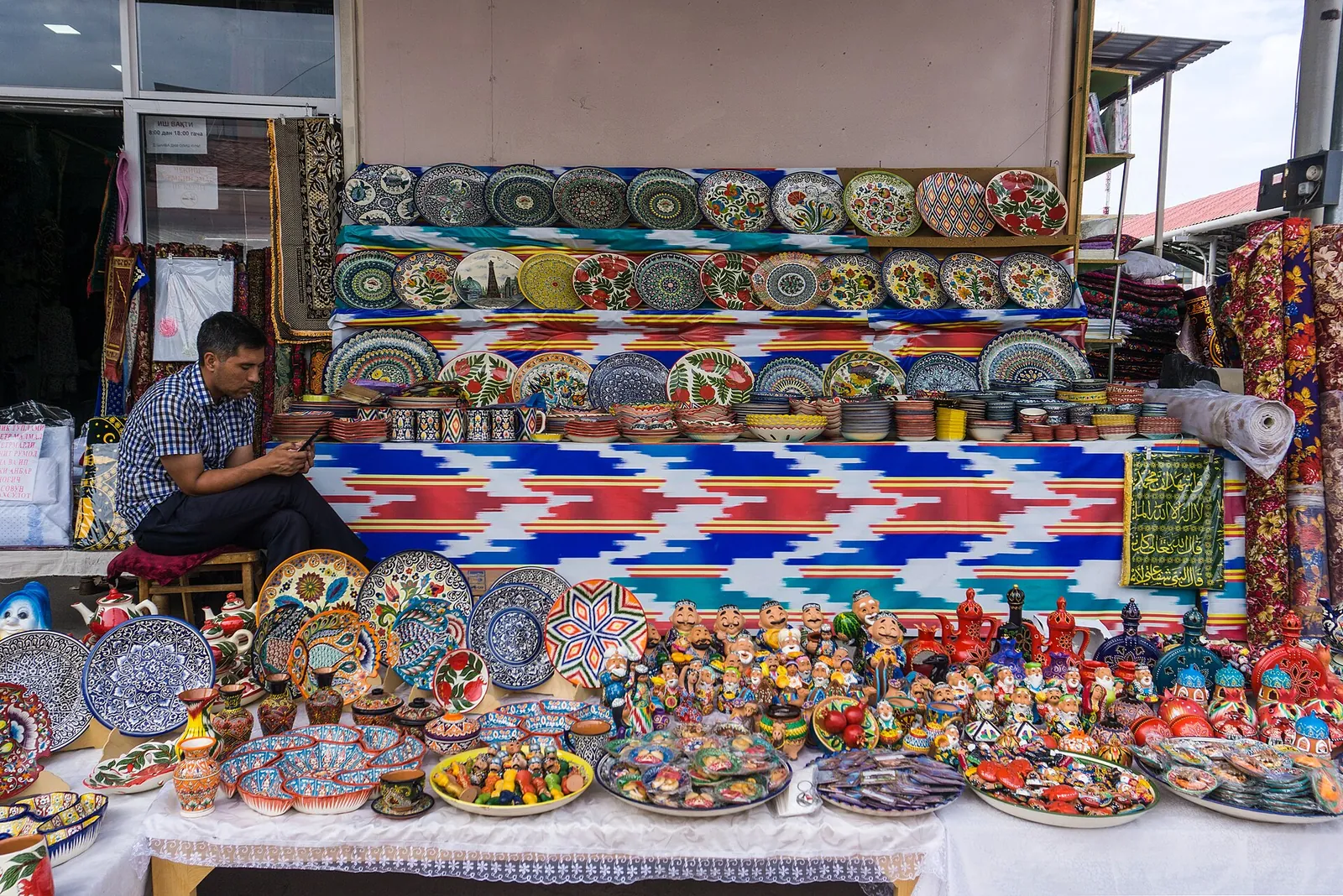
Ceramics and ikat cloth for sale at Chorsu Bazaar, Tashkent
Photograph: Alexey Komarov — opens in a new tab · CC BY-SA 4.0 — opens in a new tab
Changes: Resized and converted to WebP; displayed with responsive crops. · Original photograph and licence details ↗ — opens in a new tab
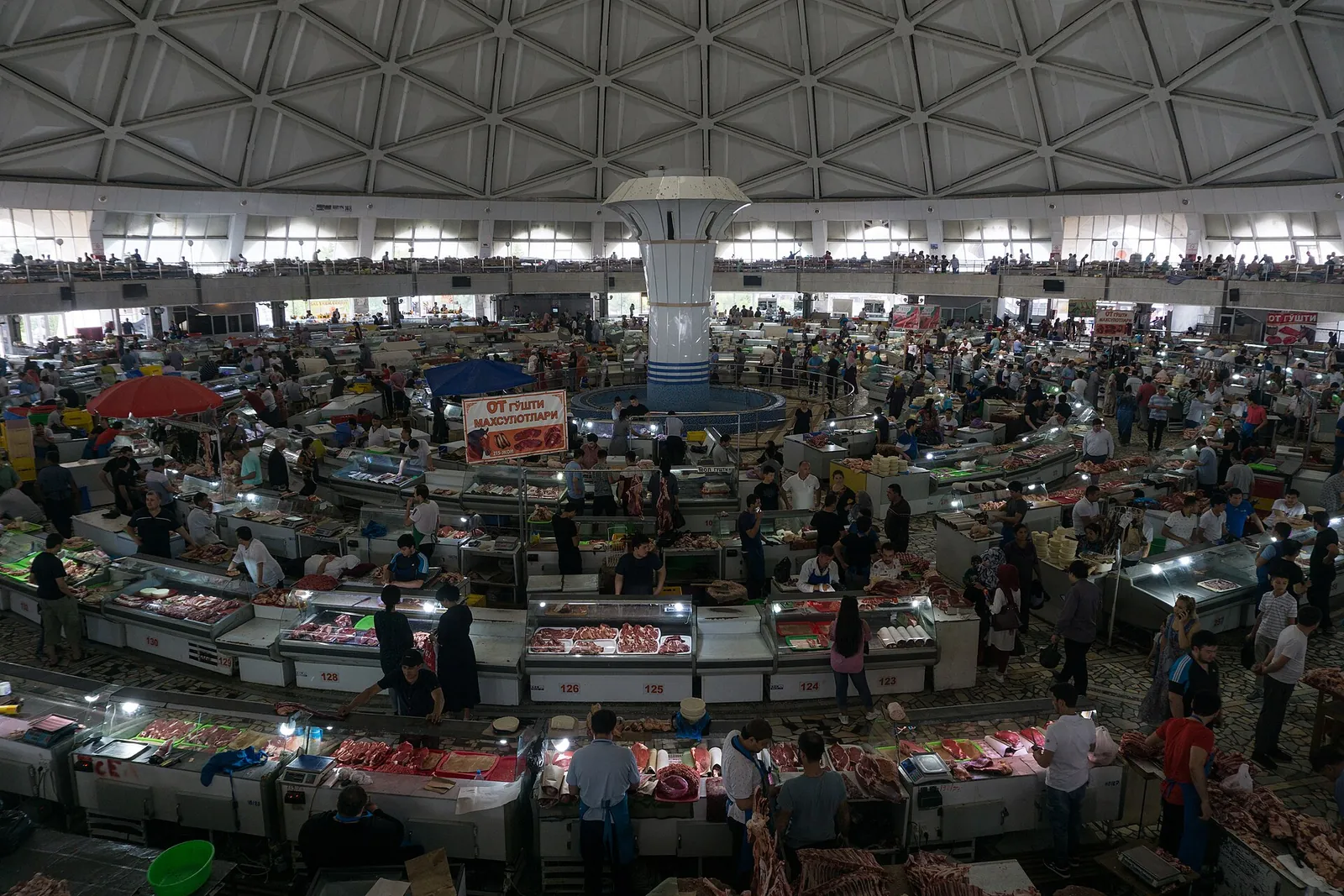
Meat counters under the dome of Chorsu Bazaar in Tashkent
Photograph: Alexey Komarov — opens in a new tab · CC BY-SA 4.0 — opens in a new tab
Changes: Resized and converted to WebP; displayed with responsive crops. · Original photograph and licence details ↗ — opens in a new tab
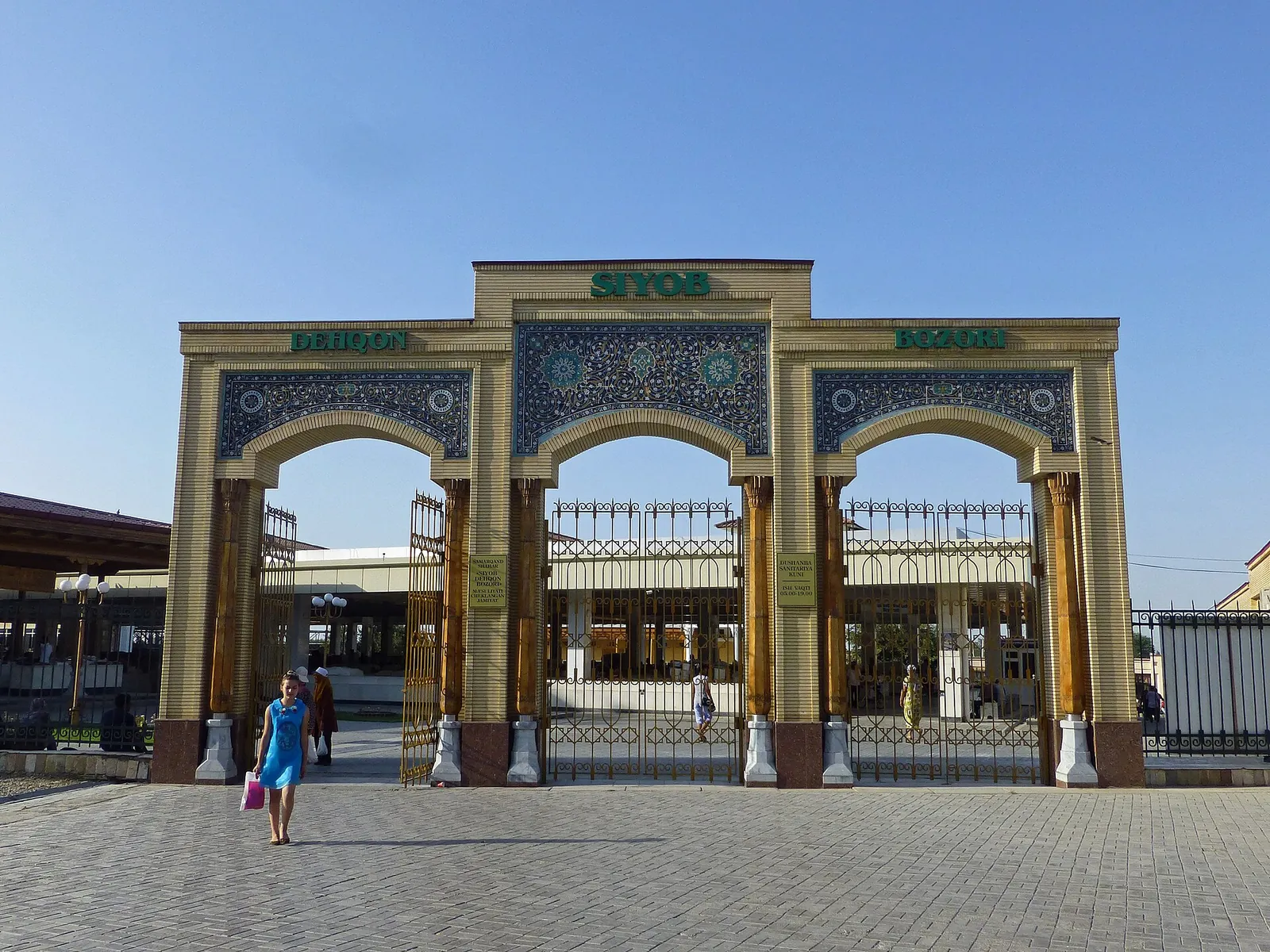
The main gate of Siyob Bazaar in Samarkand
Photograph: Ji-Elle — opens in a new tab · CC BY-SA 4.0 — opens in a new tab
Changes: Resized and converted to WebP; displayed with responsive crops. · Original photograph and licence details ↗ — opens in a new tab
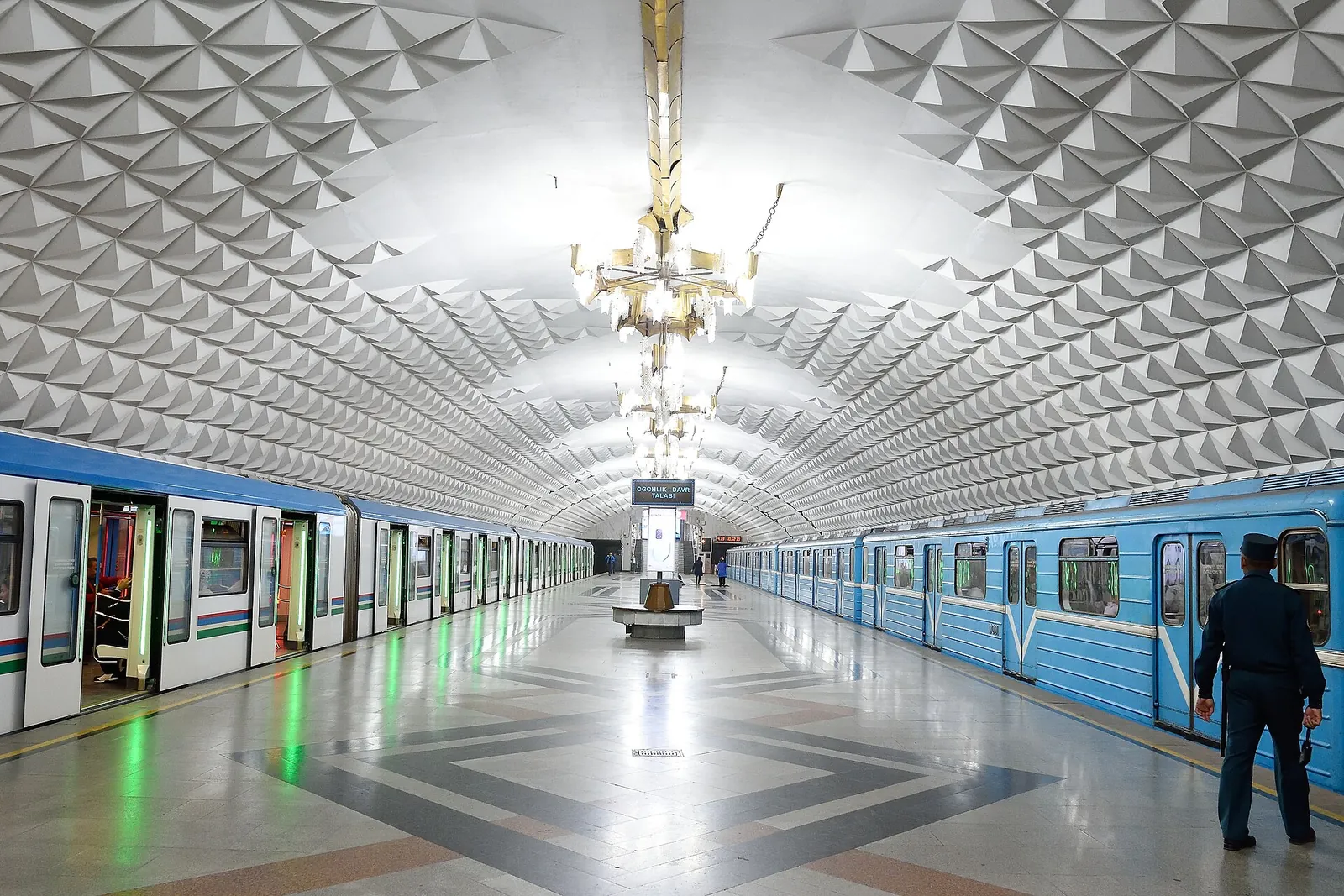
Beruni station on the Uzbekistan Line of the Tashkent metro
Photograph: Tim Adams — opens in a new tab · CC BY 4.0 — opens in a new tab
Changes: Resized and converted to WebP; displayed with responsive crops. · Original photograph and licence details ↗ — opens in a new tab
An Afrosiyob high-speed train at Tashkent railway station
Photograph: Disdero — opens in a new tab · CC BY-SA 4.0 — opens in a new tab
Changes: Resized and converted to WebP; displayed with responsive crops. · Original photograph and licence details ↗ — opens in a new tab