Plan your trip
First trip to Uzbekistan: a week or ten days along the Silk Road
A first visit to Uzbekistan comes down to how many cities you want and how long you will spend on trains. Tashkent, Samarkand and Bukhara fit into a week; Khiva, far to the west, and a day trip to Shahrisabz make it ten days. Either way you follow the Silk Road in one direction from the capital, and the fast trains between the cities are the part to book first.
In this guide
Find the location ↗ — opens in a new tabThe short answer
Base yourself in Tashkent, Samarkand and Bukhara for seven days and six nights, adding Khiva for ten days and nine nights, with a day trip to Shahrisabz from Samarkand. Book first the Afrosiyob seats, which go on sale 60 days ahead, your first-night hotel and, for ten days, the Bukhara–Khiva train. Two people sharing a mid-range room spend about UZS 8,800,000 each for the week and UZS 12,700,000 for ten days, all in, and the Registan costs foreigners UZS 100,000.
- Key point
- 7 days / 6 nights (Tashkent 2, Samarkand 2, Bukhara 2) or 10 days / 9 nights (Tashkent 2, Samarkand 3, Bukhara 2, Khiva 2)
- Where it applies
- Tashkent, Samarkand and Bukhara, with Khiva added for ten days and Shahrisabz as a day trip from Samarkand
- Timing
- Spring and autumn, the “velvet season”; the hottest weeks run from after 20 June to early August, and the coldest from mid-December to almost the end of January
Seven days or ten: what each length buys
Both routes run west along the Silk Road from Tashkent and use the fast Afrosiyob train from Tashkent. The choice is whether Khiva, a long way west of Bukhara, and a day trip to Shahrisabz are worth three more nights; a week cannot take in Khiva without cutting one of the other three cities. The route map shows the ten-day route; the seven-day route follows it as far as Bukhara and returns to Tashkent by train.
- 7 days / 6 nights: Tashkent 2, Samarkand 2, Bukhara 2. The seven-day itinerary gives you the capital’s metro and old quarter, Samarkand’s Registan and mausoleums, and Bukhara’s old centre on foot, then takes the train back to Tashkent on day 7, so choose a flight home that leaves well after the train arrives.
- 10 days / 9 nights: Tashkent 2, Samarkand 3, Bukhara 2, Khiva 2. The ten-day itinerary adds Khiva’s walled old town, an extra night in Samarkand for the Shahrisabz day trip, and the flight from Urgench to Tashkent on day 10. Choose it if Khiva is the reason you are going.
- Under a week: choose two cities rather than three. Tashkent and Samarkand are the easiest pair, linked by the Afrosiyob.
The four cities in the order you meet them
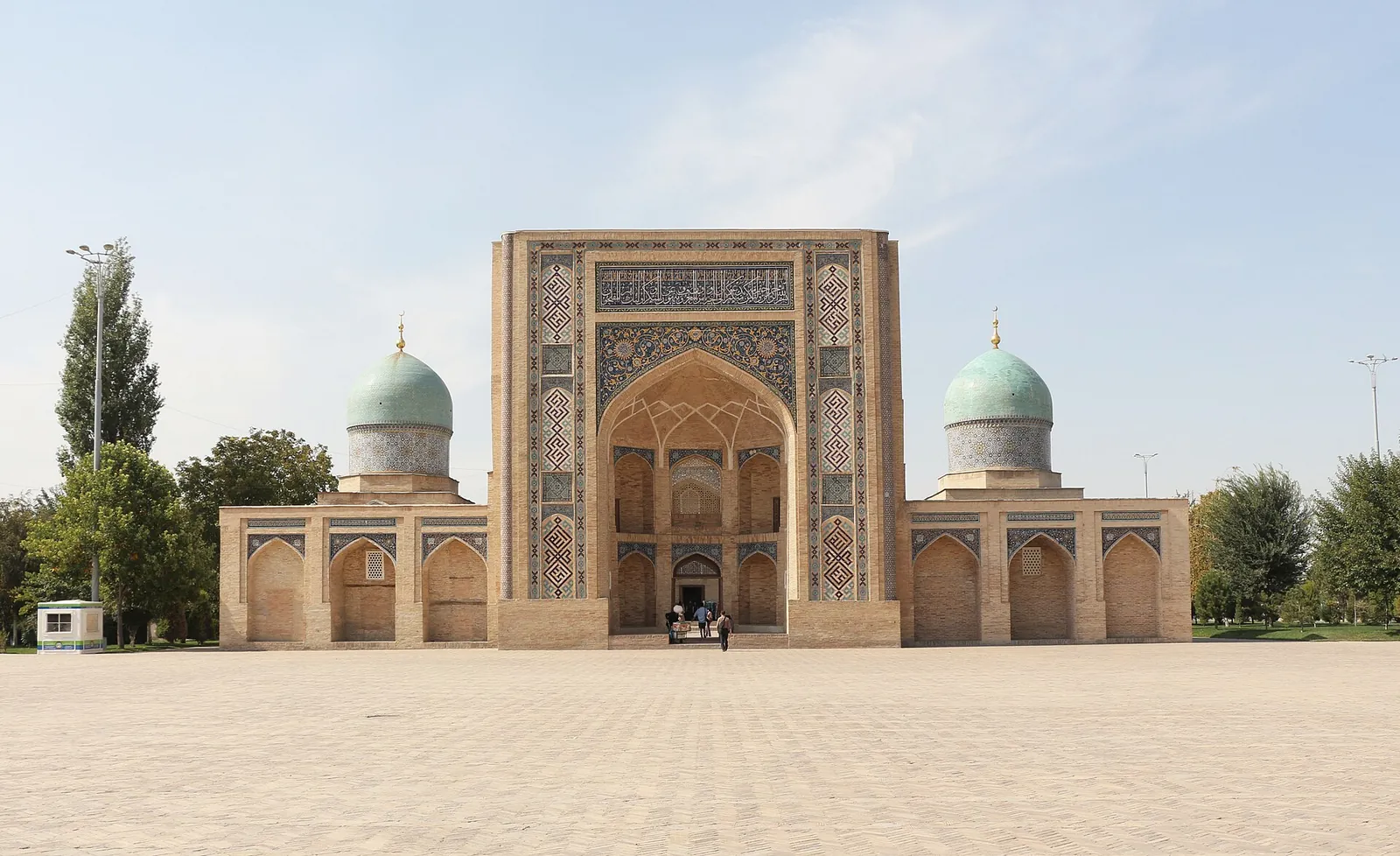
Tashkent has the country’s main airport. In the old quarter, the Khast Imam complex has the Barak Khan madrasa, whose tiled portal stands between two turquoise domes, and Chorsu Bazaar is a few stops away. The metro stations are decorated like galleries, and trains run daily from 06:00 to 00:00.
Samarkand is the high point. The Registan is a square closed on three sides by the tiled Ulugh Beg, Sherdor and Tilla-Kari madrasas; above Sherdor’s portal a big cat chases a gazelle beneath a rising sun. Inside Gur-e-Amir, a dark jade gravestone marks the grave of Amir Timur.
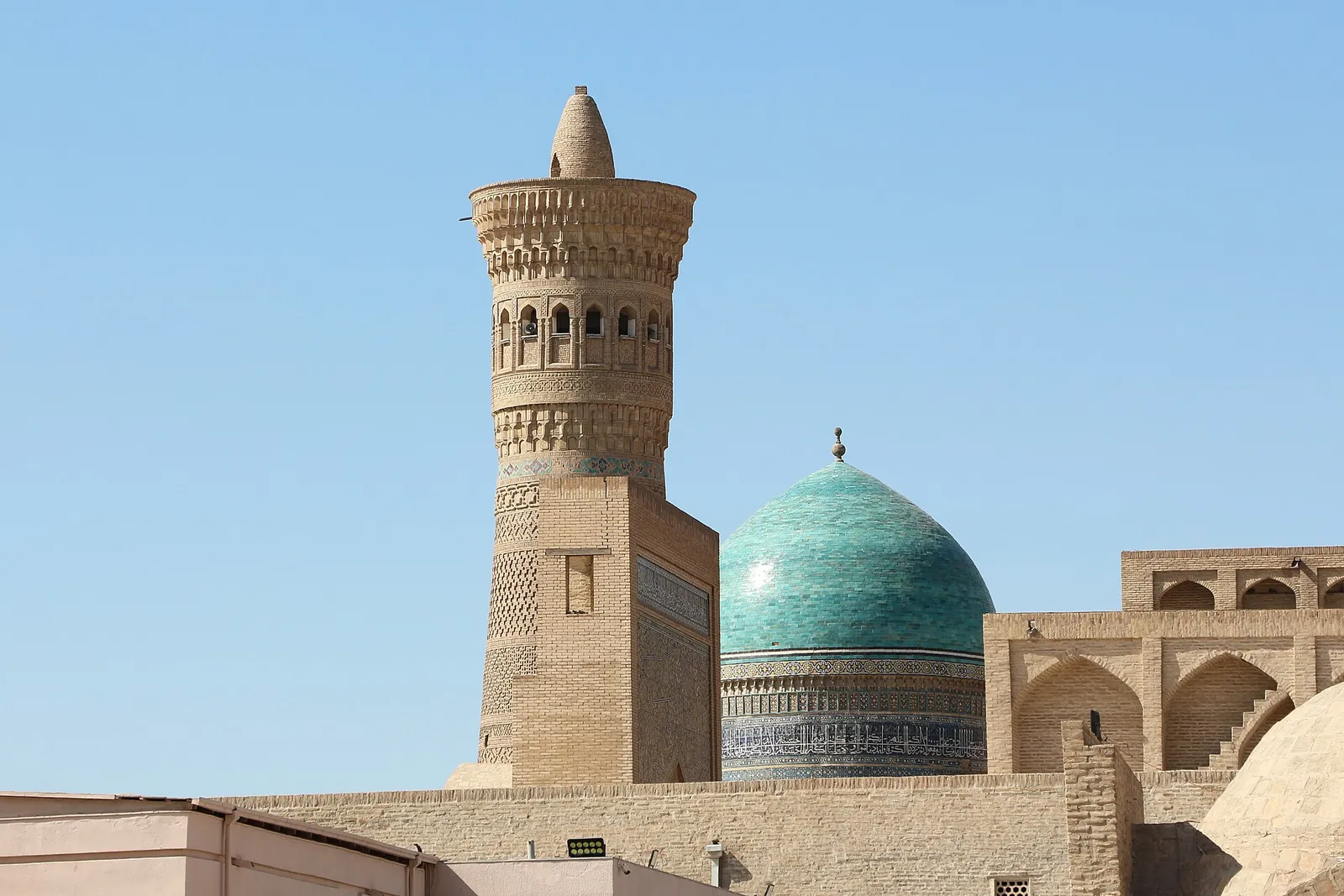
Bukhara is the walkable one. The Poi-Kalon ensemble gathers the Kalon minaret, the Kalon Mosque and two madrasas around one square, the Ark is a citadel destroyed and rebuilt many times over a thousand years, and the shops cluster around Lyabi-Hauz Square and the trading domes.
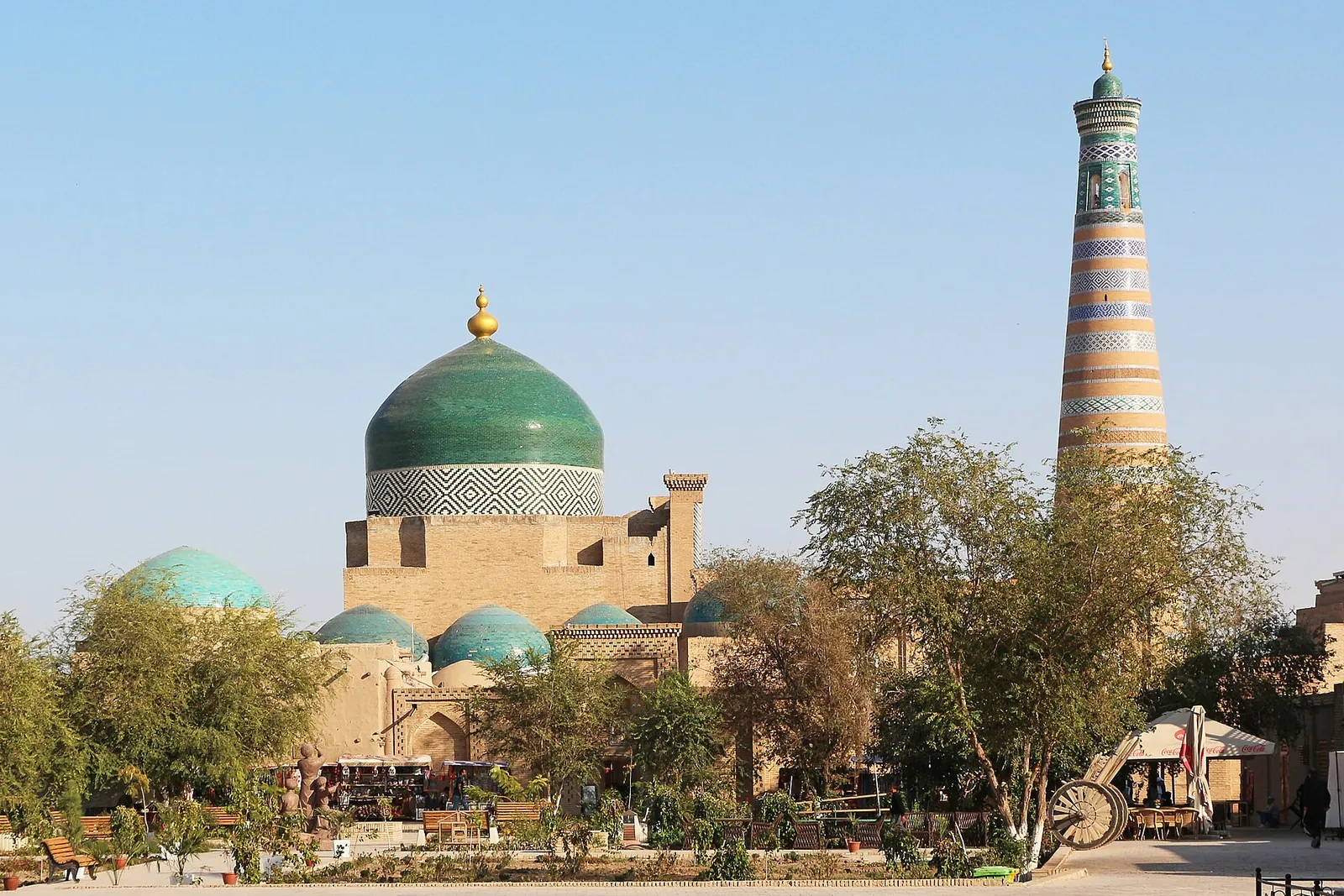
Khiva is a walled town. Inside Itchan Kala you will find the stump of Kalta Minor, a minaret begun in 1852 that was never finished, the Juma Mosque with no domes and a roof on 213 columns, and the 56.6-metre Islam Khoja minaret. The museum reserve publishes no price for its combined Itchan Kala ticket, so the budget below plans on about UZS 250,000 for a foreign adult, an estimate, not an official price. Khiva is far to the west, which is why it needs the ten-day route.
Flights, trains and the transfers between them
Plan to land in Tashkent, the country’s main airport. Samarkand, Bukhara and Urgench (UGC, the airport for Khiva) are also on the state airports company’s list of international airports; the transport guide covers which flights and fares to look for.
Take the Afrosiyob high-speed train from Tashkent: it takes 2 h 30 to Samarkand and 4 h 11 to 4 h 22 to Bukhara. For Samarkand to Bukhara, take a conventional train, 2 h 15 to 2 h 32, unless the booking search at eticket.railway.uz shows an Afrosiyob for your date. Domestic tickets go on sale 60 days ahead, so book as soon as your dates are fixed. Trains to Bukhara stop at Bukhara-1 station in Kagan, about 12 km in a straight line from Lyabi-Hauz, so take a taxi to your hotel: an app taxi costs roughly UZS 20,000–30,000 at Yandex’s published Bukhara tariff, an estimate for the 12 km.
Bukhara to Khiva has a high-speed electric train, number 706, which began running on 9 September 2026: it leaves Bukhara 1 at 15:45 and reaches Khiva at 20:25 (4 h 40), every day except Monday. Plan the Bukhara–Khiva day for any day except Monday.
The ten-day route flies from Urgench to Tashkent on day 10. Uzbekistan Airways lists Tashkent–Urgench from UZS 442,336 one way from 16 October 2026; that fare is for the other direction, so the budget below plans on about UZS 500,000 per person for the flight back, an estimate. The airport train runs Urgench Airport to Khiva as No. 7055 at 08:40 and Khiva to the airport as No. 7058 at 21:00, 42 minutes each, for UZS 25,000 (adults); for any other flight, arrange a car.
If your flight home is on a separate ticket from the Urgench flight, add a night in Tashkent; that makes eleven days and ten nights and adds its cost to the budget.
Add days for Shahrisabz, the Fergana Valley or Nukus
Shahrisabz is a day from Samarkand by road, not a stay: the ruins of Ak-Saray, the palace Timur began in 1380, and the Kok-Gumbaz mosque with its blue dome. STANTOURS lists a private sedan for one to three people at EUR 75 for a 6–7 hour excursion (price updated on 14 February 2026); lunch, any guide and the entry fees are extra, and the operator puts entry fees at about EUR 8 per person in total.
The Fergana Valley adds three days and two nights for the valley’s silk and pottery workshops, including Rishtan, and for Kokand. Nukus and Moynaq adds three days and two nights for the Savitsky Museum in Nukus and Moynaq, a former Aral Sea port, and ends in Khiva. Treat each as extra days rather than a swap for one of the main cities, and read the safety section below before going near any border.
Choose the season
Spring and autumn, the “velvet season”, are the easy months for walking between the sights. Summer is hot: the 40 days of heat called chillya run from after 20 June to early August, so avoid walking around the city at noon and carry a hat, light clothes and plenty of water. In winter the coldest weeks run from mid-December to almost the end of January, and the temperature in the coldest month can fall below −6°C; museums and galleries fill the cold days.
During Ramadan, cafés and restaurants may change their menus and fill up around iftar, and the areas around mosques are busy at prayer times. The best-time guide goes month by month, and the festivals guide lists the holidays and events.
What a first trip costs, all in
| Level | 7 days, per person, about UZS | 7 days, for two, about UZS | 10 days, per person, about UZS | 10 days, for two, about UZS |
|---|---|---|---|---|
| Budget | 6,600,000 | 13,200,000 | 9,900,000 | 19,800,000 |
| Mid-range | 8,800,000 | 17,600,000 | 12,700,000 | 25,300,000 |
| Comfort | 12,900,000 | 25,800,000 | 18,000,000 | 36,100,000 |
This budget is for two adults sharing one private room, with every night, meal and ground journey of the routes above, including the Shahrisabz day trip and the flight from Urgench on the ten-day route and the train back to Tashkent on the seven-day one, on ordinary spring or autumn dates. Prices were checked on 25 October 2026 and are rounded to UZS 100,000; GBP 1 is UZS 15,917, EUR 1 is UZS 13,329 and USD 1 is UZS 11,903 (central-bank rate of 23 October 2026). Budget means simple hotels and bed-and-breakfasts, mid-range boutique hotels, and comfort the upper hotels. Over ten days the totals average about UZS 990,000 per person a day on a budget (about GBP 60), UZS 1,270,000 mid-range (about GBP 80) and UZS 1,800,000 for comfort (about GBP 110).
- Budget, ten days: about UZS 19,800,000 for two. Rooms 7,500,000, food 2,800,000, getting around 3,600,000, sights and tours 4,000,000, SIM 100,000, buffer 1,800,000.
- Mid-range, ten days: about UZS 25,300,000 for two. Rooms 10,900,000, food 3,900,000, getting around 4,000,000, sights and tours 4,000,000, SIM 100,000, buffer 2,300,000.
- Comfort, ten days: about UZS 36,100,000 for two. Rooms 15,300,000, food 6,400,000, getting around 5,500,000, sights and tours 5,500,000, SIM 100,000, buffer 3,300,000.
- Mid-range, seven days: about UZS 17,600,000 for two. Rooms 7,900,000, food 2,900,000, getting around 3,000,000, sights 2,100,000, SIM 100,000, buffer 1,600,000.
- Budget, seven days: about UZS 13,200,000 for two. Rooms 5,200,000, food 2,000,000, getting around 2,600,000, sights 2,100,000, SIM 100,000, buffer 1,200,000.
- Comfort, seven days: about UZS 25,800,000 for two. Rooms 11,100,000, food 4,500,000, getting around 5,000,000, sights and tours 2,800,000, SIM 100,000, buffer 2,300,000.
- Rooms: published double rates, about UZS 700,000 to 900,000 a night for two on a budget, 800,000 to 1,400,000 mid-range and 1,400,000 to 2,700,000 for comfort, converted at the rates above, with 12% VAT added where a rate leaves it out and the tourist tax, which depends on the size of the hotel, from UZS 22,000 to 66,000 per guest per night (the top rate where a hotel publishes no room count). Breakfast comes off the food line only where the room includes it.
- Food: about UZS 150,000 a day each on a budget, 225,000 mid-range and 350,000 for comfort, for three meals and tea or water.
- Getting around: economy rail at UZS 311,000 Tashkent–Samarkand, the Afrosiyob fare in force since 1 February 2026, and about UZS 200,000 Samarkand–Bukhara and 510,000 Bukhara–Khiva, estimates from the Afrosiyob fares because these legs have no published fare; the seven-day route returns from Bukhara to Tashkent at the UZS 509,000 Afrosiyob fare. Comfort takes business class on the Afrosiyob legs (UZS 455,000 Tashkent–Samarkand, UZS 760,000 Tashkent–Bukhara, about UZS 300,000 Samarkand–Bukhara); the Urgench–Tashkent flight at about UZS 500,000 each, an estimate from the fare in the other direction; and taxis and transfers at about UZS 600,000, 1,000,000 or 2,000,000 for two, by level.
- Sights and tours: the Registan at UZS 100,000 per foreign visitor (its director’s figure, published 2 October 2025), the History Museum in Tashkent at UZS 100,000, the Ark in Bukhara at UZS 60,000, Gur-e-Amir, Bibi-Khanym, Shah-i-Zinda, the observatory and the Afrasiab museum in Samarkand at UZS 75,000–80,000 each, the prices a tour operator in Uzbekistan, Silk Road Tour, listed in July 2026, since the sites publish none, and Khiva’s combined ticket at about UZS 250,000 plus about UZS 100,000 for extras, an estimate, since the museum reserve publishes no price. Shahrisabz is the EUR 75 sedan plus about EUR 8 each in entry fees; comfort adds a EUR 60 guide for Shahrisabz and one city guide at about UZS 700,000.
- SIM: about UZS 100,000 for two, rounded from two Beeline Hello 1 monthly plans at UZS 60,000 each with free eSIM activation. Buffer: 10% of everything above, for snacks, tips and small extras.
- Flights: a London return in economy is about GBP 550 to 1,200 per person, from Turkish Airlines’ sample fares for October and November 2026. With the ground costs, ten days come to about GBP 1,170 to 1,820 per person on a budget, GBP 1,350 to 2,000 mid-range and GBP 1,680 to 2,330 for comfort; seven days come to GBP 960 to 1,610, 1,100 to 1,750 and 1,360 to 2,010.
Entry, registration and your passport
Ordinary passports from the UK, Ireland, Germany, France, Italy, Spain, Canada, Australia and New Zealand, among others, are on the Foreign Ministry’s list for up to 30 days without a visa, counted from the moment you cross the border; you must leave by the end of that period. The entry guide lists the other nationalities and the passport rules, which differ by country: the UK says a passport must be valid for three months after arrival, Germany three months at entry for a visa-free stay, and France advises six months beyond your planned return.
Register within three days of arrival, weekends counting. Your hotel does it for you, or your host if you stay in a private house. Keep every slip: you are asked for the full record of your stay when you leave. Carry your passport and the registration record at all times; the police check, and you can be fined or arrested for not carrying the passport. Rules on declaring cash and on bringing in medicines are in the entry guide.
Money, cards and a local SIM
The currency is the Uzbek so’m (UZS), which exchange offices outside Uzbekistan do not sell, so you buy it on arrival. US dollars are the easiest foreign currency to change. Use official exchange booths only, since changing money elsewhere is illegal, and bring clean, recent notes: the booths refuse damaged or marked notes and US dollars issued before 2013. International cards are not widely accepted outside Tashkent and the main cities, and very few ATMs outside them take international cards, so carry enough cash for the whole trip or withdraw in a main city before you go anywhere smaller.
For a local SIM, Beeline sells its Hello plans to foreigners and tourists: the monthly fee is UZS 60,000 from 3 October 2025, and a new eSIM costs nothing to activate on a compatible phone. Its Tashkent sales office is at 1 Bukhara Street, Mirabad District. A phone used with a local SIM must have its IMEI number registered within 30 days of connecting, so a trip of ten days or fewer ends before the deadline.
Mosques, madrasas and photography
At religious sights women are advised to cover their shoulders, back and legs; covered shoulders and knees and a light scarf suit everyone. Take off your shoes where asked, and ask before photographing people.
Sensitive sites need a check first: UK advice says photography restrictions have been relaxed, but to check before taking photos near airports, border checkpoints, military barracks, bridges, police stations and metro stations, Tashkent’s decorated metro included. Germany says bans on strategic sites such as bridges, tunnels and railway installations are not always signposted.
Where the advice says not to go
The route in this guide stays in cities and on main roads. Taking the strictest of the UK, German and French advice: keep away from the Afghan border area and visit Termez city only for an imperative reason; Germany advises against non-essential travel near any border except at official crossings, and France warns against the Tajik and Kyrgyz borders outside the official crossings; in any border zone keep to towns, main roads and marked paths. Germany also advises against overland drives at night, so book road transfers, including the one to Shahrisabz and the run to Urgench airport, to end in daylight. Karakalpakstan is not off limits: France lists Nukus among the secured major tourist sites. Other governments may draw the line differently, so check your own government’s advice.
Practical questions
Is a week enough for a first visit to Uzbekistan?
Yes for Tashkent, Samarkand and Bukhara, as in the seven-day itinerary. Khiva needs the ten-day route, because it adds a long journey west.
Do I need a visa for Uzbekistan?
Not for up to 30 days with the ordinary passports of the UK, Ireland and many other countries on the Foreign Ministry’s list. The entry guide has the full list and the passport rules.
Do I have to register my stay?
Yes, within three days of arrival, weekends counting. Your hotel does it; keep every slip, which you are asked for when you leave.
Can I pay by card in Uzbekistan?
International cards are not widely accepted outside Tashkent and the main cities, and very few ATMs outside the main cities take them. Carry enough cash for the whole trip or withdraw in a main city first.
When is the best time to go?
Spring and autumn, the “velvet season”. Summer heat runs from after 20 June to early August, and winter is coldest from mid-December to almost the end of January; the best-time guide goes month by month.
How much does a first trip cost per day?
Over ten days, all in, the average is about UZS 1,270,000 per person a day mid-range, UZS 990,000 on a budget and UZS 1,800,000 for comfort, for two sharing a room. The trip cost guide gives its own ten-day budget.
Keep planning your trip
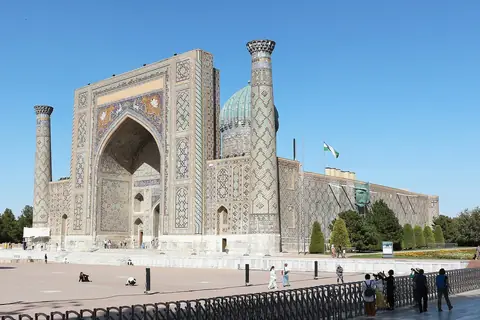
Uzbekistan in seven days
A seven-day Uzbekistan route with two nights each in Tashkent, Samarkand and Bukhara by train, real sights and an all-in cost for two.
Read the guide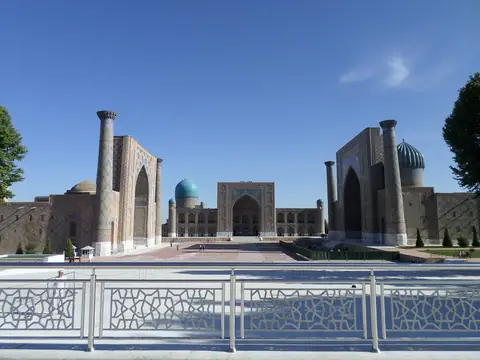
Uzbekistan in ten days
Ten days and nine nights through Tashkent, Samarkand, Bukhara and Khiva, with a Shahrisabz day trip, named hotels, trains, the flight home and an all-in budget.
Read the guide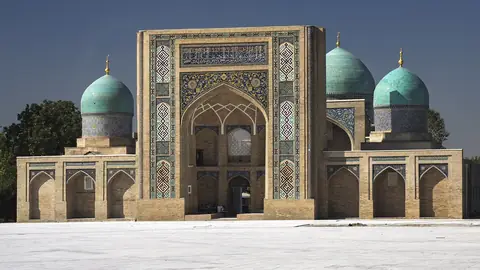
Entering Uzbekistan
Which passports enter Uzbekistan without a visa for 30 days, how hotel registration works, what to declare at customs, and the border and photography advice to follow.
Read the guide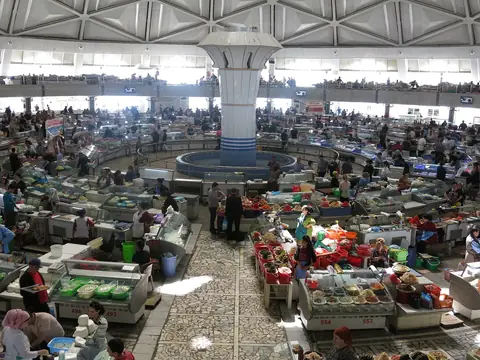
Health and safety in Uzbekistan
Where governments draw lines along Uzbekistan's borders, the numbers to save, hospitals and insurance, vaccines and rabies, heat, smog, night roads and the laws.
Read the guide
Money and payments in Uzbekistan
Paying in Uzbekistan: which dollars to bring, where changing money is legal, where cards and ATMs work, card-only payments, tourist tax, Tax Free and customs.
Read the guide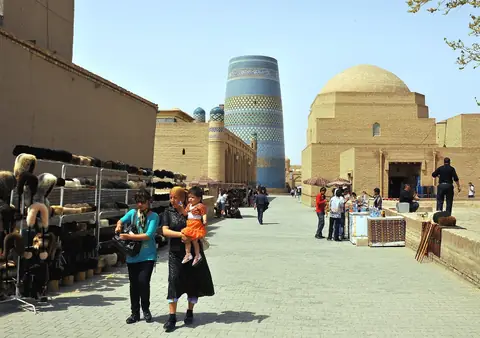
Solo female travel in Uzbekistan
Travelling alone as a woman in Uzbekistan: the UK, German and French advice, landing in Tashkent at night, taxis and night trains, mosque dress and 1173.
Read the guideSources and checks before you travel
(45)
- Ministry of Foreign Affairs of Uzbekistan: visa regime ↗ — opens in a new tab
- UK FCDO: Uzbekistan entry requirements ↗ — opens in a new tab
- UK FCDO: Uzbekistan safety and security ↗ — opens in a new tab
- Germany’s Foreign Office (Auswärtiges Amt): Uzbekistan travel advice ↗ — opens in a new tab
- France Diplomatie: Ouzbékistan, sécurité ↗ — opens in a new tab
- France Diplomatie: Ouzbékistan, entrée et séjour ↗ — opens in a new tab
- Uzbekistan Tourism: travel tips ↗ — opens in a new tab
- Uzbekistan Tourism: Sherdor Madrasah ↗ — opens in a new tab
- Uzbekistan Tourism: Gur-Emir ↗ — opens in a new tab
- Uzbekistan Tourism: Poi-Kalon ↗ — opens in a new tab
- Uzbekistan Tourism: Kalta Minor ↗ — opens in a new tab
- Uzbekistan Tourism: Islam Khoja Minaret ↗ — opens in a new tab
- Uzbekistan Tourism: Khazrati-Imam ensemble ↗ — opens in a new tab
- Uzbekistan Tourism: Samarkand ↗ — opens in a new tab
- Uzbekistan Tourism: Bukhara ↗ — opens in a new tab
- Uzbekistan Tourism: Khiva ↗ — opens in a new tab
- Uzbekistan Tourism: Ak-Saray ↗ — opens in a new tab
- Uzbekistan Tourism: Kok-Gumbaz Mosque ↗ — opens in a new tab
- Uzbekistan Tourism: Fergana ↗ — opens in a new tab
- Savitsky Museum, Nukus (Karakalpakstan Tourism) ↗ — opens in a new tab
- Uzbekistan Airports: international airports list ↗ — opens in a new tab
- O‘ztemiryo‘lyo‘lovchi: train timetable ↗ — opens in a new tab
- O‘ztemiryo‘lyo‘lovchi: timetable changes notice ↗ — opens in a new tab
- Uzbekistan Tourism Committee: Bukhara–Khiva trains ↗ — opens in a new tab
- Khiva city administration: Urgench Airport train ↗ — opens in a new tab
- Uzbekistan Airways: updated tariffs ↗ — opens in a new tab
- O‘ztemiryo‘lyo‘lovchi: 60-day ticket sales ↗ — opens in a new tab
- Registan Ensemble: director interview ↗ — opens in a new tab
- State Museum of History of Uzbekistan: visitor tariff ↗ — opens in a new tab
- Bukhara museum-reserve: ticket prices ↗ — opens in a new tab
- STANTOURS: Shahrisabz day tour from Samarkand ↗ — opens in a new tab
- Beeline: Hello plans for foreigners ↗ — opens in a new tab
- Beeline: tariff notice of 3 October 2025 ↗ — opens in a new tab
- Beeline: eSIM ↗ — opens in a new tab
- Beeline: sales offices ↗ — opens in a new tab
- UZIMEI: about the system ↗ — opens in a new tab
- Ipoteka Bank: exchange rates ↗ — opens in a new tab
- Beshqozon: online menu ↗ — opens in a new tab
- Cabinet of Ministers Resolution 475, Annex 1 (lex.uz): tourist tax rates ↗ — opens in a new tab
- Anhor.uz: train fares raised by 15% (Russian) ↗ — opens in a new tab
- Kursiv: Afrosiyob ticket prices to rise 15% from February 2026 ↗ — opens in a new tab
- Silk Road Tour: entrance tickets and prices in Uzbekistan ↗ — opens in a new tab
- Uzbekistan Railways: Afrosiyob tariff notice ↗ — opens in a new tab
- Yandex Taxi: Start tariff, Bukhara ↗ — opens in a new tab
- Decree PF-115 of 23 June 2026 (lex.uz): base calculation amount ↗ — opens in a new tab
Reference sources for the version dated 10 November 2026. Confirm opening times, access, transport and conditions for your travel dates.
Photo credits
(4)
The Barak Khan Madrasa, one of the buildings of the Khast Imam complex, has a dome on either side of its portal.
Photograph: Bgag — opens in a new tab · CC0 — opens in a new tab
Changes: Resized and converted to WebP; displayed with responsive crops. · Original photograph and licence details ↗ — opens in a new tab
The dome of the Pakhlavan Mahmoud Mausoleum stands beside the Islam Khodja Minaret in Khiva.
Photograph: Bgag — opens in a new tab · CC0 — opens in a new tab
Changes: Resized and converted to WebP; displayed with responsive crops. · Original photograph and licence details ↗ — opens in a new tab
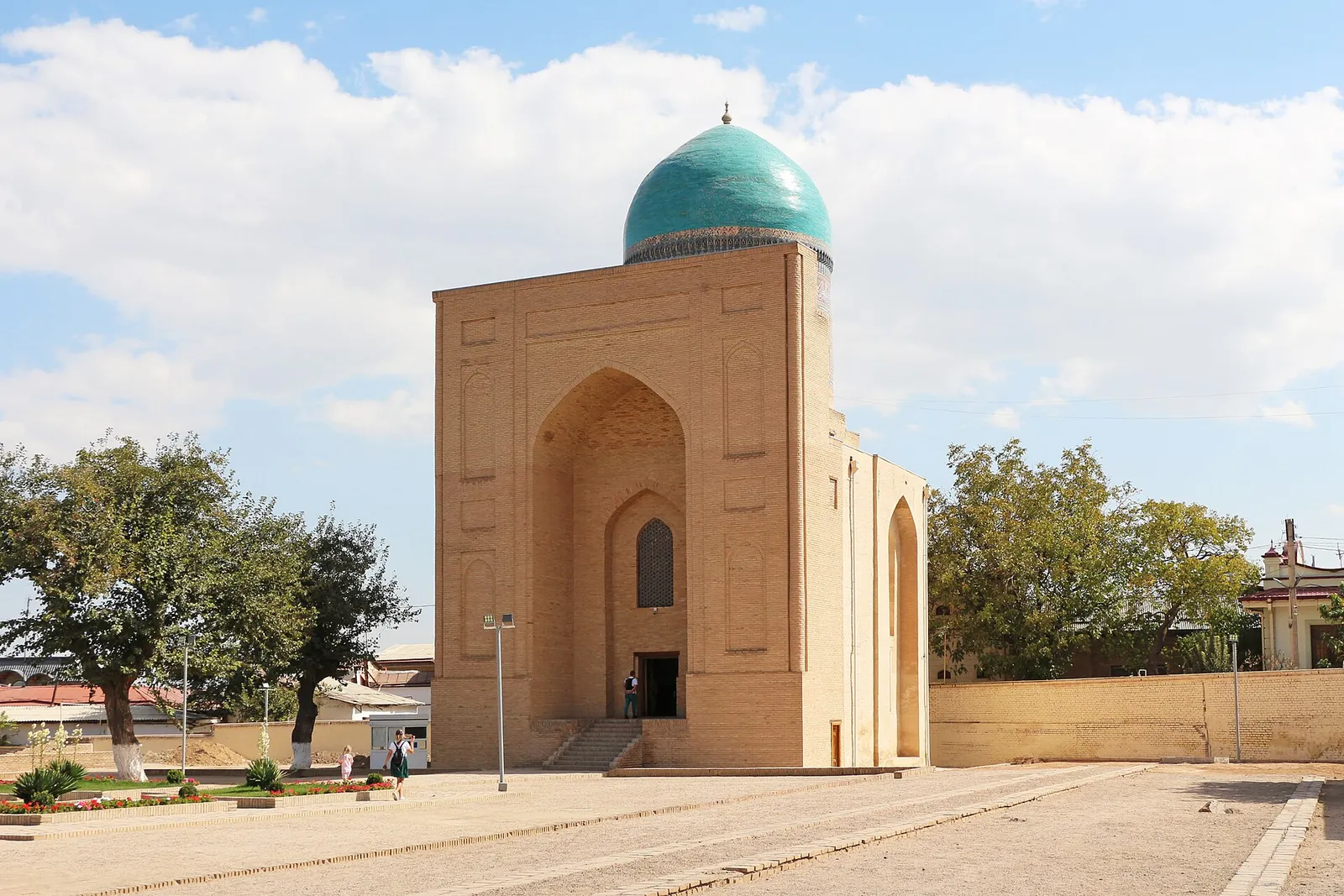
The mausoleum at Bibi-Khanym has a turquoise dome on a tall brick portal.
Photograph: Bgag — opens in a new tab · CC0 — opens in a new tab
Changes: Resized and converted to WebP; displayed with responsive crops. · Original photograph and licence details ↗ — opens in a new tab
The Kalyan minaret and the turquoise dome of the Mir-i-Arab madrasa stand side by side in Bukhara.
Photograph: Bgag — opens in a new tab · CC0 — opens in a new tab
Changes: Resized and converted to WebP; displayed with responsive crops. · Original photograph and licence details ↗ — opens in a new tab