Plan your trip · Indonesia
Getting around Indonesia: flights, Java's trains, Whoosh, Grab and drivers
Indonesia is an archipelago, and that one fact decides most of a travel plan. No bridge or tunnel links Java with Sumatra, Bali or the islands further east, so any long jump, from Java to Bali's neighbours, Flores, Sumatra or Sulawesi, is either a flight or a long sea crossing. Java is the exception on land: it has the country's only dense railway network and, since 2023, the high-speed Whoosh line between Jakarta and Bandung. In the cities and on Bali, most visitors move by ride-hailing app, metered taxi or a car with a driver. This guide shows how to combine those pieces and what the journeys between islands really involve.
- Suggested time
- Plan a travel day for each island change; on two weeks, expect two or three domestic flights and one or two long train journeys
- Where to stay
- Central Jakarta near Gambir station, Yogyakarta near Tugu station, and South Bali near Ngurah Rai airport
- Season and timing
- Any time, but the dry season (roughly April to October on Java and Bali) is easier on roads and boats; avoid long journeys around Idul Fitri, and note that Bali's airport closes for 24 hours on Nyepi.
The short answer
Fly the long legs between islands, and use the ground for Java and for short hops. On a two-week first trip, that usually means flying into Jakarta (CGK) or Bali (DPS), crossing Java by KAI train (Jakarta to Yogyakarta is a long day of seven to eight hours, against a flight of under an hour), and flying from Java or Bali to Lombok or Labuan Bajo. Use the Whoosh only if Bandung is on the route. Sleep near the station or airport you leave from, such as Gambir in Central Jakarta or Malioboro in Yogyakarta, so that early departures are not hostage to traffic. In cities, book Grab, Gojek or a Bluebird taxi in the app; for day trips and on Bali, hire a car with a driver rather than driving yourself. Keep one buffer day before any international flight.
Think in islands: fly the long legs
Distances in Indonesia are measured in seas, not kilometres. The Ministry of Tourism names Soekarno-Hatta (CGK) on the edge of Jakarta and Ngurah Rai (DPS) on Bali as the principal gateways, with Juanda in Surabaya, Hasanuddin in Makassar and Kualanamu at Medan also handling international flights. Almost every trip starts at one of them, and the useful question is which legs to fly from there.
The Ministry's own journey times show why flying wins between islands. From Bali, Lombok is about 30 minutes by air and Labuan Bajo, the gateway to Komodo, about 1 hour 20 minutes; from Jakarta, Lombok is about two hours. Labuan Bajo has direct flights from Jakarta, Denpasar and Surabaya. Overland, the same jumps take far longer: the Ministry gives four to five hours for the car ferry from Padang Bai on Bali to Lembar on Lombok alone, and Wikivoyage describes the combined bus-and-ferry route from Lombok to Labuan Bajo as more than 24 hours.
For North Sumatra, the Ministry points to flights from Kualanamu or direct from Jakarta to Sisingamangaraja XII airport (formerly Silangit) near Lake Toba, rather than the 176 km road from Medan, which public buses cover in under six hours. Wikivoyage lists Garuda Indonesia as the full-service carrier, with Lion Air, Citilink, Indonesia AirAsia and others on low-cost routes and smaller propeller airlines on remote ones. Book the long legs first and build the ground transport around them.
- Fly: Java to Lombok, Labuan Bajo, Sumatra, Sulawesi or Kalimantan; Bali to Labuan Bajo; any leg that would otherwise need an overnight ferry.
- Train: along Java, between Jakarta, Bandung, Yogyakarta, Solo, Semarang and Surabaya, and on to Banyuwangi for Bali.
- Car with driver or ferry: short regional legs such as Bali to Lombok by sea, Yogyakarta to Borobudur, or Medan to Lake Toba if you would rather not connect flights.
Java by train: KAI and the Access by KAI app
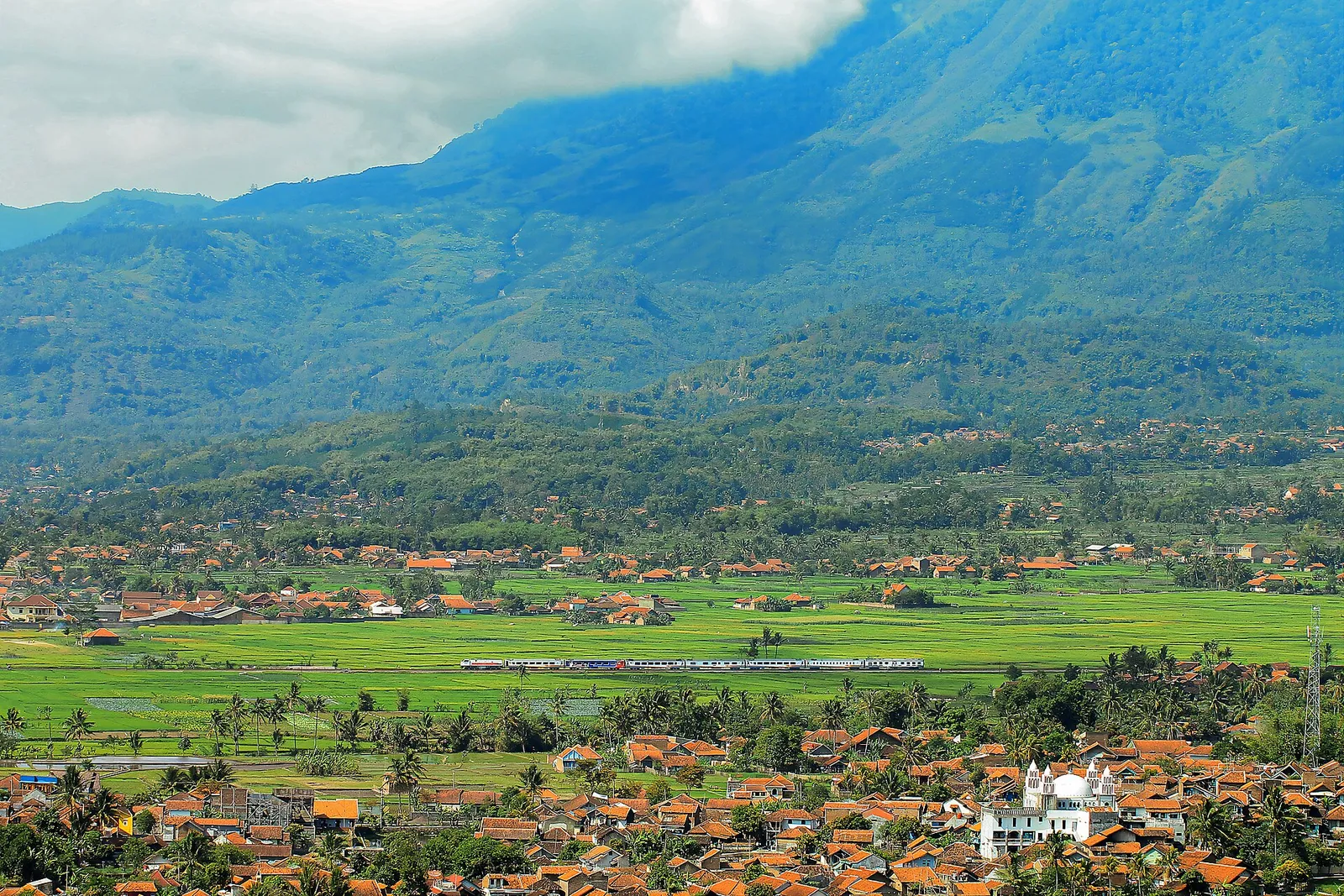
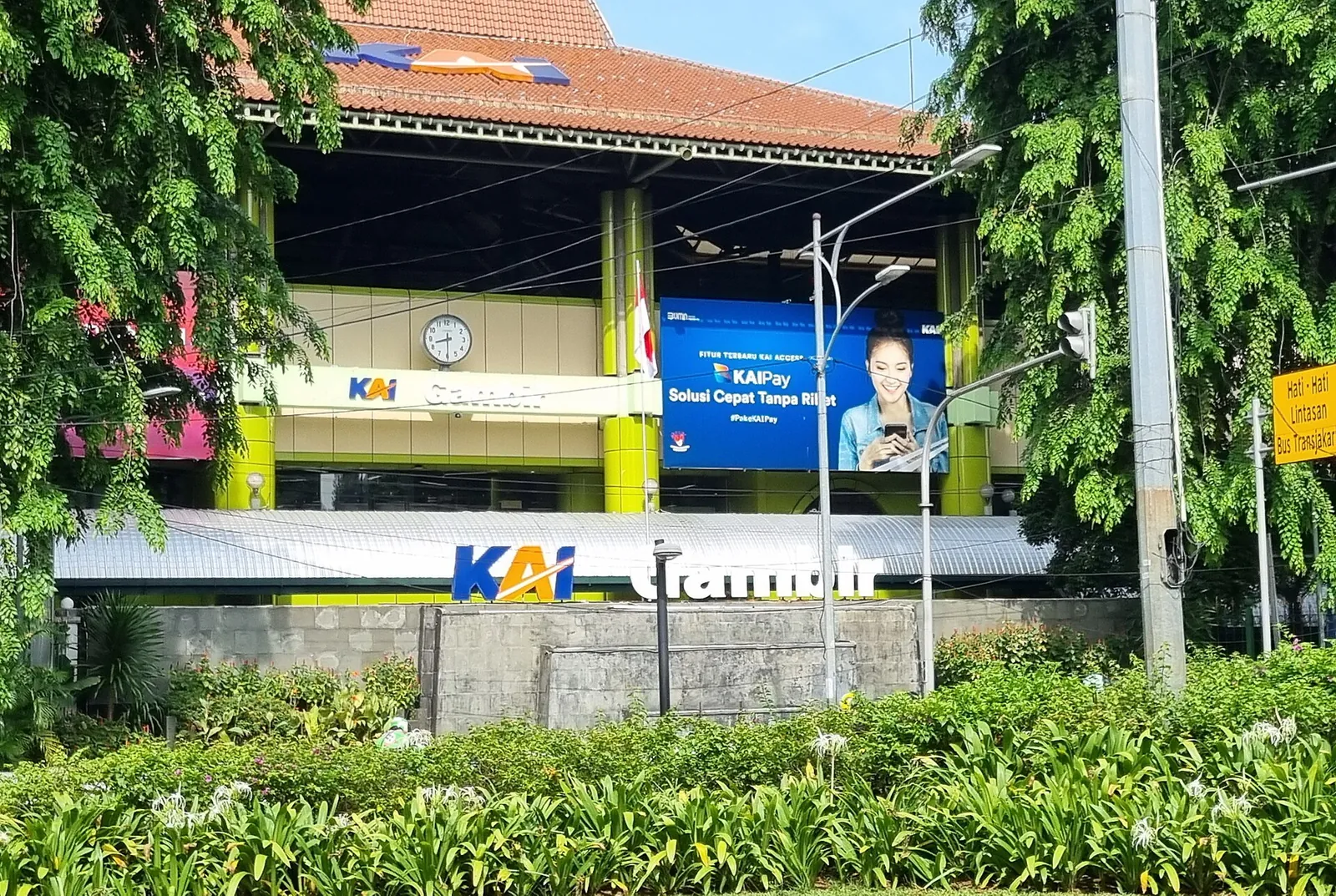
Java has by far the best railway network in Indonesia. The national operator, PT Kereta Api Indonesia (KAI), runs long-distance trains linking Jakarta with Bandung, Yogyakarta, Solo, Semarang and Surabaya. In Jakarta, many of these trains use Gambir station in the centre: when KAI announced extra trains for 8 September 2026, all nine ran between Gambir and Malang, Solo, Yogyakarta, Semarang Tawang or Surabaya Pasarturi.
Allow real time for the train. Wikivoyage gives at least seven hours, and about eight on the fastest Argo-class trains, for the 514 km from Jakarta to Yogyakarta; the Ministry of Tourism puts Jakarta to Bandung at about three hours on the conventional line. The trade-off is that a train runs station to station, avoids the toll-road jams, and crosses the mountains of central Java in daylight. Wikivoyage describes the classes as Eksekutif (reclining seats, cold air-conditioning, so bring a layer), Bisnis and Ekonomi, with a luxury class on some trains.
Book in the Access by KAI app, which KAI says handles booking, seat choice, self check-in, cancellation, rescheduling and a trip planner; nearly three-quarters of KAI's long-distance and local tickets in the first half of 2026 were sold through it. Long-distance stations increasingly use face-recognition boarding gates. Wikivoyage reports that foreign cards are sometimes refused on KAI's own channels and suggests Tiket.com as an alternative; either way, enter your name exactly as in your passport and arrive early.
Outside Java the picture changes. KAI does run trains in Sumatra, including at Medan and from Minangkabau International Airport near Padang, but Wikivoyage notes that the Sumatran lines are not connected to each other. Bali has no railway at all; the trains stop at Ketapang station near Banyuwangi, about 200 metres from the ferry to Gilimanuk on Bali.
Make time for the local food
What to eat and where to look

Arem-arem
Rice packed into a banana-leaf roll around a savoury filling, often spiced vegetables or chicken, then steamed. It keeps for a few hours, needs no cutlery and is one of the easiest things to carry onto a long train or into a car.
- Where to look
- Market stalls, bakeries and snack sellers in Java's towns, often near stations and bus terminals in the morning.
- Fit it into your day
- Buy two or three on the way to an early train or a long drive.
Fillings vary and may include meat, egg or shrimp paste; ask what is inside if you have restrictions, and eat it the same day.
Nasi goreng
Fried rice with sweet soy sauce, garlic, shallots and chilli, usually topped with a fried egg and served with crackers and pickles. It is on nearly every menu in the country, from street carts to airport cafés, which makes it a dependable meal on a travel day.
- Where to look
- Evening street carts and simple warung near hotels, and restaurants in stations and airport terminals.
- Fit it into your day
- A quick dinner after a late arrival, or a sit-down meal before a long train journey.
Often contains shrimp paste, fish sauce or chicken; ask for it 'tidak pedas' if you want less chilli.
Bakpia
Small flaky pastries filled with sweetened mung-bean paste, closely tied to Yogyakarta, where many families buy boxes to take home. They travel well in a bag on a train or plane.
- Where to look
- Bakpia shops in Yogyakarta, especially in the Pathuk area and around Malioboro, and at stations and the airport.
- Fit it into your day
- A snack for the journey out of Yogyakarta, or a gift to take on to the next stop.
Contains wheat; check the filling, as chocolate, cheese and other flavours are sold alongside the classic mung bean.
Nasi campur
A plate of rice with a choice of small portions of vegetables, tempeh, egg, meat or fish, picked from a display. It lets you eat a proper meal quickly in a terminal or a roadside stop during a long drive.
- Where to look
- Warung with a glass food counter at bus terminals, toll-road rest areas, ferry ports and markets across the country.
- Fit it into your day
- Lunch on a road day with a driver; point at what you want and pay at the end.
Dishes may have sat out for some hours; choose busy places with food that is hot or freshly replenished. Ask about pork on Bali.
Whoosh: the high-speed line between Jakarta and Bandung
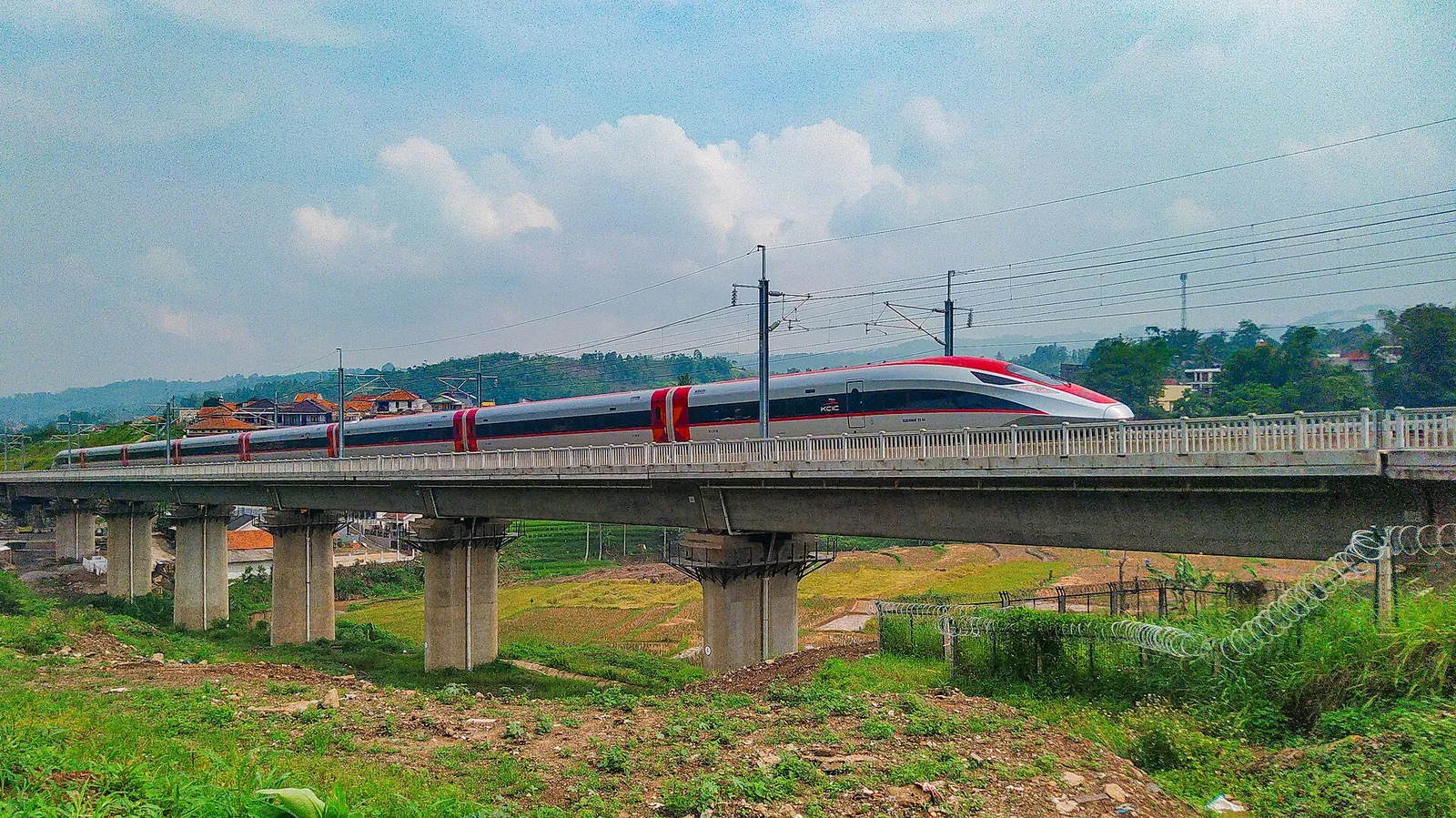
The Whoosh is Indonesia's first high-speed railway, run by KCIC. The operator gives a top speed of 350 km/h and a Jakarta–Bandung journey of about 36 to 44 minutes, with a train every 20 to 30 minutes. It serves four stations: Halim in East Jakarta, Karawang, Padalarang and Tegalluar Summarecon. Neither end is in a city centre, which matters more than the speed: allow for the ride to Halim in Jakarta traffic, and in Bandung take the KA Feeder train from Padalarang to Bandung's main station, timed to the Whoosh departures (since March 2026 its waiting room at Bandung station is on the west side, reached through the North Gate from Jalan Kebon Kawung), or use Tegalluar Summarecon if your hotel is on that side of the city.
When we checked on 2026-10-03, KCIC's ticket page said online sales (the Whoosh app and ticket.kcic.co.id) open 14 days before departure and close 30 minutes before; station counters sell from 14 days to 15 minutes before departure, by cash, card or QRIS, and vending machines take QRIS only. Registration asks for your nationality and passport details. KCIC also sells through Access by KAI, banking apps, Tiket.com, Traveloka and Trip.com.
Boarding opens 30 minutes before departure and closes five minutes before, and KCIC states that a ticket for a missed train cannot be refunded or used on the next one. For the feeder, show your Whoosh ticket and take the feeder that matches your Whoosh departure. KCIC notes that many visitors arriving by air still buy at the station because of flight delays and airport traffic; that is a sensible way to avoid losing a ticket, as long as you do not travel on a busy weekend or holiday.
In cities: Grab, Gojek, Bluebird and Jakarta's rail
For door-to-door trips in Jakarta, Yogyakarta, Surabaya, Bali and most other cities, ride-hailing apps are the default. Grab and Gojek both offer cars (GrabCar, GoCar) and motorbike taxis (GrabBike, GoRide); Wikivoyage notes that a car usually takes up to four passengers and a motorbike only one, with little room for luggage. The UK government advises using only registered taxi companies such as Bluebird, Silverbird or Express, checking that the driver is the person shown in the app, sharing your journey, and ignoring drivers who approach you in the street claiming to work for an app.
In Jakarta, rail can beat the roads at rush hour. The Ministry of Tourism describes the MRT line running 16 km from Bundaran HI to Lebak Bulus, with tap-in and tap-out payment by bank e-money card, MRT card or JakLingko card, and Transjakarta buses that do not accept cash; a JakLingko card also works on the LRT and commuter lines. For Soekarno-Hatta, the Ministry recommends the airport train from central Jakarta to avoid congestion on the Sedyatmo toll road.
Smaller towns rely on angkot minibuses, becak pedicabs and traditional ojek (motorbike taxis). They are cheap but unmetered, so agree the fare before you set off, or simply book through an app where it works.
Private drivers, buses and driving yourself
Where trains do not reach, a car with a driver is the most practical answer for most visitors: on Bali, for Borobudur or Bromo from Java's cities, and for Lake Toba from Medan, where the Ministry notes that travel agents arrange rental cars with chauffeurs. Book through your hotel or a known agency, agree what the day includes (hours, fuel, tolls, parking and the driver's meals), and do not plan more than one long drive a day.
Driving yourself is rarely worth it. The UK government says a UK licence alone is not valid and an International Driving Permit is needed, that traffic discipline is very poor, and that moped and motorbike accidents, some fatal, have risen sharply in Bali. It adds that foreigners involved in even minor accidents may be vulnerable to extortion, that you must wait for the police after an accident, and suggests hiring a car with a driver instead. If you do ride a scooter, wear a good helmet and check that your insurance covers it. Check the licence rules for your own nationality before you travel.
Long-distance buses and minibus shuttles (called *travel*) fill the gaps between towns, and Wikivoyage says many run overnight. They are cheap, but treat them as a fallback: overnight road journeys are tiring, the UK government warns of thieves on public transport and at transport hubs, and in many cases a short flight or a daytime train makes better use of the trip. If you rent a car on Java's toll roads, the Ministry's road-trip tips remind drivers that tolls are paid with a prepaid e-toll card, so top it up before you set off.
Realistic travel times and buffers
Indonesian journeys are rarely the sum of their timetables. The Ministry of Tourism warns that the normally two-hour drive from Jakarta to the Bandung area can take four to six hours at weekends and on holidays, and the UK government notes that flooding can block roads in Jakarta and Bali, including the main toll road to Soekarno-Hatta, and that volcanic ash can disrupt flights and regional airports. Sea conditions change quickly, and the UK advice is to check for life jackets and avoid boat trips after dark unless the vessel is properly equipped.
Holidays reshape the network. The Ministry says Idul Fitri is usually extended into seven to ten days of collective leave as families travel home, so trains, flights and roads fill up across the country; book well ahead or avoid long journeys then. On Bali, Nyepi (the Day of Silence, in March or April) closes Ngurah Rai airport and all transport on the island for 24 hours. The figures below are the published estimates we found; treat them as minimums, not plans.
- Jakarta–Bandung: about 36–44 minutes by Whoosh between Halim and Padalarang or Tegalluar (KCIC), plus the transfers at each end; about three hours by conventional train (Ministry of Tourism).
- Jakarta–Yogyakarta: at least seven hours by train, about eight on the fastest trains, or a flight of about 50 minutes to Yogyakarta International Airport (Wikivoyage), which is outside the city.
- Surabaya–Banyuwangi (for Bali): about six hours by train to Ketapang, then a ferry of about 45 minutes to Gilimanuk, running 24 hours a day (Wikivoyage).
- Bali–Lombok: about 30 minutes by air, or four to five hours on the Padang Bai–Lembar car ferry (Ministry of Tourism).
- Bali–Labuan Bajo: about 1 hour 20 minutes by air (Ministry of Tourism); overland from Lombok, more than 24 hours (Wikivoyage).
- Medan–Lake Toba (Parapat): 176 km, under six hours by public bus (Ministry of Tourism), or a flight to Sisingamangaraja XII airport.
Practical questions
Is it better to take the train or fly from Jakarta to Yogyakarta?
Fly if you are short of time: the flight takes about 50 minutes, though Yogyakarta International Airport is outside the city. The train takes at least seven hours but runs centre to centre, from Gambir to Yogyakarta, and crosses the mountains of central Java. On a two-week trip, many travellers take the train one way for the experience.
How do I buy Whoosh high-speed train tickets?
In the Whoosh app or at ticket.kcic.co.id from 14 days to 30 minutes before departure, at station counters until 15 minutes before, or through partners such as Access by KAI, Traveloka, Tiket.com and Trip.com. Register with your passport. Boarding closes five minutes before departure, and a missed train cannot be refunded.
Can you use Grab and Gojek in Indonesia?
Yes, both offer cars and motorbike taxis in Jakarta, Bali and most cities. The UK government advises checking that the driver matches the app, sharing your journey, and avoiding drivers who approach you claiming to work for an app. Bluebird is the best-known metered taxi company.
Can I drive or rent a scooter in Indonesia?
Only with the right licence: the UK government says a UK licence alone is not valid and an International Driving Permit is needed. It describes traffic discipline as very poor and warns of a sharp rise in moped accidents on Bali, so most visitors are better off hiring a car with a driver. Check the rules for your nationality and your insurance cover.
How do I get from Bali to Lombok?
The quickest way is a flight of about 30 minutes. By sea, the car ferry from Padang Bai to Lembar takes four to five hours, according to the Ministry of Tourism. Wikivoyage lists fast boats from Bali to the Gili Islands, most also stopping on Lombok, but warns that they are more accident-prone than the slow ferries in heavy seas; do not board if the weather or the boat looks wrong.
Is there a train on Bali?
No. Bali has no railway. The nearest station is Ketapang near Banyuwangi in East Java, about 200 metres from the ferry to Gilimanuk on Bali. On the island, use a car with a driver, a ride-hailing app or a taxi.
Sources and checks before you travel
Reference sources for the version dated 3 October 2026. Confirm opening times, access, transport and conditions for your travel dates.
- Ministry of Tourism (indonesia.travel): Getting to Indonesia ↗ — opens in a new tab
- Ministry of Tourism: 11 remarkable international-class airports in Indonesia ↗ — opens in a new tab
- Ministry of Tourism: Lombok – Mandalika ↗ — opens in a new tab
- Ministry of Tourism: Road trip from Bali to the Mandalika circuit ↗ — opens in a new tab
- Ministry of Tourism: Seafront hotels in Labuan Bajo ↗ — opens in a new tab
- Ministry of Tourism: Lake Toba ↗ — opens in a new tab
- Ministry of Tourism: Lembang (Bandung) ↗ — opens in a new tab
- Ministry of Tourism: Commuting options around Jakarta (MRT, Transjakarta) ↗ — opens in a new tab
- Ministry of Tourism: Trans-Java road trip tips ↗ — opens in a new tab
- Ministry of Tourism: Business hours and holidays ↗ — opens in a new tab
- Ministry of Tourism: Weather, climate and seasons ↗ — opens in a new tab
- KCIC: Whoosh tickets and schedule ↗ — opens in a new tab
- KCIC: official site ↗ — opens in a new tab
- KCIC press release: new KA Feeder waiting area at Bandung station (27 February 2026) ↗ — opens in a new tab
- KCIC press release: Whoosh and Malaysian visitors (13 September 2026) ↗ — opens in a new tab
- KAI: Access by KAI ↗ — opens in a new tab
- KAI news: From the ticket counter to one app ↗ — opens in a new tab
- KAI news: Nine extra trains (8 September 2026) ↗ — opens in a new tab
- KAI news: Foreign visitors on Sumatra's trains ↗ — opens in a new tab
- Grab Indonesia: transport services ↗ — opens in a new tab
- UK FCDO travel advice: Indonesia safety and security ↗ — opens in a new tab
- Wikivoyage: Indonesia (Get around) ↗ — opens in a new tab
- Wikivoyage: Yogyakarta ↗ — opens in a new tab
- Wikivoyage: Banyuwangi ↗ — opens in a new tab
- Wikivoyage: Lombok ↗ — opens in a new tab
- Wikivoyage: Flores ↗ — opens in a new tab
Does this experience fit your route?
Not keen on stitching trains and cars together yourself? Compare day trips with transport included from Jakarta, Yogyakarta and Bali, and check the pickup point and vehicle before you book.
Browse relevant experiences on Viator ↗ — opens in a new tabAffiliate link · Book with ViatorPhoto credits
The Whoosh high-speed train on its viaduct near Ngamprah, West Bandung Regency, on the Jakarta–Bandung line
Photograph: NFarras for Transport for Bandung — opens in a new tab · CC BY-SA 4.0 — opens in a new tab
Changes: Resized and converted to WebP; displayed with responsive crops. · Original photograph and licence details ↗ — opens in a new tab
An Argo Wilis train, one of KAI's executive-class services on Java, passing rice fields
Photograph: MAtra Pictures — opens in a new tab · CC BY-SA 4.0 — opens in a new tab
Changes: Resized and converted to WebP; displayed with responsive crops. · Original photograph and licence details ↗ — opens in a new tab
Gambir station in Central Jakarta, the terminus for many long-distance trains to Yogyakarta, Solo, Semarang and Surabaya
Photograph: Irvan Cahyo N — opens in a new tab · CC BY-SA 4.0 — opens in a new tab
Changes: Resized and converted to WebP; displayed with responsive crops. · Original photograph and licence details ↗ — opens in a new tab
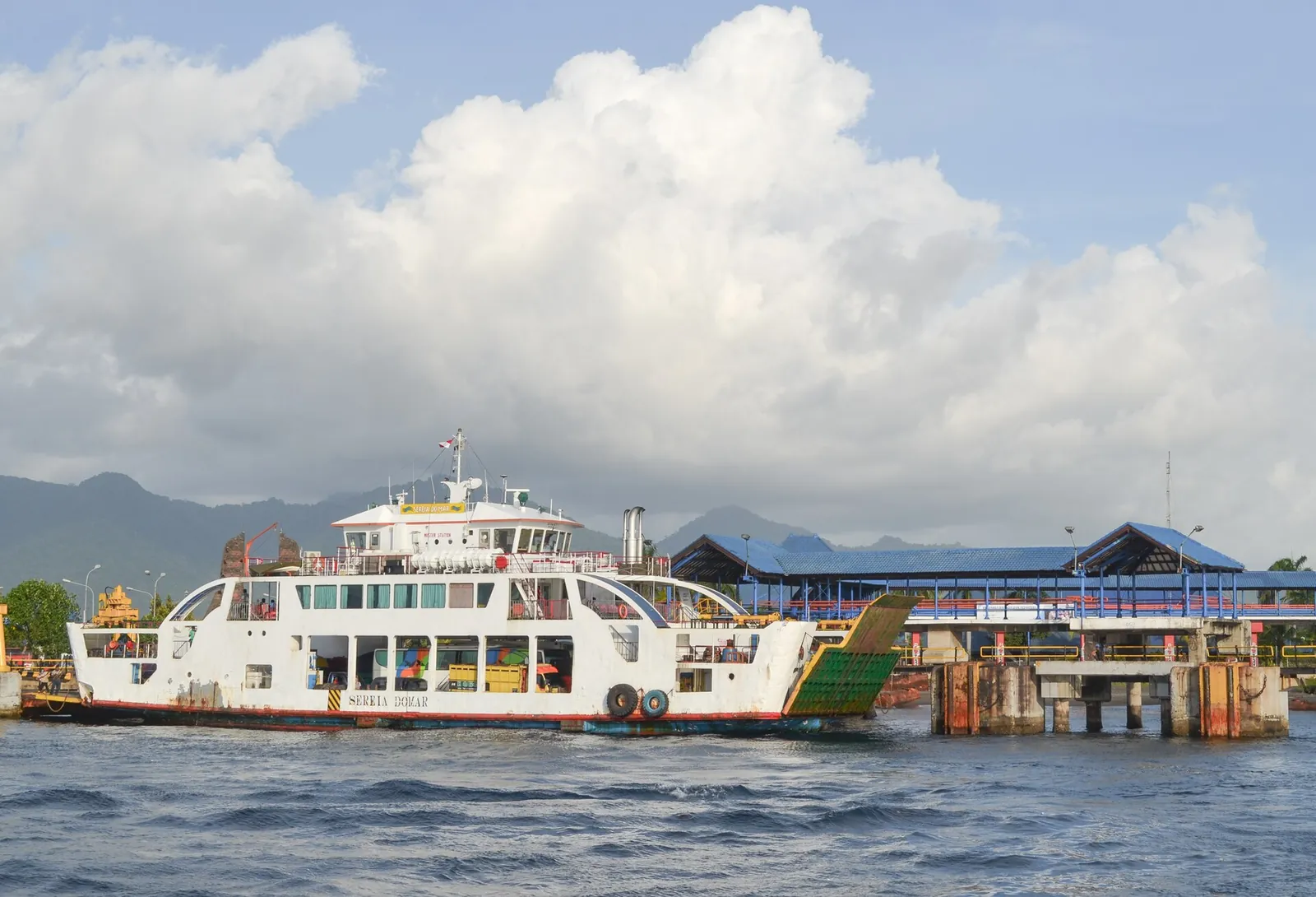
A car ferry at the harbour on the Ketapang–Gilimanuk route between Banyuwangi in East Java and Bali
Photograph: Paco Pater — opens in a new tab · CC BY-SA 4.0 — opens in a new tab
Changes: Resized and converted to WebP; displayed with responsive crops. · Original photograph and licence details ↗ — opens in a new tab
Arem-arem, rice rolled around a savoury filling and wrapped in banana leaf, a common snack for the road
Photograph: Midori — opens in a new tab · CC BY 3.0 — opens in a new tab
Changes: Resized and converted to WebP; displayed with responsive crops. · Original photograph and licence details ↗ — opens in a new tab