Kalimantan · Central Kalimantan
Tanjung Puting klotok trip: Camp Leakey orangutans and how many nights
Tanjung Puting is the place in Indonesian Borneo where you watch orangutans from a wooden riverboat rather than on a hard jungle trek. The park covers a low, swampy peninsula of peat swamp and heath forest in Central Kalimantan, and the only practical way in is up the Sekonyer River on a klotok, a slow wooden houseboat on which you eat, sleep and watch the riverbanks for days. Ministry of Forestry records describe it as Indonesia's first conservation area created to protect orangutans. Camp Leakey, the research station founded in 1971, is the reason most people come. Your real decision is how many nights to spend on the river.
- Suggested time
- 2 nights on a klotok (3 days); 1 night at minimum, 3 for a slower trip
- Where to stay
- On the klotok itself; Pangkalan Bun or Kumai only for a night before or after
- Season and timing
- Wikivoyage gives May to September as the relatively dry season; rain falls all year. Wikipedia notes that demand for klotoks peaks in July and August, so book early for those months.
The short answer
Book two nights on a klotok, the three-day, two-night trip that the Central Kalimantan tourism portal recommends: it leaves time for Camp Leakey and at least one quiet evening and morning on the river. One night is possible but rushed. Three nights suits photographers, birdwatchers and anyone who wants unhurried mornings. Sleep on the boat; you cannot overnight at Camp Leakey, and a night in Pangkalan Bun is only useful when your flight lands late or leaves early. Fly into Iskandar Airport (PKN) at Pangkalan Bun and arrange the trip in advance with a local operator, who will usually collect you at the airport and drive you to the harbour at Kumai. The usual package covers the boat, its crew and cook, the guide and the park fees, but check that in writing.
How many nights on the river
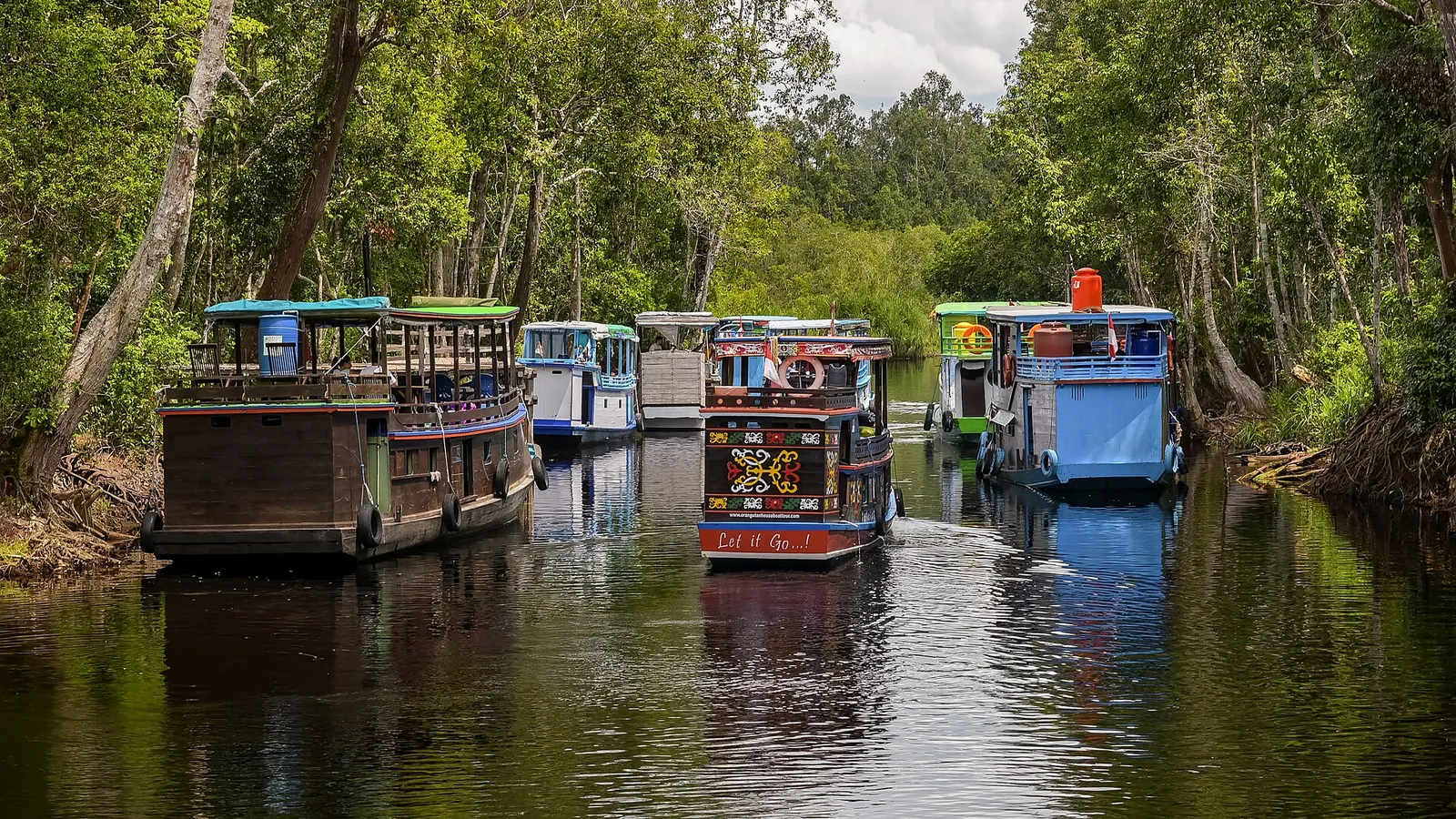
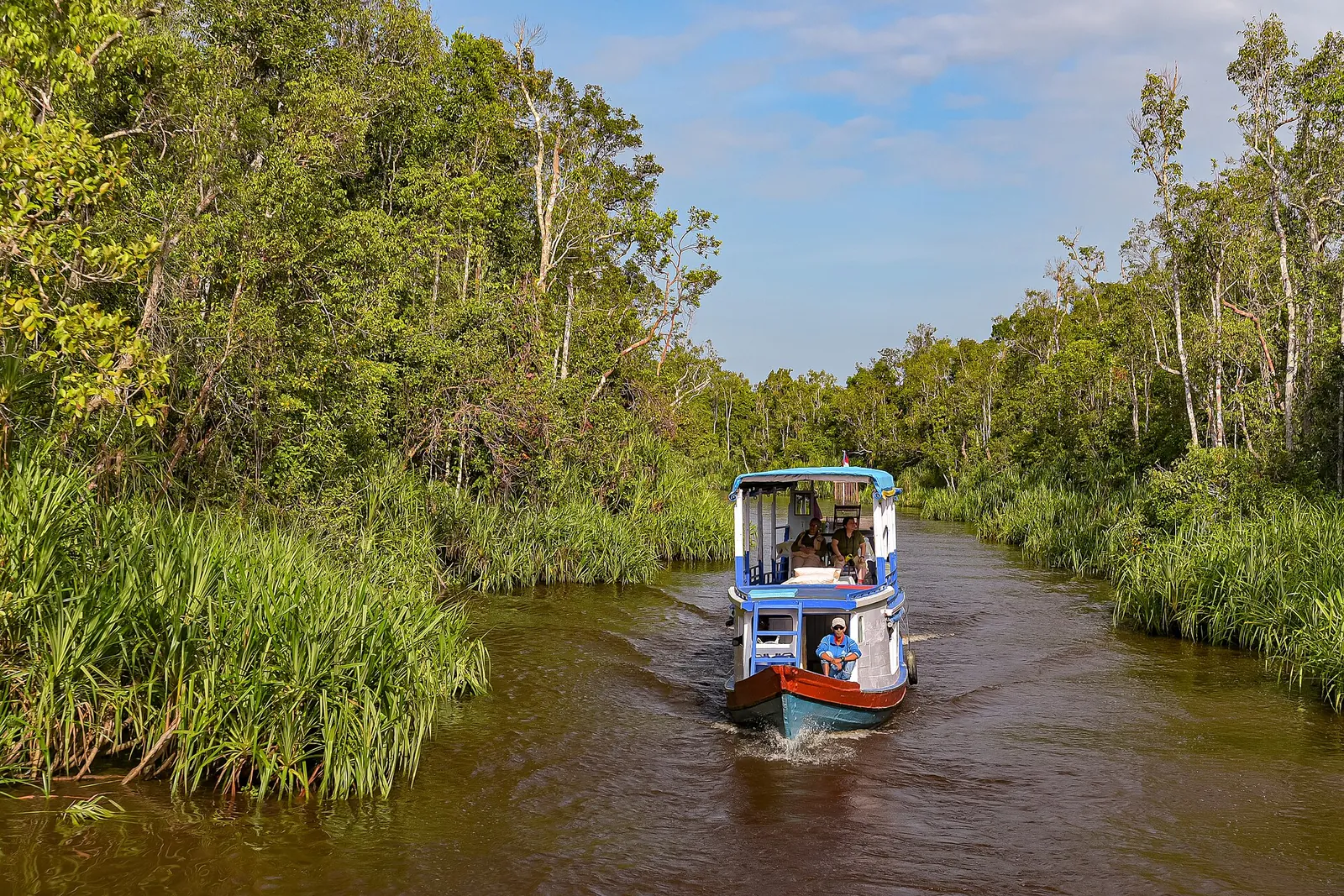
Every visit to Tanjung Puting is built around the boat. The Ministry of Tourism explains that you travel down the Sekonyer River from Pangkalan Bun and that the boats accommodate you for the duration of your stay. The Central Kalimantan tourism portal describes the klotok as a modified traditional wooden boat with mattresses and mosquito nets on the upper deck, a simple bathroom and a dining area. You fall asleep and wake up to the sounds of the forest. The choice you make when booking is not where to stay, but how long to stay on board.
One night (two days) gets you to Camp Leakey and back, but most of the trip is spent moving. English Wikipedia puts the journey from Kumai to Camp Leakey at about an hour and a half *by speedboat, at best*; a klotok is far slower, which is the point of it. Two nights (three days) is the trip the provincial tourism portal recommends: it leaves time to visit the feeding stations without rushing, and gives you at least one evening on the river, when the provincial portal says proboscis monkeys gather in the riverside trees. Three nights is for photographers, birdwatchers and travellers who want to sit still. The Orangutan Foundation International writes that the place only really captivates you after the fourth or fifth day.
Whatever the length, compare what each operator includes before you pay. The provincial portal says the cost of a trip combines the park entrance fee, the klotok hire with meals and accommodation, and the guide, and that local agents usually arrange all three as one package.
- 1 night: Camp Leakey plus one other stop; mostly travelling. Only if your time in Borneo is very short.
- 2 nights: the standard trip, with two or three feeding stations and evenings on the river.
- 3 nights: slower days, more time on the river banks and on forest walks with your guide.
- Before paying, ask whether the park fees, the guide, all meals, drinking water and the airport transfer are included.
Camp Leakey and the feeding stations
Camp Leakey was founded in 1971 by Biruté Galdikas and Rod Brindamour and named after the anthropologist Louis Leakey, Galdikas's mentor, according to the Orangutan Foundation International (OFI), which still runs research there. It began as two huts and is now a group of wooden buildings used by scientists, staff, students and park rangers. OFI says the station welcomes day visitors who come with local guides and the right permits. You must check in with the rangers and keep a safe distance from the orangutans. Visitors are not allowed to stay overnight, so you return to your klotok at the end of the day. The camp lies on the Sekonyer Kanan, a branch of the main river.
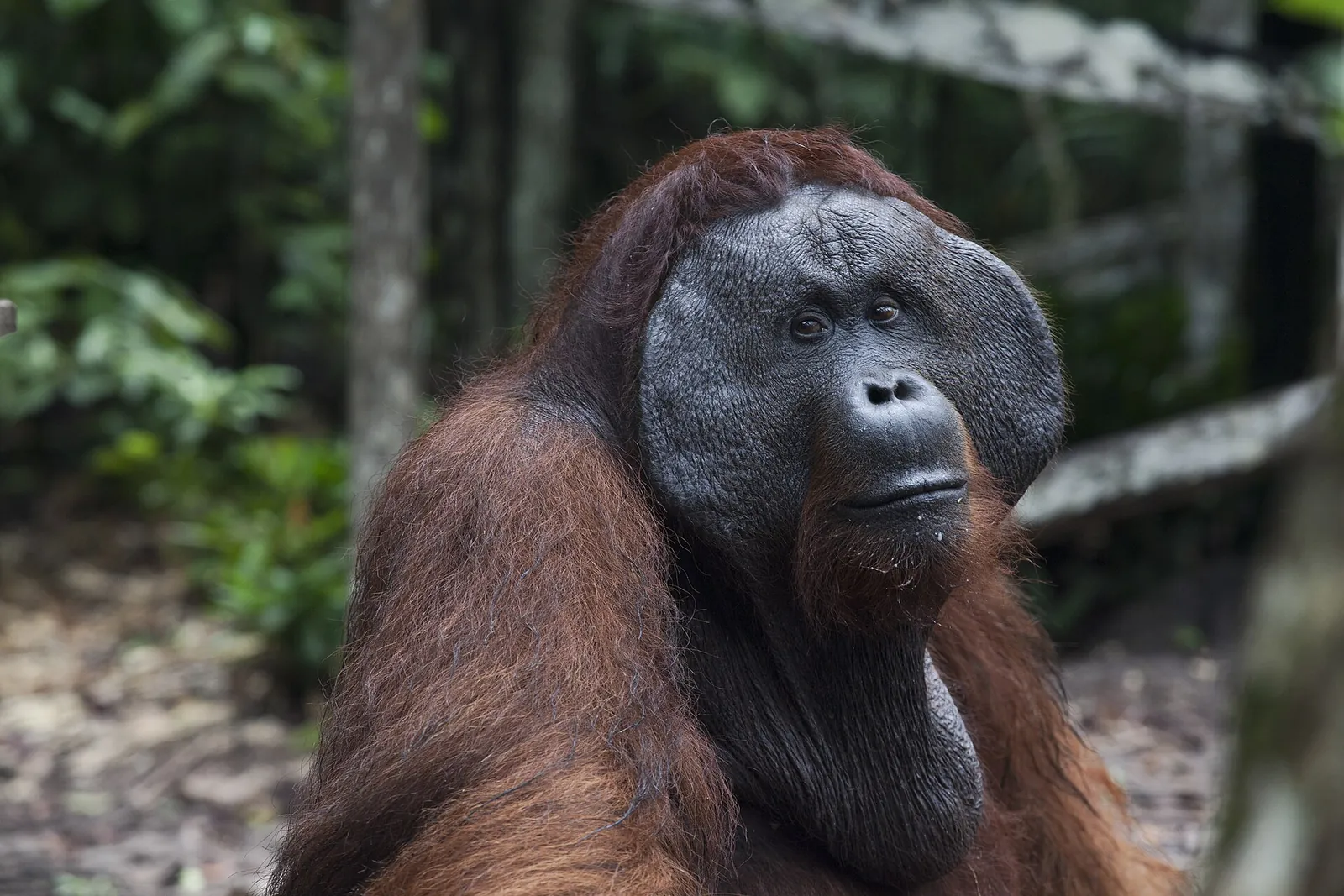
The Ministry of Tourism describes daily feedings at Camp Leakey and at Pondok Tangui (also spelled Tanggui), a rehabilitation centre for ex-captive orangutans. The Central Kalimantan tourism portal lists three stations in the usual order of a trip. Tanjung Harapan is the closest to Kumai and often the first stop. Pondok Tanggui comes next, where you often see young orangutans and mothers with babies. Camp Leakey is the furthest upriver, and the best place to see large adult males. Rangers put out bananas or milk on a wooden platform and the orangutans come to it, if they choose to.
Feeding times are set by the park and can change, so let your guide plan the boat's timetable around them rather than fixing them yourself. Arrive early, keep quiet and follow the rangers' instructions. OFI asks visitors to observe the orangutans from a safe distance. Never offer them food, and never try to touch one. The Bornean orangutan is listed as Critically Endangered by the IUCN.
Make time for the local food
What to eat and where to look
Juhu singkah (young rattan curry)
A well-known Dayak dish of Central Kalimantan, made with young rattan shoots cut small and cooked with spices, sometimes with fish or prawns. The Ministry of Tourism describes the taste as savoury with a slight bitterness.
- Where to look
- Restaurants serving Dayak food in Central Kalimantan; ask in Pangkalan Bun, or ask your klotok operator whether the cook can prepare it.
- Fit it into your day
- A dinner in Pangkalan Bun before or after the boat trip.
The bitterness is part of the dish; it may contain fish or prawns.
Kalumpe (pounded cassava leaves)
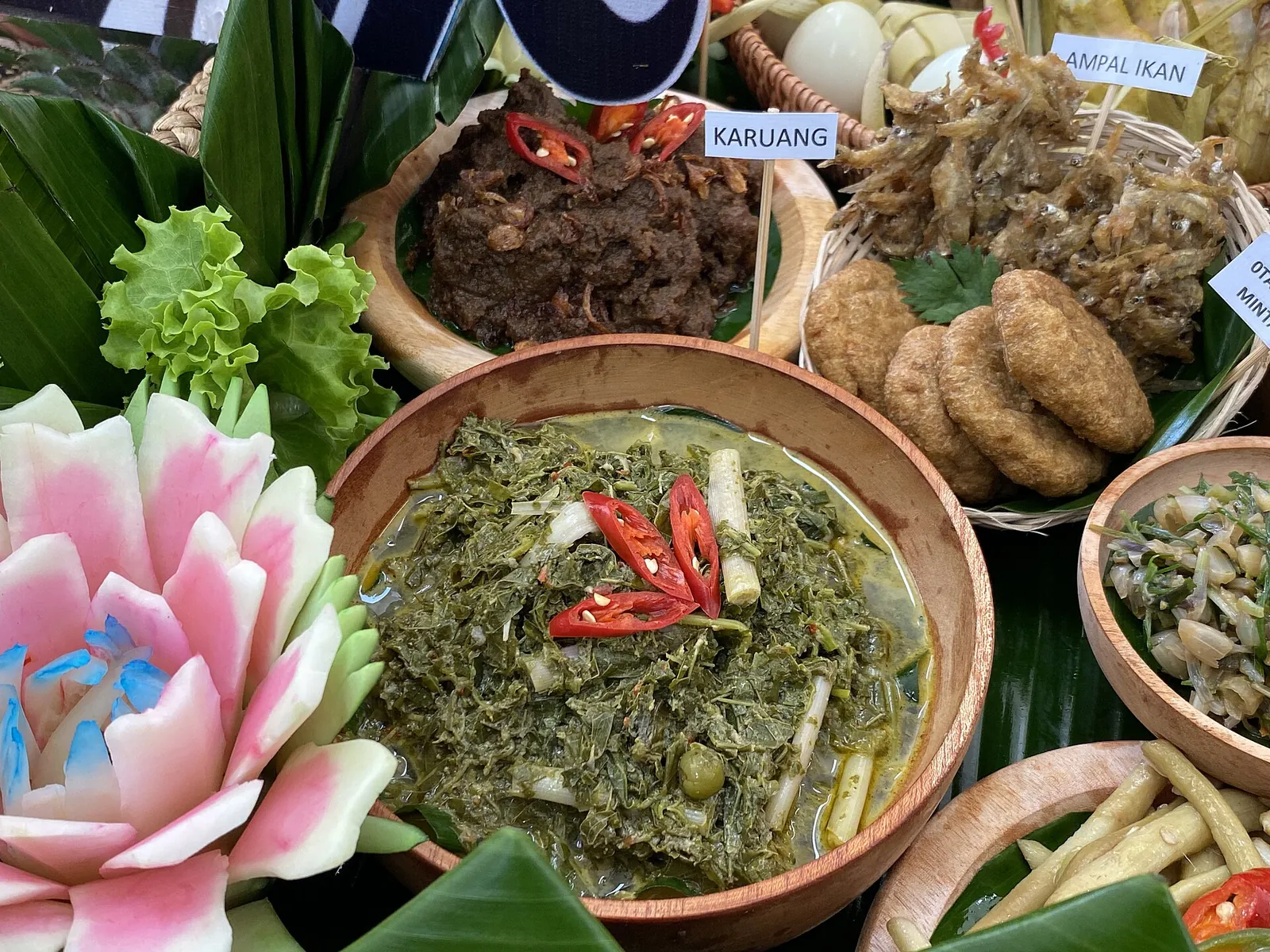
Cassava leaves pounded fine and cooked with coconut milk and spices into a soft, savoury side dish, eaten in everyday Dayak meals and at family occasions, according to the Ministry of Tourism.
- Where to look
- Local eateries and rice-and-side-dish counters in Central Kalimantan.
- Fit it into your day
- Order it as a vegetable side with rice and river fish.
Usually cooked with coconut milk; ask if you avoid it.
Mangut baung and other river fish
Baung, a river catfish common in Kalimantan's rivers, cooked in a spiced, savoury sauce. The Ministry of Tourism lists it among the dishes of Central Kalimantan.
- Where to look
- Restaurants in Pangkalan Bun; river fish also often appears in meals on board.
- Fit it into your day
- Lunch or dinner on the day you arrive or leave.
Watch for small bones.
Wadi (fermented fish)
Fish preserved by fermentation, with a strong aroma and flavour; the Ministry of Tourism calls it a Dayak technique handed down through generations, now also sold in convenient packs.
- Where to look
- Markets and souvenir shops in Central Kalimantan.
- Fit it into your day
- Try a small portion with rice first; buy a pack to take home only if you like it.
Very strong smell; check customs rules before carrying fish products abroad.
Kalakai crisps
Kalakai is a fern of Kalimantan's peatlands, cooked as a vegetable or fried into light, savoury crisps. The Ministry of Tourism notes that the crisps keep well, which makes them an easy snack to take home.
- Where to look
- Souvenir shops and markets in Central Kalimantan.
- Fit it into your day
- A snack for the drive from Kumai back to the airport.
Often salty; check the ingredients on the pack.
Life on the klotok: the river, the forest and the nights
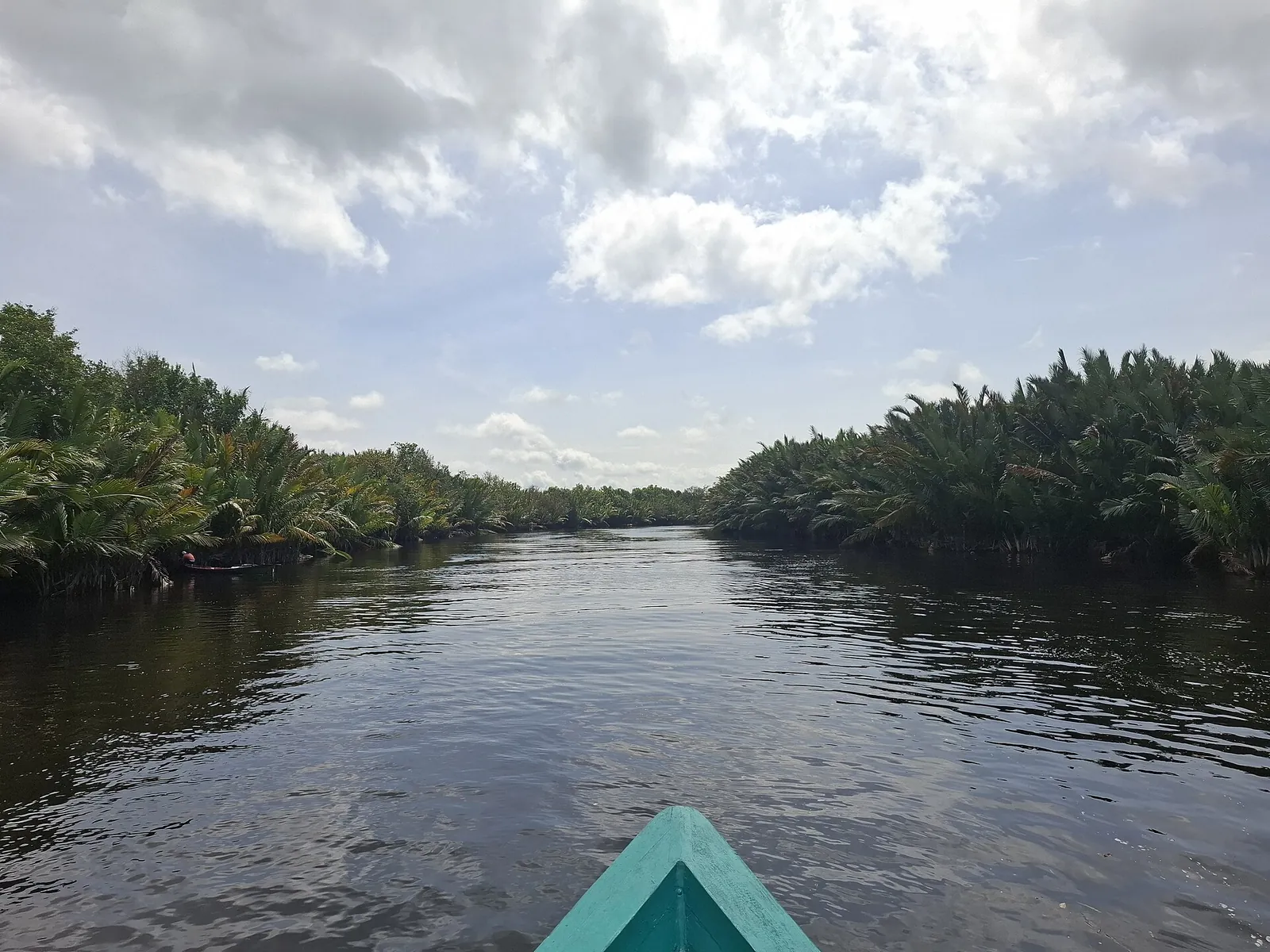
Between the feeding stations, the klotok moves slowly between walls of nipa palm and then forest. The Ministry of Forestry's park profile notes the nipa palm vegetation along the Sekonyer River. The provincial portal describes the water as dark brown to black, typical of peat swamp forest. The Ministry of Tourism says the park is home to around eight species of monkeys, including the proboscis monkey, and to more than 220 species of birds. OFI counts over 230, and lists two species of crocodiles, clouded leopards, sun bears, gibbons and several deer. The provincial portal says proboscis monkeys gather in the riverside trees especially at dusk, which is a good reason to spend at least one evening on the river.
The Ministry of Tourism adds that walking is the only way to get around in the forest itself, and that walks can be tailored to your fitness, so tell your guide what you want before you set out. After dark, the provincial portal says, guides often take visitors to look for fireflies in the mangroves. On board you will usually eat what the cook prepares, so tell the operator about dietary needs when you book.
Bring mosquito repellent; the provincial portal also advises dark or neutral clothes and preparing for humid tropical heat. A torch, a dry bag for your phone and camera, and a light rain jacket are worth packing in any season.
Getting there: Pangkalan Bun, Iskandar Airport and Kumai
The gateway is Iskandar Airport (PKN), which English Wikipedia places about 5 kilometres from the centre of Pangkalan Bun, the capital of West Kotawaringin regency. When we checked on 2026-10-03, Wikipedia listed regular flights to Jakarta, Semarang and Surabaya, and the Ministry of Tourism said flights run daily from Jakarta and other major cities. Routes change, so check the current schedule with the airlines before you book your boat.
Klotoks leave from the harbour town of Kumai, on the Kumai River. The Ministry of Tourism puts Kumai about 35 minutes from Pangkalan Bun, and the provincial portal 30 to 45 minutes from the airport by road. If you book in advance, the Ministry of Tourism says, the operator will pick you up at the airport and take you straight to the river. Otherwise, there are taxis at the airport, and minibuses to Kumai leave from the terminal near the market on Jalan P. Antasari in Pangkalan Bun. Wikivoyage notes that a guide is required to enter the park.
Overland and sea routes exist but are long. When we checked on 2026-10-03, the Ministry of Tourism listed Pelni passenger ships linking Kumai with Semarang (about 24 hours) and Surabaya (about 26 hours). It also gave about 8 to 10 hours by car from the provincial capital, Palangka Raya, or 12 to 14 hours by bus.
The park beyond the orangutans
The Ministry of Forestry gives the national park an area of 415,040 hectares, made up of the former Tanjung Puting wildlife reserve, former production forest and around 25,000 hectares of water. The reserve was first set aside under Dutch rule to protect orangutans and proboscis monkeys. UNESCO named it a Biosphere Reserve in 1977, and in 2013 it became a Ramsar wetland site for its peat swamp ecosystem. OFI describes it as the largest and most diverse protected example of the coastal heath and peat swamp forest that once covered much of southern Borneo.
It is not untouched. English Wikipedia notes that the park was badly damaged by fires in 1997 and 1998, that oil palm plantations have replaced the forest beyond the Kumai River on its northern edge, and that illegal logging and mining remain threats.
In Pangkalan Bun itself, the Ministry of Tourism describes a riverside town on the Arut River with heritage sites along its banks, and mentions the Orangutan Care Center Quarantine (OCCQ), where injured and confiscated orangutans are looked after. Ask your operator whether a visit can be arranged before you plan on it.
Practical questions
How many nights should I spend on a klotok in Tanjung Puting?
Two nights (three days) is the standard trip and the one the Central Kalimantan tourism portal recommends. One night reaches Camp Leakey but leaves little time on the river; three nights suits photographers, birdwatchers and anyone who wants a slower pace.
Can I stay overnight at Camp Leakey?
No. The Orangutan Foundation International says visitors are not allowed to stay overnight at Camp Leakey. Day visitors come with local guides and permits, and sleep on their klotok.
Are orangutans guaranteed at the feeding stations?
No. The orangutans come to the platforms by choice. The Ministry of Tourism says the daily feedings give you a good chance of seeing them up close. Visiting more than one station, which a two-night trip allows, improves your odds.
How do I get to Tanjung Puting?
Fly into Iskandar Airport (PKN) at Pangkalan Bun, then go by road to the harbour at Kumai, where the klotoks leave. The provincial tourism portal puts the drive at 30 to 45 minutes; operators usually collect you at the airport if you book in advance.
Do I need a guide?
Yes. Wikivoyage notes that a guide is required to enter the park, and Camp Leakey receives visitors who come with local guides and permits. Klotok packages normally include a guide.
When is the best time to visit Tanjung Puting?
Wikivoyage gives May to September as the relatively dry season, but rain is possible all year. July and August are the busiest months for klotoks, so book early then.
Sources and checks before you travel
Reference sources for the version dated 3 October 2026. Confirm opening times, access, transport and conditions for your travel dates.
- Indonesia Travel (Ministry of Tourism): Tanjung Puting, home of amazing orangutans ↗ — opens in a new tab
- Indonesia Travel (Ministry of Tourism): Pangkalan Bun ↗ — opens in a new tab
- Indonesia Travel (Ministry of Tourism): 15 Central Kalimantan dishes ↗ — opens in a new tab
- Ministry of Forestry (KSDAE): Tanjung Puting National Park profile ↗ — opens in a new tab
- Orangutan Foundation International: Camp Leakey ↗ — opens in a new tab
- Orangutan Foundation International: Tanjung Puting National Park ↗ — opens in a new tab
- Central Kalimantan tourism portal: Taman Nasional Tanjung Puting ↗ — opens in a new tab
- Wikipedia: Tanjung Puting ↗ — opens in a new tab
- Wikipedia: Iskandar Airport ↗ — opens in a new tab
- Wikipedia: Klotok ↗ — opens in a new tab
- Wikipedia: Bornean orangutan ↗ — opens in a new tab
- Wikivoyage: Tanjung Puting National Park and Kumai ↗ — opens in a new tab
Does this experience fit your route?
A pre-booked klotok trip with the airport pick-up included is the simplest way to reach Camp Leakey. Compare the number of nights, the boat standard and what the price includes before you book.
Check dates and details on Viator ↗ — opens in a new tabAffiliate link · Book with ViatorPhoto credits
Klotok houseboats moored on the river in Tanjung Puting National Park, Central Kalimantan
Photograph: Jorge Franganillo — opens in a new tab · CC BY 2.0 — opens in a new tab
Changes: Resized and converted to WebP; displayed with responsive crops. · Original photograph and licence details ↗ — opens in a new tab
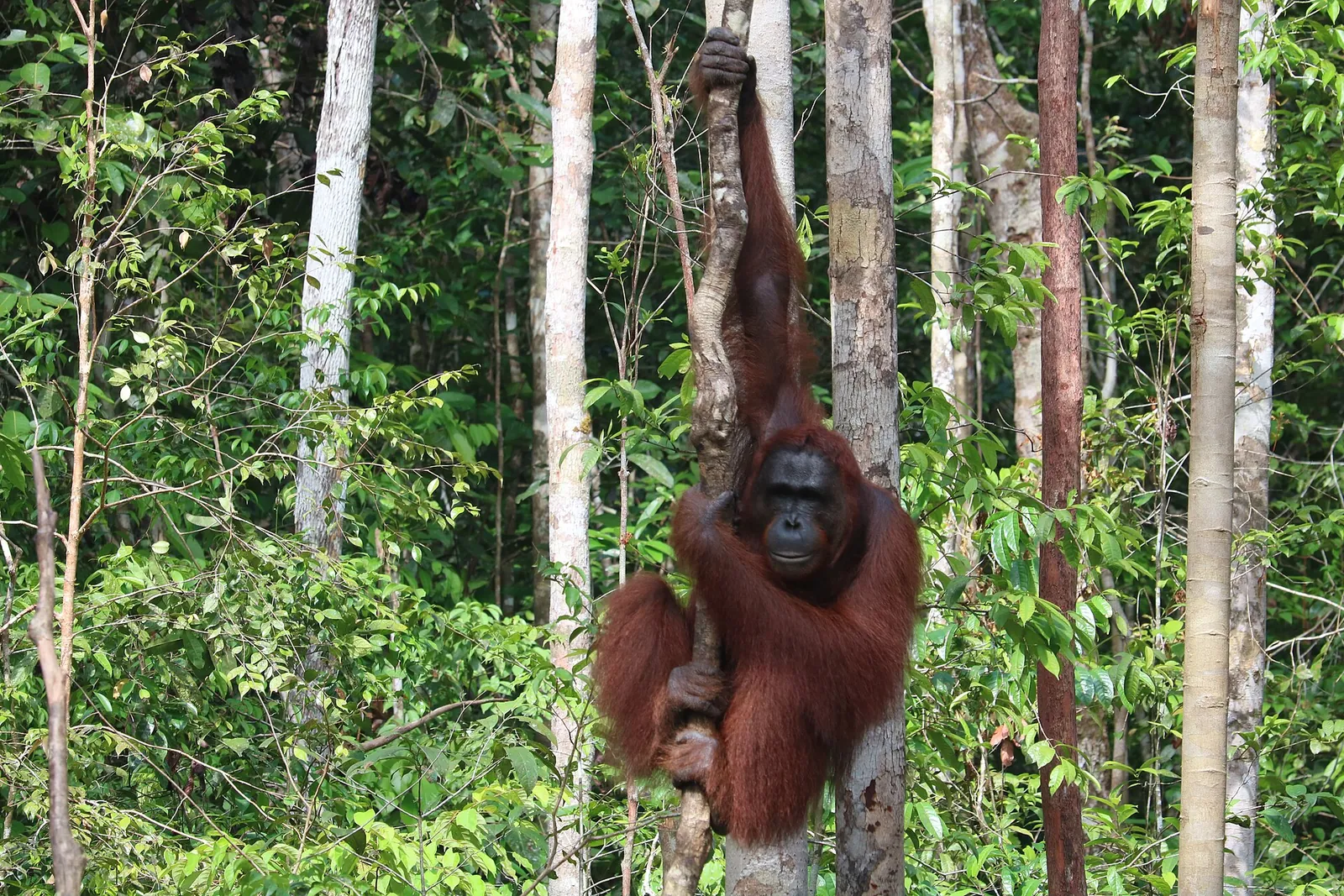
An orangutan climbing in the forest of Tanjung Puting National Park
Photograph: Charlsmile — opens in a new tab · CC BY-SA 4.0 — opens in a new tab
Changes: Resized and converted to WebP; displayed with responsive crops. · Original photograph and licence details ↗ — opens in a new tab
A klotok on a narrow river channel inside Tanjung Puting National Park
Photograph: Jorge Franganillo — opens in a new tab · CC BY 2.0 — opens in a new tab
Changes: Resized and converted to WebP; displayed with responsive crops. · Original photograph and licence details ↗ — opens in a new tab
An adult male orangutan with cheek pads in Tanjung Puting National Park
Photograph: George Arif Kurniawan — opens in a new tab · CC BY-SA 4.0 — opens in a new tab
Changes: Resized and converted to WebP; displayed with responsive crops. · Original photograph and licence details ↗ — opens in a new tab
The Sekonyer River and its nipa palm banks, the route from Kumai into the park
Photograph: Raflinoer32 — opens in a new tab · CC BY-SA 4.0 — opens in a new tab
Changes: Resized and converted to WebP; displayed with responsive crops. · Original photograph and licence details ↗ — opens in a new tab
Kalumpe (also called karuang), the Dayak cassava-leaf dish of Central Kalimantan, among other local dishes
Photograph: Martini Rahman — opens in a new tab · CC BY-SA 4.0 — opens in a new tab
Changes: Resized and converted to WebP; displayed with responsive crops. · Original photograph and licence details ↗ — opens in a new tab