Plan your trip · Indonesia
Regional food in Indonesia: Padang, Yogyakarta, Bali, Makassar, Manado
Indonesia does not have one cuisine so much as a few hundred. The Ministry of Tourism describes a country of more than 300 ethnic groups, and their cooking can feel as far apart as the islands: the Minangkabau of West Sumatra slow-cook beef in coconut milk until it is dark and dry, Yogyakarta stews young jackfruit until it is sweet, Bali roasts whole pigs, Makassar thickens its beef soup with ground peanuts, and Manado puts chilli into almost everything. Some of these dishes have spread across the country, others barely leave home. This guide is for planning a trip around them: which regions to pick, what to eat at which time of day, and which dishes are worth the flight.
- Suggested time
- 10–14 days for three or four food regions; two or three nights in each
- Where to stay
- Padang, Yogyakarta, Ubud (Bali), Makassar and Manado
- Season and timing
- Any time of year: the dishes in this guide are everyday food, not seasonal specialities.
The short answer
Pick three or four food regions and give each two or three nights: West Sumatra (Padang, with Bukittinggi in the highlands), Yogyakarta, Bali, and Makassar or Manado in Sulawesi. That is about 10 to 14 days, and the distances mean flying between them; Jakarta's Soekarno-Hatta airport is the usual hub, and Makassar works as a transfer point for Manado. Sleep where the food is: central Padang, around Malioboro in Yogyakarta, central Ubud in Bali, near Losari Beach in Makassar and on the bayfront in Manado. Plan each day around one breakfast dish, one lunch and one evening speciality, and decide early how you handle pork and spice, because Balinese and Manado cooking use pork freely and Manado and Padang cooking can be very hot.
Why you plan Indonesian food by region
The Ministry of Tourism calls Indonesia a melting pot of flavours, home to over 300 ethnic groups. In 2018, it chose five national dishes, according to its own rendang article: rendang, soto, nasi goreng, sate and gado-gado. Soto and sate turn out to be families of dishes rather than single recipes: coto Makassar is described by the ministry as Makassar's own variation of soto, Yogyakarta grills goat on bicycle spokes for sate klatak, West Sumatra pours a thick spiced gravy over sate Padang, and Bali minces pork for sate lilit.
Some regional dishes have travelled. The ministry's Padang page says nasi Padang has spread throughout the country and the world, and its Jakarta guide lists Padang restaurants open since the 1960s. Others travel less well, or travel in edited form: the ministry notes that Manado restaurants in other big Indonesian cities keep to fish dishes so as to keep their clientele, while in Manado itself beef, goat and pork satay are all on the grill. Its Padang page puts it simply: Padang food is sold across Indonesia, but nothing beats eating it in the city it comes from.
That is the case for building the trip around regions rather than a list of dishes. Choose the three or four cooking styles you most want, give each enough nights for two breakfasts and two dinners, and use the flight days for simple meals rather than the dish you came for.
West Sumatra: rendang, sate Padang and the nasi Padang table
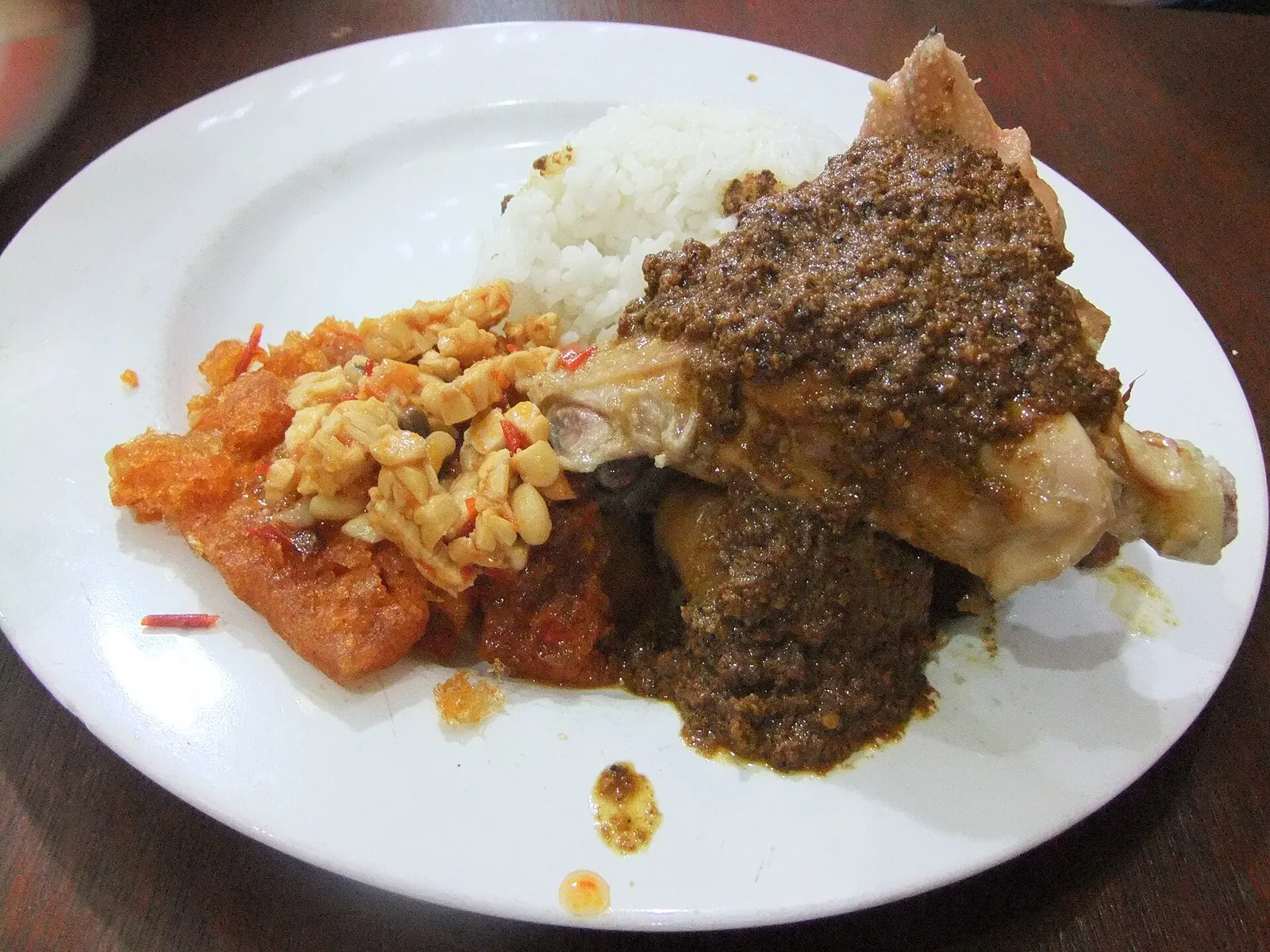
Rendang is the dish the Minangkabau are proudest of, and the ministry explains that it is really the name of a cooking process rather than a dish. Meat is cooked in coconut milk for seven to eight hours through three stages: gulai, while the coconut milk is still liquid; kalio, after about four hours, when it has thickened and turned oily; and finally rendang, cooked down on a low flame until dry and dark. Traditionally it was made from buffalo for ceremonies, where it was called kepalo samba, the head of the dishes. Today there are chicken, fish, egg and jengkol versions, and Payakumbuh makes egg rendang shaped like crisp chips and rendang gadih from pounded beef balls.
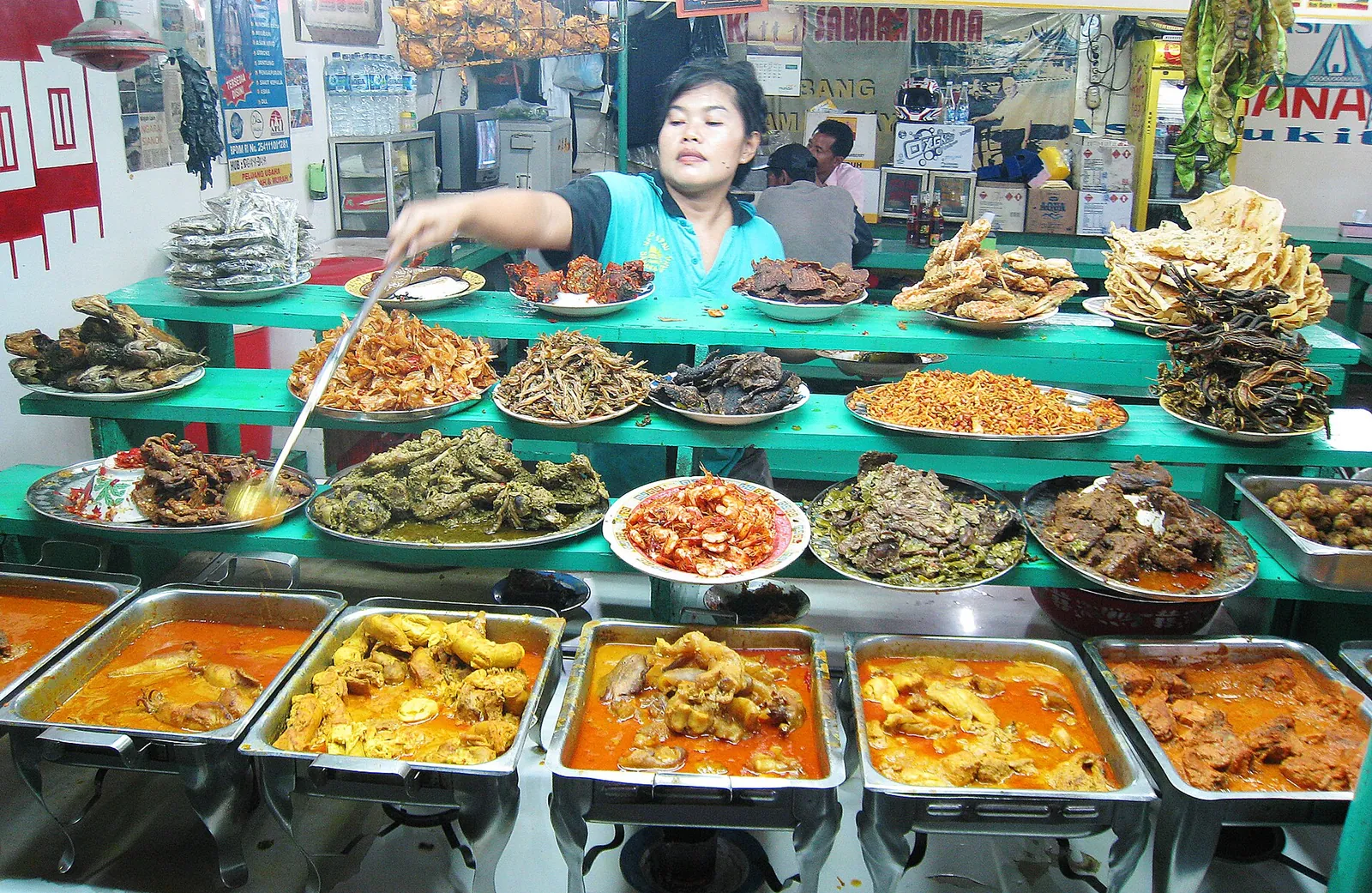
In Padang, you usually meet rendang at a nasi Padang meal. The ministry's Padang page describes the serving style: waiters carry more than ten plates up both arms and spread them out on the table, and you choose what you want from them. Alongside rendang, look for dendeng (thin beef with red chilli sambal), gulai tunjang (beef tendon curry), gulai kepala ikan (fish-head curry) and ayam pop, chicken boiled and then lightly fried so that it stays pale and tender, which the ministry associates with Family Benteng Indah in Bukittinggi, open since 1949 near Fort de Kock.
Sate Padang is the other West Sumatran classic: beef, tongue or heart on skewers under a thick gravy of turmeric, lemongrass, galangal, ginger and chilli. The ministry describes a bright yellow, turmeric-heavy Padang Panjang style, a spicier reddish-brown Pariaman style and a brown mix of the two. In Padang Panjang, it names Mak Syukur, serving sate since 1941. Give West Sumatra at least three nights: two in Padang for the restaurants and one in the highlands around Bukittinggi. Padang's Minangkabau International Airport is about 20 km north of the city, and the ministry lists daily flights from Jakarta, Medan and Palembang.
Make time for the local food
What to eat and where to look
Rendang (West Sumatra)
Beef (traditionally buffalo) cooked in coconut milk and spices for seven to eight hours until dark, dry and tender. The ministry explains that rendang is really the name of the cooking process, and that kalio is the half-way, still saucy stage.
- Where to look
- Nasi Padang restaurants in Padang, where it is one of the plates brought to the table; Payakumbuh for egg rendang and rendang gadih.
- Fit it into your day
- Lunch at a nasi Padang restaurant, where you choose from the plates set in front of you.
Beef in coconut milk, and often eaten with very hot sambal; other versions use chicken, fish, egg or jengkol, so ask if you avoid any of these.
Sate Padang (West Sumatra)
Beef, tongue or heart skewers under a thick gravy of turmeric, lemongrass, galangal, ginger and chilli: yellow in the Padang Panjang style, redder and hotter in the Pariaman style.
- Where to look
- Sate stalls in Padang and Padang Panjang; the ministry names Mak Syukur in Padang Panjang, serving since 1941.
- Fit it into your day
- An evening meal or late snack, often with lontong rice cakes.
Offal and tongue are common; ask for daging (meat) if you want beef only. The Pariaman style is the spicier one.
Gudeg (Yogyakarta)
Young jackfruit cooked for hours in coconut milk with teak leaves, sweet and reddish-brown, served as nasi gudeg komplit with chicken, egg and spicy krecek beef-skin crackers.
- Where to look
- Wijilan, which the ministry names with Barek as the most famous places for gudeg; dry gudeg kering is sold to take away.
- Fit it into your day
- Breakfast or lunch in Yogyakarta; buy gudeg kering on your last day if you want to take some with you.
Very sweet; the krecek and sambal are where the heat is. Gudeg basah, the wet version, is for eating on the spot.
Babi guling (Bali)
Whole pig marinated in Balinese spices and roasted until the skin is crisp, served on rice with lawar and sambal.
- Where to look
- Specialist warungs in Ubud, Seminyak and Canggu; the ministry lists Babi Guling Ibu Oka on Jalan Suweta in central Ubud.
- Fit it into your day
- Lunch in Ubud, then betutu or sate lilit at another meal to compare Balinese spice pastes.
Pork; lawar can be the red kind, mixed with fresh blood, so ask which one is served.
Coto Makassar (South Sulawesi)
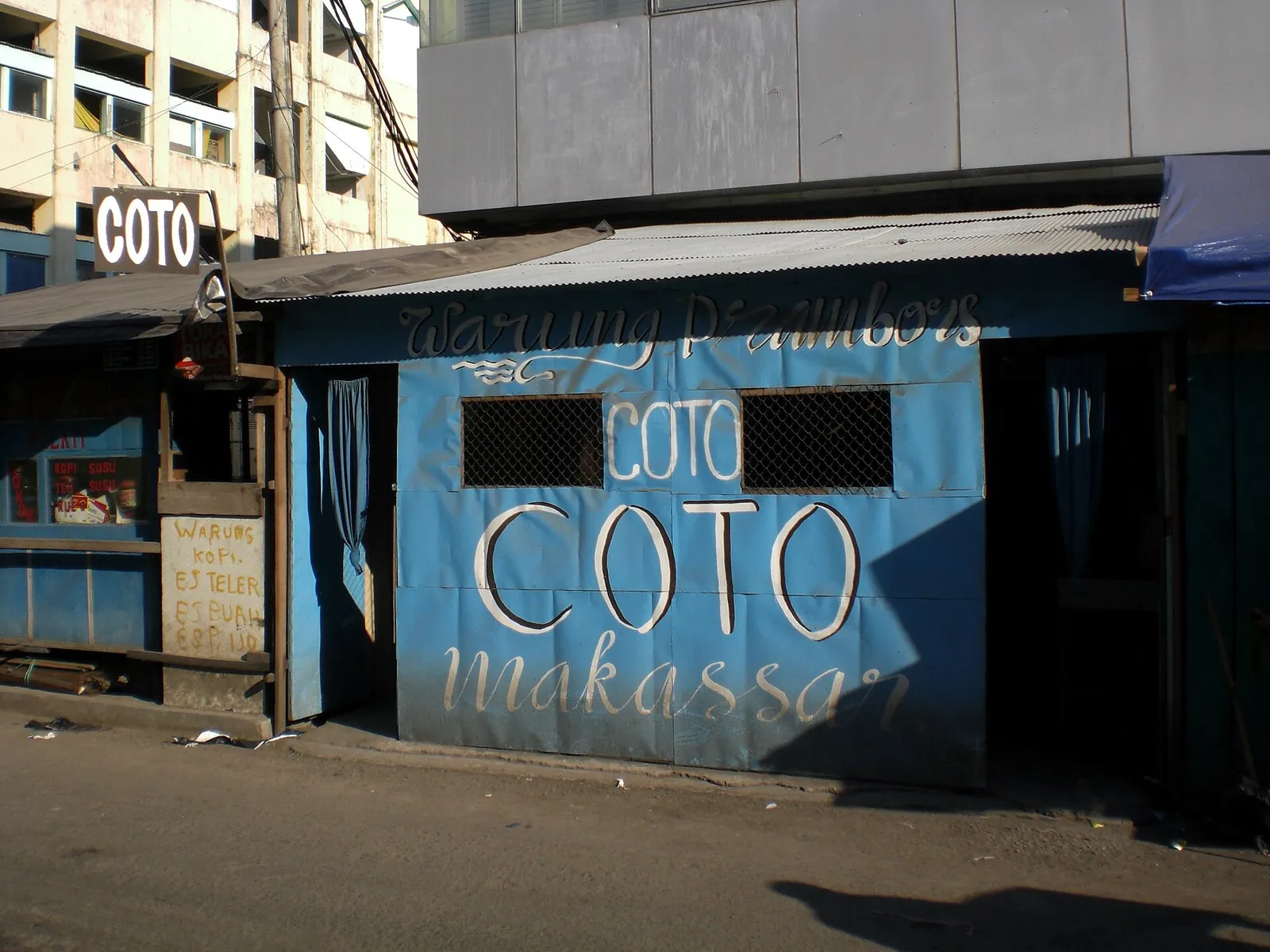
Beef and offal in a thick, spiced broth with fermented soybean paste, ground peanuts and roasted rice, eaten with ketupat or burasa rice cakes.
- Where to look
- Coto stalls across Makassar; the ministry lists Coto Nusantara near the harbour and Coto Ranggong near Losari Beach.
- Fit it into your day
- Breakfast or an early lunch; follow it with pisang epe on Losari Beach in the evening.
Contains offal and peanuts; many stalls now offer a meat-only bowl.
Tinutuan, rica-rica and cakalang fufu (Manado)
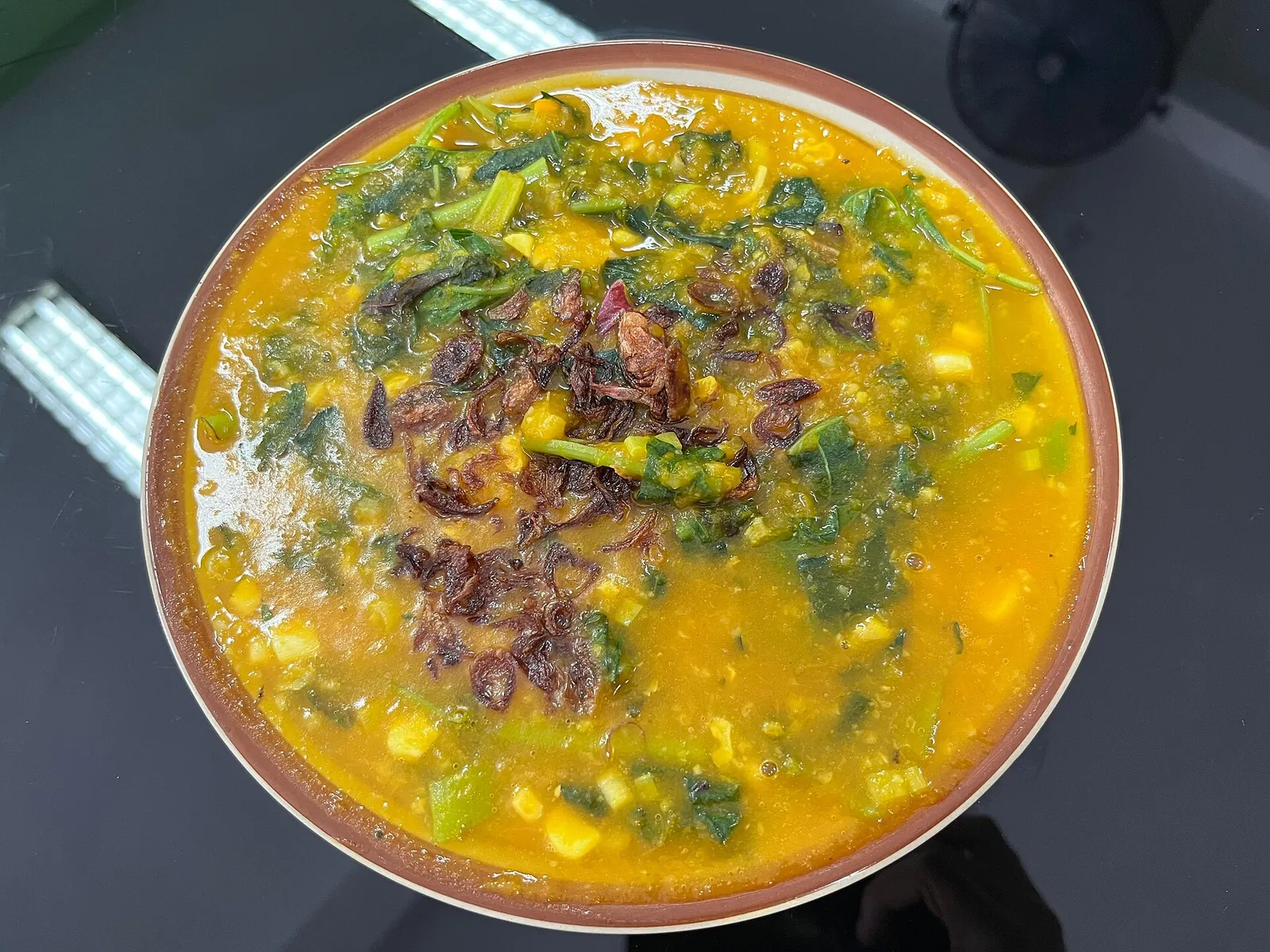
Tinutuan is a rice porridge with pumpkin, sweet potato, corn and greens; rica-rica is Manado's chilli, tomato, garlic and ginger sauce over chicken or tuna; cakalang fufu is smoked skipjack tuna.
- Where to look
- Pierre Tendean Boulevard and Jalan Wakeke in Manado; seafood along Kalasey Beach and around Bitung harbour.
- Fit it into your day
- Tinutuan for breakfast, rica-rica or grilled fish with dabu-dabu sambal for dinner, klappertaart for dessert.
Very hot sambal is served with almost everything, and pork is common in Manado; tinutuan itself is vegetable-based, but the fish cakes and toppings are not.
Java: gudeg and sate klatak in Yogyakarta, and the rest of the island
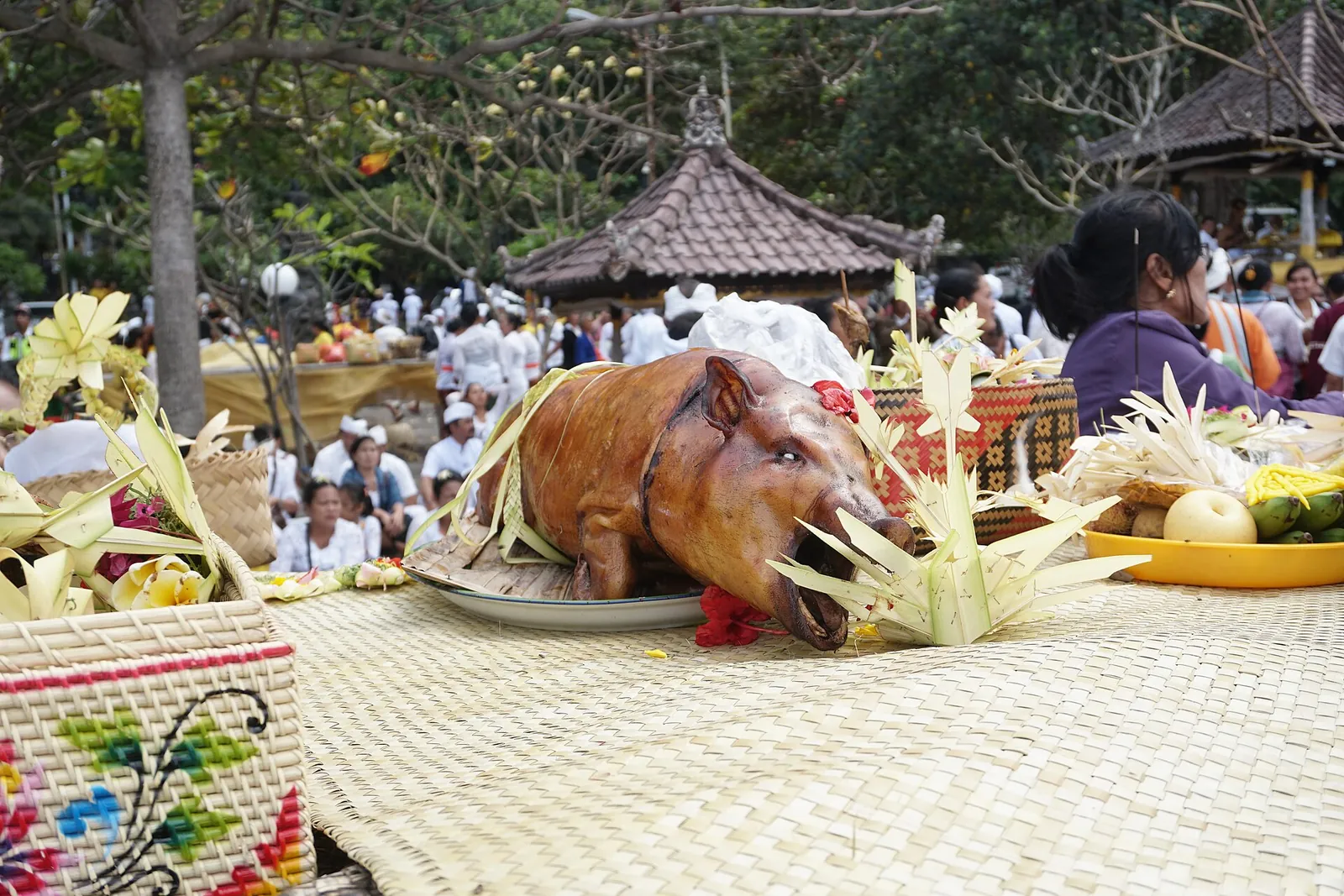
Gudeg is Yogyakarta's signature: young jackfruit cooked for four to twelve hours in thick coconut milk with shallots, garlic, coriander, galangal and bay leaves, turned reddish-brown by teak leaves in the pot. The ministry says the city-style dish is sweet and that it comes in two main forms, dry gudeg kering, which keeps well and is bought to take home, and gudeg basah, with a thick coconut gravy (areh), eaten fresh at local eateries. A full plate, nasi gudeg komplit, adds rice, chicken in coconut, an egg boiled with spices and onion skins, and krecek, beef-skin crackers cooked with chilli to cut the sweetness. The ministry names Wijilan and Barek as the most famous places to buy it.
For dinner, look south to Bantul, where sate klatak first became popular. It is young goat seasoned only with salt and a little pepper, grilled on metal bicycle spokes and served with a yellow gulai broth, rice, raw shallots and bird's eye chilli; the ministry places the best-known stalls along Jalan Imogiri Timur. In the city centre, the ministry credits Angkringan Lik Man on Jalan Wongsodirjan with pioneering kopi joss, black coffee with a glowing piece of charcoal dropped in, and the ministry warns that Javanese sambal made with cabai rawit can be very hot even when the gudeg is sweet. When we checked on 2026-10-03, its street-food guide listed Bakmi Jawa Pak Pele, charcoal-cooked Javanese noodles at the south-east corner of Alun-Alun Utara, as opening from 5.30 pm.
Yogyakarta is the easiest food base on Java, with two or three nights enough for gudeg, sate klatak and the street stalls. Further east and north, the ministry's guide to must-eat Indonesian food points to nasi liwet in Solo (rice cooked in coconut milk and chicken broth, served with shredded chicken), lumpia spring rolls with bamboo shoots in Semarang, rawon, a black beef stew coloured by kluwek nuts, in Surabaya, and ketoprak, a tofu and rice cake salad with peanut sauce, on the streets of Jakarta.
Bali: babi guling, betutu, lawar and sate lilit
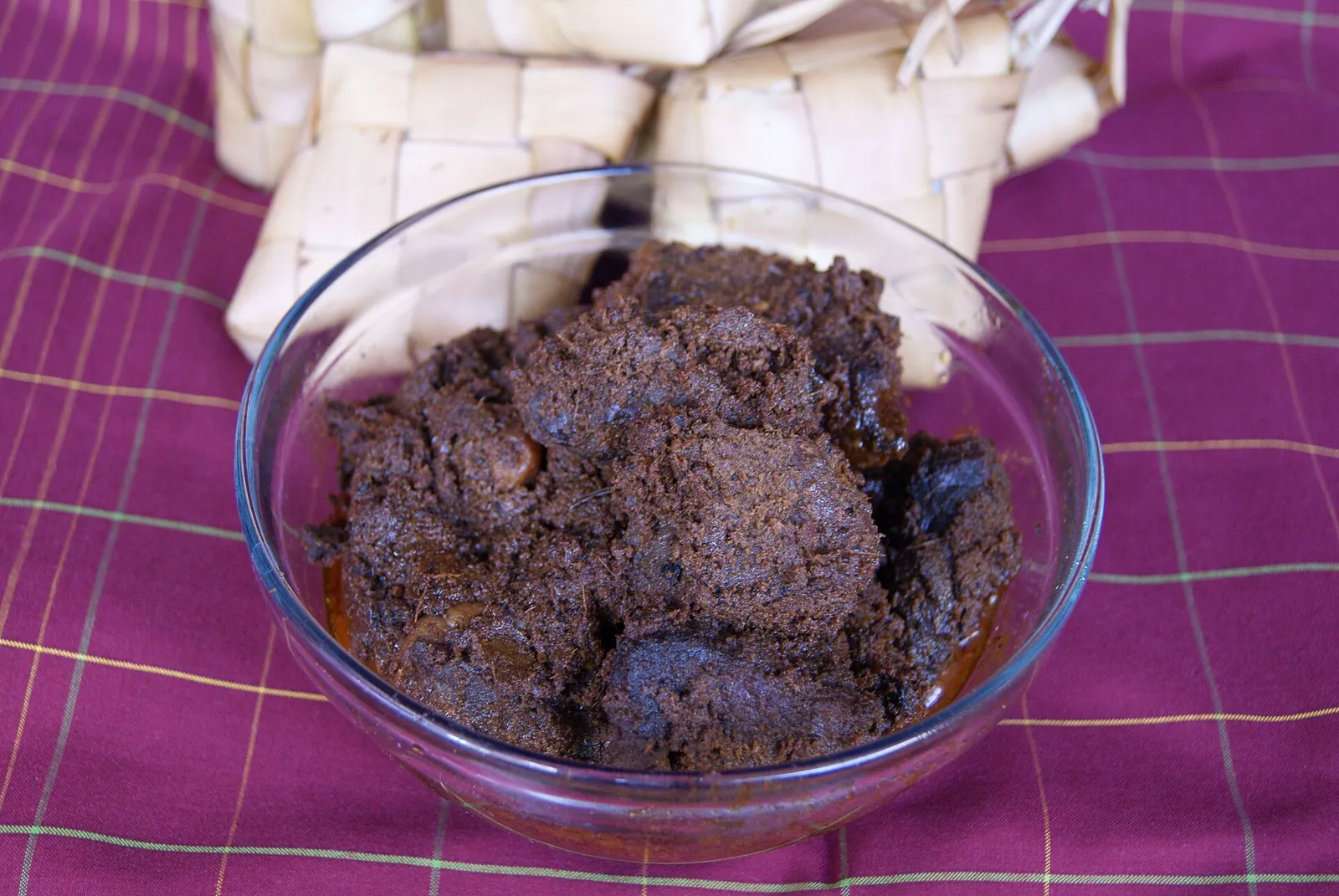
Bali's best-known dishes set it apart from much of the country, because several of them are built around pork. Babi guling is a whole pig marinated in spices and roasted until the skin is crisp, served with rice, lawar and Balinese sambal. The ministry lists Babi Guling Ibu Oka on Jalan Suweta in central Ubud as popular with local and foreign visitors, along with places in Seminyak and Canggu. Lawar is a mix of chopped meat, vegetables, grated coconut and spice paste, made with chicken, pork or duck depending on local tradition; the ministry's Indonesian-language page explains that red lawar (lawar merah) is mixed with fresh blood, while white lawar (lawar putih) is not.
Ayam betutu is a whole chicken stuffed and rubbed with bumbu betutu (shallots, garlic, turmeric, galangal, kencur, candlenut, chilli, lemongrass, shrimp paste and more), wrapped in banana leaves and slow-cooked for hours, traditionally in embers. The ministry says it is served at odalan temple anniversaries, weddings and festivals as well as in everyday warungs, and that bebek betutu uses duck instead. It names Ayam Betutu Khas Gilimanuk, with several branches in Bali, and Warung Nasi Ayam Ibu Oki in Jimbaran. Sate lilit, pork or other meat minced with lemongrass, galangal, chilli and lime leaves, is sold by street vendors.
Ubud makes a convenient food base, with the babi guling warung the ministry names in the centre of town. Two or three nights there are enough for the main dishes. If you do not eat pork, ask before ordering: in Bali, sate lilit is most often pork and lawar can be made with pork, while ayam betutu is chicken and bebek betutu duck.
Sulawesi: coto and konro in Makassar, rica-rica and tinutuan in Manado
Makassar is a city of beef soups and seafood. Coto Makassar is the ministry's pick for the city's most popular dish: beef and offal (intestine, lung, heart, liver and tripe) simmered with dozens of spices, fermented soybean paste (tauco) and ground peanuts and roasted rice, which thicken the broth. It is eaten by dipping ketupat or burasa rice cakes into the bowl. Many stalls now offer meat without offal. When we checked on 2026-10-03, the ministry's coto guide listed Coto Nusantara, on Jalan Nusantara near Soekarno-Hatta harbour, as open daily from 07:00 to 22:00 WITA, and Coto Ranggong, near Losari Beach and open since the 1960s, from 07:00 to 21:00. Konro is beef ribs in a dark soup coloured with kluwek, also served grilled as konro bakar. Finish at the stalls on Losari Beach with pisang epe, grilled and flattened banana in a red-sugar sauce, or es pisang ijo, banana wrapped in green rice-flour dough with coconut custard and ice.
Manado, in North Sulawesi, is known, in the ministry's words, for its extra hot dishes and condiments. Rica-rica means spicy and hot: a sauce of tomato, chilli, garlic, shallots and ginger cooked in coconut oil with lime leaf and lemongrass, spread over chicken, tuna and other meat. Cakalang fufu, smoked skipjack tuna, comes with garo bunga pepaya, a bitter, spicy stir-fry of papaya flowers, and the ministry says the best cakalang fufu is around the port of Bitung. Breakfast is tinutuan, or bubur Manado, a rice porridge with pumpkin, sweet potato, corn and greens, eaten with fish cakes and dabu-dabu sambal. To cool your tongue, try klappertaart, a Dutch-influenced young-coconut custard tart. The ministry's suggestions for where to eat are the Pierre Tendean Boulevard and Jalan Wakeke, with seafood along Kalasey Beach.
Give each city two nights. The ministry describes Makassar's Hasanuddin airport as a hub with flights from Jakarta, Surabaya and Bali, many continuing to Manado and eastern Indonesia, and lists daily flights to Manado from Jakarta, Surabaya, Bali and Makassar, so the two cities can be combined in one trip.
Putting a food route together
The usual pattern is to fly into Jakarta or Bali and build the trip as a chain of flights. A workable west-to-east order is Padang, Yogyakarta, Bali, then Makassar and Manado, or the reverse. The ministry's Yogyakarta guide notes that you can fly there from Jakarta or Bali, or take the train from Jakarta or Bandung. If you only have a week, pick two regions with contrasting cooking, for example West Sumatra and Yogyakarta, or Bali and Manado, rather than trying to cover four. This order is an editorial suggestion, not a timetable; check current flight schedules when you book.
- Start early in Sulawesi. Tinutuan is Manado's breakfast, and the coto stalls the ministry lists in Makassar open at 07:00.
- Evenings are for the grill. Sate klatak in Bantul, sate Padang in Padang and Padang Panjang, seafood on Makassar's Losari Beach and Manado's bayfront.
- Decide how you handle pork and spice. Babi guling, lawar and sate lilit are often pork in Bali, and the ministry lists pork satay in Manado and pork versions of Makassar's Nyuk Nyang meatballs. Rendang and coto are beef-based.
- Ask for the sambal on the side in Manado and Padang if you are not used to chilli; the ministry notes that many Manado dishes are not hot in themselves, but the condiments are.
Practical questions
What is the national dish of Indonesia?
There are five. According to the Ministry of Tourism, on 9 April 2018 it chose rendang, soto, nasi goreng, sate and gado-gado as national dishes. Rendang comes from the Minangkabau of West Sumatra; soto and sate have many regional versions, such as coto Makassar and sate Padang.
Is rendang better in Padang than elsewhere?
Nasi Padang restaurants are everywhere in Indonesia, including long-established ones in Jakarta, so you can eat good rendang without going to Sumatra. The ministry's own view is that nothing beats eating Padang food in its home city, and West Sumatra also has dishes you rarely see elsewhere, such as Payakumbuh's egg rendang and the different styles of sate Padang.
Where can I eat babi guling in Bali?
At specialist warungs across the island. The ministry lists Babi Guling Ibu Oka on Jalan Suweta in central Ubud, Babi Guling Pak Malen on Sunset Road in Seminyak and Babi Guling Men Agus on Jalan Raya Canggu. It is pork, usually served on rice with lawar and sambal.
Is Manado food very spicy?
It can be. The ministry describes Manado food as known for extra hot dishes and condiments, and rica-rica literally means spicy and hot. It also notes that many dishes are not hot in themselves and that the chilli comes in the sambal served alongside, so you can ask for it on the side. Tinutuan, the breakfast porridge, is mild.
How many days do I need for a food trip in Indonesia?
About 10 to 14 days for three or four regions, such as West Sumatra, Yogyakarta, Bali and Makassar or Manado, with two or three nights in each and flights in between. With a week, choose two regions.
What should I eat in Makassar?
Coto Makassar with ketupat, konro beef ribs as soup or grilled, seafood near Losari Beach, and the banana desserts pisang epe and es pisang ijo. The ministry also mentions Nyuk Nyang meatballs, which can be beef or pork, so ask before ordering.
Sources and checks before you travel
Reference sources for the version dated 3 October 2026. Confirm opening times, access, transport and conditions for your travel dates.
- Ministry of Tourism: Rendang Minangkabau, one of the world's best foods ↗ — opens in a new tab
- Ministry of Tourism: Rendang, from Minangkabau tradition to world's best dish ↗ — opens in a new tab
- Ministry of Tourism: Padang, gateway to the Minang highlands ↗ — opens in a new tab
- Ministry of Tourism: Sate Padang, history and where to eat ↗ — opens in a new tab
- Ministry of Tourism: Two restaurants serving delicious food in West Sumatra ↗ — opens in a new tab
- Ministry of Tourism: 10 Padang restaurants in Jakarta ↗ — opens in a new tab
- Ministry of Tourism: Gudeg ↗ — opens in a new tab
- Ministry of Tourism: Sate klatak ↗ — opens in a new tab
- Ministry of Tourism: Legendary hawker stalls in Yogyakarta ↗ — opens in a new tab
- Ministry of Tourism: Yogyakarta dining guide ↗ — opens in a new tab
- Ministry of Tourism: 10 must-eat foods from Indonesia ↗ — opens in a new tab
- Ministry of Tourism: Babi guling ↗ — opens in a new tab
- Ministry of Tourism: Ayam betutu ↗ — opens in a new tab
- Ministry of Tourism: Lawar (Indonesian) ↗ — opens in a new tab
- Ministry of Tourism: Coto Makassar ↗ — opens in a new tab
- Ministry of Tourism: Five culinary treasures of Makassar ↗ — opens in a new tab
- Ministry of Tourism: Makassar's culinary specialties ↗ — opens in a new tab
- Ministry of Tourism: Makassar ↗ — opens in a new tab
- Ministry of Tourism: Deliciously hot Manado foods ↗ — opens in a new tab
- Ministry of Tourism: Manado ↗ — opens in a new tab
Does this experience fit your route?
Eating your way through Indonesia? Compare food walks and cooking classes in Yogyakarta and Bali, and check what each one includes before you book.
Browse relevant experiences on Viator ↗ — opens in a new tabAffiliate link · Book with ViatorPhoto credits
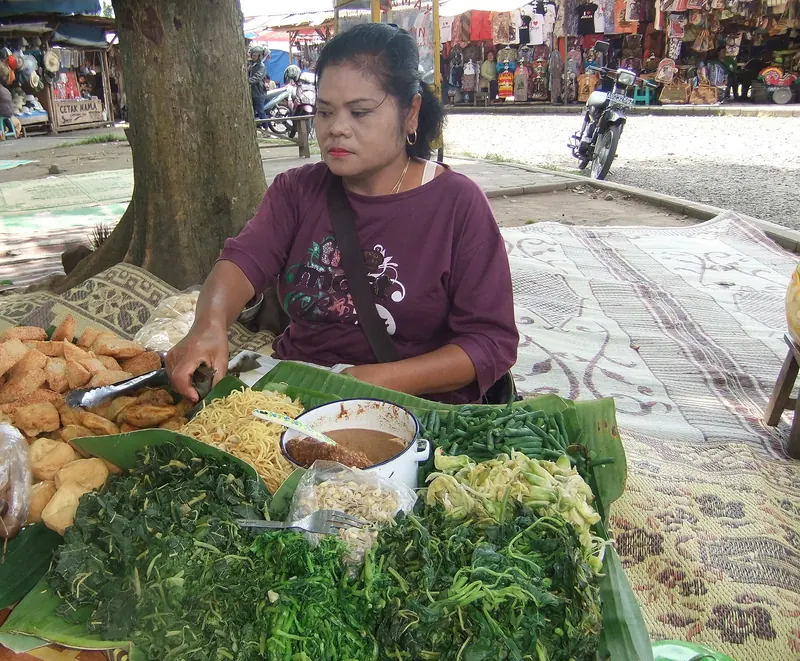
Nasi kapau, a Minangkabau rice-and-curry spread from the Bukittinggi area, laid out at a stall in Senen, Central Jakarta
Photograph: Gunawan Kartapranata — opens in a new tab · CC BY-SA 3.0 — opens in a new tab
Changes: Resized and converted to WebP; displayed with responsive crops. · Original photograph and licence details ↗ — opens in a new tab
Nasi gudeg with chicken, egg and krecek from Wijilan, Yogyakarta's gudeg street
Photograph: Midori — opens in a new tab · CC BY 3.0 — opens in a new tab
Changes: Resized and converted to WebP; displayed with responsive crops. · Original photograph and licence details ↗ — opens in a new tab
Babi guling as an offering at a religious ceremony in Bali
Photograph: I Kadek Jaya Wiguna — opens in a new tab · CC BY-SA 4.0 — opens in a new tab
Changes: Resized and converted to WebP; displayed with responsive crops. · Original photograph and licence details ↗ — opens in a new tab
Beef rendang in the Padang style, cooked down until dark and dry
Photograph: Midori — opens in a new tab · CC BY 3.0 — opens in a new tab
Changes: Resized and converted to WebP; displayed with responsive crops. · Original photograph and licence details ↗ — opens in a new tab
Tinutuan, Manado's vegetable rice porridge, served with sambal roa and sambal rica
Photograph: Sofi Solihah — opens in a new tab · CC BY 4.0 — opens in a new tab
Changes: Resized and converted to WebP; displayed with responsive crops. · Original photograph and licence details ↗ — opens in a new tab
A coto warung on a street in Makassar, South Sulawesi
Photograph: ( Lofor ) — opens in a new tab · CC BY 3.0 — opens in a new tab
Changes: Resized and converted to WebP; displayed with responsive crops. · Original photograph and licence details ↗ — opens in a new tab