Lombok and Nusa Tenggara · West Nusa Tenggara
Lombok travel guide: where to stay, from Kuta and Senggigi to Rinjani
Lombok sits just east of Bali, across the Lombok Strait, but it is a different island to plan. It has no single resort strip. Instead there are four or five quite separate areas: the surf beaches and bays around Kuta in the south, the older resort coast of Senggigi in the west, the three car-free Gili Islands off the north-west, and the villages on the slopes of Mount Rinjani, which at 3,726 metres dominates the whole island. Most people living here are Sasak, and their villages, weaving and food are as much a part of a visit as the beaches. The roads between these areas take hours, so where you sleep decides what kind of trip you have.
- Suggested time
- 7–10 days
- Where to stay
- Kuta in the south, then Senaru or Tetebatu below Rinjani, then Senggigi or the Gili Islands
- Season and timing
- Lombok is drier than Bali. Wikivoyage puts the rainy season at roughly October to April and the busiest months at May to August. The Ministry of Tourism suggests April to October for the clearest skies. Rinjani's trekking season depends on national park decisions: in the dry season of 2026 the park opened trekking only on a limited basis because of the risk of forest fires.
The short answer
Give Lombok a week and split it between two or three bases. Spend three nights in Kuta for the Mandalika beaches, Merese Hill at sunset and the Sasak villages of Sade and Ende, which are close to the airport. Then move north: two nights in Senaru for the waterfalls and the old mosque at Bayan, or in Tetebatu for rice fields and cooler air. Finish with two or three nights in Senggigi or on one of the Gili Islands. Add two to four days if you plan to trek Rinjani, and check the national park's notices first: in late September 2026 trekking was only partly open. Move between bases by car with a driver; public bemos run mainly in the daytime.
Choose your bases by region, not by beach
Lombok is divided into North, Central, East and West Lombok regencies plus the city of Mataram, and for a visitor these regions really do feel different. Pick your bases from that map first. The island looks small, but the Ministry of Tourism puts Senaru about three hours' drive north of Mataram and Sembalun Lawang about four hours east, so trying to see everything from one hotel means long return drives every day.
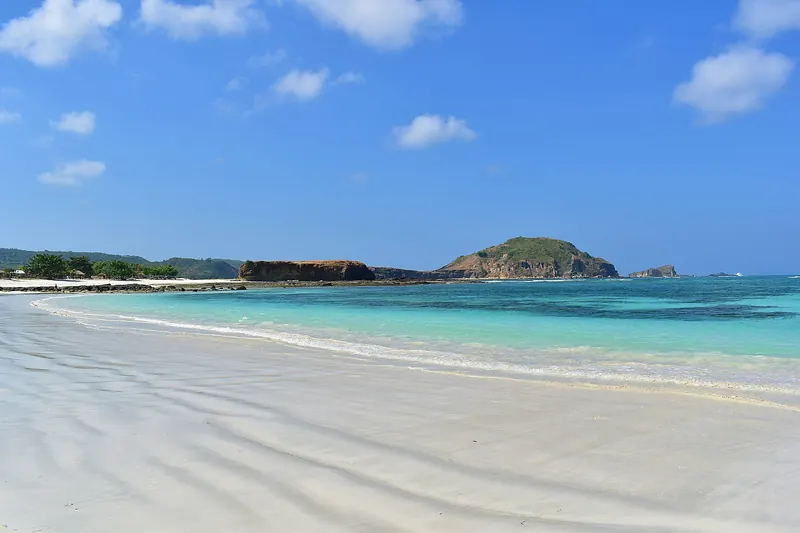
Kuta and the Mandalika coast (Central Lombok) has grown, in Wikivoyage's words, into the island's main beach resort. The Mandalika special tourism zone covers 1,250 hectares of the south coast, with hotels, the international racing circuit and a string of beaches: Kuta Mandalika, Tanjung Aan, Gerupuk, Serenting and Seger. Mawun and Selong Belanak are further along the same coast. It is also the closest base to the airport and to the Sasak villages of Sade and Ende.
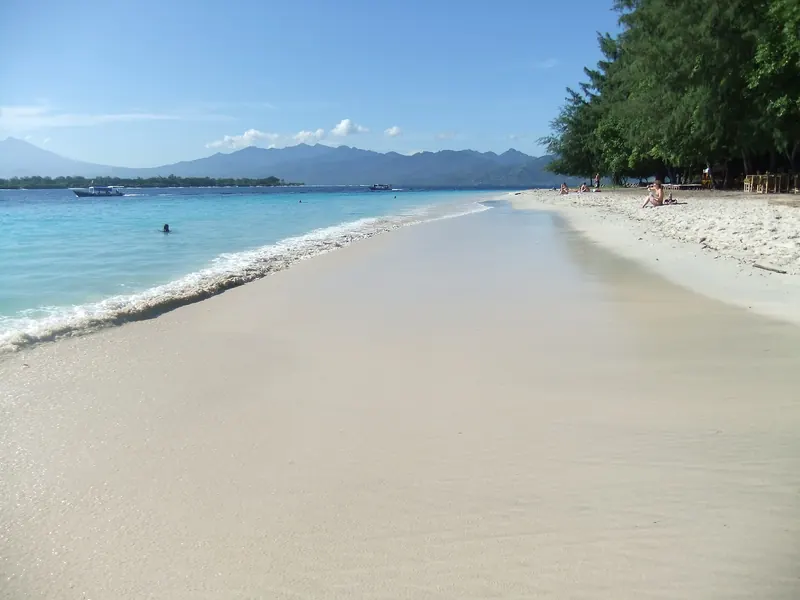
Senggigi (West Lombok) is Lombok's oldest resort area, as the Ministry of Tourism describes it. A series of beaches with safe swimming lines nearly 10 km of coast road, which continues north to Bangsal, the harbour for the Gili Islands. Wikivoyage notes that Senggigi went through a subdued period with many businesses closed, and describes it as a base for day trips to the waterfalls, the Gilis and the villages rather than a resort for shopping and nightlife.
The Gili Islands (Trawangan, Meno and Air) have no cars or motorbikes. Trawangan is the largest and liveliest, Meno the smallest and quietest, and Air, closest to the mainland, falls between the two. Senaru and Tetebatu, on the northern and southern slopes of Rinjani, are the places to sleep for waterfalls, rice fields, cooler air and an early start on the mountain.
The south: Kuta, Mandalika beaches and Sasak villages
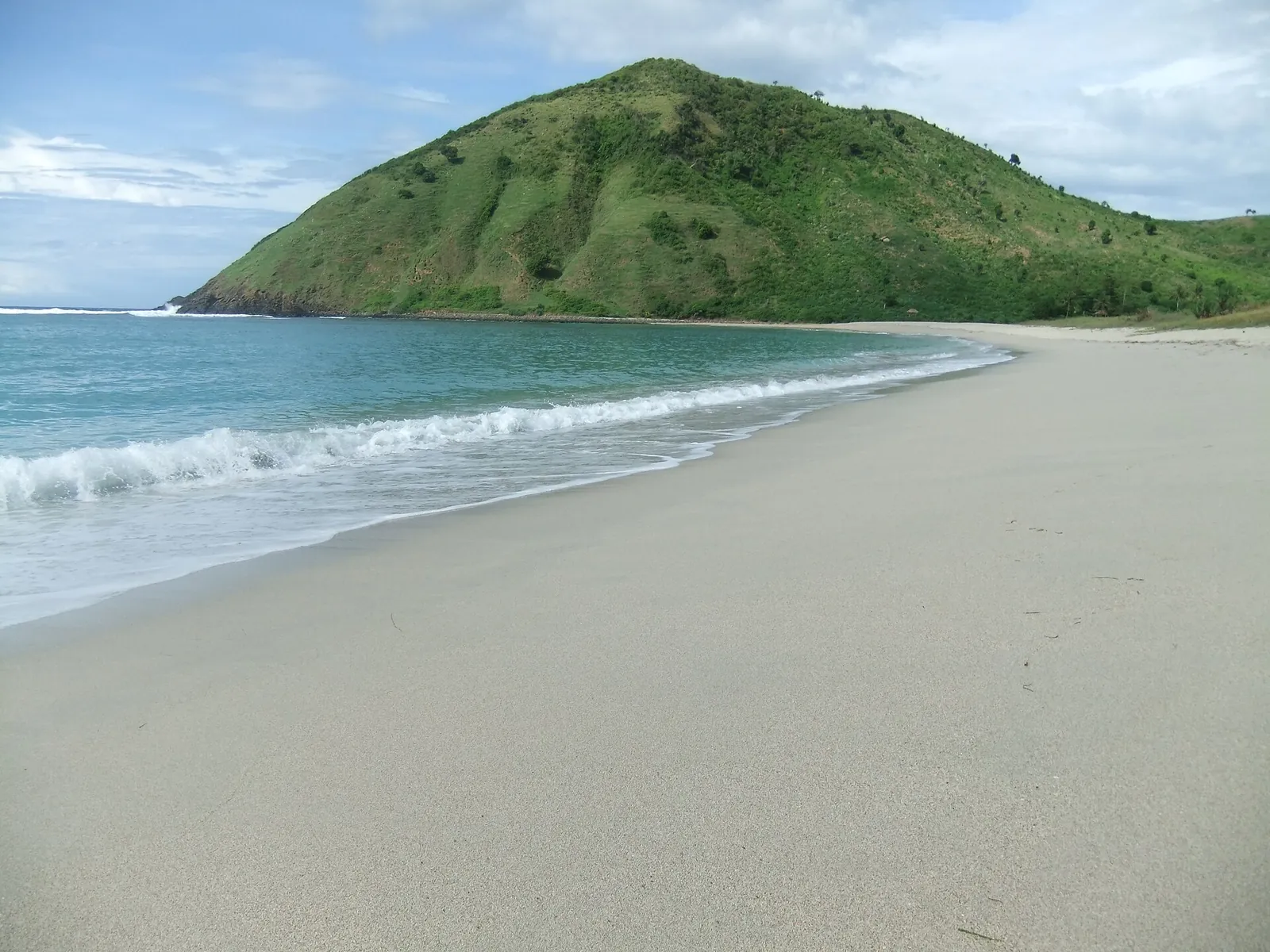
The south coast is a line of bays between green hills. The Ministry of Tourism describes Tanjung Aan as having white sand with grains like peppercorns and relatively calm water for swimming. Mawun is a half-moon bay between two hills, calmer in the middle and with bigger waves at the edges, where it opens to the Indian Ocean. The Ministry places Mawun about 40 to 50 minutes by road from the airport. When we checked on 2026-10-03, the official page gave an entry ticket of about Rp 10,000 per person and visiting hours of roughly 08:00 to 17:00, and said both could change. Selong Belanak is the Ministry's suggestion for practising your surfing.
For sunset, climb Merese Hill (Bukit Merese) above Tanjung Aan. The path is easy, and the Ministry recommends going in the late afternoon and arriving about an hour before sunset. Kuta Mandalika beach itself is the other classic sunset spot.
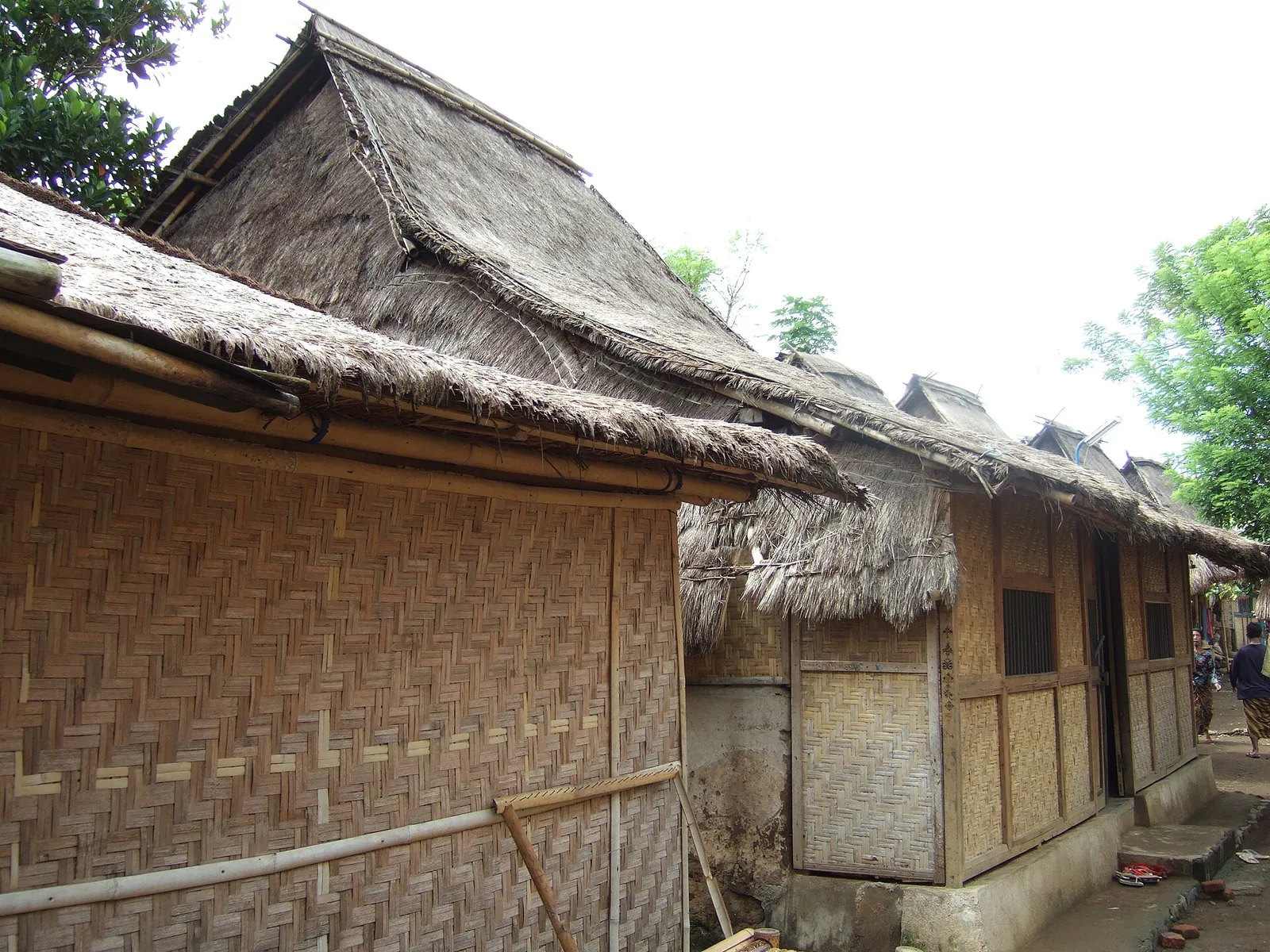
Sade, in Pujut district north of Kuta, is a Sasak village of around 150 thatched houses and about 750 people, according to the Ministry of Tourism. It is not a museum: the houses are lived in, a local guide meets visitors at the entrance, and the women weave the textiles you will be offered. The neighbouring village of Ende is about three minutes' drive north. The Ministry puts Sade 25 to 30 minutes from the airport and 15 minutes from Kuta Mandalika beach, with no public transport, so go by car or scooter.
The Pertamina Mandalika International Street Circuit is 4.3 km long, with 17 corners, and hosts MotoGP. When we checked on 2026-10-03, the Ministry of Tourism's events calendar listed the Mandalika MotoGP for 9–11 October 2026. On race weekends, expect hotels around Kuta to be full and the roads busy.
Make time for the local food
What to eat and where to look
Ayam taliwang
Young free-range chicken, half-grilled, then coated in a paste of red and bird's-eye chillies, shallots, garlic, shrimp paste and palm sugar and grilled again while it is basted. The Ministry of Tourism traces it to Taliwang on Sumbawa, but it is the dish most associated with Lombok.
- Where to look
- Specialist taliwang restaurants in Mataram, such as those the Ministry of Tourism lists on Jalan Ade Irma Suryani, and local warungs around the island.
- Fit it into your day
- A sit-down lunch or dinner with rice and plecing kangkung, perhaps on your half-day in Mataram.
Very spicy by default, though restaurants can usually adjust the heat. It contains shrimp paste.
Plecing kangkung
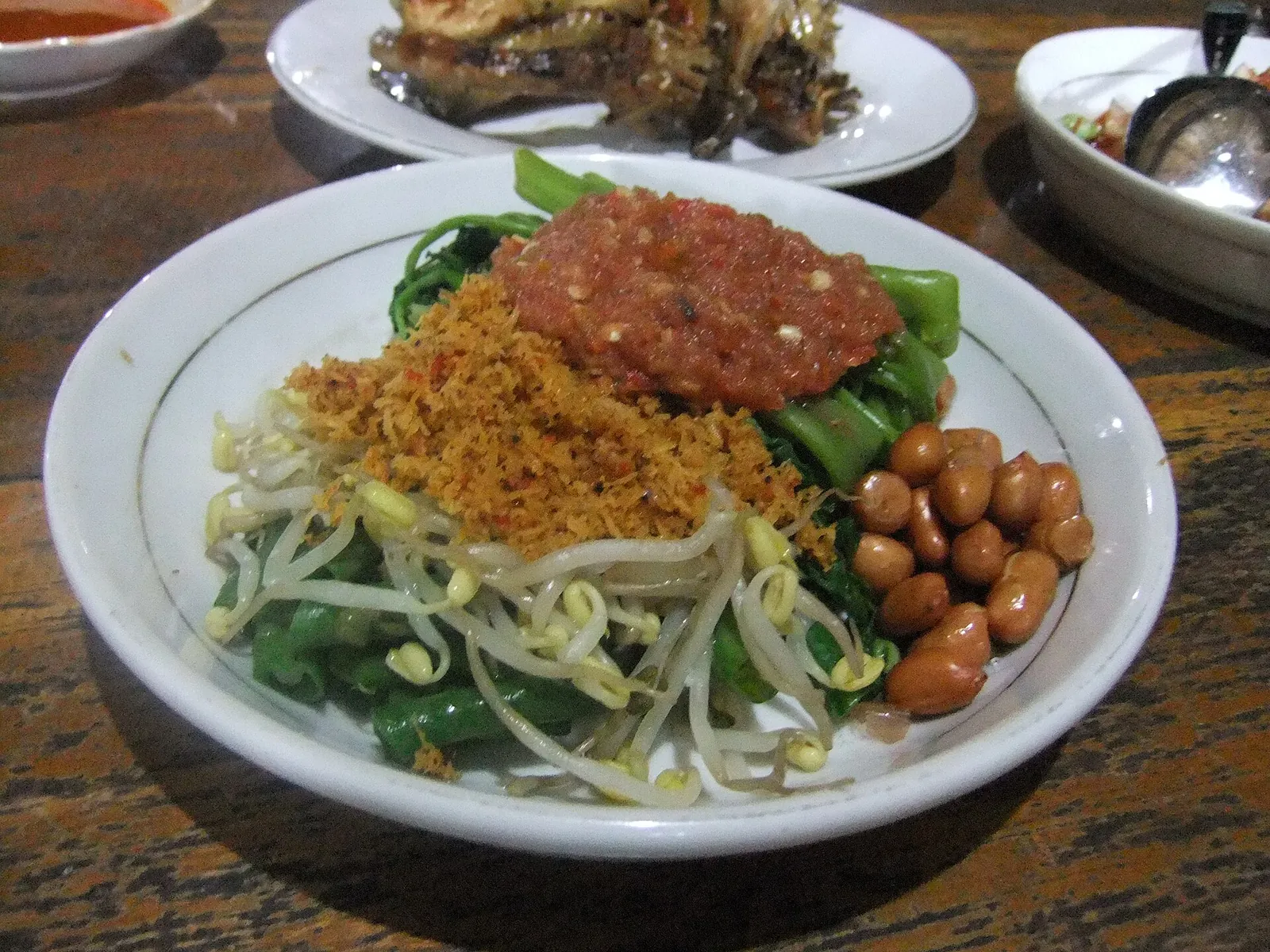
Boiled water spinach and bean sprouts topped with a fiery tomato sambal and grated coconut, often with fried peanuts. It is the usual partner for ayam taliwang.
- Where to look
- Warungs and taliwang restaurants across the island; the Ministry of Tourism suggests warungs near Senggigi Beach and Pasar Kebon Roek, a traditional market in Ampenan.
- Fit it into your day
- Order it as a side to share with grilled chicken or fish.
The raw sambal is hot and usually contains shrimp paste (terasi). Ask for it without if you are vegetarian or allergic.
Sate rembiga
Beef satay from the village of Rembiga near Mataram, marinated in shallots, garlic, chilli, tamarind and palm sugar and grilled over charcoal. Its spicy, savoury and slightly sweet flavour comes from the marinade rather than a peanut sauce.
- Where to look
- Satay places in Rembiga village near Mataram, which the Ministry of Tourism calls the dish's birthplace, and stalls at markets around the city.
- Fit it into your day
- An evening snack or a light dinner with rice or rice cakes.
Beef; spicy.
Nasi balap puyung
Steamed rice with spicy shredded beef, fried chicken, sambal, fried soybeans, grated coconut and vegetables. The Ministry of Tourism calls it Lombok's signature rice dish.
- Where to look
- Simple warungs, especially in the morning; the Ministry lists it among the traditional foods of the Mandalika area.
- Fit it into your day
- A filling breakfast before a day on the road or at the beach.
Spicy; contains beef and fried chicken.
The north: Senaru, Tetebatu and Mount Rinjani
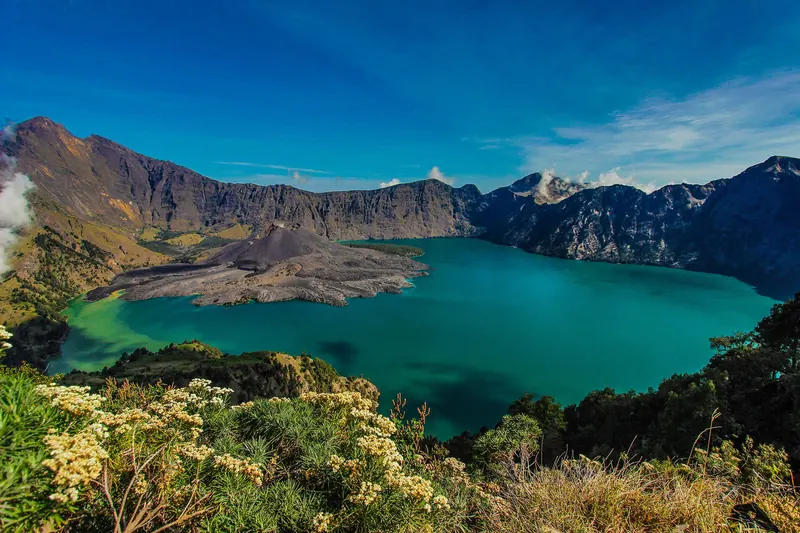
Mount Rinjani, 3,726 metres high, is the second-highest volcano in Indonesia. Its crater holds the crescent-shaped lake Segara Anak, about 600 metres below the rim, with the young cone of Gunung Baru rising from the water. The mountain lies within Gunung Rinjani National Park, which the Ministry of Tourism says covers 41,330 hectares and was established in 1997. The surrounding Rinjani-Lombok Geopark was added to UNESCO's list in 2018. The classic routes start from Senaru on the north side and Sembalun Lawang on the east. The Ministry describes a three-day trek from Senaru to the crater rim, down to the lake and out to Sembalun, and a four-day route that includes the summit.
Check the park's notices before you plan a trek. When we checked on 2026-10-03, the Gunung Rinjani National Park office had announced that from 1 September 2026, trekking was open only on a limited basis to prevent forest fires, and that new online bookings through the eRinjani app were suspended. Bookings paid before that date would still be honoured. After a fire at Bukit Setampol, the Torean trail was closed on 23 September 2026, and the park's update of 29 September said that neither the Torean nor the Senaru trail was being used to enter or leave the mountain until further notice. Treat any operator's package as provisional until the park confirms the trail is open.
You do not need to climb to enjoy the north. In Senaru, the Ministry of Tourism describes Sindang Gile (Sendang Gile) waterfall as about a 15-minute walk down steps, with Tiu Kelep another 30 to 45 minutes beyond it. The village also has old thatched houses and, in nearby Bayan, Masjid Kuno Bayan, which the Ministry calls the oldest mosque on Lombok, dating from the 16th century. Homestays in the village are the simplest places to sleep.
Tetebatu, on Rinjani's southern slopes in East Lombok, is the quieter choice. Wikivoyage describes a village of rice terraces, plantations and forest at about 700–800 metres, with noticeably cooler evenings. The Ministry of Tourism describes Sarang Walet waterfall as about 15 minutes' walk from the village centre, along with morning walks, coffee and coconut-oil making and farm activities. Both Senaru and Tetebatu work best as two-night stops, not as day trips from the coast.
The west: Senggigi, Mataram and the road to the Gilis
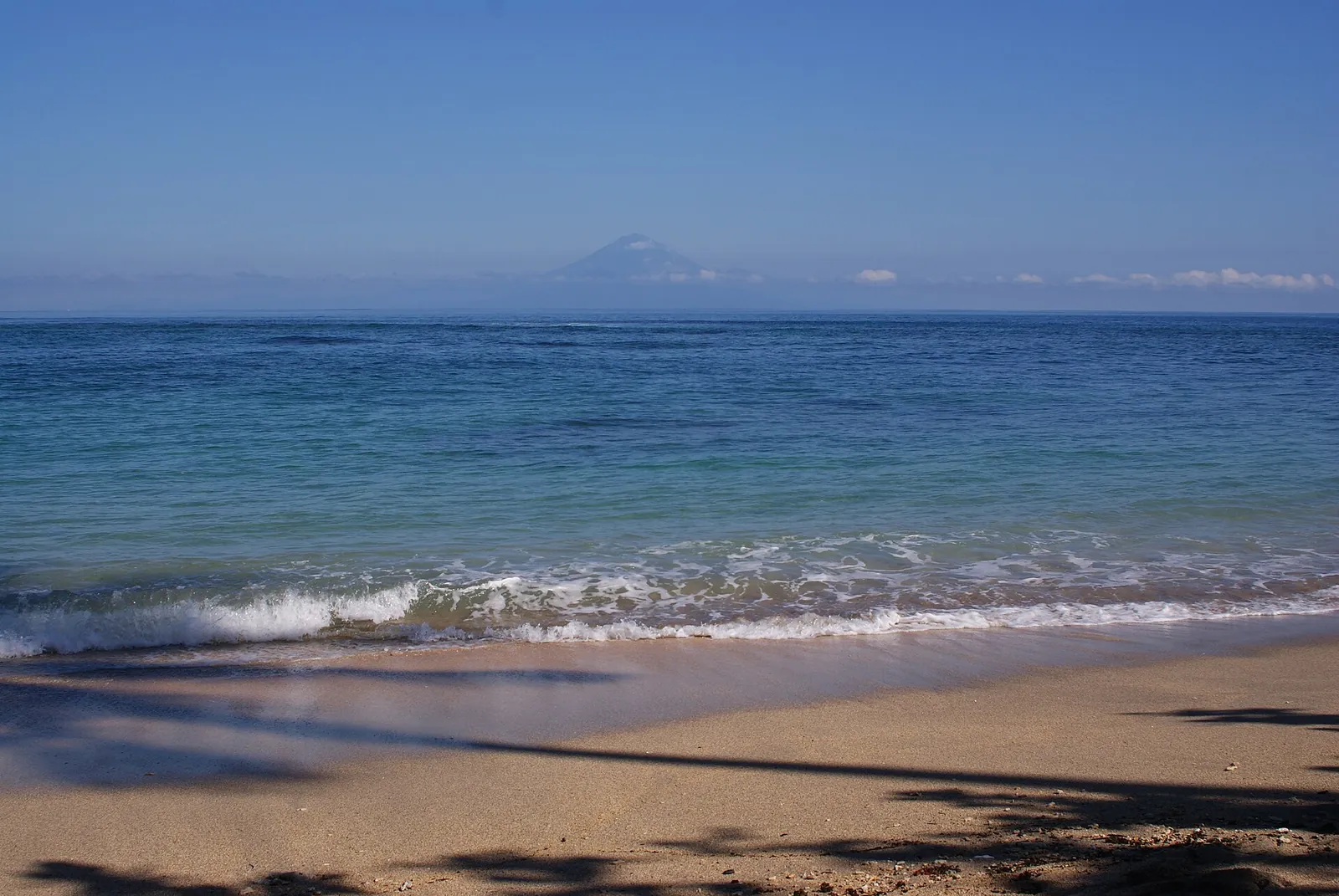
Senggigi suits travellers who want a calm beach hotel and easy day trips. The Ministry of Tourism describes safe swimming off the beach, a reef for snorkelling and Pura Batu Bolong, a Hindu temple on a rocky point south of the centre, which is known for its sunsets. Driving north along the coast towards Bangsal, Malimbu Hill is a viewpoint where, on clear evenings, the silhouette of Bali's Mount Agung appears across the strait.
Mataram, the provincial capital, is only a short drive inland and is worth half a day. Ampenan was the island's main port in the Dutch colonial era, and its old quarter still has the buildings of Arab, Chinese and European traders. Taman Mayura, a water garden with a pavilion in the middle of its pool, was built in the 18th century under the Balinese kingdom of Karangasem. Taman Narmada, about 10 km from the city, is an 18th-century royal garden laid out in imitation of Rinjani, with pools, a temple and a spring believed to keep you young. The Ministry of Tourism also suggests the West Nusa Tenggara Museum for the island's history.
For the Gili Islands, the mainland departure point is Bangsal harbour at the north end of the coast road. The islands are covered in their own guide; the practical point here is to sleep at least one or two nights on an island rather than visit for a day.
Getting around Lombok
Lombok has no railway, and the main bases are one to three hours apart by road. The easiest way to change base, and to sightsee on the way, is a car with a driver, booked through your hotel or a local company. Agree in advance on the route, the hours and what the price covers.
Public transport exists but is limited for visitors. The Ministry of Tourism says Lombok's bemo minibuses reach most tourist attractions but run only in the daytime. After dark, ojek motorbike taxis are unmetered, so agree the price before you get on. Wikivoyage reports that Grab and Gojek operate from the airport. Cidomo horse carts, which carry about four people, are found around Senggigi and on the Gilis.
Rent a scooter only if you are already an experienced rider. Wikivoyage notes that you need a full motorbike licence from home and an International Driving Permit with a motorbike endorsement, and a helmet must be worn at all times.
A sample week on Lombok
This is an editorial suggestion, not a timetable. Driving times depend on traffic and the road you take.
- Nights 1–3 — Kuta: beaches at Tanjung Aan and Mawun, Merese Hill at sunset, a morning in Sade and Ende.
- Nights 4–5 — Tetebatu or Senaru: rice-field walks and waterfalls. Senaru also has the Bayan mosque and, if the park has reopened the trail, the trek to the crater rim.
- Nights 6–7 — Senggigi or a Gili island: a beach to finish, with half a day in Mataram and Ampenan, or two nights on Gili Air or Meno.
- With ten days: add a two- to four-day Rinjani trek once the national park confirms which trails are open, or a longer stay on the Gilis.
Before you go: culture, events and the crossing from Bali
Most Sasak people are Muslim, and the Ministry of Tourism promotes Lombok as a halal destination. Away from the beach, dress modestly, especially in villages and near mosques, and check the Ramadan dates if you travel then. Lombok also has Hindu Balinese communities, whose temples, such as Pura Batu Bolong, are places of worship.
Bau Nyale is the Sasak festival when crowds gather at dawn on the south coast to catch the nyale sea worms, which appear only once a year. The festival is linked to the legend of Princess Mandalika and centres on Seger beach; in 2019 its programme also included peresean, the Sasak stick-fighting contest. The dates are set each year (in 2019 the main days were 24–25 February), so check the current year's dates with the Ministry of Tourism before you plan around them.
From Bali, the Ministry of Tourism lists a public ferry from Padang Bai to Lembar several times a day, taking around four to five hours and sometimes rough, as well as fast boats from Serangan and Padang Bai. Flying from Bali to Lombok takes about 30 minutes. Ferries also cross from Labuhan Lombok in the east to Poto Tano on Sumbawa in about an hour and a half.
Practical questions
How many days do I need on Lombok?
A week covers the south coast around Kuta, a stay below Rinjani in Senaru or Tetebatu and a few nights in Senggigi or on the Gilis. Add two to four days for a Rinjani trek, and more if you want time on the Gilis as well as the mainland.
Where is the best place to stay on Lombok for a first visit?
Kuta in the south is the easiest first base: it is close to the airport, the best-known beaches, Merese Hill and the Sasak village of Sade. Choose Senggigi if you want a quieter beach hotel close to Mataram and the boats to the Gilis.
Can I climb Mount Rinjani in October 2026?
Only if the national park allows it. When we checked on 2026-10-03, the Gunung Rinjani National Park office had opened trekking only on a limited basis from 1 September 2026 because of the fire risk. New eRinjani bookings were suspended, and the Torean and Senaru trails were closed. Check the park's official site before you book.
How do I get from Lombok airport to Kuta or Senggigi?
Kuta and the Mandalika coast are the shortest transfer from Lombok International Airport (LOP). When we checked on 2026-10-03, the airport's site listed DAMRI buses to Mataram, Ampenan, Senggigi and Selong and an airport taxi counter. Grab and Gojek also operate there, according to Wikivoyage. For Senaru or Tetebatu, book a car with a driver.
Is Lombok a good alternative to Bali?
Yes, if you want beaches, volcano scenery and Sasak village culture with fewer resort crowds. Lombok has less nightlife and shopping than south Bali, and its bases are further apart, so plan on a car and driver rather than short taxi hops.
When is the MotoGP at Mandalika in 2026?
When we checked on 2026-10-03, the Ministry of Tourism's events calendar listed MotoGP Mandalika for 9–11 October 2026. Hotels around Kuta fill up on race weekends, so book early or stay elsewhere on the island.
Sources and checks before you travel
Reference sources for the version dated 3 October 2026. Confirm opening times, access, transport and conditions for your travel dates.
- Indonesia Travel (Ministry of Tourism): West Nusa Tenggara ↗ — opens in a new tab
- Indonesia Travel (Ministry of Tourism): Lombok Island ↗ — opens in a new tab
- Indonesia Travel (Ministry of Tourism): Mount Rinjani ↗ — opens in a new tab
- Gunung Rinjani National Park (Balai TNGR): official site and notices ↗ — opens in a new tab
- Indonesia Travel (Ministry of Tourism): Geopark Gunung Rinjani-Lombok ↗ — opens in a new tab
- Indonesia Travel (Ministry of Tourism): Mandalika ↗ — opens in a new tab
- Indonesia Travel (Ministry of Tourism): Tanjung Aan ↗ — opens in a new tab
- Indonesia Travel (Ministry of Tourism): Pantai Mawun ↗ — opens in a new tab
- Indonesia Travel (Ministry of Tourism): Bukit Merese ↗ — opens in a new tab
- Indonesia Travel (Ministry of Tourism): The best sunsets in Mandalika ↗ — opens in a new tab
- Indonesia Travel (Ministry of Tourism): Sade village ↗ — opens in a new tab
- Indonesia Travel (Ministry of Tourism): Pertamina Mandalika International Circuit ↗ — opens in a new tab
- Indonesia Travel (Ministry of Tourism): Senaru tourism village ↗ — opens in a new tab
- Indonesia Travel (Ministry of Tourism): Tetebatu tourism village ↗ — opens in a new tab
- Indonesia Travel (Ministry of Tourism): Senggigi Beach ↗ — opens in a new tab
- Indonesia Travel (Ministry of Tourism): Pura Batu Bolong ↗ — opens in a new tab
- Indonesia Travel (Ministry of Tourism): Malimbu Hill ↗ — opens in a new tab
- Indonesia Travel (Ministry of Tourism): Kota Tua Ampenan ↗ — opens in a new tab
- Indonesia Travel (Ministry of Tourism): Taman Mayura ↗ — opens in a new tab
- Indonesia Travel (Ministry of Tourism): Taman Narmada ↗ — opens in a new tab
- Indonesia Travel (Ministry of Tourism): Gili Trawangan and the Gilis ↗ — opens in a new tab
- Indonesia Travel (Ministry of Tourism): Bau Nyale Festival 2019 ↗ — opens in a new tab
- Indonesia Travel (Ministry of Tourism): Ayam taliwang ↗ — opens in a new tab
- Indonesia Travel (Ministry of Tourism): Sate rembiga ↗ — opens in a new tab
- Indonesia Travel (Ministry of Tourism): 7 traditional foods of Mandalika ↗ — opens in a new tab
- Indonesia Travel (Ministry of Tourism): Plecing kangkung ↗ — opens in a new tab
- Indonesia Travel (Ministry of Tourism): Lombok's halal cuisine ↗ — opens in a new tab
- Lombok International Airport (InJourney Airports): public transport and rental ↗ — opens in a new tab
- Wikivoyage: Lombok (with the Senggigi, Kuta (Lombok) and Tetebatu pages) ↗ — opens in a new tab
Does this experience fit your route?
A day with a local driver is the simplest way to combine the south-coast beaches, Sade and the waterfalls between bases. Before you book, check the pick-up area, the length of the day and what the price includes.
Browse relevant experiences on Viator ↗ — opens in a new tabAffiliate link · Book with ViatorPhoto credits
Mawun Beach, a sheltered bay on Lombok's south coast
Photograph: Midori — opens in a new tab · CC BY 3.0 — opens in a new tab
Changes: Resized and converted to WebP; displayed with responsive crops. · Original photograph and licence details ↗ — opens in a new tab
Senggigi Beach, looking west across the Lombok Strait to Mount Agung on Bali
Photograph: Midori — opens in a new tab · CC BY 3.0 — opens in a new tab
Changes: Resized and converted to WebP; displayed with responsive crops. · Original photograph and licence details ↗ — opens in a new tab
Traditional Sasak houses in Sade village, Central Lombok
Photograph: Midori — opens in a new tab · CC BY 3.0 — opens in a new tab
Changes: Resized and converted to WebP; displayed with responsive crops. · Original photograph and licence details ↗ — opens in a new tab
Plecing kangkung, Lombok's water spinach with tomato sambal
Photograph: Midori — opens in a new tab · CC BY 3.0 — opens in a new tab
Changes: Resized and converted to WebP; displayed with responsive crops. · Original photograph and licence details ↗ — opens in a new tab