Plan your trip · Indonesia
First trip to Indonesia: how to plan a route and avoid the classic mistakes
Indonesia's geospatial agency has standardised the names of 17,024 islands, and the country spans three time zones. No first trip comes close to seeing it, and the most common mistake is trying anyway: four islands in ten days, half of them spent in airports, harbours and traffic. A good first visit picks one hub, usually Bali, adds one contrasting region that is a single flight or boat away, and gives each place enough nights to be more than a transfer. This guide is about that shape: how much to attempt, which pairings work, what to sort out before you fly and the mistakes that cost first-time visitors days or money.
- Suggested time
- About two weeks for Bali plus one other region; 10 days at a minimum for two regions; one week for Bali alone
- Where to stay
- Sanur or another south-Bali base and Ubud, then Yogyakarta, the Gili Islands or Lombok, or Labuan Bajo
- Season and timing
- April to October is the dry season across most of the country, Java and Bali included; avoid booking flights on Nyepi, Bali's 24-hour Day of Silence (8 March 2027), and expect crowded transport around Lebaran (10–11 March 2027).
The short answer
For a first trip, plan two weeks and two regions, with no more than four hotel bases. Start in Bali (the Ministry of Tourism names Ngurah Rai and Jakarta's Soekarno-Hatta as the principal gateways) and split it between the south coast, where Sanur is handy for the airport, and Ubud inland. Then add one of three pairings: Java's Yogyakarta for Borobudur and Prambanan, Lombok and the Gili Islands by boat, or Labuan Bajo for Komodo National Park by a short flight. With ten days, do Bali plus one of these; with a week, stay on Bali with two bases. Fly the long legs, keep one buffer night before your international flight, and check Nyepi and Lebaran dates before you book anything.
Start with a shape, not a list of islands
Indonesia is not a country you tour so much as one you sample. Badan Informasi Geospasial, the national mapping agency, said in 2023 that it had standardised the names and coordinates of 17,024 islands, and the Ministry of Tourism's time-zone guide divides the country into three: Western Indonesia Time (WIB) for Sumatra and Java, Central Indonesia Time (WITA) for Bali, Nusa Tenggara, Sulawesi and much of Kalimantan, and Eastern Indonesia Time (WIT) for Maluku and Papua. Flying from Jakarta to Bali, you lose an hour; flying on to Papua, you lose another.
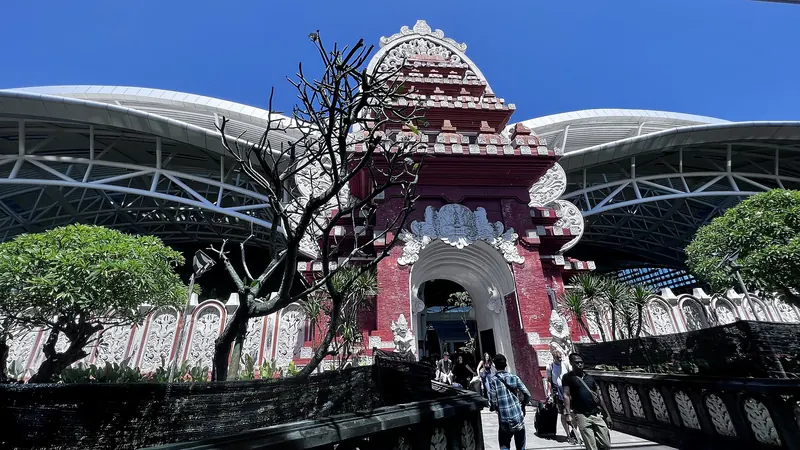
The practical answer is to build the trip around a hub and one spoke. Bali is the obvious hub for a first visit: it has a large international airport, the widest choice of hotels and onward flights and boats to the islands around it. The second region should feel different, not just be another beach: Hindu Bali contrasts with Muslim-majority Java and its temples, with the car-free Gili Islands, or with the dry hills and dragons of Komodo.
Leave Sumatra, Kalimantan, Sulawesi, Maluku and Papua for a second trip unless one of them is the reason you are going. Each is a journey of its own, and some eastern routes are fragile: for the flight to the Banda Islands, for example, the ministry advises reconfirming because flights are often cancelled due to bad weather and other problems.
How much to attempt: count nights and transfers, not sights
Every change of base costs most of a day in Indonesia, even on short distances. Roads are slow: the Ministry of Tourism puts Sanur, about 15 km from Bali's airport, at 30 to 45 minutes by taxi depending on traffic, and Ubud is reached only by road, on hilly terrain that the ministry suggests you ask locals about before walking or cycling. In Java, Borobudur is about 40 km from Yogyakarta, which the ministry describes as 1 to 1.5 hours by road. Short distances on the map are not short days.
A simple rule keeps a first trip relaxed: no base for fewer than three nights, and no more than four bases in two weeks. Treat a flight or a ferry between islands as the main event of that day, not something to squeeze in before a sunset dinner. If you want both a volcano sunrise and a temple at dawn, put them on different days; both mean a pre-dawn start.
Plan the end of the trip as carefully as the start. Sea conditions can delay boats and ash or storms can delay flights, so spend the last night near your departure airport rather than on a small island or after a long overland day. On Bali, that means a south-coast base such as Sanur rather than a remote stay in the north or east.
Make time for the local food
What to eat and where to look
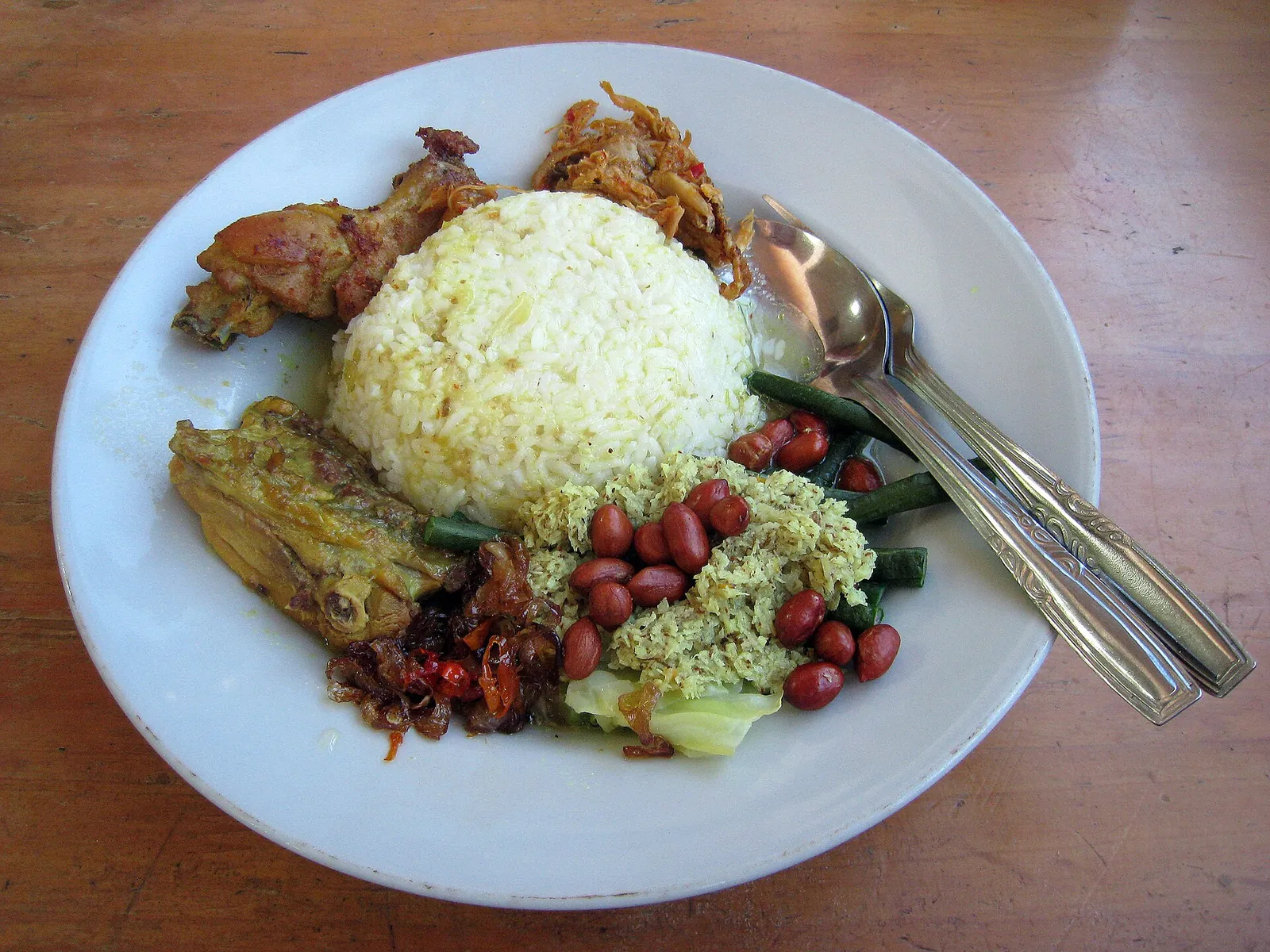
Nasi campur (mixed rice)
A plate of rice with small portions of whatever the kitchen has cooked that day: vegetables, meat or fish, egg, peanuts, crackers and sambal. It is the most useful first order in Indonesia because it lets you try several dishes at once and is sold almost everywhere.
- Where to look
- Warungs (small family eateries) with dishes displayed in a glass case, in Bali, Java and Lombok alike.
- Fit it into your day
- Lunch on a travel day, when you want something quick that is not fast food.
On Bali, nasi campur often includes pork; in Muslim-majority areas it is usually halal. Ask which dishes are spicy, and ask for the sambal on the side.
Gudeg (Yogyakarta's jackfruit stew)
Young jackfruit slow-cooked with palm sugar and coconut milk until sweet and brown, usually served with rice, egg, chicken and a spicy side dish of stewed cattle-skin crackers (krecek). It is Yogyakarta's signature dish.
- Where to look
- Gudeg stalls and restaurants around Yogyakarta, many of which open early for breakfast.
- Fit it into your day
- Breakfast or lunch on a Yogyakarta day, after a sunrise visit to Borobudur or Prambanan.
Distinctly sweet; the spicy side dishes add heat. The side dishes often include offal or skin, so ask if you prefer a simpler plate.
Sate lilit (Balinese minced satay)
Minced fish, chicken or pork mixed with grated coconut and spices, wrapped around lemongrass or bamboo sticks and grilled. It is a Balinese speciality and a good contrast to the peanut-sauce satay found across the country.
- Where to look
- Balinese warungs and night markets, and as part of a Balinese nasi campur.
- Fit it into your day
- A snack or shared dish at a night market on your Bali coast nights.
Check the meat: pork versions are common on Bali.
Plecing kangkung (Lombok water spinach)
Blanched water spinach served cold with a sharp, fiery tomato and chilli sambal, often with bean sprouts and peanuts. It is a Lombok dish and a common side to grilled chicken or fish.
- Where to look
- Warungs in Lombok and on the Gili Islands that cook Sasak food.
- Fit it into your day
- A side dish at dinner on the Lombok and Gili route.
The sambal is very hot and may contain shrimp paste; ask for it separately if you are unsure.
Three first routes that work
Each of these starts with about a week on Bali, split between the coast and Ubud, and adds one region that is one flight or one boat away. Pick the one that fits what you want to see, not the one that ticks off the most names.
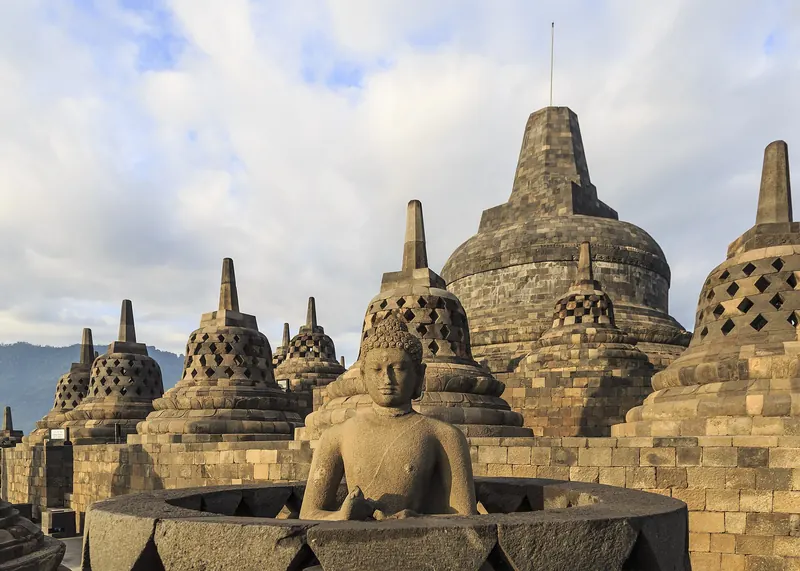
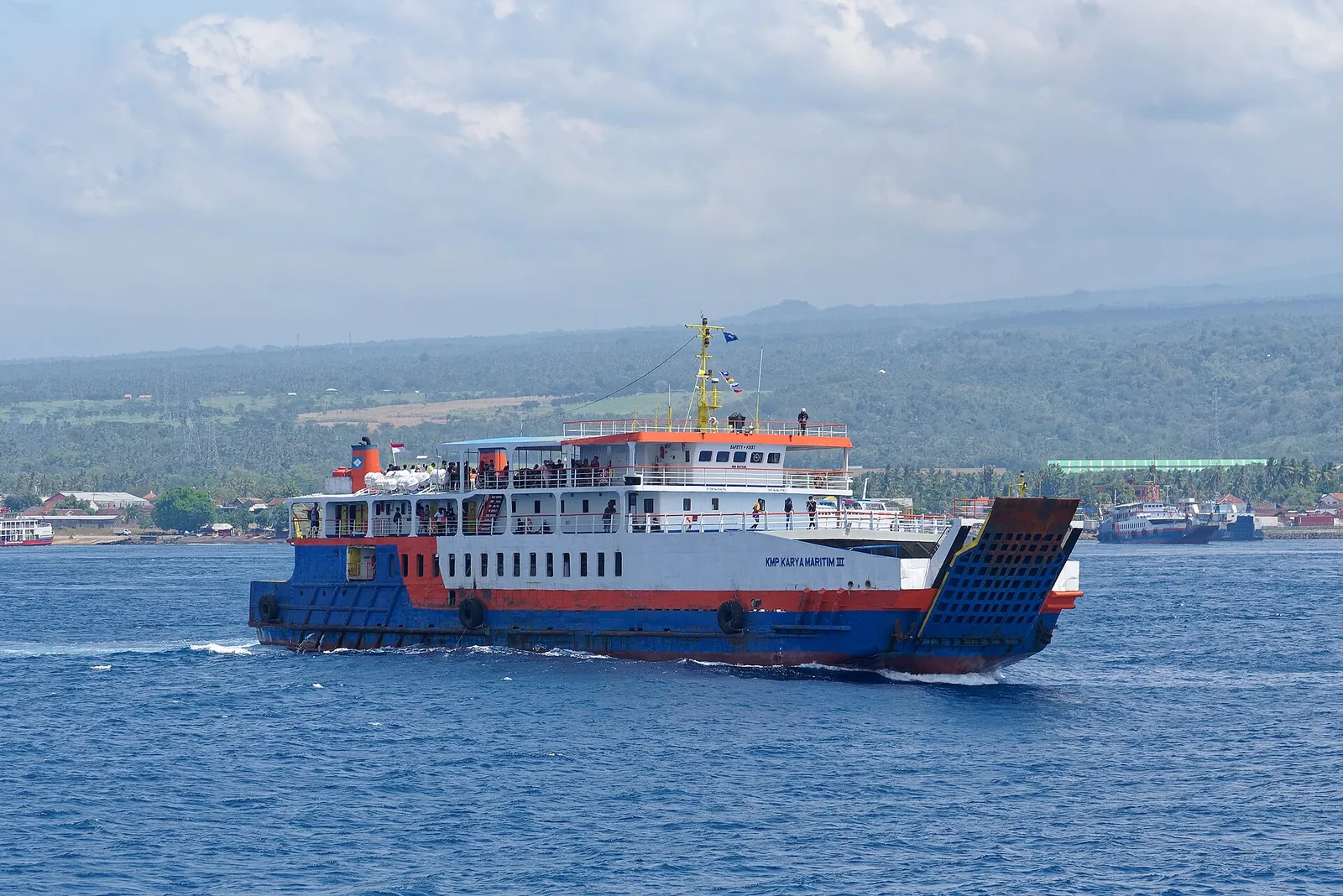
- Bali and Java (Yogyakarta): for temples and culture. Yogyakarta is the base for Borobudur, a UNESCO World Heritage Site since 1991, and the Hindu temples of Prambanan; the main gateway is Yogyakarta International Airport (YIA), and trains arrive at Tugu station, a walk from Malioboro. You can also cross overland: the ministry describes the ferry from Gilimanuk on Bali's western tip to Ketapang in East Java, the route via Banyuwangi and the Ijen crater.
- Bali, Lombok and the Gili Islands: for beaches, snorkelling and a slower pace. The ministry describes daily fast boats from Serangan and Padang Bai on Bali to Gili Trawangan; on the Gilis, cars and motorbikes are not allowed, and people get around by bicycle or horse cart. Lombok itself has its own airport (LOP) if you prefer to fly one way.
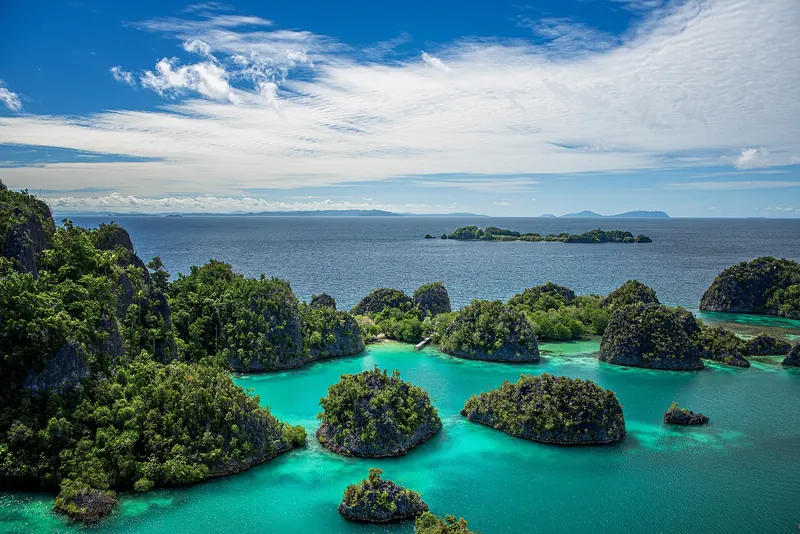
- Bali and Labuan Bajo (Komodo): for boat days, island hikes and Komodo dragons. The ministry lists direct flights from Bali (DPS) to Komodo Airport (LBJ) of about 1 hour 20 minutes. Since 1 April 2026, Komodo National Park has limited visits to 1,000 people a day, according to the park office quoted by the state news agency Antara, so book boat trips early in the busy dry season and keep a spare day in Labuan Bajo.

Paperwork to sort out before you fly
Entry rules depend on your nationality, so check your own passport on the official e-Visa site of Indonesia's Directorate General of Immigration before you book. When we checked on 2026-10-03, that site offered an electronic visa on arrival (e-VOA) and listed a visa exemption for ASEAN nationals. The UK government's advice for British passport holders, checked the same day, said a 30-day visa on arrival cost IDR 500,000, payable by cash or card, valid for a single entry and extendable once for another 30 days; that your passport must be valid for at least six months after arrival and have at least two blank pages; and that you need proof of an onward or return journey. It also warned that an online visa must be approved before you arrive, and that overstaying costs IDR 1 million a day.
Two further steps catch first-timers out. The immigration site says all travellers must submit an arrival card, the All Indonesia declaration, within three days before arrival; the UK advice adds that it is free and that you should avoid lookalike websites that ask for payment. And if your trip includes Bali, the provincial government charges foreign tourists a one-time levy of IDR 150,000, which you can pay through the official Love Bali website or at counters at Ngurah Rai airport and Benoa port; the Ministry of Tourism recommends paying before you travel.
Match the visa to what you will actually do. The ministry's visa page warns that activities outside your visa's purpose can lead to fines, detention or deportation, and the UK advice says the visa on arrival is not suitable for commercial content creation or influencer work. Use only official government links: the UK advice reports a rise in visa scams by fake agents.
Dates that change a trip: seasons, Nyepi and Lebaran
The Ministry of Tourism describes two relative seasons: in most of the country, Java and Bali included, the dry season runs from April to October and the wet season from November to March. Rain matters more than temperature, especially for boat days, volcano hikes and sunrise viewpoints. Our best-time guide covers the regional exceptions, such as Raja Ampat in the far east.
Two holidays deserve a check before you buy flights. On Nyepi, Bali's Day of Silence, the ministry says Ngurah Rai airport and the whole island close for 24 hours; it advises not to book a flight on that date. In 2027, Nyepi falls on 8 March, according to the holiday decree reported by Antara. Days later comes Idul Fitri (Lebaran), on 10–11 March 2027, with collective leave on 9, 12 and 15 March; the ministry notes that the Idul Fitri break is often extended to 7–10 days as families travel to their home towns, so trains, flights and roads in Java fill up.
During Ramadan, which precedes Idul Fitri, the ministry says many restaurants and food stalls close in the daytime, while larger restaurants stay open with curtains drawn. Bali, where the ministry notes that Hinduism is predominant, is less affected, but on Java plan lunches around hotel restaurants and malls, and avoid eating, drinking or smoking in public in daylight.
The mistakes first-time visitors make
Most first-trip problems in Indonesia are not about missing a sight but about avoidable risks and lost days. These are the ones the official advice returns to most often.
- Hiring a scooter without the right licence. The UK advice says you cannot drive on a UK licence alone and need an International Driving Permit, that moped and motorbike accidents in Bali have risen sharply, and that you should check your travel insurance covers you. For most first-timers, a car with a driver or a ride-hailing app is the better choice.
- Boarding any boat that leaves. Sea conditions change quickly and safety standards vary, according to the UK advice: check for life jackets (bring children's sizes if you need them) and avoid sailing after dark. The meteorological agency BMKG publishes marine forecasts.
- Drinking cheap spirits and counterfeit brands. The UK advice reports deaths from methanol in drinks bought in bars, shops and hotels in tourist areas, and notes that it cannot be detected by taste or smell.
- Underestimating drug laws. Cannabis products, including CBD, are illegal, and the Ministry of Tourism's local-law page lists long prison terms and, for trafficking larger amounts, the death penalty.
- Changing money on the street. Use licensed changers with the Bank Indonesia logo and QR code, as the UK advice recommends, and carry rupiah for small towns and markets: the ministry notes that cards are common in cities and tourist areas but that remote places may take only cash.
- Ignoring volcano and temple etiquette. Check alert levels on MAGMA Indonesia before a volcano hike, respect exclusion zones, and on Bali follow the provincial guidelines: dress modestly at temples and ceremonies, and do not step on offerings.
Practical questions
How many days do I need for a first trip to Indonesia?
About two weeks lets you combine Bali with one other region, such as Yogyakarta, Lombok and the Gili Islands, or Labuan Bajo for Komodo, without rushing. With ten days, keep to two regions; with a week, stay on Bali and split it between two bases.
Is Bali a good base for a first trip?
Yes. Ngurah Rai airport is one of the country's two principal gateways, and Bali has flights to Labuan Bajo and Java and boats to Lombok and the Gili Islands. Stay in two areas, such as Sanur on the coast and Ubud inland, rather than one.
Do I need a visa for Indonesia?
Most visitors do, but the rules depend on your nationality, and ASEAN nationals are listed as exempt. When we checked on 2026-10-03, the UK government's advice said British travellers could get a 30-day visa on arrival for IDR 500,000 or apply online beforehand. Check the official e-Visa site, and submit the free All Indonesia arrival card within three days before arrival.
How do I pay the Bali tourist levy?
Foreign tourists pay a one-time levy of IDR 150,000 through the official Love Bali website or at counters at Ngurah Rai airport and Benoa port. The Ministry of Tourism recommends paying before you travel.
Should I rent a scooter in Bali?
Only if you hold the right licence and are an experienced rider. The UK government's advice says you need an International Driving Permit and warns of a large rise in moped and motorbike accidents in Bali. A car with a driver or a ride-hailing app is safer for most first-time visitors.
When should I not travel to Bali?
Avoid flying in or out on Nyepi, when the airport closes for 24 hours; in 2027 that is 8 March. Around Idul Fitri (10–11 March 2027) transport across Java is at its busiest. Weather-wise, April to October is the dry season.
Sources and checks before you travel
Reference sources for the version dated 3 October 2026. Confirm opening times, access, transport and conditions for your travel dates.
- CNN Indonesia: Jumlah pulau resmi di RI capai 17.024 ↗ — opens in a new tab
- Ministry of Tourism (Indonesia Travel): Time differences ↗ — opens in a new tab
- Ministry of Tourism (Indonesia Travel): Getting to Indonesia ↗ — opens in a new tab
- Ministry of Tourism (Indonesia Travel): Banda Neira ↗ — opens in a new tab
- Ministry of Tourism (Indonesia Travel): Pantai Sanur ↗ — opens in a new tab
- Ministry of Tourism (Indonesia Travel): Ubud ↗ — opens in a new tab
- Ministry of Tourism (Indonesia Travel): Borobudur, trail of civilization ↗ — opens in a new tab
- Ministry of Tourism (Indonesia Travel): Malioboro ↗ — opens in a new tab
- Ministry of Tourism (Indonesia Travel): Banyuwangi ↗ — opens in a new tab
- Ministry of Tourism (Indonesia Travel): Gili Trawangan and the Gilis ↗ — opens in a new tab
- Ministry of Tourism (Indonesia Travel): 5 seafront hotels in Labuan Bajo ↗ — opens in a new tab
- Antara: BTNK tetapkan kuota 1.000 wisatawan per hari di TN Komodo ↗ — opens in a new tab
- Directorate General of Immigration: Official e-Visa website ↗ — opens in a new tab
- UK FCDO travel advice: Indonesia entry requirements ↗ — opens in a new tab
- Ministry of Tourism (Indonesia Travel): All Indonesia app guide ↗ — opens in a new tab
- Ministry of Tourism (Indonesia Travel): Visa classification update ↗ — opens in a new tab
- Ministry of Tourism (Indonesia Travel): Bali regulations ↗ — opens in a new tab
- Love Bali (Bali Provincial Government): Travel guidelines in Bali ↗ — opens in a new tab
- Ministry of Tourism (Indonesia Travel): Weather, climate and seasons ↗ — opens in a new tab
- Ministry of Tourism (Indonesia Travel): Business hours and holiday ↗ — opens in a new tab
- Ministry of Tourism (Indonesia Travel): Planning to spend Nyepi in Bali? ↗ — opens in a new tab
- Antara: Daftar libur nasional 2027 dan cuti bersama ↗ — opens in a new tab
- UK FCDO travel advice: Indonesia safety and security ↗ — opens in a new tab
- Ministry of Tourism (Indonesia Travel): Local law ↗ — opens in a new tab
- Ministry of Tourism (Indonesia Travel): Payment system ↗ — opens in a new tab
- Ministry of Tourism (Indonesia Travel): Denpasar, Bali Ngurah Rai Airport ↗ — opens in a new tab
- Ministry of Tourism (Indonesia Travel): People and culture ↗ — opens in a new tab
- BMKG maritime weather service ↗ — opens in a new tab
Does this experience fit your route?
Building a first route? Compare day trips from Bali, Yogyakarta and the Gili Islands, and check pick-up areas and weather policies before you book.
Browse relevant experiences on Viator ↗ — opens in a new tabAffiliate link · Book with ViatorPhoto credits
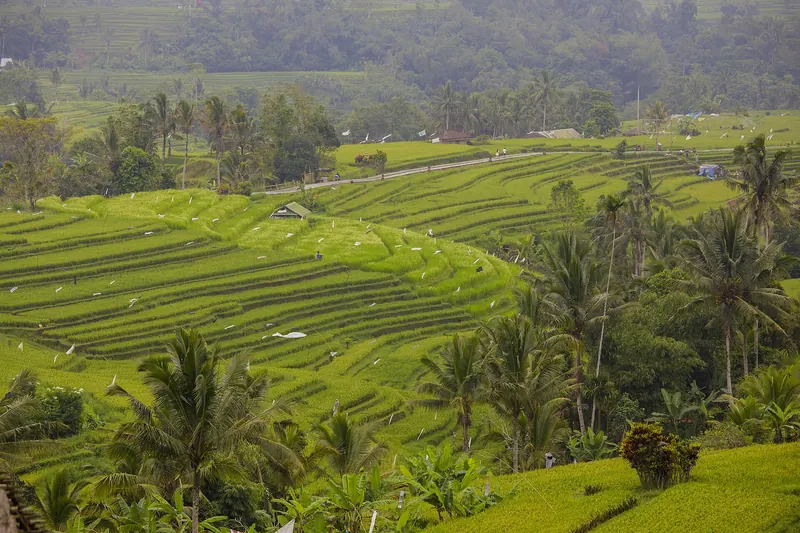
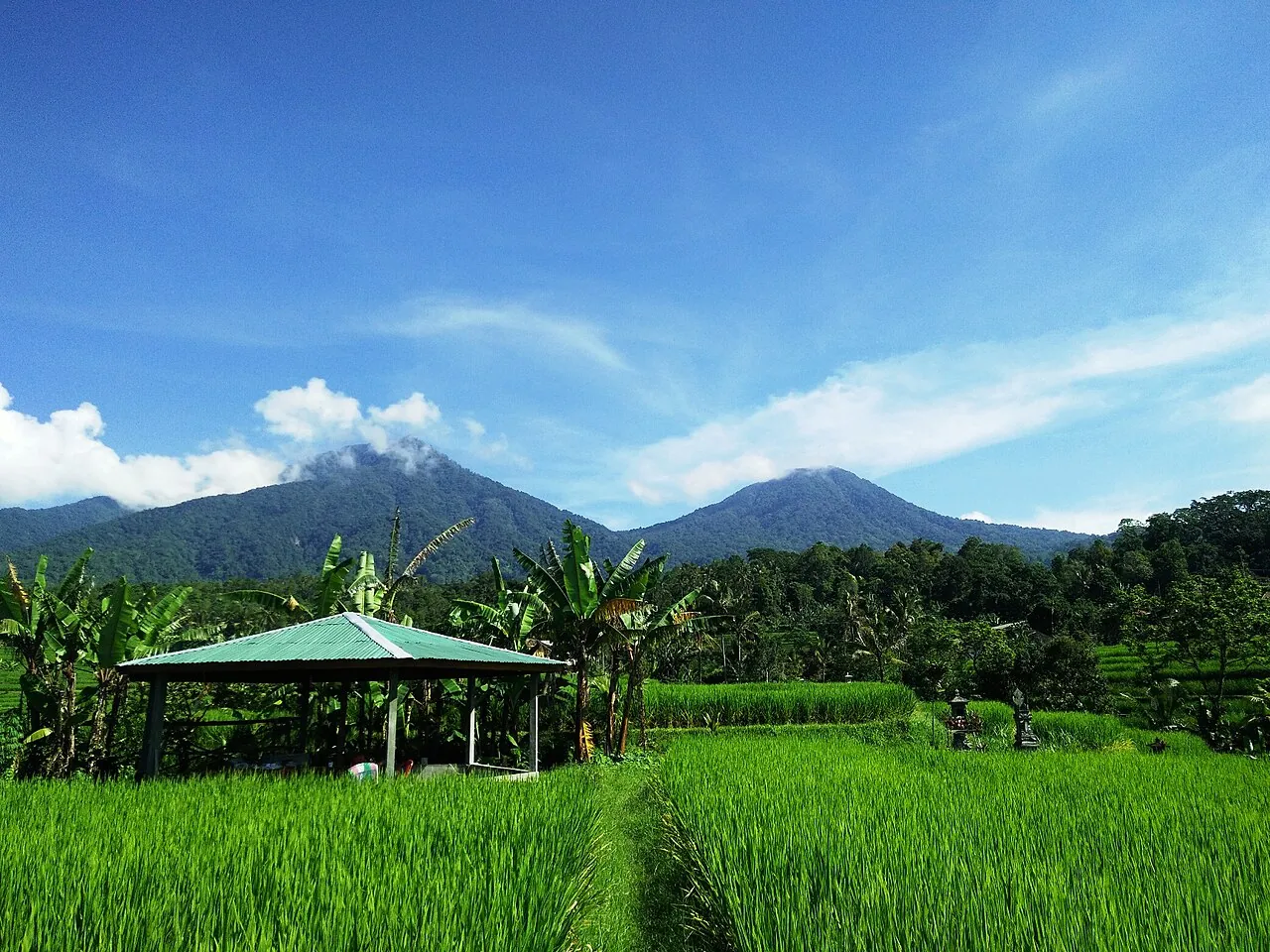
Rice terraces at Jatiluwih, in Bali's central highlands: the kind of slow inland day a first trip should leave room for
Photograph: Imacim — opens in a new tab · CC BY-SA 4.0 — opens in a new tab
Changes: Resized and converted to WebP; displayed with responsive crops. · Original photograph and licence details ↗ — opens in a new tab
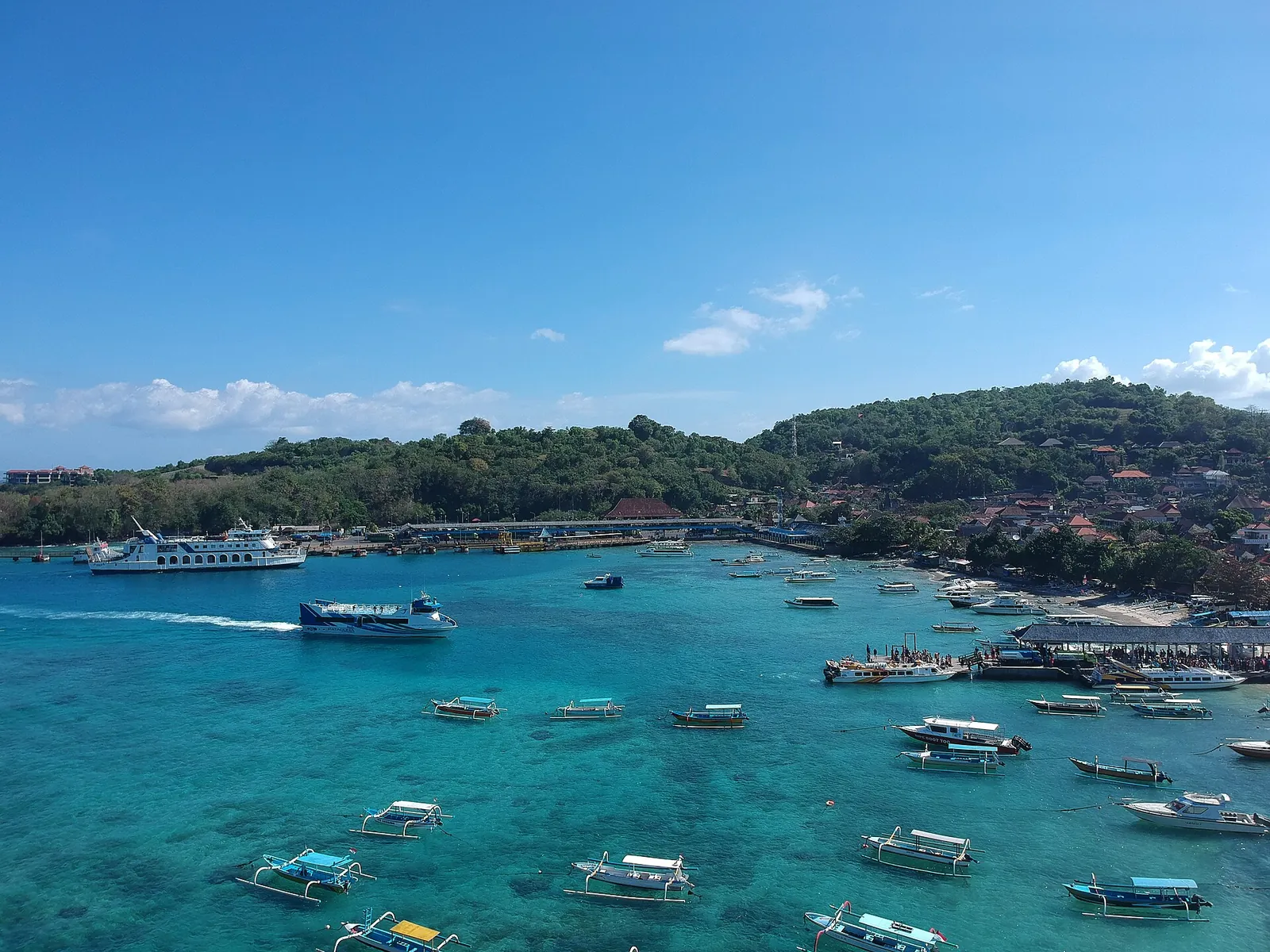
Padangbai harbour in east Bali, one of the ports for boats to Lombok and the Gili Islands
Photograph: Magul — opens in a new tab · CC BY-SA 4.0 — opens in a new tab
Changes: Resized and converted to WebP; displayed with responsive crops. · Original photograph and licence details ↗ — opens in a new tab
Prambanan, near Yogyakarta: the Java half of a classic Bali-and-Java first trip
Photograph: Jakub Hałun — opens in a new tab · CC BY-SA 4.0 — opens in a new tab
Changes: Resized and converted to WebP; displayed with responsive crops. · Original photograph and licence details ↗ — opens in a new tab
The Karya Maritim III ferry crossing the Bali Strait from Ketapang, Java, to Gilimanuk, Bali
Photograph: Jakub Hałun — opens in a new tab · CC BY-SA 4.0 — opens in a new tab
Changes: Resized and converted to WebP; displayed with responsive crops. · Original photograph and licence details ↗ — opens in a new tab
Balinese nasi campur with ayam betutu in Denpasar: rice with a little of everything, an easy first order
Photograph: Gunawan Kartapranata — opens in a new tab · CC BY-SA 3.0 — opens in a new tab
Changes: Resized and converted to WebP; displayed with responsive crops. · Original photograph and licence details ↗ — opens in a new tab