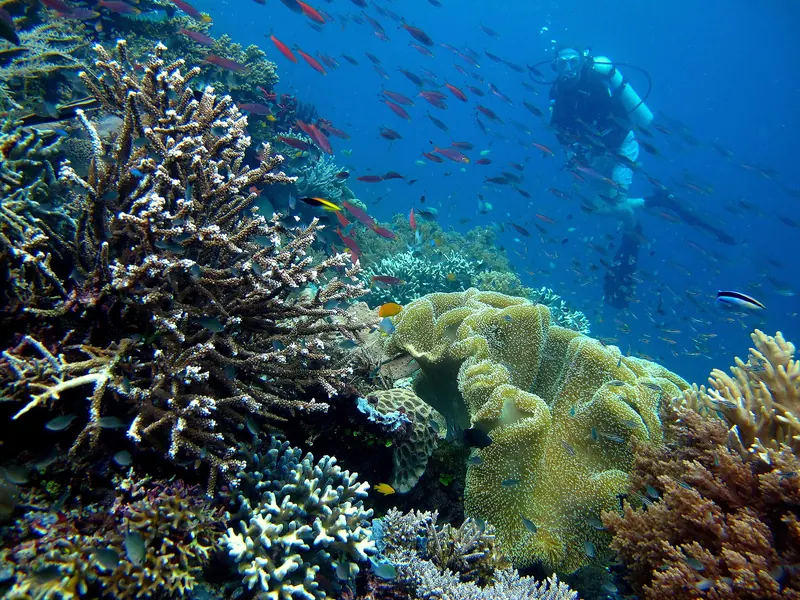
Lombok and Nusa Tenggara · East Nusa Tenggara
Labuan Bajo guide: nights, where to stay, day boat or liveaboard
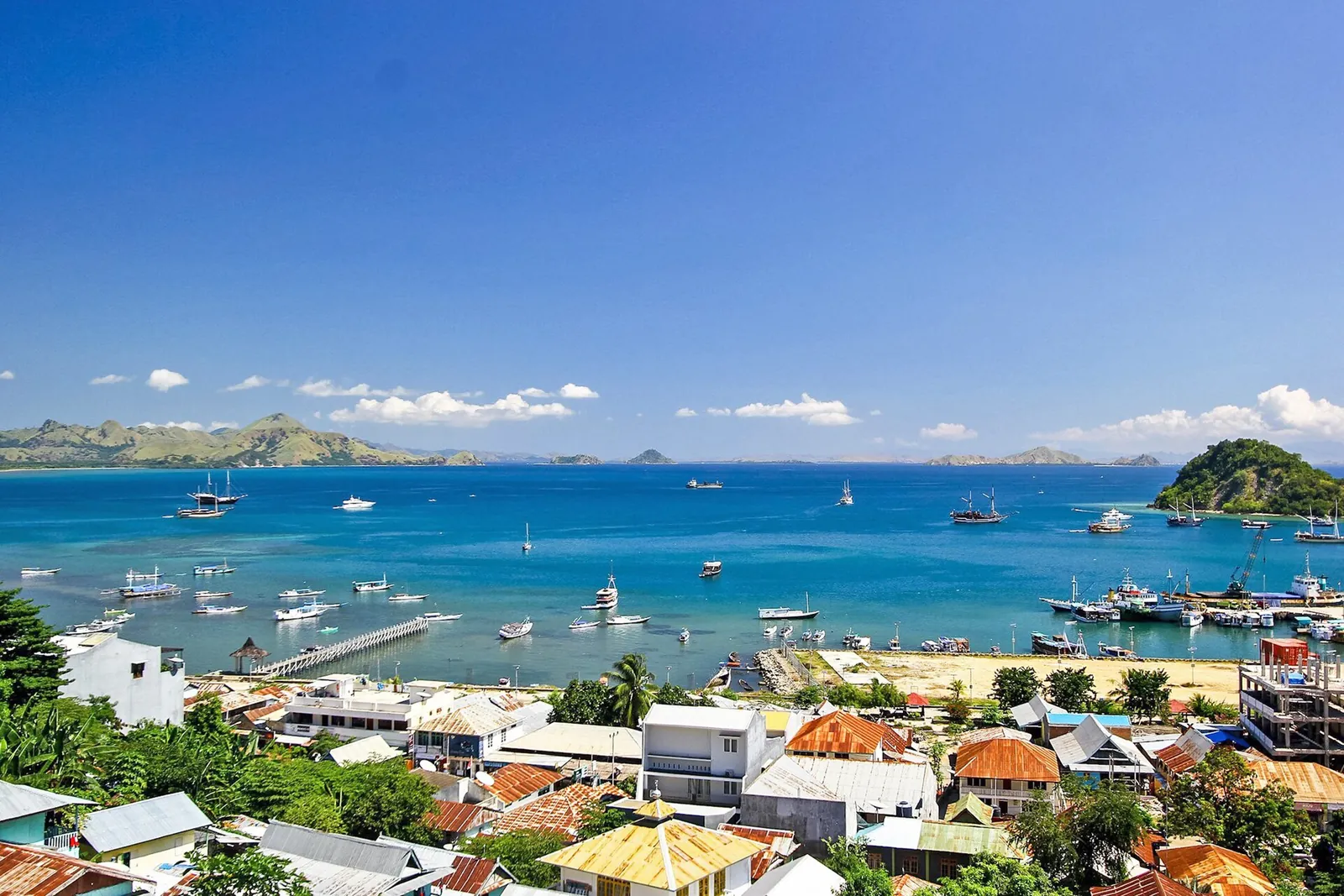
Labuan Bajo is where almost every Komodo trip starts and ends. The Ministry of Tourism describes a former fishing settlement on the westernmost tip of Flores that grew into the gateway to Komodo National Park; today it is a compact harbour town strung along one main road above a bay full of boats. Most of what visitors come for lies offshore, so the real decisions are how many nights to spend on land, which part of town to sleep in, and whether to see the park on day boats or from a liveaboard.
- Suggested time
- 3–5 nights (fewer on land if you join a liveaboard)
- Where to stay
- Town centre by the harbour for day boats; Pede Beach (south) or Waecicu (north) for resort stays
- Season and timing
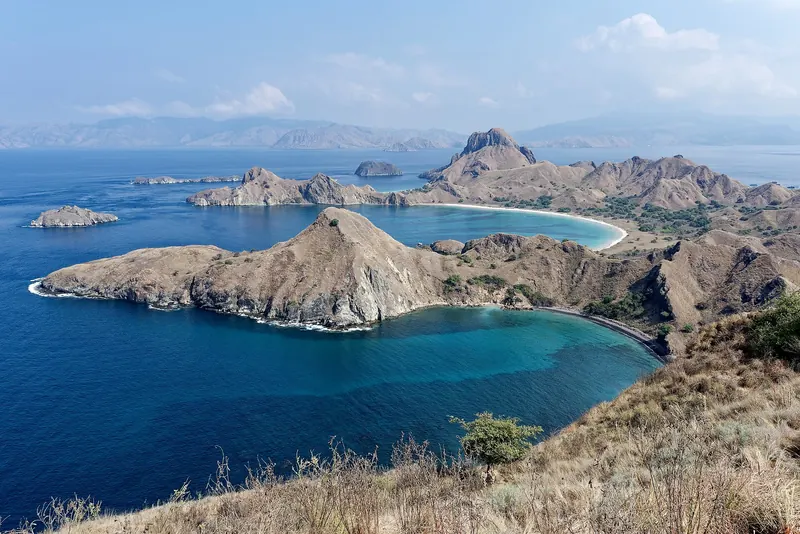
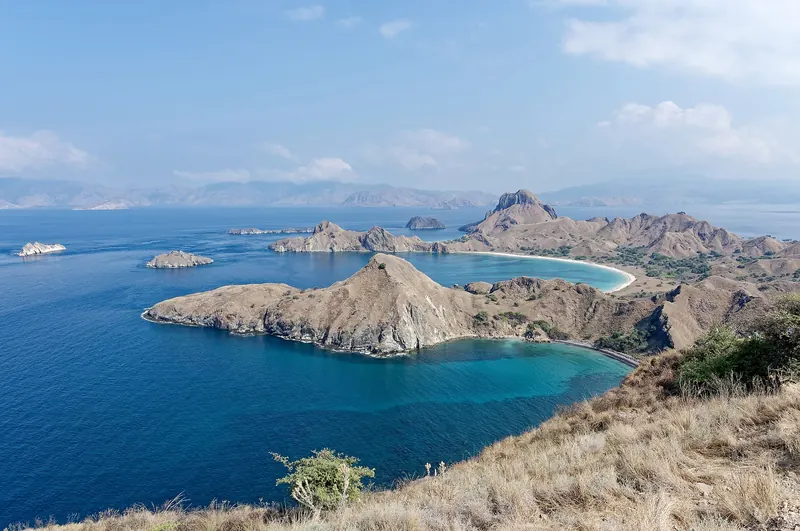
- Rain is light from April to November and heavy from December to March. Padar's hills are green in the wet season and dry and golden in the dry season. The Ministry of Tourism advises against visiting Rinca in June and July, when the dragons are mating and harder to find.
The short answer
Plan on four nights. Sleep in town near the harbour if you are taking day boats, or at Pede or Waecicu beach if you want a resort between trips. Use one full day on a boat for Padar, Komodo or Rinca and the reefs, and keep a second day spare for weather or the park's daily visitor quota. Spend the remaining time on Batu Cermin cave, a sunset viewpoint and dinner at Kampung Ujung. If you want to see more of the park than one day allows, a two- or three-day phinisi liveaboard replaces two of those hotel nights.
How many nights, and which part of town
Labuan Bajo is small: it runs along one main road, Jalan Soekarno Hatta, above the harbour, and the centre can be crossed on foot. Boats to the national park leave from the harbour and the marina in the middle of town, so the deciding question is how you will spend your days on the water. Three nights is the minimum for one park day plus the town. Four nights gives you a spare day, and since 1 April 2026 that spare day matters: the Komodo National Park office now caps visits at 1,000 visitors a day, ANTARA reported, and the park asks visitors to book activity tickets well ahead and to see other sights around Labuan Bajo while they wait for their slot.
The town centre suits day-boat travellers. Several of the hotels the Ministry of Tourism lists are a short walk from the harbour, and you can step out for an early start and come back for dinner without a taxi. Pede Beach, south of the centre, has beachfront hotels and seafood restaurants. Waecicu, north of town, is the ministry's pick for a strip of hotels and resorts facing the sea, about ten minutes' drive from the centre. Both beach areas are calmer than the harbour, but every trip means a transfer into town first.
If you are joining a liveaboard, you still need a night on land before departure if your flight lands late, and often one after, so you are not relying on a same-day flight connection after a boat trip.
Day boat or liveaboard: choosing how to see the park
The park's three main islands — Komodo, Rinca and Padar — are the core of any visit, the ministry says, with dragon walks on Komodo and Rinca led by rangers. Rinca is about two hours by boat from Labuan Bajo, arriving at Loh Buaya pier, where you buy tickets and meet your ranger; treks there take one to three hours. On Padar, the climb to the famous viewpoint over three curved bays is about 300 steps, which the ministry estimates at around 30 minutes on a steep path with no handrails. Avoid the middle of the day if you mind the sun.
A day boat suits travellers with only a few days, those who prefer a hotel bed, or anyone unsure about life on board. Expect long boat rides: Wikivoyage notes that diving day trips can take two hours or more each way, so a single day covers only part of the park. Ask exactly which islands, beaches and snorkel stops are included, and check whether the operator has already secured your park quota for that date.
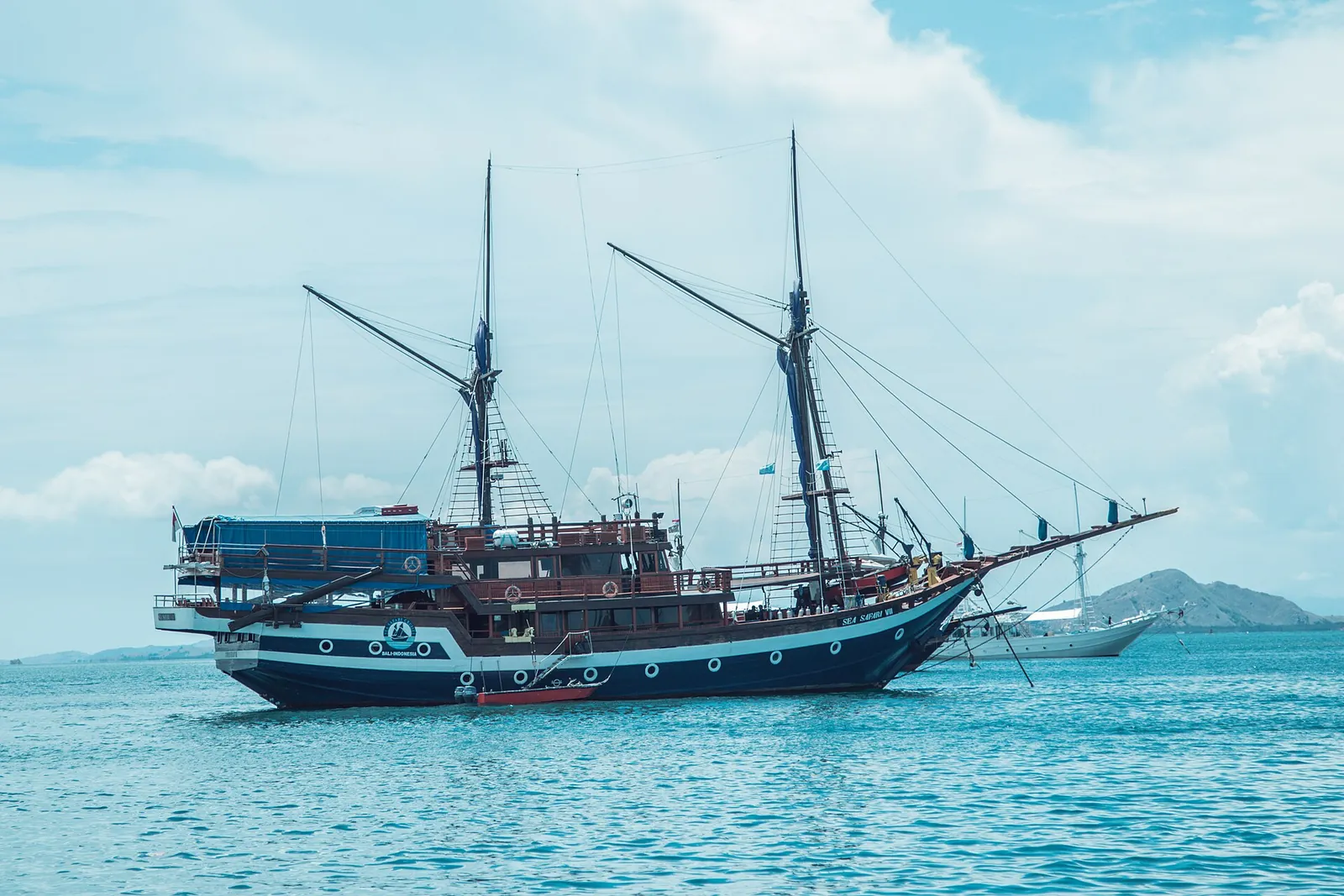
A liveaboard spends the nights at sea and moves between islands, so you can reach viewpoints and reefs early or late without the daily commute. The ministry says liveaboard cruises from Labuan Bajo usually last three to seven days. The Labuan Bajo Flores Tourism Authority describes the phinisi as a traditional boat from Bulukumba in South Sulawesi, often rebuilt for tourists, with up to 14 cabins for two people each, and notes that facilities differ from operator to operator. Before booking, compare the cabin layout, bathrooms, life jackets and safety equipment, the number of guests and whether park fees are included.
Divers should choose a reputable operator in either case. The ministry describes Castle Rock as a challenging dive with strong currents and lists Batu Bolong and Manta Point among the park's best-known sites; Wikivoyage warns that some sites are unsuitable for beginners. Sea conditions can stop boats sailing: in August 2026 the harbour authority (KSOP Labuan Bajo) issued advice about high waves and strong winds in the southern Sape Strait, and BMKG publishes marine weather forecasts and high-wave warnings online.
Make time for the local food
What to eat and where to look
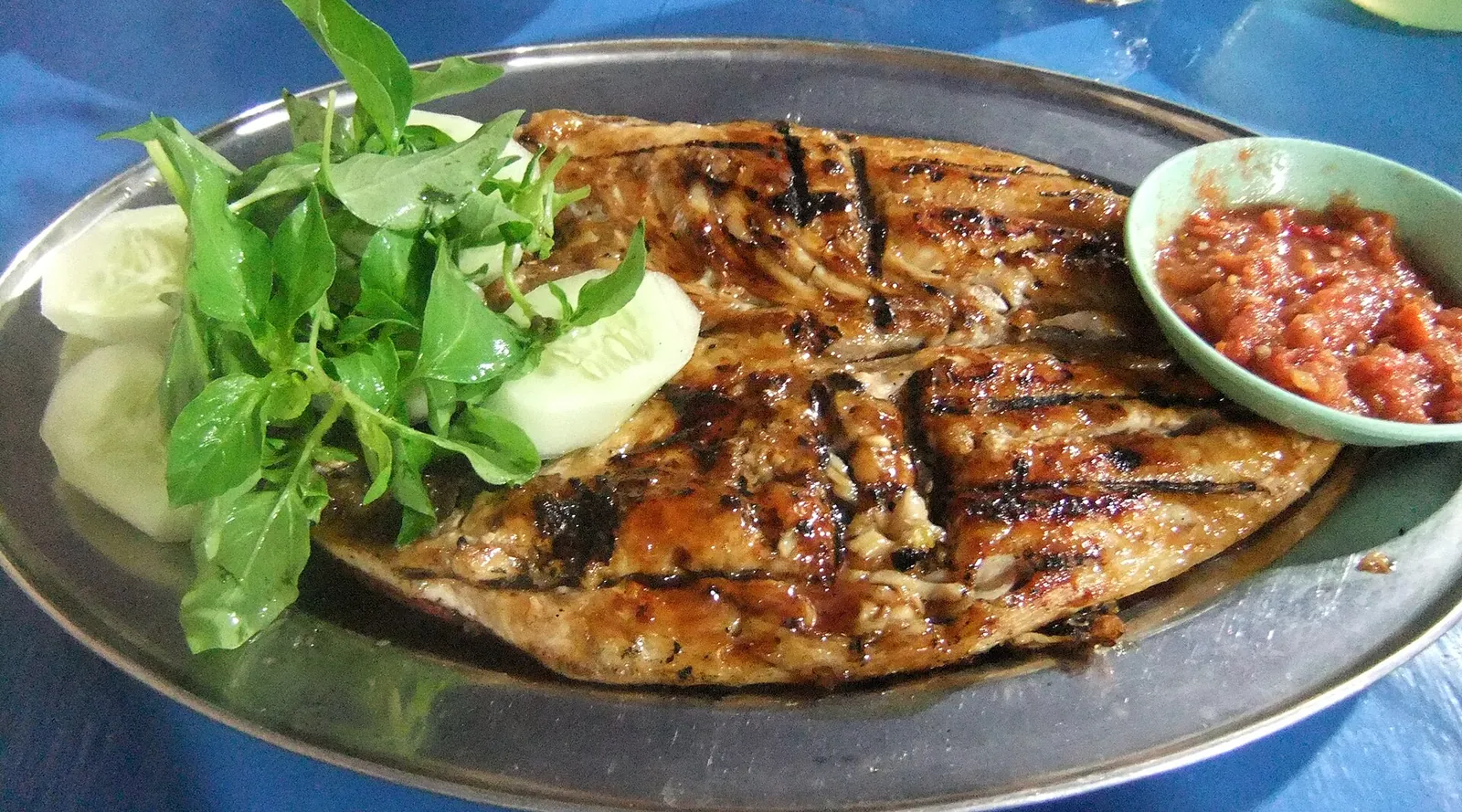
Ikan bakar (grilled fish)
Fresh fish and seafood grilled over charcoal and served with rice, sambal and raw vegetables. In a harbour town with a working fishing fleet, it is the obvious dinner.
- Where to look
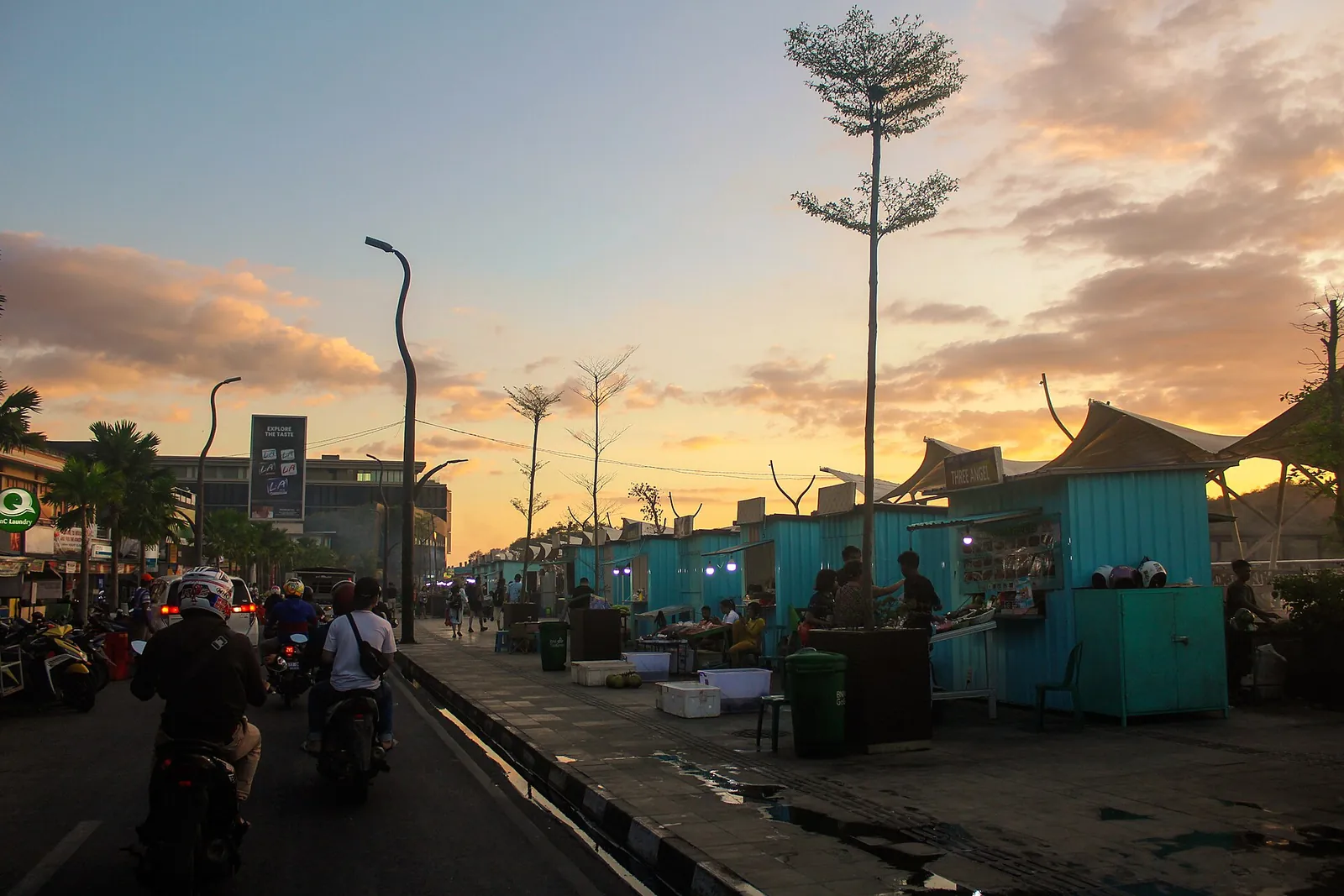
- Kampung Ujung, the seafront food area the Ministry of Tourism highlights, where stalls set up along the harbour in the evening; seafood restaurants at Pede Beach also grill grouper, snapper, squid and prawns.
- Fit it into your day
- Dinner on your arrival evening or after a boat day; pick your fish and agree the price by weight before it goes on the grill.
Check the price per kilo before ordering, and avoid fish that has not been kept on ice.
Se'i (smoked meat)
A Nusa Tenggara speciality the ministry describes as meat cooked slowly by hot smoke rather than flame, usually beef or pork and sometimes fish. It is sliced and eaten as it is or stir-fried with vegetables.
- Where to look
- Restaurants serving East Nusa Tenggara dishes in town; ask whether the se'i is beef (sapi) or pork (babi).
- Fit it into your day
- A lunch or dinner with rice and sambal on a land day.
Often pork; ask if you avoid it.
Catemak jagung
A savoury Flores dish of corn with peanuts, green beans and pumpkin, which the ministry notes is often thought of as a dessert but is not.
- Where to look
- Local warung and restaurants cooking Flores food rather than tourist menus.
- Fit it into your day
- A light, filling lunch or a side dish alongside fish.
Contains peanuts.
Moke
The traditional palm spirit of Flores, distilled from palm sap and offered as a sign of friendship and hospitality. The ministry describes a white moke and a stronger black moke that is distilled again.
- Where to look
- Offered in villages and at some local restaurants; it is a drink for tasting, not ordering by the bottle.
- Fit it into your day
- A small glass after dinner, if offered by your hosts.
Home-distilled spirits can be contaminated with methanol, as Wikivoyage warns for local arak. Drink only small amounts from a source you trust, and never before diving.
Labuan Bajo on land: caves, viewpoints and sunsets
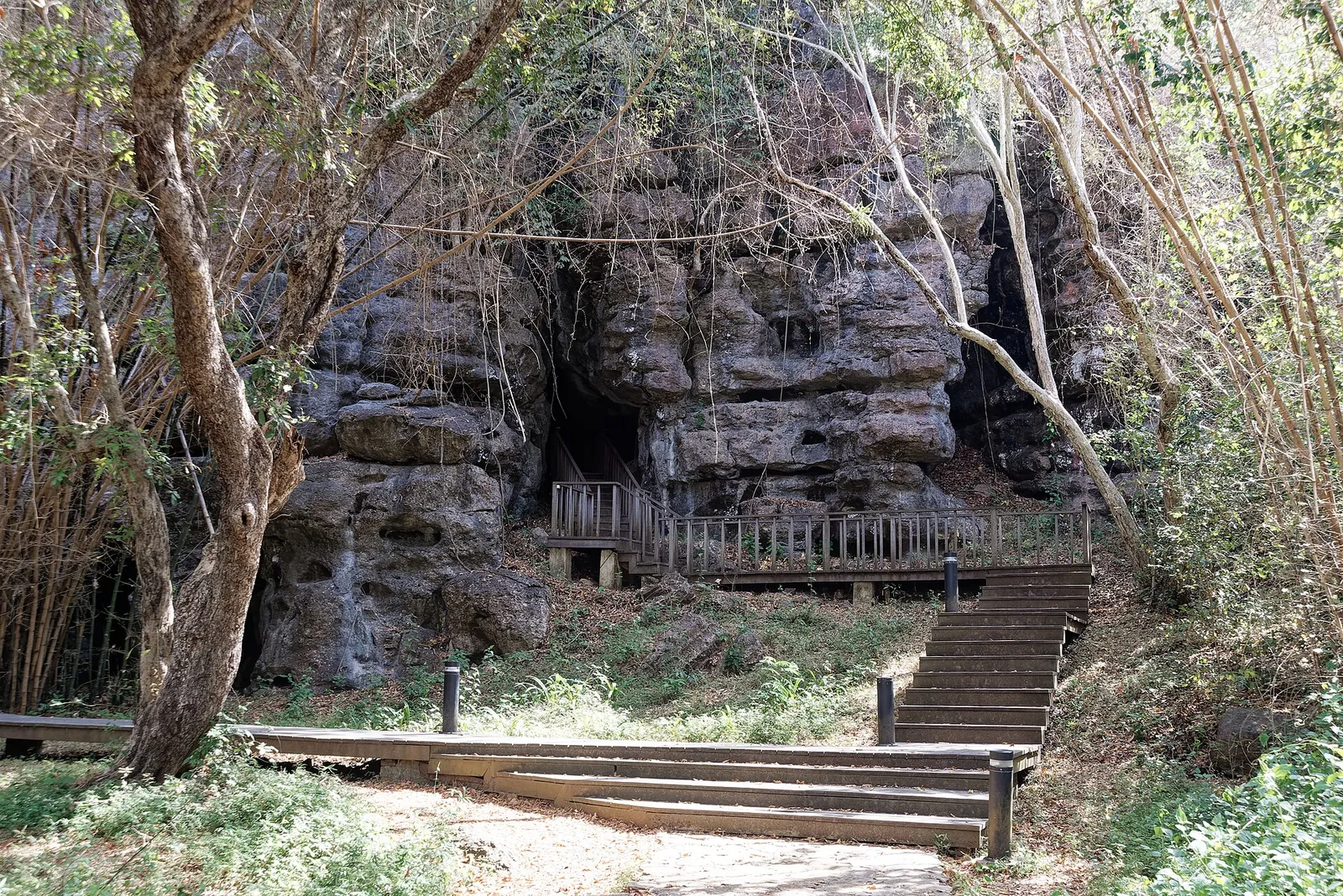
Batu Cermin (Mirror Stone Cave) is about four kilometres east of the harbour. Sunlight entering the cave bounces off its walls like a mirror, and the ministry recommends coming in the morning or around midday, when the reflections are best. Travel agencies sell it as part of a town tour, so it fits easily into the afternoon before or after a boat day.
The ministry calls Labuan Bajo the city of sunset. The ministry names Bukit Cinta, Puncak Amelia and Puncak Silvia as viewpoints not far from the airport. Parapuar, a hilltop area developed by the Labuan Bajo Flores Tourism Authority on the edge of the Nggorang Bowosie forest, is about four kilometres from Kampung Ujung, with two public viewpoints at around 184 and 238 metres above sea level and views over the town and islands.
For a different evening, boats take visitors to Kalong Island, where thousands of flying foxes leave the mangroves at dusk, as both Wikipedia and Wikivoyage describe. Inland, the ministry also points to Rangko Cave, a cave lake where sunlight falls on blue water, and the Cunca Rami and Cunca Wulang waterfalls. Small islands close to the harbour, such as Kanawa and Bidadari, are known for white sand and snorkelling; Kanawa has limited facilities, so bring what you need.
After the August 2026 earthquake
A magnitude 7.7 earthquake struck Flores on 15 August 2026, centred near Mbay in Nagekeo, far to the east of Labuan Bajo. ANTARA reported on 23 August 2026 that the Ministry of Tourism said Labuan Bajo was open and tourism was running normally, that the national park and boat services were operating, and that Komodo Airport was running on schedule. Batu Cermin reopened on 16 August, and Rangko Cave was operating.
Other parts of Flores were hit harder. In an earlier ANTARA report, the ministry listed Wae Rebo, Kelimutu National Park and parts of Ngada and Nagekeo as temporarily closed, and one large Labuan Bajo hotel as closed for structural damage. If you are continuing east by road, check the latest official information on roads, airports and destinations before you leave. The tourism authority (BPOLBF) set up a visitor hotline, listed in that report as 0811-3879-4555.
A workable four-night plan
This is an editorial suggestion, not a timetable. Confirm your park date and quota with the operator before fixing the rest.
- Day 1 — Arrive: fly into Komodo Airport, check in, and walk the harbourfront to Kampung Ujung for grilled fish at sunset.
- Day 2 — Park day: an early boat to Padar's viewpoint, a ranger walk on Komodo or Rinca, and snorkelling stops on the way back.
- Day 3 — Spare or land day: Batu Cermin in the morning, a rest through the heat, then a sunset from Parapuar or Bukit Cinta. Use this day for the boat instead if the weather or your quota slot moves.
- Day 4 — Islands close to town: a half day around Kanawa or Bidadari, or a dusk boat to Kalong Island for the flying foxes.
- Day 5 — Leave, or start the road east across Flores towards Bajawa and Kelimutu after checking the current conditions.
Getting there and practical points
Most visitors fly. The ministry lists direct flights to Komodo Airport from Jakarta, Denpasar (Bali) and Surabaya, plus an international route from Malaysia; Wikipedia records AirAsia's Kuala Lumpur service from September 2024 and a Singapore route. Routes change, so check the airline schedules. By sea, the ministry says Pelni ships call at Labuan Bajo on routes from Makassar, Surabaya and Benoa in Bali, and a ferry links Sape on Sumbawa with Labuan Bajo; check Pelni and the ferry operator for current sailings.
In town you can get around by ojek (motorbike taxi), bemo or a rented car with a driver; the ministry advises arranging cars and guides through official sources or your hotel. It also warns that Labuan Bajo is in a malaria area: bring insect repellent, ask a travel clinic about prevention, and carry sun protection for the dry season.
No special permit is needed for Labuan Bajo itself: the tourism authority says Indonesia's national visa rules apply and recommends using only official immigration channels (imigrasi.go.id and the e-Visa portal).
Practical questions
How many nights do I need in Labuan Bajo?
Four nights is a good plan: one day on a boat in Komodo National Park, one spare day for weather or your quota slot, and time for Batu Cermin, a sunset viewpoint and the islands near town. Three nights works if your park date is already confirmed.
Should I stay in town, at Pede Beach or at Waecicu?
Stay in town near the harbour if you are taking day boats and want to walk to dinner. Choose Pede Beach (south) or Waecicu (north) for a resort with a sea view, and allow for the transfer into town before each boat trip.
Is a day trip enough to see Komodo National Park?
A day trip covers Padar's viewpoint, a ranger walk on Komodo or Rinca and a snorkel stop, but the boat rides are long. A two- or three-day liveaboard reaches more islands and reefs and puts you at the viewpoints early and late.
Is there a limit on visitors to Komodo National Park?
Yes. ANTARA reported that the park office has capped visits at 1,000 visitors a day since 1 April 2026. Book activity tickets early, confirm with your operator that your date has a slot, and keep a spare day in Labuan Bajo.
Is Labuan Bajo safe to visit after the August 2026 earthquake?
ANTARA reported on 23 August 2026 that the Ministry of Tourism said Labuan Bajo was open, the national park and boats were operating and the airport was on schedule. Other parts of Flores were affected more badly, so check official updates before travelling east.
When is the best time to visit Labuan Bajo?
April to November has the least rain; December to March is the wettest period. Padar is greenest in the wet season. The Ministry of Tourism advises against visiting Rinca in June and July, when the dragons are mating and harder to see.
Sources and checks before you travel
Reference sources for the version dated 3 October 2026. Confirm opening times, access, transport and conditions for your travel dates.
- Indonesia Travel (Ministry of Tourism): Labuan Bajo ↗ — opens in a new tab
- Indonesia Travel (Ministry of Tourism): 3 islands in Labuan Bajo ↗ — opens in a new tab
- Indonesia Travel (Ministry of Tourism): Rinca Island ↗ — opens in a new tab
- Indonesia Travel (Ministry of Tourism): Padar Island ↗ — opens in a new tab
- Indonesia Travel (Ministry of Tourism): Komodo National Park ↗ — opens in a new tab
- Indonesia Travel (Ministry of Tourism): Batu Cermin ↗ — opens in a new tab
- Indonesia Travel (Ministry of Tourism): Mirror Stone Cave ↗ — opens in a new tab
- Indonesia Travel (Ministry of Tourism): Kanawa Island ↗ — opens in a new tab
- Indonesia Travel (Ministry of Tourism): diving Komodo ↗ — opens in a new tab
- Indonesia Travel (Ministry of Tourism): five seafront hotels in Labuan Bajo ↗ — opens in a new tab
- Indonesia Travel (Ministry of Tourism): Pink Beach ↗ — opens in a new tab
- Indonesia Travel (Ministry of Tourism): traditional treats of Flores ↗ — opens in a new tab
- Labuan Bajo Flores Tourism Authority (BPOLBF): Phinisi ↗ — opens in a new tab
- Labuan Bajo Flores Tourism Authority (BPOLBF): Parapuar ↗ — opens in a new tab
- Labuan Bajo Flores Tourism Authority (BPOLBF): visa information ↗ — opens in a new tab
- ANTARA: Komodo National Park sets a 1,000-visitor daily quota ↗ — opens in a new tab
- ANTARA: visitors can see other sights while waiting for a Komodo slot ↗ — opens in a new tab
- ANTARA: destinations still closed after the NTT earthquake ↗ — opens in a new tab
- ANTARA: tourism in Labuan Bajo back to normal (23 August 2026) ↗ — opens in a new tab
- BMKG: Indonesian maritime weather forecasts ↗ — opens in a new tab
- Wikipedia: Labuan Bajo ↗ — opens in a new tab
- Wikipedia: Komodo International Airport ↗ — opens in a new tab
- Wikivoyage: Labuan Bajo ↗ — opens in a new tab
Does this experience fit your route?
Compare the programme, departure point and practical requirements with your travel plans.
Check dates and details on Viator ↗ — opens in a new tabAffiliate link · Book with ViatorPhoto credits
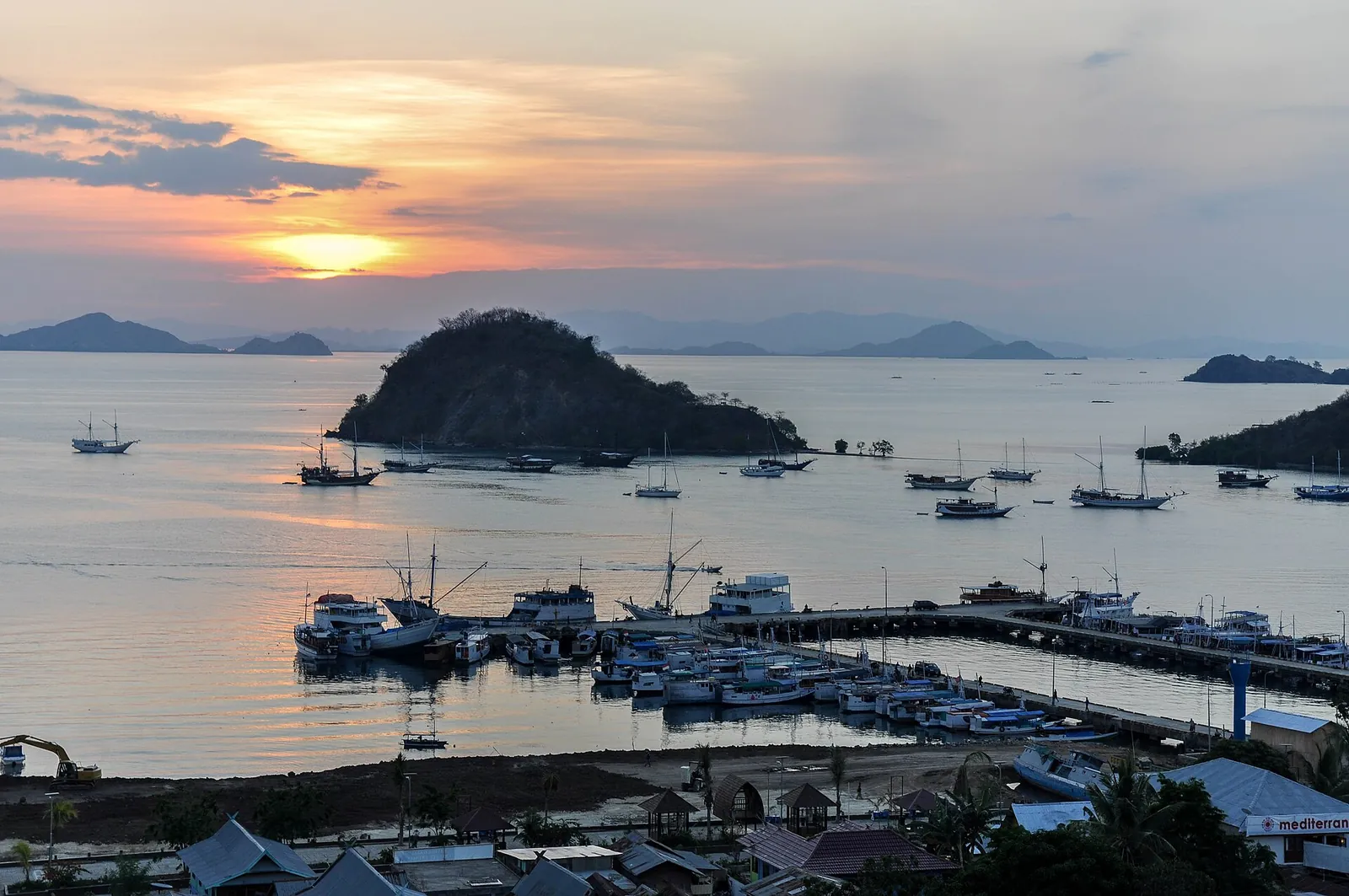
Labuan Bajo's harbour seen from the hillside above town, looking out over the bay towards the islands
Photograph: Tiket2 — opens in a new tab · CC BY 2.0 — opens in a new tab
Changes: Resized and converted to WebP; displayed with responsive crops. · Original photograph and licence details ↗ — opens in a new tab
A phinisi, the wooden sailing boats used for liveaboard trips from Labuan Bajo
Photograph: Yasuspade — opens in a new tab · CC BY-SA 4.0 — opens in a new tab
Changes: Resized and converted to WebP; displayed with responsive crops. · Original photograph and licence details ↗ — opens in a new tab
Evening at Kampung Ujung, Labuan Bajo's seafront food area, as the stalls open
Photograph: Beatrice Juliani Haru — opens in a new tab · CC BY-SA 4.0 — opens in a new tab
Changes: Resized and converted to WebP; displayed with responsive crops. · Original photograph and licence details ↗ — opens in a new tab
The entrance to Batu Cermin (Mirror Stone Cave), on the edge of Labuan Bajo
Photograph: Jakub Hałun — opens in a new tab · CC BY 4.0 — opens in a new tab
Changes: Resized and converted to WebP; displayed with responsive crops. · Original photograph and licence details ↗ — opens in a new tab
Sunset over the pier and marina at Labuan Bajo
Photograph: Jorge Láscar from Melbourne, Australia — opens in a new tab · CC BY 2.0 — opens in a new tab
Changes: Resized and converted to WebP; displayed with responsive crops. · Original photograph and licence details ↗ — opens in a new tab
Ikan bakar: grilled fish served with sambal and raw vegetables
Photograph: Midori — opens in a new tab · CC BY 3.0 — opens in a new tab
Changes: Resized and converted to WebP; displayed with responsive crops. · Original photograph and licence details ↗ — opens in a new tab