Plan your trip · Indonesia
SIM cards and eSIMs in Indonesia: tourist plans, IMEI rules and coverage
In Indonesia your phone does more work than in most countries. It books the motorbike taxi from the airport, orders dinner, holds your train and ferry tickets and is how a guesthouse on a small island finds you at the jetty. Getting online is easy on Java and Bali, but two things catch visitors out: a local SIM has to be registered with your passport, and the network that works in Jakarta may have no signal at all on Sumba or a volcano trail. Decide how you will connect before you land, and choose the network for the remotest place on your route, not the first city.
- Suggested time
- Applies to any trip; IMEI registration matters only if you will use an Indonesian SIM for more than 90 days
- Where to stay
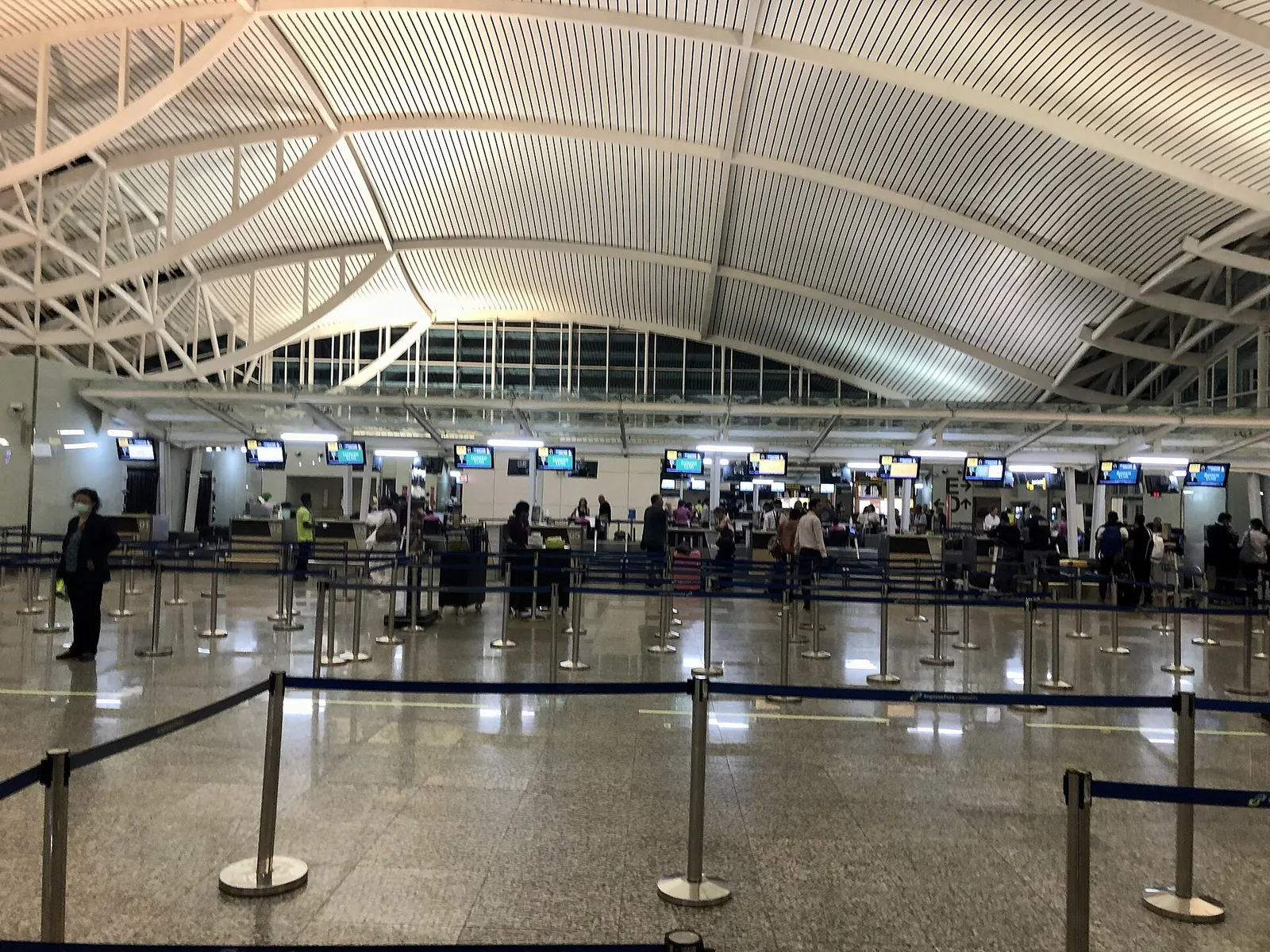
- Buy at Bali's Ngurah Rai or Jakarta's Soekarno-Hatta airport on arrival, or at a GraPARI or other operator service centre in a city before heading to remote islands
- Season and timing
- All year; sort out data before Idul Fitri and Nyepi, when shops and service centres close, and before boat trips or treks where there is no signal to buy more data.
The short answer
For a trip of up to a few weeks, the simplest plan is a tourist SIM from an operator booth in the airport arrival hall: bring your passport, an unlocked phone and expect the staff to register the card for you. Choose Telkomsel if your route leaves Java and Bali's cities, because it has the widest reach on the outer islands. A travel eSIM bought before you fly, or roaming with your home provider, avoids the registration and works from the moment you land, but check its coverage map for the islands you will visit. You do not need to register your phone's IMEI for a normal visit: roaming SIMs are exempt, and a local SIM registered at an operator outlet works in a tourist's phone for up to 90 days. Only stays longer than that need customs registration on arrival.
Roam, travel eSIM or local SIM: the quick choice
There are three ways to get online, and Wikivoyage's Indonesia guide sums them up well: roam on your home provider, buy an eSIM from a travel eSIM company before you arrive, or buy an Indonesian SIM card after landing, which usually gives the best coverage and prices. All three work in the cities. The difference shows on the outer islands and in the paperwork.
Roaming costs nothing to set up and, according to Indonesian Customs, a phone that keeps its home-country SIM does not need IMEI registration. It is the easy choice for a few days in Jakarta or Bali if your home plan includes Indonesia at a sensible price. A travel eSIM also skips the local registration and is active as soon as the plane lands, but it runs on a local network, so check which one and its coverage before you buy if you are heading beyond Java and Bali. A local SIM needs your passport and a few minutes at a counter, but gives you an Indonesian number, which helps when guesthouses, drivers and boatmen want to call or message you, and when an app sends its login code by SMS.
If you have a dual-SIM or eSIM-capable phone, the most robust set-up is to keep your home SIM for bank codes and use the Indonesian line for data. Make sure the phone is not locked to your home carrier before you travel, or an Indonesian SIM will not work in it.
- Short city or Bali trip: roaming or a travel eSIM, set up before departure.
- Two weeks or more, or any outer island: a local tourist SIM, ideally Telkomsel, bought on arrival.
- Long stay (over 90 days on a local SIM): register the phone's IMEI with Customs when you land, then buy a regular local plan.
Buying and registering an Indonesian SIM
Prepaid SIM cards in Indonesia must be registered to the user. The Ministry of Tourism's connectivity page says foreigners register with a passport (or a KITAS or KITAP for long-stay residents), that the officer at the operator's booth guides you through the process, and that airports have booths of several providers, naming Telkomsel, XL, Smartfren, Tri, Axis and Indosat's IM3. Have your passport out at the counter and let the staff insert and activate the card before you walk away; test mobile data and a call while you are still there.
Wikivoyage describes the market as three operator groups: Telkomsel; Indosat Ooredoo Hutchison, which runs the IM3 and Tri brands; and XLSMART, which runs XL, AXIS and Smartfren. It also explains the trade-off at the airport. The booths there sell tourist plans, which are expensive by local standards but cheap by Western ones, and their validity often cannot be extended. Regular local prepaid plans are much cheaper and can be topped up at minimarts, but to buy one you have to visit an operator's service centre in town. As an example, Wikivoyage quotes a 2026 Telkomsel tourist plan of 25 GB for 28 days at Rp 150,000 against a local plan of 70 GB for Rp 80,000; treat these as an illustration, not a current price list. For most holidays the airport plan is worth the convenience.
Telkomsel also lets visitors order a tourist SIM before they travel. When we checked on 2026-10-03, its SIM registration page for foreigners offered a pre-ordered special SIMPATI card with 25 GB of data, 25 minutes of domestic calls and 25 minutes of international calls, valid for 30 days, for Rp 100,000, and said that pick-up was available only in the Bali and Mandalika (Lombok) areas.
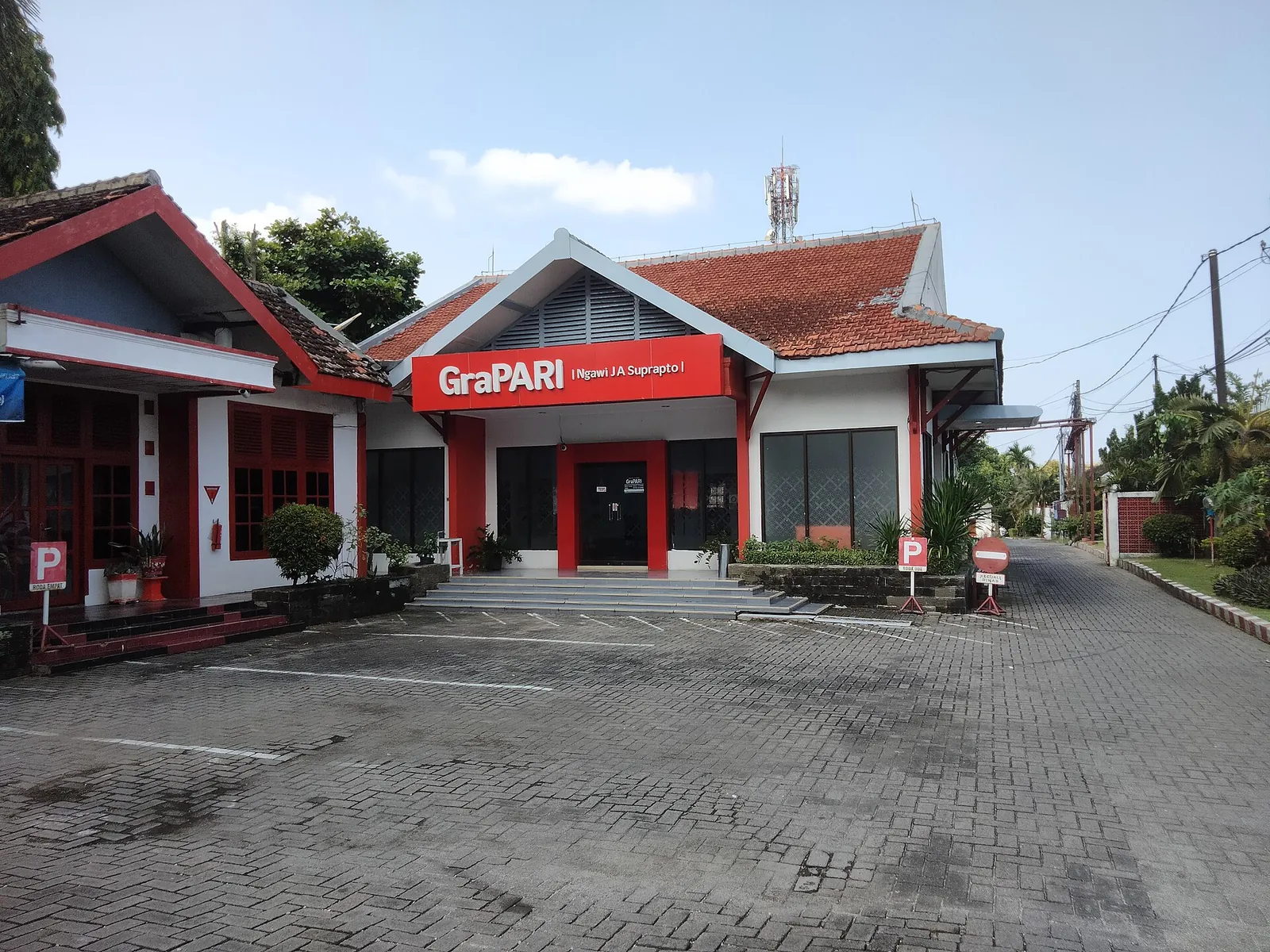
An Indonesian operator's own eSIM is not the shortcut it sounds. When we checked on 2026-10-03, Telkomsel's eSIM page said registration of its eSIM starter pack requires an Indonesian ID card (KTP) and family card (KK), which visitors do not have. If you want an eSIM, buy it from a travel eSIM provider before you fly, or ask at a Telkomsel service centre (GraPARI) whether it can issue one against your passport.
Make time for the local food
What to eat and where to look
Mie bakso and mie ayam
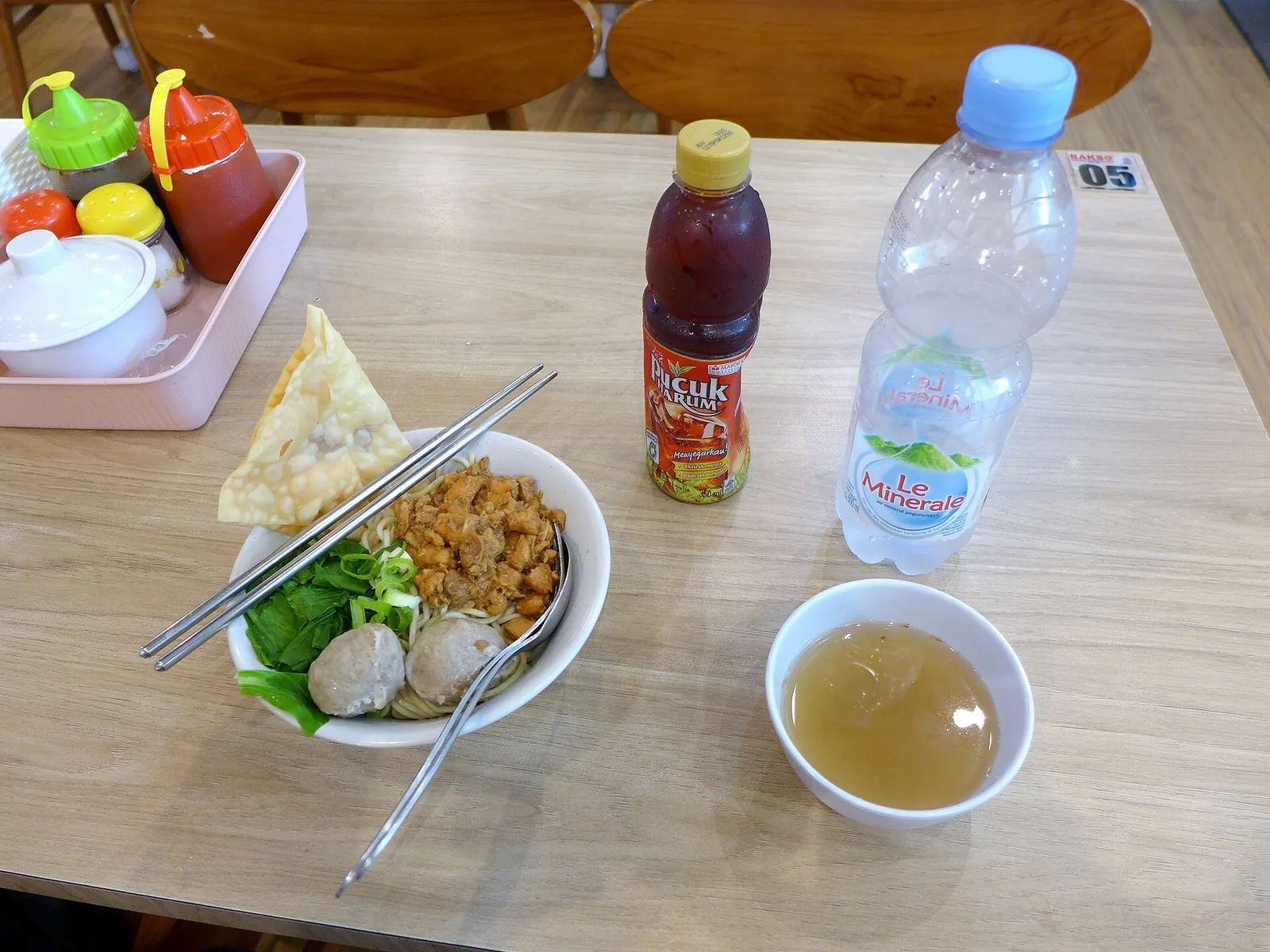
Noodles with springy beef meatballs (bakso) or with sweet soy-braised chicken (mie ayam), served with broth, greens and sometimes a fried wonton. Noodle counters selling them are found in airports and malls as well as on the street.
- Where to look
- Noodle counters in airport terminals and mall food courts, and warungs and carts with a steaming pot at the front in any town.
- Fit it into your day
- A quick first meal after landing while your new SIM activates, or a cheap lunch between sights.
Usually beef or chicken; the chilli sauce and sweet soy are added by you, so go easy at first.
Martabak manis (terang bulan)
A thick, spongy griddle pancake folded over chocolate, cheese, peanuts or condensed milk, cut into squares and boxed. Carts usually start cooking towards evening.
- Where to look
- Martabak carts along main roads in the evening, in every town on Java and well beyond; or search the delivery section of Gojek or Grab.
- Fit it into your day
- An evening snack to share; one box easily serves two or three people.
Very rich and sweet, with butter or margarine and condensed milk; contains dairy, wheat and often peanuts.
Nasi goreng
Fried rice with sweet soy sauce, shallots and chilli, often topped with a fried egg and crackers. It is cooked to order at night stalls and on almost every warung and hotel menu.
- Where to look
- Night stalls and carts with a wok on a gas burner, warungs, and delivery apps when you arrive late.
- Fit it into your day
- A reliable dinner almost anywhere, including small towns where menus are short.
Ask for less chilli (tidak pedas) if you prefer mild food; check the meat if you avoid pork, especially in Bali.
Your phone and the 90-day IMEI rule
Indonesia keeps phones brought in from abroad off its mobile networks unless their IMEI, the device's identity number, is registered. Indonesian Customs (Bea Cukai) states that phones, handheld computers and tablets brought in from abroad must have their IMEI registered to get Indonesian mobile network access. For visitors, though, its IMEI FAQ lists two exceptions: no registration is needed if the device keeps using its home-country SIM (roaming), or if a foreign tourist's device uses an Indonesian SIM registered at a mobile operator outlet, which gives network access for up to 90 days, under Communications Ministry Regulation No. 1 of 2020.
In practice, then, a normal holiday needs nothing beyond the passport registration at the SIM counter. Wikivoyage adds two practical points: the phone loses service on the local SIM after 90 days if it has not been registered, and if you leave and come back (on a visa run, for example) so that your total time in the country goes over 90 days, you should register too.
If you will stay longer, register on arrival rather than later. Customs explains that you declare the device in the All Indonesia arrival declaration and then complete IMEI registration and any duty at the counter in the international arrival terminal, with your passport and boarding pass. Registration itself is free, but import duty applies: when we checked on 2026-10-03, the customs page listed 10 percent import duty and 12 percent VAT (on a base multiplied by 11/12), with US$500 deducted from the customs value of a passenger's personal goods. That allowance is only given if you declare the device when you arrive; Customs also allows registration up to 60 days after arrival, but then without the exemption. If your passport and IMEI were scanned at the airport, you have up to five days to finish the process at a customs office and keep the allowance.
Coverage: choose the network for the remotest place on your route
In the big cities any operator works. The choice matters once you leave them. Wikivoyage's Indonesia guide says that beyond the major cities Telkomsel is the most reliable network and in many places the only one operating, that 4G is widespread on Java and Bali and in cities and some rural areas elsewhere, but may be missing in remote places and parts of eastern Indonesia, and that 5G is concentrated on Java and Bali, with only major city centres covered on other islands.
Destination guides say the same thing about specific places. Wikivoyage's Sumba guide recommends Telkomsel because other operators have limited coverage on the island, and warns that bad signal is one reason not to ride a motorbike there if you are inexperienced. Its Mount Rinjani guide says mobile coverage in the national park is very limited, with Telkomsel usually better and getting some reception at both crater-rim campsites, depending on your device.
Plan for the gaps rather than hoping for signal. Before a trek, boat trip or stay on a small island, download offline maps of the area, save your booking confirmations and the phone numbers of your guesthouse, boat operator and guide, and buy enough data in advance, since topping up needs a connection or a shop. Agree pick-up times and meeting points in person, because you may not be able to message from the boat or the trail. If one network matters a lot to you, a second SIM from another operator is a cheap backup.
The apps that need your data
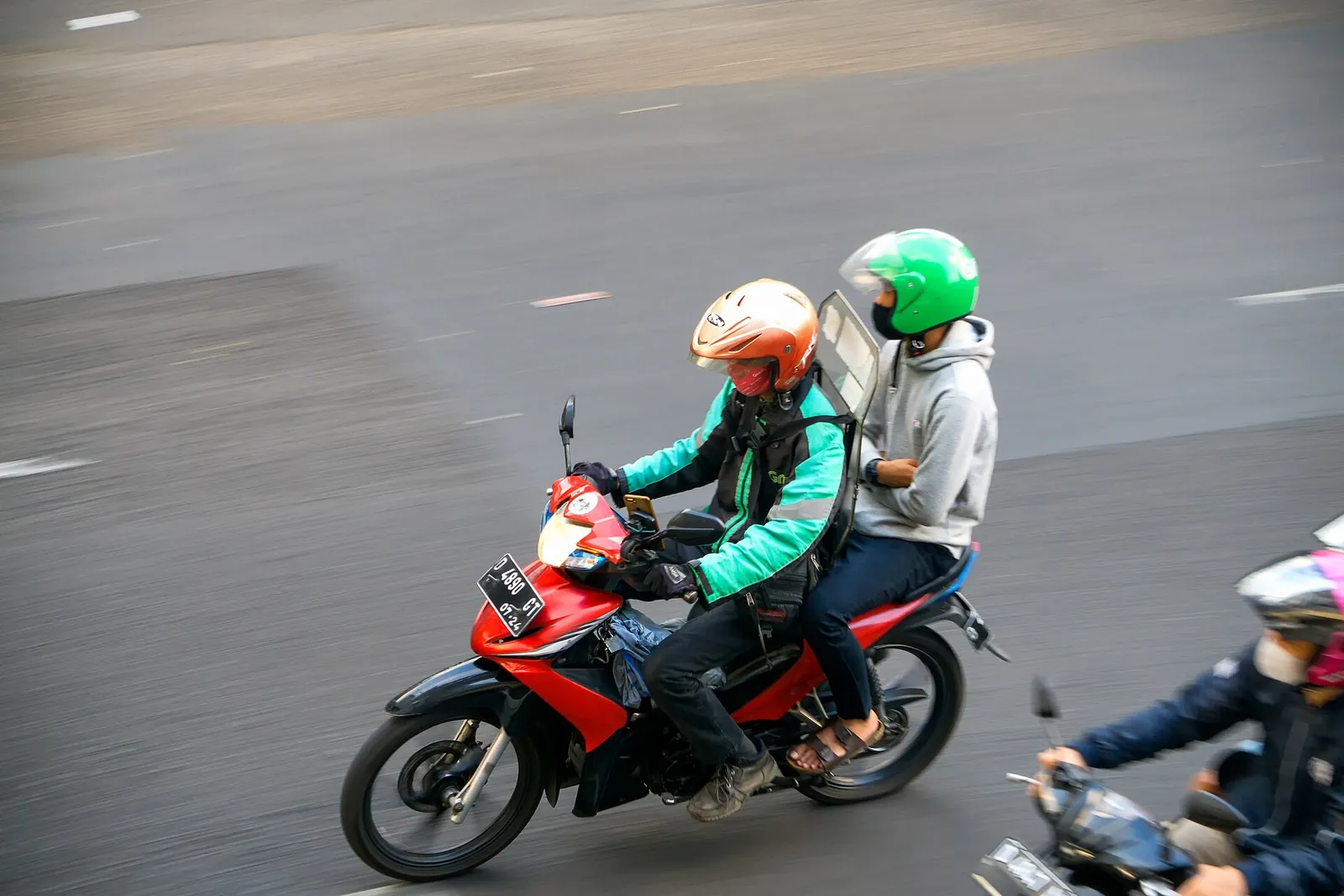
Ride-hailing. Wikivoyage says car and motorbike ride-hailing works in more than 200 Indonesian cities, with Gojek and Grab dominating and the taxi company Bluebird serving a more upmarket market through its own app, and that the apps take cash, international cards and local payment methods. It also warns of people at pick-up points who pretend to be your Grab driver: real drivers do not normally get out and look for passengers, so check the driver's name and the licence plate shown in the app before you get in. Both companies also run food delivery, which is handy on a rainy evening or after a late arrival.
Trains. The state railway KAI promotes its Access by KAI app for booking tickets on its website; install it before your first rail journey on Java.
Ferries. ASDP, the state ferry operator, sells tickets through its Ferizy service. When we checked on 2026-10-03, the Ferizy site said check-in happens at the port within the check-in time printed on the e-ticket, that the ticket expires if you have not checked in by then, that you must show an identity document matching the ticket, and that it verifies your mobile number when you log in. Set it up while you have a reliable connection, not at the harbour.
Arrival. The All Indonesia arrival declaration is online. The Ministry of Tourism says it can be completed up to three days before you arrive at allindonesia.imigrasi.go.id, on a phone or a laptop, and advises saving proof of submission or a screenshot, so you are not dependent on airport Wi-Fi in the queue.
For paying inside these apps and topping up e-wallets, see our guide to money and payments in Indonesia.
Wi-Fi, VPNs, charging and emergency numbers
Wi-Fi is a useful backup, not a plan. The Ministry of Tourism says most international airports in Indonesia provide Wi-Fi and most major city hotels offer free Wi-Fi, with the password given at check-in; smaller hotels in small towns commonly provide it too, but you should check before booking. Malls, cafés and restaurants in the cities often have free hotspots, and the ministry warns that public networks are not always secure, so avoid banking on them. It also mentions pocket Wi-Fi rental, ordered online and delivered or collected on arrival, as a way to stay connected anywhere.
Indonesia censors parts of the internet. Wikivoyage reports that tens of thousands of sites are blocked, including some mainstream services, and that messaging and social apps have been temporarily blocked during unrest in the past, as in 2019; it suggests setting up a VPN before you travel.
Bring the right plug. The Ministry of Tourism says the standard supply is 230 V at 50 Hz and most sockets are types C and F, the European two-pin design; adapters are sold in local minimarts. A power bank is worth carrying on boat days and long bus rides, where you may navigate and photograph for hours without a socket.
Save the emergency numbers before you need them. The ministry lists 110 or 112 for police and general emergencies, 118 or 119 for ambulances, 113 for the fire brigade and 115 for search and rescue (BASARNAS). To call an Indonesian mobile number from a foreign SIM, dial +62 and drop the leading 0.
Practical questions
Do I need to register my phone's IMEI to use a SIM card in Indonesia as a tourist?
Not for a normal visit. Indonesian Customs says no IMEI registration is needed if you keep roaming on your home SIM, or if a foreign tourist uses an Indonesian SIM registered at an operator outlet, which gives network access for up to 90 days. Only longer use on a local SIM requires customs registration, ideally on arrival.
What do I need to buy a SIM card in Indonesia?
Your passport and an unlocked phone. The Ministry of Tourism says foreigners register a local SIM with a passport (or a KITAS or KITAP), and the staff at the operator's booth guide you through it. Airports have booths for several operators.
Which mobile network is best for Bali, Lombok, Flores or Sumba?
All main networks work in Bali's tourist areas and the cities. For the outer islands, Telkomsel is the safest choice: Wikivoyage describes it as the most reliable network beyond the major cities and often the only one, and recommends it for Sumba in particular.
Can I buy a Telkomsel eSIM as a tourist?
Do not count on it. When we checked on 2026-10-03, Telkomsel's eSIM page said registration needs an Indonesian ID card and family card. Visitors who want an eSIM usually buy one from a travel eSIM provider before departure, or a physical tourist SIM on arrival.
Is the airport the best place to buy a SIM?
It is the most convenient. Airport booths sell tourist plans that cost more than regular local plans but work at once and are registered for you. Regular plans are sold at operators' service centres in town, which takes time; for a short holiday the airport plan is usually worth it.
What apps should I install before going to Indonesia?
A ride-hailing app (Gojek or Grab, plus Bluebird for taxis), Access by KAI if you will take trains on Java, Ferizy for state-run ferries, offline maps, and a VPN. Complete the All Indonesia arrival declaration online up to three days before you land.
Sources and checks before you travel
Reference sources for the version dated 3 October 2026. Confirm opening times, access, transport and conditions for your travel dates.
- Ministry of Tourism (indonesia.travel): WiFi & Connectivity ↗ — opens in a new tab
- Directorate General of Customs and Excise: IMEI registration ↗ — opens in a new tab
- Directorate General of Customs and Excise: IMEI registration FAQ ↗ — opens in a new tab
- Telkomsel: SIM card registration for foreigners ↗ — opens in a new tab
- Telkomsel: eSIM ↗ — opens in a new tab
- Ministry of Tourism (indonesia.travel): All Indonesia app guide ↗ — opens in a new tab
- Ministry of Tourism (indonesia.travel): Staying safe in Indonesia ↗ — opens in a new tab
- Ministry of Tourism (indonesia.travel): Plugs & Electricity ↗ — opens in a new tab
- ASDP Indonesia Ferry: Ferizy ↗ — opens in a new tab
- KAI (Indonesian railways) ↗ — opens in a new tab
- Wikivoyage: Indonesia (Connect, Get around) ↗ — opens in a new tab
- Wikivoyage: Sumba ↗ — opens in a new tab
- Wikivoyage: Mount Rinjani ↗ — opens in a new tab
Does this experience fit your route?
Heading somewhere with little signal? Compare guided tours that arrange transport and pickups for you, and check where each one starts before you book.
Browse relevant experiences on Viator ↗ — opens in a new tabAffiliate link · Book with ViatorPhoto credits
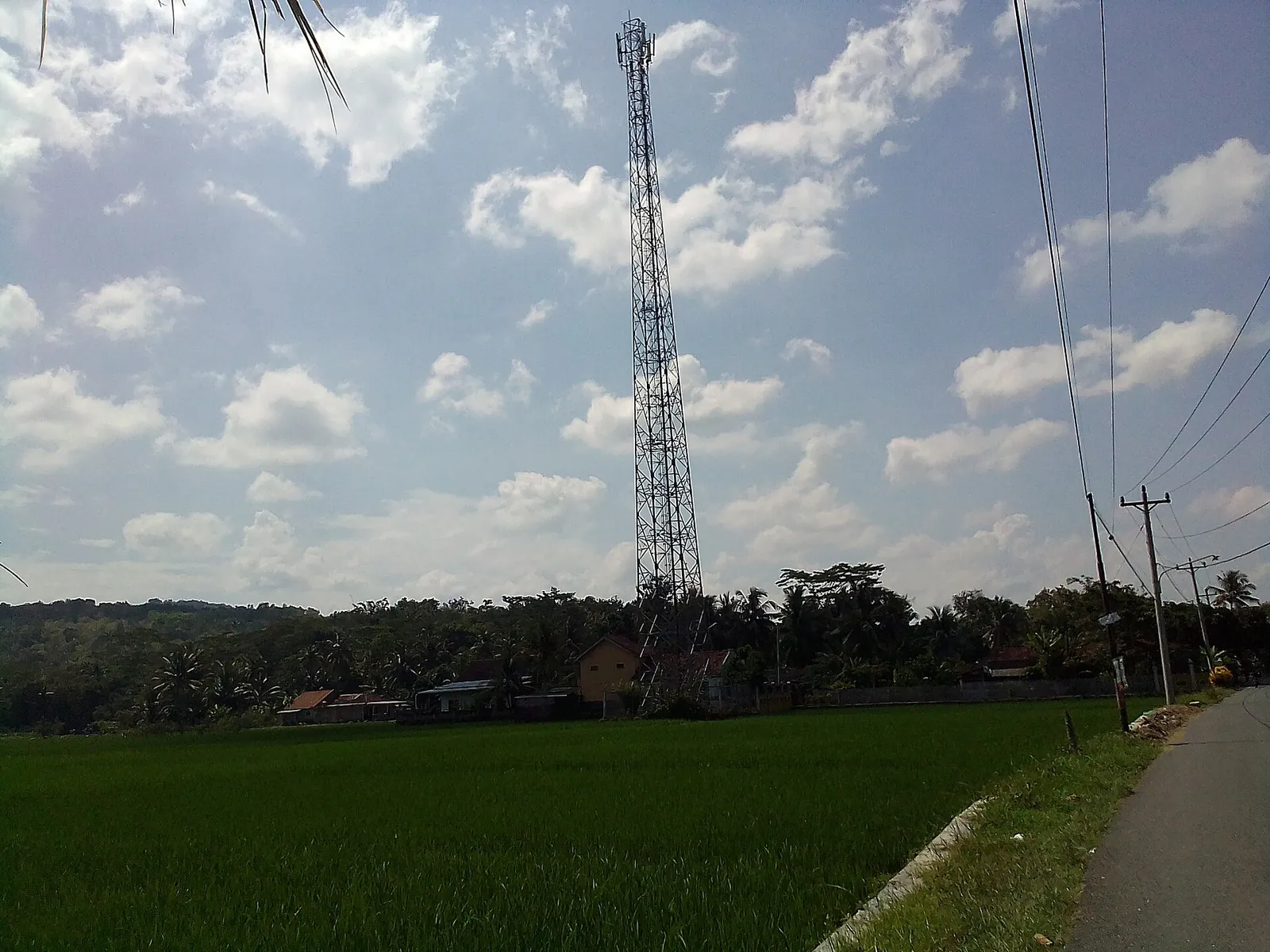
A Telkomsel tower among the rice fields of Kebumen, Central Java: outside the cities, Telkomsel is often the network with signal.
Photograph: DARMAS SB — opens in a new tab · CC BY-SA 4.0 — opens in a new tab
Changes: Resized and converted to WebP; displayed with responsive crops. · Original photograph and licence details ↗ — opens in a new tab
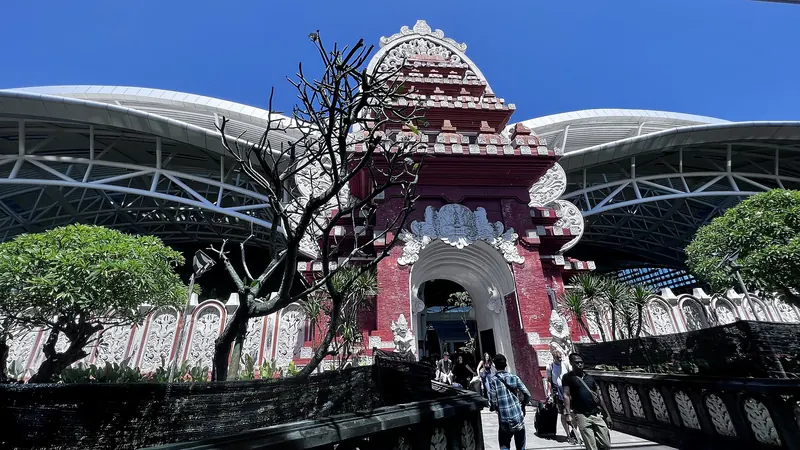
The international arrival hall at Bali's Ngurah Rai airport, where most visitors land and buy their first Indonesian SIM.
Photograph: Pinterpandai.com — opens in a new tab · CC BY-SA 3.0 — opens in a new tab
Changes: Resized and converted to WebP; displayed with responsive crops. · Original photograph and licence details ↗ — opens in a new tab
A GraPARI, Telkomsel's own service centre, in Ngawi, East Java: the place to buy a regular local plan or sort out a registration problem.
Photograph: YT Arty — opens in a new tab · CC BY-SA 4.0 — opens in a new tab
Changes: Resized and converted to WebP; displayed with responsive crops. · Original photograph and licence details ↗ — opens in a new tab
An ojek online ride: motorbike taxis booked through ride-hailing apps are the reason most visitors want working mobile data.
Photograph: Galeri ega — opens in a new tab · CC BY-SA 4.0 — opens in a new tab
Changes: Resized and converted to WebP; displayed with responsive crops. · Original photograph and licence details ↗ — opens in a new tab
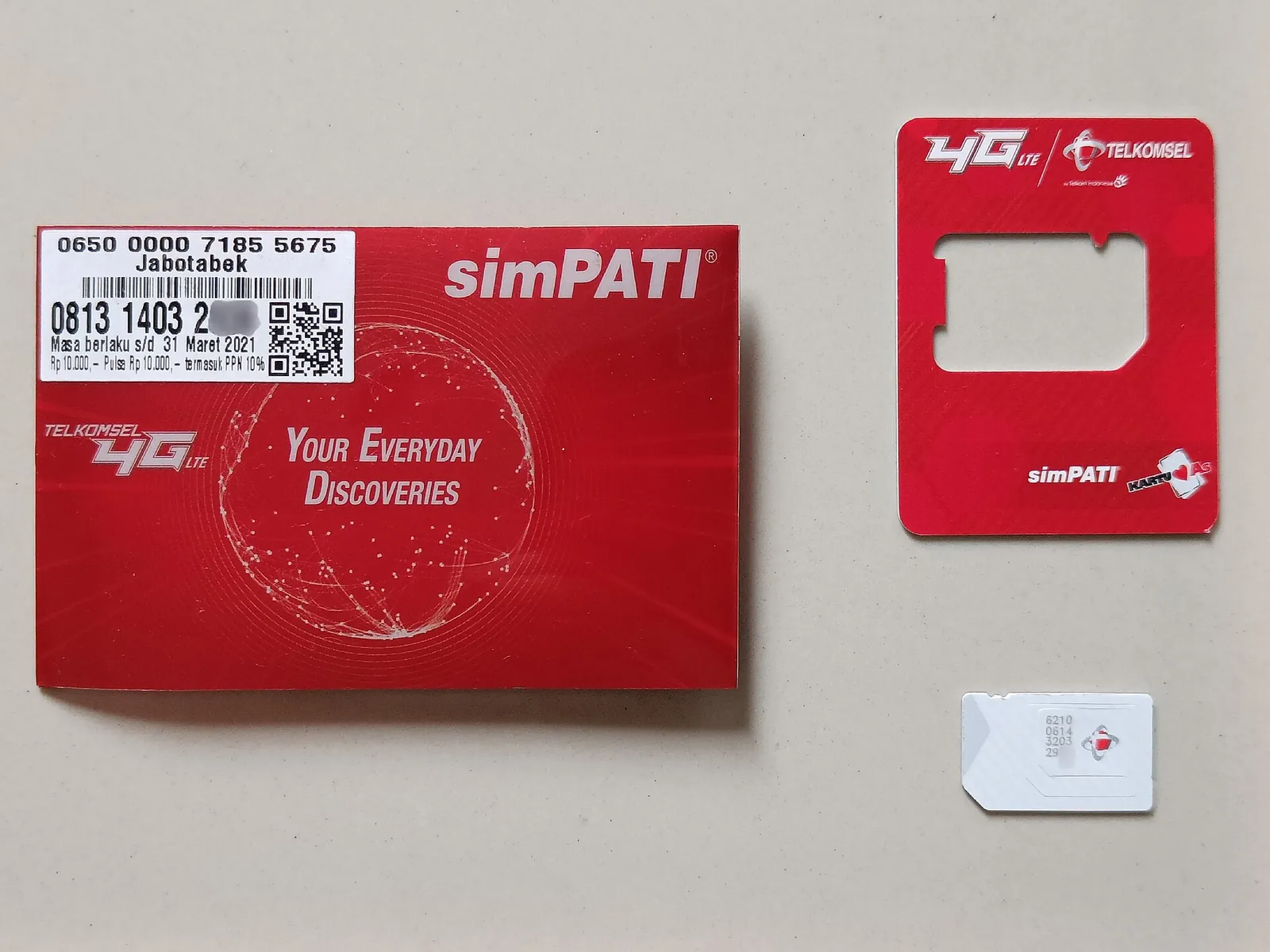
A Telkomsel simPATI starter pack: the physical SIM handed over once it is registered with your passport.
Photograph: H982Falklands — opens in a new tab · CC BY-SA 4.0 — opens in a new tab
Changes: Resized and converted to WebP; displayed with responsive crops. · Original photograph and licence details ↗ — opens in a new tab
Mie bakso with bottled tea at a noodle counter in Bali's Ngurah Rai Airport, an easy first meal while your new SIM activates.
Photograph: Bahnfrend — opens in a new tab · CC BY-SA 4.0 — opens in a new tab
Changes: Resized and converted to WebP; displayed with responsive crops. · Original photograph and licence details ↗ — opens in a new tab