Java · Jakarta
Jakarta travel guide: Monas, Kota Tua, MRT tips and where to stay
Jakarta is not a city you see by crossing it repeatedly. The Ministry of Tourism describes it as a sprawling conglomeration of former villages, home to more than 10 million people, where a wide avenue can turn into a lane jammed with cars and motorbikes within a minute. What works for a visitor is a short, focused stay: Merdeka Square and its landmarks, the old Dutch port town of Kota Tua with Glodok's Chinatown beside it, and evenings spent eating, all strung along one north–south public transport spine, so you spend your time in the city rather than in traffic.
- Suggested time
- 2–3 days
- Where to stay
- Thamrin–Bundaran HI or Menteng in Central Jakarta, near the MRT and the Blok M–Kota busway
- Season and timing
- Indonesia's Ministry of Tourism gives April to October as the dry season and November to March as the wet season for most of the country, including Java, while noting that the seasons have become less predictable. Coastal cities like Jakarta stay hot and humid all year, so plan outdoor sightseeing for mornings and late afternoons.
The short answer
Give Jakarta two full days. Spend one on Merdeka Square (the National Monument, the National Museum, Istiqlal Mosque and the Cathedral opposite it) and one on Kota Tua and Glodok, with dinners on Jalan Sabang, in Glodok or at Blok M. Sleep near Thamrin and Bundaran HI, or in Menteng, so the MRT and Transjakarta's Blok M–Kota busway corridor are close by. Move by MRT, busway and ride-hailing apps rather than taxis across town at rush hour. Add a third day only for a specific side trip: the Betawi village at Setu Babakan, the Thousand Islands or Bogor.
Pick your district by the transit line, not the map
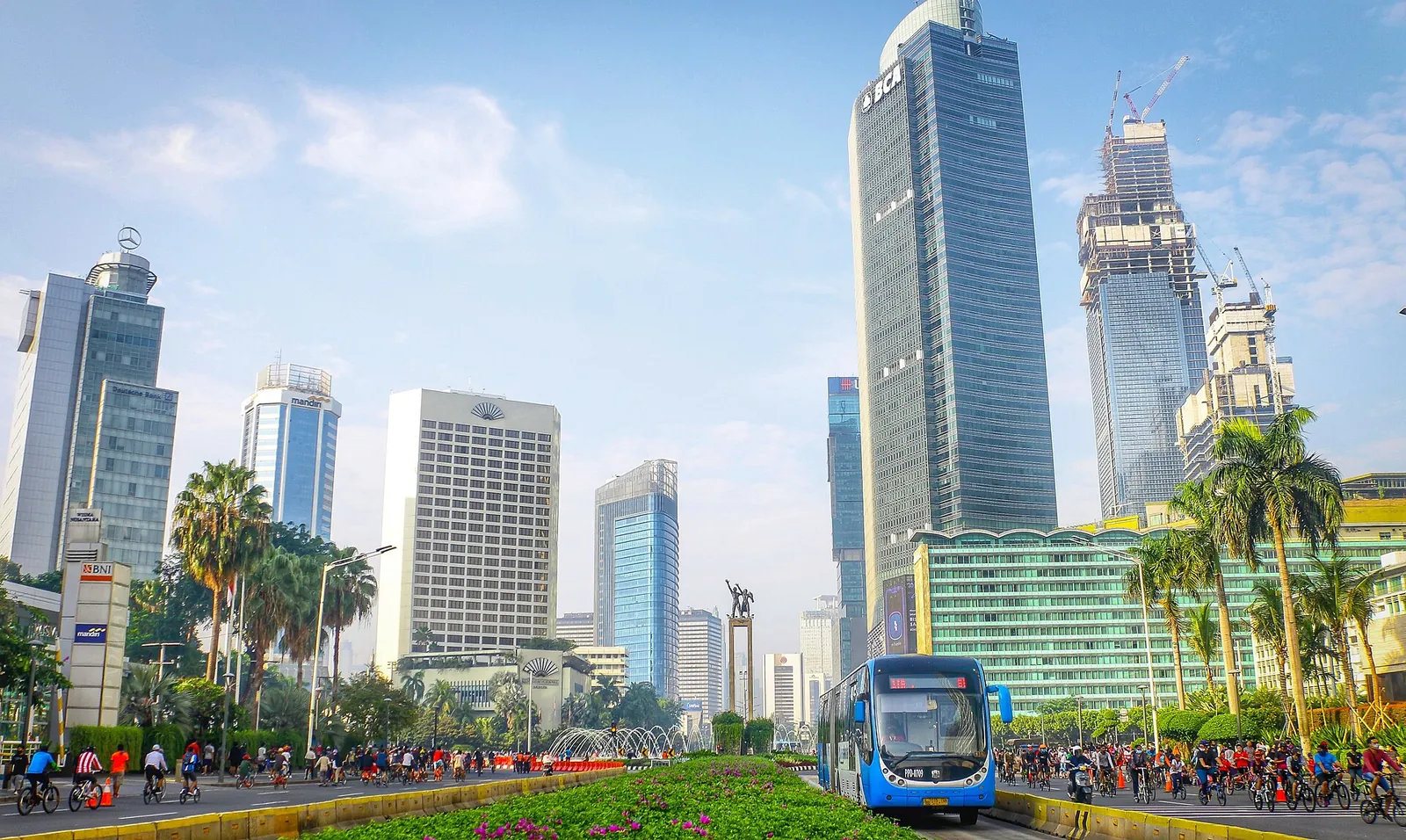
Distances in Jakarta are long and the roads are often congested. The Ministry of Tourism advises choosing a hotel close to what you plan to do, and that advice matters more here than in most capitals. For a sightseeing stay, the useful axis runs north–south: the MRT from Lebak Bulus in the south to Bundaran HI, and Transjakarta's first busway corridor from Blok M through Bundaran HI and Monumen Nasional to Glodok and Kota.
Thamrin and Bundaran HI put you on both lines at once, a short ride from Merdeka Square, with the big malls and hotels of central Jakarta around you. Menteng and Cikini are quieter, older residential streets in Central Jakarta with Jalan Sabang's evening food stalls nearby. Senayan and Blok M in the south suit travellers who want restaurants and shopping on the MRT, but every trip north to the old town is longer. Kota, by the old town, is close to the museums and Chinatown but far from everything else.
Whatever you choose, check the actual walk from the hotel to the nearest MRT station or busway stop. A hotel that looks central on the map but sits across a multi-lane road from the station can add a taxi to every journey.
Merdeka Square: monument, museum, mosque and cathedral
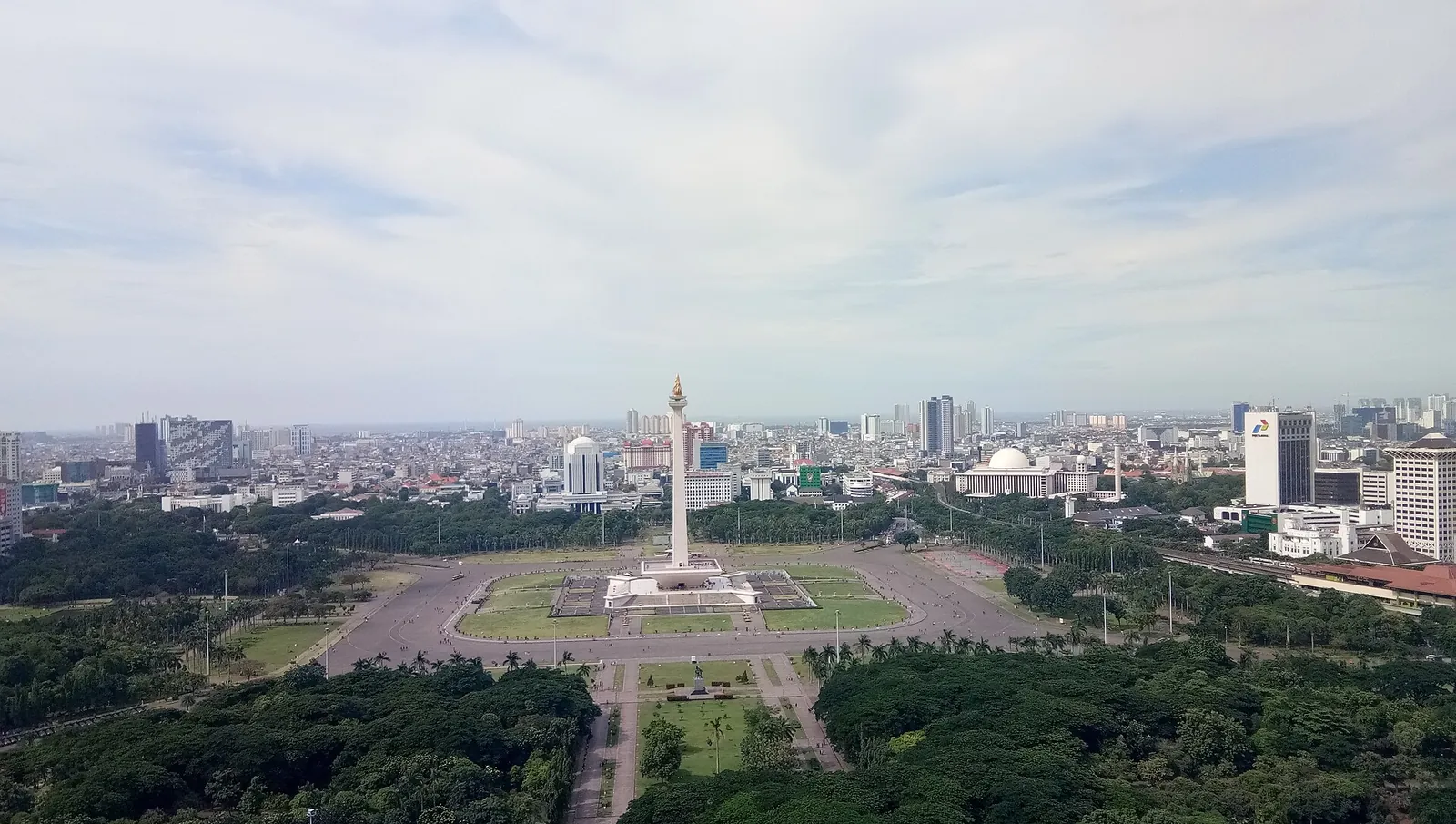
Merdeka Square, at the end of the Sudirman–Thamrin avenues, is the centre of the capital and, under the Dutch, was its seat of government. The National Monument (Monas) stands in the middle: a 137-metre obelisk topped by a 14.5-metre bronze flame coated in gold leaf. According to the Ministry of Tourism, a museum in its base tells the story of the independence struggle in dioramas, and a lift goes up to a viewing platform at the base of the flame. The park around it has a musical fountain and fills with Jakartans exercising on Sundays.
The National Museum is on the square's west side at Jalan Medan Merdeka Barat 12. The institution began in 1778 as a Batavian learned society. The ministry describes it as Indonesia's largest museum, with more than 196,000 objects from prehistory to the present, and it has since been revitalised after a fire. Opening days and ticketing can change, so check the museum's official site before you go.
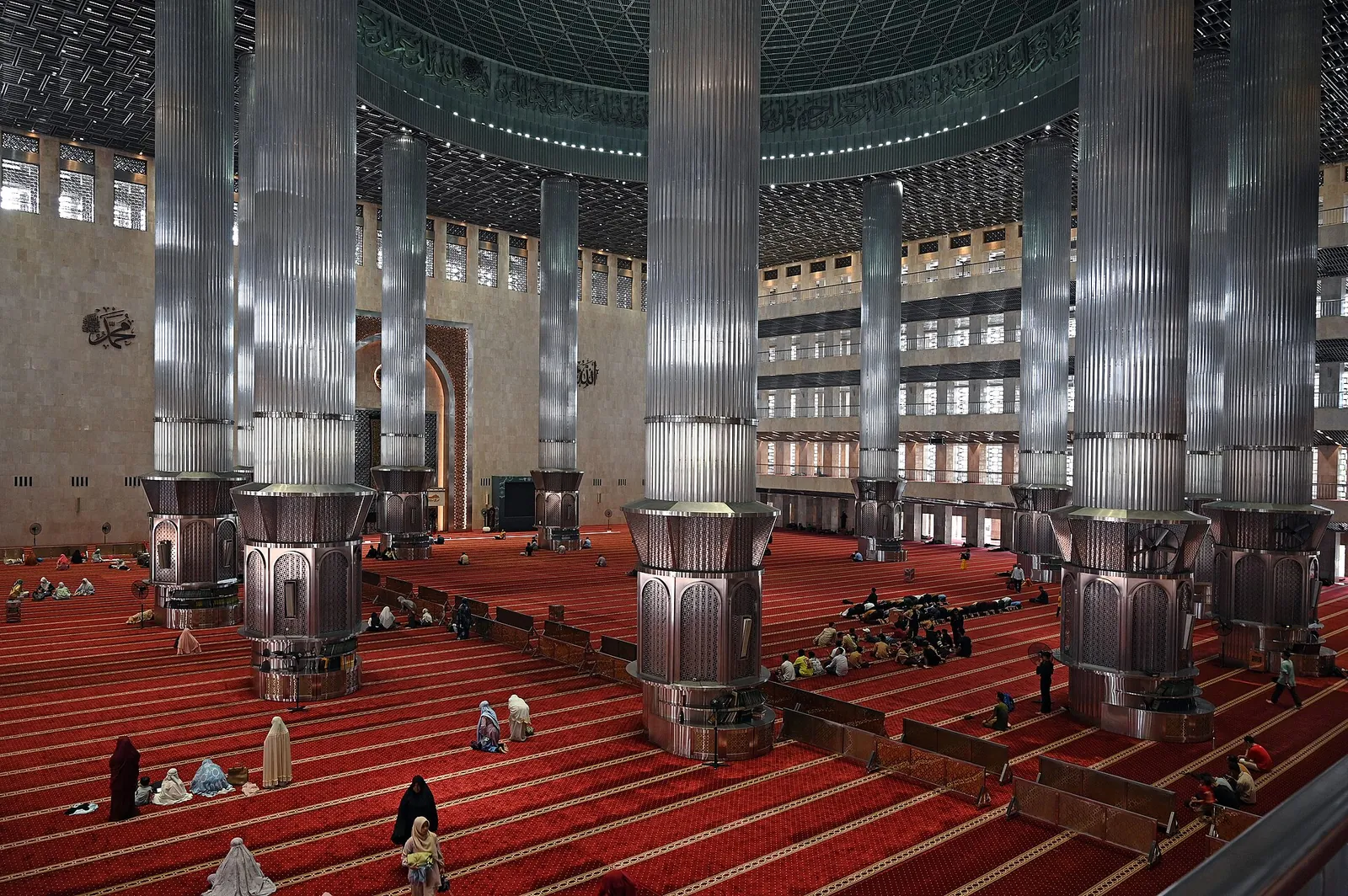
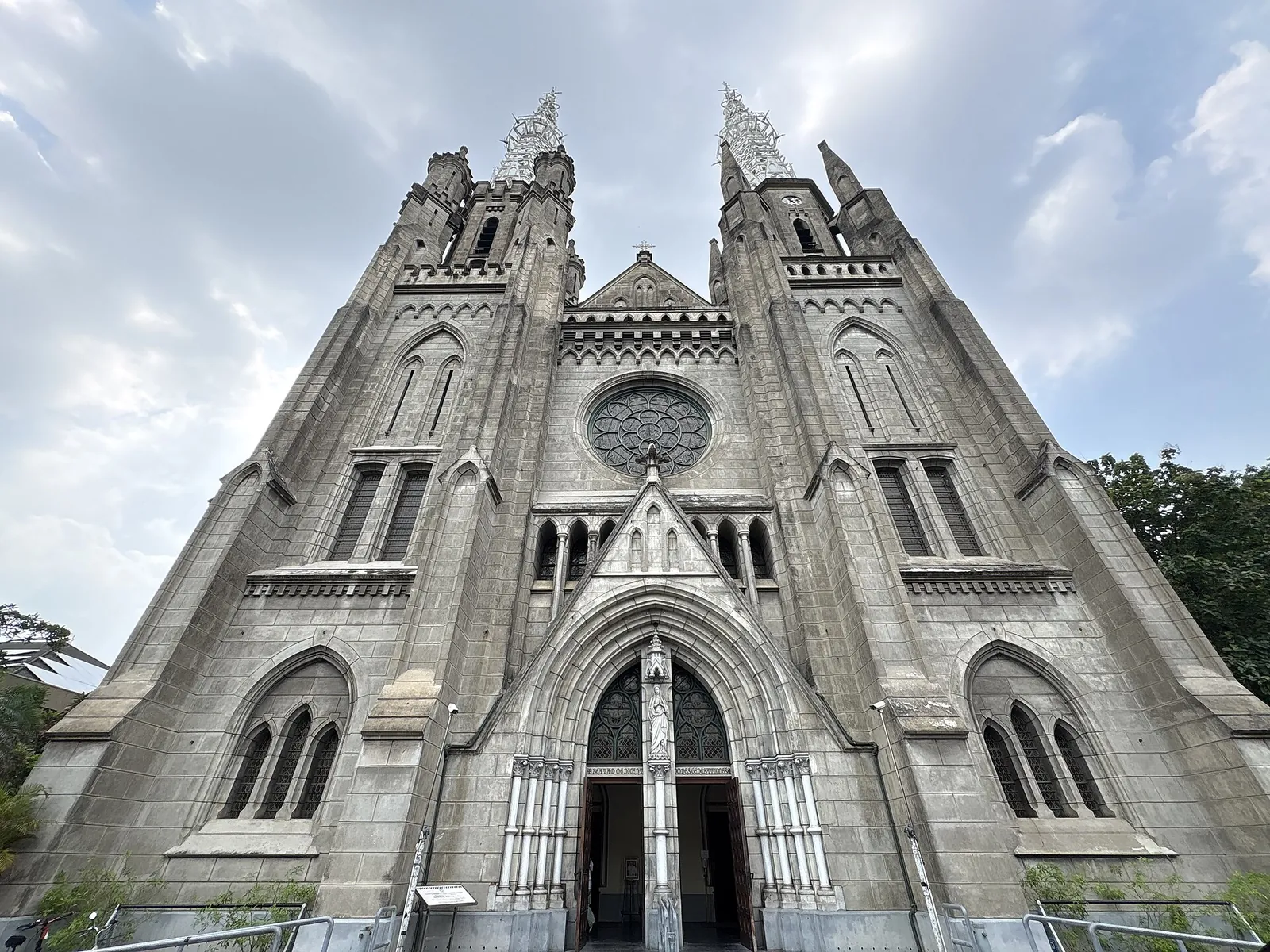
On the north-east corner of the square is Istiqlal Mosque, opened in 1978. The Ministry of Tourism says it is the largest mosque in Southeast Asia, holding up to 120,000 worshippers under a 45-metre dome. Non-Muslims cannot enter the main prayer hall but may visit the upper hallways and terraces. Guides are available for non-Muslim visitors, shoes come off before entering, and the ministry lists the mosque as open daily with no admission fee. Dress modestly. Directly opposite is the neo-Gothic Jakarta Cathedral, consecrated in 1901, whose upper floor has been converted into a museum. The two buildings were placed facing each other deliberately, and they share their car parks at Christmas and Eid.
The Merdeka Palace on the north side is a working presidential palace. The ministry notes that public tours are offered only on specified weekends and must be booked well in advance, so treat it as a view from the fence unless you have arranged a visit.
Make time for the local food
What to eat and where to look
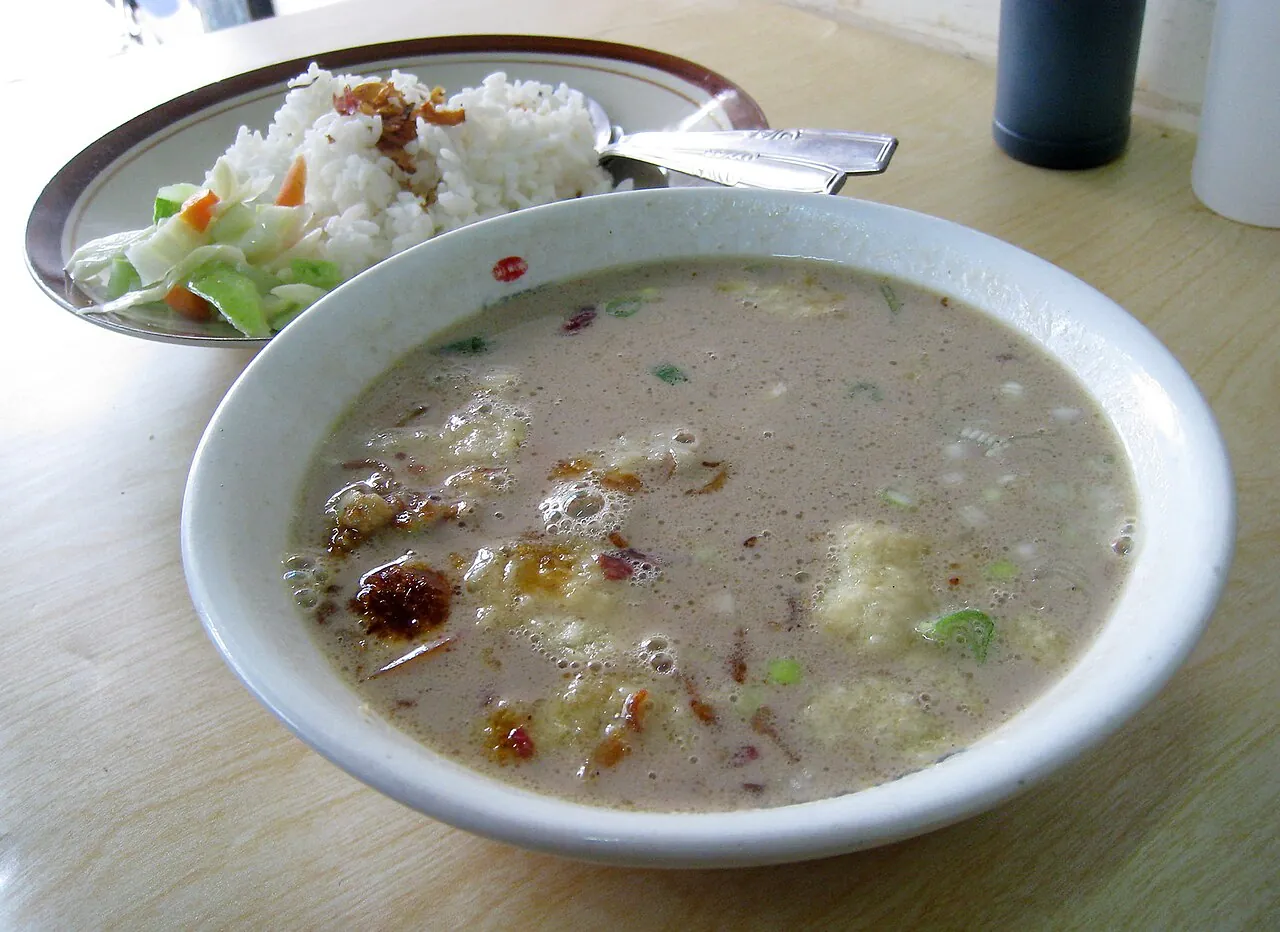
Soto Betawi
Jakarta's signature soup: beef, and often offal, in a rich broth made creamy with coconut milk and milk, finished with tomato, spring onion and crisp emping crackers, eaten with white rice.
- Where to look
- Long-running soto stalls and Betawi warungs around the city, and the food stalls at Setu Babakan.
- Fit it into your day
- A filling lunch on a museum day; one bowl with rice is a full meal.
Often contains offal (tripe, lung or intestine); ask for daging (meat only) if you prefer. Contains dairy and coconut.
Kerak telor
The Betawi street snack: glutinous rice and egg cooked with serundeng (spiced grated coconut), dried shrimp and shallots in a small wok over charcoal, then flipped upside down so the top toasts directly over the fire. It is served on paper or banana leaf with fried shallots.
- Where to look
- Charcoal-stove vendors in Kota Tua and near Ancol, Betawi food stalls, and the Jakarta Fair (Pekan Raya Jakarta) when it runs.
- Fit it into your day
- A snack to share while walking around Fatahillah Square, not a meal.
Contains egg and dried shrimp; watch the vendor cook it so it is served hot.
Gado-gado Betawi
Blanched and fresh vegetables with tofu, tempeh and rice cake (ketupat or lontong), covered in a thick, slightly sweet peanut sauce.
- Where to look
- Street carts and warungs across the city; it is one of the dishes the ministry lists as easy to find all over Jakarta.
- Fit it into your day
- A light lunch, or a vegetarian-leaning option between heavier dishes.
Peanut sauce throughout. Many versions add shrimp paste or shrimp crackers, so ask if you avoid seafood.
Nasi goreng kambing
Fried rice cooked with goat or mutton and ghee, a Middle Eastern-influenced Jakarta favourite. The ministry singles out the long-running stalls on Jalan Kebon Sirih in Menteng.
- Where to look
- Kebon Sirih in Central Jakarta and night-time kaki lima (street) stalls generally.
- Fit it into your day
- A late supper after a long day; it is one of the city's after-dark dishes.
Rich and oily. Chilli is usually added to order, so say how hot you want it.
Nasi uduk
Rice cooked in coconut milk with lemongrass and bay leaves, served with fried chicken, egg, tempeh, crackers and sambal; a common Jakarta breakfast.
- Where to look
- Morning warungs and street stalls; also served at Betawi food stalls.
- Fit it into your day
- Breakfast before an early start at Monas or Kota Tua.
The sambal can be very hot; taste before adding more.
Martabak
Two very different griddle dishes from the same carts: sweet martabak, a thick pancake filled with chocolate, cheese, peanuts or condensed milk, and savoury martabak, a thin pastry stuffed with minced beef and egg.
- Where to look
- Evening carts and stalls on food strips such as Jalan Sabang.
- Fit it into your day
- Something to share at the end of the evening. One sweet martabak feeds several people.
The sweet version is very rich; ask for a half-and-half filling if unsure.
Moving around: MRT, Transjakarta and ride-hailing
The MRT is the simplest system for a visitor. The Ministry of Tourism's transport guide describes a 16-kilometre line from Lebak Bulus to Bundaran HI through stations including Blok M, Senayan, Setiabudi, Dukuh Atas and Bundaran HI. You buy a single- or multi-trip ticket at a counter or machine, or pay with a bank e-money card, a JakLingko card or QR payments in the operator's app. Tap in at the gate and tap out at your destination. In that guide, fares ran from about IDR 3,000 to IDR 14,000. Check the operator, MRT Jakarta, for current stations and fares before you rely on these figures.
Transjakarta covers far more of the city. Its BRT services run on dedicated busway lanes separated from traffic, which is what makes them useful at rush hour. When we checked on 2026-10-03, the operator's route card for corridor 1, Blok M–Kota, listed stops at Bundaran HI, Monumen Nasional, Glodok, Kota and Museum Sejarah Jakarta, with daily departures listed from 00:00 to 23:59. Busway stops do not take cash. Pay with a bank e-money card or a JakLingko card (sold at stops, and also valid on the MRT, LRT and commuter trains), or by QRIS in the TJ app. Always tap out, or your card may be blocked.
For anything off these lines, the ministry points visitors to the Grab and Gojek apps, which show the fare before you book a car or motorbike. Avoid crossing the city by road at peak hours if a train or busway can do the job.
Kota Tua and Glodok in one unhurried half-day
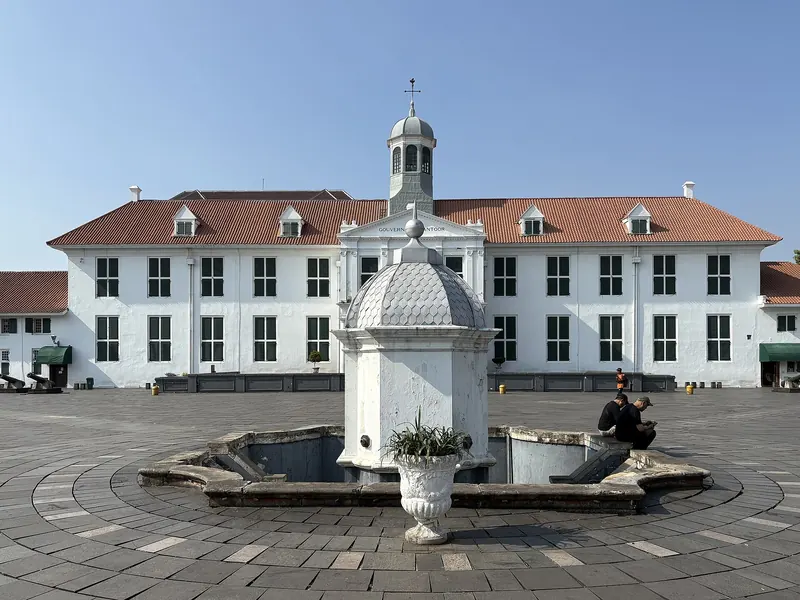
The old town grew around Batavia's Stadhuis, the city hall built between 1707 and 1710 that now houses the Jakarta History Museum (Museum Fatahillah) on Fatahillah Square. The Wayang (puppet) Museum and the Fine Arts and Ceramics Museum are on the same square, the Bank Indonesia and Bank Mandiri museums are close by, and the VOC warehouses near Sunda Kelapa harbour hold the Maritime Museum (Museum Bahari). The Ministry of Tourism's Old Batavia page lists the Fatahillah Museum as open Tuesday to Sunday, 9:00 to 16:00, and closed on Mondays and public holidays. Check before you plan a Monday here. Our separate Kota Tua guide covers the area in detail.
Glodok, Jakarta's Chinatown, starts just south of Jakarta Kota station. The Chinese community was resettled here, outside the city walls, after the massacre of 1740. Its oldest temple, Jin De Yuan (Vihara Dharma Bhakti), on Jalan Kemenangan III behind Jalan Gajah Mada, was first built in 1650, destroyed in 1740 and rebuilt in 1755. It remains an active place of worship, packed at Chinese New Year and on the first and fifteenth days of the lunar month. Two more old temples, Toasebio and Vihara Tanda Bhakti, are within walking distance.
Kota Tua has been made more pedestrian-friendly and is reached by Transjakarta and by the commuter line to Jakarta Kota station. The ministry suggests weekday mornings for fewer crowds and late afternoon for cooler, softer light. Weekends bring street performers and many more people. You can rent an old-style ontel bicycle on the square.
Where to eat: follow the evening food strips
Most of Jakarta's everyday eating happens at street stalls and small warungs rather than restaurants. The Ministry of Tourism singles out Jalan Sabang in Central Jakarta, which becomes a food strip at night, and Glodok for Chinese-Indonesian dishes such as bakmi. It also names Blok M, where the Pujasera food court at Blok M Square is near the MRT, Pasar Santa in South Jakarta for newer stalls, and Bendungan Hilir (Benhil) near the busway, famous for its Ramadan food market.
Betawi cooking, the food of Jakarta's native community, is the local speciality to look for: soto Betawi, kerak telor and gado-gado. During Ramadan many restaurants close or draw curtains during the day out of respect, and the streets come alive with stalls selling iftar snacks as the sun sets. Plan lunches accordingly if you visit during the fasting month.
A workable two-day plan
This is an editorial suggestion, not a timetable. Check the opening days of each museum you choose, especially on Mondays and public holidays.
- Day 1 — Merdeka Square: Monas early, before the heat, then the National Museum. After lunch, visit Istiqlal Mosque and the Cathedral opposite. Spend the evening at Jalan Sabang for street food.
- Day 2 — Old town: take the busway north to Kota in the morning for the Fatahillah Museum and the square. Walk into Glodok for Jin De Yuan and lunch, then go back south by busway or MRT for dinner at Blok M.
- Day 3 (optional): Setu Babakan for Betawi culture, a boat to the Thousand Islands, or a day in Bogor.
Side trips: Betawi culture, islands and the hills
Setu Babakan Betawi Cultural Village, in Srengseng Sawah, Jagakarsa, South Jakarta, is a lakeside preservation area with traditional Betawi houses, performances such as lenong theatre and gambang kromong music, and stalls selling soto Betawi, kerak telor and nasi uduk. The ministry suggests the commuter line to Lenteng Agung station and a short ride-hail from there.
The Thousand Islands (Kepulauan Seribu) lie off the north coast. Speedboats leave from Marina Ancol, and ferries from other harbours including Sunda Kelapa. Several islands have accommodation, from homestays to beach huts, so the outer islands and the marine national park are easier with a night there than as a rushed day trip. Bogor, about 60 kilometres south, has the Botanical Gardens and a cooler climate. The ministry puts it about an hour away by car, with heavier traffic at weekends. Bandung deserves its own stay rather than a day trip. Our Bogor and Bandung guides cover both.
Practical questions
How many days do I need in Jakarta?
Two full days cover Merdeka Square and the old town at a comfortable pace. Add a third only for a specific side trip, such as Setu Babakan, the Thousand Islands or Bogor. The airport journey eats into arrival and departure days.
Which area of Jakarta is best to stay in?
For a sightseeing stay, Thamrin–Bundaran HI or Menteng in Central Jakarta. Both are near the MRT and the Blok M–Kota busway corridor, so Monas and Kota Tua are easy to reach. Senayan and Blok M suit food and shopping, but trips to the old town take longer.
How do I pay for the MRT and Transjakarta?
With a bank e-money card or a JakLingko card, which also works on the MRT, LRT and commuter trains, or with QR payments in the operators' apps. Transjakarta stops do not take cash. Tap in and tap out on every journey.
Can non-Muslims visit Istiqlal Mosque?
Yes. According to the Ministry of Tourism, non-Muslims cannot enter the main prayer hall but may visit the upper hallways and terraces, and guides are available. Remove your shoes, dress modestly and avoid prayer times.
When is the best time to visit Jakarta?
The ministry gives April to October as the dry season and November to March as the wet season for Java. Heavy rain can slow traffic in the wet months. It is hot and humid all year, so plan outdoor sights for mornings and late afternoons.
Is Jakarta worth visiting, or should I go straight on?
As a short stop, yes: the National Museum, Istiqlal Mosque, Kota Tua and the Betawi food are hard to find elsewhere. If your time in Indonesia is very short and you are not flying through Jakarta, a long city stay is less essential than Java's other highlights.
Sources and checks before you travel
Reference sources for the version dated 3 October 2026. Confirm opening times, access, transport and conditions for your travel dates.
- Indonesia Travel (Ministry of Tourism): DKI Jakarta ↗ — opens in a new tab
- Indonesia Travel: National Monument ↗ — opens in a new tab
- Indonesia Travel: National Museum of Indonesia ↗ — opens in a new tab
- Indonesia Travel: Museum Nasional ↗ — opens in a new tab
- Indonesia Travel: Istiqlal Mosque ↗ — opens in a new tab
- Indonesia Travel: Jakarta Cathedral ↗ — opens in a new tab
- Indonesia Travel: Merdeka Palace and State Palace ↗ — opens in a new tab
- Indonesia Travel: commuting options around Jakarta (MRT, Transjakarta) ↗ — opens in a new tab
- Transjakarta: routes ↗ — opens in a new tab
- KAI (Kereta Api Indonesia) ↗ — opens in a new tab
- Indonesia Travel: Old Batavia ↗ — opens in a new tab
- Indonesia Travel: Jakarta History Museum ↗ — opens in a new tab
- Indonesia Travel: explore Kota Tua ↗ — opens in a new tab
- Indonesia Travel: Glodok ↗ — opens in a new tab
- Indonesia Travel: Vihara Dharma Bhakti (Jin De Yuan) ↗ — opens in a new tab
- Indonesia Travel: explore Jakarta's street food ↗ — opens in a new tab
- Indonesia Travel: year-end foodie guide (MRT and Transjakarta) ↗ — opens in a new tab
- Indonesia Travel: soto Betawi ↗ — opens in a new tab
- Indonesia Travel: kerak telor ↗ — opens in a new tab
- Indonesia Travel: gado-gado Betawi ↗ — opens in a new tab
- Indonesia Travel: fried rice at Jakarta's food stalls ↗ — opens in a new tab
- Indonesia Travel: nasi uduk ↗ — opens in a new tab
- Indonesia Travel: Ramadan in Jakarta ↗ — opens in a new tab
- Indonesia Travel: Setu Babakan Betawi Cultural Village ↗ — opens in a new tab
- Indonesia Travel: Seribu Archipelago ↗ — opens in a new tab
- Indonesia Travel: Bogor ↗ — opens in a new tab
- Indonesia Travel: weather, climate and seasons ↗ — opens in a new tab
Photo credits
Monas stands in the middle of Merdeka Square, the open centre of Jakarta's government district.
Photograph: Ramayoni — opens in a new tab · CC BY-SA 4.0 — opens in a new tab
Changes: Resized and converted to WebP; displayed with responsive crops. · Original photograph and licence details ↗ — opens in a new tab
The main prayer hall of Istiqlal Mosque, ringed by balconies; non-Muslim visitors see the mosque from its upper hallways and terraces.
Photograph: P. Hughes — opens in a new tab · CC BY 4.0 — opens in a new tab
Changes: Resized and converted to WebP; displayed with responsive crops. · Original photograph and licence details ↗ — opens in a new tab
Jakarta Cathedral, consecrated in 1901, faces Istiqlal Mosque across the road.
Photograph: Chainwit. — opens in a new tab · CC BY 4.0 — opens in a new tab
Changes: Resized and converted to WebP; displayed with responsive crops. · Original photograph and licence details ↗ — opens in a new tab
Transjakarta's dedicated busway at Bundaran HI, on the corridor that runs from Blok M to Kota.
Photograph: Om khonjin — opens in a new tab · CC BY-SA 4.0 — opens in a new tab
Changes: Resized and converted to WebP; displayed with responsive crops. · Original photograph and licence details ↗ — opens in a new tab
Soto Betawi with rice at a warung in the Glodok area of Jakarta.
Photograph: Gunawan Kartapranata — opens in a new tab · CC BY-SA 3.0 — opens in a new tab
Changes: Resized and converted to WebP; displayed with responsive crops. · Original photograph and licence details ↗ — opens in a new tab