Java · Central Java
Borobudur guide: temple tickets, sunrise, villages and where to stay
Most visitors see Borobudur on a long day out of Yogyakarta, arrive mid-morning with everyone else and leave after a couple of hours. The temple deserves better, and so does the country around it. The Kedu plain is ringed by the Menoreh hills and the volcanoes Merapi and Merbabu, villages such as Wanurejo, Karangrejo and Candirejo sit within a few kilometres of the monument, and the two smaller temples of Mendut and Pawon complete the pilgrimage line that UNESCO lists together with Borobudur. Sleeping nearby turns a rushed transfer into early mornings, a quiet afternoon and a second look.
- Suggested time
- 2 nights (1 full day plus two half days)
- Where to stay
- Borobudur village or Wanurejo for walking to the temple; Karangrejo and the Menoreh foothills for quiet and sunrise viewpoints; Yogyakarta only if you must day-trip
- Season and timing
- Java's dry season runs roughly April to October and the wet season November to March, according to the tourism ministry. Book early around Vesak (May or June), when the ministry warns that rooms near the temple fill up, and check the operator's event calendar: the Borobudur Marathon was listed for 15 November 2026.
The short answer
Stay two nights near the temple rather than day-tripping from Yogyakarta. Arrive in the afternoon and walk or cycle to Mendut and Pawon; next morning watch the sunrise (from inside the park with the official sunrise ticket, or from Punthuk Setumbu in Karangrejo), climb the monument with a temple-structure ticket bought in advance on the official ticket site, and leave the hot middle of the day for the museums or a rest. Use the third morning for a village tour before moving on. Sleep in Borobudur village or Wanurejo to walk to the gates, or in the Karangrejo and Menoreh foothills for views and quiet. With only one day, start from Yogyakarta before dawn and book the climbing ticket first.
Why sleep at Borobudur instead of day-tripping
Borobudur is about 40 kilometres northwest of Yogyakarta, which the tourism ministry puts at roughly one to one and a half hours by road. That sounds like an easy day trip, and it is how most people do it. The cost is the timing: you reach the monument once the heat and the coach parties have arrived, and the drive back takes the evening.
The ministry's own Borobudur hotel guide makes the case for staying close: you can be at the temple for the first light, visit more than once and get to know the surrounding villages. Accommodation runs from luxury resorts on the Menoreh slopes to small guesthouses and village homestays. Manohara, run by the temple park operator, describes itself as the only accommodation inside the Borobudur temple area.
Where you stay changes the trip. Borobudur village around Jalan Badrawati and the park gates puts the temple gates within walking distance. Wanurejo, the village closest to the monument, has guesthouses spread across its hamlets and puts Pawon and Mendut within cycling distance. Karangrejo and the hills towards Majaksingi are quieter and higher, with Punthuk Setumbu and the resorts that look across the plain to the temple, but you will need transport for almost everything.
Tickets and climbing: courtyard or temple structure
The site is managed by InJourney Destination Management (PT Taman Wisata Candi), and its official ticket site sells two basic Borobudur tickets. The temple ground (courtyard) ticket lets you into the park around the monument but not onto it. The temple structure ticket includes the courtyard and lets you climb the monument itself. The tourism ministry adds that access to the upper levels is limited to protect the temple. Decide which you want before you travel, and if climbing matters, buy the structure ticket online for your date rather than hoping for space at the gate.
When we checked on 2026-10-03, the operator's page said climbing tours ran every day from 09:00 to 17:00 local time, with visitor numbers managed for conservation. The ministry's Borobudur page listed the park itself open daily from 6:30 to 17:00. Prices change and differ for domestic and foreign visitors, so take them from the ticket site on the day you book.
The operator's packages that include climbing list special upanat sandals for walking on the temple, a guide and modest dress. Wear modest clothes that cover shoulders and knees, and follow the guide's instructions on the monument. Borobudur is a working Buddhist site as well as a monument: the ministry notes that the government formally inaugurated it as a place of worship for Buddhists in February 2022.
- Courtyard only: the grounds, the views from Dagi Hill and the museums, without going up the monument.
- Temple structure: the courtyard plus a timed climb to the terraces and stupas.
- Borobudur Sunrise or Sunset: separate limited tickets (see below).
- Manohara Premium: a package entering through the Manohara Borobudur Cultural Center with a private guide.
Make time for the local food
What to eat and where to look
Mangut beong (Progo river fish in spiced coconut broth)
Beong is a large catfish-like fish from the Progo river, fried and then cooked in a hot, turmeric-yellow coconut-milk sauce with chilli. The fish head, ndas beong, is a dish in its own right. It is the dish most closely tied to the Borobudur district.
- Where to look
- Simple village warungs west of the temple; the ministry singles out Warung Makan Sehati in Bumen, Kembanglimus, about 4 km from the monument.
- Fit it into your day
- A long lunch after a morning at the temple, shared with rice and vegetables.
Very spicy; it is a whole fish with bones. Ask for it milder if you are not used to chilli.
Kupat tahu Magelang
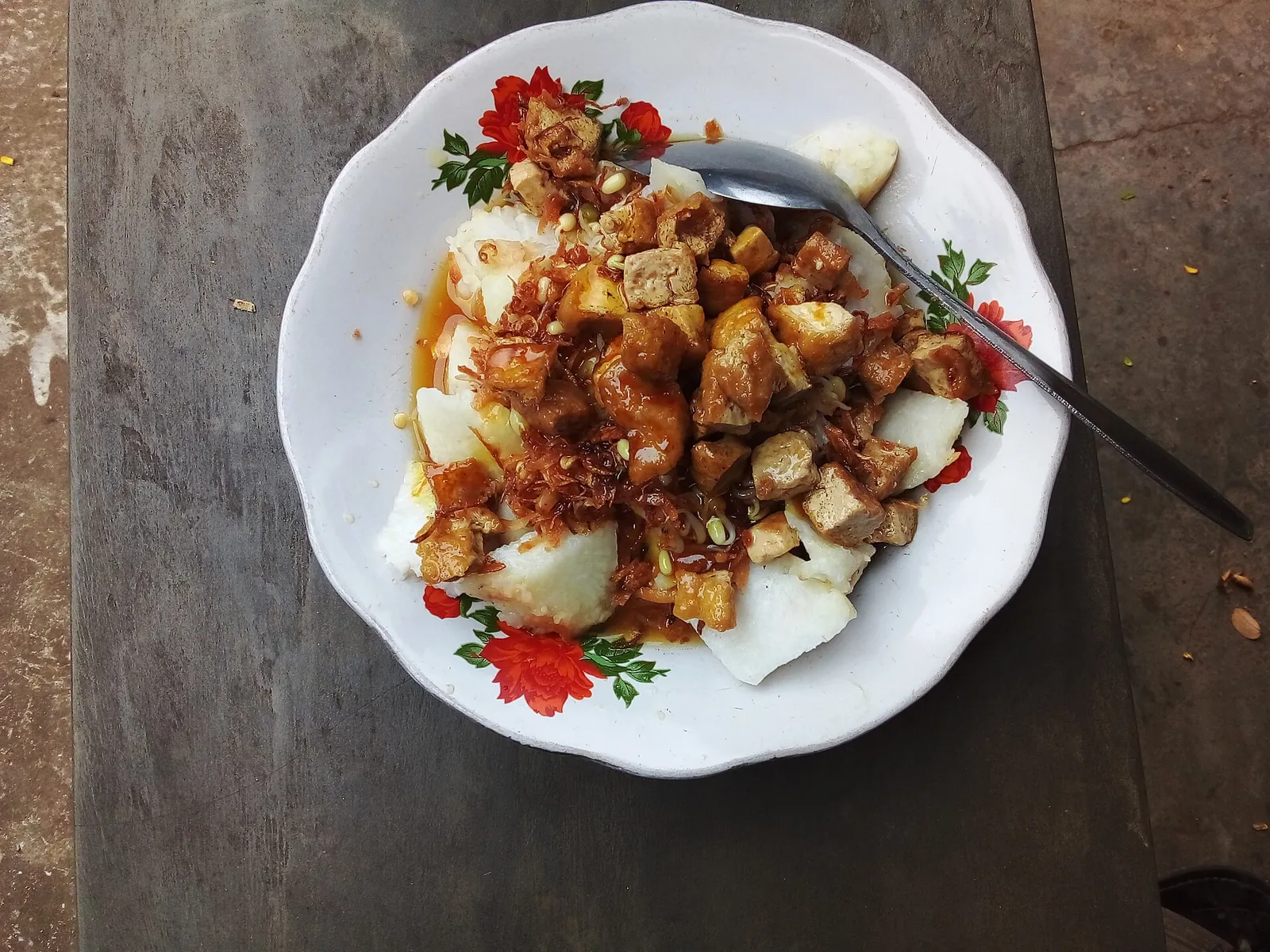
Magelang's signature plate: rice cakes (ketupat), tofu, noodles, fritters and cabbage under a thin, sweet-savoury peanut sauce. It works as breakfast or a light lunch.
- Where to look
- Warungs in Magelang town and around the temple; the ministry lists the long-running Kupat Tahu Pojok on Jalan Tentara Pelajar.
- Fit it into your day
- Breakfast after a sunrise start, or lunch on the way to or from Magelang.
Contains peanuts and often sweet soy sauce; chilli is added to order.
Sop senerek
A clear beef and red-bean soup with vegetables, a Magelang speciality the ministry says has been eaten since colonial times.
- Where to look
- Magelang town, which the ministry describes as not far from the temple; Sop Senerek Pak Parto on Jalan Jenderal Sudirman is the best-known name.
- Fit it into your day
- Often eaten as breakfast, so plan it for the morning you pass through Magelang.
Made with beef; the ministry lists Pak Parto as a daytime shop, so do not leave it for dinner.
Tempe mendoan and tahu bacem
Mendoan is thin tempeh dipped in seasoned batter and fried only briefly so it stays soft; tahu bacem is tofu simmered with spices and palm sugar and then fried. Both are eaten hot with sweet soy sauce and bird's-eye chilli.
- Where to look
- Fritter (gorengan) stalls and warungs; the ministry suggests them as a side to almost any main dish, and some villages offer mendoan cooking sessions.
- Fit it into your day
- An afternoon snack with coffee or tea, or a side with any rice meal.
Fried in shared oil; bacem tofu is sweet rather than spicy.
Sunrise: inside the park or from Punthuk Setumbu
There are two different sunrise experiences, and they are not the same view. The operator's Borobudur Sunrise ticket takes a small group onto the monument before the park opens. When we checked on 2026-10-03, it was listed at Rp 1,000,000 per person, limited to 100 people a day, starting at 04:00 from the Borobudur Cultural Center (the former Manohara), with a torch, upanat sandals, a guide and breakfast included. A matching Borobudur Sunset ticket started at 16:00 with the same price and limit. Book these through the official ticket site; they are the only way onto the stupas at first or last light.
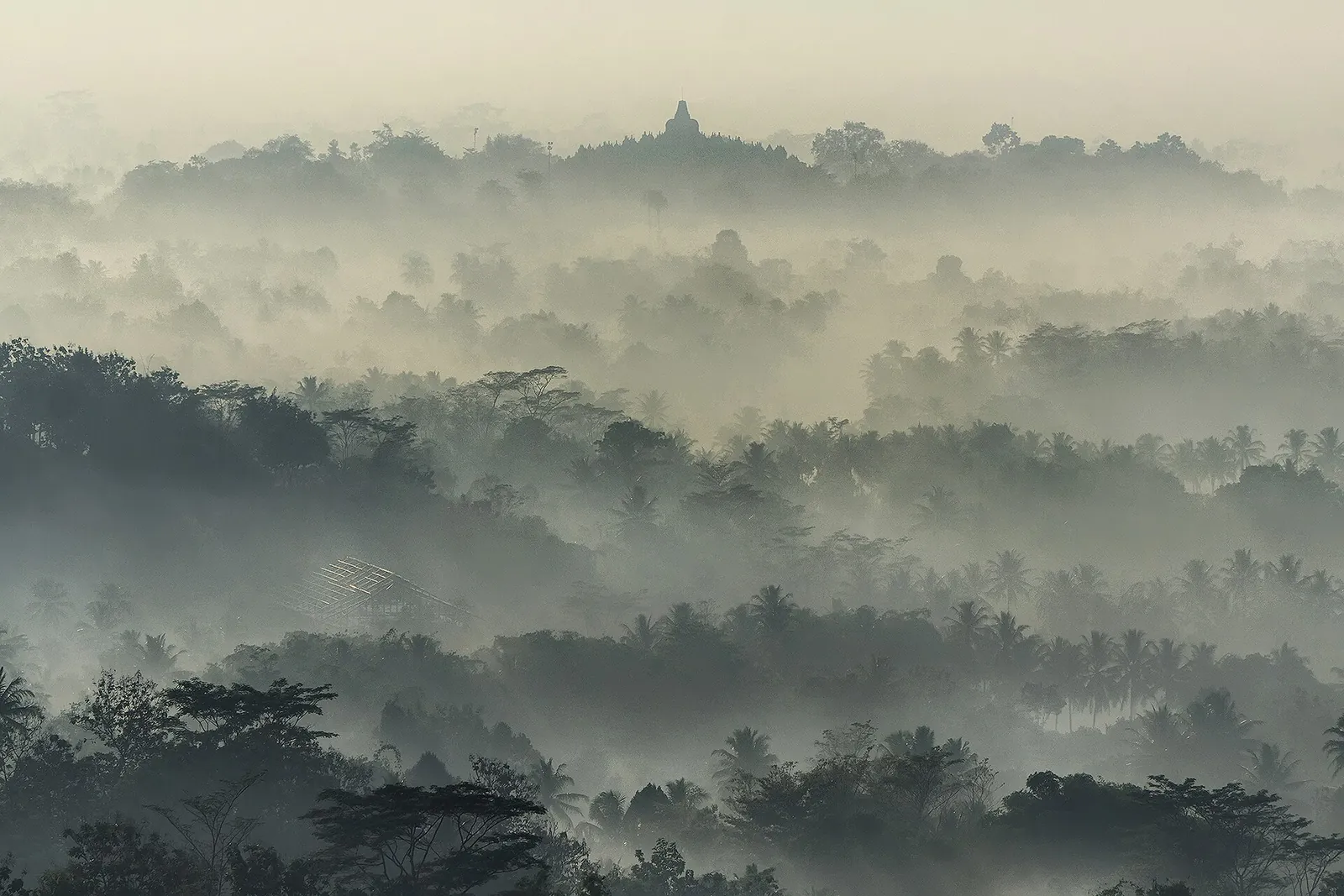
Punthuk Setumbu, a hill in Karangrejo village, gives the famous picture of the temple floating in morning mist with Merapi and Merbabu behind. You watch from outside, not from the monument. The ministry describes about 15 minutes of walking uphill to the top and suggests arriving around 5 am. From there you can walk on to Bukit Rhema and the so-called Chicken Church (Gereja Ayam), a prayer house begun by Daniel Alamsjah in 1990 and left unfinished, which also has sunrise views over the plain.
Mist that makes the photographs also hides the view on some mornings, especially in the wet season. Bring a light jacket and a head torch, and if you have two mornings, use one for each viewpoint.
Reading the temple: terraces, reliefs and the museums
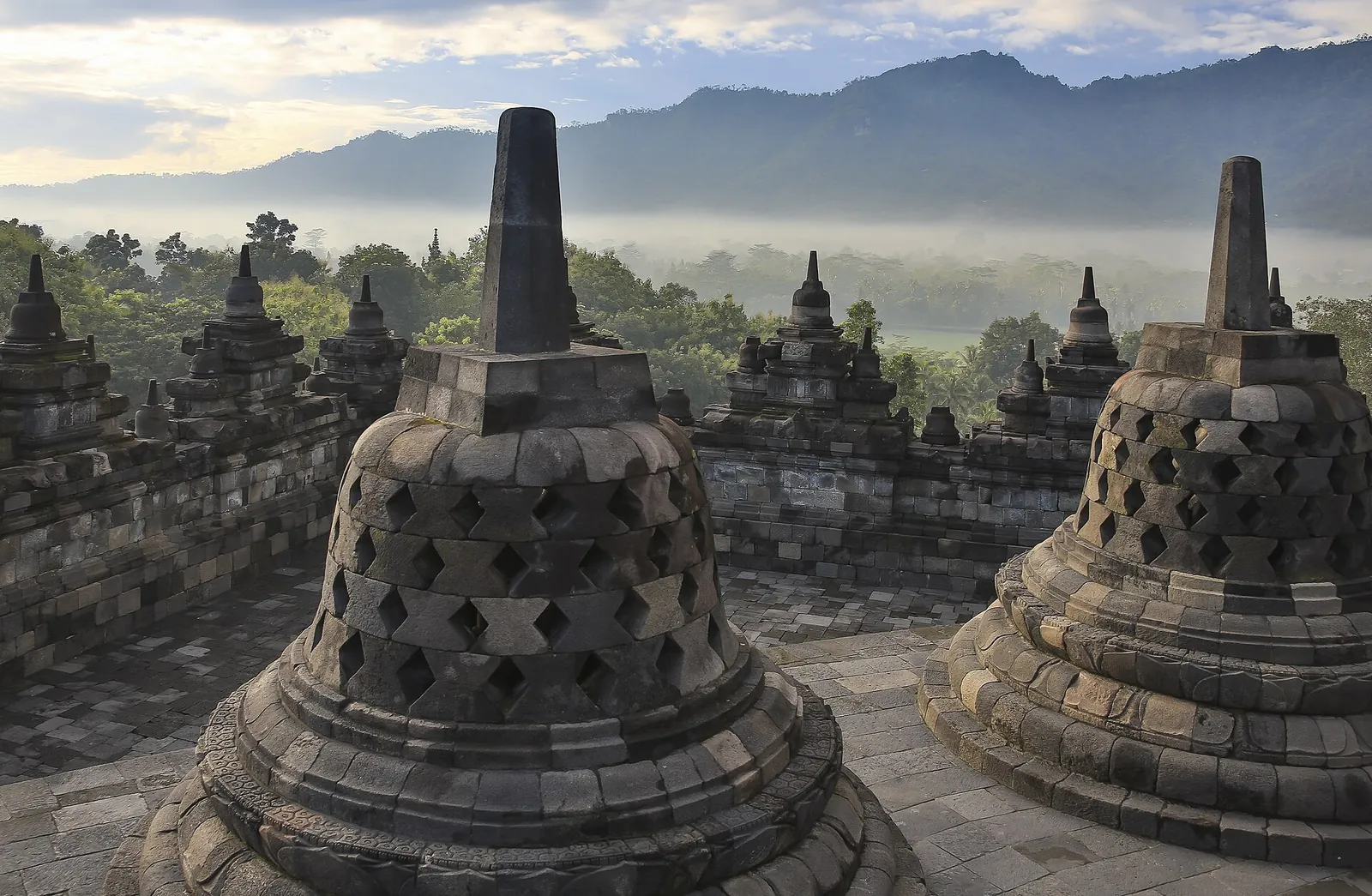
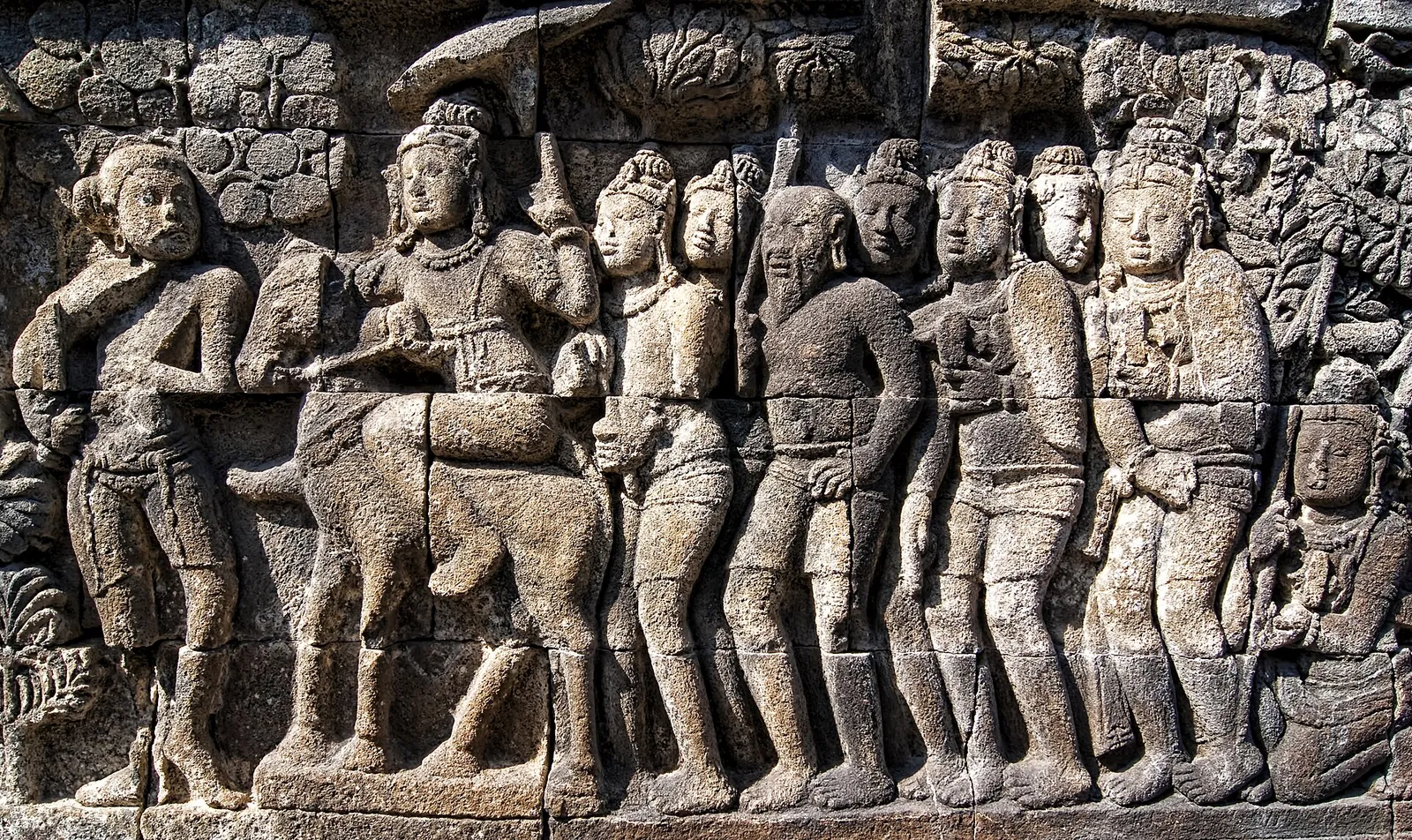
Borobudur was built by the Sailendra dynasty between about 780 and 840 CE. The ministry describes a stepped structure of five square terraces topped by three circular platforms and a central stupa, with 72 perforated stupas each holding a Buddha, 504 Buddha statues in all and 2,672 relief panels on the walls and balustrades. The levels represent the journey from the world of desire to the formless realm, so it pays to walk each terrace rather than heading straight up the stairs.
A guide makes the reliefs readable. Without one, take time over the panels, which the ministry says depict Buddhist teachings as well as the daily life of the Javanese people of the time. The monument was abandoned around the 15th century, brought to wider attention in 1814 under Thomas Stamford Raffles, cleared by 1835 and restored in the 1970s with UNESCO's support.
Inside the park, Museum Karmawibhangga is named after the hidden reliefs at the temple's base that illustrate cause and effect, and holds around 58 objects, including original stone elements and construction models. The Samudra Raksa Ship Museum houses a replica of a ship carved on one of Borobudur's reliefs, built in 2003 and sailed to Ghana in 2003–04. Both are a good use of the hot middle of the day. For a different angle on the monument, walk up Dagi Hill in the park.
Mendut and Pawon: the rest of the pilgrimage line
UNESCO's 1991 listing is for the Borobudur Temple Compounds, which include Mendut and Pawon as well as Borobudur. The three stand roughly in a straight line to the east of the main temple, and they are easiest to see in the late afternoon of your arrival day, when the main temple is busy or closed to climbers.
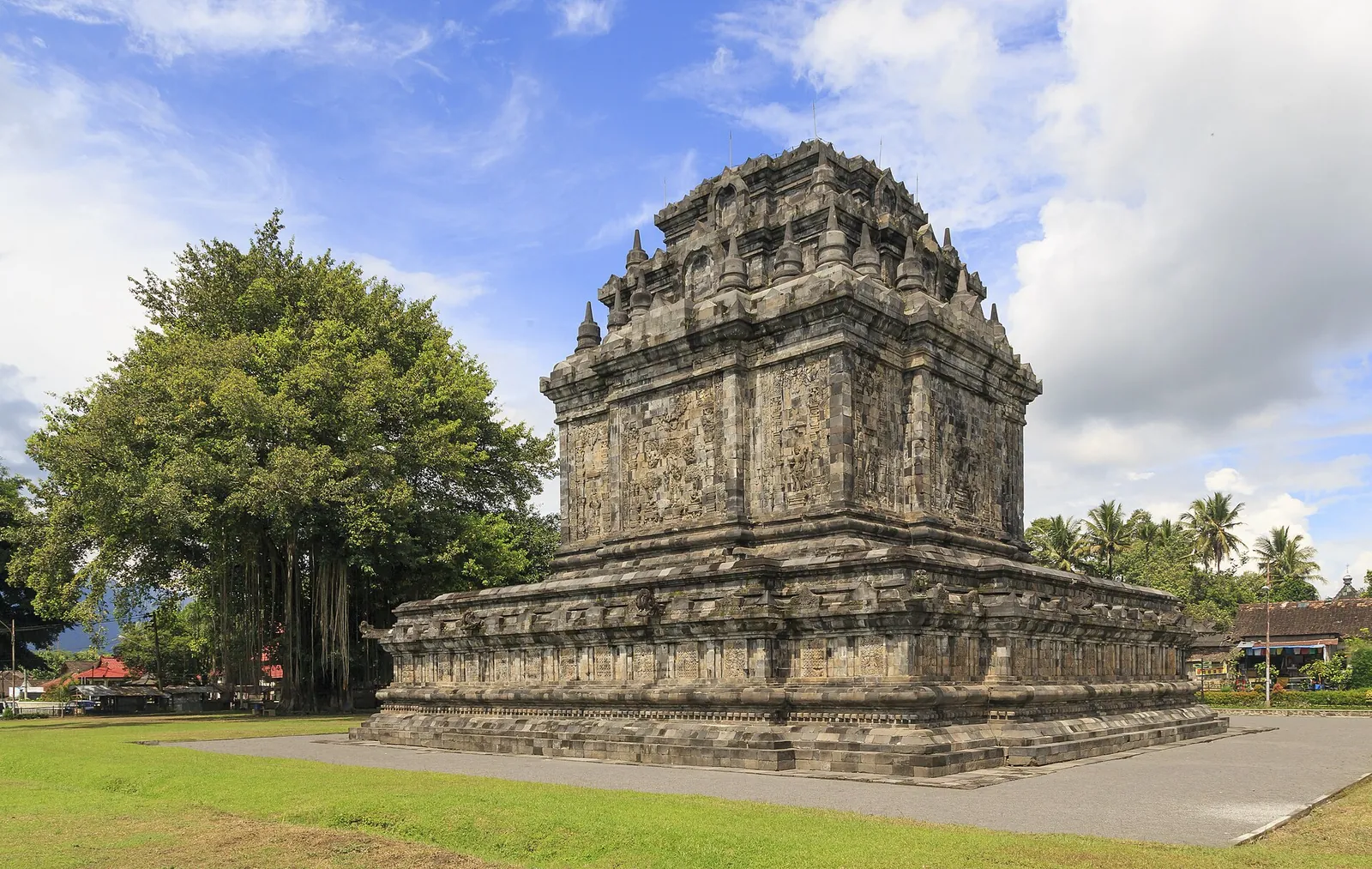
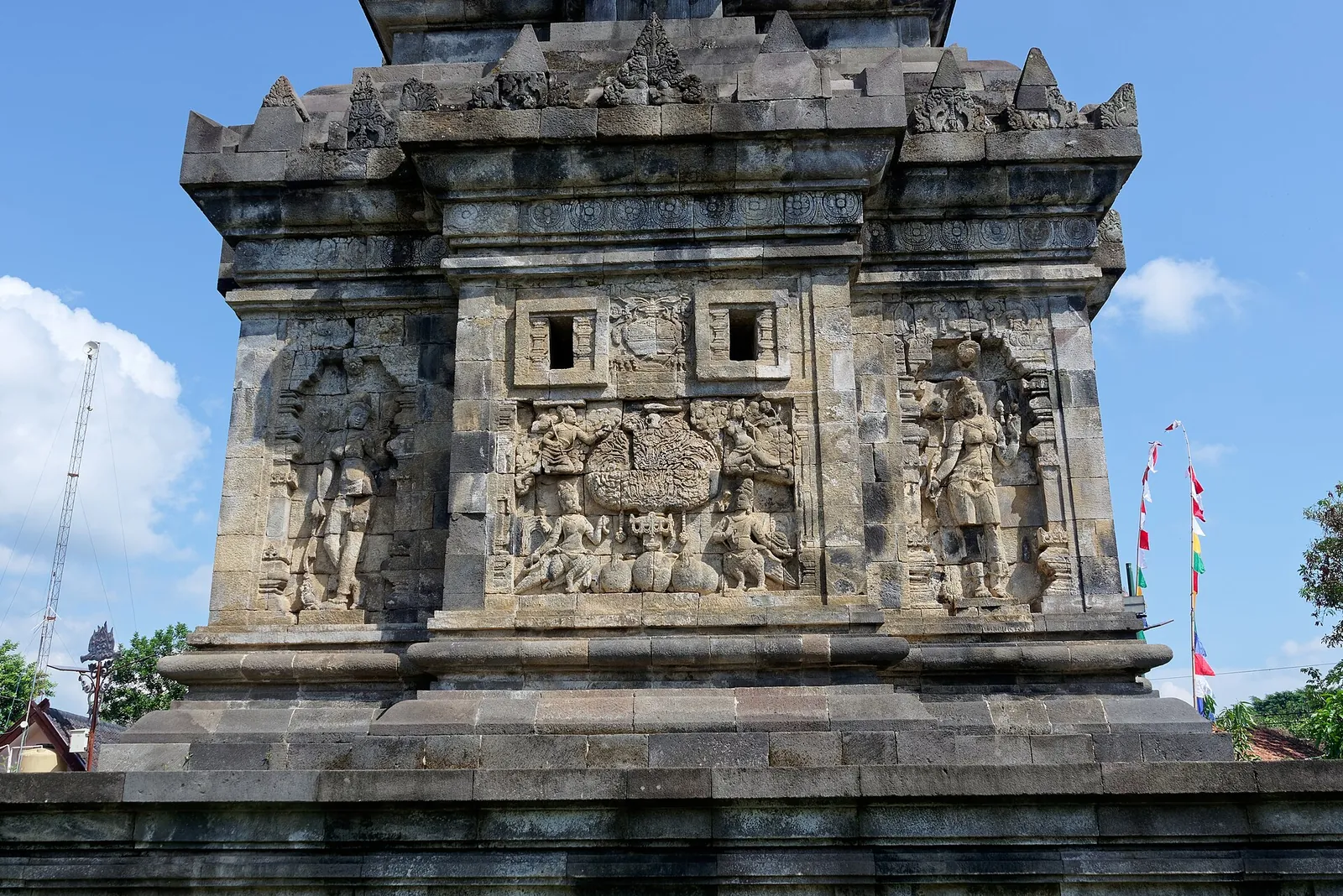
Mendut is about 3 kilometres from Borobudur. The ministry describes it as an 8th-century Buddhist temple with three large Buddha statues inside and carved reliefs on its walls; it is still used for worship, and during Vesak the holy water and flame for the festival are kept there before being carried in procession to Borobudur. Pawon, a small andesite temple about 1.75 kilometres east of Borobudur in Brojonalan, sits between the two.
By bicycle or on foot through Wanurejo, the three temples make an easy half day. Dress as you would for Borobudur and check opening times locally, since we could not find an official schedule for either temple.
The villages around the temple
The reason to stay is the countryside. The ministry's guides list Wanurejo as the most popular village because it is closest to the monument; its hamlets include Tingal Kulon and Brojonalan. Karangrejo has gamelan and dance, homestays and Punthuk Setumbu. Candirejo, about 3 kilometres from Borobudur and a designated tourism village since 2003, offers dokar (horse-cart) and bicycle tours through rice fields, walks in the Menoreh hills and more than 50 community-run homestays.
Activities offered in the villages include batik, pottery, cooking tempe mendoan, gamelan lessons and rides on old ontel bicycles or in vintage VW cars. Pottery comes from villages such as Kipoh, about 4 kilometres from the temple. Book through your guesthouse or a village tourism office, ask what a session includes and how long it lasts, and pay in cash where card readers are rare.
A workable two-night plan
This is an editorial suggestion, not a timetable. Book climbing and sunrise tickets first and arrange the rest around them.
- Day 1 — Arrive: drive or take the bus from Yogyakarta, check in by early afternoon, then cycle or walk to Mendut and Pawon; dinner in Borobudur village.
- Day 2 — The temple: sunrise at Punthuk Setumbu or with the official sunrise ticket; climb with your structure ticket; museums or a rest at midday; village walk or dokar ride in the late afternoon.
- Day 3 — Villages, then onward: a pottery, batik or cooking session, or a second sunrise; leave for Yogyakarta or Dieng after lunch.
- Day trip only: leave Yogyakarta before dawn, buy the structure ticket in advance and add Mendut on the way back.
Practical questions
Can I still climb Borobudur?
Yes, with a temple structure ticket, which includes the courtyard. The cheaper courtyard ticket does not let you go up the monument. When we checked, the operator listed climbing every day from 09:00 to 17:00 with visitor numbers managed, so book in advance on the official ticket site.
Is it worth staying overnight near Borobudur?
Yes, if you want sunrise or a calmer visit. A night or two nearby lets you see the temple early, visit Mendut and Pawon and spend time in the villages instead of spending two to three hours of the day on the road to and from Yogyakarta.
What is the difference between the official sunrise and Punthuk Setumbu?
The official Borobudur Sunrise ticket takes a limited group onto the monument before the park opens. Punthuk Setumbu is a hill in Karangrejo village from where you see the temple from a distance, in the mist, with the volcanoes behind. One is the view from the stupas; the other is the view of them.
How do I get from Yogyakarta to Borobudur?
By private car, driver, tour or shuttle, or by public bus from Jombor terminal in Yogyakarta to Borobudur terminal, then a short ride to the gates. The ministry puts the journey at roughly one to one and a half hours for the 40 or so kilometres.
What should I wear at Borobudur?
Modest clothing that covers shoulders and knees, and comfortable shoes for the park. Ticketed climbs list special upanat sandals for walking on the monument itself.
Are Mendut and Pawon included in the Borobudur ticket?
They are part of the same UNESCO listing but are separate small sites a few kilometres east of the main temple. Check entry arrangements locally; we could not find their tickets on the official Borobudur ticket site.
Sources and checks before you travel
Reference sources for the version dated 3 October 2026. Confirm opening times, access, transport and conditions for your travel dates.
- InJourney Destination Management: Borobudur ↗ — opens in a new tab
- InJourney official ticket site ↗ — opens in a new tab
- InJourney: Borobudur temple tours now open daily ↗ — opens in a new tab
- InJourney: Borobudur Sunrise ↗ — opens in a new tab
- InJourney: Borobudur Sunset ↗ — opens in a new tab
- InJourney: Borobudur Premium Experience (foreign adult) ↗ — opens in a new tab
- InJourney: Manohara ↗ — opens in a new tab
- InJourney: Samudra Raksa Ship Museum ↗ — opens in a new tab
- InJourney: Dagi Hill ↗ — opens in a new tab
- InJourney Destination Management (home page events) ↗ — opens in a new tab
- Indonesia.travel: Borobudur Temple, a marvel of Buddhist architecture ↗ — opens in a new tab
- Indonesia.travel: Candi Borobudur ↗ — opens in a new tab
- Indonesia.travel: Borobudur Temple Compounds ↗ — opens in a new tab
- Indonesia.travel: Things to do at Borobudur ↗ — opens in a new tab
- Indonesia.travel: 7 places to catch sunrise near Borobudur ↗ — opens in a new tab
- Indonesia.travel: Enjoy the sunrise at Borobudur ↗ — opens in a new tab
- Indonesia.travel: Planning a 4D3N trip to Borobudur ↗ — opens in a new tab
- Indonesia.travel: Discover 5 temples around Borobudur ↗ — opens in a new tab
- Indonesia.travel: Mendut Temple ↗ — opens in a new tab
- Indonesia.travel: Pawon Temple ↗ — opens in a new tab
- Indonesia.travel: Museum Karmawibhangga ↗ — opens in a new tab
- Indonesia.travel: Vesak at Borobudur (2019) ↗ — opens in a new tab
- Indonesia.travel: 8 hotels closest to Borobudur ↗ — opens in a new tab
- Indonesia.travel: Candirejo tourism village ↗ — opens in a new tab
- Indonesia.travel: 9 activities around Borobudur ↗ — opens in a new tab
- Indonesia.travel: Magelang culinary delights ↗ — opens in a new tab
- Indonesia.travel: Culinary spots in Borobudur ↗ — opens in a new tab
- Indonesia.travel: Weather, climate and seasons ↗ — opens in a new tab
Does this experience fit your route?
A local guide or village tour is the easiest way to make sense of the reliefs and the countryside around them. Check what is included, the pick-up point and whether tickets for climbing the temple are part of the price.
Check dates and details on Viator ↗ — opens in a new tabAffiliate link · Book with ViatorPhoto credits
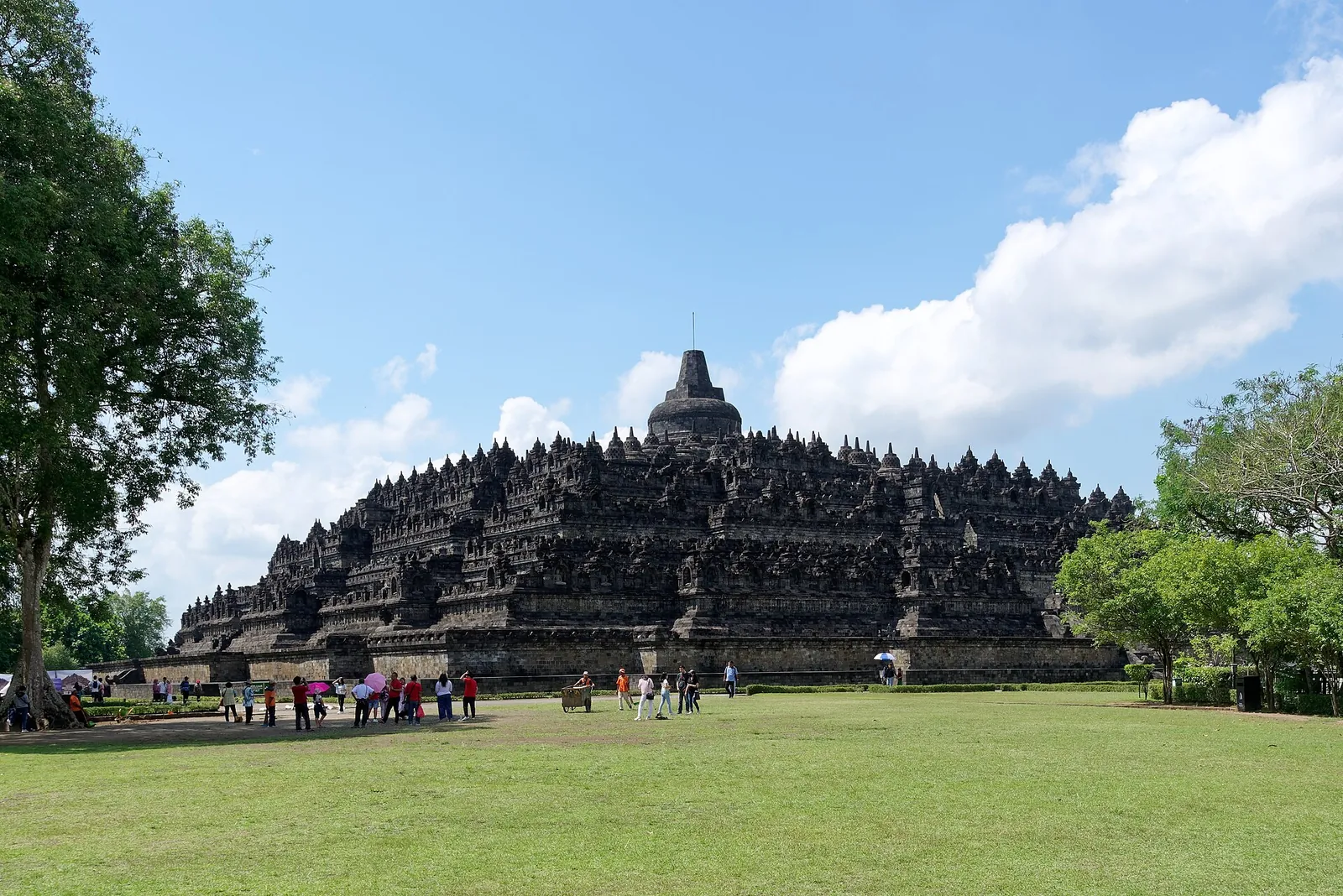
Borobudur from the temple park lawn, with visitors at the foot of the monument
Photograph: Jakub Hałun — opens in a new tab · CC BY-SA 4.0 — opens in a new tab
Changes: Resized and converted to WebP; displayed with responsive crops. · Original photograph and licence details ↗ — opens in a new tab
The perforated stupas on Borobudur's circular terraces, looking towards the Menoreh hills
Photograph: CEphoto, Uwe Aranas — opens in a new tab · CC BY-SA 3.0 — opens in a new tab
Changes: Resized and converted to WebP; displayed with responsive crops. · Original photograph and licence details ↗ — opens in a new tab
One of Borobudur's carved relief panels
Photograph: Philip Nalangan — opens in a new tab · CC BY 4.0 — opens in a new tab
Changes: Resized and converted to WebP; displayed with responsive crops. · Original photograph and licence details ↗ — opens in a new tab
Candi Mendut, about 3 km east of Borobudur
Photograph: CEphoto, Uwe Aranas — opens in a new tab · CC BY-SA 3.0 — opens in a new tab
Changes: Resized and converted to WebP; displayed with responsive crops. · Original photograph and licence details ↗ — opens in a new tab
Reliefs on Candi Pawon, between Mendut and Borobudur
Photograph: Jakub Hałun — opens in a new tab · CC BY-SA 4.0 — opens in a new tab
Changes: Resized and converted to WebP; displayed with responsive crops. · Original photograph and licence details ↗ — opens in a new tab
Borobudur in the morning mist, seen from Punthuk Setumbu
Photograph: Focusfeel — opens in a new tab · CC BY-SA 4.0 — opens in a new tab
Changes: Resized and converted to WebP; displayed with responsive crops. · Original photograph and licence details ↗ — opens in a new tab
Kupat tahu, the Central Javanese rice-cake and tofu plate (photographed in Kebumen)
Photograph: SATELIT BM9 — opens in a new tab · CC BY-SA 4.0 — opens in a new tab
Changes: Resized and converted to WebP; displayed with responsive crops. · Original photograph and licence details ↗ — opens in a new tab