Plan your trip · Indonesia
Money in Indonesia: rupiah, cards, ATMs, QRIS and cash for the islands
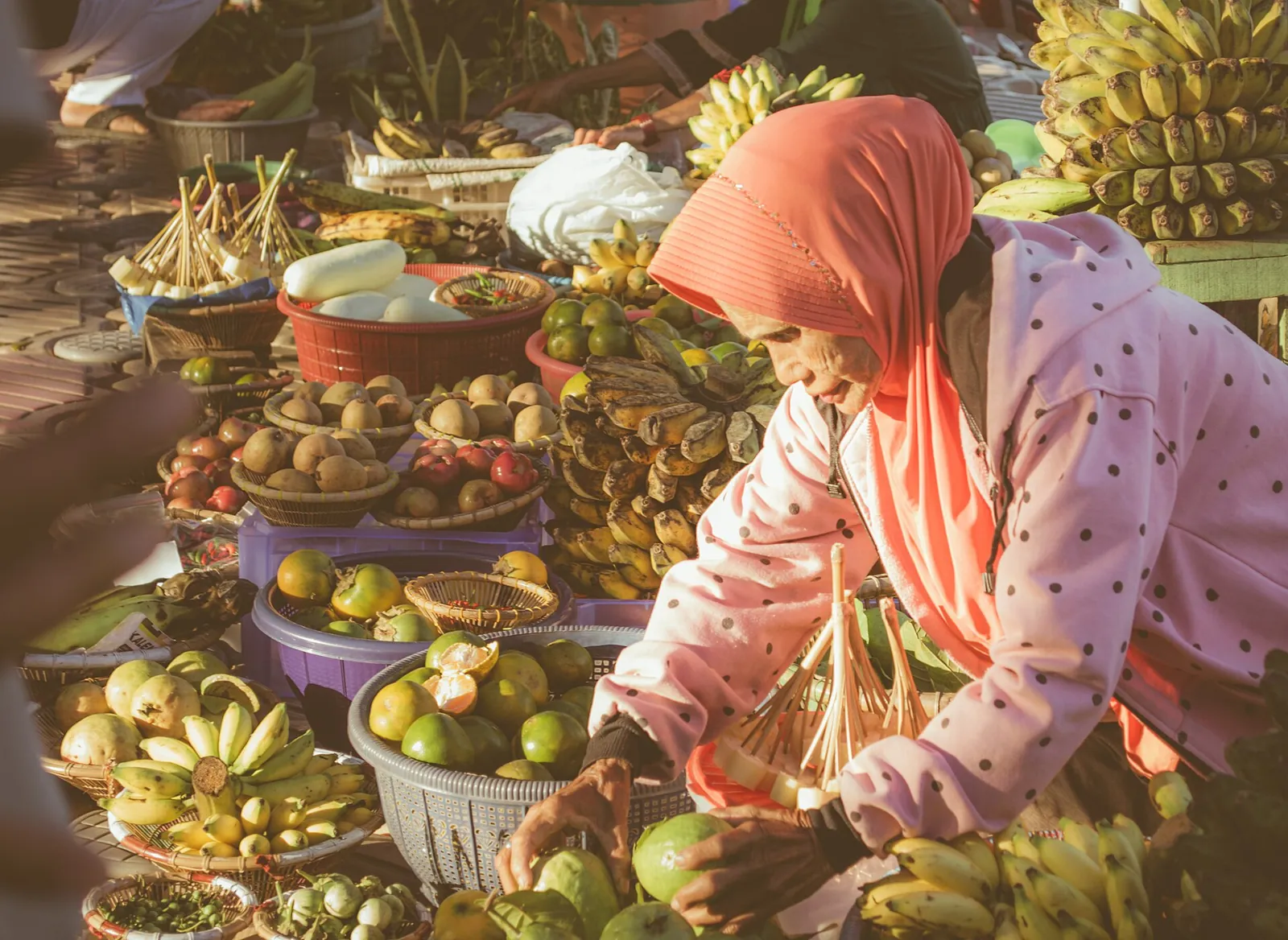
Indonesia pays in two ways at once. In Jakarta, Bali's south coast and the big hotels, you can tap a card, scan a QR code or pay a city bus with a prepaid card. Yet the warung on the corner, the boatman at the jetty and the village shop on a small island still want rupiah in small notes, and on some islands there is no cash machine at all. The country is spread over thousands of islands, so a money plan that works in Seminyak can leave you short in the Togean Islands. Plan each leg of the trip for the way it pays.
- Suggested time
- Applies to any trip; plan cash separately for each island or remote leg
- Where to stay
- Jakarta, south Bali, Yogyakarta or Labuan Bajo town, where bank ATMs, licensed money changers and card terminals are easiest to find
- Season and timing
- All year; take out extra cash before Idul Fitri (Lebaran), when collective leave can close businesses for a week or more, before Nyepi in Bali, and before boat trips in rough-sea months.
The short answer
Bring two debit or credit cards on different networks (Visa and Mastercard, for example) and withdraw rupiah from a bank ATM on arrival rather than exchanging cash at home. Use cards in hotels, larger restaurants, malls and for tours, and keep small notes for warungs, markets, parking, boats and entrance posts. Before any remote island, national park or village stay, take out enough cash for the whole stay plus a few spare days, because ATMs can be absent or run empty. QRIS works for visitors only if your payment app is from a partner country (Thailand, Malaysia or Singapore when we checked). Pay Bali's tourist levy cashless, and declare cash of Rp 100 million or more at customs.
Rupiah: the notes you will actually handle
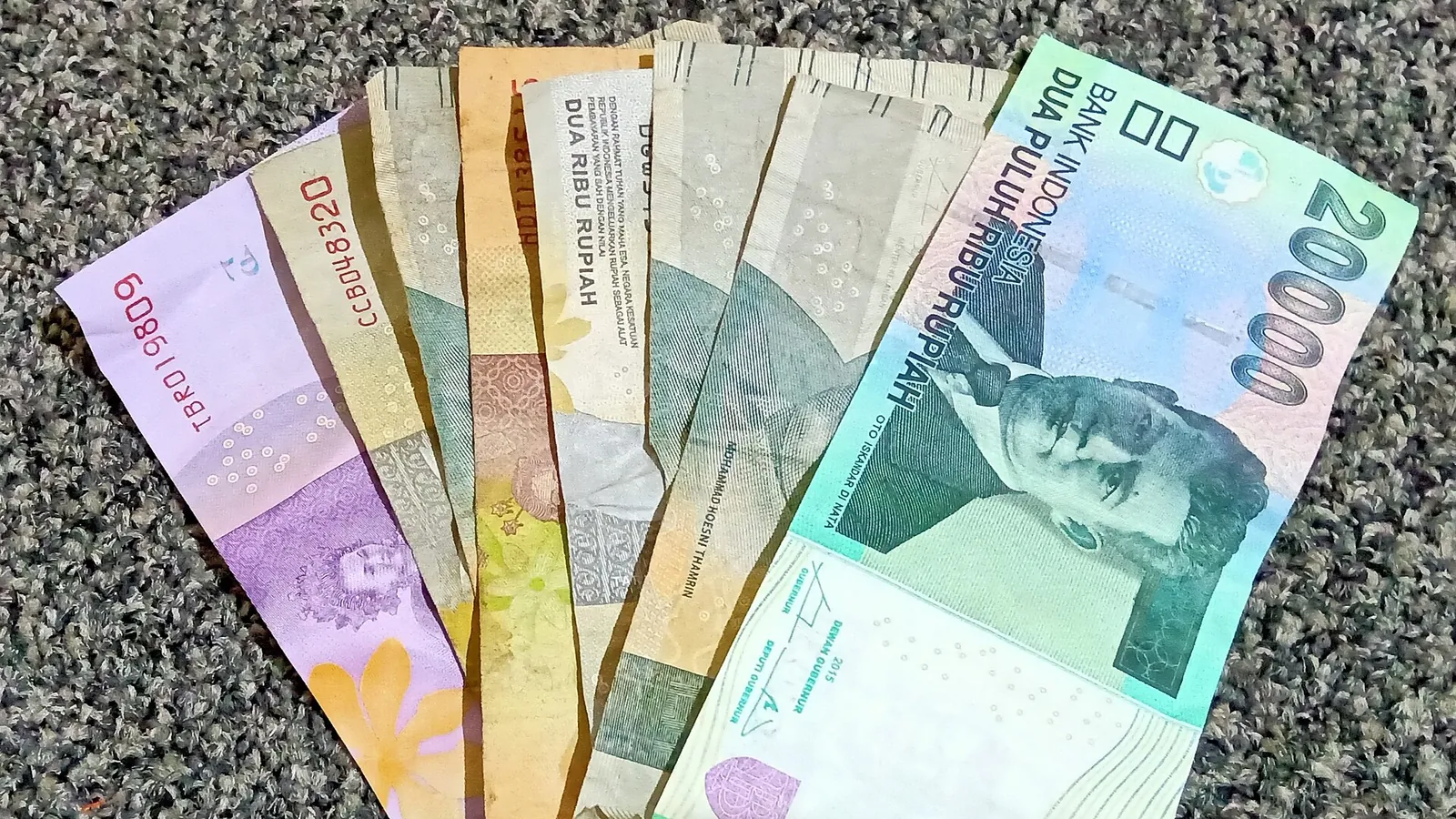
Indonesia's currency is the rupiah (IDR, written Rp), issued by Bank Indonesia. The Ministry of Tourism states that by law all transactions must be conducted in rupiah, so even where a tour or a room is advertised in dollars, the bill you settle in the country should be in rupiah. When we checked on 2026-10-03, the ministry listed notes of Rp 1,000, 2,000, 5,000, 10,000, 20,000, 50,000 and 100,000, and coins of Rp 50, 100, 200, 500 and 1,000. Bank Indonesia's banknote gallery shows both a 2016 and a 2022 design for the main notes, so do not be surprised to get two different-looking notes of the same value.
The everyday problem is not the currency but the size of the notes. The ministry warns that ATMs are loaded with either Rp 50,000 or Rp 100,000 notes, shown on the machine, and that the larger notes can be hard to split, especially in rural areas away from the tourist trail. Break big notes in supermarkets, minimarts, hotels and larger restaurants, and keep a stack of Rp 2,000 to Rp 20,000 notes for parking attendants, toilets, street carts and small entrance fees.
Because so many numbers have three zeros, double-check prices before you hand over cash: Rp 50,000 and Rp 5,000 notes look different, but in a hurry, at night or with a distracting seller, it is easy to give the wrong one.
Cards, QRIS and e-money: what works where
The ministry says credit cards are widely accepted in hotels, large restaurants and large stores, and that cards of well-known brands are generally accepted in major cities, while advising you to carry enough rupiah, especially for smaller towns and remote areas where local stores may take only cash. Wikivoyage adds that Visa, Mastercard and JCB are widely accepted, that American Express can be a problem, and that smaller businesses often add a surcharge of 2 to 5 percent for card payments. If a terminal offers to charge you in your home currency instead of rupiah, choosing rupiah usually leaves the exchange rate to your own bank.
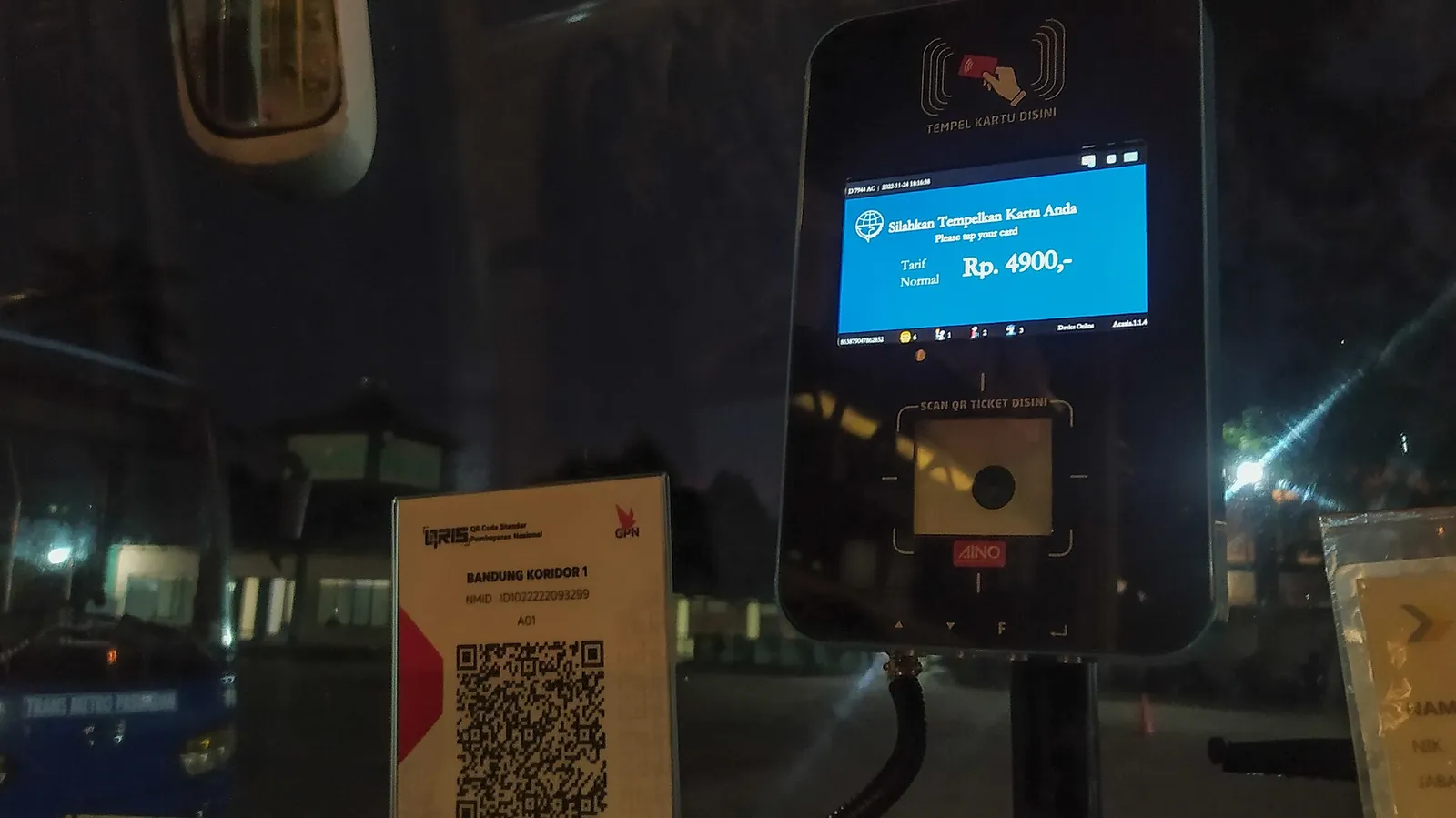
QRIS is Bank Indonesia's national QR code standard, and you will see its sticker at many stalls, cafés, ticket counters and buses. Paying with it needs a payment app that is part of the system. When we checked on 2026-10-03, Bank Indonesia's QRIS Cross-Border page said visitors from partner countries can pay at all QRIS merchants with their own domestic app, entering the amount in rupiah and confirming it in their own currency; the partners listed were Thailand, Malaysia and Singapore, with Japan listed only for Indonesians paying in Japan. Bank Indonesia caps a QRIS transaction at Rp 10 million. If your app is not from a partner country, do not count on QRIS: treat it as a bonus and keep cash and a card.
Public transport in the big cities is increasingly cashless. The ministry's Jakarta guide says Transjakarta stops take electronic money cards instead of cash: you can buy a JakLingko card at the stops, which also works on the MRT, LRT and commuter trains, or use bank prepaid cards such as BCA Flazz, BRI Brizzi, Mandiri e-money or BNI Tapcash, topped up at ATMs, stop counters or minimarts. Always tap out at the end of a ride, or the card may be blocked.
Ride-hailing apps (Grab and Gojek) let you pay in cash or by card. Wikivoyage notes that local e-wallets such as GoPay and OVO can be used without an Indonesian bank account, but you then have to top them up at an ATM or a convenience store such as Alfamart.
- Card usually fine: hotels, resorts, malls, supermarkets, larger restaurants, dive centres and most tour operators in the main tourist areas.
- Cash expected: warungs and street carts, traditional markets, small guesthouses and homestays, local boats and ojek drivers, parking, toilets, village entrance and donation posts.
- Cashless only: Jakarta's Transjakarta buses and MRT gates, and Bali's tourist levy (paid online or by card at the counters).
Make time for the local food
What to eat and where to look
Bakso (meatball soup)
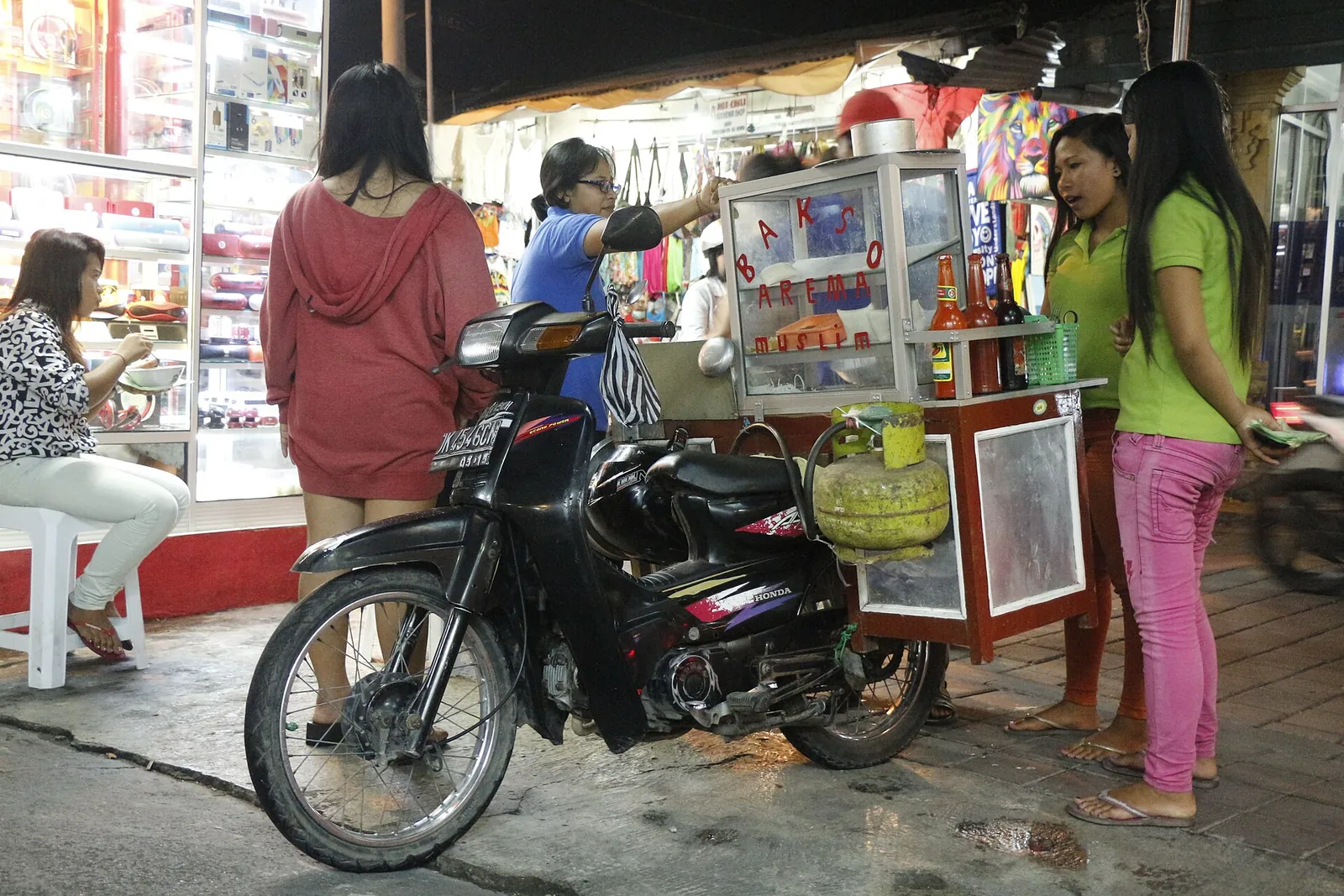
Springy beef meatballs in a clear broth with noodles, tofu and fried shallots, sold from push carts and motorbike carts that ring a bell or knock a bowl as they pass. It is one of the most common street dishes across Java and Bali.
- Where to look
- Carts in residential streets and outside schools and offices, and simple warung bakso with a bubbling pot at the front.
- Fit it into your day
- A cheap lunch or late snack between sights; keep small notes ready, as carts rarely have change for a Rp 100,000 note.
Mostly beef, but check what is in the balls; chilli sauce is added by you, so go easy at first.
Nasi campur
A plate of rice with a selection of side dishes: vegetables, egg, tempeh, chicken or fish, sambal and crackers. In Bali and Java it is the standard warung meal, and the price depends on what you choose.
- Where to look
- Warungs with a glass display case of ready dishes, in towns, near markets and along main roads.
- Fit it into your day
- Lunch, when the dishes are freshest; pay in cash at the counter and ask the price before you add extra pieces of meat or fish.
Dishes sit at room temperature, so choose busy places with high turnover; in Bali, nasi campur may include pork.
Angkringan snacks and nasi kucing
Yogyakarta and Central Java's evening carts and stalls sell tiny parcels of rice with sambal or fish (nasi kucing), skewers of satay, fried snacks and sweet ginger drinks, all very cheap and eaten on a bench or a mat.
- Where to look
- Lamplit carts and stalls around Malioboro and Tugu station in Yogyakarta, and in the streets of Solo.
- Fit it into your day
- A late-evening snack or light dinner; small notes are essential, as everything is priced in a few thousand rupiah.
Skewers may include offal or quail eggs; ask if you are unsure, and choose items that have been grilled in front of you.
Ikan bakar at the harbour
Whole fish or squid grilled over coconut husk or charcoal and served with rice, sambal and lime. On the islands and in harbour towns such as Labuan Bajo, it is often the evening meal.
- Where to look
- Night stalls and seafood warungs near harbours and beachfronts, where you choose the fish and pay by weight.
- Fit it into your day
- Dinner after a boat day; agree the price per kilo and the total before it goes on the grill, and bring cash, as many night stalls do not take cards.
Contains fish and often shellfish; ask for the sambal on the side if you avoid strong chilli.
ATMs and money changers
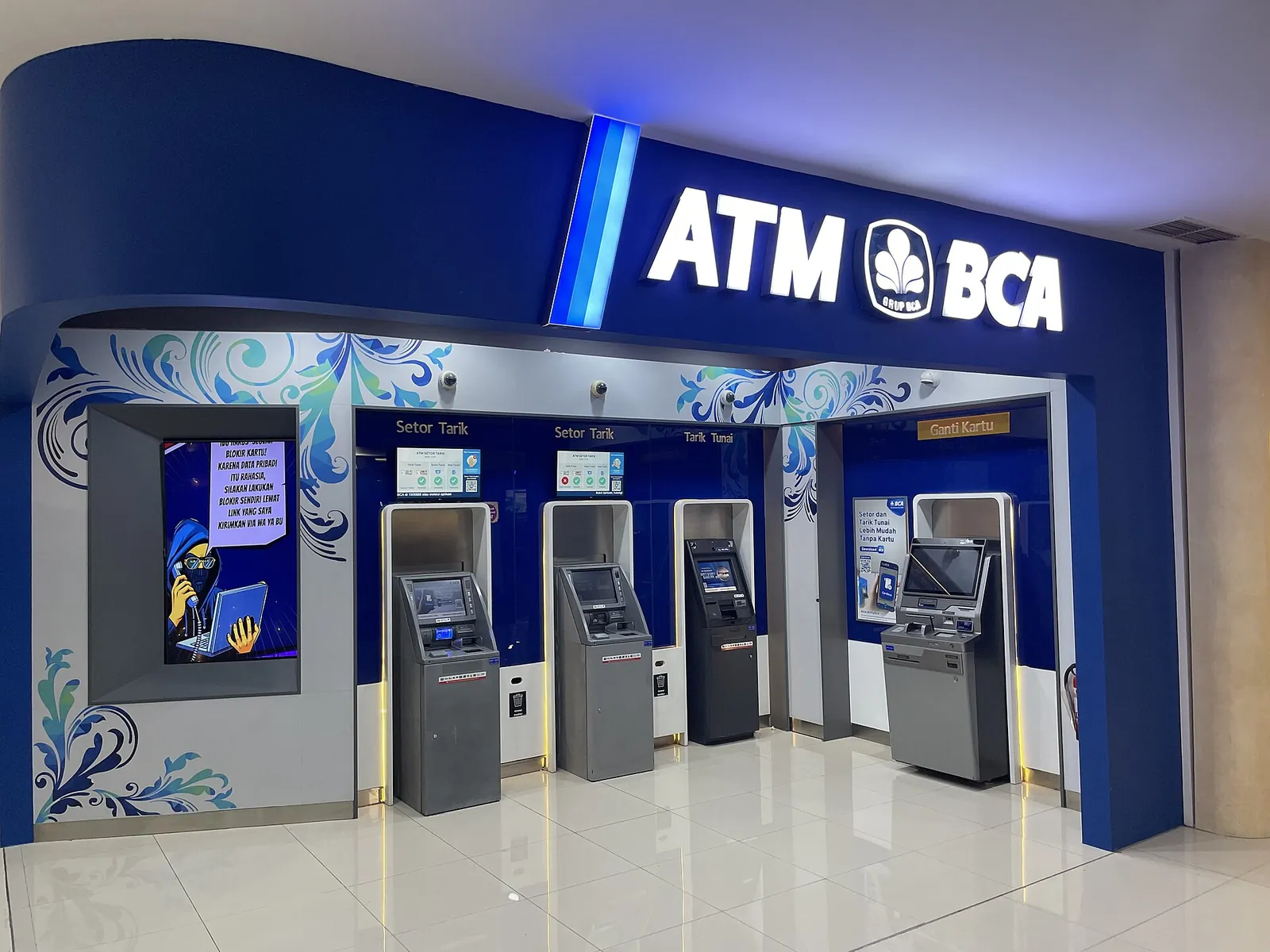
ATMs on the Plus (Visa), Cirrus and Maestro (Mastercard) networks are common in Indonesia's major cities and tourist areas, according to the ministry; check the logo on the machine before inserting your card. It also notes that JCB cards work at affiliated banks including BNI, CIMB Niaga, Mandiri and BRI, and that American Express cardholders can use Danamon Bank ATMs. How much you can take out depends on your home bank. Wikivoyage reports that a single withdrawal is often limited to around 25 to 30 notes and that daily limits of Rp 10 to 15 million may apply, so plan two withdrawals if you need cash for a long remote stretch.
Use ATMs inside bank branches, malls or airport halls during the day where possible. The UK government warns that card fraud is common in Indonesia, that you should not lose sight of your card during a payment, and that criminals sometimes stick a fake phone number on ATMs, asking customers to call it about problems so they can obtain card details. If a machine keeps your card, call the number on the back of your card, not one posted on the machine.
If you exchange cash, use a licensed money changer. The UK advice says unlicensed changers may short-change you, and that licensed ones display a Bank of Indonesia logo and a QR code you can scan to check the business name and its licence. Count the notes yourself before you leave the counter. Wikivoyage adds that changers are picky about the condition of foreign notes, often rejecting older, torn or marked US dollar bills, and that exchange counters are easy to find on Java, Bali and Lombok but sparse on the outer islands. The ministry likewise advises changing money before travelling to remote areas.
Remote islands, national parks and holidays: carry enough cash
This is the rule that matters most in Indonesia. The ministry advises withdrawing cash from an ATM in a major city before heading to more secluded destinations, and warns that you may find it hard to find an ATM in smaller towns and remote areas. Small islands are the clearest case. Wikivoyage reports that there are no ATMs in the Togean Islands, so cash has to come from Ampana on the mainland. In Karimunjawa, it records that high waves stranded about 500 visitors at the end of 2014 and the island's ATMs ran out of money after three days, and it advises carrying cash for at least five days.
Even where islands do have machines, they are a backup rather than a plan. Wikivoyage notes that Nusa Lembongan now has several ATMs but still advises bringing rupiah, and that cash-withdrawal services in shops and hotels there charge a fee of around 8 to 10 percent. Work out what you will pay in cash on each remote leg (rooms in small guesthouses, boat charters, guides, park and village fees, meals), add a reserve for a cancelled boat or an extra night, and withdraw it before you leave the last town with a reliable bank.
Holidays are the other trap. The ministry notes that around Idul Fitri, collective leave can extend the holiday to about 7 to 10 days, and that during Ramadan many restaurants and food stalls close during the day. In Bali, Nyepi, the Day of Silence, closes the airport and the whole island for 24 hours. Offices and many businesses close for these holidays, so stock up on cash before the dates rather than counting on finding an open bank.
Arriving: visa fee, Bali levy and the cash you must declare
Some payments are due before you even reach a cash machine. When we checked on 2026-10-03, the UK government listed the visa on arrival at Rp 500,000, payable by cash or card, and asked travellers to complete the free All Indonesia arrival and customs declaration within 72 hours of arrival, avoiding look-alike sites that ask for payment. Check the immigration authority's own site for the visa that applies to you before travelling.
Bali charges a one-time tourist levy on foreign visitors. When we checked on 2026-10-03, the official Love Bali site listed it at IDR 150,000 and showed the equivalent in foreign currencies at the exchange rate fixed on its payment page, noting that the issuing bank may add charges. The Ministry of Tourism explains that it is paid cashless, online through Love Bali by bank transfer, virtual account or QRIS, or by card at counters at Ngurah Rai airport and Benoa port, and that paying before you fly is recommended.
Large sums of cash must be declared. The ministry says travellers bringing in or taking out more than Rp 100 million, or the equivalent in another currency, must declare it to Indonesian Customs. The customs authority's passenger page lists cash and other payment instruments of at least Rp 100,000,000, or the foreign-currency equivalent, among the goods that may be sent for physical inspection. Few holidaymakers come close, but divers and long-stay travellers carrying a season's budget in cash should check it.
Tipping, service charges and bargaining
Tipping is not a fixed custom. Wikivoyage describes it as optional and often hoped for in the tourist areas of Java and Bali, but not expected in everyday places, and notes that Indonesians themselves rarely tip unless the service was exceptional. A tip for a guide, driver, porter or spa therapist who has done a good job is appreciated; hand it directly and discreetly to the person. In hotels and smarter restaurants, prices marked with “++” add tax and a service charge to the bill, so check the small print on the menu before adding more.
Bargaining is normal in markets, souvenir stalls and with independent drivers and boatmen, but not in supermarkets, malls and places with printed prices. Agree on the price, and for boats and drivers on what is included (stops, waiting time, return), before you set off, and have the right notes ready, so the deal does not depend on someone finding change.
Keeping money safe
Split your cash and cards: a day's money in a front pocket, the rest in the hotel safe or a separate bag, and one card kept apart from the others in case one is swallowed or blocked. The UK government warns of bag-snatching and pickpocketing in busy tourist areas, with frequent reports in Bali, and advises carrying only essentials and taking care of your passport and bank cards.
Tell your bank you are travelling, keep its emergency number offline, and use your banking app's card freeze if something looks wrong. With QRIS, Bank Indonesia advises checking that the merchant name shown in your app matches the place you are paying, and checking the notification after payment; report problems to the provider whose app you used.
Practical questions
Can I use my credit card in Indonesia?
Yes, in hotels, larger restaurants, malls and many tour and dive operators. The Ministry of Tourism says cards are widely accepted in hotels, large restaurants and large stores, but small shops, warungs and many remote businesses take only cash, and smaller businesses often add a card surcharge.
Can foreign tourists use QRIS in Indonesia?
Only with a payment app connected to QRIS. When we checked on 2026-10-03, Bank Indonesia listed Thailand, Malaysia and Singapore as countries whose domestic apps can pay at QRIS merchants in Indonesia. Visitors from elsewhere should rely on cash and cards.
How much cash can I bring into Indonesia?
There is no low limit for holiday cash, but the Ministry of Tourism says amounts of more than Rp 100 million, or the equivalent in another currency, must be declared to Indonesian Customs, and the customs authority lists cash of at least Rp 100,000,000 among the goods that may be inspected.
Should I bring US dollars to Indonesia?
It is not necessary: bank ATMs give better access to rupiah in the main areas, and by law payments are made in rupiah. If you bring dollars as a reserve, bring clean, recent notes, as money changers often reject old or damaged bills, and change them only at licensed counters showing the Bank Indonesia logo and QR code.
Are there ATMs on the Gili Islands, Nusa Penida or Komodo boats?
Do not assume so. Some small islands have a few ATMs, others none, and machines can run out of cash when boats are cancelled. Before any island or boat trip, withdraw enough in a large town for the whole stay plus a reserve.
Do I need to tip in Indonesia?
No. Tipping is optional; a small amount for a good guide, driver or spa therapist is appreciated, especially in Bali. Check whether a restaurant bill marked “++” already includes a service charge.
Sources and checks before you travel
Reference sources for the version dated 3 October 2026. Confirm opening times, access, transport and conditions for your travel dates.
- Ministry of Tourism (indonesia.travel): Currency ↗ — opens in a new tab
- Ministry of Tourism (indonesia.travel): Payment system ↗ — opens in a new tab
- Bank Indonesia: Quick Response Code Indonesian Standard (QRIS) ↗ — opens in a new tab
- Bank Indonesia: QRIS Cross-Border ↗ — opens in a new tab
- Bank Indonesia: Rupiah banknote and coin gallery ↗ — opens in a new tab
- Directorate General of Customs and Excise: Passenger goods ↗ — opens in a new tab
- UK FCDO travel advice: Indonesia safety and security ↗ — opens in a new tab
- UK FCDO travel advice: Indonesia entry requirements ↗ — opens in a new tab
- Ministry of Tourism (indonesia.travel): Bali's latest regulations ↗ — opens in a new tab
- Bali Provincial Government: Love Bali ↗ — opens in a new tab
- Ministry of Tourism (indonesia.travel): Commuting options around Jakarta ↗ — opens in a new tab
- Ministry of Tourism (indonesia.travel): Business hours and holidays ↗ — opens in a new tab
- Wikivoyage: Indonesia (Buy) ↗ — opens in a new tab
- Wikivoyage: Karimunjawa ↗ — opens in a new tab
- Wikivoyage: Togian Islands ↗ — opens in a new tab
- Wikivoyage: Nusa Lembongan ↗ — opens in a new tab
Does this experience fit your route?
Would rather carry less cash? Compare prepaid tours and transfers in Bali, Jakarta and Yogyakarta, and check what each price includes before you book.
Browse relevant experiences on Viator ↗ — opens in a new tabAffiliate link · Book with ViatorPhoto credits
A fruit seller at the floating market in Banjarmasin, South Kalimantan, where trade is still done in cash
Photograph: Μαυλάνα — opens in a new tab · CC BY-SA 4.0 — opens in a new tab
Changes: Resized and converted to WebP; displayed with responsive crops. · Original photograph and licence details ↗ — opens in a new tab
Rupiah notes from 2,000 to 20,000: the small denominations you need for warungs, markets and parking
Photograph: Pak.syafda — opens in a new tab · CC BY-SA 4.0 — opens in a new tab
Changes: Resized and converted to WebP; displayed with responsive crops. · Original photograph and licence details ↗ — opens in a new tab
BCA ATMs at I Gusti Ngurah Rai International Airport, Bali
Photograph: SunDawn — opens in a new tab · CC BY-SA 4.0 — opens in a new tab
Changes: Resized and converted to WebP; displayed with responsive crops. · Original photograph and licence details ↗ — opens in a new tab
A tap-on card reader and a QRIS code on a Trans Metro Pasundan bus in the Bandung area
Photograph: NFarras — opens in a new tab · CC BY-SA 4.0 — opens in a new tab
Changes: Resized and converted to WebP; displayed with responsive crops. · Original photograph and licence details ↗ — opens in a new tab
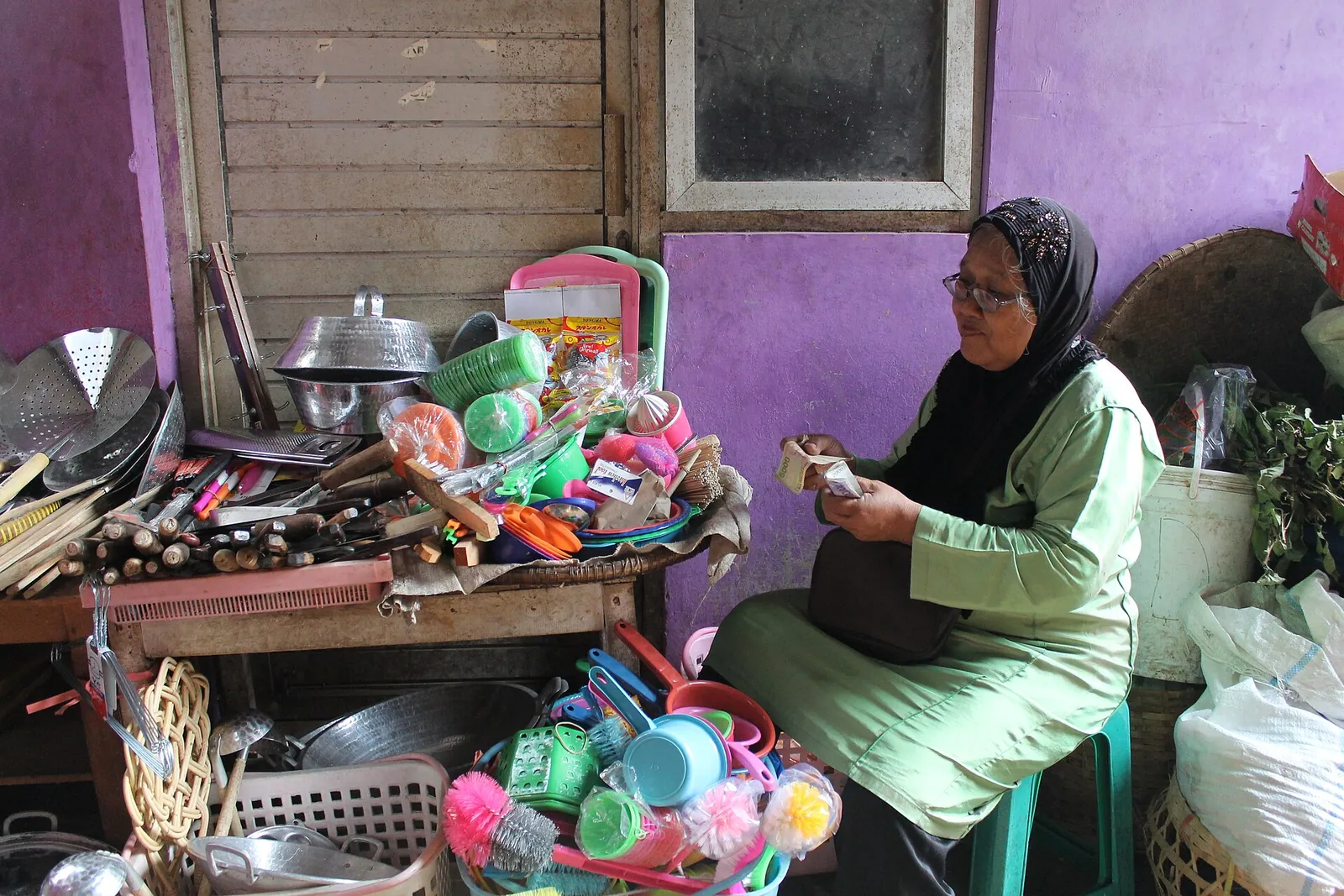
A household-goods trader counting cash at Pasar Wage, Purwokerto, Central Java
Photograph: Dhita Gustiani — opens in a new tab · CC BY-SA 4.0 — opens in a new tab
Changes: Resized and converted to WebP; displayed with responsive crops. · Original photograph and licence details ↗ — opens in a new tab
A mobile bakso cart in Kuta, Bali: street food like this is paid in small cash
Photograph: Robert Nagel — opens in a new tab · CC BY-SA 4.0 — opens in a new tab
Changes: Resized and converted to WebP; displayed with responsive crops. · Original photograph and licence details ↗ — opens in a new tab