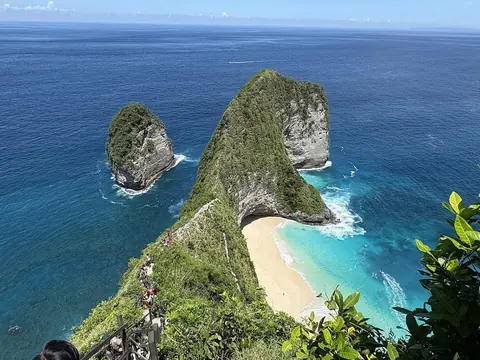
Plan your trip · Bali
Where to stay in Bali: Seminyak, Canggu, Uluwatu, Sanur, Ubud
Bali is easy to book and hard to cross. Its main bases are separate trips: the restaurant streets of Seminyak, the black-sand surf of Canggu, the cliffs of Uluwatu, the calm lagoon of Sanur, the resort enclave of Nusa Dua and the rice fields of Ubud. This guide compares them, gives the Ministry of Tourism's airport transfer times where it states them (and says where it does not), and shows when one base is enough and when a second one earns the move.
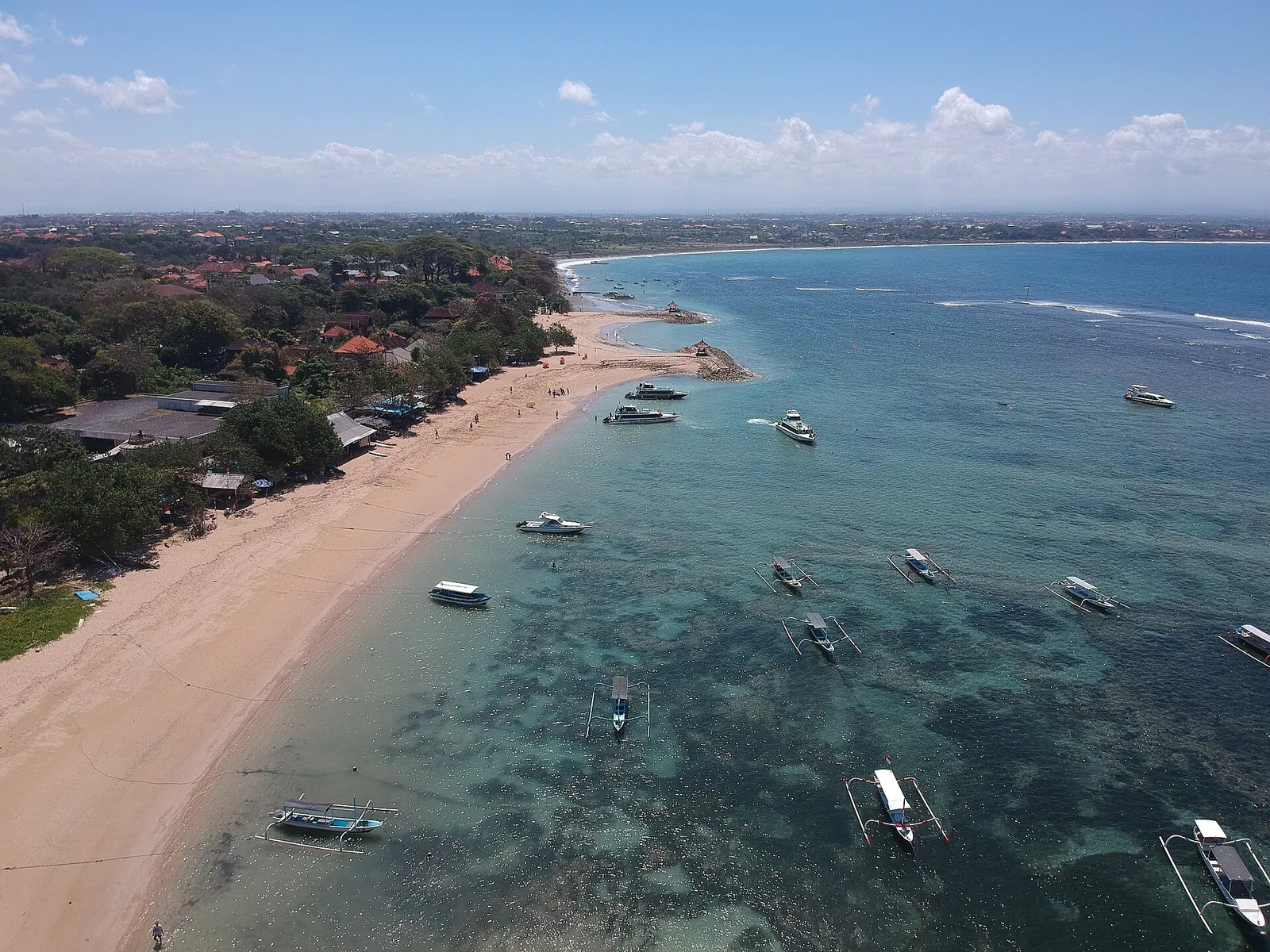
- Suggested time
- 5 days (4 nights) in one base; 7 days (6 nights) in two bases; 10 days (9 nights) in three
- Where to stay
- Sanur, Seminyak, Canggu or Uluwatu on the coast, plus Ubud inland
- Season and timing
- The UK government's travel advice gives October to March as the usual rainy season, with local flooding in Bali that can cause major traffic congestion. Nyepi, when the airport closes, falls on Monday 8 March 2027.
The short answer
For a first trip of 7 days and 6 nights, book three nights on one coast base and three nights in Ubud. Choose Sanur for calm water and the island boats, Seminyak to walk to dinner, Canggu for surf and cafés, or Uluwatu for the cliffs. With 5 days and 4 nights, stay in one base only; with 10 days and 9 nights, add three nights on Nusa Penida or in Amed. Check the dates of Nyepi, when the airport closes, before you book flights.
Choose the number of bases before you choose the beach
Bali looks small on a map, but its main bases are separate trips. The south-coast beach towns, the Bukit peninsula, Sanur and inland Ubud each have their own character, and the roads between them are slow enough that a move uses a good part of a day. The Ministry of Tourism's Seminyak page warns that traffic in the south-coast conurbation can get very congested at times, so this guide treats the number of bases as the first decision and the beach as the second.
Our rule of thumb is an editorial judgement, not an official figure. With up to four nights, stay in one base and take day trips from it. With five to seven nights, use two bases: one on the coast and one in Ubud. With eight or more nights, add a third only for a place you chose on purpose, such as Nusa Penida or Amed, because a third base in a week mostly buys you a third check-out.
Choose the coast base first, because it has the most distinct options. Sanur is the calm-water, low-effort base and a departure point for fast boats to the Nusa islands. Seminyak suits travellers who want to walk to restaurants and shops in the evening. Canggu is a surf-and-café base on black sand, spread along beach roads rather than around one centre. Uluwatu is for cliffs, surf breaks and the clifftop temple, and it is the longest airport transfer of the coast bases. Nusa Dua is a planned resort enclave beside calm, shallow water. Ubud is the inland base for rice fields, museums and dance, and it is not a beach stay at all.
The three splits below keep the nights arithmetic simple. Our 7-day Bali itinerary gives a day-by-day version of a two-base week.
- 5 days, 4 nights: one base only. Pick Sanur, Seminyak or Canggu for the coast, or Ubud if the coast does not matter to you.
- 7 days, 6 nights: three nights in Ubud and three nights on one coast base. Put the coast last if your flight home is early, because Ubud is the only inland base and the ministry gives its transfer in two legs via Denpasar (see the transfer times below).
- 10 days, 9 nights: three nights in Ubud, three on the coast and three more on Nusa Penida or in Amed. Both have their own guides on this site, and each adds a boat or a long drive.
From the airport to your bed: official transfer times
Ngurah Rai airport (DPS) is in Tuban, between Kuta and Jimbaran, according to the Ministry of Tourism's Denpasar page. When we checked on 2026-10-12, its airport page placed the official airport taxi counter outside the arrivals hall (turn right as you exit); you take a slip of paper and pay the driver on arrival. We found no official fare list, so this guide quotes no fares. Ask the counter or your hotel for the price before you get into the car, and if you arrange a hotel pick-up, give the flight number so the driver can follow a delay.
If you land late or after a long flight, sleep the first night close to the airport and move on in daylight. The nearest of the bases in this guide, on the ministry's figures below, are Jimbaran and the Double Six end of Seminyak, beside Legian. That is our suggestion; any base is fine for a first night if your hotel arranges the pick-up.
Foreign tourists pay the provincial levy, with exemptions for some visa and permit holders. When we checked on 2026-10-12, the Love Bali FAQ listed IDR 150,000 per person, paid once while travelling in Bali and before leaving Indonesia. Payment is cashless: online through Love Bali before you arrive, at the payment counters at the airport and the port in Bali, or at registered endpoints such as hotels, travel agents and attractions. The proof is a voucher with a QR code, sent by email. The Love Bali FAQ strongly encourages paying before departure, and the ministry's Bali regulations page names the Ngurah Rai airport and Tanjung Benoa port counters. Our entry guide covers the rest of the arrival paperwork.
The times in the list below are the Ministry of Tourism's own, taken from its pages on each place. Several of those pages say the time depends on traffic, and the pages do not agree on every area: Seminyak, Nusa Dua and Ubud have no airport figure at all, so we mark the gap instead of filling it in.
- Jimbaran: 15 minutes from the airport, according to the ministry's Jimbaran page.
- Legian and Seminyak: the ministry's Legian page gives about 20 minutes by car or taxi to Legian, which is the next beach town south of Seminyak. Its Seminyak page gives no airport time; it says only that the Sunset Road bypass is almost invariably the quicker way into Seminyak from Kuta and Legian, although it is longer in distance.
- Sanur: the ministry's Sanur Beach page gives about 15 km and 30–45 minutes by taxi or online transport, depending on traffic. Its general Sanur page says a 20-minute taxi ride; the two pages differ, so use the longer figure when you plan around a flight.
- Canggu: 45 minutes by car, about 18 km from Denpasar, on the ministry's Canggu page, which also advises hiring your own car or making sure your hotel can pick you up.
- Uluwatu: the ministry's page on Pura Luhur Uluwatu gives about 45 minutes to 1 hour from the airport to the temple, depending on traffic.
- Nusa Dua: no airport time. The ministry's Nusa Dua page gives 15 minutes from Jimbaran and 20–30 minutes from the Kuta area on the main southern road, Jalan Bypass Ngurah Rai.
- Ubud: no single time. The ministry's Denpasar page puts the airport about 30 minutes' drive from Denpasar and Ubud about 30 minutes north of Denpasar. Its Ubud page lists prepaid cabs (the fee may be quite hefty), regular taxis, rental cars and buses. Ask your hotel to quote the transfer to your exact address.
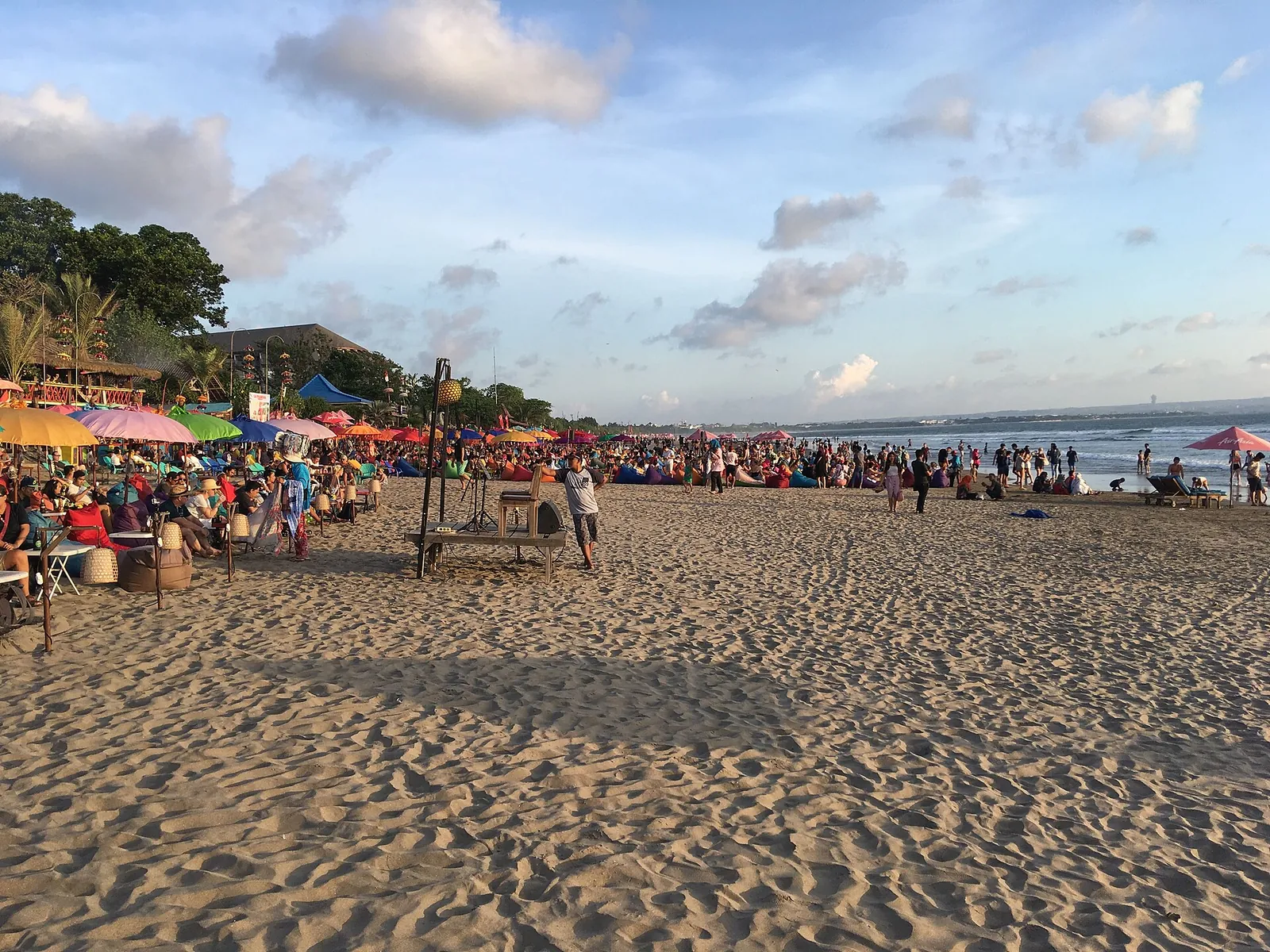
Seminyak: walkable dinners, beach clubs and the busiest roads
The Ministry of Tourism describes Seminyak as an upmarket coastal enclave just north of Legian and Kuta, with a more sophisticated and laid-back atmosphere than Kuta and a beach that is relatively quiet during the day. Its strength as a base is density: restaurants, boutiques and spas are close together, and the ministry says there are both budget hostels and high-end resorts, so the area works across budgets.
Seminyak has no hard borders. The ministry says it is difficult to say exactly where Kuta, Legian or Seminyak begin or end, and that Seminyak stretches from Double Six Street in the south into the villages of Kerobokan and Umalas, north of Petitenget Temple. Hotel names use all of these labels, so check the map pin, not the name in the listing. The ministry's restaurant page says most restaurants are along the Jalan Laksmana main route, with others around southern Petitenget and up to Batu Belig. For a first stay where you want to walk to dinner, we would choose a room near Jalan Laksmana or Petitenget. Double Six is at the southern edge by Legian, and Batu Belig is at the northern edge, where a hotel is quieter but you will use a car more.
The ministry's own advice for getting around Seminyak is to walk, especially in the cooler evening, and to take a taxi when the sun is too hot or the distance is long. Its beach-club guide adds practical points: arrive before 2 pm if you want a daybed or sofa without a reservation, reserve ahead for popular clubs such as Potato Head or Mari Beach Club at weekends, expect a minimum spend for daybeds, and check dress codes, because some high-end venues apply a smart-casual rule. It recommends online transport or a motorcycle taxi (ojek) over driving, because traffic is often congested and car parking at the clubs is limited.
Seminyak is a nightlife area, so one safety note belongs here. The UK government's travel advice reports drink spiking in Bali, and deaths and serious illness from methanol in counterfeit alcohol, including drinks bought in licensed bars, shops and hotels in tourist areas. It also reports bag-snatching in busy tourist areas and a rise in scams at tattoo parlours, nail salons and spas, where it advises agreeing fees in advance. Watch your drink being made and keep your bag close; the same applies in every other nightlife area of the island.
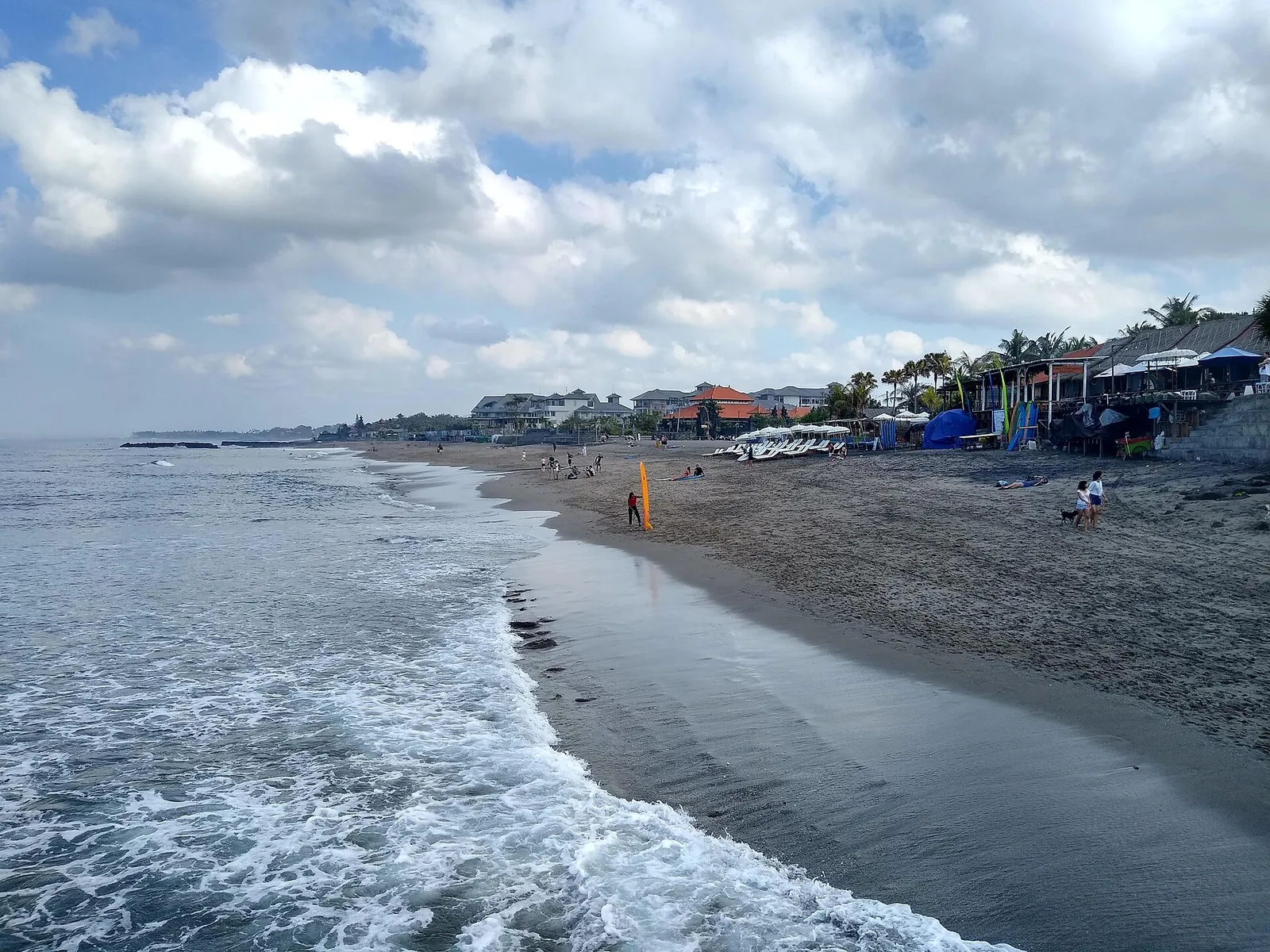
Canggu: black-sand surf, cafés and a base you reach by vehicle
The Ministry of Tourism describes Canggu Beach as a wide stretch of black sand, world-famous for its surf, backed by rice paddies; it hosted the Indonesia Surfing Championship in 2004. The same page says Canggu still remains a rural area with a number of hotels, villas, restaurants and cafés. Plan it as a surf-and-café stay, not a stay with a dining street in the style of Seminyak.
Canggu is a string of beach roads, and the part you choose matters. The ministry's separate pages describe Batu Bolong as a surf beach with board rental, sea-view restaurants and the small Pura Batu Bolong on its cliff, Echo Beach as a beach for surfers who want more challenging waves, with beachside cafés, and Berawa as a wide shoreline with big waves and many beach clubs. Pererenan, further along, is described as black-sand and surf, with cafés, and as calmer than the beaches around it. Hotel listings use 'Canggu' loosely, so book by map position and check the ride to the beach road you want.
On distances, the ministry's Canggu page gives about 25 minutes to Tanah Lot, and both 20 and 25 minutes to Seminyak in different sentences; treat that as roughly the same short hop on a good day. If you want to eat out every night and walk back, Seminyak is the easier base. If you want surf and cafés, and are happy to use a car, driver or scooter, Canggu fits. The last section below covers the licence and insurance advice before you rent a scooter.
The Bukit and the south-east: Uluwatu, Jimbaran and Nusa Dua
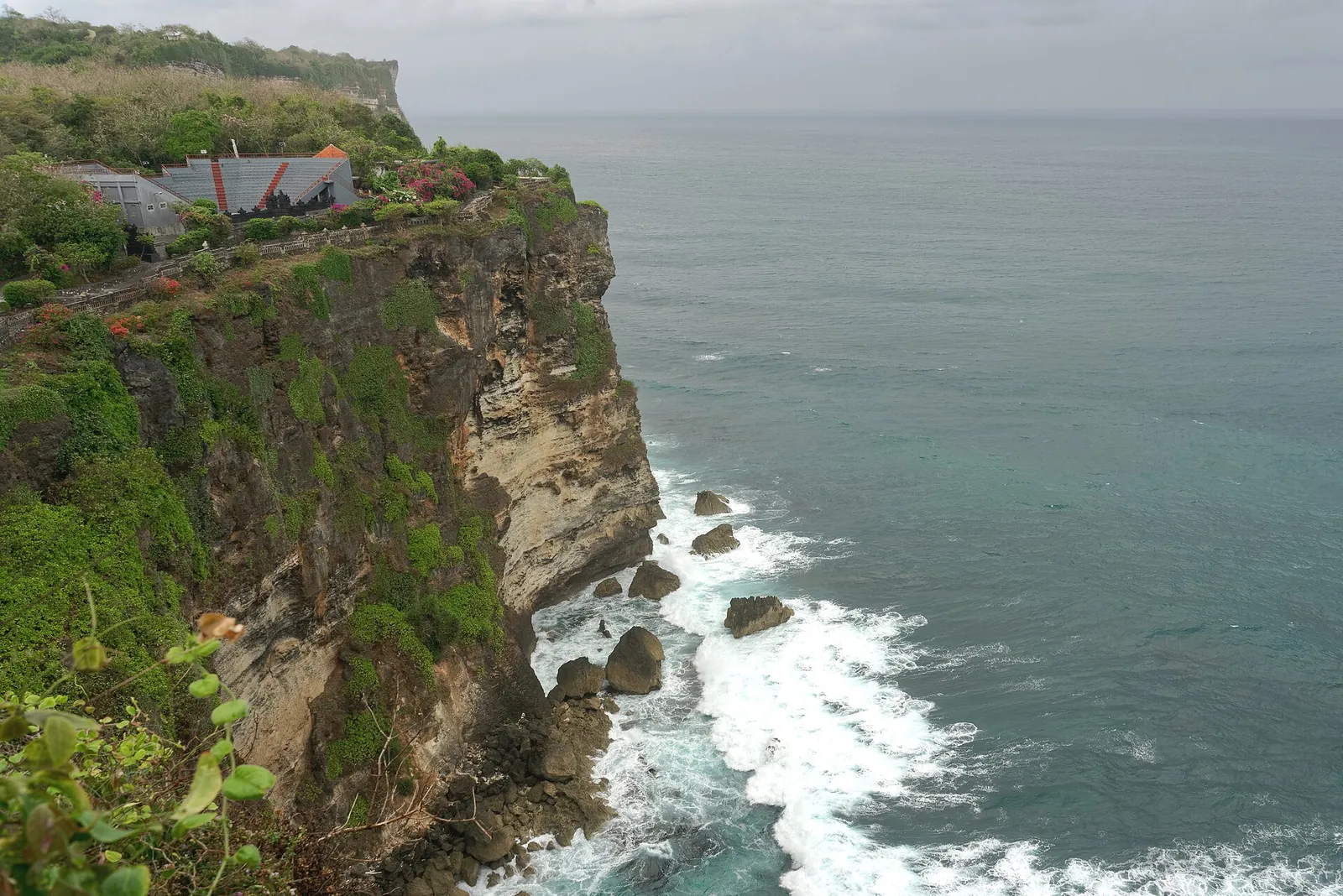
Uluwatu is the cliff-and-surf base. The Ministry of Tourism says accommodation there ranges from warung rooms and motels to hotels and villas, and its Uluwatu page says you can use a taxi from the airport or find a travel agent or car rental in Denpasar, with many rentals also offering motorcycles. The famous break is entered through a cave at lower tide, according to the ministry's surfing guide, so the tide sets the day for surfers. For everyone else the headline is Pura Luhur Uluwatu, on a steep clifftop, and the kecak dance staged in an open-air venue from around 5 pm with the sunset behind it.
When we checked on 2026-10-12, the ministry's temple page listed entry at IDR 100,000 for foreign adults and IDR 50,000 for foreign children, which includes the loan of the sarong and shawl you must wear, and a separate kecak ticket at IDR 200,000 for foreign visitors. It marks the kecak price as 'as of 2025' and sells tickets on site or online, with advance booking recommended in the holiday season, so confirm the amounts at the gate. It also says the road is generally smooth but traffic can build in the late afternoon before the kecak, especially in the holiday season, and advises leaving early. The ministry warns that the monkeys there steal glasses and hats. If you want the kecak every evening without a transfer, sleep close to the temple rather than at the other end of the peninsula.
Jimbaran is the easy option beside the airport. The ministry puts it 15 minutes away and describes a bay where you choose the day's catch (snapper, clams, crab, lobster or squid) and eat on the sand at sunset while planes land and take off. It makes a sensible first or last night, and a calmer sleep than the surf coast. The ministry also lists the GWK Cultural Park in Ungasan at about 10–15 minutes from the airport, which fits a half-day between the airport and Uluwatu.
Nusa Dua is a different kind of base. The Ministry of Tourism calls it a purpose-built enclave of international luxury hotels, spas, golf courses and convention centres with shallow, clear water and white sand, and its beach page (in Indonesian) describes calm waves for swimming and activities from snorkelling to jet skis. ITDC (InJourney Tourism Development Corporation), the company that owns and manages the enclave, describes it as having 19 starred hotels with 5,000 rooms and says it has accessible toilets, ramps and guiding blocks for visually impaired visitors. That makes it a strong choice for families, travellers with limited mobility and short stays when you want everything inside one area. The cost is that it is self-contained: you go out for the cliffs, the temples and the dinner streets.
Sanur: calm water, a seafront path and the boats to the islands
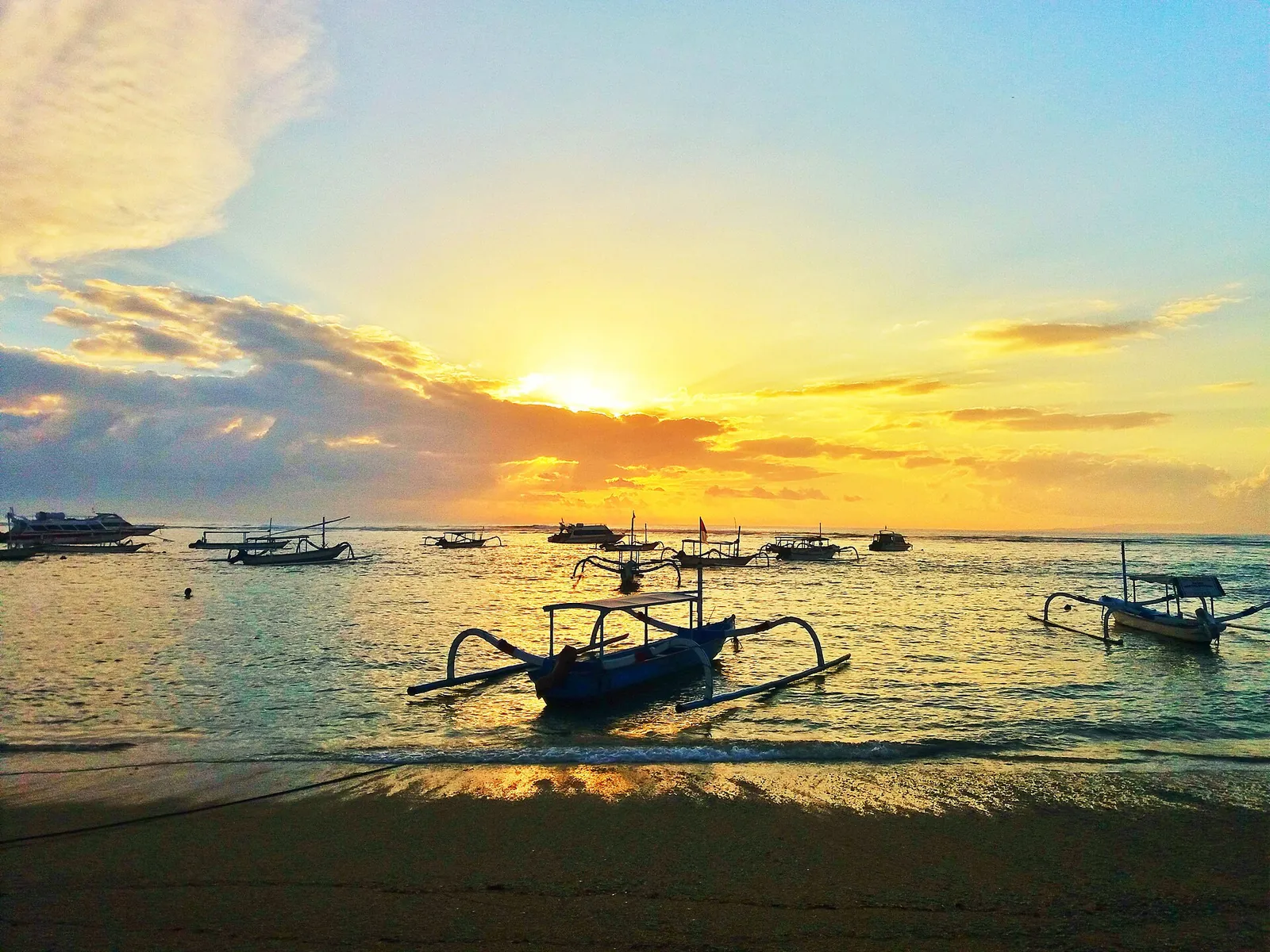
The Ministry of Tourism describes Sanur as a place where tourism first flourished in Bali, with some of the island's historic hotels and many restaurants and cafés along the coast. Its paved beachfront path runs about 5 km, from the Jalan Mertasari area in the south to the main beach at Jalan Hang Tuah in the north. The ministry adds that distances are short and the streets relatively quiet, so much of a Sanur stay can be done on foot or by bicycle. Jalan Danau Tamblingan, the main street, has car, motorbike and bicycle rental, metered taxis patrol, and local bemos run along it.
The ministry's Sanur page lists kitesurfing, windsurfing, wakeboarding and surfing, and suggests a banana boat on the calm waters. The surf is not great by Bali standards, it says, but there are reasonable breaks about 1 km offshore during the north-west wind season (about October to March). The main road, Jalan Bypass Ngurah Rai, is Sanur's western boundary, so a hotel on that side can be a long way from the sand; check the distance to the beach before booking. For budget meals, the ministry points to the Pasar Malam (night market) at the northern end of Jalan Danau Tamblingan, where it meets Jalan Pungutan.
Sanur's second job is as a harbour. The ministry (in an Indonesian-language article) calls the fast boat from Sanur the easiest way to Nusa Lembongan, at 30–45 minutes, with other harbours at Serangan, Benoa and Kusamba, and its Nusa Penida page gives 30–45 minutes by fast boat from Bali, from Sanur, Kusamba or Padang Bai. A Bali provincial government article on Nusa Penida describes the Port of Sanur as the crossing point for both islands, with fast boats from several companies departing between 07:00 and 15:00 WITA and about one hour to Banjar Nyuh harbour on Nusa Penida; it is dated 10 May 2023, so treat the hours as a guide. Operators include Scoot Fast Cruises, whose website describes departures from the new Sanur Harbor terminal; when we checked on 2026-10-12, its timetable listed one-way Sanur departures only to Nusa Lembongan, and its Sanur–Lembongan–Gili trip leaving Sanur at 09:30 was sold as a round-trip package. Eka Jaya Fast Ferry's site lists routes from Padang Bai and Serangan. Compare the departure harbour as well as the fare.
Crossings follow the sea. Scoot's terms say it may amend the vessel, departure time or port of departure, and that it is not liable for delay, rescheduling or cancellation caused by events such as adverse weather or sea conditions. The ministry advises booking fast-boat tickets well in advance in the holiday season, when they can sell out. So do not book a tight connection on the day of a crossing, and keep a night of slack before an international flight. If you plan a stay on Nusa Penida or Nusa Lembongan, budget for Klungkung regency's own charges on top of the Bali levy: since 1 September 2026, under its Regional Regulation 4 of 2026, an island ticket for foreign visitors of Rp25,000 per adult and Rp25,000 per adult at each of six paid attractions, such as Kelingking. Our Nusa Penida guide covers the islands and the tickets.
Ubud: the inland base, in the town or in the rice fields
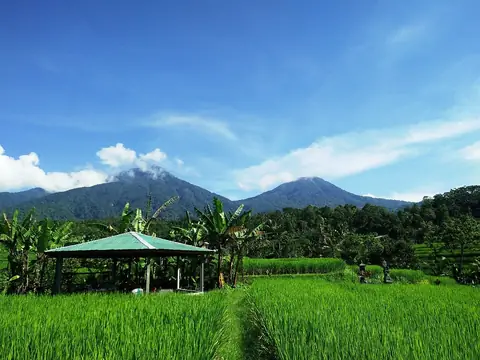
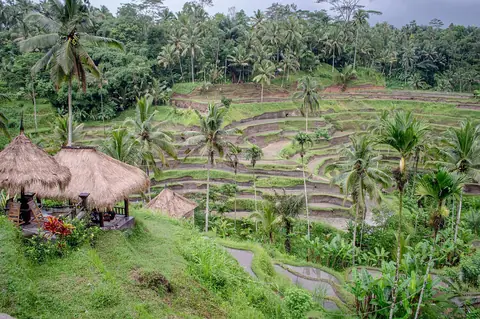
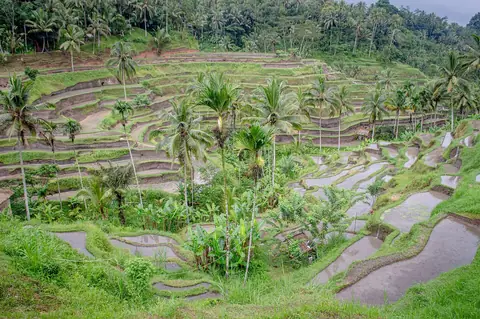
The Ministry of Tourism puts Ubud in the central part of Bali, among rice fields, and gives a straight choice about where to sleep. For nature, it suggests accommodation off the heart of Ubud, among the greenery and the sounds of nature; to be close to the action, it says there are many choices in the centre. We would choose the centre for a short stay in which you want to walk to dinner, museums and the Monkey Forest, and a room out in the fields for a longer, quieter stay where you accept a drive each evening.
The ministry notes that Ubud is relatively small, so you can explore on foot or hire a bicycle or motorbike, but that the terrain is hilly, so ask locals which places suit which mode. Its itinerary suggests starting early at the Tegallalang rice fields while the sun is still young, then the Ubud Monkey Forest, where it advises securing your belongings from the macaques. The museums it lists include Museum Puri Lukisan, ARMA, Museum Rudana, the Neka Art Museum and the Blanco Renaissance Museum. That makes Ubud a place to sleep for a few nights, not a day trip from the coast.
Ubud is also the base for early-morning outings, so it saves a long drive on those days; our Ubud guide covers the Mount Batur sunrise trek. The cost is distance, and the road times between Ubud and the coast are in the last section; that is why we recommend one move from Ubud to the coast rather than several.
When to split, how to move, and what can close the island
The ministry's road times between bases are the best official guide to what a move costs. Sanur is about 30 minutes from Kuta or Legian and about 45 minutes from Seminyak or Ubud, according to its Sanur page; Nusa Dua is 20–30 minutes from the Kuta area; and Ubud is 1.5 to 2 hours from Uluwatu. The ministry gives no times between Seminyak and Ubud or between Canggu and Ubud, so ask your hotel for a quote. For a transfer day, plan around the road and not the clock: leave a hotel after breakfast, stop at one place on the way, and arrive by mid-afternoon. A private hotel-to-hotel transfer is the simple way to do it, and some travellers hire a car with a driver for the day.
One date closes the island, and the days after it are busy. Nyepi, the Balinese Day of Silence, is on Monday 8 March 2027, according to the joint ministerial decree on 2027 national holidays published by the State Secretariat. The Ministry of Tourism says that on Nyepi all transport, including Ngurah Rai airport, stops, that guests must stay inside their accommodation and keep noise and light low, and that local watchmen (pecalang) enforce the rules. It advises booking flights before and after the date, and says many resorts offer indoor activities. The UK government's travel advice says the airport is closed for the entire day, though emergency services and hospitals can operate. Choose a hotel you would be content to spend 24 hours in, and do not plan a transfer or a boat on that day. Two days later the same decree lists Idul Fitri on 10 and 11 March 2027, with collective leave on 9, 12 and 15 March; the Minister of Religious Affairs confirms the Idul Fitri date by separate decision, so treat it as tentative, and book flights for that week early.
The UK government's travel advice says the rainy season usually runs from October to March, and that Bali can suffer severe localised flooding that causes major traffic congestion. In those months, add margin to the last day, and do not make the Ubud-to-airport drive the morning of an early flight.
Think twice before renting a scooter. The same advice reports a large increase in moped and motorbike accidents in Bali, some fatal; it says UK nationals cannot drive on a UK licence and may use an International Driving Permit issued by the UK, and tells you to check the right licence category, to wear a helmet in good condition and to confirm that your travel insurance covers you. Other nationalities should check their own government's rules.
Make time for the local food
What to eat and where to look
Babi guling (roast suckling pig)
A whole roasted pig marinated with traditional spices, with crisp skin and tender meat, usually served with rice, lawar and Balinese sambal.
- Where to look
- The Ministry of Tourism's babi guling page names Babi Guling Ibu Oka in central Ubud, Babi Guling Pak Malen on Jalan Sunset Road in Seminyak and Babi Guling Men Agus on Jalan Raya Canggu, which it says has views of the rice fields.
- Fit it into your day
- A lunch stop in whichever base you are in, rather than a late dinner.
Pork, so it is not for halal or vegetarian diets; side dishes such as lawar may include meat, offal or blood.
Sate lilit
Balinese 'wrapped satay': minced fish, chicken or pork mixed with a spice paste and wrapped around a bamboo stick or lemongrass stalk instead of being threaded as chunks, then grilled.
- Where to look
- Balinese restaurants and warungs in any base, often with a mixed rice plate; the ministry's babi guling page lists it as a side at Pak Malen in Seminyak.
- Fit it into your day
- A few skewers with rice make a light lunch between a morning outing and an afternoon at the beach.
The filling varies by cook, so ask which meat is used if you avoid pork or have a fish allergy.
Bebek betutu (slow-cooked spiced duck)
A whole duck seasoned with shallots, garlic, turmeric, ginger and candlenut, wrapped in banana or areca leaves and roasted or steamed for a long time until tender, usually with rice, lawar and sambal matah.
- Where to look
- Balinese restaurants in Ubud and the south, in traditional and modern versions.
- Fit it into your day
- A sit-down dinner for two or more, after a day on the road or a transfer.
Strongly spiced, and the sambal matah is raw and hot; ask for it on the side.
Grilled seafood on Jimbaran beach
You choose from the day's catch (snapper, clams, crab, lobster or squid) and it is grilled for you at tables on the sand around sunset, in view of the planes landing at the nearby airport.
- Where to look
- The restaurants along Jimbaran Bay; the ministry names Menega Cafe and Bawang Merah Beachfront Restaurant among those with live entertainment.
- Fit it into your day
- An easy first or last evening, because the bay is 15 minutes from the airport.
Agree the price of what you pick, and of the sides, before it goes on the grill. Contains shellfish.
Sanur night market (Pasar Malam)
An evening market of food stalls at the northern end of Jalan Danau Tamblingan, where it meets Jalan Pungutan, which the ministry recommends for budget meals.
- Where to look
- North Sanur, at the market described above.
- Fit it into your day
- An inexpensive dinner on a night when you do not want a restaurant, especially with children.
Choose stalls that cook to order and are busy; ask what is in a dish if you avoid pork, peanuts or chilli.
Practical questions
Where is the best place to stay in Bali for a first visit?
For a first week, split it: three nights in Ubud and three nights on one coast base. Choose Sanur for calm water and the island boats, Seminyak to walk to restaurants and shops in the evening, Canggu for surf and cafés on black sand, or Uluwatu for cliffs and the clifftop temple. Nusa Dua suits families and anyone who wants everything inside one resort enclave.
How many nights should I spend in each place in Bali?
Our rule of thumb is an editorial judgement. Stay in one base with up to four nights, use a coast base plus Ubud for five to seven nights, and add a third base only for a place you chose on purpose, such as Nusa Penida or Amed. Three nights is the smallest block that justifies the move to a new base.
Seminyak or Canggu: which one should I pick?
Pick Seminyak if you want restaurants and shops within walking distance, and the Ministry of Tourism itself recommends walking there. Pick Canggu if surf, black sand and cafés matter more and you are content to use a car, driver or scooter. The ministry gives the airport at 45 minutes for Canggu but no figure for Seminyak, whose neighbour Legian is about 20 minutes away.
How long does it take to get from Bali airport to Seminyak, Ubud or Nusa Dua?
The Ministry of Tourism gives no airport time for these three. It gives about 20 minutes to Legian, next to Seminyak. For Nusa Dua it gives 15 minutes from Jimbaran and 20–30 minutes from Kuta, and for Ubud about 30 minutes from the airport to Denpasar and about 30 minutes north from Denpasar to Ubud. Ask your hotel for a quote for your exact address.
Is it worth splitting a Bali stay between the coast and Ubud?
Yes, if you have five nights or more. Ubud has no beach, and the coast bases have no Ubud-style museums and rice-field walks. The ministry puts the drive between Uluwatu and Ubud at about 1.5 to 2 hours. Make one move and put the coast last if you have an early flight.
Do I have to pay the Bali tourist levy, and when is Nyepi?
When we checked on 2026-10-12, the Love Bali FAQ listed the levy at IDR 150,000 per person for foreign visitors, paid once, cashless, online before arrival or at counters at the airport and port. The FAQ lists exemptions, for example for holders of diplomatic, student or family unification visas and of stay-permit cards (KITAS, KITAP). Nyepi, the Day of Silence, is on Monday 8 March 2027 according to the 2027 national holiday decree, and the airport is closed for the whole day.
Sources and checks before you travel
Reference sources for the version dated 12 October 2026. Confirm opening times, access, transport and conditions for your travel dates.
- Indonesia Travel (Ministry of Tourism): Seminyak ↗ — opens in a new tab
- Indonesia Travel (Ministry of Tourism): Seminyak restaurants ↗ — opens in a new tab
- Indonesia Travel (Ministry of Tourism): Seminyak beach clubs and booking tips ↗ — opens in a new tab
- Indonesia Travel (Ministry of Tourism): Canggu Beach ↗ — opens in a new tab
- Indonesia Travel (Ministry of Tourism): Batu Bolong Beach (Indonesian-language page) ↗ — opens in a new tab
- Indonesia Travel (Ministry of Tourism): Echo Beach (Indonesian-language page) ↗ — opens in a new tab
- Indonesia Travel (Ministry of Tourism): Berawa Beach (Indonesian-language page) ↗ — opens in a new tab
- Indonesia Travel (Ministry of Tourism): Pererenan Beach (Indonesian-language page) ↗ — opens in a new tab
- Indonesia Travel (Ministry of Tourism): Uluwatu ↗ — opens in a new tab
- Indonesia Travel (Ministry of Tourism): Pura Uluwatu ↗ — opens in a new tab
- Indonesia Travel (Ministry of Tourism): 15 surfing destinations in Indonesia ↗ — opens in a new tab
- Indonesia Travel (Ministry of Tourism): Jimbaran ↗ — opens in a new tab
- Indonesia Travel (Ministry of Tourism): Garuda Wisnu Kencana ↗ — opens in a new tab
- Indonesia Travel (Ministry of Tourism): Nusa Dua ↗ — opens in a new tab
- Indonesia Travel (Ministry of Tourism): Nusa Dua Beach (Indonesian-language page) ↗ — opens in a new tab
- ITDC (InJourney Tourism Development Corporation): The Nusa Dua ↗ — opens in a new tab
- Indonesia Travel (Ministry of Tourism): Sanur ↗ — opens in a new tab
- Indonesia Travel (Ministry of Tourism): Sanur Beach ↗ — opens in a new tab
- Indonesia Travel (Ministry of Tourism): snorkelling at Nusa Lembongan (Indonesian-language page) ↗ — opens in a new tab
- Indonesia Travel (Ministry of Tourism): Nusa Penida ↗ — opens in a new tab
- Love Bali (Bali Provincial Government): Nusa Penida ↗ — opens in a new tab
- Scoot Fast Cruises: Sanur ↗ — opens in a new tab
- Scoot Fast Cruises: terms and conditions ↗ — opens in a new tab
- Eka Jaya Fast Ferry: home page ↗ — opens in a new tab
- Indonesia Travel (Ministry of Tourism): Ubud ↗ — opens in a new tab
- Indonesia Travel (Ministry of Tourism): Denpasar ↗ — opens in a new tab
- Indonesia Travel (Ministry of Tourism): Denpasar Ngurah Rai Airport ↗ — opens in a new tab
- Indonesia Travel (Ministry of Tourism): Legian ↗ — opens in a new tab
- Indonesia Travel (Ministry of Tourism): Babi guling ↗ — opens in a new tab
- Indonesia Travel (Ministry of Tourism): Sate lilit ↗ — opens in a new tab
- Indonesia Travel (Ministry of Tourism): Bebek betutu (Indonesian-language page) ↗ — opens in a new tab
- Love Bali (Bali Provincial Government): tourist levy FAQ ↗ — opens in a new tab
- Indonesia Travel (Ministry of Tourism): Bali regulations ↗ — opens in a new tab
- Indonesia Travel (Ministry of Tourism): Nyepi frequently asked questions ↗ — opens in a new tab
- State Secretariat of Indonesia (Setneg): joint decree on 2027 national holidays ↗ — opens in a new tab
- UK Foreign, Commonwealth & Development Office (FCDO): Indonesia safety and security ↗ — opens in a new tab
- Scoot Fast Cruises: timetable ↗ — opens in a new tab
- Klungkung legal database (JDIH): Regional Regulation No. 4 of 2026 (Indonesian) ↗ — opens in a new tab
Does this experience fit your route?
Fix the number of bases and the Nyepi dates first, then book the Ubud nights and the airport transfer, and compare coast rooms by their map position.
Check dates and details on Viator ↗ — opens in a new tabAffiliate link · Book with ViatorPhoto credits
Sanur from above: the beach, low-rise hotels among the trees and boats moored on the shallow water
Photograph: Magul — opens in a new tab · CC BY-SA 4.0 — opens in a new tab
Changes: Resized and converted to WebP; displayed with responsive crops. · Original photograph and licence details ↗ — opens in a new tab
A busy afternoon on Seminyak Beach, with the open Indian Ocean surf behind the umbrellas
Photograph: Christophe95 — opens in a new tab · CC BY-SA 4.0 — opens in a new tab
Changes: Resized and converted to WebP; displayed with responsive crops. · Original photograph and licence details ↗ — opens in a new tab
Canggu's beach, with waves running up the sand and cafés and umbrellas set back on the right
Photograph: Mx. Granger — opens in a new tab · CC0 — opens in a new tab
Changes: Resized and converted to WebP; displayed with responsive crops. · Original photograph and licence details ↗ — opens in a new tab
The limestone cliffs of the Uluwatu coast on the Bukit Peninsula
Photograph: Jakub Hałun — opens in a new tab · CC BY-SA 4.0 — opens in a new tab
Changes: Resized and converted to WebP; displayed with responsive crops. · Original photograph and licence details ↗ — opens in a new tab
Sunrise at Sanur Beach, with jukung fishing boats moored in the shallows
Photograph: Danangtrihartanto — opens in a new tab · CC BY-SA 4.0 — opens in a new tab
Changes: Resized and converted to WebP; displayed with responsive crops. · Original photograph and licence details ↗ — opens in a new tab