Sulawesi · South Sulawesi
Tana Toraja guide: tongkonan villages, cliff graves, funerals, stays
Tana Toraja is the highland homeland of the Toraja people in the north of South Sulawesi, about 300 kilometres from Makassar. Its boat-roofed tongkonan houses, cliff tombs watched by wooden tau-tau effigies and long funeral ceremonies are not a heritage show: most Torajans are Christian today, but the old belief Aluk To Dolo, 'the way of the ancestors', still shapes how families build, bury and gather. A good visit is slow and guided, built around a few villages, one market day and, if a family welcomes visitors, part of a funeral — with the green rice terraces of the uplands as the reward between them.
- Suggested time
- 3 full days, plus a long travel day each way from Makassar
- Where to stay
- Rantepao (North Toraja) for most sights and guides; Makale (Tana Toraja) for the southern sites and the airport
- Season and timing
- Ceremonies and the agricultural calendar are linked, so what you can see depends on the families rather than a fixed season. The highlands are cool, green and often misty; we could not find an official month-by-month weather guide, so check the forecast, pack a layer for mornings, and expect slippery paths after rain.
The short answer
Give Toraja three full days on the ground, plus the journey up and back. Sleep in Rantepao, the tourist centre in North Toraja, or in Makale to the south if your hotel is there. Hire a car with a driver and a local guide: spend one day on Ke'te Kesu', Londa and Lemo, one on the market and the uplands at Batutumonga, Palawa and Bori Kalimbuang, and keep one day free for a funeral ceremony your guide can confirm. Fly to Makassar (UPG), then take the overnight bus (about 8–10 hours), a car with driver, or a flight to Toraja Airport where one is scheduled.
Rantepao or Makale, and how long to stay
Toraja is split between two regencies. Rantepao is the main town of North Toraja (Toraja Utara) and, in the Ministry of Tourism's words, the tourism and accommodation centre of the highlands: the Toraja Heritage Hotel stands on the Ke'te Kesu' road in town, Londa is about 7 km south, and the village of Palawa is about 10 km away in Sesean district. Makale, the town of Tana Toraja Regency further south, is in the same regency as Toraja Airport at Mengkendek and the southern sites such as Sangalla.
For a first visit, sleep in Rantepao. The ministry's own lodging list includes several Rantepao hotels, from the Toraja Heritage Hotel on the road to Ke'te Kesu' to Toraja Misiliana above the Sa'dan river about 2 km from town; Sahid Toraja is at Gettengan in Makale. Check the exact location rather than the name: a hotel 'in Toraja' can be a long drive from Rantepao on winding roads.
Three full days is the minimum that makes the journey worthwhile. The sites are spread across valleys and hills, roads are slow, and the best moments — a market morning, a ceremony, a walk between villages — do not run to a timetable. A fourth day gives you room for weather, a second ceremony day, or rafting on the Sa'dan.
Tongkonan villages and cliff graves: Ke'te Kesu', Londa and Lemo
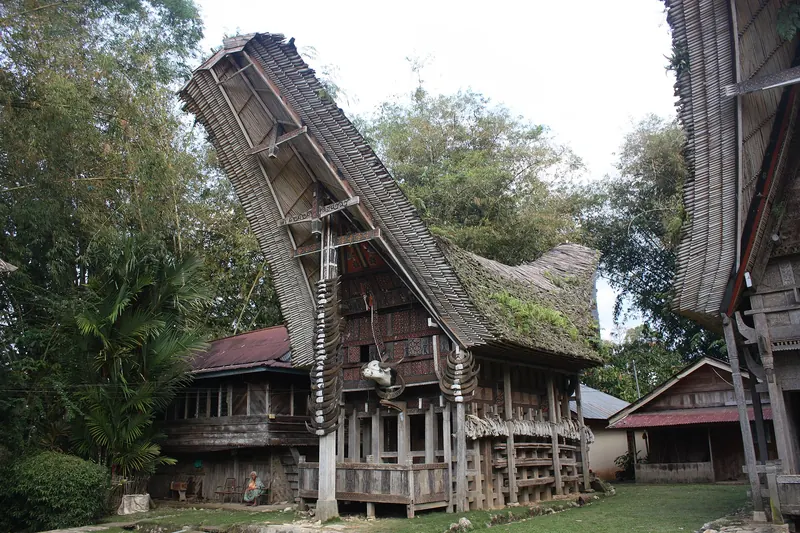
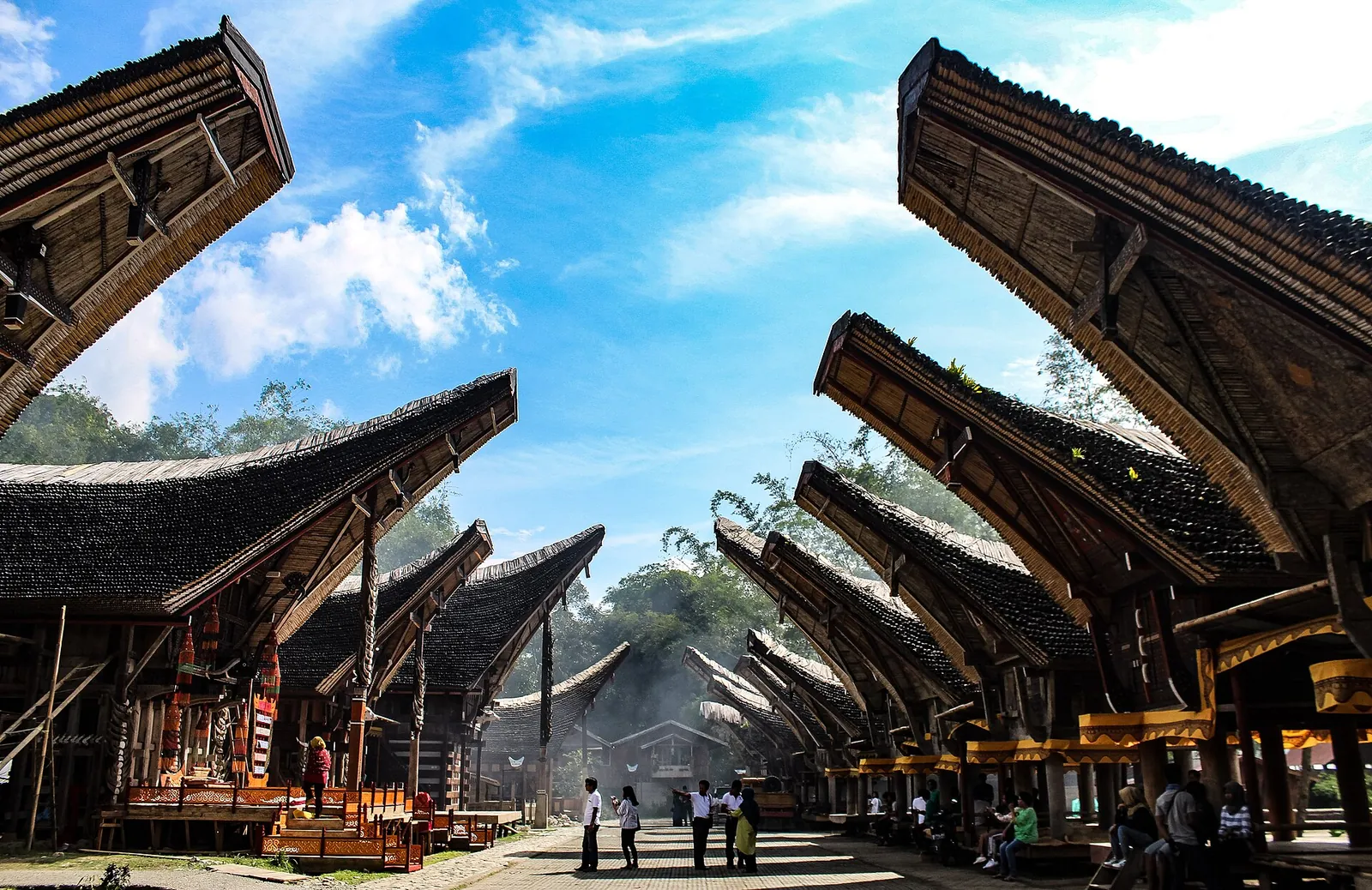
Ke'te Kesu' is the classic first stop. The ministry describes it as the oldest village in the Sanggalangi area, more than 400 years old, with rows of tongkonan facing their rice barns, buffalo horns on the house fronts as a mark of the family's standing, and one tongkonan converted into a small museum. Behind the houses a path leads past menhirs to Buntu Ke'su, a burial hill the ministry dates to over 700 years old, with cave crypts, carved coffins and tau-tau effigies. Craftspeople sell carved bamboo work and other souvenirs around the village.
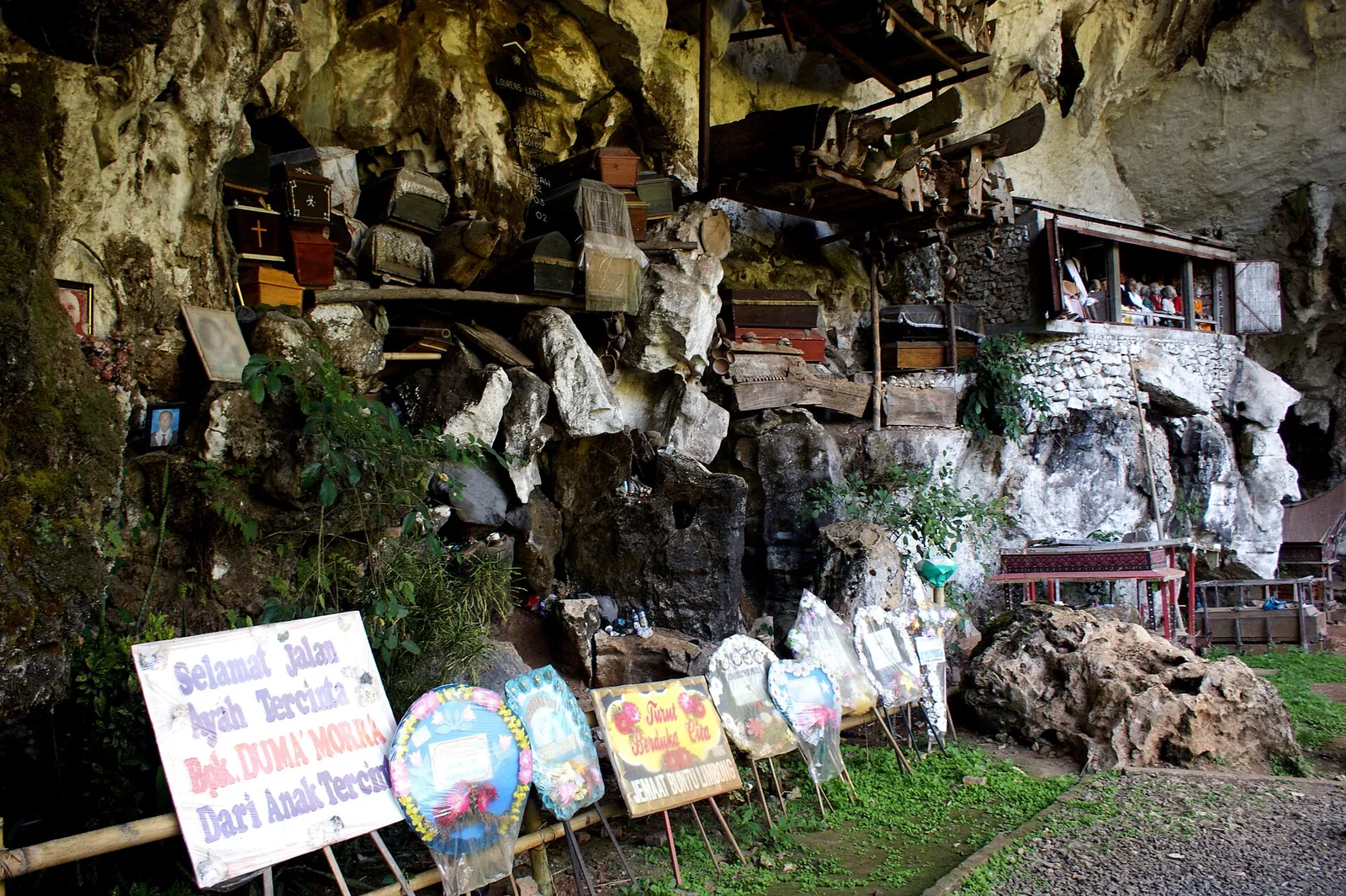
Londa, in Sandan Uai about 7 km south of Rantepao, is a burial cave at the foot of a cliff, with coffins wedged into the rock face and rows of tau-tau above. You go down steps to the entrance, where local people rent out lanterns; the ministry notes that Londa guides do not usually charge a fixed rate, so agree it before you go in. Parts of the cave are about a metre high, so be ready to walk bent over.
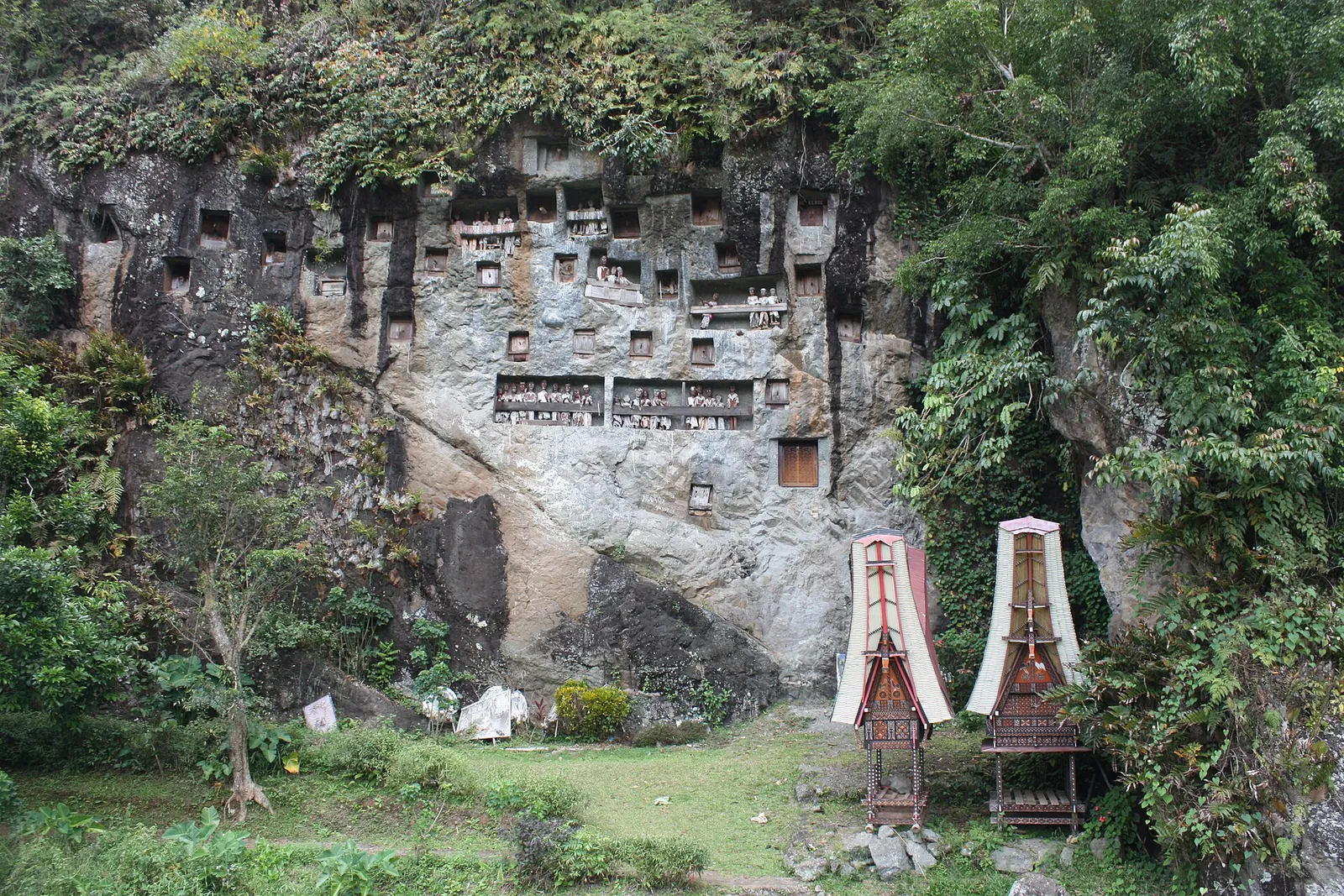
Lemo is the place for the cliff itself: a rock face cut with grave chambers, with tau-tau standing on a carved balcony like spectators. It fits on the same day as Londa. The ministry's culture pages explain that the effigies stand for the dead buried behind them, that nobles were placed higher on the cliff, and that the higher the grave, the shorter the journey to the afterlife.
These are family graves, not ruins. The ministry is explicit at Londa: do not move or take bones, skulls or any objects, and ask first if you are bringing betel nut or flowers. Keep voices low, do not climb on coffins or rock ledges, and ask your guide before photographing offerings.
Make time for the local food
What to eat and where to look
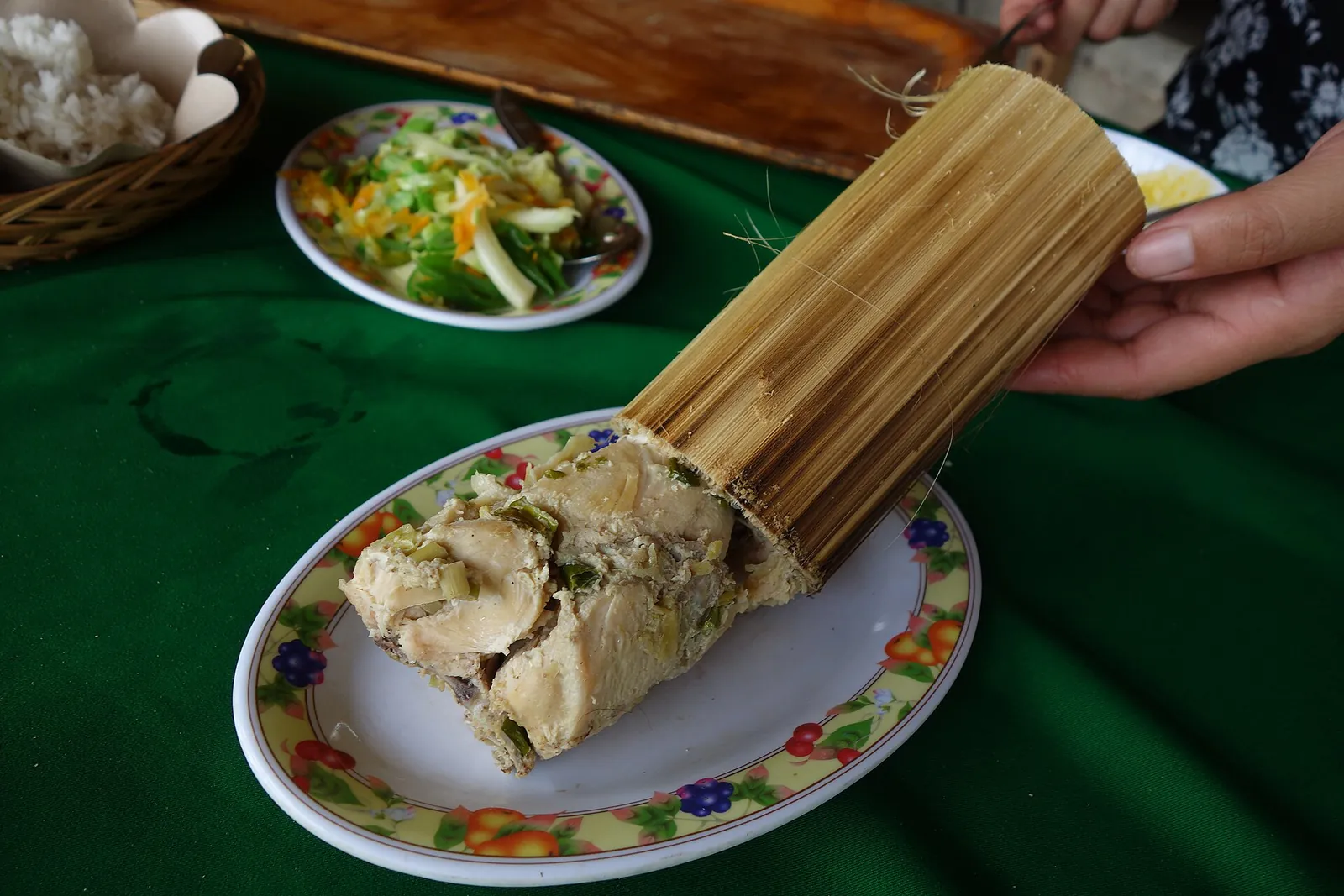
Pa'piong
Meat of various kinds, or rice, cooked with seasonings inside a length of bamboo. The Ministry of Tourism calls it one of Toraja's iconic dishes.
- Where to look
- Local eateries in Rantepao; the ministry's food pages list nasi pa'piong at Cafe Aras on Jalan Pahlawan.
- Fit it into your day
- A good lunch after a morning at the grave sites, or order it in advance if a place cooks it to order.
Pigs are central to Toraja feasts and markets; ask which meat is in the bamboo if you avoid pork.
Kopi Toraja (Toraja coffee)
Coffee grown in the Toraja highlands, which the ministry describes as full-bodied and earthy with notes of dark chocolate and spice. It is one of Indonesia's best-known coffees.
- Where to look
- Cafés in Rantepao and Makale; the ministry also suggests a coffee stop at Gunung Nona on the drive up from Makassar.
- Fit it into your day
- A morning cup before the day's driving; buy beans in Toraja to take home.
If you buy beans or ground coffee to take home, check that the pack is sealed for the flight.
Grilled river fish (ikan bakar)
Freshwater fish grilled over charcoal. The ministry notes that restaurants across Toraja serve fish, some caught in the Sa'dan river.
- Where to look
- Restaurants in Rantepao and along the Sa'dan valley road.
- Fit it into your day
- A simple dinner with rice and sambal after a long day in the car.
Freshwater fish has many small bones; eat slowly.
Rambu Solo': visiting a funeral with respect
The funeral ceremony, Rambu Solo', is the heart of Toraja culture and the reason many visitors come. The Ministry of Tourism describes ceremonies lasting days or even weeks, gathering the whole extended family and village, with buffalo and pigs sacrificed as offerings. The deceased may have died years earlier: the body is kept in the family's tongkonan and treated as a living person, given favourite foods and other offerings, until the family can afford the ceremony. Buffalo carry the spirit to Puya, the land of souls, and the number slaughtered reflects the family's standing.
Ceremonies are private family events with no public schedule. Go only with a local guide who knows the family or the village and can confirm you are welcome; do not drive around looking for one. Ask your guide whether guests usually bring a gift and what is suitable, and follow the family's lead on where to sit and when to move.
Dress soberly. The ministry notes that Torajan women wear more subdued, darker versions of their traditional dress at Rambu Solo' as a sign of mourning; long trousers or a long skirt and covered shoulders in dark or plain colours are a sensible guest's choice. The sacrifice of buffalo and pigs is part of the ceremony and can be hard to watch: you can step back or leave quietly. Keep photography discreet, never use a flash in someone's face, and stay out of the way of the procession.
Market day, the uplands and the slower days
Toraja's markets run on a six-day cycle rather than by weekday. The ministry describes Pasar Bolu in Rantepao as the main buffalo and pig market, open once every six days, with up to 500 buffalo on sale around ceremony time, from ordinary black animals to the spotted tedong bonga and the rare albino buffalo that change hands for very large sums. Makale's market, also on a six-day cycle, is known for pigs. Ask your hotel or guide which day the Bolu market falls on and build your plan around it.
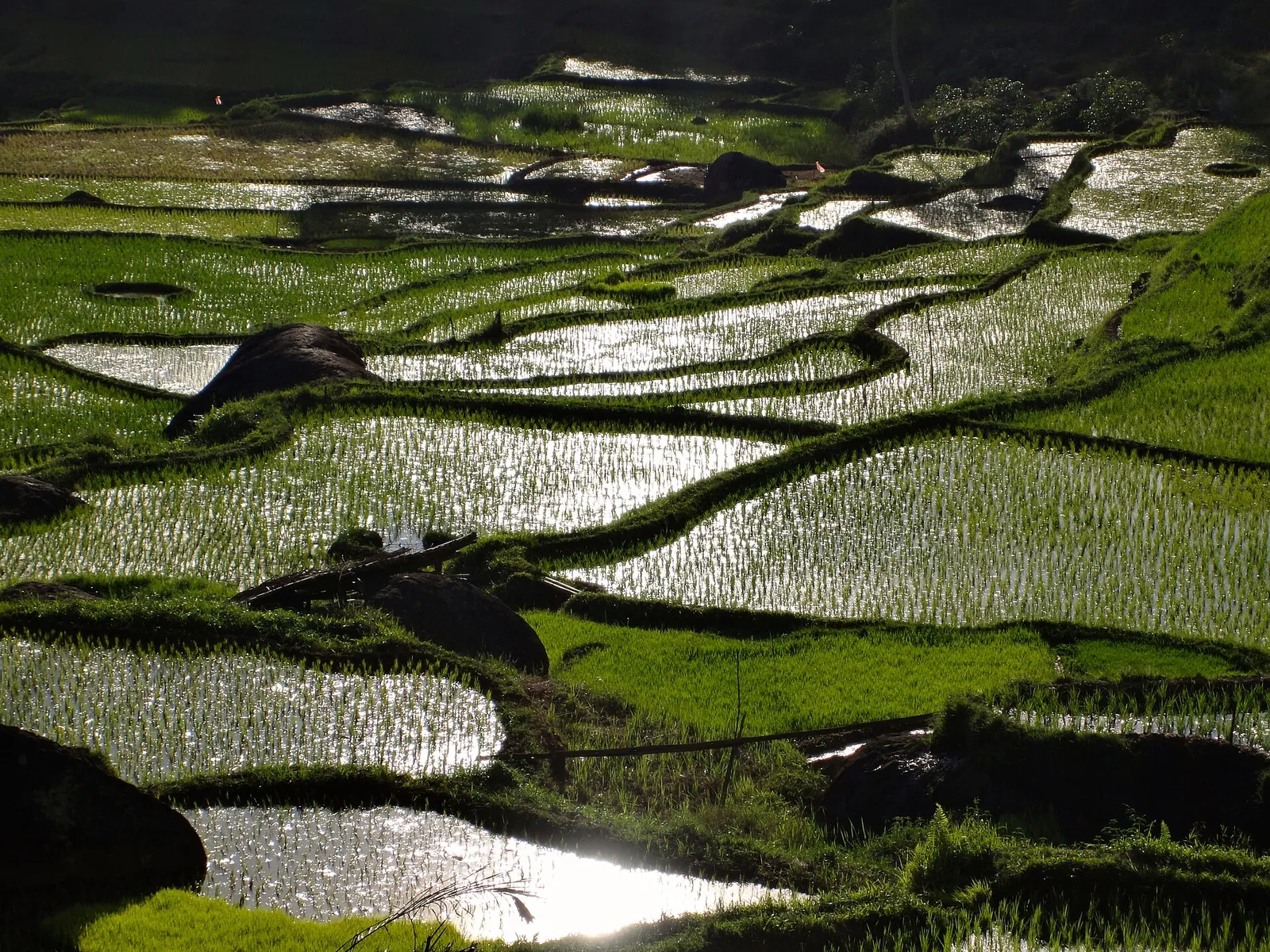
In the mountains, Batutumonga looks over rice terraces and, according to the ministry, is at its best at sunrise, when the view can sit above the clouds. On the way, Palawa in Sesean district — about 10 km from Rantepao, according to the ministry's village-tourism portal — is a traditional village with rows of tongkonan, and Bori Kalimbuang has a field of more than a hundred megalithic menhirs set among tongkonan houses. Sa'dan is known for its weaving; Toraja cloth is used in ceremonies, especially funerals.
For background, the Pong Tiku Museum in Rantepao, run by the North Toraja culture and tourism department, holds ethnographic collections and tau-tau, and the Buntu Kalando Museum in a former royal tongkonan at Sangalla shows more than 700 artefacts, from warrior dress to ceramics. The Sa'dan river is also rafted: the ministry describes a two-day run with grade 3 to 5 rapids, for experienced rafters only.
Getting there and getting around
Every route starts at Makassar's Sultan Hasanuddin International Airport (UPG). Toraja is about 300 km from Makassar, and the usual way up is by road. The Ministry of Tourism gives about 8–10 hours by night bus from Makassar, with tickets bought in town and many buses leaving from the Daya terminal or the operators' own depots; the alternative is a car with driver, which lets you stop on the way, for example at the viewpoints of Gunung Nona in Enrekang, which the ministry places about two hours before Toraja.
Toraja Airport (TRT) at Mengkendek has direct flights from Makassar, according to the ministry's current Toraja article; it then gives 30 to 45 minutes by taxi or rented car to Rantepao. Services are limited and change, so check the current schedule with the airlines before you build a plan on it.
Once you are in Toraja, the ministry suggests a car with a driver who knows the roads, a rented motorbike, ojek motorbike taxis for short hops, or the local bemo minibuses. For first-time visitors a car with a driver and a local guide is the practical choice: the guide explains what you are seeing and is your introduction at ceremonies and villages.
A workable three-day plan
This is an editorial suggestion, not a timetable. Swap days around the market cycle and any ceremony your guide confirms.
- Day 1 — South of Rantepao: Ke'te Kesu' and the Buntu Ke'su burial hill in the morning, then Londa and Lemo; lunch of pa'piong back in Rantepao.
- Day 2 — Market and uplands: Pasar Bolu early on market day, then up to Palawa, Bori Kalimbuang and Batutumonga for the terraces; a night in Rantepao.
- Day 3 — Ceremony or culture: a Rambu Solo' if your guide has confirmed you are welcome; otherwise Sa'dan weaving and the Pong Tiku Museum.
- Travel days: the overnight bus or a long day's drive to and from Makassar; leave a buffer before an onward flight.
Practical questions
How many days do I need in Tana Toraja?
Three full days in the highlands, plus travel to and from Makassar. That covers Ke'te Kesu', Londa and Lemo, a market morning and the uplands, with one day left free for a ceremony.
Can tourists attend a Toraja funeral?
Often yes, but only as guests of the family. Go with a local guide who can confirm you are welcome, dress soberly, follow the family's lead and keep photography discreet. Ceremonies have no public schedule.
Should I stay in Rantepao or Makale?
Rantepao, for most visitors: it is the tourism centre, with guides, hotels and quick access to Ke'te Kesu', Londa and Palawa. Makale suits southern sites and Toraja Airport.
How do I get from Makassar to Toraja?
By night bus (about 8–10 hours, according to the Ministry of Tourism), by car with driver, or by a direct flight to Toraja Airport (TRT) at Mengkendek where one is scheduled. Check current flights before booking.
When is the Rantepao buffalo market?
Pasar Bolu runs once every six days, not on a fixed weekday. Ask your hotel or guide for the next market day.
Can I touch or move things at the grave sites?
No. The Ministry of Tourism asks visitors not to move or take bones, skulls or other objects at Londa, and to ask permission before bringing betel nut or flowers.
Sources and checks before you travel
Reference sources for the version dated 3 October 2026. Confirm opening times, access, transport and conditions for your travel dates.
- Ministry of Tourism: Tana Toraja ↗ — opens in a new tab
- Ministry of Tourism: Tana Toraja, from ancestral ceremonies to architecture (Indonesian) ↗ — opens in a new tab
- Ministry of Tourism: 9 things to do in Tana Toraja ↗ — opens in a new tab
- Ministry of Tourism: Ke'te Kesu' village ↗ — opens in a new tab
- Ministry of Tourism: Londa ↗ — opens in a new tab
- Ministry of Tourism: Tau-tau effigies ↗ — opens in a new tab
- Ministry of Tourism: Bolu and Makale markets ↗ — opens in a new tab
- Ministry of Tourism: Sa'dan river ↗ — opens in a new tab
- Ministry of Tourism: where to stay in Tana Toraja ↗ — opens in a new tab
- Ministry of Tourism: Baju Pokko' ↗ — opens in a new tab
- Ministry of Tourism: Pong Tiku Museum ↗ — opens in a new tab
- Ministry of Tourism: Buntu Kalando Museum ↗ — opens in a new tab
- Ministry of Tourism: Indonesian coffees ↗ — opens in a new tab
- Ministry of Tourism: Cafe Aras Rantepao ↗ — opens in a new tab
- Ministry of Tourism village portal (Jadesta): Desa Wisata Palawa ↗ — opens in a new tab
Does this experience fit your route?
A guided Toraja trip from Makassar takes care of the long journey and gives you a guide for villages and ceremonies. Check how ceremony visits are arranged and how much time you get in Rantepao before you book.
Check dates and details on Viator ↗ — opens in a new tabAffiliate link · Book with ViatorPhoto credits
Tongkonan houses and rice barns face each other across the yard at Ke'te Kesu'
Photograph: Ansensius — opens in a new tab · CC BY-SA 4.0 — opens in a new tab
Changes: Resized and converted to WebP; displayed with responsive crops. · Original photograph and licence details ↗ — opens in a new tab
The cliff graves of Lemo, with tau-tau effigies watching from a balcony cut into the rock
Photograph: Arian Zwegers — opens in a new tab · CC BY 2.0 — opens in a new tab
Changes: Resized and converted to WebP; displayed with responsive crops. · Original photograph and licence details ↗ — opens in a new tab
Coffins and offerings at the entrance to the Londa burial cave, south of Rantepao
Photograph: Kondephy — opens in a new tab · CC BY-SA 4.0 — opens in a new tab
Changes: Resized and converted to WebP; displayed with responsive crops. · Original photograph and licence details ↗ — opens in a new tab
Rice terraces on the slopes at Batutumonga, in the Toraja highlands
Photograph: Romain Pontida — opens in a new tab · CC BY-SA 2.0 — opens in a new tab
Changes: Resized and converted to WebP; displayed with responsive crops. · Original photograph and licence details ↗ — opens in a new tab
Pa'piong: chicken cooked in a bamboo tube, a traditional Toraja dish
Photograph: Lord Mountbatten — opens in a new tab · CC BY-SA 3.0 — opens in a new tab
Changes: Resized and converted to WebP; displayed with responsive crops. · Original photograph and licence details ↗ — opens in a new tab