Java · Special Region of Yogyakarta
Yogyakarta travel guide: Kraton, Taman Sari, food and where to stay
Yogyakarta works best as a city of mornings and evenings. The Sultan's palace and its water garden open in the morning and close by mid-afternoon, while the streets around Malioboro only really come alive after dark. Plan the old royal quarter on foot, keep the temples of Borobudur and Prambanan for separate days, and let the city's food set the rhythm of the evenings.
- Suggested time
- 3–4 days
- Where to stay
- Malioboro and Sosrowijayan near Tugu station; Prawirotaman south of the palace for a quieter stay
- Season and timing
- Visitable all year. Avoid Indonesian school holidays if you can, when Malioboro and the north square fill with tour buses. Palace ceremonies such as Sekaten follow the Javanese and Islamic calendars, so dates move each year.
The short answer
Give Yogyakarta three nights: one morning for the Kraton and Taman Sari, one for Kotagede or the museums, and two separate days for Borobudur and Prambanan. Add a fourth day if you want Kaliurang and the slopes of Merapi, but only after checking the volcano's current alert level. Sleep near Malioboro or Sosrowijayan if you arrive by train and want to walk everywhere, or in Prawirotaman for a quieter street south of the palace with cafés and guesthouses.
Choose your base: Malioboro, Sosrowijayan or Prawirotaman
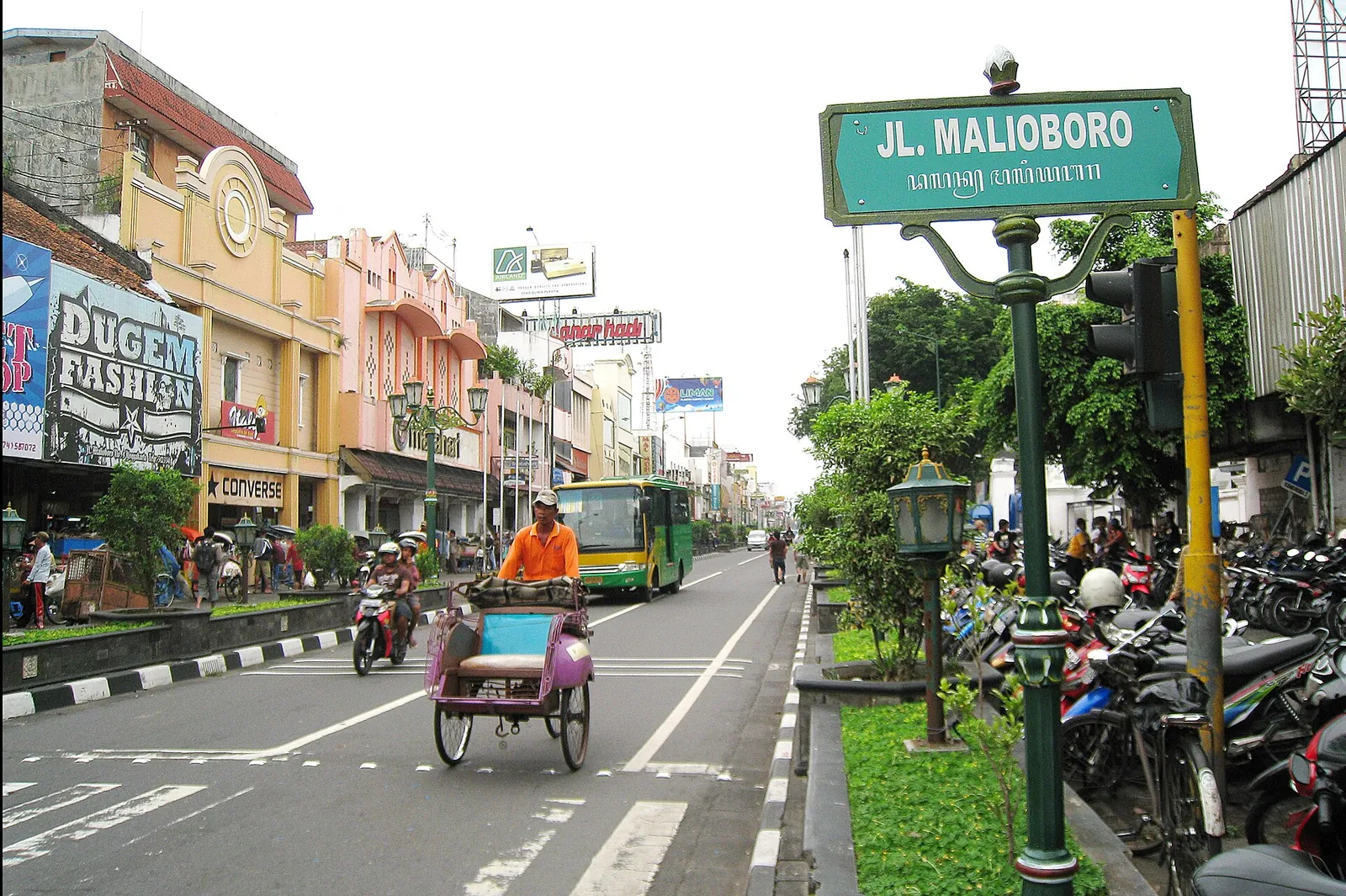
Jalan Malioboro is the city's spine. It was the ceremonial avenue the Sultan used on his way to and from the palace, it runs south from Tugu railway station towards the north square of the Kraton, and the Ministry of Tourism describes it as within walking distance of the station. Staying on or just off Malioboro puts the market, the fort museum and the palace within walking range, but it is also the busiest and noisiest part of the city.
Sosrowijayan, a web of narrow alleys (gang) next to Malioboro and close to Tugu station, is where many budget guesthouses cluster. It suits travellers arriving by train who want to walk everywhere. Prawirotaman, about 3 km south of the centre according to Wikivoyage, is a quieter street of guesthouses, small hotels and cafés south of the palace. It is a better base for the Kraton and Taman Sari, but you will need a ride to Malioboro and the station.
Whichever area you choose, check the exact lane and the walk from the hotel to a main road. A room deep in a gang can be calm at night, but check whether a car can get close with your luggage.
The Kraton and Taman Sari: one royal morning
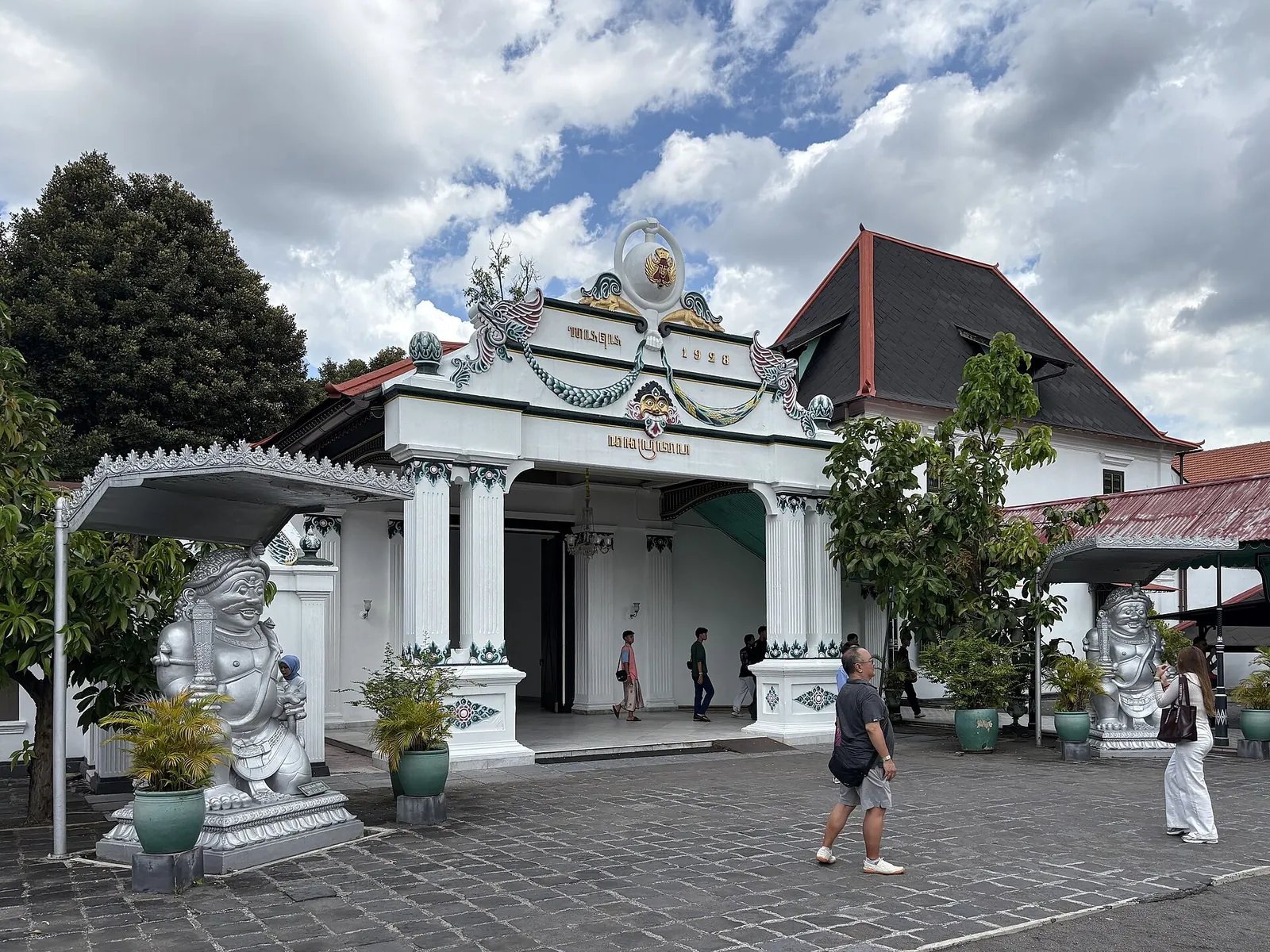
Karaton Ngayogyakarta Hadiningrat, the Sultan's palace, was founded in 1755 by Sultan Hamengku Buwono I and is still a royal residence and a working centre of court ceremony, not a museum shell. Visitors see the Kedhaton area, with its pavilions, the Golden Hall (Bangsal Kencono) and museum rooms of heirlooms, paintings and the life of Sultan Hamengku Buwono IX. The royal carriages are in a separate museum, Kagungan Dalem Wahanarata, next to the palace on Jalan Rotowijayan.
When we checked on 2026-10-03, the palace's official tourism site listed the Kedhaton as open from 08:30 to 14:30, Tuesday to Sunday, and closed on Mondays, with tickets reservable online. Some older pages give shorter hours, so confirm on the official site the day before. The palace's visitor rules ask for modest clothing with sleeves; they list no shorts or skirts, no hats in the museum area and no batik in the restricted royal (awisan) motifs. Keep the palace for a Tuesday-to-Sunday morning and arrive early.
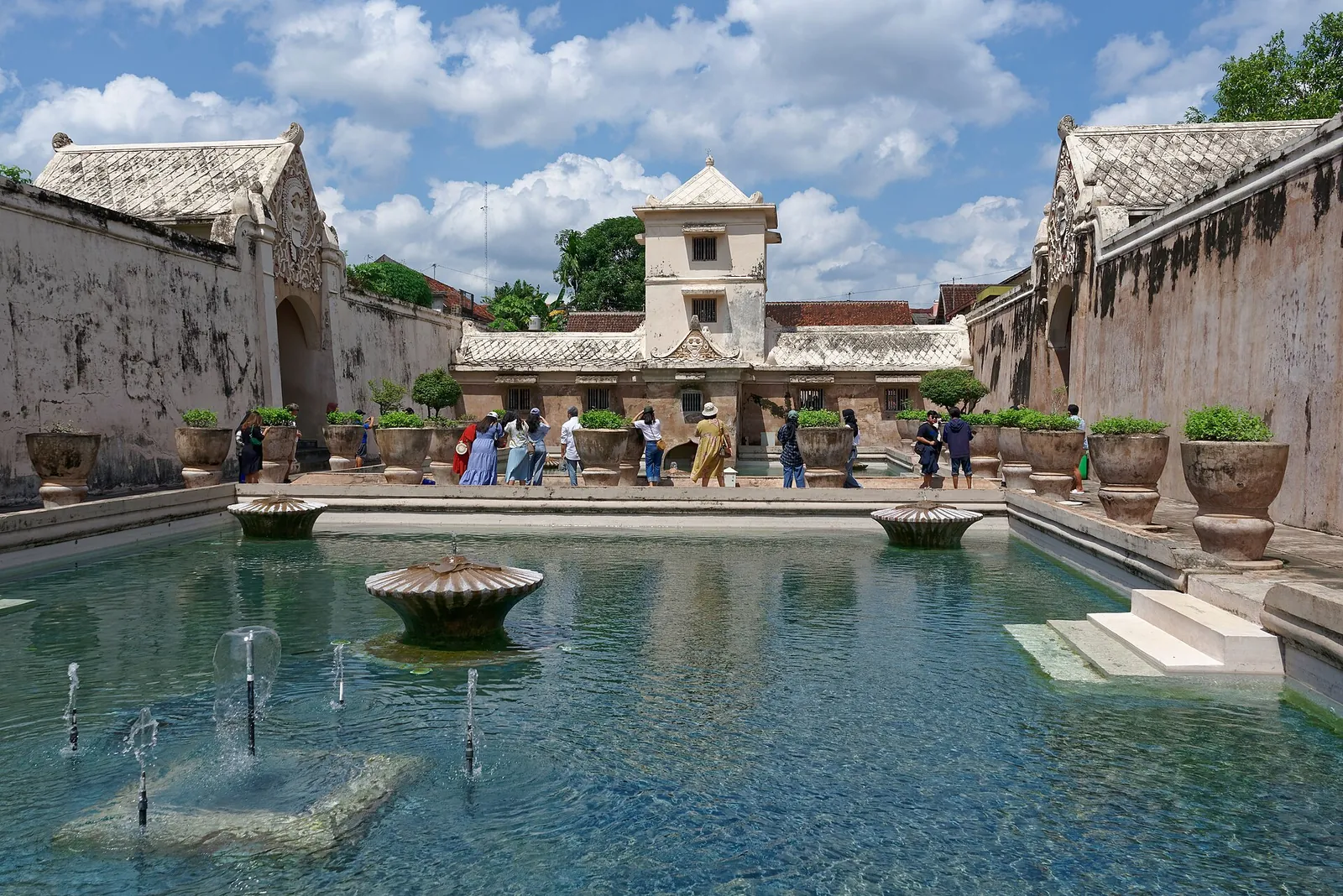
Taman Sari, the royal water garden built between 1758 and 1765, is about a 15-minute walk from the palace according to the Ministry of Tourism. The bathing pools of Umbul Binangun, the tower above them and the underground passages are the main sights; part of the old complex is now a residential kampung, so follow the signs and respect the houses. The official site listed Taman Sari as open daily from 09:00 to 15:00 when we checked. Pasar Ngasem, the market next to it, is a good place to stop for a snack.
Finish with the two squares. Alun-alun Lor, the north square in front of the palace with its large banyan trees, hosts the Sekaten night market each year; Alun-alun Kidul to the south is lively in the evening, when people try the masangin tradition of walking blindfolded between its two sacred banyan trees.
Make time for the local food
What to eat and where to look
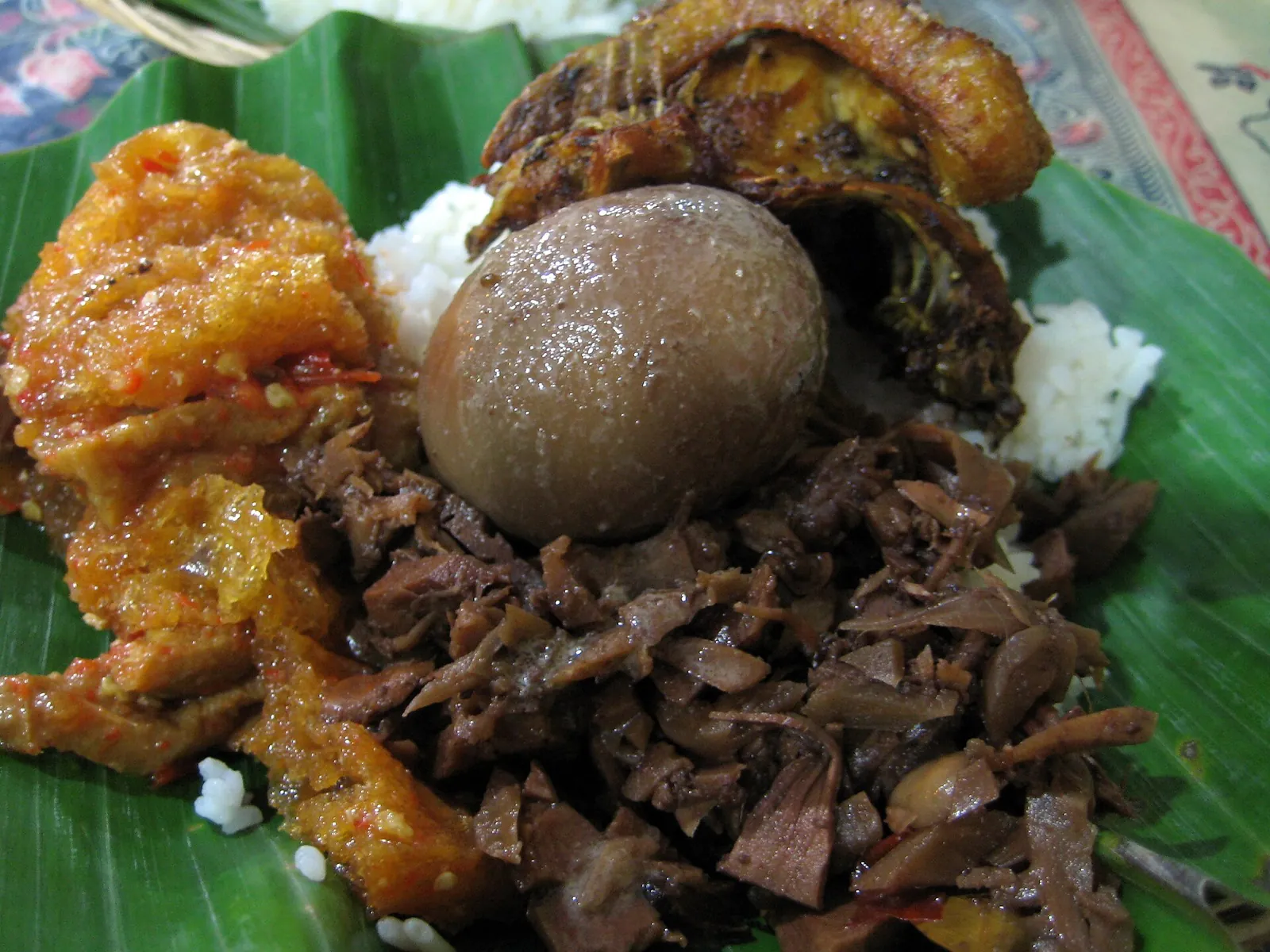
Gudeg
Young jackfruit slow-cooked for hours in coconut milk with spices and teak leaves, which turn it reddish-brown and sweet. The full plate (nasi gudeg komplit) comes with rice, spicy krecek (beef-skin crackers in chilli and coconut milk), chicken, a spiced brown egg (telur pindang) and areh coconut sauce.
- Where to look
- Specialist gudeg restaurants across the city, and small street-corner stalls early in the morning. Dry gudeg (gudeg kering) keeps longer and is sold to take away.
- Fit it into your day
- A first lunch near the palace, or breakfast at an early stall. Buy dry gudeg as an edible souvenir on your last day.
Sweet on its own but the krecek and sambal can be very hot; the dish usually contains beef skin, chicken and egg.
Sate klathak
Young goat grilled on iron bicycle spokes instead of bamboo skewers, seasoned with little more than salt and served with a spiced gulai broth, rice, raw shallots and bird's-eye chillies.
- Where to look
- Jalan Imogiri Timur in Bantul, south of the city, where the best-known stalls line the road.
- Fit it into your day
- An evening trip out of the centre by car or ride-hailing; make it the main meal.
Goat only; the raw chillies on the side are very hot.
Angkringan: nasi kucing and kopi joss
Angkringan are simple roadside carts selling tiny rice parcels (nasi kucing), fried snacks and kopi joss, strong coffee into which a glowing piece of charcoal is dropped.
- Where to look
- Carts and benches around Tugu station and Malioboro after dark.
- Fit it into your day
- A late snack after a Malioboro evening; order several small parcels rather than one meal.
Food sits at room temperature; choose a busy cart and freshly grilled items.
Lesehan dinner on Malioboro
At night, tents along Malioboro serve local dishes to diners sitting cross-legged on mats, which is what lesehan means.
- Where to look
- Along Jalan Malioboro in the evening.
- Fit it into your day
- Dinner on the day you walk the main street; ask prices before ordering if none are displayed.
Javanese sambal made with cabai rawit can be extremely hot; ask for it on the side.
Bakpia
Bakpia are the pastries most visitors take home from Yogyakarta; the Ministry of Tourism lists them with geplak and gudeg as the city's typical food souvenirs.
- Where to look
- Bakpia shops around the city and souvenir shops near Malioboro.
- Fit it into your day
- Buy fresh boxes on your last day for the journey home.
Check the best-before date on the box, especially for a long journey home.
Malioboro, batik and Kotagede silver
Malioboro is lined with shops and stalls selling batik, bags and souvenirs, and the Ministry of Tourism recommends it on foot. Fort Vredeburg, the Dutch fort opposite, is now a museum of Indonesia's independence struggle, and Beringharjo, the city's main market, is on the same stretch.
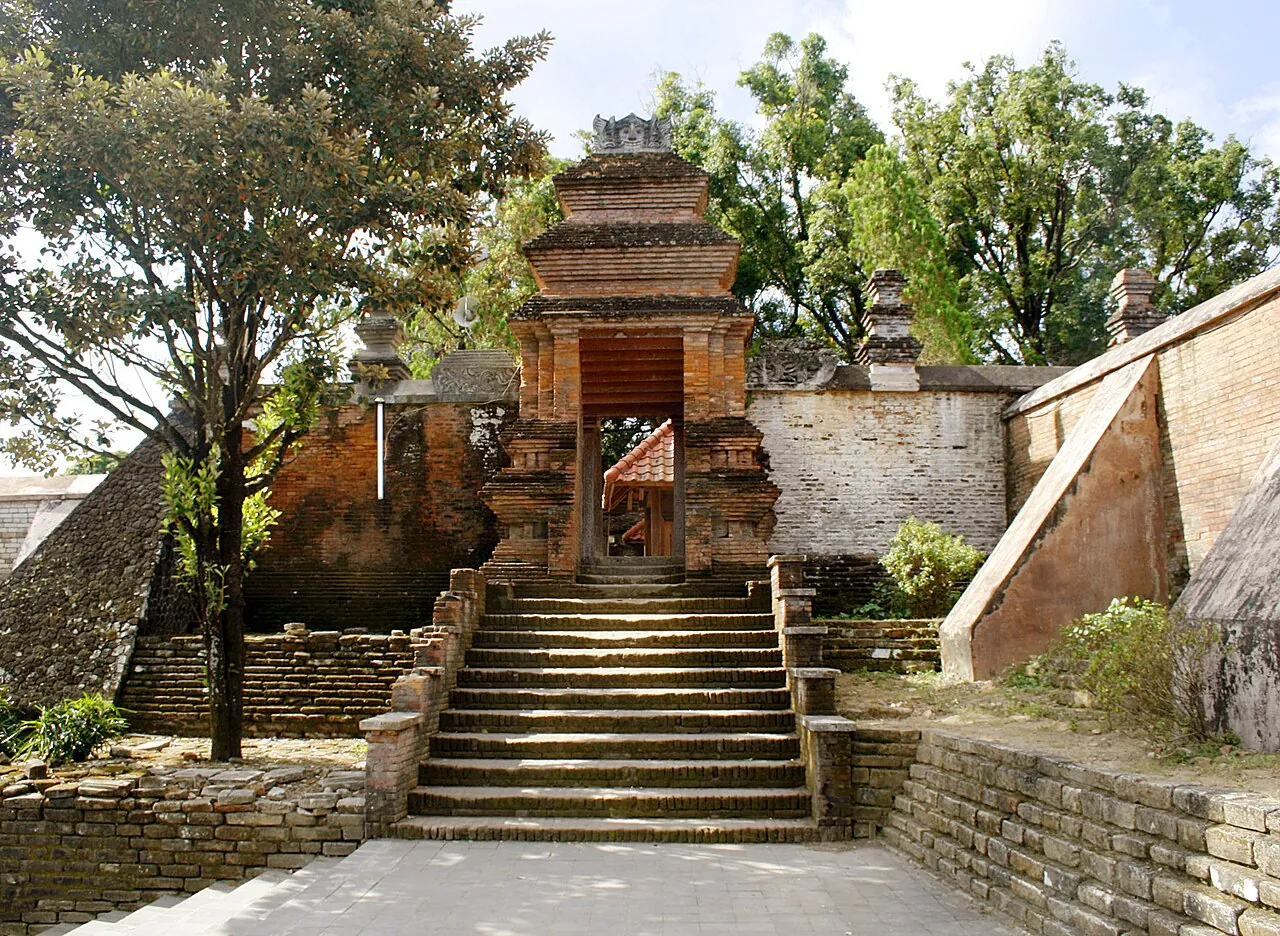
For a calmer morning, go to Kotagede, a suburb of the city. Its narrow streets of traditional houses are the centre of Yogyakarta's silver industry, and several workshops let visitors watch silversmiths at work before browsing filigree and embossed pieces. The Batik Museum and the Sonobudoyo museum near the palace, with its wayang puppets, kris and masks, cover the city's crafts in more depth.
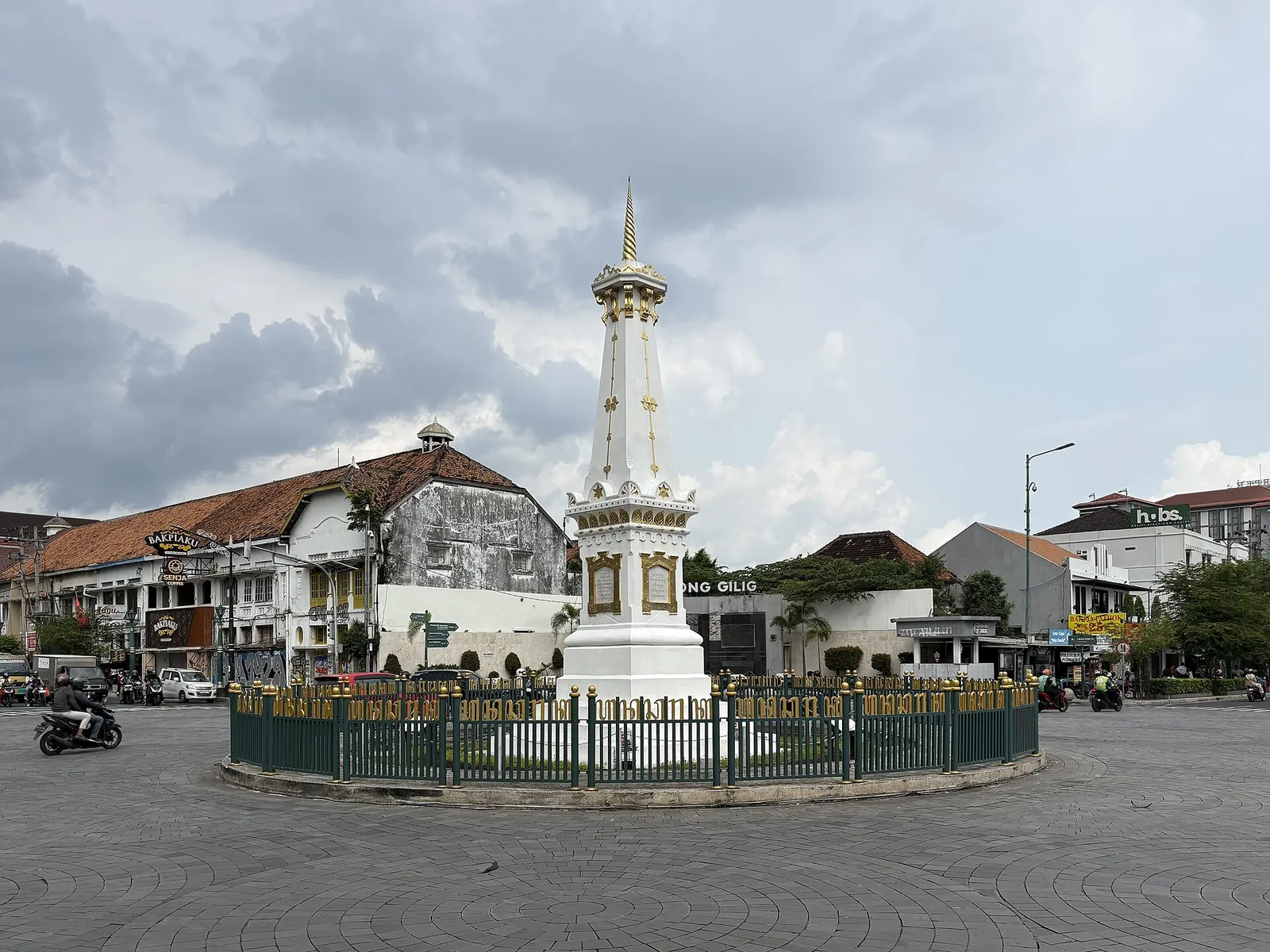
The Cosmological Axis of Yogyakarta, inscribed by UNESCO in 2023, ties these places together: an approximately 6 km north–south line with the palace at its centre, aligned between Mount Merapi and the Indian Ocean, with the Tugu monument to the north. You do not need a ticket for it; walking from Tugu down Malioboro to the palace follows part of it.
Getting around: walking, becak and buses
Central Yogyakarta is compact enough to walk between Tugu, Malioboro, the palace and Taman Sari. The Ministry of Tourism suggests moving around the centre on foot and lists becak (pedicabs), andong (horse-drawn carts), buses and taxis for longer hops. TransJogja buses stop near Malioboro, and Wikivoyage reports that ride-hailing apps such as Gojek and Grab operate in the city. Agree the price and whether it is one way before you get into a becak or andong.
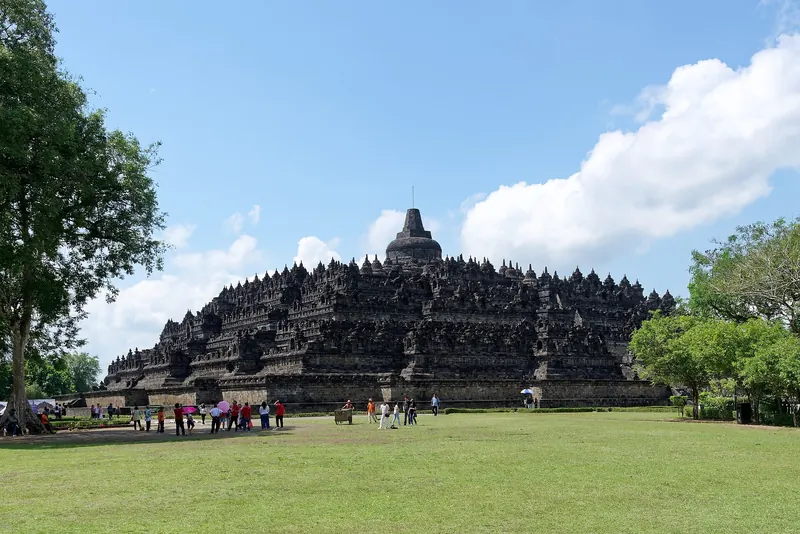
For Borobudur, which the Ministry of Tourism puts about an hour away by road, a car with driver or an organised tour is the simplest option. Prambanan lies on the border between the Special Region of Yogyakarta and Central Java, east of the city. A commuter train links Yogyakarta with Solo, but Wikivoyage notes that its Prambanan station is some distance from the temple complex.
A workable three- or four-day plan
This is an editorial suggestion, not a timetable. Check the opening days for every place you choose, especially the palace's Monday closing.
- Day 1 — Royal Yogyakarta: the Kraton at opening time, Taman Sari before midday, a rest, then Malioboro and Beringharjo in the late afternoon and dinner at a lesehan stall.
- Day 2 — Borobudur: a separate day for the temple and the villages around it; see our Borobudur guide for tickets and climbing rules.
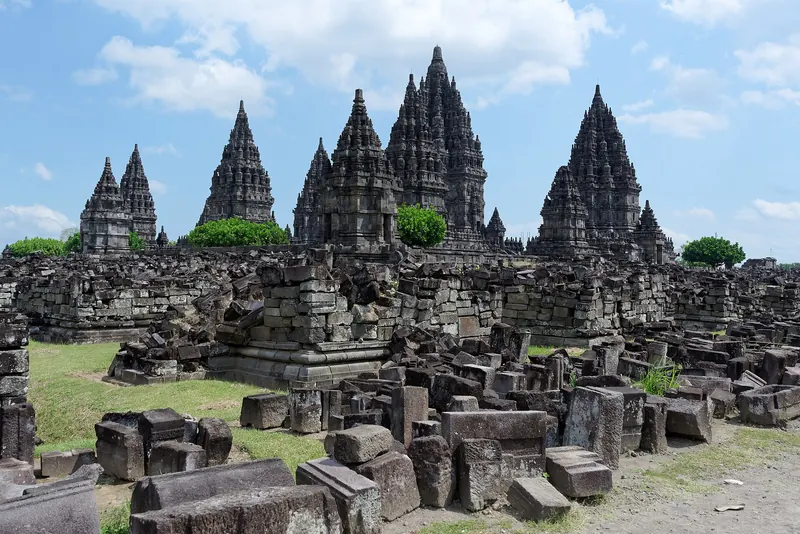
- Day 3 — Prambanan: the temple compounds in the afternoon, then the Ramayana Ballet if it is running; or Kotagede in the morning and Prambanan later.
- Day 4 (optional) — Kaliurang and Merapi: the hill resort, the Ullen Sentalu museum and the Merapi volcano museum, only if the current alert level allows visits to the slopes.
Day trips: temples, the volcano and Solo
Borobudur and Prambanan are the reasons many people come to Yogyakarta, and both deserve a day without other big plans. Prambanan is the largest Hindu temple complex in Indonesia, with the Buddhist Sewu temple inside the same archaeological park, and the Ramayana Ballet is staged against it. Ratu Boko, on a hill nearby, is known for its sunset views.
Kaliurang is a hill resort on the slopes of Mount Merapi, around 25 km north of the city centre according to the Ministry of Tourism. Ullen Sentalu, a private museum of Java's royal houses, runs guided tours on which photography is restricted to certain areas. Merapi itself is one of the world's most active volcanoes, as the Merapi volcano museum in Sleman explains: when we checked on 2026-10-03, Indonesia's volcano monitoring service MAGMA listed it at Level III (Siaga), the second-highest alert. Follow the current exclusion zones and local instructions before booking any jeep trip on its slopes.
Solo (Surakarta) is linked to Yogyakarta by commuter train, according to Wikivoyage, and works as a day trip or as the next stop on a Central Java route; it has its own guide.
Practical questions
How many days do I need in Yogyakarta?
Three nights cover the palace quarter and separate days for Borobudur and Prambanan. Add a fourth day for Kotagede and the museums, or for Kaliurang and Merapi if the volcano's alert level allows it.
Where should I stay in Yogyakarta?
Malioboro and the Sosrowijayan lanes are closest to Tugu station and the main street. Prawirotaman, south of the palace, is quieter and has many guesthouses and cafés. Check the walk from the hotel to the nearest main road.
When is the Kraton open?
When we checked on 2026-10-03, the palace's official tourism site listed the Kedhaton as open from 08:30 to 14:30, Tuesday to Sunday, and closed on Mondays. Taman Sari was listed as open daily from 09:00 to 15:00. Confirm on the official site before you go.
What should I wear to the Kraton?
Modest clothing with sleeves. The palace's visitor rules list no shorts or skirts, no hats in the museum area and no batik in the restricted royal motifs.
Can I visit Borobudur and Prambanan in one day from Yogyakarta?
Many tours combine them, but both are large sites and Borobudur is about an hour away by road. Separate days give you time to see each properly; if you only have one day, choose a tour that states how long you spend at each temple.
Is it safe to visit Mount Merapi?
It depends on the current alert level. When we checked on 2026-10-03, MAGMA Indonesia listed Merapi at Level III (Siaga). Check MAGMA and local announcements, respect exclusion zones and choose operators who follow them.
Sources and checks before you travel
Reference sources for the version dated 3 October 2026. Confirm opening times, access, transport and conditions for your travel dates.
- Indonesia Travel (Ministry of Tourism): Special Region of Yogyakarta ↗ — opens in a new tab
- Keraton Yogyakarta tourism (official): Kagungan Dalem Kedhaton ↗ — opens in a new tab
- Keraton Yogyakarta tourism (official): Kagungan Dalem Tamansari ↗ — opens in a new tab
- Keraton Yogyakarta tourism (official): Kagungan Dalem Wahanarata ↗ — opens in a new tab
- Indonesia Travel (Ministry of Tourism): Karaton Ngayogyakarta ↗ — opens in a new tab
- Indonesia Travel (Ministry of Tourism): The Kraton ↗ — opens in a new tab
- Indonesia Travel (Ministry of Tourism): Tamansari Water Castle ↗ — opens in a new tab
- Indonesia Travel (Ministry of Tourism): Malioboro ↗ — opens in a new tab
- Indonesia Travel (Ministry of Tourism): Kota Gede ↗ — opens in a new tab
- Indonesia Travel (Ministry of Tourism): The Cosmological Axis of Yogyakarta ↗ — opens in a new tab
- Indonesia Travel (Ministry of Tourism): Gudeg ↗ — opens in a new tab
- Indonesia Travel (Ministry of Tourism): Sate Klatak ↗ — opens in a new tab
- Indonesia Travel (Ministry of Tourism): Yogya dining guide ↗ — opens in a new tab
- Indonesia Travel (Ministry of Tourism): Kaliurang ↗ — opens in a new tab
- Indonesia Travel (Ministry of Tourism): Prambanan Temple Compounds ↗ — opens in a new tab
- Indonesia Travel (Ministry of Tourism): Magelang and Borobudur ↗ — opens in a new tab
- Indonesia Travel (Ministry of Tourism): Museum Sonobudoyo ↗ — opens in a new tab
- Indonesia Travel (Ministry of Tourism): Grebeg Sekaten ↗ — opens in a new tab
- Indonesia Travel (Ministry of Tourism): Museum Gunungapi Merapi ↗ — opens in a new tab
- MAGMA Indonesia (volcano monitoring): activity levels ↗ — opens in a new tab
- Wikivoyage: Yogyakarta ↗ — opens in a new tab
Does this experience fit your route?
A driver or a guided day trip is the easiest way to reach Borobudur and Prambanan from Yogyakarta. Check the pick-up time, the time at each site and which entry tickets are included before you book.
Check dates and details on Viator ↗ — opens in a new tabAffiliate link · Book with ViatorPhoto credits
The bathing pools at Taman Sari, the Sultan's 18th-century water garden near the Kraton.
Photograph: Jakub Hałun — opens in a new tab · CC BY-SA 4.0 — opens in a new tab
Changes: Resized and converted to WebP; displayed with responsive crops. · Original photograph and licence details ↗ — opens in a new tab
Donopratono gate and its Dwarapala guardian figures inside the Kraton, the Sultan's palace.
Photograph: Chainwit. — opens in a new tab · CC BY 4.0 — opens in a new tab
Changes: Resized and converted to WebP; displayed with responsive crops. · Original photograph and licence details ↗ — opens in a new tab
Jalan Malioboro, the city's main street of shops and batik stalls.
Photograph: Gunawan Kartapranata — opens in a new tab · CC BY-SA 3.0 — opens in a new tab
Changes: Resized and converted to WebP; displayed with responsive crops. · Original photograph and licence details ↗ — opens in a new tab
Nasi gudeg from Jalan Malioboro: slow-cooked young jackfruit with egg, chicken and rice.
Photograph: christian razukas from Honolulu, Hawaii — opens in a new tab · CC BY-SA 2.0 — opens in a new tab
Changes: Resized and converted to WebP; displayed with responsive crops. · Original photograph and licence details ↗ — opens in a new tab
The Tugu monument, a city landmark at the northern end of the walk down Malioboro to the palace.
Photograph: Chainwit. — opens in a new tab · CC BY 4.0 — opens in a new tab
Changes: Resized and converted to WebP; displayed with responsive crops. · Original photograph and licence details ↗ — opens in a new tab
A brick gateway in Kotagede, Yogyakarta's historic silversmith quarter.
Photograph: Gunawan Kartapranata — opens in a new tab · CC BY-SA 3.0 — opens in a new tab
Changes: Resized and converted to WebP; displayed with responsive crops. · Original photograph and licence details ↗ — opens in a new tab