Kyushu · Fukuoka and Busan
Fukuoka to Busan by ferry: fares, ports and seven days
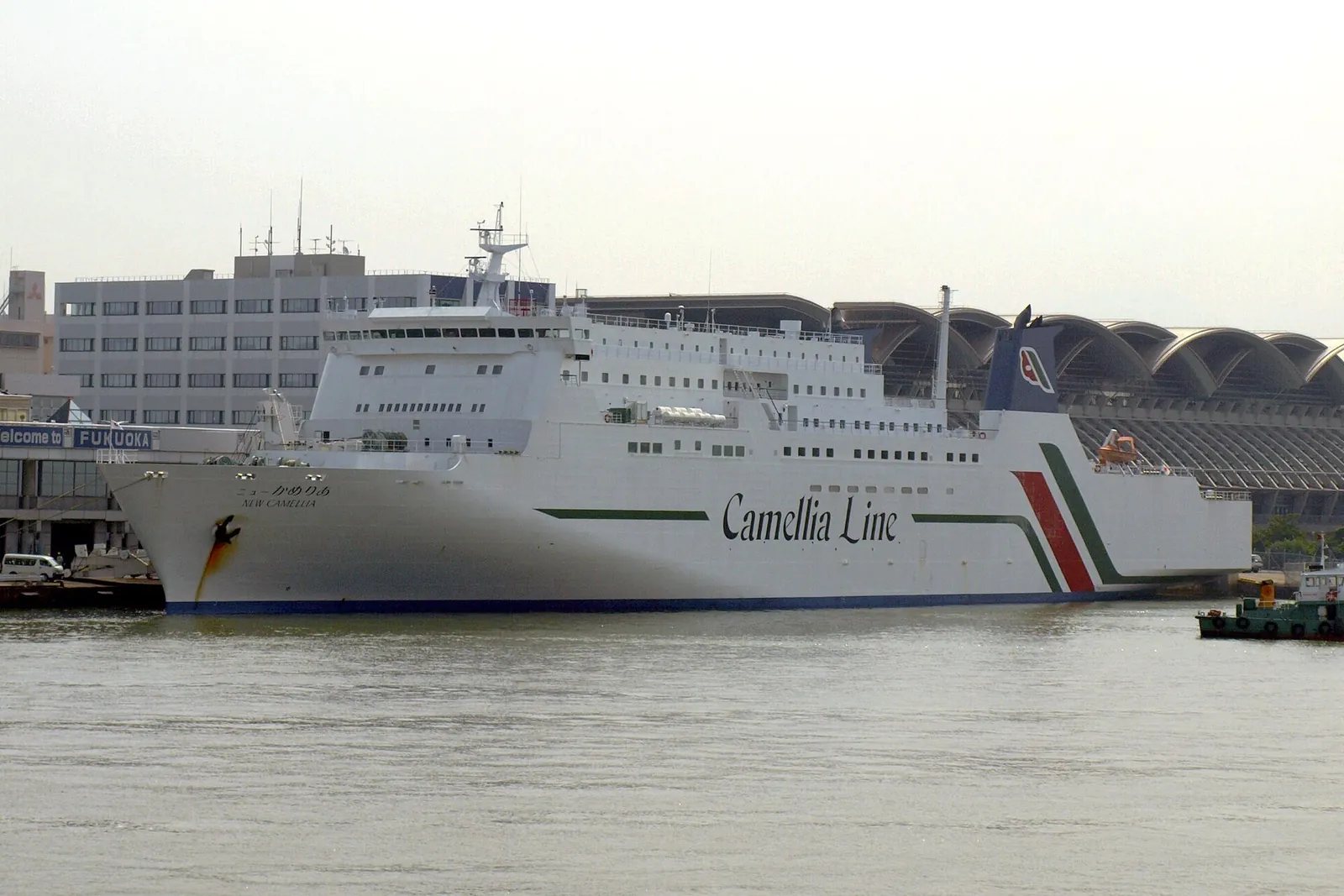
The sea crossing gives these two port cities a natural rhythm: ramen and yatai in Fukuoka, an afternoon on the water, then Busan's fish markets, hillside streets and beaches. Camellia Line's New Camellia sails between Hakata and Busan; Korea Ferry is its Korean booking agent. The ordinary outward sailing is daytime, while the return leaves Busan late at night and keeps you aboard until morning. Give the trip a week so the crossing does not squeeze Busan's old port and east coast into one hurried day.
- Suggested time
- 7 days (6 nights): Fukuoka 2 hotels, Busan 3 hotels, return ferry 1; 5-day option with 4 nights
- Where to stay
- Hakata or Nakasu-Kawabata, Fukuoka (2 nights); Busan Station or Nampo, Busan (3 nights); New Camellia (1 night)
- Season and timing
- Spring and autumn suit the city walks. The ferry runs to a dated calendar; wind, storms and maintenance can change sailings.
The short answer
Allow 7 days and 6 nights: 2 hotel nights in Fukuoka, 3 in Busan and 1 aboard the return ferry. Check passport eligibility for both entries, then book both New Camellia sailings and your cabin before hotels. Checked on 2026-10-16, adult one-way fares for reservations from 1 October 2026 were ¥15,000 in shared second class or ¥21,000 in first-class Western B, a two-person room. Add ¥4,900 per adult leaving Hakata and ₩21,000 leaving Busan. Ordinary sailings leave Hakata at 12:30 (Busan disembarkation 18:30) and Busan at 22:30 (Hakata disembarkation from 07:30 next morning); use the dated calendar for exceptions.
Two cities, five hotel nights and a night at sea
The full loop starts and ends in Fukuoka. Stay near Hakata Station for the airport, shinkansen and bus to the international terminal, or Nakasu-Kawabata for Kushida Shrine, the shopping arcade and yatai evenings. In Busan, choose Busan Station or Nampo for this port-and-markets plan. Haeundae is a good beach base for a longer stay, but adds a cross-city journey to the ferry days.
Keep the three Busan hotel nights together. On day 6 you check out, spend a relaxed last day ashore and board the overnight ferry; there is no fourth Busan hotel night. For more local detail, use Fukuoka travel guide: where to stay, yatai, ramen and Dazaifu and Busan travel guide: beaches, Gamcheon, markets and where to stay. The full-service hotel model below uses Hotel New Otani Hakata in Watanabe-dori and Commodore Hotel Busan at 151 Junggu-ro, Jung-gu; allow city transport from these hotels rather than assuming either is at the terminal.
With 5 days and 4 nights, keep one Fukuoka hotel night, two Busan hotel nights and the overnight return. Choose the old-port day or the beach day rather than rushing both. With extra time, add a Fukuoka hotel night for Dazaifu or a Busan hotel night for the coast.
Fukuoka before the crossing: shrine lanes, a lake and yatai
On day 1, follow Hakata's old-town streets through Kushida Shrine, Kawabata shopping arcade and Canal City Hakata. Kushida is the city's guardian shrine, traditionally founded in 757; the city's route groups it with the old shopping district and the Hakata Machiya Folk Museum. This is a compact first afternoon after arrival, with ramen at Canal City and an evening beside the Naka River.
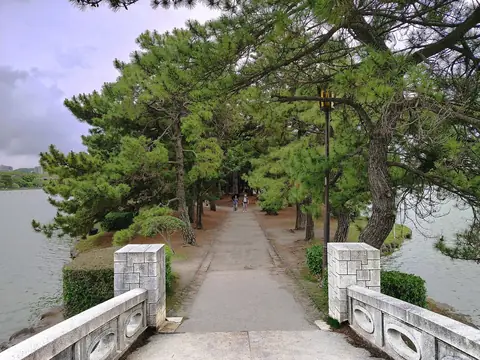
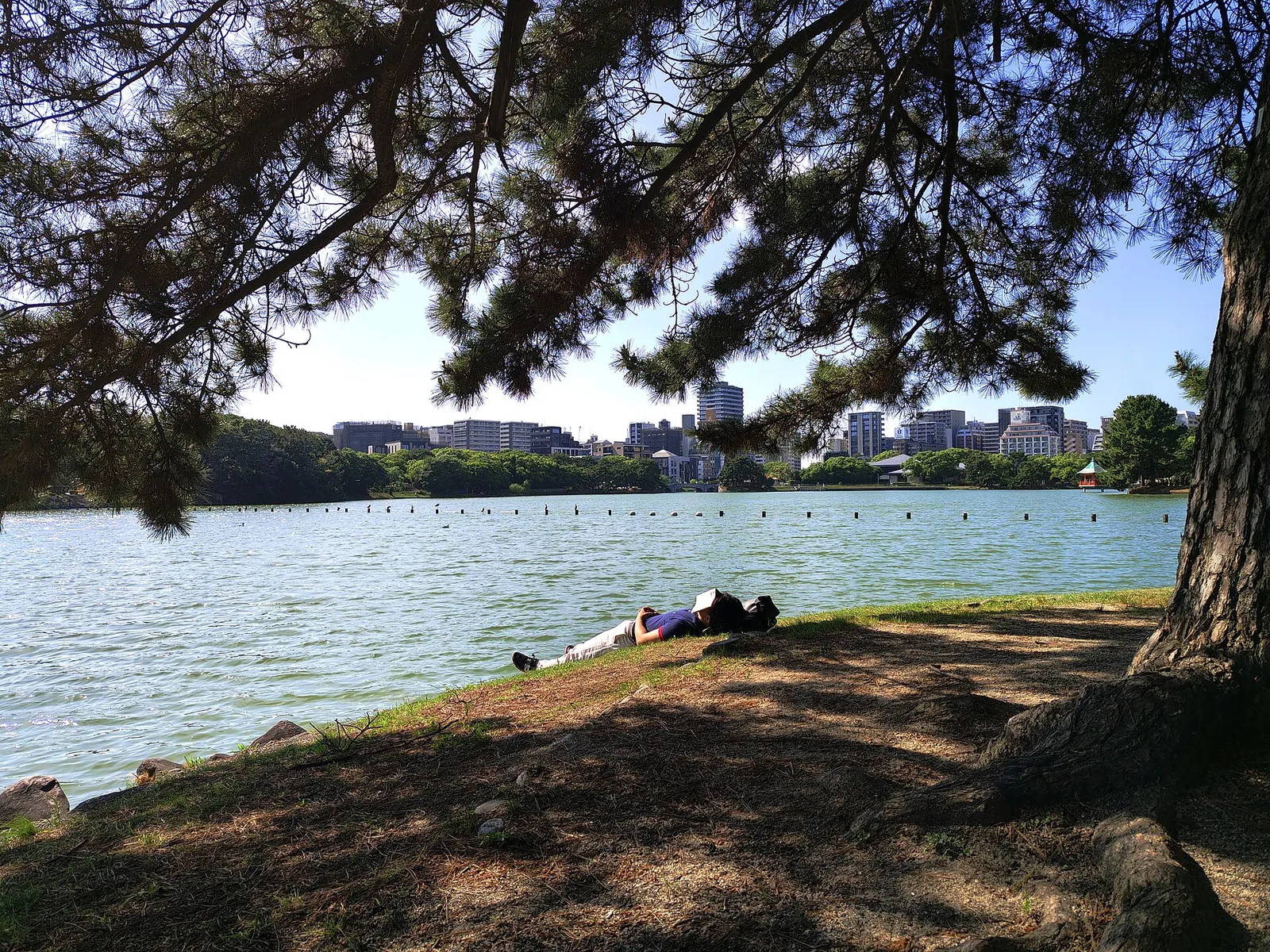
Use day 2 for Ohori Park and the Fukuoka Castle ruins. The pond occupies part of the castle's old moat landscape; bridges, waterside paths and wooded islands give the city a slower pace. Continue into Maizuru Park for the castle grounds, then return through Tenjin's shopping streets. The Japanese garden and museums are optional additions to the outdoor walk.
After dark, choose a yatai in Nakasu for a small supper at the counter. Ramen is only part of the stalls' food: yakiramen puts noodles onto the hotplate, while gyoza and grilled dishes make it easy to eat lightly after a late lunch. The stalls are small, so treat this as dinner rather than a long seat for drinks.
Busan: an old-port day and a separate coast day
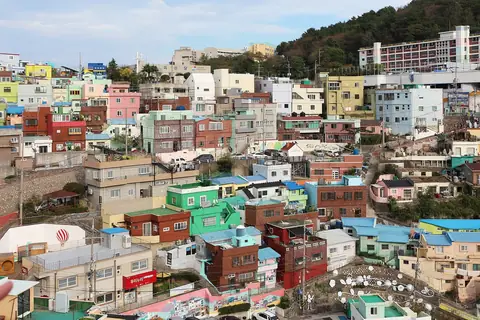
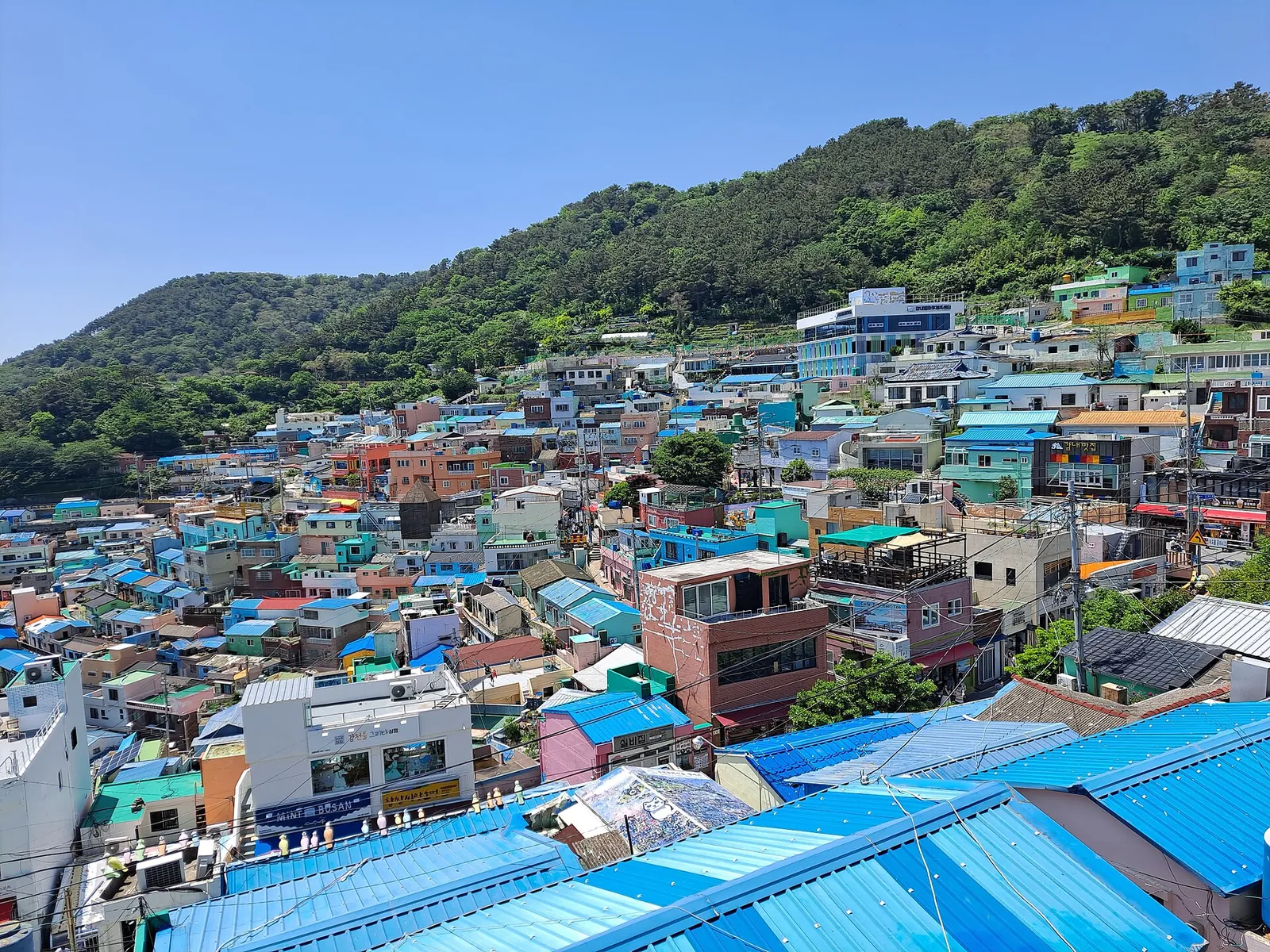
After the day-3 arrival, settle into the hotel and eat nearby. On day 4 start at Gamcheon Culture Village, where houses climb the hillside in layers. VisitKorea connects the village with wartime refugees; murals and sculptures now thread through its lanes. It is also a residential neighbourhood: the designated visitor period is 09:00–18:00, with privacy rules around homes. Entry is free.
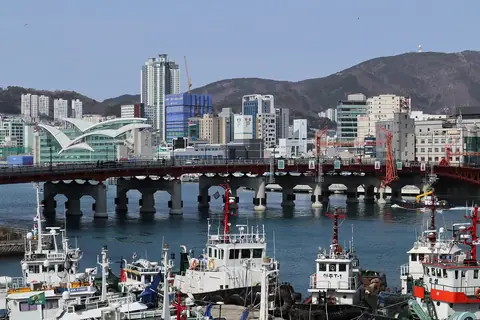
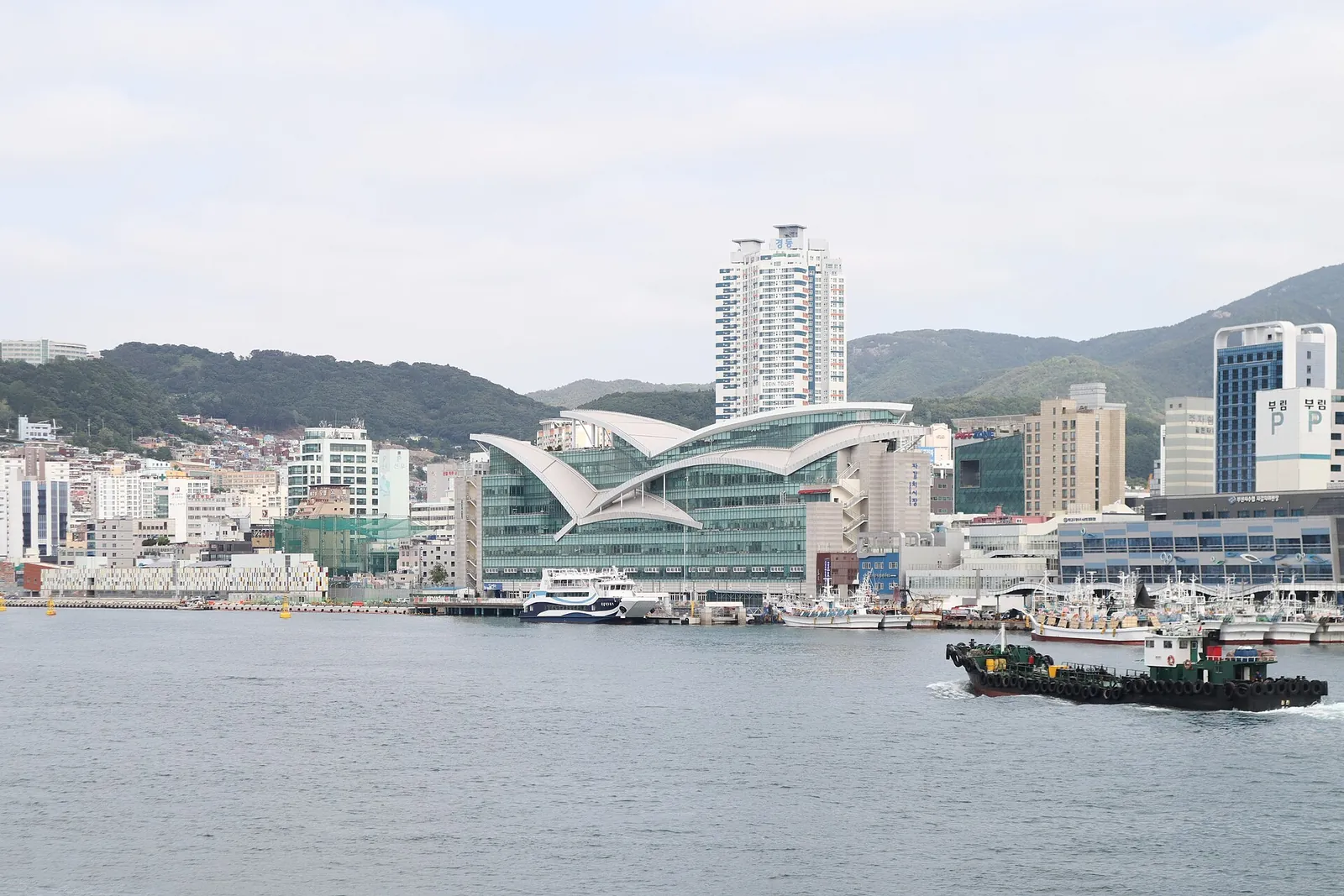
Spend the rest of that day in Nampo. At Jagalchi Market, live fish and shellfish fill the ground floor and restaurants upstairs prepare the catch. Ask for the total including preparation before choosing a fish. The market closes on the first and third Tuesdays, so move this visit within the three-night stay if needed. Walk on through Gukje Market's alleys and the BIFF Square area, pausing for soup or a hotteok rather than treating the markets as a shopping checklist.
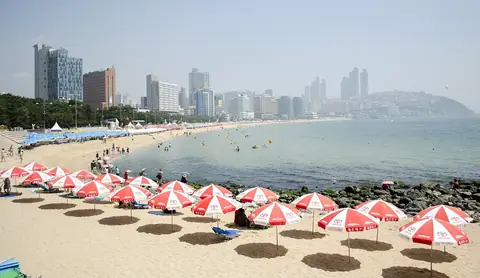
Day 5 belongs to the east coast: Haeundae Beach, the coastal path at Dongbaekseom, and, if you want a longer outing, Haedong Yonggungsa, the temple set against the sea rather than a mountain. Haeundae has a 1.5-kilometre beach and a wide choice of hotels behind the sand. Finish at Gwangalli for the bridge lights if energy permits. Use the detailed transport and attraction choices in Haeundae and Gwangalli, Busan: beaches, Blueline Park, bridge nights; the Blueline Park trains and any guided excursion are optional costs.
The coast outing involves a cross-city trip from the old-port base, which is why it gets its own day. Choose the beach and Dongbaekseom for a slower outing, or include the temple for a longer day; the linked coast guide gives more planning context.
The seven days at a glance
This plan uses an ordinary daytime departure from Hakata. Both countries use the same time zone, so there is no clock change on the crossing.
- Day 1: arrive in Fukuoka; Kushida Shrine, Kawabata and Canal City; Nakasu supper. Fukuoka hotel night 1.
- Day 2: Ohori Park, castle grounds and Tenjin. Fukuoka hotel night 2.
- Day 3: bus to Hakata Port International Terminal; check in 10:30–11:30, sail 12:30, disembark in Busan from 18:30 and clear entry. Busan hotel night 1.
- Day 4: Gamcheon in the visitor hours, then Jagalchi and Nampo markets. Busan hotel night 2.
- Day 5: Haeundae and Dongbaekseom, with the seaside temple or Gwangalli as the longer option. Busan hotel night 3.
- Day 6: a slow morning and lunch in Busan; check in at the international terminal 16:30–18:30, complete boarding by 20:00, sail at 22:30. Night aboard.
- Day 7: Hakata disembarkation begins at 07:30, followed by immigration and customs; continue into Fukuoka or onward.
Make time for the local food
What to eat and where to look
Hakata tonkotsu ramen
Thin, straight noodles in a pork-bone broth, with kaedama available when you want another portion of noodles.
- Where to look
- Ramen Stadium on the fifth floor of Canal City's Cinema Building, Fukuoka.
- Fit it into your day
- Lunch after the Hakata old-town walk on day 1.
Tell the cook about allergies before ordering and ask which dishes can be prepared for you.
Yakiramen
Noodles cooked on a hotplate at a yatai: a different supper from a bowl of soup ramen.
- Where to look
- The Nakasu yatai area beside the Naka River, Fukuoka.
- Fit it into your day
- A small counter supper on either Fukuoka evening.
Dwaeji gukbap
Pork and rice soup, one of Busan's characteristic everyday meals; warming and filling before a morning of walking.
- Where to look
- Gukje Market Food Street, Nampo, Busan.
- Fit it into your day
- Lunch on the old-port day or before the return-ferry check-in.
Hoe and seafood
Raw fish and other seafood chosen at the market and prepared by the restaurants upstairs.
- Where to look
- Jagalchi Market, Busan.
- Fit it into your day
- The main lunch on day 4, allowing time to choose the catch and agree the full preparation cost.
Ssiat hotteok
A griddle cake filled with sugar and seeds, a street snack for the market walk.
- Where to look
- Gukje Market food alleys and the BIFF Square area, Busan.
- Fit it into your day
- An afternoon snack between the old-port markets.
Sailing times, special departures and the former fast ferry
The October–December 2026 Camellia calendar lists the ordinary Hakata–Busan sequence as check-in 10:30–11:30, boarding complete 12:10, departure 12:30 and disembarkation 18:30. In the reverse direction it lists check-in 16:30–18:30, boarding complete 20:00, departure 22:30 and disembarkation 07:30 next morning. The published endpoint is the start of getting off the ship, not clearance through immigration; the ship’s docking and the start of passenger disembarkation are different events.
The calendar has non-operating dates and special departures. For example, Hakata sailings on 17 and 24 October, 28 November, 5 and 19 December 2026 run overnight: check-in 18:00–19:00, boarding complete 20:00, departure 22:00, Busan disembarkation around 07:30 next morning. These need a different night count. The 31 December 2026 Hakata special departure is 18:00, with Busan disembarkation from 08:30 on 1 January 2027. Choose the sailing on the operator's calendar before applying the day plan.
Queen Beetle is not a bookable alternative. JR Kyushu announced on 23 December 2024 that its jet-ferry subsidiary would withdraw from vessel operation. Older guides describing a high-speed Fukuoka–Busan crossing should not drive your booking.
Tickets, a room for two and every departure charge
Checked on 2026-10-16, Camellia's adult one-way public fares for reservations made from 1 October 2026 were: shared second class ¥15,000; second-class berth ¥17,000; first class ¥21,000; special twin ¥28,000; special single ¥30,000; suite ¥33,000. Return and student discounts have ended. For two adults who want a door they can close, select first-class Western B, whose capacity is two, rather than assuming the cheapest fare buys a private cabin. The ¥21,000 fare is per person; two occupants pay ¥42,000 per crossing. Single occupancy adds a supplement.
Western B has upper and lower bunks, with a washbasin, television, table, chairs and storage in the two-person room. Toilets are shared outside the cabins, and bathing is in the ship's shared observation bath; the special twin category has an en-suite shower and toilet. The observation lounge and vending-machine area give you somewhere to sit and get a drink beyond the cabin. The night aboard replaces the sixth hotel night.
The fare is only part of the ticket cost. Per adult departing Hakata, add ¥1,400 fuel + ¥3,000 international tourist departure tax + ¥500 terminal charge = ¥4,900. Departing Busan, add ₩14,000 fuel + ₩6,000 terminal charge + ₩1,000 tourism fund = ₩21,000. Fuel charges can change. Keep these currencies separate when comparing tickets; the issuer's conversion is not a market exchange-rate promise.
Book through Camellia Line's online booking page, which offers English and both directions, or its Japanese office/travel agents. Reservations normally open six months ahead; the operator was still arranging the April 2027 drydock calendar. Have each passenger's romanised passport name, date of birth, gender, nationality and passport number ready. Korea Ferry handles Korean-issued tickets; some premium categories there are handled through agents. Read the conditions for the fare you choose before paying.
Wind and storms can cancel a sailing. Leave a cushion before a flight or long-distance train after the return, and keep the cancellation terms with the booking. Onboard lunch, dinner and breakfast service resumed on 14 October 2026; meals are separate from the fares used here.
The correct terminals, check-in and bags
In Fukuoka use Hakata Port International Terminal, 14-1 Okihama-machi, Hakata-ku. This is distinct from the cruise centre and the domestic ferry piers. The terminal authority lists bus 88 or BRT from Hakata Station Nishinippon City Bank Mae F, about 20 minutes, or bus 80 or BRT from Tenjin Solaria Stage Mae 2A, about 15–20 minutes. Camellia check-in is on 1F. Keep your passport with the ticket for exit checks and boarding.
In Korea use Busan Port International Passenger Terminal, 206 Chungjang-daero, Dong-gu. Arrivals are on 2F, while the return check-in and departures are on 3F. VisitKorea gives a 10–15-minute walk to Busan Station, served by Metro Line 1 and the KTX/SRT railway.
Free self-carried luggage is limited to 30 kg and a combined three dimensions of 200 cm; Korea Ferry additionally gives a maximum 90 cm per side. Checked baggage costs ¥800 / ₩8,000 up to 20 kg, then ¥300 / ₩3,000 for each further 10 kg. Keep medicines, documents and overnight essentials with you. Some special overnight Hakata departures have no checked-baggage service, so a traveller with a large case should choose the sailing and luggage option together.
Korea entry and the new entry into Japan on return
Busan's international passenger terminal admits foreign passengers arriving from Japan. That does not change the entry permission attached to your passport: use the official Korean visa and K-ETA nationality lists before buying the crossing. Visa-free allowances vary; the K-ETA table, for example, gives British-citizen, German and French passports 90 days. Other passports may need a visa in advance. Carry a valid passport; do not assume a single universal six-month rule.
The temporary K-ETA exemption runs through 31 December 2026 for the 22 listed countries and regions, including Japan, the UK, Germany, France, Italy, the Netherlands, Spain and several other European countries. It is an authorisation exemption, not a new visa exemption. Passengers who require K-ETA need approval before boarding the ship: ₩10,000 plus the online payment fee, usually processed within 72 hours but sometimes longer, valid for three years or until passport expiry if sooner. A trip in 2027 needs the rules for that date. Permanent application exemptions also cover travellers aged 17 or under or 65 or over on the day of arrival, diplomatic or official passport holders, UN passport holders, APEC Business Travel Card holders, registered foreign residents and visa holders, aircraft or ship crew, transfer passengers, and active US service members covered by the US–ROK SOFA; use the official eligibility page for the category that applies to you.
Travellers using the temporary K-ETA exemption, and most ordinary visa holders, still complete an arrival card. The official e-Arrival Card is free and can be filed from three days before Korean arrival; it expires after 72 hours if unused. Paper and electronic cards are equally valid. Holders of an approved K-ETA are normally exempt unless entering on a visa. At the port, follow immigration and customs; every foreign visitor aged 17 or over is fingerprinted and photographed, and a customs declaration is needed if you have goods to declare. South Korea entry rules: visa-free stays, K-ETA and arrival card covers the passport-specific details.
Returning to Hakata is a new entry into Japan. Check MOFA's nationality and passport-category table: most listed exemptions allow 90 days, but some are shorter. A single-entry Japanese visa used on your original arrival does not cover another entry. MOFA's JAPAN eVISA rules expressly allow eligible applicants to arrive on scheduled international passenger ferries between Japan and Busan or Shanghai; eligibility still depends on nationality and residence, and this is a single-entry tourism visa. Follow the terminal's sea-arrival immigration and customs instructions rather than assuming an airport QR workflow applies. Your passport must remain valid for the whole Japanese stay. See First trip to Japan: route, entry, money, manners and what to book for the wider planning context.
A published-price budget for the full six nights
For two adults sharing one hotel room and one first-class Western B ferry room, budget about ¥176,600 + ₩426,000 for the six-night accommodation-and-ferry model, assuming Fukuoka’s accommodation tax is charged on top of the hotel rate; other exclusions are below. It counts two Fukuoka hotel nights, three Busan hotel nights and the overnight return. Checked on 2026-10-16, this uses the hotels’ own published rates and Camellia’s public tariff, with no exchange-rate conversion. A workable calendar is 8–14 November 2026: sail outward on Tuesday 10 November and back on Friday 13 November; the three Busan hotel nights are weekdays.
Fukuoka hotels: ¥81,960. Hotel New Otani Hakata, 1-1-2 Watanabe-dori, Chuo-ku, publishes its 26.5 m² Moderate Twin at ¥40,980 per room, including tax and service; two nights cost 2 × ¥40,980. This is the public room rate, not the lower club-member rate. Breakfast is outside this room-only calculation. Book from the hotel’s Moderate Twin page. Fukuoka City includes service charges in the taxable room price but excludes meals and consumption tax. Fukuoka’s accommodation tax is about ¥200 per adult per night for a room at this price, so about ¥800 for two adults over two nights; the hotel does not state whether its rate already includes it, so ask when booking.
Busan hotels: ₩384,000. Commodore Hotel Busan, 151 Junggu-ro, Jung-gu, advertises its Autumn Romance package for 1 October–30 November 2026 at ₩128,000 per Standard room on weekdays or ₩139,000 on Friday/Saturday, including 10% tax and breakfast for two. Three weekday nights cost 3 × ₩128,000. The package includes hotel pool access when operating and parking; it can sell out. Book from the hotel’s dated package page. These are full-service hotel examples on both shores, rather than a city-wide average or a promise of availability.
Both ferries and all listed departure charges: ¥93,800 + ₩42,000. Four adult one-way first-class fares cost 2 people × 2 crossings × ¥21,000 = ¥84,000. Add 2 × ¥4,900 at Hakata and 2 × ₩21,000 at Busan. This pays for the daytime crossing and the shared two-person room on the overnight return; no extra hotel is needed that night.
On top: all meals except the three Busan breakfasts for each adult; drinks; airport, city bus, metro and taxi journeys; optional museums, gardens, coastal trains, tours, visas/K-ETA, insurance, checked baggage and flights. Add your actual local travel, food and optional visits before setting a spending limit.
An open-jaw trip, or more time on either shore
You can book just the daytime Hakata–Busan ferry and finish in Korea, using Gimhae International Airport or a train from Busan Station. That removes the overnight return and the second Japanese entry, so rebuild the nights and fares around your flight date. The seven-day round-trip budget above includes both crossings and should not be treated as an open-jaw quote.
For a longer Japanese stay, add Dazaifu as a separate half-day or more rather than fitting it before the port check-in. For more Korea, use Busan and Gyeongju in 5 days: markets, Ulsan and Silla sites to plan additional nights.
Practical questions
Is there a fast ferry from Fukuoka to Busan?
Queen Beetle is not available: JR Kyushu decided on 23 December 2024 to withdraw its subsidiary from vessel operation. This guide uses New Camellia, the ordinary daytime sailing to Busan and overnight return to Hakata.
Is 07:30 the time I can catch a train in Fukuoka?
No. It is the published start of disembarkation at Hakata, followed by immigration and customs. Leave a cushion before an onward train or flight.
How many hotels do I book for seven days?
Five hotel nights: two in Fukuoka and three in Busan. The sixth night is aboard the Busan–Hakata ferry. The five-day version has one Fukuoka hotel night, two in Busan and one aboard.
Does the cheapest fare give two people a private cabin?
No. The ¥15,000 adult one-way fare is shared second class. First-class Western B has capacity two and costs ¥21,000 per adult each way for reservations from 1 October 2026, before the departure fees.
Can I enter Korea on my Japanese visa?
A Japanese visa gives no entry permission for Korea. Check your passport against Korean visa and K-ETA rules, complete the required arrival card, and also check that you can enter Japan again if taking the return ferry.
Can I take an overnight sailing from Hakata too?
Yes, on the operator’s listed special dates, but it changes the itinerary and consumes another night aboard. The ordinary seven-day plan here uses the daytime Hakata departure; select the actual date on the current calendar first.
Sources and checks before you travel
Reference sources for the version dated 16 October 2026. Confirm opening times, access, transport and conditions for your travel dates.
- JR Kyushu: withdrawal from vessel operation, 23 December 2024 ↗ — opens in a new tab
- Camellia Line: current sailing calendar (October–December 2026) ↗ — opens in a new tab
- Camellia Line: passenger fares and charges ↗ — opens in a new tab
- Camellia Line: news ↗ — opens in a new tab
- Camellia Line: questions and answers ↗ — opens in a new tab
- Camellia Line: online booking ↗ — opens in a new tab
- Camellia Line: boarding procedure ↗ — opens in a new tab
- Camellia Line: passenger terminals ↗ — opens in a new tab
- Camellia Line: rooms ↗ — opens in a new tab
- Hakata Port International Terminal: access ↗ — opens in a new tab
- VisitKorea: international ferry terminals ↗ — opens in a new tab
- K-ETA: eligible nationalities ↗ — opens in a new tab
- K-ETA: application guide ↗ — opens in a new tab
- VisitKorea: visa requirements ↗ — opens in a new tab
- Korean e-Arrival Card: guide ↗ — opens in a new tab
- Korean e-Arrival Card: who must declare ↗ — opens in a new tab
- Japan MOFA: short-stay visa exemptions ↗ — opens in a new tab
- Japan MOFA: JAPAN eVISA ↗ — opens in a new tab
- Korea Ferry: user guide ↗ — opens in a new tab
- Fukuoka City official tourist guide: Ohori Park Area route ↗ — opens in a new tab
- Fukuoka City official tourist guide: Nakasu-Kawabata Area route ↗ — opens in a new tab
- Fukuoka City official tourist guide: Kushida Shrine ↗ — opens in a new tab
- Fukuoka City Subway: routes and operating areas ↗ — opens in a new tab
- Fukuoka Airport: subway access ↗ — opens in a new tab
- Fukuoka Prefecture Tourism Association: Hakata ramen ↗ — opens in a new tab
- JNTO: Fukuoka Ramen Stadium ↗ — opens in a new tab
- Fukuoka City official tourist guide: Regular yatai favourites ↗ — opens in a new tab
- VisitKorea: Busan Gamcheon Culture Village ↗ — opens in a new tab
- VisitKorea: travel etiquette at Gamcheon Culture Village (August 2026) ↗ — opens in a new tab
- VisitKorea: Haedong Yonggungsa Temple ↗ — opens in a new tab
- VisitKorea: Jagalchi Market ↗ — opens in a new tab
- VisitKorea: Gukje Market and Gukje Market Food Street ↗ — opens in a new tab
- VisitKorea: Korea Beyond Seoul, Gimhae International Airport ↗ — opens in a new tab
- VisitKorea: Feel the Sea, Enjoy the City — discover Busan ↗ — opens in a new tab
- Korea Tourism Organization (VisitKorea): Immigration ↗ — opens in a new tab
- JNTO France: passport and entry formalities (French) ↗ — opens in a new tab
- Hotel New Otani Hakata: Moderate Twin ↗ — opens in a new tab
- Commodore Hotel Busan: Autumn Romance package (October–November 2026) ↗ — opens in a new tab
- VisitKorea: Haeundae Beach, Dongbaekseom and Gwangalli Beach ↗ — opens in a new tab
- Camellia Line: deck plans ↗ — opens in a new tab
- Fukuoka City: accommodation-tax collection manual ↗ — opens in a new tab
- Japan National Tax Agency: consumption-tax basics ↗ — opens in a new tab
Photo credits
Gamcheon is the hillside half of the old-port day in Busan.
Photograph: Brit in Seoul — opens in a new tab · CC BY-SA 4.0 — opens in a new tab
Changes: Resized and converted to WebP; displayed with responsive crops. · Original photograph and licence details ↗ — opens in a new tab
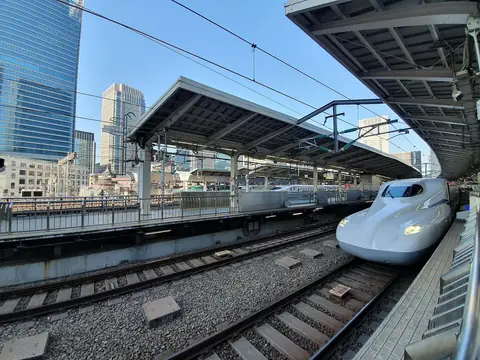
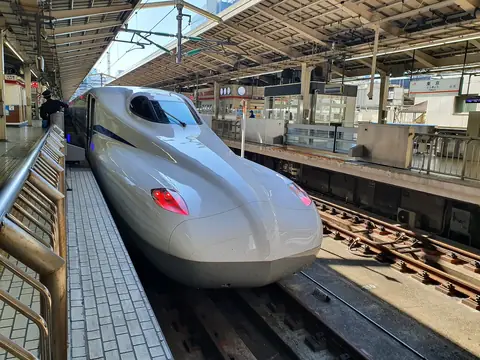
New Camellia links Hakata with Busan; the ordinary return is overnight.
Photograph: ぱちょぴ(pacyopi) — opens in a new tab · CC BY-SA 3.0 — opens in a new tab
Changes: Resized and converted to WebP; displayed with responsive crops. · Original photograph and licence details ↗ — opens in a new tab
Ohori Park gives the Fukuoka stay a quieter waterside morning.
Photograph: Hirho — opens in a new tab · CC BY 4.0 — opens in a new tab
Changes: Resized and converted to WebP; displayed with responsive crops. · Original photograph and licence details ↗ — opens in a new tab
Jagalchi anchors the Busan old-port day on the waterfront.
Photograph: Mobius6 — opens in a new tab · CC BY-SA 4.0 — opens in a new tab
Changes: Resized and converted to WebP; displayed with responsive crops. · Original photograph and licence details ↗ — opens in a new tab