Itineraries · East Java
East Java in 5 days: Bromo, Ijen and Baluran to the Bali ferry
East Java's classic volcano trip runs west to east across the province: Mount Bromo in its sand-filled caldera, the dry savanna of Baluran National Park and the turquoise acid lake of Ijen, ending at Ketapang, where the ferry crosses to Bali. The hard part is not the sights but the clock. Both volcanoes are done in the dark, Bromo for sunrise and Ijen from a trailhead that opens at 01:00, and it is tempting to stack them on consecutive nights with a long drive in between. This route gives each night start a proper night's sleep before it, puts the long transfer on a day of its own and uses Baluran's daytime opening as the buffer between the two.
- Suggested time
- 5 days (4 nights in East Java, the fifth in Bali)
- Where to stay
- Cemoro Lawang (1 night); Banyuwangi town, Kemiren or Ketapang (3 nights); Pemuteran, Bali (onward)
- Season and timing
- Go in the dry season. The Ministry of Tourism gives April to October as the dry months on Java and recommends April to October for clear views at Ijen and July to October for fog-free sunsets at Bromo. The late dry season is also fire season: in September 2026 fires closed Bromo for a week and Ijen for more than three weeks, and burned about 3,372 hectares of Baluran between May and September. From November to March, expect rain, cloud at the viewpoints and more chance of a wasted pre-dawn start.
The short answer
Fly into Surabaya (SUB), go to Probolinggo by train, bus or car and sleep one night at Cemoro Lawang on the Bromo caldera rim. Before dawn on day two, take a jeep to the sunrise hills, then cross the sea of sand and spend the rest of the day travelling east to Banyuwangi. On day three, enter Baluran at its 07:30 opening, rest in the afternoon and leave late at night for the Ijen trailhead at Paltuding. Day four is sunrise on the Ijen rim and a slow afternoon in Kemiren; day five is the Ketapang–Gilimanuk ferry and the short drive to Pemuteran in north-west Bali. Book the Bromo and Ijen tickets online in advance, check volcano alert levels the day before each climb, and do not put Baluran on a Monday.
Why this order, and where the rest goes
Run the route west to east. Surabaya's Juanda airport has direct international flights, Bromo is the nearest of the three volcano areas to it, and Banyuwangi at the far end has the Ijen trailhead, Baluran and the Bali ferry all within reach. Travelling in that direction means you never double back, and the trip finishes at a ferry port rather than at an airport you have to race to.
The route has two night starts, and they shape everything else. Bromo's sunrise is at about 5:30, and the Ministry of Tourism says the walk to the Penanjakan viewpoint from the jeep park takes a little over an hour, so you are up in the small hours. Ijen's climb opens at 01:00, which means a late-night departure from Banyuwangi. Running them on consecutive nights, with the cross-province drive in between, leaves you climbing Ijen's steep path on almost no sleep. Here, the night after Bromo is a full night in a bed in Banyuwangi, and the day before Ijen is Baluran, a park that only opens at 07:30 and is best done by midday, so you can sleep in the afternoon.
Five days is the minimum for that pace. If you can add a day, put it in Banyuwangi after Ijen rather than adding another sight. If you only have four, drop Baluran, not the rest day: the order then becomes Bromo, the transfer, Ijen and the ferry.
Day 1: Surabaya to Cemoro Lawang
The Ministry of Tourism describes three ways to reach the Probolinggo side of Bromo: the train from Surabaya or Malang to Probolinggo station, a bus from Surabaya's Purabaya (Bungurasih) terminal or Malang's Arjosari terminal to Probolinggo terminal, or a private or rented car. From Probolinggo you continue to Cemoro Lawang by rented vehicle or motorbike taxi. With luggage and a five-day schedule, a car with a driver from the airport is the simplest option, and the same driver can take you east the next day.
Sleep at Cemoro Lawang. The ministry calls it the most popular entrance to the park: the village sits high on the caldera rim, has direct access to the sea of sand and plenty of inns. That saves you the midnight drive that sunrise tours from Surabaya or Malang need. From Malang, the ministry puts the Penanjakan viewpoint about two and a half hours away; from Surabaya, it suggests leaving at 23:00–24:00 for the western Wonokitri approach. Spend the late afternoon looking down into the caldera from the rim, eat early and go to bed.
Do the paperwork before you leave home. Bromo's entry tickets are sold online only: since December 2019 the national park has set a daily quota of 2,752 visitors and does not sell tickets on the spot. Its booking guide asks you to pay by virtual account within two hours of booking and then gives you a barcode to scan at the gate. When we checked on 2026-10-03, the park's fee notice listed Rp 255,000 per foreign visitor, including insurance. If you cannot pay by Indonesian virtual account, ask your hotel or driver to book it, and check whether a tour price includes it.
Make time for the local food
What to eat and where to look
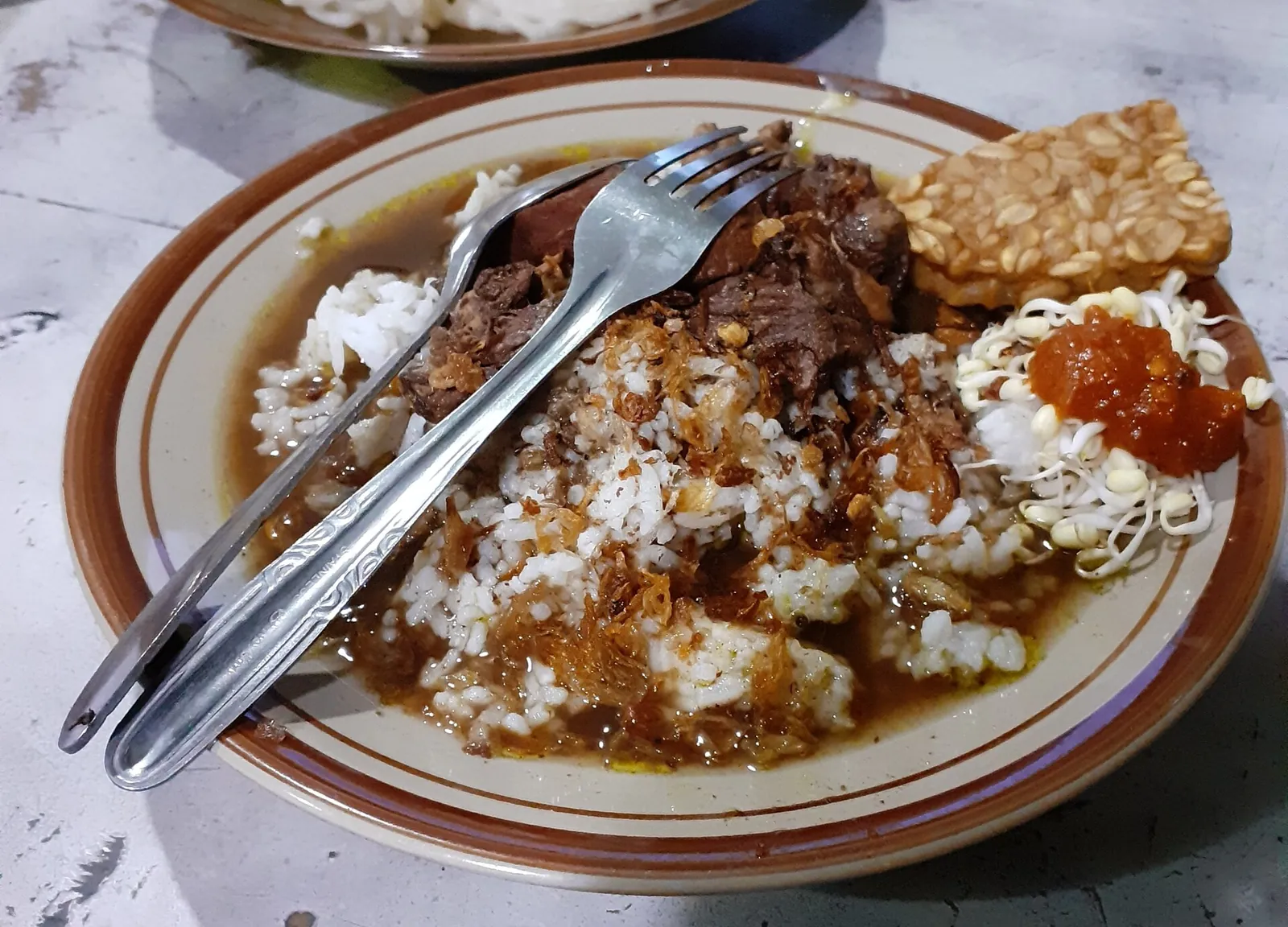
Rawon (black beef soup)
East Java's best-known soup: beef in a spiced broth turned black by kluwek nuts. The Ministry of Tourism names Surabaya, Malang and Pasuruan as its heartland, and Surabaya has its own versions, including rawon setan.
- Where to look
- Warungs in Surabaya and along the road through Pasuruan and Probolinggo on day one.
- Fit it into your day
- Lunch on day one on the way to Bromo, a warm meal before the cold rim.
Beef-based and rich; ask about the sambal if you avoid heat.
Bakso Malang
Malang's meatball soup: fine and sinewy beef balls with tofu, siomay and fried and boiled dumplings in beef broth, according to the ministry's Malang food guide.
- Where to look
- Bakso stalls and shops in Malang, if you start or end there.
- Fit it into your day
- Dinner the night before a Malang jeep tour.
Contains beef and wheat; the toppings vary by shop, so point at what you want.
Sego tempong
Banyuwangi's signature rice plate: warm rice with fried fish, tofu, tempeh and boiled greens, and a sambal so hot that the name refers to it slapping you.
- Where to look
- Local eateries in Banyuwangi town.
- Fit it into your day
- Dinner on day two after the long transfer, or a late lunch after Baluran.
Very spicy by design; ask for the sambal on the side before a night hike.
Ayam kesrut
A sour and spicy soup of free-range chicken with chilli and bilimbi fruit, which the ministry says is found in eateries on the slopes of Mount Ijen.
- Where to look
- Warungs on the Ijen road and in the Banyuwangi area.
- Fit it into your day
- Lunch on day four, after the hike and a sleep.
Sour and spicy; ask for less chilli if needed.
Sego cawuk
A Banyuwangi breakfast rice dish with grated coconut, corn and pindang broth, topped with salted fish or egg.
- Where to look
- Morning stalls in Banyuwangi.
- Fit it into your day
- Breakfast on day five before the ferry.
Contains fish; it is a light dish, so add a snack for the crossing.
Day 2: Bromo at sunrise, then the long drive east
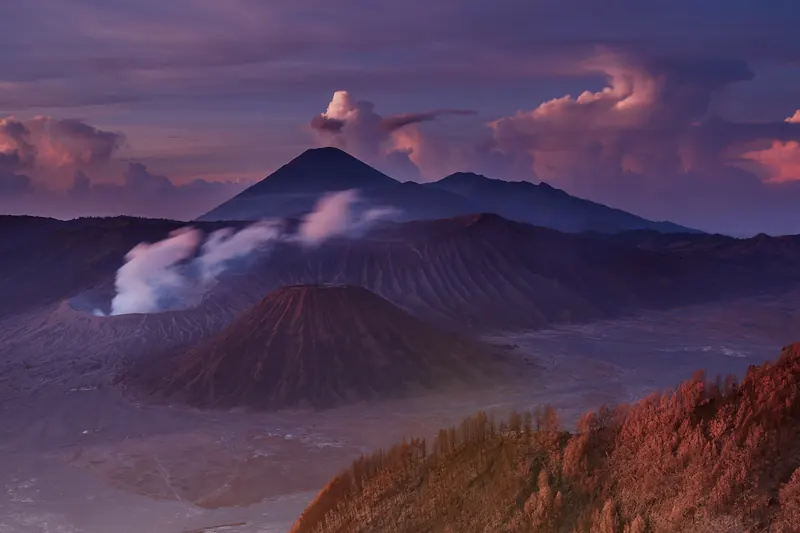
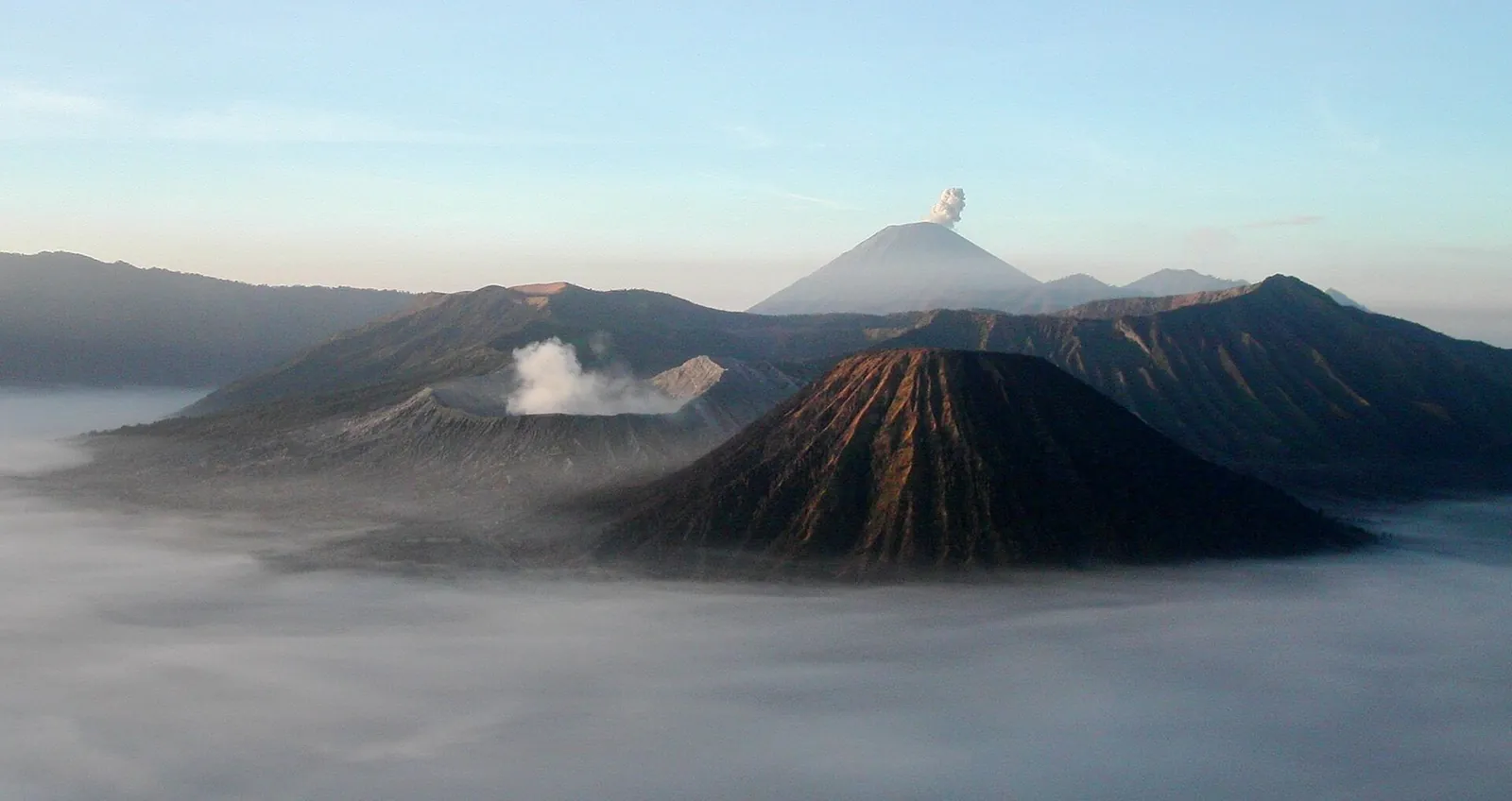
Take an official jeep to Penanjakan or one of the other sunrise hills on the rim, aiming to be in place before about 5:30. The postcard view is from Penanjakan, at 2,770 metres according to the ministry: Bromo steaming in front, Batok beside it and Semeru behind. Dress for cold, windy air on the rim before dawn. Afterwards, drive or walk down onto the sea of sand to the foot of Bromo.
Check what is open the day before. When we checked on 2026-10-03, Indonesia's volcanology agency (PVMBG, on MAGMA Indonesia) listed Bromo at Level II (Waspada). Its daily report asked visitors not to enter within 1 km of the active crater and warned that steam-driven eruptions can happen suddenly, without clear warning signs. That radius covers the crater rim, so do not build the morning around climbing the stairs. The park also closes at short notice: after savanna fires it closed every entrance from 12 September 2026 and reopened Bromo on 19 September. Do not light fires or drop cigarette ends on the dry grass.
By late morning, start east. This is the longest transfer of the trip, across most of the province to the Banyuwangi end, and the reason the day has nothing else in it. A car with a driver is the most practical option. The alternative is the train: KAI's Probowangi service runs between Surabaya Gubeng and Ketapang and stops at Probolinggo, and the Tawangalun (from Malang) and Sri Tanjung (from Yogyakarta) also end at Ketapang via Probolinggo. Check current departures on KAI's own site and book ahead. Banyuwangi Kota station, on the west edge of town, is the stop for Banyuwangi itself; Ketapang is beside the ferry port, about 10 km north of the centre. Eat a proper dinner and sleep a full night.
Day 3: Baluran in the morning, sleep in the afternoon
Baluran National Park is on the main Situbondo–Banyuwangi road, with its main gate at Batangan in Wonorejo village (kilometre 35 of that road, according to the park). When we checked on 2026-10-03, the park's website listed opening hours of 07:30 to 16:00 and admission for foreign visitors of Rp 205,000, sold only at the gate, with fines of five times the fare for anyone found without a ticket. Since 1 December 2025 the park has closed every Monday. Bring your passport, and leave the drone at the hotel: drones are banned throughout the park without special permission.
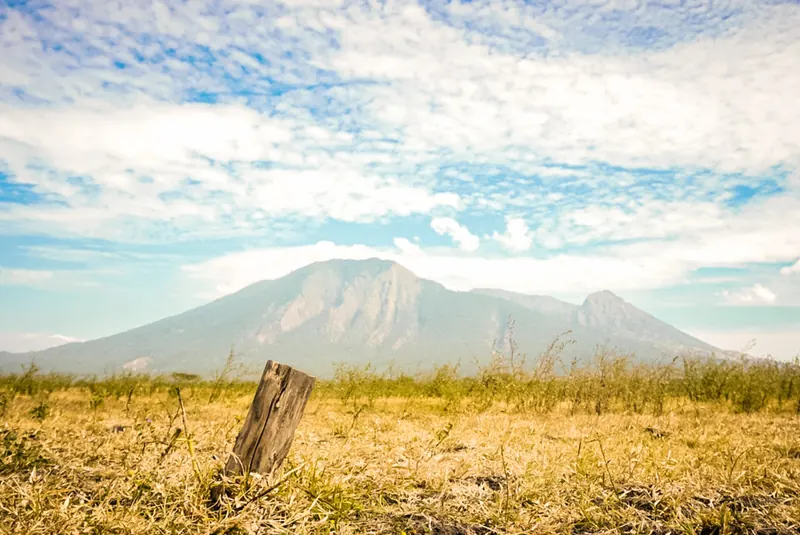
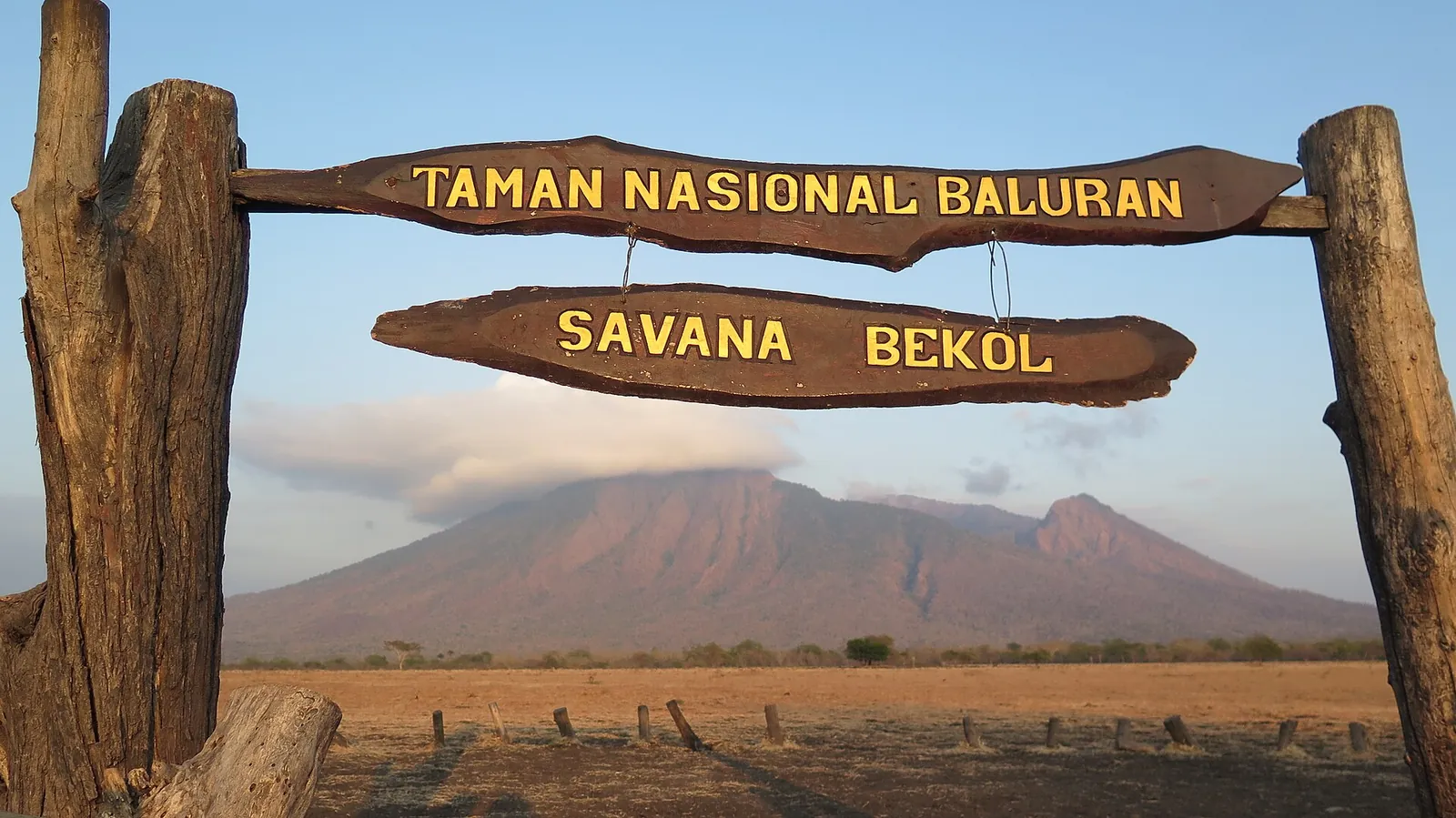
Be at the gate at opening time. The ministry puts the drive from Batangan to the Bekol savanna at about 12 km and 45 minutes. Bekol is the open grassland with the extinct Baluran volcano behind it, where the ministry describes banteng, deer and peafowl in the open, though sightings are never guaranteed. In the rainy season, the ministry notes, the banteng retreat into the forest. Continue to Bama on the coast, with its mangrove forest, and keep food out of sight of the macaques. The savanna has little shade, so the first hours after opening are the most comfortable; plan to be out by midday.
Then go back to your room and sleep. If day three falls on a Monday, swap the order: rest and visit Kemiren on day three, hike Ijen that night, and visit Baluran on the morning of day five on your way to the ferry. Fires burned about 3,372 hectares of the park between May and September 2026, according to the park, so check its website for closures the day before.
Night 3 to Day 4: Ijen at sunrise, Kemiren in the afternoon
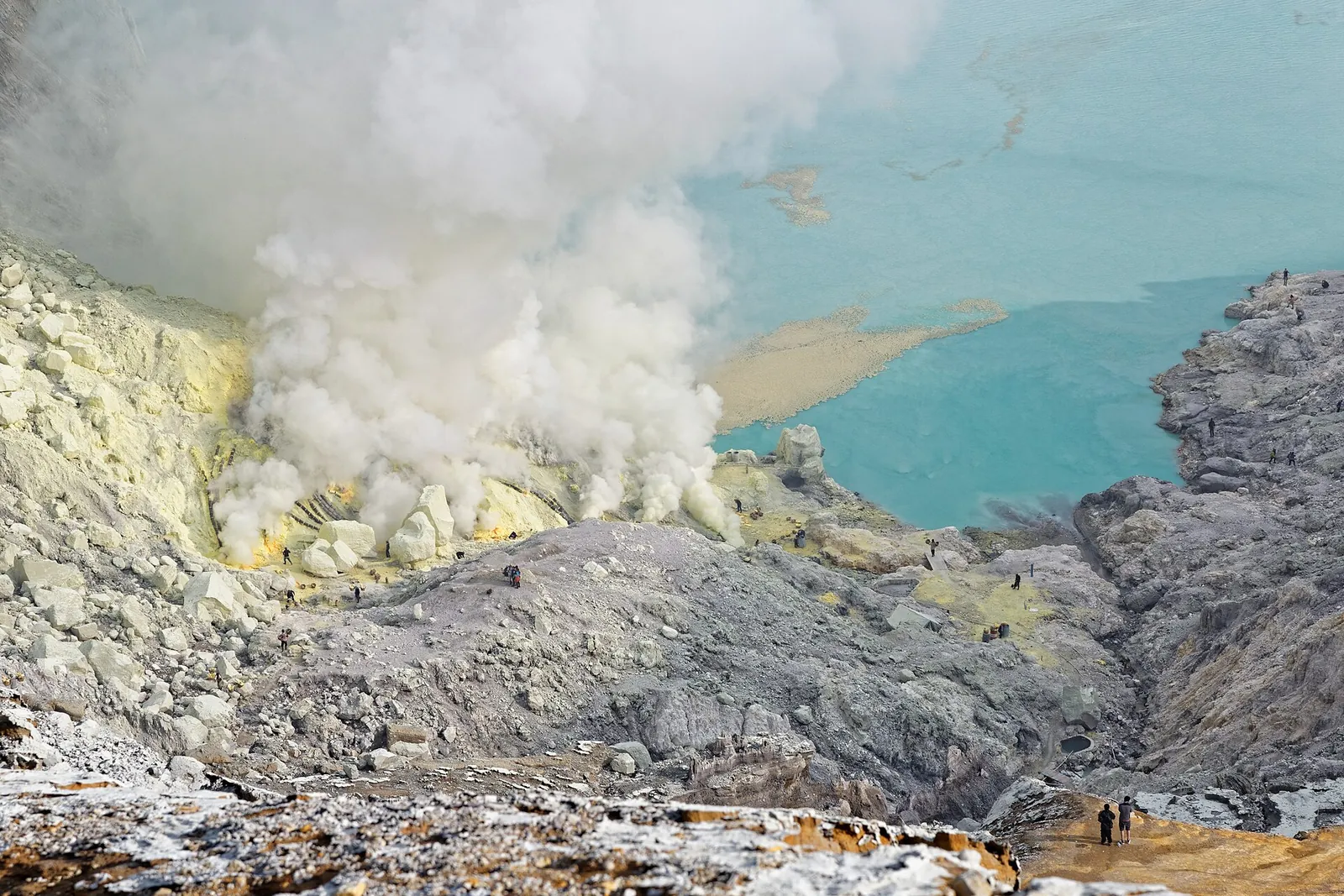
The Ijen hike starts at Paltuding Post. When we checked on 2026-10-03, the Ministry of Tourism's Ijen Crater page said the climb opens daily at 01:00, or at 03:00 during restriction periods. The ministry describes the trail as 3 km to the crater rim in one place and about 3.8 to 4 km in two to three hours in another; take the longer figure as your plan. The ministry also warns that the road up from the Banyuwangi side can be very steep and badly deteriorated and says a jeep helps, which in practice means a driver or a tour with pick-up. Go with a guide: the ministry strongly recommends guided visits.
Buy the ticket online in advance. When Ijen reopened on 28 September 2026 after a forest-fire closure that began on 4 September, its head told ANTARA that tickets were on sale through the Forestry Ministry's site, ayoketamannasional.kehutanan.go.id, and that visitors must bring a torch, warm clothing and a protective mask. The ministry says the air is around 10°C and can drop to 2°C. Bring a proper respirator rather than a cloth mask, and turn back if the plume blows onto the path.
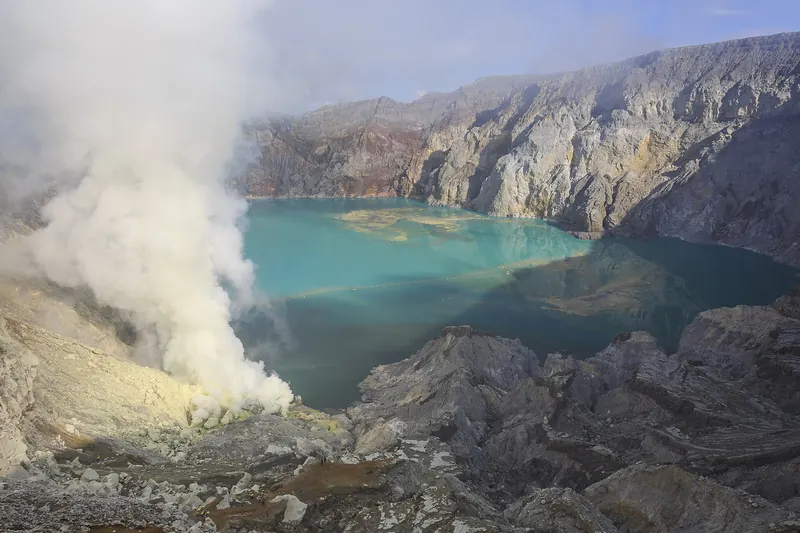
Decide about the blue fire before you start. The flames burn at the sulphur vents on the crater floor, and the ministry suggests being there between about 2:00 and 4:00. But when we checked, PVMBG's report for 2 October 2026 listed Ijen at Level I (Normal) and still advised visitors not to go down to or approach the crater floor, warning of toxic gas and possible collapse of the crater walls. This route is planned around sunrise from the rim over the turquoise lake; if a guide offers to take you down, remember that the agency advises against it.
You will be back in Banyuwangi by late morning. Sleep, then spend the late afternoon in Kemiren, the Osing village that the ministry describes as being on the way to Ijen, with its own batik and traditionally processed coffee. Have an early night: tomorrow is a travel day, but an easy one.
Day 5: the ferry to Bali and on to Pemuteran
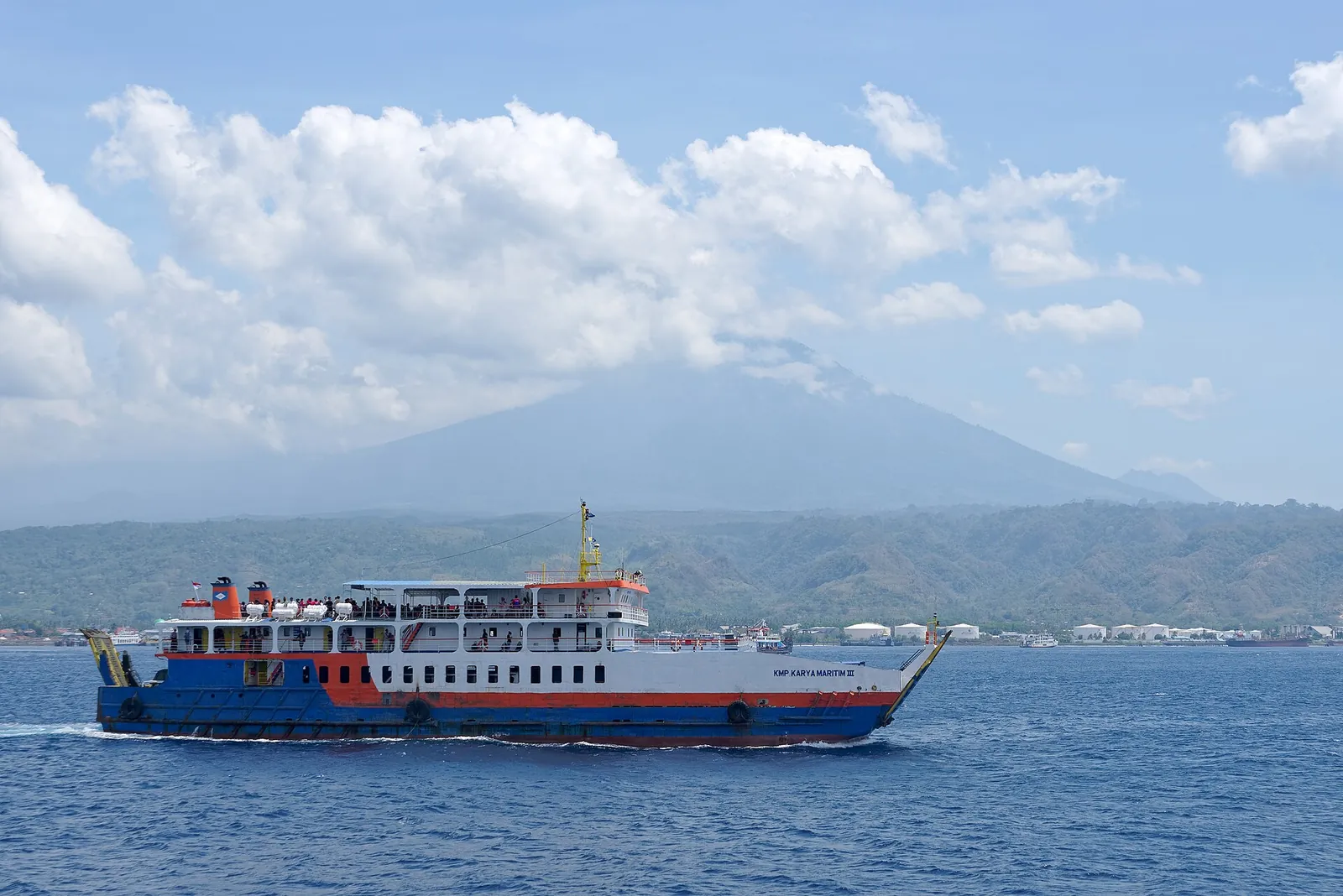
The ferry from Ketapang to Gilimanuk on Bali's western tip is run by the state ferry company ASDP. Its online ticketing service, Ferizy, sells e-tickets that must be checked in within the time shown on the ticket, and asks for an identity document at check-in. Wikivoyage describes ferries running around the clock, roughly every half hour, with a crossing of about 45 minutes plus loading time; check the current schedule on Ferizy rather than relying on that.
Before you arrive, pay Bali's tourist levy: when we checked on 2026-10-03, the provincial Love Bali site listed IDR 150,000 for international visitors, paid online with the voucher sent by email. From Gilimanuk, Pemuteran on the north-west coast is one of the nearest places to stay, a 45-minute to one-hour drive according to Wikivoyage, with dive centres and West Bali National Park close by. That is a far gentler first night in Bali than the drive of about four hours to Denpasar that Wikivoyage describes.
The five days at a glance
This is an editorial suggestion, not a timetable. Check alert levels, park notices and transport times before each move.
- Day 1 — Surabaya to Bromo: land at SUB, train, bus or car to Probolinggo, on to Cemoro Lawang, caldera rim in the afternoon, early night. Night: Cemoro Lawang.
- Day 2 — Bromo sunrise and the transfer: jeep to the sunrise hills before 5:30, the sea of sand, then the long drive or train east. Night: Banyuwangi (full night's sleep).
- Day 3 — Baluran: Batangan gate at 07:30, Bekol and Bama, out by midday, sleep in the afternoon. Not on a Monday. Night: short sleep, then the late-night drive to Paltuding.
- Day 4 — Ijen: climb from 01:00, sunrise on the rim, back by mid-morning, rest, Kemiren in the afternoon. Night: Banyuwangi, Kemiren or Ketapang.
- Day 5 — To Bali: Ketapang–Gilimanuk ferry, about an hour by road to Pemuteran. Night: Pemuteran.
Variations: starting in Malang, adding days, travelling with a tour
From Malang. Malang has its own airport (MLG) and is the start of most Bromo jeep tours; the ministry puts Penanjakan about two and a half hours away. If you start there, add a night: sleep in Malang, do Bromo on a jeep tour that leaves in the middle of the night, sleep in Malang again and make the long transfer east the next day, so the rest before Ijen survives. Our Malang guide covers the city itself.
With a sixth day. Put it after Ijen, in Banyuwangi or Pemuteran. A spare day also protects the route against a closure: Bromo, Ijen and Baluran each closed at short notice in 2026, and a missed volcano is easier to recover when the next day is free.
With a tour. Many Bromo–Ijen packages start in Surabaya, Malang or Bali. Before you book, ask how many hours of sleep there are between the two night starts, whether the Bromo and Ijen tickets are included, whether the Ijen guide plans to go down to the crater floor, and what happens if a park is closed.
Practical questions
Is five days enough for Bromo, Ijen and Baluran?
Yes, if you sleep one night at Cemoro Lawang and three around Banyuwangi, and treat the cross-province drive as a day of its own. With four days, drop Baluran rather than the full night's sleep between the two volcanoes.
Can I do Bromo and Ijen on consecutive nights?
You can, but it means a pre-dawn start, a long drive and a midnight start again with little sleep. This route puts a full night in Banyuwangi and Baluran's daytime visit between them, so you reach the Ijen trail rested.
Do I need to book tickets in advance?
Yes for the volcanoes. Bromo's tickets are sold online only under a daily quota, and Ijen's were being sold online through ayoketamannasional.kehutanan.go.id when it reopened in September 2026. Baluran, when we checked, sold tickets only at the gate.
Can I still see Ijen's blue fire?
The flames are at vents on the crater floor, and the volcanology agency advised visitors not to go down to or approach the crater floor when we checked, even at the lowest alert level. Plan for sunrise from the rim and decide with your guide before you start.
What if a park is closed when I get there?
It happens: in September 2026 fires closed Bromo for a week and Ijen for more than three weeks, and Baluran closes every Monday. Check MAGMA Indonesia and each park's notices the day before, and keep a spare day if you can.
Should I end in Bali or fly out of Banyuwangi?
The ferry from Ketapang to Gilimanuk makes Bali the natural finish, with Pemuteran about an hour from the port. Banyuwangi also has an airport (BWX) with flights from Surabaya and Bali, so you can fly out instead if Bali is not part of your trip.
Sources and checks before you travel
Reference sources for the version dated 3 October 2026. Confirm opening times, access, transport and conditions for your travel dates.
- Indonesia Travel (Ministry of Tourism): Bromo Tengger Semeru National Park - Mount Bromo ↗ — opens in a new tab
- Indonesia Travel: Mount Bromo (Gunung Bromo) ↗ — opens in a new tab
- Indonesia Travel: Bromo Huge Adventures ↗ — opens in a new tab
- Bromo Tengger Semeru National Park: online booking is required ↗ — opens in a new tab
- Bromo Tengger Semeru National Park: fee notice under PP 36/2024 ↗ — opens in a new tab
- MAGMA Indonesia (PVMBG): volcano activity levels ↗ — opens in a new tab
- MAGMA Indonesia (PVMBG): Bromo activity report, 3 October 2026 ↗ — opens in a new tab
- MAGMA Indonesia (PVMBG): Ijen activity report, 2 October 2026 ↗ — opens in a new tab
- ANTARA: TNBTS closes all Bromo tourism to speed up firefighting ↗ — opens in a new tab
- ANTARA: TNBTS reopens Bromo after the fires ↗ — opens in a new tab
- Indonesia Travel: Ijen Crater ↗ — opens in a new tab
- Indonesia Travel: The Magic of Kawah Ijen ↗ — opens in a new tab
- ANTARA: East Java's Ijen Crater to reopen to tourists following wildfires ↗ — opens in a new tab
- Taman Nasional Baluran (official): ticket information ↗ — opens in a new tab
- Taman Nasional Baluran (official): FAQ ↗ — opens in a new tab
- Taman Nasional Baluran (official): location and access ↗ — opens in a new tab
- Taman Nasional Baluran (official): announcements ↗ — opens in a new tab
- Taman Nasional Baluran (official): forest fire area, September 2026 ↗ — opens in a new tab
- Indonesia Travel: Baluran National Park ↗ — opens in a new tab
- Indonesia Travel: Banyuwangi ↗ — opens in a new tab
- Indonesia Travel: Kemiren ↗ — opens in a new tab
- Indonesia Travel: weather, climate and seasons ↗ — opens in a new tab
- Indonesia Travel: Rawon ↗ — opens in a new tab
- Indonesia Travel: Makanan khas Malang ↗ — opens in a new tab
- Indonesia Travel: 13 Banyuwangi foods you must try ↗ — opens in a new tab
- Wikipedia (Indonesian): Probowangi train ↗ — opens in a new tab
- KAI (Kereta Api Indonesia) ↗ — opens in a new tab
- Wikivoyage: Banyuwangi ↗ — opens in a new tab
- Ferizy (ASDP Indonesia Ferry): online ferry tickets ↗ — opens in a new tab
- Love Bali (Bali provincial government): tourist levy ↗ — opens in a new tab
- Wikivoyage: Pemuteran ↗ — opens in a new tab
Does this experience fit your route?
The one booking that shapes this route is the driver or tour for the Bromo–Banyuwangi transfer and the Ijen night. Compare sleep, tickets and closure terms before you choose.
Check dates and details on Viator ↗ — opens in a new tabAffiliate link · Book with ViatorPhoto credits
The Tengger caldera at sunrise: Bromo's steaming crater, the ribbed cone of Batok and Semeru on the horizon
Photograph: Thomas Hirsch (= user Ravn ) — opens in a new tab · CC BY-SA 3.0 — opens in a new tab
Changes: Resized and converted to WebP; displayed with responsive crops. · Original photograph and licence details ↗ — opens in a new tab
The Ijen crater from the rim: the acid lake, the sulphur vents and the path the miners use
Photograph: Oakenchips — opens in a new tab · CC BY-SA 4.0 — opens in a new tab
Changes: Resized and converted to WebP; displayed with responsive crops. · Original photograph and licence details ↗ — opens in a new tab
The Savana Bekol sign in Baluran National Park, with the extinct Baluran volcano behind
Photograph: EkoKintokoKusumo — opens in a new tab · CC BY-SA 4.0 — opens in a new tab
Changes: Resized and converted to WebP; displayed with responsive crops. · Original photograph and licence details ↗ — opens in a new tab
A ferry on the Bali Strait between Ketapang (Banyuwangi) and Gilimanuk (Bali)
Photograph: Jakub Hałun — opens in a new tab · CC BY-SA 4.0 — opens in a new tab
Changes: Resized and converted to WebP; displayed with responsive crops. · Original photograph and licence details ↗ — opens in a new tab
Rawon with rice at a roadside warung in Leces, Probolinggo
Photograph: Ardhan Febriansyah — opens in a new tab · CC BY-SA 4.0 — opens in a new tab
Changes: Resized and converted to WebP; displayed with responsive crops. · Original photograph and licence details ↗ — opens in a new tab