Itineraries · Bali
Bali in 7 days: Ubud and the south coast, with one day trip
A week in Bali goes wrong when it is planned as a list of famous names. The island's sights are scattered, the roads in the south are slow, and a new hotel every second night turns the trip into a series of car journeys. This route uses two bases, Ubud inland and the south coast by the airport, and keeps one day for a longer trip into the mountains or the east. You change hotel once, and every other day starts and ends in the same place.
- Suggested time
- 7 days (6 or 7 nights)
- Where to stay
- Ubud for nights 1–4; Uluwatu, Jimbaran or Sanur on the south coast for nights 5–7
- Season and timing
- The Ministry of Tourism gives Bali's dry season as April to October and the wet season as November to March. Avoid booking a flight on Nyepi, the Day of Silence in March or April, when the airport closes for 24 hours.
The short answer
Spend the first four nights in Ubud and the last three on the south coast. In Ubud, give one day to the town on foot, one to the rice terraces and the temples of the Tampaksiring road, and one to a single day trip: Mount Batur at sunrise if you are fit, or Besakih and the Sidemen valley if you are not. Then move south, choosing Uluwatu or Jimbaran for cliffs, surf and the kecak at sunset, or Sanur for calm water and the boats to Nusa Penida. Hire a car with a driver for the transfer and the day trip; ending near the airport keeps the last day simple.
Two bases, one change of hotel
Put Ubud first and the coast last. Ubud is where the busy days are: early starts for the terraces, temple visits and dance performances after dark. The south coast is where you slow down, and it is next to I Gusti Ngurah Rai International Airport, so the final morning is a short ride rather than a long drive across the island. The Ministry of Tourism puts Jimbaran about 15 minutes from the airport, Sanur about 20 minutes by taxi and Uluwatu temple 45 minutes to an hour, depending on traffic.
In Ubud, decide between the centre and the fields. The ministry's Ubud page notes that you can stay right in town, close to the restaurants and performances, or off the centre among the rice fields, where it is quieter but you will need a ride in. For a four-night stay with evening dance and dinner on foot, the centre or the Padangtegal side near the Monkey Forest is the practical choice.
On the coast, choose by what you want from the last three days. The Uluwatu and Pecatu area on the Bukit Peninsula is for cliff views, surf and the temple; Jimbaran has a reef-protected, 4 km bay and the beach seafood dinners; Sanur has shallow lagoons sheltered by offshore reefs, a paved beachfront path of about 5 km and the fast boats to the Nusa islands. Pick one of them: they are different trips, and the drive between the Bukit and Sanur eats into a short stay.
Days 1–3: Ubud on foot, then the terraces and the Tampaksiring temples
Treat the arrival day as a transfer. No official journey time from the airport to Ubud is published, and the ministry warns that prepaid airport cabs can be expensive; a hotel pick-up or a pre-booked driver is the easiest option after a long flight. If you land late at night, there is no shame in heading straight to bed and starting the next morning.
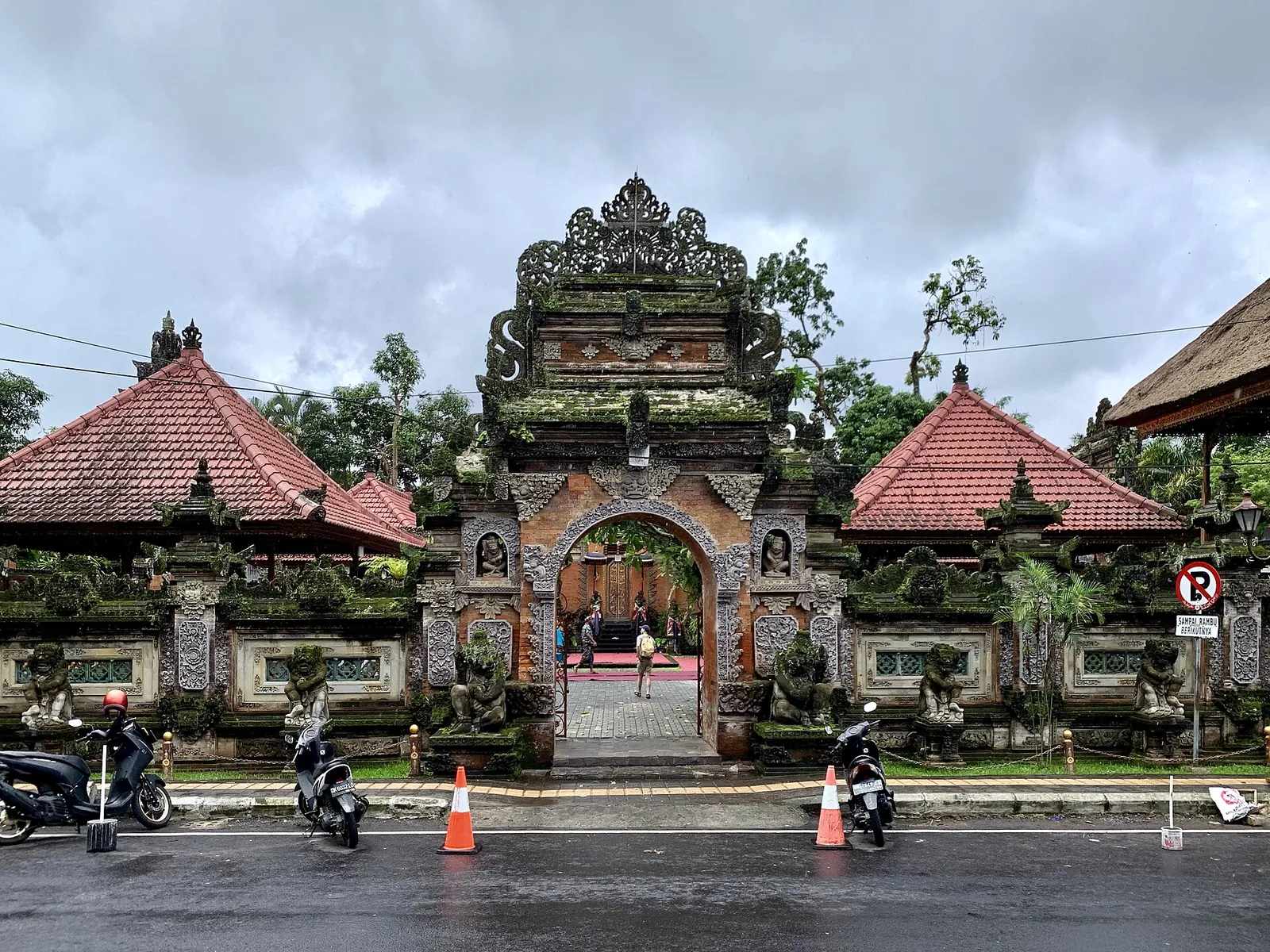
Give day 2 to the town itself. When we checked on 2026-10-03, the Monkey Forest's official site listed opening hours of 9:00 to 18:00 with last entry at 17:00, and admission of IDR 130,000 for adults and IDR 100,000 for children. Arrive at opening time, keep your belongings secure from the macaques, then walk up to the palace and the market. Museum Puri Lukisan, with Balinese painting from the classical styles to modern work by artists such as I Gusti Nyoman Lempad, fills the hot middle of the day. In the evening, see a performance: the ministry lists Pura Dalem Ubud and the Padang Tegal stage among the places where the kecak is staged.
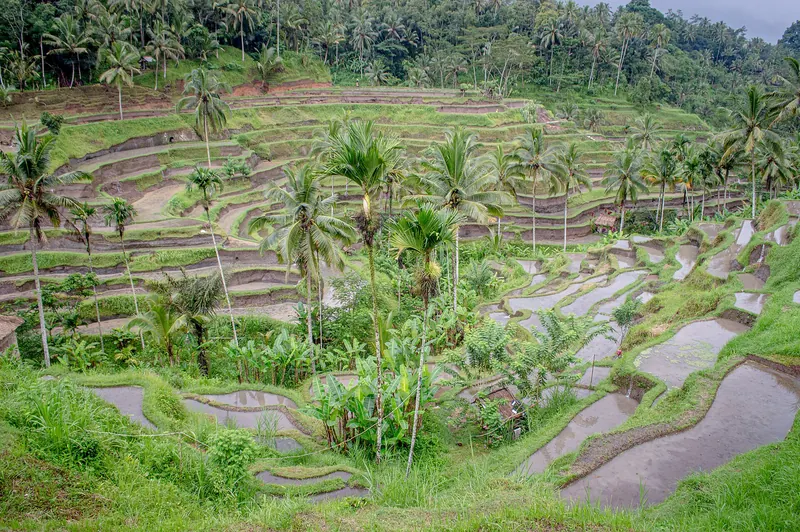
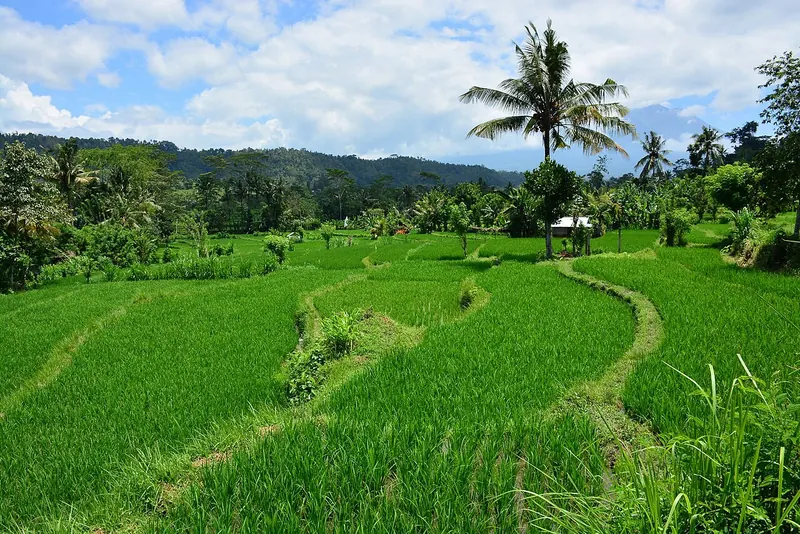
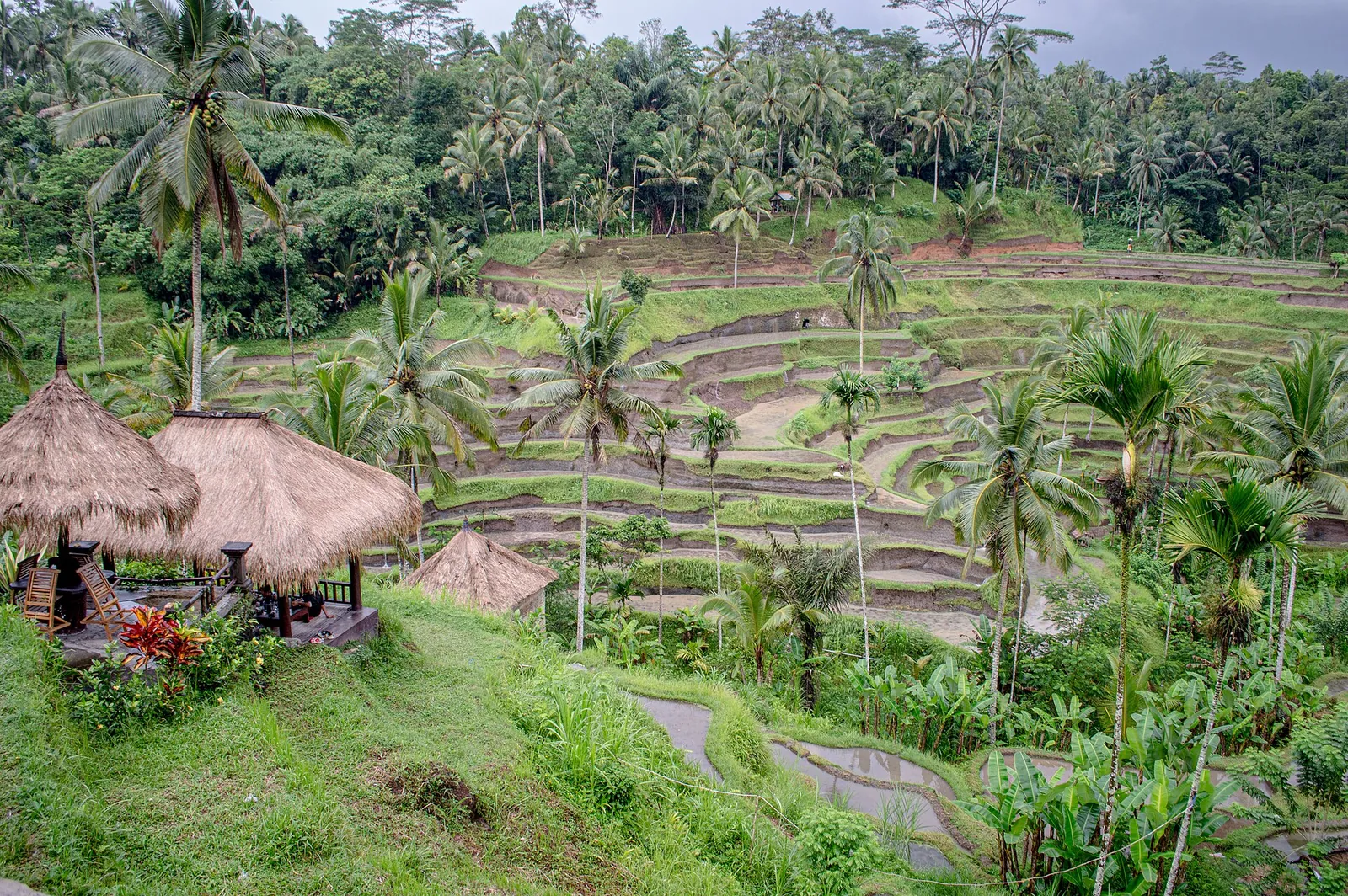
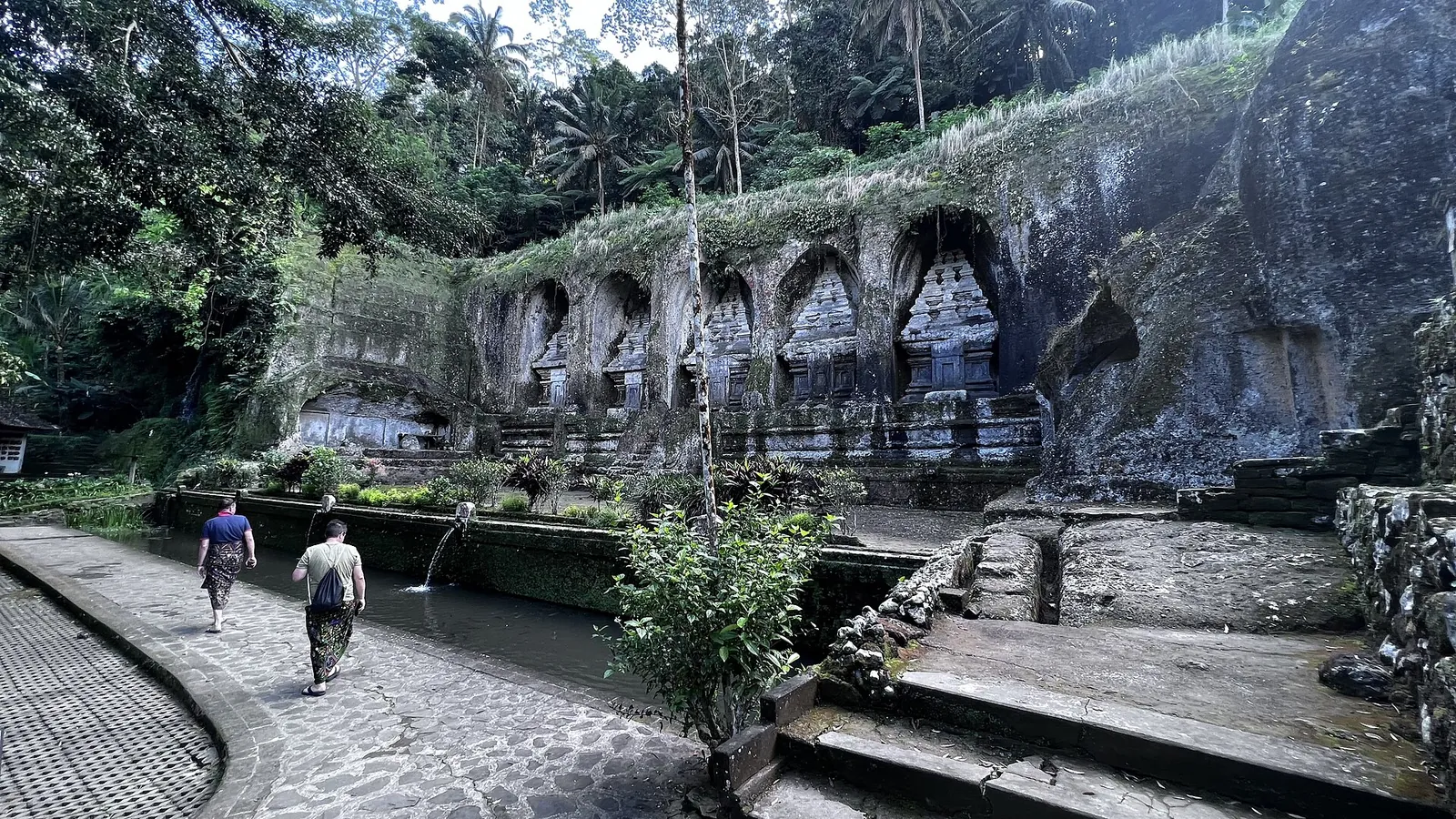
Day 3 is for the countryside, starting early. Tegallalang's terraces are about a 20-minute drive north of Ubud according to the ministry, and it suggests 30 minutes to an hour and a half to walk down and across them; bring cash for the small local payments. From there, Gunung Kawi and Tirta Empul sit close together in Tampaksiring, about half a mile apart. Gunung Kawi's 11th-century shrines are carved into the cliffs of the Pakerisan valley and reached by around 300 steps. At Tirta Empul, the melukat purification in the spring-fed pools is open to visitors of any faith; when we checked, the ministry listed adult entry at IDR 50,000, with sarongs available to borrow or rent at the entrance. Bring a change of clothes if you plan to go into the water.
If you prefer walking to driving, swap Tegallalang for the Campuhan ridge path just outside town, which the ministry recommends for an easy walk among the green hills when the day is cooler.
Make time for the local food
What to eat and where to look
Babi guling (spit-roasted pig)
Bali's signature feast dish: a whole pig marinated in local spices and roasted until the skin is crisp, served with rice, lawar and Balinese sambal.
- Where to look
- Specialist warungs in central Ubud; the ministry names Babi Guling Ibu Oka on Jalan Suweta, near the palace.
- Fit it into your day
- A lunch on your Ubud town day, close to the palace.
Pork, often served with offal and blood-based lawar; not suitable for Muslim, Hindu-vegetarian or vegetarian diets.
Sate lilit
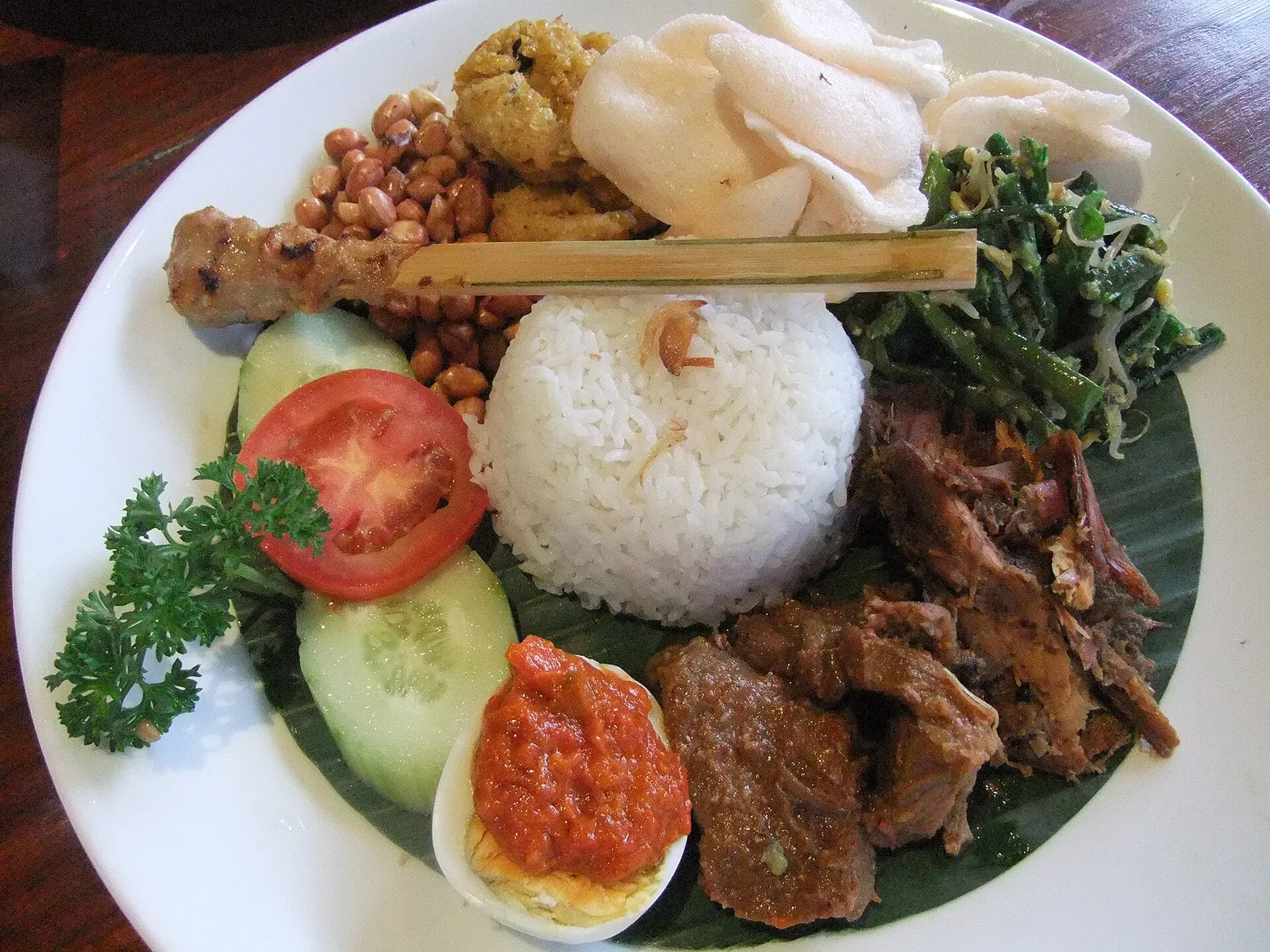
Minced fish, chicken or pork mixed with bumbu Bali spice paste and coconut, wrapped around a bamboo or lemongrass stick and grilled over charcoal. Fish versions are more typical on the coast, pork and chicken inland.
- Where to look
- Warungs serving nasi campur, and coastal restaurants in Jimbaran and Sanur for the fish version.
- Fit it into your day
- As part of a nasi campur lunch in Ubud, then fish sate lilit on the coast in the second half of the week.
Ask which meat is used; sambal matah served alongside is raw and often very hot.
Ayam betutu and bebek betutu
Chicken (ayam) or duck (bebek) stuffed and rubbed with a spice paste of shallots, garlic, turmeric, galangal, kencur, candlenut and chilli, then wrapped in banana leaves and slow-cooked for hours until it falls apart.
- Where to look
- Balinese restaurants and warungs around Ubud and the south coast.
- Fit it into your day
- A sit-down dinner after the temple day, when you have time to eat slowly.
Usually spicy and contains shrimp paste (terasi).
Grilled seafood at Jimbaran
Snapper, clams, crab, lobster or squid chosen from the day's catch and grilled for dinner at tables set out on the sand of Jimbaran Bay as the sun goes down.
- Where to look
- The beachfront restaurants along Jimbaran Bay; the ministry names Menega Cafe and Bawang Merah Beachfront Restaurant.
- Fit it into your day
- One sunset dinner on the south coast, on the evening you are not at the Uluwatu kecak.
You pick from the catch, so ask the price of what you have chosen before it goes on the grill.
Lawar
A mix of minced meat, vegetables, grated coconut and spices, served with rice at ceremonies and in everyday meals. Red lawar (lawar merah) adds fresh blood; white lawar (lawar putih) does not.
- Where to look
- Babi guling warungs and nasi campur stalls across the island.
- Fit it into your day
- Eat it as a side dish with rice at lunchtime, when it is freshest.
Ask whether it is lawar merah if you avoid blood; the meat may be pork, chicken or duck.
Day 4: one day trip, chosen by your legs
Keep one day for something bigger, and choose only one of these. Both are long days by car, and doing two would undo the point of having a base.
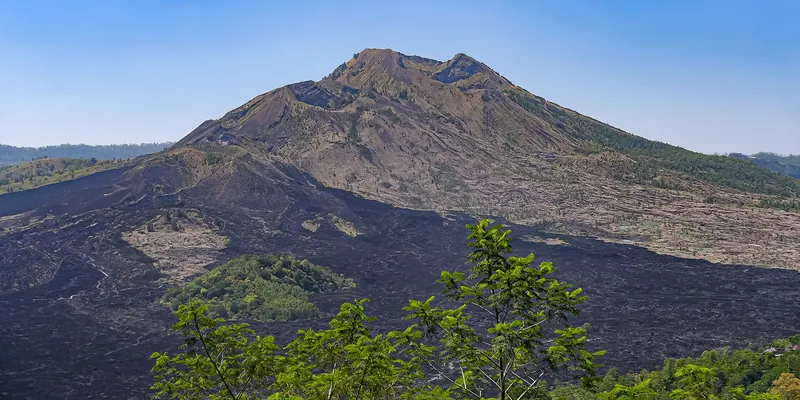
Mount Batur at sunrise suits fit travellers who do not mind a night-time start. The summit stands at 1,717 m, and the ministry's Kintamani guide describes the view of a sea of clouds with Mount Agung on the horizon, and warns that the top is very cold before the sun is up: bring a warm layer. Expect to leave Ubud in the dark; a guided tour with hotel pick-up is the simplest way to arrange it. If you would rather not hike, the ministry suggests watching sunrise from Pinggan village, arriving around 5:30 to 6:00, and seeing Lake Batur and the caldera afterwards. Check the volcano's alert level on MAGMA Indonesia before you go; on 2026-10-03 it listed both Batur and Agung at Level I (Normal).
Besakih and Sidemen suit everyone else. Pura Besakih, on the slopes of Mount Agung, is about two hours from Ubud by the ministry's estimate, and it advises coming in the morning when it is cooler and calmer. When we checked, it listed entry at Rp60,000 to 100,000 including sarong and sash, which every visitor must wear. Spend the afternoon in the Sidemen valley, where the Sangkan Gunung tourism village lists rice fields, hills, a songket weaving group and three short trekking routes of 30 minutes, 40 minutes and an hour. If the valley appeals, our Sidemen guide covers staying overnight instead.
Days 5–7: the south coast
Move south on the morning of day 5. The ministry puts the drive from Ubud to Uluwatu temple at about an hour and a half to two hours, and Sanur at about 45 minutes. If you have time before leaving, Goa Gajah in Bedulu, the 11th-century cave sanctuary with a carved face over its entrance and ancient bathing pools, makes a good last stop near Ubud.
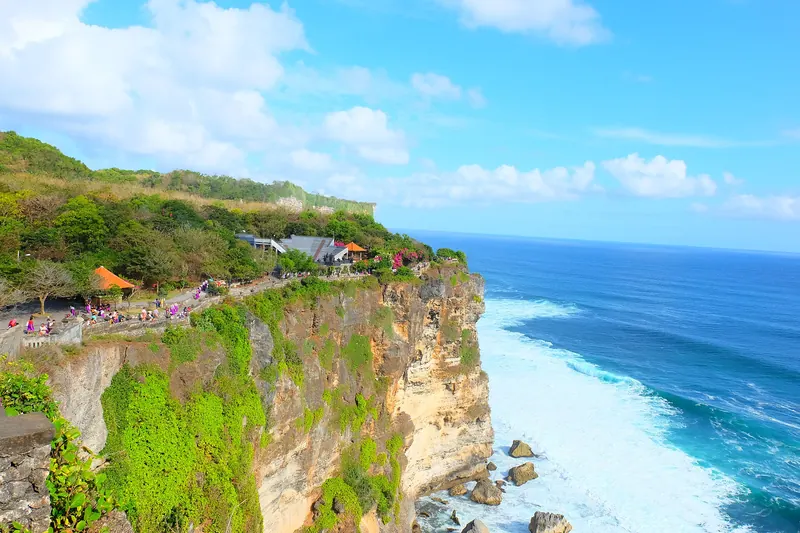
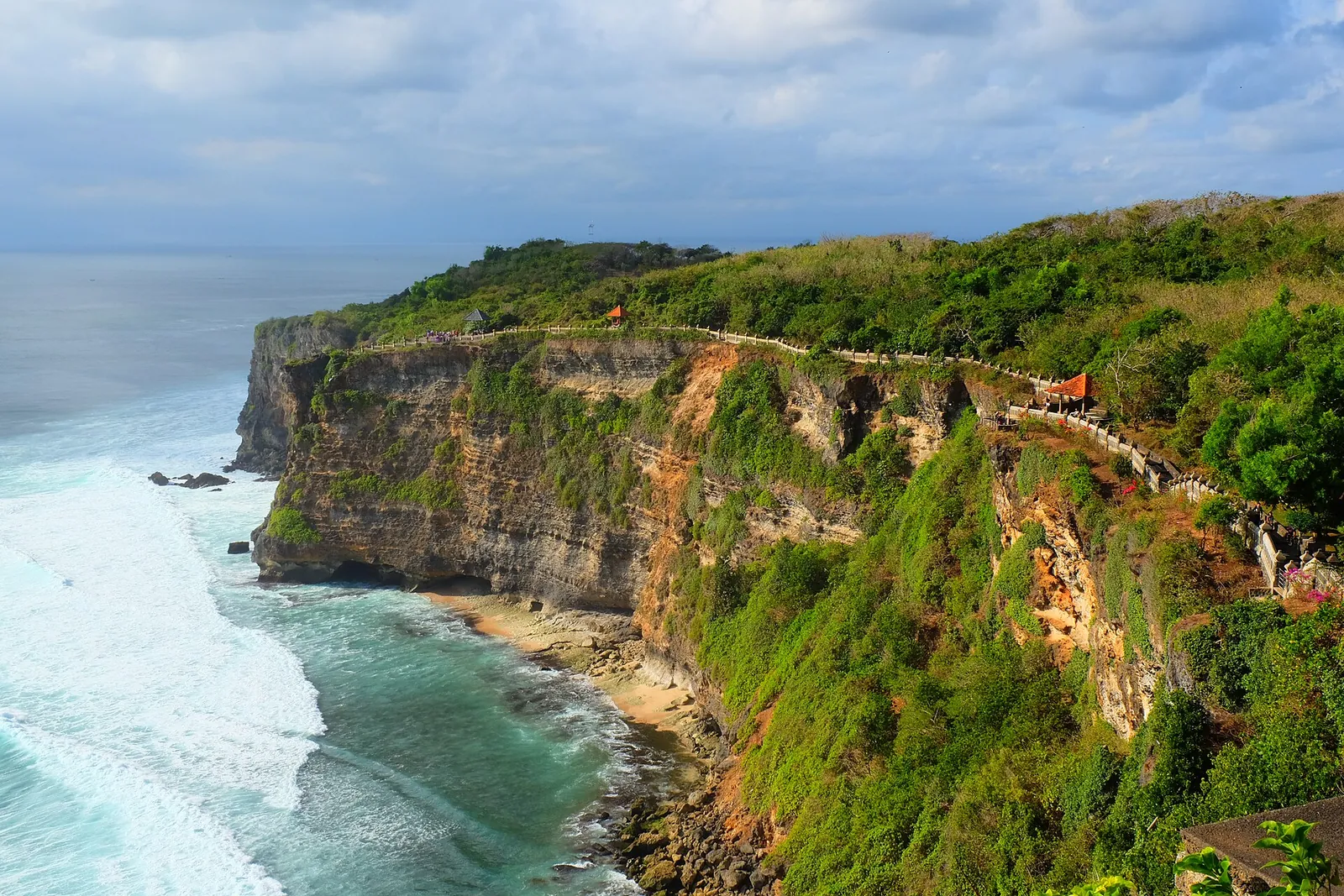
On the Bukit, plan one late afternoon for Pura Luhur Uluwatu, on a cliff above the Indian Ocean, and the kecak that starts around 5 pm. When we checked on 2026-10-03, the ministry listed temple entry for foreign adults at IDR 100,000 (sarong and shawl included) and a separate kecak ticket for foreign visitors at IDR 200,000, as 2025 prices. Hold on to glasses and hats near the monkeys, and leave early, because traffic builds before the performance. The remaining day is for the coves below the cliffs, or a seafood dinner on the sand at Jimbaran.
If you chose Sanur, use day 6 for Nusa Penida. The ministry lists fast boats from Sanur, Kusamba and Padang Bai, a crossing of 30 to 45 minutes, and advises booking well ahead in the holiday season. A single day only covers one side of the island; our Nusa Penida guide explains how to split it if you stay longer. Keep day 7 light either way: a swim, a walk along the Sanur beach path or a long lunch, then the airport.
The route day by day
This is an editorial suggestion, not a timetable. Journey times are the Ministry of Tourism's estimates and depend heavily on traffic; check opening days for each place you choose.
- Day 1 — Arrival: land at Ngurah Rai (DPS) and transfer to Ubud by pre-booked car or hotel pick-up. Dinner within walking distance.
- Day 2 — Ubud on foot: the Monkey Forest at 9:00, the palace and market, Museum Puri Lukisan at midday, a dance performance in the evening.
- Day 3 — Terraces and temples: Tegallalang early, then Gunung Kawi and Tirta Empul in Tampaksiring; back in Ubud for a late lunch and a rest.
- Day 4 — Day trip: Mount Batur at sunrise with a guide, or Besakih in the morning and the Sidemen valley in the afternoon.
- Day 5 — Move south: Goa Gajah before you leave if time allows; check in on the Bukit and see Uluwatu temple and the kecak at sunset (or settle into Sanur).
- Day 6 — Coast: beaches below the Bukit cliffs and dinner at Jimbaran, or a day trip to Nusa Penida from Sanur.
- Day 7 — Departure: a slow morning on the beach, then the short ride to the airport.
Before you go: levy, holidays and temple dress
Foreign visitors pay a one-time Bali tourist levy. When we checked on 2026-10-03, the provincial government's Love Bali site listed it at IDR 150,000, payable online; the Ministry of Tourism also mentions counters at the airport and at Benoa port. Paying before you fly is the simplest option.
Check the date of Nyepi, the Balinese Day of Silence, which falls in March or April. For 24 hours no planes land or take off, transport stops and visitors must stay in their hotel. A week that includes Nyepi is still possible, but it loses a day and you should not book a flight on it.
Uluwatu, Tirta Empul and Besakih all expect visitors to wear a sarong, lent or rented at the entrance, and these are active places of worship: at Tirta Empul, for example, the innermost courtyard is for Hindus who have completed the melukat. Carry your own sarong and a light scarf if you plan to visit several temples in a day.
Practical questions
Is a week enough for Bali?
A week is enough for a first visit with two bases: four nights in Ubud for the terraces, temples and one day trip, and three nights on the south coast. It is not enough to add the east coast, the north or the Gili Islands without rushing; give those another trip or a second week.
Should I stay in Ubud or on the beach first?
Ubud first works better for most people: the busy days come while you are fresh, and you finish by the sea close to the airport. Only reverse it if you land late and want a first night near the airport.
Do I need a driver?
For the airport transfer, the move between bases and the day trip, a car with a driver is the simplest option, because the sights on this route are spread out and the roads are slow. In Ubud town and along the Sanur beach path you can walk.
Which day trip should I choose from Ubud?
Choose Mount Batur at sunrise if you are fit and happy with a night-time start. Choose Besakih and the Sidemen valley if you prefer temples, rice fields and weaving at an easier pace. Doing both in one week means two long days in the car.
Can I see the Uluwatu kecak if I stay in Sanur?
Yes, but it is a long evening: the performance starts around 5 pm and traffic builds before it. If the kecak and the cliffs matter more to you than Nusa Penida, stay on the Bukit or in Jimbaran instead.
What is the Bali tourist levy?
A one-time payment for foreign visitors, listed at IDR 150,000 on the provincial government's Love Bali site when we checked on 2026-10-03. Pay online before you travel and keep the voucher.
Sources and checks before you travel
Reference sources for the version dated 3 October 2026. Confirm opening times, access, transport and conditions for your travel dates.
- Indonesia Travel (Ministry of Tourism): Ubud ↗ — opens in a new tab
- Monkey Forest Ubud (official): Visit ↗ — opens in a new tab
- Indonesia Travel: Tegallalang Rice Terrace ↗ — opens in a new tab
- Indonesia Travel: Gunung Kawi Temple ↗ — opens in a new tab
- Indonesia Travel: 5 attractions around Ubud ↗ — opens in a new tab
- Indonesia Travel: Pura Tirta Empul ↗ — opens in a new tab
- Indonesia Travel: Museum Puri Lukisan ↗ — opens in a new tab
- Indonesia Travel: the Kecak dance ↗ — opens in a new tab
- Indonesia Travel: Kintamani tourist attractions and a one-day itinerary ↗ — opens in a new tab
- MAGMA Indonesia (PVMBG): volcano activity levels ↗ — opens in a new tab
- Indonesia Travel: Visiting Pura Besakih ↗ — opens in a new tab
- JADESTA (Ministry of Tourism tourism-village network): Desa Wisata Sangkan Gunung ↗ — opens in a new tab
- Indonesia Travel: Goa Gajah ↗ — opens in a new tab
- Indonesia Travel: Pura Uluwatu, a cliffside paradise ↗ — opens in a new tab
- Indonesia Travel: Jimbaran ↗ — opens in a new tab
- Indonesia Travel: Sanur Beach ↗ — opens in a new tab
- Indonesia Travel: Nusa Penida ↗ — opens in a new tab
- Indonesia Travel: Ngurah Rai Airport ↗ — opens in a new tab
- Love Bali (Bali Provincial Government): tourist levy ↗ — opens in a new tab
- Indonesia Travel: Weather, climate and seasons ↗ — opens in a new tab
- Indonesia Travel: Nyepi frequently asked questions ↗ — opens in a new tab
- Indonesia Travel: Babi guling ↗ — opens in a new tab
- Indonesia Travel: Sate lilit ↗ — opens in a new tab
- Indonesia Travel: Ayam betutu ↗ — opens in a new tab
- Indonesia Travel: Lawar ↗ — opens in a new tab
Does this experience fit your route?
A driver or a guided day trip makes the busy middle of this week much easier. Before you book, check the pick-up time and area, how long you will be in the car and which entrance fees are included.
Check dates and details on Viator ↗ — opens in a new tabAffiliate link · Book with ViatorPhoto credits
The Tegallalang rice terraces north of Ubud, a first stop on the day 3 terrace-and-temple road.
Photograph: Philip Nalangan — opens in a new tab · CC BY 4.0 — opens in a new tab
Changes: Resized and converted to WebP; displayed with responsive crops. · Original photograph and licence details ↗ — opens in a new tab
The cliffs at Pura Luhur Uluwatu on the Bukit Peninsula, where the week's coastal half begins.
Photograph: Paskuu — opens in a new tab · CC BY-SA 4.0 — opens in a new tab
Changes: Resized and converted to WebP; displayed with responsive crops. · Original photograph and licence details ↗ — opens in a new tab
The 11th-century cliff shrines of Gunung Kawi in the Pakerisan valley, Tampaksiring.
Photograph: Pinterpandai.com — opens in a new tab · CC BY 3.0 — opens in a new tab
Changes: Resized and converted to WebP; displayed with responsive crops. · Original photograph and licence details ↗ — opens in a new tab
Puri Saren Agung, the palace in central Ubud, a short walk from the market.
Photograph: Chainwit. — opens in a new tab · CC BY-SA 4.0 — opens in a new tab
Changes: Resized and converted to WebP; displayed with responsive crops. · Original photograph and licence details ↗ — opens in a new tab
Nasi campur with duck at a restaurant in Ubud: rice with sate lilit, sambal and side dishes.
Photograph: Midori — opens in a new tab · CC BY 3.0 — opens in a new tab
Changes: Resized and converted to WebP; displayed with responsive crops. · Original photograph and licence details ↗ — opens in a new tab