Itineraries
Kyushu in 7 days: Fukuoka, Nagasaki, Beppu, Aso and Kagoshima
Kyushu is the one big Japanese island you can go round by train in a week, because the Kyushu Shinkansen makes the long southern leg short. This route starts at Fukuoka Airport, crosses west to Nagasaki, climbs over to the hot springs of Beppu on the east coast, cuts back through the Aso caldera to Kumamoto and runs south to Kagoshima and Sakurajima, before the shinkansen brings you back to Hakata for the flight home. Six nights, five towns, one day trip and one day given mostly to trains. This guide sets the order, the nights, the hotels, the pass and what the week costs.
In this guide
Find the location ↗ — opens in a new tabThe short answer
Spend seven days and six nights on a loop from Fukuoka: one night each in Hakata, Nagasaki, Beppu and Kagoshima, and two in Kumamoto for the Aso day trip. Book the Kyushu Odan Tokkyu seats across the Aso caldera first, because it runs only three times a day each way, then your rooms in Beppu and Kumamoto. A 7-day All Kyushu Rail Pass, started on day 2, costs ¥26,000 and covers every JR train on the route, including the shinkansen back to Hakata on day 7. Budget about ¥155,000 per person for the week on the ground, before the flight.
- Suggested time
- 7 days (6 nights)
- Route
- Fukuoka (Hakata) 1 night
- Nagasaki 1 night
- Beppu 1 night
- Kumamoto 2 nights
- Kagoshima 1 night
- All-in budget on the ground
- About ¥155,000 per person, ¥310,000 for two Full breakdown ↓
- Season and timing
- Late October and November are the comfortable weeks, and they carry the Kumamoto Castle autumn festival, which in 2026 ran from 2 October to 1 November with the grounds open until 21:00. On the Japan Meteorological Agency's 1991–2020 normals the rainy season covers northern Kyushu, including Fukuoka, Nagasaki, Kumamoto and Oita, from about 4 June to 19 July, and southern Kyushu, including Kagoshima, from about 30 May to 15 July.
- Day by day
- The seven days at a glance ↓
The seven days at a glance
Two trains fix the plan: Odan Tokkyu 4 from Oita at 12:09 on day 4 and Odan Tokkyu 1 from Kumamoto at 08:25 on day 5.
- Day 1
arrive and eat
Subway from Fukuoka Airport to Hakata (5 minutes), Kushida Shrine and the old lanes, a yatai counter from 18:30. Night: Hakata.
- Day 2
Nagasaki
Relay Kamome and Kamome via Takeo-onsen (about 1 hour 30 minutes), the Atomic Bomb Museum and Peace Park, the Mount Inasa ropeway at dusk, champon. Night: Nagasaki.
- Day 3
the long transfer
Dejima, Glover Garden and Oura Cathedral in the morning, then the Kamome and Relay Kamome to Hakata (about 1 hour 30 minutes) and the Sonic towards Oita (about 2 hours to Oita), dinner at the inn. Night: Beppu.
- Day 4
hells, then the caldera
The hells from 08:00 on the ¥2,400 ticket, jigokumushi lunch in Kannawa, train to Oita, Odan Tokkyu 4 (Oita 12:09, Aso 13:56, Kumamoto 15:05), karashi renkon for dinner. Night: Kumamoto.
- Day 5
Aso, as a day trip
Odan Tokkyu 1 (Kumamoto 08:25, Aso 10:02), the Sanko bus up to Kusasenri, the Volcano Museum; back on train 4 from Aso at 13:56 or train 6 at 17:25. Night: Kumamoto.
- Day 6
castle, Kagoshima and Sakurajima
Kumamoto Castle at 09:00, the shinkansen to Kagoshima-Chuo (42 minutes), the ferry (about 15 minutes, ¥250), the Island View loop to Yunohira, kurobuta in Tenmonkan. Night: Kagoshima.
- Day 7
home
Sengan-en in the morning, the shinkansen to Hakata (1 hour 16 minutes) and the subway to the airport.
Why this order, and where the six nights go
Kyushu's rail spine runs south from Hakata to Kagoshima-Chuo on the Kyushu Shinkansen, with two branches that matter here: the Nishi Kyushu Shinkansen west to Nagasaki, and the Nippo Line east along the coast to Beppu. The two big natural sights, the Aso caldera and Sakurajima, sit in the middle and at the far south. Going west first, then east, then south puts the slow sea-level transfers early and the fast shinkansen legs late, when you have less patience for a change of trains.
Hakata takes night 1, because Fukuoka Airport is five minutes away by subway and an afternoon arrival still buys an evening at the yatai. Nagasaki takes night 2: you can be there by late morning, and the Atomic Bomb Museum, the Peace Park and Mount Inasa at dusk fill an afternoon properly. Beppu takes night 3, after the day's long transfer, so the hells get a fresh 08:00 start. Kumamoto takes nights 4 and 5, the only repeat, because Aso is a day trip and you do not want luggage on a volcano bus. Kagoshima takes night 6, and on day 7 the Kyushu Shinkansen returns you to Hakata in 1 hour 16 minutes.
Two nights in one place is a relief in a week like this, and Kumamoto earns it: the Kyushu Odan Tokkyu across the caldera runs three times a day in each direction, so the Aso day trip takes the whole of day 5, and Kumamoto Castle fits the morning of day 6 before the train south. If you would rather sleep in a quieter spa town than Beppu, our Beppu guide compares it with Yufuin inland.
Days 1 and 2: Hakata's yatai, then the Kamome to Nagasaki
Fukuoka Airport's domestic terminal connects straight to the subway: Hakata is five minutes away, Nakasu-Kawabata nine and Tenjin eleven, with trains from 05:30 to 00:25 every four to eight minutes. The international terminal is linked to the domestic one by a free shuttle bus of about 10 minutes. Tapping the same contactless card all day caps subway fares at ¥640, the price of the one-day pass. Drop the bag and give the afternoon to Kushida Shrine and the old Hakata lanes, or Canal City if it rains. Our Fukuoka guide has the city in detail.
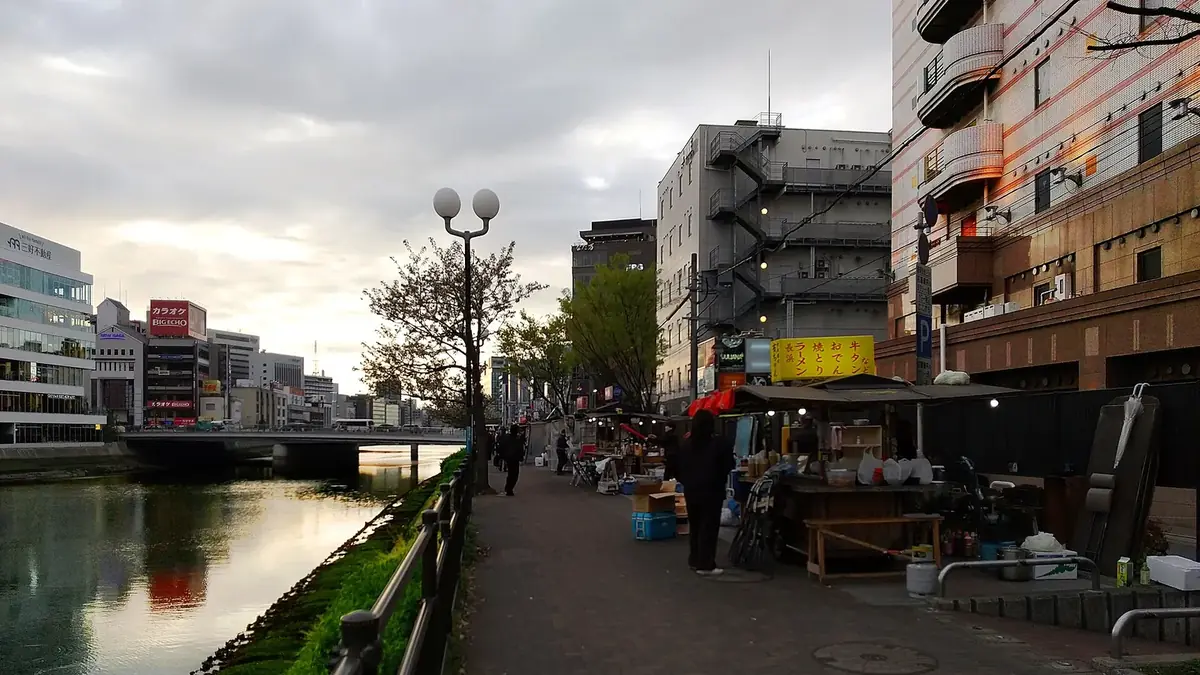
The evening belongs to the yatai, the stalls that fold out along the pavements at dusk. Most open between 18:30 and 19:00, a few at 18:00, and close around midnight; they keep no fixed holidays, have no toilets and seat about ten people, and only some take cards, so carry cash. Order tonkotsu ramen, a few yakitori skewers and a beer, and expect to share the counter.
On day 2, ride the Relay Kamome limited express from Hakata to Takeo-onsen and change to the Nishi Kyushu Shinkansen Kamome on the opposite side of the same platform; if you stay inside the ticket gates, one ticket covers both. Fukuoka City puts Nagasaki about 1 hour 30 minutes away by this pair of trains, so a mid-morning departure leaves the whole afternoon there. Pass holders reserve both at a station counter (see the pass section below).
Start with the Atomic Bomb Museum. Its permanent galleries follow 9 August 1945 from the day itself, through the damage the bomb did, to a section on a world without nuclear weapons, ending in a video room. The galleries are being renewed in stages: the section on a world without nuclear weapons is planned to close from 24 November 2026 to March 2027, and parts of the damage section and the video room from the turn of the year, while most of the damage section, where the bombed objects are shown, stays open. Entry is ¥200 for anyone aged 15 or over, 08:30 to 17:30 with last entry at 17:00, and to 18:30 from May to August.
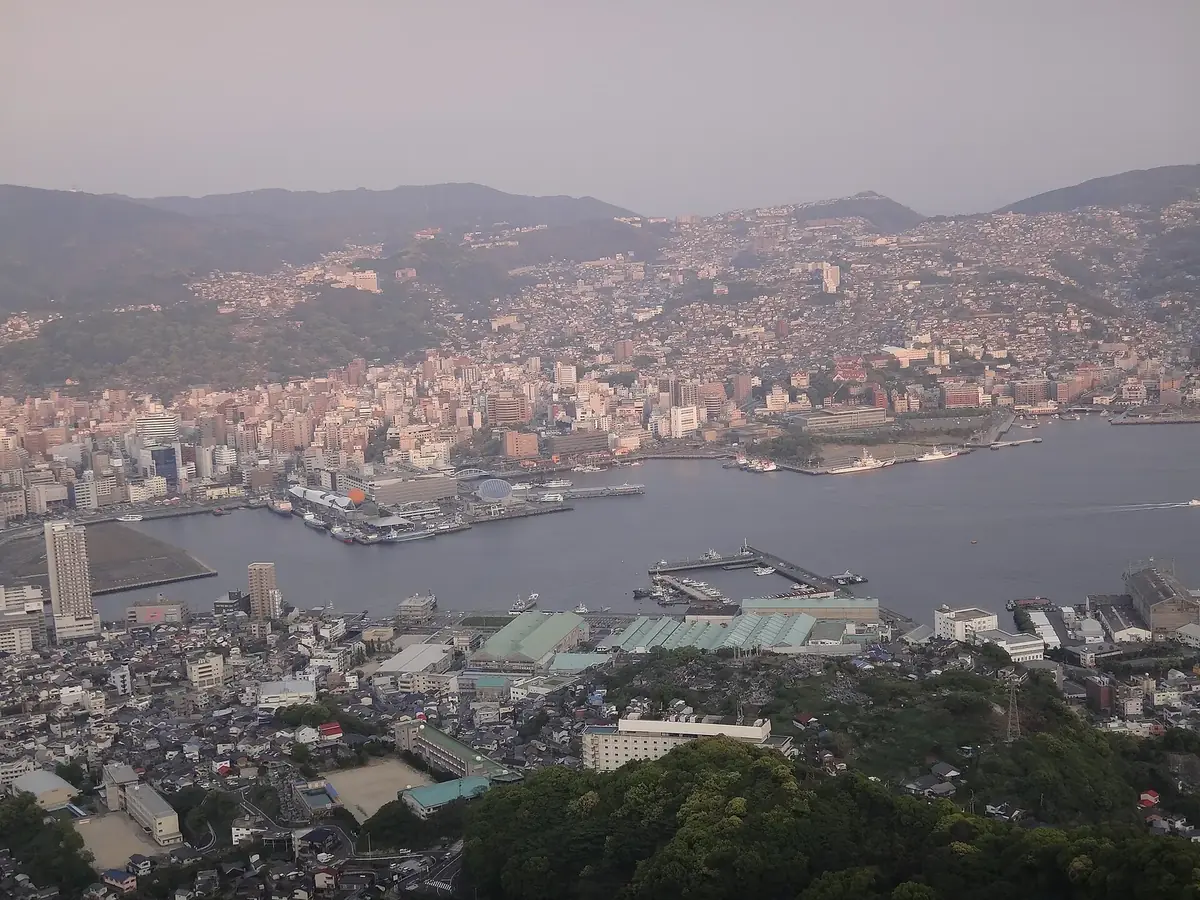
Walk up to the Peace Park, a park of memorials to the second atomic bomb, among them the Nagasaki Peace Statue. Then ride the tram, a flat ¥150 or ¥110 if you pay contactless within two sections, and take the Mount Inasa ropeway at dusk: 1,090 metres in about five minutes, ¥1,900 return or ¥1,040 one way, 09:00 to 22:00 with the last ascent at 21:00. Dinner is champon.
Day 3: Nagasaki's slopes, then the long transfer to Beppu
Give the morning to the harbour side of the city. Dejima, the rebuilt Dutch trading post, is ¥1,100 for adults and ¥550 for children, 08:00 to 21:00 with last entry at 20:40. Glover Garden is an open-air museum of foreign residences and Western-style buildings from the end of the 19th century, with the harbour spread below the Former Glover House; entry is ¥1,300 for adults and ¥650 for children, 08:00 to 18:00 with last entry 20 minutes before closing. Oura Cathedral, at the foot of the same slope, is a Gothic-style Catholic church built for the Westerners of the settlement, where in 1865 a group of hidden Christians confessed their faith to its priests. Our Nagasaki guide sets out the walking order.
The afternoon is the long one, because no train runs direct from Nagasaki to Beppu. Take the Kamome and the Relay Kamome back to Hakata, changing at Takeo-onsen as on day 2 (about 1 hour 30 minutes), then the Sonic limited express, about 2 hours from Hakata to Oita on JR Kyushu's timetable leaflet; Beppu is the stop before Oita. Allow about 3 hours 30 minutes on the trains, plus the change at Hakata, and leave Nagasaki by early afternoon. Book the Sonic in the same counter visit as the Kamome, and eat before you board.
Hana Beppu is a hot-spring inn, and dinner and breakfast are part of the stay, so the evening needs no planning. Beppu charges a bath tax of ¥250 a night where the room and meals come to between ¥6,001 and ¥50,000, and ¥500 above that; under-12s are exempt.
Days 4 and 5: the Beppu hells, Kumamoto Castle and a day at Aso
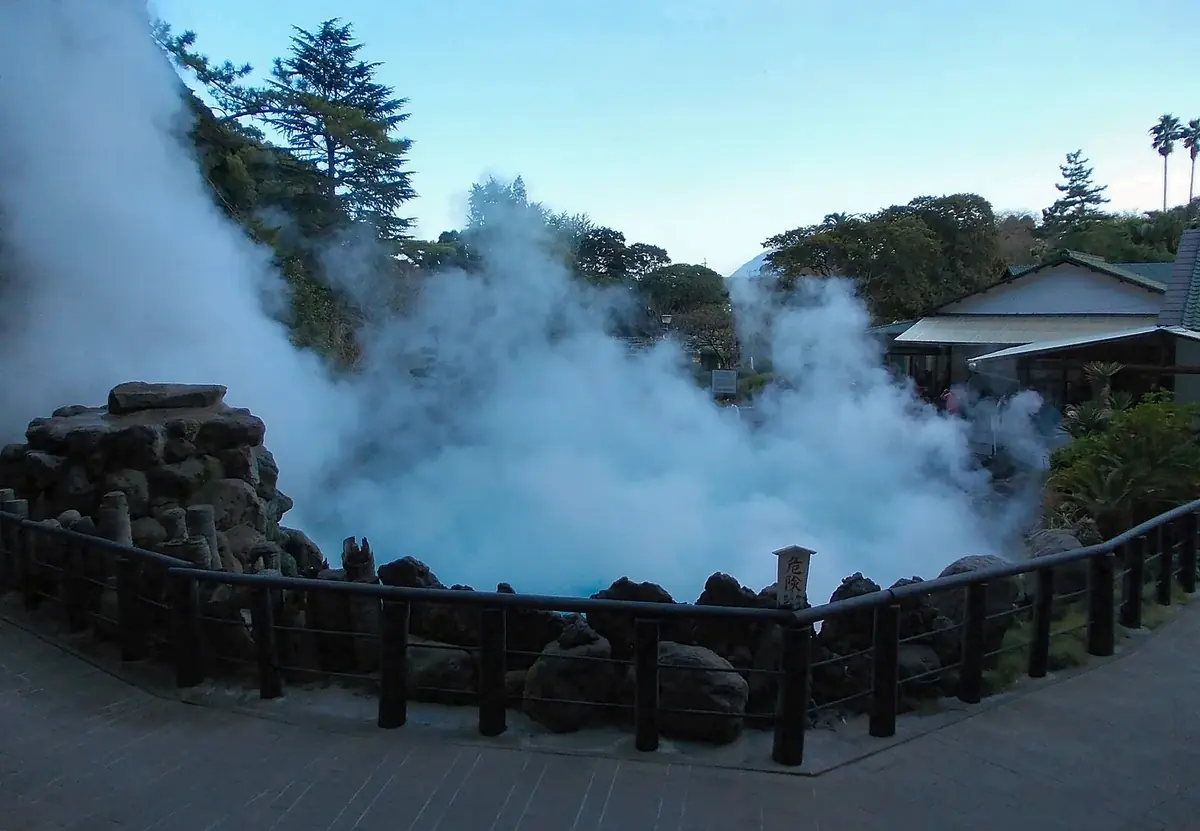
Be at the hells when they open at 08:00. There are seven, pools and vents where steam, hot mud and water close to boiling come up from deep underground: Umi Jigoku is cobalt blue and 98°C, and at Chinoike iron oxide turns even the steam red. Four of them, Umi, Chinoike, Tatsumaki and Shiraike, are national Places of Scenic Beauty for their colours and forms. The common ticket is ¥2,400 for adults and ¥1,200 for primary and junior-high pupils, allows one entry at each hell, and is valid on the day you buy it and the next. The hells are 20 minutes from Beppu Station West Exit on Kamenoi bus routes 2, 5, 24 and 41, and Chinoike and Tatsumaki sit about 3 km from the main cluster around Umi Jigoku. Our Beppu guide covers which are worth your time.
Eat an early jigokumushi lunch in Kannawa, among the hells, because the next train has no on-board sales. Then ride back to Beppu Station and on to Oita, 11 to 18 minutes by limited express. The Kyushu Odan Tokkyu crosses the caldera between Oita and Kumamoto three times a day each way. On JR Kyushu's timetable in force from 14 March 2026, train 4 leaves Oita at 12:09, reaches Aso at 13:56 and Kumamoto at 15:05; train 6 leaves Oita at 15:32 for Aso at 17:25 and Kumamoto at 18:52.
Train 4 reaches Kumamoto at 15:05. The castle is about 17 minutes away by tram and its last entry is at 16:00, too tight to do it justice, so it waits for the morning of day 6. The exception is the autumn festival, which in 2026 kept the grounds open until 21:00 from 2 October to 1 November. Kumamoto's trams are a flat ¥200 for adults and ¥100 for children; give the evening to karashi renkon and a local izakaya.
Day 5 is Aso, with your luggage left in Kumamoto. Odan Tokkyu train 1 leaves Kumamoto at 08:25 and reaches Aso at 10:02. From Aso Station, Sanko Bus's Aso Tozan Line climbs to Kusasenri and on to the Aso-sanjo Terminal, 16.4 km in about 35 minutes, nine departures a day up and ten down, with no reservation; get off at Kusasenri; the fare is about ¥1,700 one way (2024).
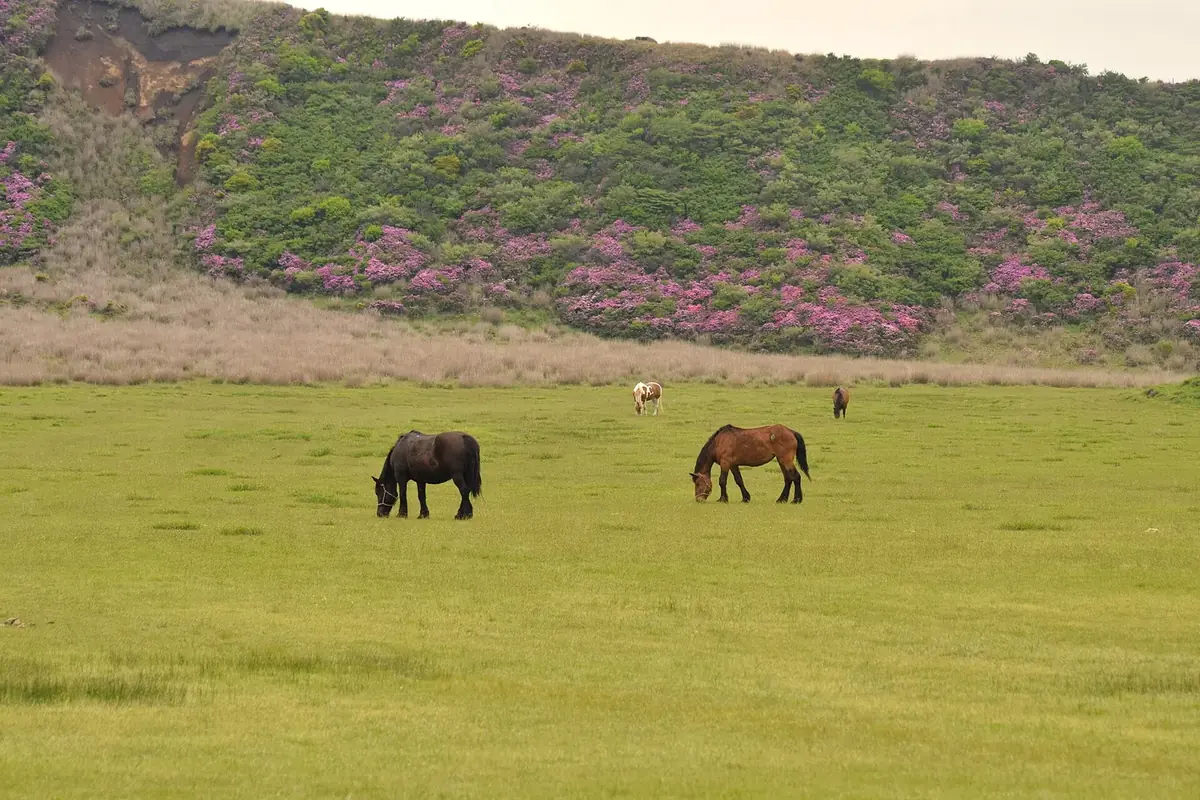
The crater itself is off the plan: the Japan Meteorological Agency has kept Aso at crater-area warning level 2 since 1 September 2026 and asks people to stay out of roughly one kilometre around the first crater of Nakadake. Spend the day on Kusasenri instead, a broad grassland with a pond between Mount Kishima and Mount Eboshi, where horses graze and riding runs from March to December across from the Aso Volcano Museum. The museum explains how the volcano formed and shows a 15-minute film of the crater on days when it cannot be reached: ¥1,300 for junior-high age and over, ¥650 for primary pupils, ¥1,100 at 65 and over and ¥350 for pre-school children, 09:00 to 17:00 with last entry at 16:30. Train 4 comes back through Aso at 13:56 for Kumamoto at 15:05, or train 6 at 17:25 for 18:52.
Days 6 and 7: Kagoshima, Sakurajima and the way home
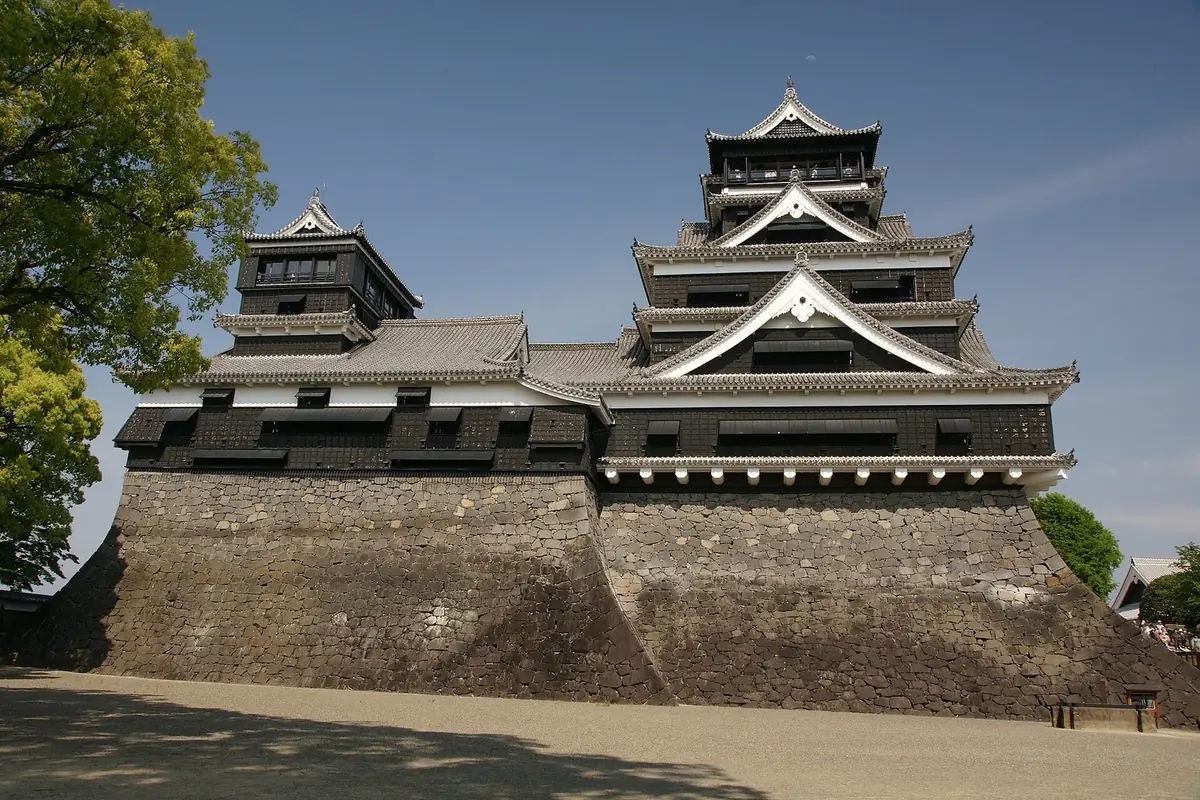
Day 6 starts at Kumamoto Castle at 09:00, about 17 minutes by tram from the station to Kumamotojo-mae. The castle's black keeps and steep stone ramparts were heavily damaged in the Satsuma Rebellion of 1877 and largely rebuilt in 1960. In the 2016 earthquakes almost a third of the walls were damaged and a tenth collapsed, and the restoration, expected to take twenty years, is putting each stone back in its place, so only parts of the castle are open. Kumamoto was shaken again in July 2026, and the castle's notice of 18 September 2026 says it is operating as usual, with the Wakuwakuza museum beside it temporarily closed. Entry is ¥800 for high-school age and over and ¥300 for primary and junior-high pupils; from September to June the grounds open 09:00 to 17:00, with last entry at 16:00.
Then the Kyushu Shinkansen from Kumamoto to Kagoshima-Chuo, 42 minutes. Buy the city's one-day ticket at ¥700 for adults and ¥350 for children: it covers the trams, the city buses and the Kagoshima City View sightseeing bus, but not the ferry.
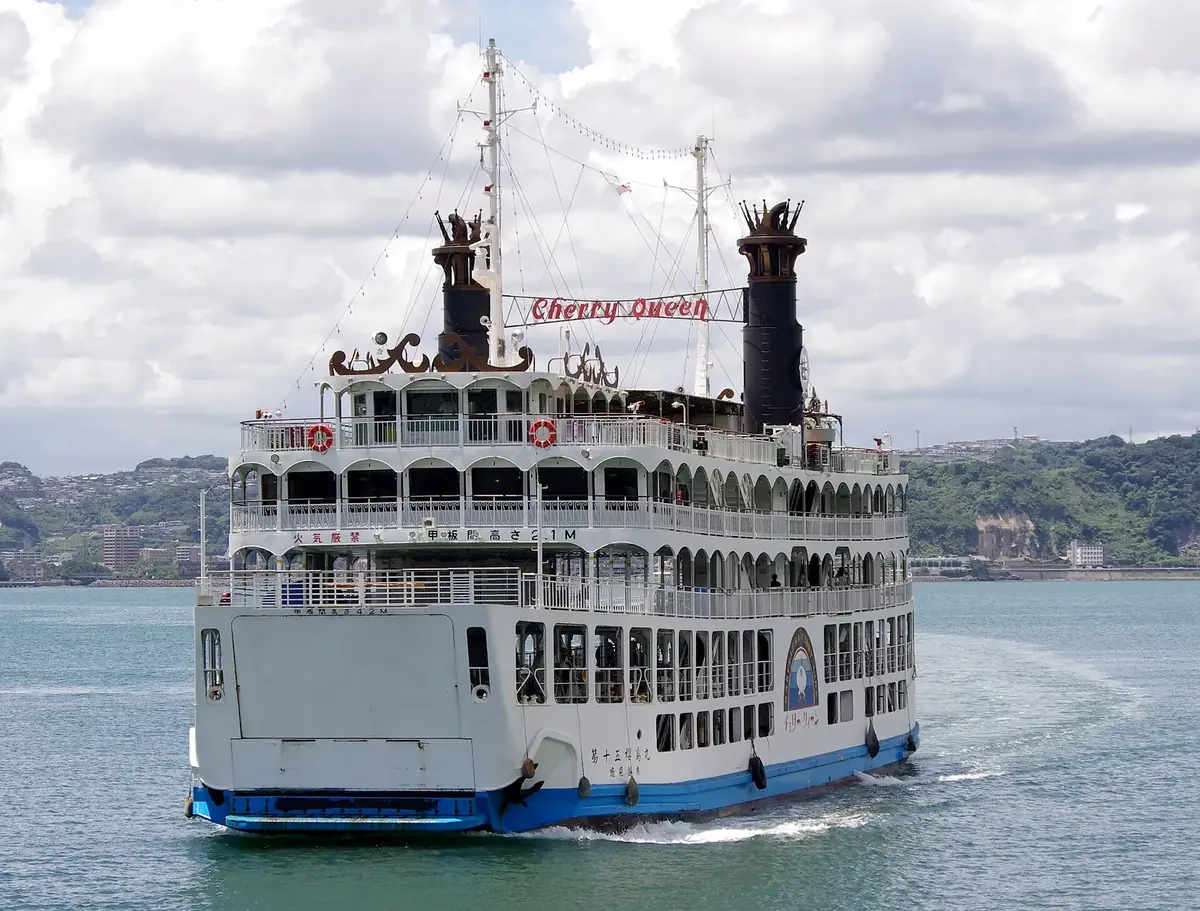
Sakurajima is the reason to come this far. The ferry from Kagoshima port takes about 15 minutes and leaves every 20 minutes from 07:00 to 18:40, every 15 minutes on weekend and holiday afternoons, with early and late sailings from 04:30 to the last at 23:30. The fare is ¥250 for adults and ¥130 for children, paid on arrival at the Sakurajima terminal. To reach the port, ride the tram to Suizokukan-guchi, about 15 minutes from Kagoshima-Chuo-Ekimae and roughly every seven minutes, then walk eight minutes.
On the island, the Sakurajima Island View bus leaves the port every 30 minutes from 09:30 to 16:30 on a loop of about 60 minutes, past the Sakurajima Visitor Center to the Yunohira Observatory, 373 metres up and the viewpoint closest to the crater. A ride costs ¥230, or ¥500 for the bus's own one-day ticket. Yunohira is as close as you can go: Sakurajima has been at warning level 3 since July 2022, with large rocks and small pyroclastic flows possible within about two kilometres of the Minamidake summit crater and the Showa crater. Dinner is kurobuta pork in Tenmonkan, the city's eating and drinking quarter.
Day 7 has room for one thing before the train. Sengan-en is the Shimadzu family's villa and garden on the bay, laid out in 1658 with Sakurajima as its hill and the bay as its pond, and part of a UNESCO World Heritage listing since 2015; the Shoko Shuseikan museum next door covers the family's 800 years. It opens 09:00 to 17:00 and is about 50 minutes from Kagoshima-Chuo on the City View bus (¥230 a ride). Entry is charged separately. Then the Kyushu Shinkansen back to Hakata, 1 hour 16 minutes, and the subway to Fukuoka Airport.
The pass, and what to book first
Buy the All Kyushu version of the JR Kyushu Rail Pass for 7 consecutive days, ¥26,000 for an adult and half for a child, and start it on day 2. The route uses JR trains on every day from day 2 to day 7, six days in a row, one more than the 5-day All Kyushu pass (¥24,000) covers; the 3-day pass is ¥22,000. The days must be consecutive, and you must show a passport carrying a temporary-visitor stamp when you board. There are cheaper Northern and Southern Kyushu versions, but this route uses both ends of the island. Our Japan Rail Pass guide compares the Japanese passes against single tickets.
The pass covers the Kyushu Shinkansen from Hakata to Kagoshima-Chuo and the Nishi Kyushu Shinkansen from Takeo-onsen to Nagasaki, but not the shinkansen between Kokura and Hakata, which is part of JR West's Sanyo Shinkansen, nor subways, city buses or other companies' railways. On the All Kyushu pass, reserved seats are free and unlimited at a Midori no Madoguchi counter or a reserved-seat machine; reserving online in advance costs ¥1,000 a seat on a shinkansen or limited express. On the Tokaido, Sanyo and Kyushu shinkansen, from Tokyo through Shin-Osaka and Hakata to Kagoshima-Chuo, any bag, except a stroller, sports equipment or a musical instrument, whose length, width and height add up to between 161 and 250 cm needs a reserved 'seat with an oversized baggage area': one of the back-row seats in some cars, with space behind it for the case. The JR Pass site applies the same rule to the Nishi Kyushu shinkansen to Nagasaki.
Book in this order:
- The Kyushu Odan Tokkyu seats for day 4 out of Oita and day 5 out of Kumamoto. Three round trips a day is the entire service.
- The Relay Kamome and Kamome for day 2 and the Sonic for day 3. A JR Kyushu Rail Pass holder cannot reserve the Relay Kamome or the Kamome through the pass's online booking, so reserve them at a station counter or ride non-reserved; book the Sonic in the same visit when you land.
- Rooms in Beppu and Kumamoto before the other three hotels, and early if your dates fall in the castle's autumn festival.
- In the week before you go, check the Japan Meteorological Agency's levels for Aso and Sakurajima and Kumamoto Castle's own notices.
What seven days cost, all in
About ¥155,000 per person, ¥310,000 for two, for the whole week on the ground.
| Trip | Per person, about JPY | For two, about JPY |
|---|---|---|
| Seven days and six nights in Kyushu, on the ground | 155,000 (GBP 740) | 310,000 |
The prices assume two adults sharing a twin for six nights in the five hotels this guide names, with dinner and breakfast at the Beppu inn, a 7-day All Kyushu Rail Pass, three meals a day, every entry named above and a tourist SIM. Prices were checked on 26 October 2026. The sterling figure uses the European Central Bank's reference rates of 23 October 2026, where EUR 1 bought JPY 175.51 and GBP 0.83728, so GBP 1 is about ¥210. Subtotals below are per person.
Flights: about GBP 1,000 to 1,400 per person for a London to Fukuoka return in economy, the range Cathay Pacific showed for its own flights on 26 October 2026, which comes to about ¥210,000 to ¥293,000. With flights, about ¥365,000 to ¥448,000 per person.
- Rooms, about ¥59,000. The hotels price by date, so these are estimates per room per night: about ¥18,000 at JR Kyushu Hotel Blossom Hakata Central and at THE BLOSSOM KUMAMOTO for each of two nights, ¥16,000 at JR Kyushu Hotel Nagasaki and at JR Kyushu Hotel Kagoshima, and about ¥15,000 per person at Hana Beppu with dinner and breakfast. Add Beppu's ¥250 bath tax and about ¥1,000 for other local accommodation taxes. JNTO puts a mid-range hotel from about ¥10,000 a night and a ryokan from about ¥10,000 per person.
- Food, about ¥32,000. About ¥5,000 a day each for three meals and a drink, less the Beppu dinner and breakfast in the inn's rate: a hotel or convenience-store breakfast, a noodle or bento lunch, and dinners from the food box below, from a yatai ramen counter to kurobuta in Tenmonkan.
- Getting around, about ¥36,000. The 7-day All Kyushu Rail Pass (¥26,000) covers every JR train on this route, the shinkansen home included. On top of it: the Fukuoka subway at its ¥640 daily cap twice, Nagasaki trams at ¥150 a ride, Kumamoto trams at ¥200, about ¥3,400 for the return bus up to Aso-sanjo, Kagoshima's ¥700 one-day ticket and two City View rides on day 7, the Sakurajima ferry at ¥250 each way, the ¥500 Island View day ticket, and about ¥1,000 for the return Kamenoi bus between Beppu Station and the hells.
- Sights, about ¥10,000. The hells common ticket (¥2,400), Kumamoto Castle (¥800), the Aso Volcano Museum (¥1,300), Dejima (¥1,100), Glover Garden (¥1,300), the Atomic Bomb Museum (¥200), the Mount Inasa ropeway (¥1,900) and an estimated ¥1,000 for Sengan-en, whose fee is not on any page cited here; check it at the gate.
- SIM and extras, about ¥4,000. A tourist SIM and a laundry load. Mobal's Japan Tourist SIM is ¥2,340 for 3 GB over up to 8 days, and its tourist SIMs with calls and texts are ¥3,190 to ¥3,795, all with tax included.
- Buffer, about ¥14,000. A rounded 10% for price changes, a taxi in the rain or an extra tram day.
What to eat and where to look
Hakata tonkotsu ramen
Thin, straight noodles in a collagen-rich pork-bone broth, ordered by noodle hardness and often topped up with a second helping of noodles (kaedama). Tonkotsu ramen is the dish Fukuoka is best known for.
- Where to look
- Yatai in Nakasu, Tenjin and Nagahama, and Ramen Stadium on the fifth floor of Canal City's cinema building.
- Fit it into your day
- The first night, after the yakitori skewers at a yatai.
Pork broth and usually pork toppings. Kaedama is only offered while about half your broth remains.
Champon
A Nagasaki bowl of vegetables, pork and seafood in a rich pork-and-chicken bone broth, created in the late Meiji period at a Chinese restaurant in the city as a cheap, filling meal for students from China.
- Where to look
- Restaurants in Shinchi Chinatown and across Nagasaki; sara udon, the deep-fried version, is on the same menus.
- Fit it into your day
- Dinner on night 2, after the ropeway.
Contains pork, seafood and wheat, and the broth is made from pork and chicken bones, so it is hard to adapt for vegetarians.
Jigokumushi (hell-steamed food)
Seafood, meat, vegetables or eggs steamed in natural hot-spring vapour, which reaches 98°C at Jigoku Mushi Kobo Kannawa, until the flavour concentrates. There are no rules about what goes in the kettle.
- Where to look
- Jigoku Mushi Kobo Kannawa and other steam-cooking places in the Kannawa streets, among the walkable hells.
- Fit it into your day
- An early lunch on day 4 in Kannawa, before the train to Oita.
Allergens depend on what you steam, and the steam is very hot, so follow the staff's instructions when you lift a lid.
Karashi renkon
Boiled lotus root stuffed with mustard and miso, coated in a yellow batter and fried. With hitomoji guruguru, a boiled spring onion tied in a knot and served with mustard miso, it is one of the two staples of Kumamoto home cooking.
- Where to look
- Local-cuisine restaurants and izakaya around Kumamoto Station and the castle, and food halls that sell it to take away.
- Fit it into your day
- Dinner on day 4, after the train from Oita.
Hot with mustard, and the batter contains wheat.
Kurobuta pork
Kagoshima's black Berkshire pork, crisp, tender and juicy with a light fat, and best met as shabu-shabu, the simple hotpot that made the breed famous. Tonkatsu, a thick breaded cutlet, is the other way to eat it.
- Where to look
- Specialist kurobuta restaurants in Tenmonkan, Kagoshima's eating and drinking quarter, a few tram stops from Kagoshima-Chuo.
- Fit it into your day
- Dinner on night 6, back from Sakurajima.
Pork, and the tonkatsu version is breaded with wheat and fried.
Practical questions
Is 7 days enough for Kyushu?
Seven days and six nights covers the five places most people come for: Fukuoka, Nagasaki, Beppu, Kumamoto with Aso, and Kagoshima with Sakurajima. It does not leave room for Yakushima, Takachiho or the Shimabara peninsula. One of the seven days, day 3, is spent mostly on trains.
Which JR Kyushu pass do you need for this route?
The All Kyushu version for 7 consecutive days, ¥26,000 for an adult and half for a child, started on day 2: the route uses JR trains on every day from day 2 to day 7, including the shinkansen back to Hakata. If you fly home from Kagoshima instead, the train days are 2 to 6 and the 5-day All Kyushu pass at ¥24,000 covers them. Neither covers the Kokura to Hakata shinkansen, subways or city buses.
Are Aso, Sakurajima and Kumamoto open to visitors?
Yes, with limits. The Aso crater area is closed at warning level 2 and Sakurajima's summit at level 3, so day 5 uses Kusasenri and the Aso Volcano Museum and day 6 the Yunohira Observatory. Kumamoto Castle is operating as usual after the July 2026 earthquake, with only parts of it open while the 2016 damage is repaired. The day sections give the details and dates.
Should you fly home from Kagoshima or go back to Fukuoka?
Going back to Hakata takes 1 hour 16 minutes on the Kyushu Shinkansen, inside the 7-day pass, so it costs you a morning and nothing else. Flying out of Kagoshima saves that morning, and the 5-day All Kyushu pass at ¥24,000 then covers days 2 to 6, but you need an open-jaw ticket into Fukuoka and out of Kagoshima, so price it against a Fukuoka return.
Do you have to book trains in advance in Kyushu?
For the Kyushu Odan Tokkyu across the caldera, yes: it runs only three times a day each way. The Relay Kamome and the Kamome cannot be reserved through the pass's online booking, so a pass holder reserves them at a station counter or rides non-reserved.
Keep planning your trip
Fukuoka
How many nights Fukuoka needs, whether to sleep in Hakata, Tenjin or Nakasu, how yatai food stalls work, Hakata ramen and Dazaifu Tenmangu as a half-day trip.
Read the guide
Nagasaki
How many nights Nagasaki needs, where to sleep, how to plan the Peace Park and museum, Glover Garden and Dejima, and why Gunkanjima landings can fail.
Read the guide
Beppu and Yufuin
How many nights Beppu and Yufuin need, where to sleep, the hells common ticket, the sand bath, steam cooking, onsen manners and the Beppu to Yufuin bus.
Read the guide
Japan Rail Pass
Whether the 7-day Japan Rail Pass pays for your route, worked out with official fares, plus Nozomi rules, regional JR passes, smartEX and how to use the pass.
Read the guide
Japan trip cost 2027
What 10 days in Tokyo, Hakone, Kyoto, Hiroshima and Osaka cost in April 2027, all in: about JPY 174,000 per person on a budget, 270,000 mid-range or 515,000 in comfort.
Read the guide
First trip to Japan
How to shape two weeks in Japan, what to settle before you fly (entry, Visit Japan Web, cash, data, insurance) and which trains, tickets and rooms to book.
Read the guideSources and checks before you travel
(52)
- JR Kyushu: JR Kyushu Rail Pass ↗ — opens in a new tab
- JR Kyushu: Relay Kamome ↗ — opens in a new tab
- JR Kyushu: Kyushu Odan Tokkyu ↗ — opens in a new tab
- Fukuoka City Subway: routes and operating areas ↗ — opens in a new tab
- Fukuoka City official tourist guide: credit card tap-to-pay for the subway ↗ — opens in a new tab
- Fukuoka City official tourist guide: yatai tips ↗ — opens in a new tab
- Fukuoka City official tourist guide: getting to Fukuoka City ↗ — opens in a new tab
- Fukuoka Prefecture Tourism Association: Hakata ramen ↗ — opens in a new tab
- Nagasaki Atomic Bomb Museum: exhibition and visitor information ↗ — opens in a new tab
- Dejima (official site) ↗ — opens in a new tab
- Glover Garden (official site): visitor guide ↗ — opens in a new tab
- Nagasaki Ropeway (official site) ↗ — opens in a new tab
- Nagasaki Electric Tramway: fares ↗ — opens in a new tab
- Beppu Jigoku association: admission and business information (Japanese) ↗ — opens in a new tab
- Beppu Jigoku association: access (Japanese) ↗ — opens in a new tab
- Beppu City: bath tax (Japanese) ↗ — opens in a new tab
- Beppu Tabi (Beppu City official tourism site): eating onsen jigokumushi ↗ — opens in a new tab
- Kumamoto Castle: visitor information (Japanese) ↗ — opens in a new tab
- Kumamoto Castle: notice on sites around the castle after the 2026 Kumamoto earthquake (Japanese) ↗ — opens in a new tab
- Kumamoto City Transportation Bureau: tram fares (Japanese) ↗ — opens in a new tab
- Kumamoto City tourism guide: local foods ↗ — opens in a new tab
- Aso Volcano Museum: visitor guide (Japanese) ↗ — opens in a new tab
- Sanko Bus: Aso Tozan Line (Japanese) ↗ — opens in a new tab
- Japan Meteorological Agency: volcanic activity at Aso (Japanese) ↗ — opens in a new tab
- Japan Meteorological Agency: volcanic activity at Sakurajima (Japanese) ↗ — opens in a new tab
- Japan Meteorological Agency: start and end of the rainy season by region, with normals (Japanese) ↗ — opens in a new tab
- Japan Tourism Agency: information on the 2026 Kumamoto earthquake (Japanese) ↗ — opens in a new tab
- JNTO: Kagoshima and around ↗ — opens in a new tab
- JNTO: Aso and around ↗ — opens in a new tab
- Kagoshima City Transportation Bureau: one-day, 24-hour and night tickets (Japanese) ↗ — opens in a new tab
- Visit Kagoshima City: how to get to Sakurajima ↗ — opens in a new tab
- Visit Kagoshima City: Kagoshima's meats ↗ — opens in a new tab
- Mobal: Japan tourist SIM cards ↗ — opens in a new tab
- Cathay Pacific: flights from London to Fukuoka ↗ — opens in a new tab
- European Central Bank: euro reference rates ↗ — opens in a new tab
- JR Kyushu: timetable leaflet (PDF) ↗ — opens in a new tab
- Nagasaki Atomic Bomb Museum: notice on partial closures for the exhibition renewal (Japanese) ↗ — opens in a new tab
- JNTO: Kumamoto Castle ↗ — opens in a new tab
- Kagoshima City Transportation Bureau: City View and Sakurajima Island View (Japanese) ↗ — opens in a new tab
- Visit Kagoshima City: Sengan-en ↗ — opens in a new tab
- JR Kyushu Hotels: JR Kyushu Hotel Blossom Hakata Central (Japanese) ↗ — opens in a new tab
- JR Kyushu Hotels: JR Kyushu Hotel Nagasaki (Japanese) ↗ — opens in a new tab
- JR Kyushu Hotels: THE BLOSSOM KUMAMOTO (Japanese) ↗ — opens in a new tab
- JR Kyushu Hotels: JR Kyushu Hotel Kagoshima (Japanese) ↗ — opens in a new tab
- Hana Beppu (official site, Japanese) ↗ — opens in a new tab
- JNTO: Japan on a budget ↗ — opens in a new tab
- Kagoshima City: Sakurajima Ferry timetable (Japanese) ↗ — opens in a new tab
- JNTO: Nagasaki City and around ↗ — opens in a new tab
- JNTO: Hidden Christian Sites in the Nagasaki Region ↗ — opens in a new tab
- Beppu Jigoku Association: Beppu Jigoku Meguri (Japanese) ↗ — opens in a new tab
- JR Central: luggage information ↗ — opens in a new tab
- JAPAN RAIL PASS: oversized baggage ↗ — opens in a new tab
Reference sources for the version dated 26 October 2026. Confirm opening times, access, transport and conditions for your travel dates.
Photo credits
(6)
Kusasenri, the grass bowl below the Aso peaks, is where the day trip lands when the crater itself is closed.
Photograph: Raita Futo from Tokyo, Japan — opens in a new tab · CC BY 2.0 — opens in a new tab
Changes: Resized and converted to WebP; displayed with responsive crops. · Original photograph and licence details ↗ — opens in a new tab
Hakata's yatai fold out along the pavements in the late afternoon; most open between 18:30 and 19:00.
Photograph: Hirho — opens in a new tab · CC BY-SA 4.0 — opens in a new tab
Changes: Resized and converted to WebP; displayed with responsive crops. · Original photograph and licence details ↗ — opens in a new tab
The view from Mount Inasa, reached by a ropeway that runs until 22:00 with the last ascent at 21:00.
Photograph: Masoud Akbari — opens in a new tab · CC BY-SA 3.0 — opens in a new tab
Changes: Resized and converted to WebP; displayed with responsive crops. · Original photograph and licence details ↗ — opens in a new tab
Umi Jigoku, one of the Beppu hells; a common ticket at 2,400 yen covers the whole set.
Photograph: STA3816 — opens in a new tab · CC BY-SA 3.0 — opens in a new tab
Changes: Resized and converted to WebP; displayed with responsive crops. · Original photograph and licence details ↗ — opens in a new tab
Kumamoto Castle, open 09:00 to 17:00 from September to June, with the last climb into the keep at 16:30.
Photograph: 663highland — opens in a new tab · CC BY 2.5 — opens in a new tab
Changes: Resized and converted to WebP; displayed with responsive crops. · Original photograph and licence details ↗ — opens in a new tab
The Sakurajima ferry crosses Kagoshima Bay in about 15 minutes for 250 yen, paid on the Sakurajima side.
Photograph: Jakub Hałun — opens in a new tab · CC BY-SA 3.0 — opens in a new tab
Changes: Resized and converted to WebP; displayed with responsive crops. · Original photograph and licence details ↗ — opens in a new tab