Oita
Beppu and Yufuin travel guide: hells, sand baths and where to sleep
Beppu is a working onsen city that steams from its drains, with seven "hells" of boiling water and mud, a sand bath, steam-cooking kettles and public baths that cost a few hundred yen. Yufuin is its quiet counterpart: a small basin town under Mount Yufu, about 30 km inland, with scattered ryokan and a misty lake. Treated as two day trips, they mean a lot of transport and not much bathing. The better plan is to sleep in both: Beppu for the hells and the baths, Yufuin for one ryokan evening and a morning at the lake.
In this guide
Find the location ↗ — opens in a new tabThe short answer
Book three nights: two in Beppu, in Kannawa or near Beppu Station, and one in a Yufuin ryokan, arriving at Oita Airport or by limited express from Hakata. Give one Beppu day to the hells and steam cooking and one to public baths and the Takegawara sand bath, then ride the Kamenoi bus on route 36 to Yufuin. Buy the seven-hell common ticket at the first hell; it is valid for two days. Reserve the Yufuin no Mori train as soon as seats open, because JR Kyushu says it is consistently fully booked.
- Suggested time
- 3 nights: 2 in Beppu, 1 in Yufuin
- Where to stay
- Kannawa for steam and quiet; the Beppu Station area for trains and public baths; Yufuin for a ryokan night and Lake Kinrin
- Season and timing
- Hells, baths and steam cooking run all year. Mist rises from Lake Kinrin on cold early mornings from late autumn into winter, azaleas flower at Tatsumaki Jigoku from mid-April to Golden Week, and the Asagimadara butterfly visits it in October.
Where to sleep: Beppu Station, Kannawa or Yufuin
Beppu is not one resort but a city of hot-spring districts. Beppu Tabi, the city's official tourism site, counts eight onsen areas, among them central Beppu Onsen, Kannawa and Kamegawa, and says each has its own spring quality. Yufuin is a different kind of place: a basin town below Mount Yufu, about 30 km from Beppu according to JNTO, which calls it a less developed alternative to Beppu. For a first visit, sleep two nights in Beppu and one in Yufuin. If Beppu is one stop on a longer route, our Kyushu in 7 days itinerary gives it a single night before the train across the Aso caldera.
Beppu Station suits arrivals by train and anyone who wants public baths. Wander Compass Beppu, the tourist information centre inside the station, is listed by Beppu Tabi as open 08:45–18:00 daily and holding left luggage, and the city's Takegawara Onsen is about 10 minutes' walk away. The cost is distance: the Jigoku association puts the hells about 20 minutes away by Kamenoi bus.
Kannawa is where the steam is. Five of the seven hells are within walking distance of each other around Umi Jigoku, and the steam-cooking kettles and the city's steam bath are in the same streets. Beppu Tabi notes that many of the district's old long-stay inns (toji-yado) are room-only, with guests buying their own food, so check what your rate includes.
Yufuin is the night to spend on a ryokan. JNTO says its inns are scattered through the town rather than lined along one street, and the town's own visitor guide, YUFUINFO, says Yufuin Onsen has about 850 hot-spring sources. Lake Kinrin is about 30 minutes' walk from the station, so choose a room near the station for the train and bus, or nearer the lake for the early mist described below.
Both towns charge a bath tax per person per night, collected through the inn. Beppu's table, checked on 20 October 2026, uses combined accommodation and meal charges before consumption tax, excluding food delivered from outside. In the ¥6,001–¥50,000 band per person per day, the rate is ¥250 for stays of up to 6 nights or ¥125 from the first night for stays of 7 nights or longer. Yufu charges ¥100 when the room charge before consumption tax is ¥4,000 or less and ¥250 above that. Children under 12 are exempt in both.
Beppu's hells: the common ticket and how to walk them
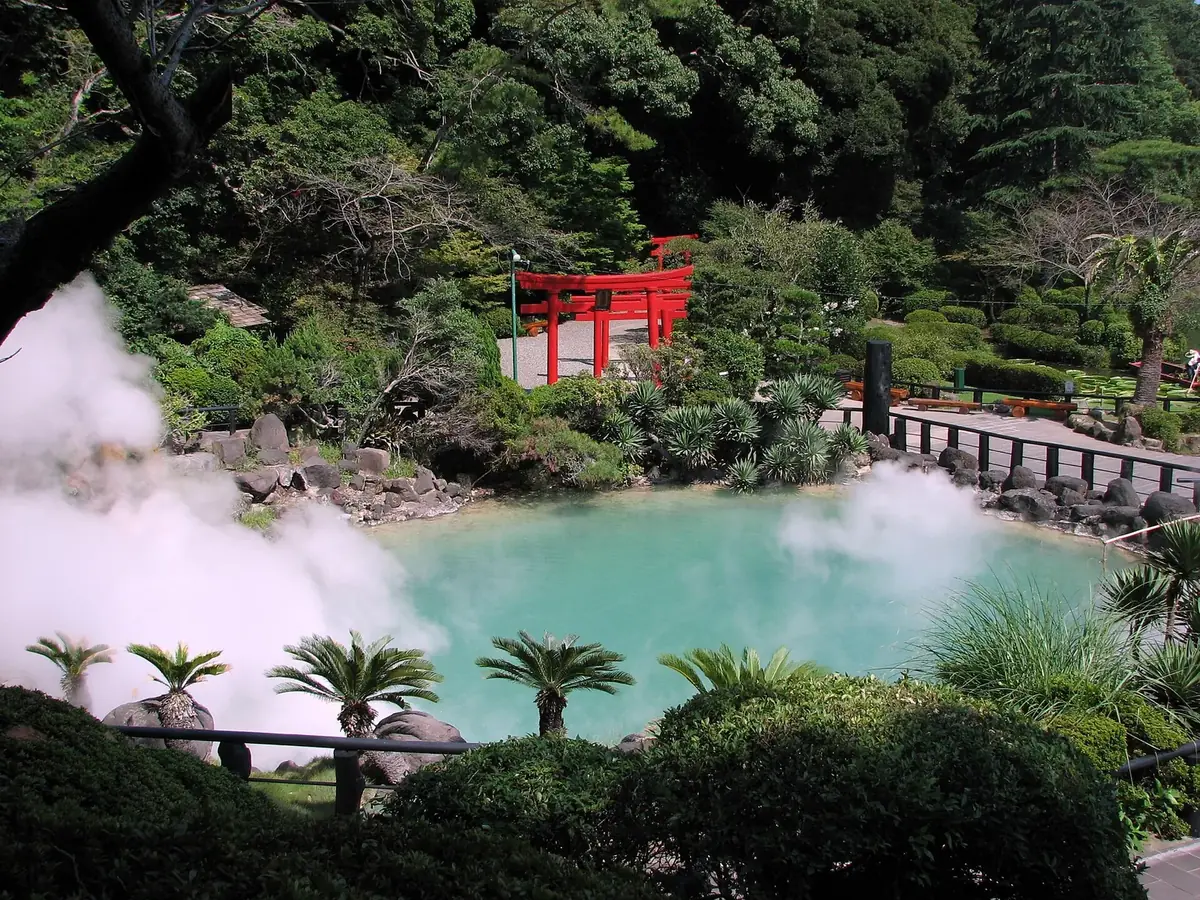
The hells (jigoku) are sightseeing sites around natural sources of near-boiling water, steam and mud, not baths. The Jigoku association says that more than a thousand years ago the Bungo Fudoki already recorded steam, hot mud and boiling water here, and that people avoided the land and called it jigoku. Four of the seven, Umi, Chinoike, Tatsumaki and Shiraike, are nationally designated places of scenic beauty, and Umi Jigoku's cobalt pond is 98°C.
The seven are Umi (Sea), Oniishibozu, Kamado, Oniyama, Shiraike, Chinoike (Blood Pond) and Tatsumaki. When we checked on 12 October 2026, the association's page listed a common ticket for all seven at ¥2,400 for adults (high school age and above) and ¥1,200 for elementary and junior-high pupils, in force from 1 February 2025, and ¥1,200 for an adult with a disability certificate. It is valid on the day of purchase and the day after, allows one entry per hell and can be bought at any hell, so buy it at the first one. All seven open 08:00–17:00 every day of the year.
The hells sit in two clusters. The five around Kannawa (Umi, Oniishibozu, Kamado, Oniyama and Shiraike) can be walked, while Chinoike and Tatsumaki are about 3 km away, and the association recommends a bus or car between the groups. Beppu Tabi's model course walks the Kannawa five, lunches in Kannawa and takes a bus of under ten minutes to the other two, and puts the whole circuit at two to two and a half hours. Umi, Chinoike, Kamado and Oniishibozu have free footbaths.
If you would rather not work out buses, Kamenoi Bus runs a sightseeing course to all seven in about three hours. Its page listed ¥4,500 for adults including admission, from 1 May 2025, and asks you to reserve; the guide leads about 60 minutes on foot around the five Kannawa hells.
Tatsumaki Jigoku is a geyser, and geysers keep no timetable. In a notice dated 15 January 2026 the manager said that waits before an eruption had become long and irregular that season, and that the timing varies with season and rainfall. A red lamp above the entrance sign lights when an eruption is close or under way. Make it your last stop, so a long wait costs you nothing.
Kannawa: steam cooking and the steam bath
Jigokumushi means steaming food in natural hot-spring vapour. Beppu Tabi says Kannawa has places where you buy ingredients on the spot and others where you bring your own, and that anything goes: seafood, meat, vegetables, eggs. Jigoku Mushi Kobo Kannawa is the first it names, and its English feature says people queue there on holidays. When we checked on 12 October 2026, the Japanese page, which carries information as of 30 June 2026, listed kettles at ¥400 (small) or ¥600 (large) for up to 15 minutes, plus the food, open 10:00–19:00 with last orders at 18:00 and closed on the third Wednesday of each month (the next day if that is a public holiday). It may close or change hours with the steam conditions, and evenings are busy.
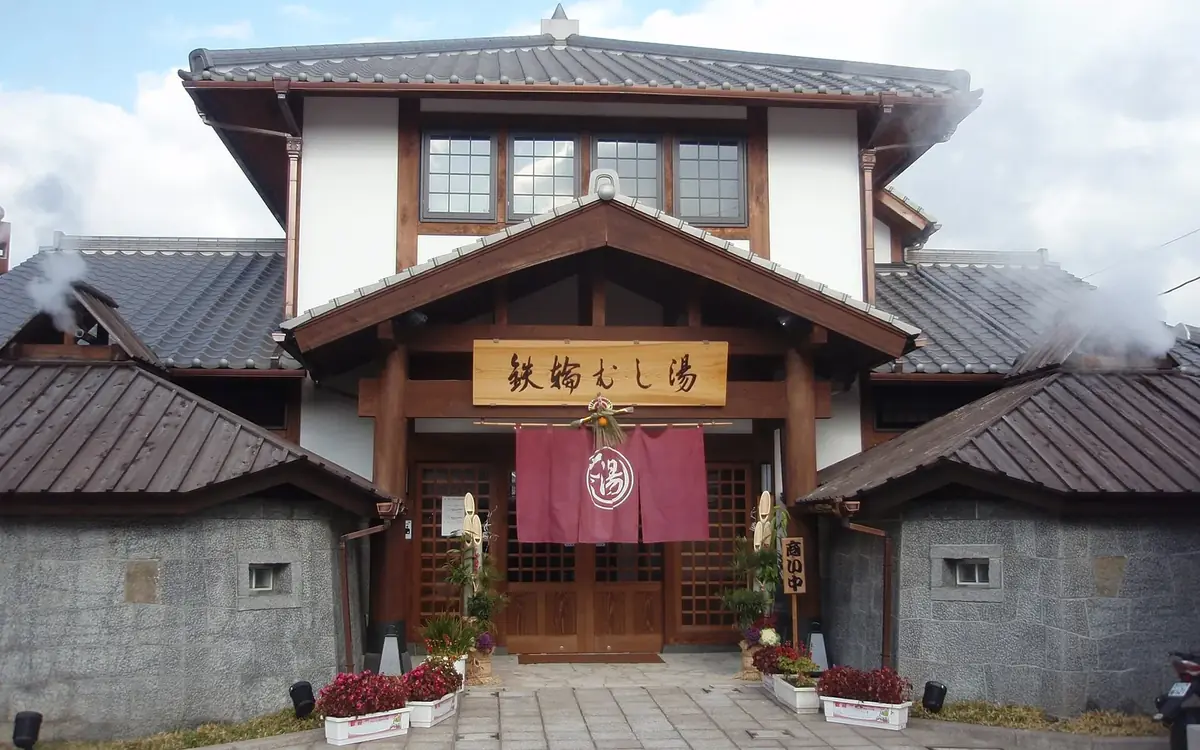
Kannawa Mushiyu, run by the city, is a steam bath founded in 1276 by the monk Ippen, the city says. You lie on a bed of sekisho, a herb that grows beside clear streams, in a small stone chamber heated from below; the city's guide suggests about 10 minutes. When we checked, the city listed ¥700 for junior-high age and above and ¥220 for a rental yukata, allows a T-shirt and shorts instead, and says the foot steam is free. It admits four people of each sex at a time, so a wait is possible.
Hours matter here. The city lists 06:30–20:00 (last entry 19:30) as normal, but 07:30–19:30 (last entry 19:00) from 1 October 2026 to 31 January 2027, and it closes on the fourth Thursday of the month (the next day if that is a holiday).
What to eat and where to look
Jigokumushi (hell-steamed food)
Seafood, meat, vegetables or eggs steamed in natural hot-spring vapour until the flavour concentrates. Beppu Tabi says there are no rules about what goes in the kettle, and describes the steam at Jigoku Mushi Kobo Kannawa as 98°C.
- Where to look
- Jigoku Mushi Kobo Kannawa, Geothermal Tourism Lab Enma and the inn Nisainoyuyado Asahiya, all named by Beppu Tabi; Kannawa Butaman Honpo sells steamed pork buns.
- Fit it into your day
- Lunch in Kannawa between the five walkable hells and the bus to Chinoike.
Allergens depend on what you steam; the kettle fee listed when we checked on 20 October 2026 covers up to 15 minutes, and the steam is very hot, so follow the staff's instructions when lifting a lid.
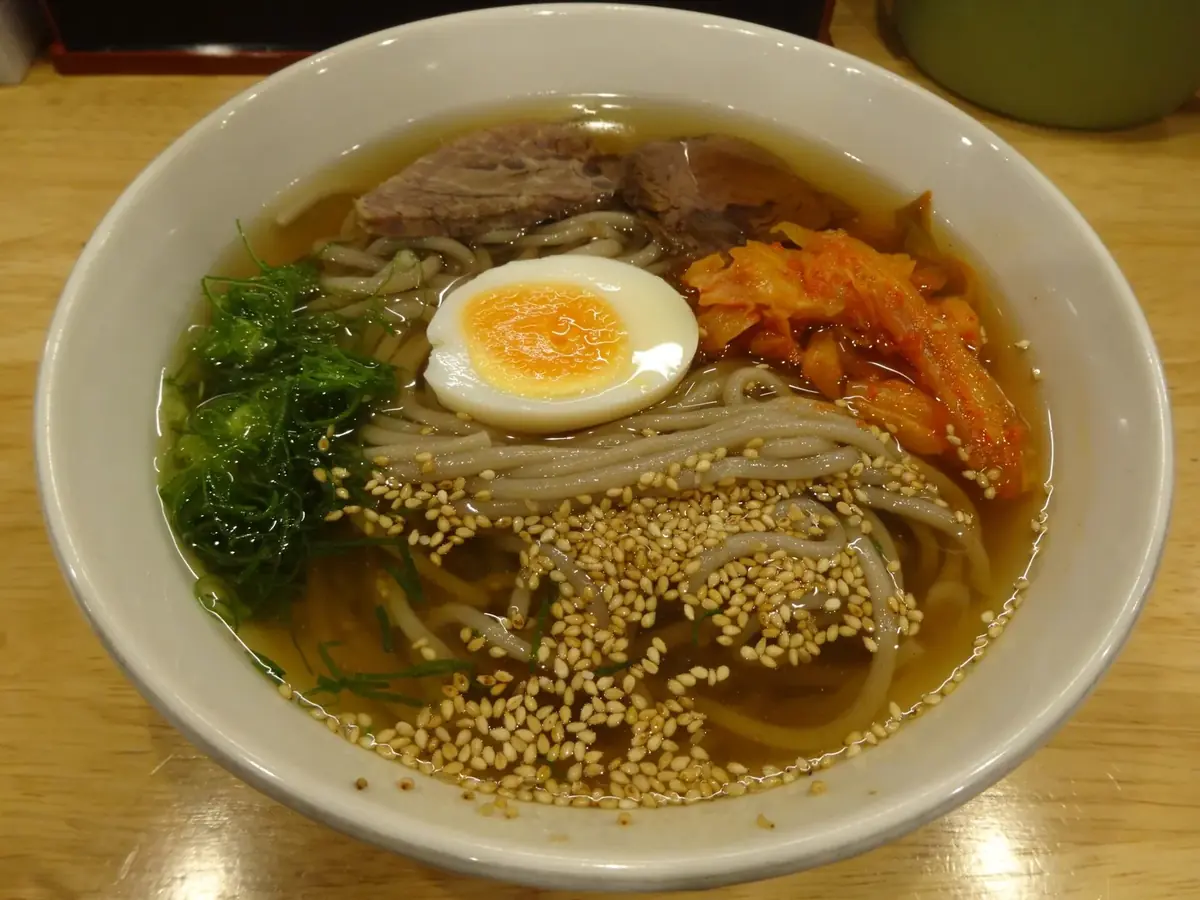
Beppu reimen (cold noodles)
Chilled buckwheat-based noodles in a cold soup with toppings such as kimchi and sliced pork, a favourite after a hot bath. Beppu Tabi says there is no fixed definition and no city certification: each shop makes its own noodles, soup and kimchi, and it traces the dish to cold noodles eaten in Manchuria.
- Where to look
- Beppu Tabi's reimen feature profiles Yakiniku Shunkoen, Ikkyu no Namida and Rokusei, among others.
- Fit it into your day
- After the Takegawara bath or as a lighter dinner.
Beppu Tabi warns that the noodles are made with buckwheat, so people with a buckwheat allergy should avoid them.
Toriten (chicken tempura)
Oita's tender chicken pieces in a light, crisp tempura batter, served with squeezed kabosu citrus and either vinegared soy sauce or ponzu with mustard, according to JNTO.
- Where to look
- Restaurants and izakaya across Oita Prefecture; JNTO recommends them in Oita City.
- Fit it into your day
- A casual dinner in Beppu or Yufuin.
Battered and fried, so it contains wheat; the dipping sauces contain soy.
Dango-jiru (dumpling soup)
Wheat-flour dumplings, hand-stretched like noodles in Oita, simmered in a dashi and soy broth with cabbage, carrots and mushrooms, JNTO says.
- Where to look
- Local-cuisine restaurants in Oita City and Beppu, per JNTO.
- Fit it into your day
- A warming lunch on a cold Yufuin day.
Wheat-based, in a dashi broth that is usually fish-based.
Ryukyu (flavoured sashimi)
Thinly sliced local fish such as yellowtail, squid and mackerel, steeped in a sauce of soy, sake, mirin, sesame and ginger. JNTO says it is served over rice or as ochazuke with hot water or stock.
- Where to look
- Traditional restaurants along the Oita coast, and restaurants in Beppu and Oita City, per JNTO.
- Fit it into your day
- A dinner dish or a quick rice bowl lunch.
Raw fish, sesame and soy.
Public baths, the Takegawara sand bath and tattoos
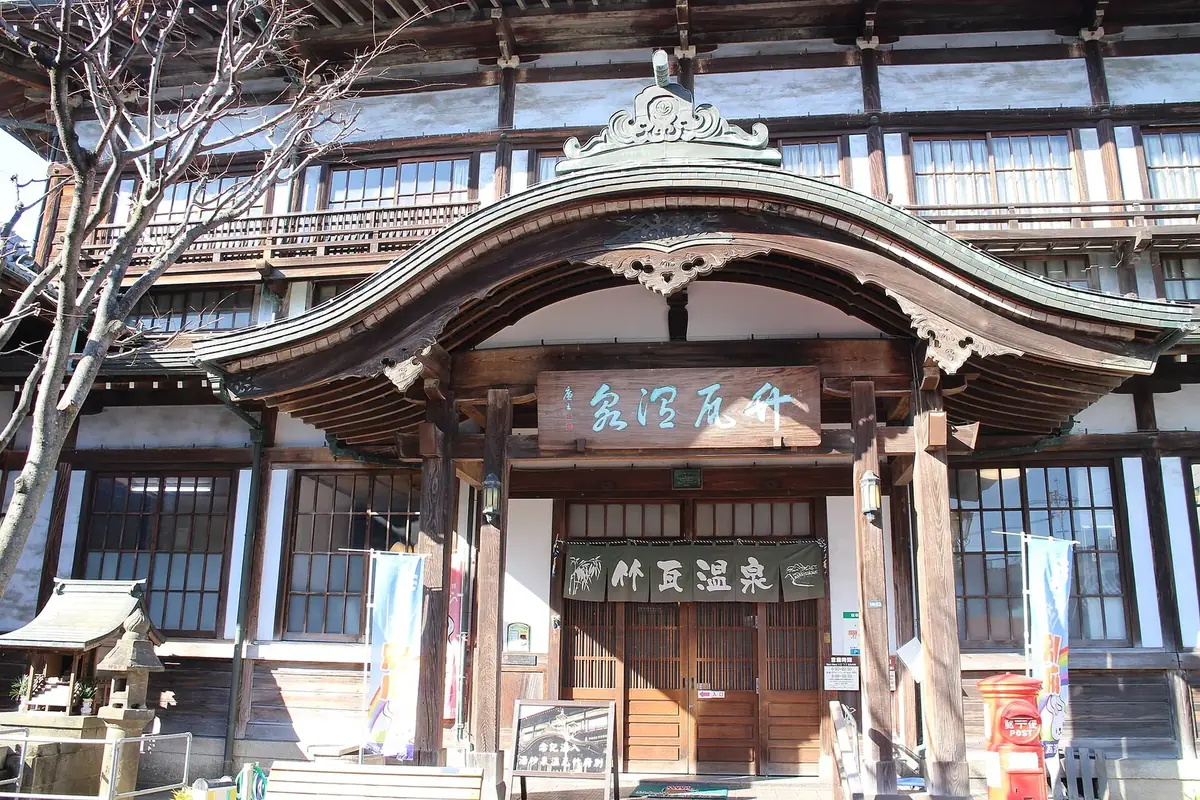
Takegawara Onsen is the bath to plan around: a city-run bath founded in 1879, in a 1938 building whose ornate gable the city calls a symbol of Beppu Onsen, about 10 minutes' walk from JR Beppu Station. When we checked, the city listed the ordinary bath at ¥300 for junior-high age and above and ¥100 for children, free below school age, open 06:30–22:30. The sand bath is ¥1,500 (ages 6 and over), open 08:00–22:30, with last entry at 21:30 that can come earlier on busy days. Both close on the third Wednesday of the month (the next day if that is a holiday). The city says the men's bath draws on a chloride spring and the women's on a hydrogen-carbonate one.
The sand bath takes no reservations of any kind, by phone or online. The city says it hands out numbered tickets, that waits are common and that eight people can use it at once. You lie in a yukata while an attendant covers you with sand warmed by the spring; the city's guide suggests 10 to 15 minutes and no more than once a day, and Beppu Tabi adds that you wash the sand off in the bath next door. Take a number early and come back.
Beppu Tabi's etiquette guide asks you to say hello, pour water over yourself before getting in, ask the regulars before adding cold water, stay off the rim of the bath, keep your towel out of the water and tie up long hair. It warns that most neighbourhood baths provide no shower, soap, shampoo or towel, so bring your own. Takegawara sells small kits: the city lists a soap and shampoo set at ¥100, a towel at ¥350 and lockers at ¥100.
On tattoos, the city's Takegawara and Mushiyu pages say nothing, so ask first. JNTO's general guidance is that policies at public onsen are decided case by case, that some owners tolerate small tattoos and that skin-coloured cover stickers help, and it advises emailing the facility or asking your booking platform in advance. Renting a private bath (kashikiri) avoids the question: Beppu Tabi's family-bath feature lists seven private bathhouses, several of which take no reservations, so arrive early. JNTO adds that the shared bath at an inn is almost always free for overnight guests and that some rooms have their own.
Yufuin: a quieter ryokan night and Lake Kinrin
Yufuin Onsen lies at the foot of Mount Yufu. JNTO says it has the second-highest water flow of any onsen in Japan, that day visitors can bathe as well as guests, and that rice paddies begin soon after you leave the main streets, so it is worth walking beyond the shops.
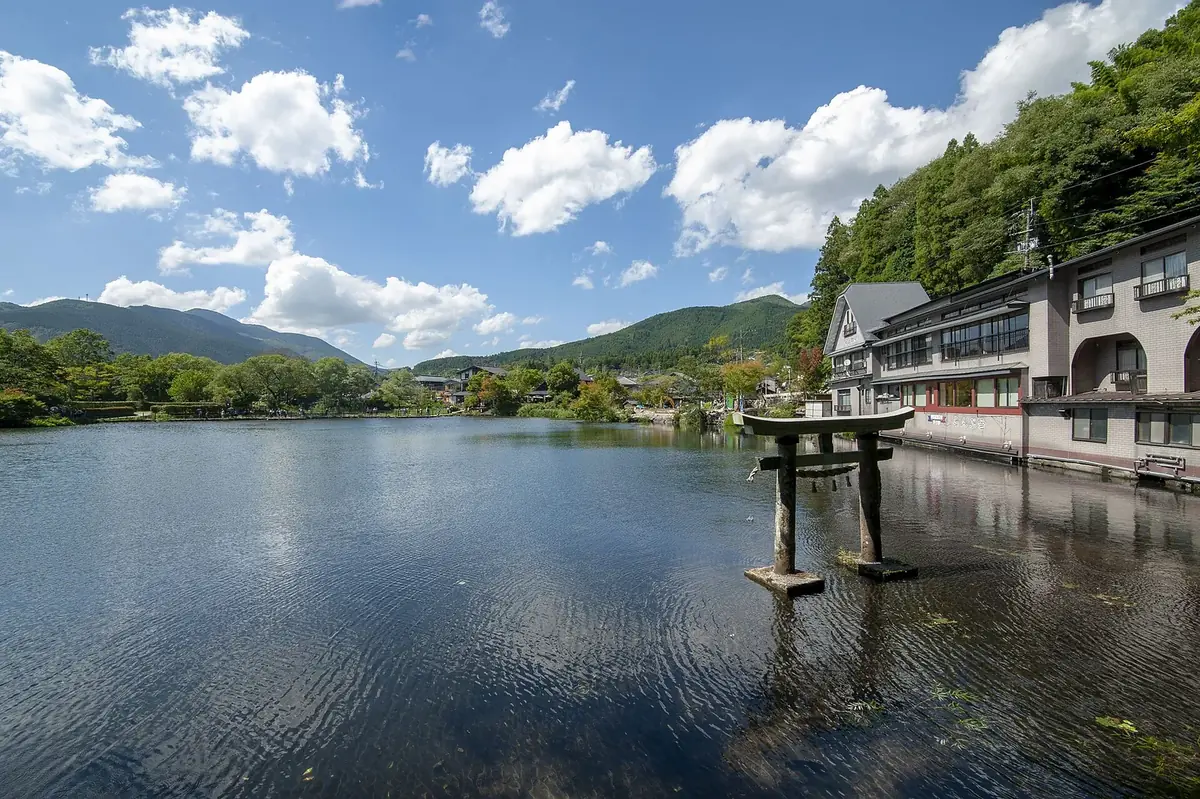
Lake Kinrin is about 30 minutes' walk from Yufuin Station, YUFUINFO says, with a footpath of about 400 m round it. Spring water and hot-spring water both flow in, so the lake stays warm, and on cold mornings from late autumn into winter mist rises from the surface. The site recommends going at dawn. The torii at the lake's edge belongs to Tenso Shrine. JNTO notes that the lake lies at the end of the town's main street, with walking paths, shops and cafes.
If you sleep in Beppu you can still bathe in Yufuin. YUFUINFO’s feature, checked on 20 October 2026, lists Otomaru Onsen-kan at ¥200, 06:00–22:00, closed on the third Thursday. Yufuin Tsukanoma costs ¥800 for adults and ¥500 for primary and junior-high pupils, 09:30–18:30 with last admission at 18:00; it closes on Wednesdays, Thursdays, 31 December and 1 January. Prices and closing days can change.
A night here also fits the transport. On the weekday timetable dated 14 March 2026 the last route 36 bus to Beppu left Yufuin at 18:00, and, on JR Kyushu's timetable from 14 March 2026, the last Yufuin no Mori for Hakata leaves at 17:17 (check its operating calendar for your date). Staying lets you see the lake early and bathe in the evening without watching the clock.
From Hakata: the Yufuin no Mori and the alternatives
The Yufuin no Mori is JR Kyushu's all-reserved sightseeing limited express. On the timetable that took effect on 14 March 2026, No. 1 leaves Hakata at 09:17 and reaches Yufuin at 11:31, No. 3 leaves at 10:11 and reaches Yufuin at 12:32, and No. 5 leaves at 14:38 and reaches Yufuin at 16:50. Only No. 3 continues, to Oita at 13:20 and Beppu at 13:31. Back towards Hakata, No. 2 leaves Yufuin at 12:01 and arrives at 14:19, No. 4 leaves Beppu at 14:36 and Yufuin at 15:56, and No. 6 leaves Yufuin at 17:17. Treat these as a guide: on some days a Yufu limited express runs in place of the Yufuin no Mori, so check JR Kyushu's operating calendar for your date.
Book early. JR Kyushu's English page says that seats on the Yufuin no Mori and the Yufu are consistently fully booked day after day, and suggests the route via Kokura and Oita instead. Tickets go on sale at 10:00, one month before the travel date, and the operating calendar notes days on which the Yufu runs in its place or the train is out for inspection; JR Kyushu says dates from December will be announced around mid-October 2026. When we checked on 12 October 2026, its Japanese page listed ¥6,130 for an adult from Hakata to Yufuin, the sum of the basic fare and a reserved limited-express fee that varies by date, or ¥5,600 with the web-only Kyushu Net ticket.
The fallback is the Sonic limited express from Hakata to Oita, about 2 hours according to JR Kyushu's timetable leaflet, then the local train on the Kyudai Line, about 1 hour, to Yufuin. JNTO gives 1 hour 15 minutes for Beppu to Yufuin by train via Oita and says the bus, at 50 minutes, is faster, which is why the bus is the link to plan around. From Fukuoka, Kamenoi Bus runs reserved highway buses to Beppu (about 2 hours 50 minutes from Hakata Bus Terminal; its page lists 12 round trips a day after the timetable change on 1 October 2026) and to Yufuin (about 2 hours 20 minutes from Tenjin, 14 round trips a day). It also sells a combined ticket for ¥7,200: a highway-bus return to either town plus two days of unlimited Beppu and Yufuin local buses. Coming from Nagasaki instead, our Kyushu in 7 days itinerary routes the day back through Hakata and up the coast on the Sonic.
Beppu to Yufuin by bus
Kamenoi Bus's route 36 is the regular link, leaving from stop 1 outside Beppu Station's west exit for Yufuin Ekimae Bus Centre via Beppu Ropeway. On the weekday timetable dated 14 March 2026, buses left Beppu Station at 07:37 (Yufuin 08:35), 08:40 (09:33), 09:10 (10:02), 09:40 (10:32) and about every 30 minutes until 12:40, then at 13:40, 14:40, 15:10, 15:40, 16:40, 17:40 and 18:20. The fare table in force from 7 October 2026 shows ¥1,100 from Beppu Station West Exit to Yufuin Station Bus Centre. You can pay with a transport IC card or contactless card; cash gets no change on the bus.
The sightseeing express Yufurin needs no reservation, has a luggage trunk and calls at Kannawa. When we checked, the weekday sheets showed one run each way: Beppu Station 11:05, Kannawa 11:27, Yufuin 12:13, and back from Yufuin at 13:35 to reach Beppu Station at 14:41. On weekends and public holidays there are six each way, from Beppu Station at 07:40, 08:30, 11:05, 11:35, 15:05 and 16:05, and from Yufuin at 09:20, 10:05, 13:20, 14:25, 16:45 and 17:40. If you sleep in Kannawa, it is the easiest way to arrive in Yufuin with a suitcase.
For a limited period, Kamenoi Bus runs a double-decker open-top bus between the two towns, from 7 October to 13 December 2026. It leaves Beppu Station (stop 4) at 09:00, 12:15 and 15:45 and Yufuin at 10:40, 14:20 and 17:05, takes about 65 minutes by expressway, costs ¥2,200 for adults (¥2,000 booked online through the Highway Bus website) and needs a reservation. There is no return fare, and it does not run on vehicle-inspection days.
Three nights split between Beppu's hells and a Yufuin ryokan
This is an editorial suggestion, not a timetable. Fit it round the days your train or bus actually runs.
- Day 1, Beppu: arrive by Oita Airport bus (53 minutes to Beppu Station) or Yufuin no Mori No. 3 (Beppu 13:31 on the 14 March 2026 timetable; check the operating calendar). Take a number for the Takegawara sand bath, walk the arcades, bathe, and sleep in Kannawa or by the station.
- Day 2, the hells: buy the common ticket at Umi Jigoku when it opens at 08:00, walk the five Kannawa hells, have steam-cooked lunch at Jigoku Mushi Kobo, bus to Chinoike and finish at Tatsumaki Jigoku. Try the Mushiyu before dinner (last entry 19:00 between 1 October 2026 and 31 January 2027).
- Day 3, to Yufuin: take the Yufurin from Kannawa at 11:27 on weekdays, or route 36 from Beppu Station. Check in, walk to Lake Kinrin and bathe at your ryokan.
- Day 4: Lake Kinrin at dawn, then the Yufuin no Mori No. 2 (12:01 for Hakata, 14:19, on the 14 March 2026 timetable; check the operating calendar), or route 36 back to Beppu for the Sonic.
Practical questions
How many nights do I need in Beppu and Yufuin?
Three nights work well: two in Beppu for the hells, steam cooking and public baths, and one in a Yufuin ryokan. Beppu alone is enough for a night or two, but Yufuin repays a stay for Lake Kinrin in the early morning.
How does the Beppu Hells common ticket work?
One ticket covers all seven hells. When we checked on 12 October 2026, it cost ¥2,400 for adults and ¥1,200 for elementary and junior-high pupils, was valid on the day of purchase and the next day, and allowed one entry per hell. Buy it at the first hell you visit.
Can I book the Takegawara sand bath in advance?
No. The city says its sand bath takes no reservations by phone or online, hands out numbered tickets and holds eight people at a time. When we checked on 20 October 2026, it cost ¥1,500 for ages 6 and over and closed on the third Wednesday of each month, or the following day if that Wednesday is a public holiday.
Can I use Beppu onsen with tattoos?
It depends on the bath. JNTO says public onsen decide case by case, that some tolerate small tattoos and that cover stickers help, and it advises asking in advance. A private bath (kashikiri) or a room with its own bath avoids the question.
How do I get from Beppu to Yufuin?
Take Kamenoi Bus route 36 from Beppu Station's west exit to Yufuin; on the weekday timetable dated 14 March 2026 the 09:10 bus arrived at 10:02. The Yufurin sightseeing express stops at Kannawa and needs no reservation, and an open-top bus also runs from 7 October to 13 December 2026.
Do I need to reserve the Yufuin no Mori?
Yes. All seats are reserved, and JR Kyushu says the train is consistently fully booked. Tickets go on sale at 10:00 one month before travel, and the Sonic limited express via Oita is the fallback.
Keep planning your trip
Fukuoka
How many nights Fukuoka needs, whether to sleep in Hakata, Tenjin or Nakasu, how yatai food stalls work, Hakata ramen and Dazaifu Tenmangu as a half-day trip.
Read the guide
Nagasaki
How many nights Nagasaki needs, where to sleep, how to plan the Peace Park and museum, Glover Garden and Dejima, and why Gunkanjima landings can fail.
Read the guide
Ryokan and onsen
How a ryokan night works, what to tell the inn when booking, onsen etiquette and tattoos, private baths, and which towns on a Japan route suit a ryokan night.
Read the guide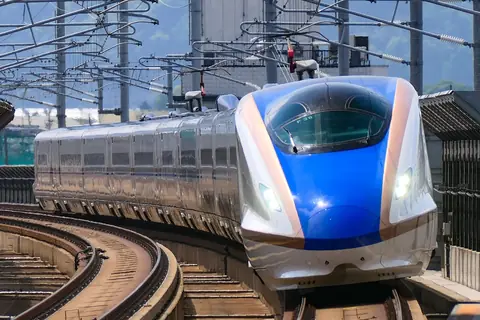
Japan Rail Pass
Whether the 7-day Japan Rail Pass pays for your route, worked out with official fares, plus Nozomi rules, regional JR passes, smartEX and how to use the pass.
Read the guide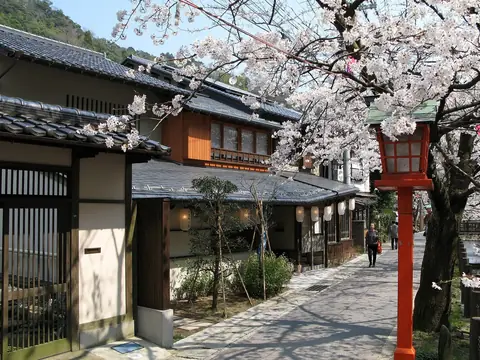
Onsen etiquette in Japan
How to use a Japanese hot spring or public bath step by step, what to bring and what it costs, the tattoo question, private kashikiri baths and the rules for children.
Read the guide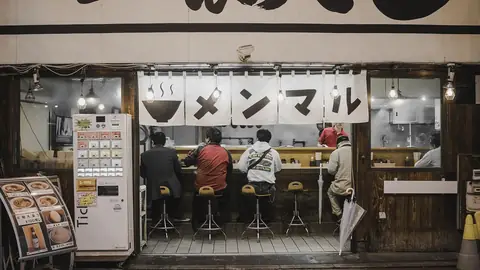
Food in Japan
What to eat from Tokyo to Hiroshima and on to Kanazawa or Sapporo, which meals to book, how ticket machines and the otoshi work, and eating vegetarian or halal.
Read the guideSources and checks before you travel
(41)
- Beppu Jigoku association: admission and business information (Japanese) ↗ — opens in a new tab
- Beppu Jigoku association: home page (Japanese) ↗ — opens in a new tab
- Beppu Jigoku association: access (Japanese) ↗ — opens in a new tab
- Beppu Jigoku association: footbaths (Japanese) ↗ — opens in a new tab
- Beppu Jigoku association: nationally designated scenic spots (Japanese) ↗ — opens in a new tab
- Beppu Jigoku association: Tatsumaki Jigoku (Japanese) ↗ — opens in a new tab
- Beppu Jigoku association: notice on the Tatsumaki geyser, 15 January 2026 (Japanese, image) ↗ — opens in a new tab
- Beppu Tabi (Beppu City official tourism site): Jigoku Meguri features ↗ — opens in a new tab
- Beppu Tabi (Beppu City official tourism site): Jigoku Meguri full tour ↗ — opens in a new tab
- Beppu Tabi (Beppu City official tourism site): eating onsen jigokumushi ↗ — opens in a new tab
- Beppu Tabi (Beppu City official tourism site): bathing in Beppu ↗ — opens in a new tab
- Beppu Tabi (Beppu City official tourism site): Beppu Hatto and onsen tour ↗ — opens in a new tab
- Beppu Tabi (Beppu City official tourism site): tourist information centres ↗ — opens in a new tab
- Beppu Tabi (Beppu City official tourism site): Jigoku Mushi Kobo Kannawa (Japanese) ↗ — opens in a new tab
- Beppu Tabi (Beppu City official tourism site): Beppu reimen (Japanese) ↗ — opens in a new tab
- Beppu Tabi (Beppu City official tourism site): family baths (Japanese) ↗ — opens in a new tab
- Beppu City: Takegawara Onsen (Japanese) ↗ — opens in a new tab
- Beppu City: Kannawa Mushiyu (Japanese) ↗ — opens in a new tab
- Beppu City: municipal onsen FAQ (Japanese) ↗ — opens in a new tab
- Beppu City: how to bathe properly, onsen encyclopedia (Japanese) ↗ — opens in a new tab
- Beppu City: bath tax (Japanese) ↗ — opens in a new tab
- YUFUINFO (Yufu City Machizukuri Tourism Bureau): onsen (Japanese) ↗ — opens in a new tab
- YUFUINFO (Yufu City Machizukuri Tourism Bureau): Lake Kinrin in winter mist (Japanese) ↗ — opens in a new tab
- YUFUINFO (Yufu City Machizukuri Tourism Bureau): day-use onsen in Yufuin (Japanese) ↗ — opens in a new tab
- JNTO: Yufuin Onsen ↗ — opens in a new tab
- JNTO: onsen, tattoos and etiquette ↗ — opens in a new tab
- JNTO: Oita's local flavours ↗ — opens in a new tab
- JR Kyushu: Yufuin no Mori ↗ — opens in a new tab
- JR Kyushu: Yufuin no Mori (Japanese) ↗ — opens in a new tab
- JR Kyushu: notice on Yufuin no Mori operation from 19 September 2026 (PDF, Japanese) ↗ — opens in a new tab
- JR Kyushu: timetables for trains (PDF) ↗ — opens in a new tab
- Kamenoi Bus: route 36 Yufuin line timetable (PDF, weekday) ↗ — opens in a new tab
- Kamenoi Bus: Yufurin sightseeing express timetables (PDF) ↗ — opens in a new tab
- Kamenoi Bus: fare table (PDF) ↗ — opens in a new tab
- Kamenoi Bus: FAQ for local buses ↗ — opens in a new tab
- Kamenoi Bus: how to reach sightseeing spots ↗ — opens in a new tab
- Kamenoi Bus: Beppu hells sightseeing bus ↗ — opens in a new tab
- Kamenoi Bus: open-top bus Beppu to Yufuin course ↗ — opens in a new tab
- Kamenoi Bus: highway buses ↗ — opens in a new tab
- Kamenoi Bus: value tickets ↗ — opens in a new tab
- Oita Airport: bus access (Japanese) ↗ — opens in a new tab
Reference sources for the version dated 26 October 2026. Confirm opening times, access, transport and conditions for your travel dates.
Photo credits
(5)
Umi Jigoku (Sea Hell), a steaming pond at about 98°C with a red torii behind.
Photograph: Leyo — opens in a new tab · CC BY-SA 2.5 ch — opens in a new tab
Changes: Resized and converted to WebP; displayed with responsive crops. · Original photograph and licence details ↗ — opens in a new tab
Takegawara Onsen, the city-run bath with the sand bath, about 10 minutes' walk from Beppu Station
Photograph: Suicasmo — opens in a new tab · CC BY-SA 4.0 — opens in a new tab
Changes: Resized and converted to WebP; displayed with responsive crops. · Original photograph and licence details ↗ — opens in a new tab
Kannawa Mushiyu, the city-run steam bath in the middle of Kannawa
Photograph: Belle Equipe — opens in a new tab · CC BY-SA 3.0 — opens in a new tab
Changes: Resized and converted to WebP; displayed with responsive crops. · Original photograph and licence details ↗ — opens in a new tab
Lake Kinrin in Yufuin, a day trip from Beppu, with the torii of Tenso Shrine standing in the water.
Photograph: HyunJae Park — opens in a new tab · Public domain — opens in a new tab
Changes: Resized and converted to WebP; displayed with responsive crops. · Original photograph and licence details ↗ — opens in a new tab
Beppu reimen from a specialist shop; every shop's noodles, soup and kimchi differ
Photograph: 聖石大戦ぶぅぶぅ — opens in a new tab · CC BY-SA 4.0 — opens in a new tab
Changes: Resized and converted to WebP; displayed with responsive crops. · Original photograph and licence details ↗ — opens in a new tab