Western Thailand · Kanchanaburi
Kanchanaburi travel guide: River Kwai, Death Railway and Erawan Falls
Kanchanaburi is two journeys in one. In town and along the railway west of it, the Second World War is close: the bridge over the River Kwai, the cemeteries of prisoners of war and the cuttings of the Thai–Burma railway. Further out, the province opens into forested hills, rivers and some of Thailand's best-known waterfalls. Give it enough time for both.
- Suggested time
- 2–3 days
- Where to stay
- Kanchanaburi town, by the River Kwai
- Season and timing
- Mid-October to mid-February is the most comfortable; waterfalls are fullest after the rainy season (mid-May to mid-October).
The short answer
Stay at least two nights. Spend one day on the war history — the bridge, the war cemetery and a museum in town, then the train along the Death Railway towards Nam Tok — and one day for Hellfire Pass and Erawan Falls, which need a car, a driver or a tour. Sleep in town by the river. A day trip from Bangkok covers only the bridge and is a long, rushed day.
Why stay more than a day
Most day tours from Bangkok reach the bridge, take a short train ride and turn back. The places that explain the railway's history — Hellfire Pass, the viaducts, the cemeteries — and the waterfalls of Erawan National Park are spread over many kilometres, and are best seen without a two-hour drive at each end.
With two nights in town you can see the history at a respectful pace, spend a day in the national parks and have evenings by the river.
The bridge, the cemeteries and the town
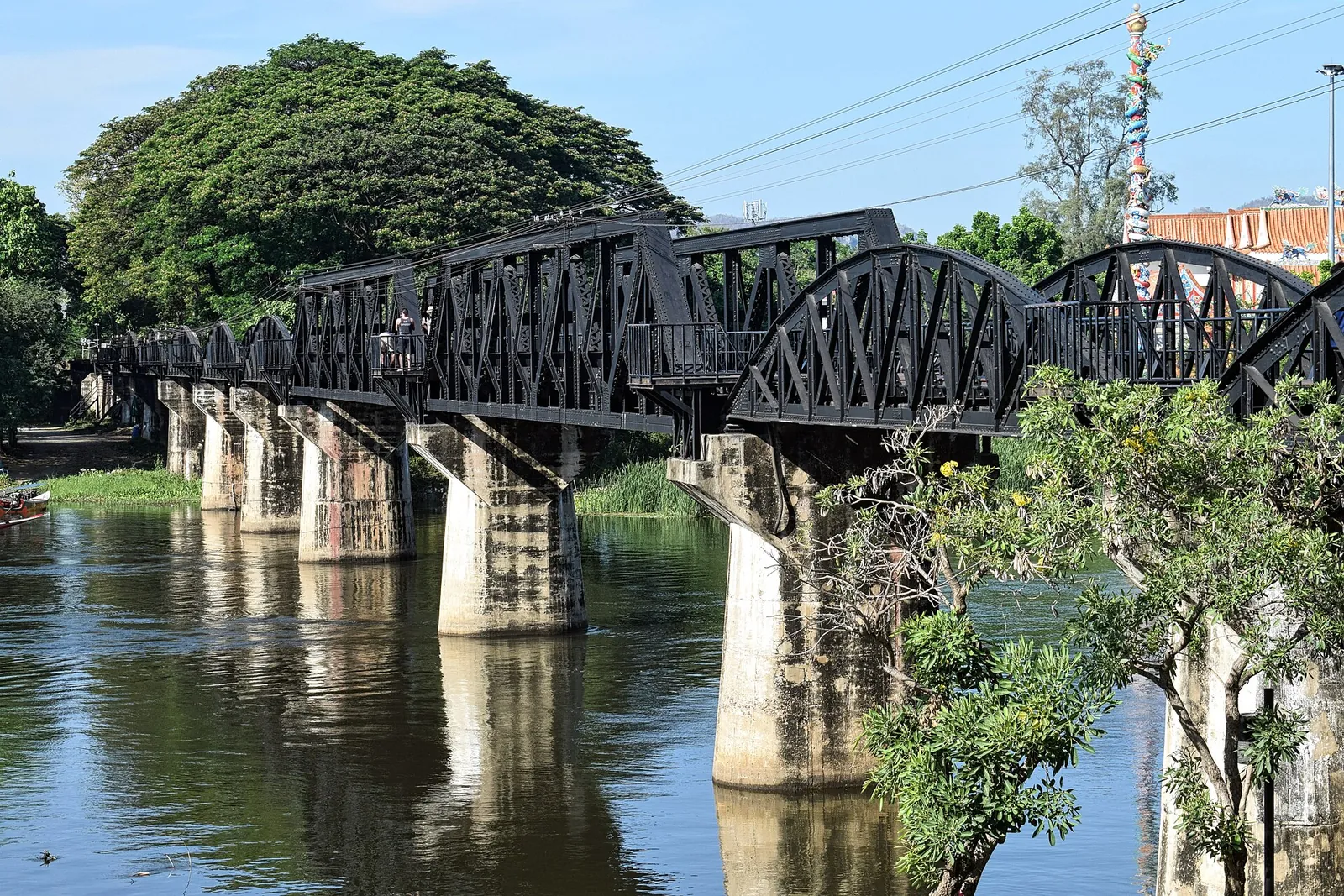
The Bridge over the River Kwai was built by the forced labour of Allied prisoners of war under Japanese control, and its central spans were later destroyed by Allied bombing, as the Ministry of Tourism and Sports' directory records. Walk onto it early in the morning, before the tour groups, and step aside into the refuges when a train is due.
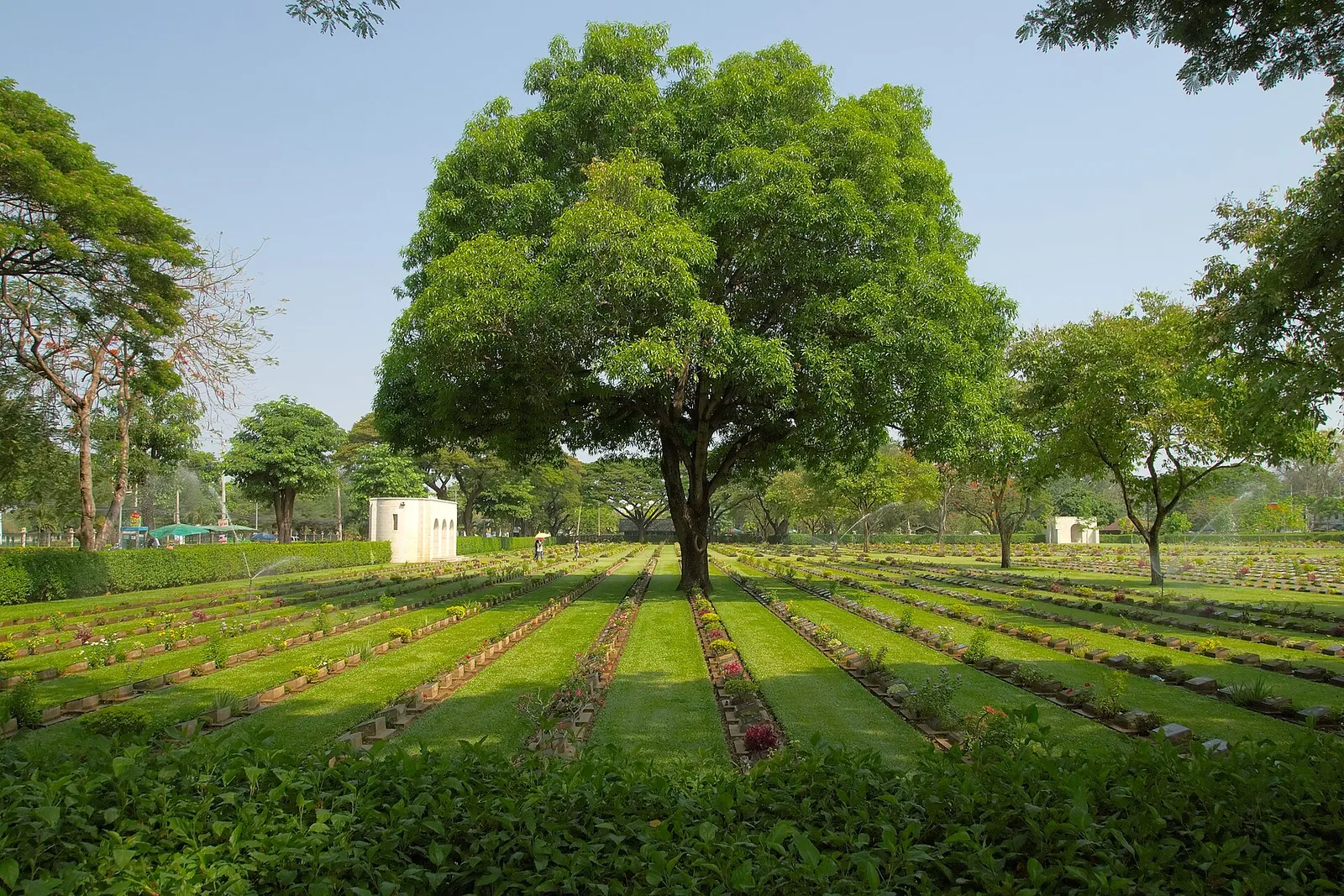
In town, Kanchanaburi War Cemetery (Don Rak) holds the graves of 6,982 prisoners of war who died building the railway; a second Allied cemetery lies at Chong Kai across the river. These are places of remembrance: keep your voice low and do not use graves as photo props.
Each year in late November and early December, the River Kwai Bridge Festival brings a sound-and-light show to the bridge. Book accommodation early if you plan to be in town then.
Make time for the local food
What to eat and where to look
River fish (including pla yisok)
Kanchanaburi's riverside restaurants serve freshwater fish from the Kwai rivers, often steamed with lime and chilli, fried with garlic or in a sour curry; pla yisok is the local fish most associated with the province.
- Where to look
- Restaurants along the river in town and on floating platforms by the water.
- Fit it into your day
- An evening meal to share, with rice and a vegetable stir-fry.
Fish bones; prices are often by weight.
Gaeng pa (jungle curry)
A fiery, herb-heavy curry without coconut milk, made with wild ginger, green peppercorns and vegetables — a good fit for the hill country of the west.
- Where to look
- Thai restaurants and rice-and-curry shops.
- Fit it into your day
- Order with plain rice and something mild to balance it.
Very spicy; usually contains fish sauce and shrimp paste.
Night-market snacks
Grilled pork skewers, sticky rice, fresh fruit and Thai sweets at the town's evening markets.
- Where to look
- Evening markets in town; on Sundays, TAT has described Pak Phraek Road as a walking street with food stalls.
- Fit it into your day
- A light, wandering dinner after a day out.
Check market days; they change.
Riding the Death Railway
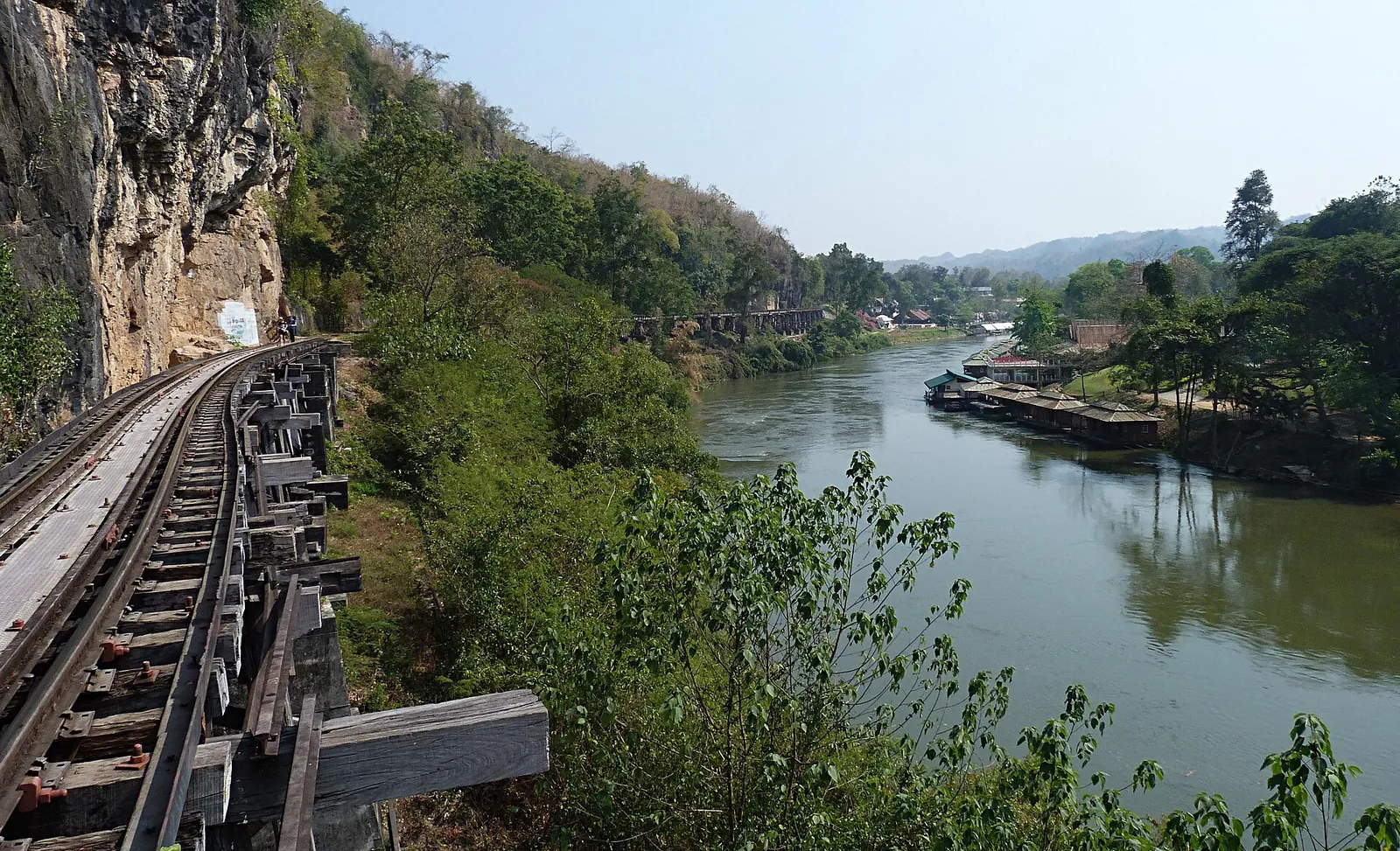
The surviving section of the Thai–Burma railway still carries trains west from Kanchanaburi to Nam Tok station, about 77 kilometres away according to the directory. The line crosses the bridge and runs along the Kwai Noi valley; near Tham Krasae, the track clings to the cliff on a wooden viaduct, and visitors can walk along the sleepers to a cave shrine when no train is coming.
Trains are few and slow. Check the State Railway of Thailand timetable, decide where to join and leave the train, and arrange a car or tour to collect you at the other end so that you are not waiting for hours for a return service.
Hellfire Pass
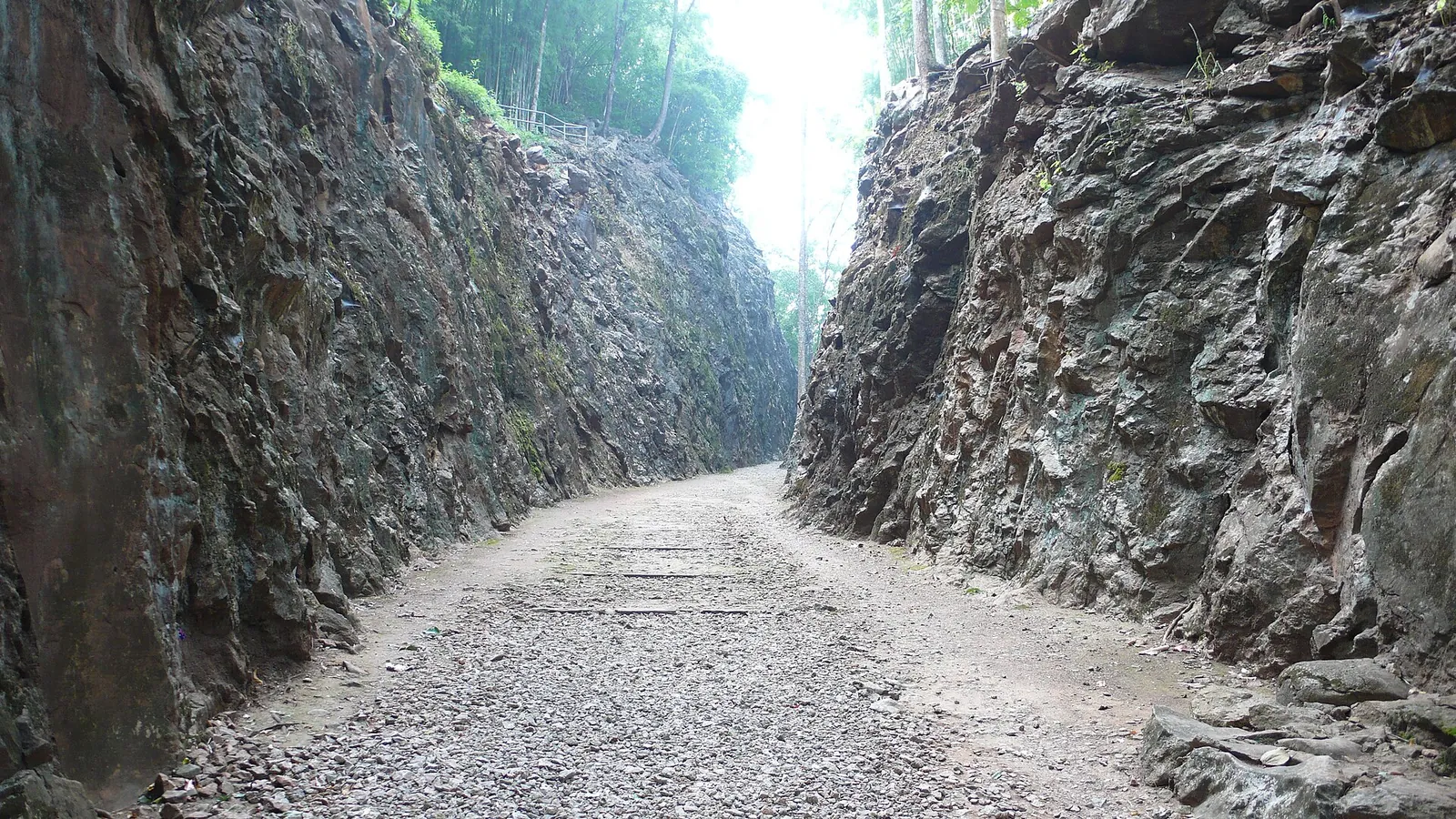
The Hellfire Pass Museum of Remembrance stands about 80 kilometres from town on Highway 323, beyond the end of the operating line. The directory explains the name: prisoners worked at night by firelight, and the shadows looked like hell. The museum, opened in 1999 with the cooperation of the Australian government, leads to a walking trail along the original cutting.
Allow at least two hours for the museum and the walk. The directory lists closures over Songkran, 5 December, Christmas and New Year; check before going, and bring water and good shoes for the trail.
Erawan Falls and the national parks
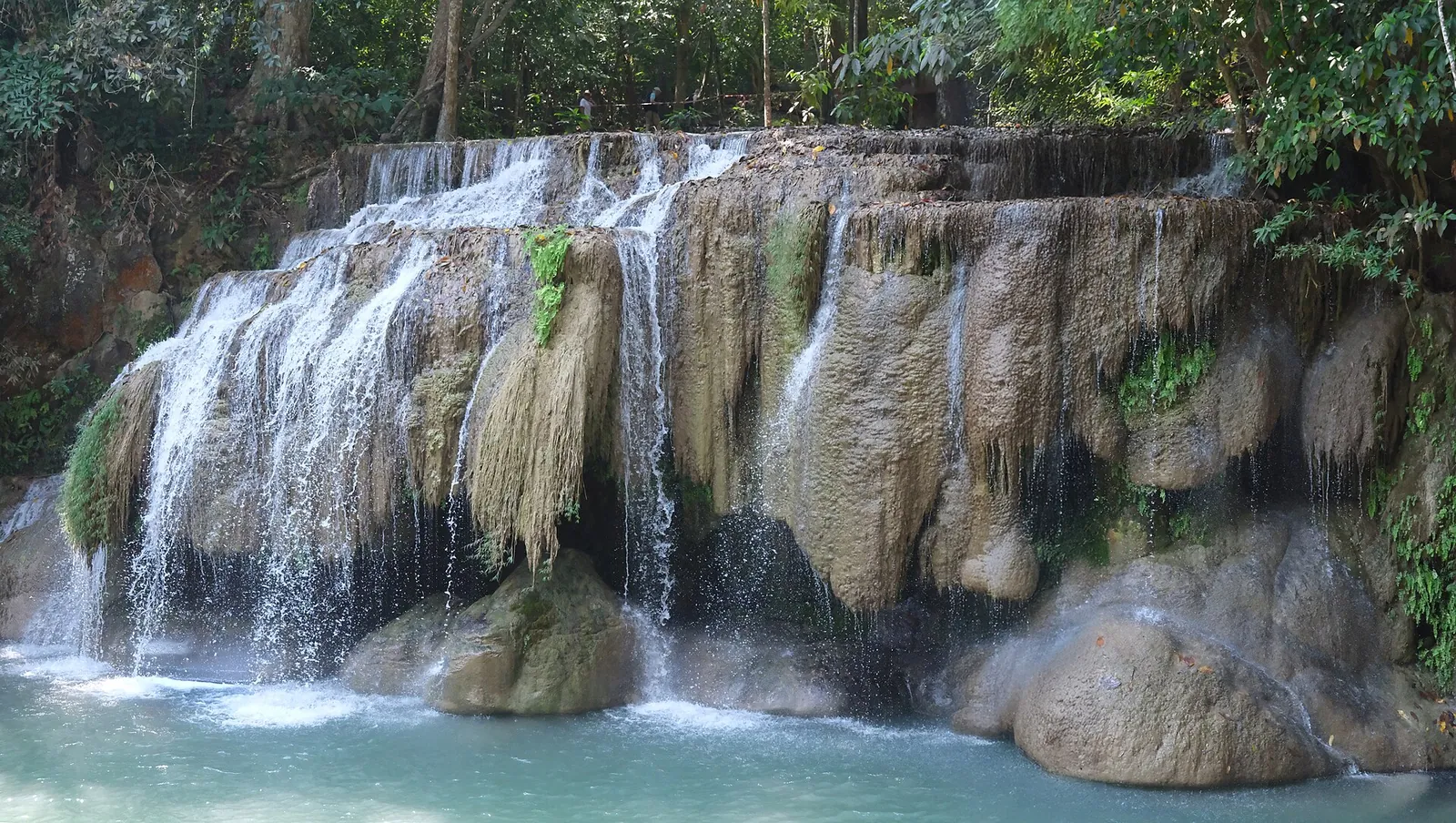
Erawan Waterfall, in Erawan National Park, falls in seven tiers through the forest, with pools at each level; the directory lists opening from 7:30 to 16:00. The trail to the top is about 1.5 kilometres and steep in places. Arrive early, before the day-trippers, and keep to the swimming areas the park designates.
National parks charge entry fees for foreign visitors that are set by the Department of National Parks and change from time to time; carry cash. Further north-west, the reservoirs and forests around Si Sawat and Sangkhlaburi make a natural extension for a longer trip.
Practical questions
Is Kanchanaburi worth a day trip from Bangkok?
Only for a quick look at the bridge. Stay two nights to see Hellfire Pass, the railway and Erawan Falls without spending most of each day on the road.
Can I take the train on the Death Railway?
Yes. Trains still run from Kanchanaburi across the bridge to Nam Tok. Services are few; check the State Railway of Thailand timetable and plan your return.
How far is Hellfire Pass from Kanchanaburi town?
About 80 kilometres, on Highway 323 towards Thong Pha Phum. You need a car, a driver or a tour.
Can I swim at Erawan Falls?
Yes, in the designated pools. The directory lists opening from 7:30 to 16:00; arrive early and follow park rules.
When is the River Kwai Bridge Festival?
Every year in late November and early December, with a sound-and-light show at the bridge.
Sources and checks before you travel
Reference sources for the version dated 1 October 2026. Confirm opening times, access, transport and conditions for your travel dates.
- Thailand Tourism Directory: Bridge over the River Kwai ↗ — opens in a new tab
- Thailand Tourism Directory: Kanchanaburi War Cemetery ↗ — opens in a new tab
- Thailand Tourism Directory: the Death Railway ↗ — opens in a new tab
- Thailand Tourism Directory: Hellfire Pass – The Museum of Remembrance ↗ — opens in a new tab
- Thailand Tourism Directory: Erawan Waterfall ↗ — opens in a new tab
- TAT Newsroom: Kanchanaburi's new shades ↗ — opens in a new tab
- State Railway of Thailand ↗ — opens in a new tab
Does this experience fit your route?
A tour from Kanchanaburi links Erawan Falls with a ride on the railway. Check the train section, the pick-up point and the time at each stop.
Check dates and details on Viator ↗ — opens in a new tabAffiliate link · Book with ViatorPhoto credits
The Bridge over the River Kwai, Kanchanaburi.
Photograph: PumpkinSky — opens in a new tab · CC BY-SA 4.0 — opens in a new tab
Changes: Resized and converted to WebP; displayed with responsive crops. · Original photograph and licence details ↗ — opens in a new tab
One of the seven tiers of Erawan Waterfall, Erawan National Park.
Photograph: Don Ramey Logan — opens in a new tab · CC BY 4.0 — opens in a new tab
Changes: Resized and converted to WebP; displayed with responsive crops. · Original photograph and licence details ↗ — opens in a new tab
The cutting at Hellfire Pass on the former Thai–Burma railway.
Photograph: Niels Mickers — opens in a new tab · CC BY 3.0 nl — opens in a new tab
Changes: Resized and converted to WebP; displayed with responsive crops. · Original photograph and licence details ↗ — opens in a new tab
Kanchanaburi War Cemetery (Don Rak).
Photograph: Vyacheslav Argenberg — opens in a new tab · CC BY 4.0 — opens in a new tab
Changes: Resized and converted to WebP; displayed with responsive crops. · Original photograph and licence details ↗ — opens in a new tab
The Death Railway on the viaduct near Tham Krasae.
Photograph: Wayne77 — opens in a new tab · CC BY-SA 4.0 — opens in a new tab
Changes: Resized and converted to WebP; displayed with responsive crops. · Original photograph and licence details ↗ — opens in a new tab