Plan your trip · Thailand
Money in Thailand: baht, cards, cash and tourist QR payments
A practical money plan for Thailand uses more than one way to pay. Keep Thai baht for purchases where a card or app is not accepted, a card for agreed larger payments, and a backup if the first method fails. A QR code on a counter does not mean every foreign banking app can pay it. There is a tourist-wallet route, but it has its own registration, balance and refund conditions.
- Suggested time
- Useful throughout the trip; prepare arrival funds and backup cards before departure
- Where to stay
- Arrange payment access in Bangkok or another main arrival city before a remote stay
- Season and timing
- All year; plan cash and card access before travelling to a remote property or island.
The short answer
Carry some usable Thai-baht cash and two independent payment methods if possible. Before a withdrawal or exchange, read the total fees and conversion choice. Treat QR as an optional tool until your own app or a registered tourist wallet completes a small payment. Check entry-category proof of funds before flying, and keep it separate from your day-to-day spending plan.
Thai baht: organise money around actual spending
Thailand’s currency is the baht, usually written THB. Think in the baht total when comparing meals, transport or shopping, then use your actual provider’s rate to judge the cost at home. Do not base the trip on a conversion copied from an old travel page.
Keep the day’s money separate from your backup card and reserve. Ask for change when it is practical, and check the printed value of a note before handing it over in a busy market. Before heading to an isolated stay, ask the hotel about nearby withdrawal facilities and the payment methods it accepts; do not assume a map marker proves that a machine is working.
Cash and cards: ask before ordering or booking
At a small food stall, ask what payment method is accepted and have cash ready if needed. For a hotel, activity or larger restaurant bill, confirm the final total, any card surcharge and the currency before authorising payment. A card logo alone does not answer every question about the transaction.
Check your home bank’s foreign-purchase, withdrawal and security settings before departure. Keep a second payment method separate and know how to contact the bank if the card is blocked. If a terminal offers to convert the bill into your home currency, compare that quoted rate and total with the card provider’s conversion rather than accepting without reading. Keep the receipt until the transaction clears.
Make time for the local food
What to eat and where to look
Noodles in Yaowarat
A bowl of noodles makes a straightforward meal between Chinatown walks; choose a stall by the dish being cooked rather than a vague all-purpose menu.
- Where to look
- Yaowarat and the streets around Wat Mangkon in Bangkok.
- Fit it into your day
- Ask the price for the bowl, toppings and drink before ordering; keep cash for a small stall.
Broths and sauces may contain meat, seafood or fish sauce; confirm ingredients if you have an allergy.
Chiang Mai market supper
A market meal lets a group choose several dishes, but several small purchases can add up faster than one clearly priced plate.
- Where to look
- Chiang Mai markets and eating streets near your accommodation.
- Fit it into your day
- Agree a meal allowance, buy one main dish first and add extras only after checking prices.
Choose freshly cooked food and identify pork, seafood and nut ingredients before ordering.
Coastal seafood
Fish and shellfish can be priced by weight or preparation rather than as a single meal. The useful comparison is the total cooked bill.
- Where to look
- Coastal restaurants and community markets around Hua Hin or your island base.
- Fit it into your day
- Ask the weight, cooking charge and total before the fish goes to the kitchen; share an agreed selection.
Shellfish is unsuitable for some allergies; confirm sauces and cooking arrangements.
ATM withdrawals and exchange: compare the total
An ATM transaction can involve the machine’s own charge, your bank’s fee and currency conversion. Read the screen and cancel before confirming if the terms are unsuitable. Fees and withdrawal limits depend on the machine, card and account; check the actual terms rather than assuming one universal Thai amount.
When exchanging cash, use an identifiable bank or exchange provider, read the posted rate and ask what you will receive after any charge. Count the baht and keep the receipt before leaving. Compare an exchange with a withdrawal using the whole cost, not just one attractive rate. Do not carry the entire holiday budget in one pocket to avoid a small fee.
QR payments: a tourist wallet is an option, not a requirement
TAT’s March 2025 guide describes TAGTHAi Easy Pay, linked to KBank’s PAY&TOUR prepaid card. The registration route described there starts at a KBank foreign-exchange booth, including airport booths, using a passport and exchanged funds. The card is then linked in the TAGTHAi app using the registration details and PIN. TAT’s September 2026 announcement confirms the wallet still supports baht top-ups and Thai QR payments through participating businesses.
Check the current registration locations, supported currency, limits, fees and refund conditions with KBank or TAGTHAi before changing money into a prepaid balance. The March 2025 page includes provider-specific withdrawal and refund terms, but we do not present those older amounts as guaranteed current terms. Start with a small payment and check the successful confirmation with the merchant.
A foreign bank app is a separate question: ask your provider whether it supports the relevant Thai payment scheme. Do not infer compatibility from the camera being able to read a code. Keep cash or a card available if the app, mobile connection or merchant’s account cannot complete the payment.
Arrival proof of funds: check your entry category
TAT’s 6 July 2026 reminder describes existing proof-of-funds requirements, not a new universal rule. It gives THB 10,000 per person or 20,000 per family for visa on arrival and certain transit or visa-exempt cases, and THB 20,000 per person or 40,000 per family for tourist and non-immigrant visa categories. The correct requirement depends on how you enter; do not apply one line to every visa-exempt nationality.
TAT describes baht, equivalent foreign currency or acceptable documentary evidence of funds, subject to immigration assessment, and an exception for children under 12. Check the current requirements for your nationality and entry category with the relevant official authority before departure. Have the acceptable evidence accessible before immigration rather than planning to withdraw afterwards. These amounts are not customs cash-declaration limits or a daily spending recommendation.
Paying for food, tips and a final balance
Ask the total before a seafood order priced by weight or an unpriced market purchase. For a restaurant bill, check whether service is already included. If you choose to tip, treat it as a voluntary addition you have decided on, not a percentage assumed from home. Agree the price of a purchase before handing over money.
Near departure, review any prepaid-wallet balance and the current refund process while you still have time to visit the required counter. Keep enough for the last meal and transfer but avoid adding a large balance just before leaving. Never disclose a banking PIN or one-time code to someone offering to help with a payment.
Practical questions
Can I travel in Thailand with only a card?
It is safer to keep cash and a backup method. Ask small businesses what they accept, and check payment arrangements before heading to an isolated stay.
Can a tourist pay with Thai QR codes?
A registered TAGTHAi Easy Pay wallet is one route described by TAT and confirmed in its September 2026 announcement. A foreign bank app needs its own supported connection; a visible QR code is not proof that it works.
What is the ATM fee in Thailand?
Read the specific machine’s fee and your bank’s foreign-withdrawal conditions before confirming. Compare the whole cost, including conversion, rather than assuming one universal fee or limit.
How much money must I show at immigration?
It depends on your entry category. TAT’s July 2026 reminder gives different person and family amounts for visa on arrival, certain visa-exempt cases and tourist visas. Check the current requirement for your nationality and prepare accepted evidence before immigration.
Are proof-of-funds amounts also customs declaration limits?
No. They concern entry funds and must not be used as a customs threshold. This guide does not quote an unverified cross-border cash-declaration amount.
Should I load the whole trip budget into a tourist wallet?
First check current limits, refund rules and the places you intend to use it. Try a small payment and retain cash or a card as a backup rather than relying on one prepaid balance.
Sources and checks before you travel
Reference sources for the version dated 7 October 2026. Confirm opening times, access, transport and conditions for your travel dates.
- Tourism Authority of Thailand: Thailand entry reminder on proof of funds ↗ — opens in a new tab
- Tourism Authority of Thailand: Tourist e-wallet TAGTHAi Easy Pay ↗ — opens in a new tab
- Tourism Authority of Thailand: TAGTHAi expands Easy Pay partnerships ↗ — opens in a new tab
- Tourism Authority of Thailand: Trusted Thailand and travel safety ↗ — opens in a new tab
Photo credits
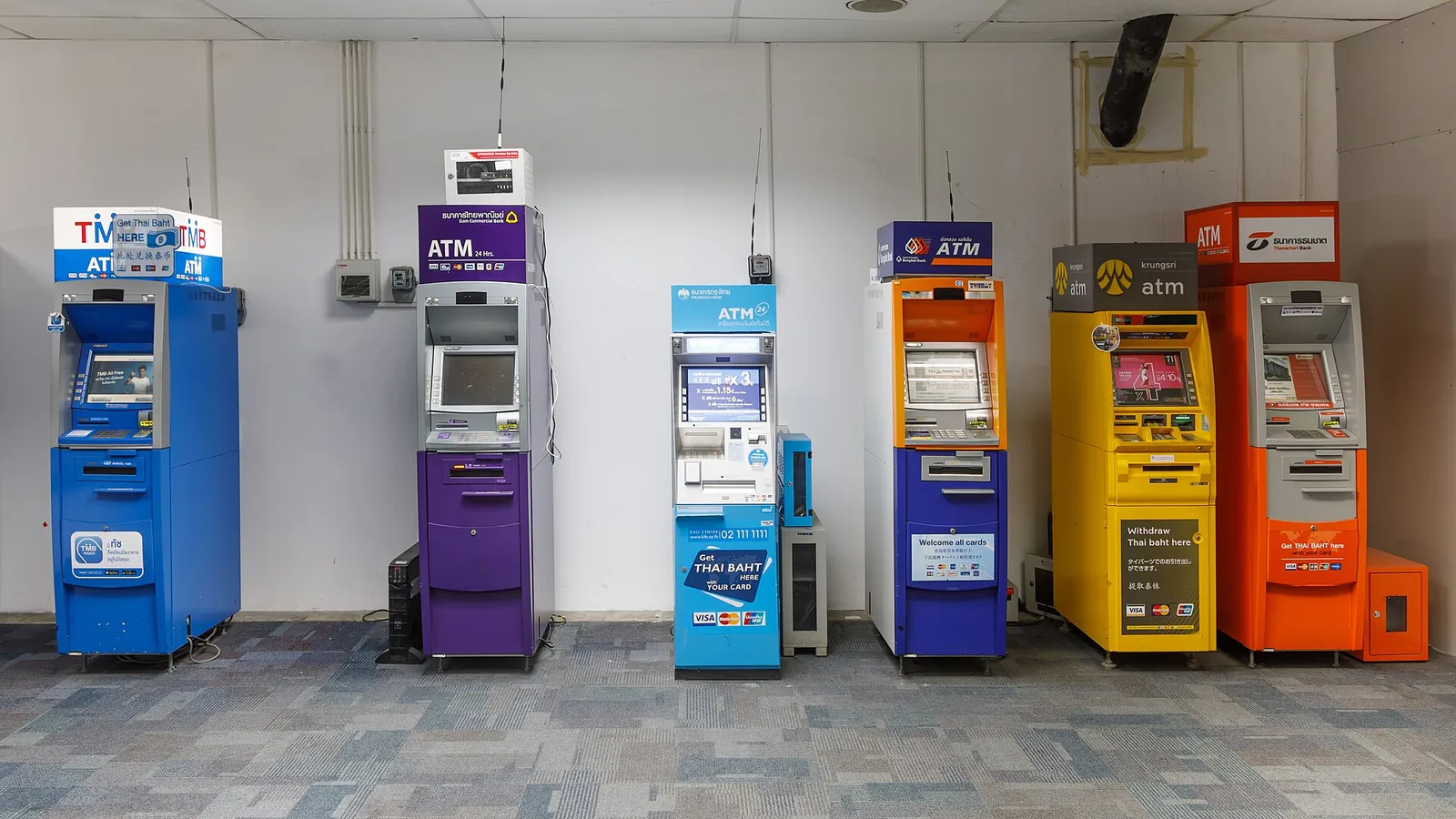
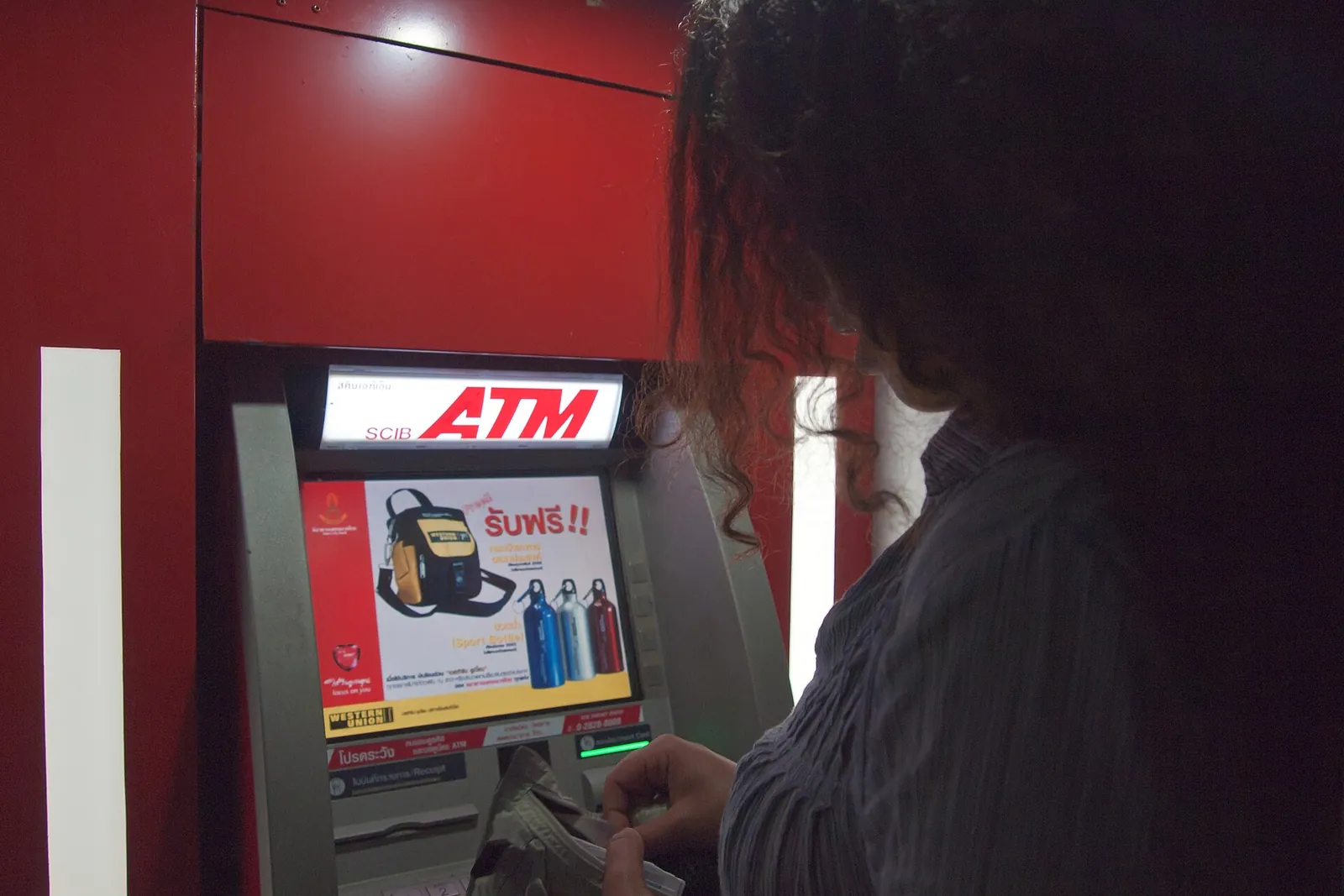
Airport ATM choices in Phuket; the photograph does not establish current fees or limits.
Photograph: CEphoto, Uwe Aranas — opens in a new tab · CC BY-SA 4.0 — opens in a new tab
Changes: Resized and converted to WebP; displayed with responsive crops. · Original photograph and licence details ↗ — opens in a new tab
Read the specific withdrawal and conversion terms before confirming.
Photograph: Vyacheslav Argenberg — opens in a new tab · CC BY 4.0 — opens in a new tab
Changes: Resized and converted to WebP; displayed with responsive crops. · Original photograph and licence details ↗ — opens in a new tab
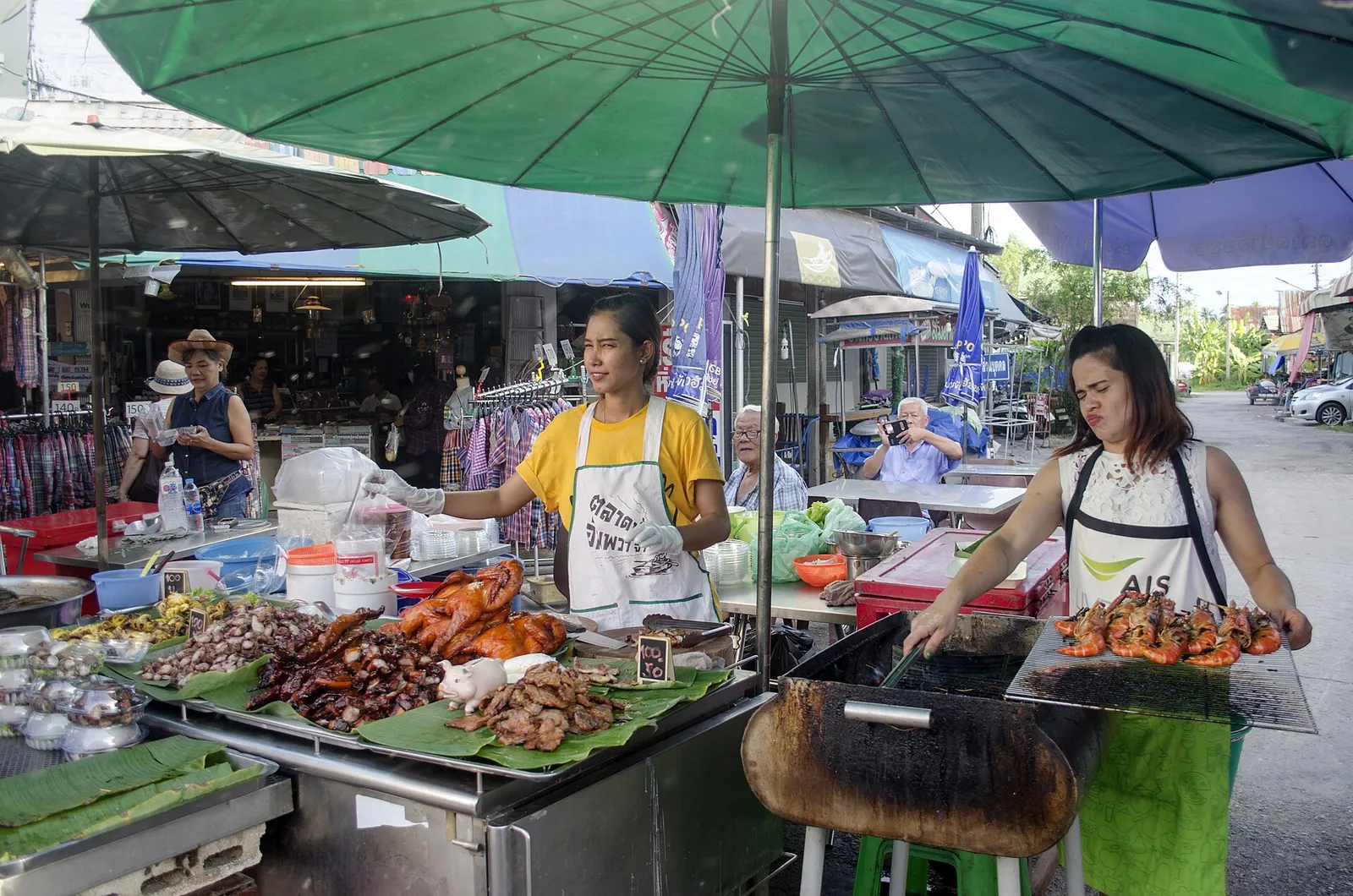
Confirm the price and accepted payment method before ordering at a market stall.
Photograph: Rangan Datta Wiki — opens in a new tab · CC BY-SA 4.0 — opens in a new tab
Changes: Resized and converted to WebP; displayed with responsive crops. · Original photograph and licence details ↗ — opens in a new tab
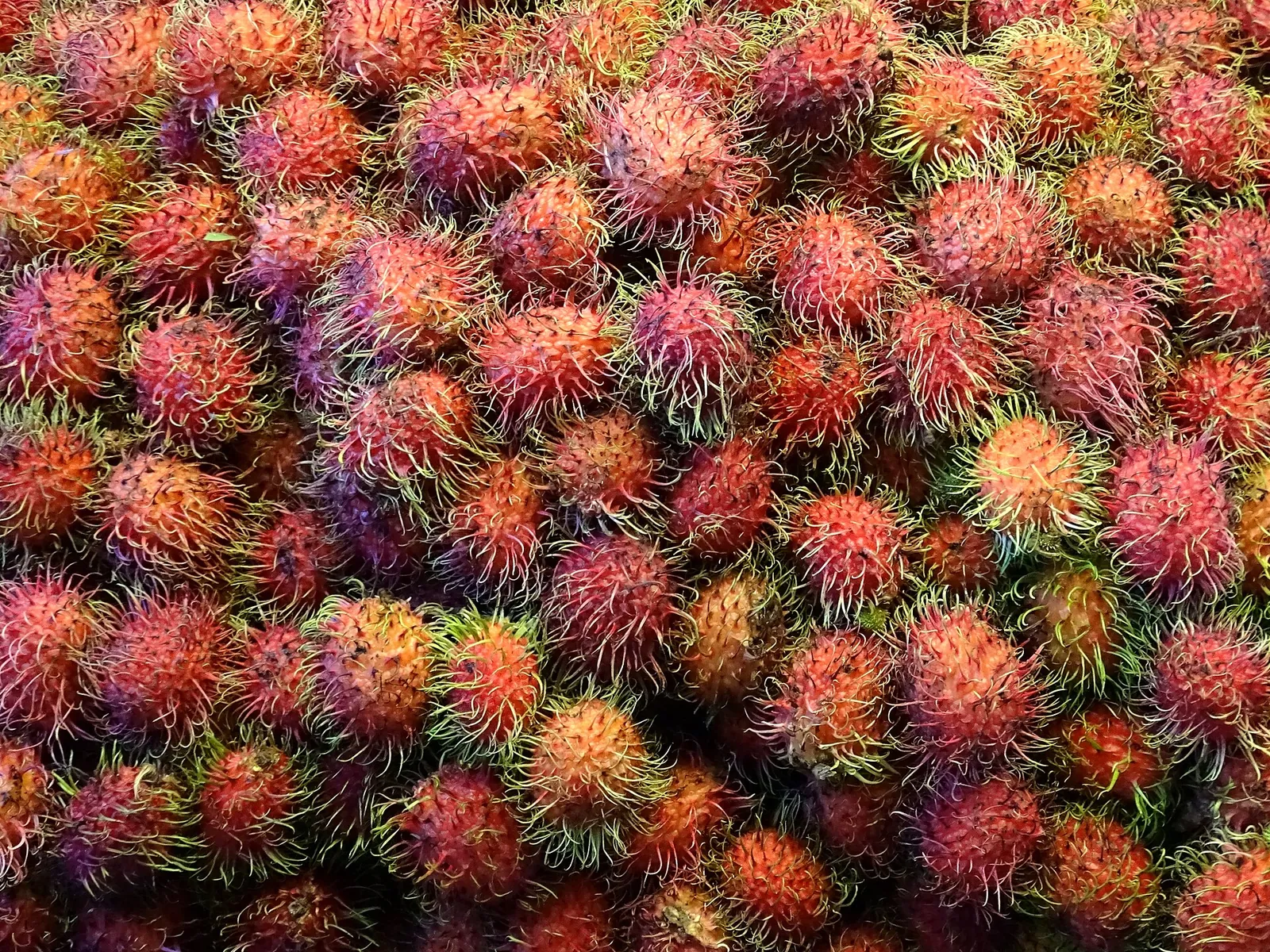
Fruit at Talat Warorot in Chiang Mai; agree the quantity and price before paying.
Photograph: Adam Jones from Kelowna, BC, Canada — opens in a new tab · CC BY-SA 2.0 — opens in a new tab
Changes: Resized and converted to WebP; displayed with responsive crops. · Original photograph and licence details ↗ — opens in a new tab