Plan your trip · Thailand
What to eat in Thailand: regional dishes, markets and how to order
The easiest mistake on a Thai food trip is to order the same familiar dish in every town. Bangkok is a useful introduction, but a bowl of khao soi in Chiang Mai and a sour grilled sausage in the northeast explain much more about the country than another identical restaurant menu. Give meals room in the itinerary. A market breakfast, a long lunch in the shade and an evening in one neighbourhood can be the day itself.
- Suggested time
- One dedicated food day in each base, with ordinary meals throughout the trip
- Where to stay
- Bangkok Chinatown or Bang Rak; Chiang Mai Old City; central Khon Kaen
- Season and timing
- Food is a year-round reason to travel. Keep outdoor market plans flexible in heavy rain, and move long sit-down meals into the hottest part of the day.
The short answer
Build your eating around the places you are already visiting: Bangkok for a broad introduction and Chinatown, Chiang Mai for northern noodle soups, and a northeastern base such as Khon Kaen for Isan cooking. Allow an unhurried food day in each rather than collecting distant restaurant addresses. Stay near the meals you want, order a mix of dishes to share with rice, and check fish sauce, shrimp paste and dried prawns if you have dietary restrictions. A cooking class is useful early in the trip; choose one whose actual menu suits you.
Choose a food route that fits the rest of your trip
TAT describes Thai cooking as regional: northern cuisine has links with neighbouring cultures, Isan cooking with Laos, and southern food with Muslim influences. This is a reason to change what you order as you travel, not a reason to make a special cross-country flight for lunch. Bangkok followed by Chiang Mai makes a manageable introduction; add the northeast or the south only when those places are already in your route.
In Bangkok, TAT points food travellers towards Yaowarat, Silom, Bang Rak and Banglamphu. Pick one neighbourhood for the evening. In Chiang Mai, give a noodle lunch and a cooking class separate time; in Isan, leave room for the grilled and fermented foods that have their own character. These are editorial suggestions, not promises about any particular stall.
A shared Thai meal starts with rice
TAT’s account of Thai dining describes communal dishes served alongside individual rice. Order different flavours and textures rather than a separate large curry for everyone: a soup, a stir-fry and something grilled can work better together than several heavy dishes. Take small portions so the next dish still tastes distinct. A noodle bowl or fried-rice plate is a different kind of meal and can be eaten on its own.
At a stall, establish what is being cooked and what it costs before ordering; there is no reliable national menu price. A specialist making one dish is often an easier first choice than a long menu you cannot read. Let the cook know about restrictions before the wok starts, and agree how many dishes you want before pointing enthusiastically at everything.
Make time for the local food
What to eat and where to look
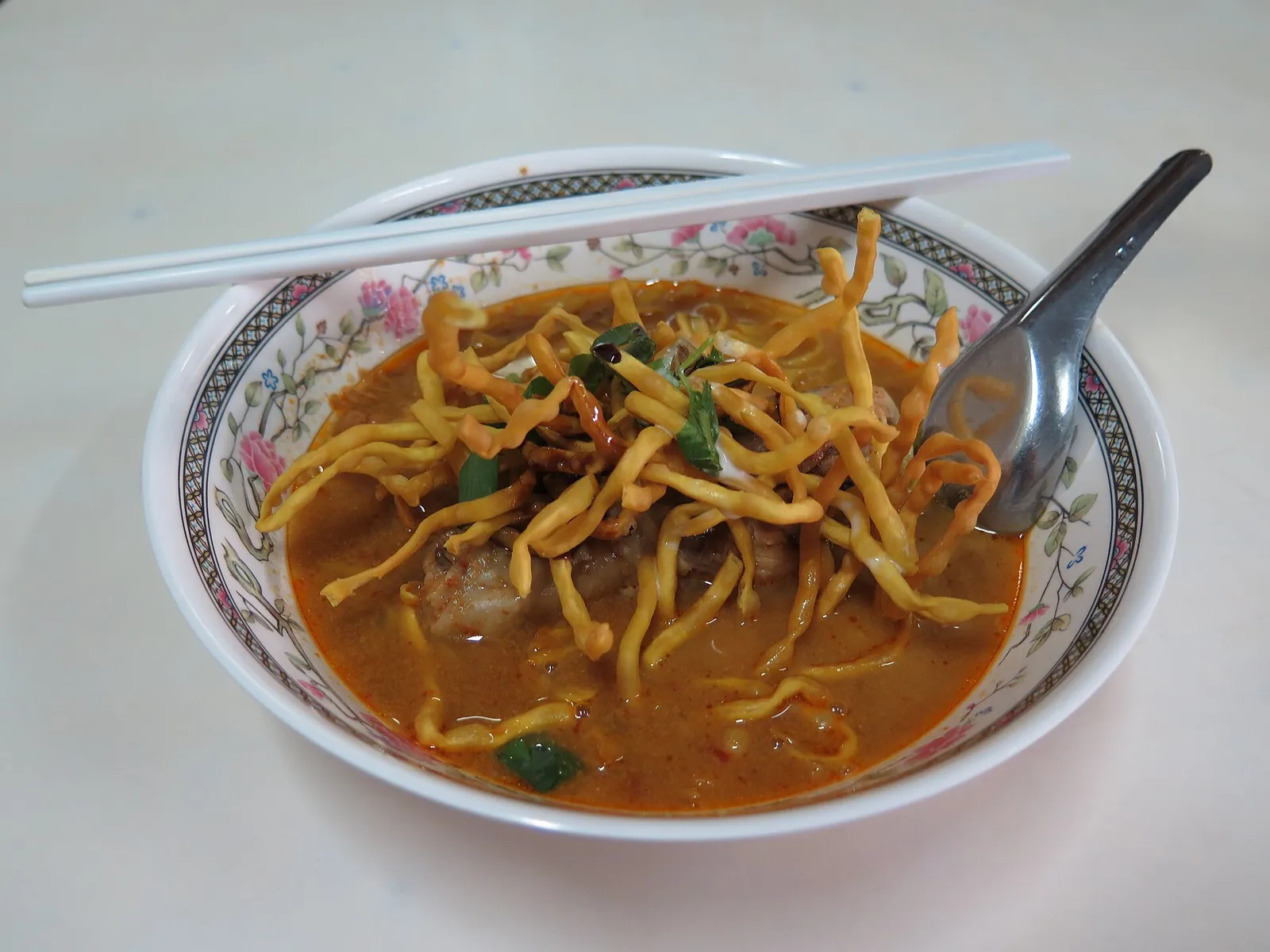
Khao soi
Northern egg noodles in coconut-and-chilli broth, usually with chicken or beef and a crisp fried-noodle topping.
- Where to look
- Khao soi specialists in Chiang Mai.
- Fit it into your day
- Give it a lunch of its own between Old City visits.
Contains egg noodles and usually meat; curry seasonings need a separate dietary check.
Sai krok Isan
Sour northeastern pork sausage made with sticky rice and garlic, served with cabbage, ginger and chillies.
- Where to look
- Grilled-sausage stalls in northeastern markets and Isan restaurants.
- Fit it into your day
- Order as part of a small shared meal rather than another large main course.
Contains pork; fermentation does not make an uncooked or poorly handled serving safe.
Pad thai
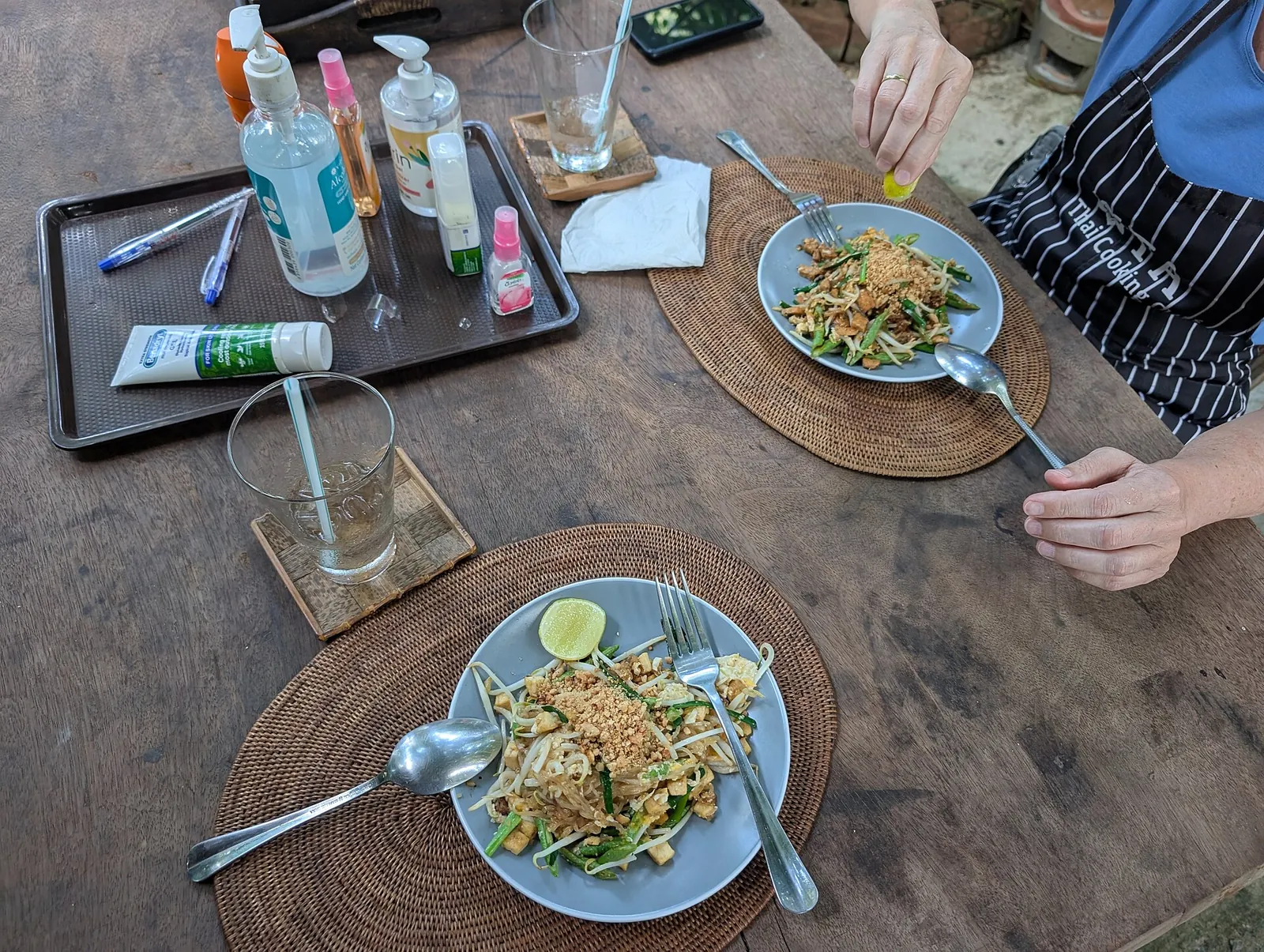
A rice-noodle stir-fry; recipes and garnishes vary, and TAT notes the use of dried prawns.
- Where to look
- Specialist noodle stalls and Thai restaurants in Bangkok and elsewhere.
- Fit it into your day
- A simple standalone meal before a longer market evening.
A tofu version may still contain seafood seasoning; ask about dried prawns and fish sauce.
Som tam
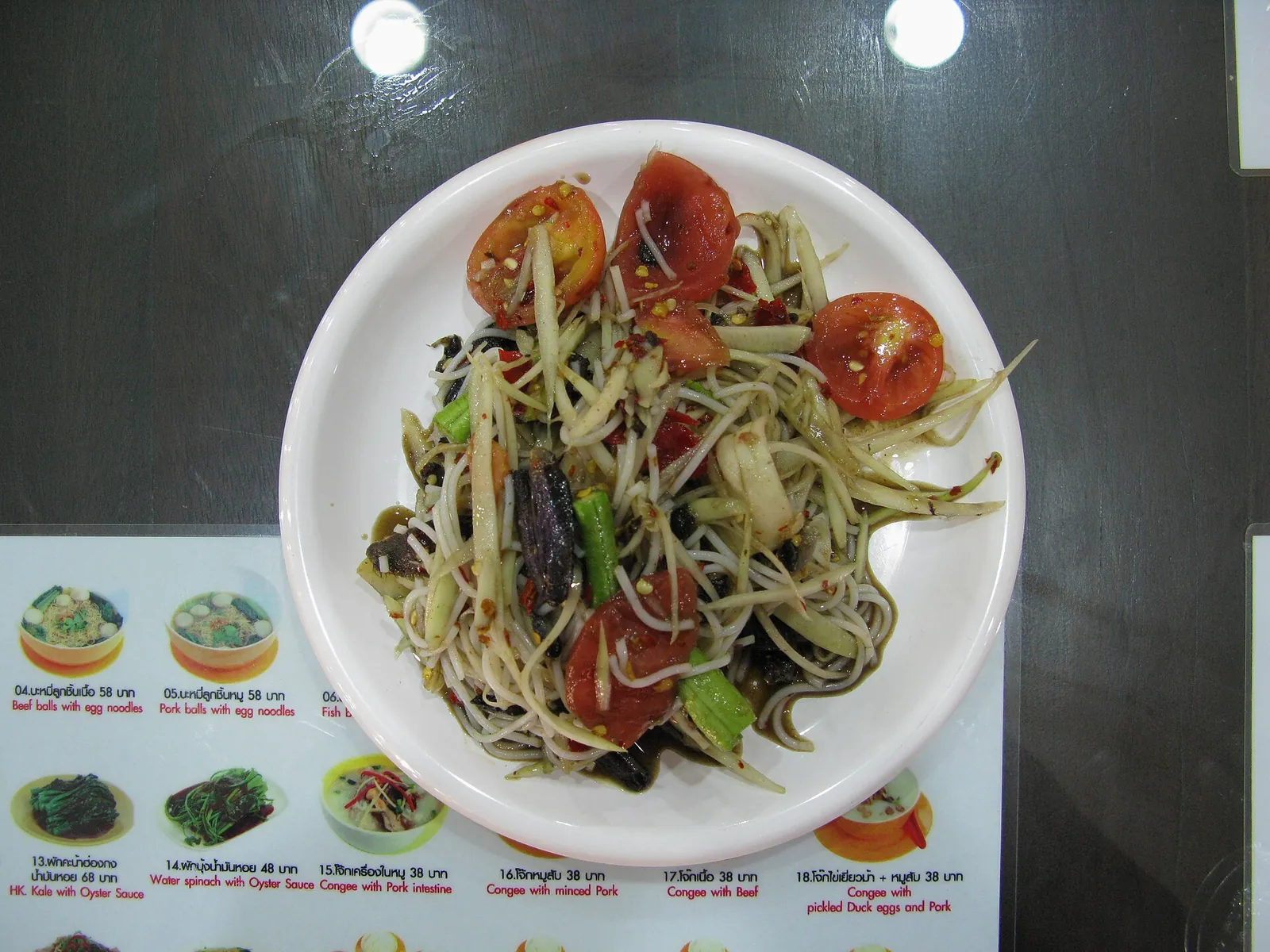
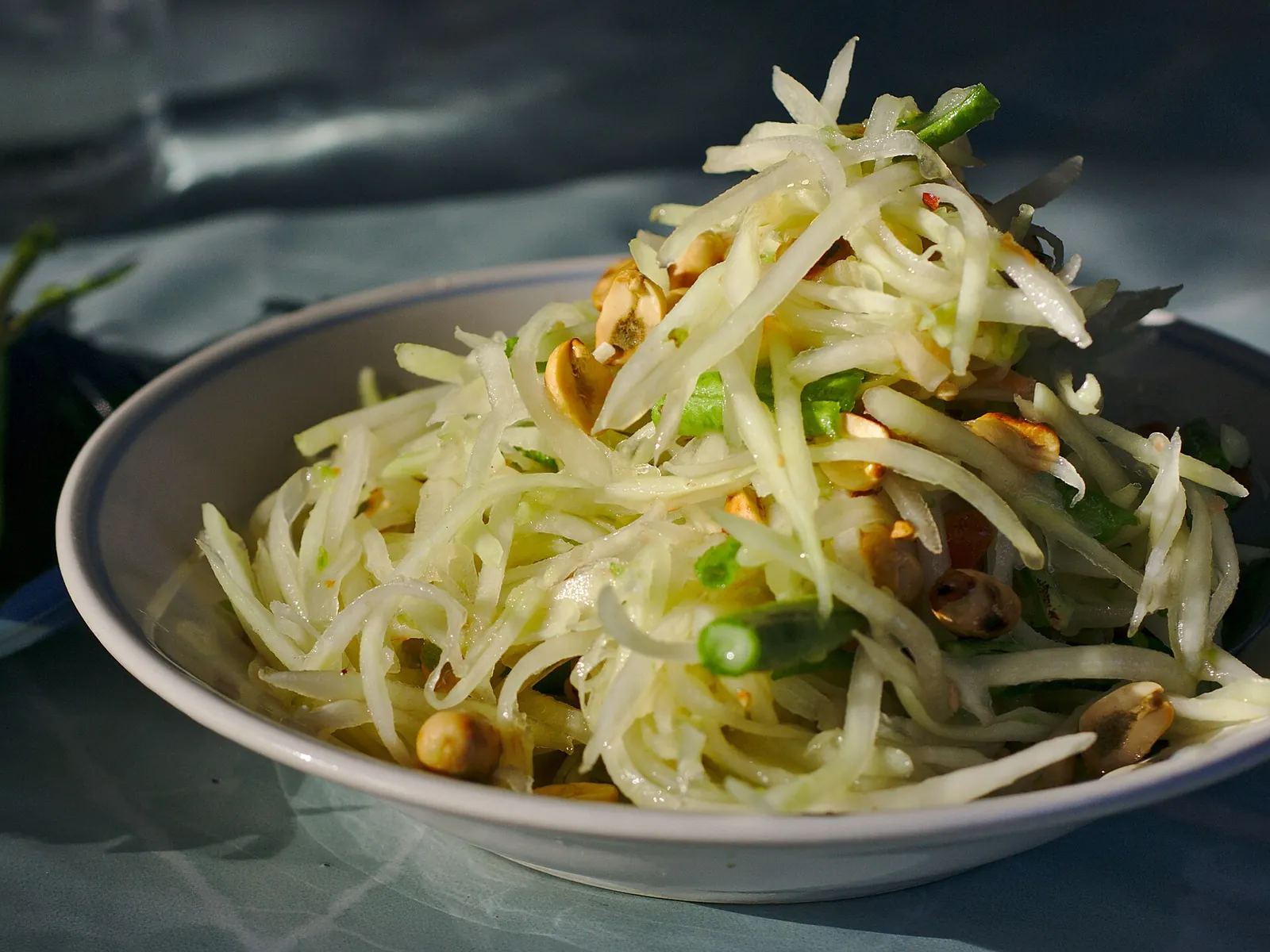
Green-papaya salad, one of the Thai dishes named by TAT in its national food selection.
- Where to look
- Papaya-salad counters and Isan restaurants.
- Fit it into your day
- Share alongside rice and another dish.
Ask about the dressing and any seafood additions; the vegetable base is not a vegetarian guarantee.
Three dishes that show the regional differences
Khao soi is northern curry noodle soup. TAT describes egg noodles in a coconut-and-chilli broth with chicken or beef, topped with fried noodles and served with mustard greens, shallots, lime and chilli paste. Try it in Chiang Mai as a proper meal, not as a side dish after a large lunch. The toppings let you adjust the balance without assuming the broth itself is mild.
Sai krok Isan is the northeast’s sour, garlicky pork sausage. TAT describes pork, sticky rice and garlic fermented and dried, with cabbage, ginger and chillies alongside. Pad thai is a useful contrast: a rice-noodle dish known throughout the country, but not automatically vegetarian. TAT specifically notes the dried prawns used in it; a tofu topping does not tell you what went into the sauce.
Read the seasonings as carefully as the menu
Nam pla, fish sauce, is central to Thai cooking. TAT describes it as fish fermented with salt; the table condiment prik nam pla combines it with chilli and lime. Shrimp paste and dried prawns are another reason a dish with vegetables in its name may still contain seafood. Ask about the sauce, stock and garnish, not just whether visible meat can be left out.
If you have a serious allergy, bring a clear Thai-language ingredient card and explain the allergy rather than simply asking for a vegetarian dish. A shared kitchen may not be able to prevent cross-contact. Choose a restaurant that can discuss preparation; when it cannot, move on. Asking for less chilli is a separate request from asking for no shellfish.
Use a food tour or cooking class for a specific job
A guided Chinatown evening can help with unfamiliar menus and ordering, while a Chiang Mai cooking class gives you time to understand the sauces. The listed products below are real entries already documented in AsiaVela’s destination guides; their current inventory has not been fetched. Ask which dishes are included, whether tastings replace dinner, and whether substitutions are actually possible.
Do not assume a class on an organic farm is vegetarian, or that a food walk can safely handle an allergy. Get the answer from the operator before paying. Keep the next morning free enough to return independently to a dish you liked; the useful souvenir is knowing what to ask for, not just having eaten a long list of samples.
Practical questions
Where should a first Thai food trip begin?
Bangkok gives a broad introduction. Chiang Mai adds northern cooking; add an Isan or southern base when it also fits your sightseeing route.
Is pad thai with tofu vegetarian?
Not necessarily. Dried prawns, fish sauce and other seasonings must be checked separately from the visible topping.
How do shared meals work?
Order a variety of dishes for the table with individual rice, and take small portions so different flavours stay distinct.
Should I book a cooking class?
A class is useful if you want to understand ingredients and ordering. Confirm its menu and dietary arrangements before reserving.
Can a food tour guarantee an allergy-safe meal?
No such guarantee is made here. Discuss the actual ingredients and cross-contact arrangements with the operator before booking.
Sources and checks before you travel
Reference sources for the version dated 7 October 2026. Confirm opening times, access, transport and conditions for your travel dates.
Does this experience fit your route?
For a first food evening or a cooking lesson, compare the actual menu and meeting point and get dietary arrangements confirmed before booking.
Check dates and details on Viator ↗ — opens in a new tabAffiliate link · Book with ViatorPhoto credits
Khao soi in Chiang Mai: a northern noodle meal with a crisp topping.
Photograph: Douglas Perkins — opens in a new tab · CC BY 4.0 — opens in a new tab
Changes: Resized and converted to WebP; displayed with responsive crops. · Original photograph and licence details ↗ — opens in a new tab
Som tam photographed in Bangkok; ask separately about the dressing and seafood additions.
Photograph: Vyacheslav Argenberg — opens in a new tab · CC BY 4.0 — opens in a new tab
Changes: Resized and converted to WebP; displayed with responsive crops. · Original photograph and licence details ↗ — opens in a new tab
A pad thai cooking-school meal in Sukhothai.
Photograph: Elmschrat — opens in a new tab · CC BY-SA 4.0 — opens in a new tab
Changes: Resized and converted to WebP; displayed with responsive crops. · Original photograph and licence details ↗ — opens in a new tab
Som tam in Sukhothai, another version of a widely travelled Thai dish.
Photograph: Alexander Klink — opens in a new tab · CC BY 4.0 — opens in a new tab
Changes: Resized and converted to WebP; displayed with responsive crops. · Original photograph and licence details ↗ — opens in a new tab