Plan your trip · Thailand
Best time to visit Thailand: north, Andaman and Gulf by season
Thailand does not have one beach season. Rain arrives on the Andaman coast while the islands around Samui follow a later rhythm, and a winter morning in the northern mountains can call for a sweater rather than swimwear. Start with the part of the trip you would hate to lose: a boat day, a mountain walk or a few unhurried days in Bangkok. Then let that choice set the month and the rest of the route.
- Suggested time
- 5–7 days for one region; about two weeks for Bangkok, the north and one coast
- Where to stay
- Bangkok; Chiang Mai for the north; Phuket or Ao Nang for the Andaman; Samui for the Gulf
- Season and timing
- Northern cool season November–February; Andaman monsoon May–October; Samui-area rain later, October–December.
The short answer
For a first trip that combines Bangkok, the north and an Andaman beach, November to February is a useful editorial starting point: TAT describes northern winter in those months, while its Andaman guidance places the southwest monsoon in May to October. It is not a forecast or a guarantee of sailing. If you travel during the Andaman monsoon, consider Samui, Phangan or Tao instead, remembering that TAT places their heavier rain later, from October to December. Give one region five to seven days, or about two weeks for Bangkok, the north and one coast. Leave the final night on the mainland before an international flight.
Choose the coast before you choose the month
The useful distinction is Andaman versus Gulf, rather than “Thailand in summer” or “Thailand in winter”. Phuket, Krabi and the islands to their west face the Andaman Sea. Samui, Phangan and Tao sit in the Gulf. A good month on one side need not be a good month on the other.
When we checked on 2026-10-07, TAT’s monsoon guidance described May to October as the southwest monsoon period, with September taking the strongest rain. The same article placed the Samui-area rains in October to December, peaking in November and easing in January. That article was published in 2018: use it as a broad seasonal pattern, then consult the current forecast and the operator before a boat trip.
If the beach matters more than the rest of the route, choose it first. A plan that tries to rescue every rainy day with another island transfer tends to spend the holiday on piers. Stay somewhere with places to eat and things to do on land, and keep the boat day movable.
The north: a cool-season trip needs layers
TAT’s January 2026 column describes Chiang Mai’s cooler weather from November to February, and contrasts the city with much colder mountain mornings. Chiang Mai and Chiang Rai make comfortable bases for a mix of old-town walking, food and a day out in the hills. A mountain sunrise is a different outing from a city afternoon: pack a warm layer even when the forecast for the hotel looks tropical.
The same column highlights January’s wild Himalayan cherry blossoms around Ban Khun Chang Khian. They are a seasonal possibility, not a flowering appointment. Do not build a whole northern route around a photograph taken in another year; ask locally about the current blooms and whether the road is suitable for your transport.
For a short trip, stay in Chiang Mai rather than adding a new bed every night. A full day out can be followed by a quiet morning in town. If you add Chiang Rai, give it its own nights instead of treating the entire north as a string of roadside stops.

Make time for the local food
What to eat and where to look
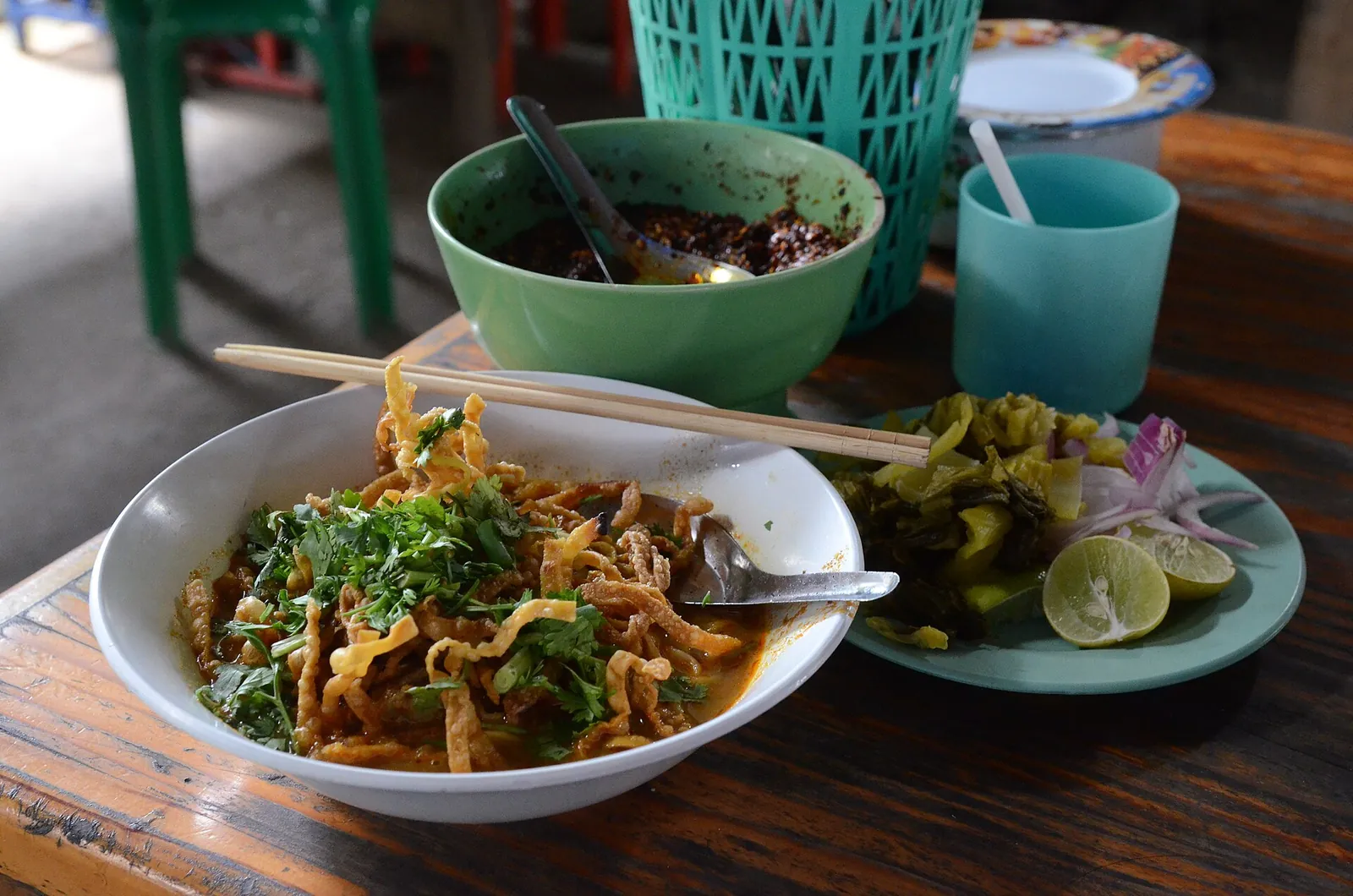
Khao soi
Northern curry noodle soup with coconut broth and crisp fried egg noodles on top; TAT describes chicken or beef versions.
- Where to look
- Specialist northern noodle shops if Chiang Mai follows your Bangkok arrival.
- Fit it into your day
- Lunch after a cool northern morning, with the afternoon left flexible.
Contains egg noodles and commonly meat; ask about the broth and other animal ingredients.
Thai crab omelette
A wok-cooked crab-and-egg omelette with crisp edges and a soft centre, described in TAT’s street-food article.
- Where to look
- Bangkok restaurants or market kitchens that explicitly list crab omelette.
- Fit it into your day
- A relaxed Bangkok dinner on a day kept free of long transfers.
Contains egg and shellfish; confirm the price and portion before ordering.
Sai krok Isan
Northeastern-style fermented pork sausage, commonly made with sticky rice and garlic and served with ginger, chilli and cabbage.
- Where to look
- Isan food stalls and restaurants in Bangkok.
- Fit it into your day
- A shared city snack when a wet afternoon changes the outdoor plan.
Contains pork; ingredients vary, so ask about allergies and choose thoroughly cooked food.
The Andaman: plan around the sea, not just the rain
TAT’s guidance warns that Andaman monsoon weather can affect ferries and other marine activities. Even with a ticket in hand, a crossing depends on the conditions at the time. A dry-looking morning at your hotel is not a sailing guarantee, and a cancellation is a reason to change the plan rather than shop around for a boat willing to go.
For an Andaman trip, Phuket or Ao Nang gives you a base accessible by road, from which to decide about the next day’s outing. A room on a smaller island can be lovely, but it adds a ferry to both ends of the stay. Keep that trade-off in mind when the international flight is close.
Seasonal park closures are another decision altogether. TAT’s January 2026 notice explains that national parks can close fully or partly for weather, safety and ecological recovery, with dates varying by attraction. Check the Department of National Parks and the individual park. We have not treated an old Similan or Maya Bay closure calendar as the current one.
The Gulf: a useful alternative, with its own wet months
Samui, Phangan and Tao are the islands named in TAT’s later-rain guidance. They can be worth considering when your dates fall in the Andaman monsoon period, but changing coasts does not remove the need to check the sea. Choose the island for the kind of stay you want, then check the actual connection from your arrival airport.
A week does not need all three islands. One base and a weather-dependent day trip usually leaves more time for the beach than a daily change of ferry and hotel. Samui is a practical starting point for comparing onward options; if Tao is the main reason for the trip, allow it real nights and a mainland buffer rather than fitting it between flights.
In October to December, keep the Gulf part of the route flexible. The broad TAT pattern peaks in November and tails off in January, but the day-to-day forecast is more useful than any month label once you are there.
How to match the route to your dates
These are editorial route choices, not official weather promises or timetables. Keep one coast rather than trying to sample both in a short holiday.
- November to February: start by comparing Bangkok, Chiang Mai and an Andaman base; add warm layers for the northern hills and check Gulf rain if Samui is your priority.
- May to October: consider a Bangkok-and-north trip with flexible outdoor days, or compare the Gulf islands with the wetter Andaman coast. Do not assume a marine park or ferry is operating.
- October to December: give special attention to the Samui-area forecast and sea conditions. Bangkok and a mainland base make it easier to change an outing without changing every hotel.
- A fixed departure flight: spend the previous night where you can reach the airport without a sea crossing. A spare night is more useful than one last island on the map.
Check parks, weather and transport again before you leave
Use the forecast for your destination, not just Bangkok. TAT directs travellers to the Thai Meteorological Department for storm, flood, high-wave and coastal warnings. Its September 2026 visitor update also shows how quickly railway, airport and marine plans can change after heavy rain. That update described the situation on 29 September, not a permanent assurance that every route is open.
Ask the tour operator what happens if the weather cancels the outing: refund, rescheduling, a different route or a land activity. Confirm whether a park fee is included and whether the park is open. For mountain days, ask about the walking involved and road access. Book the experience that fits the season rather than the season around a non-refundable experience.
Practical questions
What is the best month for a first Thailand trip?
November to February is a useful starting point for Bangkok, the northern cool season and an Andaman base. Choose the region first: Samui’s Gulf-side rains follow a later pattern, and no month guarantees a boat trip.
Do Phuket and Samui have the same rainy season?
No. TAT’s broad guidance places the Andaman southwest monsoon in May to October, and the Samui-area rains in October to December, peaking in November and easing in January. Check the current forecast for the island you will actually visit.
Can I travel during the monsoon?
Yes, with flexible plans and a useful land base. Marine activities and crossings depend on local conditions, and some park attractions close seasonally. Confirm the actual service and park before you leave.
Is northern Thailand cold in winter?
Mountain mornings can be much colder than the city. TAT describes Chiang Mai’s cooler season from November to February and recommends layers for northern winter outings.
Should I take a ferry on the day of my flight home?
Our editorial advice is to avoid relying on a sea crossing that day. Spend the final night on the mainland or on the island where your departure airport is, and check the actual ground transfer.
Sources and checks before you travel
Reference sources for the version dated 8 October 2026. Confirm opening times, access, transport and conditions for your travel dates.
- TAT: monsoon-season weather and travel guidance ↗ — opens in a new tab
- TAT: winter in northern Thailand ↗ — opens in a new tab
- TAT: 2026 seasonal national-park opening and closure notice ↗ — opens in a new tab
- TAT: Bangkok and surrounding areas weather and travel update ↗ — opens in a new tab
- TAT: three Thai street-food dishes ↗ — opens in a new tab
Does this experience fit your route?
Choose the coast and the month first, then compare the mountain or boat day that fits. Read the weather and park-access terms before you book.
Check dates and details on Viator ↗ — opens in a new tabAffiliate link · Book with ViatorPhoto credits
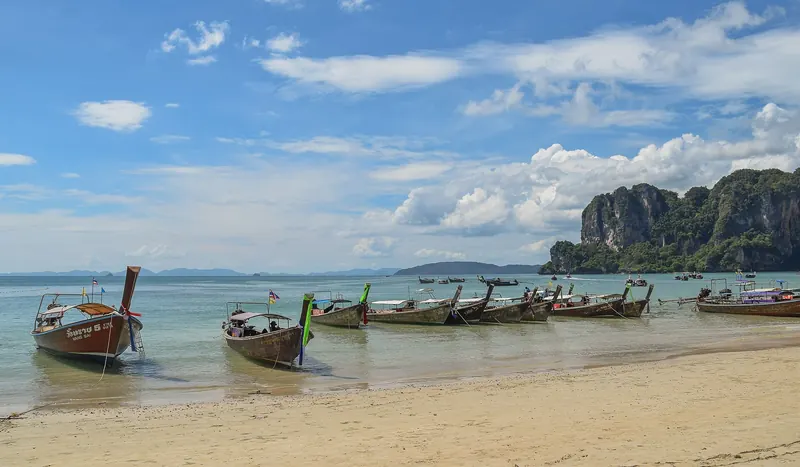
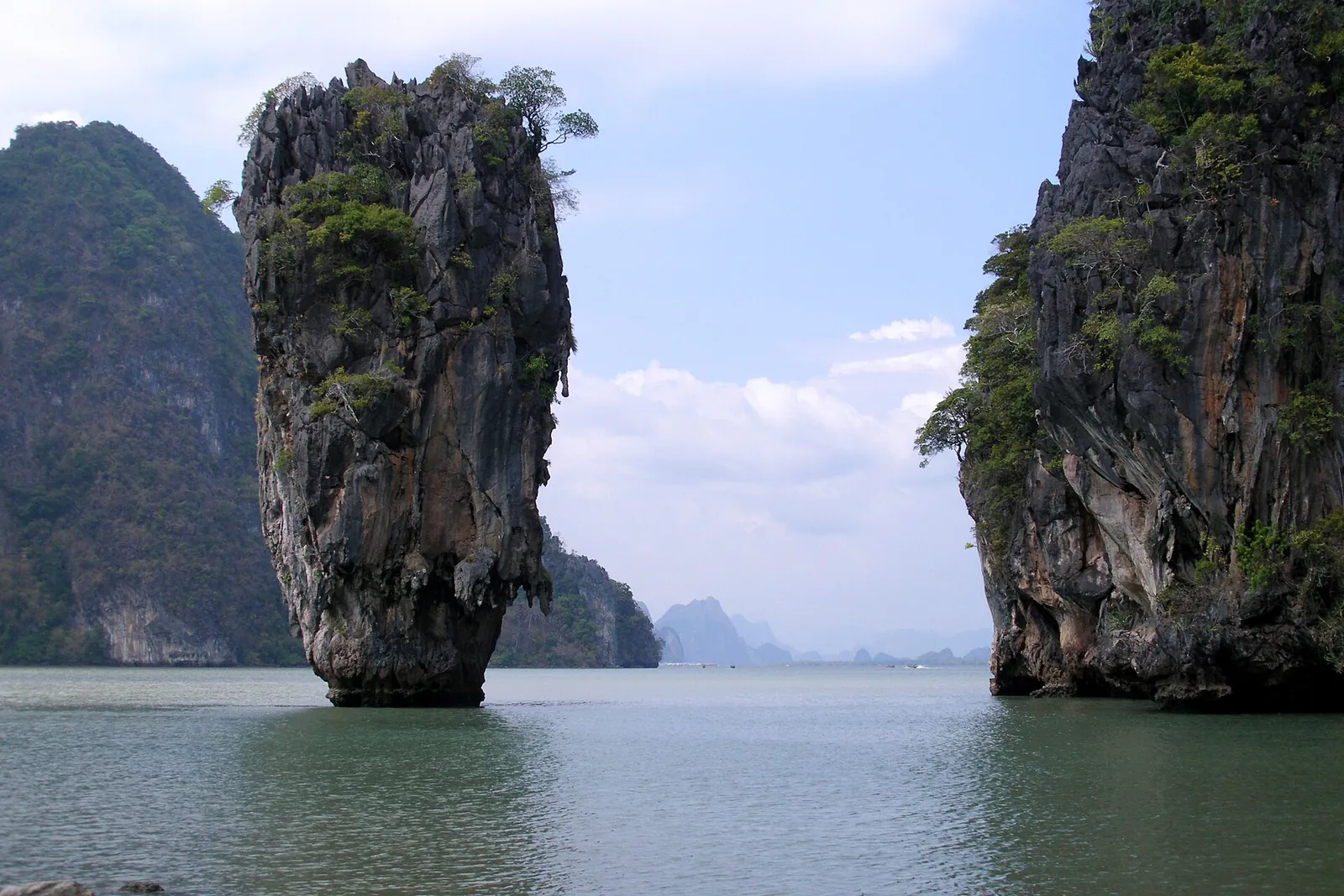
Phang Nga Bay belongs to the Andaman side of Thailand; plan boat days around current weather.
Photograph: Vyacheslav Argenberg — opens in a new tab · CC BY 4.0 — opens in a new tab
Changes: Resized and converted to WebP; displayed with responsive crops. · Original photograph and licence details ↗ — opens in a new tab
Doi Inthanon illustrates northern Thailand’s mountain setting; wildlife sightings are never guaranteed.
Photograph: JJ Harrison ( https://www.jjharrison.com.au/ ) — opens in a new tab · CC BY-SA 3.0 — opens in a new tab
Changes: Resized and converted to WebP; displayed with responsive crops. · Original photograph and licence details ↗ — opens in a new tab
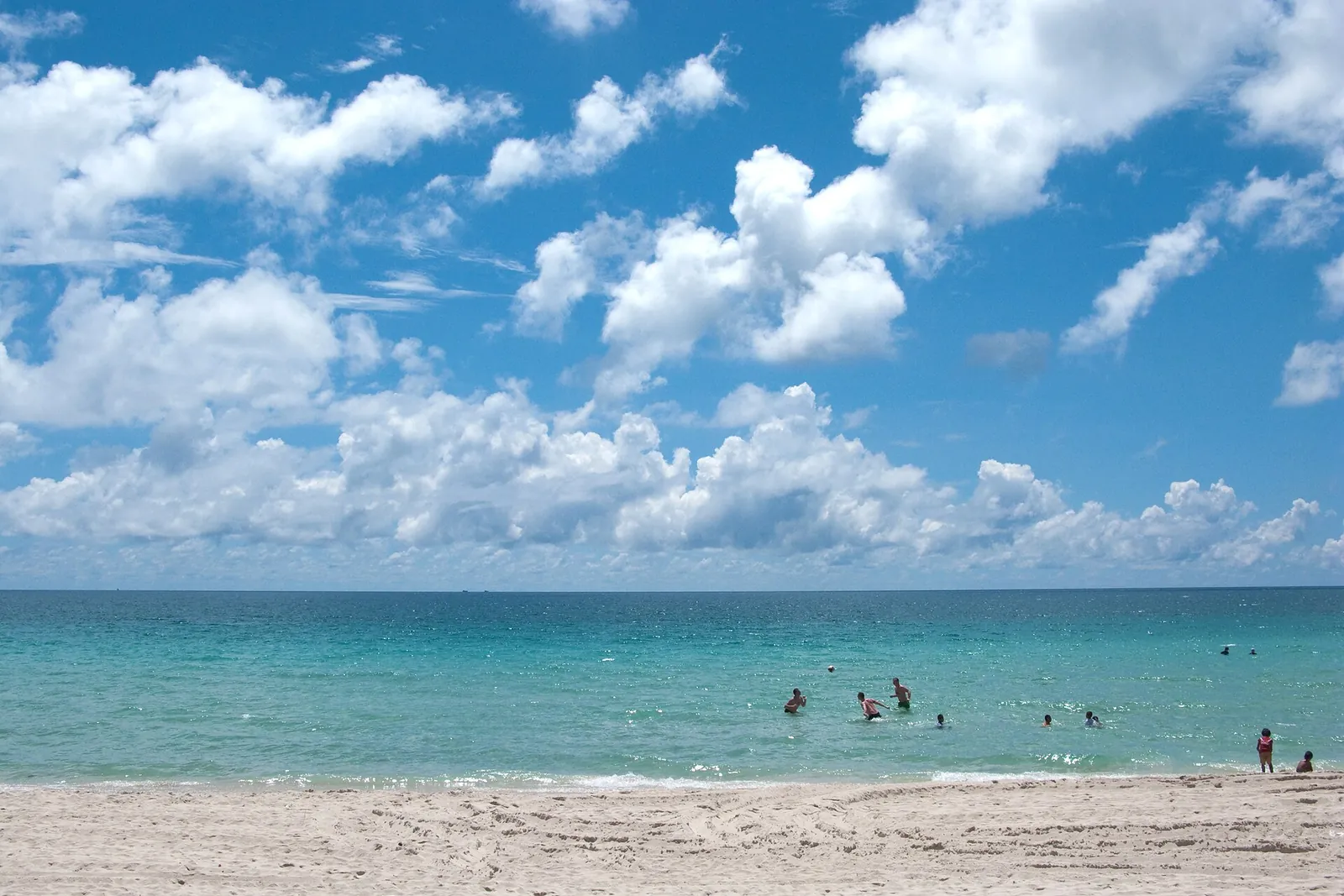
Koh Samui is on the Gulf coast, whose wet-season pattern differs from the Andaman coast.
Photograph: Vyacheslav Argenberg — opens in a new tab · CC BY 4.0 — opens in a new tab
Changes: Resized and converted to WebP; displayed with responsive crops. · Original photograph and licence details ↗ — opens in a new tab
Khao soi makes a good pause between sightseeing stops in Chiang Mai.
Photograph: Takeaway — opens in a new tab · CC BY-SA 3.0 — opens in a new tab
Changes: Resized and converted to WebP; displayed with responsive crops. · Original photograph and licence details ↗ — opens in a new tab