Plan your trip
Bhutan food: ema datshi, red rice, momo and suja
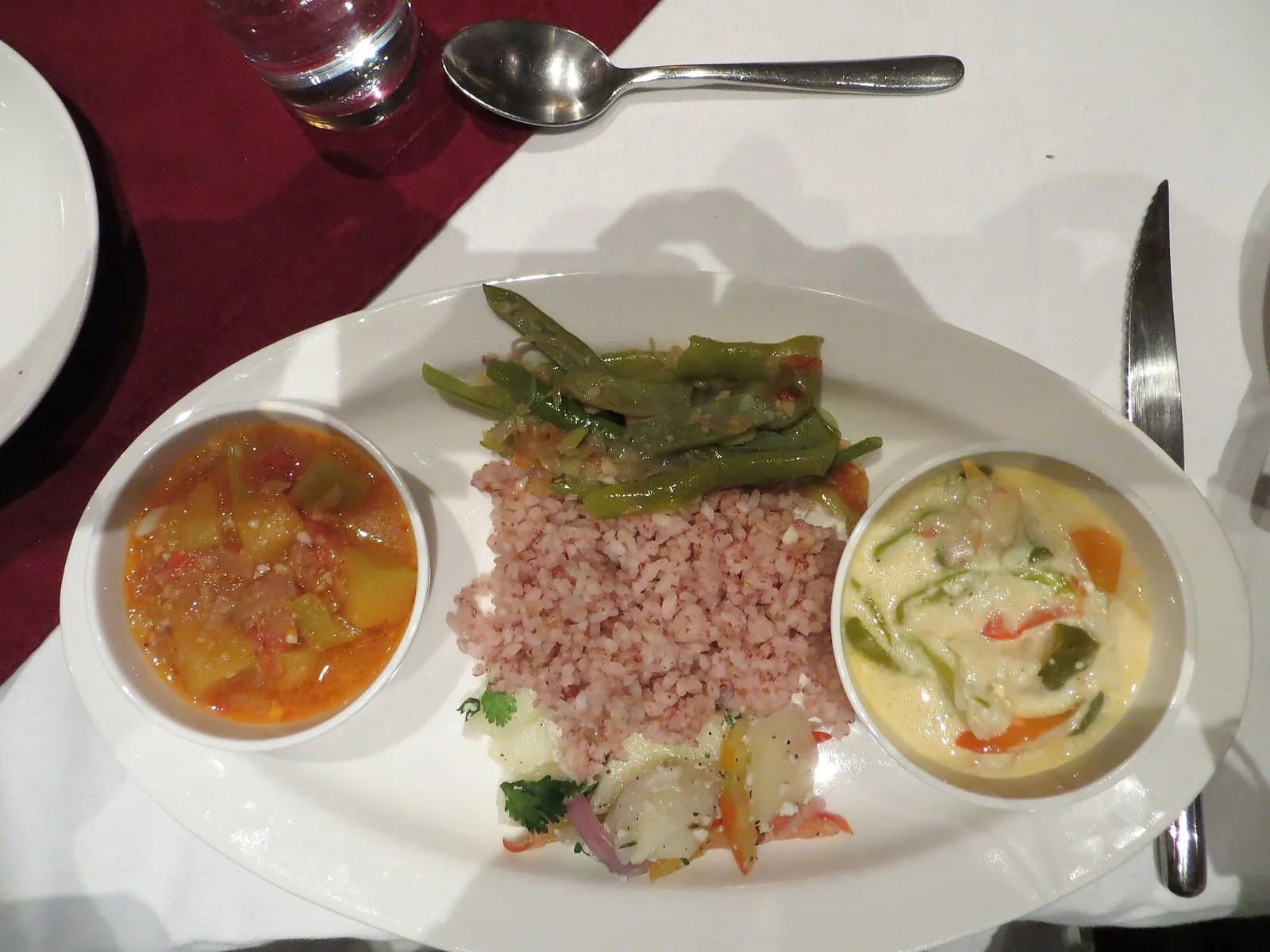
Bhutanese food is chilli and cheese. The national dish is a stew of the two, many vegetables come in cheese sauce, and the rice under it is often the country's own red rice. On the packages in our cost guide, meals are arranged by the operator and cooked mild for foreign guests, so it is worth knowing what to ask for. Here are the dishes to order, the regional specialities of the western valleys and Bumthang, the drinks, how a guided day of meals works, and what the meals cost when you pay for them yourself.
In this guide
Find the location ↗ — opens in a new tabThe short answer
Order ema datshi, chillies in cheese, with red rice; then kewa datshi (potato and cheese), phaksha paa (pork with dried chillies), jasha maru (chicken stew) and momo dumplings, with suja, salted butter tea. The packages in our cost guide include all meals and hotel kitchens cook mild unless you ask for local heat. Paid yourself, a meal in a budget restaurant costs under Nu 500 a person, and a day of three meals with taxes about USD 15 at a Thimphu café, USD 20 at a Punakha hotel and USD 29 at a Paro resort.
- Key point
- Three meals a day on a guided week in Thimphu, Punakha and Paro, with a farmhouse lunch or a regional dish where your route allows
- Where it applies
- Thimphu for the widest choice of restaurants and cafés, Punakha for the dishes of Nobgang village, Paro for hotel kitchens near the airport, and Bumthang for buckwheat
- Timing
- The dishes are eaten all year. Chillies are dried on roofs and windowsills after the harvest, and buckwheat dishes belong to Bumthang and the high valleys.
Chilli and cheese: ema datshi and the datshi family
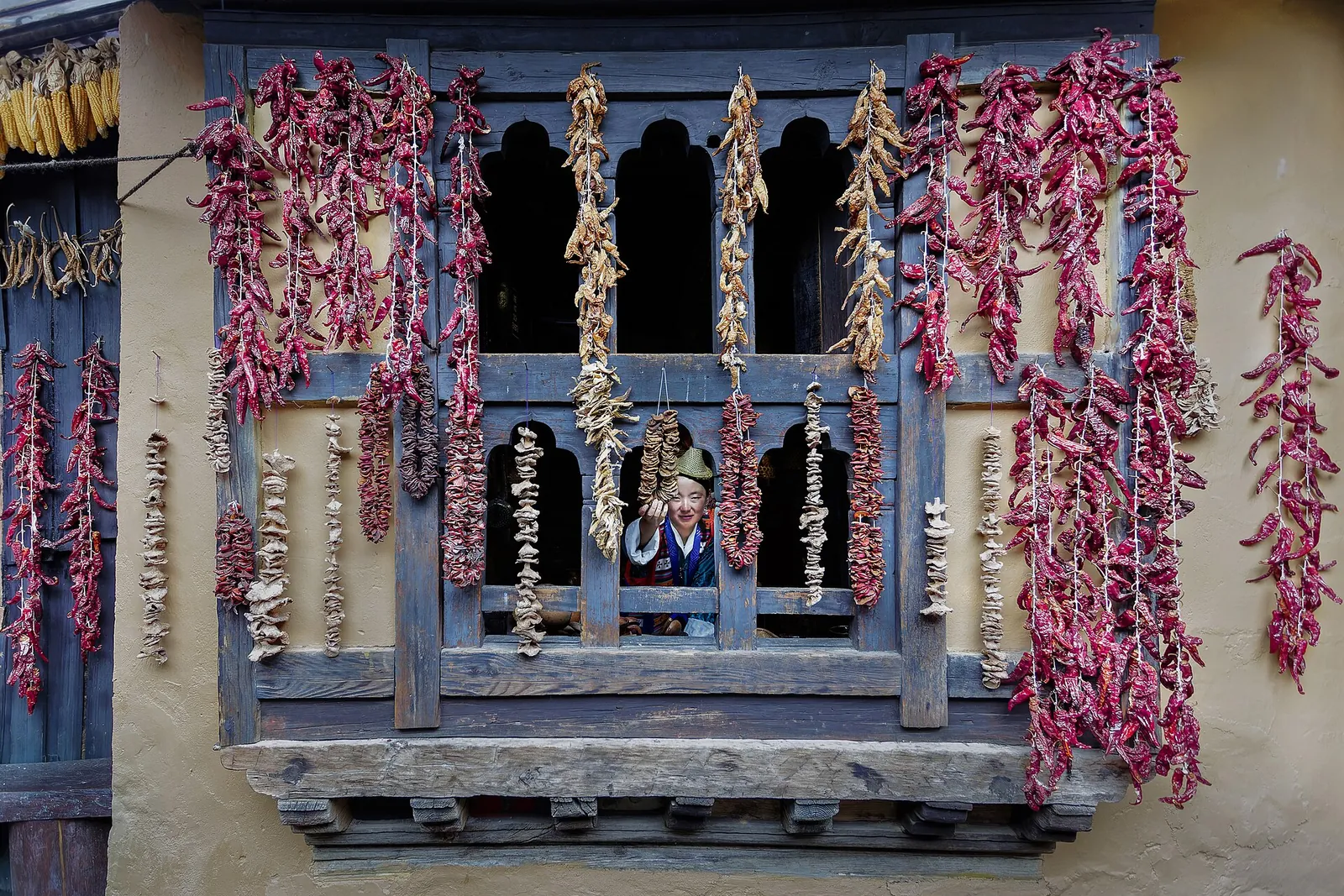
The Department of Tourism puts it plainly: chillies are an essential part of nearly every Bhutanese dish, and datshi, the local cheese, is in almost all of them. Boiling, steaming and stewing are central to traditional cooking, with rice and stews making up a meal. In the villages you will see chillies drying everywhere: on roofs, hanging from windows and laid out on the ground.
Ema datshi is the national dish: 'ema' means chillies and 'datshi' cheese. It is a stew of yak cheese, garlic, oil, split chillies, onion and tomato, eaten with red rice, and the Department of Tourism notes that some people like it thick and cheesy and others soupier. It is served from homes to restaurants across the country.
The same sauce makes a family of dishes whose names end in datshi. Kewa datshi is potato in cheese sauce with green chilli, and shakam datshi adds dried beef. Shamu datshi, mushrooms in cheese, is the mild one: the Department of Tourism calls it a common, simple dish of mushrooms, vegetables, a pinch of salt and cheese, made with matsutake in season and with other mushrooms the rest of the year. Ezay is chilli with soft cheese.
To see the raw materials, walk through the Centenary Farmers' Market in Thimphu: about 400 stalls over two floors in a hall on the bank of the Wang Chhu below the town, open from Friday morning to Sunday night, with Saturday morning the busiest, according to Little Bhutan, a licensed Thimphu operator. Chillies are sold fresh, sun-dried and ground, beside datshi, the soft white cheese, strings of chugo, dried yak cheese, red rice and buckwheat. Entry is free.
Red rice, paa and jasha maru
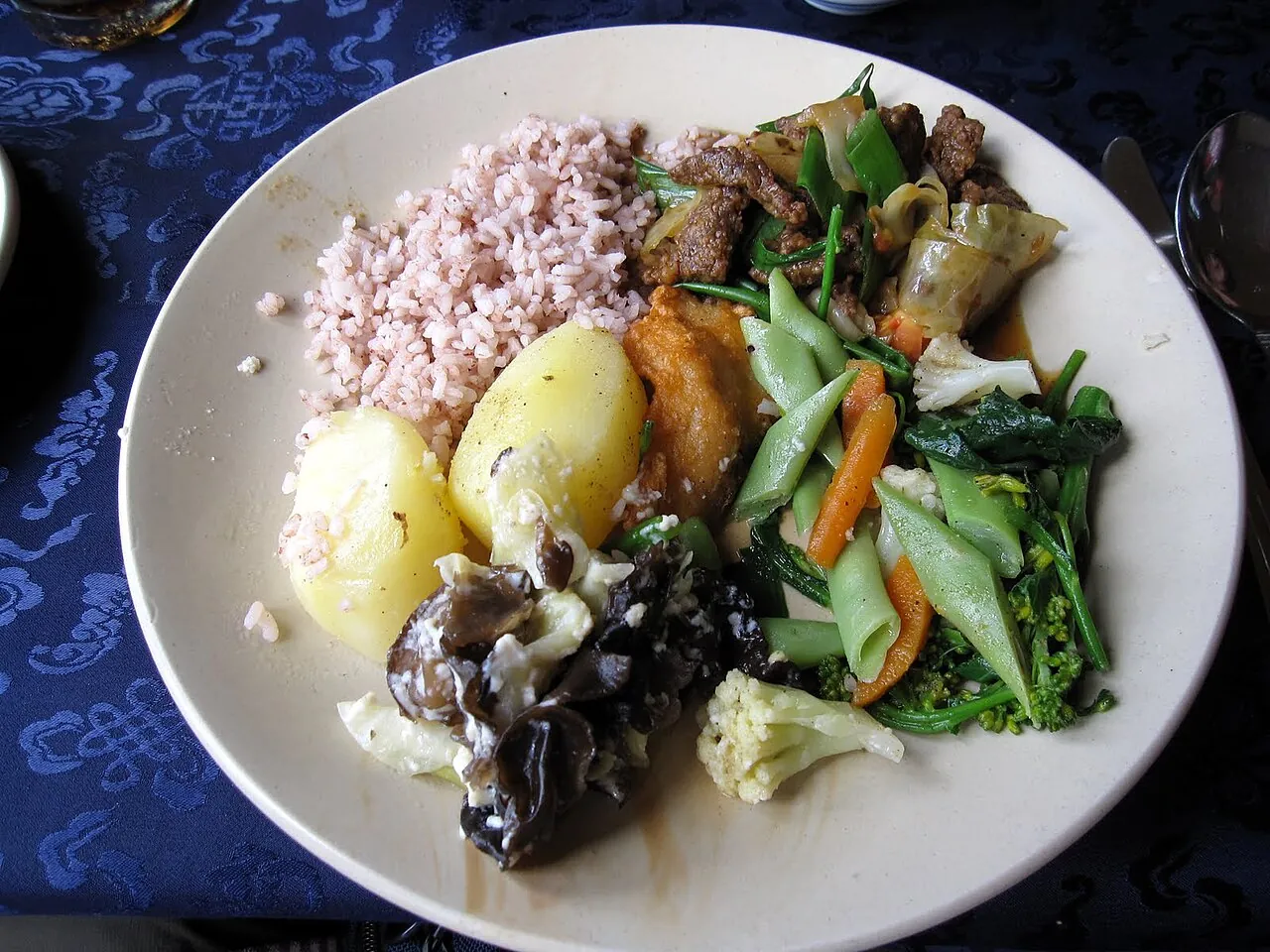
Rice is the base of a traditional meal; in the past, the Department of Tourism notes, people ate it three times a day, and rural families still do. The prized grain is red rice, nutty and earthy, grown by farmers in the western and central valleys for centuries. Red and white rice both accompany western Bhutanese meals, and Bhutan’s breweries even make a red-rice lager.
Paa means a meat stew. Phaksha paa is pork and shakam paa beef: slices of meat stir-fried with whole dried red chillies, simmered until tender with radish and spinach, and finished with dried meat and strips of fresh green chilli. Jasha maru is the chicken dish: diced chicken stewed with chillies, onion, tomato and coriander, eaten with red rice. Goep, tripe stir-fried with dried chillies and spring onion, is the one most visitors miss; the Department of Tourism finds it in small roadside eateries.
Chicken, yak meat, pork, beef and dried fish are all eaten in the west. Your guide can point you to the paa of the day at a local restaurant, since the hotel buffet may stick to chicken and vegetables.
Momo, thukpa and the snacks of the west
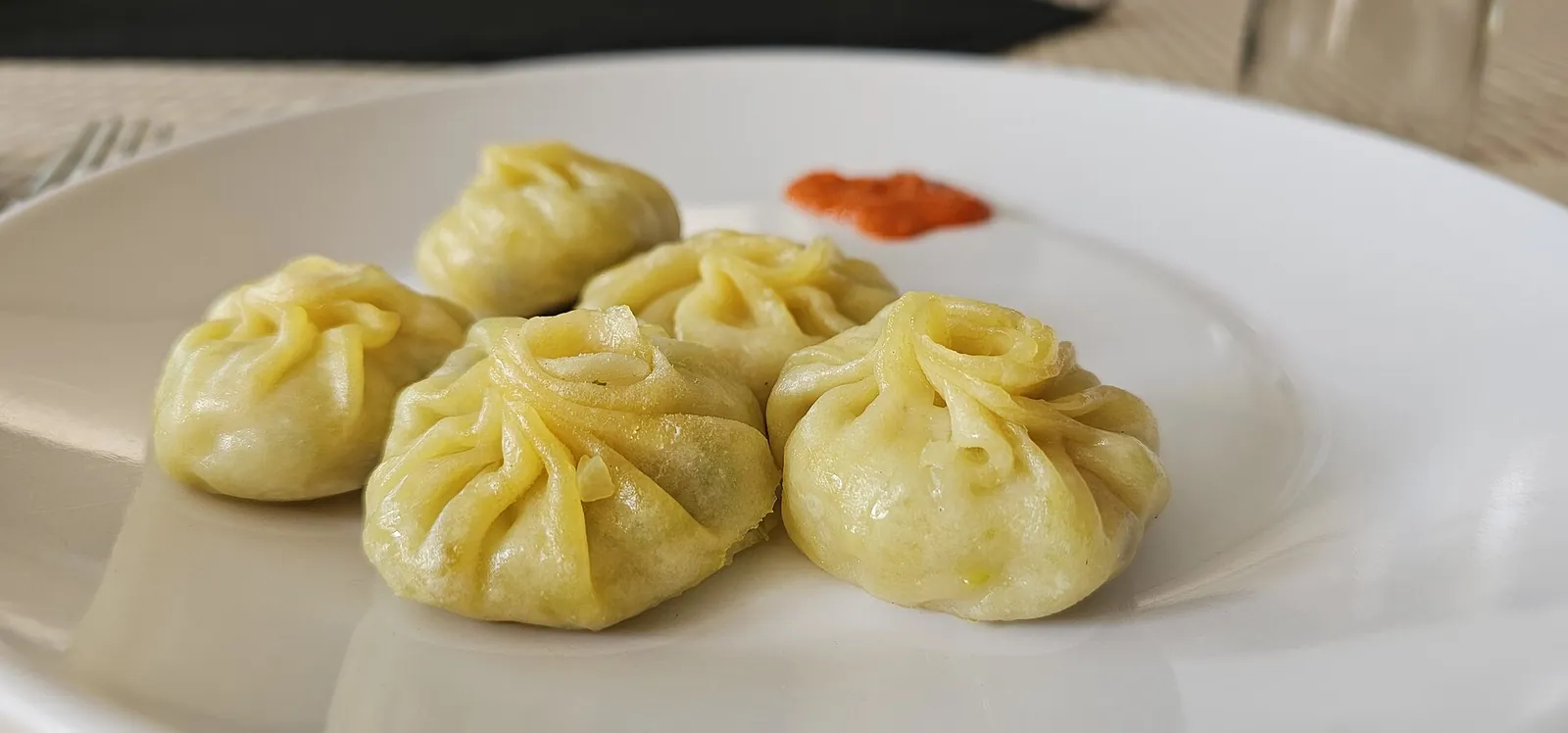
Western Bhutan shares Tibet's dumplings and noodles. Momo are steamed dumplings, with a vegetable or chicken filling and a chilli sauce on the side; thukpa is noodle soup; juma is a sausage; and khabzay are fritters, eaten as biscuits with butter tea. The Department of Tourism lists momo, juma and thukpa as the snacks of budget restaurants, where a meal costs under Nu 500 a person.
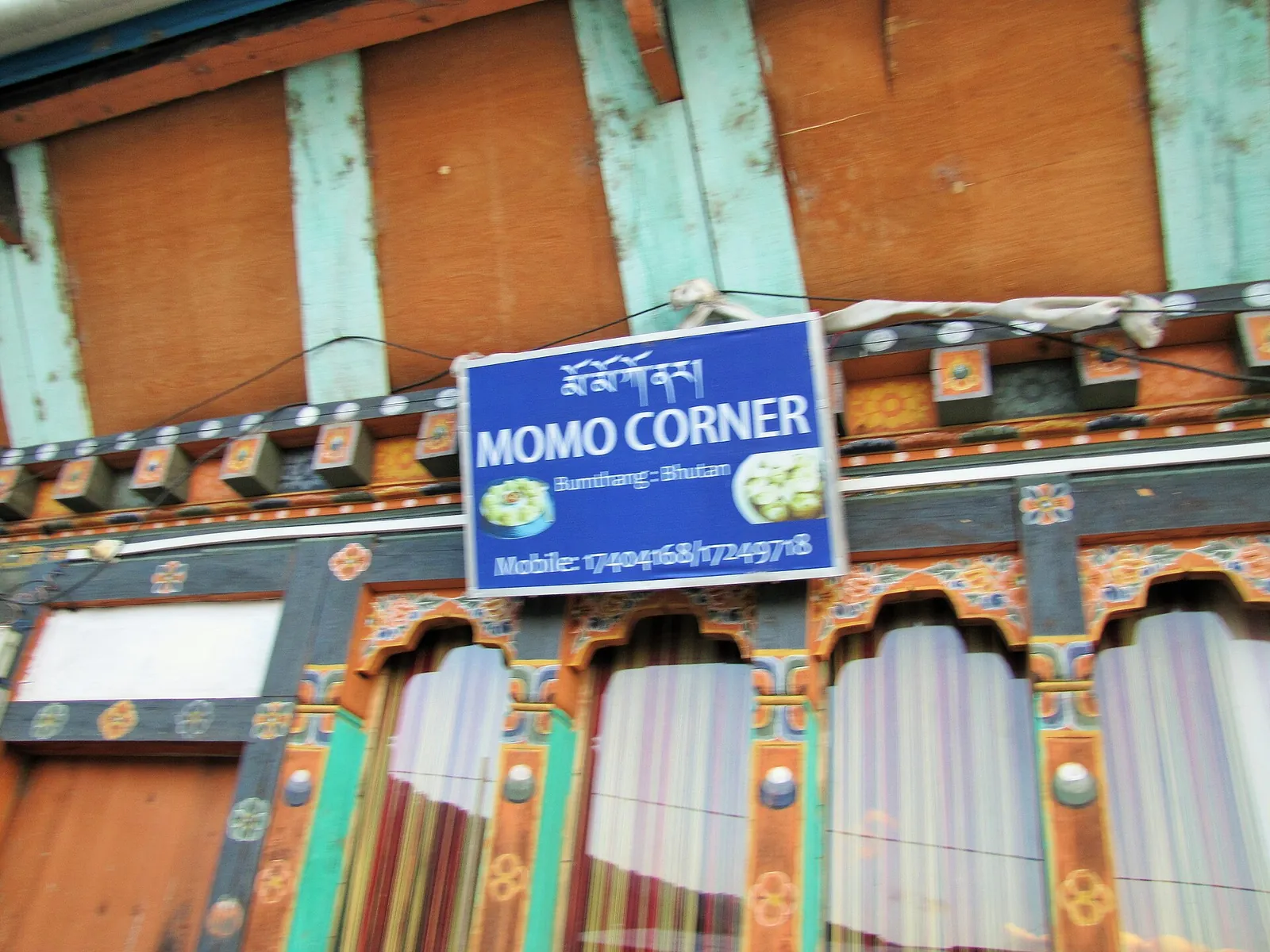
In Thimphu, Zombala Restaurant on Main Traffic heads Daily Bhutan's 2021 list of the town's momo places as the first in the market, and Momo Corner, opposite the Clock Tower, is its pick for gravy momo. For a quick lunch between dzongs, a momo shop is faster than the tourist buffet.
Regional dishes: Punakha, Bumthang and the east
Rice and spicy stews are eaten everywhere, but the Department of Tourism points out that a Bhutanese can taste the difference between an ema datshi from Paro and one from Lhuentse in the east. Four regions are worth looking for.
Punakha: the village of Nobgang, home of the four Queen Mothers, is known for ema lumtsho (fried chillies), jatsa gondo (sieved egg), maekhu (a puffed-rice snack) and above all aezey nyergum, a chilli paste of 29 ingredients. If your week includes a night in Punakha, as our Thimphu and Punakha guide suggests, these are the dishes to look for in the valley.
Haa and Paro: hoentay are buckwheat dumplings stuffed with turnip leaves, amaranth seeds, cottage cheese and butter and seasoned with chilli, onion and ginger. Families in Haa and Paro make them for Lomba, the harvest New Year of the lunar calendar, and Daily Bhutan reports that they now appear on restaurant menus too.
Bumthang, the north-central valley, eats buckwheat: khurle pancakes, puta noodles, jangbuli pasta and chogdan polenta, with its own Swiss-style cheese, butter and curd. Further east, corn dishes and zoedoe, a pungent cheese the Department of Tourism compares to blue cheese, take over; Trashi Yangtse is known for asham thukpa, corn porridge. In the south, Lhotshampa cooking brings rice and roti with lentils, curries and pickles.
What to eat and where to look
Ema datshi with red rice
The national dish: green or dried chillies stewed with yak cheese, garlic, onion and tomato, eaten with nutty red rice.
- Where to look
- Pelbu Suites' café in Olakha, Thimphu, lists it at Nu 120 plus GST; the Department of Tourism finds it in homes and restaurants across Bhutan.
- Fit it into your day
- Lunch on your first day in Thimphu, asked for "the Bhutanese way".
Kewa datshi
Potato in a soft cheese sauce with green chilli, milder than ema datshi and a good first step.
- Where to look
- Local restaurants and hotel buffets across Bhutan serve it; in Punakha, Tashi Tagye Hotel's main restaurant cooks vegetarian Bhutanese dishes.
- Fit it into your day
- Dinner on a Punakha night.
Phaksha paa or shakam paa
Pork or beef stir-fried with whole dried red chillies and simmered with radish and spinach, topped with green chilli.
- Where to look
- The Folk Heritage Museum's restaurant in Thimphu, which serves traditional Bhutanese dishes, or a local restaurant in the Punakha valley.
- Fit it into your day
- Lunch on a sightseeing day in Thimphu.
Jasha maru
A spicy chicken stew with chillies, onion, tomato and coriander, eaten with rice.
- Where to look
- Local restaurants serve it widely, and the Department of Tourism lists jasha maru among the dishes to try; in Punakha, Dhensa Boutique Resort cooks home-style Bhutanese food from local produce.
- Fit it into your day
- A warming lunch in the Punakha valley.
Momo
Steamed dumplings with a vegetable or chicken filling and a chilli sauce, a common snack in budget restaurants.
- Where to look
- Zombala Restaurant on Main Traffic in Thimphu, or Momo Corner opposite the Clock Tower for gravy momo, both on Daily Bhutan's 2021 list.
- Fit it into your day
- A quick lunch on a sightseeing day in Thimphu.
Suja
Butter tea, churned with butter and salt: savoury, warming and a customary welcome from hosts.
- Where to look
- Pelbu Suites in Thimphu lists it at Nu 100, or Nu 120 with khabzay biscuits, plus GST; hosts serve it in homes and offices across the country.
- Fit it into your day
- With zaw, puffed rice, when a host offers tea.
Suja, ara and what to drink
Suja is butter tea: tea churned with butter and salt, made with yak butter and milk in the high valleys. It is salty rather than sweet. Tea is the most common drink in Bhutan, and a good host will not let a guest leave without one. Ngaja is the sweet milk tea, close to Indian chai. Both are served with zaw, puffed rice, or sip, pounded corn. Refusing the offer is considered rude, so accept at least a sip.
Ara is the home spirit, fermented or distilled from rice, wheat, millet, buckwheat, maize or barley, sometimes warmed with butter and egg; banchang and sinchang are fermented grain drinks. Bhutan also brews beer, including Druk 11000, Red Panda and a red-rice lager, and makes whisky such as K5. Local alcohol is sold in supermarkets, pubs and bars, and you will meet ara at festivals and in farmhouses. Tuesdays are no longer dry days: since 4 July 2023 restaurants, hotels and other licensed businesses may sell alcohol on Tuesdays too, BBS reported from the Ministry of Industry, Commerce and Employment.
Eating on a guided tour
The packages priced in our Bhutan trip cost guide include breakfast, lunch and dinner: breakfast and dinner at your hotel, lunch at a restaurant on the route. Byways' budget package, for example, takes lunch in a local tourist restaurant. Byways leaves out drinks and bottled water in restaurants and hotels; our budgets count them in a drinks, snacks and SIM line, with the 10% buffer covering a fuller drinks bill.
The Department of Tourism notes that roadside eateries and homes cook eye-wateringly spicy, while hotels and restaurants cook milder for foreign guests. If you want the real thing, say so on the first day: ask for a local lunch, a farmhouse meal or ema datshi made the Bhutanese way.
A farmhouse lunch is the easiest way to eat at local strength. Some operators build it into the week: Access Bhutan Tours & Treks, a licensed Thimphu operator, serves daily lunch at restaurants or traditional farmhouses and adds an archery session at a local farmhouse and a hot stone bath after the Tiger's Nest hike. In Haa and Paro the farmhouse dish to ask about is hoentay, made for Lomba, the harvest New Year, and the Department of Tourism points to rural areas, festivals and homestays for ara. On Access Bhutan's packages the farmhouse meal is one of the included lunches; with another operator, ask for one in place of a restaurant lunch.
At the table, people throw a little food or drink into the air as an offering before eating, everyone waits until all are served, and the host serves themselves only after the guests have started.
Vegetarian food, dairy and allergies
Vegetarians are well served: many everyday dishes are vegetable stews, and hotel set meals are built around them: Tashi Tagye Hotel in Punakha lists lunch or dinner as two vegetable dishes with rice, dal and salad. It is harder for vegans, because the Department of Tourism notes that nearly all vegetable dishes are cooked with cheese, and suja is made with butter. Ask for dishes 'without datshi' and for dal and vegetables cooked in oil.
Chilli is the other thing to watch. Hotel food is milder, but a pot of ema datshi in a local restaurant can be very hot; start with kewa datshi or a cheese momo. Stock, egg and wheat are used differently from kitchen to kitchen, so tell your operator about allergies when you book, and remind your guide each day.
What a day of meals costs
On the packages in our cost guide, meals are already paid for. If you eat outside the package, these are the prices listed when checked on 1 November 2026, per person (USD 1 is Nu 94.72 at the Bank of Bhutan’s TT buying rate for 31 October to 2 November 2026):
| Where | A typical day | Per person, about |
|---|---|---|
| Budget restaurants | Momo, thukpa or a rice-and-stew plate, under Nu 500 a meal (Department of Tourism) | USD 5 a meal |
| Thimphu café day | Red rice and ema datshi for breakfast, chicken momo for lunch, an ema datshi rice bowl for dinner and a suja at Pelbu Suites: Nu 1,350 plus 5% GST | USD 15 |
| Punakha hotel day | Breakfast Nu 450, lunch Nu 550 and dinner with soup Nu 650 at Tashi Tagye Hotel, plus taxes, counted at the 15% the hotel adds to its rooms | USD 20 |
| Paro hotel day | Breakfast Nu 600, lunch Nu 800 and dinner Nu 900 at Udumwara Resort, plus 10% sales tax and 10% service charge | USD 29 |
In Thimphu, Jambayang Resort's set dinner costs Nu 750, 850 or 950 and lunch Nu 650 or 750, with 5% GST and 10% service charge added. Mid-range restaurants run to about Nu 1,000 a person and high-end ones from Nu 2,000, the Department of Tourism says. The whole week with rooms, meals, guide and fees is priced in our Bhutan trip cost guide.
Practical questions
What is the national dish of Bhutan?
Ema datshi: chillies stewed with yak cheese, garlic, onion and tomato, eaten with red rice. The Department of Tourism calls it the national dish, and it is served in homes and restaurants across the country.
Is Bhutanese food very spicy?
In homes and roadside eateries, yes; chilli is in nearly every dish. Hotels and restaurants that serve tourists cook milder, so say on the first day if you want the local strength, or start with kewa datshi, potato in cheese sauce.
Are meals included on a Bhutan tour?
The packages in our cost guide include meals: breakfast and dinner at the hotel and lunch at a restaurant on the route, with drinks often extra. Our Bhutan trip cost guide counts them in every budget.
Can vegetarians and vegans eat well in Bhutan?
Vegetarians can: many dishes are vegetable stews, and hotel set meals such as Tashi Tagye's are built around them. Vegans need to ask, because nearly every vegetable dish is cooked with cheese and suja contains butter; ask for dishes without datshi.
How much does a meal cost in Bhutan?
Under Nu 500 a person in a budget restaurant, up to about Nu 1,000 in a mid-range one and from Nu 2,000 in high-end places, according to the Department of Tourism. A day of three meals with taxes runs from about USD 15 at a Thimphu café to USD 29 at a Paro resort.
Keep planning your trip
First trip to Bhutan
A first week in Bhutan: the visa and nightly fee, why a certified guide comes along, the Paro, Thimphu and Punakha loop, money, SIMs, etiquette and daily costs.
Read the guide
Bhutan trip cost
A Bhutan week for two: about USD 1,880 per person on a budget, USD 2,080 mid-range or USD 2,520 in four-star rooms, plus international flights.
Read the guide
Thimphu and Punakha
Two nights in Thimphu and two in Punakha: Buddha Dordenma, Tashichho Dzong at dusk, the drive over Dochula, Punakha Dzong and Chimi Lhakhang, with fees, hotels and costs.
Read the guide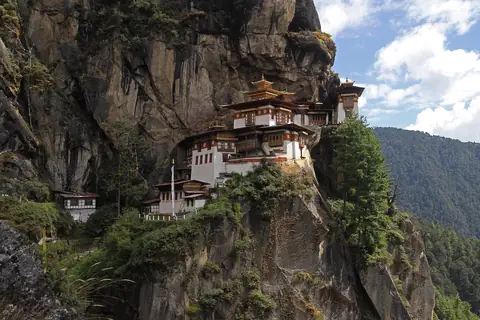
Paro and Tiger's Nest
Two nights in Paro: the Tiger's Nest hike with its fee, ponies and timings, Rinpung Dzong, the National Museum, Kyichu Lhakhang, Chele La, hotels and costs.
Read the guide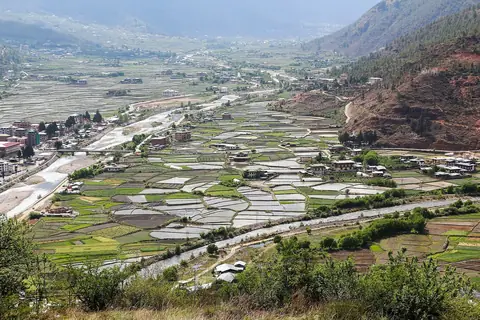
Bhutan in seven days
Two nights each in Thimphu, Punakha and Paro, with Dochula on day 3 and the Tiger's Nest hike on day 6: drive times, hotels, the fees and an all-in budget.
Read the guide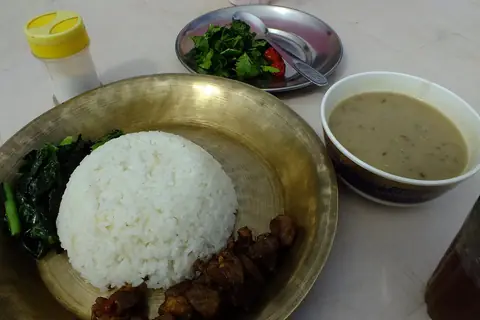
Food in Nepal
What to eat in Nepal and where: dal bhat, Newar and Thakali kitchens, momo and thukpa, lodge food on a trek, meal prices and safe water.
Read the guideSources and checks before you travel
(20)
- Bhutan Department of Tourism: the diverse (and delicious) food of Bhutan ↗ — opens in a new tab
- Bhutan Department of Tourism: food and drink in Bhutan ↗ — opens in a new tab
- Pelbu Suites, Thimphu: menu ↗ — opens in a new tab
- Byways Tours and Travels: 7 days Bhutan tour ↗ — opens in a new tab
- Jambayang Resort, Thimphu: tariff ↗ — opens in a new tab
- Tashi Tagye Hotel, Punakha: rooms and meals ↗ — opens in a new tab
- Udumwara Resort, Paro: deluxe rooms at villas ↗ — opens in a new tab
- Bank of Bhutan: current rate of exchange ↗ — opens in a new tab
- Guided Bhutan: Essential Bhutan Journey ↗ — opens in a new tab
- Little Bhutan: Bhutan 7-day itinerary ↗ — opens in a new tab
- Little Bhutan: Centenary Farmers' Market ↗ — opens in a new tab
- Daily Bhutan: Lomba and hoentay dumplings ↗ — opens in a new tab
- Bhutan Department of Tourism: mushrooms and foraging in Bhutan ↗ — opens in a new tab
- Folk Heritage Museum, Thimphu: restaurant ↗ — opens in a new tab
- Tashi Tagye Hotel, Punakha ↗ — opens in a new tab
- Dhensa Boutique Resort, Punakha ↗ — opens in a new tab
- Daily Bhutan: where to satisfy your momo cravings in Thimphu (28 June 2021) ↗ — opens in a new tab
- Bhutan Broadcasting Service: no more dry-day Tuesdays (4 July 2023) ↗ — opens in a new tab
- Department of Tourism register: Access Bhutan Tours & Treks ↗ — opens in a new tab
- Access Bhutan Tours & Treks: Bhutan tour cost ↗ — opens in a new tab
Reference sources for the version dated 3 November 2026. Confirm opening times, access, transport and conditions for your travel dates.
Photo credits
(5)
Red rice, chillies and stews in Paro
Photograph: Doug Knuth from Woodstock, IL — opens in a new tab · CC BY-SA 2.0 — opens in a new tab
Changes: Resized and converted to WebP; displayed with responsive crops. · Original photograph and licence details ↗ — opens in a new tab
Chillies drying on a farmhouse wall in Bhutan
Photograph: Chattopad — opens in a new tab · CC BY-SA 4.0 — opens in a new tab
Changes: Resized and converted to WebP; displayed with responsive crops. · Original photograph and licence details ↗ — opens in a new tab
A momo shop in Jakar, Bumthang
Photograph: Chuck Moravec — opens in a new tab · CC BY 2.0 — opens in a new tab
Changes: Resized and converted to WebP; displayed with responsive crops. · Original photograph and licence details ↗ — opens in a new tab
Momo, steamed dumplings, at a lunch in Bhutan
Photograph: Nabin K. Sapkota — opens in a new tab · CC BY-SA 4.0 — opens in a new tab
Changes: Resized and converted to WebP; displayed with responsive crops. · Original photograph and licence details ↗ — opens in a new tab
A Bhutanese plate of red rice, potatoes, greens and mushrooms
Photograph: rapidtravelchai — opens in a new tab · CC BY 2.0 — opens in a new tab
Changes: Resized and converted to WebP; displayed with responsive crops. · Original photograph and licence details ↗ — opens in a new tab