Plan your trip
Bhutan festivals 2027: tshechu dates and the best months to go
A tshechu is a festival of masked dances in the courtyard of a dzong or temple, held over three to five days, most of them in honour of Guru Rinpoche, who is said to have brought Buddhism to Bhutan; families come from across the valley in their finest gho and kira. They follow the Bhutanese lunar calendar, so the dates move every year. The Department of Tourism has published a tentative festival list for 2027; this guide gives those dates for the festivals within reach of a first week in Paro, Thimphu and Punakha, says which base suits each one and what the dates do to rooms and flights, then goes through the year month by month.
In this guide
Find the location ↗ — opens in a new tabThe short answer
For a first trip, plan Paro, Thimphu and Punakha around Paro Tshechu (18-22 March 2027 on the Department of Tourism's tentative list; seven nights, three of them in Paro) or Thimphu Tshechu (10-12 October; nine nights, four in Thimphu). For two adults sharing, the March week costs about USD 2,440 per person all-in and the October week about USD 4,130, budgeted at the full SDF of USD 200 because the USD 100 rate runs until 31 August 2027. Book the operator and Paro flights first, four to six months ahead.
- Key point
- Tshechus last three to five days; the Black-necked Crane Festival and Druk Wangyel Tshechu are one-day events
- Where it applies
- Paro for Paro Tshechu, Thimphu for Thimphu Tshechu, Punakha for the February festivals, Phobjikha for the crane festival
- Timing
- The big western-valley festivals fall in February, March, October and November; spring and autumn are popular travel seasons
All 24 countries in one place: the Asia festival calendar 2027 →
The 2027 festival dates
The Department of Tourism's 2027 list is tentative, so dates can still move. These are the festivals within reach of a first trip through the western valleys:
| Festival | Place | 2027 dates | Base for it |
|---|---|---|---|
| Punakha Drubchen (DoT lists it as Punakha Dromchoe) | Punakha Dzong | 13-15 February | Punakha |
| Punakha Tshechu | Punakha Dzong | 16-18 February | Punakha |
| Talo Tshechu | Talo Gonpa, above the Punakha valley | 16-18 March | Punakha |
| Paro Tshechu | Rinpung Dzong, Paro; thongdrel on the last day | 18-22 March | Paro |
| Rhododendron Festival | Lamperi Botanical Park, Thimphu | 22-23 April | Thimphu |
| Thimphu Drubchen | Tashichho Dzong, Thimphu | 5 October | Thimphu |
| Wangdue Tshechu | Wangdue Phodrang | 8-10 October | Punakha |
| Thimphu Tshechu | Tashichho Dzong, Thimphu | 10-12 October | Thimphu |
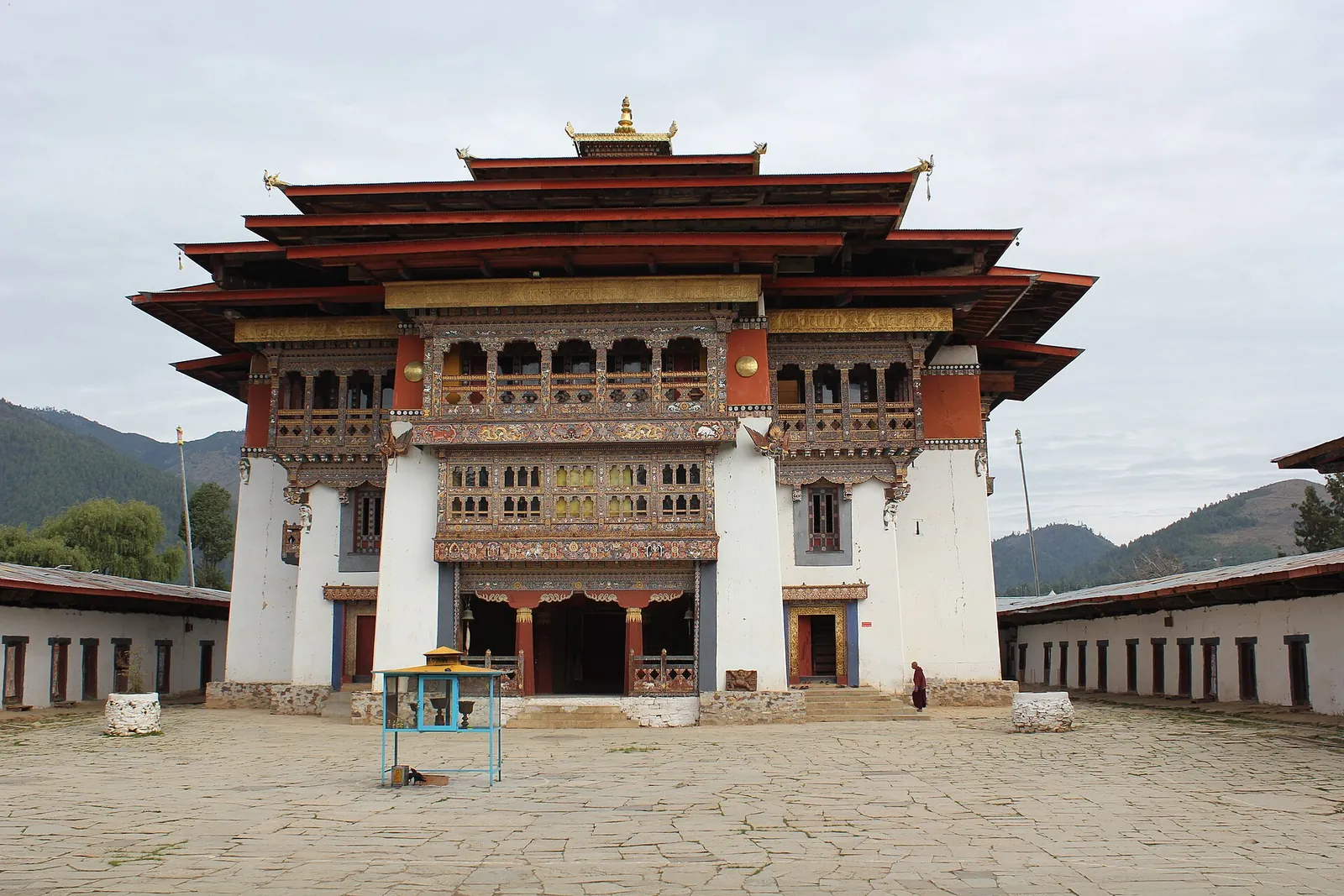
| Gangtey Tshechu | Gangtey Gonpa, Phobjikha; thongdrel on the last day | 13-15 October | Phobjikha |
| Haa Tshechu | Lhakhang Karpo, Haa | 6-8 November | Haa or Paro |
| Black-necked Crane Festival | Gangtey Gonpa, Phobjikha | 11 November | Phobjikha |
| Jambay Lhakhang Drup | Jambay Lhakhang, Bumthang | 14-17 November | Bumthang |
| Druk Wangyel Tshechu | Dochula | 13 December | Thimphu or Punakha |
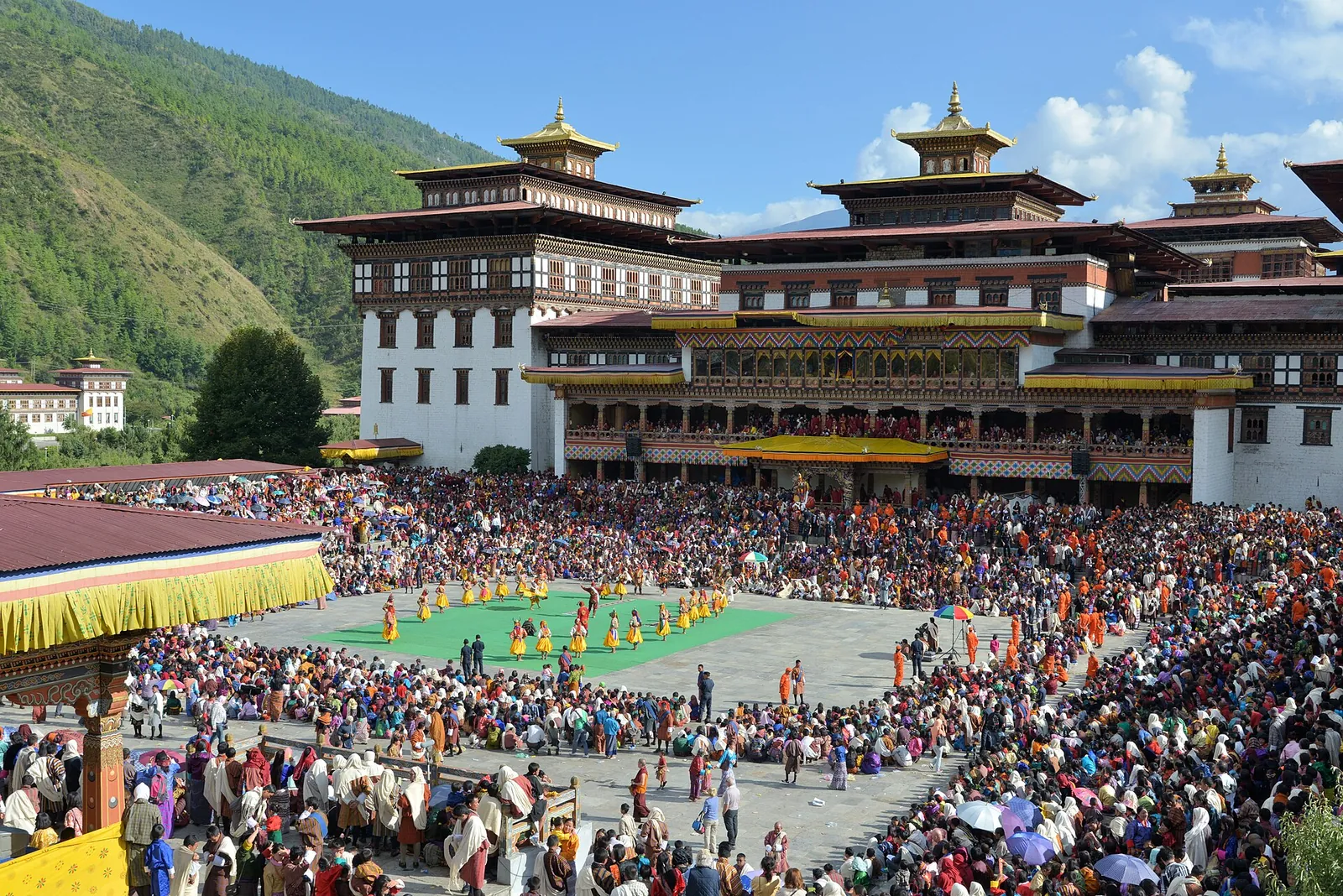
Tshechus are religious events first. Monks in masks of gods and demons perform the cham dances that bring old legends to life, and most festivals end with the unrolling of a thongdrel, a huge religious scroll, on the last morning. The two biggest, Paro and Thimphu, draw crowds from across the country. Our 7-day route spends two nights each in Thimphu, Punakha and Paro; a festival trip gives the festival town three nights in March (Paro) or four in October (Thimphu), as in the examples below.
February and March: Punakha and Paro
Punakha Drubchen, 13-15 February 2027, is one of the oldest festivals of the region and recalls the 17th-century victory over a Tibetan army that came for the dzong's most sacred relic. Besides the mask dances inside Punakha Dzong, its highlight is the pazaps, local militiamen, re-enacting the battle in which they guarded the relic under Zhabdrung Ngawang Namgyal; highlanders from Gasa and Laya come down to join the crowd. Punakha Tshechu follows in the same dzong on 16-18 February. Besides the cham dances, it brings out the dzong's great thongdrel, a rare sight. Thimphu to Punakha is 74 km, 2 to 2.5 hours over Dochula, so the drive fits a morning. A seven-night February week takes in both: land in Paro on 12 February and drive to Thimphu for one night, cross to Punakha on the 13th for four nights (the Drubchen, then the Tshechu's first day on the 16th), and finish with two nights in Paro (115 km, 3.5 to 4 hours) and Tiger's Nest on the 18th before flying out on the 19th. Our Thimphu and Punakha guide covers the dzong and the valley.
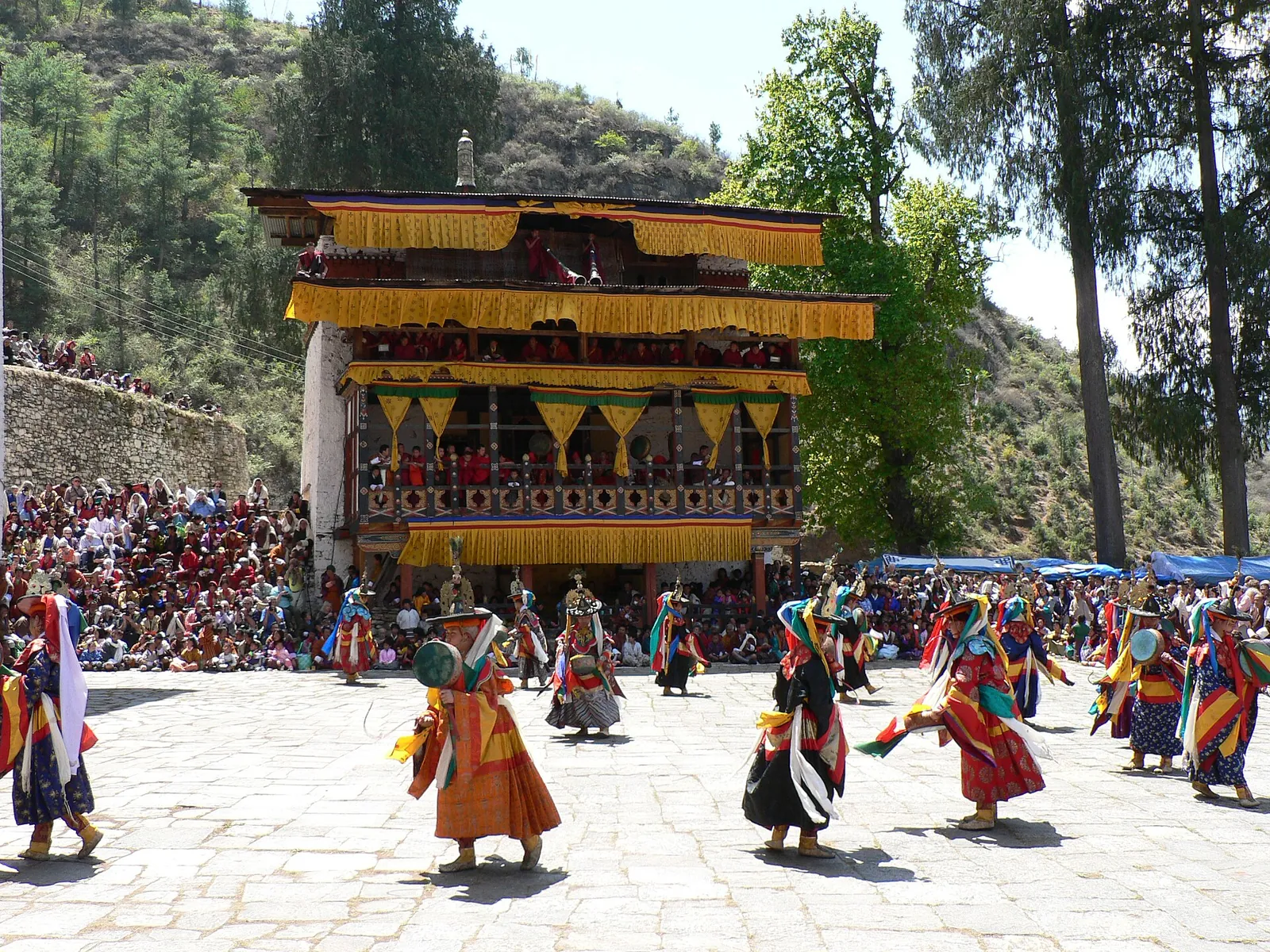
In March, Talo Tshechu at Talo Gonpa above the Punakha valley runs on 16-18 March, and then comes the festival most visitors plan around. Paro Tshechu, 18-22 March 2027, opens inside Rinpung Dzong: on the first day the dzong's sacred relics are displayed, and because they cannot leave the building, the dances are held within its walls. The other four days fill the Deyangkha festival ground beside the dzong. The programme runs through the Shingje Yab Yum, the dance of the lord of death and his consort; the Durdag, the skeletal lords of the cremation grounds; the whirling black-hat dancers of the Shanag; and the Drametse Ngacham, the dance of the drums from Drametse. On the last morning, 22 March, monks carry the thongdrel of Guru Rinpoche down from the dzong in procession and unfurl it in the small hours: a silk appliqué tall enough to cover the three-storey building it hangs against. Seeing it is said to cleanse sins, and the queue for its blessing forms in the dark. In 2023 more than 7,000 people packed the festival ground, some sitting on the slopes, and guides found little space left for visitors. Stay in Paro the night before the final day and arrive before first light with your guide.
A seven-night week built around Paro Tshechu lands on 16 March and leaves on 23 March, with three nights in Paro during the last three festival days; its cost and booking advice are below. Flights in and out of Paro depend on the weather and can be delayed or cancelled, so book the long-haul connection from Delhi or Bangkok for the day after you leave Paro. Our Paro and Tiger's Nest guide has the walk.
- 16 March: fly into Paro and drive to Thimphu (47 km, 1 to 1.5 hours) for two nights.
- 17 March: Thimphu's sights with your guide.
- 18 March: cross Dochula to Punakha (74 km, 2 to 2.5 hours) for two nights, with Talo Tshechu scheduled to finish that day.
- 19 March: Punakha Dzong and the valley.
- 20 March: drive back to Paro (115 km, 3.5 to 4 hours) for three nights, with time for the festival.
- 21 March: hike to Paro Taktsang (Tiger's Nest).
- 22 March: the thongdrel before dawn, then the last day of dances.
- 23 March: fly out.
October: Thimphu, Wangdue and Gangtey
Thimphu Tshechu, 10-12 October 2027 at Tashichho Dzong, is the country's biggest festival. Introduced in 1670 by Gyalse Tenzin Rabgye, it honours Guru Rinpoche with three days of cham dances in and around the dzong; Bhutanese families and foreign visitors come together to watch. A thongdrel is unfurled at dawn. Thimphu Drubchen comes first, on 5 October. Arriving on 9 October puts you in Thimphu for the opening day; the first-trip guide explains how a guide and driver work around a busy day in the capital.
Wangdue Tshechu, 8-10 October, marks the completion of Wangdue Phodrang Dzong. The Dance of the Ox is the favourite, said to ensure a peaceful afterlife for those who see it, and the region's ornate speeches, songs and folk dances are part of the programme; it ends with the unrolling of a large thongdrel. Wangdue is 13 km and about 45 minutes from Punakha, so it suits a Punakha night.
Gangtey Tshechu, 13-15 October, is held in the large courtyard of Gangtey Gonpa above the Phobjikha valley: monks and local people perform masked dances and folk songs in silk brocade costumes, a thongdrel is displayed on the last day, and the festival closes with Nguedup Langwa, a blessing for the people of the valley. The valley is a stay of its own rather than a day out from Punakha. The Jhomolhari Mountain Festival (14-15 October) is held at Dangochong in the Jhomolhari foothills, trekking country beyond a first trip.
A nine-night week built around Thimphu Tshechu lands on 6 October and leaves on 15 October. It starts in Paro and Punakha so that you reach Thimphu the day before the tshechu and the Tiger's Nest hike, at about 3,120 m, comes at the end, after a week at altitude. Its cost, with the SDF budgeted at the full rate for October 2027, is in the section below.
- 6 October: fly into Paro for one night, with the afternoon in the Paro valley.
- 7 October: drive to Punakha (115 km, 3.5 to 4 hours) for two nights.
- 8 October: the first day of Wangdue Tshechu, 45 minutes away.
- 9 October: drive to Thimphu (74 km, 2 to 2.5 hours) for four nights, a day before the tshechu.
- 10-12 October: all three days of Thimphu Tshechu.
- 13 October: return to Paro (47 km, 1 to 1.5 hours) for two nights.
- 14 October: hike to Tiger's Nest.
- 15 October: fly out.
November and December: Haa, the cranes, Bumthang and Dochula
Haa Tshechu runs on 6-8 November 2027 at Lhakhang Karpo in Haa: three days of masked dances in its courtyard, with the valley sitting round the edge, and a thongdrel of Guru Rinpoche unrolled at first light on the last morning. Haa is 65 km and 1.5 to 2 hours from Paro, over the Chele La pass, so a night in Haa or an early start from Paro both work. Dechenphu Tshechu above Thimphu falls on 8 November.
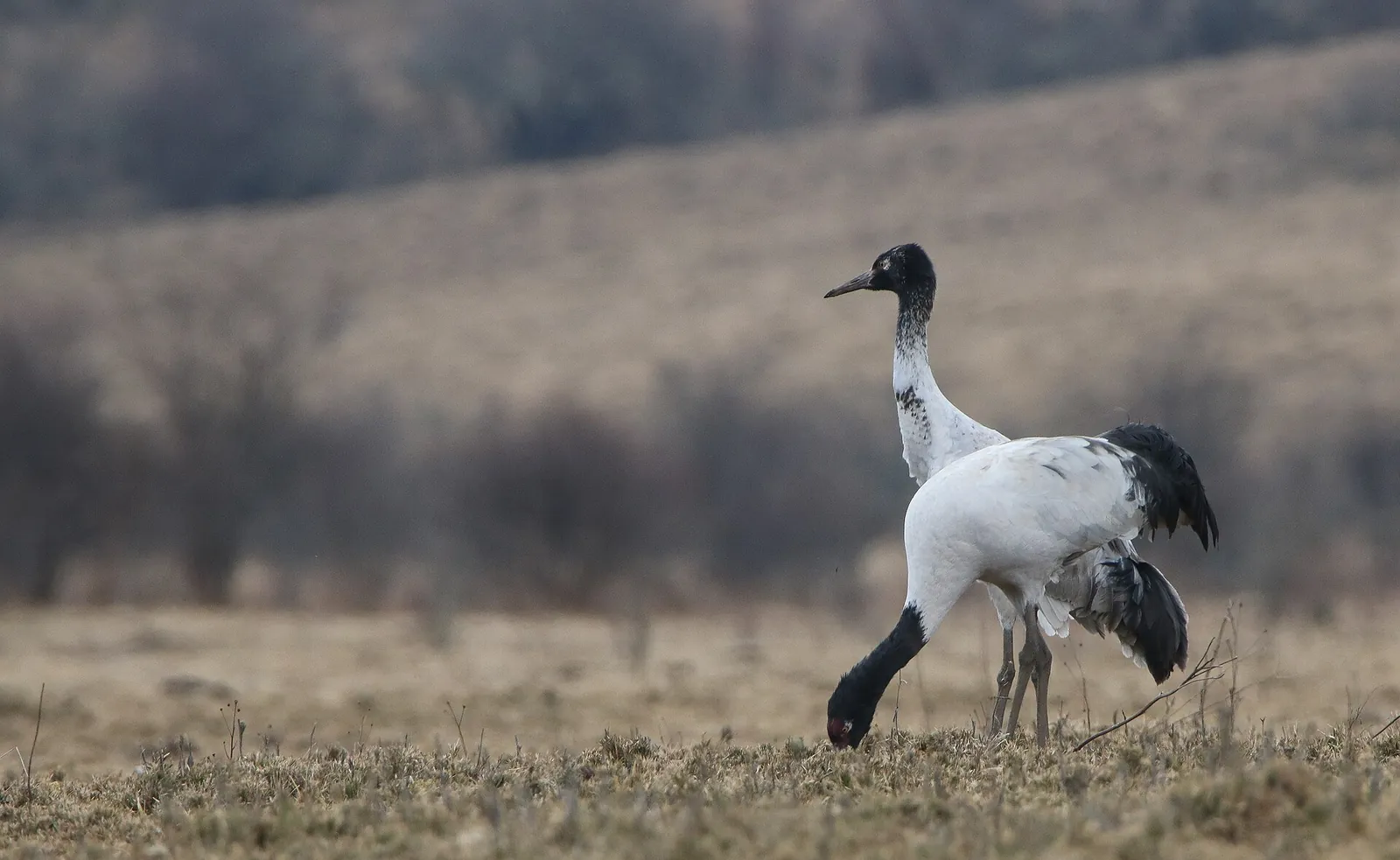
The Black-necked Crane Festival is on the Department of Tourism's list for 11 November 2027 at Gangtey Gonpa; the Royal Society for Protection of Nature has held it on 11 or 12 November. It welcomes the endangered cranes that winter in the Phobjikha valley, several hundred birds each year (RSPN counted 504 there in the winter of 2017-18): local folk songs and mask dances, conservation songs and dramas, and a crane dance by schoolchildren, usually from 09:30 until mid-afternoon. It is organised by the valley's environment committee. A seven-night week fits it: land in Paro on 7 November and drive to Thimphu for one night, then Punakha for two (8-9 November) and Phobjikha for two (10-11 November; 78 km and about 3 hours from Punakha), with time to look for cranes on the marsh before the listed festival date. On the 12th drive back through Punakha to Paro, about 193 km and 6.5 to 7 hours by the drive times above, for two nights, with Tiger's Nest on the 13th and the flight out on the 14th.
The summer and highland events are not on the 2027 list, but the Department of Tourism gives their usual timing. Genekha village, 45 minutes from Thimphu, holds a mushroom festival in the second week of August, and Ura in Bumthang its Matsutake Mushroom Festival in the third or fourth week of August, with mushroom picking, mushroom dishes and local performances. The Royal Highland Festival is held on 23-24 October every year at Laya in Gasa district, about 4,000 m up: yak, horse and mastiff shows, races and the Layaps' own songs and dances, reached by a 6-hour drive from Thimphu and a 4-hour hike, or by helicopter booked well in advance.
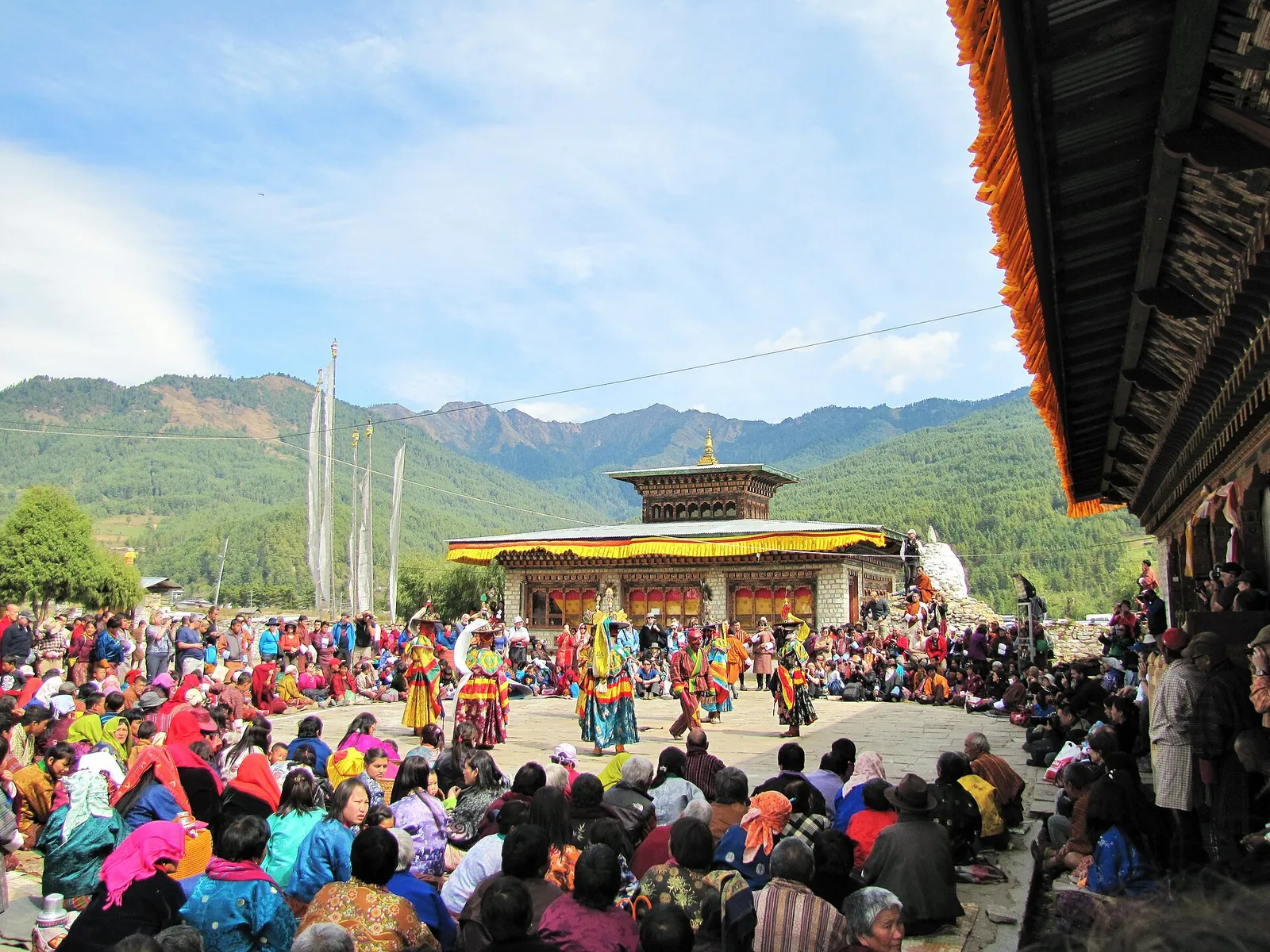
Bumthang is the extension. Jambay Lhakhang Drup, 14-17 November, is famous for the Mewang, a night fire ritual in which people run through a burning gate to clear the year's misfortune, and for the Tercham, a midnight dance during which filming and photography are forbidden. Punakha to Bumthang is 212 km and about 8 hours by road, so a Bumthang festival adds a full day's drive each way to the western week; Bumthang also has a domestic airport: Drukair's November 2026 schedule shows a 35-minute flight from Paro every day except Monday. Travel by road in daylight only, even with a driver, and in the monsoon, June to September, allow for landslides that can close roads for days. Jakar Tshechu (6-9 November) and Ura Yakchoe (18-22 April) are Bumthang's other big festivals; in summer, when the list has little else, Nimalung Tshechu (12-14 June) and Kurjey Tshechu (14 June) are held there.
The year ends with Druk Wangyel Tshechu at Dochula, the pass between Thimphu and Punakha, on 13 December. The dancers come from the Royal Bhutan Army rather than the monasteries, and the festival honours the Fourth King and the army. It fits the Thimphu-Punakha drive on that day.
What a festival week costs, and when to book
Both weeks are priced like our trip-cost guide: two adults sharing standard three-star rooms on a private trip with Guided Bhutan, a DoT-listed operator, whose calculator, checked on 3 November 2026, gives USD 2,030 per adult for seven nights and USD 2,610 for nine, including hotels, meals, guide, driver and car, entry fees, the SDF at USD 100 a night and the visa. To that come tips at USD 20 per traveller per day, tea, water, snacks and a Bhutan Telecom tourist SIM (Nu 200 for seven days), and a 10% buffer on the whole total, the SDF included. The calculator uses Guided Bhutan's current package prices; festival weeks fall in its peak season, March to May and September to November, and its written quote confirms the price for your dates.
March, Paro Tshechu: about USD 2,440 per person, USD 4,880 for two. The seven-night package is USD 2,030, tips for eight days USD 160, drinks, snacks and the SIM about USD 30, and the buffer about USD 220.
October, Thimphu Tshechu: about USD 4,130 per person, USD 8,250 for two. The USD 100 rate is a 50% discount on the full SDF of USD 200 and runs until 31 August 2027; the government may end the discount after that date, so budget nights from 1 September 2027 at USD 200 per adult unless an extension is announced. This week is budgeted at the full rate: USD 1,800 of SDF per adult for nine nights, USD 1,710 for hotels, meals, guide, driver, car, entry fees and the visa (the nine-night package less its USD 900 of SDF), USD 200 of tips for ten days, about USD 40 for drinks, snacks and the SIM, and the 10% buffer, about USD 380. If the government extends the USD 100 rate, the week costs about USD 3,140 per person. The November weeks fall after the same date.
Flights to Paro are the one cost kept apart. For a March trip from London, Turkish Airlines showed economy returns to Delhi from GBP 569 to GBP 870 for December 2026 to April 2027, and Bhutan Airlines lists Delhi-Paro from USD 246 and Paro-Delhi from USD 223 one way: about USD 1,250-1,650 per person in all, checked on 3 November 2026.
Bhutan's two airlines, Drukair and Bhutan Airlines, fly in from Bangkok, Delhi, Kolkata, Bagdogra, Bodhgaya, Dhaka, Kathmandu, Guwahati, Dubai and Singapore. Paro International Airport (PBH) is the gateway for the western valleys; Gelephu, in the south, is Bhutan's other international airport, and Drukair's November 2026 schedule shows a Paro-Gelephu-Kolkata flight on Mondays and Fridays. Guided Bhutan, a DoT-listed operator, advises booking four to six months ahead for festival weeks, when accommodation in Paro and Thimphu fills early; Bhutan Airlines sells seats online up to 6 months before departure. A tour operator can arrange DoT-certified accommodation and apply for your visa.
Most visitors apply online for the USD 40 visa, which is normally reviewed within five working days; Indian nationals use a permit and pay an SDF of Nu 1,200 per adult per night instead. A DoT-certified guide must accompany you and you stay in DoT-certified accommodation; our entry guide explains the application.
At the festival: dress, photos and the courtyard
A festival day starts early and runs long. The dances go on through the day in the courtyard, and on the last morning the thongdrel goes up in the dark or at first light and is taken down before the sun reaches it, so that is the morning to be there. Between and during the dances move the atsaras, red-masked clowns who joke with the crowd, help the dancers, keep order and explain the dances to lay viewers. Seating is the stone courtyard, its steps and the slopes around it, in sun and then shade: bring something to sit on, a hat for the breaks, sunscreen and water. The Bhutan Tourism Corporation's festival tours give the dances a morning, which suits most first visits; come back for the final dawn. Bhutanese families come in their best gho and kira, and visitors dress up too, in smart, modest clothes; the same tours include a try-on of the national dress.
In the dzong, wear clothing that covers you from shoulders to knees, with long sleeves and covered legs in temples, and take off caps and hats in sacred places. Photographing the dances in the open courtyard is usual, but the Department of Tourism asks visitors never to stand between worshippers and an altar or block them, and to ask before photographing people; no photos inside temples and dzong shrine rooms. Jambay Lhakhang's Tercham is the one dance where cameras are forbidden altogether. Some dzongs and monuments charge an admission fee; your guide accompanies you inside. Drones need a permit in advance and tourists are generally not allowed to bring them in.
Festival months at a glance
Here are the 2027 festival dates near the western valleys by month, from the Department of Tourism's tentative list. Our best-time guide has the weather, what you see and the price season for every month.
| Month | Festivals near the western valleys, 2027 |
|---|---|
| February | Punakha Drubchen 13-15, Punakha Tshechu 16-18 |
| March | Talo Tshechu (Punakha) 16-18, Paro Tshechu 18-22 |
| April | Rhododendron Festival, Lamperi 22-23 |
| June to August | No western-valley festivals on the list; Nimalung and Kurjey in Bumthang in June |
| September | Tour of the Dragon bike race, Bumthang to Thimphu, 5 September |
| October | Thimphu Drubchen 5, Wangdue 8-10, Thimphu 10-12, Gangtey 13-15 |
| November | Haa 6-8, Jakar (Bumthang) 6-9, Dechenphu (Thimphu) 8, Black-necked Crane Festival 11, Jambay Lhakhang (Bumthang) 14-17 |
| December | Druk Wangyel Tshechu, Dochula, 13 |
March to May and late September to November are the classic months: bright days for the views from Dochula, weather permitting, and the main festivals. In April the Rhododendron Festival at Lamperi Botanical Park, about 35 km from Thimphu in the Dochula conservation area, celebrates the blossoms of a park where 40 of Bhutan's 46 rhododendron species grow. December to February brings sunny days in the valleys and the cranes in Phobjikha; Punakha's February festivals and Druk Wangyel Tshechu fall in this season. June to September is green, but the monsoon can affect roads and services.
Practical questions
When is Paro Tshechu in 2027?
The Department of Tourism's tentative list gives 18-22 March 2027 at Rinpung Dzong, with the thongdrel unfurled before dawn on the last day, 22 March.
When is Thimphu Tshechu in 2027?
The Department of Tourism tentatively lists 10-12 October 2027 at Tashichho Dzong, with Thimphu Drubchen on 5 October.
Are the 2027 dates final?
No. The Department of Tourism publishes them as tentative, and festival dates follow the lunar calendar, so keep a day either side free if a festival is the reason for the trip.
Is Punakha Drubchen the same as Punakha Tshechu?
No. They are two festivals in Punakha Dzong one after the other: tentatively the Drubchen on 13-15 February 2027 and the Tshechu on 16-18 February.
When is the Black-necked Crane Festival in 2027?
The Department of Tourism lists 11 November 2027 at Gangtey Gonpa in Phobjikha; the Royal Society for Protection of Nature has held the festival on 11 or 12 November, so the date may still move.
Which festival suits a first trip?
Paro Tshechu in March or Thimphu Tshechu in October: both fit a trip through Paro, Thimphu and Punakha. Allow seven nights with three in Paro for March, about USD 2,440 per person all-in, or nine with four in Thimphu for October, about USD 4,130 with the SDF budgeted at the full USD 200 that applies from 1 September 2027 unless the discount is extended.
Keep planning your trip
Bhutan in seven days
Two nights each in Thimphu, Punakha and Paro, with Dochula on day 3 and the Tiger's Nest hike on day 6: drive times, hotels, the fees and an all-in budget.
Read the guide
First trip to Bhutan
A first week in Bhutan: the visa and nightly fee, why a certified guide comes along, the Paro, Thimphu and Punakha loop, money, SIMs, etiquette and daily costs.
Read the guide
Entering Bhutan
Bhutan visa, the standard USD 100 nightly SDF to August 2027, certified guides and customs for UK and EU visitors.
Read the guide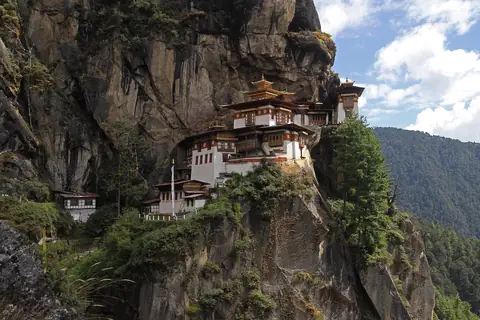
Paro and Tiger's Nest
Two nights in Paro: the Tiger's Nest hike with its fee, ponies and timings, Rinpung Dzong, the National Museum, Kyichu Lhakhang, Chele La, hotels and costs.
Read the guide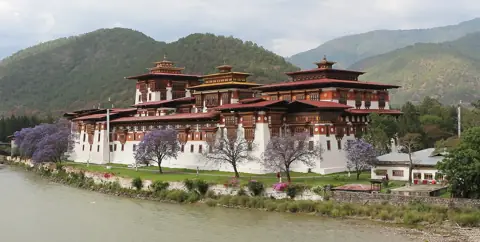
Thimphu and Punakha
Two nights in Thimphu and two in Punakha: Buddha Dordenma, Tashichho Dzong at dusk, the drive over Dochula, Punakha Dzong and Chimi Lhakhang, with fees, hotels and costs.
Read the guide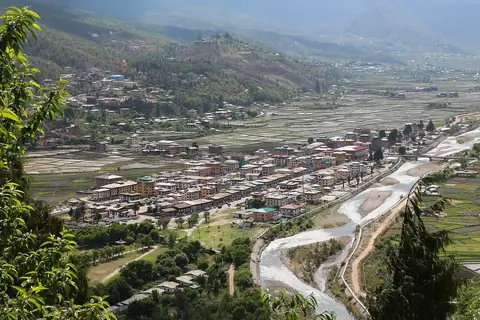
Bhutan trip cost
A Bhutan week for two: about USD 1,880 per person on a budget, USD 2,080 mid-range or USD 2,520 in four-star rooms, plus international flights.
Read the guideSources and checks before you travel
(46)
- Department of Tourism: tentative festival dates for the year 2027 (PDF) ↗ — opens in a new tab
- Bhutan Tourism Corporation: Paro Tshechu ↗ — opens in a new tab
- Little Bhutan (DoT-listed operator): Paro Tshechu ↗ — opens in a new tab
- Bhutan Broadcasting Service: Paro Tshechu begins ↗ — opens in a new tab
- Bhutan Tourism Corporation: Punakha Tshechu ↗ — opens in a new tab
- Book My Tour Bhutan (Bhutanese tour operator): Punakha Drubchen ↗ — opens in a new tab
- Bhutan Tourism Corporation: Jambay Lhakhang Drup ↗ — opens in a new tab
- Trans Bhutan Trail: best time to visit Bhutan ↗ — opens in a new tab
- Royal Society for Protection of Nature: history of the Black-necked Crane Festival ↗ — opens in a new tab
- Royal Society for Protection of Nature: Black-necked Crane Festival brochure ↗ — opens in a new tab
- Bhutan Broadcasting Service: crowds at Paro Tshechu (9 April 2023) ↗ — opens in a new tab
- Daily Bhutan: Atsara, the Bhutanese clowns who are not just clowns (25 August 2021) ↗ — opens in a new tab
- Little Bhutan: Haa Tshechu ↗ — opens in a new tab
- Little Bhutan: Gangtey Phobjikha festival tour ↗ — opens in a new tab
- Bhutan Trust Fund: rhododendron garden at Lampelri Botanical Park ↗ — opens in a new tab
- Turkish Airlines: flights from London to Delhi ↗ — opens in a new tab
- Bhutan Airlines: fares ↗ — opens in a new tab
- Department of Tourism: Monthly Tourism Bulletin, October 2025 (PDF) ↗ — opens in a new tab
- Department of Tourism: Monthly Tourism Bulletin, April 2026 (PDF) ↗ — opens in a new tab
- Royal Society for Protection of Nature: Phobjikha bids adieu to the black-necked cranes ↗ — opens in a new tab
- Bhutan Travel Bureau (tour operator): driving distances ↗ — opens in a new tab
- Department of Tourism: visit Bhutan ↗ — opens in a new tab
- Department of Tourism: FAQs ↗ — opens in a new tab
- Department of Tourism: visa ↗ — opens in a new tab
- Department of Tourism: announcements ↗ — opens in a new tab
- Department of Culture and Dzongkha Development: Paro Taktshang ↗ — opens in a new tab
- Guided Bhutan Tours: Bhutan trip cost ↗ — opens in a new tab
- Guided Bhutan Tours: Bhutan tour guide ↗ — opens in a new tab
- Bhutan Telecom: tourist SIM ↗ — opens in a new tab
- Pelbu Suites, Thimphu: menu ↗ — opens in a new tab
- Tashi Tagye Hotel, Punakha: rooms and meals ↗ — opens in a new tab
- Hotel Paro Grand: standard deluxe room and meal rates ↗ — opens in a new tab
- Bank of Bhutan: current rate of exchange ↗ — opens in a new tab
- Bhutan Tourism Corporation: Thimphu Tshechu ↗ — opens in a new tab
- Guided Bhutan Tours: Essential Bhutan Journey ↗ — opens in a new tab
- Department of Tourism: service provider directory, Guided Bhutan Tours ↗ — opens in a new tab
- Little Bhutan: Bhutan 7-day itinerary ↗ — opens in a new tab
- Bhutan Airlines: FAQ ↗ — opens in a new tab
- Drukair: conditions of carriage ↗ — opens in a new tab
- UK Foreign Office: Bhutan safety and security ↗ — opens in a new tab
- UK Foreign Office: Bhutan health ↗ — opens in a new tab
- Auswärtiges Amt (Germany): Bhutan travel and safety advice (German) ↗ — opens in a new tab
- France Diplomatie: Bhutan, useful information (French) ↗ — opens in a new tab
- Drukair: flight schedule, November 2026 ↗ — opens in a new tab
- Department of Tourism: mushrooms and foraging in Bhutan ↗ — opens in a new tab
- Department of Tourism: the Royal Highland Festival ↗ — opens in a new tab
Reference sources for the version dated 3 November 2026. Confirm opening times, access, transport and conditions for your travel dates.
Photo credits
(5)
Thimphu Tshechu below Tashichho Dzong, October 2014.
Photograph: Cfynn — opens in a new tab · CC BY-SA 3.0 — opens in a new tab
Changes: Resized and converted to WebP; displayed with responsive crops. · Original photograph and licence details ↗ — opens in a new tab
The Black Hat dance with drums at Paro Tshechu.
Photograph: Stephen Shephard — opens in a new tab · CC BY-SA 3.0 — opens in a new tab
Changes: Resized and converted to WebP; displayed with responsive crops. · Original photograph and licence details ↗ — opens in a new tab
The Jambay Lhakhang festival in Bumthang, October 2015.
Photograph: Chuck Moravec — opens in a new tab · CC BY 2.0 — opens in a new tab
Changes: Resized and converted to WebP; displayed with responsive crops. · Original photograph and licence details ↗ — opens in a new tab
A black-necked crane in the Phobjikha valley in February.
Photograph: Phuentsho — opens in a new tab · CC BY-SA 4.0 — opens in a new tab
Changes: Resized and converted to WebP; displayed with responsive crops. · Original photograph and licence details ↗ — opens in a new tab
Gangtey Gonpa, where Gangtey Tshechu and the Black-necked Crane Festival are held.
Photograph: Arian Zwegers from Brussels, Belgium — opens in a new tab · CC BY 2.0 — opens in a new tab
Changes: Resized and converted to WebP; displayed with responsive crops. · Original photograph and licence details ↗ — opens in a new tab