Plan your trip
Bhutan transport: Paro flights, land borders, roads and domestic flights
Almost every trip to Bhutan starts with a flight into Paro, in a narrow valley between forested ridges. From there you travel by road, in a car with a driver and a certified guide, on mountain roads where 100 km can take most of a morning. The decisions that shape the trip are which city you connect through, whether a land crossing from India suits your route, how long each drive really is, and when a 35-minute domestic flight saves a full day on the road.
In this guide
Find the location ↗ — opens in a new tabThe short answer
Fly into Paro International Airport (PBH) with Drukair or Bhutan Airlines, usually via Delhi, Kathmandu or Bangkok; Little Bhutan, a licensed operator, put one-way economy fares to Paro in mid-2026 at about USD 220–340 from Delhi, USD 200–280 from Kathmandu and USD 360–490 from Bangkok. Inside Bhutan you travel in a car with a driver and your certified guide, arranged and priced by your operator; self-drive cars cannot be hired, and bringing your own car costs Nu 4,500 a day. Drives run 1 to 1.5 hours from Paro to Thimphu and 2 to 2.5 hours from Thimphu to Punakha, and Drukair's 35-minute flight from Paro to Bumthang replaces a day on the road. Book the operator and Paro flights first.
- Key point
- Transport for a one- to two-week trip: international flights to Paro, land crossings, road transfers and domestic flights
- Where it applies
- Paro International Airport (PBH), with the land crossing at Phuentsholing as the main alternative
- Timing
- All year; plan long road days around the June to September monsoon
Flying into Paro: who flies from where
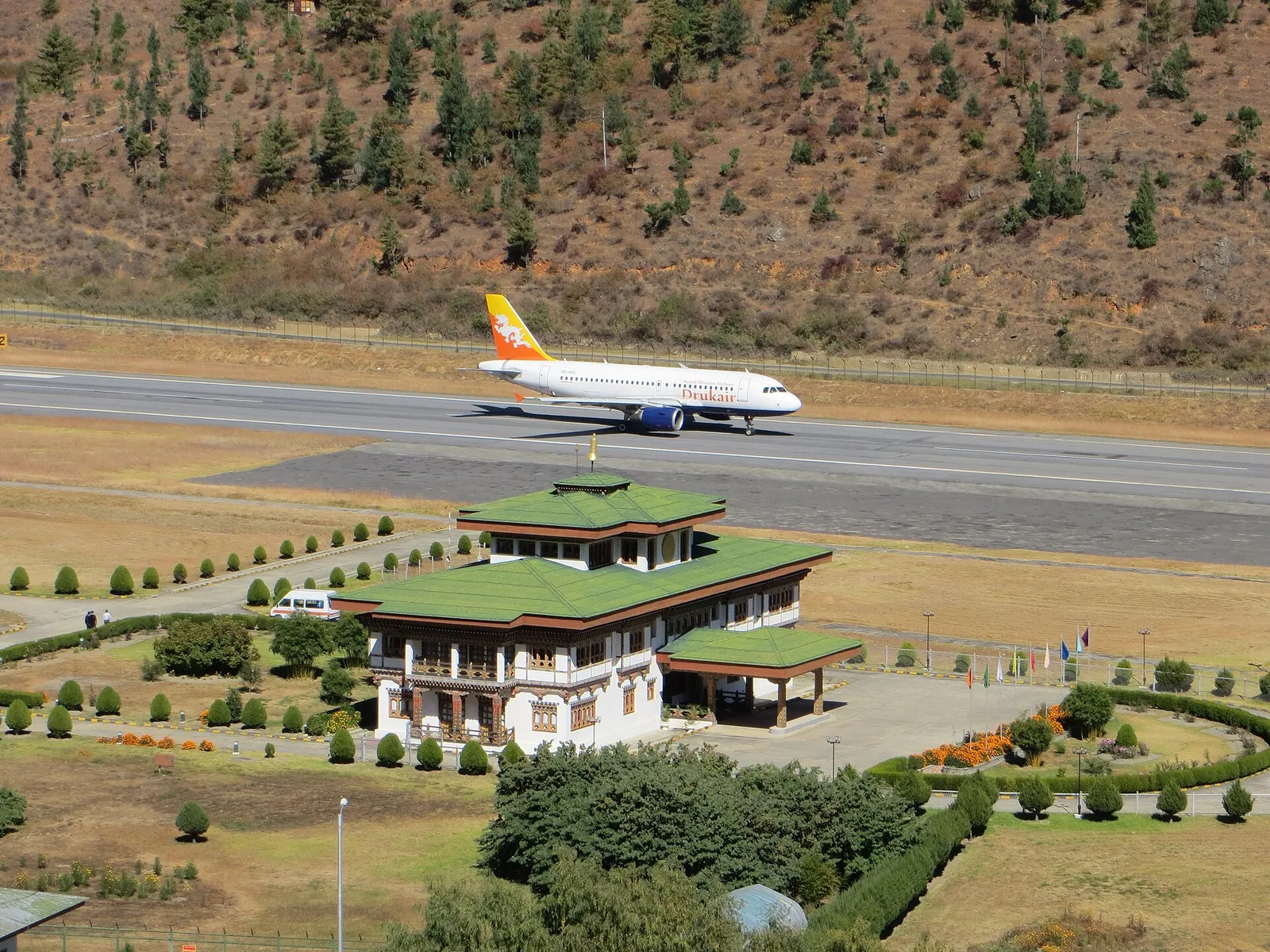
Paro International Airport (PBH) sits on the floor of the Paro valley, 47 km from Thimphu. Gelephu, in the south, is Bhutan's other international airport, but for the western valleys almost everyone lands at Paro. As of November 2026, Drukair and Bhutan Airlines are the only two airlines flying in.
Their timetables decide where you connect. Drukair's November 2026 timetable flies Paro to Delhi and to Kathmandu every day, between Paro and Bangkok every day (nonstop, or via Guwahati or Bagdogra), to Kolkata four days a week (two of them via Gelephu), to Dhaka on Mondays and Fridays and to Gaya on Wednesdays and Sundays, with a Singapore service via Guwahati; its March 2027 timetable adds Dubai. Bhutan Airlines' timetable for 1 December 2026 to 15 February 2027 flies to Delhi and to Kathmandu four days a week each, and to Bangkok five days a week via Kolkata and two via Gaya. From Europe that usually means one connection, in Delhi, Bangkok or Kathmandu.
Little Bhutan put one-way economy fares to Paro in mid-2026 at about USD 220–340 from Delhi, USD 200–280 from Kathmandu, USD 360–490 from Bangkok and about USD 550 from Singapore. Bhutan Airlines' promotional fares, checked on 3 November 2026, started from about USD 246 Delhi–Paro, USD 191 Kolkata–Paro and USD 252 Kathmandu–Paro. Drukair opens online check-in from 72 hours to 4 hours before departure, and its airport counters open three hours before a flight and close one hour before.
Flights in and out of Paro depend on the weather and can be delayed or cancelled, so leave a spare day before an onward long-haul flight, and book separate tickets with that day in hand. For a Delhi connection, our Bhutan entry guide explains when India requires a transit visa.
At the airport there is a taxi rank and no other public transport. Your guide and driver meet you at the terminal, or the hotel or operator arranges the transfer.
Overland from India: Phuentsholing and Samdrup Jongkhar
Tourists enter Bhutan by land at the designated ports of Phuentsholing, Gelephu, Samdrup Jongkhar and Samtse, but with a passport other than Indian or Bhutanese the Indian side decides which you can use. Phuentsholing, opposite Jaigaon in West Bengal, is the default crossing. Bhutan's foreign ministry announced an Indian immigration check post for third-country nationals at Darranga in Assam, opposite Samdrup Jongkhar, from 7 November 2024. Little Bhutan, a DoT-listed operator, says the Indian posts facing Samtse and Gelephu do not handle third-country passports.
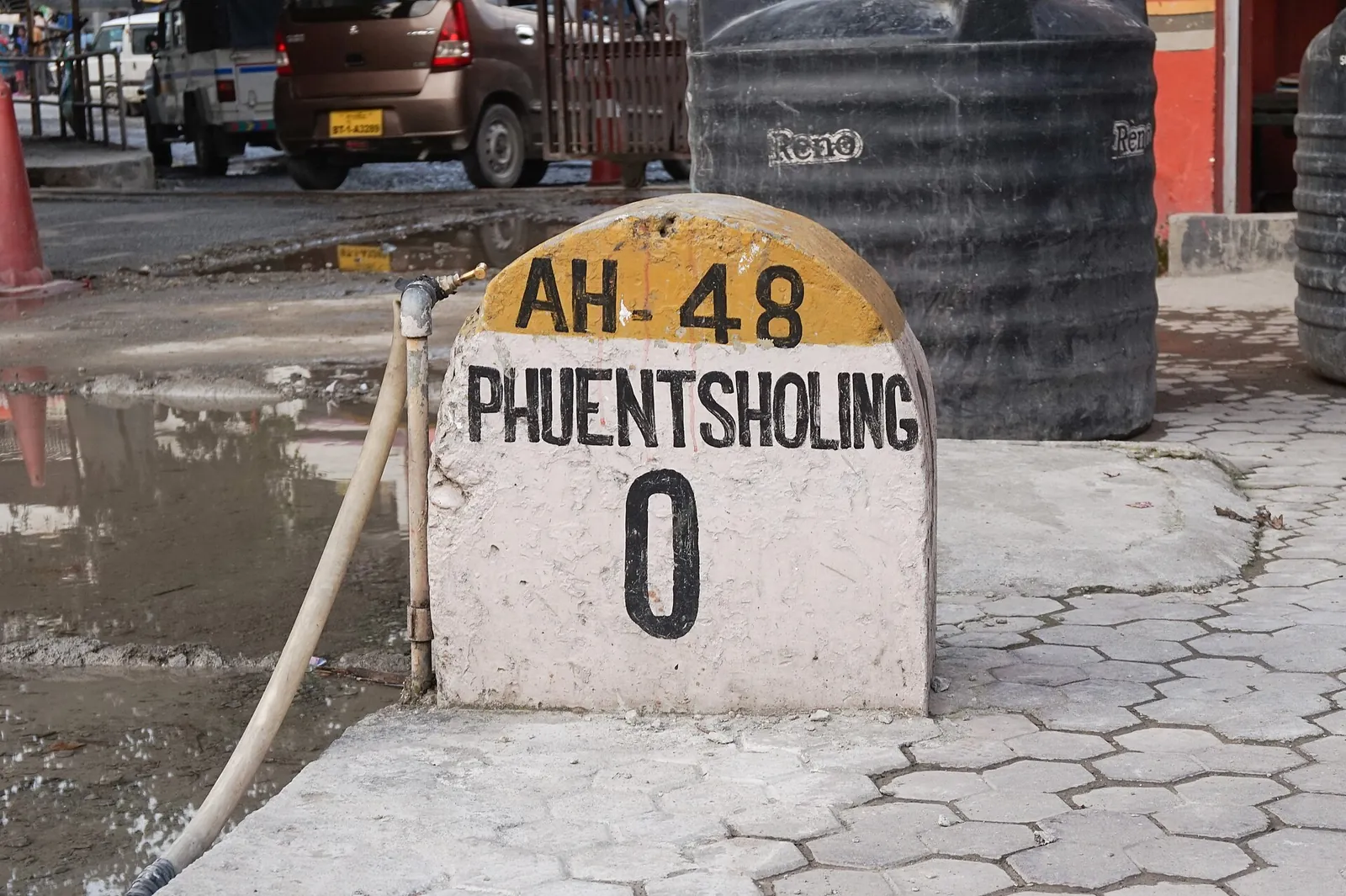
Phuentsholing fits a trip with Darjeeling, Kalimpong or Sikkim. Bagdogra airport is four to five hours away by road, and Thimphu 165 km and five to five and a half hours beyond the border, a climb from the plain to the capital that fills the day. Third-country travellers are stamped out of India at the Indian immigration office in Jaigaon before they cross. On the Bhutan side, a Tourism Information Office connects tourists with certified guides; from September 2026 a pre-arranged guide must be registered 48 hours before your travel date, and walk-in tourists register from 18:00 the evening before. You need the guide as soon as you travel beyond the border town.
Samdrup Jongkhar suits only the end of an eastern route: Little Bhutan gives 175 km and six to six and a half hours from Trashigang, and three and a half to four hours on to Guwahati airport. France advises its nationals that Samdrup Jongkhar cannot be reached through Assam (advice updated 18 March 2026); if your own government says the same, leave through Phuentsholing instead. Both crossings use the same visa and SDF as a flight, and a stay of up to 24 hours within the designated zone of a border town pays no SDF, a waiver that runs until August 2027.
India's e-Visa lists Jaigaon and Darranga among the land ports where e-Visa holders may enter India, and lets them leave India through any authorised immigration check post, so an e-Visa covers either crossing in either direction.
Your guide, your driver and the car
You can book every part of the trip yourself, but a guide certified by the Department of Tourism must be with you at all times, and you may stay only in DoT-certified hotels, homestays or campsites. That rule shapes how you move. Self-drive cars cannot be hired in Bhutan, so the Department of Tourism's advice is to hire a vehicle and driver from a car rental company or a tourism service provider such as a Bhutanese tour operator; hotels can also arrange transport. With a certified guide no route permit is needed for most of the country.
In practice, "the operator's car" means one vehicle with its own driver for your whole stay, collecting you at the airport or border and taking you between valleys, to trailheads and back to the hotel each evening. Bhutan Travel Bureau, a licensed operator, describes its fleet as four-wheel-drive SUVs and Toyota station wagons for small parties and Toyota Coaster and Hiace buses for groups. Operators fold the guide, driver and car into the trip price rather than listing them separately, as Little Bhutan's published tour prices do; our Bhutan trip cost guide prices the whole package. Guided Bhutan quotes guide-only or guide-and-driver prices for your dates and route, and calls USD 10–15 a day from each traveller typical as a tip for the guide and USD 5–10 for the driver, paid in cash at the end.
You may drive your own car into Bhutan if it meets the requirements of the Road Safety and Transport Authority: a valid driving licence (an Indian licence is accepted), insurance, pollution-control papers, an entry permit and a vehicle in reasonable condition. The charge is Nu 4,500 per car per day, the same for a motorbike, and a certified guide still rides with you at extra cost.
Drive times between the valleys
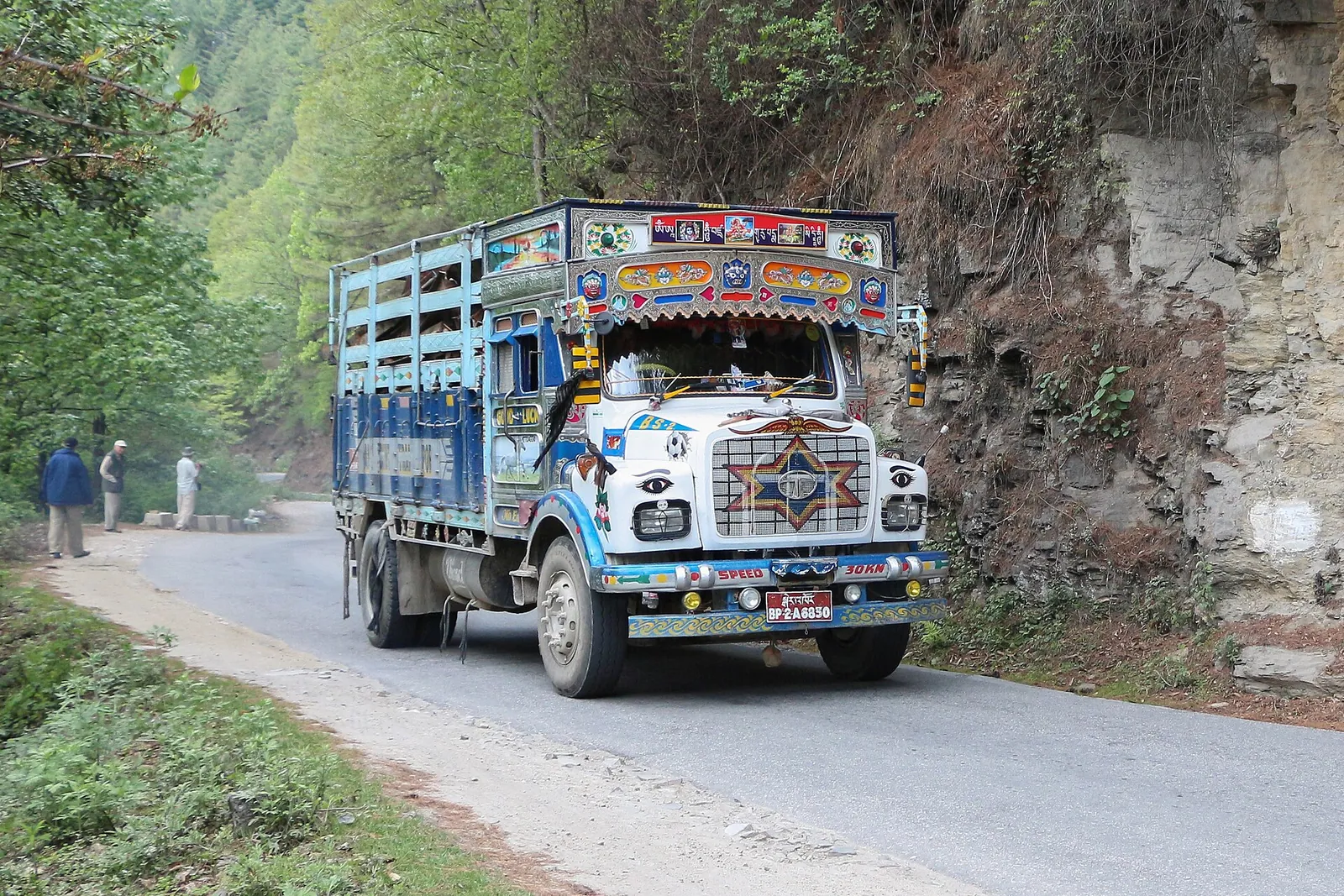
Bhutan has one main east-west road, the National Highway, which Bhutan Travel Bureau describes as a 3.5 m strip of tarmac over passes, along cliffs and across bridges, being widened to two lanes in stretches. Plan by hours, not kilometres. The times below are licensed operators' published estimates and leave out photo stops and lunch.
| Route | Distance | Driving time | Whose estimate |
|---|---|---|---|
| Paro airport–Thimphu | 47 km | 1–1.5 h | Little Bhutan |
| Thimphu–Punakha, over Dochula | 74 km | 2–2.5 h | Little Bhutan |
| Punakha–Paro, over Dochula | 115 km | 3.5–4 h | Little Bhutan |
| Paro–Haa, over Chele La | 65 km | 1.5–2 h | Bhutan Travel Bureau |
| Punakha–Wangdue Phodrang | 13 km | 45 min | Bhutan Travel Bureau |
| Punakha–Phobjikha (Gangtey) | 78 km | 3 h | Bhutan Travel Bureau |
| Phobjikha–Bumthang | 188 km | 5–6 h | Bhutan Travel Bureau |
| Punakha–Bumthang | 212 km | 8 h | Bhutan Travel Bureau |
| Thimphu–Phuentsholing | 165 km | 5–5.5 h | Little Bhutan |
The western loop of Paro, Thimphu and Punakha never asks more than four hours of a day. Phobjikha, the crane valley, is a morning's drive beyond Punakha through Wangdue Phodrang and over the Lawa La pass; our Phobjikha valley guide covers the nights there. Central Bhutan is a different scale: 212 km from Punakha to Bumthang takes about eight hours, so most routes break it in Phobjikha, from where Bumthang is 188 km and five to six hours, or fly.
The road climbs a lot. Dochula, the pass between Thimphu and Punakha, lies at about 3,100 m, and Chele La, on the road from Paro to Haa, at 3,988 m; snow can close the Chele La road without notice, so your guide decides on the morning.
Monsoon, landslides and driving by day
Travel by road in daylight only, even with a driver, and in the monsoon, June to September, allow for landslides that can close roads for days. The UK's travel advice asks visitors to avoid night travel where possible and warns that monsoon landslides can cut off some roads for days.
In practice your driver sets off early on long days, and between June and September a good operator builds in slack on the routes that rely on a single road, Punakha to Bumthang above all. Car and motorbike accidents are among the biggest causes of injury and death in Bhutan, so wear a seatbelt and travel in a well-maintained vehicle. Our best time to visit Bhutan guide sets out the seasons month by month.
Domestic flights: Bumthang, Yonphula and Gelephu
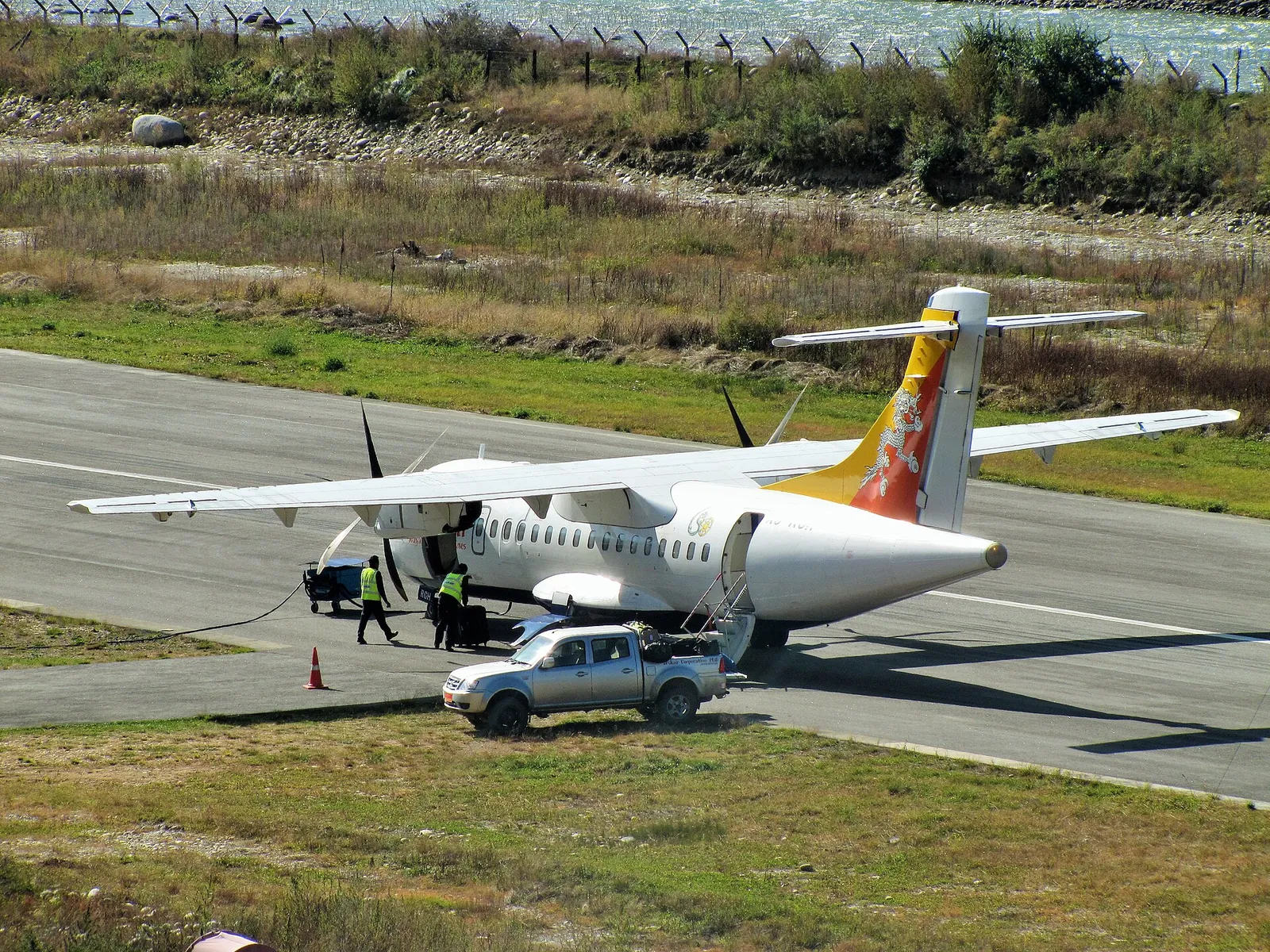
Drukair runs the domestic flights, all from Paro. Its November 2026 timetable flies Paro to Bumthang six days a week, every day except Monday, in 35 minutes; to Yonphula, in the east near Trashigang, on Tuesdays, Thursdays, Saturdays and Sundays, in 45 minutes; and to Gelephu, in the south, on Wednesdays, with two more weekly flights on the Kolkata route on Mondays and Fridays. The Bumthang flight replaces a drive of about eight hours from Punakha, and the Department of Tourism calls domestic flights often the fastest way to cover long distances.
Yonphula's altitude and micro-climate make its summer flights especially prone to delay or cancellation, the Department of Tourism warns, so fly in one direction and drive the other, and a cancelled flight costs a day rather than a connection. The checked-baggage allowance on domestic flights is 20 kg in economy. Your operator books the seats with your passport details and adds the fare to the quote.
Buses, taxis and helicopters
Bhutan has domestic buses and town taxis, and the airport has a taxi rank, but with a guide at your side at all times almost every visitor travels in the guide's car, and public buses rarely fit a tourist's day. For special itineraries, the Department of Tourism points to helicopter charters with Royal Bhutan Helicopter Services and Heli Bhutan, arranged through your operator.
Practical questions
Which cities have flights to Paro?
In their current timetables, Drukair and Bhutan Airlines fly to Paro from Delhi, Kathmandu, Bangkok, Kolkata, Gaya, Dhaka, Guwahati, Bagdogra and Singapore, and Drukair's March 2027 timetable adds Dubai. From Europe you usually connect in Delhi, Bangkok or Kathmandu.
Can I hire a car and drive myself in Bhutan?
No. Self-drive cars cannot be hired. You travel in a car with a driver, hired through an operator, a rental company or your hotel, and a certified guide comes with you. You may bring your own car if it meets the transport authority's requirements, for Nu 4,500 a day, still with a guide.
How long is the drive from Paro to Punakha?
Little Bhutan gives 1 to 1.5 hours from Paro to Thimphu and 2 to 2.5 hours from Thimphu to Punakha over Dochula; Punakha back to Paro is 115 km and 3.5 to 4 hours.
Can I enter Bhutan by land from India?
Yes. Phuentsholing, opposite Jaigaon in West Bengal and four to five hours by road from Bagdogra airport, is the usual crossing; Samdrup Jongkhar, opposite Darranga in Assam, has had an Indian check post for third-country nationals since November 2024. Your guide meets you at the border, and an Indian e-Visa allows entry at Jaigaon or Darranga.
Are there domestic flights in Bhutan?
Yes. Drukair's November 2026 timetable flies from Paro to Bumthang six days a week, to Yonphula four days a week and to Gelephu up to three times a week; your operator books the seats.
Do I need a permit to travel between valleys?
Not for most of the country. With a certified guide, which every tourist must have, no route permit is needed; your guide and operator handle the checkposts on the road.
Keep planning your trip
Entering Bhutan
Bhutan visa, the standard USD 100 nightly SDF to August 2027, certified guides and customs for UK and EU visitors.
Read the guide
First trip to Bhutan
A first week in Bhutan: the visa and nightly fee, why a certified guide comes along, the Paro, Thimphu and Punakha loop, money, SIMs, etiquette and daily costs.
Read the guide
Bhutan in seven days
Two nights each in Thimphu, Punakha and Paro, with Dochula on day 3 and the Tiger's Nest hike on day 6: drive times, hotels, the fees and an all-in budget.
Read the guide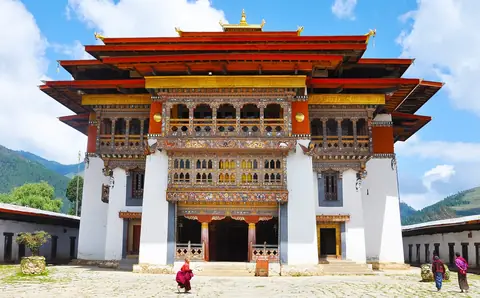
Phobjikha Valley
Bhutan's crane valley beyond Punakha: when the black-necked cranes are there, Gangtey Gonpa, the nature trail, where to sleep and what two extra nights cost.
Read the guide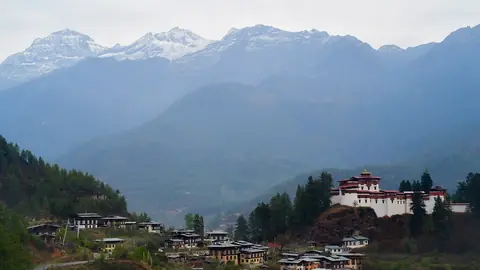
Best time to visit Bhutan
When to visit Bhutan: dry spring and autumn, the June-September monsoon, clear winters, 2027 festival months and Paro and Thimphu weather by month.
Read the guide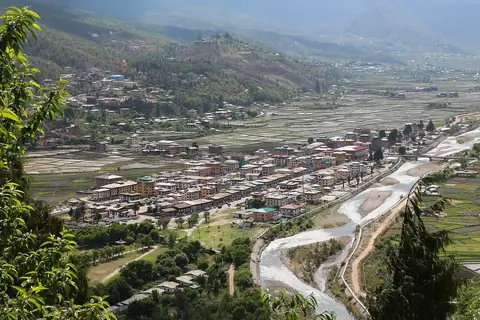
Bhutan trip cost
A Bhutan week for two: about USD 1,880 per person on a budget, USD 2,080 mid-range or USD 2,520 in four-star rooms, plus international flights.
Read the guideSources and checks before you travel
(24)
- Department of Tourism Bhutan: FAQs ↗ — opens in a new tab
- Department of Tourism Bhutan: Visit (getting here and around) ↗ — opens in a new tab
- Department of Tourism Bhutan: Announcements ↗ — opens in a new tab
- Department of Tourism Bhutan: Guide registration and engagement at Phuentsholing land port (notification, 11 September 2026) ↗ — opens in a new tab
- Drukair: flight schedule, November 2026 (PDF) ↗ — opens in a new tab
- Drukair: flight schedule, March 2027 (PDF) ↗ — opens in a new tab
- Drukair: home page ↗ — opens in a new tab
- Drukair: conditions of carriage ↗ — opens in a new tab
- Bhutan Airlines: flight schedule (PDF) ↗ — opens in a new tab
- Bhutan Airlines: fares promotion ↗ — opens in a new tab
- Little Bhutan: Bhutan 7-day itinerary ↗ — opens in a new tab
- Little Bhutan: Getting to Bhutan ↗ — opens in a new tab
- Little Bhutan: Entering Bhutan by road (updated 24 August 2026) ↗ — opens in a new tab
- Department of Tourism Bhutan: Tourism Services Portal, Little Bhutan ↗ — opens in a new tab
- Bhutan Travel Bureau: driving distances ↗ — opens in a new tab
- Guided Bhutan Tours: Bhutan tour guide ↗ — opens in a new tab
- Government of India: e-Visa, authorised immigration check posts ↗ — opens in a new tab
- UK FCDO: Bhutan safety and security ↗ — opens in a new tab
- France Diplomatie: Bhutan, security ↗ — opens in a new tab
- Little Bhutan: Chele La Pass ↗ — opens in a new tab
- Department of Tourism: Chele La in 'Soulful journeys' ↗ — opens in a new tab
- Little Bhutan: Dochula Pass ↗ — opens in a new tab
- Ministry of Foreign Affairs and External Trade, Bhutan: inauguration of the Immigration Check Post at Darranga ↗ — opens in a new tab
- Little Bhutan: Bhutan trip cost (updated 25 August 2026) ↗ — opens in a new tab
Reference sources for the version dated 3 November 2026. Confirm opening times, access, transport and conditions for your travel dates.
Photo credits
(5)
A Drukair jet on the runway at Paro, where most visitors land
Photograph: Doug Knuth from Woodstock, IL — opens in a new tab · CC BY-SA 2.0 — opens in a new tab
Changes: Resized and converted to WebP; displayed with responsive crops. · Original photograph and licence details ↗ — opens in a new tab
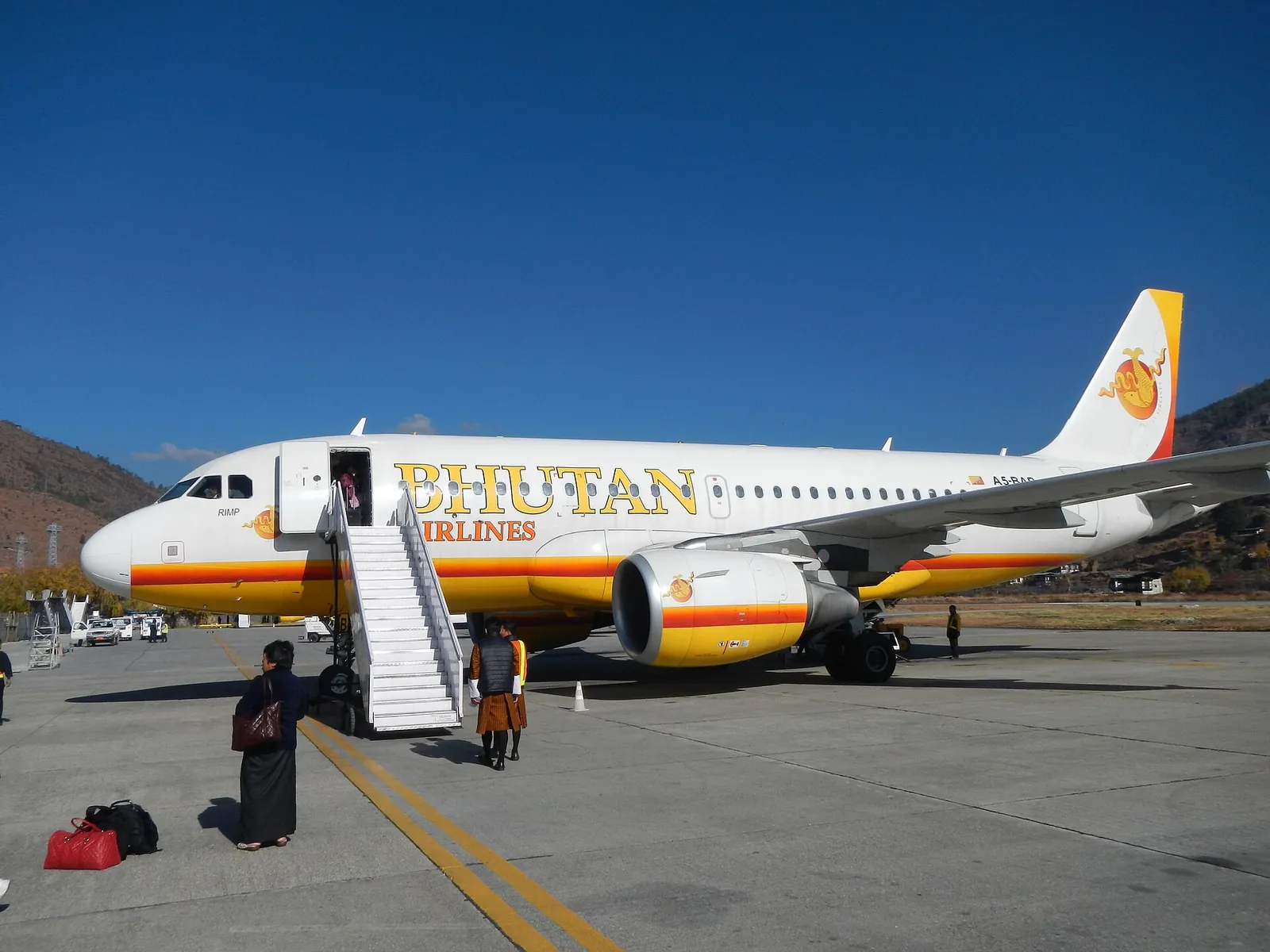
Bhutan Airlines, the other carrier flying into Paro, boarding by steps
Photograph: Rick Warner — opens in a new tab · CC BY-SA 2.0 — opens in a new tab
Changes: Resized and converted to WebP; displayed with responsive crops. · Original photograph and licence details ↗ — opens in a new tab
A Drukair ATR at Bumthang, the domestic airport for central Bhutan
Photograph: Chuck Moravec — opens in a new tab · CC BY 2.0 — opens in a new tab
Changes: Resized and converted to WebP; displayed with responsive crops. · Original photograph and licence details ↗ — opens in a new tab
A truck on the Phuentsholing to Thimphu highway, the main road in from the Indian border
Photograph: Bernard Gagnon — opens in a new tab · CC BY-SA 4.0 — opens in a new tab
Changes: Resized and converted to WebP; displayed with responsive crops. · Original photograph and licence details ↗ — opens in a new tab
The zero milestone in Phuentsholing, where the highway to Thimphu starts
Photograph: Bernard Gagnon — opens in a new tab · CC BY-SA 4.0 — opens in a new tab
Changes: Resized and converted to WebP; displayed with responsive crops. · Original photograph and licence details ↗ — opens in a new tab