Plan your trip
First trip to Bhutan: Paro, Thimphu, Punakha and daily costs
Bhutan asks more of a visitor before the trip than most countries do. Most visitors pay a nightly fee and arrange a visa online before flying; accommodation must be approved. In return you get valleys of rice terraces under forested ridges, whitewashed fortress-monasteries where monks and civil servants share the courtyards, and a cliffside temple at the end of a morning's climb. A first week covers the three western valleys of Paro, Thimphu and Punakha, and the rules decide how you book it.
In this guide
Find the location ↗ — opens in a new tabThe short answer
Plan seven days and six nights: two in Thimphu, two in Punakha and two in Paro, with the Tiger's Nest hike on day 6. For most visitors the visa costs USD 40 and the Sustainable Development Fee USD 100 per adult per night until 31 August 2027; Indian and eligible Bangladeshi visitors pay a different rate. A certified guide accompanies you throughout. Guided Bhutan lists a private week from USD 1,740 per adult for two sharing, including the visa, fee, accommodation, meals, guide and transport; flights, tips and personal spending are extra. Book the operator and Paro flights first, 4 to 6 months ahead for spring, autumn and festival weeks.
- Key point
- 7 days / 6 nights (Thimphu 2, Punakha 2, Paro 2)
- Where it applies
- Thimphu, Punakha and Paro, two nights each, with a certified guide and driver throughout
- Timing
- Autumn (late September or early October to late November) and spring (early March to mid-April) are the drier seasons; the monsoon runs from June to September
Your own bookings or an operator's package
Since Bhutan reopened in September 2022, nobody has to buy a package. You can book every part of the trip yourself, but a guide certified by the Department of Tourism must be with you at all times, and you may stay only in DoT-certified hotels, homestays or campsites. A guide is also needed to enter dzongs and monuments. Self-drive cars cannot be hired in Bhutan. Visitors may bring their own car, with a guide and a vehicle charge. With a certified guide no route permit is needed for the western valleys; national parks still need permits, which are applied for online.
In practice there are two ways to put a week together. A licensed Bhutanese tour operator can arrange a private trip, including accommodation, guide and transport, and apply for the visa on your behalf. Packages differ in what they include. Byways Tours and Travels, Guided Bhutan Tours and Little Bhutan, all listed in the Department of Tourism's directory of licensed operators, publish such trips for two people on the Paro, Thimphu and Punakha loop. The other way is to book certified hotels yourself and hire a guide, driver and car from an operator; Guided Bhutan, for one, offers exactly that, but it quotes the guide, driver and car for your dates, group size and route rather than publishing a day rate. The directory at services.bhutan.travel lists every certified operator, hotel and guide. Guided Bhutan advises booking 4 to 6 months ahead for March to May, September to November and festival weeks, when Paro and Thimphu hotels fill early, and 2 to 3 months ahead at other times.
Certification is about the property, not its stars: the Department added one- and two-star categories to the three- to five-star hotels in 2023, and certified village homestays may host visitors too. Operators' standard packages usually start at three-star hotels, which is their choice rather than a rule.
The visa and the Sustainable Development Fee
Visitors other than Indian nationals need a USD 40 visa. Most must obtain it before travel; Bangladeshi and Maldivian visitors can also apply on arrival. The Sustainable Development Fee (SDF) is USD 100 per adult per night until 31 August 2027 for most visitors, USD 50 for children aged 6 to under 12, and free for children under 6. Indian nationals pay Nu 1,200 per adult per night, and the first 15,000 Bangladeshi visitors qualify for USD 15 or Nu 1,200 per person per day. A waiver also applies to visits of up to 24 hours within designated border-town zones. You pay both when you submit the application, for the nights you plan to spend in Bhutan, and a complete application is reviewed within five working days. You need a digital copy of your passport, a recent digital passport photo, your arrival and departure dates and a card; tell your bank beforehand, because some banks block payments to Bhutan. The visa allows up to 90 days from the date of entry.
For two adults paying the USD 100 rate, six nights and visas total USD 1,280. Travel insurance stopped being a visa requirement in April 2024, but the tourism board strongly recommends it. Passport validity, customs and the rules for Indian nationals are in the entry guide.
A first week: Thimphu, Punakha and Paro
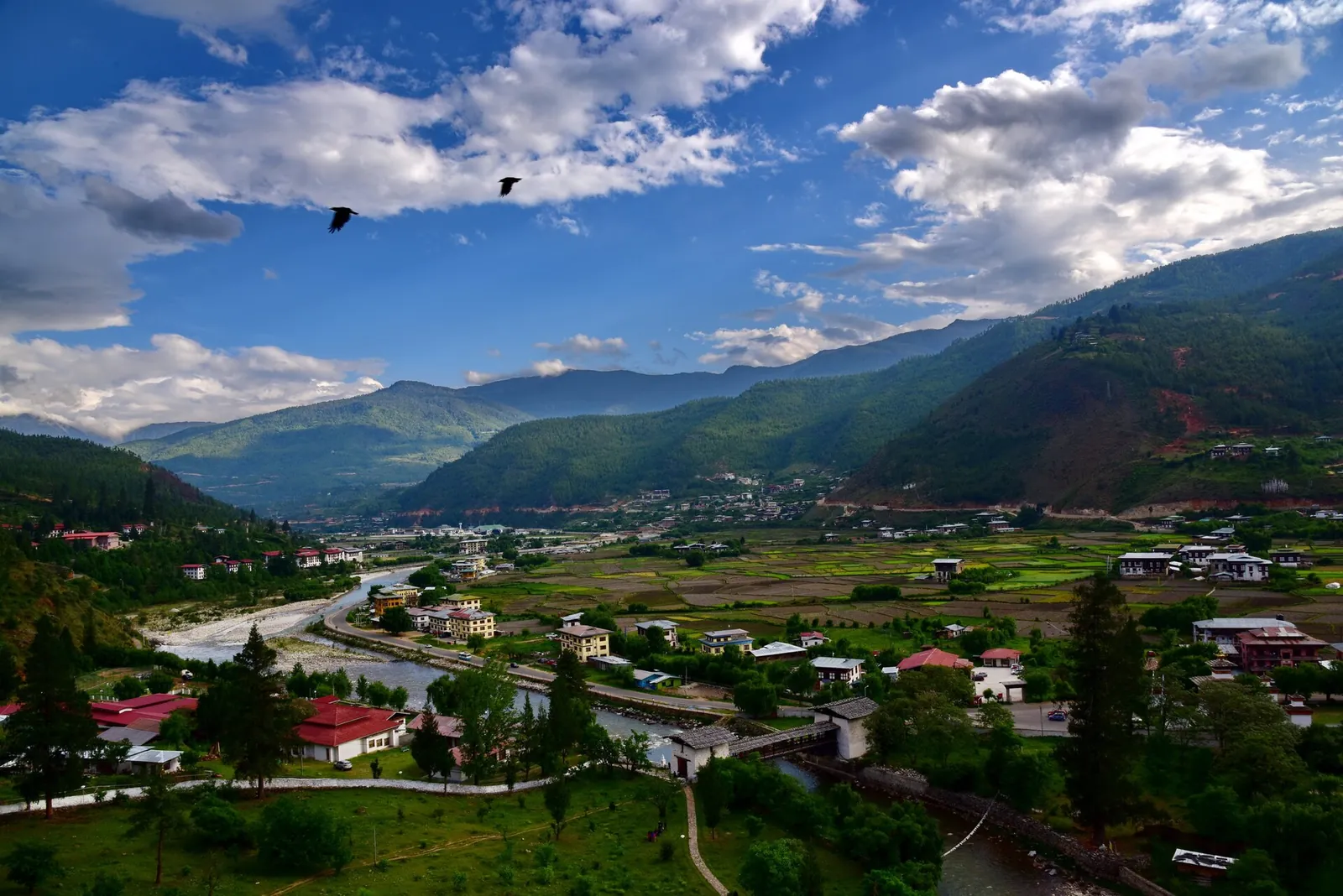
The western valleys make a loop from Paro International Airport (PBH), Bhutan's gateway: east to the capital, over a high pass to the warm Punakha valley, and back to Paro for the hike at the end, when you have had five nights to get used to the altitude. Drukair and Bhutan Airlines fly to Paro from cities including Bangkok, Delhi, Kolkata, Bagdogra, Kathmandu, Dhaka and Singapore, so from Europe you connect in one of them. Bhutan Airlines' advertised one-way fares, checked on 2 November 2026, started at USD 246 from Delhi to Paro and USD 223 back, and USD 191 from Kolkata and USD 154 back; taxes or availability can change the fare. Flights in and out of Paro depend on the weather and can be delayed or cancelled, so leave a spare day before an onward long-haul flight. The route map shows the week; the 7-day itinerary has the day plan and hotels.
Every leg is by car with your driver and guide. Avoid road travel at night where possible, even with a driver, and in the monsoon, June to September, allow for landslides that can close roads for days.
- Day 1: your guide meets you at Paro airport for the drive along the river to Thimphu, 47 km and 1 to 1.5 hours. In the afternoon, the National Memorial Chorten (Nu 500), a white stupa about 33 m tall built in 1974 for the Third King, which Thimphu residents walk around from before dawn until after dark.
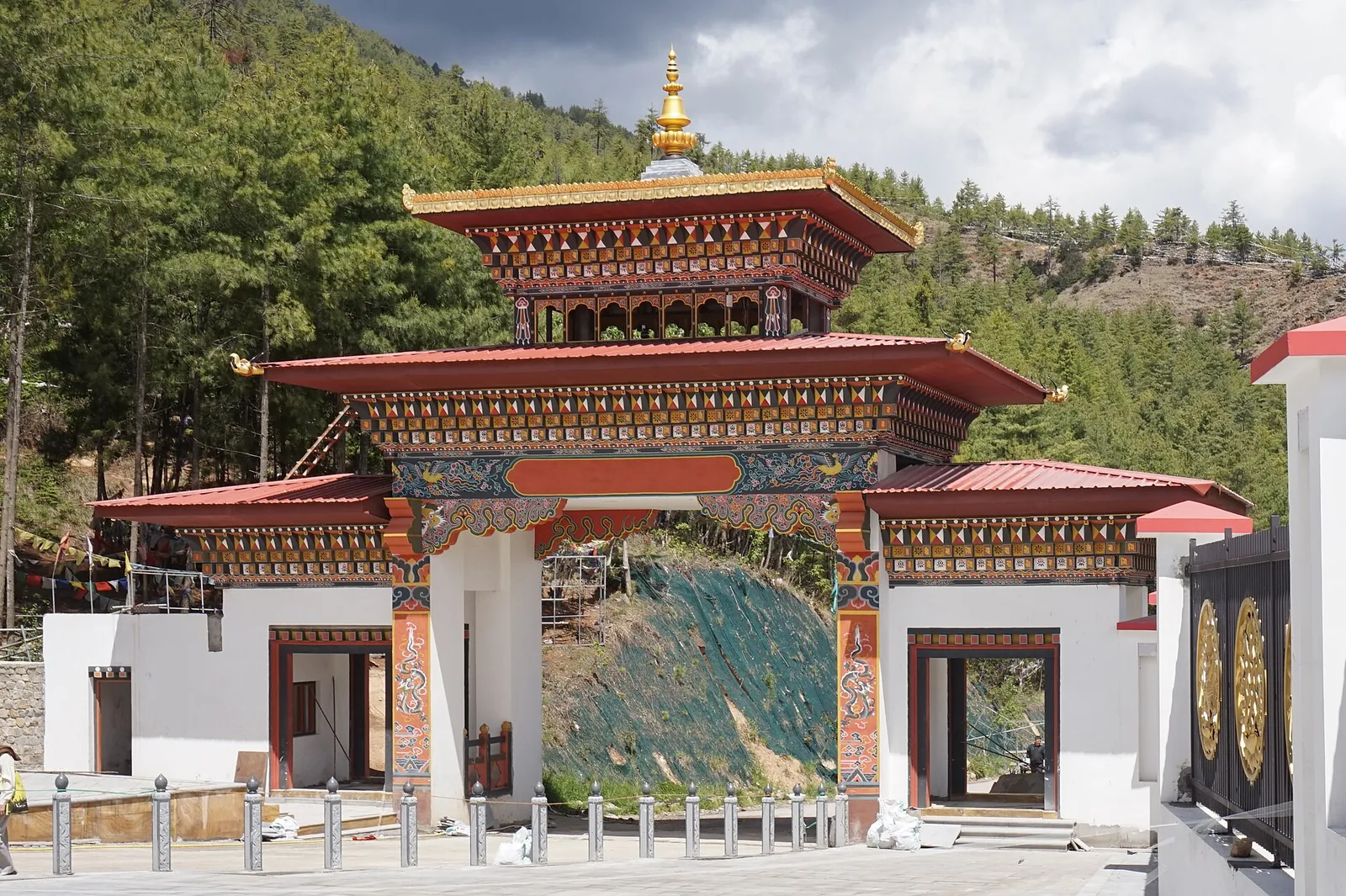
- Day 2: Thimphu. The giant golden Buddha Dordenma (free), seated above the city with the whole valley spread below it, then the Centenary Farmers' Market (Friday to Sunday). Visitors enter Tashichho Dzong, the fortress-monastery that holds the King's throne room, from 17:00 to 18:00, or 09:00 to 17:00 on public holidays (Nu 500), so keep it for the end of the day. Our Thimphu and Punakha guide covers the sights and their hours.
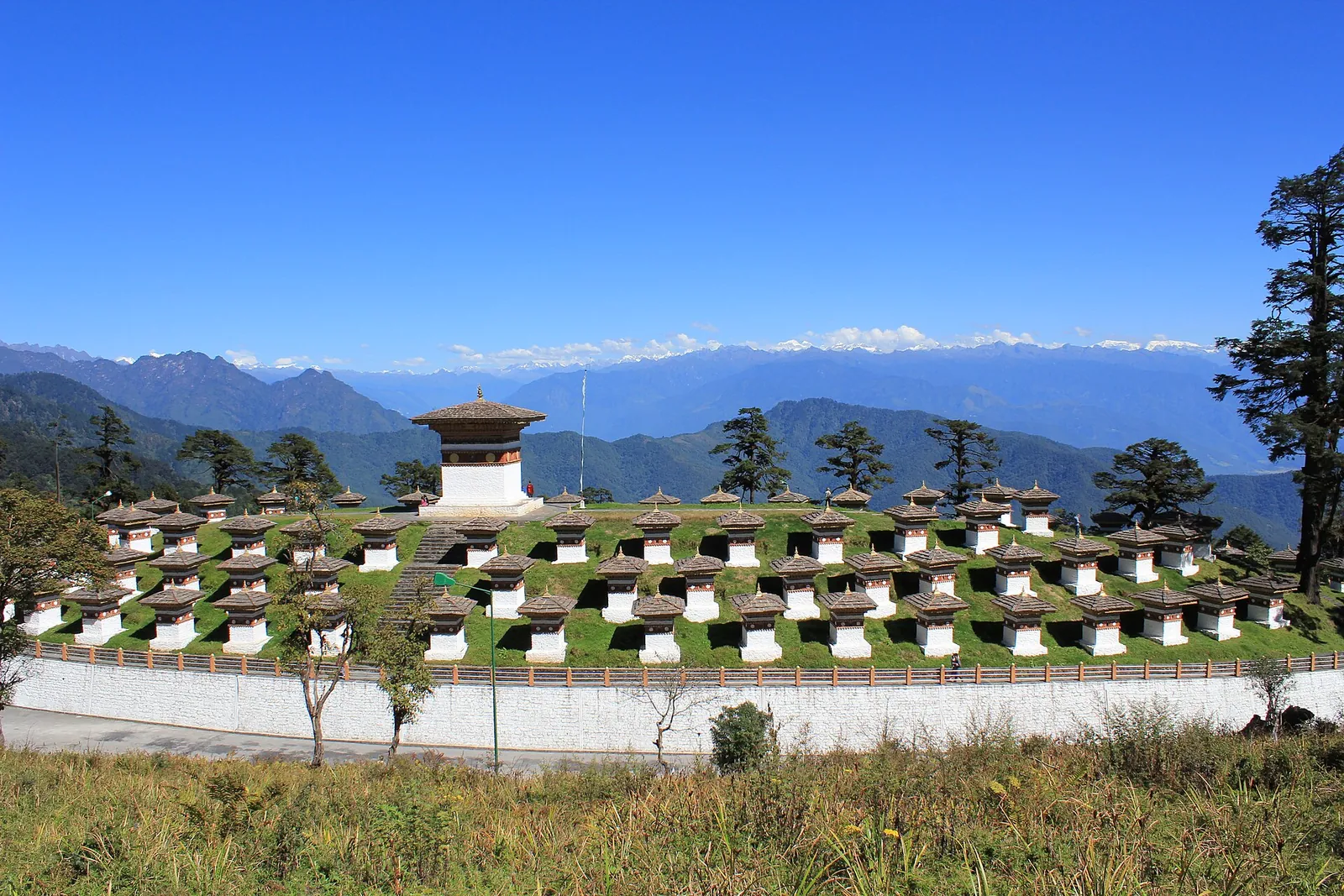
- Day 3: Thimphu to Punakha over Dochula, 74 km and 2 to 2.5 hours. The pass, at about 3,100 m, has 108 memorial chortens and, on a clear morning, a view of the snow peaks. The road then drops to the Punakha valley at about 1,250 m, among rice fields, where Punakha Dzong (Nu 500), the seat of government from 1637 until 1955, stands where the Pho Chhu and Mo Chhu rivers meet, its courtyards shaded by jacaranda trees.
- Day 4: Punakha. Chimi Lhakhang (Nu 500), the fertility temple built in 1499 on a hillock near Lobesa, about 10 km down the valley, is reached by a 20-minute walk from the road at Sopsokha on a farm track between rice paddies. The village houses on the way have large phalluses painted on their walls, and inside the temple a lama gives the fertility blessing with a wooden phallus linked to Drukpa Kunley, the Divine Madman. Later, cross the long suspension bridge over the Pho Chhu.
- Day 5: Punakha back to Paro via Dochula, 115 km and 3.5 to 4 hours, then Rinpung Dzong (free), the fortress above the town built in 1646, which houses the district offices and a monastery and whose courtyard holds the Paro Tshechu each spring. Above it, the round Ta Dzong, built in 1649 as a watchtower and a museum since 1968, holds the National Museum's collection of more than 3,000 objects, from thangka paintings to arms (Nu 500, last admission 16:00). End on Paro's main street of wooden shopfronts.
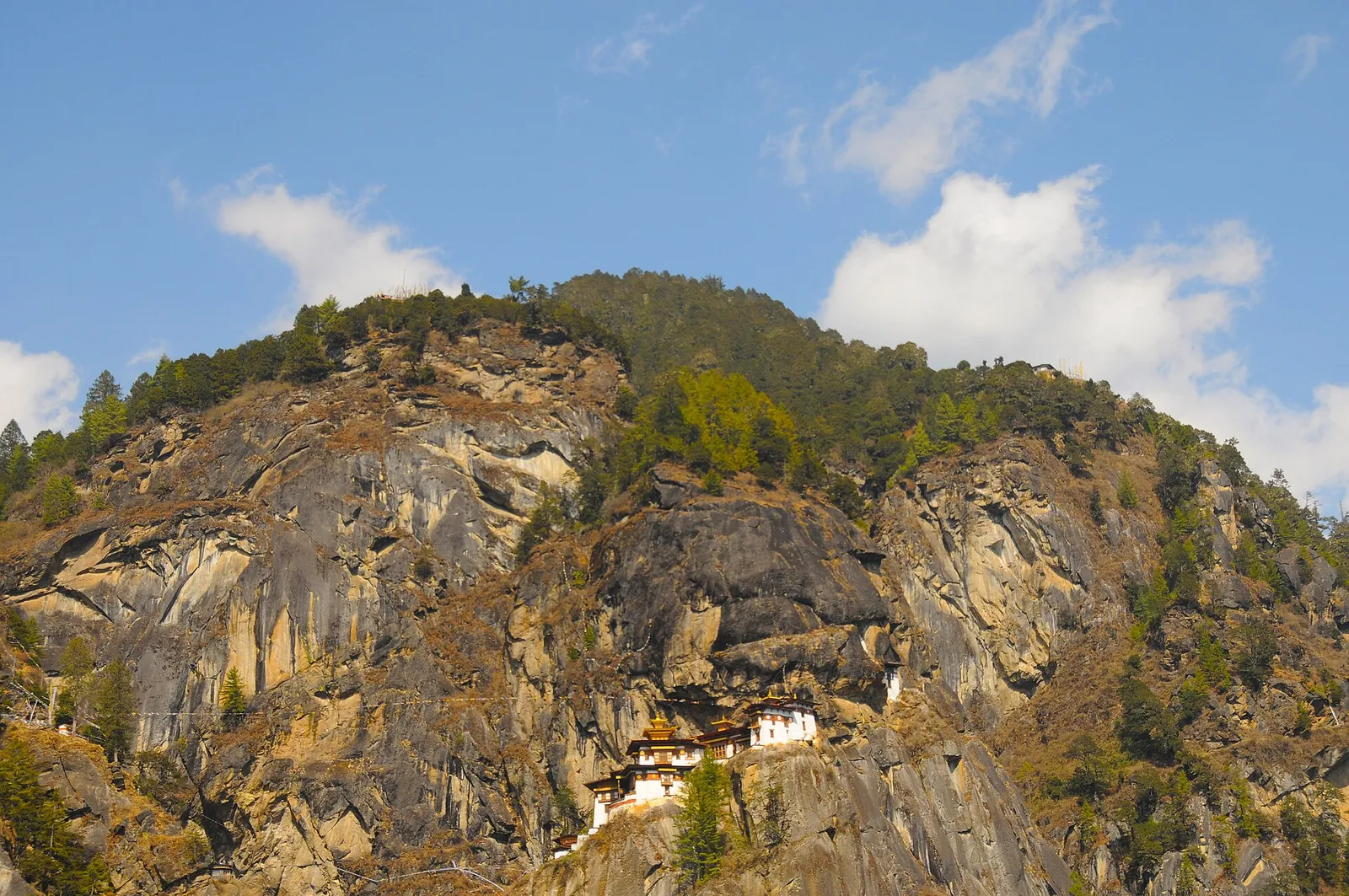
- Day 6: Paro Taktsang (Tiger's Nest), the temple that clings to a cliff face at about 3,120 m, some 900 m above the floor of the Paro valley, where legend has Guru Rinpoche arrive on a tigress and meditate in a cave; the first temple was built there in 1692, and the trail starts partway up, so the walk is roughly 6 km there and back and 5 to 6 hours with the visit. Entry is Nu 1,000; the Department of Tourism's 2023 list gives 09:00 to 12:00 and 14:00 to 17:00 but also says there is no lunch break, so start early and confirm the hours with your guide. Ponies can be booked to carry you up to the halfway cafeteria. Kyichu Lhakhang (Nu 500), one of the two oldest temples in Bhutan, by tradition founded in the 7th century, fits into the afternoon; the Paro and Tiger's Nest guide has the trail and Paro's sights.
- Day 7: the short drive to Paro airport and the flight out.
When to go
The tourism board describes autumn, from late September or early October to late November, as a season of bright, sunny days, feasts and festivals, and spring, from early March to mid-April, as generally dry, with the valleys in bloom. The monsoon brings rain from June to September, most of it in July and August, and can disrupt roads and services. From late November to March winter is crisp, clear and sunny, with frost and snow common above 3,000 m, which can reach Dochula. The tshechu festivals are a highlight of the year; our festivals guide has the tentative 2027 dates and the seasons month by month.
With more days, add Phobjikha first: the wide glacial valley below Gangtey monastery, 78 km and about 3 hours' drive beyond Punakha, where black-necked cranes winter; the first arrive in late October and most leave by mid-March. Haa, 65 km and 1.5 to 2 hours from Paro, fits a night at the end of the loop. Bumthang, in central Bhutan, is 212 km and about 8 hours' drive from Punakha, so it takes a full day each way or a domestic flight. For most visitors each extra night adds USD 100 of SDF per adult as well as the room, meals and car.
What a first week costs, all in
Guided Bhutan's Essential Bhutan Journey starts at USD 1,740 per adult, or USD 3,480 for two sharing a standard three-star room, for seven days and six nights. This is about USD 249 per person per day. The published price, checked on 2 November 2026, includes hotels, breakfast, lunch and dinner, a guide, driver and vehicle, entry fees, the SDF and visa.
The route matches the week above: two nights each in Thimphu, Punakha and Paro, with Tiger's Nest on day 6. Upgrades and itinerary changes are priced in a separate quote. Flights, travel insurance, tips, drinks and personal spending are extra; a complete all-in total depends on those costs.
Tipping is optional. Guided Bhutan suggests USD 10 to 15 per day from each traveller for the guide and USD 5 to 10 per day for the driver. Bhutan Telecom's Nu 200 tourist SIM provides 1 GB for seven days. The trip cost guide compares ways to budget for the trip.
Money: ngultrum, cards and cash
Bhutan's currency is the ngultrum (Nu, BTN), pegged 1:1 to the Indian rupee. Tour operators can quote in US dollars; keep spending money for drinks, shopping, tips and any fees outside your package. You can change money on arrival at Paro International Airport and at banks, larger hotels and authorised exchange businesses in Thimphu.
Cards work in town hotels and larger shops, and cash machines and banks accept Visa and Mastercard, but outside the towns you need cash: carry ngultrum, or US dollars in USD 50 and 100 notes, for tips, small shops and the valleys. On 2 November 2026, the Bank of Bhutan listed a buying rate of Nu 93.55 per US dollar for notes of USD 50 and above, and Nu 90.74 for USD 5, 10 and 20 notes. Bank of Bhutan's goBoB and Bhutan National Bank's MyPay wallet apps can be linked to an international card and are taken widely; monument gates take cash or goBoB. Limits on carrying cash in and out are in the entry guide.
SIM cards and data
Most hotels have Wi-Fi, but the tourism board recommends a visitor SIM for a more reliable connection. SIM cards are sold at the visitor information centre at Paro International Airport on arrival, at Bhutan Telecom and TashiCell branches and through authorised agents in towns, and you need a copy of your passport. Bhutan Telecom's tourist SIM costs Nu 200 for 1 GB of data and Nu 100 of calls and texts over 7 days, or Nu 300 for 2 GB over 14 days; its tourist eSIM costs Nu 1,100 for unlimited data over 7 days. A SIM can be booked ahead at bookyoursim.bt.bt.
Dzongs, temples and photographs
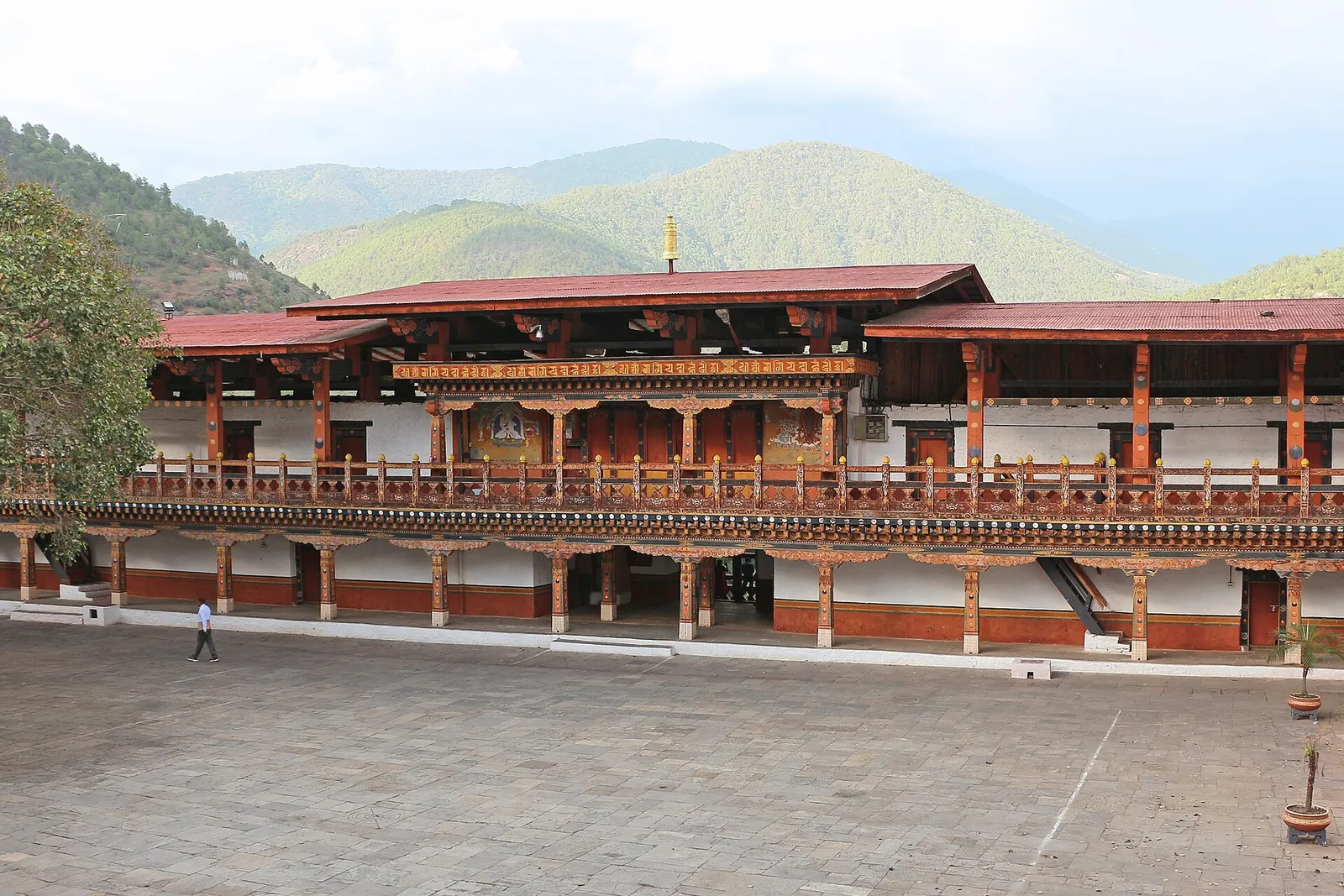
Dzongs are fortresses built for defence and administration, and many still house both government offices and monks. You enter them with your guide. In dzongs and temples, wear clothing that covers you from shoulders to knees, with long sleeves and covered legs in temples; take off your hat and, at the door of a temple, your shoes. Photographs are not allowed inside temples, monasteries and official buildings, so keep the camera for courtyards and outside walls. Walk clockwise around chortens and prayer wheels, keeping them on your right, as the Bhutanese do. Do not stand between people praying and an altar, and be discreet when photographing people at prayer or during a festival.
Entry fees on this route are Nu 1,000 for the Tiger's Nest and Nu 500 each for the Memorial Chorten, Tashichho Dzong, Punakha Dzong, Chimi Lhakhang, Kyichu Lhakhang and the National Museum; Rinpung Dzong and Buddha Dordenma are free, and children aged 6 to under 18 pay half while those aged 5 and under are exempt. They are paid at the gate in cash or with goBoB. Smoking is banned in public places, and visitors may not normally bring a drone. Handicrafts and other non-antique artefacts need an Export Permit for Non-Antique Artefacts; handicraft shops usually seal goods that may be exported.
Altitude, health and safety
The route climbs gently and then a lot: Dochula lies at about 3,100 m and the Tiger's Nest at about 3,120 m, while Punakha, at about 1,250 m, is a warm night lower down. Altitude sickness is a risk at those heights, and Germany advises seeing a doctor experienced in altitude medicine before final planning for travel above 2,300 m. Take insurance that covers emergency helicopter evacuation and repatriation: Thimphu's hospital has a reasonable emergency department, but its helicopter depends on availability and the weather.
Bhutan has very little crime. Keep away from stray dogs, which can be aggressive in packs in the early morning and evening, and go straight to a hospital for rabies treatment after a bite. The emergency numbers are 112 for an ambulance, 113 for the police and 110 for fire, and the Department of Tourism answers visitors on +975 17661974 (2300 from a Bhutanese phone). Check your own government's travel advice too.
Practical questions
Can I travel in Bhutan without a tour operator?
Yes. Since September 2022 you can book flights, certified hotels, a guide and a car yourself. You need a certified guide and approved accommodation, and you cannot hire a self-drive car in Bhutan. You can book a private trip with a licensed Bhutanese operator. Visitors may also bring their own car with a guide.
How much does Bhutan cost per day?
Guided Bhutan lists a seven-day private trip from USD 1,740 per adult for two sharing, or about USD 249 per person per day, including six nights, meals, guide, driver, vehicle, entry fees, visa and SDF. Flights, insurance, tips and personal spending are extra.
Is the USD 100 fee per day or per night?
For most visitors, per night for each adult, until 31 August 2027; children from 6 to under 12 pay USD 50 and children under 6 pay nothing. For a seven-day trip with six nights, that is USD 600 per adult plus the USD 40 visa. Indian nationals and the first 15,000 Bangladeshi visitors qualify for different rates.
How many days do I need in Bhutan?
Seven days and six nights cover Thimphu, Punakha and Paro at an unhurried pace, two nights each, with a full day for the Tiger's Nest hike near the end of the trip.
Do cards work in Bhutan?
In town hotels and larger shops, yes, and cash machines accept Visa and Mastercard. Outside the towns you need cash, so carry ngultrum or US dollars in USD 50 and 100 notes.
What should I wear to visit a dzong?
Clothing that covers you from shoulders to knees, with long sleeves and covered legs in temples. Take off your hat inside, take off your shoes at the door of a temple, and keep the camera away inside temples, monasteries and official buildings.
Keep planning your trip
Bhutan in seven days
Two nights each in Thimphu, Punakha and Paro, with Dochula on day 3 and the Tiger's Nest hike on day 6: drive times, hotels, the fees and an all-in budget.
Read the guide
Entering Bhutan
Bhutan visa, the standard USD 100 nightly SDF to August 2027, certified guides and customs for UK and EU visitors.
Read the guide
Bhutan trip cost
A Bhutan week for two: about USD 1,880 per person on a budget, USD 2,080 mid-range or USD 2,520 in four-star rooms, plus international flights.
Read the guide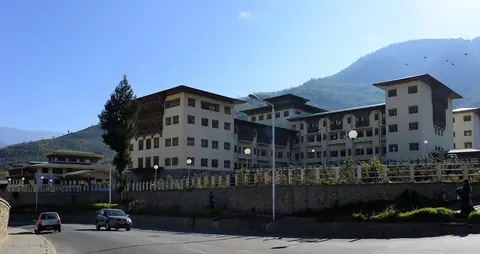
Health and safety in Bhutan
Altitude and trek rules, the insurance that covers evacuation, vaccines and where malaria and dengue occur, emergency numbers and the laws to know for a trip to Bhutan.
Read the guide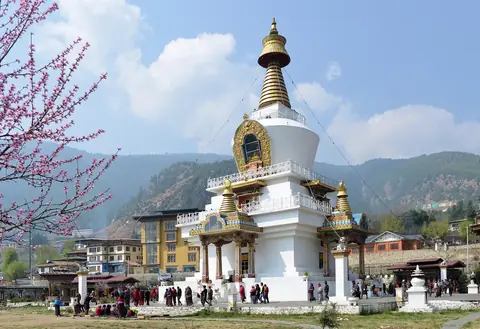
Solo female travel in Bhutan
Travelling alone as a woman in Bhutan: the UK, German and French advice, a female guide, the cost for one, free evenings, temple dress and 113.
Read the guide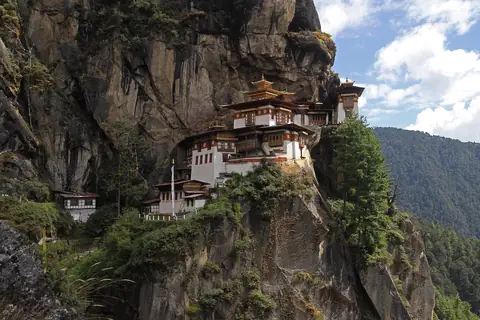
Paro and Tiger's Nest
Two nights in Paro: the Tiger's Nest hike with its fee, ponies and timings, Rinpung Dzong, the National Museum, Kyichu Lhakhang, Chele La, hotels and costs.
Read the guideSources and checks before you travel
(39)
- Department of Tourism, Bhutan: FAQs ↗ — opens in a new tab
- Department of Tourism, Bhutan: Visa ↗ — opens in a new tab
- Department of Tourism, Bhutan: Announcements ↗ — opens in a new tab
- Department of Tourism, Bhutan: Visit (customs and etiquette) ↗ — opens in a new tab
- Department of Tourism, Bhutan: Bhutan is family friendly (Dochu La) ↗ — opens in a new tab
- Department of Tourism: tourism services directory, Little Bhutan ↗ — opens in a new tab
- Department of Tourism: tourism services directory, Guided Bhutan Tours ↗ — opens in a new tab
- Department of Tourism: tourism services directory, Byways Tours and Travels ↗ — opens in a new tab
- Byways Tours and Travels: 7 days Bhutan tour ↗ — opens in a new tab
- Guided Bhutan Tours: Bhutan trip cost ↗ — opens in a new tab
- Guided Bhutan Tours: hiring a guide in Bhutan ↗ — opens in a new tab
- Guided Bhutan Tours: Essential Bhutan Journey ↗ — opens in a new tab
- Little Bhutan: Bhutan 7-day itinerary ↗ — opens in a new tab
- Little Bhutan: Chimi Lhakhang ↗ — opens in a new tab
- Little Bhutan: Kyichu Lhakhang ↗ — opens in a new tab
- Department of Culture and Dzongkha Development: Paro Taktshang ↗ — opens in a new tab
- Little Bhutan: Bhutan trip cost ↗ — opens in a new tab
- Little Bhutan: National Memorial Chorten ↗ — opens in a new tab
- Department of Tourism: museums and monuments fees and hours (table linked from the FAQ, March 2023) ↗ — opens in a new tab
- National Museum of Bhutan (Department of Culture museums site) ↗ — opens in a new tab
- Bank of Bhutan: current rate of exchange ↗ — opens in a new tab
- Bhutan Telecom: tourist SIM ↗ — opens in a new tab
- Pelbu Suites: menu (Thimphu) ↗ — opens in a new tab
- Tashi Tagye Hotel: rooms and meal prices (Punakha) ↗ — opens in a new tab
- Hotel Paro Grand: room and meal tariff (Paro) ↗ — opens in a new tab
- Turkish Airlines: flights from London to Delhi ↗ — opens in a new tab
- Bhutan Airlines: fares promotion ↗ — opens in a new tab
- Bhutan Airlines: FAQ ↗ — opens in a new tab
- Drukair: conditions of carriage ↗ — opens in a new tab
- UK FCDO: Bhutan safety and security ↗ — opens in a new tab
- UK FCDO: Bhutan health ↗ — opens in a new tab
- German Federal Foreign Office: Bhutan travel and safety advice (German) ↗ — opens in a new tab
- France Diplomatie: Bhutan, useful information (French) ↗ — opens in a new tab
- France Diplomatie: Bhutan, security (French) ↗ — opens in a new tab
- France Diplomatie: Bhutan, health (French) ↗ — opens in a new tab
- Bhutan Food and Drug Authority: CSMDD FAQs ↗ — opens in a new tab
- National Center for Hydrology and Meteorology: climate of Bhutan ↗ — opens in a new tab
- Royal Society for Protection of Nature: Phobjikha valley bids adieu to the black-necked cranes ↗ — opens in a new tab
- Bhutan Travel Bureau (licensed operator): driving distances ↗ — opens in a new tab
Reference sources for the version dated 3 November 2026. Confirm opening times, access, transport and conditions for your travel dates.
Photo credits
(5)
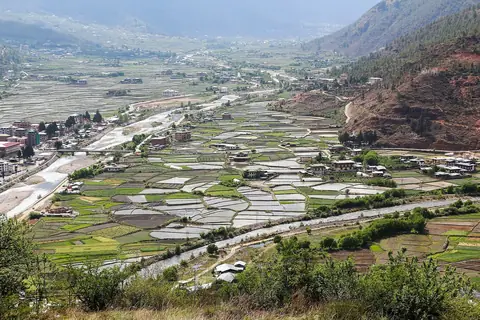
The Paro valley from above: farmhouses and fields along the river, with forested ridges behind
Photograph: Abhijit Kar Gupta from Kolkata, India — opens in a new tab · CC BY 2.0 — opens in a new tab
Changes: Resized and converted to WebP; displayed with responsive crops. · Original photograph and licence details ↗ — opens in a new tab
Paro Taktsang (Tiger's Nest) on its cliff above the upper Paro valley
Photograph: David Broad — opens in a new tab · CC BY 3.0 — opens in a new tab
Changes: Resized and converted to WebP; displayed with responsive crops. · Original photograph and licence details ↗ — opens in a new tab
A courtyard of Punakha Dzong, where visitors enter with their guide
Photograph: Bernard Gagnon — opens in a new tab · CC BY-SA 4.0 — opens in a new tab
Changes: Resized and converted to WebP; displayed with responsive crops. · Original photograph and licence details ↗ — opens in a new tab
The gate of the Buddha Dordenma complex above Thimphu
Photograph: Bernard Gagnon — opens in a new tab · CC BY-SA 4.0 — opens in a new tab
Changes: Resized and converted to WebP; displayed with responsive crops. · Original photograph and licence details ↗ — opens in a new tab
The 108 Druk Wangyal chortens at Dochula, with the Himalaya on the horizon on a clear day
Photograph: Arian Zwegers from Brussels, Belgium — opens in a new tab · CC BY 2.0 — opens in a new tab
Changes: Resized and converted to WebP; displayed with responsive crops. · Original photograph and licence details ↗ — opens in a new tab